Stunning 10 Carat Diamond Ring that Set the Fashion Frenzy

When individuals talk about buying diamonds, the size of the stone is the first thought that strikes their minds. A 10 carat diamond is a ravishing stone that possesses enough brilliance to become the center of attraction. It is a huge, shiny, and impressive diamond with a royal look.

When it comes to expressing your feelings to your significant other, nothing beats a large, brilliant diamond ring.

What Is a 10 Carat Diamond?

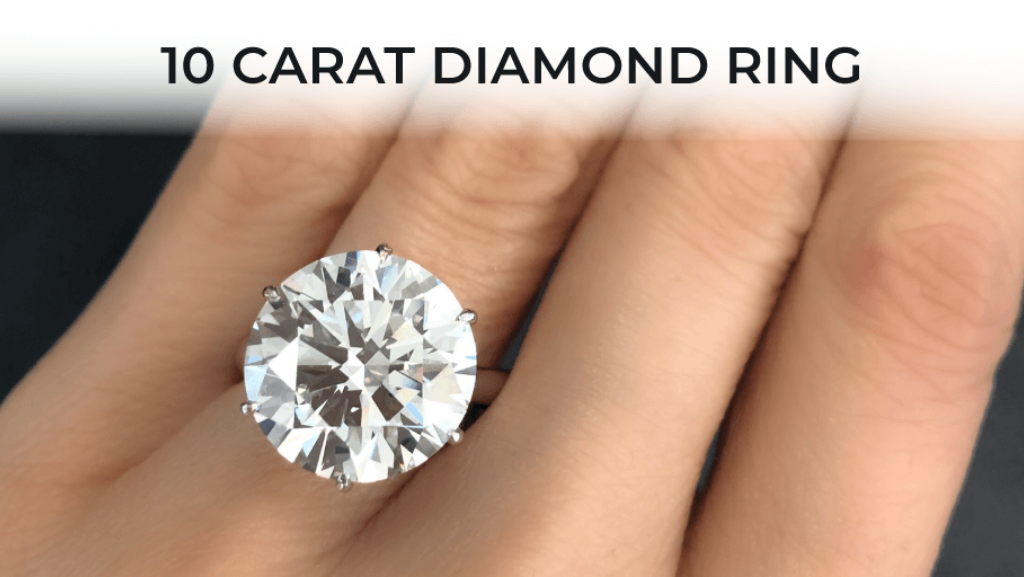
A 10 carat diamond is one of the largest diamonds one can buy. This big diamond is about two times bigger (12-14mm in diameter) than a normal-sized diamond stone. If you are a person who likes unique and eye-catching jewelry, then a 10 carat diamond engagement ring is definitely going to work wonders for you.

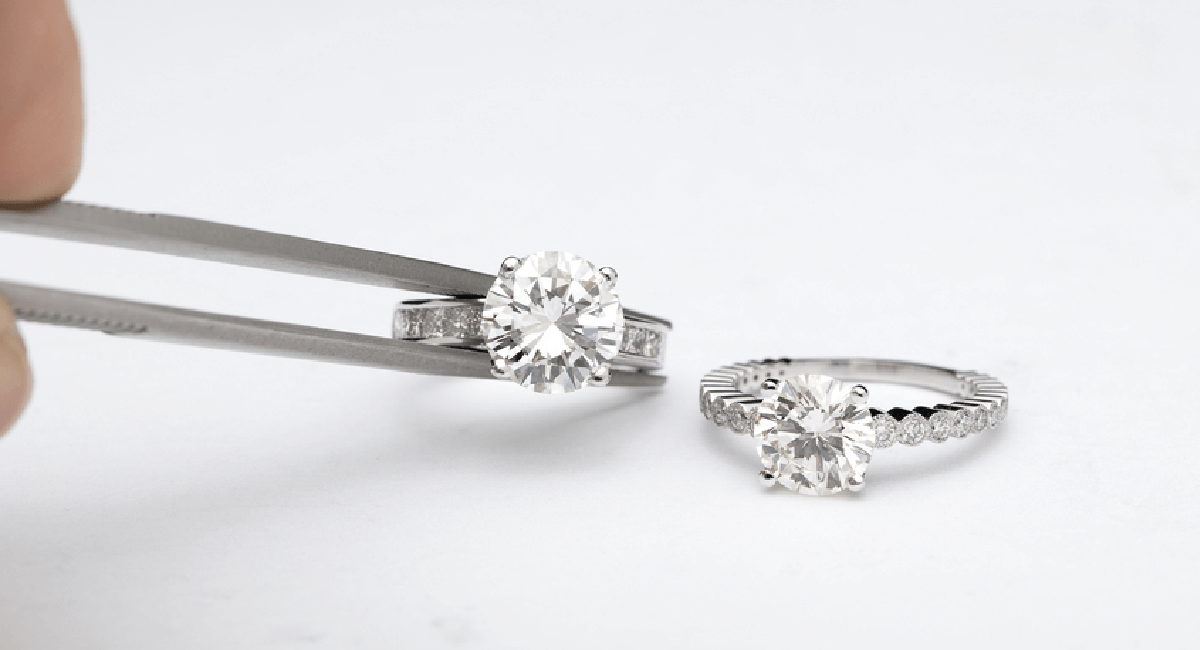
Any human who wears a 10 carat diamond ring will feel as if they are part of a royal family. When it comes to expressing your feelings to your significant other, nothing beats a large, brilliant diamond ring. A 10 carat diamond ring can be a big symbol of unending love and commitment.
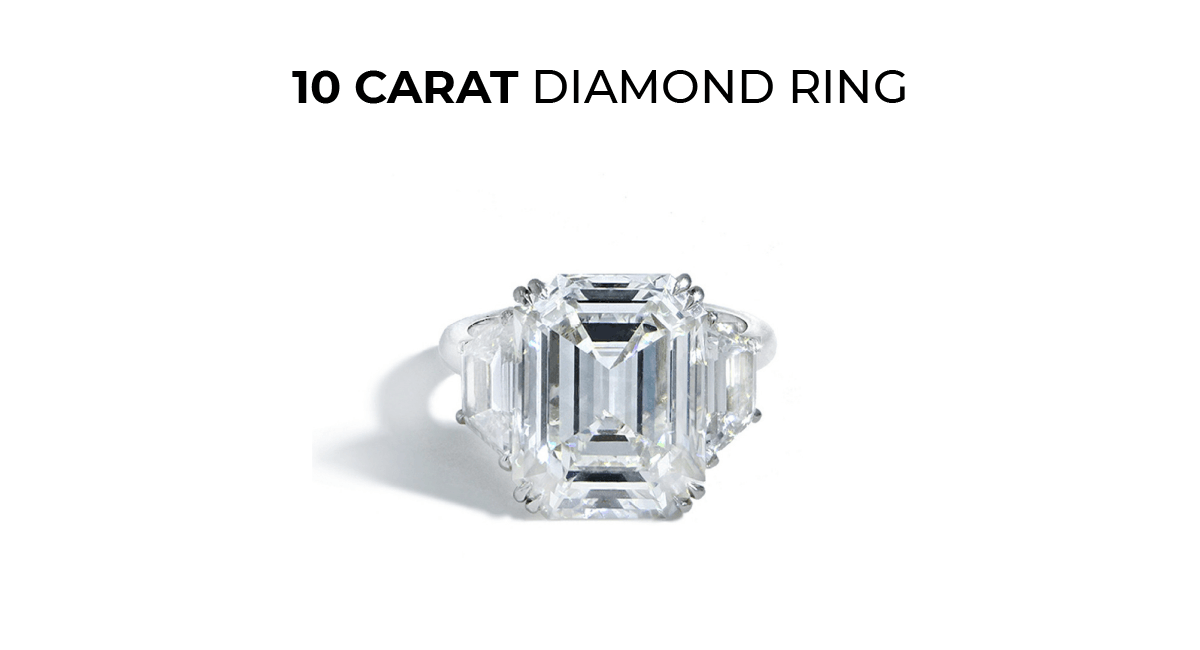
10 Carat Diamond Rings : which Makes You Look More Attractive

However, buying a 10 carat diamond is expensive for some people and a lifetime investment for others. It is so big that its price reflects how brilliant, rare, and extremely beautiful the diamond is.

If someone is planning to buy a 10 carat diamond ring, they have to shop wisely by going through all aspects so that the stone chosen by them will be brilliant and not have visible flaws. In diamonds as big as this, it is important to get the sweet spot of both size and quality. And find the perfect setting for the stone. A 10 carat diamond ring is a unique and perfect diamond for unique people.

To make your search easy, we at Loose Grown Diamonds have compiled this guide which has all the information one can ask for on 10 carat diamond rings or the diamond itself. Go through it once. If you still feel you need some personalized assistance, feel free to contact us.

10 Carat Diamond Ring Size

The word “carat” is the unit measurement for a diamond. A carat simply translates to the weight of a diamond. The most crucial thing to understand is that carat weight is not about size, it is the measure of weight.
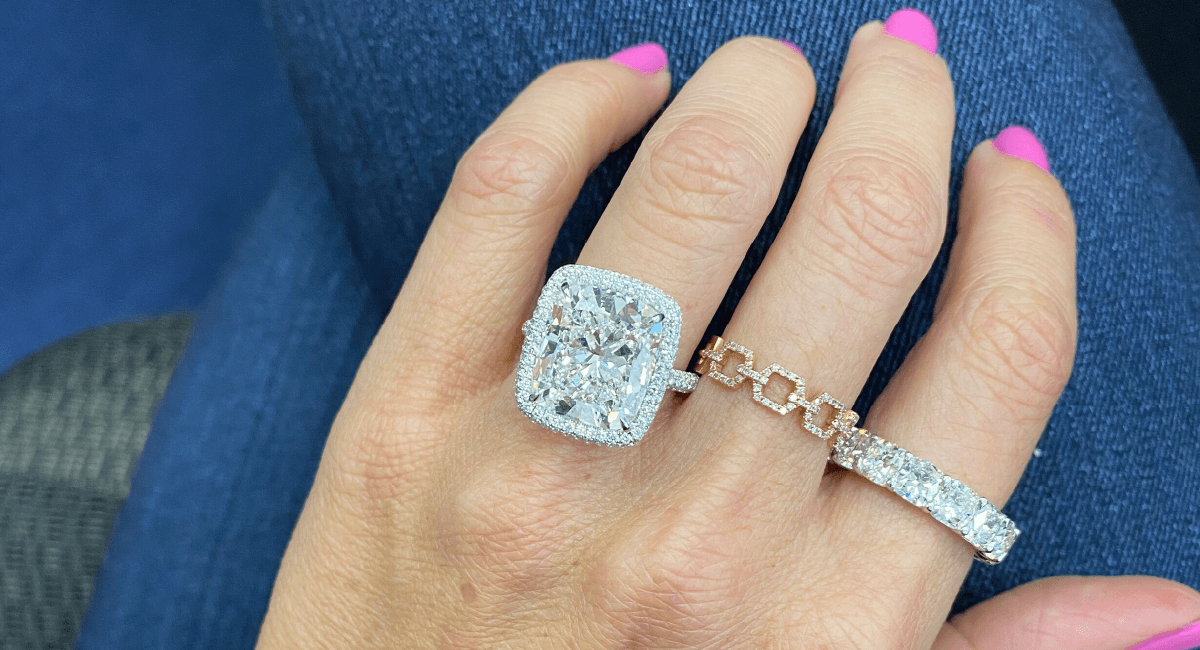
10 Carat Diamond Ring Size

One carat equals 0.20g, so 10 carats will weigh 2g or 2 grams because carbon is a relatively lighter element. Weight is always the determining factor in the price rather than size. Shape and cut quality determine how big the diamond is perceived to be. For example, a diamond can be emerald cut and appear bigger than a same-carat round brilliant cut diamond.

The most important thing to remember while looking at the size of a diamond is its face-up impression. The weight of a 10 carat diamond is directly proportional to its face-up impression.

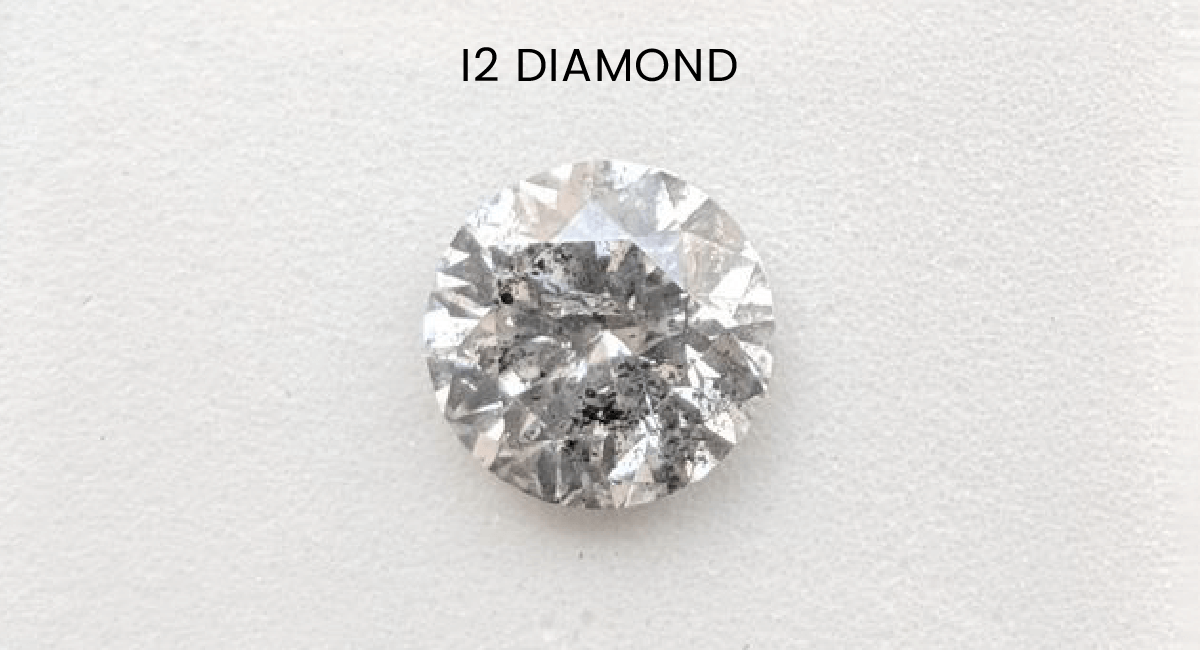
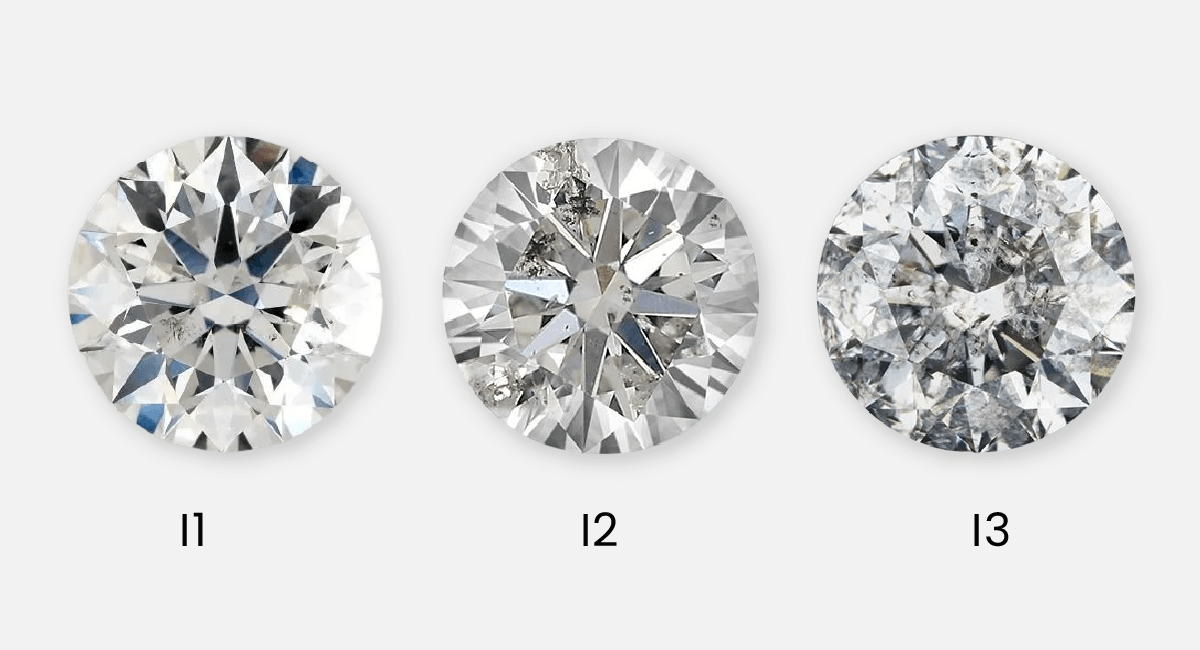
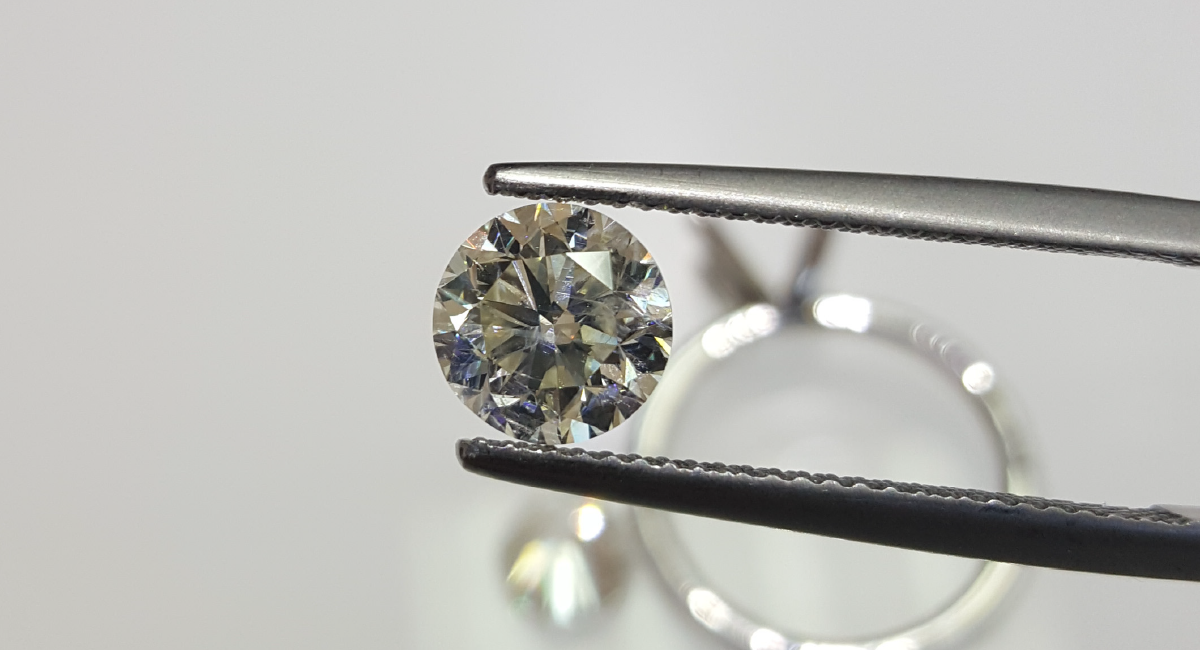
When the diamond is set on the ring, only the face-up/table area is seen, so make sure to make it big enough. If the clarity grade of a diamond is lower, then you should avoid buying that 10ct diamond ring because inclusions can be seen with ease in big diamonds like 10 carat diamonds.

Different shapes are going to have different face-up areas and dimensions. Diamond shapes like oval and pear have 16% or more face-up area. The most common shape for this carat diamond is a brilliant round diamond, which has a diameter of 14 mm and is appreciably large.

The more the area covered or the greater the depth of the diamond, the more metal will be used to enclose it and thus give you a bigger 10 carat diamond ring.

Besides having an impressively large size, 10 carat diamonds are not as heavy to wear as people expect; only 2-3 grams. Generally, people are fine with wearing a heavy-weighted diamond ring, but some people take time to get used to big diamond rings.

10 Carat Diamond Ring Price

A ring price can be grand or comparatively low depending on the clarity and cut grades of a diamond. The diamond, which has been poorly cut and has a low clarity grade, can have a price range between $20,000 and $100,000 for all 10 carat weights.
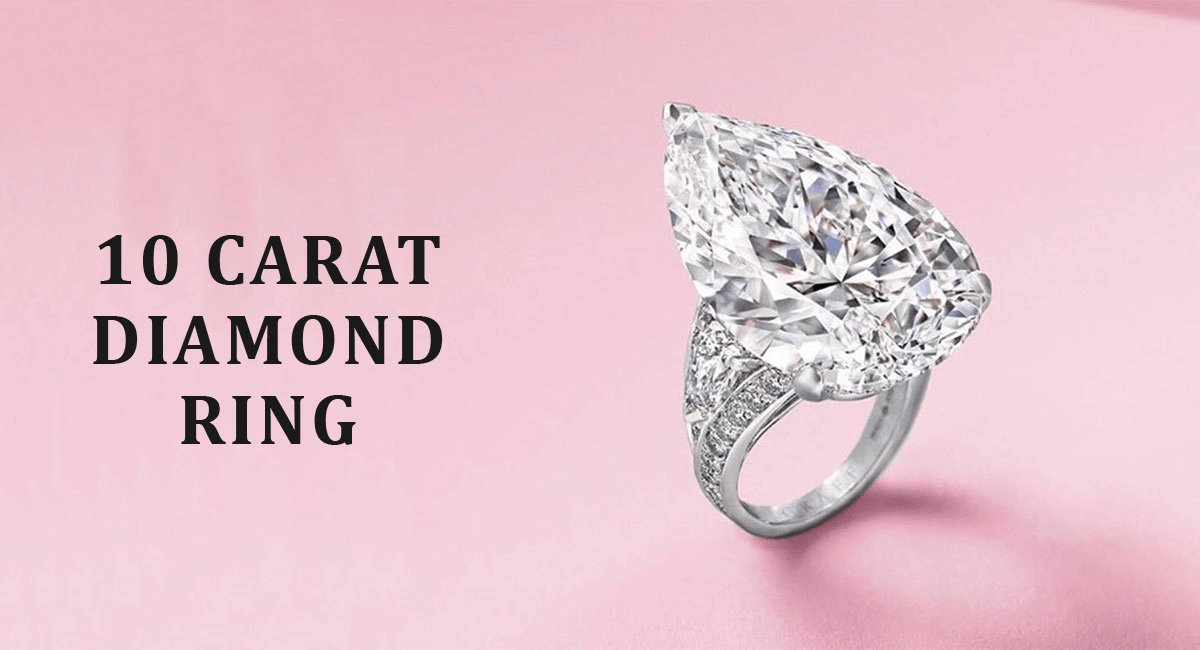
determine the 10 Carat Diamond Ring Price

On the other hand, diamonds that have a high clarity grade with medium grades for other factors can have a price tag ranging from $50,000 to $450,000 for a 10 carat diamond ring.

And if we talk about the most perfect diamond having a 10 carat weight with all the high grades and factors, it is going to cost around $500,000 or can even go up to $1 million. All of this is relative and highly depends on the 4Cs and cut grades of the diamond.

Buying a 10 carat diamond ring can be advantageous in many ways, like having financial security throughout your life. And also having peace of mind knowing that you own a very special gem in your jewelry collection.

One more advantage is that you can choose a diamond color that suits or matches your skin tone. You will be tension-free because the 10 carat diamond ring is going to look stunning forever. One can get all these benefits but at a price.

It is not necessary to invest a great amount of your fortune to get an astonishing diamond. It is possible to get a 10 carat diamond ring at a low price, but in such a case, you will have to compromise on the quality and beauty of the diamond.

The selection of a diamond that is one or two grades lower than a really good diamond is not going to make any visible difference, but it is going to have a big impact on the total price of the 10 carat ring.

The diamond might not be entirely perfect, but ultimately, what matters is how pretty the diamond looks to the naked eye. With this, you can find a genuinely brilliant diamond within your budget.

The band of the ring also contributes to price determination. A ring is incomplete without a band, a band that should be a perfect match with a diamond. If you were to calculate the price of a 10 carat diamond ring by taking into account the metal used for the band, you would get a higher price than projected above. Additionally, you can use our Diamond Pricing Calculator to determine the right price for your diamond.

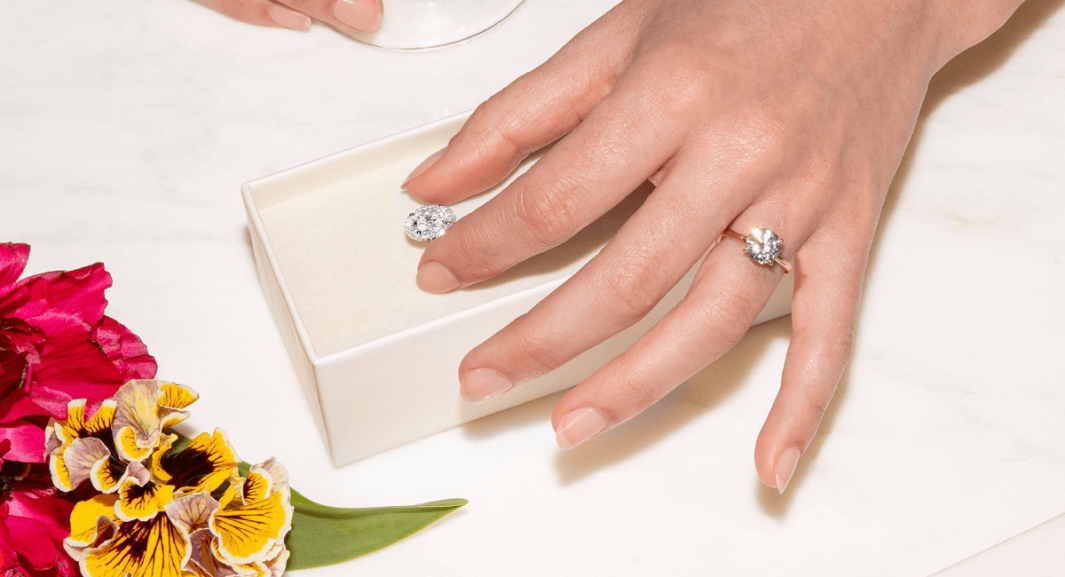
10 Carat Diamond Ring on Finger

A big factor in the 10 carat diamond ring range is whether the shape or style is going to look impeccable on the fingers of the wearer.

As we all know, everyone has a unique set of hands, each of different shapes and sizes. Even the distance between the knuckles and the length of the fingers is different. Because of this, every ring has a different appeal on different pairs of hands. Besides this, the shape of a diamond also determines whether it will suit your fingers or not.
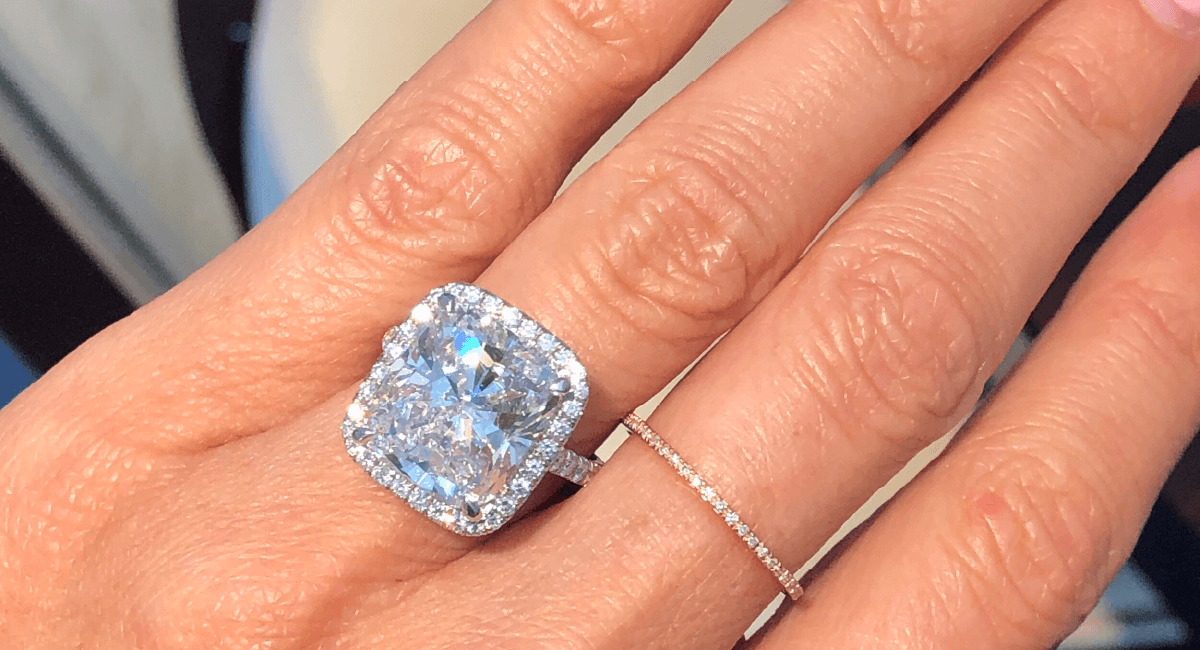
10 Carat Diamond Ring on Finger

To give you an idea of what a 10 carat diamond ring looks like on the finger, we have mentioned some of the best shapes you can go for.

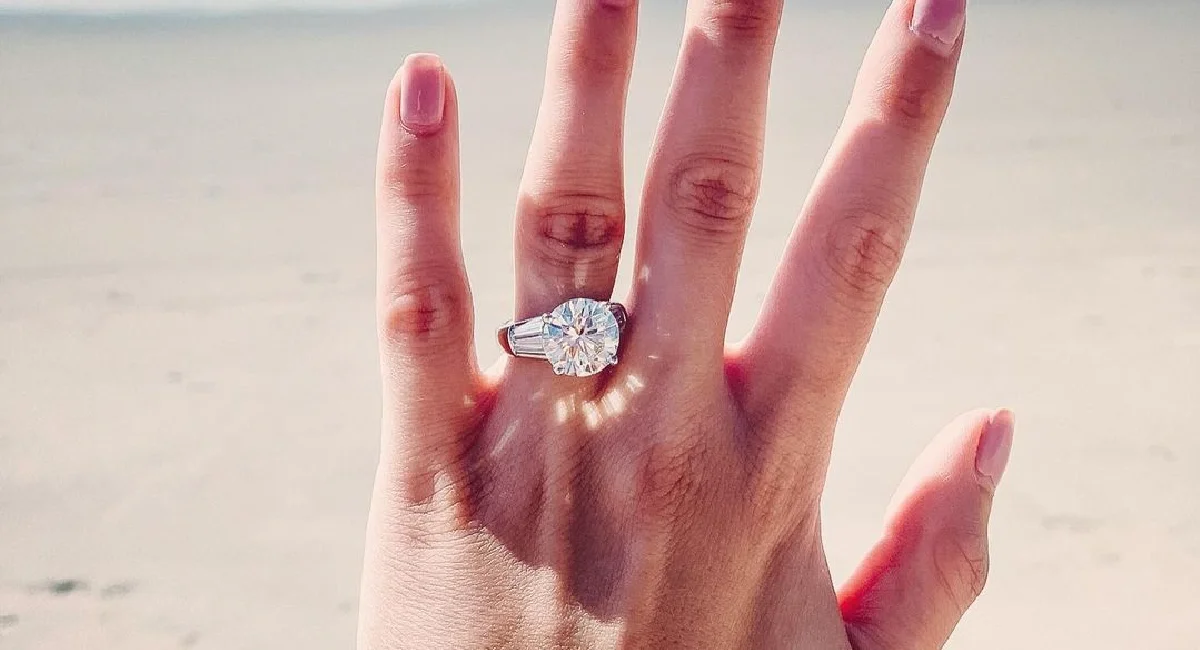
  • 10 Carat Round Diamond Ring on The Finger: In the list of wide diamonds, the round cut is the most popular one. A 10 carat diamond ring of this shape will appear larger rather than elongated. It is recommended that you take out a scale and have a look at how big a 14mm or 1.4cm rock will look on your fingers.
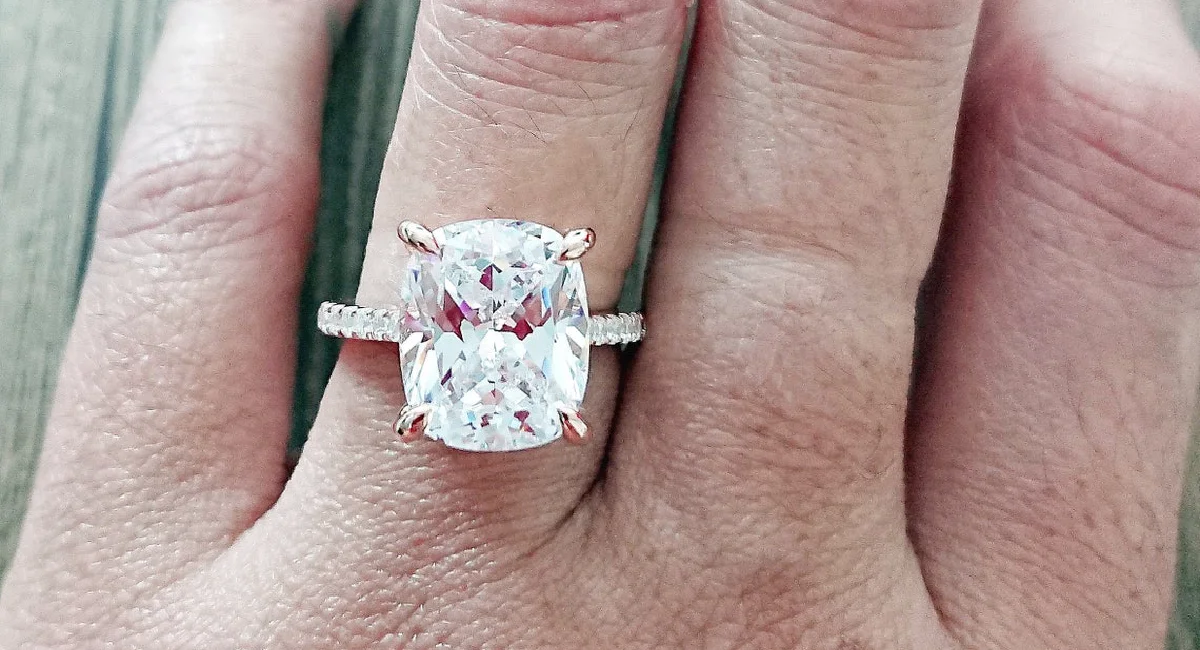
  • 10 Carat Cushion Diamond Ring on The Finger: In this diamond shape, a good portion of the carat weight is used for the creation of square corners. Due to this, square diamonds appear slightly narrower than round diamonds. This feature is beneficial, especially for big diamonds like 10 carats. Because of this, the diamond looks a little smaller and not overwhelming on your hand.
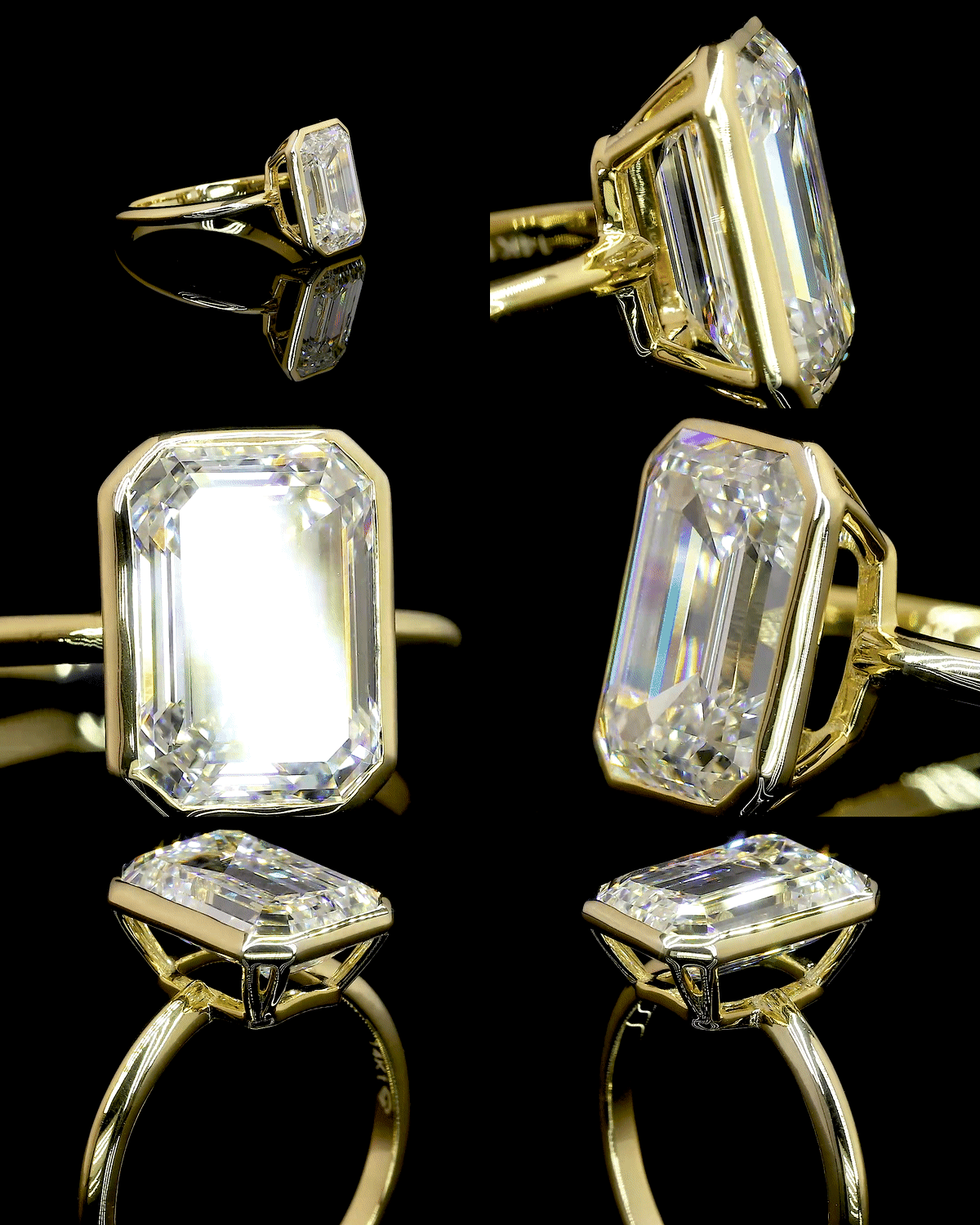
  • 10 Carat Emerald Cut Diamond Ring on The Finger: Emerald cut diamonds are considered to be quite popular for their ravishing and royal look. Earlier, this cut was especially used for emeralds, but later people started using it for other gems too. Eventually, the emerald cut became famous.
    The clean and rectangular shape is pretty much a favored appearance by celebrities nowadays and also has more value than other shapes. You can find different shapes of the emerald cut diamond depending upon the length and breadth ratio.
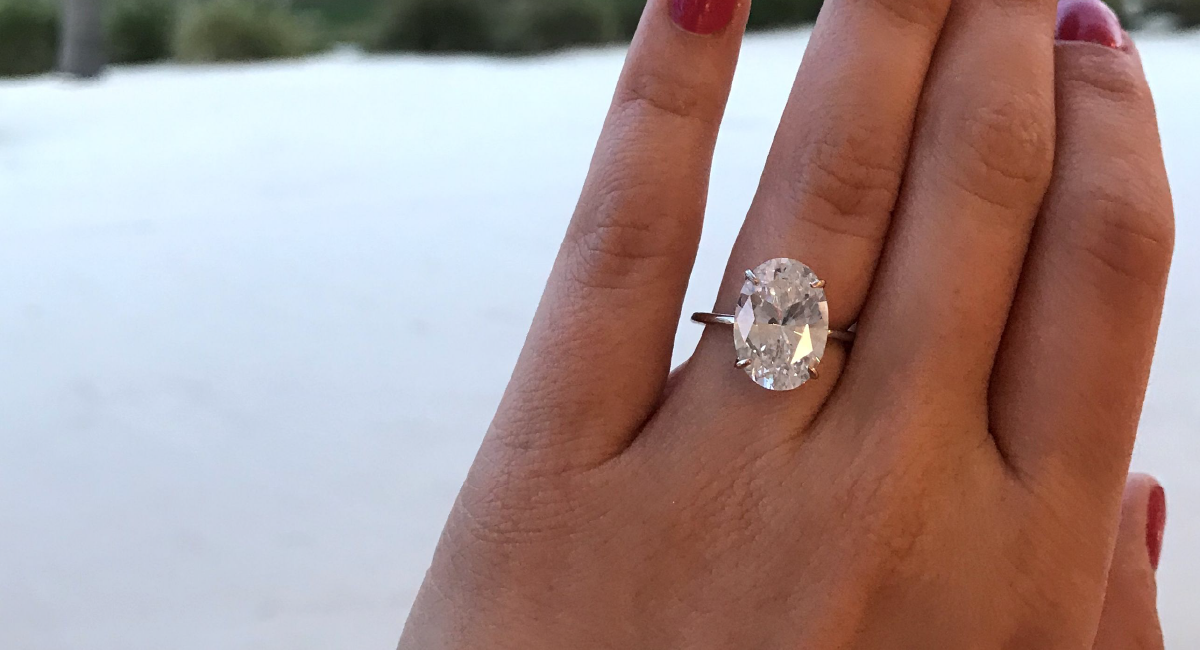
  • 10 Carat Oval Diamond Ring: The oval cut diamonds can compliment your fingers without dominating them. This cut has a little long and narrow shape. It is an elongated round diamond. With this type of cut, a 10ct diamond ring can look a little bigger at the same weight. If you like a big, bold, royal look for your diamond, then you can opt for an oval-shaped diamond.

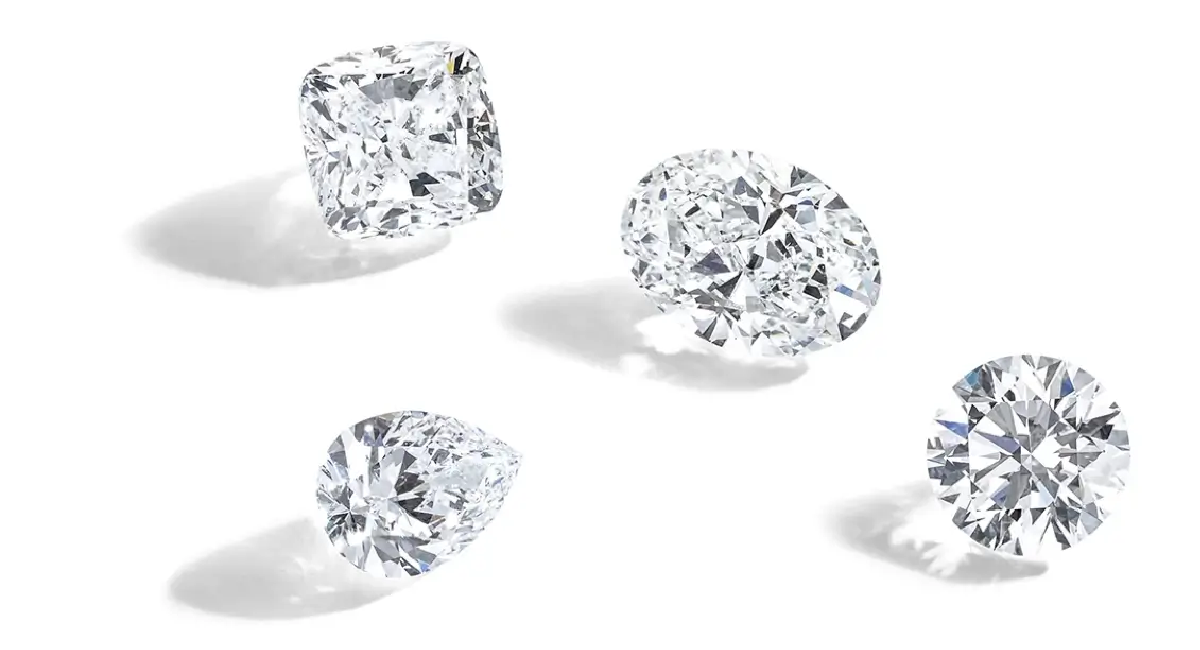
10 Carat Diamond Shapes/Cuts

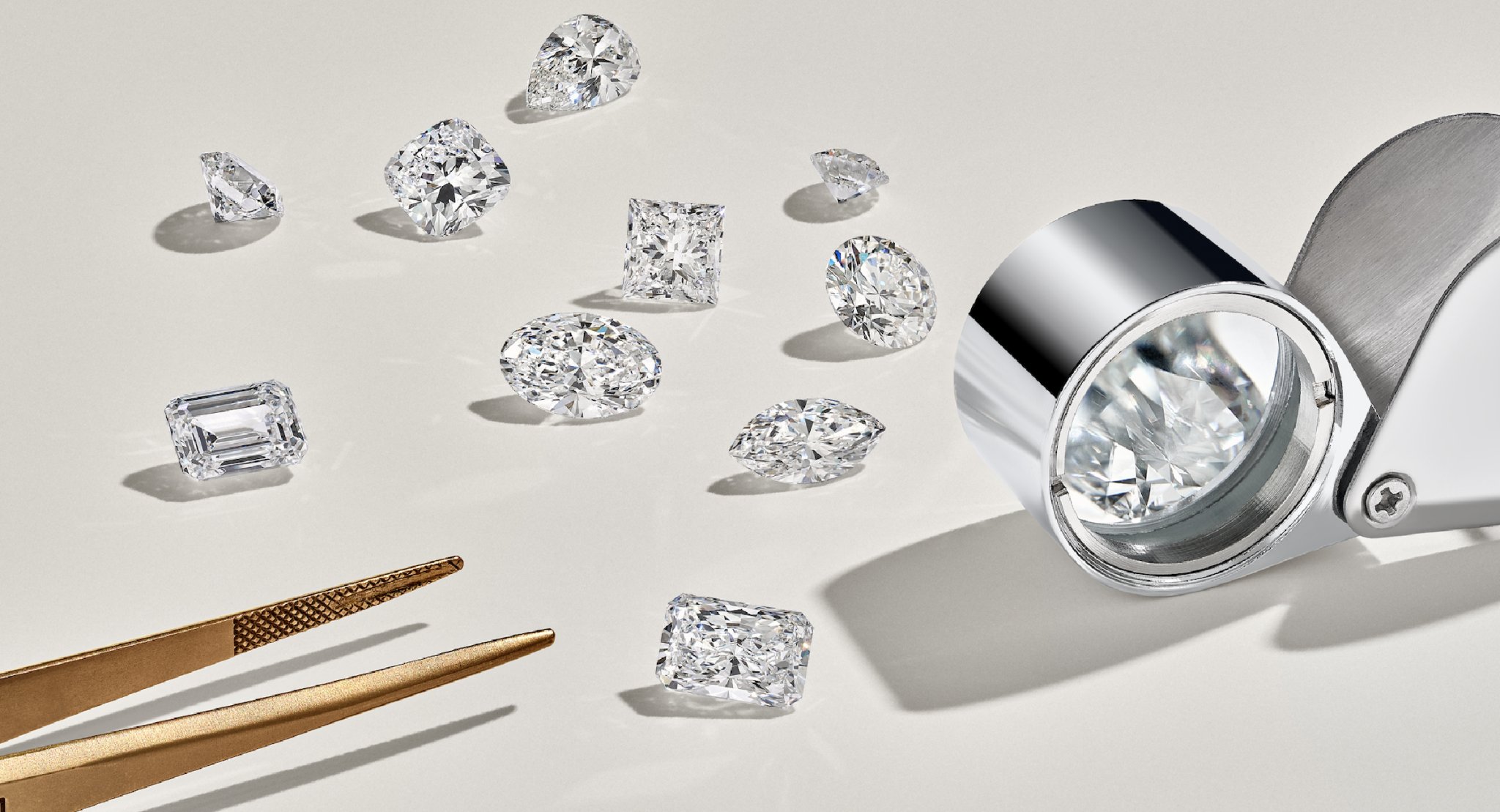
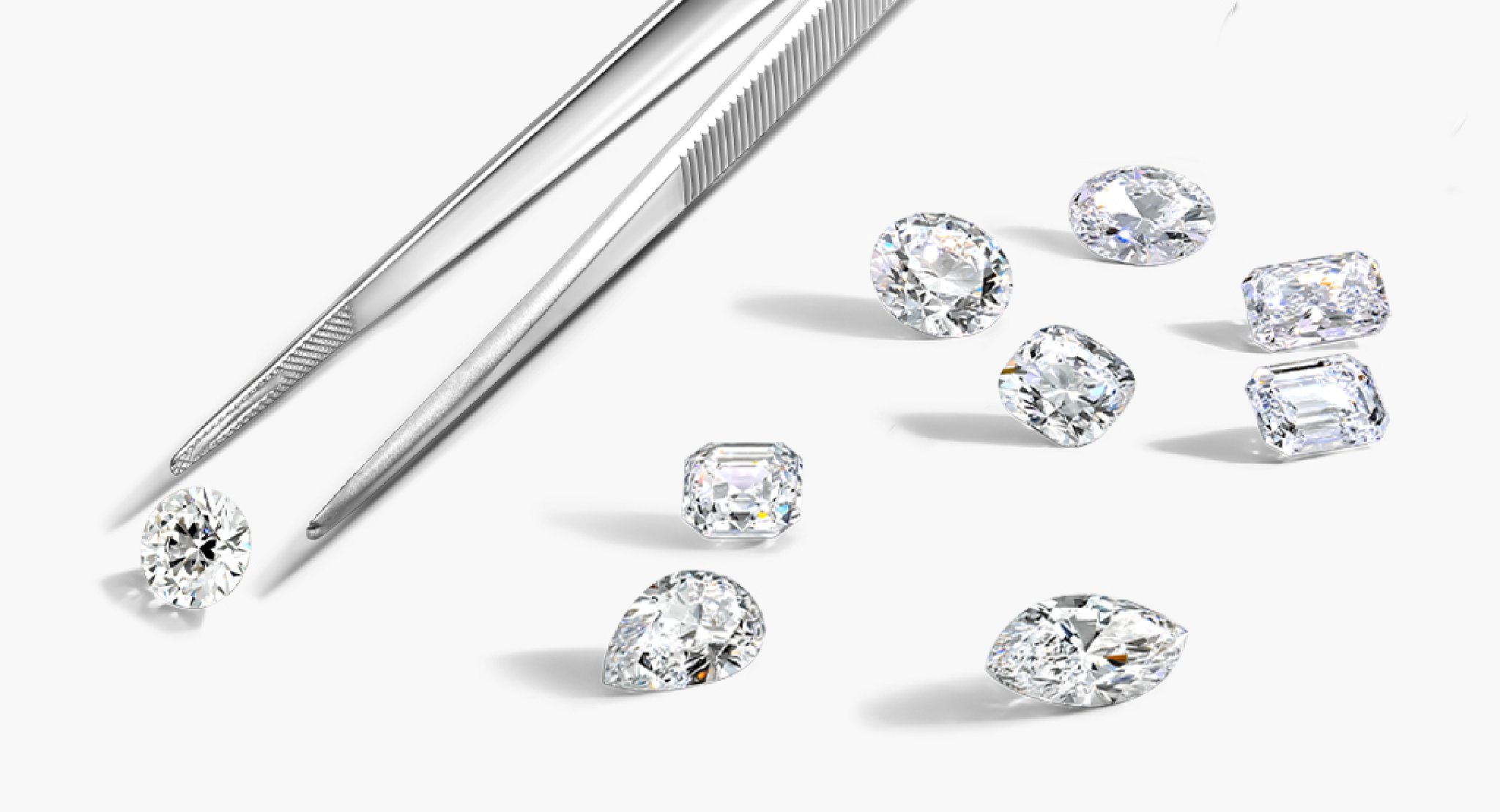
Let us describe the stones used in some of the most commonly available 10-carat diamond rings for sale.
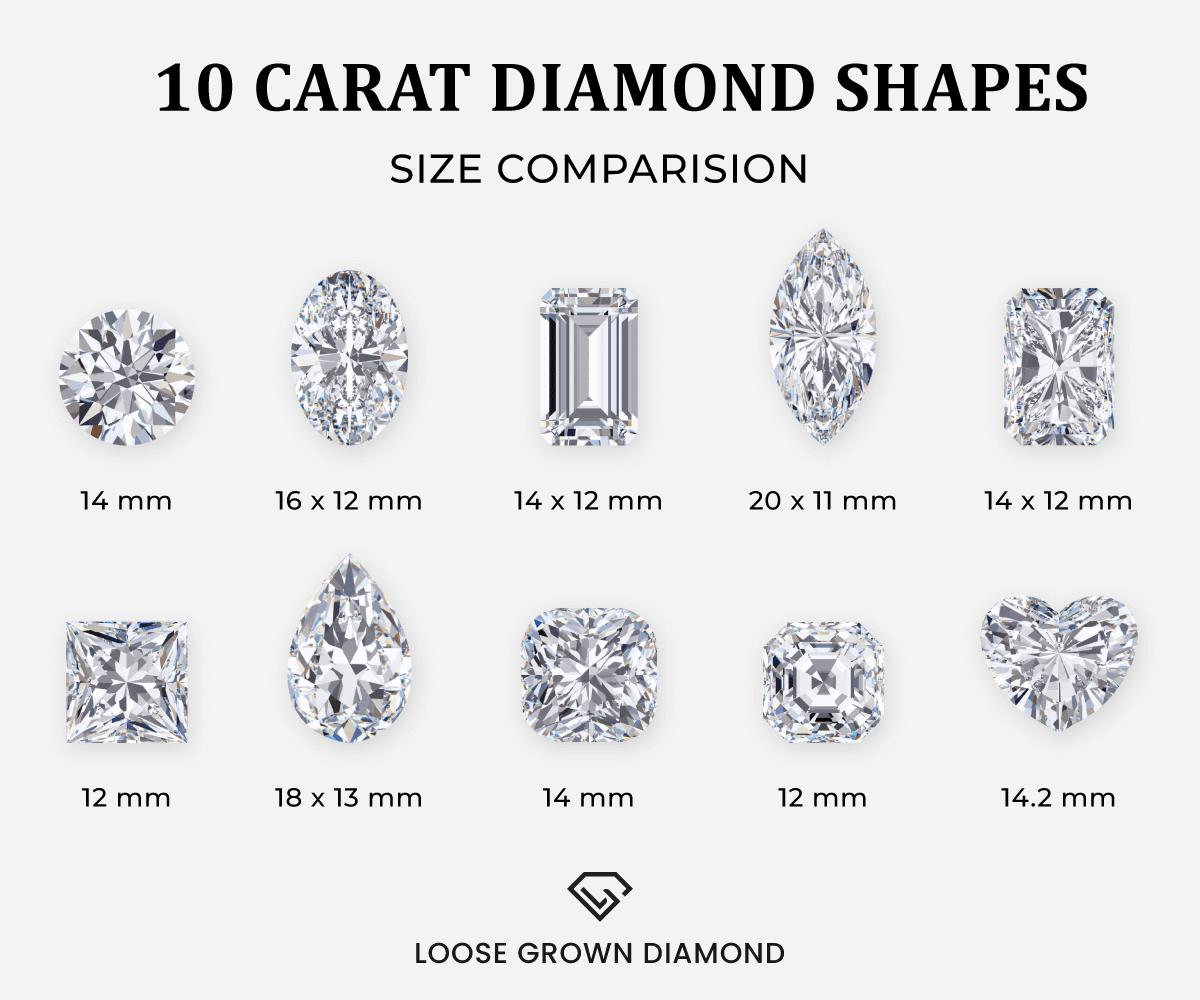
different shapes for 10 Carat Diamond

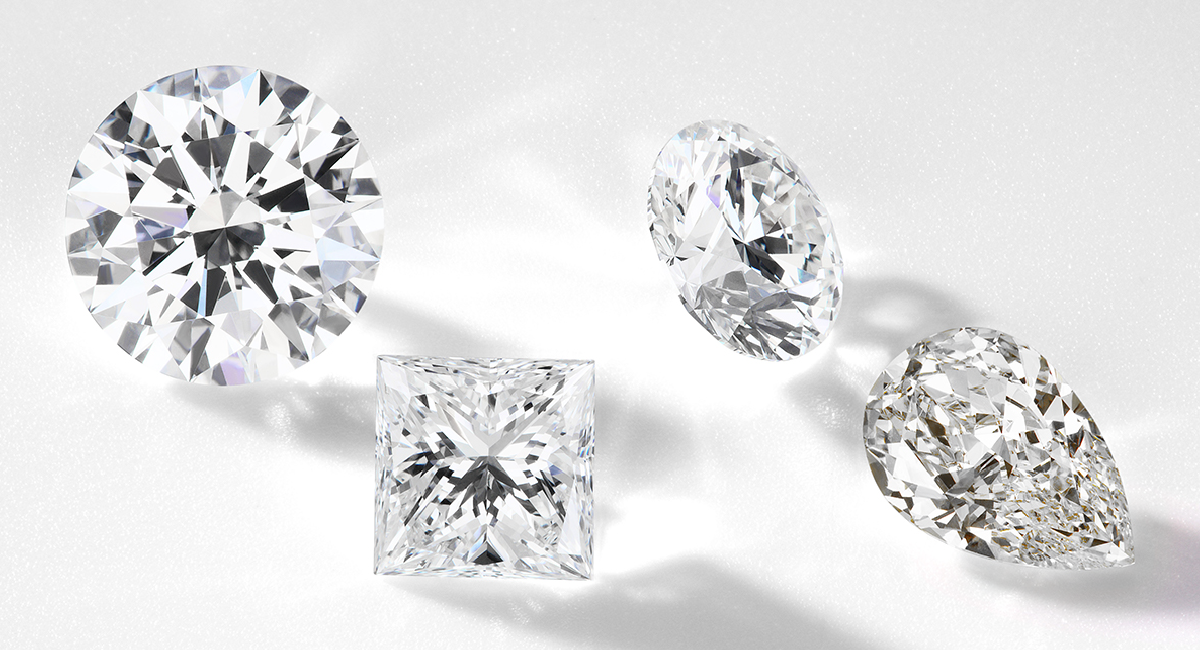
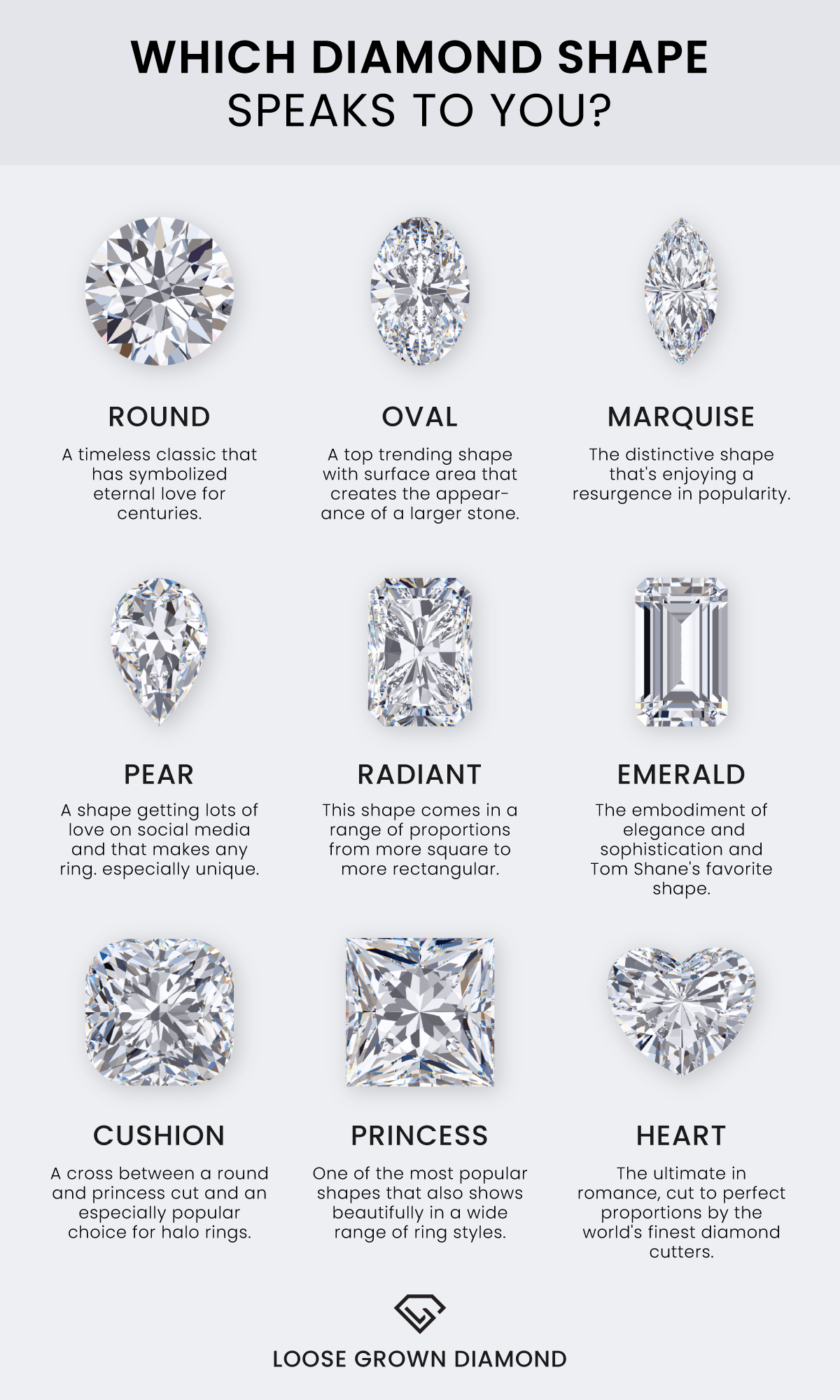
  • Pear Cut:  A 10 carat ring with a pear-shaped diamond will be quite expensive as, due to its elongated design and larger table, it will appear much larger than a 10-carat round brilliant diamond. You can find this diamond shape while searching properly.
  • Round Cut: If we talk about the perfect 10 carat diamond ring, nothing is a better example of perfection than a round brilliant cut stone. From this cut, one can achieve the perfect triplet of reflection, brilliance, and scintillation. This diamond shape is easily and cheaply available in most markets.
  • Princess Cut: If you want to save money and buy a 10 carat diamond ring (not ‘cheap’, just ‘cheaper’ as a 10ct ring will never come cheap), then you should place a princess-cut diamond on top of your ring. It will look amazing and also save you a fortune.
  • Oval Cut: This diamond cut has an amazingly brilliant shine, similar to that of a round brilliant cut but with a more elongated shape. Due to this, it has become the most popular cut in the world of diamonds. It looks flattering on women’s hands and makes any finger look longer.
    It is important to know that as we choose larger diamonds for the oval cut, the bow tie effects become more intense. Make sure to look for flaws, as a bigger diamond has a greater chance of having visible flaws.
  • Radiant Cut:  This diamond cut is called a square cut. With the brilliance of a round-cut diamond, individuals want a ratio of 1:1 or 1:2 when it comes to the dimensions of radiant-cut stones. This diamond shape has 70 facets, therefore a brilliant sparkle, and also has areas to hide inclusions. Even low clarity grades can work with a 10 carat ring that has a radiant cut diamond.
  • Emerald Cut: The emerald cut for a 10 carat diamond can be a symbol of prosperity and beauty. This step cut is also known as “The Honest Cut” as it doesn’t have any facets to hide inclusion flaws. Thus, when going for this cut, it is mandatory to choose a VS1 or above clarity grade. This cut is like a hall of mirrors, due to which a single inclusion/flaw is not only clearly seen but gets magnified as well.
  • Cushion Cut: This cut has soft corners, which is a timeless look. The cushion cut is the most adored by women around the world. They are all unique in their own way. No two are the same. Because of weight distribution, the elongated cushion cut is going to look bigger than a square cushion cut.
    It has more weight at its depth, thus making it look smaller. A 10 carat ring with a cushion cut will do wonders, but won’t be that easy to find on the market.
  • Asscher Cut: Asscher cut diamonds are basically square emerald cut diamonds with large facets that personify brilliance and sparkle. A 10 carat diamond with an Asscher cut stone won’t be readily available on the market.
  • Marquise Cut: This is a fancy cut and can offer a striking look to a 10 carat diamond ring. Also, the main feature of this diamond shape is that it masks inclusions perfectly. This cut should be sourced by an expert only.
  • Heart Cut: A 10 carat diamond ring that looks like a heart will look amazing on your significant other’s hands. But this cut will be very hard to find as it is rarely available for diamonds under 7 carats.

The Best Grades for a 10 Carat Diamond

You have probably heard about the 4Cs of diamond quality. To make sure that consumers are making an informed purchase, the 4Cs were introduced by the Gemological Institute of America (GIA) as a universal way to understand diamonds.
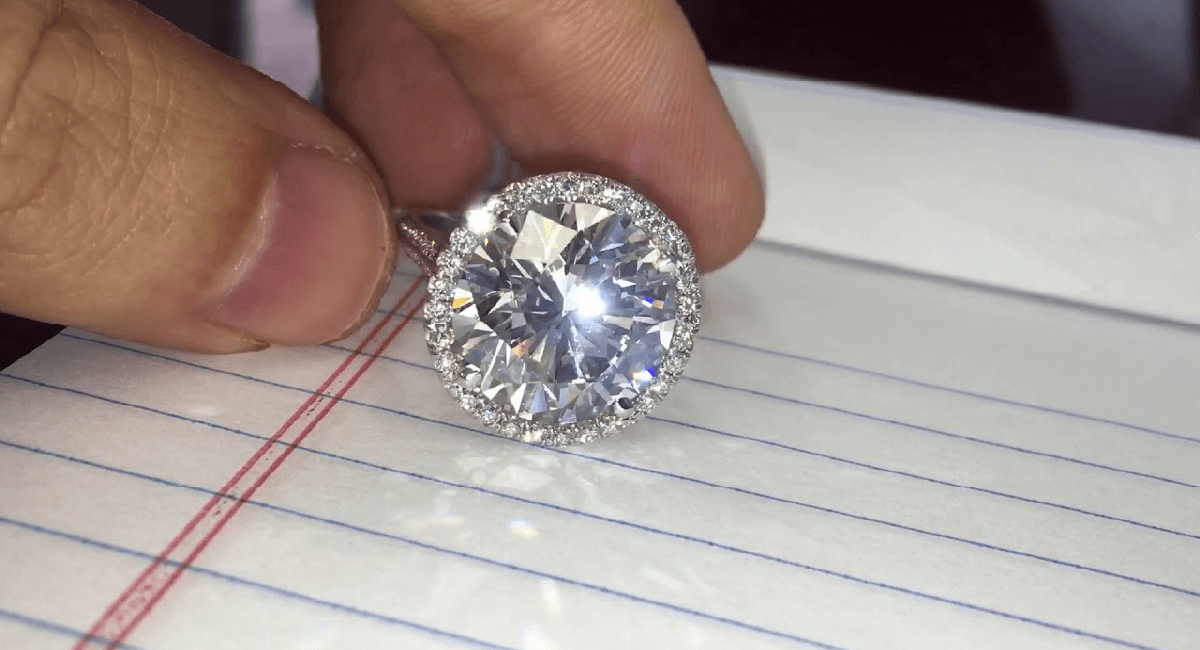
Best Grades for 10 Carat diamond

  • Carat- As we mentioned above, a carat is simply a weight that a diamond can carry. The main thing to understand is that carat weight is not about size, it is the measure of weight. Also, it is important to know that as the diamond carat increases, the price of the stone also increases.
  • Clarity- Clarity is the term that helps us to know the number of inclusions, flaws, and blemishes in the diamond. This is the main thing to look for when buying a 10 carat diamond ring because it is a big diamond and big diamonds can be seen by the naked eye.
    For diamonds bigger than 2 carats, it is recommended to go for a higher clarity grade, as then you are sure to get an eye-clean diamond. GIA introduced a clarity grade scale to determine this. Grading is an important factor regarding diamonds’ beauty and brilliance.
  • Color- This is also one of the important grades that are responsible for the beauty of the stone. It is also a pricing factor, so it becomes mandatory to pay attention to color grade. GIA provided a color grading scale to help customers. This scale ranges from the highest grade, ‘colorless D’, to the lowest, having a ‘yellow tint Z’. If you go for a higher grade, the diamond’s overall price will increase. A color grade ranging from G to I is highly recommended. This won’t make any visual difference but can save you money.
  • Cut- the cut is responsible for the reflection of light, a more proper cut will lead to better-reflecting light, and the diamond will shine more. The cut also determines the symmetry of the diamond. We recommend selecting a diamond that has been graded as “excellent GIA standards’ or “Ideal-AGS standards.”

The Clarity Rating for 10 Carat Diamond Rings

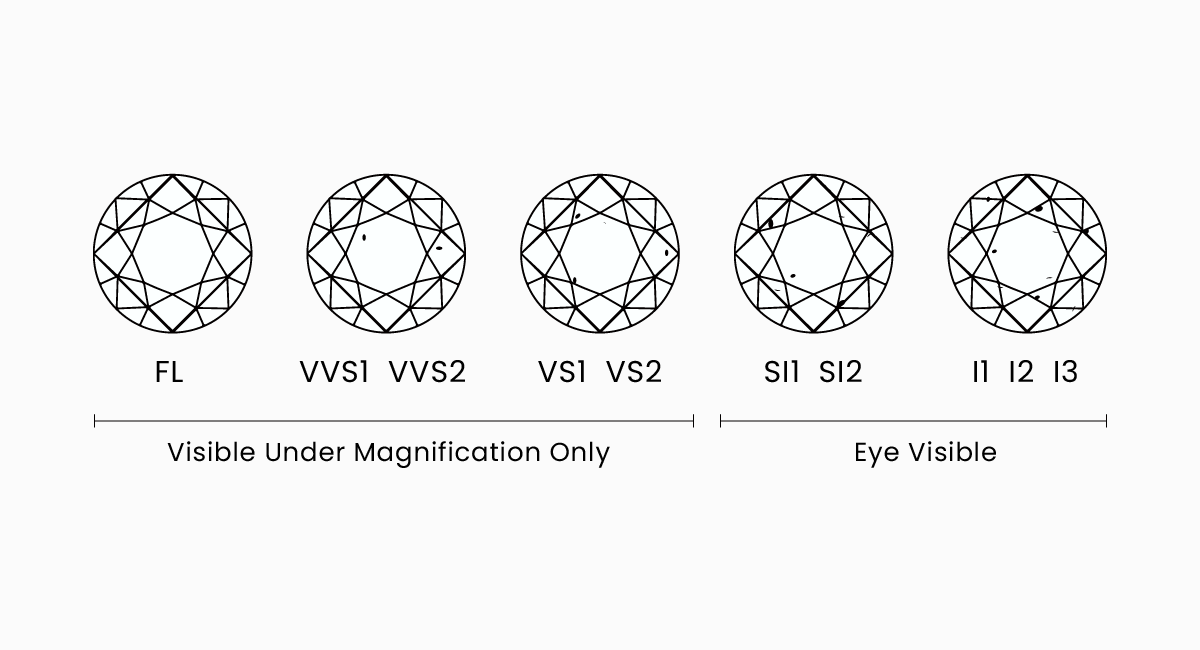
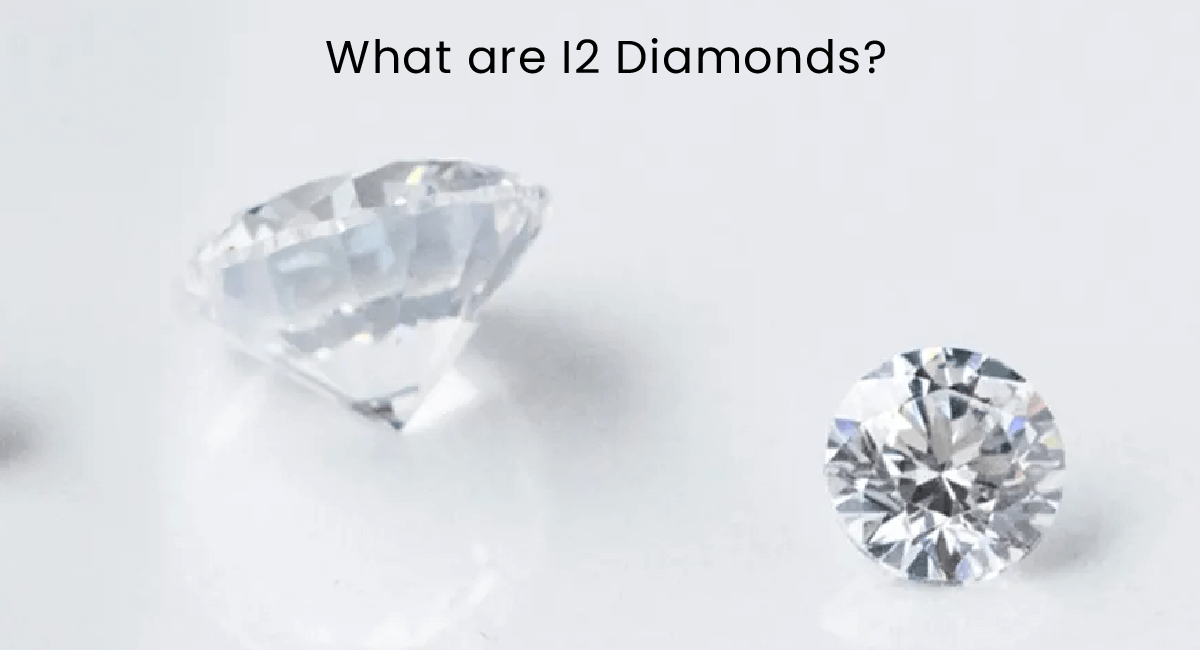
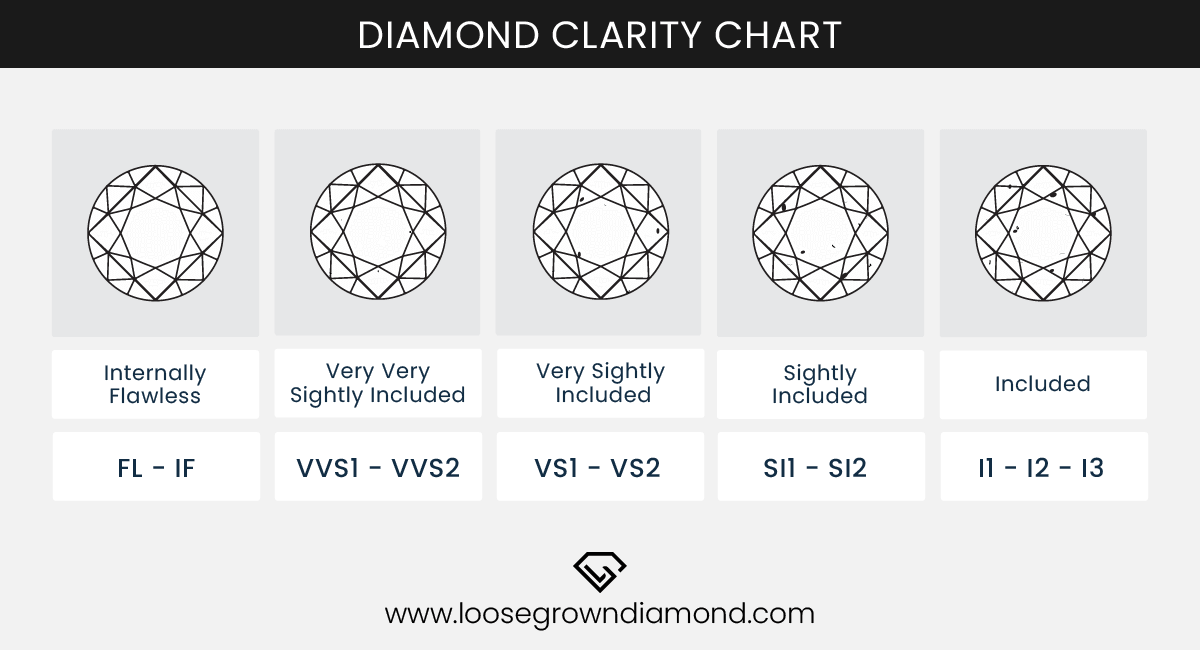
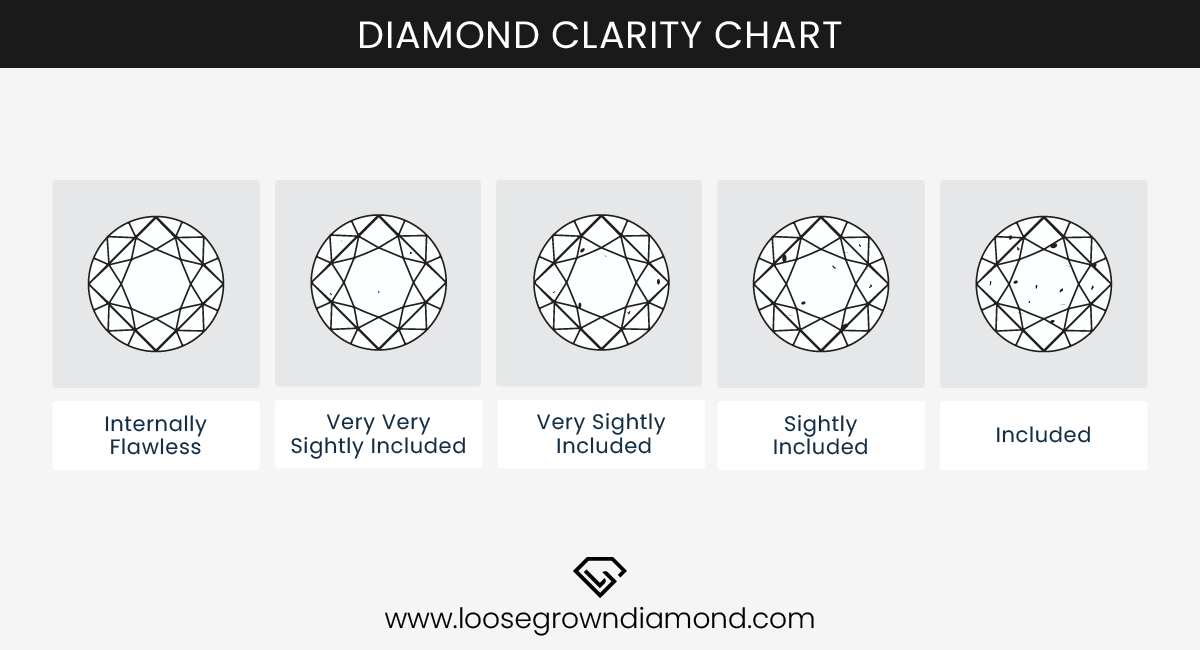
Clarity helps us to know the number of inclusions, flaws, and blemishes that are present in the diamond. As we go from low to high on the clarity grade scale, the diamond looks clearer. It is important to buy a diamond that has been graded by a reputable institution like GIA or AGS.

The Clarity Rating for 10 Carat Diamond Rings

GIA’s Clarity Scale:

  • Flawless (FL)
  • Internally Flawless (IF)
  • Very Very Small Inclusions (VVS1)
  • Very Very Small Inclusions (VVS2)
  • Very Small Inclusions 1 (VS1)
  • Very Small Inclusions 2 (VS2)
  • Small Inclusions 1 (SI1)
  • Small Inclusions 2 (SI2)
  • Inclusions 1 (I1)
  • Inclusions 2 (I2)
  • Inclusions 3 (I3)

On the one hand, SI1 could work for small diamonds like 1 or 2 carats, but on the other hand, inclusions are easy to see in large diamonds like 10 carats. We recommend looking for a VS2 diamond or VS1 diamond if you are going to buy a 10ct diamond ring.

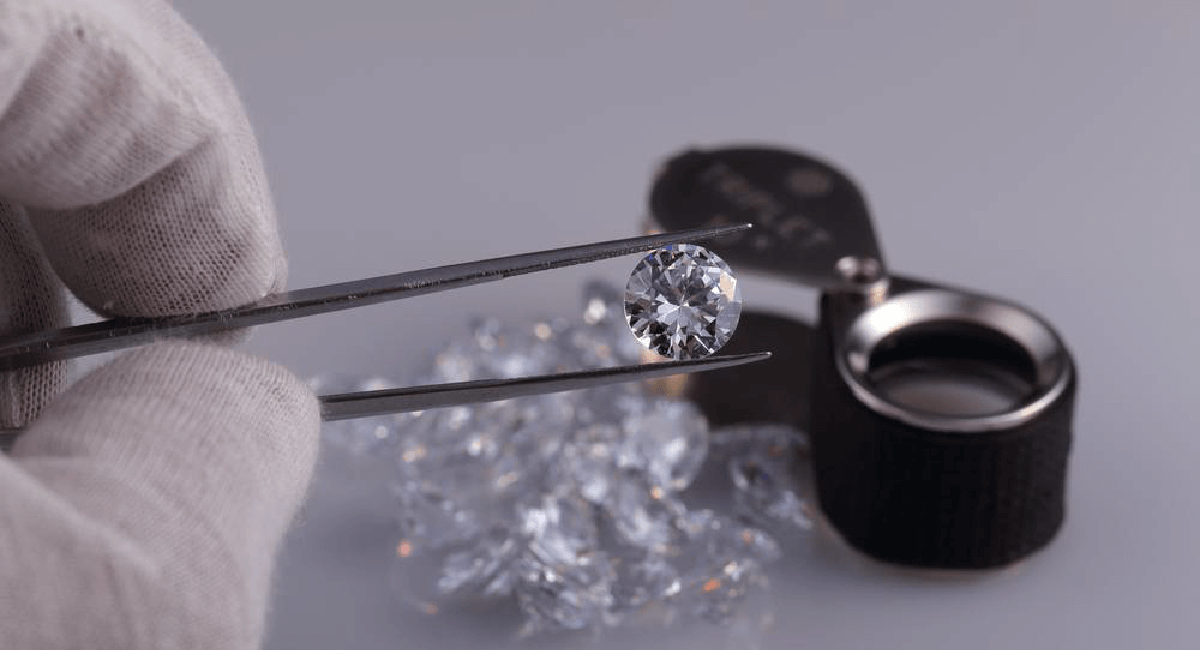
Experts use a microscope with a magnification of 10x or greater to view the diamond to determine the clarity and presence of inclusions. The five factors used to evaluate them are size, number, nature, location, and topography. A 10 carat diamond ring is considered a rare piece of jewelry. Because of this, it can be expensive even if it has a low clarity grade.

Any two diamonds having corresponding or slightly different clarity grades will appear almost the same to the normal eye, but the price is going to vary by a huge amount. For this reason, professional help is necessary when going to purchase a 10 carat diamond ring. In this way, you can figure out the right diamond with the right clarity grade for you without overpaying for it.

10 Carat Diamond Settings

Below are some popular 10 carat diamond ring settings:

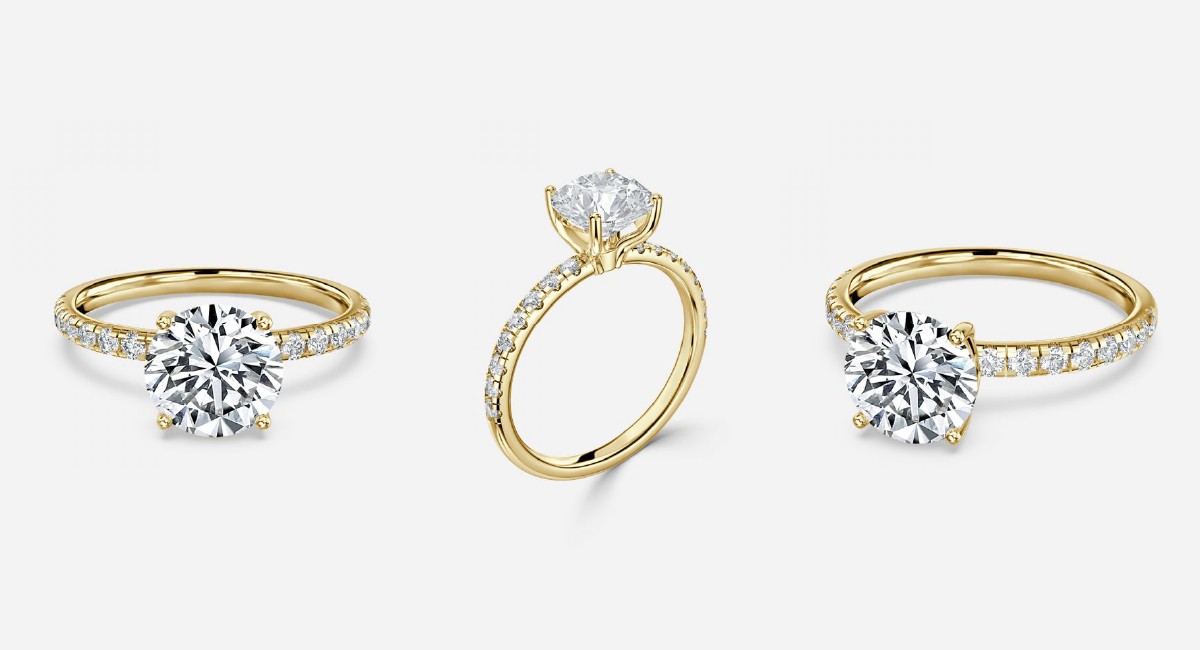
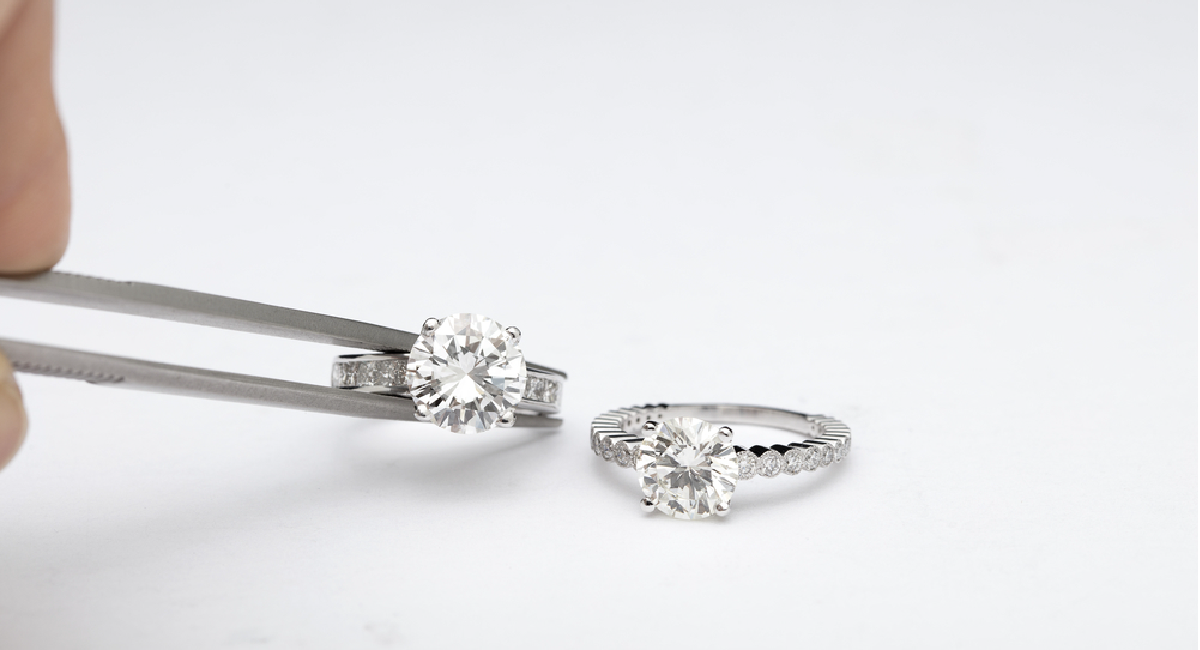
  • Solitaire Setting: This type of setting allows the diamond to shine more through the exposition of more surfaces. It has highly thinned prongs and petite bands, which are responsible for the large appearance of the stone. However, sometimes this thin band is unable to support the diamond and twists. This may make your experience of wearing a solitaire 10 carat diamond ring a bit painful. It is recommended to get a metal band of at least 2.5 mm to avoid any irritation while wearing the ring.
  • Halo Setting: In this setting, you have to make sure that the side stone complements the center stone in color. The halo setting makes the primary diamond look bigger. As 10ct diamonds already look big, there is no necessity for a halo setting. But still, if you want a halo setting, make sure that the ring doesn’t become dominant on your fingers.
  • Pave Setting: As the pave set also includes a side stone, the central diamond, and the side stone’s color must be a close match. It doesn’t have to be exactly the same color grade, but the side stone shouldn’t be of a higher color grade because that will make the center stone look yellowish and dull, and the overall look of the ring won’t be alluring. It is recommended to keep the side stone and center stone within one color grade.
  • Prong Setting: it is one of the most popular settings, especially for 10 carat diamond engagement rings. It has several claws to hold the diamond in one place. People typically choose a six- or eight-prong setting for a 10 carat. Your ring will be safe with great durability in this setting.

10 Carat Diamond Ring Metal Type

The choice of metal for a 10 carat diamond ring is a matter of personal preference. Commonly, precious metals like platinum, white gold, and yellow gold are chosen for such remarkable diamonds.
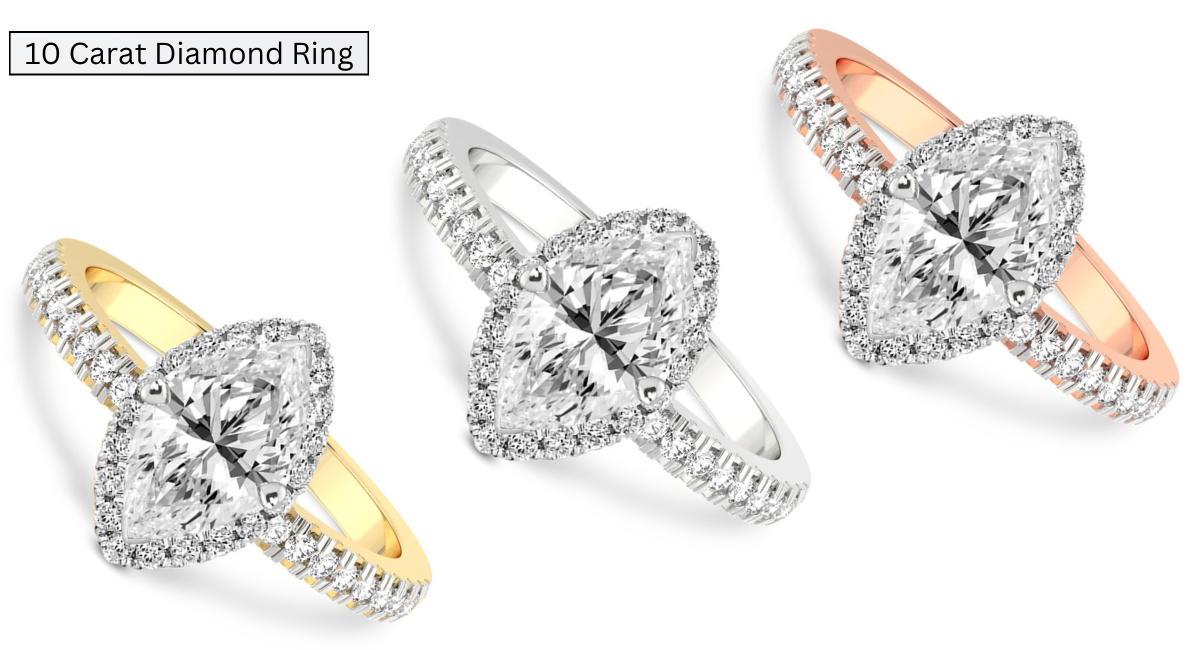
10 Carat Diamond Ring Metal Type

White gold, another favored option, is created by mixing pure gold with other white metals. It offers a similar lustrous appearance to platinum but at a more budget-friendly price point.

On the other hand, yellow gold is a classic choice for those who appreciate a warm and traditional look. Its rich color can provide a unique and captivating backdrop for a 10 carat diamond, creating a ring with a timeless and luxurious feel.

Rose gold has gained immense popularity in recent years for its romantic and rosy hue. It adds a touch of femininity and uniqueness to the 10 carat diamond ring. The soft, pinkish tones of rose gold create a warm and inviting backdrop, making it an ideal choice for those who desire a ring that’s both modern and romantic.

Where to Buy 10 Carat Diamond Ring?

Be sure to buy your diamonds from a trusted buyer if you want to define your love for your significant other correctly. There are two places where you can buy a 10 carat diamond ring. The first is to buy from standard retailers from their brick-and-mortar jewelry stores, and the second is to buy online.

If you go for the first option, be sure to take down all the details of the diamond the merchant is selling. Ask for a GIA/GCAL or IGI certificate. If you have chosen to shop for diamonds online, then you should make sure that the online store is reputable and genuine. The plus point of online stores is that you can get diamonds at comparatively low prices.

We offer the lowest prices in the diamond market. Have a chat with us and let us try to help you with buying your next prized possession. Elevate your diamond ring shopping experience with a generous discount using a promo code handed out by LGD Diamonds.


Conclusion

When shopping for a 10 carat diamond, you have to follow a step-by-step procedure. Do not rush the buying process. Attain proper knowledge of what a 10 carat diamond would suit you and then go for it.

A diamond as big as this one can turn out to be a bad investment if not certified properly. Hence, take your time and find the diamond that best suits you.

We at Loose Grown Diamond sell big-carat diamonds and provide GIA/GCAL and IGI certification for authenticity.

FAQs

How much is a 10 carat diamond ring?
The price of a diamond ring can vary widely, but it is typically in the range of $20,000 to several million dollars.

Can I customise a 10 carat diamond ring?
Yes, LGD offers customization options for the setting and design.

What factors affect the cost of a 10 carat diamond engagement ring?
The primary factors are the diamond’s cut, color, clarity, and carat weight. Additionally, the setting and design choices can impact the overall price.

Can I resize a 10 carat diamond engagement ring?
It’s possible to resize the band, but it depends on the setting and design of the ring.
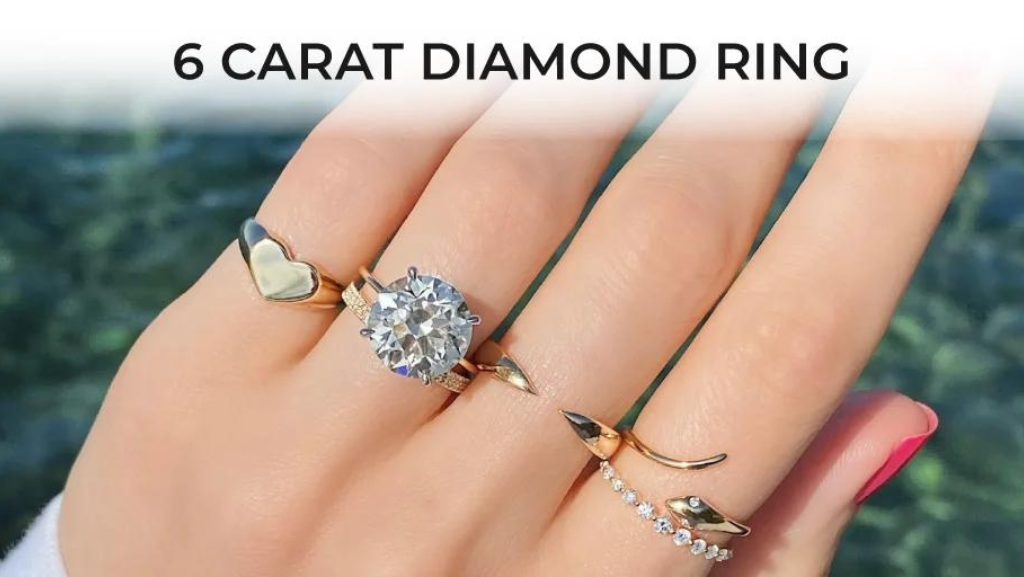
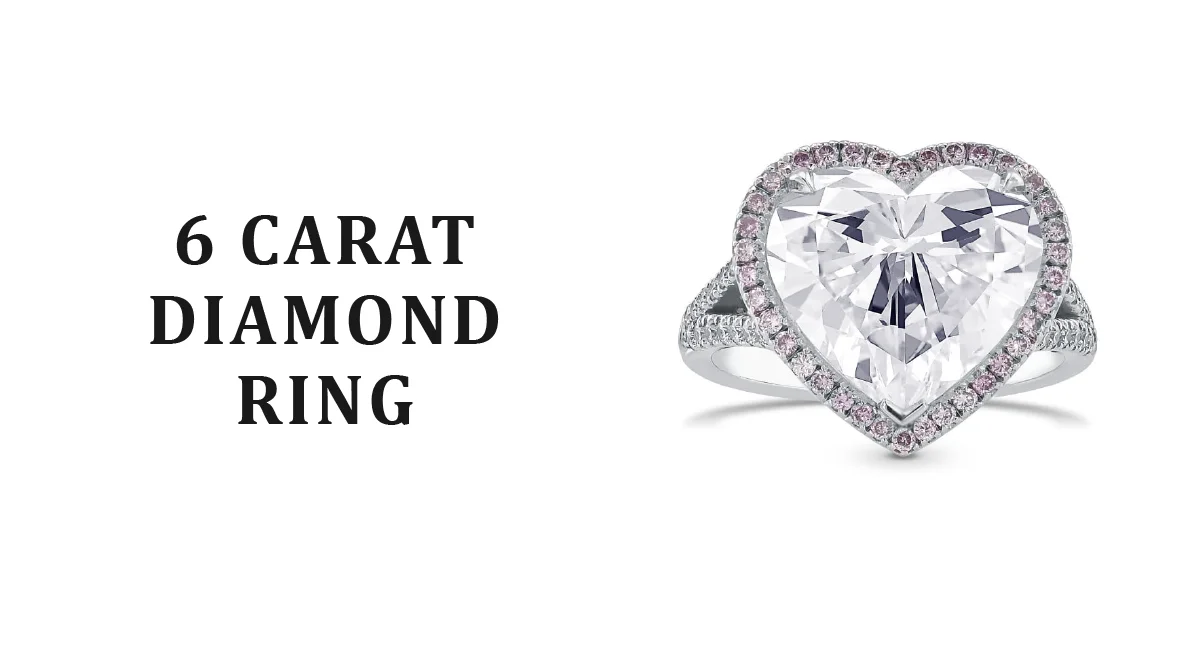
Stunning 6 Carat Diamond Ring that Set the Fashion Ablaze

When we talk about good choices in diamonds, nothing is much more appreciated than a 6 carat diamond. Its sparkles are mesmerizing due to its size, and if the cut quality is your priority, your ring will stand out wherever you go.

One of the most popular shapes for a 6 carat diamond ring is the brilliant round cut. A 6 carat diamond, though it looks appealing, can cost you quite a fortune if not bought with proper knowledge. Diamonds weighing 1-3 carats are the most popular on the market because they are more affordable. A 6 carat diamond, on the other hand, is a luxurious choice that one should choose for their significant other.

We at Loose Grown Diamonds want to assist you in the best way we can when you make such an important purchase. Hence, we have put together this 6 carat diamond buying guide to ensure you buy the stone that best suits your needs.

Stunning 6 Carat Diamond Ring that Set the Fashion Ablaze

How Much Does a 6 Carat Diamond Ring Price?

It can be around $8,000 to $200,000, this range varies due to the 4Cs of the diamonds. Which makes sure that higher quality diamonds get noticed and are valued accordingly.

How much does a 6 carat diamond ring price?

“What is the range of money that one should invest in a 6 carat diamond ring?” Perhaps this question bothers you as you might not be sure how much you should spend on this 1 cm big diamond.

We’ve all heard the saying stating a 6 carat diamond engagement ring should cost around your 2 months’ salary. There is no fact supporting this statement this saying was coined by diamond marketers decades ago. This law persuaded buyers to spend more on diamond engagement rings so they could profit.

The truth is that diamond prices shouldn’t scare you. Instead, it helps if you’re on a budget for a comfortable 6-carat diamond. The 4Cs, origin, and the brand you are selecting all have a big impact on the diamond’s price.

We have already mentioned the price of an average 6 carat diamond adobe. But what about a diamond that is below average? A low-quality 6 carat diamond can cost only $2,000-$3,000. However, an outstanding 6-carat diamond, with immense clarity, definite cut, and clear color from a first-class luxury brand, can easily cost over $200,000.

Remember that diamond engagement rings are always expensive, regardless of your diamond budget. This depends on the assembly and whether it needs to be adjusted separately. Depending on the ring style, from $500 to thousands of dollars, diamond ring prices range. The price is also affected by the type of metal and additional gem embellishments such as side stones.

[blog_page_inventory shape=”Emerald,Round,Princess,Asscher” carat=”6.00,6.10″ cut=”1,4″ color=”0,10″ clarity=”0,10″]
[blog_page_btn title”Buy Now” url=”https://www.loosegrowndiamond.com/inventory/?shape=Emerald,Round,Princess,Asscher&carat=6.00,6.10&color=0,10&clarity=0,10″]

The Size of a 6 Carat Diamond Ring

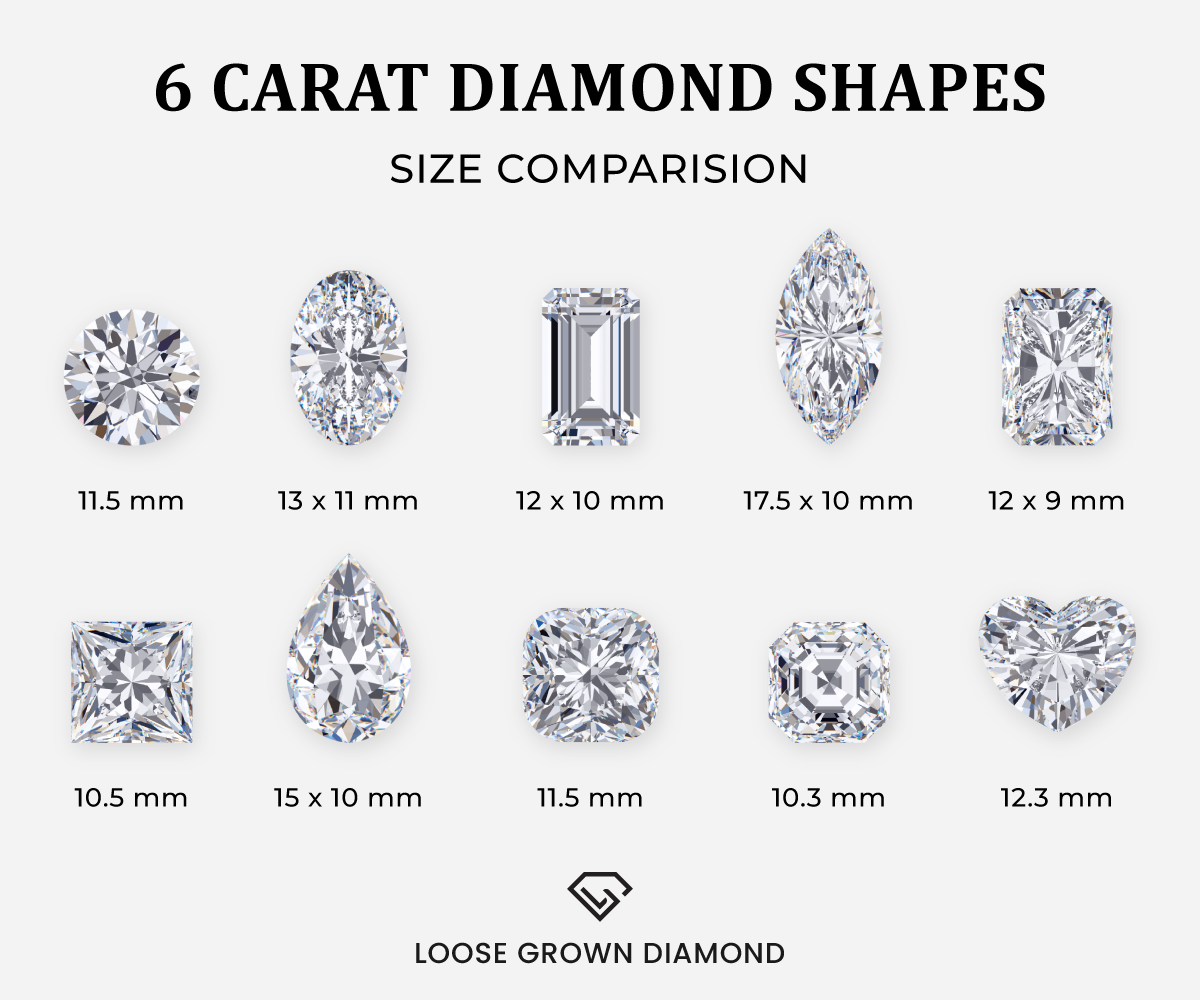
When looking at 6 carat diamonds, you need to understand that carat weight is a measure of the weight of the diamonds and not the size. Each carat weighs 0.2 grams, so a 6 carat diamond would weigh approximately 1.2 grams.

The Size of a 6 Carat Diamond Ring

Thus, the increase in carat weight is distributed throughout the entire volume of the stone—both in width and depth. If you were to compare 3 diamonds, each weighing 4 carats, 5 carats, and 6 carats, you would see that there is a difference in size, but it is not as substantial as one might think.

Carat limits the diamond’s dimensions, but the stone cut has the biggest impact on the diamond. Certain diamond shapes require fine cuts, while others require deep cuts. When looking at round brilliant cut diamonds, there are subtle size differences from stone to stone. They all have the same proportions and are optimized to reflect light from the base surface back to the eye.

6 carat Diamonds with deeper cuts, such as the Asscher cut, have most of the carat weight at the bottom of the stone, making it invisible. Smaller or longer cuts, such as ovals or emerald cuts, cover more area and tend to look larger

However, round and princess cuts have a great deal of depth. The 6 carat round brilliant has a proportional length and breadth. Stones of the same cut and weight may have different sizes.

6 carat Diamond engagement ring

It depends on how the cutter shapes the proportions. For example, two 1-carat round brilliant diamonds may differ in width and height, even though the two diamonds weigh the same. The deeper it is, the smaller it will appear in the ring. On the other hand, shallow diamonds look larger.

Carat is one of the crucial factors of the 4Cs when it comes to diamond pricing. Larger diamonds are rarer, so they cost more per carat. Diamond cutters, on the other hand, do not have complete freedom to determine the size of the stone.

Playing with diamond size to increase carat weight can result in an imbalanced cut. Therefore, their rating may turn out to be low.

Cut quality is also an important price factor. Therefore, the cutter aims to achieve a balance between carats and proportions. which is conducted by determining the proper size for the stone.

Additionally, if you are confused about how to determine the price of a diamond, don’t worry; we’re here to guide you. You can check the price with our Diamond Price Calculator.

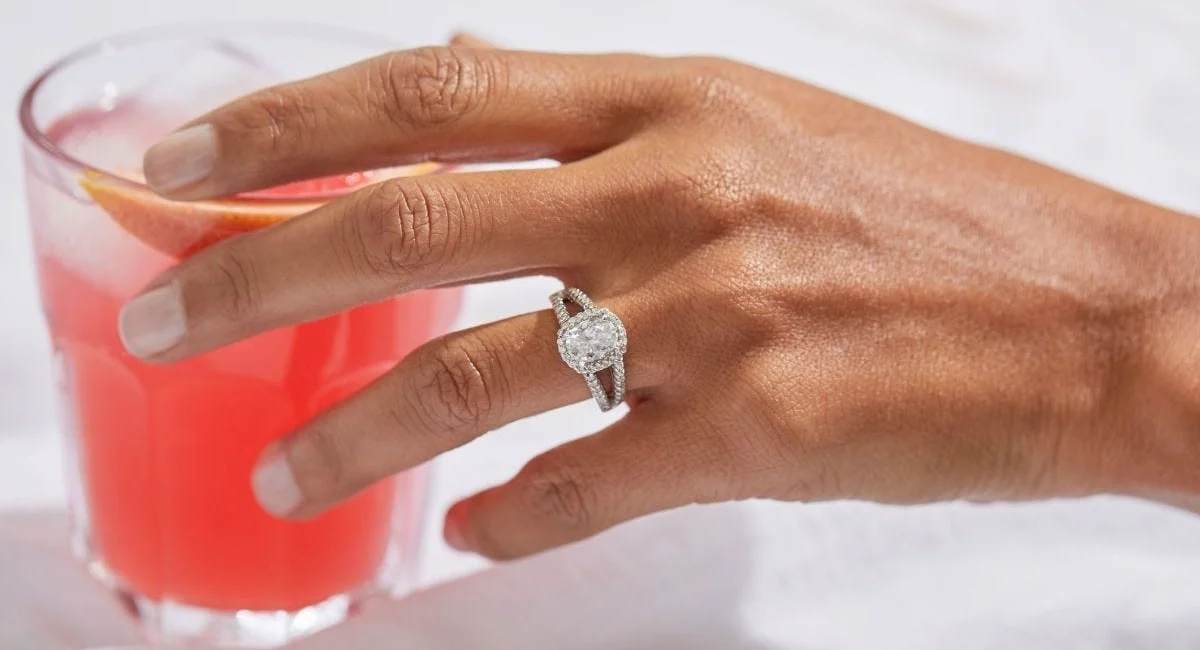
6 Carat Diamond Ring on Finger

6 Carat Diamond Ring on Finger

An important factor in determining whether this carat weight suits you is the size of your hand and how well it fits the shape of your finger. Extended cuts will make the finger look longer and thinner, but at higher carat weights, a stone that is too long can overpower the hand. To give you an idea of what a 6 carat diamond looks like, the most common shapes are listed below.

  • 6 carat round diamond ring on your finger: We recommend trying on a 6 carat round diamond ring on your finger to see if it looks perfect on your significant other. A round diamond is the widest of all the common shapes. This means that this diamond may appear larger than elongated shapes.
  • 6 carat cushion diamond ring on your finger: A cushion cut is slightly narrower than a round cut because part of the carat weight goes to the diamond’s square corners. Because of this, it looks a bit small in your hand, but it is a bulky diamond.
  • 6 carat oval diamond ring on your finger: oval cut diamonds can flatter your fingers at higher carat weights without overwhelming them. Since oval diamonds are basically round diamonds that have been stretched out, they are thinner and longer than round diamonds.
  • 6 carat emerald cut diamond ring on your finger: Emerald cut diamonds are considered one of the most beautiful cuts. This particular cut was first used to cut emeralds, but it slowly gained fame over time as individuals later came to appreciate the look and feel of the emerald cut for diamonds.

The clean, rectangular shape is highly valued because it is easy to set in jewelry, and the regular shape is favored by modern celebrities. The shape of an emerald can vary depending on the ratio of length to width.

Which is the Most Popular 6 Carat Diamond Shape?

The shape of a diamond ring largely depends on personal preference. Or your significant other, for that matter. Either way, you’ll find a gorgeous 6-carat ring for every taste. The most common shape should be a round diamond. However, you can choose a longer diamond shape same as a pear shape, oval shape, marquise shape, emerald shape, radiant shape.

The Shapes of 6 Carat Diamond Rings

Here is an overview of the most popular diamond cuts/ shapes :

Round Shape Diamond: The most popular and preferred diamond on the market is the round brilliant. A diamond with 58 facets and a structure that can be mounted on top of any piece of jewelry with ease. A 6 carat round brilliant diamond will steal the show with its elegance and shine.

Radiant Shape Diamond: If you incorporate the brilliance of a round diamond and the step cut of an emerald diamond, the byproduct will be a radiant-cut diamond. This is one of the most timeless diamonds, with around 70 facets, which ensure the stone sparkles. A 6 carat radiant cut diamond will appear massive and make any outfit look good.

Princess Shape Diamond: You can also opt for a square stone with a pyramidal base that gives off a symmetrical look. Selecting this shape for a 6-carat diamond will also tend to save you money as it is less expensive than a round-cut diamond.

Marquise Shape Diamond: Like its name, this diamond shape is also quite elegant. The shape of this diamond is similar to that of a woman’s lips. A 6-carat marquise diamond will make any finger look elongated and any hand looks royal.

Cushion Shape Diamond:  Cushion diamond shape has a special captivating power once you lay your eyes on it. If you were to mix an old mine cut diamond with a modern round brilliant cut diamond, you would get a cushion cut diamond. This diamond shape makes any carat diamond look like a prized possession.

Asscher Shape Diamond: The asscher shape can be found to have the same characteristics as that of a square emerald cut. The diamond rings of this shape have remained a favorite for girls since 1902. This shape is a step-cut diamond in a series of parallel rectangles or squares with a high crown. A 6 carat asscher cut diamond will radiate ultimate brilliance.

Emerald Shape Diamond: When someone refers to a step-cut diamond, this is the shape they are referring to. A clean, step-cut diamond is what the emerald shape is all about. It has huge cascading faces that reflect light. A 6 carat emerald cut diamond will make any hand look beautiful.

Oval Shape Diamond: Oval cut diamonds have grown in popularity in recent years as people look for alternatives to round cuts. The result is a uniquely shaped diamond with the same feel and sparkle as a round cut diamond. It appears larger due to its shape and can be a good choice for a 6 carat diamond.

Pear Shape Diamond: This modified crystal diamond cut is also known as a teardrop diamond because of its shape. Pear diamond shape has remained popular for many years, especially in the halo, necklace, and earring designs. Pears have long been popular as accent stones in diamond engagement rings.

Heart Shape Diamond: Heart cut diamonds work very well with big diamonds. These are less traditional shapes for diamond rings. For a 6-carat diamond, the heart shape, smooth lobes, and tapering base can easily be enjoyed by the wearer.

6 Carat Diamond Ring Color

Another important factor in choosing a beautiful 6 carat diamond ring is the color. Diamonds will look more beautiful if they have the perfect color, which makes them more brilliant. Diamonds are available in many different colors, including grey, yellow gold, rose gold, brown, bright yellow, and colorless.

The colorless range goes from D to Z according to the Gemological Institute of America (GIA) color chart. We all know that an ideal or perfect diamond is colorless. A colorless or transparent diamond means it has a grade of D. It’s like if you submerged it in a glass of water, it wouldn’t be visible to you.

On the other hand, if we talk about the Z grade, it is slightly toward a brown or yellow hue. If you choose a higher color grade, you have to pay more for it. We highly recommend that when choosing a 6 carat diamond color, you go for a color grade that lies between G and I. This range is eye-clean and will make any 6 carat diamond appear flawless.

The Best Grades for 6 Carat Diamond Ring

You have probably heard about the 4Cs of a diamond. These four grades indicate a diamond’s cut, color, clarity, and carat weight. You should be aware of these grades to make an informed purchase.

The Best Grades for 6 Carat Diamond Ring

As we are talking about 6 carat diamonds, the diamond carat weight is fixed, but let’s define the cut, color, and clarity.

1. Cut grade for 6 Carat Diamond Rings: People often confuse the cut of a diamond with the actual shape of the diamond, like round, oval, or pear-shaped diamonds. Instead, cut quality refers to the quality of a diamond, with a rating ranging from excellent to poor. The cut grade is very important because it affects the way light travels through the diamond. In a well-cut diamond, light travels efficiently through the stone, reflecting off the facets and exiting the top of the diamond, creating a perfect sparkle.

Alternatively, a poorly cut diamond can allow light to leak through the sides and the bottom, causing the diamond to look dull. An excellent-cut diamond can be bigger than a poorly cut diamond of the same carat.

2. Color Grade for 6 Carat Diamond Rings:  Color grade refers to the diamond’s whiteness and ranges from colorless D to slightly yellowish or brownish Z. Unlike cut grades, you don’t need the highest color grade to enjoy beautiful, colorless diamonds. A diamond’s color has to be checked under natural lighting, fluorescent lighting, and a variety of lighting conditions.

3. Clarity Grade for 6 Carat Diamond Rings: A diamond clarity grade is the number of inclusions present in a diamond. Inclusions can appear as dark spots, cracks, cloudy areas, or even feathers in the stone itself. Here is the clarity grading scale according to universal standards.

Clarity Grade for 6 Carat Diamond Rings:

  • Flawless (FL)
  • Internally Flawless (IF)
  • Very Very Small Inclusions (VVS1)
  • Very Very Small Inclusions (VVS2)
  • Very Small Inclusions 1 (VS1)
  • Very Small Inclusions 2 (VS2)
  • Small Inclusions 1 (SI1)
  • Small Inclusions 2 (SI2)
  • Inclusions 1 (I1)
  • Inclusions 2 (I2)
  • Inclusions 3 (I3)

I3 diamonds have visible inclusions, and flawless diamonds have no inclusions. VS or VVS clarity diamonds are the best choices for 6 carat diamonds.

This is because defects can be seen only at 10x-20x magnification, but not with an unaided eye.

The Clarity Rating for 6 Carat Diamond Rings

The difference between a low-quality diamond and a diamond of exceptional beauty and brilliance lies in the evaluation of the 4C’s. As mentioned about the price of 6 carat diamonds, there are large price differences between high and low grades for rarer diamonds over 6 carats.

The Clarity Rating for 6 Carat Diamond Rings

Clarity refers to a diamond’s appearance, the number of defects, and inclusions. Higher scores indicate fewer defects. Above a certain level, inclusions cannot be detected with the naked eye. VS2 diamonds are very difficult to detect flaws in unless they are inspected with special equipment.

Typically, the highest score you’ll want to consider is VVS2. No inclusions can be found in this type. A grade above this entails a premium price without a noticeable increase in beauty; FL(Flawless) charity.

The dissimilarity between one clarity grade and another is barely visible to the naked eye but will cause a huge price difference. There is a big price difference. For this reason, it is important to seek professional help when purchasing a diamond ring of this size. In this way, you can assess whether the diamond’s clarity is right for you and make sure you’re not overpaying.

Where to Buy 6 Carat Diamond Ring?

Buying a 6 carat lab grown diamond ring is a significant investment, and it’s important to make an informed decision. Choose the diamond shape that suits your style and preferences. Select the metal for the ring’s setting and add personal touches through engravings, If you have to customize click here.

Always purchase from a seller that provides an authentic diamond certificate with a diamond. Check the certificate for the exact carat weight. Loose Grown Diamond sells diamonds that are 6 carats, and GIA/IGI/GCAL certification proves that they are real.

Determine your budget, our prices are lower than the regular sellers because we directly give you diamonds from our factory. If you’re ready to start searching to buy the best price diamond and engagement ring we’ll help you pick out a stunning diamond. Happy journey.


Conclusion

When shopping for a 6 carat diamond or any diamond jewelry above 2 carats, you have to be extremely careful. These big diamonds are a big investment, and hence you should look into all the details before buying.

Lab-grown diamonds offer a more affordable and sustainable option compared to natural diamonds and valuable gemstone that is often used in engagement rings or other fine jewelry pieces.

FAQs

Can I customize a 6 carat diamond ring with additional stones?
LGD jewelers offer customization options, adding side stones. These personal touches can make the ring unique and meaningful.

How do I get my ring size?
You may use our Ring Sizer. Please click here for a ring size chart option.

Can I see the CAD/3D look of 6 carat diamond ring?
Yes, Once you placed the order, we will get back to you with the CAD/3D within 48 working hours over email.

What diamond shapes are available for 6 carat rings?
Diamond shapes available for 6-carat rings include round, princess, emerald, cushion, radiant, oval, heart, pear, and fancy shapes in triangular, baguette, hexagon, marquise, and kite.

How do I care for and maintain a 6 carat diamond ring?
Regular cleaning and inspections are essential. Avoid exposing the ring to harsh chemicals, and store it in a safe place when not in use.

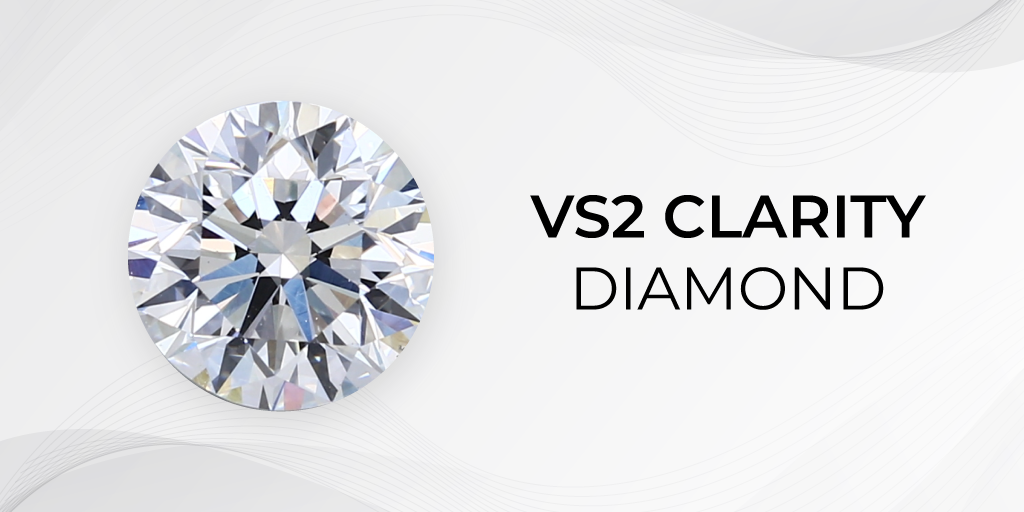
A VS2 Diamond Clarity Guide: Should You Buy Them or Not?

When we talk about a lab diamond, it’s important to know its value and what to look for. There are many factors to consider, such as shape, size, and the 4Cs (color, cut, clarity, and carat). The factor we are going to pay attention to here is clarity, specifically VS2 diamond clarity.

Clarity is a measure used to evaluate a diamond’s appearance. Assess the number of blemishes and inclusions present in diamonds.

While shopping for an engagement ring, you obviously are looking for a lovely diamond in your budget. What beauty means may vary from individual to individual, but what is not liked in diamonds is pretty constant. It is generally accepted that lab diamonds with large visible inclusions are not beautiful.

Visible blemishes are one of the biggest factors in determining how much you can sell a diamond for if you want to upgrade your gemstone in the future.

What you need is a clean eye diamond, one that looks perfect when someone looks at it and has no visible defects or impurities. This is where VS2 diamonds come into play. They offer the best balance of clarity and price among all clarity levels. VS2 diamond is the most recommended transparency level when helping people find the best engagement ring that fits their budget.

What Is VS2 Clarity?

VS2 stands for Very Slightly Included Level 2 and is considered a level above the average diamond. This clear diamond sits comfortably in the middle of the overall clarity grading scale. It also represents a high-quality lab diamond that realistically matches a flawless appearance under normal conditions.

What Is VS2 Clarity?

A VS2 diamond is a lower grade of VS clarity. VS2 inclusions are most clearly visible at 10x magnification. Most diamonds under 2 carats have VS2 inclusions, which are almost impossible to see with the naked eye.

In this type of diamond, the inclusions may be situated in places that are difficult to see. Yet, most inclusions are big enough to be seen right away when the stone is put under a microscope.

VS2 diamonds are considered the optimal balance between price and quality. The lower SI1 and SI2 diamonds are questions regarding the clarity of the lab diamond. The higher VVS1 and VVS2 diamonds are far beyond ‘eye clean. In other words, you are paying a higher price for a product that is indistinguishable from a lab grown diamond with a lower clarity grade that is also eye-clean.

These diamonds are classified as high quality but are less expensive than the VVS1 or VVS2 (very very slightly included). If your budget is not for VVS1 or VVS2 but clarity still matters, then VS2 is the best choice for you. You’ll eventually find most diamond buyers drawn to VS2 as it allows them to more comfortably view enlarged diamond images that can make even the smallest inclusions incredibly clear.

Pros and Cons of VS2 Diamonds:

Pros:

  1. Inclusions not visible without magnification
  2. Affordable yet high-quality option
  3. Can be comparable to VS1 if selected carefully

Cons:

  1. Inclusions become noticeable under 10x magnification
  2. Flaws are emphasized with higher carat weight
  3. Not the ideal choice for step-cut styles

Are VS2 diamonds Eye-Clean?

When buying an eye-clean diamond, the presence of inclusions should not psychologically affect your purchase. It must be acknowledged that lab grown diamond inclusions are normal, even if they cannot be seen with the naked eye.

Find the Best-Priced "Eye-Clean" Diamond?

It is suggested that when buying a diamond, look for one that has its inclusions scattered throughout the stone. Transparent or whitish inclusions are also preferable over dark ones.

Dark inclusions are the worst. Not only are they more visible to the naked eye than ’clear’ or ‘white’ inclusions, but they also block and absorb light reflected inside the diamond. This means that the presence of dark impurities not only makes the lab diamond less clean to the eye but also reduces its shine.

The worst position for inclusions is in the middle of the table. These inclusions are more visible than if they were placed on the side/girdle of the lab diamond under a smaller, denser facet.

If you choose a diamond that looks clean and has been checked for clarity, you will get a stone with the same image quality as a premium diamond (FL-VVS), but for a lot less money.

[blog_page_inventory shape=”Emerald,Round,Princess,Asscher,Marquise,heart,pear,oval,cushion” carat=”6.00,6.10″ cut=”1,4″ color=”0,10″ clarity=”3,9″]
[blog_page_btn title”Buy Now” url=”https://www.loosegrowndiamond.com/inventory/?”]

Is VS2 Clarity Good?

VS2 clear diamonds may appear perfectly clean or may contain inclusions, depending on the type and location of the inclusions. However, most VS2 Clarity diamonds are well worth their price and offer excellent value.

If you are looking for the best balance between quality and value, you should take a look at the VS2 clarity grade diamonds. Diamonds of this variety are cheaper because they are minutely blemished and their defects and inclusions are not visible to the naked eye.

If a diamond has many inclusions, it will affect its overall appearance. The greater the inclusion, the easier it is to attract attention (in a negative way), especially if its colors are contrasting.

A VS2 grade diamond usually has a few small inclusions or one or two large inclusions, but the presence of these inclusions does not distract individuals from the diamond’s overall beauty.

Your goal when buying diamonds should be to find gems that are clear to the eye. This means there are no visible defects, and many VS2 diamonds are considered eye-clean.

However, not all VS2 diamonds necessarily look clean, so it is important to carefully inspect them for clearly visible inclusions. Inclusions are also easier to spot on larger diamonds and certain diamond cuts/shapes, such as asscher or emerald cuts. VS2 may be slightly lower in these cases. However, for regular-sized round diamonds, this degree of clarity is sufficient.

Inclusions are more visible to the naked eye in diamonds of higher carat weight. In diamonds of high carat weight, inclusions are more visible to normal vision. The larger the diamond, the greater the surface area at which defects can be detected.

A VS1 or VS2 is usually sufficient for diamonds under 2 carats, but the same grade may not be sufficient for high carat diamonds. Also, consider higher clarity ratings when viewing diamonds larger than 2 carats. Regardless of the grade, you will still want to focus on choosing a diamond that is clean to the eye. You may be able to find pure VS2 diamonds.

VS2 Diamond Quality

A VS1 diamond is of the highest quality, with no visible imperfections. Even under 10x magnification, any inclusions are nearly impossible to identify. These diamonds belong to the top 5 percent of all gem-quality stones.

On the other hand, VS2 diamonds may have visible inclusions only 5 percent of the time, mainly in stones over 1 carat. VS2 diamonds, however, exhibit more noticeable natural characteristics that are larger and easier to spot.

VS2 Diamond Price

The VS2 diamond price depends upon other factors such as carat weight, cut quality, color grade, and even diamond shape. Clarity is the best region to save some cash.

vs2 diamond price

The price difference between different levels of transparency is often surprising.  VS2 Clarity is included in an optimal position with which you can usually get very good value for money.

Despite minor imperfections, VS2 diamonds tend to be much cheaper than diamonds with high clarity. One of the main strengths of this stone is that VS2 diamonds are virtually indistinguishable from unblemished diamonds to the naked eye, only adding to their attractiveness.

Best of all, the low definition doesn’t necessarily mean sacrificing beauty and appearance. Gemstones with many small inclusions or a few noticeable inclusions are rated with a low transparency rating. The lower the transparency rating, the lower the overall price will be.

As mentioned earlier, VS diamonds are barely visible to the naked eye. Here, both VS1 and VS2 diamonds often offer a combination of beauty and value, where a flawless diamond can be found without paying more than is necessary.

A flawless 1.50 carat round diamond typically retails for around $5000- $8,000 in the market. By comparison, a similar cut in the VS2 class costs $3,000- $4,000. Yet both diamonds look nearly identical to the naked eye. However, as the number of carats increases, the price will also increase.

Do Weight and Cut Matter When It Comes to Vs2 Diamond?

A bigger carat doesn’t necessarily mean you’ll need to spend more. Inclusions may be more visible on larger diamonds, but it is important not to limit yourself to seeing only the perfect option.

As carat weight increases, the visibility of inclusions also increases. For this reason, many people aim for higher clarity for larger diamonds.

If a diamond weighs between 1 and 2 carats and is rated VS2, you can be sure of its value. However, as the carat size increases, you should check for inclusions. There should be no dissimilarity between a 2-carat VS2 diamond and a flawless diamond of the same weight unless you use a 10x magnifying apparatus.

Plus, inclusions in step-cut diamonds are easier to spot. A step-cut diamond refers to a square or rectangular cut stone. These include baguettes, emeralds, and Asscher diamonds. If you have inclusions in your VS2 diamond, it’s worth upgrading to VS1 or above to get the most out of your diamond experience.

Instead, you should broaden your search to include VS2 diamonds as well as VS1 and VVS2 diamonds when looking for larger carat diamonds. Oftentimes, VS2 diamonds look neat and clean to the naked eye, but they are not as valuable as flawless gems. Most importantly, diamonds look amazingly clean and neat, regardless of their clarity.

The Best Shapes for VS2 Diamonds

VS2 clarity does not always guarantee that you will receive an eye-clean diamond. Whether or not they look clear to the naked eye depends on things like the quality of the cut (defects are easier to hide when the light output is higher), the color of the inclusions, and the shape or type of defect.

The Best Shapes for VS2 Diamonds

It’s important to know because the VS2 purity level may be good for one shape, but too low for another. In showing imperfections, some diamonds are better or some are worse than others. The shape and size of the diamond also play an important role. This diamond size chart will give you a thorough approach to identifying your size.

These diamond shapes are characterized by long, straight, parallel facets, and all the markings are fairly distinct. But the same flaws may be hidden in round brilliant-cut diamonds such as round, oval, cushion, pear-shaped diamonds, or smaller emeralds. The flaws in the emerald diamond are easy to see due to having a big table.

Spherical gems manage to glow brighter, so they hide flaws much better than other types of cuts. Rounds are said to be safer but more susceptible to damage because of their spherical shape.

Another ambiguous example of eye-clean quality is the princess cut VS2 diamond. It is rated for very light clarity 2. Given the size and location of these impurities, they will most likely be visible to the naked eye.

VS2 vs VS1 Diamond

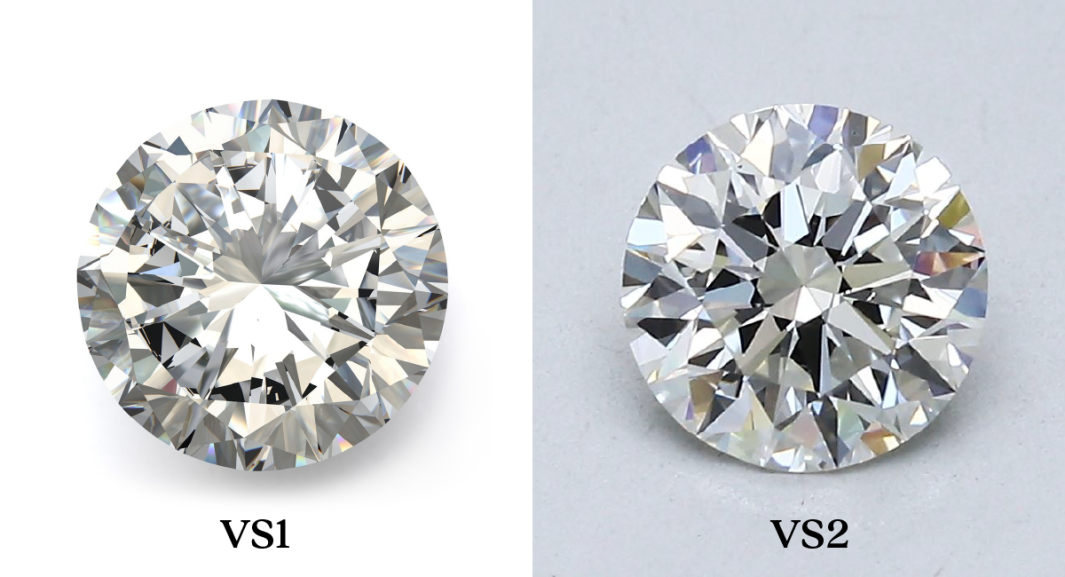
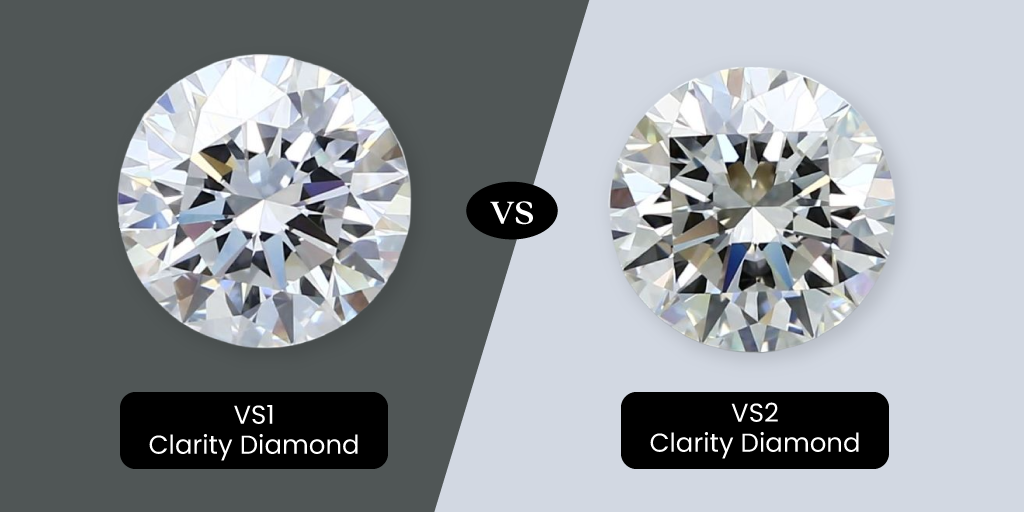
VS1 and VS2 are roughly in the middle of the GIA diamond clarity scale, and both have small inclusions when viewed at 10x magnification.

difference Between vs1 vs vs2

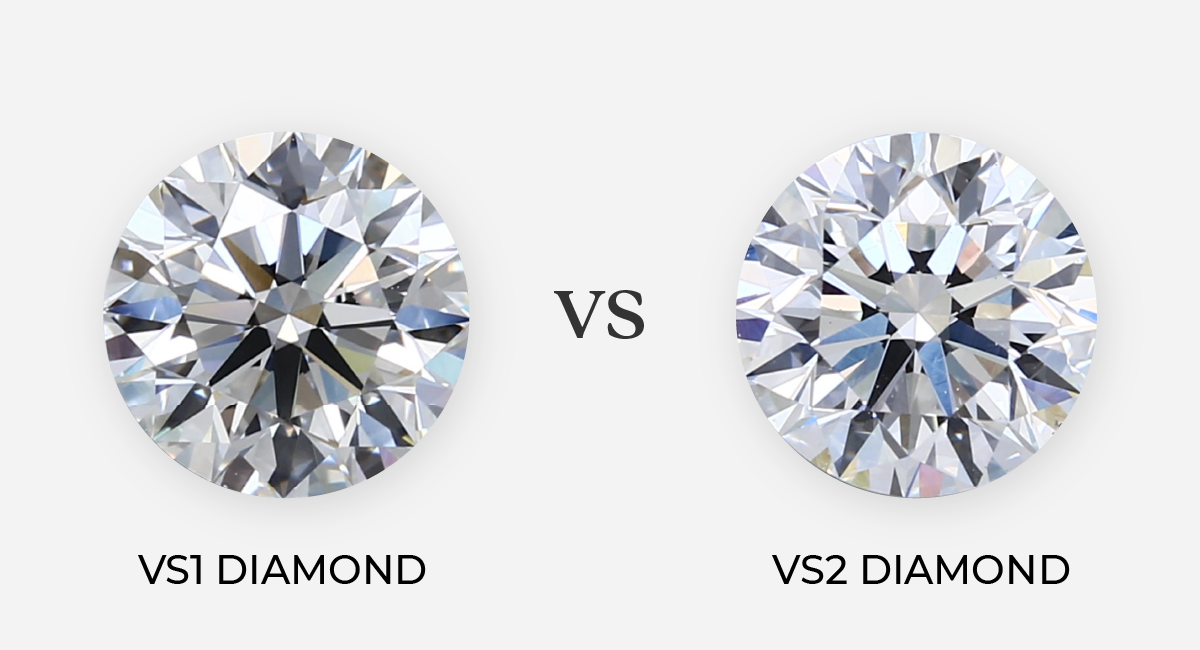
Compared to VS2 clarity diamonds, VS1 clarity diamonds have fewer inclusions, which are smaller and harder to find. In addition, VS2 diamonds often have impurities in worse places and are easier to see. If we take a case in which both examples have the same number of defects.

However, if one of these diamonds has a flaw in an inconspicuous area, such as the side of the lab created diamond, it may receive a VS1 grade. On the other hand, a diamond with the same defect in a very prominent location, such as in the center or just at the top of the diamond, is more likely to receive a VS2 rating.

VS2 and VS1 diamonds tend to have only a few inclusions but are more affordable than diamonds ranked higher on the clarity scale. It can be difficult to tell the difference between FL and VS diamonds with the naked eye but still, they are much cheaper than flawless diamonds.

For this reason, experts recommend VS1 and VS2 diamonds as an excellent combination of quality and value. They are an excellent choice for those looking to buy high-quality, beautiful diamonds (such as engagement rings, wedding rings, and other diamond jewelry) without spending a lot of money.

Should I Buy A VS2 Diamond?

Should I Buy A VS2 Diamond?

Ultimately, the VS2 diamond can be a great choice for an engagement ring. Choosing a diamond with a lower clarity grade can save you money. However, finding the right diamond for you can take time.
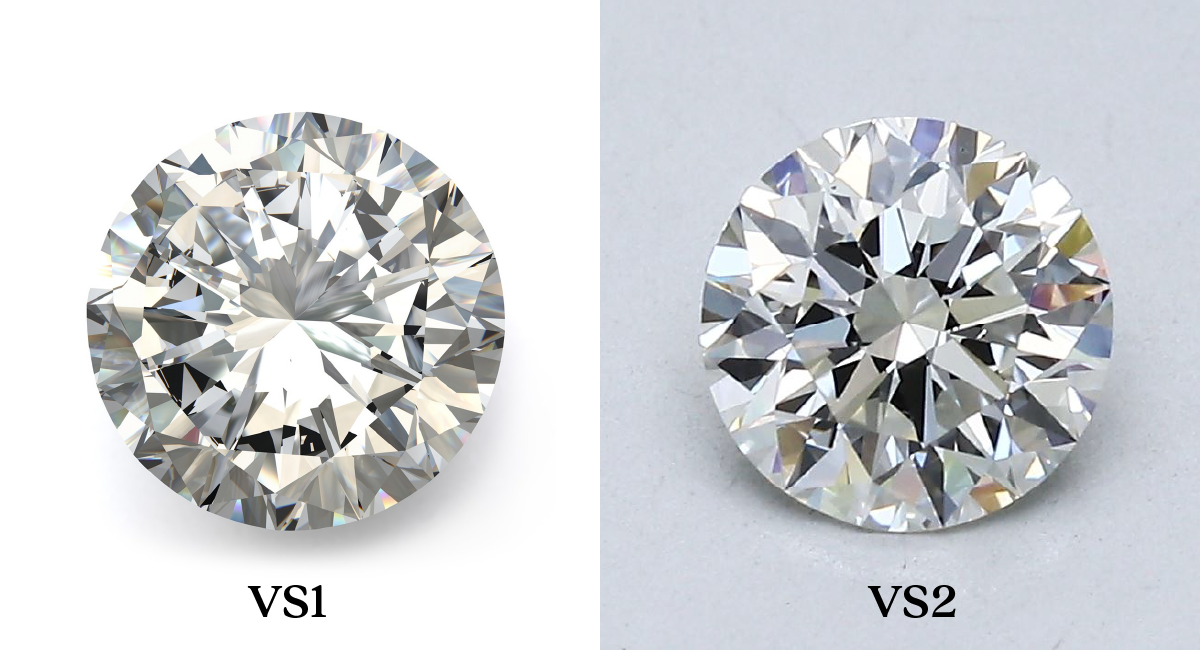
If you’re thinking about buying a VS2 diamond, please check out these tips.

  • Carefully inspect the selected diamond for inclusions or defects. It’s a good place to start if you don’t see any noticeable blemishes.
  • VS2 diamond inclusions are not visible to the naked eye. If you can see them without magnification, it’s not a VS2-grade diamond.
  • Ask the diamond professional to show you any inclusions that can be seen using 10x magnification.
  • If the inclusions are present in the middle or near the pavilion, they will be more noticeable. Diamonds with such inclusions are rated lower. The inclusions near the belt are hard to see even when magnified. That’s good
  • Feathers, natural elements, clouds, needles, and crystals are among the elements included.
    If the shape and durability of your diamond are important to you, don’t buy a diamond with large feather inclusions in the corners.
  • Do not buy diamonds with chips, cavities, knots, or etched channels. Its durability and beauty may decrease based on the intensity of these.
  • The shape is important. Princess, oval, cushion and emerald cuts tend to be cheaper than round diamonds of the same carat size.
  • Some cuts show more clarity, so if you’re interested in a specific round diamond, it’s a good idea to upgrade to the VS1.
  • Don’t overpay for clarity. VS1 or VS2 diamonds are as clear as FL diamonds but much cheaper. Your budget is better spent on factors that have a greater impact on the beauty of a diamond, such as the quality of the cut.
  • If your lab created diamonds are memories for future generations, do as much research as possible before preparing your eternal stone.


You can view actual photos and videos of diamonds on websites and train your eyes to better evaluate inclusions. These high-resolution photos and videos are an easy way to spot problematic inclusions.

We at Loose Grown Diamonds offer this feature for all our diamonds. You can visit our store to find out more or you can check out our online diamond inventory as well.

We recommend that you look closely at the lab grown diamond in high-quality photos before purchasing. This way, you have a clear understanding of what to expect.

Additionally, explore exclusive savings with our promo code when elevating your diamond shopping experience.

FAQs

How much is a VS2 diamond worth?
A VS2 diamond typically begins at around $500-$700. However, it’s important to note that various factors, including carat weight, color, and cut quality, can influence the overall price of the diamond.

What is a VS2 diamond?
A VS2 diamond is classified as “Very Slightly Included 2” on the diamond clarity scale, positioned one grade below VS1 and one grade above SI1.

Is VS2 clarity good for an engagement ring?
Yes, VS2 is a popular choice for engagement rings as it provides a good balance between quality and affordability. The inclusions do not significantly affect the diamond’s appearance.

A VS1 Diamond Clarity Guide: Brilliance on a Budget!

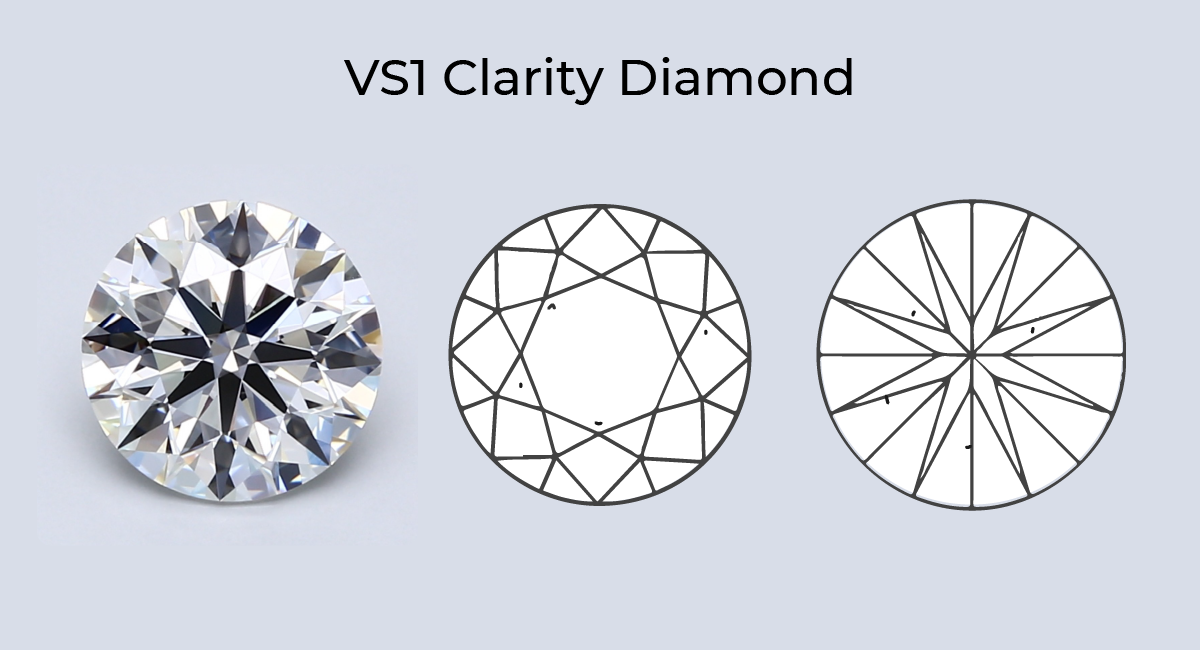
A VS1 Clarity Diamond is a ‘very slightly included 1 diamond’ as per the GIA Diamond Clarity Grading Scale. A VS1 clarity grade diamond is possibly the most popular diamond grade with customers all over the globe. It offers a great deal of balance of price, beauty, and variety. However, as you might know, getting a VS1 grade diamond requires a little knowledge, as it does with almost any diamond grade.

In this article, we will tell you everything you need to know before purchasing a VS1-grade diamond. 

When you start scouring the Internet for clues about how, where, and when to start looking for an engagement ring, you’ve probably noticed that the topic of diamond clarity pops up more than anything else. However, chances are you don’t fully understand what clarity means and why it is so important to future diamond engagement rings

A VS1 diamond clarity Guide: Should You Buy Them or Not?

The term “clarity” only refers to one aspect of a given diamond, but it is quite significant. It indicates the absence and presence of defects in a diamond, so understanding the clarity grade provides a reliable, quick, and simple judgment of the quality of any diamond. 

These imperfections are called inclusions, which may be too small to be seen without a magnifying tool, or large enough to completely ruin or undermine the beauty of the stone. For this, it can be small enough to result in high prices, or large enough to make diamonds much less valuable in the market.

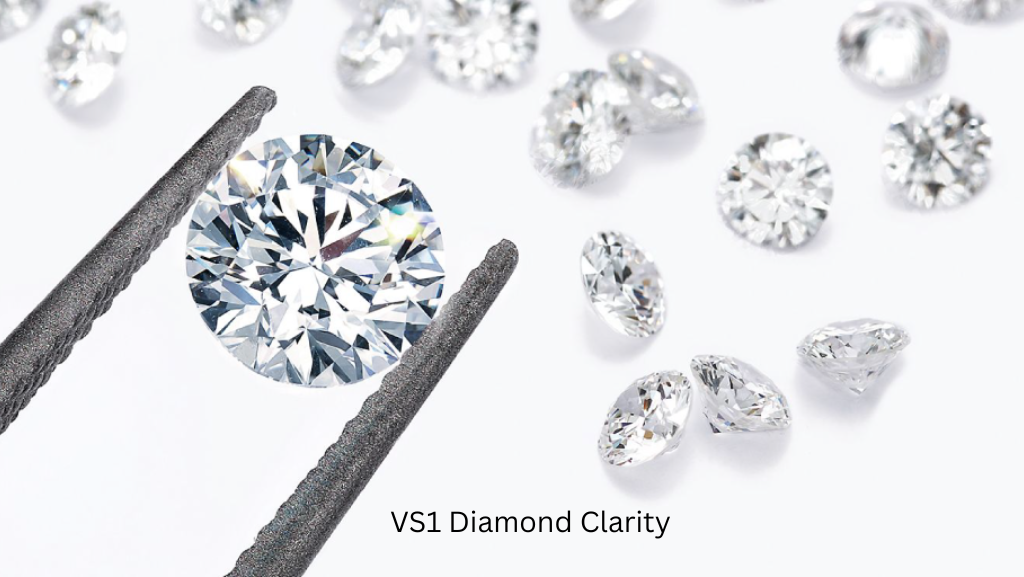
VS1 lab diamonds, by definition diamonds with inclusions, are still one of the most desirable categories of diamonds on the market today. While not perfect, the VS1 clarity cleanliness is because it provides a high level of confidence that most inclusions are barely visible to the naked eye.

What Is Vs1 Diamond Clarity?

First, you need to understand what the clarity of a diamond is. It is one of the 4C diamonds, in which case transparency means the presence (relative term) or absence of inclusions and defects.

What Is Vs1 Diamond Clarity?

VS1 stands for Very Slightly Included 1. As already mentioned, lab made diamonds are not completely flawless, but it doesn’t mean that inclusions pop out when anyone looks at the stone. In perspective, all Gemological Institute of America (GIA) professionals should be trained to distinguish between VS1, VS2, VVS1, and other categories. 

This is because grading diamonds consistently can be very difficult given the fact that inclusions can be quite big or very small. The formation of natural diamonds occurs in the earth’s crust. Due to this reason, some impurities are almost always unavoidable and only a small percentage of diamonds are flawless (FL).

GIA’s Clarity Scale:

  • Flawless (FL)
  • Internally Flawless (IF)
  • Very Very Small Inclusions (VVS1)
  • Very Very Small Inclusions (VVS2)
  • Very Small Inclusions 1 (VS1)
  • Very Small Inclusions 2 (VS2)
  • Small Inclusions 1 (SI1)
  • Small Inclusions 2 (SI2)
  • Inclusions 1 (I1)
  • Inclusions 2 (I2)
  • Inclusions 3 (I3)

GIA is the authority that developed the 11-step Diamond Clarity Grading Scale (I3 clarity to Flawless clarity), and VS1 is the higher level. Note that even under magnification, defects can be difficult to see, especially in small diamonds (under 2.00 carats). But if you want to see it, you can take out a jeweler’s magnifying glass (10x magnification) and inspect the diamond. Once the entire stone is in focus, you may have to look for a few seconds to find the flaw.

All inclusions are not the same because they differ in size, characteristics, number, and location. The larger the defect, the lower the grade, and the smaller the inclusion is to get a VS1 grade.

Nature is determined by the type of inclusions and imperfections deep within the diamond that are common in VS1 gems. For example, the VS1 diamond may have been trapped in a small patch of mineral during its long formation process. 

However, if the imperfection does not permeate the stone, it is a blemish, not an inclusion. This is not the case if the VS1 diamond is professionally cut. For VS1 stones, 45 very few inclusions are allowed, present usually toward the girdle. This gives a lower grade closer to the central table. This is because the closer you get to the belt, the more difficult it is to see the inclusions. 

By the way, the inclusions near the diamond pavilion are reflective. This makes the facets act like mirrors, reflecting inclusions. And we have diamonds of the same clarity and weight but with different inclusions. Diamonds with less visible inclusions (near the girdle) can be expected to be about 5% more expensive if the remaining 4 Cs are matched.

The relief indicates the level of impurities relative to the host diamond. Without too much detail, the higher the relief, the darker the diamond, and the lower the quality. Again, the VS1 Diamond has little or no relief. 

VS1 Clarity Diamond Cost

So, although you know where the VS1 is in the spectrum and how it compares to other clarity classes, chances are you’re still looking for more specific terms. For that, here’s what you need to know about the actual payout for VS1 diamonds.

What Is the VS1 Diamond Price?

It is difficult to determine the price based on clarity alone. As you know, the carat weight, color, and cut of a diamond affect the VS1 diamond price, this can get pretty expensive. 

For example, a 1.00-carat diamond with VS1 clarity and color D (colorless) can cost over $11,100. However, in terms of value, VS1 Diamonds are often in the best position to get the best value when it comes to buying a diamond engagement ring

VS1 diamonds are still highly priced in the market despite their inclusions as they are generally considered eye-clean lab-created diamonds. They are more common than IF and FL diamonds but are popular enough among those looking to purchase an almost flawless diamond engagement ring worth a premium price. Still, VS1 diamonds remain much more affordable than other diamonds, which are rated a notch higher than VS1. 

The most common mistake people make when buying diamonds is to buy diamonds with a clarity grade that is too high to rate. A clear-eyed diamond VS1 clarity looks identical to a Flawless-grade diamond, assuming all other diamonds are the same, but much cheaper. 

For example, a 1.2-carat round cut diamond has VS1 clarity, and E color, and is priced at $4,000. Similarly, a 1.2-carat round cut diamond, is rated VVS2 clarity and E color and is priced at $4,600. VVS2 Diamond is 20% more expensive than VS1 Diamond. Both diamonds are eye-clean with no visible blemishes or inclusions. In such a case it is recommended that you buy a VS1 clarity diamond and you’ll get the same results when it comes to aesthetics but for 20% less.

In a similar case, if you were to take a VS1 diamond and a VS2 diamond, the VS2 diamond would be more affordable and similar in terms of being eye-clean to the VS1 diamond.

VS1 clarity diamonds are always pleasing and eye-clean, so if it’s in your budget you can go for it. VS1 diamonds are good engagement ring stones, but VS2 diamonds are almost always eye-clean as well. Even most SI1 diamonds look perfect to the naked eye. The lower the clarity grade, the lower the price, so you can invest the money you save in higher-quality diamonds and more complicated settings. However, this does not mean that VS1 clarity Diamonds should be avoided. In some cases, limiting your search to a lower clarity stone may not find a better option.

[blog_page_inventory shape=”Emerald,Round,Princess” carat=”6.00,6.10″ cut=”1,4″ color=”0,10″ clarity=”6,7″]
[blog_page_btn title”Buy Now” url=”https://www.loosegrowndiamond.com/inventory/?shape=Emerald,Round,Princess&carat=6.00,6.10&color=0,10&clarity=6,7″]

Eye-Clean VS1 Diamond 

It’s a diamond that looks perfect to the naked eye, except finding one isn’t as easy as you might think. As mentioned, the heavier the stone, the more obvious the defect is. 

Eye-Clean VS1 Diamond 

Also, in addition to the cut, the position of the defect plays an important role. Emerald and Asscher cuts have step cuts. This means it can be square or rectangular and has many parallel faces. The downside is that the edges highlight inclusions and make them easier to find. 

Then there is the inclusion of color and cut quality. The best cut, regardless of shape, has the best light output and can hide inclusions. Also, VS1 diamonds usually have colorless inclusions, but this depends on the diamond’s color grading

Inclusions can also be seen under certain lighting and certain angles. You should look at the diamond from a different angle and possibly in a different light. But there’s more to this diamond than we can deliver on screen, and seeing this diamond in person can take you in a whole new and unexpected direction. 

Use the GIA Diamond Report as a way to ensure that your diamonds meet your standards, but keep your eye clarity at the center of your final choice. If a diamond is rated VS1 by a reputable laboratory such as GIA, you can be assured that the diamond is eye-clean. I have never seen a VS1 diamond with inclusions visible to the naked eye.

When purchasing a diamond, the reliability and source of the rating report are very important as it gives you confidence in the product you are purchasing. Don’t be fooled by the “big deal” associated with buying diamonds with questionable certificates.

Is Vs1 Clarity a Good for Your Diamond?

VS1 has a very high level of clarity to aim for, and in our opinion is a clear sweet spot between “too much” perfection and too many flaws. Nevertheless, its beauty is comparable to a VS2 diamond with a slightly lower clarity grade.

Is VS1 a Good Diamond?

The fact that VS1 is widely considered to be midway between the two ends of the GIA clarity Scale means that it fetches its own highest price on the market, even at a significantly lower price than VVS Diamond

The high reputation of VS1 diamonds among jewelers is worth the additional investment in our opinion. Of course, that’s provided it doesn’t sacrifice any of the 4C’s. When it comes to color and clarity, I usually think that clarity is a bit more important, but that doesn’t mean you can completely forget the color. 

A diamond without visible inclusions will disappoint with its distinct yellow tint. A stunning 4-carat gemstone will disappoint due to poor cut quality that prevents it from shimmering as much as possible.

In other words, VS1 diamonds are a great choice when paired with other “sweet spots” in terms of color and cut, and are high enough in carat weight to make them worthy of expressing their love for the bride-to-be. If this turns out to be a problem, the VS2 diamond can rival the beauty and clarity of the eye if it isn’t too big.

Should I Buy a VS1 Diamond?

VS1 Diamond is a safe choice for engagement rings and diamond jewelry. It offers an affordable option for buyers with clear eyes who want peace of mind regarding diamond clarity. 

Should I Buy a VS1 Diamond?

In the end, it all depends on your taste and what you like. In general, VS1 clarity is recommended when buying large diamonds (2 carats or more) or step-cut diamonds, such as emeralds and Asscher cuts, which tend to have more prominent inclusions.

Here are some points you should know before buying a VS1 diamond:

  • Considering that almost all properly graded VS1 clarity diamonds are eye-clean, you might think that you can safely buy VS1 lab diamonds and look for winners. This is the case if other conditions regarding color, cut quality, and transparency are met. However, diamonds can have microscopic properties that potentially reduce their clarity.
    These diamonds can potentially have performance issues due to slight haze. This is most likely an issue with Si and imperfect diamonds, but can potentially affect VS diamonds. 
  • Not all sellers are so attentive, so we recommend using high-resolution images and HD videos of diamonds when purchasing special diamonds. 
  • The shape and carat weight of the diamond is also important when choosing a clarity grade. Diamonds over 2.00 carats may more easily have inclusions, so a higher clarity rating may be required. It is still very possible to find larger VS1 lab diamonds that are clean to the eye, but the larger the size, the more careful study is required. 
  • Step cuts, such as the emerald cut and the usher cut, are meant to show clarity. It features a long, straight facet pattern that gives it a truly hypnotic and elegant allure, rather than shimmering like a brilliant cut. But those facets act more like windows than mirrors, allowing the presence of inclusions to be revealed more easily. 
  • The VS1 clarity is a great starting point when buying a step-cut diamond. Some VS1 clarity step-cut diamonds, especially larger gemstones, are technically not as eye-clean as possible, but they are generally more than acceptable.
  • Whether you are purchasing your engagement ring online or in person, you should preferably request a certificate from the GIA. If this is not possible, AGS, EGL, GCAL, and IGI certifications may be good alternatives. Still, you may have to zoom in a lot to see what’s going on. A certificate here can give you peace of mind in this regard.
  • Ask to see the stones up close when shopping at a real jewelry store. The gifting jeweler may also provide you with a microscope or magnifying glass that allows you to look closely. By now you should know enough about what to look for and where to look.

You can get your hands on the VS1 diamonds at the best price at Loose Grown Diamonds. A diamond wholesaler who cuts out the middleman and sells directly to you. You can go to our inventory page and filter it based on your preferences.


Conclusion

In conclusion, a VS1 diamond offers a great balance of value, beauty, and clarity for those seeking an engagement ring. It’s a popular choice due to its eye-clean quality and affordability. When buying a lab diamond, consider various factors like cut, color, and carat weight to make an informed decision.
Frequently Asked Questions (FAQs) 

How Much Is a 1 Carat VS1 Diamond?
The cost of a 1-carat VS1 diamond can range from $3,000 for a low-color diamond to $13,000 for a completely colorless diamond with perfect cut quality and proportions. However, the price also depends on the quality of the cut and the shape of the diamond.

What Difference Between VS1 vs VS2?
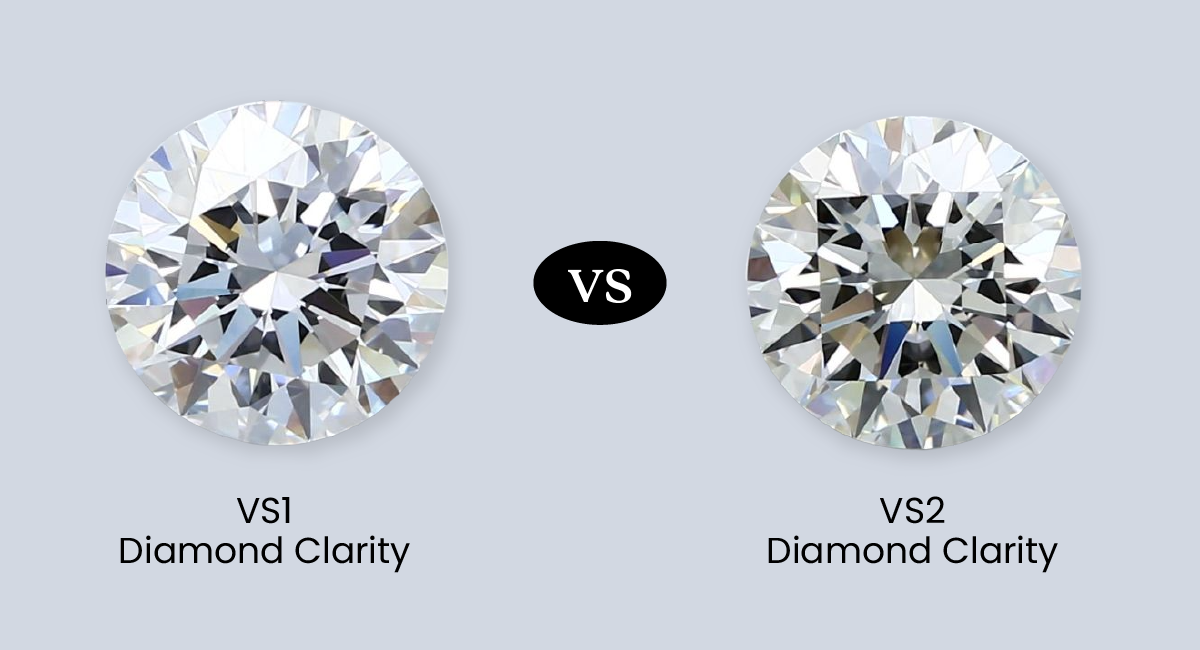
VS1 is a clarity rating that allows experienced technicians to easily detect minute inclusions at 10x magnification. Defects or inclusions cannot be seen with the naked eye unless the magnification method is used. VS2 clarity inclusions, on the other hand, are most often visible at 10x magnification.

VS2 diamonds generally look clean, but there are slight variations, especially for larger diamonds. These spikes usually rarely exceed class SI1 and have inclusions visible to the naked eye. That’s why we emphasize the importance of viewing enlarged photos and videos before making a purchase.

Is Vs1 Better than VVS1?
While it’s easy to say that the VS1 diamond is an excellent choice in terms of value and eye clarity, the fact remains that the VVS diamond is objectively better, at least if you go according to the GIA scale. VS1 diamonds are cheaper than VVS diamonds. Although both diamonds are transparent to the eye, the inclusions of the VVS diamond are more difficult to see than the VS1 diamond. If clarity is more important to you, VVS diamonds are a better choice.

What Is a VS1 Diamond Worth?
VS1 diamonds are still highly-priced in the market despite their inclusions as they are generally considered clean-eyed. They are more than IF and FL diamonds but are popular enough among those looking to purchase an almost flawless diamond engagement ring worth a premium price. However, it remains a much cheaper option than the lab-created diamond, which is priced a notch higher than the VS1.

Which Diamond Clarity Is Best?
The highest grade of diamond clarity is FL or Flawless. The GIA only evaluates a diamond as flawless if it has no inclusions or blemishes visible to the appraiser even at 10x magnification.

Things get a little more complicated and subjective when it comes to the perfect clarity level for every diamond shape and budget. Because diamonds come in many different shapes and cut qualities, there is not one “best” clarity grade for all types of diamonds.

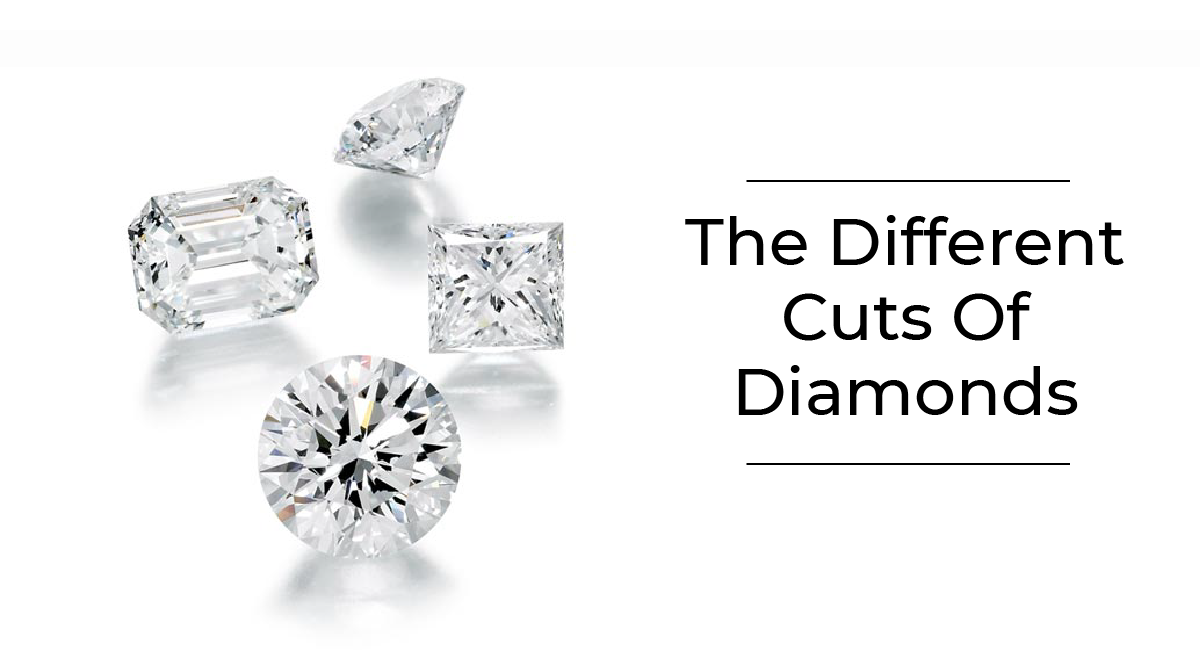
A Guide to the Different Cuts of Diamonds

Just like the other characterized facets of the diamonds, such as quality, color, and shape, diamonds “Cuts” are also a prominent feature that changes the various dynamics of the diamonds from their creation to their purchase.

In layman’s language, the diamond shape is the initial focus and has been considered chiefly an exclusive feature when making choices. We must look more deeply into the context of diamond cuts to know it better and understand it more profoundly.

In this blog post, we will explore some of the most popular diamond cut and their unique characteristics.

Different Cuts of Diamond

What does a diamond do to people? Why does it always tend to attract them? What’s that one major factor or feature of diamonds that never fades away?Different Cuts of Diamond

Diamond has its own sparkle and brilliance that reflects the light around it and charismatically attracts people. This is the sole factor that never goes in vain and keeps individuals invested in the beauty of diamonds.

Before the diamond is cut and polished, it is known as a rough diamond which is highly opaque and it is not truly see-through. The rough diamonds contain nil sparkle within them. The cutting of the diamond impacts its light performance and visually embarks the brilliance and beauty of the lab grown diamond.

This cutting procedure is the basic step towards the formation of the diamond and later arrives at its shaping and quality framing. Visibility of colors and fire within the diamond is only possible with the cutting of the diamond.
Diamonds are always a go-to choice for people; they love them for all their exquisite brilliance. These gems always stand out on every occasion and compliment the bearer making them look prettier.

The Most Popular Diamond Cuts

To know more about different diamond cuts and their detailed existence, we have to dig a little deeper. When concluding, people usually confuse diamond “cuts” as the “shape” which is not beneficial for making a decision. We at LGD will be giving you the right direction by throwing light on the different cuts of diamonds.

different cuts of Diamond: explained in detail

A diamond requires specific characteristics that demonstrate the quality representation of the diamonds, which are the 4C’s: Color, Clarity, Cut, and Carat Weight, which eventually helps in determining the cost of a diamond. Along with these 4C’s, the diamonds are graded within definite ranges and a graphic representation of the proportions of the diamonds is presented.

Let us get to know about different cuts of diamonds in detail:

Round Cut Diamond

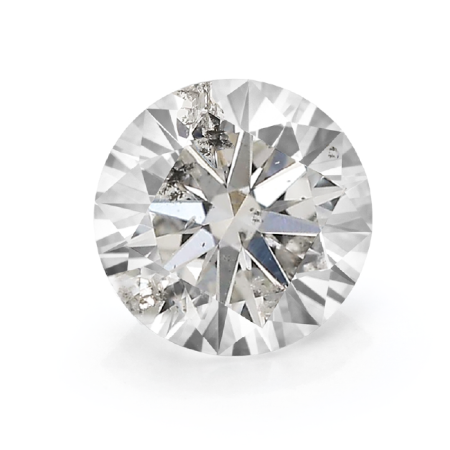
The most popular diamond cut until now. Round cut diamonds are considered real classics that could never go out of style and would always keep incrementing their value and worth. Specifically, these diamonds look bigger in comparison with many other diamonds whereas the cutting quality highlights their brilliance as well.

First, the round cut diamond was created in the 17th century, and almost after 100 years, it started to originate on its own. One thing about the round-cut diamond that always impresses the jewelers is that they leave the littlest waste and deliver the maximum worth. Approximately, in the last thirty years, the value of diamonds has been increasing and the round cut has secured a position as a “favorite” in the hearts of the people and the round cut diamond is the best choice for creating a beautiful ring. Round cut diamond rings are gaining popularity among individuals who admire vintage.
[blog_page_inventory shape=”Round” carat=”1.56,2.60″ cut=”3,4″ color=”5,8″ clarity=”6,10″]
[blog_page_btn title=”buy round diamond” url=”https://www.loosegrowndiamond.com/inventory/?shape=Round”]

Asscher Cut Diamond

The Asscher cut diamond was created by Joseph Asscher in 1902 and so it was named after him only as he had a patent put up on his unique design. This cut is rare as opposed to flaunting its brilliance and fire, it embarks on the clarity of the diamond. Precisely, the luster and clarity of the diamond are the main focus, whereas it has its own brightness from within.

It has a symmetrical geometry that also secures its vintage style inspired in line from the Art Deco Era. This cut has a variedly structured design with an unusual facet pattern that makes it more appealing to the masses and it is found rarely. These diamonds are in high demand these days, as give a unique look to Asscher cut diamond rings.

[blog_page_inventory shape=”Asscher” carat=”1.50,2.60″ cut=”0,4″ color=”0,10″ clarity=”0,11″]
[blog_page_btn title=”buy Asscher diamond” url=”https://www.loosegrowndiamond.com/inventory/?shape=Asscher”]

Emerald Cut Diamond

The Emerald cut diamonds invention dates back to the 1500s when the creators came across this design and gave it a stylistic approach. It is one of the oldest diamond shapes that is structured as a rectangular cut with cropped corners, this gives it an edgy, sharp, and bold look. Its popularity soared during the Art Deco period only, especially due to its geometric shape and eye-catching formation.

During the 13th century, the ‘step-cut’ was formed after various experimental cuttings which had a bit of octagonal structure and later evolved into this emerald cut. Within the emergence of the 19th and 20th centuries, people’s choices were found getting intact with this cut and now it has highly secured a position in the market due to its elongated shape. It emphasizes clarity rather than sparkle, creating a unique and elegant appearance and their unique emerald cut diamond ring designs are creating a fresh appeal.

[blog_page_inventory shape=”Emerald” carat=”1.50,2.60″ cut=”0,4″ color=”0,10″ clarity=”0,11″]
[blog_page_btn title=”buy Emerald diamond” url=”https://www.loosegrowndiamond.com/inventory/?shape=Emerald”]

Princess Cut Diamond

The princess cut diamond finds its existence with the origination of a Barion Cut patented in 1971 by the creator who named it after himself and his wife. The cut is highly recommended to those who desire the same brilliance and fire as that of a round cut diamond, but that too in a square shape.

The princess cut diamond can be square shaped as well as rectangular shaped too but the most chosen shape is square cut as it remarks the uniqueness. Princess cut diamond rings have numerous facets that enhance their brilliance, making them a popular choice for engagement rings.

[blog_page_inventory shape=”Princess” carat=”1.50,2.60″ cut=”0,4″ color=”0,10″ clarity=”0,11″]
[blog_page_btn title=”buy Princess diamond” url=”https://www.loosegrowndiamond.com/inventory/?shape=Princess”]

Cushion Cut Diamond

The cushion cut is a modern-day design that traces back its existence to the old mine cut, which was found around the 1700s, but after a lot of digging and mining, it began to dry up, and later the cushion cut diamond was formed. It hides its inclusions very well and has a very soft, pillow-like formation that withholds less brilliance but has got its own fire which is its most appealing feature.

This cut highly interests vintage and aesthetic stylists and portrays the feminine look. It also looks a bit smaller than other diamonds when looked at from the top due to its deeper cut and extra weight under the girdle of the stone. The cushion cut diamond ring is becoming increasingly popular among those who appreciate vintage and aesthetic styles.

[blog_page_inventory shape=”Cushion” carat=”1.50,2.60″ cut=”0,4″ color=”0,10″ clarity=”0,11″]
[blog_page_btn title=”buy Cushion diamond” url=”https://www.loosegrowndiamond.com/inventory/?shape=Cushion”]

Radiant Cut Diamond

The radiant cut was first made in New York in 1977 but it didn’t get a hold of urgent success and later in the years it exploded by securing the center stage and sidelining the brilliant round cut diamond. This time, there was no compromise either on the formation or the brilliance.

It was structured in square and rectangular shapes enabling higher brilliance. It is a classic that always keeps your ring stand out from the crowd and the radiant cut diamond ring gives a unique impacting design.

[blog_page_inventory shape=”Radiant” carat=”1.50,2.60″ cut=”0,4″ color=”0,10″ clarity=”0,11″]
[blog_page_btn title=”buy Radiant diamond” url=”https://www.loosegrowndiamond.com/inventory/?shape=Radiant”]

Oval Cut Diamond

The oval cut is an elongated version of the Round cut diamond that elegantly follows almost all the similar features whereas makes the hands of the wearer look a bit different and slender. It never loses its classic elements and maintains a vintage look throughout.

It is less expensive than round cut diamonds due to its sparkly feature and has this timeless yet sophisticated vibe. Typically, they are 20% less expensive in comparison to other diamonds making them a splendid choice.

[blog_page_inventory shape=”Oval” carat=”1.50,2.60″ cut=”0,4″ color=”0,10″ clarity=”0,11″]
[blog_page_btn title=”buy Oval diamond” url=”https://www.loosegrowndiamond.com/inventory/?shape=Oval”]

Heart Cut Diamond

The heart cut diamond made its debut in the year 1463, which states its deep-rootedness and ancient history, which undoubtedly symbolizes the eternal love amongst the partners. Earlier, the cut was popular amongst the royal families, that too for exchanging it as a means of goodwill.

It is primarily a brilliant cut only, which is later molded in a heart shape but consists of the same brilliance and sparkle within it. It is generally 15-20% cheaper and one can have a larger diamond in shape with this cheaper rate as well, precisely in comparison with round cut diamond. A heart cut diamond ring symbolizes romance and affection, making it a sentimental choice for expressing love and adoration.

[blog_page_inventory shape=”Heart” carat=”1.50,2.60″ cut=”0,4″ color=”0,10″ clarity=”0,11″]
[blog_page_btn title=”buy Heart diamond” url=”https://www.loosegrowndiamond.com/inventory/?shape=Heart”]

Marquise Cut Diamond

The marquise cut diamond has a unique story to its origination, and it dates back to the 18th century, when King Louis XV of France, demanded one of the jewelers to create a unique shaped diamond that would be similar to the shape of the lips of the king’s mistress. The diamond kept evolving over time and has become what we have now.

It was also named after the king’s love, which is sometimes called ‘Navette Cut’ by the jewelers. It has a tapered Oval shape with pointed ends which is suggested to be “old school” but that doesn’t mean it can’t be stated as a symbol of modernity and must be included in evolution as styling is always dynamic and could be put forth with a lot of unexpected.

A marquise cut diamond ring offers a distinct and elegant appeal, perfect for those seeking a unique and glamorous piece of jewelry.

[blog_page_inventory shape=”Marquise” carat=”1.50,2.60″ cut=”0,4″ color=”0,10″ clarity=”0,11″]
[blog_page_btn title=”buy Marquise diamond” url=”https://www.loosegrowndiamond.com/inventory/?shape=Marquise”]

Pear Cut Diamond

The pear cut diamond originated in the 1400s in Flanders by a Flemish diamond cutter and polisher. It is considered to be a vintage jewel and is highly popular for engagement rings which sparkle a lot and have got utter brilliance. About only 4% of diamonds found in the market are evaluated for their rarity.

Though people don’t like it much and prefer not to buy it due to its small size and lumpy sides. Also, the bow tie within it is considered to be an ill inclusion. The diamond, however, produces less waste while cutting so it is cheaper than the other diamonds.

[blog_page_inventory shape=”Pear” carat=”1.50,2.60″ cut=”0,4″ color=”0,10″ clarity=”0,11″]
[blog_page_btn title=”buy Pear diamond” url=”https://www.loosegrowndiamond.com/inventory/?shape=Pear”]

Old European Cut Diamond

The old european cut diamond was first handcrafted in the year 1890 to 1930 and remained extremely popular in the 1900s amongst almost all classes. During the Art Deco Era, their popularity grew continuously. They are also considered the predecessors to one of the most popular diamond cuts in the present, which is the round cut diamond.

The diamond was cut in a way where it was a deeper cut, high crown, and a small table surface over the top with fewer facets to it. Making it one of the antique diamond cuts of all time.

[blog_page_inventory shape=”old european” carat=”1.00,5.60″ cut=”0,4″ color=”0,10″ clarity=”0,11″]
[blog_page_btn title=”buy old european diamond” url=”https://www.loosegrowndiamond.com/inventory/?shape=old european”]

Baguette Cut Diamond

The baguette cut diamond was created from the rectangular step-cut diamond which evolved from the hogback, which was an elongated cut explored during the mid-16th century. During that era, it was highly used to form monograms or jeweled letters, precisely the initials of the names. “Baguette” is a French word, it is a kind of bread that is elongated in shape and this name has been derived from it.

This diamond cut has a vintage nostalgia emotion leading back to the Art Deco Era that is exceptionally alluring. The lab diamond is highly expensive due to its tough composition as it is sustainably difficult to match the sizes and cut from a rough diamond, but it is still worth it.
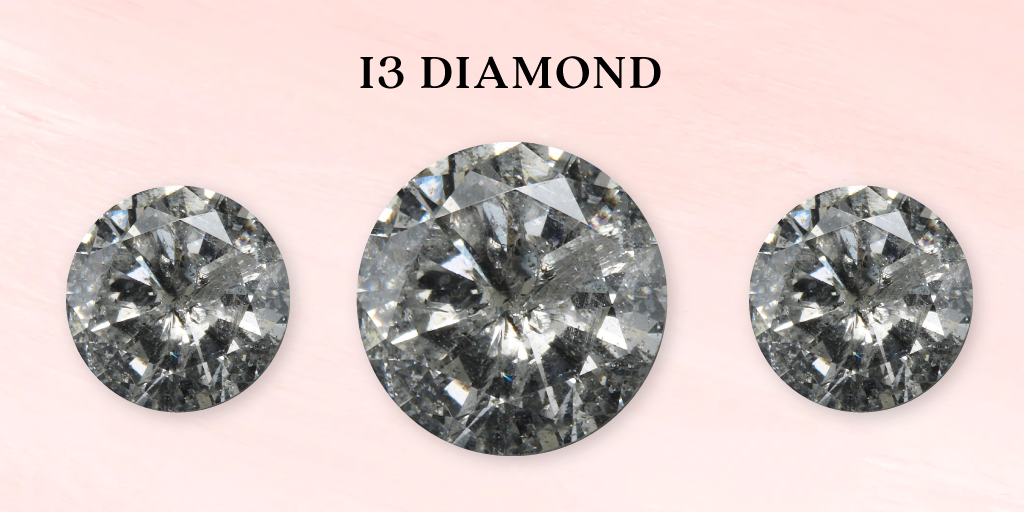
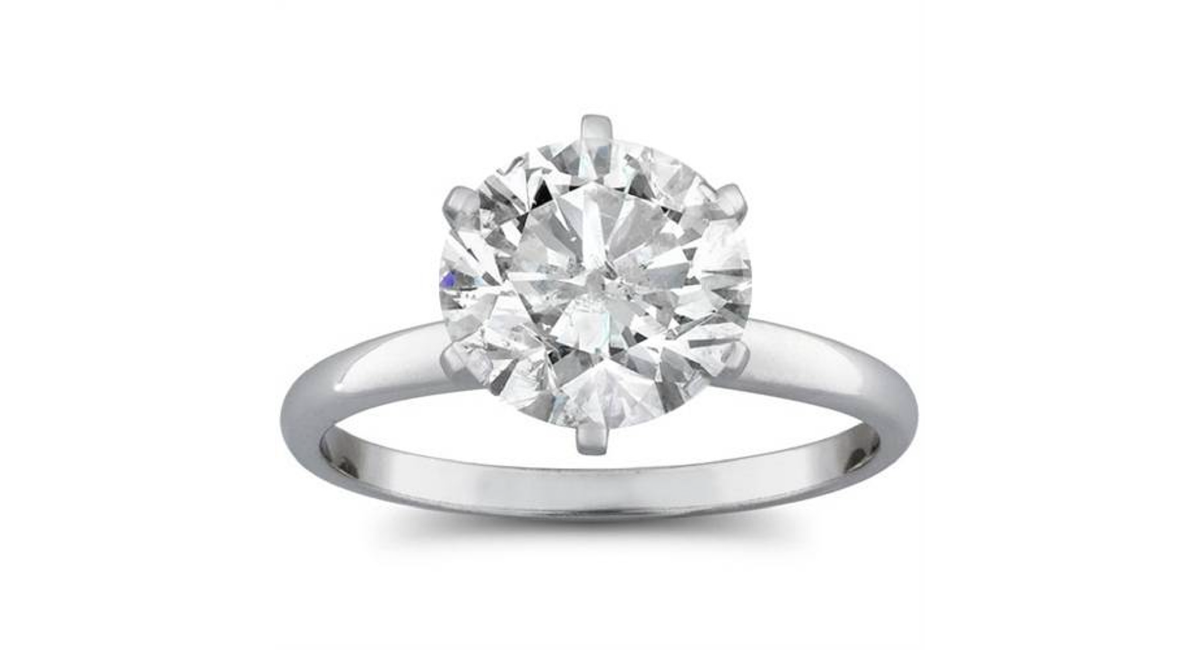
[blog_page_inventory shape=”Baguette” carat=”1.10,4.60″ cut=”0,4″ color=”0,10″ clarity=”0,11″]
[blog_page_btn title=”buy Baguette diamond” url=”https://www.loosegrowndiamond.com/inventory/?shape=Baguette”]

What is the Difference Between Diamond Cuts and Diamond Shapes?

The diamond cut refers to how well a diamond is cut to maximize its brilliance and light performance, while the diamond shape refers to the physical outline or external appearance of the diamond, such as round, princess, or emerald shape. The cut of a lab grown diamond is referred to and understood with its facets, symmetry, dimension, and reflective measures and the shape remains as an outlining structure of the particular diamond.

What is the Difference Between Diamond Cuts and Diamond Shapes?

For instance, let’s try to understand it in an easier way, think of any diamond cut, be it a trillion cut diamond, it might be shallow or deep, dull or brilliant, and even highly symmetrical or lumpy, but these all factors directly affect the diamond cut and has nil effect on its shape. It remains triangular with only various inclusive changes to its formation.

Both the elements are different but they highly impact the overall creation and worth of the diamond, which also plays an important role in choosing one.

The Most Expensive Diamond Cut

The most expensive diamond cut around the world is round brilliant cut diamond as it wastes most of the rough stone while under the cutting procedure, almost around 60% of the diamond is wasted. It is a precious stone that embarks on its sparkle and radiation that highly reflects the light and makes it a crowd-pleaser. The light performance of the diamond is also a factor of interest and must be highly considered.

The Most Expensive Diamond Cut
Any of these factors are highly impactful due to its cut, as that only brings out the formation of the diamond and evolves its appealing style. It is a classic shape that runs through generations and highly never loses its real worth, which also makes it exceptional from the other diamonds.

Which Diamond Shape Looks Biggest?

Some other diamonds that also run in the race to look larger than their usual appearance are round diamonds, Marquise, Pear, Oval, and Emerald cuts, whereas all of these are classic styles existing for a very long time and have developed a greater interest in the minds of the people.

All of these cuts are elegant and have a greater impact when chosen as a center and sole diamond. Other than these varied cuts, a diamond in a ring can also look bigger with various prescriptive settings.

Cut Grades

In layman’s language, grading simply means the act of classifying on some specific scaling/metric which could be based on the quality of the diamonds. Diamond cut grade is based on several factors, including symmetry, polish, brilliance, and fire, which could be only determined, while under magnification. It helps you identify all that you must know about the diamonds, such as their rarity and the measurement of reflection it carries within itself when light hovers through them.

Cut grades vary from being excellent to poor, which highly and specifically means if the diamond has greater factors, they precisely are good enough but if the quality has deteriorated and you get the least of anything it is similar to a mere stone, which is poor in quality.

Tips for Selecting the Best Diamond Cut for Your Engagement Ring

Knowing the depth of the different diamond cuts is a necessity but there are other factors as well that collide while purchasing a precious lab diamond, precisely the engagement ring. Let’s have a look at a few knocking and quick tips to follow in order to have a better purchase:

Get to know about 4C’s in a diamond.

Tips for Selecting the Best Diamond Cut for Your Engagement Ring

It is a very easy concept but confusing as well, so have a better look at it to have a much better understanding of the lab diamonds, because it is the basic form & structure of the diamonds.

Learn about various cut and shape styles of the diamonds, differently. Never forget that a lab diamond cut is different from diamond shapes. Study the various metals, their availability, quality, and prices, and choose one of the best.

Lastly, have a budget in mind and revolve around it, because we believe that even with the lowest budget one can have the desired choice. You can use our diamond price calculator to determine the right price for your diamond. Explore exclusive savings with our promo code when elevating your loose grown diamond shopping experience.

[perfect_ring_box title=”Ready to create your perfect ring?” btn1ttl=”Start with a Setting” btn1url=”https://www.loosegrowndiamond.com/build-a-ring”]

Conclusion

Know when we exclaim “best” it is simply your style, liking, and budget that makes it one, nothing that others choose for you, we only recommend them.

Diamonds are anyways the greatest investments of all time and one must have a sense of belongingness attached to them. They are a one-time investment for the ages and later run through generations, in a tone of generic terms. Types of lab grown diamond cuts are indeed a factor to be known but it should never be the “only” factor to be indulged with, know a bit about all to have a better perspective and considering these factors will assist you in finding the ideal engagement ring.

FAQs

What are the different diamond cuts?
The different diamond cuts include round brilliant, princess, emerald, asscher, cushion, oval, marquise, pear, radiant, and heart-shaped cuts.

What are the most popular diamond cuts?
The most popular diamond cuts include the round brilliant cut, princess cut, and cushion cut.

Which diamond cut offers the most sparkle?
The round brilliant cut is known for its exceptional sparkle and brilliance due to its precise facet arrangement and optimal light reflection.

Are certain diamond cuts more expensive than others?
The price of a diamond is influenced by various factors, including the cut. Generally, fancy shaped cuts like emerald, Asscher, and marquise cuts can be more expensive compared to round brilliant cuts.

Which diamond cut is best for an engagement ring?
The best diamond cut for an engagement ring depends on personal preference. The round brilliant cut is a classic and popular choice, while other cuts like princess, cushion, and oval offer their own unique appeal.

Can diamond cuts affect the diamond’s perceived size?
Yes, diamond cuts can influence the perceived size of a diamond. Certain cuts, like the oval or pear, can create an elongated appearance that makes the diamond appear larger than its actual carat weight.

VS1 vs VS2: Which is better VS1 or VS2? A Complete Guide to Differentiate Them

While selecting a diamond we tend to compare the 4Cs that ultimately make up a diamond and its existence. The 4Cs are carat, color, clarity, and cut. While each of these can be divided into a whole set of categories, here we shall focus on clarity.

A diamond can be segregated based on 8 types of clarity. The topmost is flawless and internally flawless. Then there are VVS 1 and VVS 2, which are very very slightly included in 1 and 2 respectively.

Then VS1 and VS2 are gradings for very slightly included 1 and 2, respectively. Lower below, there are SI 1 and 2, for slightly inclusive 1 and 2 respectively, and I 1, 2, and 3, which stand for inclusive 1, 2, and 3 respectively.

VS1 vs VS2 diamonds fall into the classification of affordable and good-quality diamonds. Very slightly included means that the inclusions in these diamonds are not visible under a 10x magnifying microscope. These inclusions are hardly visible under the microscope and not at all visible to the unaided eye.

Some of these inclusions might be visible to the eye, but it is a common thing for diamonds over 1 carat. Hence, understanding the classifications of a diamond and its clarity can be of great assistance while actually selecting the right kind of diamond on a budget.

Vs1 vs Vs2: Which One Is Best?

Overall, the VS variety of diamonds is an ideal range of diamonds that are budget-friendly along with being a higher quality diamond.

Vs1 vs Vs2: Which One Is Best

VS1 is very slightly included 1 and VS2 is very slightly included 2. These can be considered one of the highest quality diamonds you can buy on a budget.

The size and number of inclusions overall can be used to differentiate VS1 from VS2. VS diamonds are preceded by VVS diamonds, and hence are very close to the best clarity of diamonds. VS1 has better quality than VS2, but on a budget, VS2 is preferable since it contains a maximum of 5% inclusions in the diamond, which is a fair enough percentage.

Usually, VS1 ranks higher than VS2, which means that the quality of VS1 is better than that of VS2, but yet again, in terms of budgetary importance, VS2 can cost slightly less than VS1.

The investment value of a VS diamond is said to increase over time due to the beautiful color and light play that occurs on the inside of a diamond. This happens due to certain inclusions in the diamonds, which make them innately beautiful while being affordable.

From the quality of VS1 vs VS2, VS1 is usually preferred, but there isn’t much of a quality difference when observed from the point of view of the naked eye.

VS clarity is slightly lower than VVS, and despite having inclusions, they do not have any chances of chipping as compared to the SI quality of diamonds.

Also Read: VVS/VS/SI Diamonds

Advantages of Vs1 and Vs2

The greatest advantage of VS1 and VS2 is that there are absolutely no highly visible inclusions in this clarity of diamonds.

Advantages of Vs1 and Vs2

The only inclusions in there are up to 5%, and that is only when viewed under 10x magnification. This is a highly beneficial preference since they cost way less than the flawless VVS range of diamonds while imparting almost similar beauty.

The investment value of VS2 is less compared to VS1, but nevertheless, it will turn out to be good over time. These additions give VS1 and VS2 distinct identities, and if one is preferred over the other aesthetically, that is not a bad choice either.

Vs1 vs Vs2: The Difference Between Both of These

In terms of the clarity of diamonds, VS1 and VS2 fall under the same category, but as we go on further to subdivide them, we see the difference between them. 

Vs1 vs Vs2: The Difference Between Both of These

The VS category of diamonds falls between VVS and SI, which means that the inclusions in these diamonds are between the very very slightly inclusive ones and the slightly inclusive ones.

It is very difficult to spot the difference between these as the inclusions are only minutely visible under a microscope at a range of 10x magnification. While examining these through the naked eye, it is almost impossible to tell the difference, and even professionals might skip out on actually segregating them.

Some of these diamonds can also have similar inclusions, but both are placed at different ends of the VS1 vs VS2 scale. This is because some inclusions tend to be located in positions where they do not interfere with the brilliance of the diamond and it is absolutely not evident.

This position might be at a corner or an edge, and hence not be a very crucial benefactor in deciding the clarity of a diamond.

VS1 vs VS2: Price: Overall, VS diamonds can be bought at a price of 10% less as compared to VVS diamonds. The higher the quality of diamonds, the cost is certainly going to be higher as well.

When a person goes to buy diamonds, they have to select their personal preference because that will ultimately determine which clarity they prefer from VS1 vs VS2. Since the VS1 is of a higher quality than the VS2 clarity of the diamond, the price of the VS1 is more than that of the VS2.

VS2 vs VS1 clarity can have a considerable impact on the price factor based on its carat size and cut, and hence a comparison should be made before buying the diamond.

The prices of these will greatly differ when they are compared to the other Cs of each of these diamonds. Of course, since clarity is just one of the factors among the other three, cut, carat, and color.

The higher the values of the other three, the prices certainly make a huge difference when scaled on the highest and lowest of each of these individual factors, keeping the other three constants.

VS2 vs VS1: Quality: In terms of quality, both fall into the category where they are not of the highest quality but still brilliant, and that too on a budget, which is almost 10% less as compared to the highest quality of diamonds.

In the comparison of VS2 vs VS1, the latter is said to have higher quality as it is closer to VVS. VS1 has very minute inclusions, which are almost close to negligible since they cannot be perceived by the naked eye.

The clarity of VS2 has slightly higher inclusions when viewed as compared to VS1, but is still very hard to view by an unaided eye. The quality of both of these clarities is brilliant, and it is also chip-free (relative to shape) since it can withstand pressure of sorts.

VS1 vs VS2: People’s Preference: The preference of people when choosing a diamond of VS clarity can be difficult to come up with since this is very subjective. When a person buys a VS diamond, they will consider the difference in the price ranges and the highest clarity quality. Within the budget, these diamonds are an exceptional choice.

But, even if one is okay with a slightly lower clarity quality, they can go on to choose the VS2 variant, which will be less expensive as compared to the highest variant of Vs, which is VS1.

Also Read: Top 10 Stunning Affordable Engagement Rings In Your Price Range

Why VS Diamonds Are a Good Choice

VS diamonds seem like a good choice to the buyer since they are said to have a higher investment value, meaning the value of these diamonds will increase over time after being bought.

Why VS Diamonds Are a Good Choice

A little less clarity would not be of greater significance when selected over VVS, since the diamonds tend to appear as brilliant as VVS to the naked eye.

The second reason is that definitely, these range between the expensive very very slightly inclusive (VVS) and a little more inclusive range of the Slightly inclusive (SI) clarity. This range is always preferred since it has the closest quality to the higher clarity of diamonds while being at a budget price range that does not go heavy on the pocket.

[blog_page_inventory shape=”Oval,round,pear,cushion,Princess,Heart” carat=”2.03,2.7″ cut=”2,4″ color=”3,10″ clarity=”5,7″]
[blog_page_btn title”Buy Now” url=”https://www.loosegrowndiamond.com/inventory/”]

How to Choose Between VS1 and VS2 Diamonds?

With the choice of VS1 vs VS2, there is not much distinction, and a person cannot differentiate based on these with the naked eye. Some of these inclusions are only visible after putting gems under magnification, and hence not much of a difference can be seen between them, unless very closely observed or seen on the diamond certificate.

Vs1 vs Vs2: The Difference Between Both of These

If the diamond is above 1 carat, it is preferable to choose VS1, since the inclusions will be clearly visible if any. But, if you go with an option of less than 1 carat, then the choice of VS2 will not make much of a difference.

This choice is still a matter of preference since a lot of these might depend on the other 4Cs of a diamond. While a buyer might select based on the importance of budget and brilliance, other factors like carat, color, and cut play as much of an essential role as clarity. The carat weight can make it either VS1 or VS2.

If one chooses a larger carat, then VS1 is preferred, or else VS2 is as good a choice as VS1 for diamonds less than 1-carat weight. A good choice is subjective based on what the preference is, so VS2 vs VS1 is not an open decision that can be made.

How To Buy A VS1 and VS2 Diamond?

If you are particular about having the clearest possible diamond, VS1 might be more suitable for you, as it offers slightly better clarity than VS2.

The diamond’s cut and the way it’s set in the jewelry can significantly impact its overall appearance. An expertly cut diamond can mask minor inclusions, making the choice between VS1 and VS2 less critical.

Always opt for a certified diamond. Purchase your diamond from a trusted and reputable jeweler. They can guide you through the selection process, ensuring you get the best quality diamond for your budget.

Use promo code offered by LGD. These can help you save money without compromising on the quality of your diamond.

Conclusion

The diamonds we see are rated on various charts for various factors. They can be graded on the basis of clarity, as shown above, and on factors like the type of cut, the carat weight, and the color of the diamond. Each of these factors is as important as the other, and they eventually sum up to create the value of the individual piece of diamond. Each diamond has its own identity and these factors make it up.

The beauty of every diamond lies in the way it has been crafted, including the unique inclusions. These inclusions add a unique touch to each diamond and end up enhancing the beauty, which gets appreciated as time passes.

Frequently Asked Question (FAQs)

What is clearer VS1 vs VS2?
The clarity of VS1 is higher than the quality of VS2, owing to fewer inclusions. Although these inclusions are not visible to the naked eye, they are slightly visible under 10x magnification, hence the difference.

The inclusions in both categories can be similar but still be labeled as VS1 and VS2, based on the position of the inclusion, which affects the brilliance and light reflection inside the diamond.

Is VS2 a good quality diamond?
VS2 is a very good quality diamond that one can avail of on a budget. The quality of this diamond is such that it is extremely close to the brilliant quality of diamonds, but with inclusions that do not interfere much with the quality of the diamond.

One may prefer to choose VS2 over VS1 if they are going for a size of the diamond less than 1 carat since the inclusions are barely visible at this carat weight.

Which diamond clarity should I buy?
The diamond clarity which is preferable for one to buy is either VS1 or VS2, as these are very brilliant diamond clarity scales alongside being very much within a good budget, making sure you do not overspend on buying diamonds.

Which is better VS or VVS diamond?
VVS is comparatively better than VS because they have almost no inclusions. When a buyer sees a VS diamond, it will come off as similar to a VVS diamond, but in quality, VS does possess some inclusions visible under a microscope.

This perception is not seen by the naked eye, hence we can conclude that VS diamonds are much better when seen from the budget point of view. But, if one is looking for a higher quality of diamonds, then VVS is the option to stick by.

What Are I3 Clarity Diamonds and Should You Buy Them? An Expert Guide

If you have ever searched “What are the lowest quality diamonds?”, you would have probably gotten the answer I3 diamonds are the lowest quality diamonds. Now, why does such a diamond exist in the first place? Can you use an I3 diamond? If you have such questions on your mind then let us help you out with the answers.

Diamonds are a rare mineral with innumerable properties and varied compositions. For decades, diamonds have been a symbol of prosperity, and power and often are a mark of a particular social status. To attain this mark of power many individuals have tried to find a cheaper way as the clearest diamonds have the highest prices.

WHAT ARE I3 CLARITY DIAMOND

If you have been to a store in search of a perfect diamond, you would possibly be aware of the fact that diamonds follow a universally recognized grading system and each grade of diamond has its own unique set of characteristics, and prices are fixed accordingly. We are going to look at I3 diamonds and explore what they entail by addressing some questions related to I3 diamonds followed by faqs.

What Are I3 Diamonds?

The lowest or weakest diamond clarity grading that is presently recognized and obtainable is I3 as per the GIA Scale. The Gemological Institute of America developed the GIA diamond clarity scale, which is used to evaluate and grade the quality of diamonds

What Are I3 Diamonds?

GIA’s Clarity Scale:

  • Flawless (FL)
  • Internally Flawless (IF)
  • Very Very Small Inclusions (VVS1)
  • Very Very Small Inclusions (VVS2)
  • Very Small Inclusions 1 (VS1)
  • Very Small Inclusions 2 (VS2)
  • Small Inclusions 1 (SI1)
  • Small Inclusions 2 (SI2)
  • Inclusions 1 (I1)
  • Inclusions 2 (I2)
  • Inclusions 3 (I3)

The ‘I’ in I3 diamonds stands for inclusions or incorporations, to put it simply. The diamond’s rating on the diamond clarity scale is indicated by the number “3” in the diamond clarity I3. In layman’s language, it indicates that the I3 grade is third in order in the Included diamonds category of the diamond clarity scale. (For context, included diamonds is a term that refers to the I1, I2, and I3 clarity grades.) 

Now, since I3 diamonds lie at the very bottom of the scale, they have a large number of noticeable inclusions. A diamond’s inclusions are flaws or defects that reduce its luminescence, sturdiness, and aesthetic appeal. Pores, bruises, dents, and scrape grooves are a few examples of inclusions that are frequently found in I3 diamonds. 

On the diamond clarity scale, I1 clarity diamonds have apparent inclusions that are less prominent than diamond clarity I3. Whereas, diamonds with I2 diamond clarity have far greater inclusions than I1 but still way less as compared to I3 diamonds.

This is attributable to the fact that I3 diamonds are not only in the lowest portion of the chart but also take the final spot there. As a result, it receives the GIA’s and other organizations’ lowest clarity grade, including GSI.

Are I3 Diamonds Worth Buying? 

Now to answer the real question, are I3 diamonds worth buying? I3 diamonds are composed of the same composition as other lab grown diamonds, therefore the only thing that distinguishes them is the degree of inclusion and its corresponding intensity and how that affects the diamond. 

Are I3 Diamonds Worth Buying?

We now know that diamonds with a clarity grade of I3 diamond have more imperfections than those with a higher grade. Depending on the intended use, applicability, and purpose of the purchase, an I3 diamond may or may not be worthwhile.

I3 diamonds have recently attracted considerable attention when they show up in some eye-catching trends like “hued diamonds” or “salt and pepper diamonds.”

A salt-and-pepper effect can be seen throughout the diamond due to the presence of black and white inclusions. Additionally, an I3 diamond may perform well when used in small-sized jewelry or other pieces containing numerous diamonds. 

We advise consumers to choose diamonds with a minimum clarity rating of SI2 diamonds. Anything below this will be futile if you are going for a big stone.

Is I3 Diamond Clarity Good?

As we move down the clarity scale, the rate of increase of inclusions increases. Consequently, I3 diamond clarity merely indicates that a diamond is severely included, as it is at the bottom of the range of included diamonds. 

To clarify, little grains that are trapped inside the diamond are what really produce inclusions, which are useful markers of diamond clarity. The poorest diamond clarity grade that is formally offered is I3. As a result, we might conclude that it is not thought to be the greatest option offered.

How Much Do I3 Clarity Diamonds Cost?

Costs for various diamonds of various clarity grades operate in such a way that the cost increases for each step up in clarity grade. When you select an I3 clarity diamond, you may anticipate paying substantially less. 

Diamonds that are included are more abundant. Prices are significantly reduced as a result. Moving from an I3 diamond to an I2, and from an I2 to an I1, you should anticipate a slight price increase, thus an I3 diamond price being relatively the least in the order. 

An I3 diamond should cost between $1,200 and $2,000 per carat. A clean edge and L hue I3 diamond may cost around $1,000-$1,300. I3 diamond price with a J color grade may cost $1,600-$1,800. Be aware that these values are not fixed and are based primarily on the various properties of diamonds, even those with the same clarity grade.

Loose Grown Diamond provides the most affordable diamonds on the market. We have our lab grown diamond price calculator which you can check out.

Why Should You Avoid I3 Clarity Diamonds?

When customers are running after the diamonds that give them the most evident appearance and blinding luster, very few would go for an I3 clarity diamond. Due to this, a large number of well-known major retailers refrain from offering loose I3 diamonds. Let’s examine some potential drawbacks or negatives of diamonds with an I3 clarity rating: 

Average Appearance: The aesthetic appearance of I3 diamonds is characterized by a heavy presence of inclusions that are readily apparent to the naked eye. Inclusions in I3 diamonds are typically big, darkish, and immediately noticeable. Buyers who are searching for a loose grown diamond with no obvious inclusions may be turned away by this.

Poor Quality: A diamond’s inclusions have an impact on its overall quality as well. They prevent it from shining. Quality cuts with few inclusions are characteristics of diamonds with the highest light performance. Light can effectively enter or leave the diamond thanks to this interaction. The diamond won’t sparkle as brightly when you rotate it as one with a better clarity grade. However, a diamond that weighs just under 0.5 carats won’t have as obvious a poor brilliance.

Poor Resale: The value of I3 diamonds at the time of resale is very poor. There really isn’t a huge requirement for them because of the overabundance of inclusions. Furthermore, there is no lack of supply because lab diamonds can be discovered plenty anywhere. An I3 diamond may allow you to partially retrieve your initial investment, but you will still be making a big loss.

Low Durability: An I3 clarity diamond may have issues with durability because of the heavy proportion of inclusions, which compromise the diamond’s fundamental physical structure. The presence of inclusions increases the risk of chipping and bruises in diamonds.

If you’re looking for the best quality diamonds and jewelry, the diamond wholesaler where you can buy top-quality diamonds is LGD, which do a fantastic array of loose grown diamonds.

[blog_page_btn title=”Buy Lab Grown Diamonds” url=”https://www.loosegrowndiamond.com/inventory/”]

Conclusion

In closing, we can say that there are more qualities to consider when buying I3 lab grown diamonds than simply thinking about doing so favorably. Due to its low ranking on the scale used to grade diamonds, it is more likely to have significant inclusions, which diminishes the diamond’s brilliance and luster and gives it a murky aspect.

In order to avoid being lured in by the low price these diamonds bear, it is essential to think about higher graded diamonds for significant purchases like women’s diamond rings or diamond jewelry.

Frequently Asked Questions (FAQs)

Is I3 Good Diamond Clarity?
The lowest clarity grade a diamond can receive is an I3 grading. Since I3 diamond clarity contains various flaws and could not be worth the investment, jewelry companies avoid selling them.

Is I2 I3 Clarity Diamond Good?
The second-lowest clarity grade for diamonds is I2. I2 falls between the lowest diamond clarity grade, I3, and the highest of the ‘included’ grade; I1. I2 clarity diamonds have observable inclusions that are visible to the naked eye.

But I3 diamonds are at the top of the list for having the most inclusions, and because of their abundance and size, these inclusions can impart the diamond a dreary, opaque look. As a result, I2 is undoubtedly superior to I3, while I1 is superior to both I2 and I3.

What Is an I3 Clarity Diamond?
Without the use of a microscope, inclusions can be seen in diamonds in the I1–I3 tier of the clarity chart. The lowest clarity grade, an I3 diamond, will have much more obvious inclusions than an I2 diamond.

Are I3 Diamonds Good for Earrings?
The ideal choice of diamonds chosen for something like diamond earrings marketed by the retail diamond industry is I1 clarity, which denotes that the inclusions or imperfections inside the lab diamond are clearly visible without magnification at a distance of 9 to 12 inches. As a result, we can see this as a crucial criterion for excluding I3 diamonds from the category of diamond jewelry production.

Are I2 Diamonds Worthless?
The center of the lowest degree of clarity for diamonds is represented by I2 clarity diamonds. That indicates that they are heavily populated with clearly discernible inclusions, such as flaws, flakes, fissures, and other defects. We can claim that I2 diamonds are worth more than I3 diamonds, at least in part because they can be used in designs that call for melee, side, and tiny stones.

Which Diamond Clarity Is Best?
To ensure you’re obtaining the diamonds you want for a fair price, it’s crucial to examine the diamond quality. Since diamonds stay for a lifetime and are more of an asset, they should be bought with much consideration. Shape, color, purity or clarity, and carat are important markers that experts and customers use to estimate the value of a diamond.

Usually, diamonds with a clarity grade of SI1 or higher are eye-clean. Because step-cut diamonds, like emerald or Asscher cut, don’t conceal imperfections as well, you could also choose one with a clarity of VS2 or above.

Do I3 Lab Diamonds Shine?
Since the inclusions reduce how much light the diamond can absorb and reflect, I3 diamonds have little brilliance. Fewer inclusions equal more shine because they don’t interfere with the way light passes through the lab grown diamond.

We advise emphasizing a diamond’s cut as well as clarity if you want it to have the most brilliance. These are the elements that have the greatest bearing on a diamond’s ability to reflect light, and I3 diamonds score poorly on the clarity scale.

What Are I2 Clarity Diamonds and Should You Buy Them? – An Expert Guide About I2 Clarity

Have you heard the line “Don’t buy I2 diamonds?” Curious as to why many people and retailers state this? Well, let us take you through the details so you can decide whether you want to support this statement or go against it.

As the saying goes, “It’s hard to be a diamond in a rhinestone world.” The same goes for the wide variety of categories within diamonds. All diamonds are one-of-a-kind, and their variations aid in assessing their price, scarcity, and aesthetic value.

Because the size, structure, and even the simplest imperfections can affect profitability, not all diamonds are unreasonably priced.

What Are I2 Clarity Diamonds and Should You Buy Them?

These nanometer blemishes, which are primarily determined by their clarity grade, can certainly help buyers set guidelines and act as prerequisites for smart buying.

When we turn to low-quality diamonds that fall within the larger population’s budget, I2 diamonds are seen to be a top pick in many cases too. However, with a low cost comes certain flaws to be aware of.

With this article, you can make sure to be aware of everything that I2 diamonds entail, from their distinctive features to quality to their pricing and more.

What Are I2 Diamonds?

I2 diamond clarity grades are the ones that are at the lower end of the diamond clarity scale. A summary of what diamond clarity is is given further ahead.

The ‘I’ in the I2 diamond stands for Included. I2 diamonds are 2nd-degree included diamonds with observable imperfections under magnification as well as to the unaided eye.

What Are I2 Diamonds?

In fact, most I2 diamonds have inclusions that minimize their clarity and brilliance. Inclusions and imperfections of this degree lead to impacting changes in some features of the stone, like aesthetic value, monetary value, and quality of transparency.

In addition to taking a toll on the diamond’s exterior looks, inclusions in I2 diamonds make them prone to durability issues. Frankly, your I2 diamond has greater chances of being chipped or, in the worst-case scenario, even broken due to its inherently poor physical structure.

A Quick Summary of Diamond Clarity: Where Does I2 Fall?

Let us take you through a quick recap of what diamond clarity is. The clarity of a diamond refers to the degree of purity and rarity of the stone. The purity of the diamond is confirmed on the diamond clarity scale (GIA Diamond Clarity Scale), which means that light microscope substances can be entombed in the diamond while it is being shaped.

A Quick Summary of Diamond Clarity: Where Does I2 Fall?

The diamond clarity scale grading is largely decided by putting the dimensions, category, and amount of diamonds to the test, as well as where the inclusion is on the stone and how well it affects the appearance.

Most of these factors interact to determine the grade. Included (I) clarity means that “inclusions are visible under 10 magnification and may affect clarity and brilliance.”

The I grade range contains three sub-grades: I1, I2, and I3. Put simply, the higher the count in each grade, the higher the likelihood of flaws in the stone. You must have developed some understanding of diamond clarity by now.

Now, coming to I2 diamond clarity! I2 is a diamond clarity grade with a low ranking on the diamond clarity scale. I2 diamond clarity is the 2nd lowest clarity grade currently offered. I2 is a diamond clarity grade that falls between I3 (lowest) and I1 (highest).

Diamonds with an I2 clarity grade have overly evident and clearly recognizable inclusions that are readily captured by the naked eye. All the same, in comparison to I3 clarity diamonds, I2 clarity diamonds have much more soul and dazzle.

Should You Buy Diamonds of Clarity I2?

I2 diamonds’ large and abundant imperfections hamper the amount and intensity of light passing through them and tend to reflect off of the diamond. The diamond’s greatness suffers, making it appear dull and pale.

Should You Buy Diamonds of Clarity I2?

I2 diamonds also have noticeable flaws that you will notice every time you glance at the diamond. Such inclusions can be quite unsightly, especially if they are concentrated next to each other in a central spot in the stone or when these same inclusions are pretty dark in color.

Inclusions in an I2 diamond entail black attributes, clusters of carbon compounds, and surface roughness. I2 level, white inclusions are often visible at the I2 level and distract people from the diamond’s radiance.

Thus, your reasons to stay off I2 diamonds could be poor quality and noticeably large imperfections. extremely low shine and brilliance. highly prone to chipping, breaking, and wearing away

Thus, engagement rings with I2 clarity diamonds are relatively rare. However, lower clarity diamonds could also stand out when working with limited resources and at a minimal price.

Clarity alone is not a primary consideration for some shoppers, as long as the diamonds match in color. Also, you could settle for a better deal by spending a little more to get VS2, SI1 or SI2 grade diamonds.

As a result, when it comes to purchasing I2 clarity diamonds, keep the above-stated facts and information about I2 diamonds in mind.

The Price of I2 Diamond Clarity?

Normally, according to the generic price trending across markets, I2 diamond prices are lower than eye-clean diamond prices for the simple reason that they have far too many observable imperfections and surface defects to have the same premium quality price as eye-clean diamonds.

The Price of I2 Diamond Clarity?

There are many other factors that directly or indirectly impact the pricing of a particular diamond. I2 diamond prices are also fixed based on the quality, size, carat, color (amount of whiteness), and most importantly, the cut of the diamond.

However, I2 clarity diamonds are significantly less expensive than improved clarity diamonds. According to experts, I2 clarity diamond prices range between $300 and $5000 (for a carat range of 0.50-1.00) for a reasonably good whiteness with a very good cut degree.

Also, picking a lower section diamond of such a grade eliminates the expense far more. Thus, all in all, I2 diamond clarity is a low-cost diamond.

Differentiate I2 Clarity Diamonds with I1 and I3 Clarity Diamonds

So far, we have gathered a lot of I2 diamonds. Now, knowing that I2 diamonds fall into the same subcategory under the diamond clarity scale as I1 and I3, let us see some of the key differences between them.

Differentiate I2 Clarity Diamonds with I1 and I3 Clarity Diamonds

A) I1 vs. I2 Diamond Clarity

The presence of inclusions is the first key similarity. On the clarity scale, I1 and I2 diamonds are essential besides each other, as I1 diamonds are slightly superior. They primarily differ in terms of inclusion, concentration, size, durability, and so on.

I1 diamonds have visible inclusions, as do I2 diamonds. However, the deformations are more prominently visible in an I2 diamond owing to its larger size. For example, they could be darker or maybe more closely packed. Numerous other different distinctions between I1 and I2 diamonds also include their accessibility and the types of retailers that offer them.

For instance, I2 clarity diamonds will never be marketed by a prestigious and reputable jeweler.

I1 vs I2 vs I3 Diamond Clarity

B) I2 vs. I3 Clarity Diamonds

In terms of 13 and 12 clarity diamonds, the I3 diamond has a much larger volume of inclusions than the I1 and I2 diamonds, making it the worst in line. I2 diamonds are commonly thought to be one grade higher than I3 diamonds.

An I3 diamond has the least clarity grade and has more noticeable inclusions than an I2 diamond. Finally, both I2 and I3 diamonds should be avoided for higher-end jewelry.

[blog_page_btn title=”Buy Lab Grown Diamonds” url=”https://www.loosegrowndiamond.com/inventory/”]

Conclusion

The I2 diamonds that lie second in line under the category of Included stones come with their own pros and cons, though the latter seems to outweigh the former. It may be debatable whether it is desirable to purchase one such stone if its inclusions would readily catch one’s eye when you wear it or make a social appearance in it.

However, it should be crystal clear that if you are looking for a shiny, lustrous, and clean diamond to fit right in the center of one of your precious jewelry pieces, you might want to rethink and re-evaluate your decision to buy an I2 diamond.

Frequently Asked Questions (FAQs)

1. What are inclusions and blemishes in diamonds?
Inclusions are internal flaws, while blemishes are external imperfections. These can include tiny crystals, feathers, or other minerals trapped within the diamond or surface irregularities.

2. What are the advantages of choosing I2 clarity diamonds?
The primary advantage of I2 clarity diamonds is their lower cost. If you’re on a tight budget and prioritize a larger carat size over clarity, I2 diamonds may be an option.

3. What factors should I consider when buying I2 diamonds?
When buying I2 clarity diamonds, focus on factors like cut, carat weight, and color to maximize the diamond’s overall appearance. A well-cut I2 diamond with a higher color grade can look more appealing.

4. Is I2 diamond clarity good?
I2 clarity diamonds are in the center of the lowest tier of diamond clarity. That is, they have a lot of clearly visible inclusions, such as flaws, grains, air pockets, and so on. Furthermore, these diamonds will always have visible inclusions to the naked eye.

5. Do I2 diamonds sparkle?
Generally, the greater the clarity scale, the more sparkle the diamond has. However, the diamond’s cut quality determines how much light rates of return and how equally distributed brilliance (white stun) takes place throughout the stone (colored sparkle).

6. Is there a risk of I2 clarity diamonds breaking easily?
I2 diamonds are not more prone to breaking than diamonds with higher clarity grades, but it’s important to handle and care for any diamond carefully.

What Are I1 Clarity Diamonds and Should You Buy Them?

What do you think of when you hear the word “bling”? Maybe a shiny diamond ring for your wedding? If you love diamonds but don’t know much about them, you’re in the right place.

Just like people, diamonds have unique characteristics that make each one different. Keep reading to learn about I1 diamonds, and diamond gradings, and get tips on choosing or avoiding diamonds. First, let’s understand how diamonds are created and what I1 diamonds and clarity mean.

Natural diamonds form deep in the earth under heat and pressure. Lab-grown diamonds are made in labs to replicate the natural process. These processes can create internal qualities called “inclusions” and external characteristics called “blemishes.”

What Are I1 Clarity Diamonds and Should You Buy Them? - An Expert Guide About I1 Clarity

Natural diamonds are formed when carbon is subjected to extreme heat and pressure in the earth’s interior. Lab-

Inclusions are tiny crystal fragments trapped inside a diamond during its formation. Sometimes, a crystal’s structure can be uneven as it grows. The size, location, and presence of inclusions affect a diamond’s clarity.

Inclusions and blemishes are like reminders of the journey a diamond takes before becoming jewelry. The right clarity grade is crucial for a brilliant diamond without overspending. Find answers to important questions below to help you choose the perfect diamond.

What Is I1 Diamond Clarity?

The absence of inclusions and blemishes is referred to as diamond clarity. When a report is published for a diamond, independent laboratories like the GIA provide grades for clarity. The GIA diamond clarity system (discussed below) assigns a ranking to diamonds based on the existence or density of clarity properties that a diamond possesses.

What Is I1 Diamond Clarity?

These traits are often referred to as inclusions by jewelers. Therefore, I1 stands for “Included 1.” I1, I2, and I3 diamonds make up the included range of diamonds. Diamonds with an I1 clarity rating are considered to be on the lower end of the clarity spectrum.

This is exactly what is meant by “I1 diamond clarity”. The important feature of an I1 diamond is that flaws are clearly visible under a 10X microscope and to the human eye. Even an amateur using the magnifying glass for the very first time will find this to be true.

In some instances, diamond clarity I1 may have imperfections that compromise their durability and increase the likelihood that they may chip easily. However, if one is equipped with the proper knowledge, using such diamonds can be one of the best approaches for customers on a tight budget to receive the most value. These imperfections might occasionally lessen the diamond’s radiance and beauty. These defects can occasionally reduce their durability.

There is, in fact, more to it. The noteworthy fact is that a diamond can be classified as an I1-included stone with just one discernible inclusion. In other words, a diamond may have 10 defects, only 1 of which would be apparent, which can prove to be just enough to reduce the clarity and grade of the stone and bring it down steeply to an I1 (including ranking).

[blog_page_inventory shape=”Round” carat=”0,5″ cut=”0,4″ color=”0,10″ clarity=”1,2″]
[blog_page_btn title”Buy Now” url=”https://www.loosegrowndiamond.com/inventory/?shape=Round&carat=0,5&color=0,10&clarity=1,2″]

The Gia Diamond Clarity Scale

The diamond clarity scale is a scale that helps in grading how pure a diamond is. There are very many technicalities while checking out the diamond clarity in general and I1 diamond clarity in particular here, so read further to know its A to Z’s with the help of the universally recognized I1 diamond clarity chart. But, before hopping onto understanding the GIA Diamond Clarity Scale, let us give you some interesting insights about GIA itself.

Gia Diamond Clarity Scale: vvs, vvs1, vss2 , i1, i2, i3, si, si1, si2, fl

Similar to the color scale, the GIA’s clarity grading system was created as a result of jewelers using phrases like “piqué” and “loupe clean” that could be misunderstood. Irrespective of what language the jeweler speaks, they would most certainly use words like VVS1 or SI2 to describe a diamond’s clarity if you purchase it anywhere in the world.

There are a total of 11 distinct grades on the GIA diamond clarity scale/chart, divided into 6 categories:

  • Flawless (FL): No imperfections or inclusions apparent at a 10x magnification
  • Internally Flawless (IF): Under 10x magnification, there are no inclusions to be seen.
  • A Very, Very Slightly Included (VVS1 and VVS2): Inclusions are so tiny that a skilled grader would struggle to detect them at 10x magnification.
  • Very Slightly Included (VS1 and VS2): It is difficult to view inclusions at 10x magnification, which can be described as small imperfections.
  • Slightly Included (SI1 and SI2): Under 10x magnification, inclusions are visible 
  • Included (I1 diamond, I2 diamond, and I3 diamond): Under 10x magnification, inclusions are visible and may reduce transparency and sparkle.

To evaluate, grade, and verify the quality of gems, the world’s most reputable retailers, institutions, online sellers, and individual buyers all rely on the knowledge of GIA grading charts. They have full faith in GIA to give complete, unbiased, scientific information because they know how important it is for evaluating gems.

Also Read: Lab-Grown VVS Diamond versus VS Diamond: What’s the Difference

Where Does I1 Clarity Fall Within the Scale of Clarity?

I1 diamond clarity lies at the ninth spot on the clarity scale, consisting of 11 grades in decreasing order. The GIA diamond clarity system assigns diamonds a ranking based on the existence or distribution of clarity features within a diamond. These traits are often referred to as inclusions by jewelers.

In this case, I1 stands for “Included 1.” Even less clear diamonds are called I2 clarity diamonds or I3 clarity diamonds. On the GIA diamond clarity scale, I3 is the lowest clarity grade that can be given to a diamond.

Tips for Choosing I1 Clarity Diamonds

Identifying suitably included diamonds can be complex. However, doing so is essential if you are on a tight budget. The procedure can go more smoothly with proper examination, investigation, and appraisal of the diamond.

Tips for Choosing I1 Clarity Diamonds

  • Firstly, take note that any large or larger I1 grade diamond won’t be eye-clean as flaws are easier to find in larger stones due to their larger surface area. Hence, don’t get fooled by sellers telling you that a bigger diamond is the best way to go.
  • If you want to purchase an I1 diamond, look for stones with imperfections that are widely dispersed or have a few prominent ones near the edges/girdle so that they can be hidden behind a jewelry setting’s metal covering.
  • When mounted on a ring, an I1 diamond’s inclusions will be concealed from general view. In these circumstances, you may wish to utilize larger prongs to help you cover the obviously included sections.
  • Note that an I1 diamond guarantees a low price that cannot be matched by any other perfectly cut diamond with comparable qualities.
  • If there is inclusion at the stone’s center, it will be easily visible and you should avoid buying such a stone. However, if it is near the girdle, it can be seen from the center of the stone, but only by an expert.
  • If a diamond has a faint cavity inclusion, it is graded at an I1 diamond clarity level or lower. Its positioning is crucial in deciding if the diamond is worth the money or not. If the jewelry setting masks the cavity or if it is on the girdle of the diamond, then it can turn out to be a good deal.
  • Finally, get an eye-clean diamond, but just don’t invest more than you have to in order to get the most for your money.

What are the Benefits of I1 Graded Diamonds?

Though most people prefer to buy eye-clean diamonds over included diamonds, let’s understand why people are buying low-clarity diamonds. What could be the potential benefits of I1 diamond clarity?

What are the Benefits of I1 Graded Diamonds?

The two main advantages of purchasing an I1 clarity diamond appear to be:

  1. Cost: Evidently, the general public is drawn to cheap long-range diamonds. This is because the majority of customers prioritize carat count or cutting, so sacrificing clarity might result in larger diamonds being more reasonably priced. An I1 diamond can give excellent value in terms of pricing and appearance if it is properly chosen.
  2. Clarity: Your diamond’s attributes of clarity serve as a blueprint. As a result, your diamond will be instantly identifiable.
  3. Purpose: When purchasing a piece of jewelry for a specific purpose, one can willingly choose not to prioritize the clarity of the diamond or to prioritize the cost-effectiveness over the clarity. Clarity may not be as important because an observer will look from a distance, which means that a large gem with low clarity will look amazing from afar.

I1 Diamond Clarity Durability

when we talk about “diamond durability,” we are usually referring to how well a diamond can withstand wear and tear over time. In this context, the “i1” clarity grade suggests that there are inclusions in the diamond that may be visible to the naked eye. These inclusions could affect the diamond’s durability if they weaken the structure or make it more prone to damage.

In simple words, an “i1” diamond might have some visible imperfections, and these could impact its ability to withstand daily use without showing signs of wear or damage. If durability is a key consideration for you, you might want to look for a diamond with a higher clarity grade, such as “VVS” (very, very slightly included) or “VS” (very slightly included), as these diamonds generally have fewer and less noticeable inclusions.

I1 Diamonds and Shapes

Inclusions are well-hidden by diamond shapes such as the oval cut & cushion or crescent. To find an eye-clean I1 lab diamond, you would need to sift through hundreds of diamonds. The inclusions may be less obvious or perhaps hidden by the ring setting if they are dispersed throughout the diamond.

I1 Diamonds and Shapes

Diamonds with an I1 clarity make excellent round brilliant cuts. They also work well with princess cut diamonds. Excellent faceting often makes inclusions appear hidden by facets. Because they are cut in steps, emerald-cut and baguette cut diamonds may not be as forgiving.

I1 Clarity Diamond Reflection

Sometimes, when you’re looking at a diamond, you might notice what seem to be imperfections that aren’t listed on the clarity chart. That’s because they could be reflections of actual imperfections.

Diamonds have facets that act like mirrors, and these reflections can make one not-so-nice-looking spot seem like there are many more. It’s like an optical illusion.

If you’re holding the diamond, try turning it around to make these reflections appear and disappear. If you’re shopping online, use videos and other tools to spin the diamond around.

Because these dark inclusion reflections can make the entire stone seem less appealing, it’s usually a good idea to steer clear of diamonds that show them.

The Value of An I1 Diamond

I1 diamond is the one for you if you’re on a tight budget. The price increases as one moves up the diamond clarity chart. You can make an informed decision by understanding how the diamond’s clarity affects cost. Prices for diamonds can vary by 15 to 25% when moving up or down the clarity scale grade and by 5 to 15% within the same scale grade.

The main benefit of stones that lie in this grade category is that the I1 diamond price really makes “spend less for a big buy” appear true. When compared to gem grades, I1 clarity diamonds sell at huge discounts. Be wary of this temptation, though, and choose your diamonds after a detailed evaluation.

[blog_page_inventory shape=”Radiant,Emerald,Pear,oval,round,heart,cushion” carat=”0,1.50″ cut=”1,4″ color=”2,9″ clarity=”1,6″]
[blog_page_btn title”Buy Now” url=”https://www.loosegrowndiamond.com/inventory/?”]

Conclusion

We’re certain that by this point you’ve realized how complex it is to grade a diamond’s clarity. Finally, we firmly recommend that buying an I1 diamond is a good option to save a ton of cash.

The best deal is an I1 diamond that is eye-clean and if it allows you to afford a better cut, it’s a reasonable choice. Simply never purchase one without at least viewing magnified images. All diamonds warrant a closer look and comparison, regardless of their purity, size, hue, or cut.

Frequently Asked Question (FAQs)

Is an I1 diamond good?
Talking of quality, I1 diamonds lie between low to moderate in acting as center stones. Blemishes that diminish the stone’s richness and shine are pretty evident. However, in terms of cost-effectiveness and to be used as small stones, I1 diamonds are a preferred choice.

Which is better, I1 or SI2?
The slippery slope is that I1 and SI2 both lie in the ideal range between reasonable cost and respectable quality. A diamond with a clarity grade of SI2 (slightly included) frequently has a variety of inclusions. Where I1 diamonds are less costly and have more noticeable inclusions, SI2 diamonds can indeed be eye-clean and are much more durable, a feature greatly lacking by I1 diamond clarity.

Starting with an SI1 clarity grade and moving up is advised if you desire a diamond without obvious inclusions. Ultimately, in deciding between an I1 and SI2 diamond, knowing what factors are most significant to you is the deciding factor.

How much is a 1 carat I1 diamond worth?
The price range for a well-cut, 1 carat, round diamond with G-I coloring and I1 clarity is between $1,100 and $2,500. But because I1 diamonds aren’t very good, not every diamond store sells them.

Should you buy an I1 diamond?
If you have budget constraints and are okay with buying a diamond that will have visible inclusions to the naked eye, then you should buy an I1 clarity diamond. If you want something eye-clean or more clear, then it is advised that you go up the diamond clarity scale.

Do I1 clarity diamonds shine?
The cut of a diamond determines its shine, not clarity. This is a needless worry because a diamond’s inclusions have little impact on shine. The cut quality of the diamond controls the amount of light returned, as well as, how evenly brilliance (white dazzle) and dispersion are distributed throughout the stone (colored sparkle).