Simulant Diamonds vs Lab Created Diamonds: How To Differentiate the Both of Them?

What are Simulant Diamonds vs Lab Created Diamonds? It is a typical query that lots of folks pose. Depending on the qualities you are seeking in a diamond, the answer to this question will vary. The finest choice, if you’re seeking for a high-quality, flawless diamond, is a lab grown diamond. However, simulated stones may be your best option if you’re looking for something more cost-effective and less pricey than a lab grown stone.
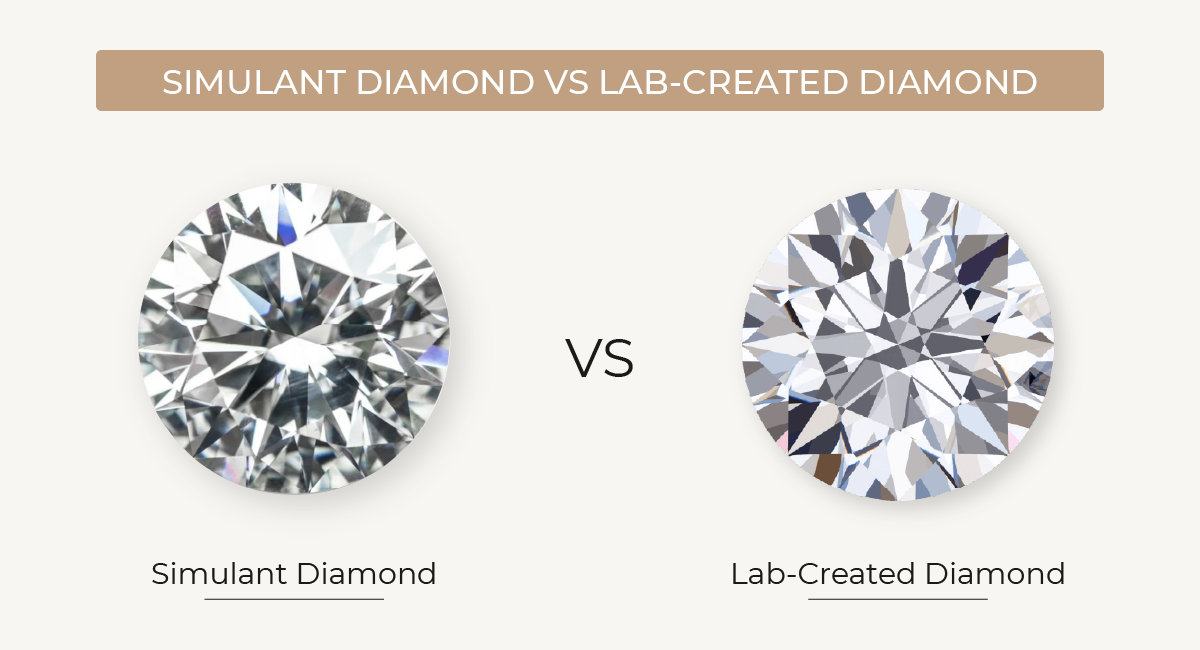
Simulant Diamonds vs Lab Created Diamonds: How To Differentiate the Both of Them?

What Is a Simulated Diamond?

Simulated diamonds are those which are made to look like natural diamonds, however, are different to it in composition and structure. These are made of different chemical compositions hence, are poles apart from naturally mined diamonds. You can say simulated diamond is a replacement or substitute for an actual diamond.

Simulant Diamonds are either naturally occurring or lab-grown. Another point to note is, that naturally occurring gemstones that may look like diamonds cannot be categorized as ‘diamond simulants’ as these are not alternatives because they are not trying to imitate actual diamonds.
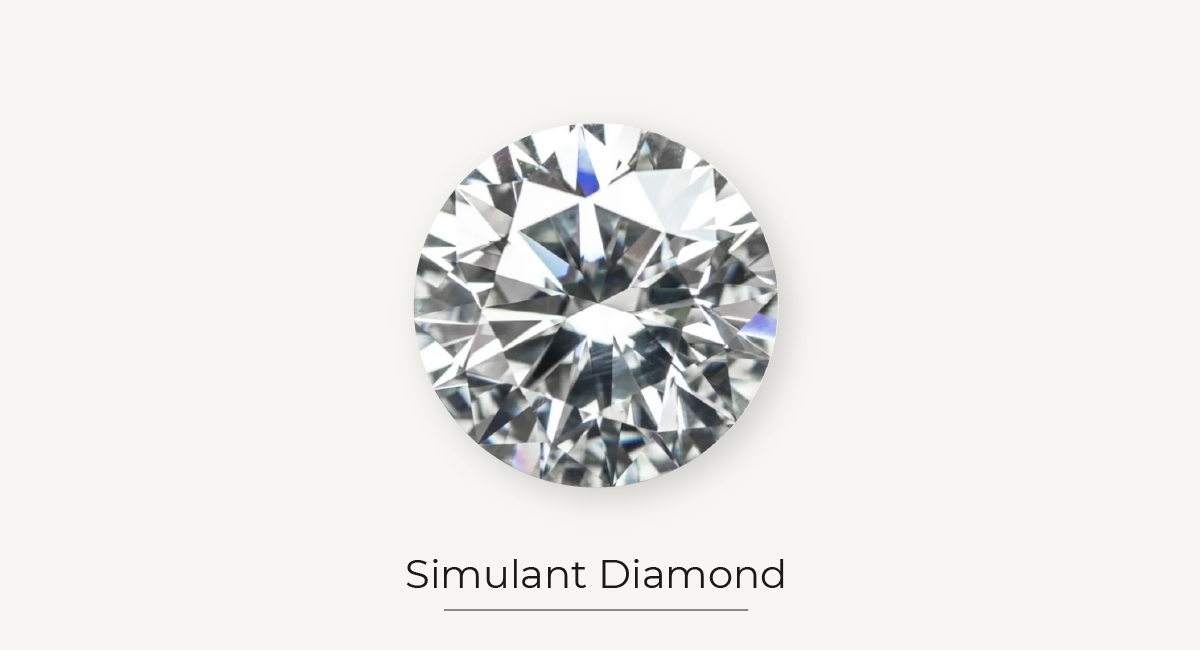
Simulated Diamonds

Cubic zirconia falls under this category. It consists of zirconium dioxide and is synthetic in nature. These are rare and exclusively created in labs. These cubic zirconia stones are obviously cheap monetarily as they are distinctive from naturally occurring diamonds.

Nexus Diamond is another type of ‘simulated diamond’. These are the closest replications of an actual diamond. They are created in labs, patented, and formulated in the exact same way to replicate a diamond. 

However, unlike man-made diamonds, these do not contain carbon. The GIA system of grading (4C’s) is used to inspect the quality of the nexus diamond. As mentioned, they are lab-grown hence, are environmentally viable and eliminate the risk of manual labor. Unlike cubic zirconia, these Nexus Diamonds are durable and will last till the end of time. 

Moissanite is a newer diamond simulant. It is spun to give the illusion of a diamond however, they are different in properties and structure. The point of commonality between diamonds and moissanite is thermal conductors. They have a brighter and different brilliance than regular diamonds. This is because the system of faceting stands apart from actual diamonds. 

Pros and Cons of The Simulant Diamond

Pros of Simulant Diamond:

  • Simulated diamond is budget-friendly for those who do not necessarily want to spend a hefty sum
  • It is sustainable. It does not require mining as they are lab-grown.
  • A hit for those who love sparkle. These diamonds bling differently hence, making it a treat for those who love the sparkle.

Cons of Simulant Diamond:

  • These tend to break and crack. One has to be cautious while wearing these diamonds.
  • They illuminate a rainbow sparkle which is a major factor that distinguishes them from regular diamonds. It is more likely to look like a ‘copy’.

What Are Lab Created Diamonds?

Lab-created diamonds also have different names in the jewelry world that are, lab grown diamonds, synthetic diamonds, artificial diamonds etcetera. These lab grown diamonds are obviously man-made and replicate naturally mined diamonds. 

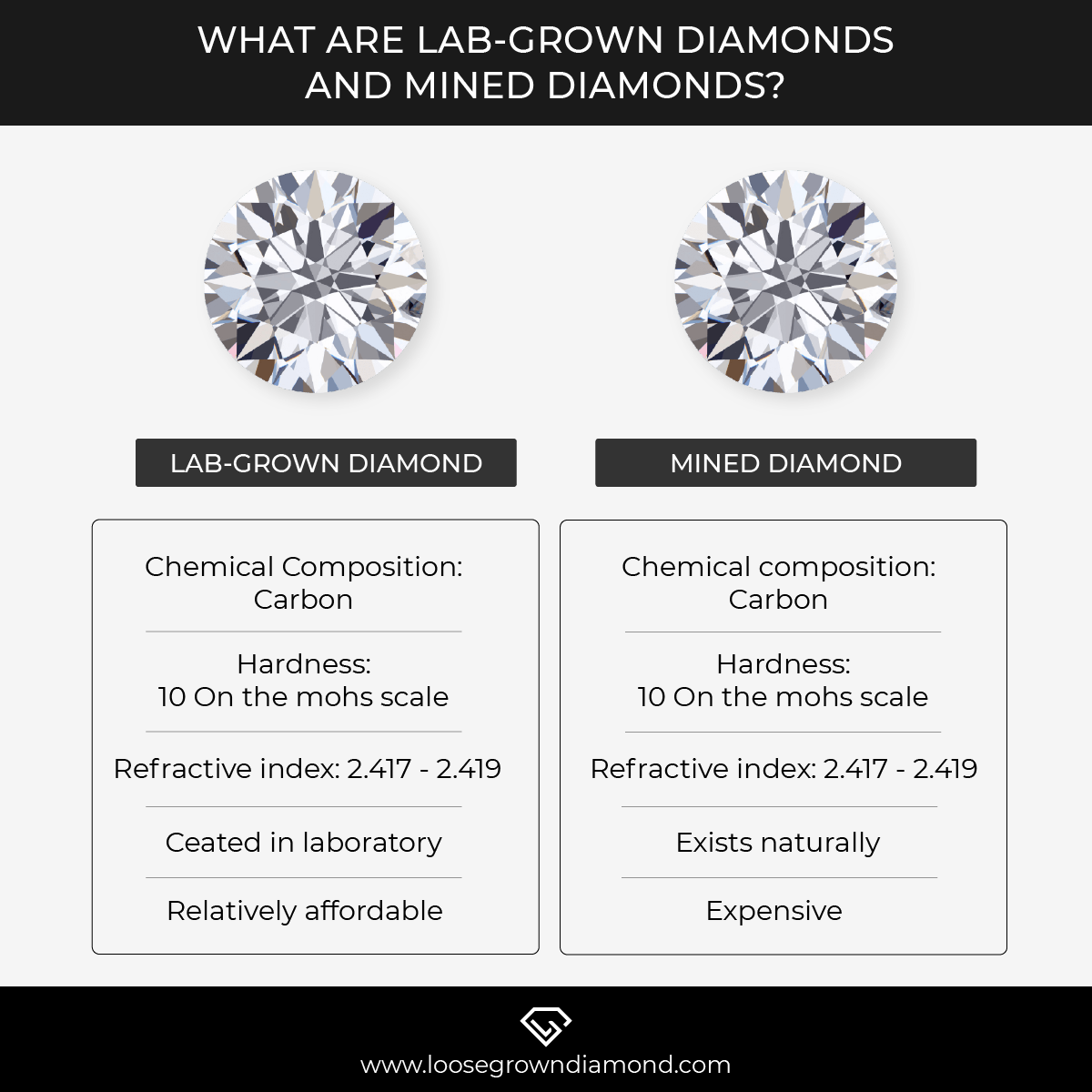
They have carbon elements and look the same in physical properties as well as in composition as naturally mined diamonds. Lab grown diamonds are less expensive in terms of naturally mined diamonds. 

Also Read: Real Facts About Lab-Grown Diamonds
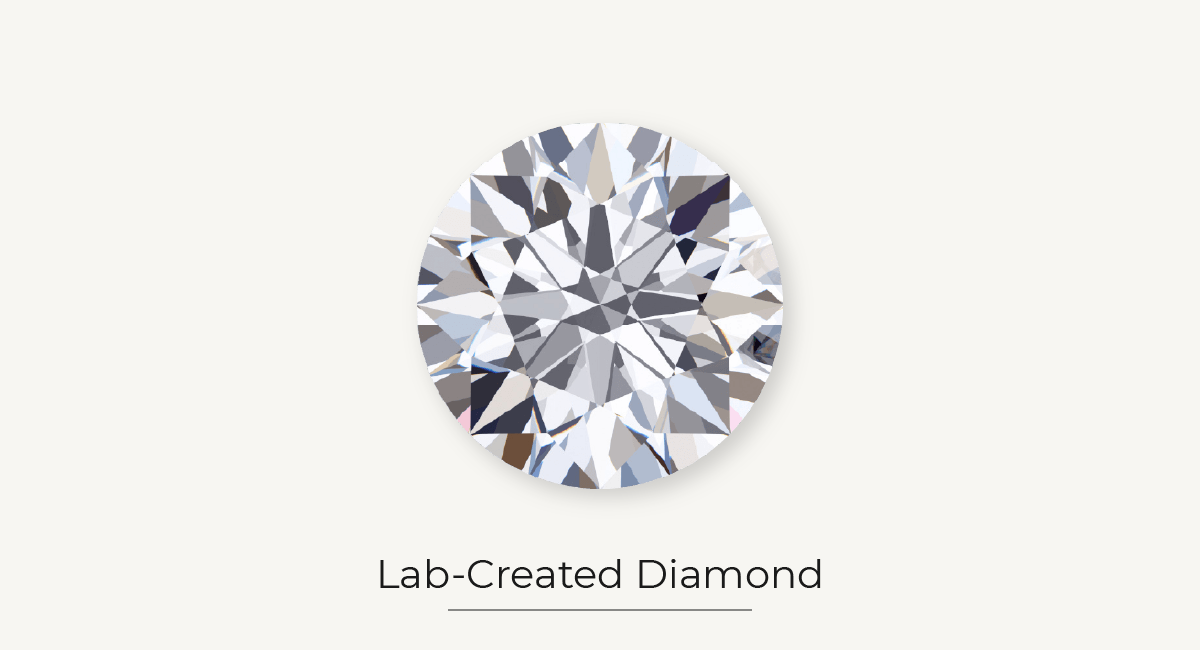
about lab created diamonds

Natural diamonds grow under intense heat with heavy pressure. It is a time-taking process as it takes a hundred and further years to turn into a diamond. On the other hand, lab-grown diamonds are created in the same manner. The diamond-creating process starts when a ‘diamond seed’ is placed in a glass chamber or a special chamber where earth-like properties are re-created.

These properties are similar to the temperature and pressure in which naturally mined diamonds are created. It is covered in carbon and thereafter grows into a synthetic diamond that is as close as a naturally occurring diamond.

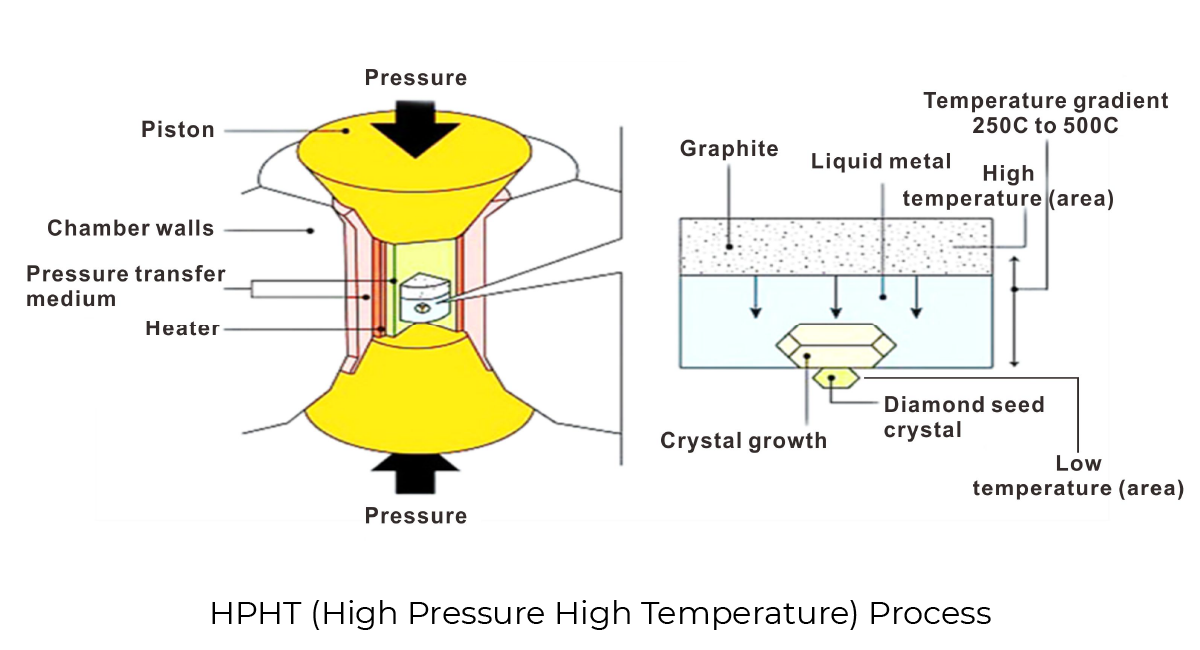
The two major types of lab grown diamonds are used for creating diamonds in the lab High Pressure-High Temperature (HPHT) and Chemical Vapor Deposition (CVD). As the name suggests, the High-Pressure High-Temperature method uses temperatures and pressures as high as 2700 Fahrenheit and 1.5 million pounds per square inch, respectively. 

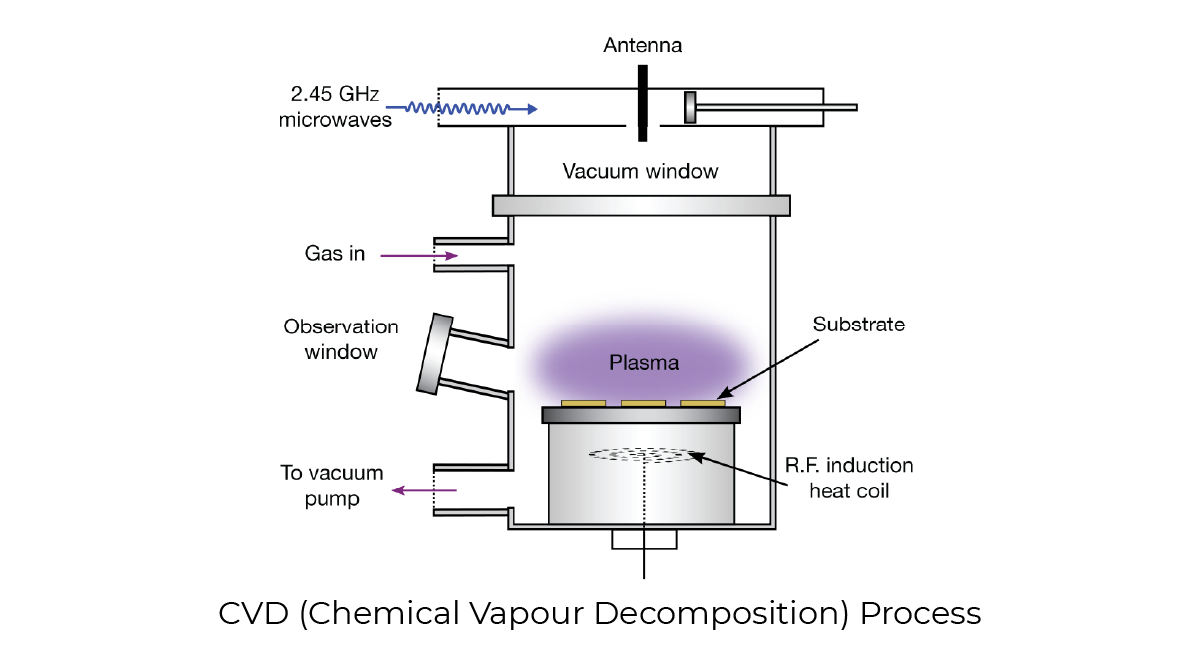
The diamond seed goes through intense processes and in turn, a synthetic diamond is created. The Chemical Vapor Deposition (CVD) method uses less temperature and less pressure, unlike the HPHT. It actually uses a combination of chemical compositions to break down the diamond seed.

It uses a variety of gasses to crystallize and harden the seed. The best part about these methods is that they are completed in a matter of weeks without any ecological and environmental wastage, and save manual labor. These are mass-produced and are much cheaper than naturally mined diamonds. It is a great option if you have a fixed budget.

To spot differences between naturally mined diamonds and lab grown diamonds, special instruments are needed even by professionals. The other way to spot the differences is in the IGI/GCAL/GIA/AGS report of each diamond.

Pros and Cons Lab Created Diamond

Pros of Lab Created Diamond:

  • They are literally the same as naturally mined diamonds. Their physical and chemical compositions are alike.
  • They are cost-effective and charge less than natural diamonds.
  • Environment Friendly. They do need any mining that causes harm to the environment.

Cons of Lab Created Diamond:

  • Lab grown diamonds do not have the same legacy as naturally-grown diamonds. The former is not assumed to be ‘rare or one of a kind.
  • They are mass-produced hence, making it feel less of a luxury.
  • The value wears off with time. And does not have a good resale value.

[blog_page_inventory shape=”Round,Oval,Emerald,Cushion,pear,radiant,princess” carat=”4.00,4.10″ cut=”0,4″ color=”0,10″ clarity=”0,11″]
[blog_page_btn title”Buy Now” url=”https://www.loosegrowndiamond.com/inventory/?”]

Simulant Diamonds vs Lab Created Diamonds?
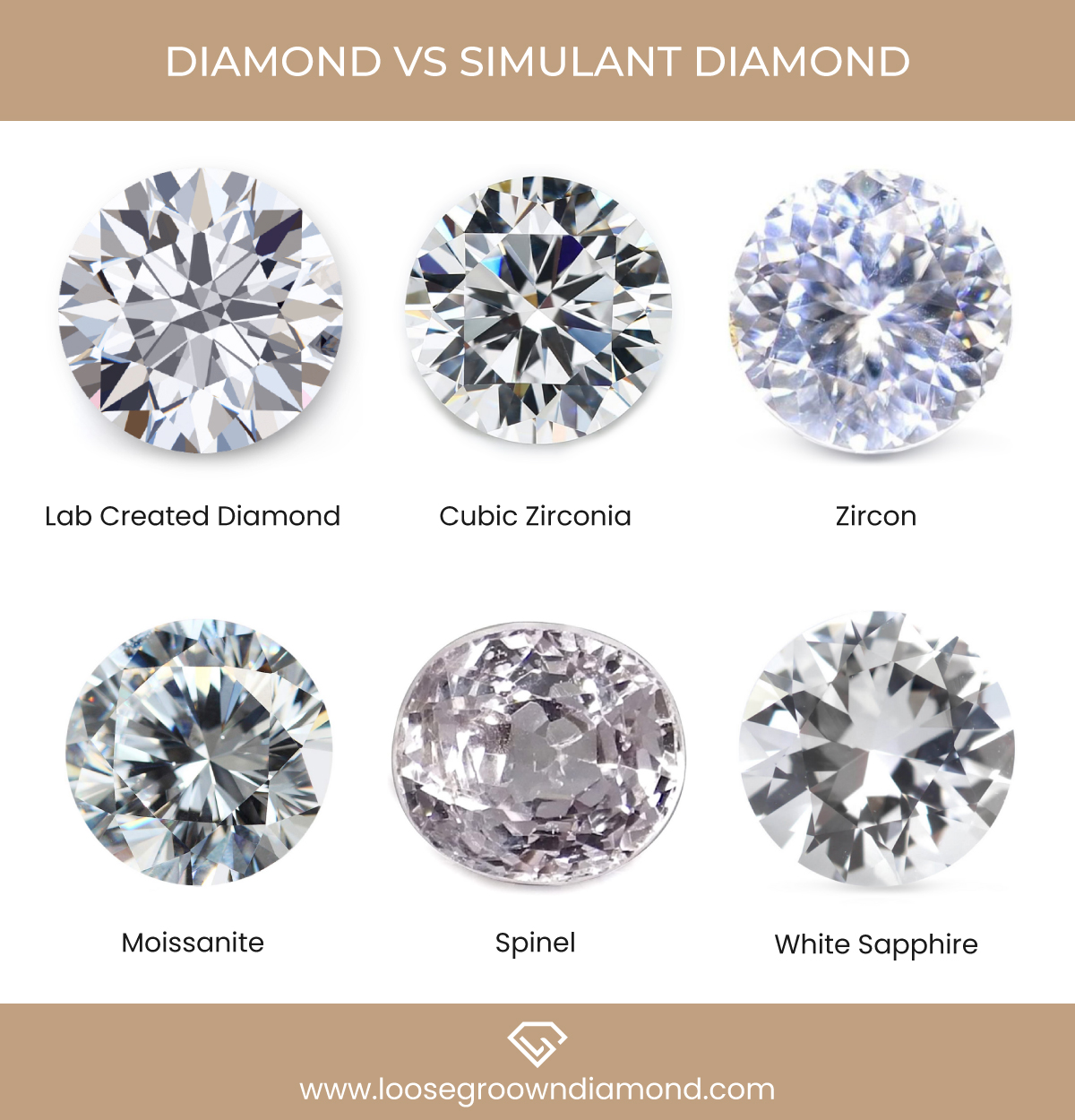
Simulant Diamonds vs Lab grown Diamonds

Lab grown diamonds are literally the same as naturally occurring diamonds in appearance. Both these categories have the same physical and chemical compositions making both indistinguishable. 

Both are graded on the same scale which is used for all diamonds. You need to look at their respective GIA reports spotting the differences. However, simulant diamonds can be easily differentiated as they have different properties and elements. They sparkle differently and look a certain way than regular diamonds. These diamonds are the impersonation of regular diamonds.

There are 4 points appearance, about, cost, and ethics to differentiate both the simulated diamond vs lab grown diamond.

Infographics

Simulated Diamond vs Lab Created Diamond: About

Today, diamond simulants such as cubic zirconia and moissanite are synthetic stones manufactured in laboratories. They are made to simulate diamonds but are compositionally and optically different from diamonds and can be made from several different materials and gemstones.

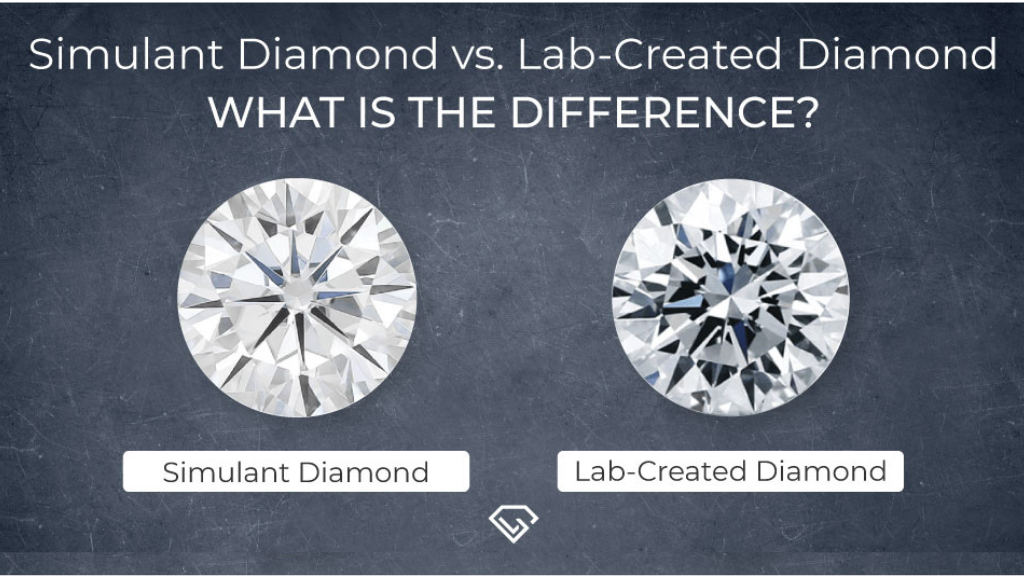
Simulated Diamond vs Lab Created Diamond: Appearance

Diamond simulants can be differentiated from diamonds due to their optical properties. Moissanite, for example, is double refractive
while a diamond is singly refractive. This causes the moissanite to emit a fiery rainbow sparkle that is easily differentiated from a diamond with the naked eye.

Simulated Diamond vs Lab Created Diamond: Cost

The cost of many popular diamond simulants is often much lower than both natural and lab diamonds. Simulants are attractive
cost-friendly option for many couples as you can create your dream engagement ring without veering outside your budget or
compromising center gemstone size.

Simulated Diamond vs Lab Created Diamond: Ethics

As most popular diamond simulants are lab-grown using advanced technology, they require no new mining to produce and are a
sustainable option.

Are Simulants Diamonds and Lab Created Diamonds Real Diamonds?

Buyers of such luxurious goods want the best item for their money. They are not only paying for the money but for the experience. Hence, it is imperative to purchase a diamond that supports a lifestyle and can be one of those pieces which are remembered for ages. 

Jewelry, in general, has been an heirloom in families, which is why when purchasing such goods the quality has to be top-notch. People often raise the question of whether diamond simulants and lab created diamonds are even real diamonds. This question is valid because diamonds are an age-old creation and something that is conventionally traditional in nature. 

Hence, people are tensed to venture into newer methods of purchasing new-age diamonds such as diamond simulants and lab created diamonds.

Lab grown diamonds recreate an earth-like setting using high pressures and high temperatures with the help of an existing diamond seed which turns out to be a diamond. Both diamonds have the same properties. This is very much a real diamond and one must not think otherwise. 

On the other hand, diamond simulants are literally ‘resemblances of a diamond’. They look like diamonds in appearance however, their chemical and optical compositions are nowhere near an actual diamond. 

Some diamond simulants are easy to spot as they sparkle and shine in a manner that is different from an actual diamond. 

The confusion arises as both the terms that are, synthetic diamonds (lab grown diamonds) and diamond simulants are used synonymously.  

What Are the Benefits of Buying Lab Created Diamonds?

You may wonder why a lab-grown diamond should even be an option when naturally mined diamonds are still in existence. The latter is something that you can blindly trust and it comes with a certain sense of pride and luxury. 

When people decide to buy something as expensive as a diamond, they expect the best. It is not something that is bought on a whim but a lot of thought and emotions are put into it when making such a purchase.

While naturally mined diamonds are a trusted category, they also cause a lot of ecological damage and endanger the lives of miners who put in hours and hours of labor to score a single diamond. In many cases, these miners work in hazardous conditions without proper protective gear and receive meager wages.

Apart from this, it is a time-consuming process. It takes millions of years. Naturally mined diamonds are an expensive commodity and not everyone can afford to make such a purchase.

So what is the alternative? Lab grown diamonds have proven to be a great alternative to the problems posed by naturally-grown diamonds. As confirmed earlier, these are real diamonds despite the fact that they are not processed by nature. Lab grown diamonds are environmentally viable.

For a generation that is conscious of its consumption, it has a responsibility to preserve the environment. Especially in this day and age, one has to be aware of their surroundings.

We live in an already deteriorated environment and to pollute it further is a risk we will take unnecessarily. A single carat of a natural diamond can displace thousands of tons of the earth’s surface.

Hence, this is a perfect choice in this aspect. Another thing, lab grown diamonds are cost-effective and mass-produced. This makes diamonds accessible to everyday consumers while remaining a luxury.

You can buy a diamond without shaking up your bank balance. The quality of the diamonds is top-notch, clear, and sparkly as a naturally mined diamond. They are pure in clarity and most have almost zero imperfections or dents making them better than naturally-mined diamonds as they do have blemishes in most cases.

Time is another factor making lab grown diamonds ahead in the race. It takes a few weeks to process a lab grown diamond whereas years and years for a naturally-mined diamond to occur.

Conclusion

Simulant diamonds vs lab grown diamonds have their set of pros and cons. You must understand that simulant diamonds are simply a substitute for diamonds whereas, lab grown diamonds are actual diamonds. The latter is the same as naturally mined diamonds. These two terms are poles apart with clear distinctions.

When buying diamonds, be sure of their durability and quality else the money spent is simply wasted. You want to preserve these items for a lifetime as they carry different emotions.

People hand down jewelry from one generation to another and these moments are remembered. Hence, buy lab grown diamonds that fill you with joy and pride. You should not have to be overly cautious about it while wearing them.

The simulant diamonds can get cracked or broken over time which is not really the case with lab-grown or natural diamonds. A piece of the diamond must be enjoyed and not stressed.

FAQs

Do simulant diamonds have any advantages over lab created diamonds?
Simulated diamonds are more affordable, making them an attractive option for those on a budget. However, they lack the durability, brilliance, and overall quality of lab created diamonds.

What is a VVS simulated diamond?
In the context of simulated diamonds, VVS typically implies a high level of clarity and brilliance in a lab-created or synthetic stone, aiming to replicate the visual characteristics of a natural VVS diamond without the associated cost.

How to clean a simulated diamond?
To clean a simulated diamond, use mild soapy water and a soft brush. Gently scrub the stone and pat dry with a soft cloth. Avoid harsh chemicals or abrasive materials.
Lab Created Diamonds vs Natural: Know the Real Difference

According to a survey, around 82% of brides receive a sparkle as their engagement ring before they walk down the aisle. To remember the biggest and best moments of life, nothing beats a traditional diamond ring.

Has the thought of the origin ever come across your mind? Some take the conventional route i.e, composing in-depth of the surface of the earth for millions and billions of years until man found it. While others take a more distinct route- they are grown in a lab. 

Lab Created Diamonds vs Natural: Know the Real Difference

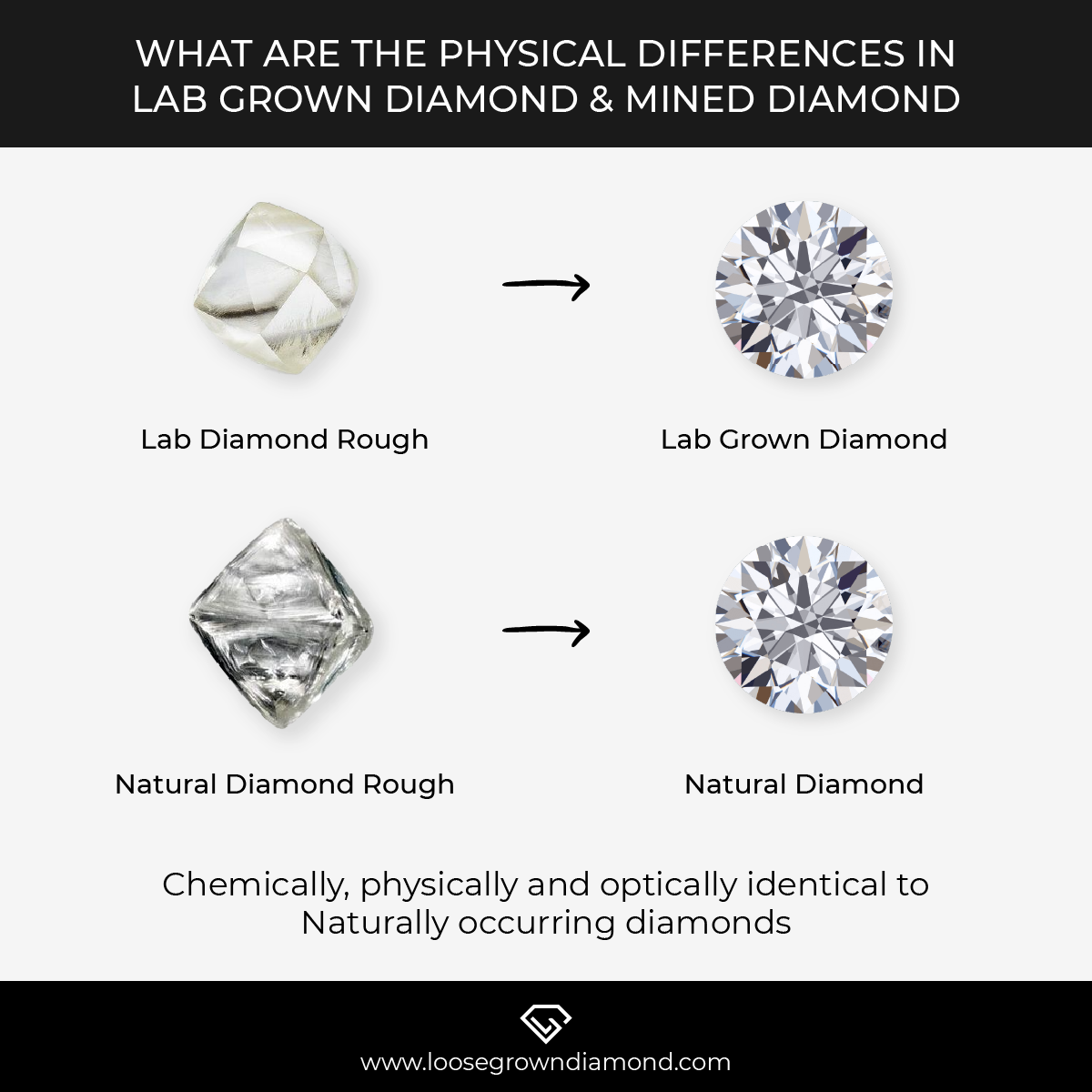
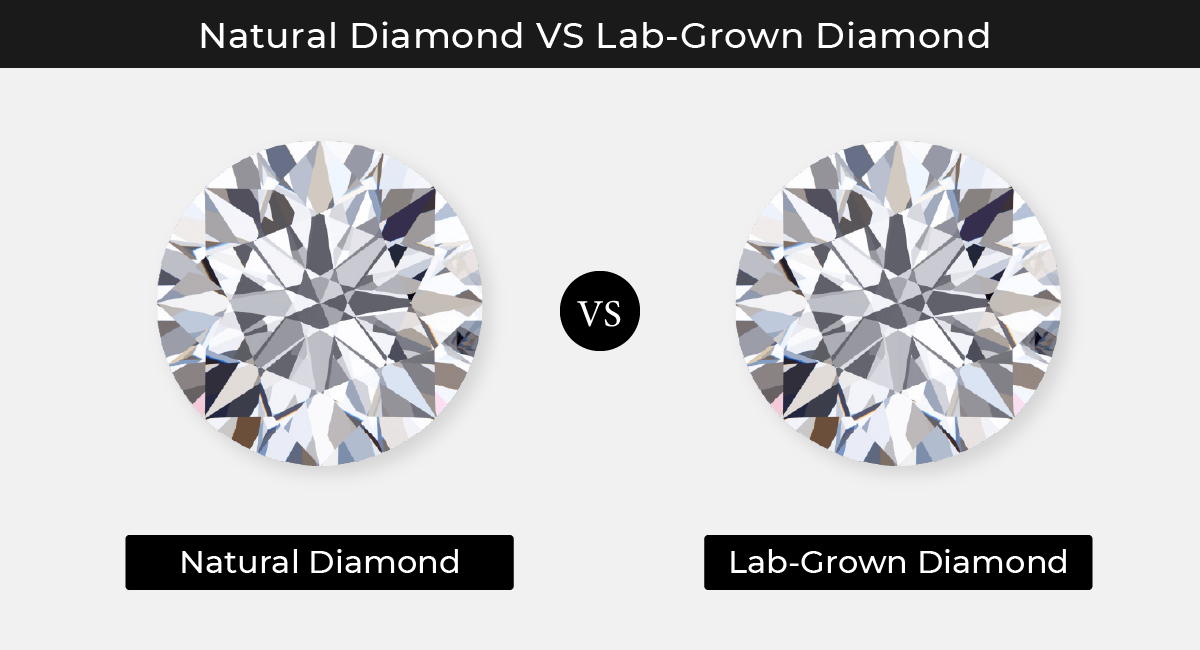
Lab grown diamonds and mined diamonds look identical, so much so that even a trained geologist can’t tell them apart with a naked eye.

This article will provide you with accurate information about lab grown diamonds vs natural diamonds.

Lab Created Diamonds vs Natural: How They are Differ?

natural vs lab diamonds

Lab Created Diamonds vs Natural: What They Are?

What are Lab Grown Diamonds?

As the name suggests, diamonds are grown in a lab. Where organic diamonds take thousands of years to form, lab grown diamonds just take a few days or weeks. There are 2 main methods for making diamonds  — high-pressure, high-temperature (HPHT) diamonds and chemical vapor deposition (CVD) diamonds.

High-Pressure, High-Temperature (HPHT)

To create HPHT diamonds, scientists expose carbon to high pressure and temperature similar conditions to that of the mined diamonds. First used by General Motors in the 1950s.

High-Pressure, High-Temperature (HPHT)

This method tends to produce yellow to brown diamonds mainly due to the interaction with gases and vapors. However, with advancements in technology, colorless diamonds can now easily be formed by this method. This diamond is typically expensive due to its massive energy and equipment requirements. 

Chemical Vapor Deposition (CVD)

To create diamonds, workers start with a bud of diamond and grow it into an expanded crystal through layers of deposits of chemicals. In this method, hydrocarbon gas (methane) is pumped into a vacuum chamber. Microwaves are then sent through to separate H2 and CO2. The carbon atoms build up and are deposited on the diamond seed.

Chemical Vapor Deposition (CVD)

This process has been around for more than a decade, therefore making it less costly Requires less energy and equipment because it requires less temperature and pressure. It produces clear, colorless diamonds.

What are Mined Diamonds or Natural Diamonds?

How are natural diamonds mined?

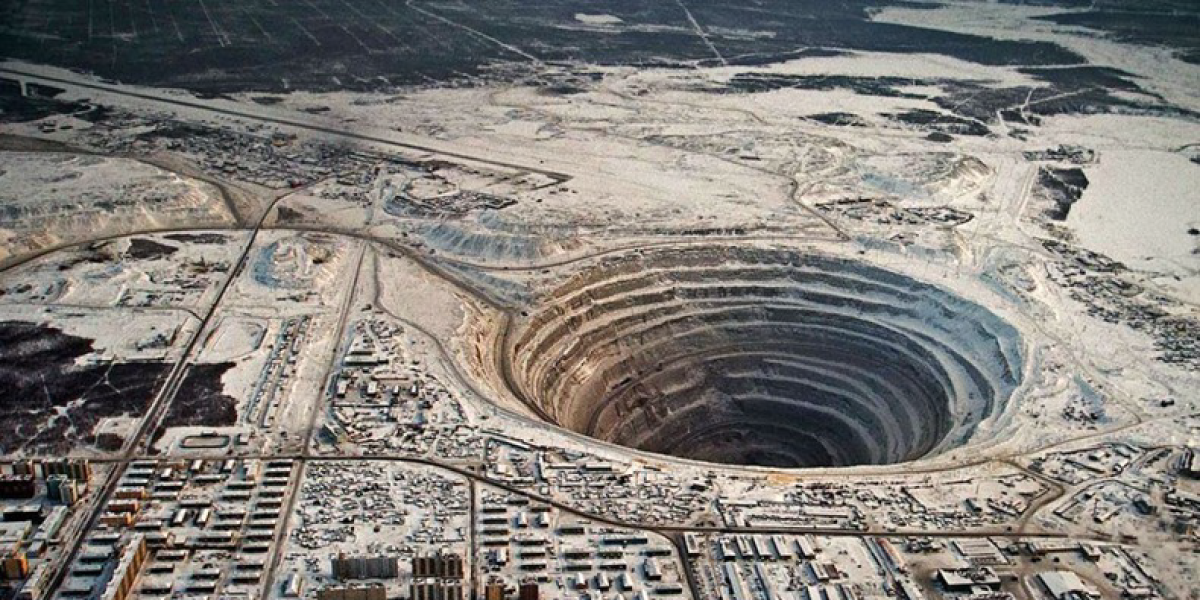
Mined diamonds come from beneath the earth — the mantle. They are formed over millions of years where pressure and temperature turn carbon into lumps of crystallized carbon or diamonds.

Diamonds are found in the form of kimberlite, a native rock named after a town in Southern Africa namely Kimberly. To extract these diamonds, companies have to set up extracting mines dig the earth using specialized equipment and extract the crystals.

Lab Created Diamonds vs Natural: Pros and Cons

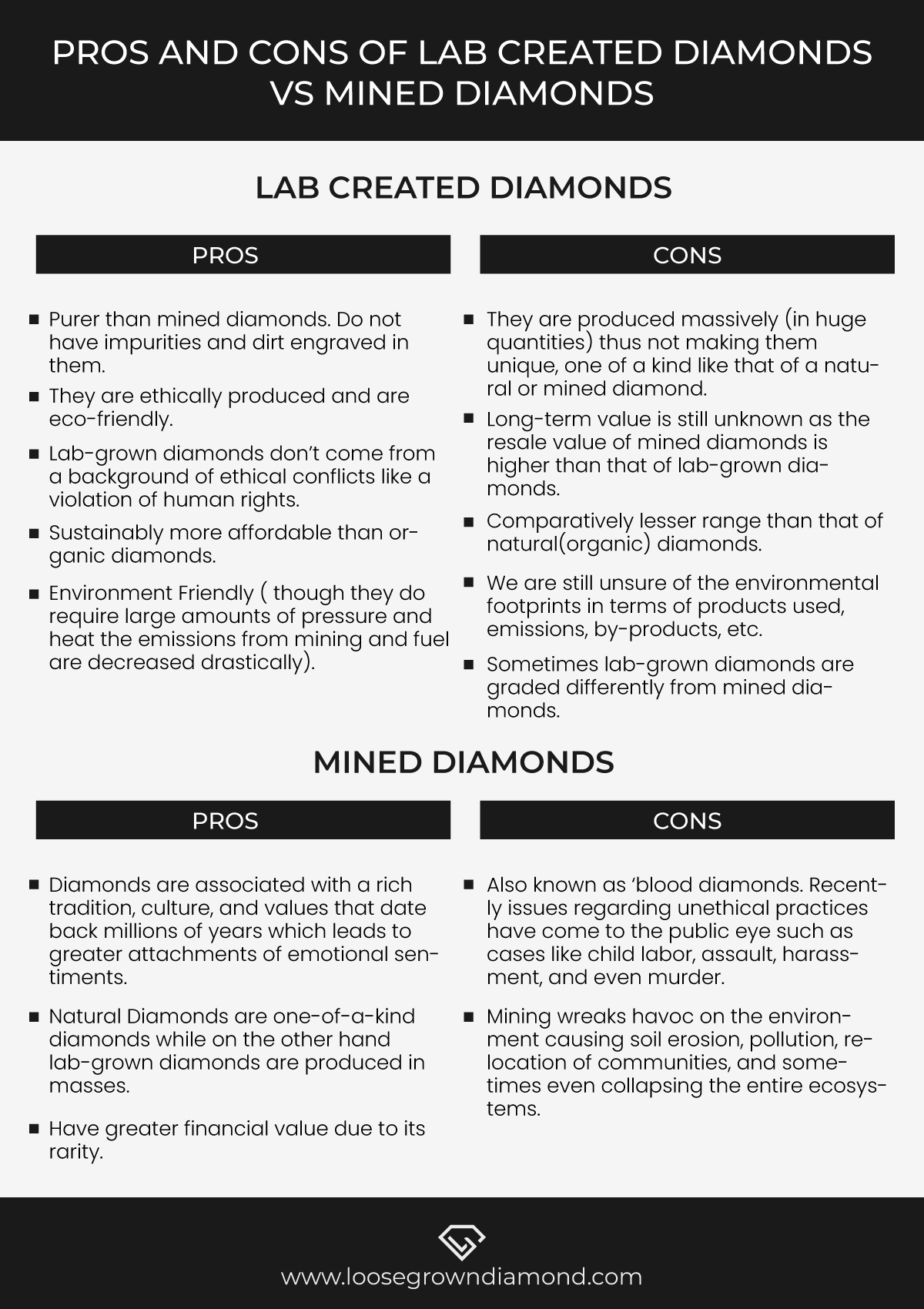
Pros-and-Cons-of-Lab-Created-Diamonds-vs-Mined-Diamonds

Lab Grown Diamonds

PROS

  • Purer than mined diamonds. Do not have impurities and dirt engraved in them.
  • They are ethically produced and eco-friendly.
  • Lab created diamonds don’t come from a background of ethical conflicts like a violation of human rights.
  • Sustainably more affordable than organic diamonds.
  • Environment friendly (though they do require large amounts of pressure and heat the emissions from mining and fuel are decreased drastically).

CONS

  • They are produced massively (in huge quantities) thus not making them unique, one of a kind like that of a natural or mined diamond.
  • Long-term value is still unknown as the resale value of mined diamonds is higher than that of lab grown diamonds.
  • Comparatively lesser range than that of natural(organic) diamonds.
  • We are still unsure of the environmental footprints in terms of products used, emissions, by-products, etc.
  • Sometimes lab grown diamonds are graded differently from natural diamonds.

Natural Diamonds

PROS

  • Diamonds are associated with a rich tradition, culture, and values that date back millions of years which leads to greater attachments of emotional sentiments.
  • Natural Diamonds are one-of-a-kind diamonds while on the other hand lab created diamonds are produced in masses.
  • Have more excellent financial value due to its rarity. 

CONS

  • Also known as ‘blood diamonds. Recently issues regarding unethical practices have come to the public eye such as cases like child labor, assault, harassment, and even murder. 
  • Mining wreaks havoc on the environment causing soil erosion, pollution, relocation of communities, and sometimes even collapsing entire ecosystems.

Lab Created Diamonds vs Natural: Physical Differences

No two sparkles are alike, lab grown and natural diamonds both differ only in a way that isn’t visible to a human eye. 

Physical Differences of Lab Grown Diamonds vs Mined Diamonds

Lab Created Diamonds vs Natural: Inclusions

No diamond is flawless. These imperfections are so common that even jewelers work their whole life without seeing a diamond getting a flawless rating. Specialized laboratories like the American Gem Society (AGS), International Gemological Institute (IGI), and Gemological Institute of America (GIA) grade all diamonds, organic and lab-grown alike, based on their flaws. 

There are mainly two types of flaws that are looked out for blemishes and inclusions. The imperfections visible on the surface of the diamond are called blemishes. Flaws within the diamonds are termed inclusions. 

Lab Created Diamonds vs Natural: Price

Natural diamonds are expensive because they are rare. Mining them involves complex and costly operations with no guarantees about what will be found. The cost also includes labor, energy for mining and polishing, and the somewhat questionable control and advertising in the diamond market.

On the other hand, lab diamonds are often up to 50% less expensive than natural ones due to different supply chains and more efficient crafting with advancing technology.

Lab Created Diamonds vs Natural: Durability

Lab created diamonds are made of carbon, just like natural diamonds, making them equally durable. Both types of diamonds are the hardest materials on Earth, scoring a 10 on the Mohs hardness scale, and are resistant to chipping and damage.

Lab Created Diamonds vs Natural: Distinctions are Microscopic

It takes professional training to identify lab grown diamonds from organic diamonds. Specific scientific equipment is required that amplifies the size of the diamond by 10x. To the naked eye, the imperfections are merely visible. The only way to tell them apart is by telling them the truth about the origin of the diamond.

Lab Created Diamonds vs Natural: Color

It is possible to compare diamonds based on their color. Mined diamonds are commonly found in yellow and brown color due to the geological conditions surrounding them. The diamonds under formations mix up with nitrogen giving them a yellow/brown tint. Colors beyond yellow and brown are very rarely found in nature.

With grown diamonds, experts can introduce minute amounts of gases to create stained diamonds. These gases such as nitrogen and boron are introduced in small quantities during the growing process, they can create yellow, brown, green, or even pink colored diamonds.

GIA grades their colored diamonds with the following scale.

  • Faint
  • Very Light
  • Light
  • Fancy Light
  • Fancy
  • Fancy Intense
  • Fancy Vivid
  • Fancy Dark
  • Fancy Deep

Lab Created Diamonds vs Natural: Sparkly Appearance

Diamond graders use different optical terms to grade diamonds’ sparkles. They evaluate qualities based on their brilliance, fire, and scintillation. Brilliance or brightness is the reflection of light seen in the diamond. Fire and Scintillation are the flashes of color contrasting between dark and light areas.

Grown diamonds cannot be differentiated from natural diamonds. Specific cuts can enhance the above grade and optical illusions. Both diamonds come in different shapes such as round, pear, cushion, heart, marquise, oval, emerald, princess, radiant, baguette, rose cut, and more.

Lab Created Diamonds vs Natural: Value

The value of a diamond is determined by the market and what people are willing to pay. Lab created diamonds, if known and documented as such, are valued less than natural diamonds of similar quality. However, the importance lies in the symbolic value of the diamond as a representation of love and commitment.

The evolving technology of lab grown diamonds might lead to changes in their value, especially if they become easier and cheaper to produce, or if societal priorities shift away from diamonds as symbols of love and marriage.

[blog_page_inventory shape=”Oval,Emerald,Princess,Radiant,round,pear,cushion,kite,rose cut,old mine,marquis,” carat=”2.60,3.10″ cut=”0,4″ color=”0,10″ clarity=”0,11″]
[blog_page_btn title”Buy Now” url=”https://www.loosegrowndiamond.com/inventory/?”]

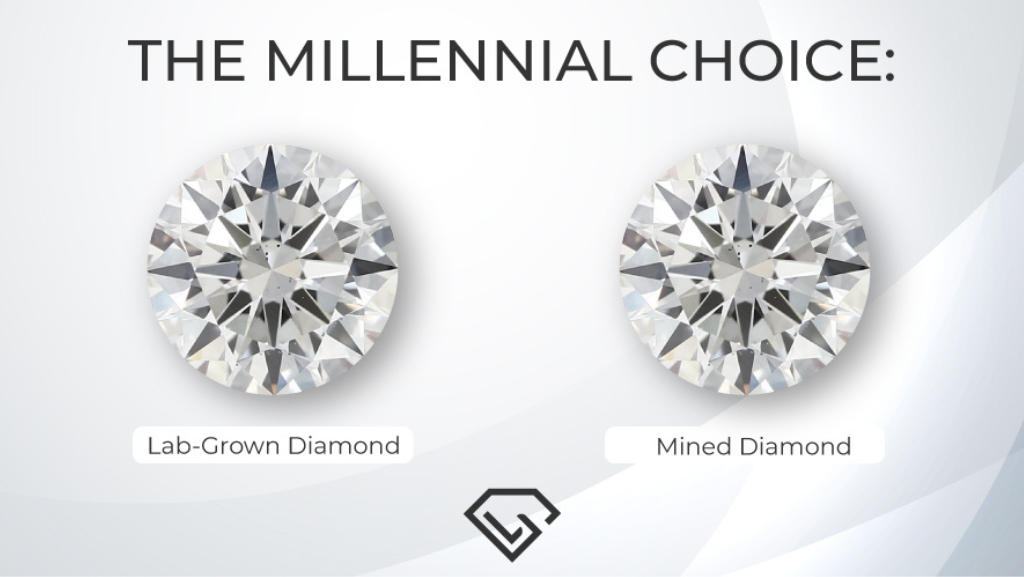
Why Do Millennials Prefer Lab Grown Diamonds?

However, price is not the only reason why millennials prefer lab grown diamonds for diamond jewelry and engagement rings. They are more commonly preferred for the following reasons:

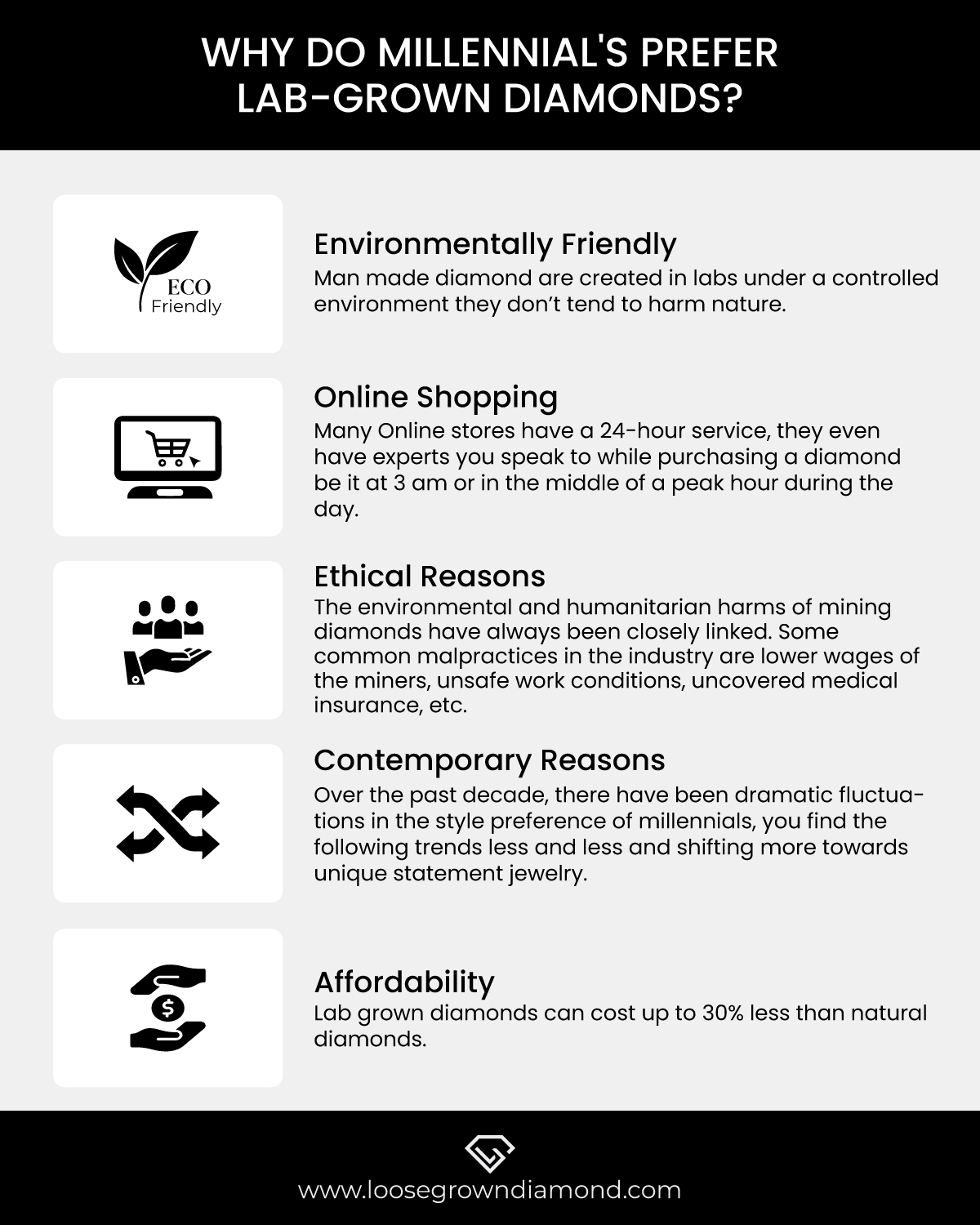
millennial choice of lab grown diamond

1. Environmentally Friendly

According to most of the reports concerning the problems faced by the world, Climate Change has to be at the top of the pyramid. With the worsening condition, more and more companies, traditional and modern have come to recognize this issue as a global catastrophe and decided to shift this work in support of treating climate change. In some companies, the changes haven’t been as drastic as it has been in the diamond industry.

To break it down in simpler terms. The energy required for mined diamonds is exponentially more than for lab grown diamonds. In recent years ocean mining gained popularity, however, only in a short period were we able to see its drastic harmful effects on the environment. The increased ship traffic, noise, light, and pollution in the sea waters are some of the main reasons for disrupting marine life. 

But with the growing industry of lab grown diamonds. It might be more than just possible. Lab created diamonds can be used in transistors in order to reduce the energy lost as heat as electricity. According to reports from the US Department Of Energy, the diamond-based components reduce these losses by up to 90%

Lab grown diamonds can also be made applicable to mechanical parts of cars to windmills. A thin coat of diamond can reduce friction in moving mechanical parts of machines. According to reports, friction can be reduced by 40%. Mined diamonds do not have the purity that is necessary for all these applications

2. Online Shopping

In the wake of recent conditions, the pandemic, and growing technologies, almost everything has shifted to online platforms, So why not purchase diamonds? As a matter of fact, the historical timeline of online shopping has perhaps never been this glorious and is bound to only grow according to experts. Many companies have made it so much easier to shop from the comfort of your home by opening up online stores.

Many online stores have a 24-hour service, they even have experts you speak to while purchasing a diamond be it at 3 am or in the middle of a peak hour during the day. Or you could choose to not interact with anyone until the checkout process. 

Online shopping has never been preferred for mined diamonds, as no number of high pixels and graphics show you the exact image of what you are about to buy. In fact, many of the diamond’s characteristics may even be subjective hence it’s always preferred to have done a physical inspection before buying them. 

3. Ethical Reasons

The environmental and humanitarian harms of mining diamonds have always been closely linked. Some common malpractices in the industry are lower wages for the miners, unsafe work conditions, uncovered medical insurance, etc. The corruption practiced in the production of diamonds is worse than our imaginations. ‘Blood Diamonds’ can be considered as a sub-average version of the reality faced by miners and other professionals involved. Violence and conflict can be commonly seen due to unethical practices in this field. 

The Kimberly processes established in the early 2000s tried to curtail the unethical practices of this industry and reduce conflict in the trade of diamonds. The origin of such conflicts is obscure.   Even with the Kimberly process in place, there are gaps in the system that cannot be filled. Even though they tried to drastically decrease the percentage of illegal diamond mining; however, it is apparent that the tier is broken beyond repair. The abuse of human rights has crossed a line beyond which it cannot return. 

For example, there was a huge discovery of diamonds in Zimbabwe in the mid-2000s, costing hundreds of miners their lives. These diamonds were traded in Antwerp and Dubai. They were freely circulating in the international market. 

Hence you can no longer guarantee if you are mined naturally diamond is ethically sourced. The growing attention towards the unethical practices in various fields and the revolution against them has also caused a drastic shift to lab-grown diamonds, as you can be sure that they are ethically sourced.

4. Contemporary Reasons

Over the past decade, there have been dramatic fluctuations in the style preference of millennials, you find the following trends less and less and shifting more towards unique statement jewelry. Moreover, a trend that is followed is most likely set by a celebrity and changes as soon as another celebrity picks up something new.

Traditional natural diamonds do not offer such flexibility to the millennials. Simple settings are no longer everyone’s cup of tea. More developed styles such as different metal colors, and ring stacks have become more prominent. For engagement rings, more unique cuts and settings are preferred. Lab-created diamonds offer the variety that the public seeks

5. The Last Most Important Reason is Affordability

Ex-traditions have become less popular where engagements and weddings are concerned as new millennial couples have surfaced. Most people put off buying diamond jewelry till they can afford it.  To get the most out of your money, a lab grown diamond is an optimum choice. 

One would expect lab-grown diamonds to be more expensive considering that they are more ethical, however, that does not seem to be the case here. Lab grown diamonds are 20-30% less expensive than mined diamonds. This means that you get a bigger size for your money. For example, say you have the budget for a 1.5-carat, round-cut diamond. You can get a 2-carat diamond within the same budget at a competitively priced lab grown diamond jeweler.  


Conclusion

Mined diamonds are associated with a rich heritage and might seem very hard to get over them easily, on the other hand, there are lab diamonds that are grown in laboratories literally at a fraction of the cost and contain the same properties that even experts find difficult to tell them apart.

Both have their pros and cons and no one diamond can be termed superior. It depends on the individual to make their choice. Either choose something environment-friendly or something that is connected with the heritage. What are your thoughts regarding both types of diamonds? 

Frequently Asked Questions (FAQs)

Can gemologist tell the difference between lab grown diamonds and natural diamonds?
When you have your diamond evaluated, it’s not easy to deceive an expert gemologist or your insurance provider. While you might not spot the dissimilarity between a natural diamond and a lab-created one just by looking, a skilled jeweler can always discern the disparity. Our experienced jewelers can differentiate between the two kinds by employing specialized equipment, mainly because of the distinct inclusion patterns and structures found in each type.

Are lab grown diamonds real?
Certainly! Lab grown diamonds are genuine diamonds created in a controlled laboratory setting, where conditions are carefully engineered to mimic the natural processes. Instead of being extracted from the Earth through mining, they are produced in a controlled environment.

Which is better, lab or natural diamonds?
The choice between lab grown and natural diamonds depends on personal preferences and values. Lab grown diamonds are a more sustainable and potentially more affordable option, while natural diamonds have unique characteristics and are traditionally valued.

How much do lab grown diamonds cost?
Lab grown diamond prices fluctuate based on factors like size and quality. In general, they are priced lower than natural diamonds with similar quality.