What is Diamond Windowing & Why Should You Avoid It?

What is the Windowing Effect of a Diamond or Gemstone?

When light flows through a diamond or gemstone rather than being reflected into it, it is called the diamond windowing effect. 

Incorrect facet angles or inadequate proportions can cause this. When substantial light leakage is visible through the gem, it is clear that this is the case. 

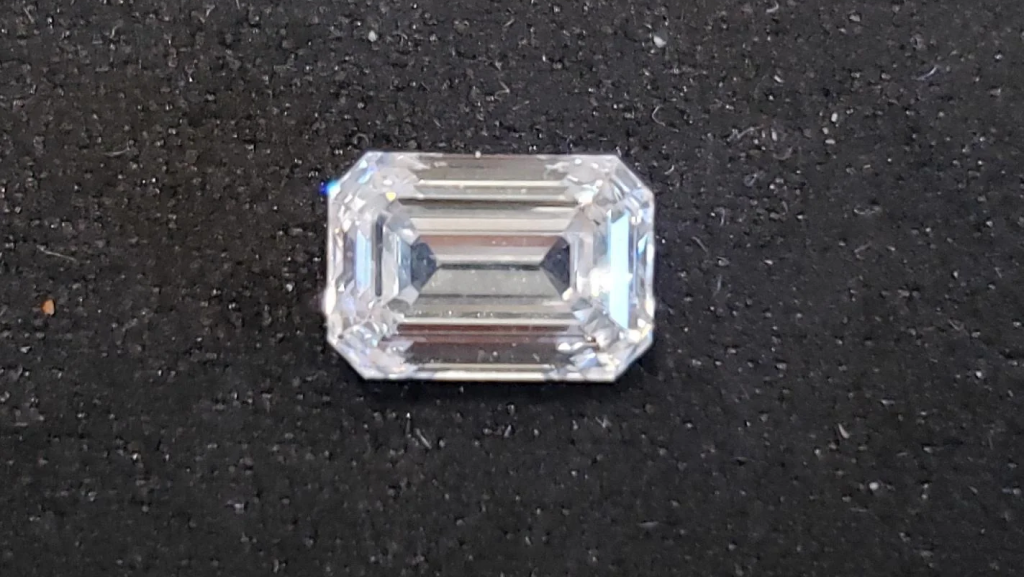
One example is windowing in emerald cuts which is a common thing because of their facet configurations. The angle at which light is refracted back into a gemstone is known as the critical angle, and it depends on the stone’s hardness. 

A gemstone with poor cutting quality could have facet angles that let light through, reducing brilliance. Gem cutting necessitates exact angles to minimize windowing and maximize light reflection. 

Cutters may intentionally create gemstone windowing by prioritizing color preservation or weight retention over brilliance. To remain high-quality and brilliant, windowing must be understood and avoided for diamonds and other gemstones. 

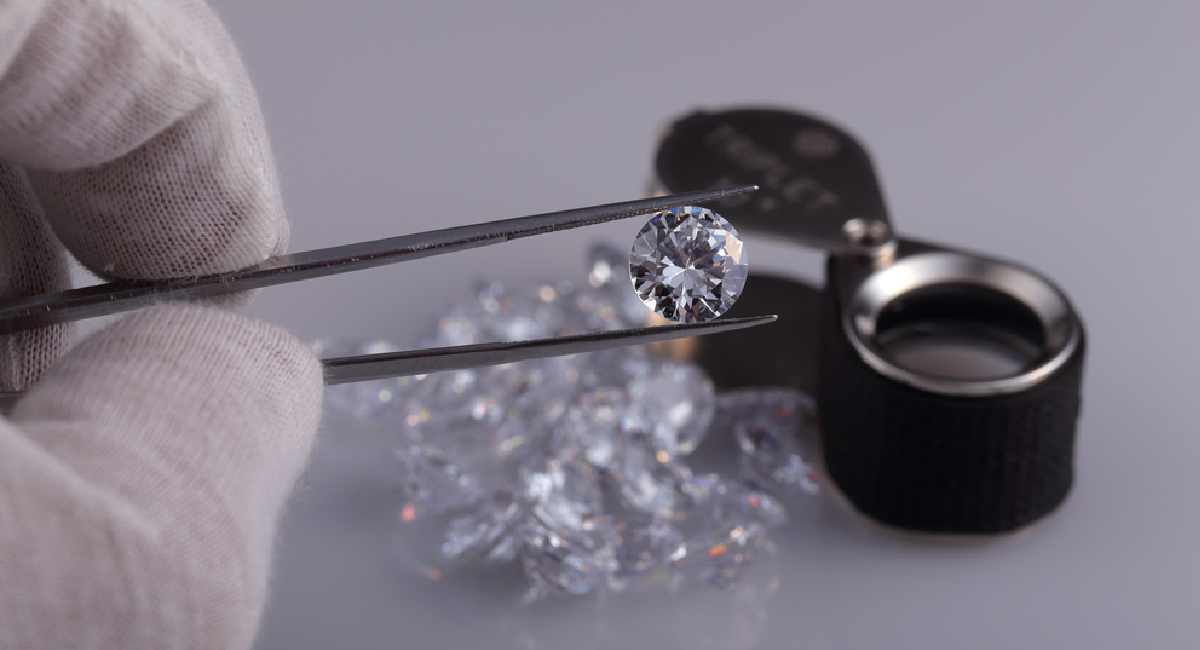
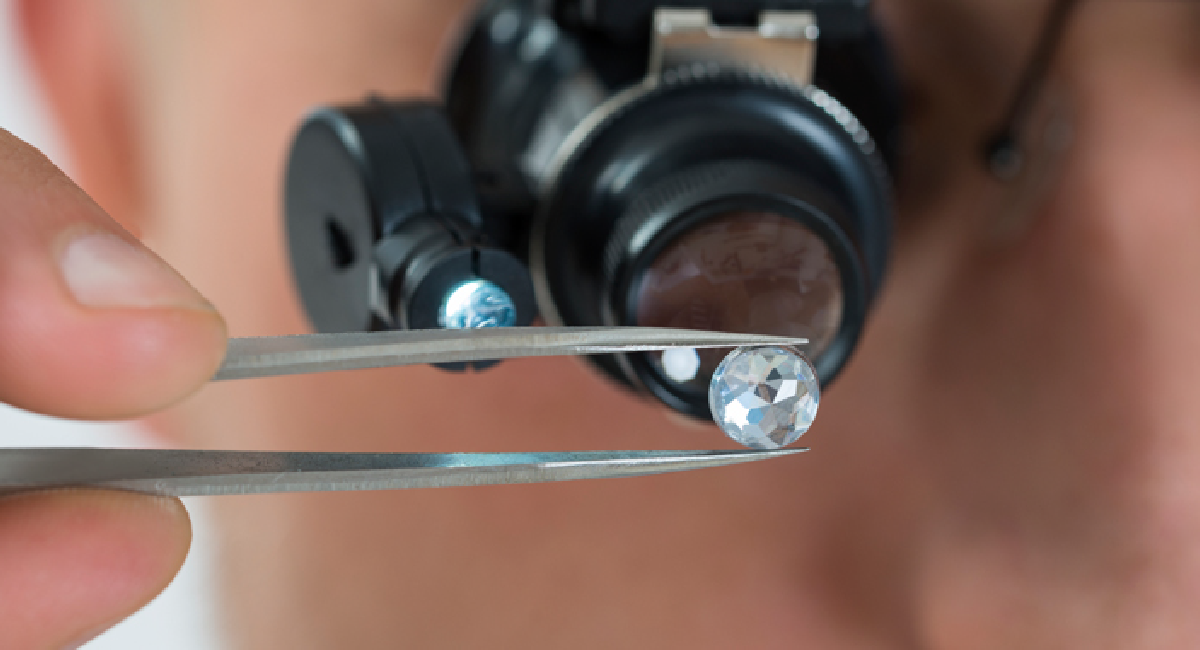
Hold a diamond or gemstone using tweezers to determine if you can see through it quickly. If so, this indicates extensive light leakage, known as windowing. 

As an alternative, look at the stone in various lighting settings. If the top view looks translucent, windowing is probably present.

How to Identify Windowing in Diamonds?

When buying gemstones, it is essential to recognize windowing in diamonds since it can considerably reduce the piece’s value regardless of the stone’s carat weight. 

Look for indicators of leaking light, such as the gemstone’s ability to reflect on tiny texts when placed on a newspaper. 

Furthermore, note whether the stone seems less brilliant in different lighting settings and check the crown facets for lack of light reflection or blackness. Look for unusual proportions because windowing can come from deep or shallow incisions, both. 

Beware of diamond sellers who try to increase brightness through side facets because the top-down light entry should be given importance.

How Vital is Cut Quality in Preventing Windowing?

The main goal of a diamond’s cut is to find a good mix between brilliance, dispersion, and scintillation. 

High cut quality makes the stone look good and maintain its appeal for years to come. In the stone, pavilion facets make the diamond brighter by reflecting light to the eye. While, crown facets make spreading light throughout the stone easier. 

On the other hand, colored jewels value brilliance and scintillation more than dispersion because they usually have less dispersive power. So, the way colored gems are cut emphasizes their brightness for the best visual effect. 

Hence, cutting plays a crucial role in preventing windowing for any type of diamond.

How Does Windowing affect Diamonds? 

Windowing effects diamond’s overall appearance and ability to refract light. Windowing makes a part of the diamond appear see-through. This transparency can reduce brightness and sparkle for any stone, thus making it unappealing. 

Windowing reduces light refraction in traditional brilliant cut, diminishing the diamond’s sparkle and fire. 

Diamond windowing is caused by improper proportions, such as a steep crown and shallow pavilion, failing to reflect light internally, reducing brilliance and increasing transparency. Light escapes through the bottom of a shallow pavilion, producing a window-like illusion when viewed from the top. 

Large table faces increase visibility through the diamond, making windowing more visible as more light travels through rather than being refracted internally and coming back up. 

Windowing helps beautify non-traditional and antique diamonds. As these cuts, with tall profiles, narrow tables, high crowns with extended facets and steep angles, might purposely generate windowing for a distinct look and different light performance.

What remedies are available if my diamond already has a window?

Re-cutting or Re-polishing: Re-cutting or repolishing gemstones fixes windowing. However, it depends on the windowing intensity and gem size. Small diamonds under 1 carat that have severe windowing, will find recutting problematic. As recutting can lower carat weight by 50%, depending on the severity of the cut. Before proceeding, consider factors like carat weight reduction and trimming fees. Repolishing pavilion depth and table size improves brilliance but might also lower weight.

Choosing the Right Setting: The correct setting may hide windowing. A bezel or halo can hide windowing. A bezel with a metal rim and a halo setting with smaller diamonds hide the transparency. Making windowing is less obvious in these settings.

How to Stay Away From Windowing?

Choose light-performing cuts like round brilliant or princess cuts to avoid windowing. Make sure pavilion depth and crown angles are ideal for light reflection. Review diamond grade reports and examine the gem in different lights. For the final test, quality can be assured by consulting a trusted jeweler or gemologist.

Best Setting for Diamond with Windowing

If you have a diamond with windowing, it is suggested you consult your jeweler to find the best setting. The diamond look can be affected by metal color, such as 18k gold. Rhodium plating on the ring may also help avoid the showing of diamond windowing. As mentioned above a bezel and halo setting can also help hide the windowing effect.

Best Tips for Choosing Well-Cut Diamonds 

Try light performance analysis and computerized imaging in addition to typical evaluation methods. These sophisticated technologies can reveal a diamond’s optical characteristics, revealing windowing concerns. Trust your instincts and choose a diamond that shines and vibes with you for a memorable purchase.

How Can I Ensure I Purchase a Diamond Without Windowing?

Consult your jeweler before buying a diamond to avoid windowing. Look for GIA, IGI, or GCAL certifications to verify the diamond’s quality and dimensions. Check diamond transparency under different lighting conditions.

Conclusion

Maintaining the value and aesthetic appeal of diamonds and gemstones requires understanding and attention to windowing. Diamond Windowing can be efficiently minimized or camouflaged by carefully assessing gemstones, consulting with professionals, and considering cutting styles and settings. Buyers can confidently choose diamonds and gemstones if they can identify the lighter center and absence of light flashes in gemstones or distinguish between well-cut stones and those with windowing.

FAQs

Is the emerald diamond windowing issue regular?
Because of its step-cut facets, emerald diamonds are frequently used in windowing; nevertheless, excessive windowing may cause poor quality.

Are windowed Diamonds always of lower quality?
No, windowed diamonds are not always of lower quality. While the brilliance of windowed diamonds may be diminished, other factors also affect quality.

Does a window lessen the value of the stone?
If a window drastically alters a stone’s appearance or light performance, then that stone’s value may be diminished.

What is the difference between Diamond Windowing & Extinction?
In diamond extinction, poorly cut stone prevents light from returning, whereas diamond windowing has light flowing through the stone and leaving without returning to the observer’s eye.

What can be used under the gemstones when setting it on a ring to minimize the effect of the window?
When mounting gemstones on a ring, windowing effects can be reduced by placing reflective materials underneath them, such as aluminum paper, rhodium or gold.
Diamond Inspection: How To Do It the Correct Way

Diamonds, while originally curated from nature, can be also produced in the lab. People often consider lab-grown diamonds to be “fake” or “counterfeit” because it is considerably cheap but this isn’t true as they have the same properties and characteristics as natural mined diamonds. This is due to the fact that they are made using the same technique. 

The characteristics and properties of a diamond decide the value of a diamond. There are a few ways to check the quality of a diamond. 

What is a Diamond Inspection?

Buying a diamond is an elaborate process and if you do not do your homework the right way, chances are you are going to end up with not the best diamonds according to your requirement. Diamonds are handcrafted and manufactured through an elaborate process and there are a lot of things to keep in mind when buying lab-grown diamonds. 

What is a Diamond Inspection
Diamond inspection is essentially a process of making sure that all the properties, statistics, and aspects of the diamond are up to the mark and meet your requirement. We have curated the perfect guide for you to refer to before venturing out to buy a diamond. The guide includes everything you will want to get checked and keep in mind when buying the diamond. After all, we aim to be as helpful as we can to bring you closer to your dream diamond.

How to Tell if A Diamond Is Natural or Lab-Grown?

Diamond Companies that grow diamonds in the lab are mostly honest about the origin of the diamond. Few companies even engrave the data about the stone on the diamond’s girdle itself. While most companies come out clean about their diamonds and their origin, there are diamonds that are disguised as naturally occurring diamonds in the market. So let us look at a few ways to distinguish between a diamond that is natural and a diamond that is grown in a facility

Diamond inspection

  • The Type IIa Test

This is one of the finest markers in the market regardless of the origin of the stone. IIa indicates the clarity of the graphite in the stone and is an accredited variety. As a result, if a diamond is Type IIa, one may be certain it was made in a lab.

  • Photoluminescence Spectros­copy and UV Radiation

If one wants to get their diamond inspected, they can send it to a lab to get it tested. Companies like GIA(trusted and well-known) have built devices that help determine the origin. In a nutshell, the system works by hitting a diamond with different forms of radiation and analyzing the results. During the spectrum examination, several markers of the various techniques employed to generate lab-grown diamonds appear as spikes and fall at specific wavelengths.

Factors Should Keep in Mind for the Diamond Inspection

The 4c’s of The Diamond

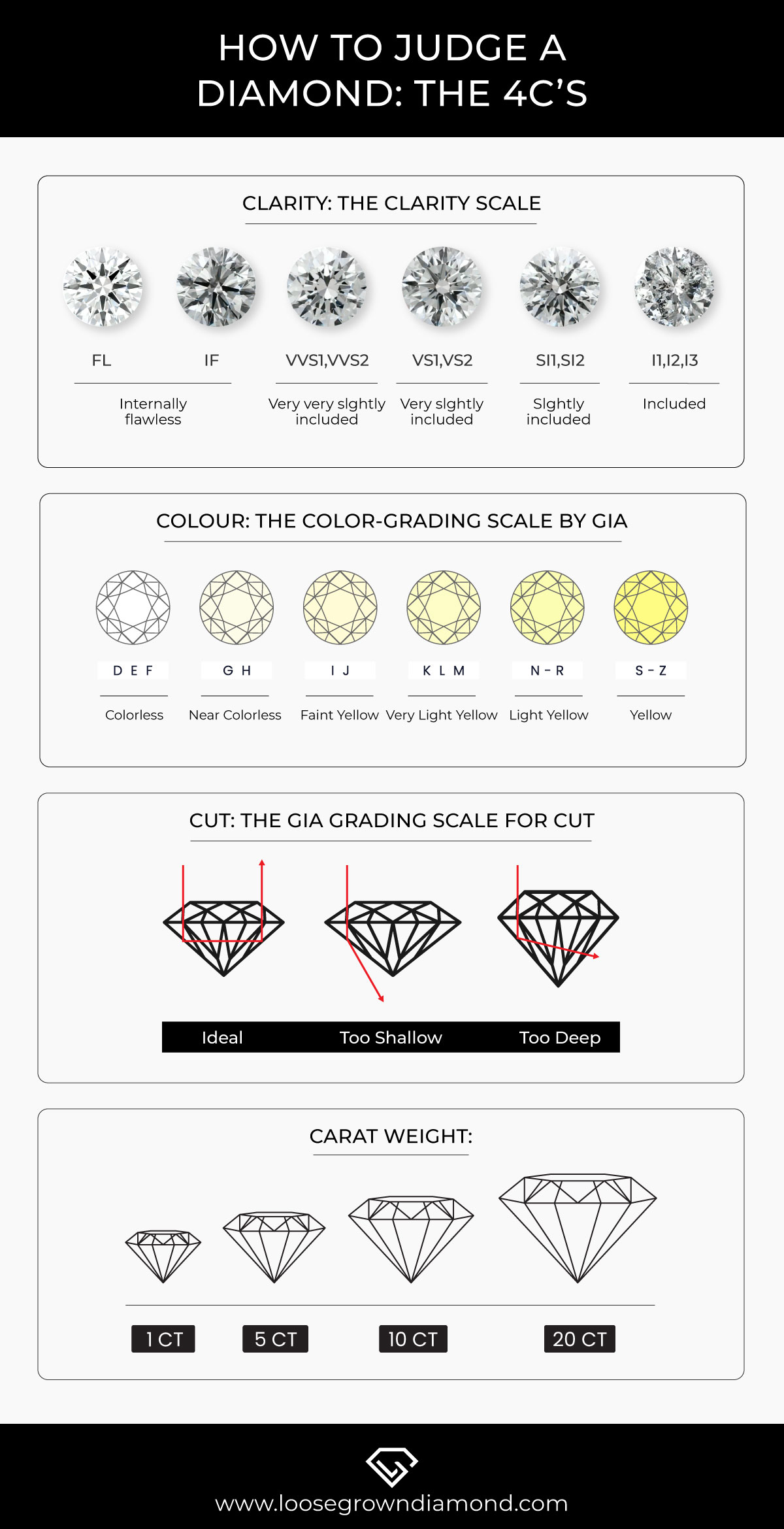
The value of a diamond depends on mainly four aspects. You absolutely need to know about all four “C’S” of them to judge a diamond accurately so that you do not end up buying something not worth your emotion or money. They are Clarity, Color, Carat Weight, and Cut. 

4c's of the diamond infographics

Clarity of the Diamond
The diamond clarity scale has six categories on the scale given by the Gemological Institute of America (GIA) and five levels on the scale given by the American Gem Society (AGS). The clarity scale is made to inform you about how many flaws or inclusions the diamond has and what is the severity of these inclusions. We have mentioned the grading followed by GIA because it’s one of the highest regarded, respected, and followed authorities in the diamond world/market. For your reference. Here are the levels of the clarity scale by GIA. 

  1. Flawless or FL grease means that the diamond is free of blemishes and inclusions and they are not even visible under magnification. 
  2. Internally Flawless or an IF grade means that there is no inclusion but slight blemishes may be visible under magnification. 
  3. Very, Very Slightly Included or a VVS1, VVS2 grade means the diamond has inclusions but they are not easily visible, not even to an expert. 
  4. Very Slightly Included or a VS1, VS2 grade means that there are certain minor inclusions only visible to the naked eye.
  5. Slightly Included Or  SI1, SI2 grade means that there are inclusions that are visible to the naked eye but only when carefully inspecting the diamond. 
  6. Included or I1, I2, I3 grade means that the diamond has visible inclusions. 

Color of the Diamond

  1. Colorless or D, E, F grade means that the diamond is absolutely colorless. 
  2. Near Colorless or G, H, I, J grade means that there is some color but not visible to the eyes.
  3. Faint Color or K, L, M grade means that the color may be visible to the naked eyes. 
  4. Very Light Color or N, O, P, Q, R grade means that the color is easily seen. 
  5. Light Color or S, T, U, V, W, X, Y, Z grade means that the diamond has a significant amount of color which is clearly visible. 

Cut of the Diamond

  1. Excellent: Means maximum shine and reflection
  2. Very Good: Has good reflection and gives back most of the light
  3. Good: Brilliance is good but not the same as higher cuts. 
  4. Fair: They do have brilliance, but only reflect a limited amount of light. 
  5. Poor: Diamonds may appear dull

Carat Weight of the Diamond

Carat weight is exactly what it sounds like, how much the diamond weighs has a direct impact on the value of the diamond. The more the weight, the chances are, the higher will be the value, however carat weight is not the only determinant of the value of the diamond, clarity, cut and color along with carat weight determine the value of the diamond. 

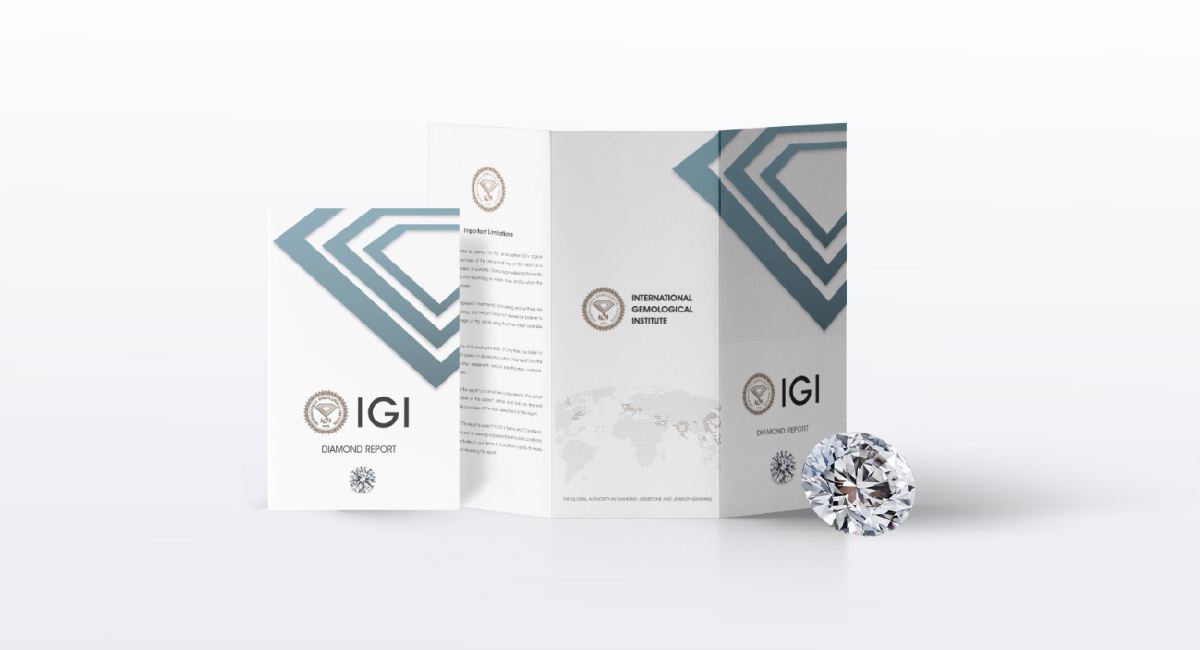
A diamond certification is essential because it helps certify diamonds through a third-party institution (an external party that is not involved in the diamond market in any shape or form). Due to many fraudulent practices happening in the diamond market it is essential to check for certificates that are free from any sort of hamper. Few such trustworthy certification agencies are mentioned in the article below.
diamond certificate

GIA: Gemological Institute of America

The GIA is by far the most widely popular and respected gem certifying organization. The GIA accreditation is extremely useful because sellers and buyers believe the organization provides rigor-free and correct data on the diamonds in their provided certificates. Every GIA-certified stone is subjected to a variety of tests and is evaluated by at least 4 gemologists. Furthermore, among all the organizations listed, it is one of the most dependable and stringent gem grading systems.

Also Read: Igi vs Gia: Comparison on The Basis of Color Grading, Pricing, and Diamond Reports 2022

AGS: American Gem Society

AGS is another well-known stone rating organization that validates precious gems and has established a reputation besides GIA. AGS is most known for its scientific method of gem classification, which employs numerical ratings instead of alphanumeric characters to authenticate gems. The numerical range rates gemstones from 0 to 10, with 0 being the finest and 10 being one of the worst.

AGS is second only to GIA in terms of market share in the United States. AGS uses a sophisticated ray-tracing method to assess a diamond’s image quality, which is greater than that of other organizations.

IGI: International Gemological Institute.

It is a non-profit stone assessment company with a strong reputation in Europe. IGI has a presence in US territories as well, however it ranks last among all American organizations. IGI is the second most trustworthy and well-known brand in gemstone certification behind GIA. IGI is known for accrediting lab-created precious stones in addition to evaluating real diamonds. Furthermore, there is a small potential that the gem will be rated incorrectly by two or three grades, but this is uncommon. In India, one can trust IGI gems because they’re well-known among both retailers and customers.

Also Read: Egl vs Gia Diamond Certification Comparisons: A Comprehensive Valuable Guide 2022

EGL: European Gemological Laboratory.

EGL is among Europe’s finest known and oldest gemstone certifying agencies. Evaluating and certifying diamond crystals is a rigorous and extensive procedure at EGL. It is well-known for authenticating gems weighing less than a carat. However, there are several EGL qualifications around the globe in various titles, including EGL Israel and EGL International, which may or may not be applicable in Europe.

EGL USA, which was once a part of a bigger European network of organizations, has now evolved into a stand-alone organization that focuses solely on the North American continent. This North American organization first opened for business in 1977 in New York, and it became self-owned in 1986. The EGL USA is very famous in the United States.

Check the Insurance of the Diamond

Yes, diamonds are the hardest substance on the planet, but that does not mean they are immune to wear and tear. Diamonds like any other substance can be damaged and it is vital to have them insured or even better buy them from a seller which has pre-insured diamonds. Insurance makes sure that if you buy a flawed diamond you can be compensated accordingly or if your diamond starts chipping off you can claim insurance. 

Research your Seller and Manufacturer Before Buying

This is one of the most important steps in inspecting the diamond. Remember to search who made your lab-grown diamond and who is your seller. Go through their website, reviews, and the feedback of customers. Check what method they use and who certified them. Check for any discrepancies if they have any.

[blog_page_inventory shape=”Round,Emerald,Oval” carat=”2.50,2.60″ cut=”0,4″ color=”0,10″ clarity=”0,11″]
[blog_page_btn title”Buy Now” url=”https://www.loosegrowndiamond.com/inventory/?shape=Round,Emerald,Oval&carat=2.50,2.60&color=0,10&clarity=0,11″]

Conclusion Thoughts

Diamond inspection is very important because it ensures you are buying the right diamond which is worthy and deserving of all your investment. The guide given above is handcrafted so that when you go diamond shopping, this checklist comes in handy. We hope all our research and references help in buying the right diamond and make the process more efficient and easier for you.