Blog

The Beauty of Lab Grown Diamond Necklace and Tips to Buy Them

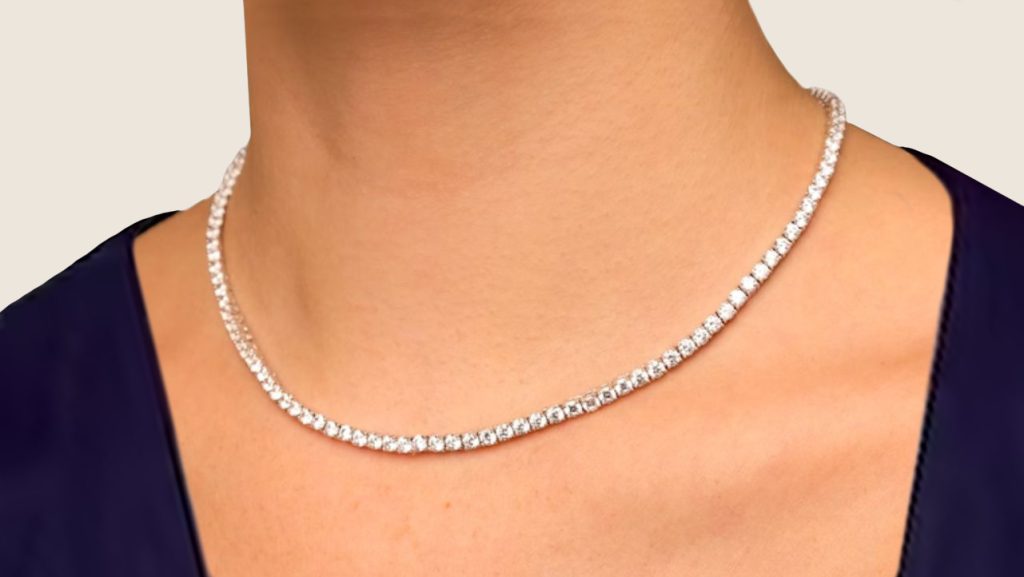
The task of buying a lab grown diamond necklace is more of an experience than it is a task. We at Loose Grown Diamonds are here to make your experience of buying a lab created diamond necklace enjoyable.

With the beauty of lab grown diamonds set together in a necklace, the elegance of this particular piece is priceless. Many factors go into deciding what is an ideal design. So you can get the best possible necklace or customize one according to your desire.
The Beauty of Lab Grown Diamond Necklace

A diamond necklace has always been a classic piece of jewelry that fits into all settings and can be worn with most outfits. Its versatility creates room for experimentation and thus gives people an option to select a unique style.

Factors to Consider Before Buying a Diamond Necklace

There are numerous factors to consider when one is buying a necklace. A lab diamond necklace is never a small affair, hence it needs to be looked into with much detail. The necklace is, firstly, a representation of the person wearing it. Once the person wears it, it becomes a part of their allure.

The budget, the usage of the necklace, the material used, and its look are all important factors to consider. A real diamond necklace has a different charm as each necklace differs. One can always see that diamonds enhance the wearer’s features and can fit into all styles.
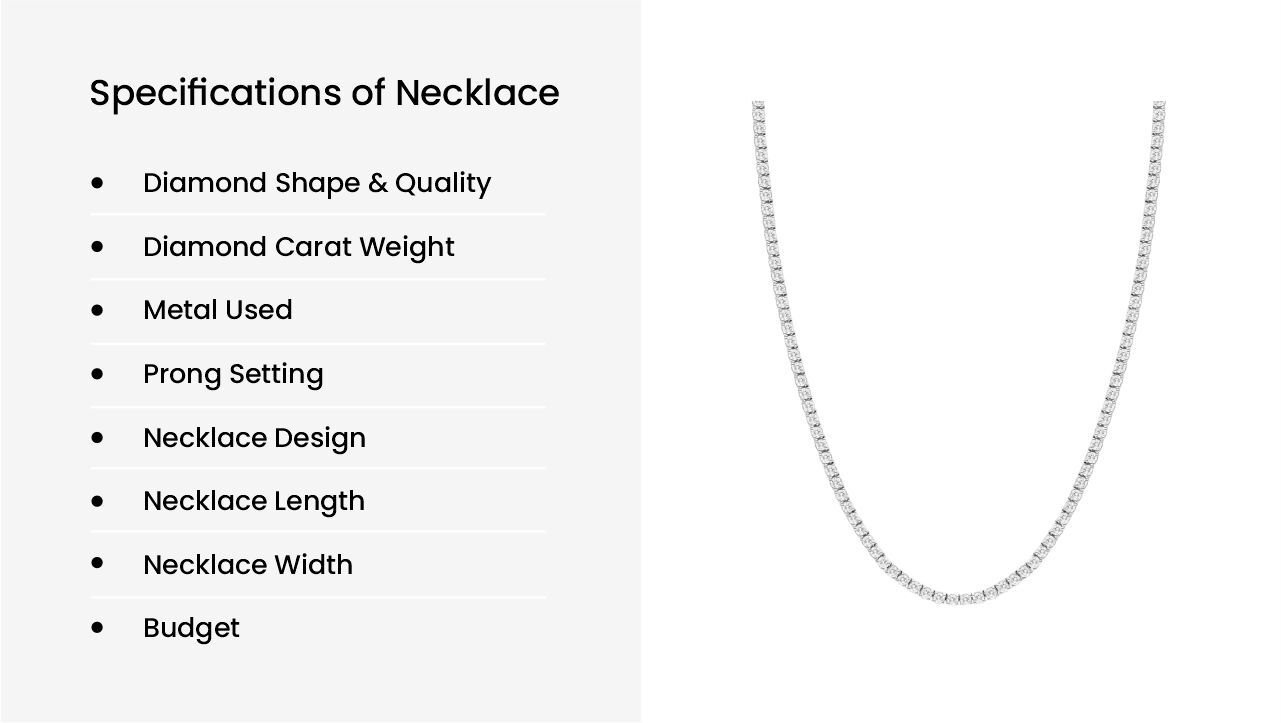
specifications of diamond necklace

Shape & Quality of the Diamond
When looking for a diamond necklace, you should check the quality of the diamond used in the necklace. The clarity of the diamond and the diamond shape will help depict the quality. You can select from options like round, oval, pear, emerald, princess, and marquise cut. A round diamond necklace is the most classic design in the lab grown diamond necklace varieties.

Diamond Carat Weight
When choosing which diamonds to be placed on a necklace, it is necessary to determine the overall weight of the necklace first. Once the overall weight of the necklace is finalized, the carat weight of the tiny diamonds on the necklace is calculated.

Metals of Necklace
The diamonds in a diamond necklace are carefully set in particular metals that hold them in place and enhance their beauty. The metals that are primarily embedded with diamonds are gold, platinum, and silver.

A gold necklace with lab grown diamonds set into the design is a stunning combination. A yellow gold diamond necklace imparts a warm tone to the diamonds when placed in the necklace. A rose gold necklace is a feminine and subtle take on the gold diamond necklace. A white gold diamond necklace is a classy, gleaming piece that shines as bright as the diamonds. This metal is preferred because the diamond is placed in a neutral-toned metal in such a setting. Making the diamond stand out more.

Another neural-toned metal is platinum. A platinum necklace is a luxurious piece of jewelry that fewer people buy due to its high price. All diamonds set in platinum shine brilliantly and make their own statement.

Length of Necklace
Factors to Consider Before Buying a Diamond Necklace

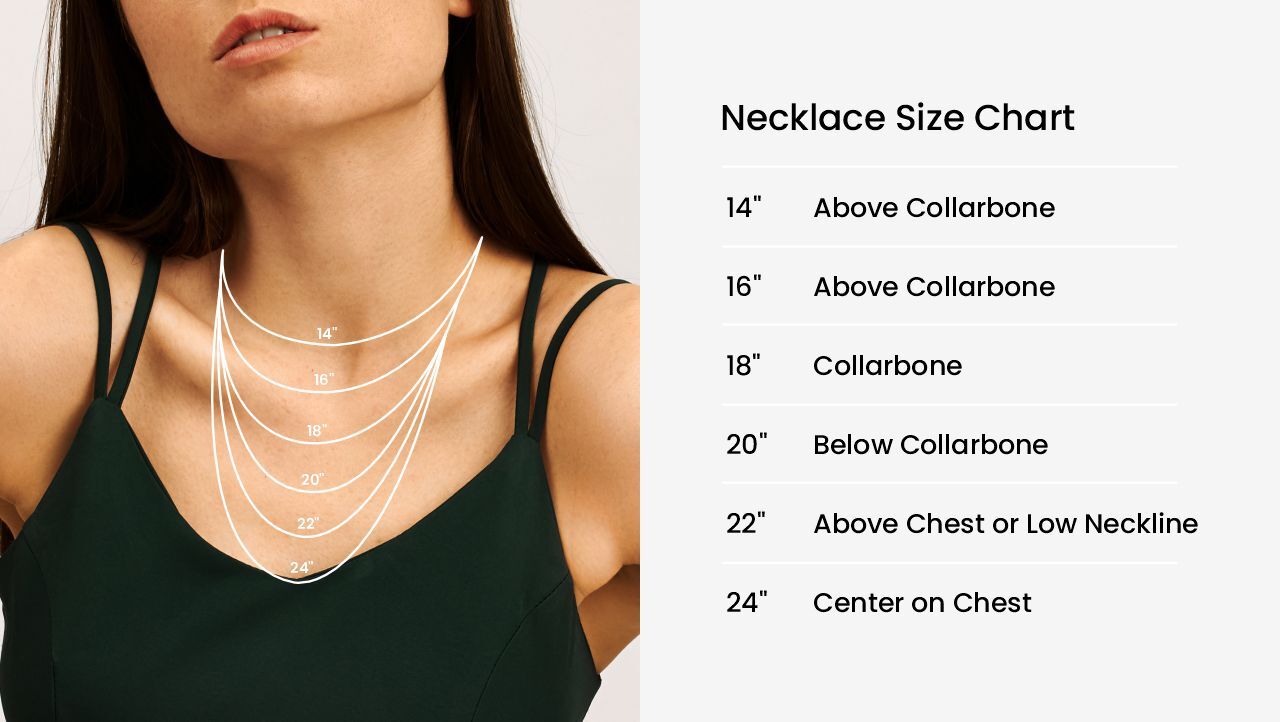
The basic pattern of the necklace can determine the length of the diamond necklace. If the necklace’s design is a choker pattern or a small pendant, then the length will sit comfortably around the base of the neck. If the pendant and chain are extended, 16″ is a good length. The diamond necklaces are available in increasing lengths, wherein 20″ is considered the most comfortable length, not too short or too long. With the usage requirement of the design, one can fit in and select the length that fits them best.

Width of Necklace
The width of a diamond necklace can vary depending on the specific design and the size of the diamonds used. Diamond necklaces come in a range of styles, from delicate and minimalistic to more elaborate and substantial designs. The width of a necklace typically refers to the width of the chain or the central part of the necklace where the diamonds are set.

Some individuals prefer a narrower and more refined diamond necklace, while others prefer a wider and more prominent design that showcases larger diamonds.

Prong Settings
When looking at lab grown diamond necklace for women, the settings are always such that they work according to the necklace’s design. If a diamond necklace pattern is a tennis necklace, the diamond settings range from prong to bezel and sometimes even halo. In contrast, in other patterns, the pendant design determines the setting. These diamond settings range from prong and halo settings and sometimes even bezel settings if the design works that way.

Budget
The budget for a lab grown diamond necklace can vary significantly depending on several factors. The cost of a necklace diamond is influenced by factors such as the quality and size of the lab created diamonds, the metal used in the setting, the craftsmanship involved, and the overall design complexity.

Generally, real diamond necklaces can range from affordable options with smaller diamonds and simpler designs to high-end, luxurious pieces featuring larger, higher-quality diamonds and intricate settings. It’s recommended to work with a reputable jeweler who can guide you through the selection process and provide options that fit within your budget while still maintaining the desired quality and design aesthetic.

When purchasing a lab grown diamond necklace, it’s important to consider personal style preferences, budget, and the desired level of sparkle and presence. You can also avail a discount by applying a promo code.

Best Diamond Necklace Designs
Best Diamond Necklace Designs

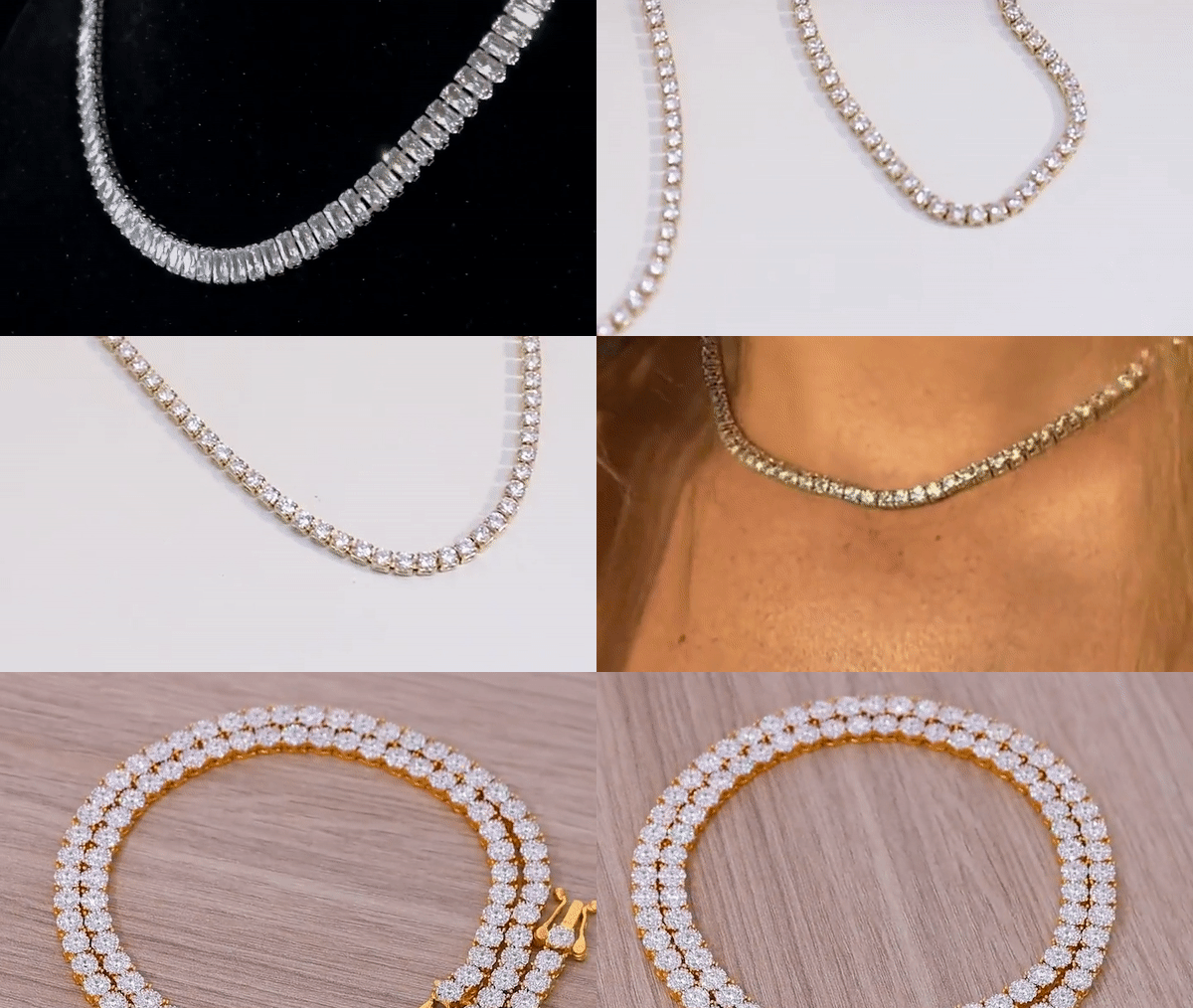
Diamonds are always known to be versatile when placing them in jewelry and designing ornate patterns. Similarly, there are varieties of diamond necklace patterns too. The more familiar patterns of the necklace with diamonds are tennis necklaces and pendant necklaces. A lab created diamond necklace can be breathtaking when designed correctly.

The tennis necklace has been a favorite among many people due to its simplicity and versatility. A tennis necklace can be paired with various outfits, attracting the most attention. This is ideal if one is looking for a jewelry piece that caters to diverse options.

It can also come across as too precious for casual wear, for such circumstances, a pendant is a viable option. The pendant designs available in the market are unique and can be customized to fit personal preferences. A pendant necklace is a simple pattern you can wear occasionally or for everyday use.

Single diamond necklaces are also trending in the social media world. A diamond is placed in the center, with a chain connected at the two ends. In this specific design, you can see the diamond cut being highlighted. For those who want the best of both worlds, a stationary pendant, and a removable pendant are available.

Multiple options exist in which the diamonds are placed alternatively and connected with a certain chain length. This makes the necklace appear sleek as well as subtle. In this case, the lab grown diamond necklace does not look overwhelming and hence can be worn regularly. If you want to experiment with style, throw on some of your favorite delicate necklaces, and you will know how to layer necklaces.

Diamond Necklaces Worn By Famous Celebrities
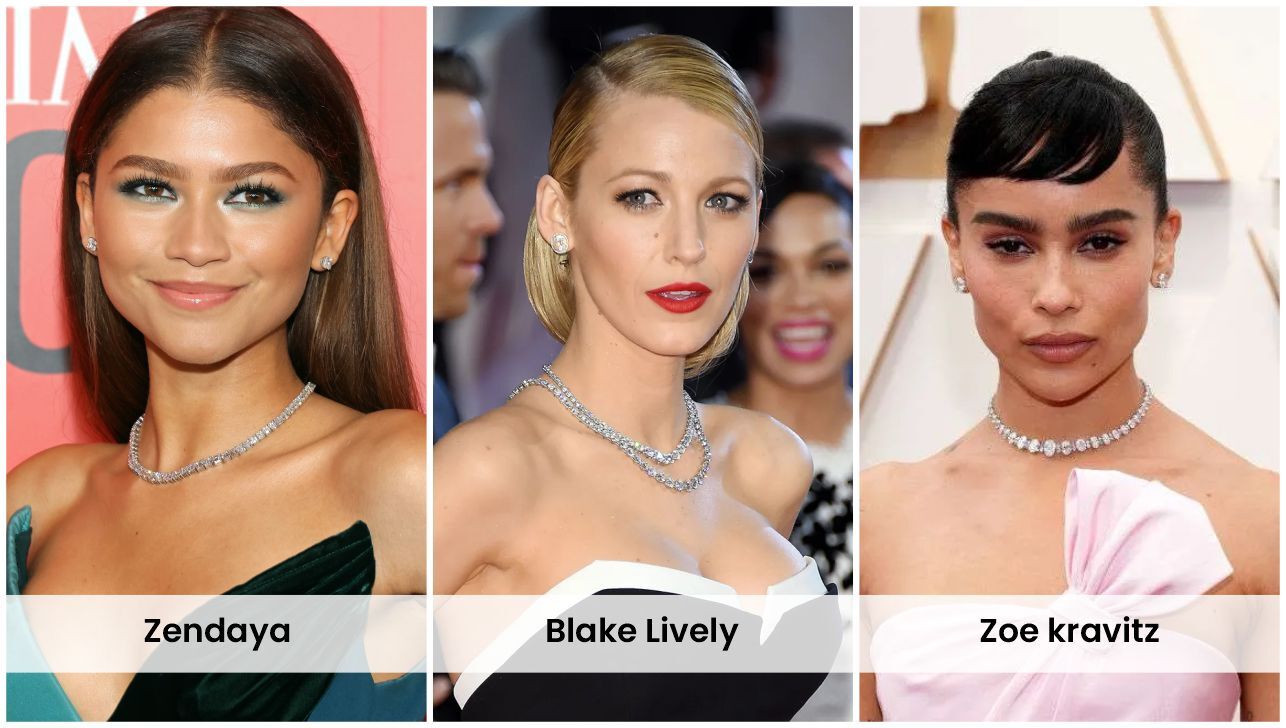
Diamond Necklaces Worn By Famous Celebrities

In showbiz, diamonds never fail to dazzle and leave us in awe. Many of these celebrities have worn diamond necklaces, but some have rocked them so well that they left an impact on our minds. Diamonds never fail to shine, whether it be award ceremonies like the Golden Globes and Oscars or even the Met Gala or Cannes.

Channeling the classic elegance of Julia Roberts, the round cut diamond necklace showcases a round cut diamond suspended from a simple and refined chain, capturing a sense of understated glamour.

Zoe Kravitz rocked a layered diamond necklace, while Lady Gaga chose a pendant necklace so Lady Gaga was seen wearing a diamond pendant necklace. Zendaya opted for a single-line simple diamond necklace, whereas Blake lively chose a tennis necklace, all of these celebrities chose to flaunt their outfit with style and went with diamond necklaces as the eye-catching factor of their outfits.

How to Buy a Diamond Necklace?

When buying a lab grown necklace, you should always ensure you buy the diamond necklace women from a trusted jeweler or diamond merchant. The certification of diamonds is of utmost importance, as that piece of paper determines the quality of the diamond.

You can see that necklaces with diamonds have different styles and patterns. The patterns range from tennis necklaces, pendant necklaces, and a whole set of diamond necklaces to some simpler delicate designs. All these patterns are dedicated to different occasions and styles. The lengths of the necklace also complement the necklines of the outfit. A bow tie diamond tennis necklace would complement a low neckline or an off-shoulder gown for a special occasion.

While choosing or making your necklace design, you must narrow down its usage and purpose. You should figure out the budget before deciding what to go ahead with. You should select the metal of the necklace depending on the necklace’s design and budget. Then you can choose the design, carat, and cut of diamonds to be placed in the design.

Once all these factors start coming together, you can figure out which necklace pattern suits your style vibe best. Remember, with a lab grown diamond necklace one can never go wrong.

[blog_page_btn title=”Buy Diamond Necklace” url=”https://www.loosegrowndiamond.com/product-category/necklaces/”]

Ending Remarks on Lab Grown Diamond Necklace

With this knowledge, you are all set to design or buy the diamond necklace of your dreams. You must figure out your preferred designs and patterns and then go shopping. With all the details you want available online, you can have your very own lab grown diamond necklace designed according to your style.

FAQ

From where should I buy a lab grown diamond necklace?
While buying lab grown diamonds, you should focus on their origin since legitimate lab diamonds come with proper certification. The certification proves that the diamond is pure and that you are receiving the best quality of it. Loose Grown Diamonds offer a large variety of options when it comes to design and customization. We have a particular category for creating the best lab grown diamond necklace.

Can I customize a lab grown diamond necklace?
Yes, you certainly can custom design a necklace, and we at LGD Diamonds will implement your custom design on demand.

What are the different necklace sizes?
Necklaces are available in a variety of sizes, right from 14″, which is the choker variety of necklaces, to the length of about 24″, which is usually preferred for pendant designs.

How do you calculate the price of a diamond necklace?
The price of a diamond necklace is determined by the amount of metal used in the necklace and hence its cost, added up with the additional costs of the diamond and the making charges. You can use our diamond pricing calculator to determine the right price for your diamond.

How many carats should a diamond necklace have?
The diamond’s usage and budget should determine the diamond carat for a necklace. A 0.25- 1 carat diamond, such as a pendant necklace, is ideal for everyday wear. If you want a tennis diamond necklace then a carat weight of 3-12 carats is suitable.

Are lab grown diamond necklaces durable?
Lab grown diamonds are as durable as natural diamonds, lasting as long as natural diamonds, mostly forever.

Why is a diamond necklace more expensive than gold?
A diamond necklace’s price is higher than that of gold, since the price of diamonds is higher, owing to the rare availability of diamonds and higher demand.

What Is A tennis chain/tennis necklace?
A tennis chain is a chain that has an all-around coverage with diamonds. The diamonds are placed all around the chain in a continuous form.

What is another name for a tennis necklace?
Tennis necklaces are also known as infinity necklaces, line necklaces, and eternity necklaces.
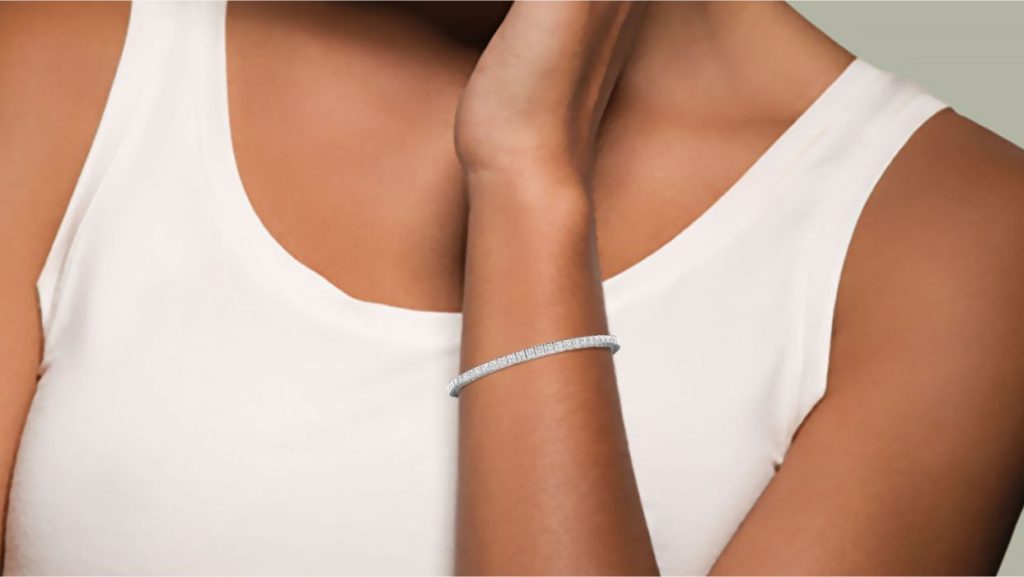
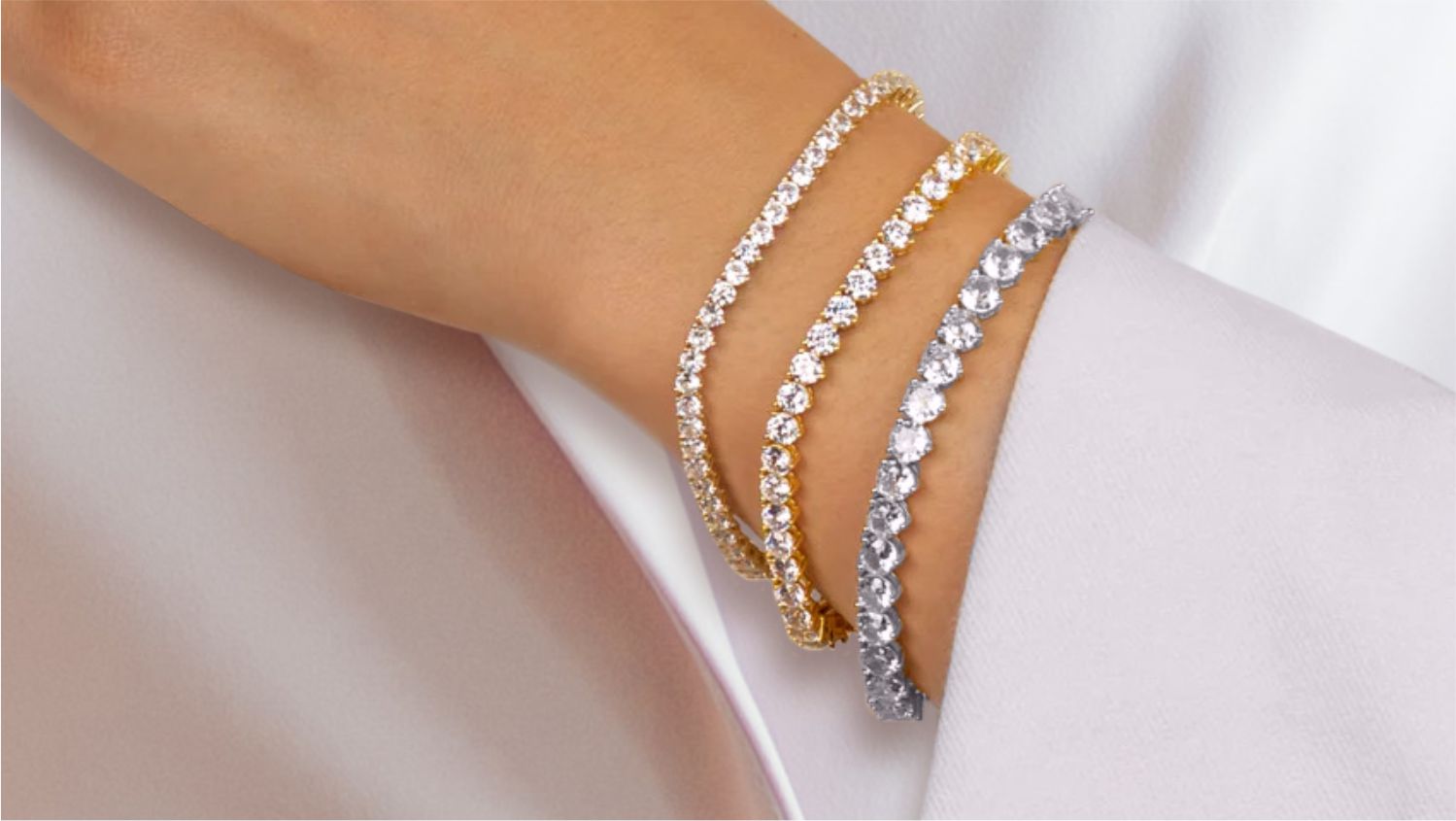
Should I Buy A Lab Grown Diamond Tennis Bracelet?

The beauty of a diamond tennis bracelet is not hidden from the human eye. A timeless piece such as this deserves to be adorned and carried on for generations. With the elegance of the design and some alterations to elements, a lab grown diamond tennis bracelet can be a unique piece of jewelry.

Let us at LGD get into depth about how you can get the right lab grown diamond tennis bracelet.

What is a Lab Grown Diamond Tennis Bracelet?

lab grown diamond tennis bracelet

The classic tennis bracelet is simple and subtle but has a rich vibe. The lab grown diamond tennis bracelet is a beautifully crafted minimal bracelet that lines diamonds along the whole circumference of the bracelet. It can be set in any metal, like platinum and gold.

The diamonds used are lab grown diamonds that adorn the bracelet and possess the same chemical and physical properties as that of a real diamond, with the only difference being that they are manufactured in a lab. There will be a marginal difference between them and a real diamond tennis bracelet.

Lab created diamonds and natural diamonds are both great options for a bracelet.

Lab grown diamonds, also known as synthetic or man-made diamonds, are created in a laboratory using advanced technological processes that replicate the conditions in which natural diamonds form. Loose grown diamonds are typically less expensive than natural diamonds, and they have a smaller environmental impact as they do not require mining.

Ultimately, the choice between a lab grown or natural diamond bracelet comes down to personal preference and budget. If you’re looking for a more cheap option that is environmentally friendly, a lab grown diamond bracelet may be the way to go. However, if you place a high worth on the rarity and natural beauty of a diamond, a natural diamond bracelet may be a better choice for you.

Why is it Called a Tennis Bracelet?

tennis bracelet women

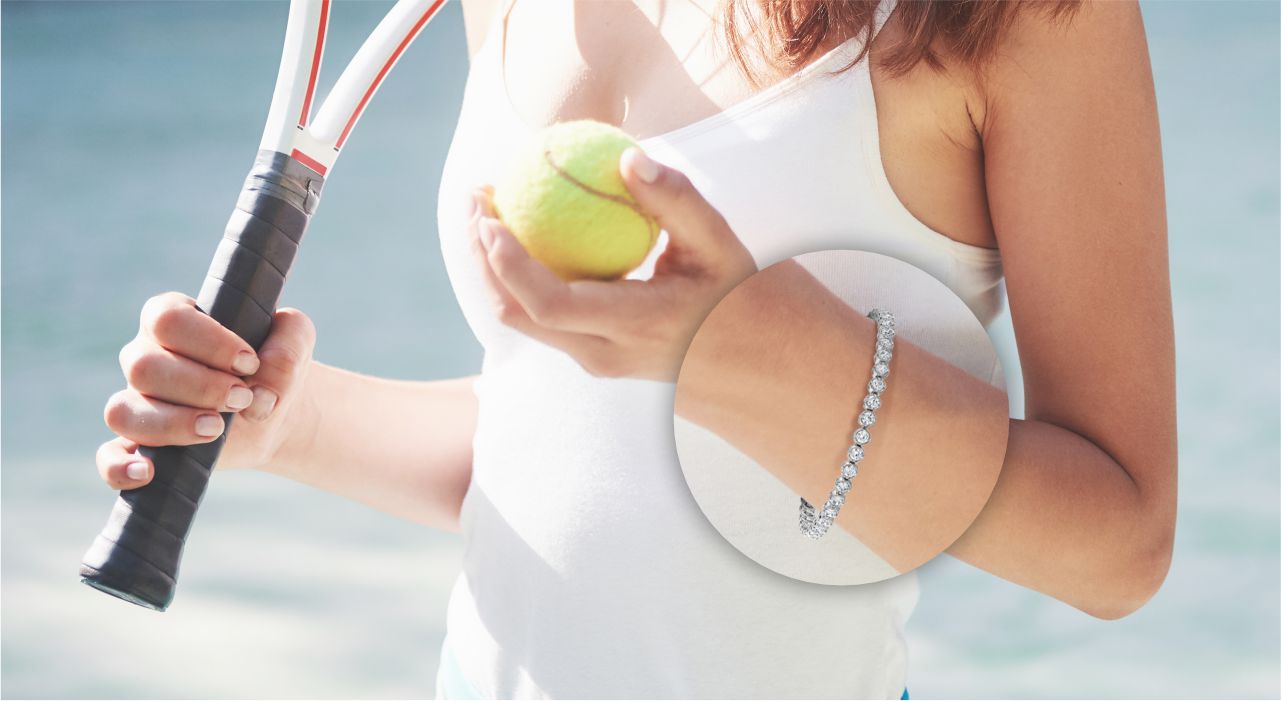
It has been called a tennis bracelet due to a particular event that changed the course of these bracelets. A tennis player Chris Evert started the trend of wearing this specific piece of jewelry on the court. One such day, the bracelet slipped, resulting in the game being paused for Chris Evert to find her diamond bracelet. The tennis bracelet has never left people’s minds since that day.

How to Choose a Lab Grown Diamond Tennis Bracelet?

There are many considerations when choosing a tennis bracelet women like and a men’s tennis bracelet. With all these permutations and combinations, one can develop a unique lab grown diamond tennis bracelet that is special to them and shows their individuality.

metal of tennis bracelet

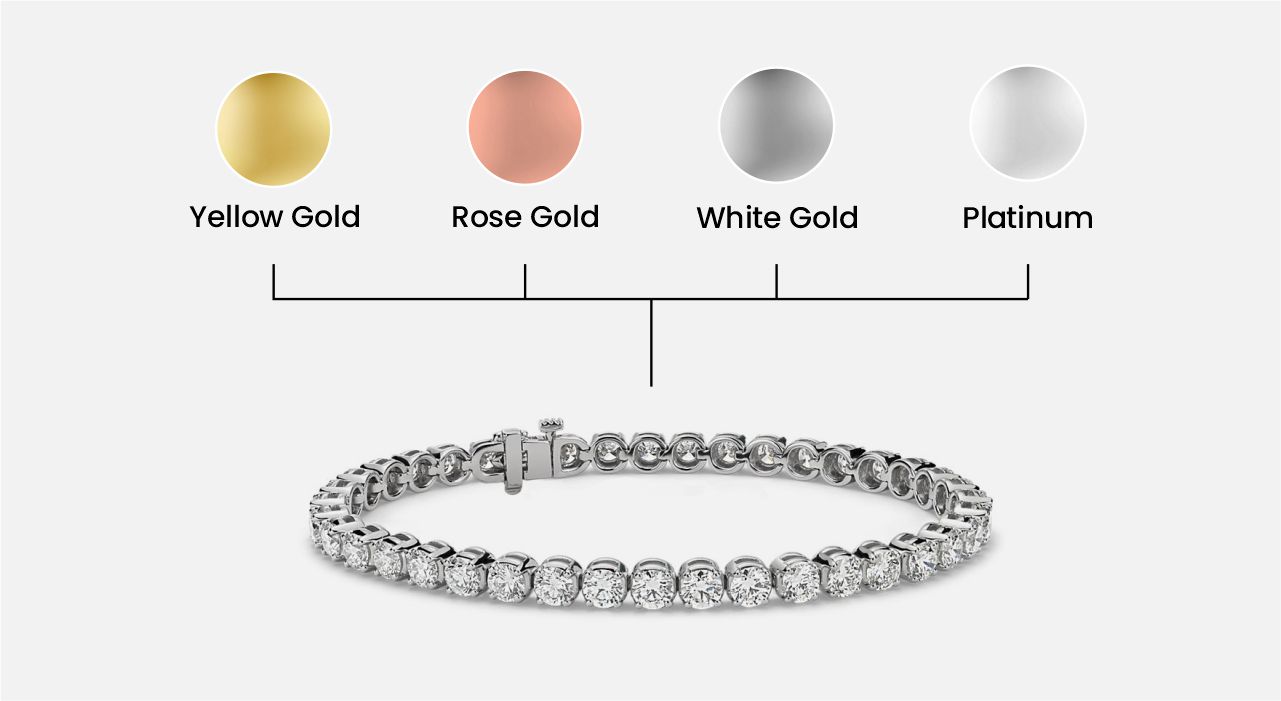
Metal The way to get started with your design of a women’s diamond tennis bracelet is to choose the metal you wish to base your design around. Once that is selected, you can easily understand what the tennis bracelet will look like. The more common choice for a classic tennis bracelet is a platinum tennis bracelet, which is classy and has a rich tone to it. It adds a certain purity to the effect of the bracelet.

Next, we move on to gold tennis bracelets. While a yellow gold tennis bracelet will impart a yellowish look to the bracelet, a white gold diamond tennis bracelet will do justice to the white tone of a diamond. An eccentric option would be to go for a rose gold tennis bracelet.

Diamond Shape A round diamond tennis bracelet is a classic piece of jewelry and has been turning heads since the olden days. The other diamond shapes that follow its lead, like the baguette tennis bracelet, are also a good choice. The emerald is another vintage and classy piece that imparts a royal charm to an emerald tennis bracelet. Princess cut, and oval cuts are also unique cuts that fit into the lab grown diamond tennis bracelet designs.

Fit The fit of the lab grown tennis diamond bracelet is something you have to check before you get into the design process of the bracelet. The fit should not be too tight or too loose. Either of these will result in an uncomfortable experience, which will take away the beauty of the diamond bracelet. The approximate size that is usual is around 7-7.5 inches, so that could be something you can work around.

Styles and Settings The styles and settings in which lab created diamond tennis bracelets come are diverse, and they offer a lot of variety and choice for the person to choose from. The settings which are common in tennis bracelets are prong and bezel. While the prong allows maximum shine of the diamond, the bezel setting is very safe and secure, keeping the diamond safe. A 3 prong diamond tennis bracelet gives a more triangular look to the diamond bracelet and is equally unique.

Another style is the bolo tennis bracelet, which is half of a tennis bracelet and the other half is a chain that can be tightened. This unique variety can also cut costs by almost half of the loose grown diamond tennis bracelet.

bracelet Carat Weight chart

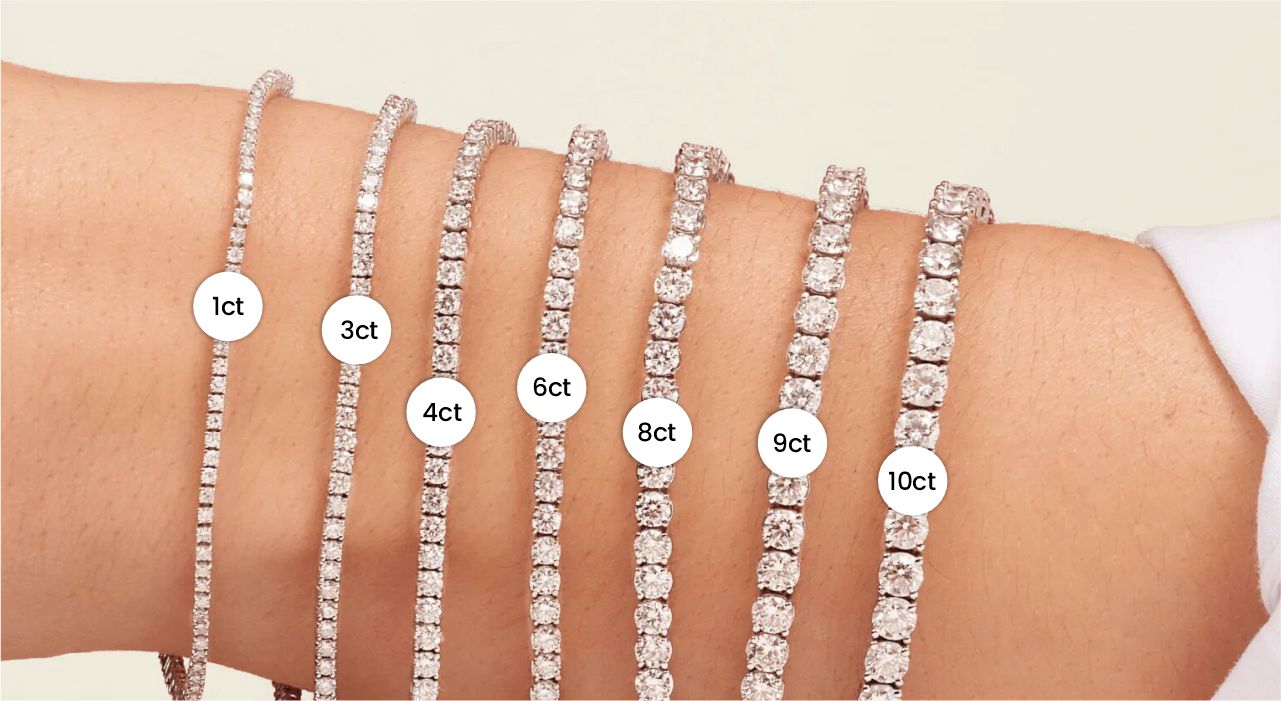
Carat Weight This carat weight will determine the weight of the diamond bracelet altogether. You can decide the weight of the lab grown diamond bracelet you are looking for, and the division can be made further on.

Clarity The clarity of a lab grown diamond will hugely impact the appearance of the lab grown diamond tennis bracelet. Since these diamonds are smaller, the chosen clarity can range from H to SI1. With better clarity, the bracelet’s beauty will create a fantastic aura.

Price The price of a lab grown diamond tennis bracelet is primarily determined by the base metal that holds the diamonds in place. The other factors hugely impacting the price are the diamond carat, cut, and clarity. On average, a bracelet starts from $1500 to anywhere around $5000, depending on all the factors and elements chosen. A 3 carat diamond tennis bracelet is the minimum and costs around $4500, but yet again will be influenced by other features that make up the bracelet.

Lab Grown Diamond Tennis Bracelet to Gift

[su_youtube_advanced url=”https://www.youtube.com/watch?v=6Z83J5F2la0″ width=”1600″ autoplay=”yes” mute=”yes” loop=”yes” modestbranding=”yes” theme=”light” playsinline=”yes” title=”Lab Grown Diamond Tennis Bracelet”]

A classic tennis bracelet is an attractive option to adorn your loved one. When choosing gifts, diamond jewelry stands out from the rest. A bracelet has been a reliable gift option for many years. The tennis bracelet can be gifted to anyone you hold dear. You can buy it for your parents, partner, children, or siblings.

The occasions to present these timeless pieces are endless. Whether it be an anniversary, wedding, birthday, graduation, or just wanting to express your appreciation for one special person in your life. A small diamond tennis bracelet will be a cute gift for someone if you are on a budget but want them to feel special.

If you are getting a lab created diamond tennis bracelet for your significant other, a heart tennis bracelet would be an optimal selection to mark as a symbol of love. It is accurate when they say that diamonds symbolize love due to their brilliant shine and everlasting nature. These stones withstand all sorts of pressure & conditions and yet shine the brightest in the end.

How to Buy a Diamond Tennis Bracelet?

Tennis bracelets have a lot of designs and options that can adorn the one wearing them. Lab grown diamonds must be chosen wisely when choosing a diamond tennis bracelet for women. The first step that we can go ahead with is choosing a base metal. After this, one can go ahead with finalizing the cut, clarity, and carat of the diamonds, followed by the setting of the diamonds in the metal.

While buying a lab created diamond tennis bracelet, one should check the quality of the diamonds, which the certification from a reputed institution will state. This certification states all the lab grown diamonds properties and certifies them. Buying a tennis bracelet from a reputed and accredited company is always recommended.

Buying a lab grown diamond tennis bracelet starts right from the question of how this piece of jewelry will be used and is followed by a series of questions regarding style, metal, price, etc. Which, when compiled, end up creating a design of the bracelet. Every little detail matters in this process and will hugely impact the end product.

One crucial aspect to ponder is the size of the diamond, and utilizing the diamond size chart is vital for making a well-informed decision. As you delve into the decision-making process, keep an eye out for a promo code that may further sweeten the deal. This not only allows you to make a choice based on your preferences and values but also provides an opportunity to secure brilliant jewelry at a more budget-friendly price.

Find the Perfect Lab Grown Diamond Tennis Bracelet

The ideal lab grown diamond tennis bracelet is something that suits your aesthetic sense and also fits perfectly into your lifestyle. A tennis bracelet is a piece of jewelry that can mend well with any day-to-day routine. If it works well in a sport like tennis, then why not everything else? That is how the history of the tennis bracelet goes.

If you have a hectic, slow, or even conscious lifestyle, the tennis bracelet is a perfect fit for either of these options. The only difference that would be there is the difference in the jewelry setting. A bezel setting is an ideal setting recommended for regular and rough usage, while a prong is an exquisite setting that enhances the shine of the diamonds.

You can always look into various brands and companies that manufacture lab diamonds. These companies would retain the authenticity of lab grown diamonds. They would also do justice to designing them and setting them in a way that enhances the brilliance of these diamonds.

[blog_page_btn title=”Find a Lab Grown Diamond Tennis Bracelet” url=”https://www.loosegrowndiamond.com/product-category/bracelets/diamond-tennis/”]

How to Clean Lab Grown Diamond Tennis Bracelet

Lab grown tennis bracelets can be cleaned by soaking in a mix of lukewarm water and dish soap. This will help to remove impurities and settle inside the solution. Hard soaps are not advisable since they could damage the shiny metal. To retain the glow of the metal and diamond, dish soap is a feasible and easily accessible option.

Conclusion

The beauty of classic tennis bracelets has transcended generations and, up until now, continues to remain a timeless classic. With more styles and variations to be added to the design catalog. With the addition of lab grown diamond elements to this classic piece, it continues to keep up with the growing technology. There is nothing that a loose grown diamond tennis bracelet cannot fit into in terms of beauty or styling.

FAQs

What is a tennis bracelet?
A tennis bracelet is a diamond bracelet that contains diamonds along the whole length of the bracelet. This gives an infinite loop in terms of the bracelet, and the diamonds can be seen along the entire circumference of the wrist when it is worn.

Why choose a lab grown diamond tennis bracelet?
A lab grown diamond tennis bracelet is an excellent choice for anyone who wants a tennis bracelet. The bracelet is an eco-friendly option, as well as affordable. Lab grown diamonds are gaining popularity and being accepted by people.

How much is a 5 carat diamond tennis bracelet worth?
A 5 carat lab grown diamond tennis bracelet is worth almost $4000, and the price can vary based on the metal in which the tennis bracelet is set, its clarity, and the cut of the diamond.

Why are tennis bracelets so expensive?
Tennis bracelets are expensive because of the number of diamonds on the bracelet. The number of diamonds that adorn this classic piece is carefully chosen to shine brilliantly. The end-to-end placement of diamonds lets the jewelry piece accommodate more stones thus making it more valuable.

Can you wear a lab grown diamond tennis bracelet every day?
A lab grown diamond tennis bracelet can be worn daily since it fits into all kinds of and is durable. For better security, you can choose a bezel set diamond tennis bracelet to hold the diamond in place securely.

Should I Choose Platinum Wedding Bands: A Guide to Choosing Perfect Wedding Band

Finding love is hard, but finding wedding bands shouldn’t be! What better than a stunning white metal to be worn as a wedding ring, symbolizing the purity of love?

Over the years, platinum has taken over the market of gold in the wedding scenario. Platinum metal is ideal for setting your wedding band in due to its neutral tone and durability. Let us look over to find out why a platinum wedding band is an ideal choice.

Why Choose Platinum Wedding Bands?

Why Choose Platinum Wedding Bands?

A platinum wedding band is something you would undoubtedly choose if you were given multiple options, and we will tell you why. Platinum is a metal that is very durable when it comes to jewelry, especially wedding bands. The strength of platinum is such that it can withstand the wear and tear of regular usage. This strength is a result of the density of the metal.

Platinum bands stay the same color and don’t even turn yellow, so you might pass it on generations after you, and the vintage platinum wedding bands will stay as eternal as ever.

Platinum rings provide enough strength to hold a diamond in place, as it is not brittle. Another reason one should choose platinum wedding bands is their hypoallergenic nature, which causes no harm to the skin and can be worn by everyone. Most of the ring is made with pure platinum with very few additions.

Platinum and Wedding Bands: The Perfect Match

[su_youtube_advanced url=”https://www.youtube.com/watch?v=yN5lpuMCaGI” width=”1600″ autoplay=”yes” mute=”yes” loop=”yes” modestbranding=”yes” theme=”light” playsinline=”yes” title=”platinum band”]

The pure white metal is extremely durable; yes, a platinum wedding band is the best option. One can opt for a wedding band. The purity of the color of the metal and its durability is a metaphor for the love it represents. It is a perfect fit for the idea of wedding bands.

When one finds love, it is surely looked upon as something that will last forever. The best platinum wedding band is something that will last forever. As a circle, it stands for eternity, as it is never-ending. Imagine giving your significant other this platinum ring that radiates purity and togetherness. Such a moment would be eternal for them.

The longevity and low-maintenance nature of platinum are such that it can be passed on to generations without its appeal getting ruined. These classic vintage platinum wedding bands will remain an heirloom without losing their brilliance and charm.

What to Look for in a Platinum Wedding Band

Plain platinum wedding bands are the simplest type of platinum wedding bands. They have a classy and elegant feel to them. However, you should take your time with the process of buying such a ring. Before you go out looking for the perfect platinum wedding band for them, let us give you a few pointers to keep in mind.

A certification is a minimum requirement that one should look for. That document will certify platinum as original and also show you the percentage of platinum that the constituent of the ring has.

The terms of purity are represented by a number, such as 950, which means the ring possesses 95% platinum. This is the purest type of platinum ring on the market. The remaining 5% are alloys that make the ring durable and easy to work with. Platinum rings are also known to maintain their color and not fade out.

The hard metal resists any scratches while keeping the luster and shine of the platinum wedding band to make it look as good as new even after years go by. Here are a few questions and answers you should know before purchasing platinum wedding bands.

How to Choose Men’s Platinum Wedding Bands?

How to Choose Men's Platinum Wedding Bands?

Men’s platinum wedding bands make a very bold statement. Men usually prefer plain platinum wedding bands since they are easy to care for in the active lifestyle and varied conditions. Despite choosing plain platinum wedding rings, there are many minimalistic options.

These options are based on the type of finish given to the ring. You can get a matte finish, certain stripes, engraved names, added melee diamonds, and more. To complement the woman’s chosen design, one can look for a similar design with a wider band or precise lines.

How to Choose Women’s Platinum Wedding Bands?

Choosing platinum wedding bands for women is a challenging task due to the presence of numerous options available. The variety of brands allows various designs that cater to every choice. This is both a blessing and a boon. Platinum curved wedding bands are designs that a lot of women prefer owing to their minimal and elegant pattern.

Another favorite set is princess cut platinum wedding bands, which enhance the wearer’s fingers and adorn them with the brilliance of the princess cut and a stunning white metal. You mainly have to pay attention to the width of the band, the style, if there are stones, where they are placed, whether it will be comfortable to wear, and how the band will look on your finger.

Do platinum wedding bands maintain their color?
Platinum wedding bands do not lose their color and maintain the same beauty from the beginning. These rings do not lose their shine or brilliance either, making them a favorite among people.

What are the levels of platinum purity?
The purest level of platinum purity is 1000. The usual level of platinum jewelry contains 95% platinum, making it a level 950. A variety of levels that range from 850-950 are available in the market, corresponding to the percentage.

What is the best type, quality, purity, etc?
The best quality platinum to buy is 95% platinum, known as 950 platinum. Some other alloys like Ruthenium and Palladium are added to the metal to keep it corrosion-resistant and durable.

Is platinum good for the diamond band?
Platinum is the best option for a diamond band since its strength and durability allow the diamond to stay in position despite regular usage. Its color enhances the beauty of the diamond, making it appear sparkly.

Example of Platinum Bands Collection

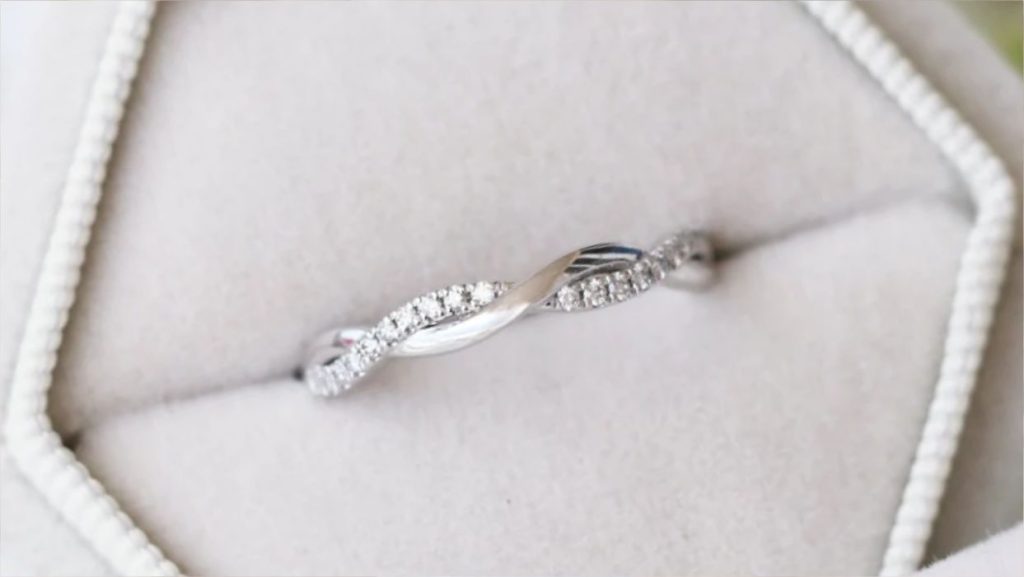
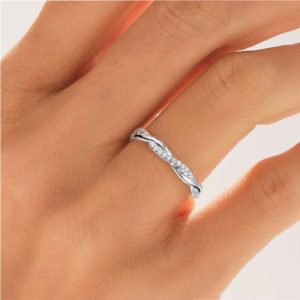
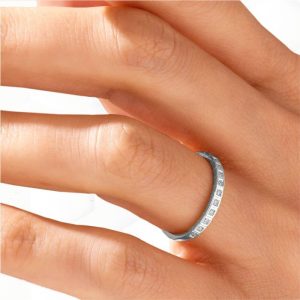
A wide variety of platinum bands are available in different styles. The solitaire platinum wedding band is a classic option. The infinity platinum and half-pave bands are very sought-after options for their simplicity and grace. These types of rings are also gifted as platinum wedding anniversary bands.

Other options for platinum diamond wedding bands are platinum stackable and platinum eternity wedding bands, symbolizing the abundance of love and the eternal nature of love, respectively. There are diverse design options, wherein some can be customized as well. This offers the user some freedom to shape the jewelry piece they have in mind.

Here are some examples of platinum wedding band designs

platinum eternity wedding band

Eternity Platinum Bands
A platinum eternity wedding band is a band that holds a series of diamonds all through the ring, hence enhancing the shine. This is a very classic option if larger diamonds are not preferred.

Stackable Platinum BandStackable Platinum Bands
More is better is one of the most heard statements. You can apply that logic to platinum jewelry with this staggering design of stacking two to three platinum bands on top of each other. This makes the ring look bigger and shine even brighter.

Infinity platinum bands

Infinity Platinum Bands
An Infinity platinum band that has diamonds placed one after the other without any gap in between. On viewing from the side you will see a U-cut style emerging. An infinity band will sparkle brilliantly whether it is worn alone or paired with another ring.

platinum wedding anniversary band

Classic Platinum Bands
The classic platinum diamond band is an elegant and very sought-after option for its simplicity and brilliance. These types of rings are also gifted as platinum wedding anniversary bands.


Reasons to Prefer Platinum Wedding Bands

The beauty of platinum wedding bands is boundless. Despite the aesthetic aspect, the functional aspect of these wedding rings outshines everything in their path. Some reasons that will make you prefer platinum wedding bands are,

  • The color and the shine do not wear out or fade at any time.
  • The durability of the metal makes it suitable for everyday usage.
  • The strength of platinum wedding bands allows the stone to be set very firmly and is very safe.
  • Platinum is naturally hypoallergenic and will not cause skin damage or reactions on regular wearing.
  • Platinum does not tarnish or catch rust at all.
  • You can pass it to future generations as a vintage platinum wedding band.
  • Cleaning platinum is very easy and only requires some dish soap and warm water, which saves on cleaning costs.

Pros of Platinum Wedding Bands

  • The durability of platinum makes it a good option for wedding rings.
  • The density of platinum is higher than gold or silver and hence does not fade out over time.
  • Platinum is hypoallergenic and can be worn by everyone without causing rashes or skin issues.
  • The shine of platinum enhances the beauty of the diamonds embedded in it.
  • Easily cleaned at home.

Cons of Platinum Wedding Bands

  • Platinum wedding band prices are higher than any other metal band, making it expensive.
  • Platinum cannot be easily resized because it is as hard as glass, so applying pressure to it may cause it to crack.

The Resale Value of the Platinum Band

Platinum tends to have a low resale value because there are few buyers in the resale business. Limited businesses are open to buying platinum, which reduces its resale value to a large extent. Selling to individual buyers does not guarantee good prices

Platinum Wedding Bands Celebrity Favorite

If you feel platinum rings are not in trend, you are wrong there. Some of the most famous celebrities have chosen to wear platinum wedding bands. Our very own Mariah Carey adorned a beautiful platinum wedding band with an emerald cut diamond and baguettes. Sofia Vergara carries a beautiful vintage style platinum wedding band with a halo around a cushion cut diamond. Other than these, Kim Kardashian, Kourtney Kardashian, Beyonce, Chrissy Teigen, Megan Markle, Blake Lively, and many more in showbiz.

Choose from hundreds of styles on loosegrowndiamonds.com or share a band design you adore, and we’ll craft a custom piece to your preference.


Conclusion

The platinum wedding band has gained much momentum in recent days due to its durability and sheer beauty. It is something that fits into every idea of a wedding band, with the only downside being the expense initially.

This expense can be managed since it can be considered a long-term investment with no maintenance requirements in the future. With the variety of wedding bands in the market, get your hands on the best platinum wedding band that combines beauty and elegance.

FAQ

Is platinum better than gold for wedding bands?
Platinum is a much better option than gold for a wedding ring due to its durability. The neutral tone of the metal is also another one of its advantages.

What unique qualities does a platinum wedding band have?
Platinum is very durable as compared to other metals, and it is also naturally hypoallergenic, making it very safe for usage. It is extremely low maintenance.

What are the benefits of platinum wedding bands?
Due to its durability, the platinum wedding band will never fade or change over the years. They also come with a color guarantee that makes them more expensive.

Why are platinum bands more valuable than gold?
The rare nature of platinum bands makes them more valuable than gold. Platinum metal is also more durable as compared to gold. The density of platinum is greater than gold, which makes it more durable.

Can you wear a platinum band all the time?
Yes, one can always wear a platinum ring since it is very durable. Due to its higher density, it will not fade or wash out over time.

How much should a wedding band cost? 
The price range of a platinum wedding band starts from almost $347 to anywhere around $5000.

How to choose platinum wedding bands?
Platinum bands can be chosen from a wide variety of brands and designs. One should choose 950-level purity of platinum. Certification is also something that should be seen while selecting a platinum band.

Is platinum good for a wedding band?
Platinum is an excellent option for a wedding band as it combines the beauty and durability required for daily wear.

Everything to Know About Lab Created Old Mine Cut Diamond

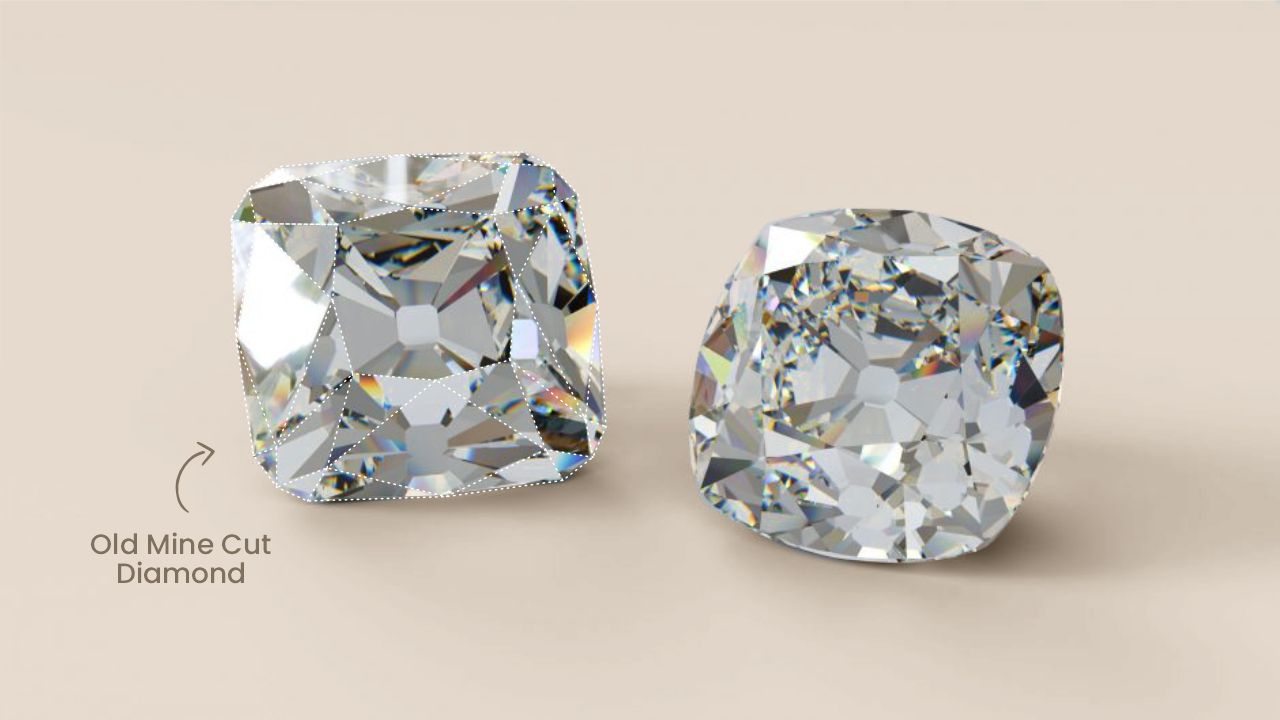
Lately, old mine cut diamonds have gained a newfound popularity due to a shift in interest toward more vintage styles. They have gained the spotlight with their stand out appearance having a squarish shape and curved edges giving that in-demand vintage touch.

But what makes these diamonds so special? Aside from their place in the history of diamond cutting, the fact that these loose grown diamonds are cut and polished by hand makes every cut unique and one of its kind.

With their very distinct and interesting history, and appearance that stand out, old mine cut diamonds open the doors into the world of vintage glamour each with a unique story and a mesmerizing sparkle that transcends time and a definite choice to add to your collection.

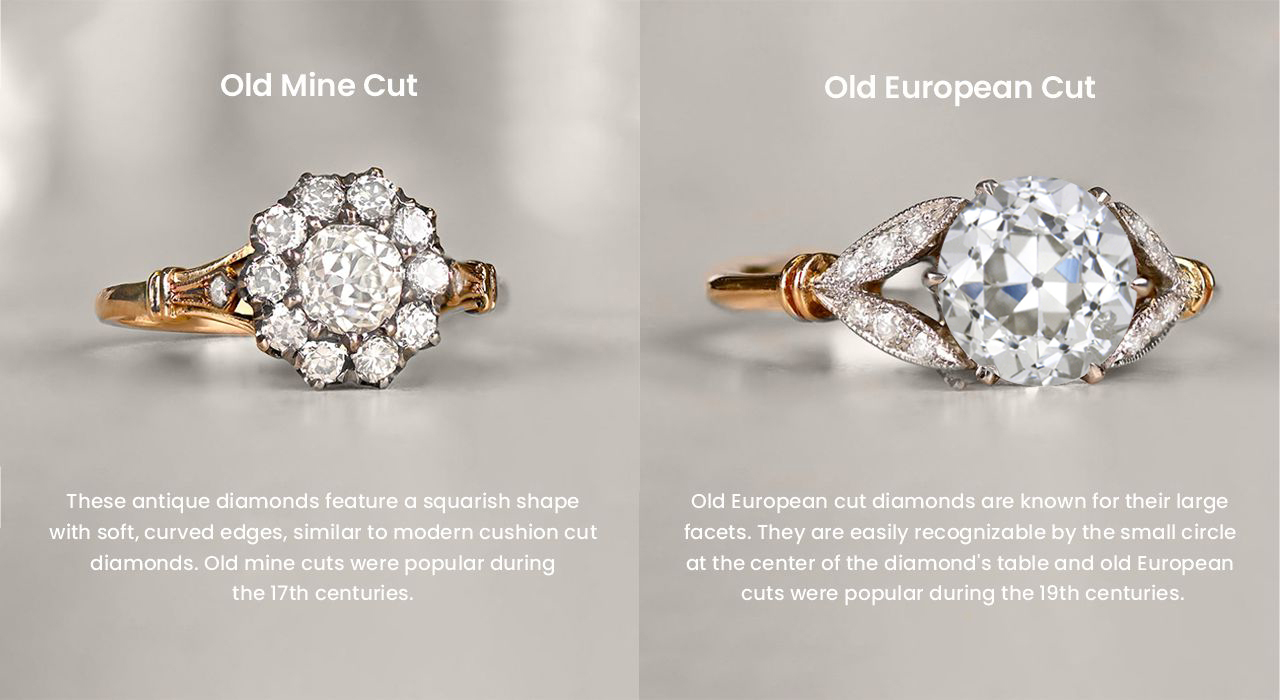
old European vs old mine vs cushion vs modern round

What is an Old Mine Cut Diamond?

Old mine cut diamonds are diamonds that were cut by hand before modern cutting techniques were developed. They were typically cut during the 1800s and early 1900s and were shaped to maximize carat weight rather than brilliance and fieriness. 

They have fewer facets and a more subdued sparkle compared to modern diamonds, but their unique asymmetrical shapes and romantic appeal have made them highly sought after by jewelry collectors and enthusiasts alike.

Old Mine Cut Diamonds: Visual Characteristics

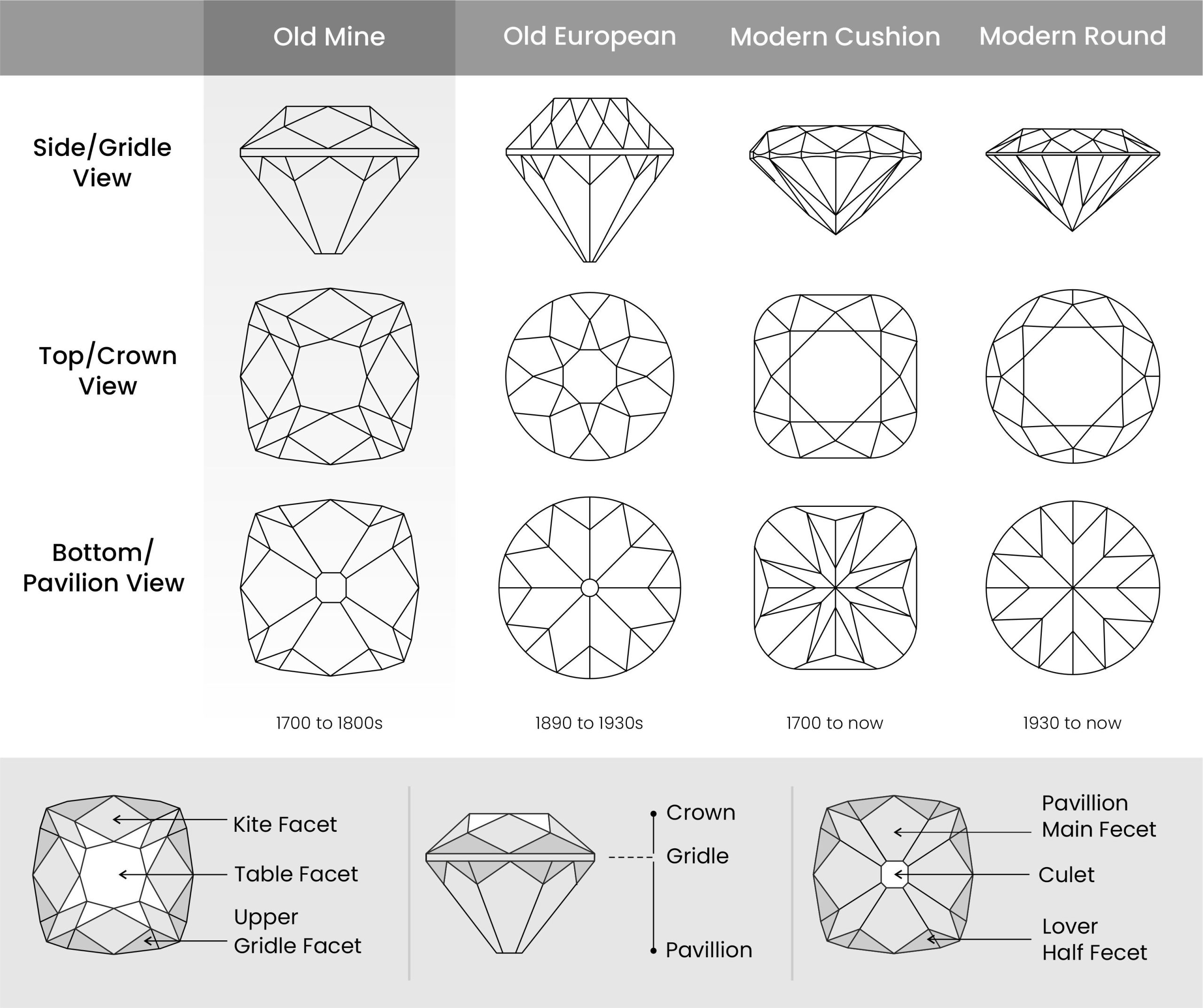
  • Old mine cut diamonds have a distinct appearance that sets them apart from modern diamonds and gives them a unique identity. 
  • They have an irregular shape as they were cut by hand, often resulting in an asymmetrical appearance. 
  • These diamonds also have a smaller table. For those who may not be familiar, the table is the top facet of the diamond. The smaller table of these diamonds can result in less light reflection.
  • These diamonds have a higher crown- the crown is the part between the table and the girdle. This makes them appear larger in size. 
  • They also have a deep pavilion, the lower part of the diamond which often gives a more subdued sparkle. 
  • These diamonds are defined by lesser facets- being 58 or less.
  • Another charming aspect of their appearance is the open cutlet- that is the bottom point of the diamond which gives it a cross-shaped ‘X’ pattern when viewed from the bottom.

Are Old Mine Cut Diamonds More Valuable?

Old mine cut diamonds have their own vintage charm. But whether they are more valuable than modern diamonds depends on various factors, like the 4Cs of loose grown diamond- cut, color, carat, and clarity grades, as well as the diamond’s age, rarity, and demand.

These diamonds have a distinct appeal and aura that makes them an amazing catch for vintage collectors. However, old mine cut lab diamonds often have fewer facets and a less brilliant and fiery appearance compared to modern diamonds, which can affect their value. 

In some cases, the rarity and historical significance of old mine cut diamonds may increase their value, while in other cases, their lower cut grades may decrease their value. Ultimately, the value of a diamond can only be accurately assessed through a professional diamond appraisal.

You can use our old mine cut diamond value calculator to get an idea of what your choice of stone may cost.

Old Mine Cut Diamond Value/Price

The pricing of these vintage collectibles is usually dependent on the carat weight of the piece. 

  • The price can usually range from $1,800 per carat for a 0.5 carat diamond to $5,800 per carat for an approximately 3 carat diamond. 
  • The price range for a 0.5 to 0.69 carat diamond is usually $1,800 to $2,000 per carat. 
  • For a 1-1.4 carat diamond it increases to about $2,700 to $3,300 per carat. 
  • The price increases further for 1.5 to 1.99 carat at $3,300 to $4,100 per carat and then at $4,500 to $5,800 per carat for a 2 to 2.99 carat diamond.

Old Mine Cut diamond vs old European Cut diamond

Old Mine Cut vs Old European Cut

So, here’s the deal with Old Mine Cuts and Old European Cuts. When it comes to old mine and old european diamonds, the main difference is their shape. 

Old mine cuts have that gorgeous cushion-like shape, while old europeans are more of a classic round shape. Old europeans are round, which makes them brighter and sparklier, while old mine cuts have a more distinct shape, faceting, and overall appearance.

A fun fact about both these loose grown diamonds is that they both have cutlets. But the cool thing about antique diamonds is that they have something called an open culet, which means that the point is polished flat, resulting in a visible circle within the stone.

Tips for Buying Old Mine Cut Diamonds

If you’re looking for an old mine cut diamond, you might face a bit of a challenge as they’re pretty rare. Only a handful of diamond dealers still sell them, which means you’ll need to do your research to find one.

Here’s a hot tip for you: focus more on whether you personally find the lab diamond attractive rather than its GIA certificate. After all, what really matters is that you pick a diamond that you truly enjoy looking at. This diamond size chart will give you a thorough approach to identifying your size.

And when it comes to settings for your old mine cut diamond ring, consider pairing it with yellow gold or rose gold. Why is that? Well, it turns out that many of the colorless antique diamonds (graded DH) have been recut over the years into modern diamonds.

So the ones that remain are the ones that have a bit more character and history. These metals can complement the warm color of the old mine diamond cut, making it look even more beautiful. Luckily, you can find this setting with most antique engagement rings.

The key is to choose a lab grown diamond that looks attractive to your eye. The warm color of an old mine cut diamond is actually part of its charm, so it’s not fair to judge these diamonds by modern standards. Additionally, you can use our promo code for your diamond. So go ahead and embrace the unique beauty of these antique diamonds!


Conclusion

Old mine cut diamonds are an enchanting reminder of a forgotten era. With their distinctive shape, unique faceting, and warm color, they offer a glimpse into the past while still dazzling in the present. While they may not meet modern standards, their character and history make them highly prized by collectors and those who appreciate the beauty of antique diamonds.

Whether you’re seeking a unique engagement ring or a rare addition to your collection, old mine cut diamonds are sure to captivate any individual.

FAQs

What is an old mine cut diamond?
An old mine cut diamond is a vintage style diamond that is cut by hand and was typically done in the 1800s and 1900s.

Where to buy an old mine cut diamond?
You can buy old mine cut diamonds from antique jewelry stores, specialized dealers, or online retailers/auction sites. Be cautious when buying online and only purchase from reputable sellers with detailed information and certification. Consider consulting with a diamond appraiser or expert to ensure a fair price and quality diamond.

Are old mine cut diamonds more valuable?
Old mine cut diamonds can be more valuable than modern diamonds, depending on their rarity, size, quality, and historical significance. However, their cut grades may be poorer than modern diamonds, which can decrease their value. A diamond expert can provide a better understanding of the diamond’s value through an appraisal.

Are old mine cut diamonds sparkly?
Old mine cut diamonds have fewer facets and different cutting techniques compared to modern diamonds, resulting in less sparkle. However, they have a warm glow and a romantic vintage feel that many find attractive.

What do old mine diamonds look like?
These diamonds have a unique appearance with a slightly rounded square or rectangular shape, fewer facets than modern diamonds, a larger culet that creates an “X” pattern in the center, and larger and more irregularly shaped facets that give them a more subtle sparkle and a soft, romantic glow. Overall, they have an alluring vintage charm and character adding to their value.

What does old mine cut diamond mean?
Old mine cut diamonds are diamonds with a vintage look that were traditionally hand-cut in the 1800s and 1900s. The phrase “Old Mine” describes the fact that these diamonds were typically mined by hand utilizing old techniques that are now seen as antiquated. As a result, they frequently have distinctive shapes, with each lab grown diamond being unique in its own manner.

Are old mine diamonds rare?
Old mine cut diamonds are considered rare and highly valuable due to their historical significance and unique appearance. They gained popularity during a particular era in history, and many have since been lost or damaged, making them more difficult to acquire.

Besides that, old mine cut diamonds were frequently hand-cut utilizing vintage cutting methods that are no longer common, making each diamond special. The irregularities in shape and cut also mean that it is difficult to find a matching pair or set of old mine cut diamonds, which adds to their rarity.

Flawless Diamonds: The Ultimate Symbol of Perfection and Prestige

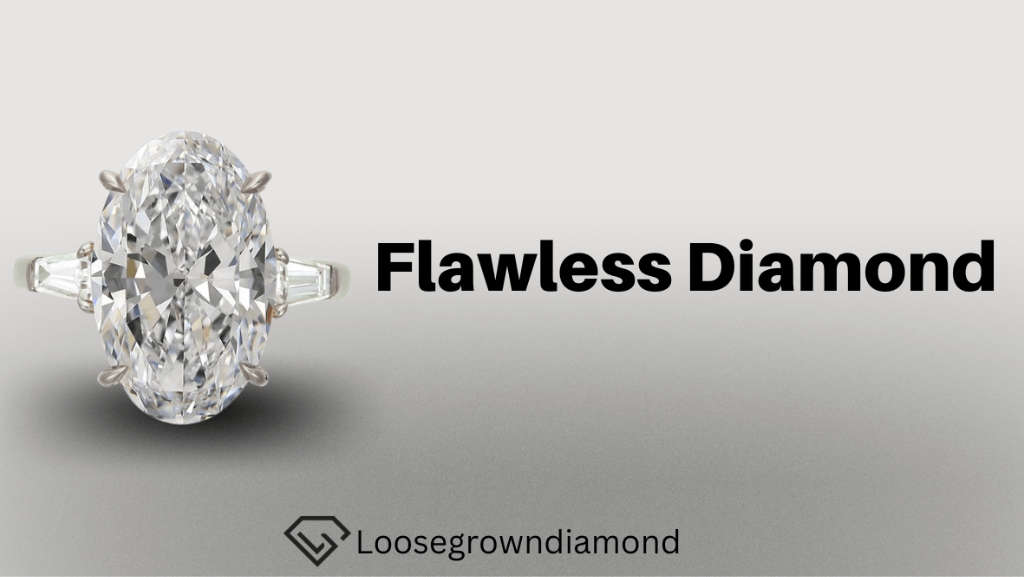
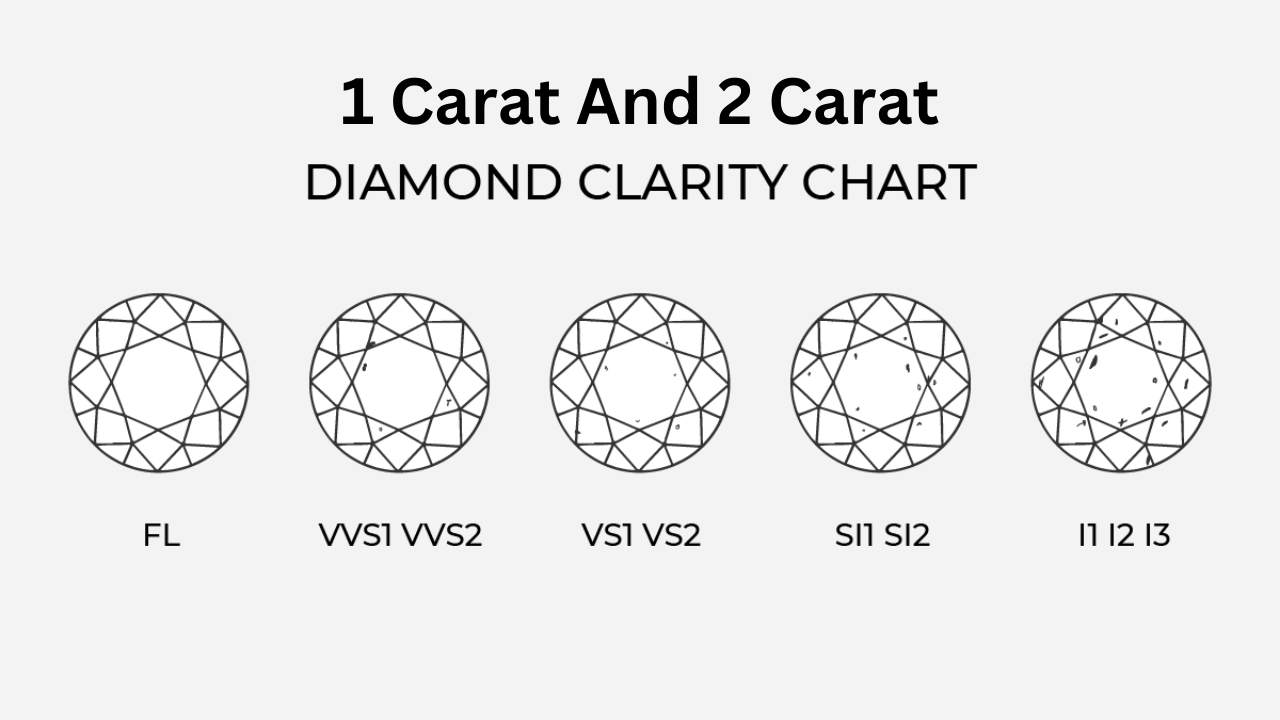
Starting with the word “flawless,” what do you think this means? It refers to anything that does not have any imperfections or defects. Therefore, diamonds with top clarity grades that have no defects within are called “flawless diamonds.”

Since no diamond is completely free of flaws, it is hard to find the ones with an FL grade, and less than 1% of all diamonds get this grade.

The question now arises: is it easy to find a flawless diamond, or is it so rare that one cannot easily find it? Since these diamonds require several severe prerequisites to be met before being developed, they are very difficult to procure.

Fans and buyers are interested in such gemstones, but it is not easy for them to find them. Flawless cut diamonds are gems that are perfect, very rare, and very expensive, and you can’t see any flaws in them when you look at them with a 10x or 20x lens.

So, if you are planning to buy a flawless diamond, you should consider that you will not find it easily.

People want them because they are clean and unique, even though they are expensive. To know more about flawless diamonds, you should read the article till the end.

What Is a Flawless Diamond?

What Is a Flawless Diamond

Considering the fact that diamonds encounter harsh conditions throughout their development stage over hundreds of years.

There will always be something wrong with them, even if it’s just a small flaw that can’t be seen with the naked eye but must be visible under a microscope.

However, as stated in the above paragraph, flawless diamonds have no blemishes. How is that even possible? Internally Flawless (IF) diamonds have apparent flaws and inclusions, but none are noticeable.

Hence, a flawless diamond may contain flaws and defects, but it will rarely have noticeable inclusions.

In reality, a flawless diamond is still not considered to be the purest, i.e., it will still have certain imperfections that require a minimum of 60 to 100 times zoom in a microscopic view to see.

Flawless diamonds have no obvious flaws or imperfections. Even though we all attempt to achieve perfection, a defect or three often keeps us rooted.

Under a microscope, it is the absence of symmetry that distinguishes the internally flawless diamond, too. In a deep taste of celestial humor, the IF diamond tells us all that what is on the inside is more important than what is on the outside.

Benefits of A Flawless Diamond

Until now, it has been clear that flawless diamonds are surely not the ones you can easily get your hands on. Despite their high price, a certain class of people prefers these diamonds. Have you ever wondered why?

  • Many buyers prefer flawless diamonds because, well, who doesn’t like perfection? It is nothing but a kind of internal satisfaction that people attain while possessing top-notch items.
  • From a distance, flawless diamonds create a great visual impact, making them worth buying.
  • Flawless diamonds are intended for enthusiasts who seek the prestige of possessing a scarce gem. Even if you have a half-carat flawless diamond, its sparkle can easily light up a room.
  • A good variety of the other 4Cs—color, cut, and carat—are available for flawless diamonds.
  • Clarity is a thing that dominates in flawless diamonds, but despite that, when you look at the options available in this range, you will surely want to buy it.
  • When individuals hear the term “flawless,” their brows crease. Flawless is at the top of the list whenever it relates to gems. Nothing really exists from above. They are incredibly rare. It is humanity’s greatest masterpiece, and there is hardly anything else on the land as beautiful as it.

Should You Buy Flawless Diamonds?

If you aren’t concerned about money and want to get your hands on something worth the cost, you should look at flawless diamonds.

But if you prefer color and cut-related factors in a diamond over clarity, you should opt for other options like VS1 or VVS1.

So first, settle on which factors you are primarily looking for in a diamond. and then make a decision accordingly.

If you still prefer to buy a flawless diamond ring, maybe a key question you should ask yourself is which color and carat size you would like to go for so that it looks fabulous.

Moreover, if you find yourself confused about determining the carat size of your chosen flawless diamond, you can make use of our diamond carat size chart.

To make it clear, we’ll just use the word “beautiful” to express how you desire the stone to appear on her hand.

For different people, perfection may lie in different things. Aiming for a purity grade better than VVS is unnecessary for some. Especially if you plan to enhance the luster and sparkle of the diamond ring by adding more diamonds or a precious metal band.

We suggest that if you have the money, go for a larger carat, a superior cut, and a brighter hue. A bigger VVS diamond will look much more appealing than an FL diamond with a half-carat weight.

Usually, the vast majority of individuals purchasing a wedding ring will not want their fiancee to notice any faults in the gemstone when looking at it.

So, first, have a clear idea if your partner would actually like flawless diamonds, and then decide on the other factor.

To give you a sense of how rare these jewels are, just seven stones weighing more than 100 carats have been auctioned in the past 30 years, and just one of those has been purchased. 

Even the recently auctioned 102.34-carat stone was considered “flawless.” It is an oval diamond with a D color grade and costs around $10 million to $30 million.

Flawless Diamond Price

Diamonds with lower clarity appear similar to perfect-looking stones but will be priced much less when compared to flawless diamonds. We’ve talked about how expensive flawless diamonds are several times; let us give you a more accurate figure.

Other than clarity, carat, cut, and color are the most important factors that determine the value of a gem, especially a diamond.

Because the color and cut of a diamond play a crucial role in its price, it’s difficult to give a precise value for a 1-carat FL gem. Furthermore, because these immaculate diamonds are so uncommon, the price of a perfect 1-carat round cut, a flawless diamond with a GH color ranges from around $4,100 to $7,000 per carat.

Bigger perfect gems are considerably rarer, and their values reflect this; since larger FL, and IF gems are much more uncommon, the price increases rapidly as the carat increases.

Although purchasing an upper purity certification may appear as the best way to ensure a gorgeous diamond, investing in an FL or IF grade is not really a smart investment. How so? 

Because no one will be able to tell the difference between an IF and an FL diamond, visually clean stones of lower grades, such as VVS1, VVS2, VS1, and VS2 stone, can be found; these gems will appear just as clear as an FL diamond. However, a flawless diamond will undoubtedly cost you extra money.

If you select an eye-clean VS1 or VS2 diamond, you’ll get a gorgeous stone while paying almost 60% less in comparison to an FL diamond.

How to Choose a Flawless Diamond?

If the flawless diamond range fits your budget and you are now wondering which diamond would suit you the best, then let us help you out.

Color: Of course, each of us would like a diamond with the highest grade of the 4Cs, especially the color grade. The higher the color grade, the more royal the stone will look.

Also, remember that most rare diamonds are colorless when choosing the diamond color. Some gems have subtle yellow hues that are difficult to notice with the human eye. Here “color” does not refer to colored diamonds (blue, brown, black, pink, etc.)

Have an idea about the color your partner wishes to have, or else it is advised to go for the least-colored diamond to make its shape more noticeable and make it look more royal.

Cut: If you are going for a flawless cut diamond, it is recommended that you go for the highest cut level according to GIA or IGI standards. That is “excellent” or “ideal” grades, respectively. A diamond’s cut plays a vital role in depicting its overall greatness.

Carat: In the case of flawless diamonds, it will be hard to find a big-carat diamond as they are scarce. Anything above 2 carats will easily cost you thousands of dollars. Thus, make a decision wisely.

Metal: The metal band you are going to choose will determine the overall look of the diamond. Gold, silver, or platinum are the best choices to match with a perfect diamond to make it look better overall.

In the end, it may be difficult to identify “the one absolutely faultless” diamond, as there might not be such a stone. As FL gemstones are rare and unique, they have a steep cost, yet there are plenty of them available on the market that you can look at.

Fl vs IF Diamonds: What’s the Difference?

According to GIA’s clarity rating, IF gems are one grade below FL (flawless diamonds). These, like flawless diamonds, are exceedingly rare, accounting for fewer than 1% of all precious diamonds.

  • Purity: Under 10x magnification, an FL (flawless) quality diamond exhibits no imperfections or flaws. It has the greatest purity grading as well as the most singular form of gem brilliance.
  • Rarity: Flawless diamonds account for fewer than 1–1.5% of all market gems. While IF diamonds account for 1–2% of diamonds on the market.
  • Imperfections: An IF (internally flawless) gem has little or no obvious internal defects but could have minor surface flaws. As a result, the primary distinction between FL and IF is the existence of imperfections on the diamond’s surface.
    Superficial surface roughness, irregularities, or patches of polish markings could place a stone in the IF category rather than the FL grade.
    Those gems are immaculate, extremely rare, and immensely valuable, with really no apparent defects under 20x, 50x, or even 90x magnification.
  • Pricing: With the exception of pricing differences, there is really not much of a structural contrast between these two types of gems being the best diamonds available in the market. Additionally, we have a Diamond price calculating tool for you.
  • Distinguishing: You can’t tell the difference between FL and IF diamonds without a microscope and the knowledge of a trained jeweler.
    However, specialists may also have difficulty differentiating between FL and IF. This is usually a negligible difference because even relatively close blemishes on an IF diamond are just so tiny and unnoticeable that they scarcely affect anything.
  • Highest Quality Diamond: Some newcomers make the error of believing that a D-colored, IF-clear stone translates to the highest natural quality of a diamond.
    In practice, the necessary variation between FL, IF, and VVS diamonds is so small that there is no substantial difference in their clarity and brilliance.
    Nothing affects a diamond’s look (sparkle and scintillation) more than its cutting grade. So, in addition to the clarity grade, have a look at the cut grade.
  • Which One Should You Buy?
    Any individual purchasing a fancy, high-grade, flawless diamond may think it is a good choice to pay such a steep price. But what for?
    Since no one can determine whether it’s an IF or FL diamond, you will have diamonds that cost double that of a VVS1 or VS1 that are eye-clean and look flawless (relatively).
    Choose a flawless cut diamond for your engagement ring only if you have enough money and want to give your partner the best stone possible.

[blog_page_btn title=”buy lab diamond” url=”https://www.loosegrowndiamond.com/inventory/“]

Conclusion

If you have a big budget for your engagement ring or are a passionate collector of rare gems, flawless diamonds are an optimal choice. As discussed, flawless gems are pretty uncommon since they must meet several demanding standards before being made.

It’s no surprise that bigger diamonds frequently earn record-breaking prices at auctioneers. If you are going for a flawless diamond ring, be ready to spend a ton of money.

FAQs

How are flawless diamonds graded?
Diamonds are graded for clarity using a scale established by gemological laboratories. The scale ranges from Flawless (no inclusions or blemishes visible under 10x magnification) to Included (inclusions and/or blemishes visible to the naked eye).

Are flawless diamonds completely without any imperfections?
Yes, a flawless diamond is free from both internal (inclusions) and external (blemishes) imperfections when examined under magnification. It signifies the highest level of clarity in a diamond.

Can flaws be removed from a diamond?
Flaws cannot be removed from a diamond; they are inherent characteristics formed during the diamond’s creation. Cutting or polishing may enhance a diamond’s appearance, but it cannot eliminate internal imperfections.

How can I verify if a diamond is truly flawless?
Certification from reputable gemological laboratories, such as the Gemological Institute of America (GIA) or the International Gemological Institute (IGI), provides an accurate assessment of a diamond’s clarity. Always request and verify a diamond’s certification when making a purchase.

How much is a flawless 4 carat diamond?
The price of a 4 carat flawless diamond can range from approximately $30,000 to over $1 million, depending on various factors including cut, color, and overall quality.

What does a flawless diamond look like?
A flawless diamond appears crystal clear and lacks any visible inclusions or blemishes, even under 10x magnification.

Trapezoid Diamonds 101: All About Its Side Stones

You may have heard the term “trapezoid diamond” from someone. You may have come across this term while researching. Have you ever wondered if there is such a thing as a trapezoid diamond? Are trapezoid diamonds side stones? Then let us explain in detail what these stones are and why people are inclined to buy them.

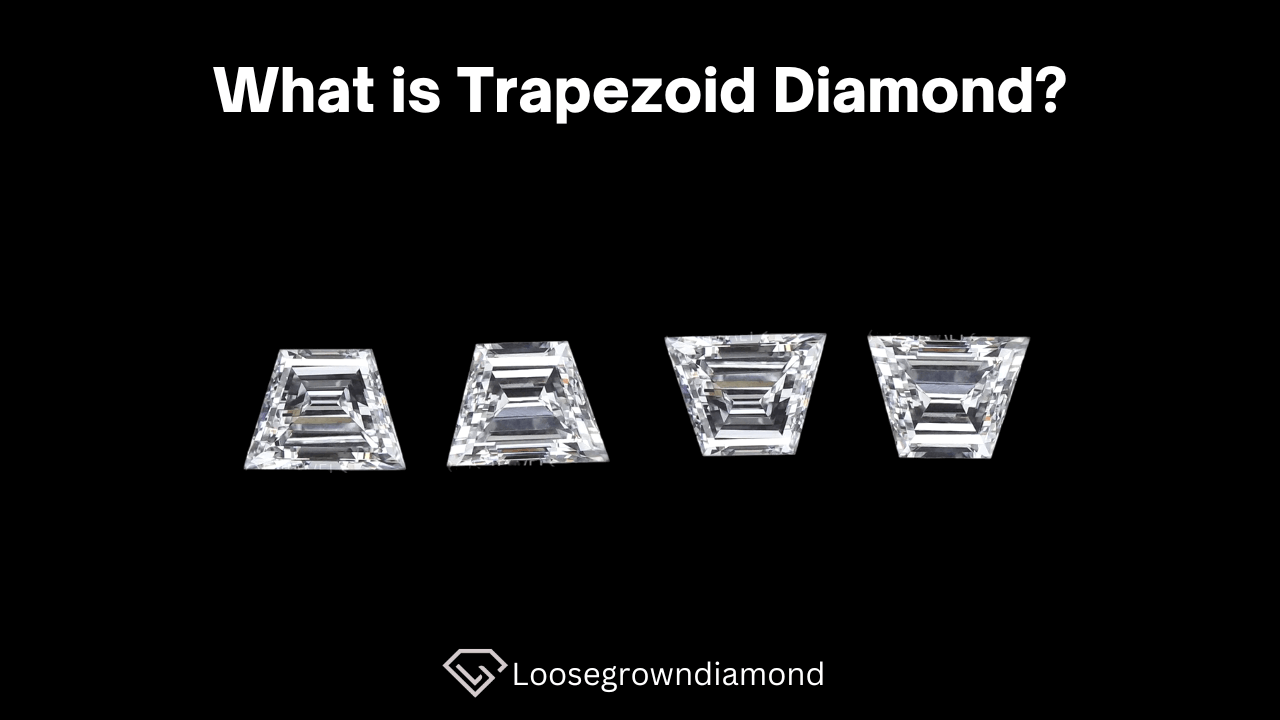
Brilliant-cut diamonds with a similar shape to a trapezoid were developed from either the tapered or the baguette cuts. The multiple-sized trapezoid diamond shape has two inward-slanting edges and a top and bottom that are equal. A triangular shape with missing edges will result in the resultant shape.

Some people consider trapezoids a fantastic substitute for the increasingly popular trillion or baguette shaped diamonds because they possess a comparatively large area and produce more sparkle when placed in jewelry.

Trapezoid Diamonds 101: All About Its Side Stones

In addition to adding shine, trapezoids generally exude refinement and style. The swinging canvas that became renowned inside the carnival is likely where the word “trapeze” originated.

In the last few decades, as the need for dazzling jewelry has grown, the trapezoid cut has become more and more popular with traditional gems.

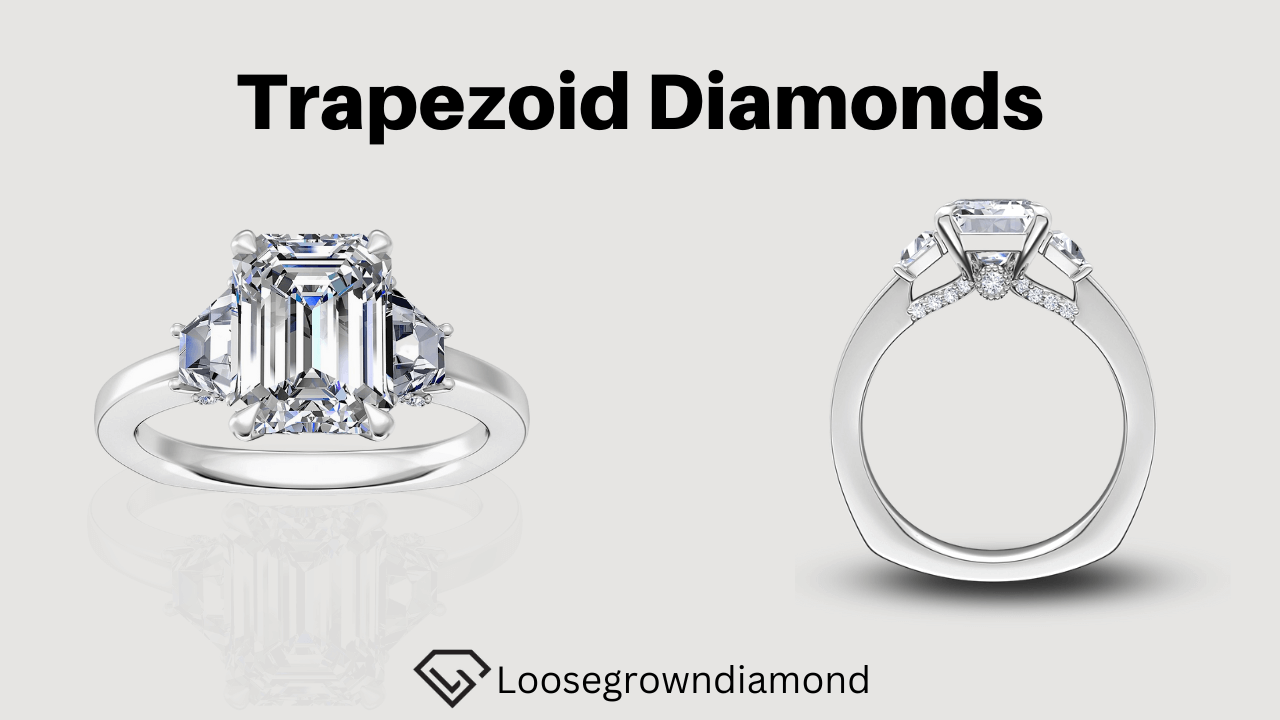
Trapezoids can be used as main stones, but they are more often used in pairs as side stones to match the size and shape of a larger core diamond. Due to their adaptability, trapezoids are quite desirable since they may accompany a variety of center shapes, including emerald, radiant, princess, asscher, and round diamonds.

What Is a Trapezoid Diamond?

Many people think that these shapes are a better match than the more common trillion or baguette cuts because they have a larger total surface area and still shine brightly.

Diamonds are known for their shine, and so are the trapezoid diamonds, but apart from adding sparkle to any jewelry’s look, these side stones add class to the piece. They make any ring or pendant look unique.

What is Trapezoid Diamond

The step-cut trapezoids are famous and are usually paired next to the asscher– or emerald-cut center stones. When placed next to any of these gems, a step-cut trapezoid diamond will give off a “parallel set of stones” look. This, in turn, can make any engagement ring look sharp and give off a royal vibe.

A brilliant-cut trapezoid pairs fairly well with princess– and radiant-cut center diamonds. As all these shapes have more facets, they tend to look like a maze of reflections, making the ring look complex yet stunning.

In general, individuals are inclined towards going for baguettes or trillion-cut lab diamonds, as they are the more common choices available to jewelers. But with time, the use of trapezoid cut diamonds in engagement rings, earrings, and pendants has increased tenfold.

Of course, all measurements and dimensions should be made clear about the center stone before deciding which companion stone will work best with a ring style.

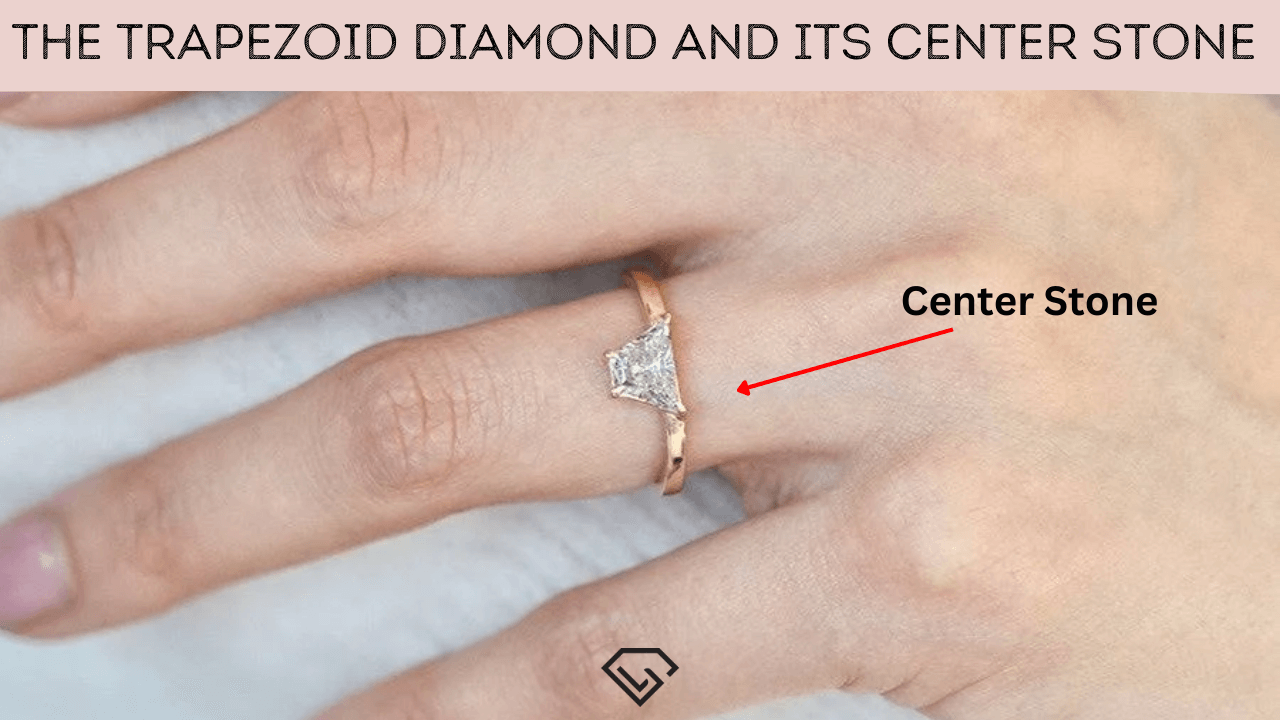
The Trapezoid Diamond and Its Center Stone

Depending on the selected jewelry design, you can opt for trapezoidal side stones. Knowing the center stone’s measurements is a must for using any type of trapezoid diamond.

The Trapezoid Diamond and Its Center Stone

You wouldn’t want an engagement ring in which the side stone looks bigger than the center stone. Because trapezoid diamonds are so versatile, they can be set in many different ways without taking away from the main stone.

For any change to be undetectable to the naked eye, both stones must be the same color and clarity grade. Thus, first, decide the color and clarity grade of the center stone. Based on that, have the trapezoid diamonds, which will work as side stones, made. The side stones can have a color and clarity grade that is 1–2 grades lower than the main stone.

There shouldn’t be more than one color grade difference between the side and center stones. The adjacent stones cannot have a color grade lower than H, for instance, if the center stone has a G color grade.

Trapezoid Diamonds Cost

It is seen that trapezoid diamonds are used to enhance the brilliance of center stones and jewelry pieces. Trapezoids are known as versatile stones because their unique design allows them to compete with all other stones as side stones.
Trapezoid diamond price

As you get such a nice option to pair with your selected center stone, knowing about the prices of trapezoid diamonds is important to set a budget for your engagement ring.

Talking of an average rate, trapezoid diamonds are roughly available at $1000 per carat. Of course, size, color, and many other factors determine its actual price.

Prices may differ depending on the 4Cs. We can only give you an estimate of the prices so that you can budget accordingly.
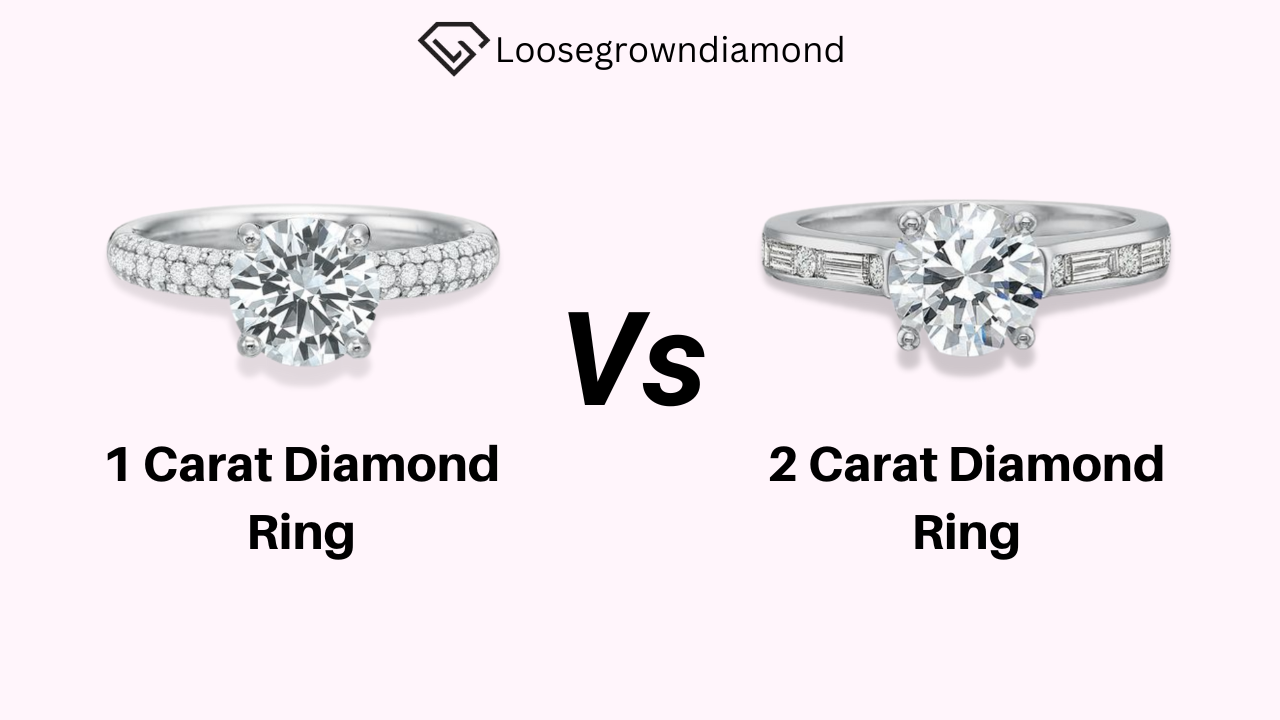
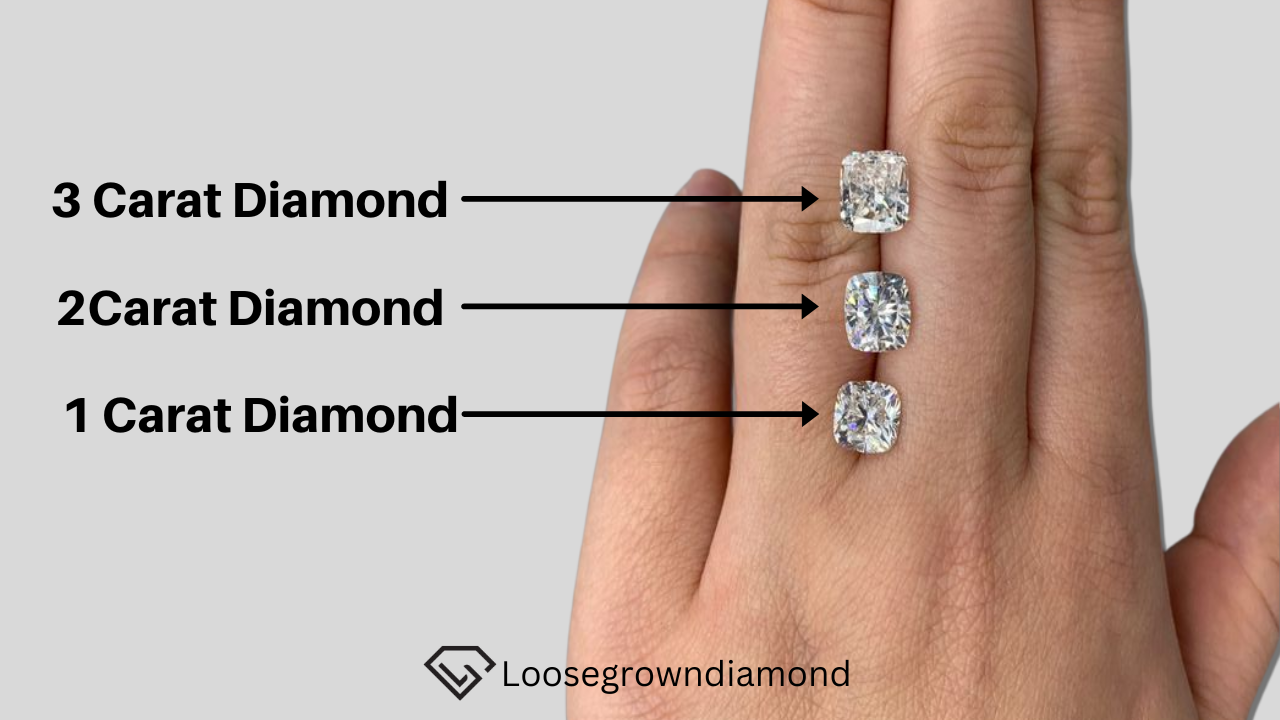
Your engagement ring’s total cost will be the sum of the following: the cost of the center stone plus the cost of the side stone plus the cost of metal plus the cost of making.

When it comes to trapezoid diamond prices, a standard-size trapezoid diamond with base colors and design will cost you around $700-1000 per carat (at the very low end).

A trapezoid lab diamond can cost $400,000 or more depending on its features for a high-end design with a unique composition and large size. Additionally, we have a tool(diamond price calculator) for you to determine the trapezoid diamond price.

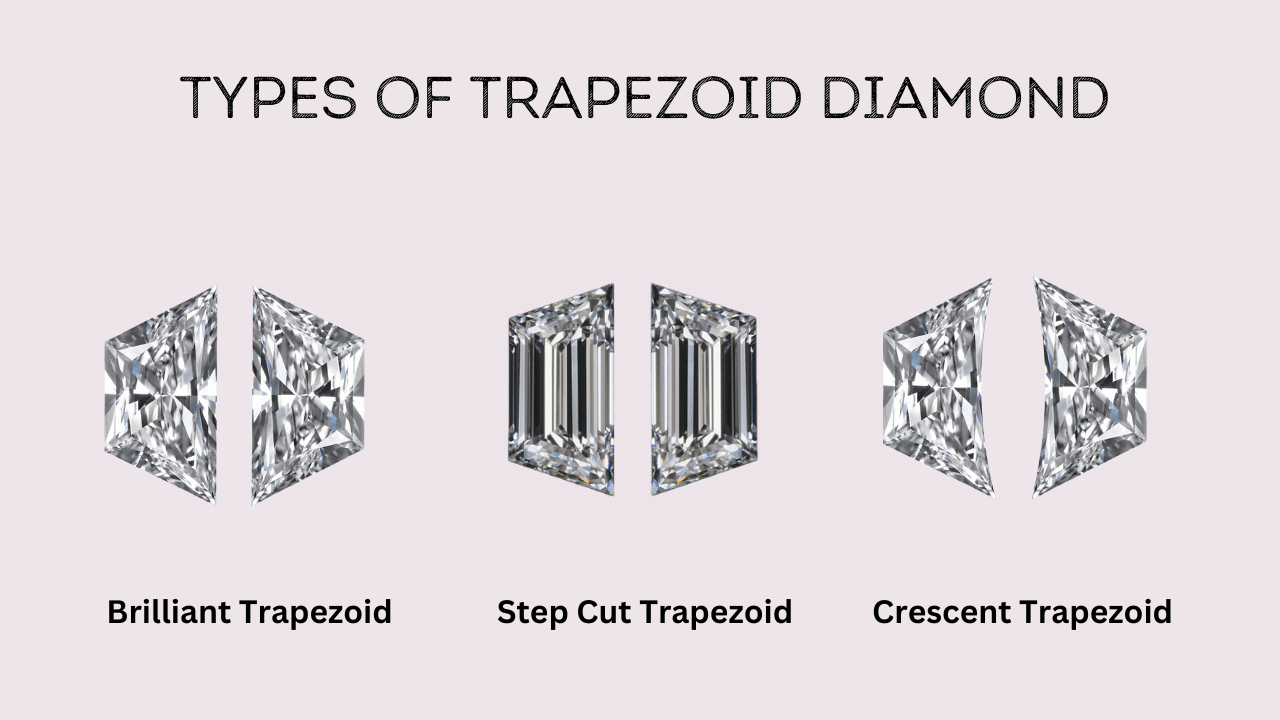
Types of Trapezoid Diamond

Contrary to other diamond cuts, the trapezoid lacks what is regarded as an optimum dimension-to-height ratio, making it more adaptable to individual pieces. Thus, diamond cutters can produce stones with the right size and lighting reflection.

Types of Trapezoid Diamond- Brilliant Trapezoid, Step cut trapezoid, Crescent Trapezoid

There’s more to it, though. Finding the ideal center stone to go with it as an accent stone will require patience and skill.

Diamonds with a trapezoidal cut are typically used as side stones and come in brilliant-cut or step-cut varieties. At the same time, step-cut trapezoids are typically observed beside the emerald or asscher cut center stones.

The brilliant trapezoid cut diamond complements brilliant-shaped, rectangular center stones such as radiant and princess diamonds beautifully. Since it is wide enough to fit a nice little side diamond somewhere between the cut costs, the rectangle emerald form is perfect for notch trapezoid diamonds.

There is also a third type of trapezoid diamond called a crescent trapezoid diamond. Let us explain in detail.

Brilliant Trapezoid Diamond

Compared to step-cut trapezoids, brilliant-cut trapezoids are a far more recent cut. They emit a significant amount of light and fire compared to step-cut trapezoids. They are ideal when paired with lab created emerald or asscher cut diamonds.

The diamond’s bottom reflection is maximized thanks to the shape, which simulates a conical appearance.

Also, with contemporary methods, carving and cleaning a rough diamond always causes a significant loss in weight. On the other hand, these brilliant-cut trapezoid diamonds are either made from broken larger diamonds or produce less waste.

Step Cut Trapezoid Diamond

The trapezoidal cut that is utilized more commonly is the step-cut trapezoid diamond. In contrast to the brilliant-cut trapezoid, with more edges, the step cut technique has a stunning purity and sense of beauty.

It features parallel lines on each side that are significantly bigger than those in a brilliant-cut diamond, as is typical for step-cut diamonds.

The angles of the diamond consequently bounce light off one another, making the gemstone incredibly transparent.

Step-cut trapezoid diamonds have more obvious flaws when contrasted with brilliant-cut trapezoid diamonds.

So, we suggest that you choose a mix of step-cut trapezoids with excellent color and at least VS2 clarity.

Crescent Trapezoid Diamonds

The brilliant-cut crescent trapezoid is the most commonly encountered new trapezoidal shape. It has curved sides to fit round center diamond types, including round, cushion, oval, and marquise diamonds.

It has a comparable brightness and sparkles to the brilliant-cut trapezoid diamond. Crescent trapezoids require a professional diamond craftsman to make their beautifully curled tips. And then, place it firmly in an engagement ring around a round-cut diamond without chipping its edges.

While picking the brilliant-cut trapezoid stone, you can select a lower-quality gem since the flaws aren’t as noticeable, optimizing your budget on side stones.

Compare and Select

Step-cut trapezoids are excellent side gems for both an asscher cut and an emerald cut center stone. In 3-jewel settings, step-cut trapezoids are frequently utilized, with the trapezoidal diamonds serving as a gradient to the central diamond.

Step-cut gems are only suitable for use in conjunction with step-cut trapezoids to complement each other.

Step-cut trapezoids next to an emerald center stone provide a stylish choice for side stones in an engagement ring.

Asscher-cut center stones look stunning when placed beside white, clear, and excellent purity-grade step-cut trapezoids.

Similarly, brilliant-cut trapezoids provide a lot of sparkle and brightness, accentuating the central stone’s fire.

As a result, they’d be most commonly used as accent stones for diamonds with dazzling geometric shapes, such as princess and radiant cut diamonds.

And if both of these don’t tend to work, you can always opt for the crescent lab grown trapezoid diamond ring.

Any of the trapezoidal shapes will be ideal for you when you have finalized a center stone.


Conclusion

With a relatively wider structure than a conventionally cut stone, the trapezoidal cut has become popular among diamond buyers, which is not surprising. In this article, we have tried to cover each aspect of a lab grown trapezoid diamond, from its price to its types and features.

This is all you should consider when going shopping to ask for a trapezoid diamond. You can also take a look at our inventory at Loose Grown Diamond. If you like any of our trapezoid diamonds, be sure to connect with us. Elevate your diamond shopping experience with a generous discount using a promo code handed out by LGD Diamonds.

FAQs

Can a trapezoid diamond have different facet arrangements?
Yes, trapezoid diamonds can have various facet arrangements, including step cuts or brilliant cuts, depending on the desired appearance and style.

Do trapezoid diamonds sparkle?
Yes, trapezoid diamonds can sparkle. The brilliance and sparkle of a diamond are influenced by factors such as the cut, facets, and overall quality of the stone.

What does a trapezoid diamond look like?
A trapezoid diamond has a distinctive shape with four sides, where the top and bottom sides are parallel, and the other two sides slant inward. It creates a unique and stylish appearance in jewelry.

The Glitter of Prong Setting: A Comprehensive Guide

One arrangement should be made in such a way that they truly make a statement. Choosing the ideal ring requires more than just selecting a stone and a metal. Although people frequently use them nowadays, prong settings are one of the most stunning methods to show off the perfect stone in all its beauty. Continue reading to learn more about prong sets and how they may improve your next ring.

Although prong settings have been around since the 19th century, Tiffany & Co.’s innovations are what made them famous. The Tiffany four-prong setting started in 1886, indicating that the stones were floating above the wearer’s finger rather than primarily contained in the metal.

For jewelry where the stone is the focal point, such as engagement and wedding rings, prong settings revolutionized the industry. Furthermore, despite their apparent simplicity, prong sets were and still are technological wonders.

What Is a Prong Setting?

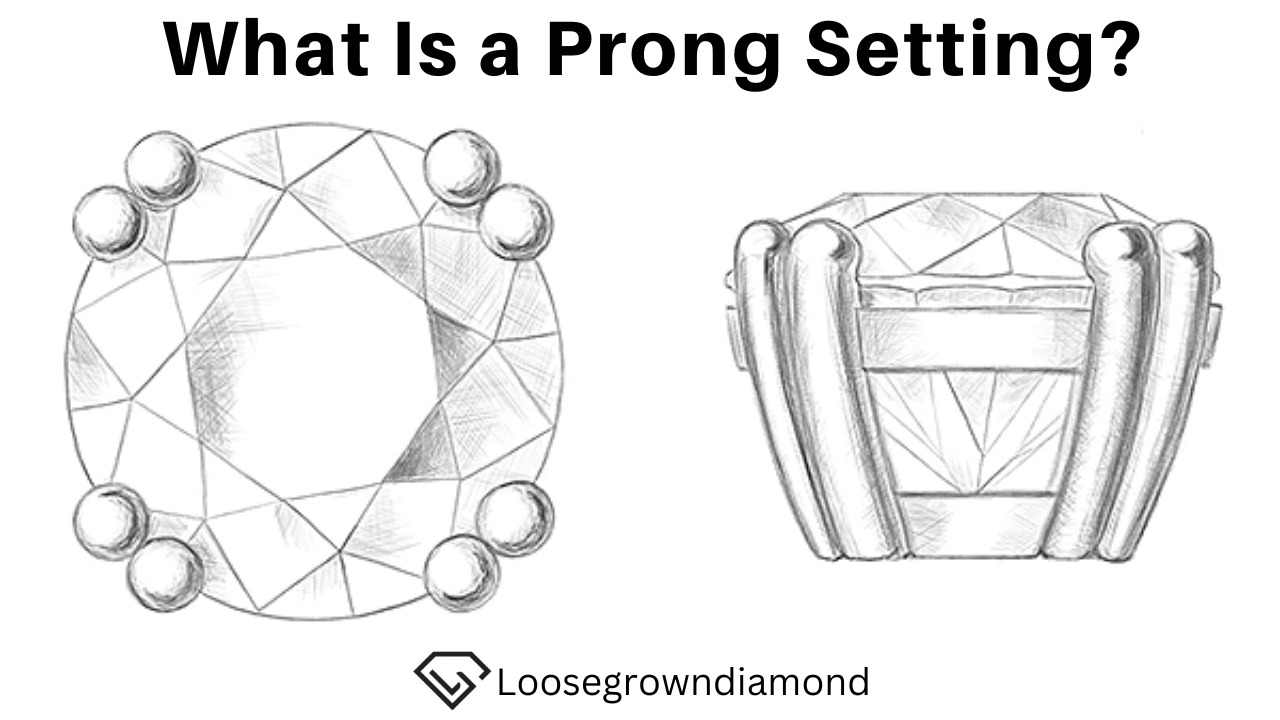
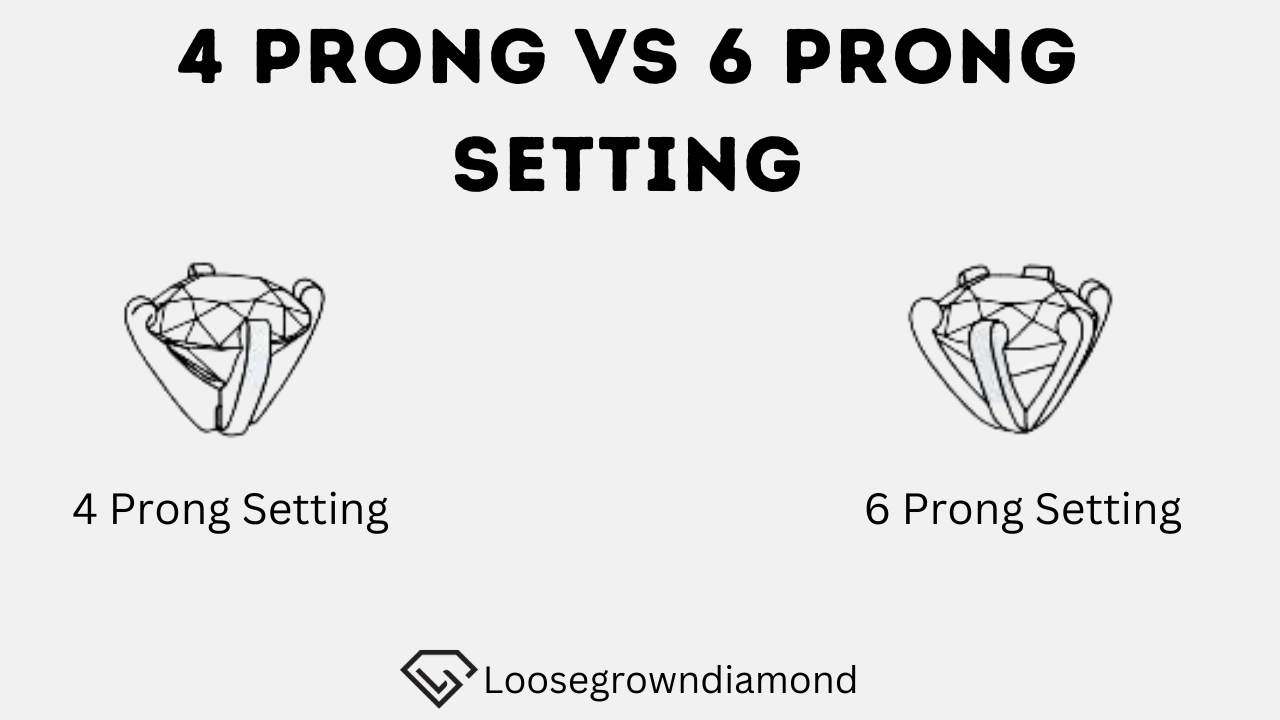
A prong setting is a piece of jewelry used to secure a gemstone or diamond. As the name suggests, prong settings use tiny prongs to ensure a cut stone. There is much more stone on view than in any previous setting because they keep the stone in place with four or more thin metal prongs with perfectly etched grooves.

What Is a Prong Setting?- complete information about the prong setting

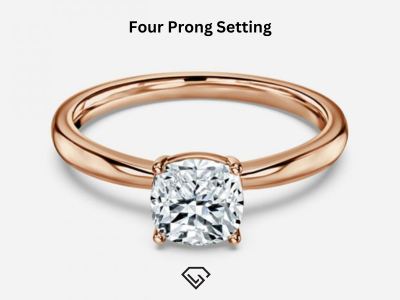
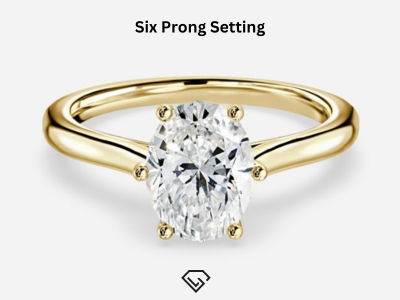
It includes bending multiple metal prongs (often four or six) over the stone and pressing them down to secure it. These prongs, typically found in the corners off the stone, are intended to raise it off the metal base so that light can travel through and enhance the stone’s appearance of brilliance and brightness.

Pros and Cons of Prong Setting

all advantages and disadvantages of prong setting

Pros of Prong Setting:

  • The gemstone seems brighter and more brilliant thanks to the prong setting’s optimal light transmission.
  • It is flexible since you can alter the prongs to fit various stone shapes.
  • The prongs are made to be delicate and subtle, which makes the stone the focal point of the piece.
  • You can replace the prongs if they get worn off or harmed.

Cons of Prong Setting:

  • Prongs can be prone to bending or breaking, which can cause the stone to fall out.
  • Prongs may become bent or broken if they catch on anything like clothing or other materials.
  • Prongs can be more challenging to clean and maintain because you must check them to ensure they are secured routinely.
  • Prongs are more prone to snagging and damage than other settings.
  • Prongs should not be worn by those who mistreat their jewelry or by those who lead active lifestyles.

Types of Prong Setting?

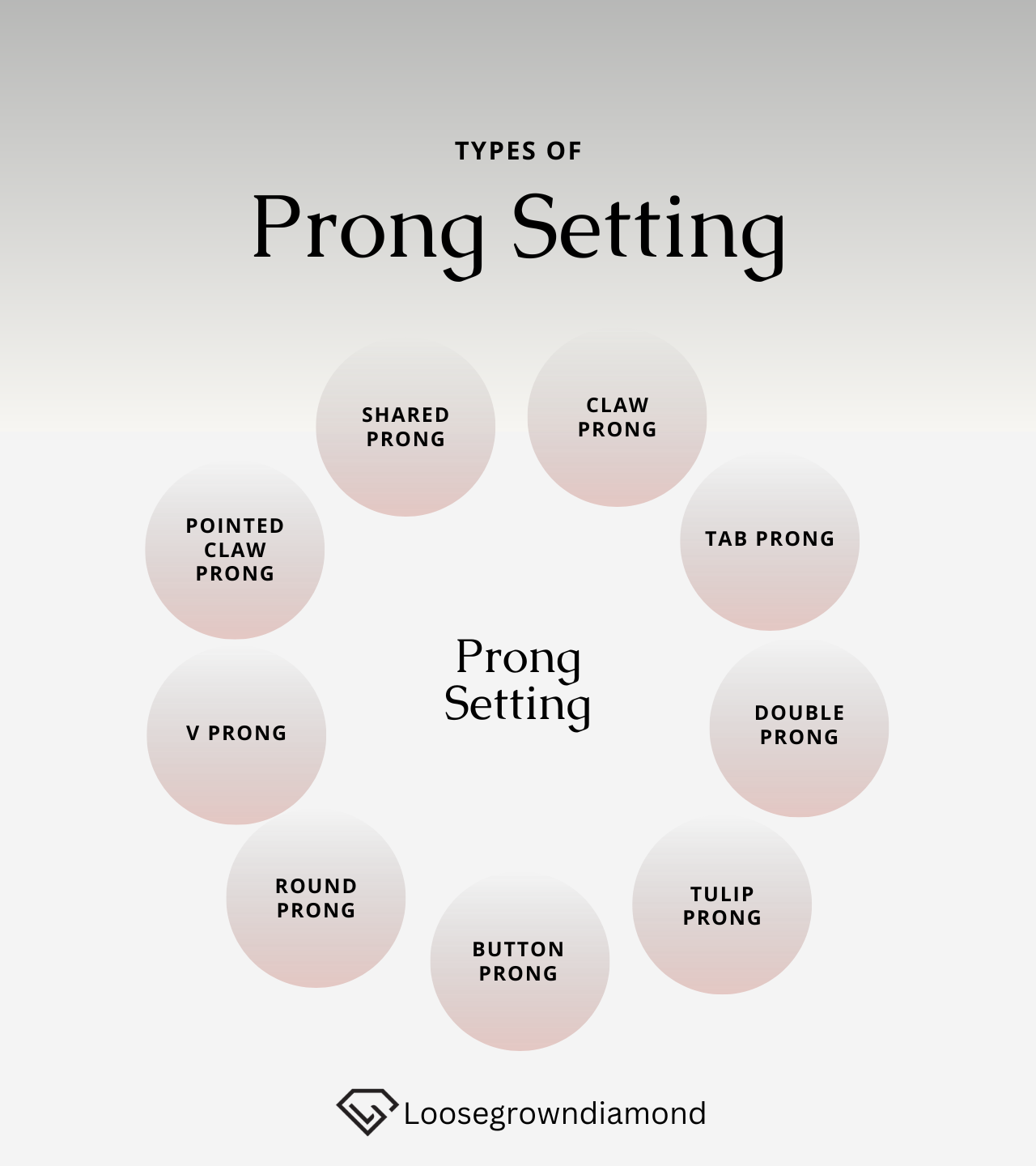
types of prong setting- Shared prong, Pointed Claw Prong, V prong, Round Prong, Button Prong, Tulip prong, Double Prong, Tab Prong, Claw Prong

Claw Prong

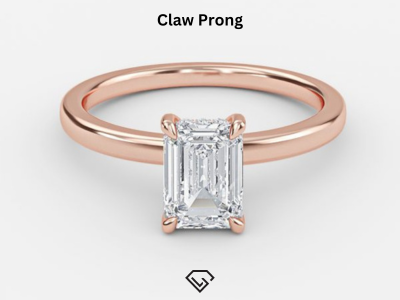
The claw prong, also known as a pointed prong, extends more over the diamond’s surface than a round prong but covers less of the diamond’s contour. The petite claw, a scaled-down form, and the double claw are variations of the claw prong.

Claw Prong engagement ring

It is similar to the traditional four- or six-prong setting, but the claws are more visible and can add an exciting design element to the piece.

Tab Prong

The square or “tab” prong style is another distinctive appearance. A squared-off prong, albeit less common than a round or claw, can provide a unique touch to the correct ring design. This type of prong setting involves metal tabs bent over the stone to hold it in place. The tabs are more comprehensive and can add a different design element to the piece.

Double Prong

Double Prong setting

Compared to a single solid prong, a double prong setting provides the impression that the prongs are slimmer. Double-prong setting diamond holds very securely and is ideal for larger diamonds since it increases safety without appearing bulky. They can be rounded or pointed.

Tulip Prong

Tulip Prong setting

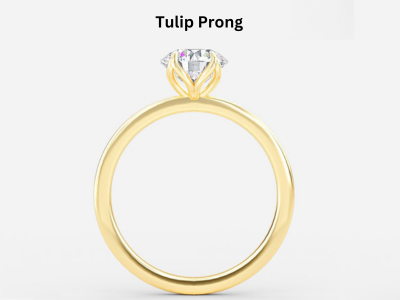
The tulip prong setting secures a diamond in place by creating a basket in the style of a flower bulb and extending the prongs upward to resemble the petals of a flower. Since there is more metal surrounding the stone in this design, less obvious brilliance might happen.

A tulip setting gives a distinctive and fashionable twist to the traditional engagement ring, even though it encloses the diamond in more metal and reduces the amount of light that can shine through the stone. Additionally, it increases the prong set diamond’s safety and security.

Tulip prongs come in two different sizes: four and six. A four-prong tulip works best with square or rectangular diamonds, like the princess, cushion, or emerald cut. A six-prong tulip works best with diamonds that are round or oval.

Button Prong

Button prongs are the most popular type of prong finishing; they encircle a small portion of the diamond’s surface and, when seen from above, resemble small dots or buttons, hence their name.

The prongs finish with a rounded head to securely retain the diamond and reach just over the diamond’s girdle. The button-shaped prongs can add a sleek and modern look to the ring.

People often use this type of prong setting to set round-shaped diamonds, creating a simple and elegant look. The button-shaped prongs can also better protect the diamond prong settings and make the diamond appear more prominent.

The button prongs are low-profile, which means they will sit closer to the finger, making the ring more comfortable to wear. It also allows the ring to stack with other bands and rings.

Round Prong

Round Prong Setting

A round prong setting is a type of prong setting where the shape of the prongs is like a round bead. The round shape of the prongs can add a different design element to the piece. The round prongs can add a smooth and sleek look to the ring.

This type of diamond prong setting is often used to set round-shaped diamonds and creates a simple and elegant look. The round prongs can also better protect the diamond and make it appear larger.

V Prong

V Prong setting

The v-prong is shaped exactly like it sounds, wrapping around the diamond’s point. A pear, princess, or marquise cut diamond’s weak points are well-protected by this particular prong. The design is less intrusive because it blends well with the diamond’s natural shape.

Pointed Claw Prong

A pointed-claw prong setting is a variation of the traditional one, where you can taper the claws to a point at the end instead of being rounded. The claws’ pointed shape allows maximum light to enter the stone and provides a more modern and sleek look.

This setting is often used in contemporary jewelry designs and is particularly popular in engagement rings. The pointed claws can make the stone appear more brilliant and enhance the diamond prong settings in the ring.

The pointed shape can be more delicate than the traditional claw prong, making it more suitable for active people.

Shared Prong

People generally use shared prongs when setting diamond melee (smaller diamonds). To prevent using too much metal and affecting the exquisite shine of the setting, the diamonds are held in place by shared prongs.

A shared prong setting, also known as a pave setting, is a type of prong setting where multiple stones are held in place by minimal prongs. You can also call this a micro-pave setting, as the prongs are tiny and shared between several diamonds.

This type of setting allows a large amount of light to reach the diamonds, making them appear brighter and more brilliant. It also creates a more continuous and elegant look as it eliminates the appearance of metal between the stones.

A shared prong setting is a popular choice for eternity bands, engagement rings, and other types of prongs. It is also a good option for those who want a more delicate and dainty look.

Four vs Six Prongs?

As already mentioned, four- and six-prong settings are the most common options for prong sets. Making this decision requires considering several different angles. First, having fewer prongs allows more light to shine on the diamond prong settings and makes them more visible.

complete differentiation between 4 Prong and 6 Prong Setting

Six prongs are theoretically more secure, but at the same time, The vital thing to remember is that a four-prong mounting is made symmetrically to guarantee that the diamond won’t come out in the unlikely event that you lose a prong completely.

Six prongs may need to be more balanced from a durability perspective. Six prongs make more sense from both perspectives for larger diamonds.

For an engagement ring, the choice between a four-prong setting and a six-prong setting comes down to personal preference and the shape of the diamond.

Four Prong Setting:

Four Prong Setting

  • The four-prong setting is the most traditional and classic type of prong setting.
  • It is the most common type of setting used in engagement rings.
  • Four prongs provide a simple and elegant look, making it a popular choice for those who want a classic look.
  • It also allows more light to pass through the diamond, making it appear brighter and more brilliant.

Six Prong Setting:

Six Prong Setting

  • The six-prong setting is similar to the four-prong setting but has six prongs instead of four.
  • The extra prongs give the stone more security and stability, making it a great choice for people who want a more secure setting.
  • This type of setting can make the diamond look more extensive, and it can also protect the diamond better.
  • The six-prong setting can also create a more complex and detailed look.

To conclude, the four-prong setting is more traditional and elegant, while the six-prong set provides more security and stability. The choice between the two is ultimately a matter of personal preference and the specific characteristics of the diamond.

Should You Buy a Prong Setting Engagement Ring?

Prong-setting engagement rings are an excellent option for those who want to showcase their diamond or gemstone in a simple, elegant, and timeless design. The prongs lift the stone off the metal base, allowing maximum light to pass through and making the stone appear brighter and more brilliant. This type of setting is also versatile, as it can be adjusted to fit differently shaped stones.

Should You Buy a Prong Setting Engagement Ring?

However, it is worth noting that prongs can be prone to bending or breaking, which can cause the stone to fall out. Also, prongs can be snagged or damaged more quickly than other types of prongs. For this reason, prong-setting engagement rings may not be the best choice for people who are rough with their jewelry or have an active lifestyle.

Before buying a prong setting engagement ring, consider your lifestyle and how you will be wearing the ring. If you are rough with your jewelry and have an active lifestyle, consider other prongs, such as a bezel set or tension setting.

But if you prefer the classic, elegant look and are willing to take the necessary care for your ring, then a prong setting engagement ring can be a great option.

Tips to Buy a Prong Setting Engagement Ring

When buying a prong setting engagement ring, it is essential to consider several factors to ensure that you get a high-quality piece that will last a lifetime.

Tips to Buy a Prong Setting Engagement Ring

Here are some tips that you should keep in mind when buying a prong-set engagement ring:

  1. Quality of the Stone:

  • Always check the stone’s quality before purchasing a ring.
  • The most costly and stunning diamonds will have excellent color and clarity grades, so keep an eye out for these.
  • Keep away from purchasing diamonds with obvious imperfections or inclusions since these may lessen the stone’s appeal.
  1. Quality of the Prongs:

  • Inspect the prongs to ensure that they are solid and well-made.
  • Keep away from purchasing prongs on rings with bent or damaged prongs because they can lead to the stone falling out.
  1. Metal Quality:

  • Ensure that the ring is made of high-quality metal, such as platinum, palladium, 14K, or 18K gold.
  • Refrain from purchasing rings made of inferior metals because they won’t last as long.
  1. Design and Style:

  • When selecting a prong set, take the ring’s design and style into account.
  • Also, consider your preferences and way of life when selecting a design you’ll enjoy and feel at ease wearing.
  1. Certification:

  1. Cost and Warranty

  • Before making a purchase, compare the costs and qualities of several prong setting engagement rings.
  • Always look into the warranty.
  1. The Reputation of The Store or Brand

  • Before making a purchase, always check the brand or reputation of the retailer.
  • Read customer reviews and evaluate the after-sales and customer service.
  1. Expert Opinion

  • Ask a respectable jeweler for professional advice if you have questions about the ring’s quality, design, or anything else linked to it.
  1. Enjoy the Process

  • Purchasing a prong engagement ring is a significant and joyous occasion, so take your time and enjoy the search for the ideal ring for your partner.


Conclusion

In conclusion, a prong set engagement ring can be perfect if you want a classic, sophisticated, and adaptable style to highlight your diamond or gemstone. Before making a purchase, it’s crucial to think about the ring’s strength, maintenance requirements, and compatibility with your lifestyle.

Among the different types of prongs for rings, always check the metal, prongs, and stone quality, and if in doubt, seek professional advice. The most crucial thing is to pick a ring you adore and will be content to wear for the rest of your life.

Frequently Asked Questions (FAQs)

Is Prong Setting Good?
A standard and attractive method of displaying a gemstone or diamond in jewelry is through a prong set. The gem seems brighter and more brilliant because the maximum amount of light can enter through it. It is also adaptable because you can accommodate various stone shapes.

Before making a purchase, it’s crucial to think about the ring’s strength, maintenance requirements, and compatibility with your lifestyle.

Are Prong Settings Safe?
If prong settings are well-made and properly maintained, they can be safe. Avoid purchasing rings with bent or damaged prongs since these might cause the stone to fall out.

Instead, ensure the prongs are sturdy and well-made. It’s also crucial to get the ring routinely checked by a jeweler to ensure the prongs are solid.

Do Prongs Damage Diamonds?
If prongs are not adequately cared for or if you repeatedly knock or bump the ring, they may endanger diamonds. A jeweler needs to look at the ring regularly to make sure that the prongs are secure and to make any repairs that might be needed.

How Long Do Ring Prongs Last?
The metal’s quality, the craftsmanship, how well the ring is cared for, and other factors influence the durability of ring prongs.

With the proper upkeep and care, prongs can survive for many years, but it’s crucial to have the ring checked by a jeweler regularly to make sure the prongs are secure and to perform any required repairs. Generally, we advise that you get your ring examined at least once a year.

1 or 2 Carat Diamond Ring: Which One Should You Opt For?

One can weigh a diamond’s weight in carats, and a 1 carat diamond is more significant than a 2 carat diamond. However, size isn’t the only factor that affects a diamond’s value. Other factors that can impact the value of a diamond include the cut, color, clarity, and overall quality of the stone. Let us learn about each of these features precisely:

What Is the Difference Between  1 or 2 Carat Diamond Ring?

The main difference between a 1 carat vs 2 carat diamond ring is size. A 1 carat diamond is generally smaller than a 2 carat diamond, and the price of the diamond will typically increase as the size of the diamond increases. However, other factors such as a diamond’s cut, color, clarity, and overall quality can also influence its value.

If talking about appearance, a 1 carat diamond looks similar in size to a 2 carat diamond, depending on the specific characteristics of the stone. Ultimately, deciding between a 1 carat and a 2 carat diamond will depend on your personal preference and budget. Before you buy a diamond, you should think about all the things that affect its value and how it looks.

[blog_page_inventory shape=”oval,pear,cushion,heart,princess,emerald,radiant” carat=”1.10,2.10″ cut=”0,4″ color=”0,10″ clarity=”0,11″]
[blog_page_btn title”Buy Now” url=”https://www.loosegrowndiamond.com/inventory/?”]

1 vs 2 Carat Size

A 1 carat diamond is smaller in size than a 2 carat diamond. One carat is equivalent to 0.2 grams, or 200 milligrams, so a 1 carat diamond will weigh about 200 milligrams. A 2 carat diamond weighs approximately 400 milligrams, or twice as much as a 1 carat diamond.

1 vs 2 Carat: Size

A 1 carat diamond is a good size for an engagement ring and can look quite impressive. A 2 carat diamond is generally even more special due to its size, but it will also be more expensive because of its larger size.

But it’s also worth noting the different dimensions between diamonds of various carat weights. One carat diamonds generally have a 6.5mm diameter, but the exact measurement varies between diamonds. Two carat diamonds often have diameters of 8.10mm.

1 Carat vs 2 Carat Diamond Price

Many traits determine a diamond’s price, but carat weight is often the most impactful. Expect an increase in cost with the increased point, but this is not enough. If you know, there are certain thresholds where there’s an even higher premium.

1 vs 2 carat price

Additionally, the price of a diamond is not directly proportional to linearly with carat weight. Instead, it’s exponential. The one carat diamonds cost an average of $$640, ranging from $460 to $47,000. The two carat diamonds cost an average of $1,000 each. The range was $900-$95,750.

1 vs 2 Carat: Popularity

The popularity of 1 carat and 2 carat diamond rings can vary based on personal preference and budget. Some people may prefer a 1 carat diamond because it is a good size for an engagement ring and can still be quite impressive, while others may choose a larger diamond, such as a 2 carat diamond, because of its size and overall impact.

1 vs 2 carat: popularity

Generally, 1 carat diamonds are famous for engagement rings because they balance size and cost well. They are also renowned for other types of diamond jewelry, such as pendants and earrings.

2 carat diamonds are also famous, particularly for those who want a larger, more impressive diamond. However, they may be less popular than 1 carat diamonds due to their higher cost. Ultimately, the popularity of 1 carat and 2 carat diamonds will depend on individual preferences and budgets. Both sizes can be beautiful and impressive, so the choice will come down to the person making the purchase and what is most important to them.

1 vs 2 Carat: Cut

A diamond’s cut is the factor that most affects its brilliance. Its cut grade combines several traits, such as proportions, symmetry, girdle thickness, and dimensions. The cut grades for round-cut diamonds range from excellent to poor.

1 vs 2 carat: cuts

We recommend excellent cuts for one and two carat diamonds. You want to maximize its light performance; even colorless and flawless grades won’t compensate for a poorly cut diamond. You’ll pay a premium for the excellent cut, but if you want to avoid that charge, the lowest you should ever go with is an “excellent” grade. Unlike judging a diamond’s color or clarity, judging a diamond’s cut is complicated and based on an image. Instead, you should read its report for the details.

1 vs 2 Carat: Clarity

The clarity of a diamond explains the presence of blemishes and inclusions, which are tiny imperfections that can occur in the diamond during the formation process. Clarity is rated on a scale from FL (flawless) to I3 (included 3 clarity), with higher clarity ratings indicating a higher quality diamond with fewer blemishes and inclusions.

1 vs 2 carat : clarity

A 1 and 2 carat diamond can both have excellent clarity ratings. Still, the larger size of the 2 carat diamond may make it more susceptible to having visible blemishes and inclusions. It is because there is more surface area on a 2 carat diamond for blemishes and inclusions to be present. We recommend avoiding the highest grades to find the best value for one and two carat diamonds. Your goal is to find one with flaws visible at 10x magnification.

1 vs 2 Carat: Color

The color grade refers to the absence of color in the stone, with the highest quality diamonds being colorless or nearly colorless. Diamonds are generally graded on a scale from D, which is colorless, to Z, which has a light yellow or brown texture, with higher grades indicating a higher quality diamond with less color.

Scale Chart of Color Diamond

A 1 carat diamond along with a 2 carat diamond can both have excellent color grades. Still, the larger size of the 2 carat diamond may make it more susceptible to having visible color. It is because there is more surface area on a 2 carat diamond for color to be present. Ultimately, the color of a 1 carat diamond and a 2 carat diamond will depend on the specific characteristics of the stones and the grading standards used to evaluate them. It’s important to consider all these factors when assessing the quality of a diamond.

1 vs 2 Carat: Setting

The “setting” of a diamond refers to how you hold the diamond in place in a piece of jewelry. There are many different types of settings available, including prong, cathedral, bezel, pave, and channel, each with unique characteristics.

1 vs 2 carat: setting

The setting of a 1 carat diamond ring and a 2 carat diamond ring can be similar or different, depending on the preferences of the person wearing the ring and the design of the ring. For example, a 1 carat diamond may be set in a simple prong setting, while a 2 carat diamond may be set in a more elaborate pave or halo setting.

It’s essential to consider the setting when choosing a diamond ring, as the setting can affect the overall appearance and durability of the ring. When figuring out how much a diamond ring is worth, you should also think about the setting. A good setting can make the ring look better and weigh more.

Should You Buy a 1 Carat or 2 Carat Diamond Engagement Ring?

Buying a 1 vs 2 carat diamond ring usually depends on your preference and budget. Both sizes can be beautiful and impressive, and the right choice will depend on what is most important to you.

Should You Buy a 1 Carat or 2 Carat Diamond Engagement Ring?

Check these things when you are deciding between a 2 carat vs 1 carat diamond engagement ring:

  • Size: A 2 carat diamond will be larger than a 1 carat diamond and maybe more impressive due to its size. However, a 1 carat diamond can be an ideal size for an engagement ring and may be a more affordable ring.
  • Cost: A 2 carat diamond will generally be more expensive than a 1 carat diamond due to its larger size. If budget is a concern, a 1 carat diamond is more affordable.
  • Quality: The cut, color, clarity, and overall quality of the diamond are also essential considerations. A smaller diamond with excellent quality characteristics may have more monetary value than a larger diamond with poor quality characteristics.

Ultimately, deciding between a 1 and 2 carat diamond ring will depend on your preferences and what is most important to you in an engagement ring. It’s essential to carefully consider all the factors that can affect the value and appearance of a diamond before making a purchase.

Conclusion

In conclusion, a 1 carat diamond is smaller and generally less expensive than a 2 carat diamond. However, size is not the only factor determining a diamond’s value. The cut, color, clarity, and overall quality of the stone can also impact the value of a diamond.

When deciding between a 2 carat vs 1 carat diamond ring, it’s essential to consider all these factors and your personal preferences and budget. A 1 carat diamond may be a good size for an engagement ring and may be more affordable, while a 2 carat diamond may be more impressive due to its size. Ultimately, the right choice will depend on what is most important to you in a diamond engagement ring.

FAQs

Are 1 or 2 carat lab grown diamonds certified?
Yes, we have both 1 carat and 2 carat lab grown diamonds certified. Lab grown diamonds undergo the same certification process as natural diamonds, ensuring quality and authenticity.

What factors should I consider when deciding between a 1 or 2 carat diamond ring?
Consider your budget, personal style, finger size, and the overall look you desire.

What is better 1 carat or 2 carat diamond?
For those seeking a traditional option, a 1 carat diamond is ideal. However, if you desire a larger and bolder appearance, a 2-carat lab-grown diamond, appearing up to 50% larger, may be a perfect choice.

2.5 Carat Oval Lab Grown Diamond Engagement Rings

In the world of engagement rings, selecting the perfect diamond holds profound meaning. Couples, in their quest for a symbol of everlasting love and dedication, are now gravitating towards lab grown diamonds.

Amidst the myriad choices, the 2.5 carat oval lab grown diamond engagement ring distinguishes itself, offering a distinctive fusion of elegance, size, and ethical consciousness.

[su_youtube_advanced url=”https://www.youtube.com/watch?v=OzSB5aRJa0I” width=”1600″ controls=”alt” autohide=”yes” autoplay=”yes” mute=”yes” loop=”yes” rel=”no” modestbranding=”yes” theme=”light” playsinline=”yes” title=” 2.5 carat oval lab grown diamond engagement ring”]

Diamonds are some of the most beautiful rocks which are naturally present on the earth. The existence of diamonds has made it possible for so many people to adorn them in various ways. Diamonds mostly exist to be worn and flaunted. They are refined before one can actually use them. These diamonds are styled into various cuts which enhance their look and beauty.

They need the 4Cs to enhance and classify their beauty. The first is the cut, which is the form that the diamond is made to take. The color and the clarity are natural factors that cannot be interfered with. The carat is the size of the diamond which has been placed in the jewelry.

What Is a 2.5 Carat Oval Lab Grown Diamond?

2.5 carat indicates the weight of the diamond, with carat being a unit of measurement for gemstones where 1 carat is equivalent to 0.2 grams. It possesses a similar circular form while the elongated cut gives it a look of a larger carat, compared to the conventional round brilliant.

The oval cut is a very unique and classy option over the round brilliant. An oval cut is a delicate form of the symbolism of love, which is ideal when choosing a cut for lab created engagement rings.

[blog_page_inventory shape=”Oval” carat=”1.50,2.60″ cut=”0,4″ color=”0,10″ clarity=”0,11″]
[blog_page_btn title”Buy Now” url=”https://www.loosegrowndiamond.com/inventory/?”]

2.5 Carat Oval Diamond Ring On Hand

2.5 Carat Oval Diamond Ring On Hand 

A 2.5 carat oval diamond ring on hand radiates timeless elegance and sophistication. Its substantial size and graceful oval shape beautifully complement the wearer’s hand, making a bold and stunning statement. This ring captures attention with its brilliance and serves as a symbol of enduring love and commitment.

Elevate your style with a 2.5 carat oval diamond ring, a symbol of timeless beauty and lasting commitment. As you wear this ring, its timeless design and substantial carat weight become a testament to enduring love and commitment.

What are the Popular Settings For a 2.5 Carat Oval Diamond Ring?

2.5 Carat Oval Solitaire Engagement Ring

2.5 Carat Oval Solitaire Engagement Ring

Solitaires are some of the most beautiful types of engagement rings. Solitaires enhance the cut of the diamond as well as the beauty of the ring. These solitaires can be set in a variety of aesthetics to suit the user. The 2.5 carat diamond will outshine all the designs if any included in the ring, due to its brilliance.

There are prong settings, which ensure maximum light enters into the diamond and makes it shine. The prong setting has 4 or 6 prong options, out of which 6 prong setting is the safest for the diamond.

These types are all about preferences, sometimes the basic ones look beautiful, while some people prefer extra glamor, which makes pave setting perfect for their engagement ring designs. Oval cut diamonds tend to make the wearer’s fingers appear longer and more delicate.

While buying oval cut diamonds, one should be certain about the ratio of length to width, a larger ratio will make it longer, while a lesser ratio will make it more curved.

2.5 Carat Oval Diamond Band Engagement Ring

2.5 Carat Oval Diamond Band Engagement Ring

A 2.5 carat oval diamond can also be set into a band ring, which can be used for engagement purposes. Generally, a band ring was used as a wedding ring. This ring marked that a person was married.

The band ring is a very simple style of ring that has been used to incorporate the importance of wedding rings. People stood out for simplicity and hence preferred band rings.

The design can be set to incorporate the oval lab diamond as well. A band can be a simple basic band, an engraved one, or one which has been designed with thin metal strands. These bands are then used as a hold to incorporate the oval diamond in the band.

Also Check Out: 3 CARAT LAB GROWN DIAMONDS RINGS: FANCY WEDDING MATCH FOR LOVE

2.5 Carat Oval Halo Engagement Ring

The halo setting is a very classy and brilliant shine setting for the engagement rings. The halo setting in the ring makes the ring more beautiful, by enhancing the centrally placed oval solitaire diamond.

A 2.5 carat oval diamond ring with halo setting consists of a centrally placed oval lab diamond, which is surrounded in all directions by smaller brilliant diamonds.

These small brilliant diamonds enhance the central cut and form of the diamond while making the engagement ring classy and rich. The halo of the smaller diamonds encircling the central cut oval makes it a center of attention and attracts the focus to the main center of the diamond.

2.5 Carat Oval Three Stone Engagement Ring

2.5 Carat Oval Three stone Engagement Ring

In this particular setting, the oval cut diamond is centrally placed as the focus of the ring, while being placed on either side by two alike diamonds, either smaller shaped oval cut diamonds or round brilliants.

The centrally placed diamond can also be placed in a halo to make it appear more brilliant. Similarly, there is also an option to place the three diamonds in a pave setting.

Three stone settings can all be compared and finally decided upon. One style from one pattern can be interchanged with another design to create a unique pattern, which represents the like and beauty of the wearer of the engagement ring.

Where To Buy 2.5 Carat Oval Lab Grown Diamond Ring?

To purchase a 2.5 carat oval lab grown diamond ring online, it’s crucial to choose a reputable and authentic online store. The advantage of online shopping is the potential for lower prices compared to traditional comparatively.

Explore Loose Grown Diamond’s specialized guides, such as the Diamond Size Chart for measuring diamond sizes and the Ring Size Chart for determining ring sizes. These resources will assist you in making informed decisions during your purchase.

Furthermore, if you find it challenging to determine the price of your chosen diamond, take advantage of our Diamond Price Calculator. This tool is designed to provide clarity and assist you in accurately assessing the cost of the diamond you have in mind.

Navigate to our inventory page and utilize the filter based on your preferences, this will enable you to discover your desired 2.5 carat oval lab grown diamond ring.

At our online store, we pride ourselves on offering competitive prices in the diamond market. Enhance your dream diamond ring shopping experience by taking advantage of generous discounts through promo code provided by LGD.


Conclusion

An engagement ring can be very difficult to finalize, but it is important to know the style and pattern one would prefer. If one prefers basic designs, then a simple solitaire is the one to abide by. The band engagement ring is a very basic option, but along with the 2.5 carat oval diamond, the engagement ring becomes a little more beautiful than it already is.

If the person prefers certain glitz and glamor, then the choice opens up from the pave setting of the engagement ring to the halo setting of the ring. These two designs add a certain charm and shine to the already shiny oval cut diamond. Lab created diamonds are turning out to be progressively normal because of the wide assortment of tones, shades, and grades accessible.

FAQs

How much is a 2.5 carat oval diamond?
Typically, 2.5 carat oval diamond price range from approximately $1,000 to $50,000 or more.

Is 2.5 carats too big for an engagement ring?
Size preference is subjective; however, a 2.5 carat diamond offers a balance of luxury and wearability. Customize your ring with LGD to find the perfect fit for your style.

Can I customize the design of a 2.5 carat oval lab grown diamond ring?
LGD offers customization options to create a unique and personal engagement ring. You can choose the metal, setting style, and other design elements to create a unique piece.

What is the best setting for a 2.5 carat oval diamond?
Optimal settings for a 2.5 carat oval diamond include classic solitaire or elegant halo designs, enhancing its brilliance and ensuring a secure and stunning presentation. Customize your perfect setting with LGD.

What is the significance of the length to width ratio for oval diamonds?
The length to width ratio influences the overall appearance of an oval diamond. While preferences vary, a ratio between 1.35 and 1.50 is often considered aesthetically pleasing.

What is the 2.5 carat oval engagement diamond ring price?
Typically, for a 2.5 carat oval diamond ring price, the cost can start at $3,000 and go up to $90,000 or more. Explore Loose Grown Diamonds competitive pricing for the best value and quality options.

Are there financing options available for purchasing a 2.5 carat oval diamond?
LGD offers financing options. Check the checkout page to explore installment plans or financing arrangements that suit your budget.