Blog

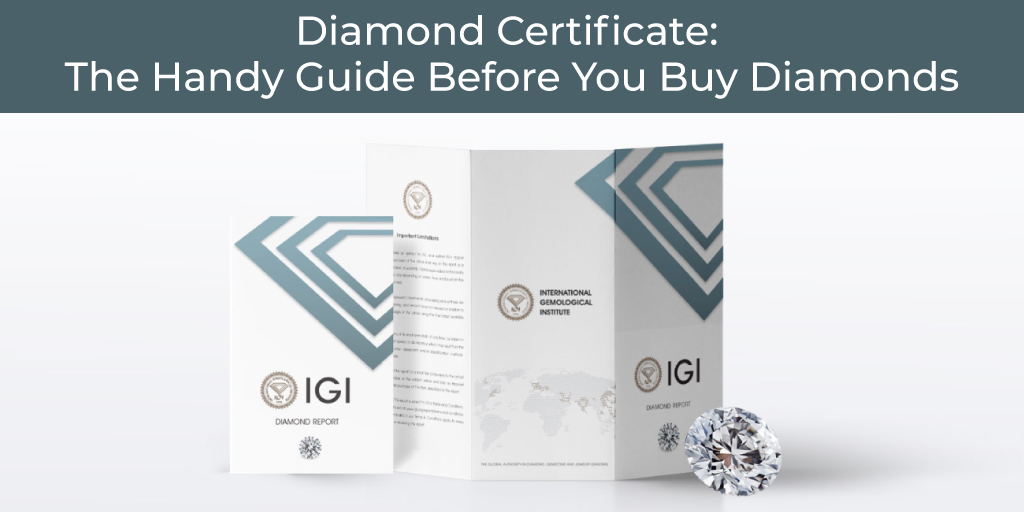
Diamond Certification: The Handy Guide Before You Buy Diamonds

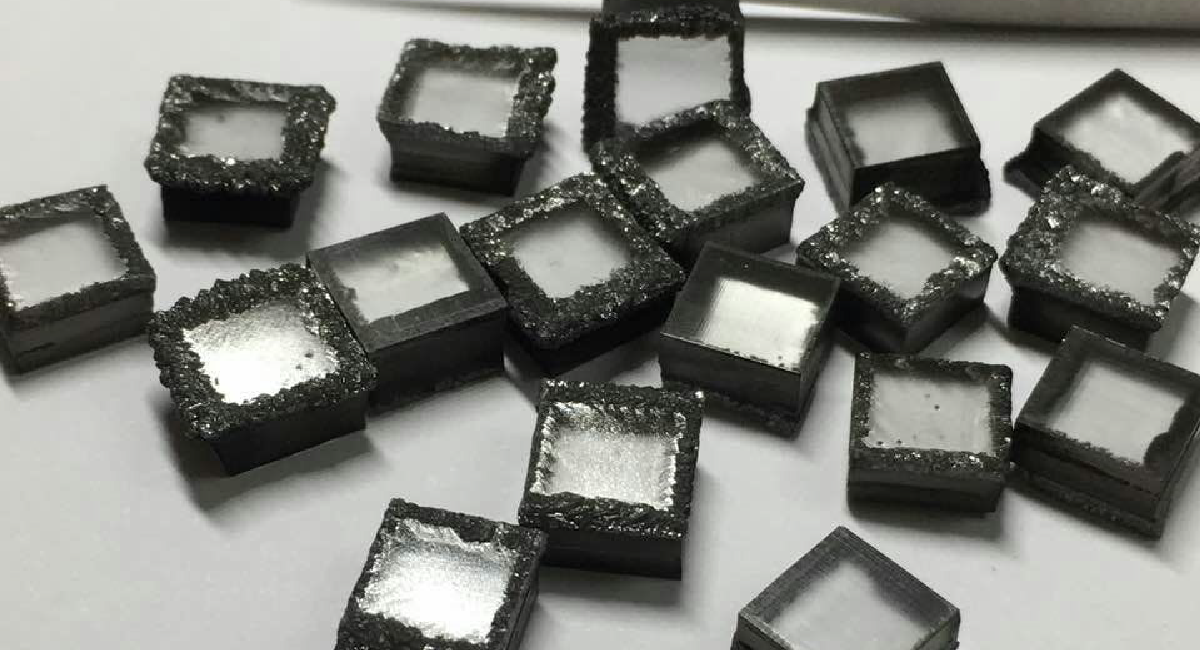
These days the demand for man-made diamonds is increasing rapidly due to their similar properties as that of natural diamonds but low cost. They are usually created by the process known as cutting-edge technology, which is similar to that of the process of naturally growing diamonds.

It chemically, physically, and optically resembles that of natural diamonds to an extent. They are not fake diamonds as the misconception of certain people leads them to call them fake. They are as real as natural diamonds.

The properties of these diamonds mainly depend on the process which is used for their manufacturing. In Fact, certain diamonds are even harder and their conductivity is also high as compared to natural diamonds.
Diamond Certification: The Handy Guide Before You Buy Diamonds

Diamond certification is a system that aims to rate diamonds based on the 4Cs which are of utmost importance to the quality of a diamond. The 4Cs are cut, carat, color, and clarity. Each of these Cs is vital in its own unique way and when measured correctly impart a different feel to any diamond which exists.

With a lot of new companies providing certification, we bring to you a guide that allows you to know your diamonds better and interpret them accurately. You may have questions such as what are some advantages of having your lab grown diamond evaluated for certifications? Well, you will have all your questions answered with the progression of the article written below.

What is a Diamond Certification?
what is diamond certificate

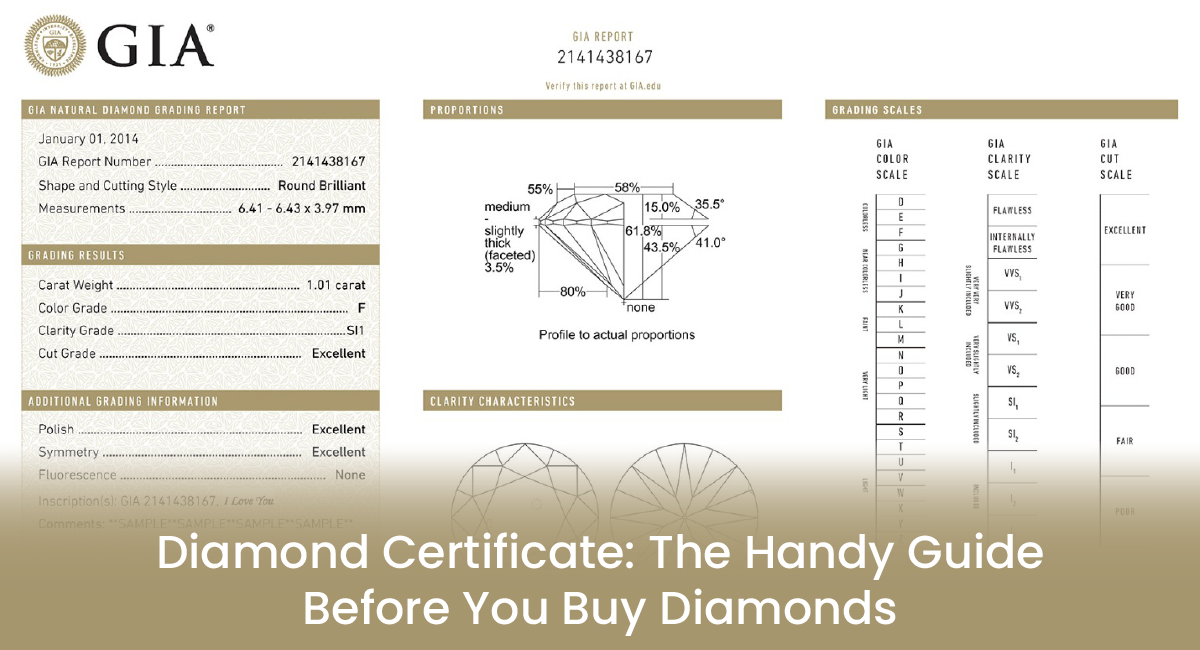
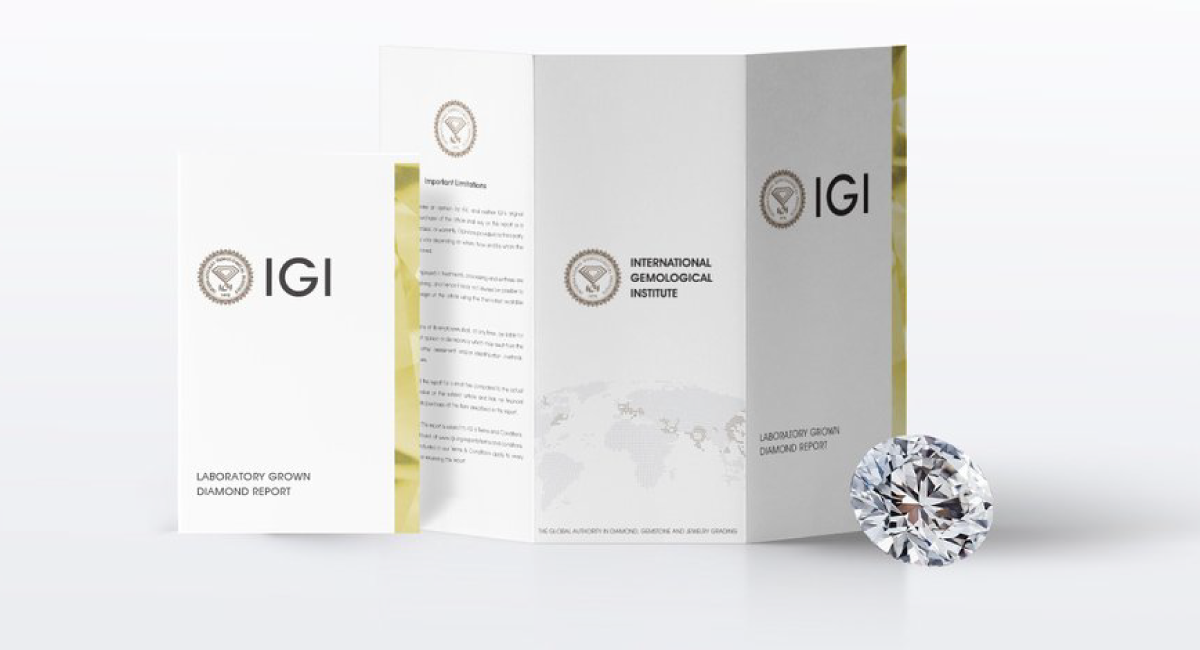
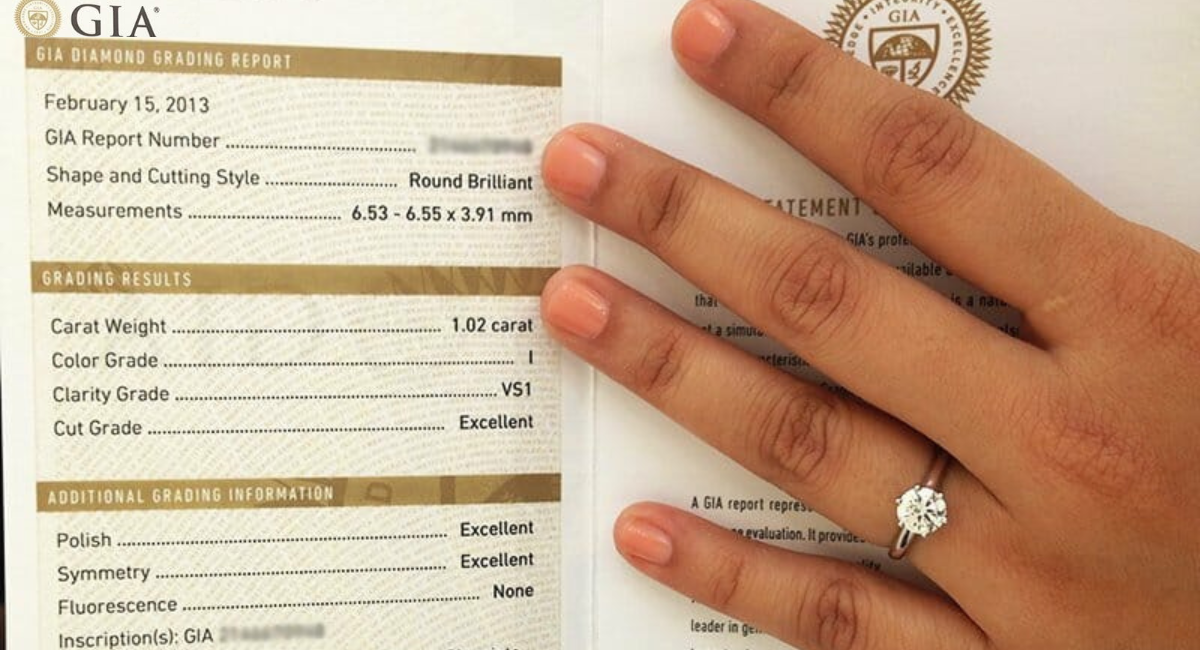
Each diamond has its own unique certification which allows the diamond to be identified based on its clarity, color, cut, and carat. These certificates give a unique identity to diamonds.

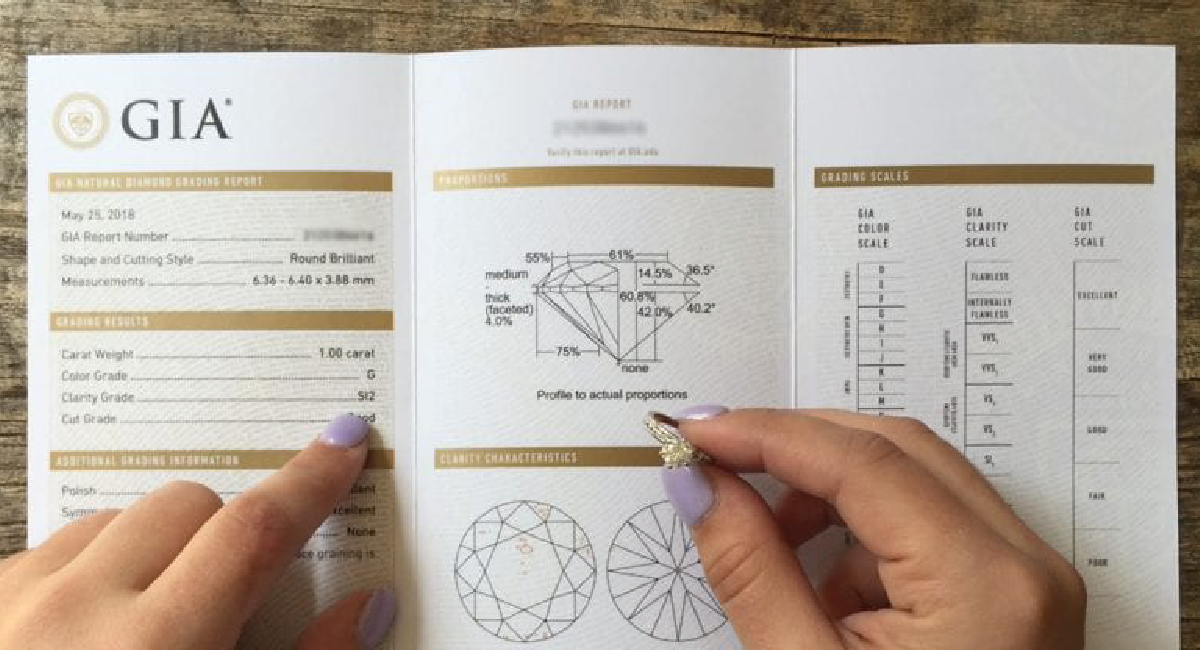
These important documents are issued by labs thus a diamond certificate is a lab certification that gives an identity to the diamonds and verifies themTrained professionals and expensive equipment come into play to identify diamonds and certify them based on the quality and grading of the 4Cs. There are additions that have been added to the certificate like polish, fluorescence, and symmetry apart from the 4Cs. 

Most lab grown diamond certificates even map out the inclusions which might be a part of the diamond, in a way that is understandable. This gives a greater idea about the diamond and its nature, like the cuts, inclusions, forms, and color as well.

Types of Diamond Grading Systems:

There are various kinds of grading systems that grade the diamonds and certify them. There are certifications like- GIA, AGS, IGI, EGL, HRD, GSI and GCAL certification.

  • GIA

Gemological Institute of America is one of the best and most renowned certification-offering institutions there is. The evaluation of diamonds is based on the basic criteria, while also certain other features like Girdle thickness, proportion diagram, table %, depth %, and culet size. There are certain specific brands of diamonds that provide only GIA certification.

  • AGS

AGS stands for American Gem Society. This identification has been there before the GIA has been introduced. They have a gradation scale from 0-9, out of which 0 stands for the most ideal diamond. This identification system has been way more refined than GIA and tries to be better than them. The AGS is a system that is generally preferred by round brilliant diamond sellers. GIA is preferable for other different kinds of cuts.

  • IGI

The speed certification of the International Gemological Institute (IGI) is very effective and is generally preferred as it offers lesser prices than GIA.

  • EGL

There are certain conceptions about the European Gemological Laboratory that state the quality of the diamonds might be inferior to the information stated otherwise on the certificate. The price may be cheaper when compared to GIA, but the quality of the diamond is definitely compromised.

  • HRD

Hoge Raad voor Diamant is the full form. HRD is a Europe-based certification organization. This organization also has an irregular identification process. The quality of the diamonds will be compromised when they are judged on the basis of HRD. They have lesser diamond quality than the GIA certification.

  • GSI

Gemological Science International is an organization that has been known more in recent times itself. It is the last certification one should rely on because when this certification has been compared with GIA, there are quite some untrustworthy results.

  • GCAL

This diamond certificate, issued by the esteemed Gem Certification and Assurance Lab (GCAL), is a testament to the exceptional quality and authenticity of a diamond. GCAL certificate provides you with the confidence and assurance that you are investing in a genuine and high-quality gemstone.

Each certificate is a comprehensive document, serving as a reliable guide for individuals seeking transparency and assurance in their diamond purchase.

How Do You Read a Diamond Certificate?

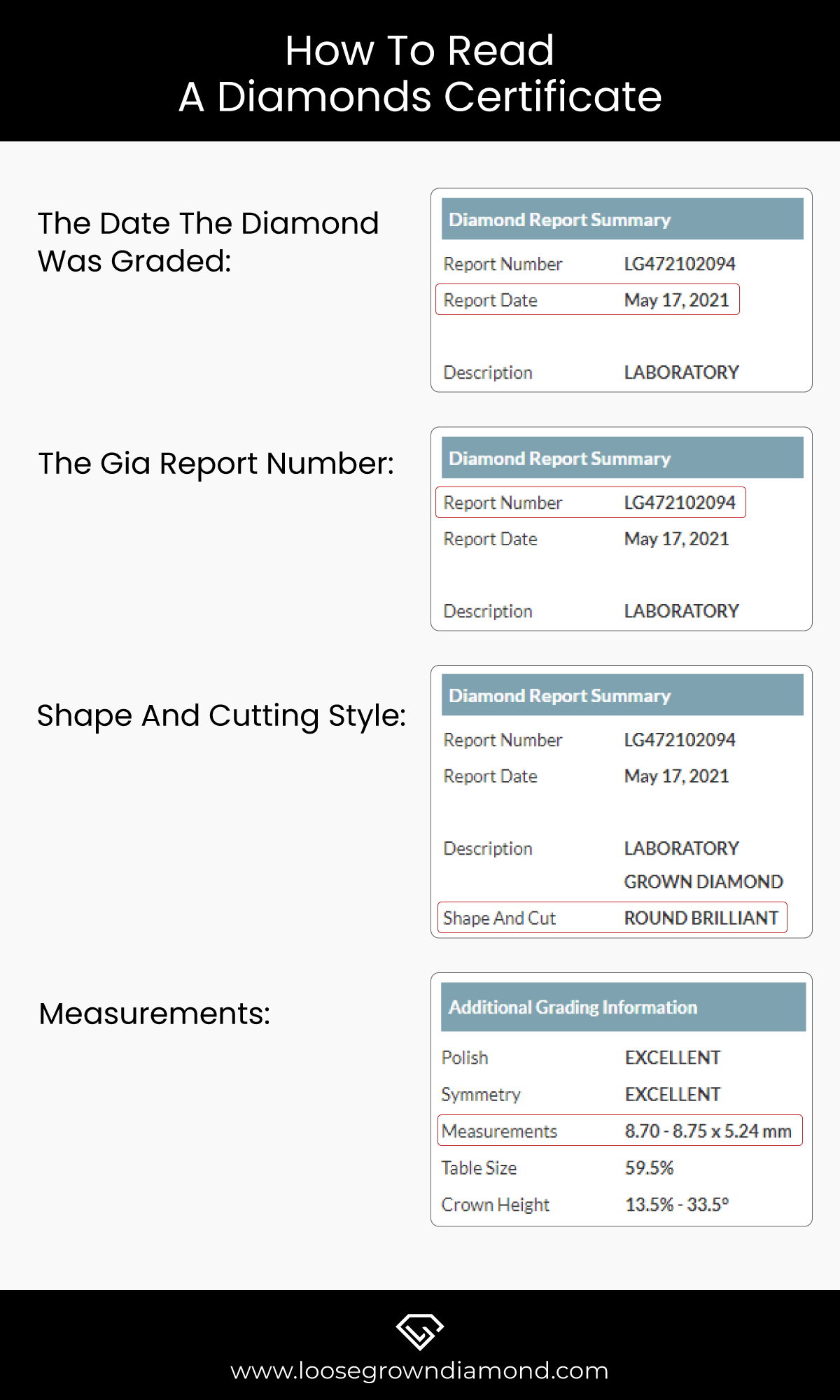
There are very minor details listed in a lab diamond certificate. Right from the dimensions of the gem, to date, to all the things that make the diamond identifiable. 
How do you Read a Diamond Certificate infographics

  • The diamond starts to get justified right from the date of evaluation. After which the certificate gets a report number. 
  • Then the basic information is let out in the form of the 4Cs- which are carat, color, clarity, and cut
  • The dimensions are also given for a clear idea about the size of the diamond. 
  • Other information about the diamond which is contained in the certificate happens to be table %, depth %, and culet size.
  • The symmetry of the diamond is also evaluated and written down for information. 
  • Then there is a proportion diagram, polish grade, and girdle thickness about the diamond which gives a deeper insight into the quality of the diamond. 
  • There is a diamond plot included as well, this gives information about blemishes and inclusions of the particular diamond. 
  • Fluorescence grade is also added in the information along with laser inscription if it is applicable. 
  • The other content includes basic comments and general information about the diamond, which will need to be conveyed to the buyer.

Why is a Diamond Certificate Important?

Diamond certification is very vital in accurately identifying the quality of the diamonds an individual is buying. It gives you a written identification/documentation of the diamond you purchased, which can come in handy in certain situations later, like verification or even reselling. It also verifies the owner or the buyer who has bought the diamond.

Properties that affect the Grading Process:

In the case of natural diamonds, there are various blemishes and flaws in the crystals, which are not there in the case of lab grown diamonds. They are very pure and highly crystalline and thus as a result are transparent.

Crystallinity: The crystals which are large and clear are mostly used in making gemstones. These diamonds are very pure highly crystalline and transparent. Thus very much desired.

Hardness: Synthetic diamonds are even harder than natural diamonds. Their hardness depends on their levels of purity, orientation, and crystallization.

Inclusions: Certain levels of blemishes and inclusions are present in all the lab grown diamonds. But in the case of synthetic diamonds, they are very less in number.

Grading Criteria of the GIA for Diamonds:

This criterion is based on the  4 C’s which re-described under
Carat

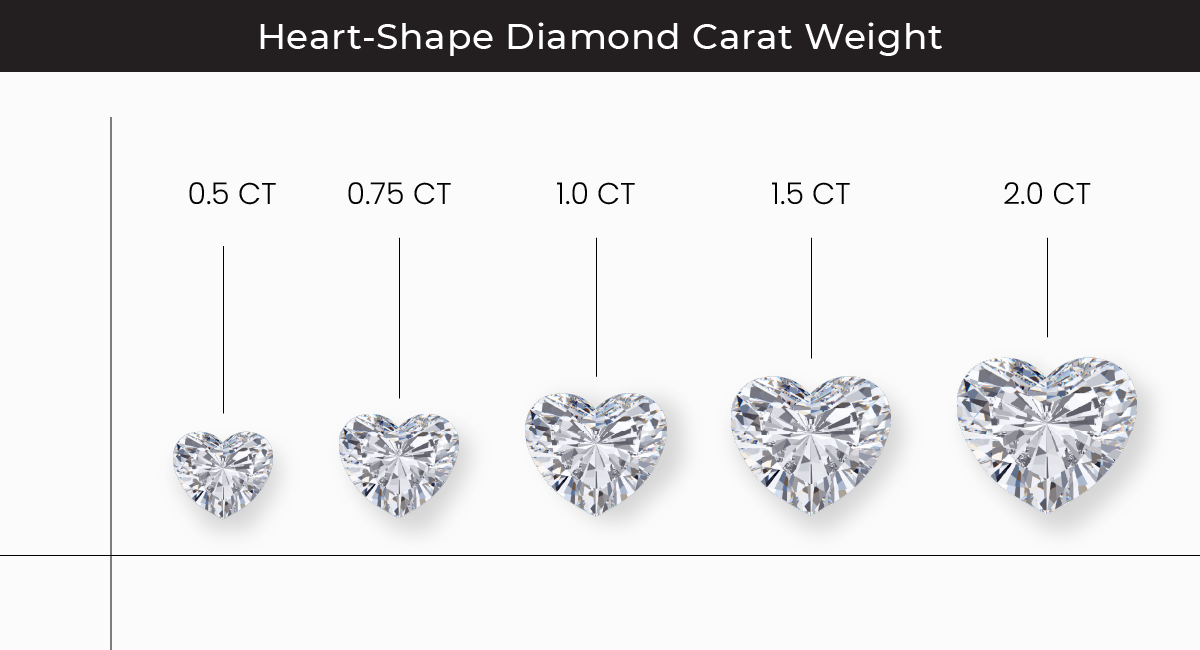
The measurement of the diamonds in terms of weight is called carat weight. It plays quite an important role in the grading process. Even though lab-created diamonds are made with different methods than natural ones but still the major determining factor for size remains the carat weight in general. 

Color

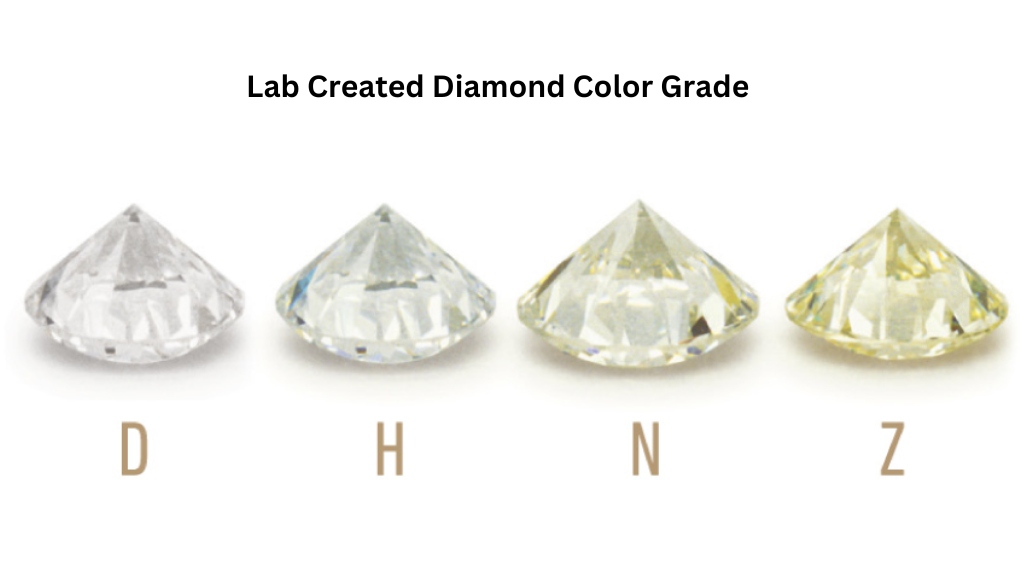
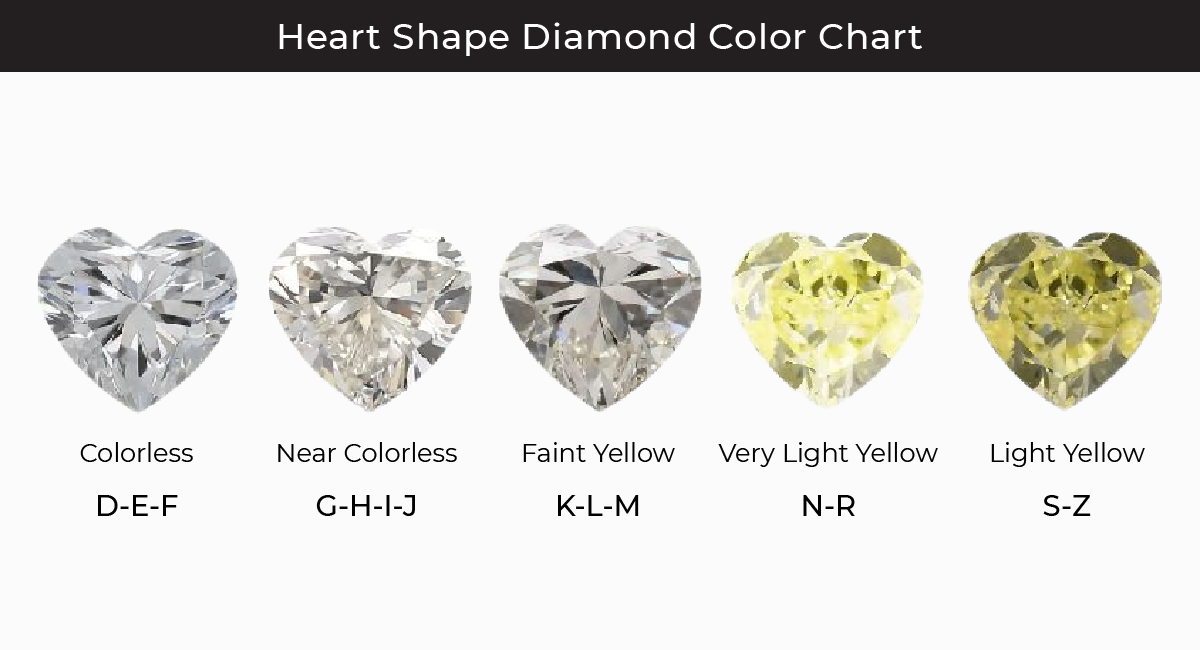
We generally measure the color of the diamond ranging from the scale of D to Z. Where D signifies a color-free diamond and Z implies the diamond has a yellow hue. The fluorescence is also checked and kept a note of by the experts.

Fluorescence is referred to as the ability of the diamond under a UV lamp to emit light. The range of this scale is from none to strong. The lab-made diamonds have forebet features and are generally affected by the methods and the environment in which they are made. 

Clarity

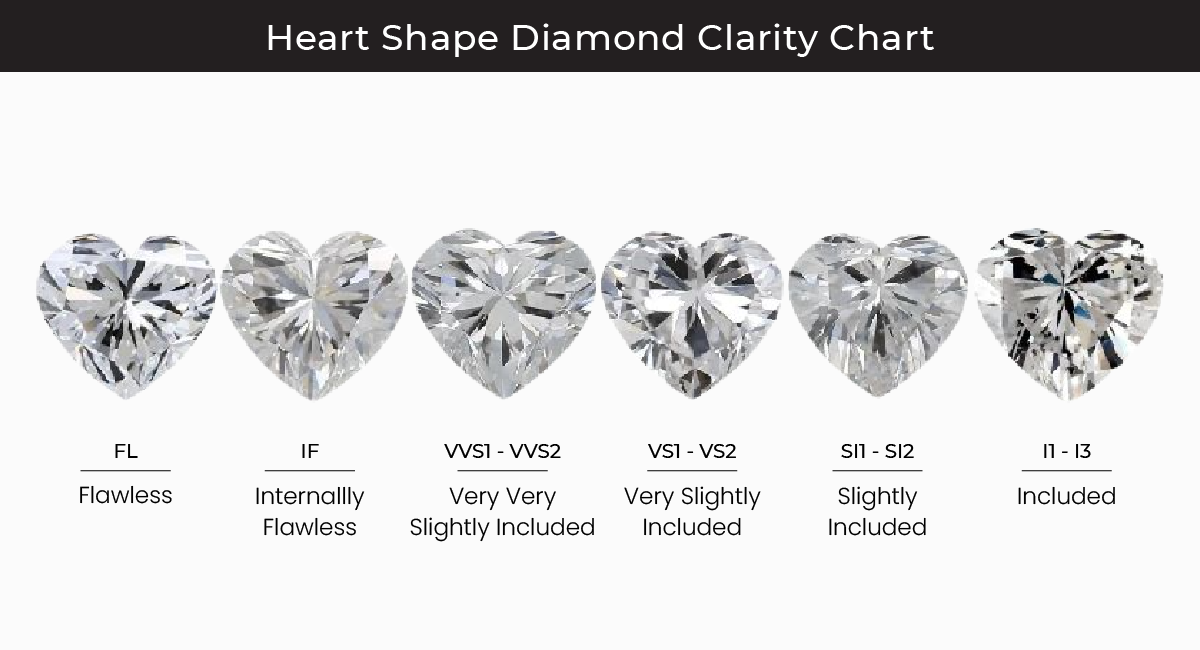
An x10 magnification is used by the experts to take a clear look at the clarity of the lab grown diamond. The range of the scale is from I (included) indicating visible flaws to flawless (FL) thus depicting that no such flaws and inclusions can be seen even under a high magnification lens.

Cut

The cut is determined by various factors such as how perfectly and accurately is the polish of the diamond, and its symmetry, and the proportions (which include the measurements such as the crown height, table, etc). Grade wise we rate it in the range of poor and excellent.

It is a factor that determines how well and precisely are the diamonds cut into various shapes and sizes from their raw form. It is one of the most important aspects among the 4 C’s of diamonds and should never be ignored or taken lightly.

As it determines how much light will enter the diamond and it will reflect it accordingly, thus directly impacting the shine and brilliance of the diamond which is the major eye-catching factor in the case of diamonds.

[blog_page_inventory shape=”Oval,Emerald,Princess,Radiant,round,pear,cushion,kite,rose cut,old mine,marquis,hexagon” carat=”1.60,3.10″ cut=”0,4″ color=”0,10″ clarity=”0,11″]
[blog_page_btn title”Buy Now” url=”https://www.loosegrowndiamond.com/inventory/?”]

What are the Advantages of Buying Certified Diamonds?

There are plenty of advantages to having purchased certified lab diamonds. It gives the diamonds an authentic identity and certification, which can be used to verify them in case they need to resell a lab diamond.

Certified diamonds needed a common identification and thus a lot of organizations came up with plans to verify and certify these precious gemstones. These organizations gave a uniform source of identity to diamonds based on some common terms and qualities; 4Cs. These basic qualities give information about the diamond which might come in handy when observing the diamond or even using it later on.

Having gained insight into the essential factors for selecting a diamond, it’s now your exciting journey to find the perfect gem! Choose from hundreds of styles on loosegrowndiamonds.com. Our experts will help you find the perfect diamond for your budget full of meaning.

We are dedicated to ensuring your diamond selection is not just a purchase but a memorable and cherished choice. Begin your exploration now to discover the diamond that fulfills your dreams!


Conclusion

There are a lot of certificate issuing organizations for diamonds and these all identify diamonds on separate scales. The scales which happen to identify diamonds are unique for each of these lab grown diamond certification organizations.

One has to consider the individual aspect and find out which is better for them, and which certification would they prefer. There are various advantages as well when one purchases a certified diamond. There is a certain level of security that comes up when a certified diamond is bought or even resold in the market.

Frequently Asked Questions

What is the best diamond certification?
There are various kinds of certifications that give grades to diamonds. These certifications give the diamond an identity and allow the buyer to understand what are the characteristics of the diamond they are buying. So Far,
The best diamond certification is GIA.

What’s the most important aspect of grading diamonds?
The most important aspect which is considered while grading diamonds by organizations is consistency and strictness in following procedures to evaluate the diamond. Every organization has a different scale of strictness to judge the diamonds and then grade them.

Do I really need a diamond certificate?
Buying a certified diamond allows one to be sure of their money investment and assures the quality of the diamond in which one has invested their money.

If the diamond certificate hasn’t been issued, there will be no surety of the money being invested and thus people will never know the genuine nature and originality of the origin of the diamond.
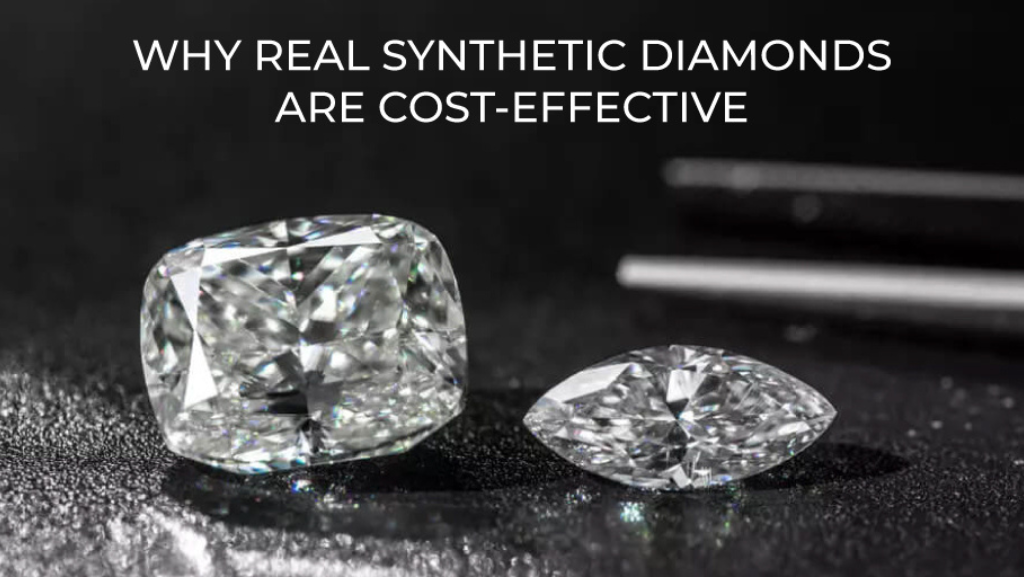
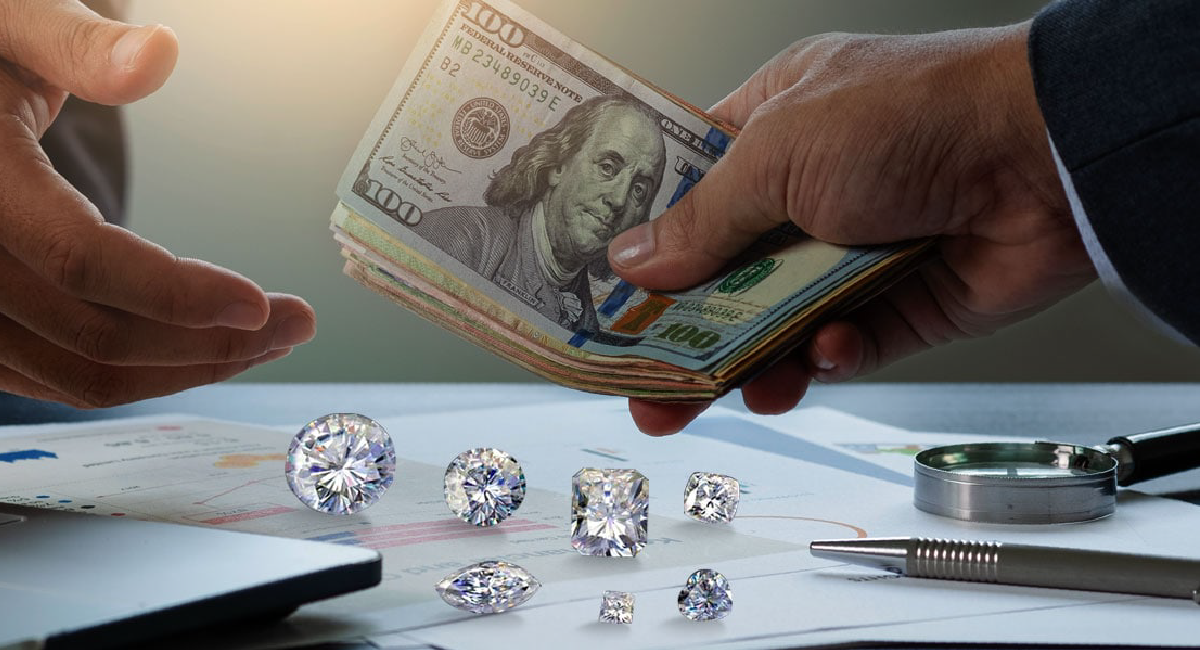
Why Real Synthetic Diamonds Are Cost Effective

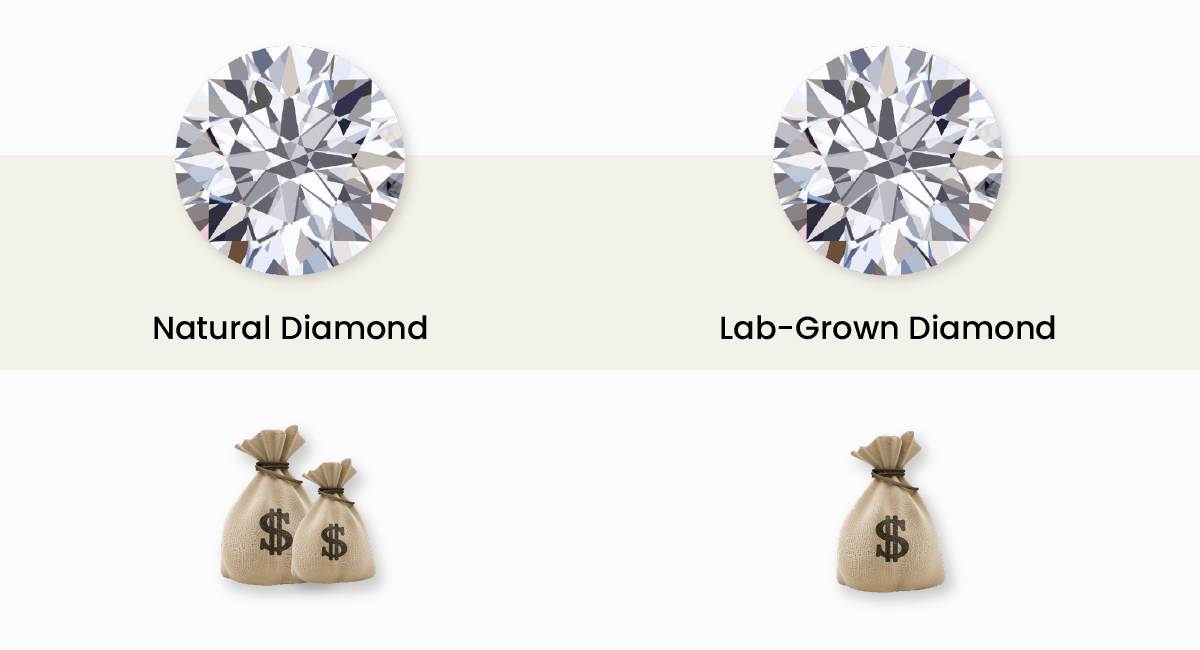
Diamonds are those precious gems that are pure, redefine elegance, and are wanted by many. Whether it be natural mined diamonds or lab grown loose diamonds, people tend to adore them. The market rate of synthetic diamonds is 20%-30% less than natural diamonds, does this mean man made diamonds aren’t real or are of poor quality?

Absolutely not! Man made diamonds have the same intrinsic properties as natural diamonds. They hold the same emotional value and elegance that a natural diamond does. Diamonds were never considered valuable before, it was only after excessive marketing and advertising that they gain this high stature of being a ‘Precious Gem’.

Real synthetic diamond cost effective

Many suggest that investing in a diamond is a myth, as mined diamonds do not have a high resale value. It was only after these diamond companies hyped the idea of diamonds’ involvement in traditions and different functions that everyone fell madly in love with these fancy diamonds.

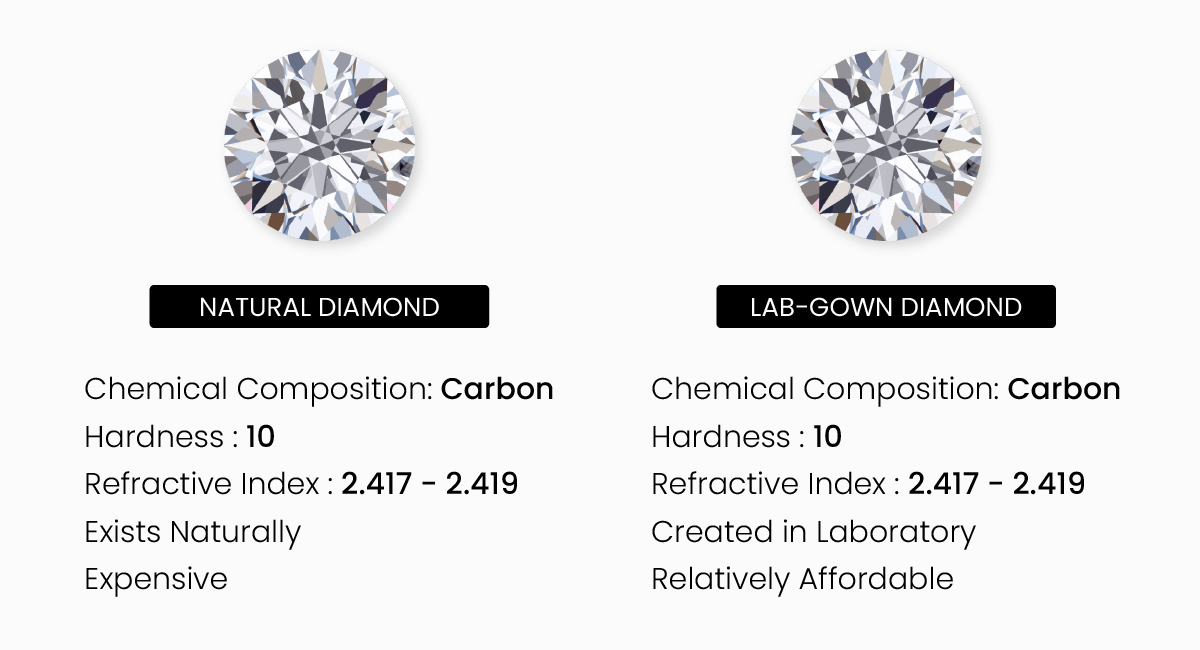
Whatever may be the history, at present diamonds are considered a symbol of love, peace, elegance, gratitude, and much more. Natural diamonds ruled the market in the beginning, up till the 1950s when man-made diamonds made an entry. As these diamonds had the same physical, chemical, and optical properties as natural diamonds, they gave tough competition. The only difference between synthetic diamond vs natural diamonds is that the latter has a lower price.

What Are Synthetic Diamonds?

Synthetic Diamonds are those diamonds that are simply manufactured and grown in a laboratory instead of being mined naturally. These diamonds are grown with the help of a seed implant from the naturally mined diamonds which also signifies that these diamonds have the same physical as well as chemical properties as naturally occurring diamonds.

The procedure of creating lab grown diamonds has been in the process since the 1950s and in the past few years has started to gain some adaptation in the marketplace as well.

what is a synthetic diamond

Usually, when you try to differentiate between a lab-grown diamond and a natural diamond with unaided eyes, it might seem impossible to reach a conclusion. In such cases, only trained gemologists can differentiate between the following, that too by utilizing specialized diamond verifying instruments.

Steadily, lab-grown diamonds are also becoming the scintillation in the market as a new alternative to natural diamonds. These gems are basically an economical alternative to naturally mined diamonds.

Factors that Affect Synthetic Diamond Cost

1. Technologically Advanced Process

Synthetic diamonds are produced in labs under a controlled environment. Two methods are used to produce lab grown loose diamonds: the CVD diamond method and HPHT synthetic diamond method. These methods can produce a large number of loose diamonds, fancy diamonds, white diamonds, and even color diamonds repeatedly. Unlike natural diamonds, which need to be mined and then processed further. It is because of this reason man made diamonds are cheaper.

Along with this, new technology is being introduced frequently by experts. These new and advanced machineries make the job easy and the whole process efficient. There is new sophisticated diamond cutting machinery that uses computer applications to cut diamonds with precision. There is even laser-based cutting machinery that is used to cut and polish diamonds efficiently.

2. Synthetic Diamonds Can Supply the Demand

Synthetic diamonds are made in labs (by HPHT synthetic diamond and CVD diamond method), inside chambers under controlled environments. These man-made diamonds take about 2-3 months to form completely. Natural diamonds, on the other hand, form after millions of years of being inside the earth’s crust. This means that mined diamonds alone cannot supply the demand of the market.

Man made diamonds, on the other hand, can be produced in large amounts in less time, due to the advanced technology and machinery. Experts say that soon-mined diamonds won’t be able to meet the supply, as it is a slower production process. This issue will not arise with lab grown loose diamonds or fancy diamonds, making them cost-effective and a better choice.

The production of lab grown diamonds is increasing 15% every year. If you are looking for the best lab-created diamonds then Loose Grown Diamond is the world’s leading lab created diamond manufacturer that ships globally.

3. Stats: Synthetic Diamonds will Outgrow Natural Diamonds

A Forbes article stated that the rapid rise in production of man made diamonds, will soon disrupt the $80 billion mined diamond industry. The article further stated, that with man made diamonds being cheaper, it was preferred more by consumers, as the price was one of the top three priorities.

The article was backed by stats and surveys produced by Stax Inc. In which the consultancy firm surveyed 40,000 consumers and concluded with, “At $150 million in sales, the lab created diamond industry’s sales are estimated to hit $1 billion by 2020”.

4. Growing and Conscious Consumers

With the growing population of middle-class people, millennials, and conscious consumers sales of synthetic diamonds are ever-increasing. Middle-class people prefer cheaper rates and good quality, which is promised by man made diamonds with 20%-30% fewer prices. Only a fraction of the population would willingly pay 20%-30% more, for a mined diamond. Millennials and conscious consumers are worried about the environment, child labor, and other human factors. Due to this, they do not support the production of blood diamonds or natural diamonds; as the mining process causes environmental degradation.

While companies and producers are encouraging customers to buy mined diamonds by stating ‘Real is Rare’, man made diamonds have already gained popularity. Man made diamonds are also real diamonds, but available at a cheaper price. So, choose wisely: natural mined diamonds or cost-effective synthetic diamonds?

[blog_page_inventory shape=”Round,oval,pear,cushion,heart,princess,emerald,radiant,kite,marquis,half moon,old mine” carat=”2.30,3.90″ cut=”0,4″ color=”0,10″ clarity=”0,11″]
[blog_page_btn title=”Buy Lab Grown Diamonds” url=”https://www.loosegrowndiamond.com/inventory/”]

Benefits of Buying Synthetic Diamonds

Lab grown diamonds and Natural diamonds are truly identical in their physical, optical as well as chemical essence. With the great qualifications and integration, lab grown diamonds have proven to be more crystallized and clear which has mostly developed a good sensation amongst the youth who are aspiring to get married or wish to propose anytime soon.

A question might strike in your heads are lab-grown diamonds worthy of buying and storing for a longer period or should one invest in natural diamonds only for better redressal? It is of course a reliable deal if we start looking into the costs of both the diamonds.

benefits of buying lab grown diamond

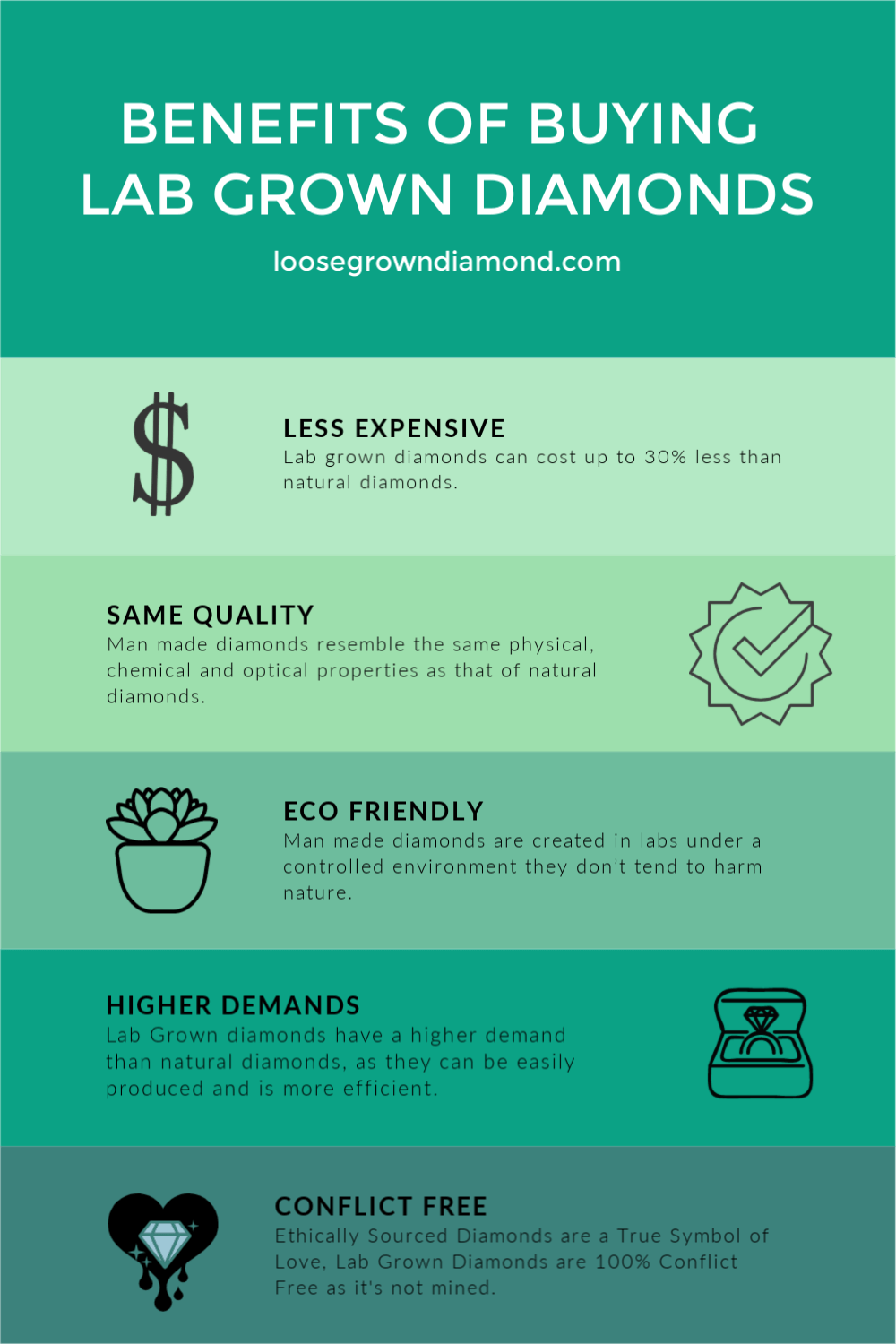
  • Less-Expensive: Usually, lab-grown diamonds cost 30-40% less in comparison with natural diamonds of the same color, cut, quality, and size.
  • Quality: Customers can easily demand various forms and structures of diamonds, which profoundly are available in general for them. Generally, natural diamonds can only be found in rare variations but synthetic diamonds can be found in various colors as well as formations.
  • Eco-Friendly: The first and foremost benefit of buying synthetic diamonds is related to nature. If we don’t mine the diamonds, the earth won’t spoil and that’s a major point when we look out for the protection of Earth. Trying to maintain a sustainable earthly life would only be granted if we stop exfoliating the earth. Lab-grown diamonds have made it possible for us to synthetically grow them into the best diamonds.
  • Higher Demand: As lab-grown diamonds are no different from natural diamonds simply other than the slight implications, their worth has been recently increasing over the past few years which ultimately transforms the value of Synthetic diamonds. And, as we know, lab-grown diamonds are manufactured in the labs themselves, which brings out a more purified form of these diamonds.
  • Conflict-Free: At times, people prefer to know the origins of their diamonds, prominently jewelry, but in the case of natural diamonds, it seems a little vague to determine the mining location of the diamonds. Whereas Synthetic diamonds are naturally grown in some specialized labs, which makes it easier to identify their origination. These diamonds are conflict-free and have not been fought over to reach the markets.

Where Can I Buy Synthetic Diamond Jewelry?

Synthetic diamond jewelry is available from a variety of sources, including jewelry stores, online retailers, and specialized manufacturers.

It’s essential to purchase from reputable online sellers who provide certifications and guarantee the quality of their synthetic diamond products. LGD offer a wide selection of designs, competitive prices, and guarantees.

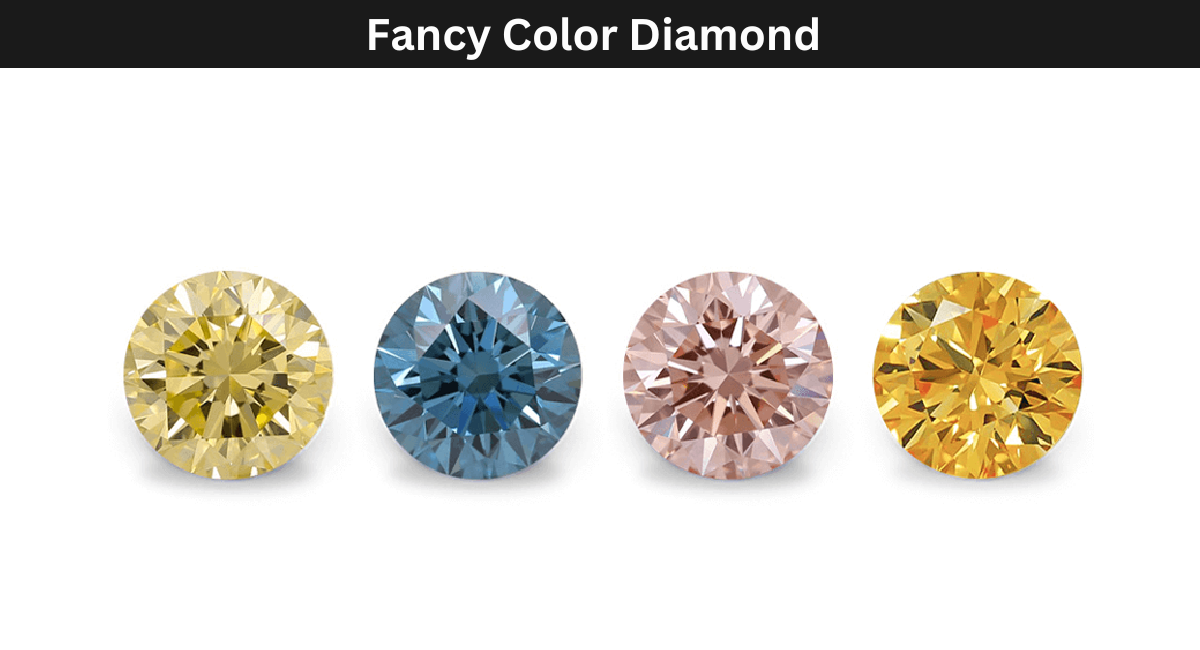
It’s one of the advantages is that it can be customized according to specific preferences. Manufacturers can control the growth conditions to produce diamonds in various colors, including fancy colors like pink, blue, red, brown, green, orange, purple, gray, black or yellow. Additionally, synthetic diamonds can be cut into different shapes and sizes to suit individual preferences.


Conclusion

Lab-grown Diamonds have authentically managed to mark their valuable place in the market in the following years since the 70s era. The mining process got pause and the world looked up to new implant techniques of diamonds which not only grant us with the ways of fabricated creation but also take us towards a whole new set of variations in diamonds. Our reach was limited until a point, but now we can discover and explore various diamonds and their styles.

With these man-made techniques, we got a new way of looking towards the creation of diamonds and accepting the sustainability of the earth. This advancement has brought an incrementing factor to our lives where we were able to protect the land from any harm and could benefit us to the best. 

FAQs

Are synthetic diamond rings as durable as natural diamond rings?
Yes, synthetic diamond rings are just as durable as natural diamond rings. Since they have the same physical properties as natural diamonds, including hardness and toughness, they exhibit similar durability and resistance to scratching or chipping.

How much does a synthetic diamond cost?
The cost of a synthetic diamond can range from as low as $600 to around $100,000 per carat or more, depending on factors such as size, quality, and retailer.

What are the main differences between synthetic diamonds and natural diamonds?
Natural diamonds form deep within the Earth’s mantle over millions of years, while synthetic diamonds are created in laboratories over a much shorter period. However, chemically and physically, they are nearly identical.

Are synthetic diamonds considered “real” diamonds?
Yes, synthetic diamonds are considered real diamonds because they have the same chemical composition and crystal structure as natural diamonds. They are recognized and graded by gemological institutions just like natural diamonds.

Do synthetic diamonds come with certifications?
Yes, synthetic diamonds are graded and certified by reputable gemological laboratories, similar to natural diamonds. These certifications provide detailed information about the diamond’s characteristics, including its carat weight, color, clarity, and cut quality, helping you make informed purchasing decisions.

Are synthetic diamonds considered sustainable alternatives to natural diamonds?
Synthetic diamonds are often considered more sustainable than natural diamonds due to their controlled production process, which reduces the environmental impact associated with mining.

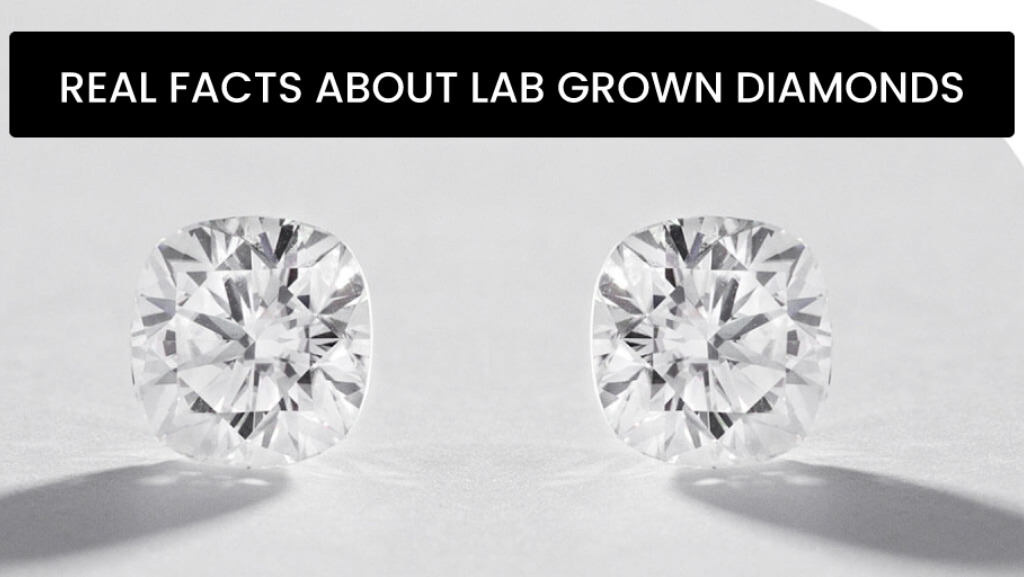
Real Facts About Lab Grown Diamonds

The entry of lab grown diamonds into the diamond market reshaped the whole business. Though these lab created diamonds have been prevalent in the whole market, there are a lot of misconceptions about them. Many people and companies are still unaware of what exactly lab-grown diamonds are, how are they made, are original or not?

The entry of lab grown diamonds into the diamond market has reshaped the entire industry. The sale of lab diamonds has grown at an unprecedented rate and they have become the choice of the new aware youth when they go to choose luxuries or diamonds in particular.

natural vs lab created diamonds

Lab grown diamonds are commonly chosen for various jewelry pieces, including engagement rings, wedding bands, bracelets, necklaces, earrings, pendants, and more.

Here are all Facts About Lab Grown Diamonds:

Understanding the facts about lab-grown diamonds is crucial before making a purchase.

Lab Grown Diamonds are Real Diamonds

Many people believe that lab grown diamond are not the same as real diamonds because they are made in a lab. Many people compare lab grown diamonds to mined diamonds and build the argument that because these diamonds were not unearthed from below the crust they cannot be called real diamonds.

real vs lab grown diamond infographic 
For a really long time, the lab grown diamonds did not have many sales because they were seen as secondary and fake diamonds. For a long time, lab grown diamonds struggled to gain traction in the market due to the perception that they were inferior and inauthentic.

It’s only recently that the market has recognized the high quality of lab grown diamonds, as they are created from diamond seeds subjected to conditions similar to those beneath the Earth’s surface.

Lab-grown diamonds indeed offer several environmental benefits, as they reduce the demand for mined diamonds, which can have detrimental environmental impacts.

Lab Grown Diamonds are Good for the Environment

When lab diamonds were introduced to the market many people questioned them because they were man-made, and they were probably bad for the environment. 

Shortly after this was cleared it was found that in fact, lab created diamonds are a much more eco-friendly alternative than mined diamonds. 

sustainable diamonds 
Lab-grown diamonds actually save the environment and the more we use lab grown diamonds and shift to using them, we are lessening the use of mined diamonds and those have a lot of negative impacts on the environment.

Lab created diamonds have much less of an environmental cost and are created in control settings and small labs. 

Lab Grown Diamonds are Less Expensive than Natural Diamonds

Lab diamonds are actually much more affordable than diamonds that are mined naturally because their cost of processing and manufacturing is far less. 

Real Facts about lab grown diamonds
Earlier people used to believe that lab created diamonds would be much more expensive because their manufacturing process requires a great deal of technique but that turned out to be the opposite because the cost of manufacturing, when compared to mine diamonds, is much lesser.

Lab-grown diamonds are quite affordable and especially suggest anyone who is looking for a great quality diamond within a budget to buy and opt for lab grown diamonds. 

Lab Created Diamonds are Available in Different Cuts, Sizes, Colors, and Shapes

Lab-grown diamonds are available in a wide range of sizes, shapes, and colors, making it easier for consumers to find the specific diamond they desire.

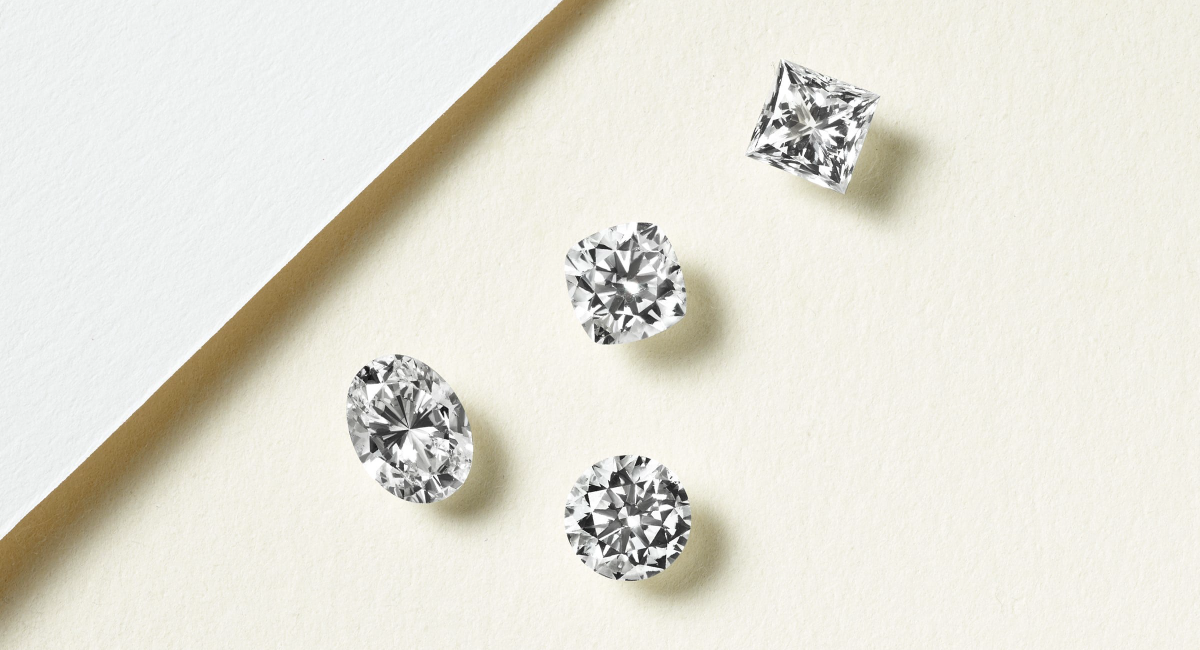
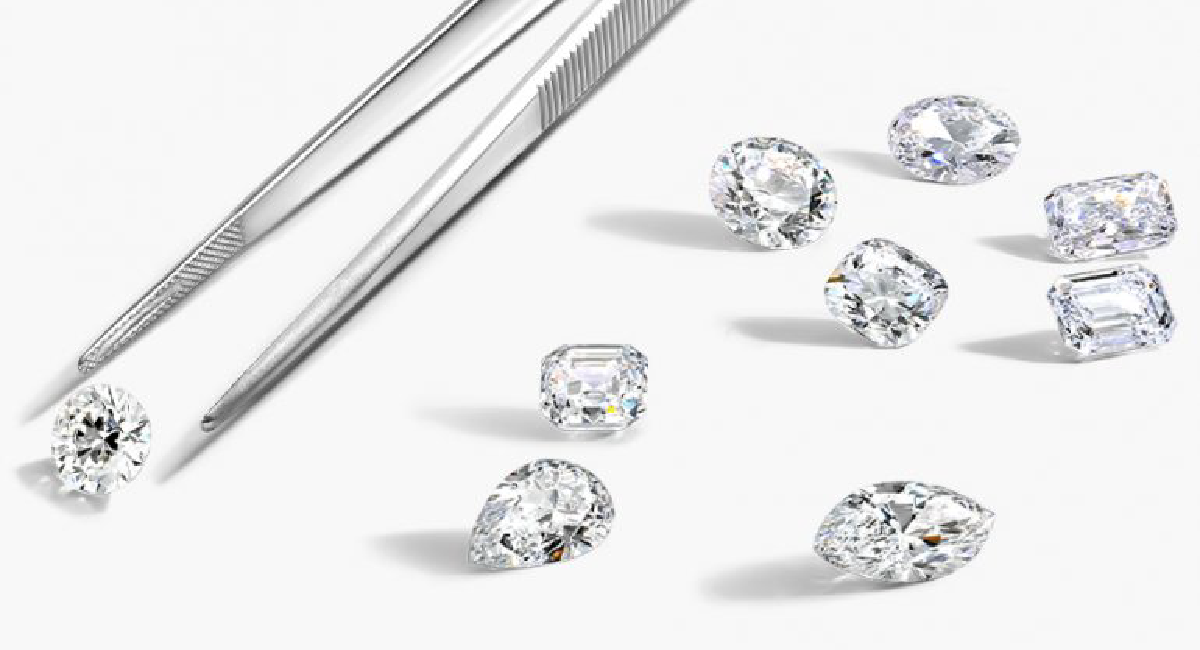
Lab-grown diamonds are available in various shapes, including round, pear, princess, oval, emerald, Asscher, radiant, marquise, heart, princess, cushion, and fancy shapes such as half moon, rose cut, hexagon, triangular, baguette, kite, hexagon.

Lab Grown Diamonds are Good Quality Diamonds

Diamond experts and gemologists have now certified that the lab-grown diamonds are actually really good quality diamonds and they are also certified by international authorities like the Gemological Institute of America (GIA), International Gemological Institute (IGI), and Gem Certification and Assurance Lab (GCAL).

lab grown diamond quality

There was a lot of confusion around the fact that lab-grown diamonds would be of good quality or not and earlier when lab created diamonds were new to the market their quality was not great. This was mainly because the techniques which are used to make lab grown diamonds now were not as refined back when lab diamonds would just be introduced to the market.

In the last five years, advancements in both the Chemical Vapor Deposition (CVD) and High-Pressure High-Temperature (HPHT) techniques have resulted in the production of high-quality diamonds with excellent brilliance and clarity.
[blog_page_btn title=”Buy Lab Diamonds” url=”https://www.loosegrowndiamond.com/inventory/”]

Conclusion

Buying a diamond is a huge investment and before making that choice a customer needs to be informed about all the diamond facts hence we hope that all the diamond information provided above helps you and makes an informed choice.

Lab-grown diamonds are gaining increasing popularity as consumers recognize them as a superior and more sustainable choice for the diamond industry.

FAQs

1. What is a lab made diamond called?
Lab made diamonds can go by a few different names. Lab made, lab grown, synthetic, lab created, cultured, and created can all describe diamonds made in a laboratory.

2. Do lab-grown diamonds sparkle?
Yes, lab diamonds do sparkle. The sparkle of a diamond is primarily determined by its cut.

3. Are lab-created diamonds considered “conflict-free”?
Yes, lab-created diamonds are generally considered “conflict-free” because they are not associated with the ethical concerns and human rights issues often found in traditional diamond mining.

4. Are lab diamonds a good choice for engagement rings and other jewelry?
Lab-grown diamonds can be an excellent choice for engagement rings and other jewelry, especially if you value ethical and environmental considerations, have budget constraints, or desire a specific size or color of diamond.

5. Are lab-grown diamonds real diamonds?
Yes, lab created diamonds are real diamonds. They have the same crystal structure, physical properties, and optical characteristics as natural diamonds.

6. How are lab diamonds made?
Lab diamonds are created using two primary methods: Chemical Vapor Deposition (CVD) and High-Pressure High-Temperature (HPHT).

7. Lab grown diamonds are cheap to buy?
Lab created diamonds are definitely a more affordable alternative in the diamond world.

Lab Created Diamond Color Grade: What to Look For

In the realm of lab created diamond color grade evaluation holds significant importance and should be carefully contemplated before any purchase.

Despite the absence of natural irregularities in lab created diamonds, color grading plays a crucial role in defining the distinctive characteristics of the diamond. Therefore, it is essential to grasp the concept of color grading when considering a lab created diamond purchase.
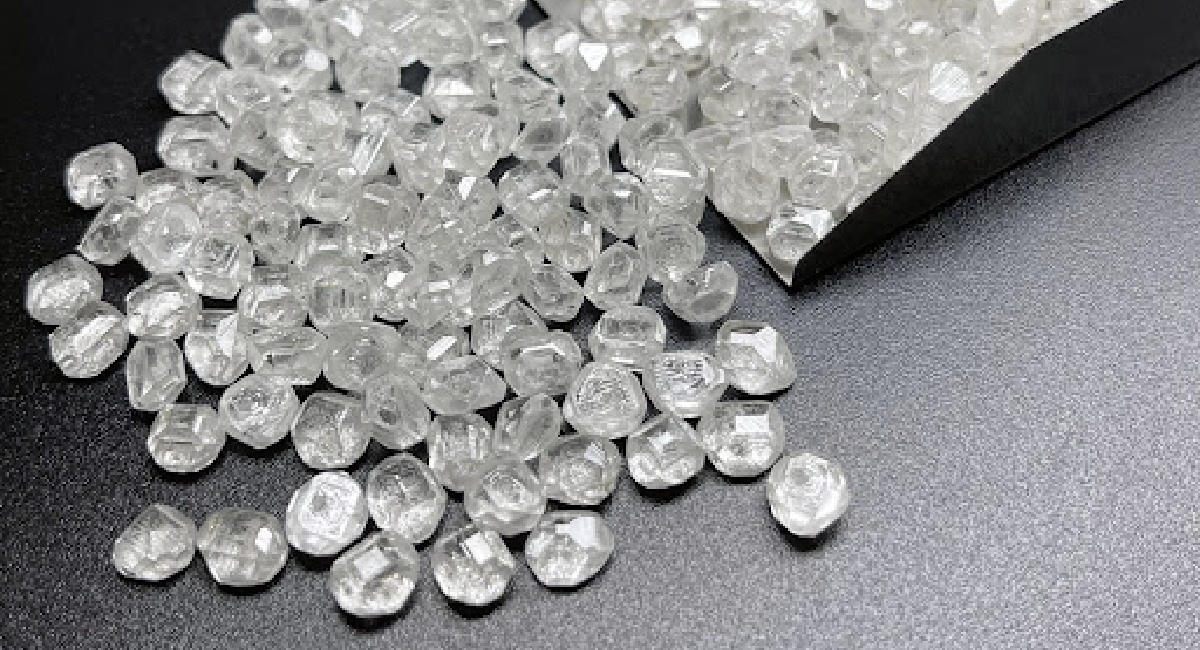
Diamonds are in demand the entire time of the year, and this has been the trend for years and years now. The major concern of the people buying them is the color and look of the diamond. Everybody wants a unique and rare look for their diamonds and this to an extent depends on the cut and the color along with the other 2 aspects.
The 4 C’s of the diamonds that are very much relevant before making a purchase are the cut, clarity, color, and carat. Out of these all here we will discuss the importance of the color and the lab grown color diamonds and whether should one consider them or not.

everything about lab created diamond color grade

The Most desired colors for the diamonds are the colorless and white ones and the yellowish and brown tint diamonds are not preferred by people. As they reflect less color to our eyes and thus the shine and sparkle are less in them which is quite an important factor for the buyers when it comes to diamonds.

So diamond color is a very important aspect that cannot be ignored. The more colorless the diamond looks the more graceful and desirable it is.

In Fact, lab created diamonds have very few inclusions and blemishes as compared to naturally found diamonds. But they aren’t completely flawless and still have a few distinctions when it comes to color, quality, and the other desired traits in diamonds. The diamonds which have a less color grade also cost less but they don’t look that great and are not preferred by many. For a quality buying experience you should also refer to the lab grown diamond color chart and color scale.

Hence, when working within a specified budget, the most advisable choice for a purchase is a lab created diamond with meticulous attention to color grading.

Facts to be considered:

  • It directly has a huge impact on the price we pay for the diamonds
  • The grade of the color should always be checked and determined only by professionals
  • The grading criteria of the fancy colored diamonds are different than the colorless ones
  • The design and the setting of the ring should also be looked at before deciding on the color grade of the diamond.
Lab Grown Diamond Color Scale

GIA, a leading authority on diamonds, established the 4Cs (color, cut, clarity, carat) as a quality benchmark. GIA certification ensures precise grading. IGI, founded in 1975, provides certificates for various gemstones, offering specific grades for lab created diamonds. GIA focuses on natural diamonds, while IGI is recognized for its expertise in lab grown diamonds and gemology. The diamond color scale by GIA gives comprehensive guidance on the different hues of diamonds that exist. You can seamlessly secure lab-certified diamonds from IGI, GIA, and GCAL at prices below the market value.

The IGI which is the International Gemological Institute certificate is a must for the verification in the case of the lab grown diamonds as the GIA was there in the case of the natural diamonds. The IGI offers a particular grade for the lab created diamonds and the GIA, on the contrary, gives only a range. The IGI is done on the scale of D to Z, wherein Z is given to the yellowish pale ones.

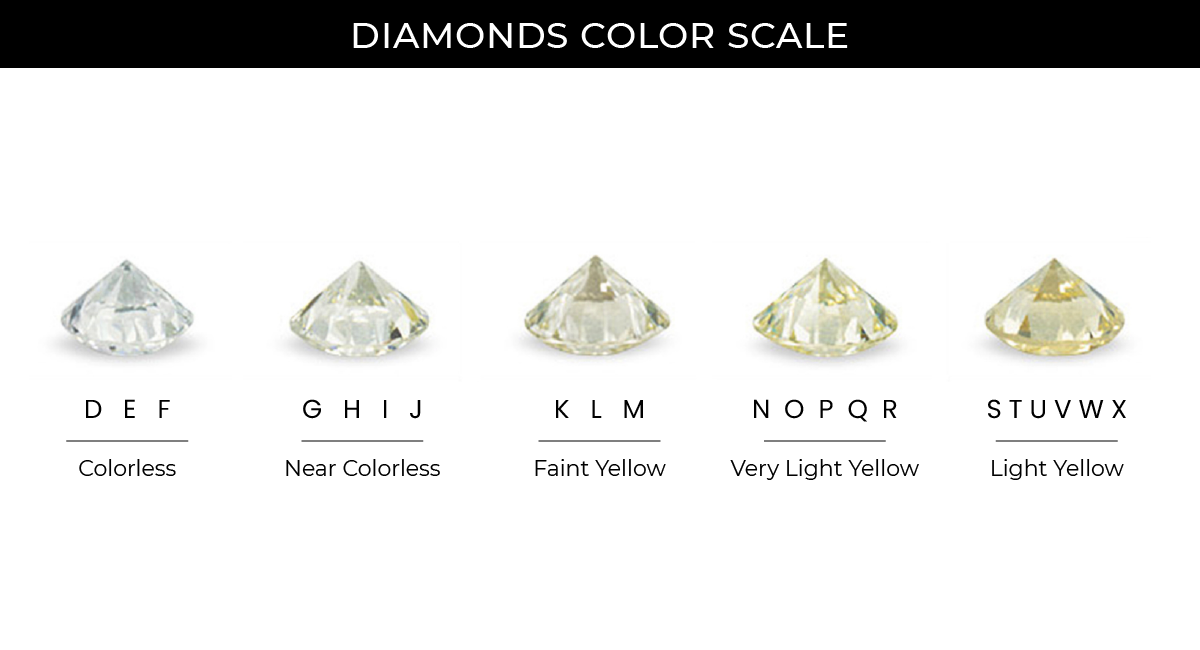
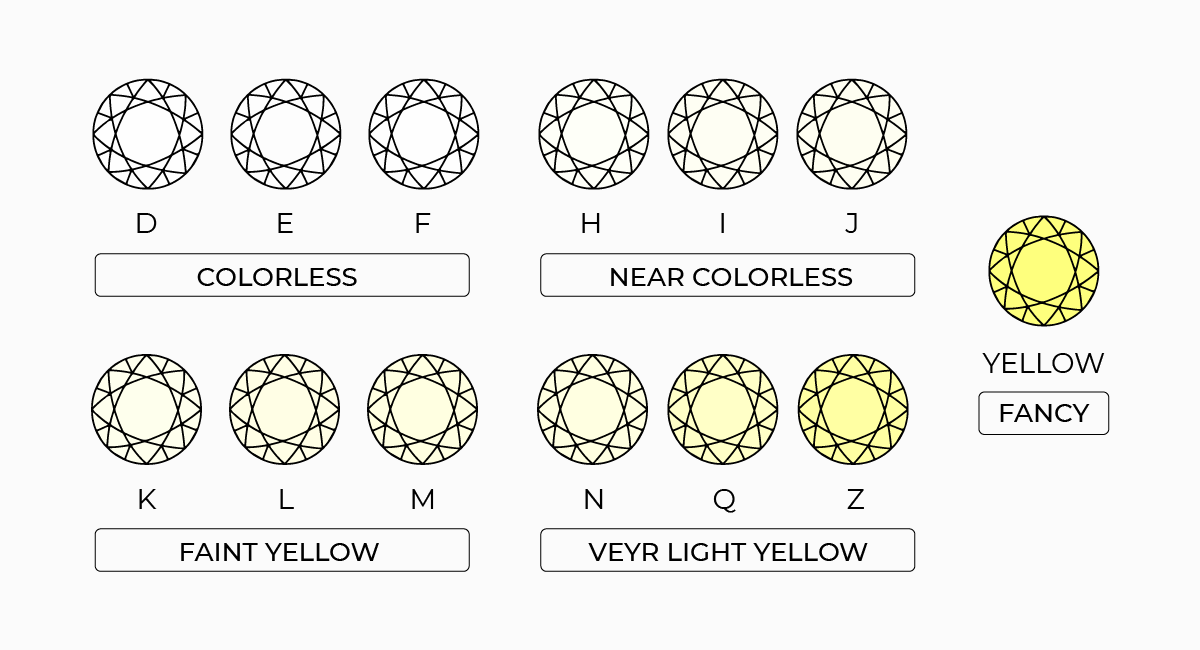
Lab grown diamond color chart: colorless, near colorless, faint yellow, very light yellow, light yellowColorless: Diamond color D is the highest color grade which signifies that the diamond is in its purest form the color is almost colorless And has no color even after the magnification process. There is not much difference in the E and F grades to the naked human eye as they look quite similar. Only the ones who have been in this field for years and our experts will be able to tell the difference in the D, E, and F grades.

Nearly Colorless:  The G-J-graded diamonds also have nearly no color, are colorless to a level and look the same as the D to F graded diamonds.

The price difference between diamonds with grades G-J and those with grades D and F is significant, with G-J diamonds being far more affordable than their counterparts. This disparity is a result of the fact that G-J diamonds have just trace amounts of color, which makes them a cost-effective option for individuals who are looking to strike a compromise between quality and affordable price.

Faint Tint: The diamond color range in the K to M have a little yellowish color in them even when seen by the naked human eye. They are also preferred by quite a few people as they tend to give us a yellow-gold look.

Very Light Tint: They are very much lower in price and the brown and yellow tint is very much visible. This range of diamonds is not recommended by professionals.

Light Tint: These diamonds come in the range of S to Z and the yellowish and brownish colors are very much visible even at a distance and are usually avoided by the majority.

[blog_page_inventory shape=”Emerald,Oval,round,heart,pear,cushion,princess” carat=”1.20,3.10″ cut=”0,4″ color=”0,10″ clarity=”0,11″]
[blog_page_btn title”Buy Now” url=”https://www.loosegrowndiamond.com/inventory/?”]

Lab Grown Diamonds: Understanding Colors and Production Methods

Yellow Diamonds:

Yellow hue in lab grown diamonds is caused by the presence of single nitrogen atoms (type Ib). With High Pressure High Temperature (HPHT) technology, a widely used method, the color is carefully controlled. Nitrogen is either extracted from the atmosphere or managed through the composition of the catalyst metal alloy. In Chemical Vapor Deposition (CVD) technology, less commonly used, color control is more challenging, as nitrogen is part of the gas mixture.

Green Diamonds:

The green color results from vacancies in the diamond structure. Both HPHT and CVD technologies typically involve irradiating type Ib or IIa diamonds with fast electrons (1-3 MeV) to achieve this color.

Pink and Red Diamonds:

Pink and red hues are due to nitrogen-vacancy (NV) centers. In HPHT technology, the process involves growing low-saturated yellow diamonds (type Ib), irradiating them with fast electrons, and annealing them in furnaces. In CVD technology, NV centers are either formed similarly to HPHT or directly during the growth process.

Blue Diamonds:

The blue color is a result of single boron atoms in the diamond structure (type IIb). HPHT technology effectively controls the color by adding a small fraction of boron to the metal catalyst alloy. In CVD technology, where color control is more challenging, boron is added to the gas mixture in the growth chamber.

Purple Diamonds:

Although scientists are unable to pinpoint the cause of the purple color of diamonds, they believe that boron and hydrogen have a role. Blue is induced by the presence of boron, and purple is induced by the presence of hydrogen. Purple diamonds are created by using synthetic diamonds of the 1b type that have a particular nitrogen content, irradiating them with an electron beam, and then annealing them in a vacuum.

The unusual and characteristic purple color grade of lab created diamonds is controlled by this process, which must be carried out under specific conditions.

Gray Diamonds:

The combination of hydrogen-related defects and structural imperfections in the crystal lattice gives gray diamonds their color. The technologies of Chemical Vapour Deposition (CVD) and High-Pressure High Temperature (HPHT) both have difficulties in achieving the appropriate gray color. While color control in HPHT is achieved by the manipulation of growth conditions, accurate color control in CVD is hindered by the complexity of regulating hydrogen during the development process.

Brown Diamonds:

Brown color may result from deformation disturbances or nickel-nitrogen centers. HPHT technology rarely produces brown diamonds, as it depends on the catalyst metal alloy’s composition. In CVD technology, poor synthesis processes often lead to the formation of dislocations and structural disturbances, resulting in brown diamonds.

Orange Diamonds:

Orange diamonds are created via CVD and HPHT methods, and to get different colors such as mild orange, bright orange, intense orange, and vivid orange, they go through a second LPHT treatment after they are first created. Nitrogen-vacancy (NV) centers frequently give lab grown diamonds their seductive orange color. While color may be carefully controlled with HPHT, perfect circumstances for NV center production in orange diamonds are difficult to achieve with CVD technology.

[blog_page_btn title=”buy diamond” url=”https://www.loosegrowndiamond.com/lab-created-colored-diamonds/“] 

Colorless Diamonds:

Colorless diamonds (type IIa) are free from impurities. HPHT technology, a common method, ensures color control by using “getters” (gas absorbers) in the metal-catalyst alloy. In CVD technology, color control is less precise, often resulting in a light brownish tint.

Color Scale of White Diamonds

Many of the sellers of diamond claim that the second most important trait to look for in the diamond is the color and with their selling and marketing skills they also convince people to buy the diamond with the highest color grade of all the available options. White color diamond is the most viable option.

Color Scale of White Diamonds
No doubt the color plays a significant role in the overall look and beauty of the lab diamond, but the differences in the grading scales in various scales are quite tiny and are not even visible to the naked human eye. The difference between G to J grades is quite very difficult to distinguish without a proper magnifying glass, but the cost of all these degraded varies a lot.

So it is advised to spend accordingly and wisely. The remaining amount of the money out of the budget can be spent on other aspects such as the cut of the diamond as it also plays an important role in the overall look of the diamond.
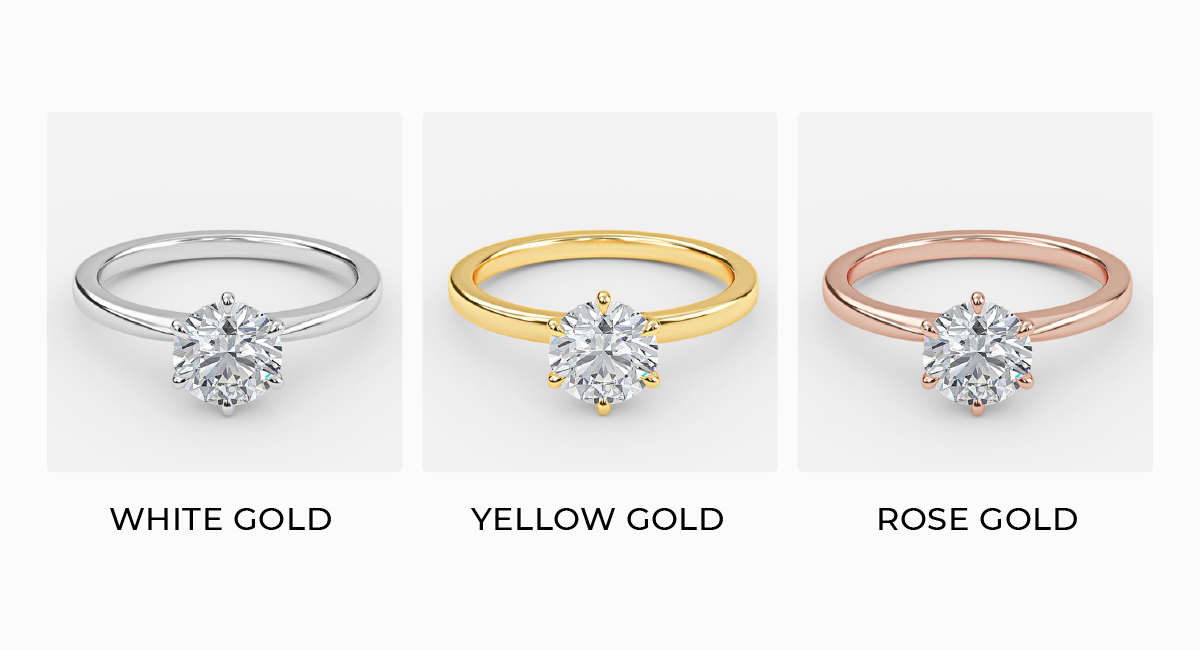
Best Lab Created Diamond Color Grades for the White Gold, Platinum, and Rose Gold Engagement RingsBest Grades for the White Gold, Platinum, Rose Gold Engagement Rings

In this section, we have analyzed the best grades for each type of ring.

Best Metal: Two popular metal options exist for white gold engagement rings i.e., white gold or platinum. White gold, an alloy prized for its luster and affordability, possesses a brilliant shine compared to other metals. In contrast, platinum, though more naturally appealing, shares similar characteristics. Jewelers favor platinum for its enhanced malleability, setting it apart from other metals in craftsmanship.

White Gold Engagement Rings

  • Round Cut: Diamond color H-J color grade
  • Emerald, Princess, and Asscher Cuts: G-I color grade
  • All other Diamond Shapes: F-H color grade

Platinum Gold Engagement Rings

  • Round Cut: H-J color grade
  • Emerald, Princess, and Asscher Cuts: G-I color grade
  • All other Diamond Shapes: F-H color grades.

Rose Gold Engagement Rings

  • Round Cut: J-M color grade
  • Emerald, Princess, and Asscher Cuts: I-K color grade
  • All other Diamond Shapes: I-J color grades.

Solitaire Engagement Rings

  • Round Cut: K-M grades.
  • Emerald, Princess, and Asscher Cuts: J-K grades.
  • All other Diamond Shapes: I-J grades.

Pave or Side-Stone Rings

  • Round, Princess, Emerald, and Asscher: G-I grades.
  • All other Diamond Shapes: F-H grades.

Halo Engagement Rings

  • All Diamond Shapes: F-H Grades.

The Impact of Different Settings

The setting of the stone in the ring plays a very important role. It enhances the color of the diamond. The color and the setting for the ring should be chosen in such a manner that they complement each other and enhance each other’s look and beauty.
When we place an I-colored diamond next to a high-graded diamond it looks like the I colored only. Many experts and gemologists use the traditional comparison method to grade the colors of the diamonds even to date. They place the diamond on a white folded card next to a master diamond to compare and determine the color.

The Center Diamond Color as Compared to the Side Stones

Many people go for side stoned rings these days as they look quite pretty and are very much in demand and fashion. In this case, make sure that the colors you choose should complement each other and do not overshadow each other’s look and beauty.

The side stones should either be of the same color as that of the center stone or should be a bit darker in color as we want the center diamond to be the main point of focus and attraction in the elegant ring.

How Does Fluorescence Interact with the Color of the Diamond?

Out of all the diamonds which are made in the labs, only a few of them have the original fluorescence. While the others are enhanced using various techniques and equipment. Fluorescence is the ability of a diamond to respond to UV light. As in the UV light makes whites whiter and black posters glow.

If the fluorescence is not proper and is extra strong or medium, the overall look of the diamond will be dull and shabby but makes a lower Color graded diamond appear whiter. So, for the diamonds in the D and G range, strong fluorescence should be avoided.

It’s widely believed in the diamond trade that fluorescence has a big impact on diamond color and, in turn, cost. For example, it is believed that blue fluorescence can improve diamonds with color grades of I to M by neutralizing yellowish tones, potentially improving them by one grade. On the other hand, fluorescence is frequently regarded as a flaw in D-H diamonds.

Start your search for the ideal lab created diamond at LGD, the one-stop shop for a rainbow of breathtaking color grades. Discover the perfect shade that complements your style from our extensive selection.

Use the enchanted promo code to get a special discount on your order. Take your sparkle to the next level with Loose Grown Diamond – the place where budget meets brilliance.


Conclusion

There are a few aspects that need to be taken a look at before purchasing the diamonds such as the Cut, Clarity, Color, and Carat play an important role in the beauty of a diamond. The decision of whether to go for natural diamonds or lab grown diamonds is solely a personal choice. The lab grown is a bit cheap and environment friendly and thus becomes an ethical choice.

The man-made diamonds should be chosen wisely and the ones which resemble the natural shine and brilliance of the diamonds. One can choose a diamond in the G to I range that looks white but costs much less than those in the D to F range.

So with the change in the trends and the choices of the people these diamonds for sure are the future of the diamond industry as in eye are more cheap and ethical than natural ones. get are also blemishes and inclusion-free as in they are made in the labs. 

Additionally, it must be noted that beyond delving into color grades for your diamond purchase, it’s crucial to consult tools such as the diamond size chart and the diamond price calculator. These resources offer invaluable insights, empowering you with essential knowledge to make informed decisions when acquiring your precious gem.

FAQs

What is the color of a diamond?
Diamonds come in various colors, but the most prized ones are colorless or near-colorless, allowing maximum light reflection.

What color diamond is the most expensive?
The most expensive diamonds are colorless (D grade), as they exhibit exceptional purity and brilliance.

What is the best color for a diamond?
The best diamond color depends on personal preference, with colorless or near-colorless grades being popular choices. You can also refer to the diamond color guide for the same.

What is the most common fluorescence color in a diamond?
The most common fluorescence color in diamonds is blue, with approximately 35% exhibiting this optical effect.

What color diamond should I get?
Choose a diamond color based on personal preference; colorless (D-F) and near-colorless (G-J) grades are popular options.

Lab Grown Diamonds Resale Value: Everything you Need to know

Lab Grown Diamonds are generally diamonds that are produced in labs. Such diamonds are made in concentrated environments that replicate the real environment to produce similar diamonds at a very discounted price. Diamonds can mean a promise for some, while a small step into a sustainable future/survival or an investment. 

Lab Grown Diamonds Resale Value
Be it in any scenario, before you buy the diamond, one should consider many factors like insurance, the diamond resale value, and the diamond’s lifespan. This not only ensures the deal one is making but also safeguards your money and provides assurance.

What Is a Lab Created Diamond?

A lab-created diamond is basically a stone that has been created in a laboratory instead of being mined from the ground. These diamonds are not found under the surface of the earth, rather they are manufactured using artificial processes like HPHT and CVD on the surface of the Earth.


Chemically speaking, they are no different than mined diamonds. All the physical, optical, and chemical properties of lab-created diamonds are similar to natural diamonds.

Does Resale Value of Lab Created Diamonds Exist?

The resale value of lab-created diamonds is either non-existent or extremely low. The resemblance might be uncanny to that of a real diamond but certifiers can easily distinguish between them very easily. It is said that the truth of the diamond lies in its girdle. Lab grown diamonds have an inscription made on the girdle of a diamond to mark that they have been created in labs.

The Problem With Reselling Diamonds

It is very difficult to know how much the diamond is worth because It is very rare that a diamond’s resale price appreciates over time. Most of the diamonds are sold at lower rates as compared to what they were bought for. Retailers have access to multiple merchants that sell diamonds that are identical to yours at lesser costs. 


Since diamond merchants frequently price diamonds higher for the typical customer, jewelers with exposure to far cheaper rates find the pricing to be too excessive. In this circumstance, it’s almost certain that you’ll get less money for your stone than you paid for it.

To sum everything up it can be hard to get the price one originally paid until the diamond is extremely rare or special such as the Kohinoor or a fancy-colored diamond and when we compare the resale value between real and lab-created the difference is quite slim.                                          

Factors that Determine the Diamond Resale Value

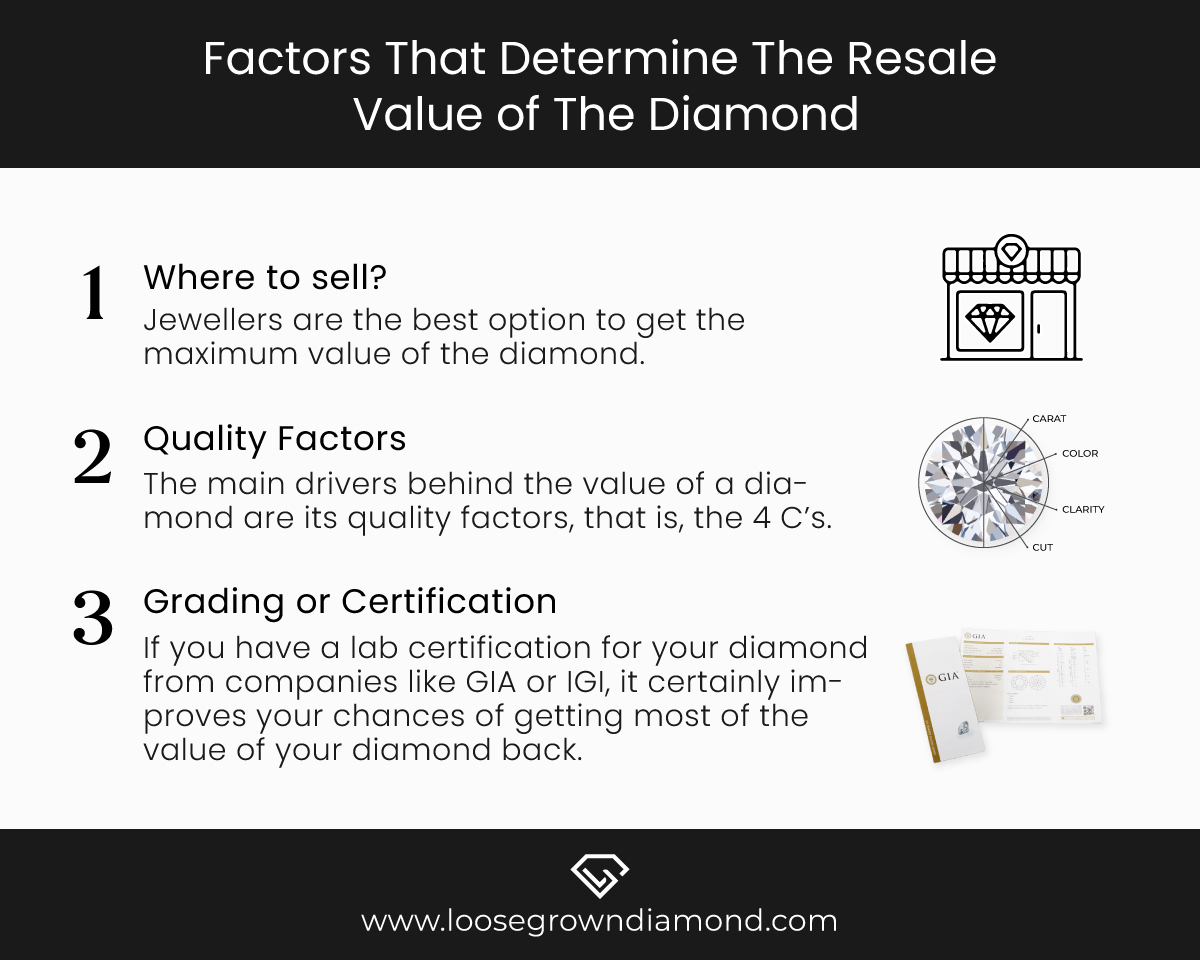
The resale price of a diamond is primarily influenced by three things.
lab grown diamond resale value

Where One Sells the Diamond 

This factor heavily influences the resale price as you might get a better value in some online platforms than others. Few of them might include

Jewelers

Except for some frequent drawbacks, jewelers might be a great place to resale a lab-created engagement ring.

Many people are still wary about lab grown gems because they don’t want them to compete with mined stone prices.

They are able to purchase goods from their suppliers at competitive costs and with favorable payment conditions. As a result, they’re less likely to pay cash in advance for your gem.

To sell to a jeweler, you’d have to offer a very steep discount to entice them to part with cash upfront. As a result, jewelers are unlikely to get you the best potential sale price.

Certification

Certification statements from reputable certifying labs such as GIA and IGI provide a lot of information and assurance about a diamond’s status and attributes. It effectively proves that the stone is worth the amount you estimate it is. If one does not already have it, they can make one which normally ranges from $75-$150. Getting your diamond verified is usually a good idea.

4C’s

The quality of the diamond is decided by the 4C’s. The higher the score, the greater the resale value of diamonds. 

  • Color

The more extreme the color the more resale value it provides. The rarity of the color and difficulty in replicating the color in the laboratory determine the price. For example the color pink, this color is found rarely in nature and very hard to make in the laboratory making it one of the most expensive diamonds one can buy. 

  • Cut

Since cut affects the placement of flaws and the broad sense a stone collects and absorbs light to generate brilliance, it is extremely significant. The uniformity of a high-quality cut is extraordinary. It has properly sized and situated facets that enhance light capture, dispersion, and reflection.

  • Clarity

Clarity basically means the presence of inclusions and how much a diamond is flawless. The level of flaws highly impacts the price. Say if a diamond is flawless or ‘Eye Clean’ it will be generally priced more when compared to a diamond that has flaws that are easily visible to the naked eye. 

  • Carat Weight

This basically has to do with how much a diamond Carat weighs. If the diamond weighs more it will highly influence the price of the diamond and vice-versa.
[blog_page_btn title=”Buy Lab Grown Diamonds” url=”https://www.loosegrowndiamond.com/inventory/”]

Making educated selections and choosing the perfect lab-grown diamond based on desired size and budget is made easier when using LGD’s carat size chart. It guarantees a flawless purchasing experience and provides a trustworthy benchmark for comparing gems.

Lab Grown vs Natural Diamond Resale Value

Lab-grown diamonds are a good option for re-selling even if they might not have the same market value as real diamonds. Carat weight, general quality, and changes in the commodity market are among the elements that affect their resale value. 

Although the majority of jewelers might not buy your lab grown diamond, in high-demand markets, selling to individuals or outside customers can result in better prices. Lab grown diamonds often fetch substantially more than what stores typically offer, even though they don’t always get you 100% of the initial purchase price. This makes them a desirable option for resale.

Generally, natural diamonds have a higher resale value than lab-grown diamonds because of their perceived value and uniqueness. Natural diamonds, especially those with remarkable qualities like great size, superb clarity, and uncommon colors, often hold their value better over time. They also have a long history of being seen as valuable assets, which can contribute to their better resale value.  

Are Lab Grown Diamonds Good Investment?

Lab-grown diamonds are an interesting choice to think about, especially if you’re looking at them from an investment point of view. Their beauty and longevity are similar to those of natural materials, but their investment potential may not be as good as that of natural materials. 

But it’s important to note that lab-grown diamonds are good for the earth due to their eco-friendly production process. Lab-grown diamonds might not bring in a lot of money, but they are a great choice for people who care about the environment because they are in line with sustainable values and fair sourcing practices.

How Much Does a Lab Grown Diamond Cost?

Carat weight and quality grade are two parameters that affect the price of lab grown diamonds. A lab-grown diamond weighing one carat usually starts at $600, but a two-carat diamond might start at $1000. 

Those looking for reasonably priced jewelry made with ethically sourced diamonds will find these costs to be more enticing than those of natural diamonds. 

As production prices decrease due to technological breakthroughs, lab-grown diamonds are becoming an increasingly attractive option for ethical buyers.

Where to Buy Lab Grown Diamonds from?

When buying lab grown diamonds, we at Loose Grown Diamond offer the best options and high-quality stones. LGD is a trusted source for lab-grown diamonds available at affordable prices. We at LGD guarantee a smooth purchase experience with our excellent reputation and client satisfaction.

Conclusion 

In the above article, we saw all the factors involved in selling a diamond and the price one can accept when going for a resale of diamonds. It is better for one to not consider diamond as a potential option because it might not give back fruitful returns. Rather than an investment, it is better to see a diamond ring as a promise, a symbol of love, and an emblem of marriage to your partner, and not any materialistic investment. 

FAQs 

Is It Worth Buying Lab Grown Diamonds?

Although lab grown diamonds are more affordable and environmentally friendly, their future worth may be constrained.

What Is the Resale Value Of a LabGrown Diamond?

Resale value of lab grown diamonds is impacted by carat weight, quality, and changes in the market.

What Is The Future of Lab Grown Diamonds?

Lab grown diamonds have a bright future ahead of them, providing a sustainable substitute for naturally mined diamonds.

Do Lab Grown Diamonds Have Resale Value?

Yes, the resale value of lab grown diamonds is dependent on a number of factors, such as quality and market trends.

Will Lab Grown Diamonds Hold Value?

Although the beauty and durability of lab grown diamonds make them valuable, their potential as an investment may be restricted.

How to tell if a Diamond was Created in a Lab?

The diamond industry is striving with a flourishing supply of all types of diamonds. This includes man made diamonds natural diamonds, diamond hybrids, and even clarity-enhanced diamonds.

As lab grown diamonds are produced by two methods, CVD diamonds & HPHT synthetic diamond-making methods. It has led to a sufficient supply of man made diamonds in the market. However, this has also increased the level of difficulty for retailers and customers to differentiate between lab grown loose diamonds and natural diamonds.

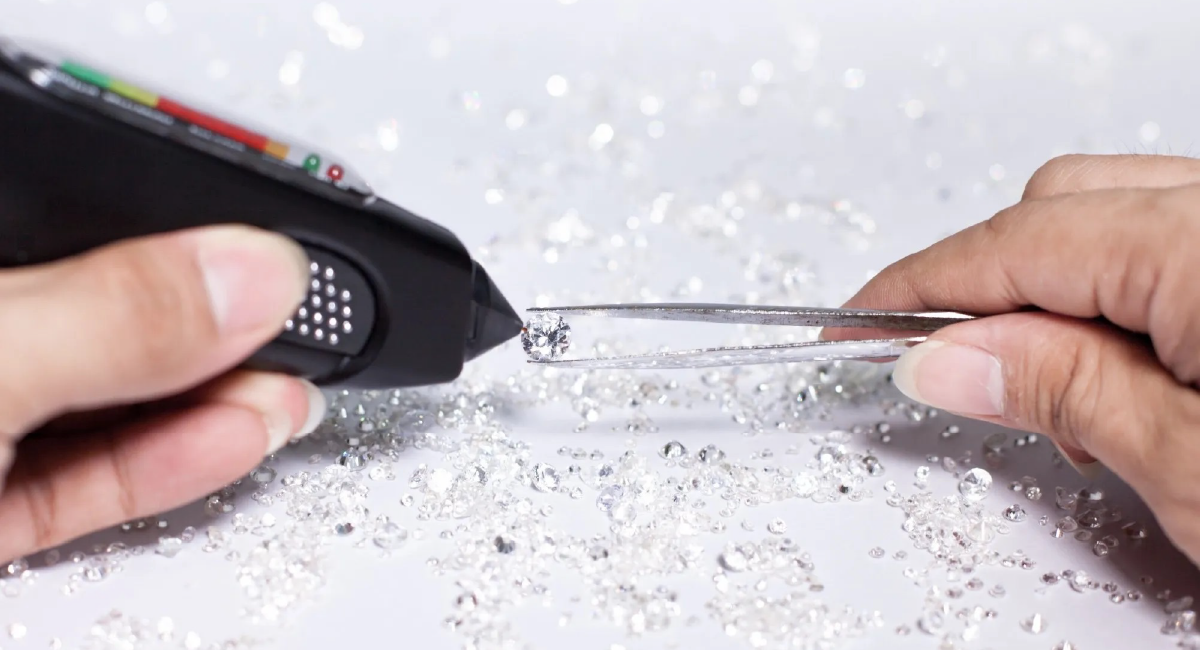
how to tell if diamond created in lab

It is easy to determine which is a diamond stimulant, an enhanced diamond, or even a diamond hybrid, but distinguishing between lab grown diamonds and natural diamonds is a hard task.

As many consumers have become conscious and aware, they prefer to purchase man made diamonds because of the esteemed benefits; Eco-friendly, cheaper than natural diamonds, doesn’t have fun conflicts. This results in concern among jewelers and consumers to identify man made diamonds, and whether lab grown fancy diamonds can be identified by expert gemologists or gemological labs.

Visual Properties of Man Made Diamonds

Diamonds have the same physical, chemical, and optical properties as natural diamonds. However, there are some characteristics of CVD diamond & HPHT synthetic diamond that trained gemologists with special types of equipment can distinguish.

CVD Diamond

  • Abnormal fluorescence colors
  • Fluorescence color patterns detected
  • Even the distribution of colors
  • Graining patterns not detected
  • Banded strain patterns detected
  • Intermittent dark pinpoint-size inclusions
  • Inscribed on the griddle by a diamond grading institution


The diamonds created by the CVD diamond making method show a red-orange fluorescence under U.V light. These CVD diamonds have intermittent black pinpoint-size inclusions and contain some particles of non-carbon in them. All CVD diamonds can be determined by looking under a UV light irrespective of what treatment they might have gone through.

HPHT Synthetic Diamond

  • Irregular color distribution within the diamond
  • Abnormal fluorescence colors
  • Graining patterns detected
  • No strain patterns detected
  • Intermittent phosphorescence
  • Metallic flux inclusions detected
  • Inscribed on the griddle by a diamond grading institution

hpht lab grown diamond
The HPHT synthetic diamonds can be distinguished from natural diamonds, by the metallic flux inclusions they possess. HPHT synthetic diamonds can be white diamonds or even colored diamonds. Their carat size varies between 0.5-10 carats.

Different Types of Diamonds

Man made diamonds can be categorized into different types, depending on the clarity and the type of impurity it consists of in the carbon lattice. Powerful equipment such as an infrared spectrometer (used to determine functional groups in molecules).

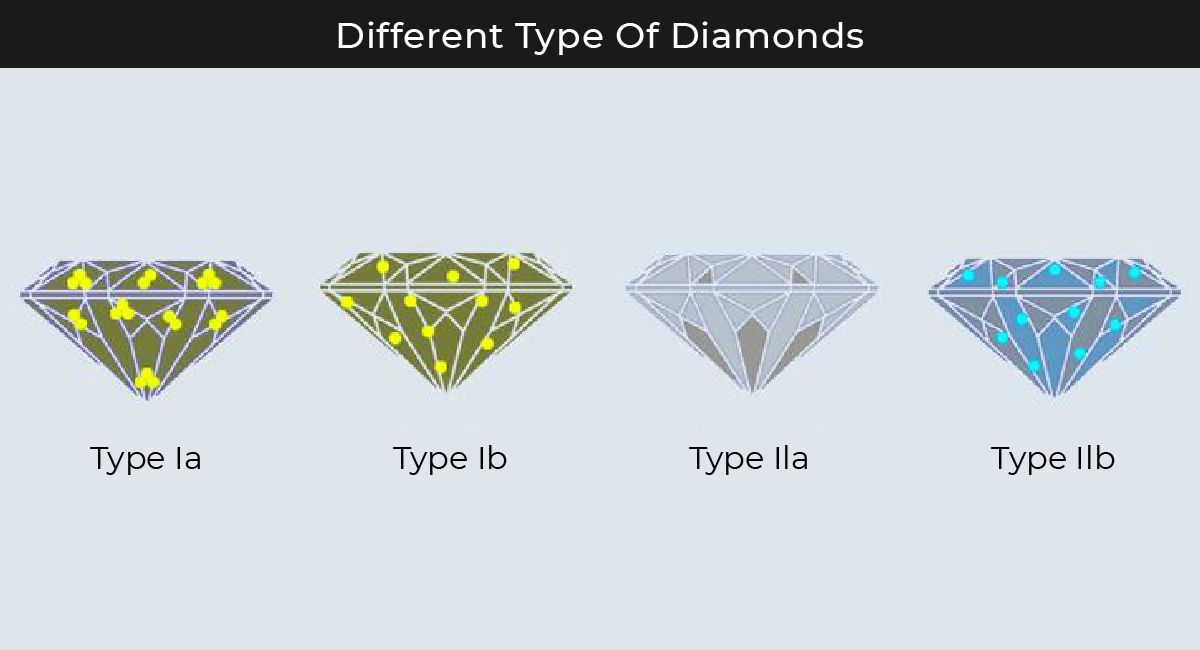
The 4 types of Classification Based on Impurities are: Ia, Ib, IIa, IIb

Type Ia: In this type of white diamond, there are nitrogen clusters within the diamond crystal lattice. Type Ia diamonds are pale yellow and 95% of the diamonds which are mined worldwide are of this type.

Type Ib: In this type of loose diamond, single nitrogen atoms are present throughout the carbon lattice of a diamond. All lab created diamond which are yellow is of this type, while 0.1% of mined diamonds are this type.

Type IIa: This type is the purest form of fancy diamond that can be found, (Type IIa)consists of no or marginal impurities in its crystal lattice. All lab grown white diamonds or colorless diamonds are of this type, while 1%-2% mined diamonds are of this type (white to pink).

Type IIb: A type 2b (type IIb) loose diamond has the presence of boron impurities in it. All lab grown blue fancy diamonds are of this type, while in the case of mined blue diamonds, only 0.1% are of this type.

[blog_page_inventory shape=”round,oval,pear,cushion,heart,princess,emerald,radiant,kite,old mine,hexagon” carat=”2.30,3.60″ cut=”0,4″ color=”0,10″ clarity=”0,11″]
[blog_page_btn title”Buy Now” url=”https://www.loosegrowndiamond.com/inventory/?”]

Methods to Identify the Lab Grown Diamond

There are several technical ways that can be used to check whether a diamond is lab-made or not. But there are certain methods that can be implemented on a personal level to check whether or not a diamond is created in a laboratory, and we are here to list the same. So when you start your inspection of a diamond here are a few things to keep in your mind:-

Certification

Methods to Identify the Lab Grown Diamond

One method to identify lab-created diamonds is through certification. When a diamond is created in a laboratory, it often undergoes rigorous testing and analysis to determine its origin and quality.

Look for certifications from reputable gemological laboratories like GIA (Gemological Institute of America), GCAL (Gem Certification & Assurance Lab) or IGI (International Gemological Institute), often specifying if a diamond is lab-created.

These certificates provide detailed information about the diamond’s characteristics, including color, clarity, cut, and carat weight. They may also include specific language indicating that the diamond is lab-created or synthetic. However, it’s important to note that not all lab-created diamonds come with certificates.

Color

Checking the color of the diamonds is a good enough technique to learn whether or not it is lab-grown. As most of them are either bright yellow or blue.

Methods to Identify the Lab Grown Diamond
What you need to know is that both yellow and blue are rare colors to find in the market (for natural diamonds), and hence the prices of these gems are soaring. Stones with extraordinary or on the face color, are generally lab-made. However, this is not the only sign you can bank upon.

Disclosure

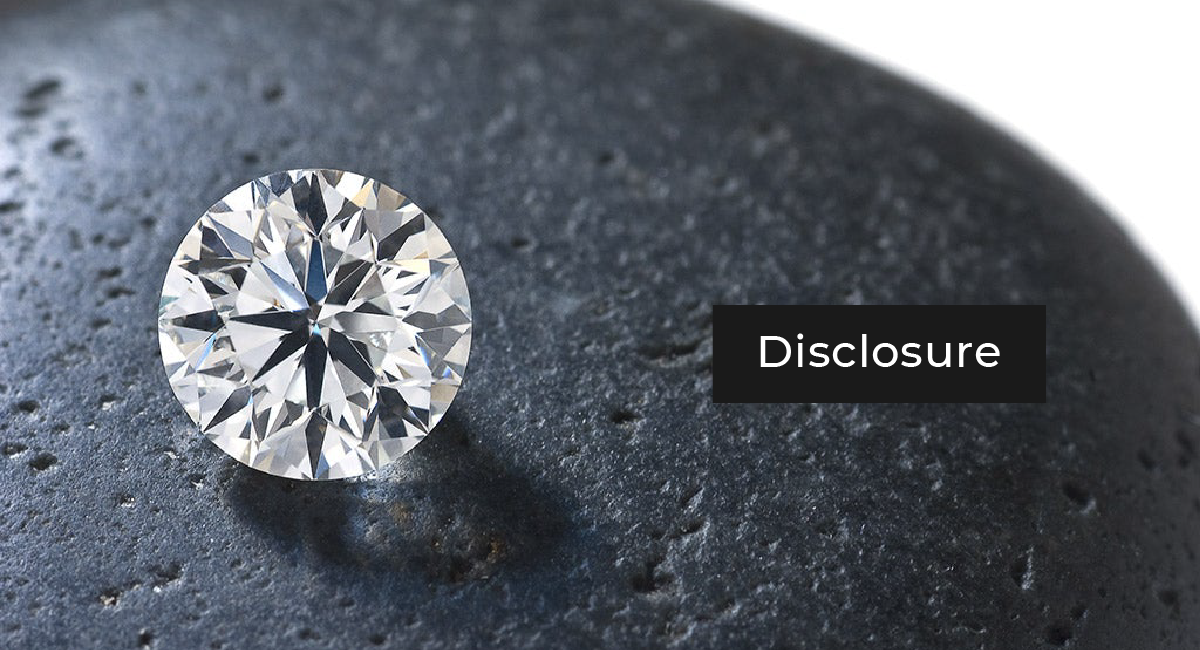
You can figure out whether a diamond is lab-made or not by looking out for responsible disclosure. A lot of times in the industry, there are non-disclosed diamonds too, which could be lab made diamonds sold as natural ones.

However, this is rare as most of the time manufacturers of lab grown diamonds are legitimate and upfront about their stones. A lot of them have inscriptions made with lasers on the gem which state the diamond is lab-grown.

Inclusions

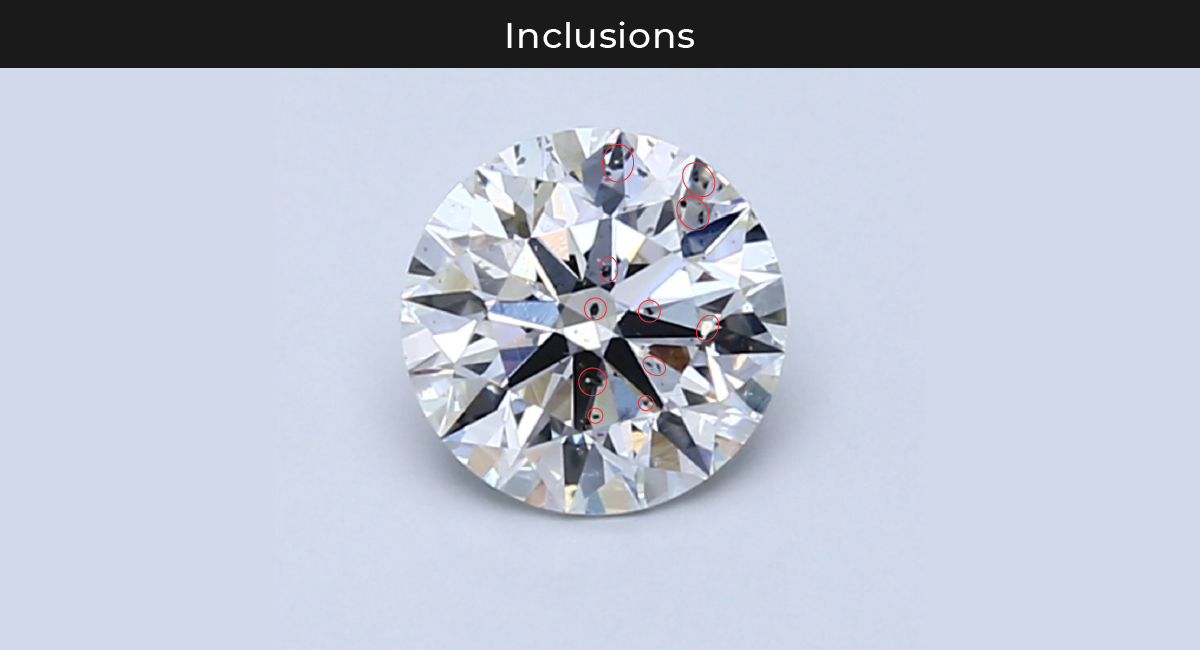
Natural or lab grown diamonds both have a great number of inclusions present in them which hamper their clarity to an extent. Natural diamonds that grow inside the earth, the inclusions found in them are naturally occurring. Like bird feathers, flecks of other gems, or clouds.

inclusion on lab grown diamond 
However, lab made diamonds are made with chemicals, solutions, and metals. Hence a common inclusion present in these gems is most often metallic. These are usually not found in natural diamonds, because for obvious reasons.

Either way inclusions in both of these diamonds are hard to detect and you’d usually need a 10x magnification to even get an idea if there are inclusions present inside them.

Scientific Type

Scientific type or Type IIa tests are used to categorize lab made diamonds. There are four categories, and these categories are based on how much the diamond is contaminated with carbon lattice, at the atomic level of the diamond. To identify these impurities a piece of powerful equipment like an infrared spectrometer is used for detection.
The types are

  • Type Ia – It has about 98% mined diamonds.
  • Type Ib – It has maximum synthetic diamonds which are yellow, with 0.1% mined diamonds.
  • Type IIa – It is a completely synthetic diamond that is colorless, with about 1% or 2% of a mined diamond.
  • Type IIb – It is again completely synthetic but blue-colored diamonds, with about 0.1% mined blue diamonds.

The best indicator to bank on whether or not a diamond is lab-grown is, to check if it is a Type IIa diamond or not. What it means to belong to the Type IIa variant is how much pure carbon is used to make that diamond.

Even less than 2% of the time natural diamonds turn out to be a Type IIa, however, almost all lab grown diamonds are Type IIa. Thus, if the type test categorizes the diamond to be Type IIa it is a pretty good indicator that the diamond you are holding is a lab made diamond.
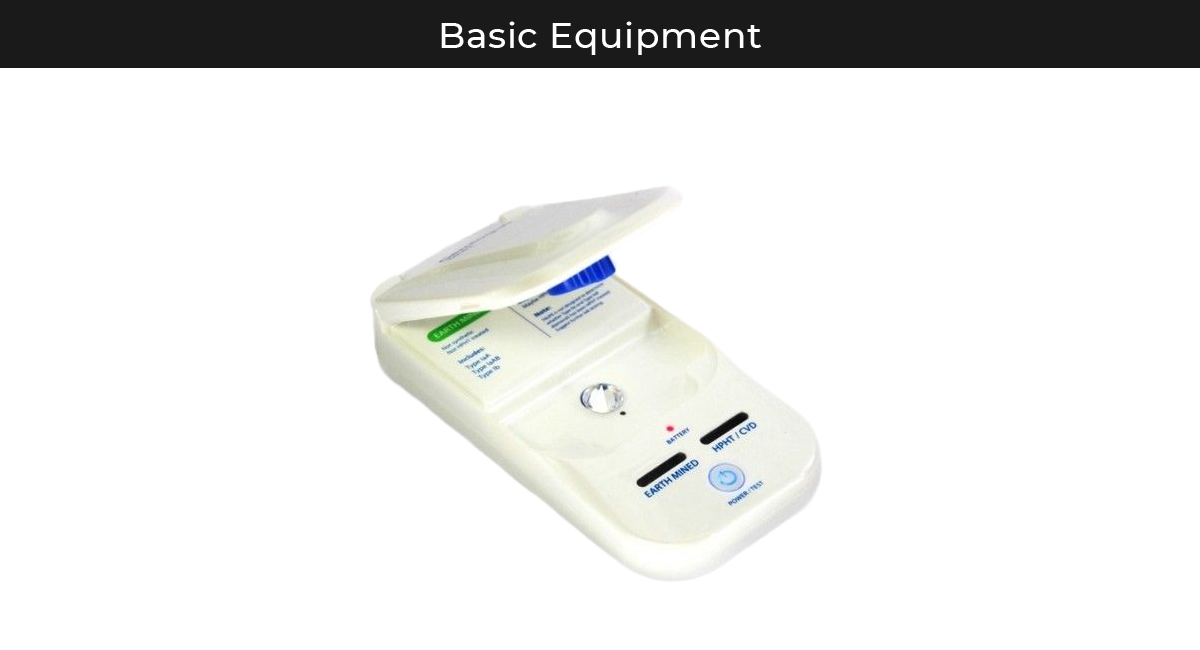
Basic Equipment

Simple testers are available at the jewelers and these can help you figure out whether the diamond is lab made or not. These tests are usually to check the thermal conductivity level of the diamonds, this is done due to the fact of how diamonds are good conductors of heat. These thermal tests help us identify whether they are lab made or natural diamonds.

Basic Equipment 

Let us give a few more tips regarding these conductivity tests so that you can figure them out better. So, yellow and mined white diamonds aren’t electrically conductive. On the other hand, blue diamonds are because of the boron present in them.

Also, some white diamonds are grown with the HPHT process which can make them conduct electricity, though they are colorless. This test of conductivity is more accurate for yellow diamonds.

Advanced Equipment

There exist advanced techniques too, that will for sure help you identify lab made diamonds. For instance, The Fourier transform infrared spectrometer (FTIR) or the energy dispersive X-ray fluorescence (EDXRF) are devices that can be used to identify any indication of metal in diamonds.

This metal usually is found in lab made diamonds, as it comes from the molten metal solution it is made in the lab. Another device that can be used is a cathodoluminescence (CL) spectrometer; it can show the sectors where a diamond can grow. 

Naturally found diamonds usually just have octahedral growth, that is growth from six sides. Whereas diamonds made through the HPHT process can have either a cubical or octahedral growth. 

DeBeers, the diamond mining company, has over the years come up with two machines that can identify diamonds very correctly. One of them is, DiamondSure, this machine calculates the very specific wavelength of light absorption in the lab made diamonds. This is done at the beginning stage. 

As you look for more advanced technology, which also means it would be more costly, there is the DiamondView machine, which traces fluorescence patterns in diamonds with the help of shortwave ultraviolet imaging.

[blog_page_btn title=”Buy Lab Grown Diamonds” url=”https://www.loosegrowndiamond.com/inventory/”]

Conclusion

Following all these techniques at once might get a little hard so you won’t instantly be able to recognize whether or not your diamond is lab-made. However on the bright side, today a great number of diamond manufacturers and merchants responsibly disclose that they sell lab grown diamonds

This in turn helps them with their business. Let’s also give you this reassurance that several major and popular diamond suppliers have started purchasing diamond testing machines. This again leaves no stone unturned for you to identify whether or not your diamond is lab made or not. 

The industry as a whole has gone to lengths to make sure that when a diamond is being sold as being told it is natural, it ought to be it. And, you can trust the market with the same, because even they work on word of mouth and customer satisfaction. Which is colloquial in the business.

FAQs

How is a lab grown diamond made?
Lab created diamonds are made using either High Pressure High Temperature (HPHT) or Chemical Vapor Deposition (CVD) processes, which simulate the natural conditions under which diamonds form in the earth’s mantle.

Are lab created diamonds environmentally friendly?
Lab created diamonds have a smaller environmental footprint compared to mined diamonds because they do not require large-scale mining operations.

Are lab grown diamonds a good choice for engagement rings?
Lab man mad diamonds are an excellent choice for engagement rings due to their beauty, durability, and lower price point compared to natural diamonds.

Are lab created diamonds as valuable as natural diamonds?
Lab grown diamonds can be just as beautiful and durable as natural diamonds, but they are typically priced lower due to their controlled production process and lower mining impact.

How much is a 3 carat lab grown diamond?
The price of a 3-carat lab grown diamond can vary depending on factors such as its color, clarity, cut quality, and the specific retailer. Generally, you can expect to pay anywhere from $3,000 to $40,000 for a 3-carat lab grown diamond.
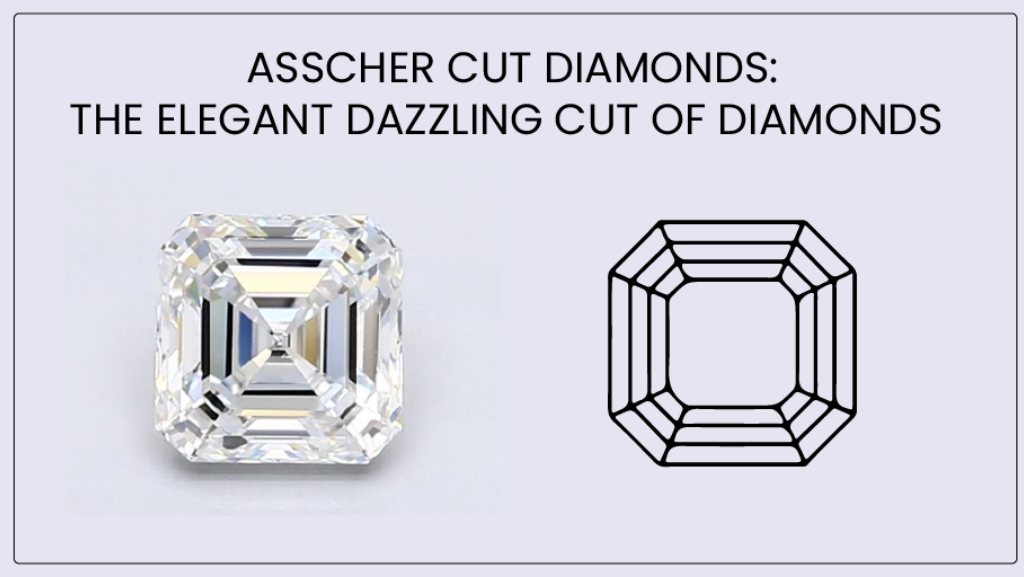
Asscher Cut Diamonds: Everything you Need to Know

In the diamond world, there are many different cuts to consider before buying. Every different cut signifies different aspects of a diamond and you need to explore every cut in detail before you make a final choice. The Asscher cut diamond is considered to be one of the most symmetrical and eye-pleasing cuts in the world of diamonds. 

Asscher Cut Diamonds: Everything you need to know
If you’re someone who has been exploring cuts for pure diamond engagement rings for a significant diamond pendant then this article is perfect for you to understand what an Asscher cut is and what are the different aspects of the Asscher cut.

What is Asscher Cut Diamond?

The Asscher cut diamond has 8 edges and hence is often known as the octagonal diamond as well. The main identifying features of an acid cut are it is square in shape and has a significantly small table. All the facets of the diamond are rectangular in shape and this is what gives the effect inside the diamond. 
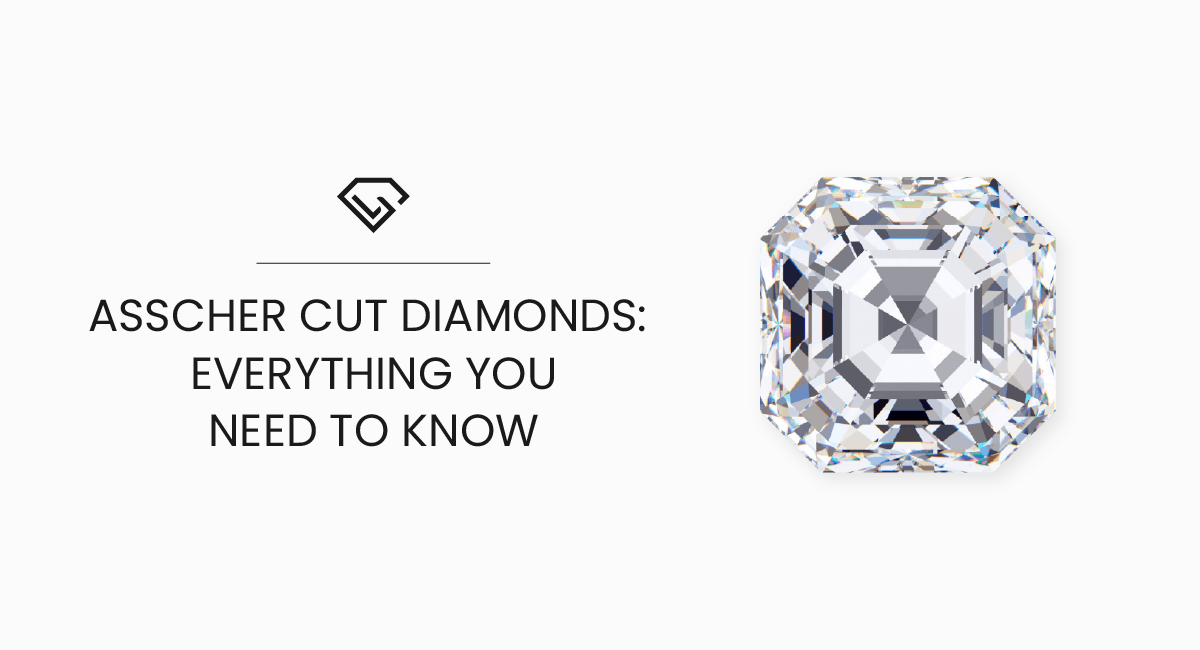
What is Asscher Cut Lab Diamond
The Asscher cut is also known as a step-cut diamond because the diamond is cut at different levels exactly like a staircase. The diamond is also often compared to the emerald cut and the Princess cut because of its shape and similarity in cutting style.

There are two types of Asscher cut diamond 1 is the classic Asscher cut which has 58 facets and the other one is known as the Royal Asscher cut diamond which has 74 facets. Both these cuts are identified as having a tall crown and a deep pavilion. 

[blog_page_inventory shape=”Asscher” carat=”2.00,2.50″ cut=”1,4″ color=”0,10″ clarity=”0,11″]
[blog_page_btn title”Buy Now” url=”https://www.loosegrowndiamond.com/inventory/?”]

History of  Asscher Cut Diamonds

The Asscher cut diamond is named after its founders which were the Astor brothers and specifically the diamond is named after Joseph Aster who founded the cut. The diamond cut is only 120 years old and was discovered in the early 1900s. 

The Asscher cut diamond became super popular very early after its conception because in 1920 the art deco period started which is an era that was popular for geometrical and symmetrical pieces of art. Many say that the popularity of the Asscher court was heavily influenced by the ongoing industrial revolution.  

Geometry and Modernity were seen as a sign of prosperity and the Asscher cut which is highly symmetrical of course gained popularity in terms of design.

Till today as Asscher cut diamonds are considered an elegant choice because of their unique cut. Throughout history, lab grown Asscher diamonds, which are the favorite of the royal families around the world and are still the highlight of many historical pieces.

Length to Width Ratio of Asscher Cut Diamond

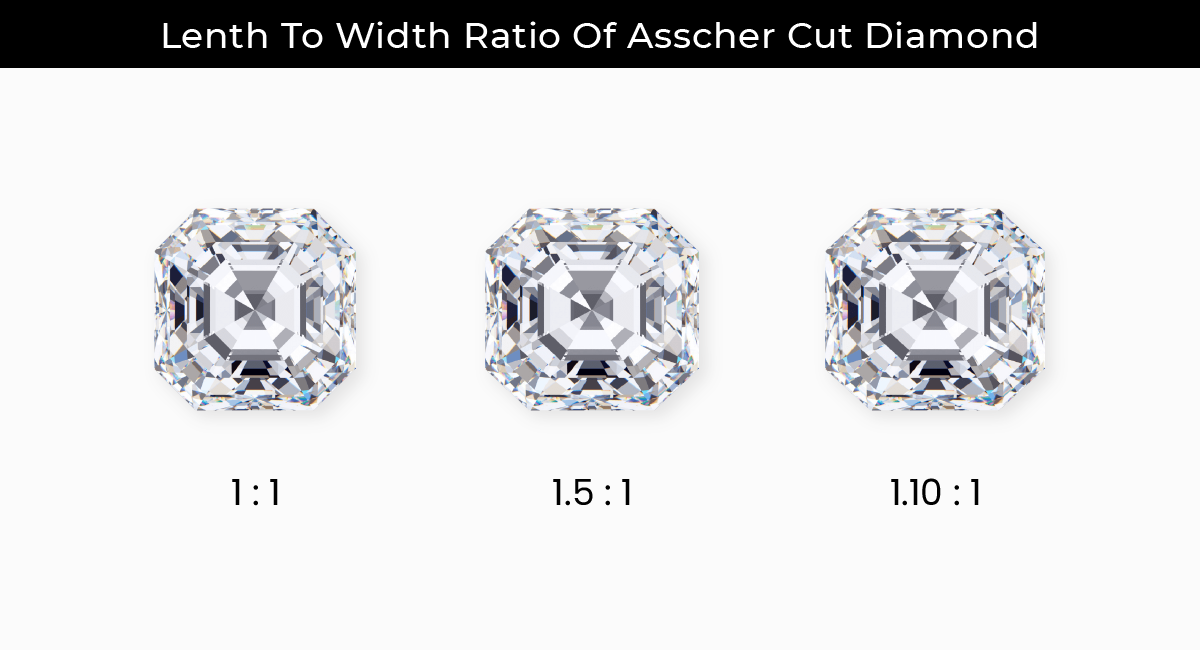
The Asscher cut is known for its symmetry and geometric appearance. The best ratio is 1.00-1.05 when it comes to the Asscher cut.

Length to Width Ratio of Asscher Cut Diamond
A ratio of 1.05-1.10 is considered the second-best side-to-side ratio for an Asscher cut. A 1.10-1.15 ratio is considered poor but if you have no other option, you can consider this as the last resort.

What Makes Asscher Cut Diamonds a Great Choice?

Other than its appearance, lab created Asscher cut diamond offers a lot of other plus points that make them worth their price.

What Makes Asscher Cut Diamonds a Great Choice?
– They are a perfect blend of emerald cut diamond’s elegance and brilliance of a princess cut diamond, which makes these Asscher cut diamonds quite unique and one of a kind.

– In proper settings, Asscher lab diamonds may look bigger for their carat value. This can be further enhanced by adding a halo around the center diamond. Hence you could end up with a much bigger diamond compared to the price range.
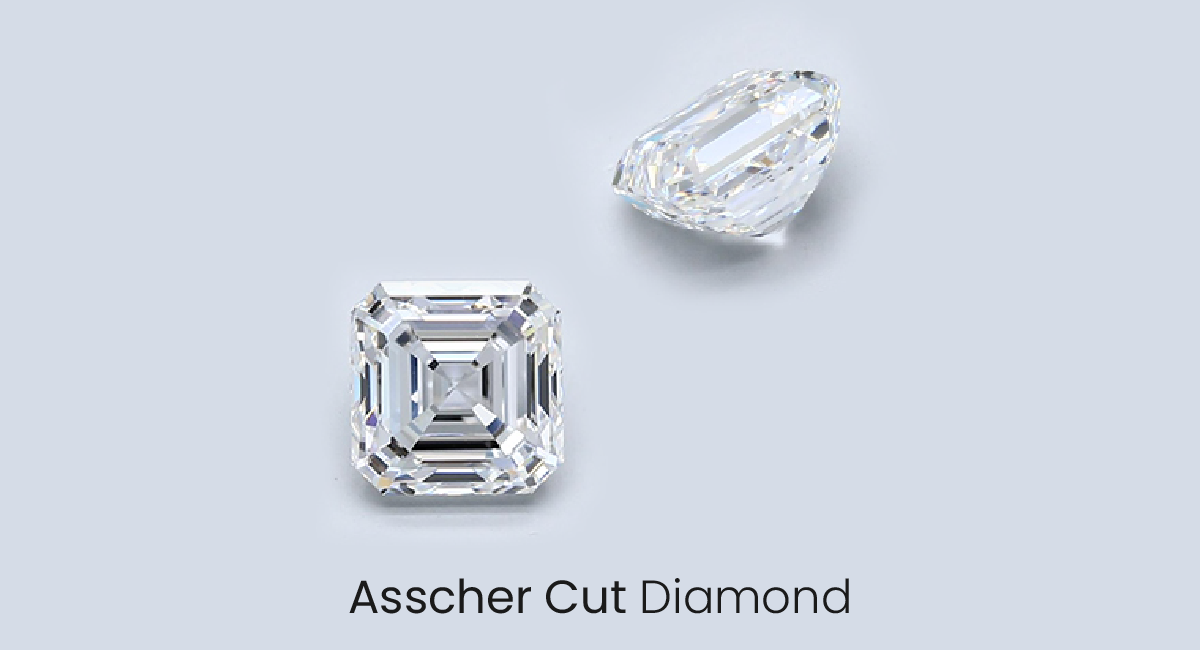
– Asscher cut diamonds have a clean, neat, fine, and elegant look. Their perfect blend of vintage and modern makes them quite an excellent choice for any piece of jewelry, especially an engagement ring.

– Due to their large facets and tables, the body color is easily refracted from within the Asscher diamond. This makes the lab grown asscher cut diamond perfect for every skin tone. Coupling the warmer-hued diamonds with yellow gold or rose gold might just enhance its vintage and timeless appeal. By going for white gold or platinum with a colorless diamond, the overall look may appear very elegant and sophisticated to anyone who would look at it.
– Asscher cut diamonds are one of the most affordable diamond cuts. Since the amount of wastage that occurs while the diamond is cut is very low, it also makes the price of the diamond drop. If you’d like to make the diamond even more affordable, you can go for lab-grown diamonds. They are real diamonds that are manufactured synthetically in machines.

Asscher Cut Diamond Ring Settings

[su_youtube_advanced url=”https://www.youtube.com/watch?v=MB3Hn6aHpRU” width=”1600″ controls=”alt” autohide=”yes” autoplay=”yes” mute=”yes” rel=”no” modestbranding=”yes” theme=”light” playsinline=”yes” title=”asscher cut diamond ring “]

Asscher as mentioned before are highly symmetrical and have a lot of texture in themselves already. This is also the reason why simple settings are considered best for Asscher cut diamonds. If you are someone looking for an engagement ring setting for Asscher cut diamonds we suggest you go with pave set bands and a 6-prong or a 4 Prong solitaire setting.

Asscher cut diamonds look best with white gold and platinum bands because they enhance the brilliance of the Asscher cut. Simple small diamond accents in a pave setting or a gypsy set band look great. You can also opt for Asscher cut diamond in a Halo setting where the central diamond is complemented by a fancy colored diamond like a green diamond or maybe another precious stone.

When it comes to fancier setting variations designs in the band itself are our favorite. Small engravings on the band look minimal and do not take the spotlight away from the diamond itself.

Another few setting variations you can go for are old vintage art deco designs. Since the Asscher cut was the highlight of the Art Deco era, these designs complement the cut beautifully. The three diamond ring with trapeze-shaped diamond accents is a great design. 

Another famous design from the Art Deco age would be the Jessyca ring design which features a big Asscher cut Centra diamond, multiple types of diamond accents, and an intricate grain design on a platinum band.

Wearing an Asscher cut diamond ring on finger adds an air of timeless elegance, as the distinct facets of the diamond catch the light and exude a subtle yet captivating sparkle.

We at Loose Grown Diamond sell best-price asscher cut diamonds and provide GIA/GCAL and IGI certification for authenticity. If you’re unsure about the pricing, you can utilize our diamond price calculator for assistance. Explore unparalleled discounts using our exclusive promo code while enhancing your diamond shopping journey.

[ls_products_byid id=’1924846,133146,990723,133116′ btn=’true’ btn_text=”SHOP NOW” btn_link=”https://www.loosegrowndiamond.com/build-a-ring/?yith_wcan=1&filter_shape=asscher-cut&query_type_shape=and”]

Conclusion

Asscher cuts are vintage diamond cuts that are still thriving in the modern world. They are elegant, sophisticated, and antique which has quite a high appeal to the contemporary crowd. Lab grown diamonds sweeten the pot further as they are natural diamonds grown in man-made conditions that yield the same results. It is impossible to tell the difference between earth-mined diamonds and synthetic diamonds without their grading certificate.

They make a great substantial, ethical and amazing substitute to natural diamonds. These budget-friendly diamonds look great in a wide variety of settings. They are less bound to get damaged or chipped which makes them perfect candidates for brides with an active lifestyle.

FAQs

Are Asscher cut diamonds suitable for engagement rings?
Yes, Asscher cut diamond engagement rings are popular choices. Their vintage-inspired look and elegant appearance make them a timeless option for those seeking a classic yet sophisticated ring.

Can Asscher cut diamonds be customized in terms of settings?
Asscher cut diamonds can be set in a variety of settings. Customization allows you to create a unique and personalized engagement ring or jewelry piece.

Does Asscher cut diamonds sparkle?
Yes, Asscher cut diamonds do sparkle, but their sparkle is more subtle and elegant compared to brilliant cuts like round or princess cuts.

How Big Can Lab Grown Diamond Get?

Diamonds are always going to be a woman’s best friend. From purchasing them for no specific reason to celebrating the most important days of one’s life with the gems, diamonds are going to stay in trend and people’s hearts for as long as we have occasions to celebrate. 

But are people aware of the impact that the mining of diamonds creates on our planet’s internal environment and ecosystem? Most diamond shoppers tend to simply concentrate on the bling and sparkle that diamonds bring along and ignore the harm it causes to our planet since the process of mining diamonds is in reality highly detrimental for our planet.


Digging into the earth for miles to get access to a handful of diamonds creates many disadvantageous side effects to our planet’s natural resources since the soil, water, and air surrounding the site from where diamonds are mined get heavily polluted. A large amount of soil and other natural resources have to be removed from mining sites which leads to a massive depletion in natural land resources.
But as mentioned before, diamonds share a special relationship with most people wherein the attachment between them is hard to maim. And hence, scientists and diamond jewelers have made an excellent effort at battling this issue wherein a new type of diamonds have been invested.

Grown in labs, the lab-grown diamonds, have minimal to no impact on the earth’s environment and are the perfect choice for customers who love our planet and diamonds alike! 

How Lab-Created Diamonds are made

Lab-created diamonds are diamonds that resemble real stones based on most of the aspects such as the optical, physical, and chemical properties. The only major difference between the two is their source of origin. 

Real diamonds are created under extreme conditions inside the earth’s crust and take a time period of around millions of years to form. The stimulus needed for their creation is naturally provided by our planet and we are merely discovering their existence by digging and mining 

Lab-created diamonds however are made by men through the process of replication in a controlled environment of the earth’s natural growth processes. This leads to the formation of pure carbon raw diamonds that are practically identical to the earth mined diamonds.

The grading of such diamonds is also done by the same expert and reputable gemological institutes that provide their services for the grading of natural diamonds.

Methods for Growing Lab-Grown Diamonds

Two methods can be used to create lab-grown diamonds. 

Methods for Growing Lab-Grown Diamonds

Chemical Vapor Deposition (CVD)

Through this method, natural diamond particles are used to build a diamond wherein the particles are positioned in a CVD machine. The machine is then filled with carbon gas and the temperature is hiked to extreme limits for the particles to get heated. The high temperature and pressure from gas lead to the breaking down of the carbon molecules in the particle. Then the molecules vaporize and bind to the diamond seed forming various layers until a larger diamond of the desired size and carat weight is formed. 

High-Pressure High Temperature (HTPT)

This particular technique uses an HPHT machine and diamond seed to form a lab-grown diamond. The HPHT machine is filled with pure carbon and extreme heat with pressure is applied to melt the carbon. The rough diamond starts forming around the seed and eventually forms enough amount according to the desired size and carat weight. 
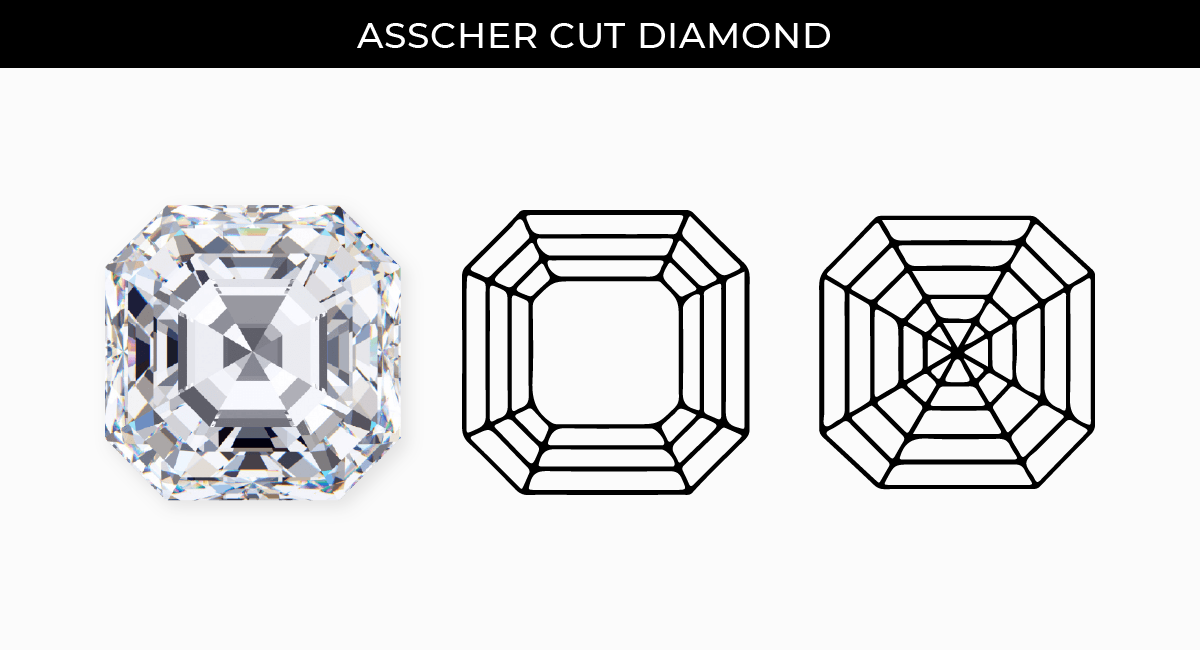
Through either method, the diamonds grown are rough diamonds that are cut, polished, and mounted on bands by various cutters and designers to form the different forms of jewelry. 

Do the Methods of Growing a Diamond Affect its Size?

If we talk about the most commonly used process to grow a diamond it is High-Pressure High Temperature (HPHT). It has been around for the longest. However, Chemical Vapor Deposition (CVD) is a method that has been termed to be more effective and has been in the market and demand for quite some time.

At once the most reliable method was considered to be HPHT as it could make your diamond grow exceedingly large, that is up to 10 carats. On the other hand, let us also remind you that the market for lab-grown diamonds with their technology is quite competitive and changing every day.

how big lab grown diamond 

Through the recent years, CVD as a method has grown a great deal of market reputation. It has done this by also increasing its production proportion range, it went from producing 6-carat diamonds to 9-carat diamonds. Even the largest lab-grown diamond has a 155-carat disc which was done through CVD.

In some ways HPHT does have an edge over CVD, that is because of the carat size both the processes make. The size that HPHT produces is a whooping 10 carat, and in front of it, a maximum 9-carat diamond produced by the CVD process is something that makes it fall back a little.

Though if we look at any other factor, both methods are incredibly effective to make a large lab-grown diamond. Keeping in mind the size producing capabilities, let us remind you it only seems to be growing with advancing technology.
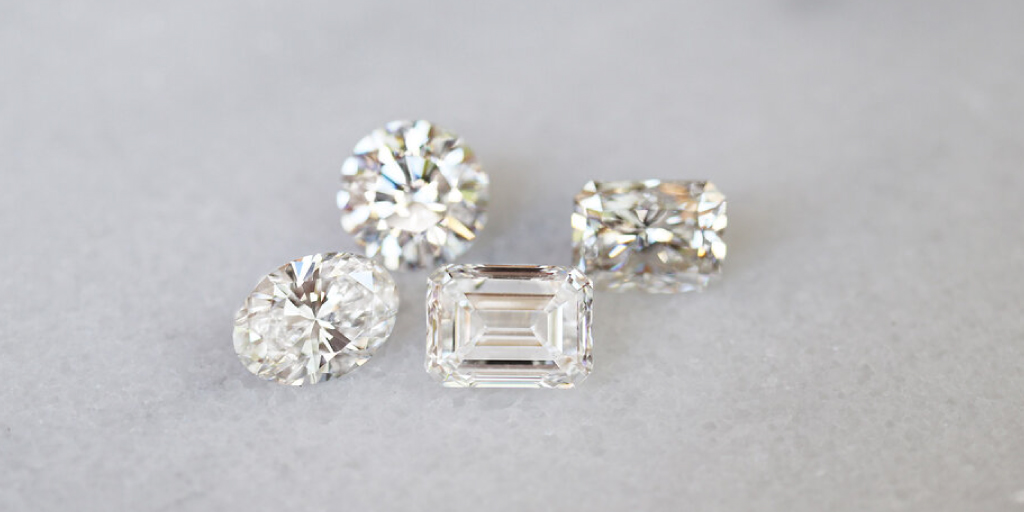
Given how technology is growing, there is no margin as to how large a lab-grown diamond can get. This also means that buyers will have a lot of sizes to pick from and that is a plus in itself. Lastly, the size of the lab-grown diamond largely depends on the time invested to grow it. 

Large Diamonds vs Small or Medium Diamonds: What takes Longer to Grow?

The time taken to grow a lab-grown diamond can be a few weeks, on the other hand, natural diamonds take millions of years. The time taken in the lab for a diamond to grow however is influenced by the technique used for its growing.

Large Diamonds vs Small or Medium Diamonds
HPHT is a technique that uses an extreme amount of pressure to grow a diamond. The pressure applied shall be altered as and when the size of the diamond grows. What it looks like visually is like trying to compress a tiny pebble. However, in this process, that pebble grows into a larger and larger rock.
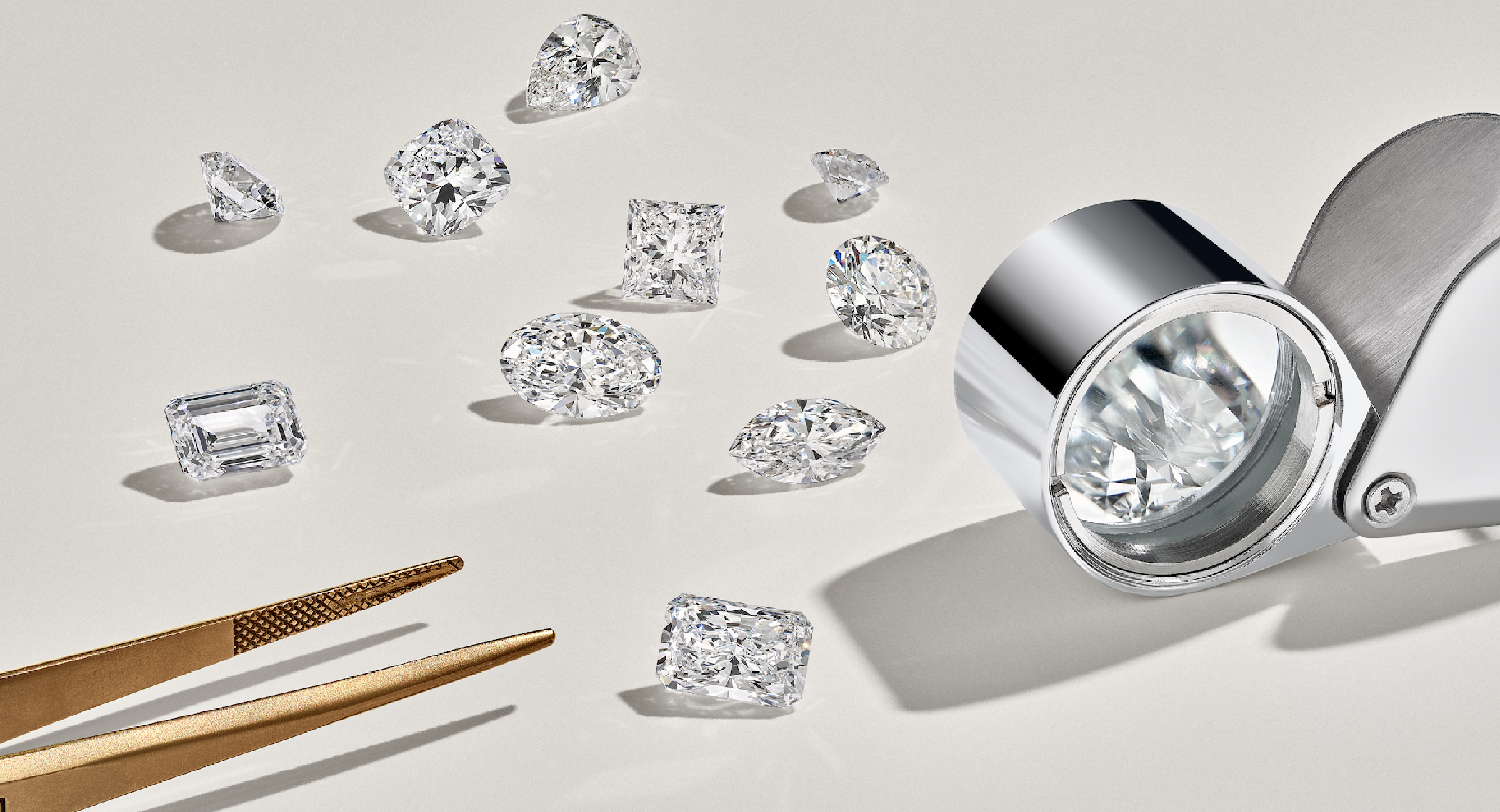
To grow a large diamond is a very systematic process. And the lab in this setting is the perfect environment to include the process of this growth. A medium-size diamond in the lab will relatively take only a few weeks to grow, however, a large diamond needs more time and attention (a few months). 

However, all of this makes one thing clear: there is a huge array of options in terms of size when you go to choose a lab-grown diamond. 
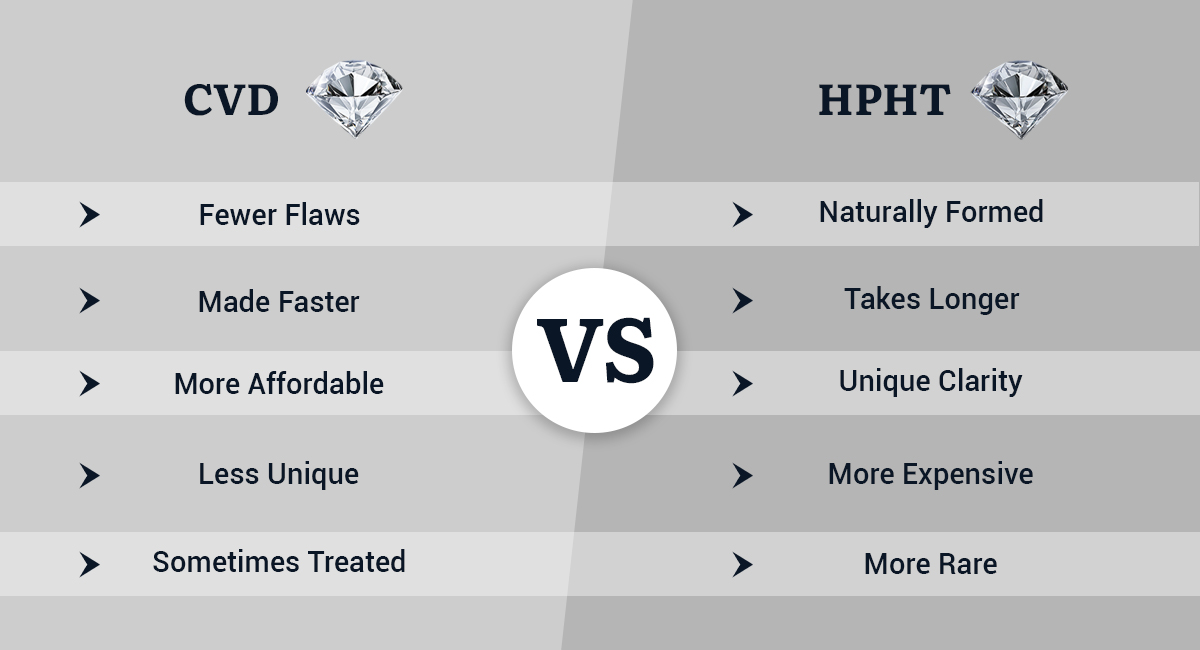
Also Read: why CVD diamonds pass tester and HPHT can’t?

[blog_page_btn title=”Buy Lab Grown Diamonds” url=”https://www.loosegrowndiamond.com/inventory/”]

Conclusion

Hence, lab-created diamonds are the most suitable option for people who want to avoid leaving a carbon footprint on our planet but still want the effect and brilliance of a real diamond. The lab-grown diamonds offer the same amount of durability and genuineness as the real ones do and so can be chosen by customers to decorate their outfits on special occasions including something as special as an engagement or a wedding, with the bonus being the much lower prices at which the lab-grown diamond jewelry is available at. 
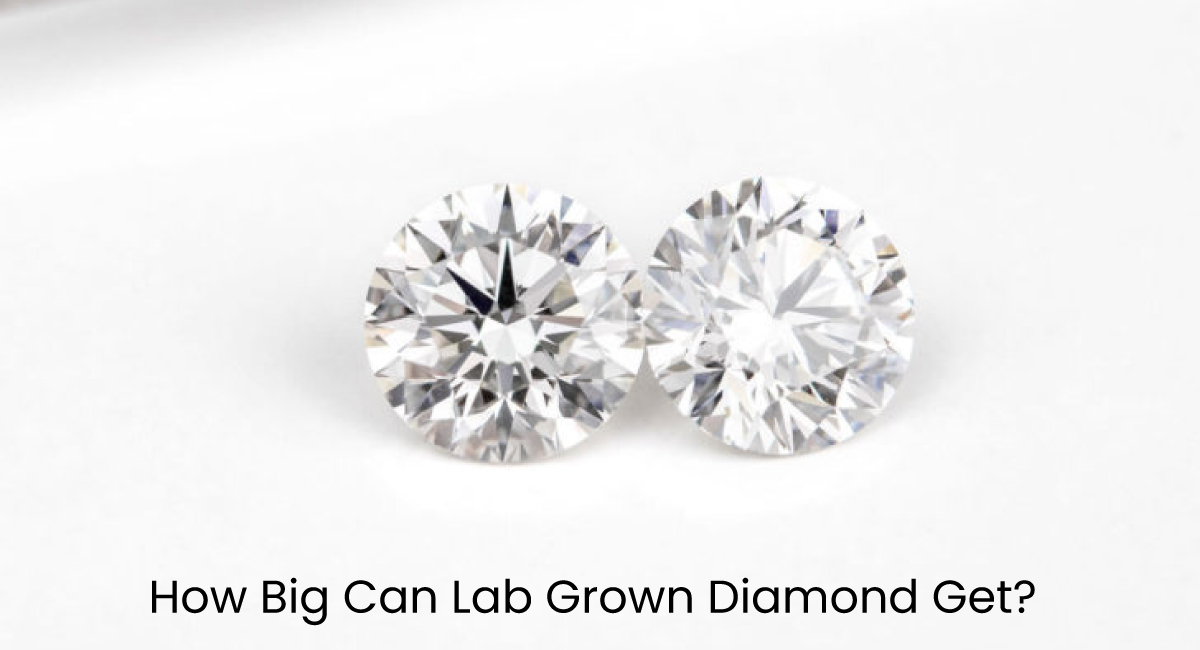
Heart Shaped Diamond: Everything You Need to Know

One of the rarest and symbolic cuts in diamond with its never-ending evergreen symbol of love and affection the heart shaped diamond is eccentric and an attractive substitute to the other common, repetitive day to day diamond cuts. 

Where round-shaped diamonds cover around two-thirds of the market, the heart shaped diamonds on the contrary cover a minute fraction as compared to the former ones making them distinctive and even more special.

Heart-shape-lab diamond
Historically the heart-shaped diamond has always been related to beauty and class with its creation in the late 1500s when Mary Queen of the Scots sent Queen Elizabeth the heart shaped diamond ring by which the queen was really impressed and happy thus marking the stone of their friendship and taking their alliance to new heights.

Making it one of the most unique and elegant symbols of friendship and goodwill between the royals.

Even after being a more accessible cut over time it still remains quite expensive and coherent diamond cuts to create. Only a skillful and talented craftsman along with the best tools can create this cut thus making it rare and exotic. 

What is Heart Shaped Diamond?

From bracelets to pendants to rings the heart shaped diamonds are used in various jewelry pieces, commonly used in diamond engagement ring in the center thus enhancing it even more.

Heart shape lab diamond
Even celebrities have been spotted time and again with heart shaped diamond rings the most recent ones being Lady Gaga and Nicki Minaj.

Even though it is quite distinct in terms of look and design, this cut is based on the round brilliant cut. Varying in length and width, usually, the heart shaped diamond has about 56 to 58 facets. 

The diamond cut has been in existence for quite a long time but these days it’s the most popular choice of the less traditional brides who relate it with love and uniqueness thus making it a symbolic representation of love on their special day. 

While buying the heart shaped diamond one should take into account the symmetry as it is important that the halves are identical for perfection. 

Even the size needs to be taken into account as it also impacts brilliance, the smaller the size is less visible the cut becomes. Also one should consider the setting to maintain shape. 

[blog_page_inventory shape=”Heart” carat=”1.70,4.10″ cut=”1,4″ color=”0,10″ clarity=”0,11″]
[blog_page_btn title”Buy Now” url=”https://www.loosegrowndiamond.com/inventory/?”]

4C’s of Heart Shaped Diamond

Heart Shaped Diamond Cut

While comparing different diamonds one needs to take into account the cut quality due to the distinctive appearance of the heart shaped diamond thus making it one of the important aspects to look for.

But easier said than done, judging the cut quality of the heart shaped diamond is no cakewalk as compared to reading the GIA certificate. The GIA certificate of the heart shaped diamond does not always go into the slightest of the details of the cut quality, unlike the other common diamond shapes.

Heart-Shape Diamond Cut Quality GuideTo ensure that we are buying a well-cut diamond with an enchanting appearance one needs to take a look at the cut grade thus making it quite important to take this into consideration before making a purchase.

Heart Shape Diamond Length to Width Ratio

The ideal L/W ratio for the heart shaped diamond is 1 which means that the diamond should be exactly as long as it is wide. The heart shaped diamonds which are having an ideal or nearly ideal L/W ratio look compatible and reasonable and also do not appear bulbous and ugly. 

Heart Shape Diamond Length To Width RatioThe ones with a ratio less than that of 0.9 will look quite wide and so should be avoided for the best. Even if the ratio is above 1.1 they start looking lean and overly stretched. So for the best results, one should go for the ratio to be as close to 1 as possible as in all the diamonds near to this range look ecstatic and until and unless we specifically desire thin or wide diamonds.

Depth and Table

The diamonds shine and sparkle based on the amount of light that enters and is reflected off its other facets and so size plays an important role in this.

The heart shaped diamonds are nearly flat at the top facet which is known as a table. And ideally, it should make up to 50 to 60 percent of the overall width. The measurement from the bottom to the top of the diamond gives us an idea of the depth of the diamond which is expressed as the width percentage of the same.

For the best sparkle and shine in the heart shaped diamonds this percentage should lie between 56 to 66 percent of the range.

Symmetry

One of the most important factors of the heart shaped diamond is its symmetry due to its bit complicated shape.

The point from the top of the diamond shapes which faces inwards is referred to as the cleft, the sharp point at its bottom, the lobes(the round parts of the diamond which are responsible for creating the heart shape), and also the belly and the wing included are also some of the fancy features that make the shape of the heart shaped diamond of this cut.

The left picture has a distinct cleft that makes its heart shape easy to see also when we look at the diamond from an angle. Even though there is no necessity for the point to be sharp for a clear beautiful heart shape it should divide the bottom section of the diamond into two clear, equal, and separate halves.

on comparing, on the right side of the image, there is a less distinct point and as a result, it is less heart like in appearance and looks more round. 

HEART SHAPE DIAMOND SYMMETRY
Beyond the cleft and also the point it is quite important to check whether the diamond is symmetrical or not. one should always take a look at the lobes of the diamond in case of any imperfections. These are the upper rounded areas that create the top of the heart shape. We should always take into account the symmetry and the lobes to rule out imperfections, the upper top areas which create the top of heart shape.

Both different sides of the diamond should most probably look similar with not much visible difference in facets or in the lobe size. The right picture on the other hand despite its better color and the clarity of grades is visibly less symmetrical. 

Wings and Belly

The shape of the sides of the heart shaped diamond is called the wings and belly. Usually, the wings of the heart shaped diamond should be a little bit rounded but not overly bulbous as a result creating the ideal heart shape and will look spectacular as a center stone or as a part of a pendant or other piece of jewelry. The heart shape will not be highlighted much if the appearance is quite round. 

Heart Shaped Diamond Clarity

When seen by a gemologist the scale at which the diamond appears to be clean should always be good. The diamonds in which the clarity grades are high have very few scars and imperfections as compared to the ones with lower clarity grades where the blemishes are quite obviously visible.

The scale of GIA grades Clarity:

  • Flawless (FL)
  • Internally Flawless (IF)
  • Very Very Small Inclusions (VVS1)
  • Very Very Small Inclusions (VVS2)
  • Very Small Inclusions 1 (VS1)
  • Very Small Inclusions 2 (VS2)
  • Small Inclusions 1 (SI1)
  • Small Inclusions 2 (SI2)
  • Inclusions 1 (I1)
  • Inclusions 2 (I2)
  • Inclusions 3 (I3)

The grades which are of quite a high scale for instance IF and VVS1 are very rare to achieve and it is very unlikely to find a diamond of IF grade obviously, the cost and premium to purchase a stone with this clarity grade is very huge.

Heart Shape Diamond Clarity Chart
While grading for clarity the gemologist will precisely look into account by using the loupe of jeweler having 10x magnification as in with this level of magnification it is quite easy to find the imperfections which are also entirely visible to the naked eye once we set the diamond in a ring.

In the case of the diamonds with heart shape the clarity grade of S1 or good shall be provided which is eye clean. As the heart shape is modified into a brilliant cut the small inclusions found in S1 and VS2 diamonds are not that visible to naked eyes.

Heart Shape Diamonds Color

The grades of the diamond color which are used by the GIA fall in the range from D to Z where the D grade denotes that our diamond is crystal clear and colorless. 

As at Z, it is obvious that the diamond is tinted with visible yellow color clearly. The color of the heart shaped diamond is quite hard to distinguish as it reflects quite a huge amount of light. The heart shaped diamonds are a modification of the common round brilliant-cut thus making it rare and unique. 

Heart Shape Diamond Color Chart
The color grade H or better is mostly recommended if one chooses white gold or platinum setting and the saved money can be used to choose a diamond that has a higher carat weight.

A grade in lower color is recommended in a yellow or rose gold setting and a J color grade is mostly for the settings which are solitaire.

Heart Shaped Diamond Carat weight

To put it in simple words diamond carat weight measures how much the diamond weighs. Like all other lab-created diamonds, the heart shaped diamonds are also available in a huge variety of carat weights. It is usually recommended one should choose the largest carat weight that fits in one’s budget.

The amount saved on color and clarity can be used to get a noticeably larger diamond size than one has initially expected to buy. 


Due to the unique shape and cut of the diamond, the ones with the larger carat weights become visually more appealing and enchanting as in higher the carat weight of the diamond more highlighted and beautiful the heart shape becomes. The usual recommendation for the heart shaped diamond is that of the 1+ carat range as in the heart shape of the diamond smaller in size becomes less visible and appealing once it’s set in the ring.

Do Heart Cut Diamonds Have a Bowtie?

Well, this generally comes about when the light shimmers through and enters the diamond through a table, and the large parallel surface on the top of the stone, but it doesn’t reflect the viewer. It isn’t just with diamonds that have fancy cuts, but to an extent, all heart cut diamonds show the bowtie effect, there is also shadowing around the sides.


There are reasons why diamond cutters try to avoid the bowtie effect and one of them is, they want the heart shaped diamonds to reflect as much light. Rightly so, there is a reason people invest in heart cut diamonds, and the reflection of light usually catches the eye and is liked by many.

Factors to Consider Before Investing in Heart Shaped Diamond

The best size of the Heart diamonds is when they are around .50 carats or above because when that big piece of solitaire outshines other rings is when it looks best. Also, anything below the size mentioned makes your heart shaped diamond hard to identify. So, invest wisely because your expression of love should be seen from a distance.

If you don’t know this then let us tell you maintaining regularity or symmetry is a very prime consideration you need to look out for. The heart, the two halves of it, must be of equal sizes as an uneven style will take away from your ring majorly. 

[su_youtube_advanced url=”https://www.youtube.com/watch?v=wl1tcA5asaY” width=”1600″ controls=”alt” autohide=”yes” autoplay=”yes” mute=”yes” loop=”yes” rel=”no” modestbranding=”yes” theme=”light” playsinline=”yes” title=”heart shaped diamond ring”]

Also, remember to consider the division between both the heart-halves should be prominent and done with utmost precision to attain even halves.  Symmetry is a vital component to examine when choosing a heart diamond. It’s essential that the two halves of the heart shape diamond are indistinguishable and the heart’s portion is distinct and even.

Make sure to consider a place where precision is given utmost importance when you invest in the heart shaped diamond ring of yours because the cut in your prized possession should be chiseled to perfection with utmost detail and accuracy. 

There’s a reason why heart shaped diamond rings are such a famous gift for lovers. It is the precision put into creating them, and without that, a heart shaped diamond may not attain its glorious look.

When choosing a heart shaped diamond ring make sure you pay a lot of attention to what is the overall shape of the ring. Making sure that it isn’t uneven is vital because if so then it takes the unique look away from the ring, and that is not something you’d like to waste your money on.  

Lastly before making that important decision of investing in this once-in-a-lifetime gift make sure you check the ratio at which the heart shaped lab diamond. Ideally, you should strike a 0.90 to 1.10 balance of the heart stone as that would be the perfect size making it look evenly big and equally wide. 

Best Heart Shape Diamond Engagement Ring Settings

Heart Shaped Diamond Solitaire Ring

If you love the old school, the classic solitaire positioning, which has a four-prong setting, the prong setting is nothing but the use of metal projections, called prongs, to secure a gemstone. The prong setting lets the light strike a stone from more angles, which increases its elegance.

heart shape solitaire ring
It helps enhance the brilliance of your heart cut diamond to a greater extent. Though a six-prong setting protects your ring better, however, the downfall is that it lets far less light in. But again on the brighter side, this setting manages to conceal inclusions on the edges of the stone, too.

Heart Shape Diamond Multi-Stone Setting

If you have your heart cut diamond less than one carat, though we don’t suggest that, but if you do a fine halo setting that will surround your heart cut diamond with smaller ones would do just fine.

heart diamond halo ring
Not only will it make it shine from a distance, but also another touch of elegance to your classic beauty.

Heart Shape Diamond Three Stone Setting

Another trick that you can use to make your heart shape diamond ring stand out is adding a three-stone setting, which makes the heart stone look bigger. They can be colored and placed alongside it, which only enhances the show of the diamond in the center because of the contrast. 

hear-three-stone-diamond-ring
We all know that the heart shaped diamond is something you may hold very dear to you, hence it should be your duty to ensure the pointy end of the stone is well-guarded, for whichever setting you choose.


Conclusion

Unique and classy in its own way the heart shaped diamond is the best way to show one’s love and care and also to take into account that the large percentage of the rough diamond is used in making the heart shape thus making it quite feasible and pocket friendly.

Over the years the choice for this diamond cut is increasing widely as people relate it to the symbol of love.

The main factors which we need to have a look at in this one are the cut, nearly ideal L/W ratio, excellent depth and table, best symmetry, and the perfect overall shape one should also ask for the 360° photos of the diamonds for optimal results.

FAQs

What is the best ratio for a heart diamond?
The ideal ratio is around 1:1, creating a well-proportioned heart shape. However, personal preference plays a role in choosing the perfect ratio.

Can heart shaped diamonds have inclusions?
Like other diamond shapes, heart diamonds may have inclusions. A higher clarity grade ensures fewer imperfections, enhancing the diamond’s brilliance.

How much is a 1 carat heart shaped diamond worth?
The value of a 1-carat heart shaped diamond can vary significantly based on factors like cut, color, clarity, and overall quality. On average, you can expect prices ranging from $400 to $6,000 or more.

Do heart shape diamonds come in various sizes?
Yes, heart shaped diamonds are available in a range of sizes to suit different preferences and budgets, from delicate to more substantial carat weights. You can use heart shape diamond size chart on LGD.

Do heart shape diamonds come in various sizes?
Yes, heart shape lab grown diamonds are available in a range of sizes to suit different preferences and budgets, from delicate to more substantial carat weights.