Pear Cut Diamonds vs Marquise Cut Diamonds – Which One Will Make Your Fingers Look Pretty?

The charm and attraction that diamonds have make it one of the most precious stones. Additionally, diamonds’ brightness and durability make them symbols of sophistication and are valued for their adaptability in numerous types and settings. Lab created diamonds are ideal for engagement rings and other meaningful jewelry because they symbolize love and devotion.

The beauty of it is so versatile that it can blend into any outfit and occasion so blissfully that it would appear like a match made in heaven. Diamonds do not subdue their beauty but enhance themselves while complimenting others perfectly. This strongest object on the earth is known for its stunning ability to transmit light and radiate in its full glory. 

This ability of the diamond to transmit light efficiently is based on the intricate craftsmanship which is indicated by the cuts provided to the diamond. The most important factors for selecting a diamond are based on the 4 C’s- cut, color, clarity, and carat. Out of these diverse factors, the cut is the most important factor as this helps to enhance the brilliance of the diamond.

Pear Cut diamonds Vs Marquise Cut Diamonds
Pear Cut diamonds Vs Marquise Cut Diamonds

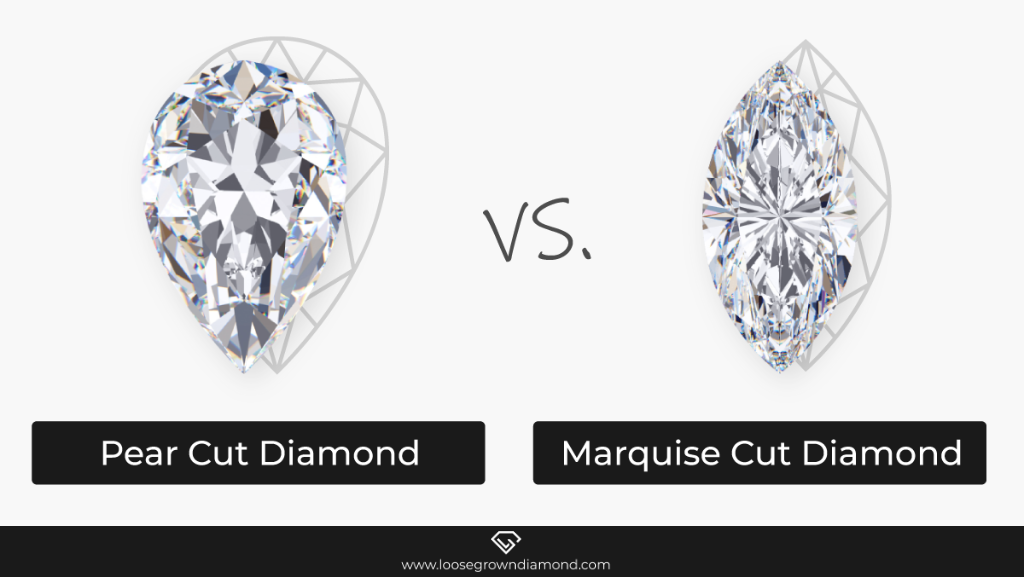
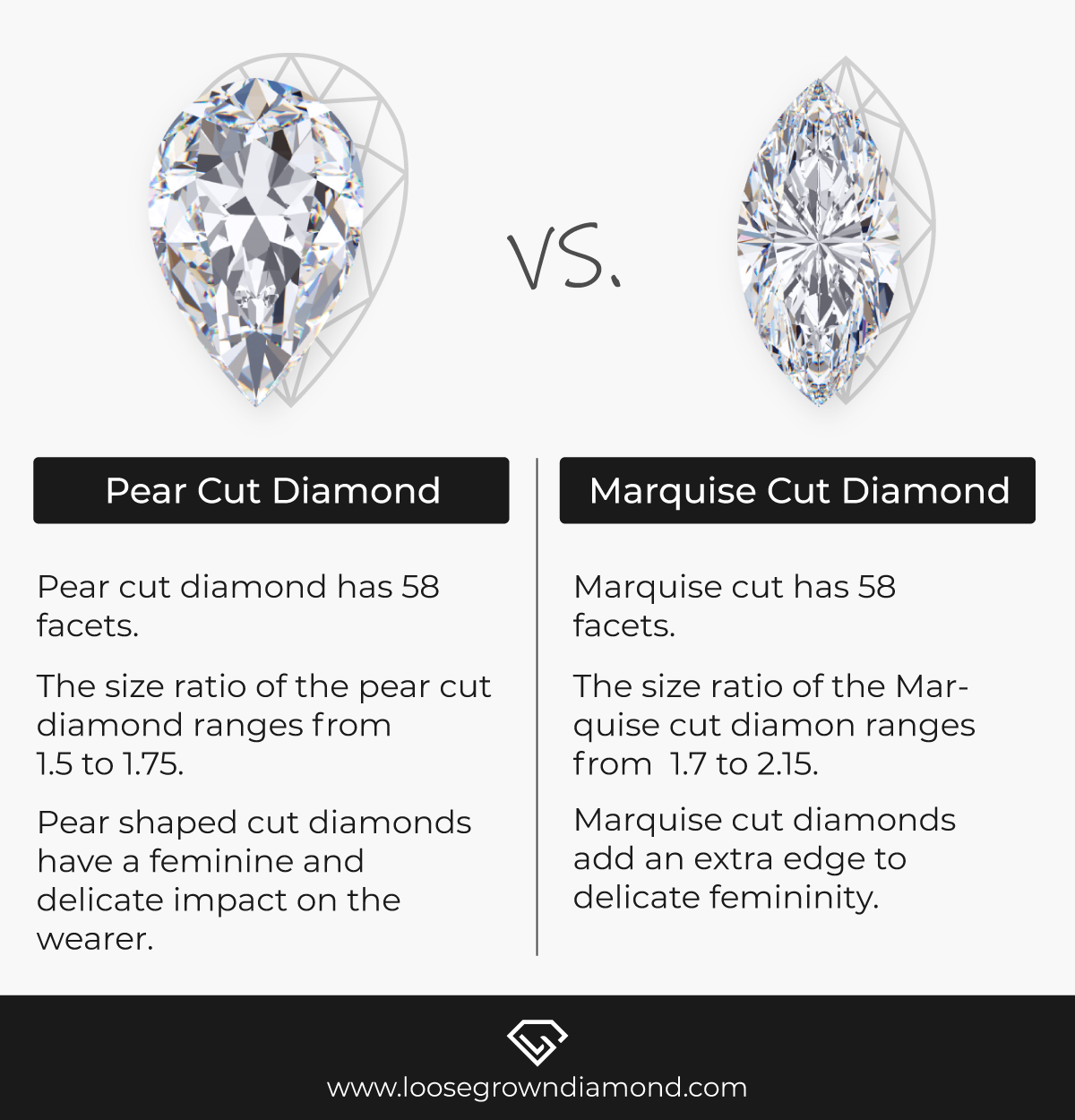
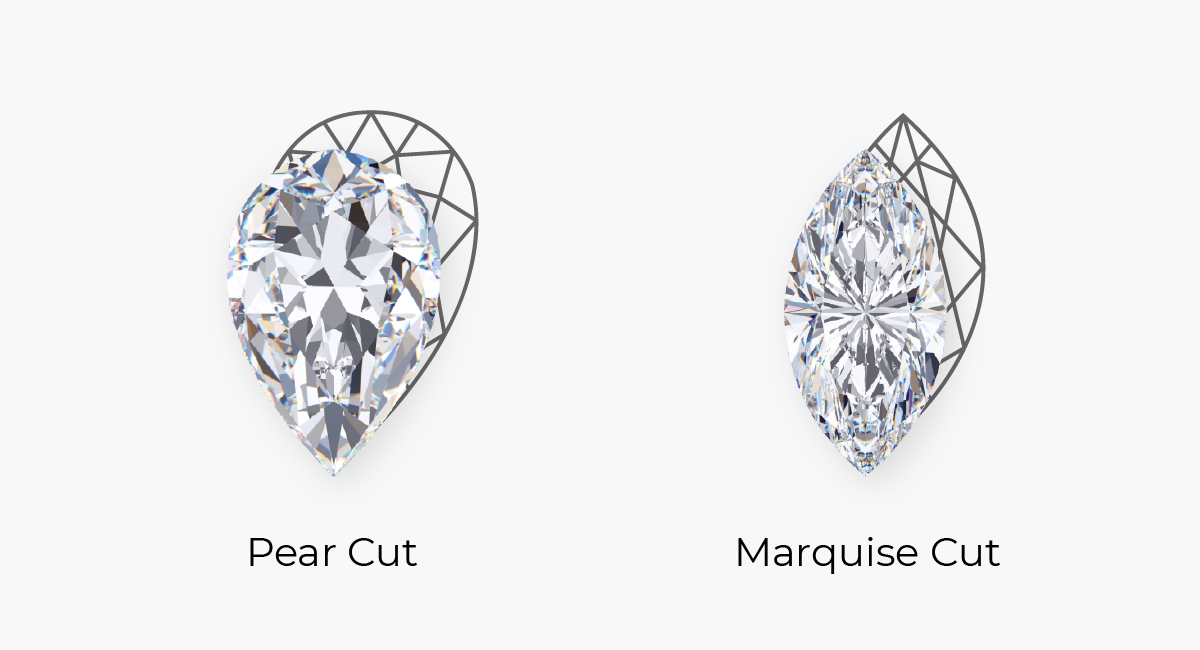
With 58 facets apiece, the pear and marquise cuts exhibit a unique grace. The pear exudes femininity with its lovely curves and delicate tapering; its ideal length-to-width ratio is 1.50 to 1.75.

On the other hand, the marquise cut, which has an optimal ratio of 1.75 to 2.25, exudes a regal femininity due to its elongated shape and pointy tips.
With their brilliant cuts, one can choose between the strong, eye-catching attractiveness of the marquise and the delicate refinement of the pear.

Their shapes—the marquise’s stretched majesty and the pear’s teardrop grace—offer a distinctive aesthetic for customized beauty.

The cuts which are provided to the lab diamond are generally the facets that are cut, to give the diamond a form, and through which the light will be reflected in an apt manner. The cut states dimensions and symmetry as well. 

The intricacy with which the lab created diamond is cut marks exactly how brilliantly it sparkles. The more precise and intricate cut provided, the more efficiently it transmits light, thus appearing more bright and more magnificent.

We can distinguish the better cut, by comparing which diamond reflects more white and colorful light, in contrast to a lesser intense light and color.

There are three factors that determine the brilliance of a perfectly cut lab diamond. Brightness, fire, and scintillation. 

  • Brightness within a diamond is termed as the internal reflection of light to such an extent that when viewing the diamond from the outside, a sparkle can be seen. The sparkle is directly proportional to the brightness of a diamond.
  • Fire is the characteristic of a diamond when a single beam of light scatters into its constituent colors. 
  • Scintillation is the amount of sparkle in the diamond characterized by the presence of light and dark spots in the diamond that occurs due to the internal reflections of light.

The most important factor in the beauty of a diamond depends on the intricacy of the cut of the diamond.

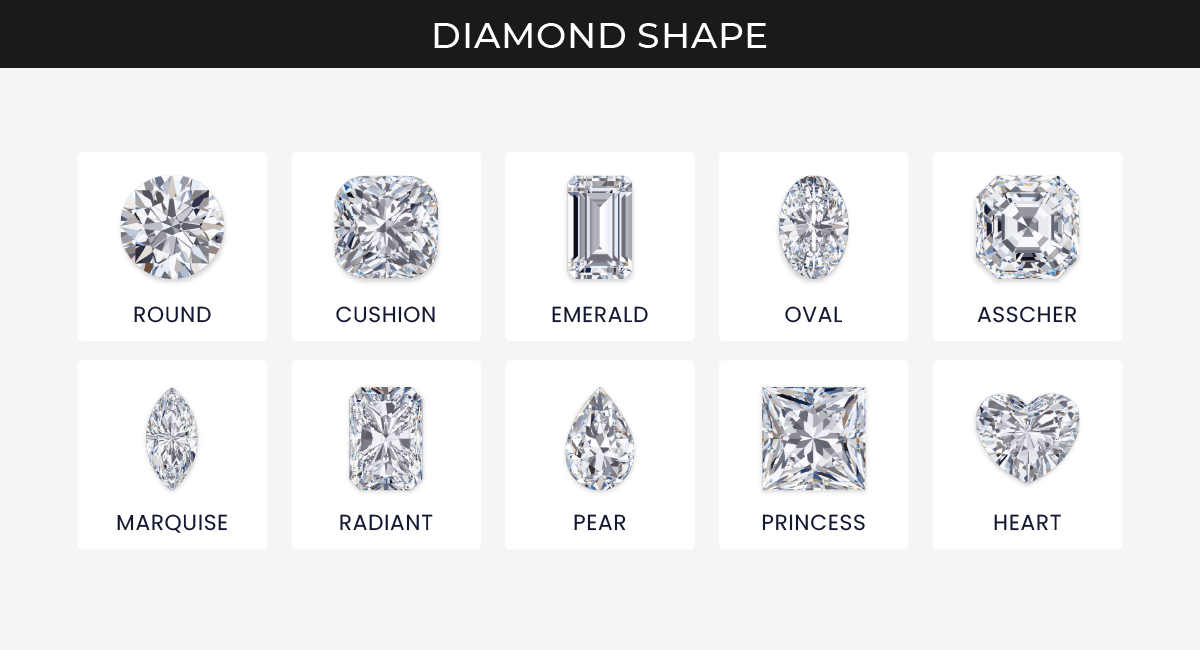
There are various types of cuts in lab created diamonds like- Round Brilliant (the most common), Pear cut, Marquise cut, Oval cut, Princess-cut, Cushion cut, Emerald cut, Radiant cut, and Asscher-cut diamond.

Pear Cut Diamond History
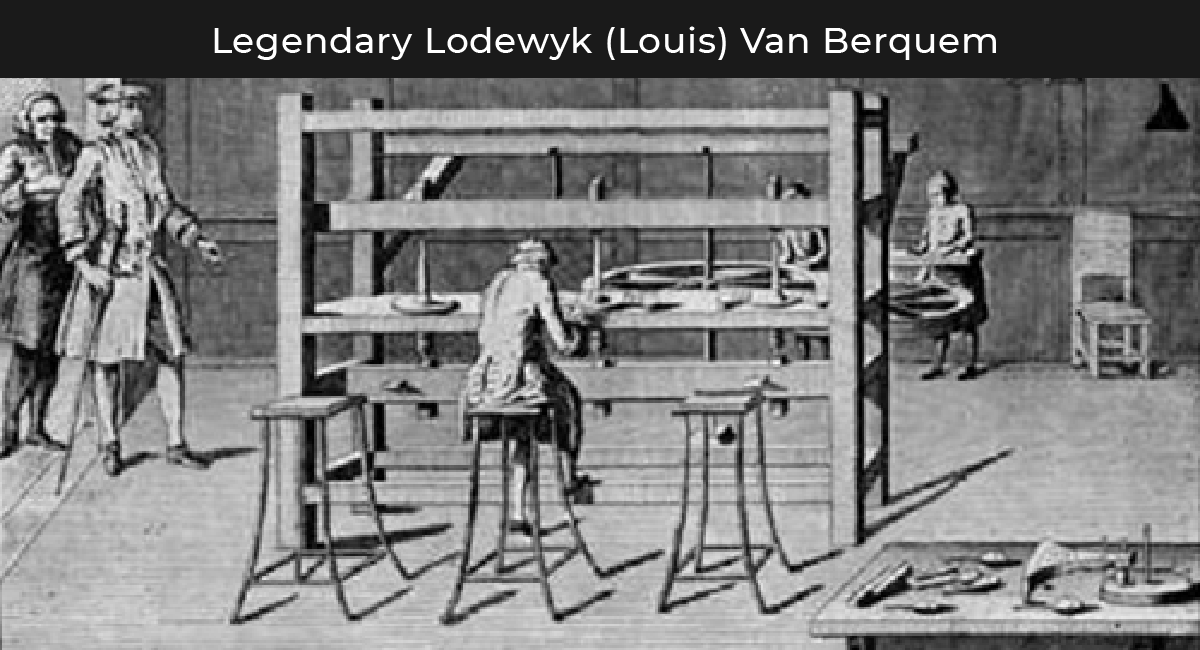
Pear cut was invented by a diamond cutter, who had coincidentally also inverted the diamond polishing wheel.

This invention of the wheel was definitely a turning point in the history of diamonds, as it enabled the user to make complex diamond cuts and designs with more ease than before. After that, he moved on to introduce pear cut diamonds.

What are Pear Cut Diamonds?
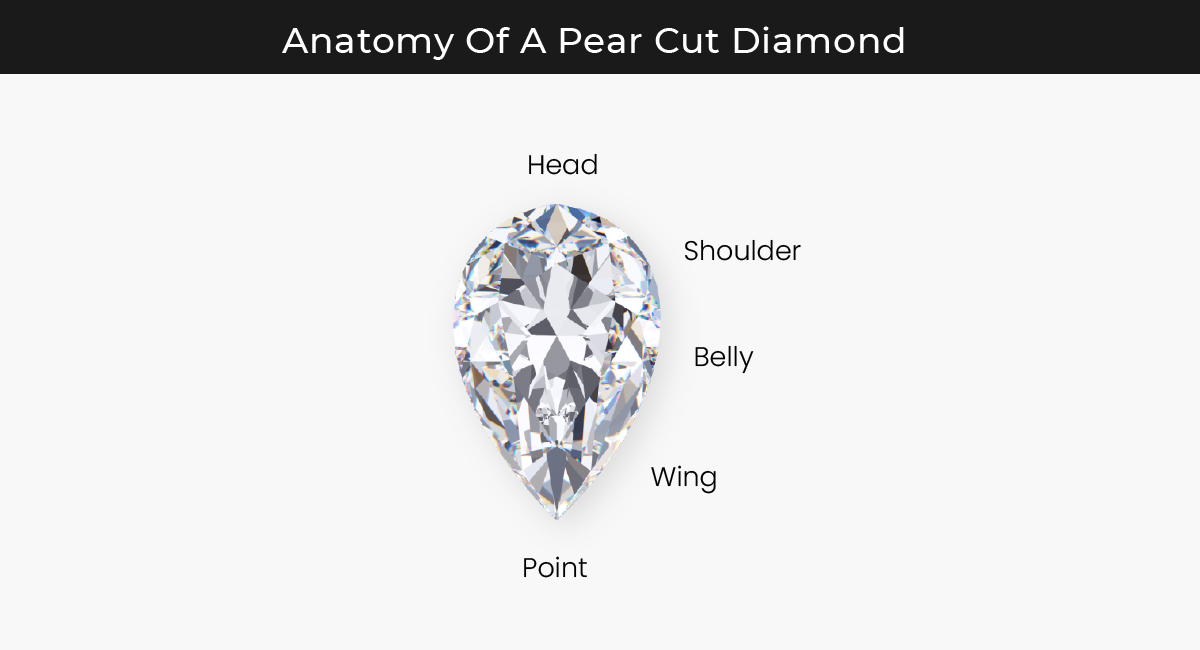
pear cut diamond

In 1475, Flemish diamond cutter Lodewyk van Bercken revolutionized diamond cutting with the invention of the polishing wheel. This led to the creation of the world’s first pear shape diamond, boasting 58 facets for optimal sparkle. 

Over 500 years later, the pear cut remains unchanged, a testament to its enduring brilliance and Van Bercken’s pioneering craftsmanship.

Thinking of a timeless classic piece of jewelry, this ageless cut is the one that crosses the mind. The beauty of this cut really does transcend time and takes us back to the romantic vintage ages. It is shaped in a combination of the round brilliant cut and the marquise cut.

The bottom is curved and enlarged, while the top is pointed into a tip, representing a teardrop. The teardrop shape symbolizes sensitivity. This sensitivity is the gist of the connection of emotions. Hence, the characterization of a romantic symbol.

[blog_page_inventory shape=”Pear” carat=”1.00,2.30″ cut=”1,4″ color=”0,10″ clarity=”0,11″]
[blog_page_btn title”Buy Now” url=”https://www.loosegrowndiamond.com/inventory/?”]

Marquise Cut Diamond History
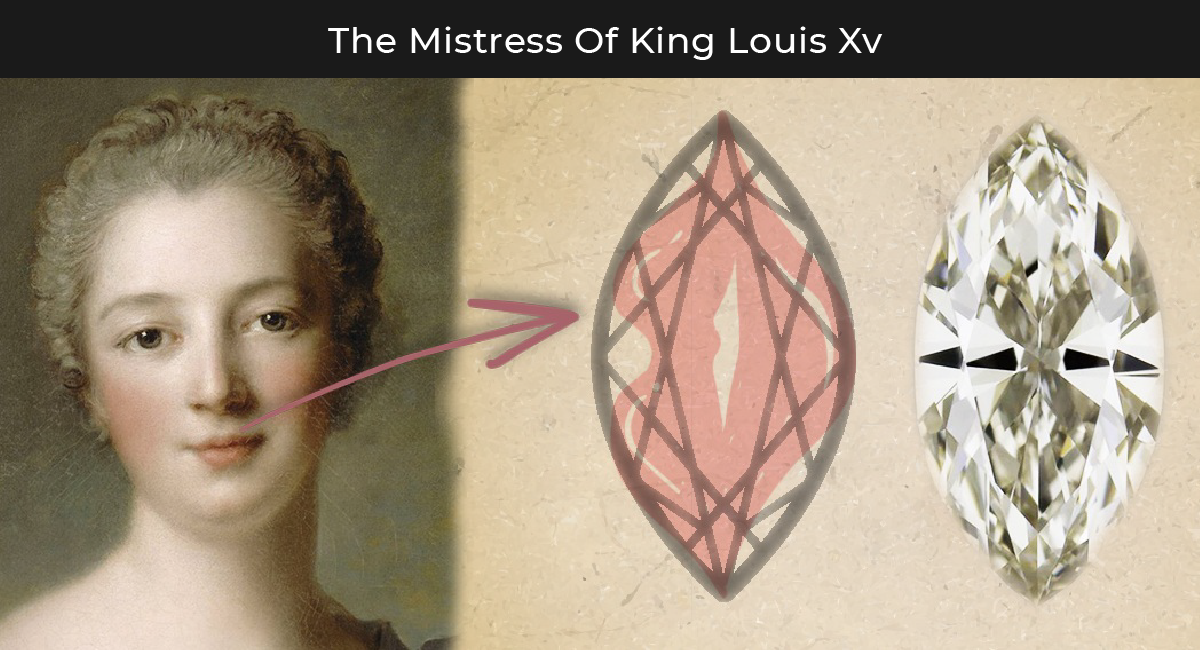
marquise diamond history
The Marquise cut diamond has a long royal history that dates back to the 18th century in France. It was created from a design that was inspired by King Louis XV’s adoration for the Marquise de Pompadour’s flawless lips.

Over time as we see, the shape of the marquise cut evolved into the design it currently is. Over the span of time, we observe that it began to be called marquise after the rank below the duke.

What are Marquise Cut Diamonds?
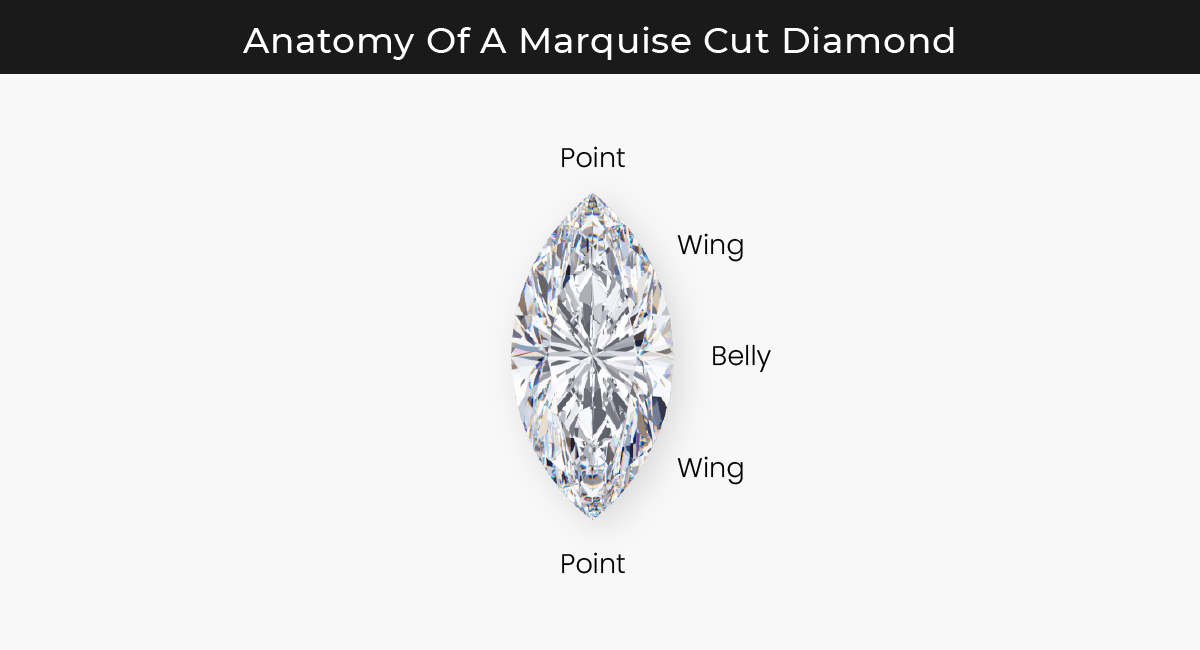
What are Marquise Cut Diamonds

Marquise diamonds are another dramatic cut that exudes elegance in their rarity. The shape of this cut represents a boat some may say, while for others it represents an eye. This cut has 58 facets, defining the shape. Although it is not such an obvious selection for any individual, a quirky visioned person may love it to absoluteness.

Typically this elongated stone has 56 facets defining its shape, and either side results in the characteristic pointed tip of the gem. This feature of the stone also makes it appear larger than the conventional size of similar carat weight diamonds.

Its classic elegance is still valued by contemporary consumers, hence making marquise diamond engagement rings a very popular option today.

[blog_page_inventory shape=”Marquise” carat=”1.00,2.60″ cut=”1,4″ color=”0,10″ clarity=”0,11″]
[blog_page_btn title”Buy Now” url=”https://www.loosegrowndiamond.com/inventory/?”]

What is the Difference Between a Diamond Cut and a Diamond Shape?
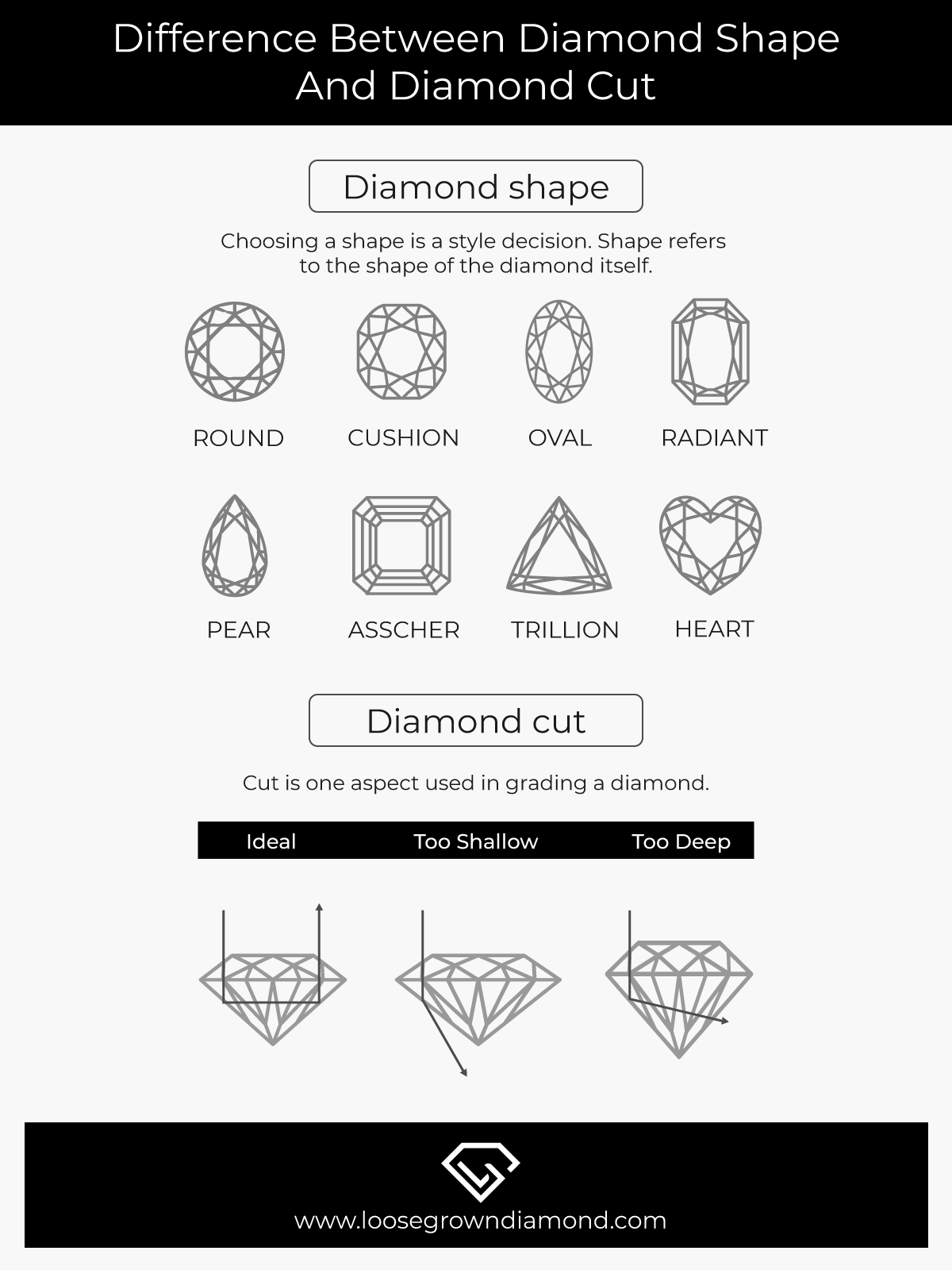
What is the difference between a diamond cut and a diamond shape?A diamond shape and a diamond cut are two various things, which are often confused. The shape or form is anything that depicts the outline of an object, here is the diamond. The shapes range from round brilliant, pear, cushion shapes, etc.

The cut of the diamond is anything that would affect the brilliance of the gem. The exact size of the diamond is determined by its cut. Utilize this diamond size chart for a comprehensive guide to determining your size. This is affected by the number of facets, the symmetry achieved by the craftsman, the dimensions of the gem, and finally the reflective quality.

In essence, the difference can be summarized as follows:

  • Diamond shape denotes the outer form (e.g., round, heart), influencing aesthetics and symbolism. In contrast, diamond cut involves precision, affecting brilliance through facets, symmetry, and polish.
  • Reflectivity, symbolism, and light interaction vary, with shape emphasizing uniqueness, and cut determining luminosity.
  • Examples like round and brilliant cuts showcase their specific roles, underlining how the interplay of shape and cut defines the captivating allure of diamonds.

What are the Cut Defects for Pear and Marquise Diamonds?

Pear Cut Defects

In pear cuts, the most prominent problem which persists is the delicacy of the tip. The tip of the diamond is delicate and can lead to chipping over time. Many times it is seen that while creating jewelry out of a pear-cut diamond, the tip gets damaged or becomes blunt which completely ruins the look of the diamond piece.

Another defect that can occur in pear cut diamonds is the asymmetry of the form. Sometimes we can observe that uneven craftsmanship can lead to a form that is asymmetrical and defies the brilliance of the beautiful cut in the diamond. A reason why such hindrances in craftsmanship appear is due to the fact that it is very difficult to achieve the apt level of brilliancy in the cut. The exact dimensions of the crown and pavilion are not known, hence the exact perfect diamond is quite difficult to find.

Marquise Cut Defects

Bowtie- this defect is caused by the elongated shape of the marquise. The bowtie defect refers to a black bowtie-shaped band across the center of the gem. It is always there in the marquise cut, but it can range from very slightly visible to very evident to the naked eye.

Slender football- this defect is, as the name suggests, a thinner version of the actual required size of the diamond. The diamond is slender and the other proportions of the cut too, are not very apt, hence there is a visible reduction in the brilliance of the gem.

Size Ratio of Pear Cut Diamonds vs Marquise Cut Diamonds (Length/Width)
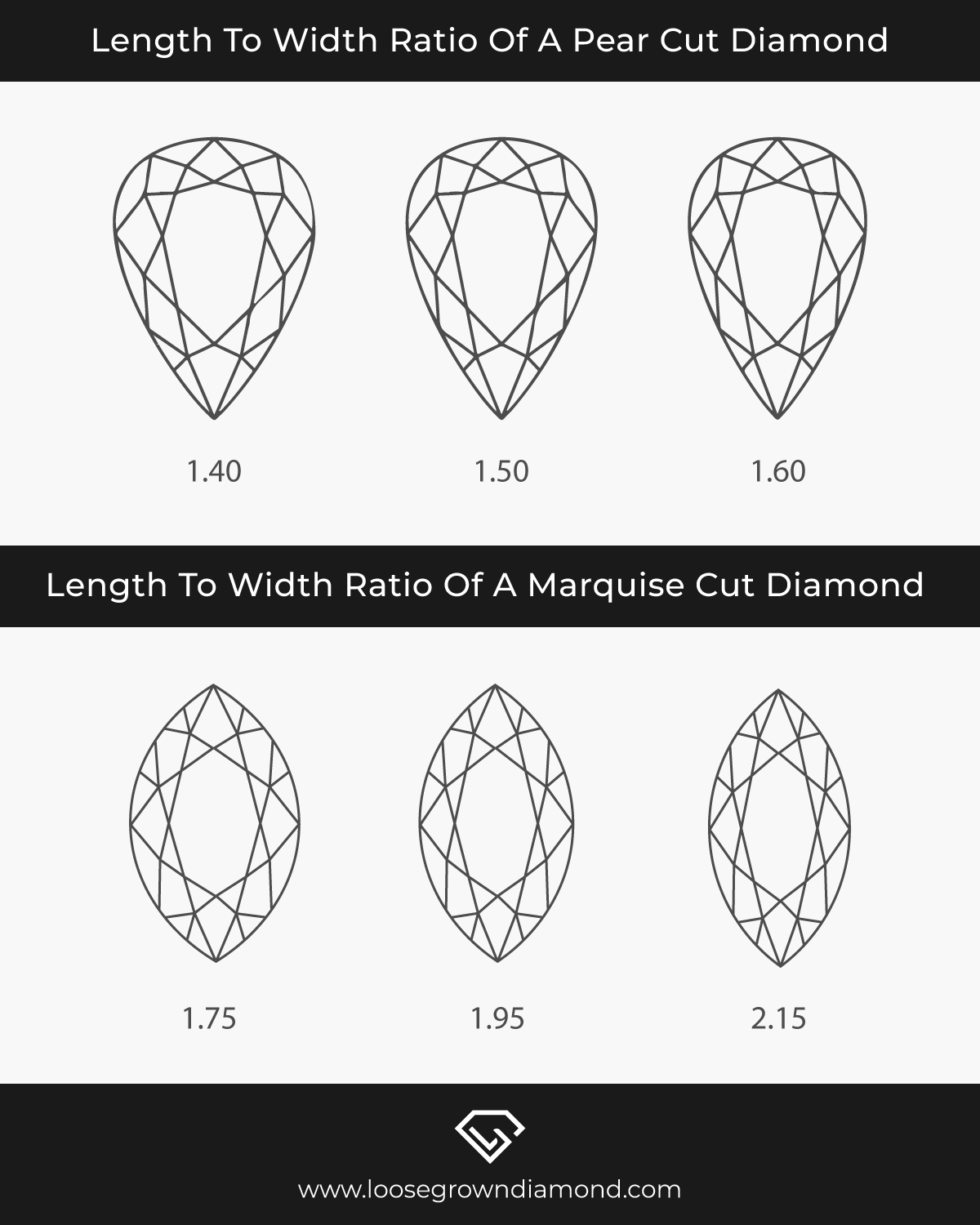
length to Wight ratio of pear cut and marquise diamond
The size ratio of the pear cut diamond ranges from 1.5 to 1.75, of which 1.75 (L/W) comprises the most elegant ones. The classic symbolism of the pear shaped diamond as a teardrop is the reason for it being more preferred in pear shaped diamond engagement rings.

The ideal size ratio of a marquise cut diamond is 1.7 to 2.15, but the ideal ratio is 1.9. Although marquise cut is also an unconventional cut, it is preferred less as compared to a pear shaped diamond.

Pear vs Marquise in Jewelry: Which One Looks Better?
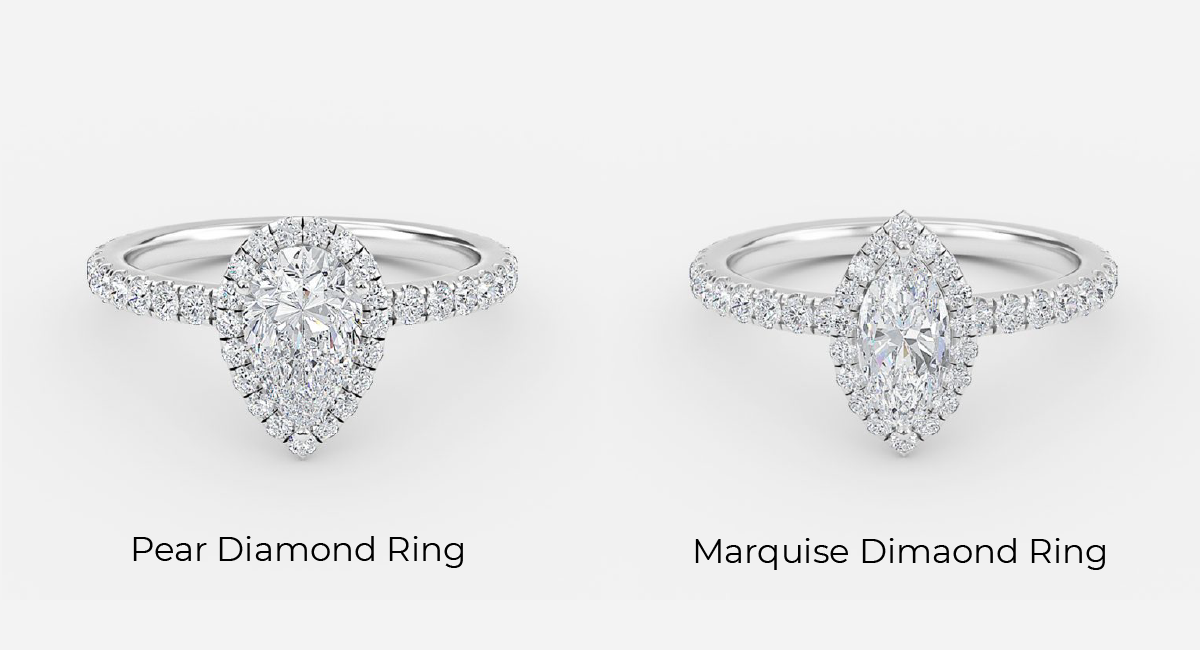
Pear vs Marquise in jewelry: Which One Looks Better?

Although the pear and marquise cut can look beautiful in any jewelry, they are preferred more as wedding rings. Hence, engagement rings, anniversary rings, and promise rings are all types of jewelry when paired with a pear shape or marquise shaped diamond that will give an exuberant look.

What Type of Metal Should be Paired with Pear Cut Diamonds?

In the choice of metal, there is a variety, since they look beautiful regardless. A white metal will enhance the diamond, its cut, and the setting. So a white metal like silver, platinum, or white gold, will let the diamond take center stage while supporting its elegance.

A yellow metal like gold will give an antique look to the already antique cut of pear. The yellow of the metal helps subdue any mishap in the quality of the stone.

Rose gold is another unconventional metal, but absolutely romantic and classic. The combination of one romantic aspect of the pink metal with another aspect of the pear cut diamonds just enhances the symbolic aspect of the wedding ring.

What Type of Metal Should be Paired with Marquise Cut Diamonds?

The marquise cut looks absolutely white regardless of the metal it is fixated on. So placing it in yellow or rose-pink metal, will not in any way alter the hue of the diamond. Hence, the marquise looks stunning in all the metals regardless.

Best Pear Cut Diamond Settings
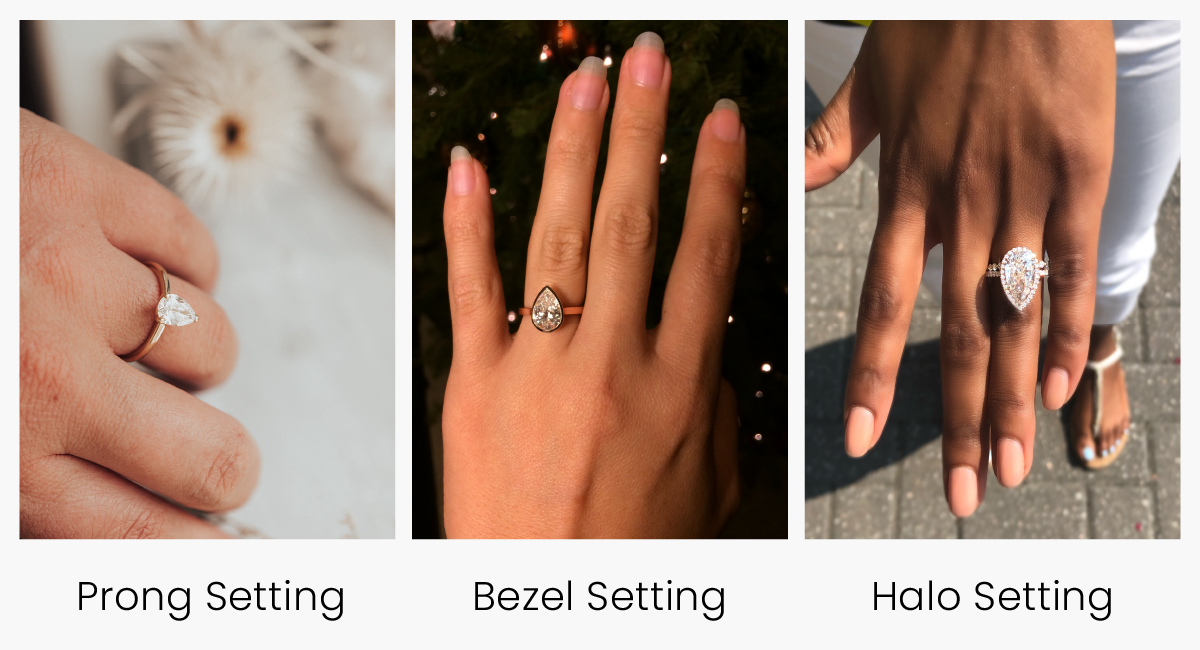
best pear diamond ring setting
In jewelry, the pear is generally adorned in rings, especially to give an antique feminine edge to the wearer. The diamond can be worn with the tip facing either the hand or the fingers, but it is an absolutely subjective choice. The diamond is delicate and is generally preferred to be fitted in a bezel setting or a halo setting since it provides an extra sense of security.

In a bezel, a metal border contains the gem in place, whereas in a halo, there are one or two lines of smaller diamonds outlining the main diamond. In either of these cases, the tip of the stone will not be projected out as a point and will hence be safe.

A prong is also an option, in which 6 prongs hold the diamond in shape. Three prongs protect the bulge of the pear cut and the tip is taken care of by the remaining 3 prongs. The tip is specially sealed with a v prong so as to protect it from chipping. There are also chances of the tip being hooked onto clothes and fabric, hence the v prong protects against such mishaps.

There is also a 5-prong setting, in which one lower prong has been removed, but the other 5 remain intact in their previous positions. Prong is not the most preferred setting, because the tip can be pointed out, which results in chipping or damage in the long run. The diamond is better when it is absolutely safe in the setting.

Best Marquise Cut Diamond Settings
best Marquise diamond ring
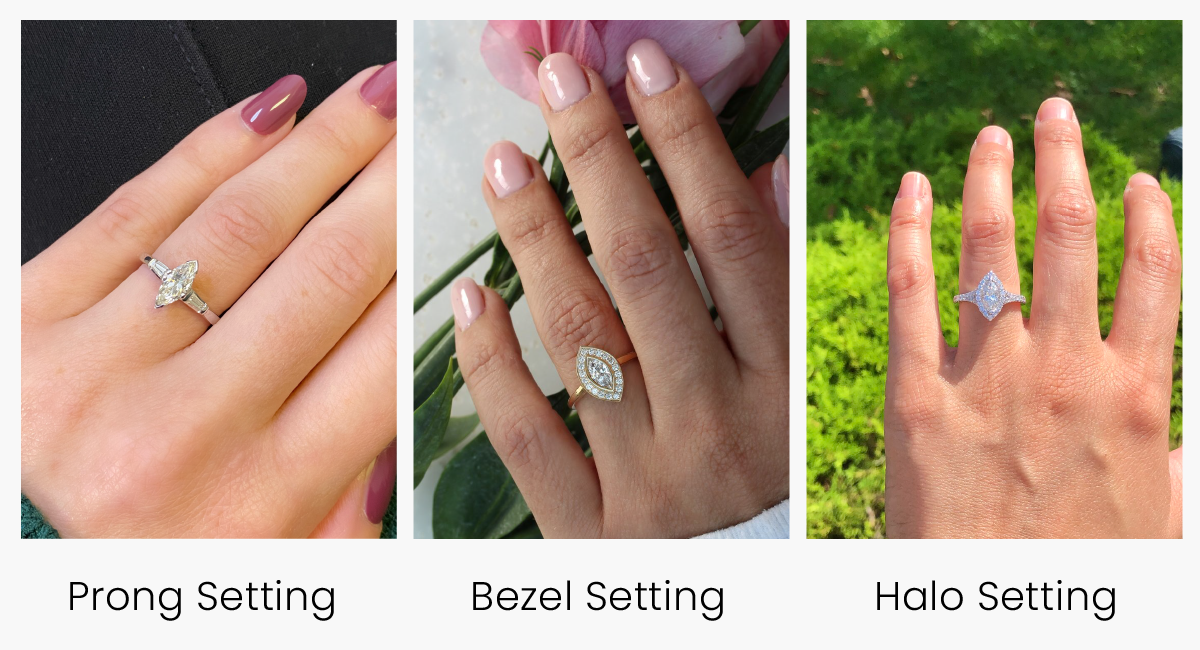
For marquise rings, the main impact is contrary to the regular. Hence for a marquise cut diamond ring, the most preferred setting is the halo, as the outline is highlighted with smaller diamonds, which enhances the shape and style of the marquise diamond. It tends to enhance the size and brilliance of the central marquise cut diamond. It is also an essential factor in the safety of the center diamond.

There is the prong setting, which ensures the absolute safety of the pointed ends of the marquise cut. In this setting, the body is held together by 6 prongs, and the points are either covered by prongs or v-shaped prongs, to keep the point from being harmed. This ensures the safety of the tip of the marquise cut diamond.

The prong setting is absolutely preferable if the wearer is looking for maximum brilliance. Since the prong setting allows for light to enter the stone from all directions, the brilliance that this setting provides is unmatched.

Can I Customize Rings When Purchasing From LGD?

LGD recognizes the value of tailoring our services according to each customer. We offer a seamless customization experience, allowing you to design your rings to perfection.

You can choose the metal type, diamond shape, carat weight, ring size, and other details to create a customized ring that suits your preferences and budget. Check out the “Printable Ring Size Chart” guide for measuring ring sizes.

Our experts will walk you through every step of the process, from picking the perfect diamond cut to selecting the metal for your piece of jewelry, so that it perfectly captures your personal taste and style.

Where Should I Buy Pear and Marquise Cut Diamonds From?

Look no further as we at Loose Grown Diamonds have in stock top-tier marquise and pear cut diamonds. As specialists in lab diamonds, we prioritize ethical sourcing and transparency.

Our marquise lab grown diamonds start at an affordable $650, while pear diamonds are available from just $450, offering diverse options for various preferences and your budgets, providing GIA/ GCAL and IGI certification for authenticity.

Utilize our exclusive discount promo code at checkout to enjoy an extra off. Trust LGD for superior marquise and pear cut diamonds. Adorning these magnificent vintage cuts is beautiful in every way. For the diamond cut as well as the wearer. Find your perfect lab grown diamond and its cut. Find the sweet spot between polished minimalism and bold individuality to take your look to the next level.


Conclusion

The pear and marquise cuts are both elegant and beautiful pieces of diamond. The settings in which they are held play an important role in their safety and beauty. The right kind of setting, metal, and also the perfect cut, can enhance the beauty of the diamond drastically. The brilliance of both cuts is stunning.

Since the diamonds are natural, they do possess certain mishaps and discolorations, while doing the cut. But these are minimized in lab-grown diamonds. Although not a real diamond, they do possess similar qualities as the natural diamond itself.

FAQs

What does a pear diamond look like?
A pear cut diamond exhibits a teardrop shape, symbolizing sensitivity and romance.

What is the most flattering diamond cut?
The most flattering diamond cut depends on personal preference; however, pear and marquise cuts are renowned for their elongating effect.

Why not buy a pear shaped diamond?
Careful handling is essential due to the delicate tip of pear cut diamonds.

Is a pear cut diamond more expensive?
The price of a pear-cut diamond varies based on factors like carat weight and quality.

Why do people like pear cut diamonds?
People are drawn to pear cut diamonds for their unique combination of round brilliant and marquise cuts, symbolizing romance.

Which diamond shape is most affordable?
Prices fluctuate, but pear shaped diamonds often come at a more affordable price than round brilliants.
How to Choose Best Lab Diamond Shape for Your Beloved?

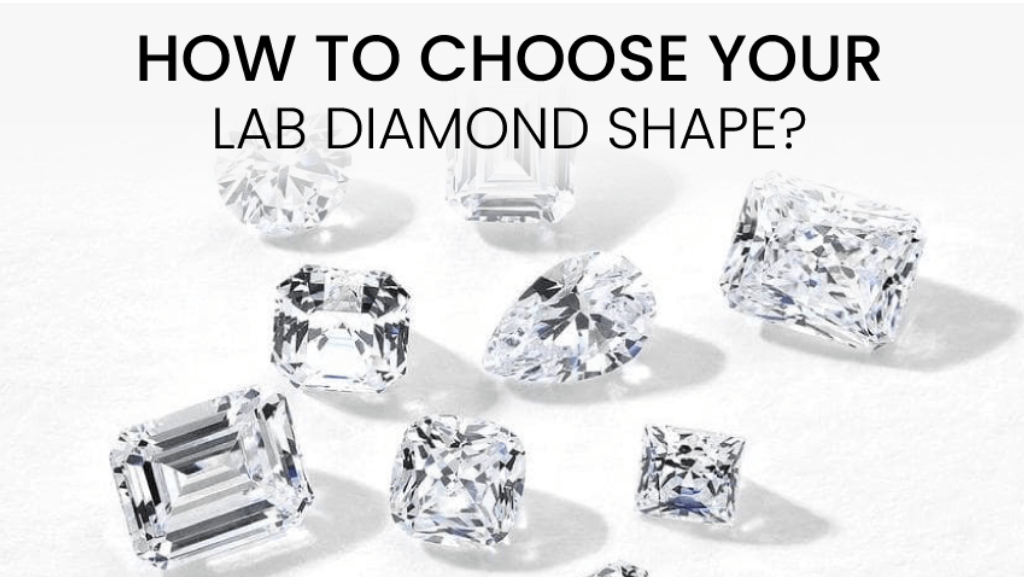
Lab created diamonds can be cut into various shapes, these shapes are similar to what many natural diamonds are cut in. So many choices confuse consumers and make them second-guess their first choice.

It is essential that you choose the best diamond shape and cut which fits the type of jewelry you’re looking for. Man-made diamonds have such clarity and brilliance that if you don’t choose the right shape, you won’t be able to get the best shine or sparkle out of them.

How to Choose Best Diamond Shape for Your Beloved?

Let us help you understand all the factors you should be aware of before choosing your lab grown loose diamond’s shape.

How Lab Diamonds Are Made?

Lab grown or cultured diamonds have the same chemical makeup, atomic composition, and dazzle as mined diamonds, with the added advantage of costing more than 40% less than the latter. There are various methods through which diamonds are made in labs, however, all of them use some fusion of heat, pressure, and carbon to gradually form crystal layers and grow diamonds.

The finished stones cannot be called artificial or synthetic at the risk of being considered inferior in any way from mined diamonds. You can put your faith in lab grown diamonds since they are subject to the same test of authenticity and specifications by independent gemological institutes as mined diamonds are.

Every cultured diamond, weighing more than .25 carats, has an original laser attached to its girdle as a means of certification from a gemological institute.

Lab grown diamonds not only sparkle the same way as mined diamonds do but also come in an array of colors that are not always available when nature is in control of the crystallization process.

Speaking from a strictly scientific point of view, lab grown diamonds are purer than mined diamonds with respect to clarity, strain, and quality as their chemical composition comes into being in completely monitored conditions.

Moreover, cultured diamonds have the same optical attributes, physical features, and crystal composition as mined diamonds do. In this sense, what are “real” diamonds between these two becomes a virtually futile question.

What is left then is to make a selection in terms of the quality of the diamond, with the help of the 4 Cs.

Understanding the 4Cs

The 4 Cs of evaluating diamond quality has not only become a globally accepted language but also a handy set of parameters for any consumer lacking in-depth knowledge of diamond selection. 

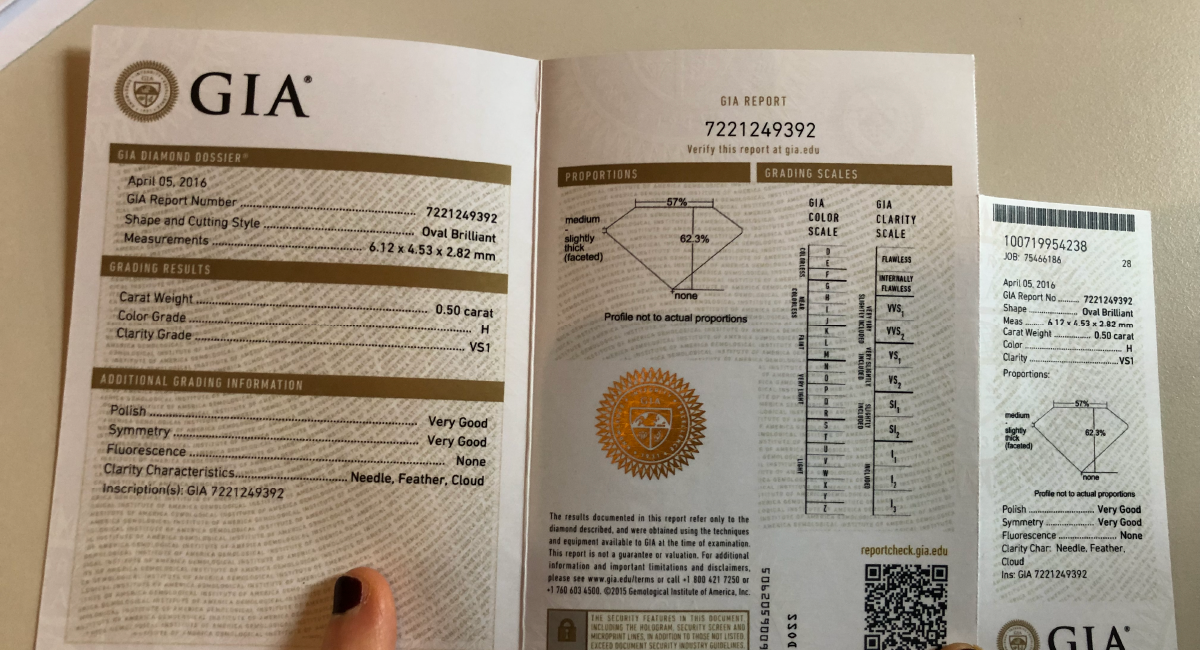
Established system of grading by the Gemological Institute of America (GIA) in 1953, these 4Cs are Color, Clarity, Cut, and Carat Weight which help make a very official biased, objective, and reliable assessment of diamond quality and its worth.

These components interact with each other and might even be codependent in a diamond, making a comprehensive and holistic assessment necessary rather than an isolated inquiry into an individual component.

4cs of diamond certificate grading by GIA Report

Each component is thus important and needs to be well-balanced with the other features, only then can a diamond be truly worth the investment. The key is to spend wisely on every feature so as to get a well-rounded diamond.

Here’s a little about every component to give you a foundational understanding of evaluating your diamonds:

Color

Diamonds are usually graded in terms of how colorless or white they are. The ones with a tint of color (blue, pink, yellow, green) are usually termed “fancy” and fall outside the typical color grading system followed everywhere.

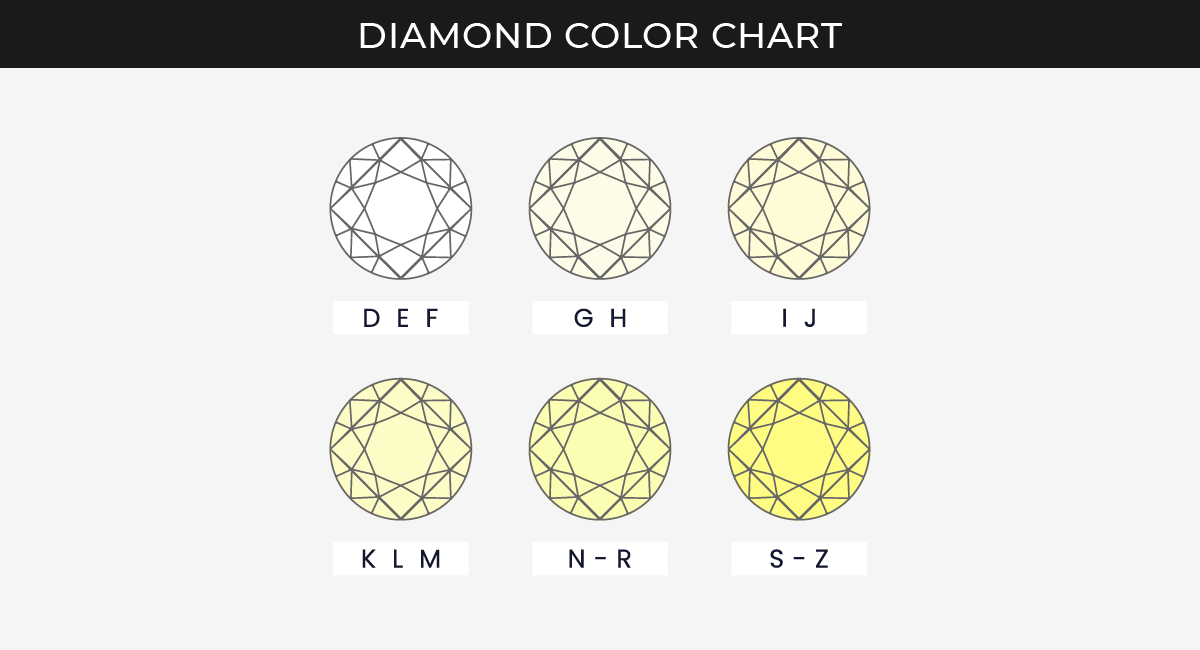
Lab Diamond Color Chart guide

The GIA classifies diamonds from D (the most colorless) to Z (light yellow or brown). Although you may find examples of the difference in the color of diamonds in each grade, the cut, clarity, and carat weight can have a big impact on the visibility of the color of a finished stone.

For instance, the brilliance or dazzle exuded by the diamond largely depends on the cut, making the grade essentially insignificant in comparison. The pricing of a diamond is in direct correlation with the color grade, however, two adjacent grades can hardly be recognized by the naked eye.

Colored diamonds or “fancy” diamonds, on the other hand, cannot be found on this grading chart made for white diamonds and have to be evaluated separately due to their apparent distinctiveness.

Lab grown diamonds obtained through the CVD process are mostly inclined towards the D-scale as they are very pure and lack any impurities. While the majority of mined diamonds on the other hand tend to have a slight yellow tint in them.

Clarity

Both mined diamonds and lab grown diamonds are vulnerable to crystalline infirmities, known as ‘inclusions’ or ‘blemishes’, the former being small crystals or atomic impurities trapped within the diamond that might come to the surface and affect the appearance whereas the latter appears on the surface of the diamond.

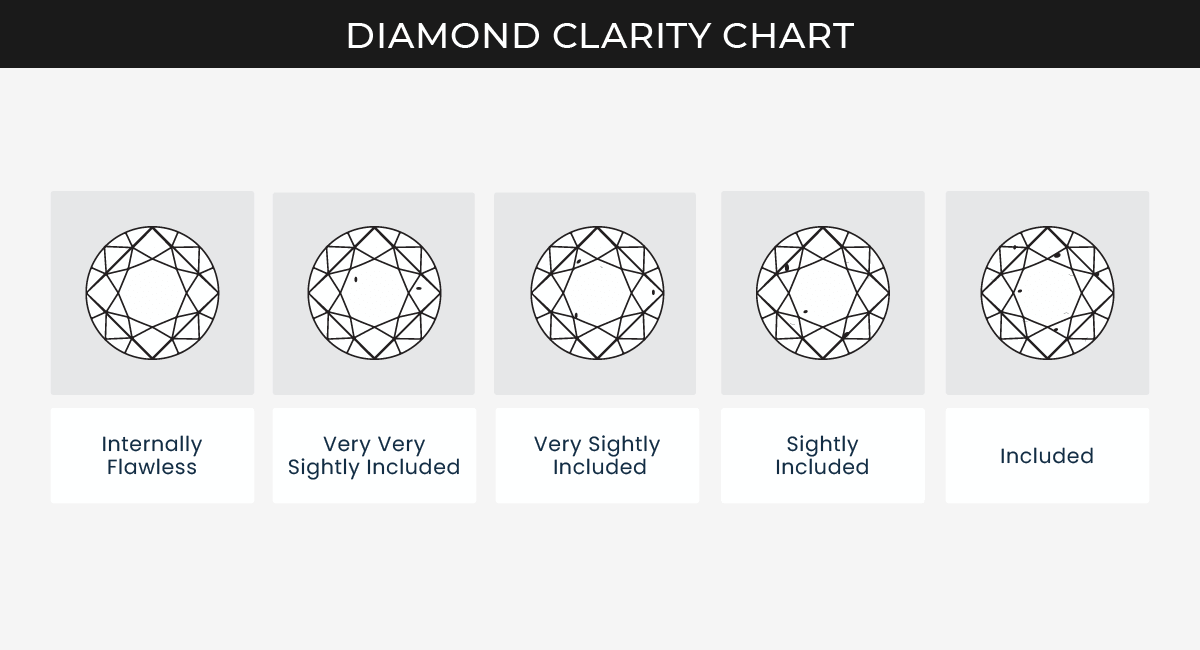
Lab Grown Diamond clarity chart guide
Inclusions and blemishes have a direct impact on the clarity and light reflection properties of a diamond and form the basis of calculating the clarity of diamonds. The clarity grading scale offered by GIA can be branched into 6 main categories as follows-

  • Flawless (FL)
  • Internally Flawless (IF)
  • Very Very Small Inclusions (VVS1)
  • Very Very Small Inclusions (VVS2)
  • Very Small Inclusions 1 (VS1)
  • Very Small Inclusions 2 (VS2)
  • Small Inclusions 1 (SI1)
  • Small Inclusions 2 (SI2)
  • Inclusions 1 (I1)
  • Inclusions 2 (I2)
  • Inclusions 3 (I3)

These grades act as a common measure for every jeweler despite what their nationality. Since the difference in this scale is minuscule, one is advised to see if the inclusions or blemishes are visible or stark in appearance. 

While the presence of inclusions and blemishes are seen in both lab grown and naturally mined diamonds. Lab grown diamonds are cheaper, made on-demand, and thus can be modified when needed. 

[blog_page_inventory shape=”Round,Oval,pear,cushion,heart,princess,emerald,radiant” carat=”2.30,2.60″ cut=”0,4″ color=”0,10″ clarity=”0,11″]
[blog_page_btn title”Buy Now” url=”https://www.loosegrowndiamond.com/inventory/?”]

Cut

The cut of a diamond is perhaps the most important feature as it weighs heavily on the overall look of the finished gem and can also make or break the charm of the other components.
Lab Grown Diamond Shapes size chart

Diamond cut is not merely the final shape of the diamond but is meticulously concerned with: –

  • The angle of every cut
  • Symmetrical dimensions
  • Proportions 
  • Brilliance (the reflection of internal and external white light) 
  • Scintillation (the dark areas produced through reflections and the general dazzle)
  • Fire (the scattering of white light into a rainbow)
  • Finishing touches

Cut decides the most important aspect for a consumer i.e. the sparkle factor. The GIA grading scale for diamond cuts ranges from Ideal, Excellent, Very Good, Good, Fair, and Poor

However, the end result of a cut depends on the intention of a cutter, for instance, the maximum carat weight may be the concern but that might result in the diamond being too shallow to reflect light. 

While deciding on a cut, even the negligible increments in prices are worth it as the difference in cut will make a big difference, fundamentally, on the aesthetic appeal of the diamond.

Carat Weight

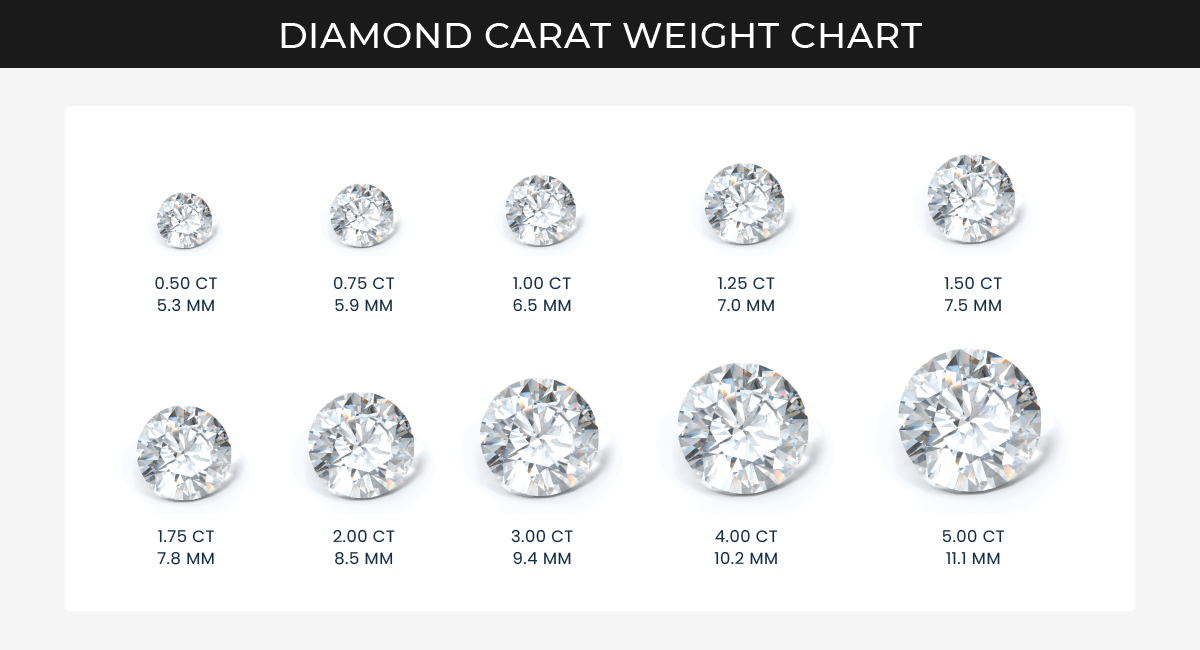
There is a common misconception that the carat weight is indicative of the size of the diamond. On the contrary, its meaning is only restricted to the weight of the stone. A diamond of 1 carat roughly weighs 200 milligrams, the same as the quarter of a small raisin.

1 carat lab diamond can be of different sizes depending on the cut. However, a 1 carat diamond will always be better to purchase than a 1.5-carat diamond no matter how much it weighs, as the latter may not hold the same dazzle.

Lab Diamond Carat Weight chart guide

The price of a diamond is directly proportional to its carat as larger diamonds are obviously more sought after. 

Overall appearance and brilliance carry much more leverage for a diamond than the carat weight. 

Different Types of Lab Diamond Shapes:

Here is a brief on some best diamond shapes that are most popular.

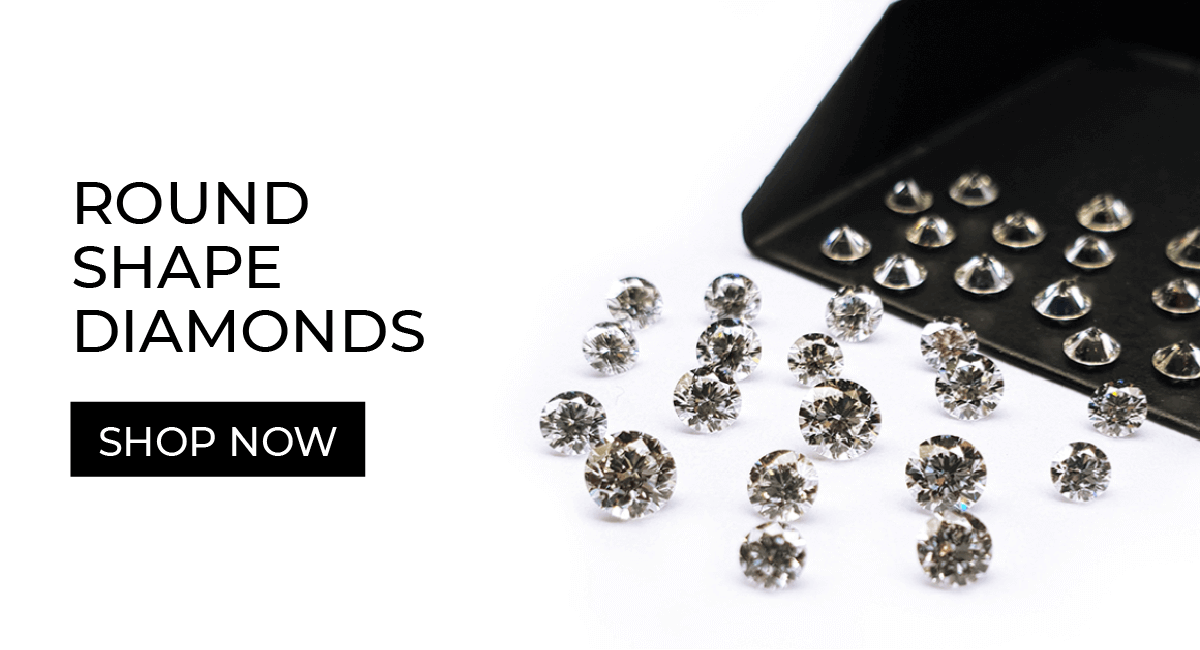
Round Brilliant Diamondround shape diamond

Being the most popular diamond shape of all time, round diamonds constitute almost 75% of the total diamonds in the market. One of the major reasons for this is that a round shape best accentuates the brilliance of a diamond, and, what better, it goes well with vintage and contemporary designs of jewelry due to its symmetrical proportions and stunning brilliance. It is formally called Round Brilliant Cut (RBC) and was invented by Marcel Tolkowsky in 1919. A round cut has 58 facets and allows the light to go to the bottom of the diamond all the way back up.

[blog_page_inventory shape=”round” carat=”2.10,3.10″ cut=”0,4″ color=”0,10″ clarity=”0,10″]
[blog_page_btn title=”Buy Lab Grown Diamonds” url=”https://www.loosegrowndiamond.com/inventory/”]

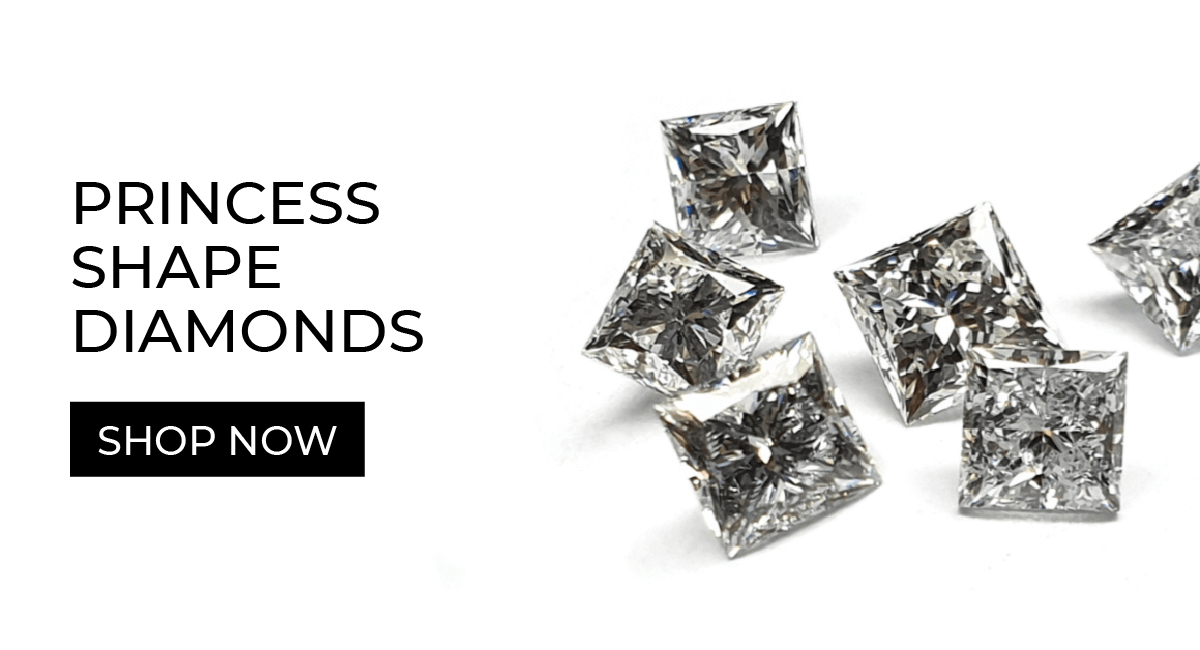
Princess Cut Diamondprincess shape diamond

Invented in 1961, the princess cut has a rectangular or square shape face-up and looks similar to an inverted pyramid with four beveled sides. It is the second most popular diamond shape after round, with almost 30% of the engagement rings being princess cut. This cut is lower in price as it is easier to carve out, with almost 49 to 144 facets. An increase in the amount of facets makes the flaws less discoverable. However, this shape is not as brilliant as round and is very vulnerable to damage due to its sharp corners.
[blog_page_inventory shape=”princess” carat=”2.10,3.10″ cut=”0,4″ color=”0,10″ clarity=”0,10″]
[blog_page_btn title=”Buy Lab Grown Diamonds” url=”https://www.loosegrowndiamond.com/inventory/”]

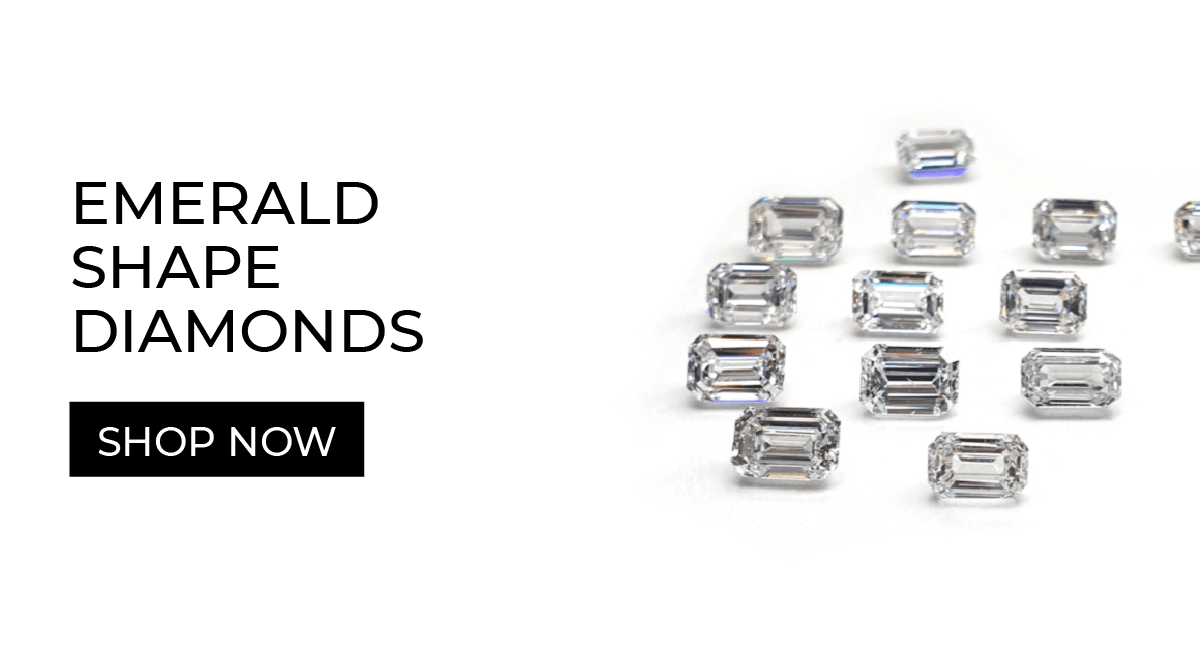
Emerald Cut Diamondemerald shape diamond

Popularly referred to as the shape of glamor, the emerald cut is a rectangular shaped cut with angles analogous to that of a staircase, known as a ‘stair cut’. These angles allow the light to pass with dramatic, wider flashes and make the brilliance unique.

Initially devised to suit emeralds due to their brittle composition, the emerald cut is not as brilliant or fiery as the round cut but gives off a playful hall of mirrors illusion with the light and dark planes playing together. The flat table or top of the diamond allows a good look into the clarity of the diamond. It is a very vintage look, as the cut was most famous in the 1920s.

[blog_page_inventory shape=”emerald” carat=”2.10,3.10″ cut=”0,4″ color=”0,10″ clarity=”0,10″]
[blog_page_btn title=”Buy Lab Grown Diamonds” url=”https://www.loosegrowndiamond.com/inventory/”]

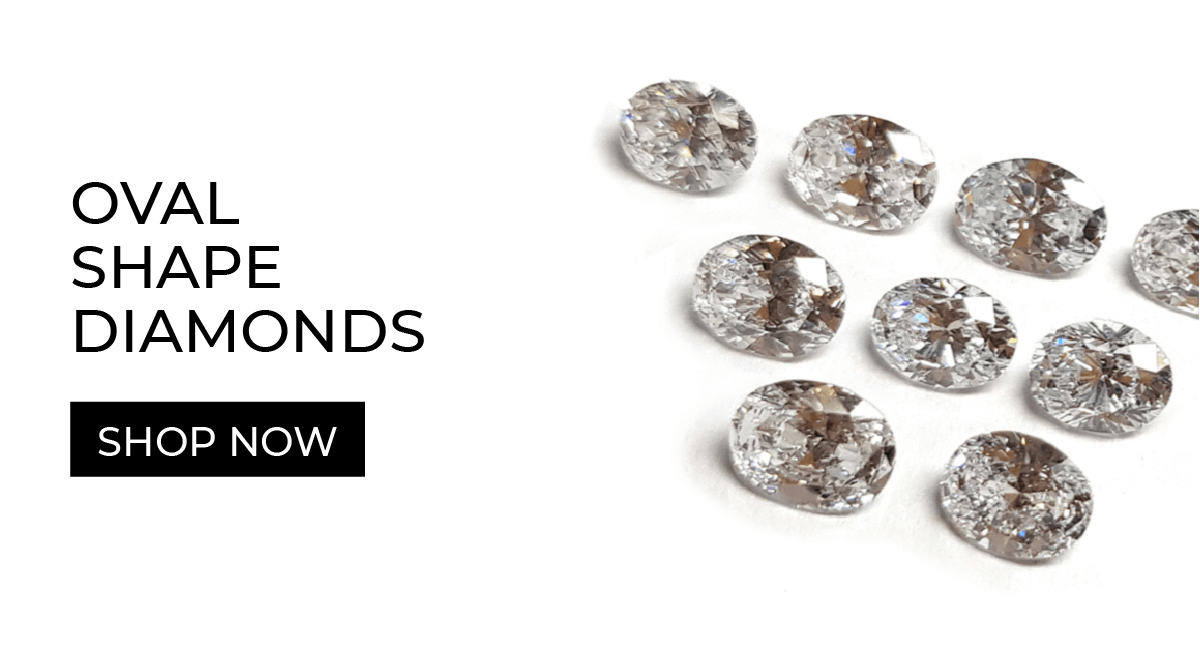
Oval Cut Diamondoval shape diamond

Oval have all the brilliance and curved edges of a round cut but are more unique due to a simple alteration in shape. The elongated shape not only adds character to the stone but also makes it appear to have more carats and is far less prone to chipping.

It also fits the bill much better than the round cut. The design has unknown origins but was only recently mastered in 1957, by a Russian diamond cutter by the name of Lazare Kaplan.

One thing to remember is that the oval shape must be chosen with the perfect ratio. A larger ratio can give a more elongated look but there are risks of the light not bouncing off of the middle of the diamond, giving the appearance an undesirable ‘bow-tie effect. A perfect ratio is 1.30 to 1.45 to make sure the light is not split within the diamond and it shines as a whole.

[blog_page_inventory shape=”oval” carat=”2.10,3.10″ cut=”0,4″ color=”0,10″ clarity=”0,10″]
[blog_page_btn title=”Buy Lab Grown Diamonds” url=”https://www.loosegrowndiamond.com/inventory/”]

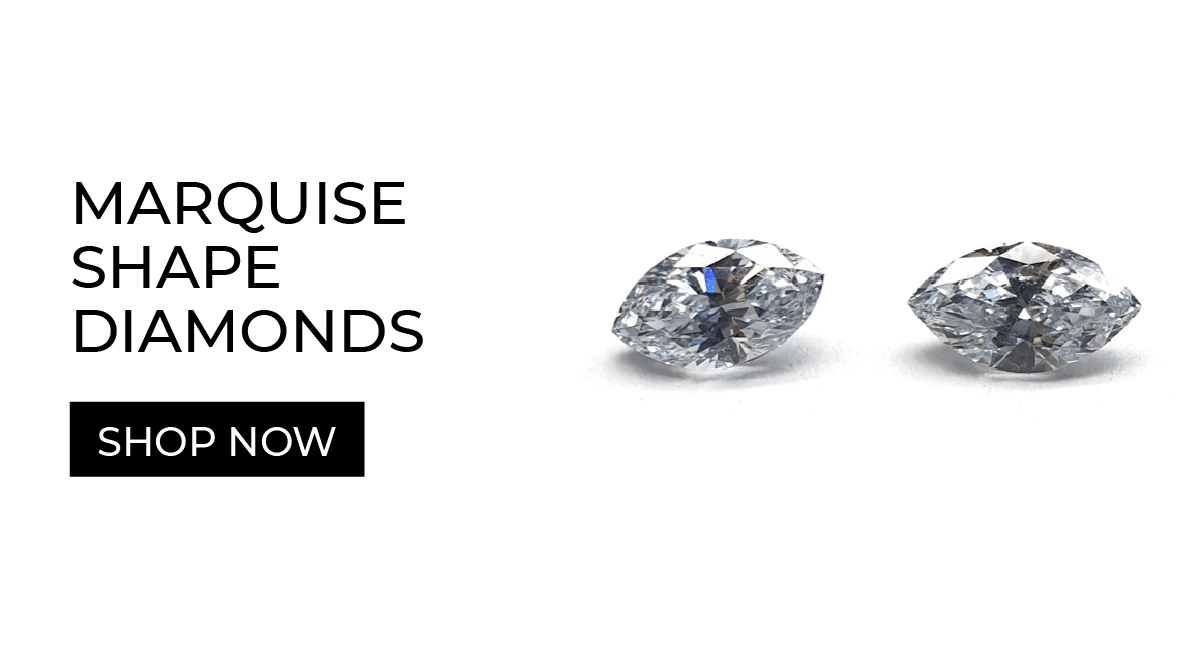
Marquise Cut Diamondmarquise shape diamond

Resembling the arc of a smile, the marquise cut has been a timeless favorite among diamond lovers. It was invented back in the 18th century during the reign of Louis XIV and named after his famous mistress, Marquise de Pompadour. They are also called eye-shaped or boat-shaped. However, these are rarely seen in engagement rings, which makes them all the more unique.

It has almost 60 facets and can make the fingers appear thinner and longer when worn on a ring. One added advantage of the marquise cut is that it makes the diamond appear to have more carats due to its elongated body. It has become a recent trend to wear the marquise cut in a halo setting, meaning horizontally.

[blog_page_inventory shape=”marquise” carat=”2.10,3.10″ cut=”0,4″ color=”0,10″ clarity=”0,10″]
[blog_page_btn title=”Buy Lab Grown Diamonds” url=”https://www.loosegrowndiamond.com/inventory/”]

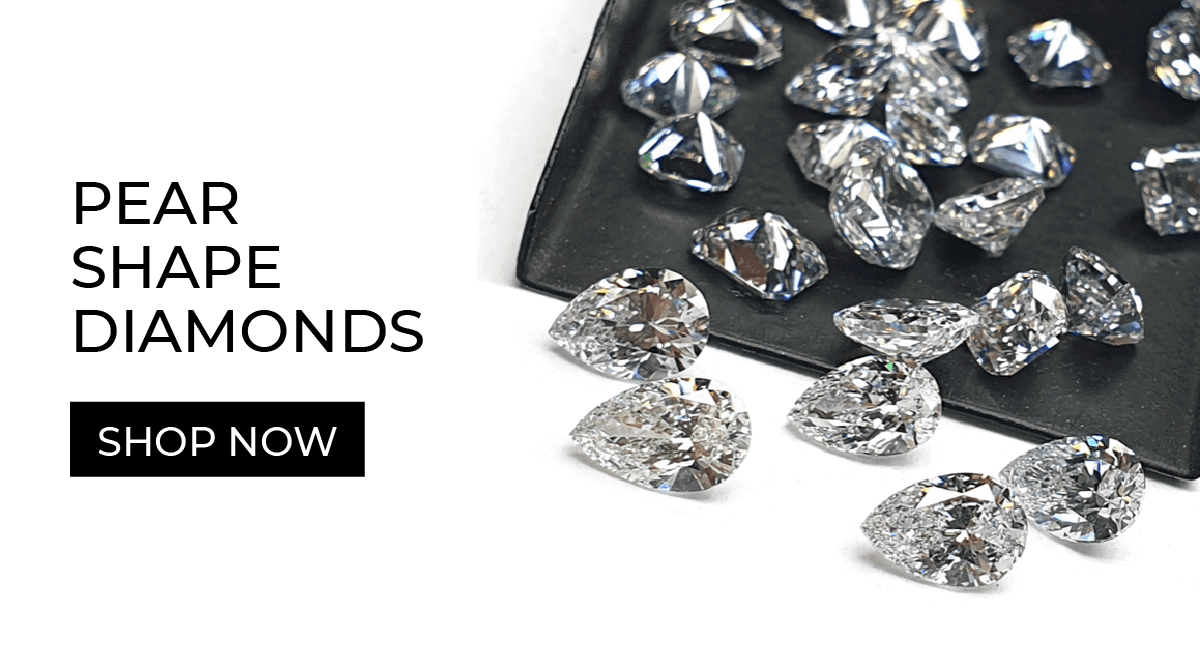
Pear Cut Diamondpear shape diamond

The pear shape resembles a teardrop or a pendeloque and has some appeal to it as it usually points towards the owner when put on a ring. Its signature outline is immediately recognizable.

It is donned by many celebrities, most recently being Ariana Grande with her engagement ring. However, since it is a fancy shaped diamond, it is not allotted a cut quality grade from GIA and is incredibly hard to master. More so, it is also vulnerable to damage at the tip.

[blog_page_inventory shape=”pear” carat=”2.10,3.10″ cut=”0,4″ color=”0,10″ clarity=”0,10″]
[blog_page_btn title=”Buy Lab Grown Diamonds” url=”https://www.loosegrowndiamond.com/inventory/”]

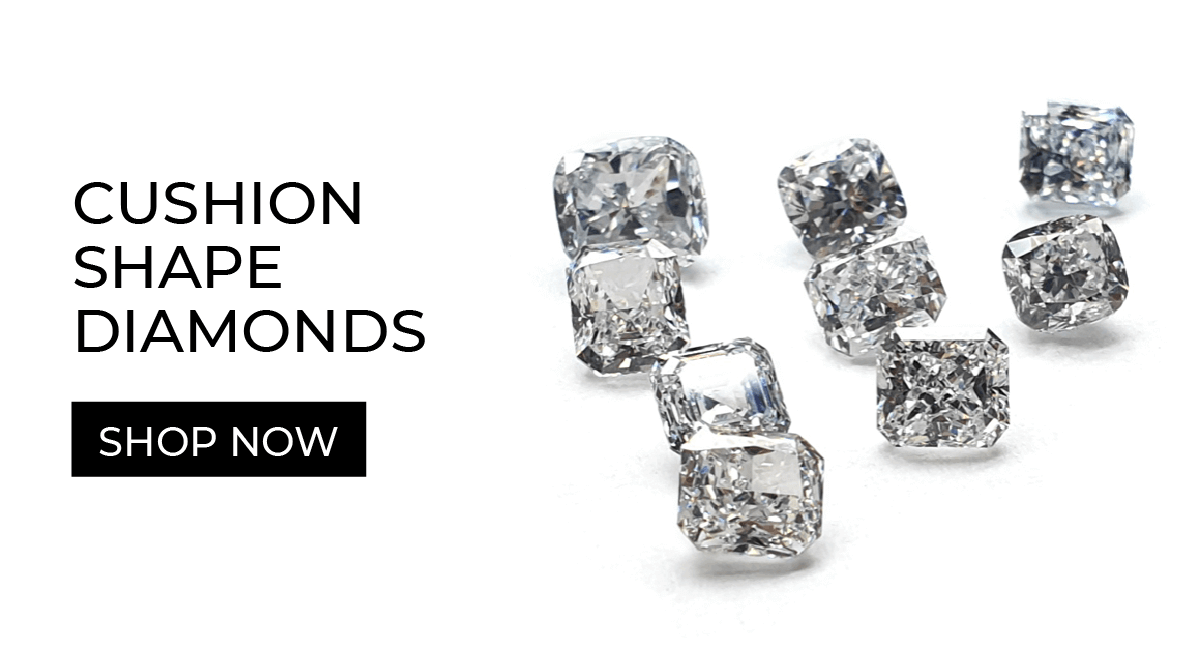
Cushion Cut Diamondcushion shape diamond

Also known as the pillow-cut due to its cushion-like shape, is essentially a square cut with rounded corners. It has become the de-facto diamond shape in the 20th and 21st centuries. Since it has a large open table, cushion cuts must be stones with higher clarity and a colorless palette.

[blog_page_inventory shape=”cushion” carat=”2.10,3.10″ cut=”0,4″ color=”0,10″ clarity=”0,10″]
[blog_page_btn title=”Buy Lab Grown Diamonds” url=”https://www.loosegrowndiamond.com/inventory/”]

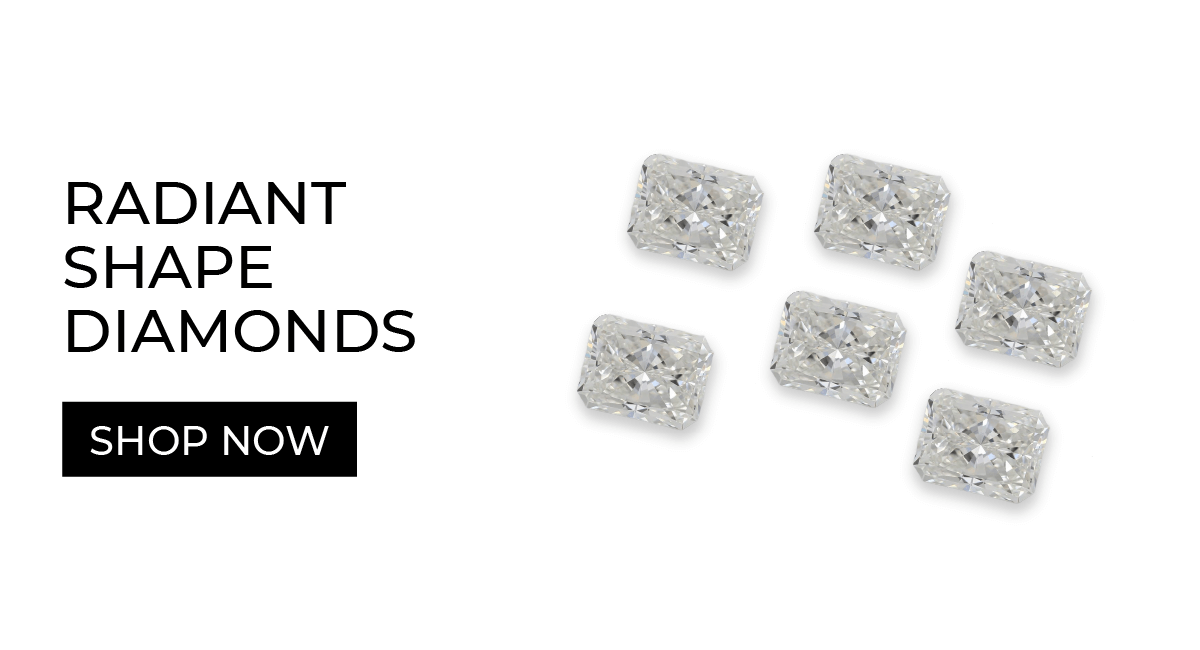
Radiant Cut Diamond
radiant cut diamond

This fancy diamond shape resembles a square with rounded corners. With 70 facets, the radiant cut has an extraordinary sparkle due to its cut. This fancy diamond shape is used to maximize the effect of its original color, it is not a common cut. A man-made diamond of radiant cut will look great on rings and earrings.

[blog_page_inventory shape=”radiant” carat=”2.10,3.10″ cut=”0,4″ color=”0,10″ clarity=”0,10″]
[blog_page_btn title=”Buy Lab Grown Diamonds” url=”https://www.loosegrowndiamond.com/inventory/”]

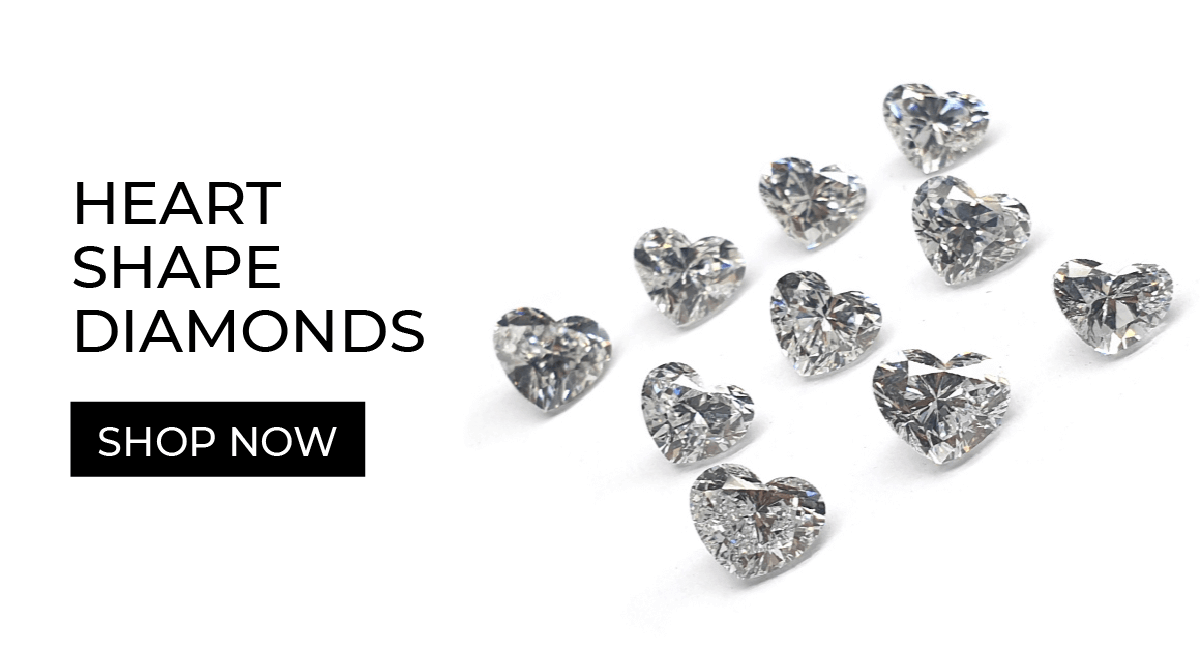
Heart Cutheart shape diamond

This cut is a modified version of the round cut. It usually has 56 to 58 facets, very close to the round cut. A forever symbol of love, the heart shaped cut is in itself a declaration of love. However, visibility can be a problem with a cut having a very specific shape, or rather, representing a symbol.

A length-to-width ratio that is close to 1.00 is ideal and the stone must weigh more than 1 carat or it will risk having a confusing appearance. It can serve all purposes, with the earliest well-known example being a ring of heart cut famously gifted as a symbol of friendship from Mary Queen of Scots to Queen Elizabeth in 1562.

[blog_page_inventory shape=”heart” carat=”2.10,3.10″ cut=”0,4″ color=”0,10″ clarity=”0,10″]
[blog_page_btn title=”Buy Lab Grown Diamonds” url=”https://www.loosegrowndiamond.com/inventory/”]

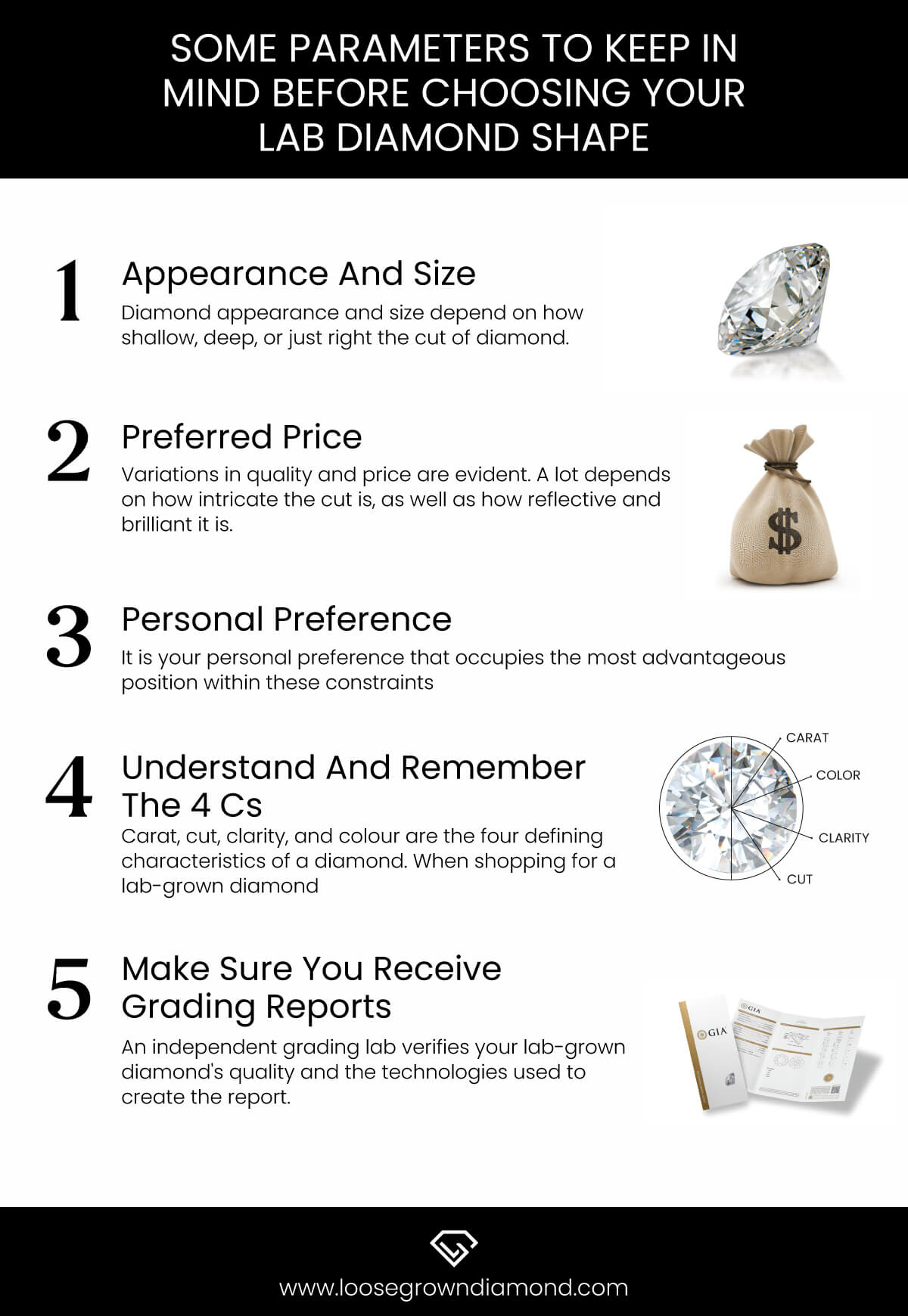
Things to Consider While Choosing the Best Diamond Shape:

We know one question, “What is the best diamond shape?”, will come to your mind whenever you think of purchasing a new diamond. But don’t worry, we are here to answer your question.

Things to Consider while choosing the best Diamond Shape

Appearance and Size

The appearance and size of a man-made diamond are widely dependent on the cut which is given to it. A cut of the diamond can make it look bigger or smaller depending on how shallow, deep, or just right the cut is. It is how the diamond is cut that determines the precise size. This diamond size chart will give you a thorough approach to identifying your size.

The table of a diamond is the flat surface on top, which resembles a table. At times diamonds are faced with their table facing upwards, this gives a sense of clarity to diamonds. This is present in shapes like emerald or asscher. However, due to this shape, the diamond may not look as large as a diamond with the same carat weight. According to experts the princess and marquise are cut to maximize the size of a diamond.

Preferred Price

Different cuts have different prices. It all depends on the complexity and the shine and brilliance the cut provides. Many fancy diamonds that have oval or emerald cuts are seen to be cheaper than other cut diamonds. These cuts also allow a larger carat weight in the finished man-made diamond. The reason is that less part of the diamond will be wasted in these cuts, while if a fancy cut were to be given more parts of the diamond are wasted.

Other shapes like pear or heart can help in the removal of more inclusions from the rough diamond; this leads to less wastage of the rough diamond. Cuts like the marquise, princess, and asscher are expensive cuts. You can use our diamond price calculator to determine the right price for your diamond.

Personal Preference

While the price and appearance of the diamond matter significantly, it is your preference that has the optimum place in these parameters. What type of man-made diamond would you like to wear? Or what type of lab grown fancy diamond would you like to buy? Buying a man made diamond or a diamond, in general, is an investment, hence such questions matter.

Make Sure You Receive Grading Reports For Your Diamonds

One must ask before deciding to purchase a diamond is the lab grown diamond grading report. An expert, or yourself, must peruse and be satisfied with the same to ensure the quality of the diamonds from an authoritative and recognized gemological institute. 

This report will contain and certify all the minute details of the 4 Cs of a diamond, identify your lab grown diamonds as those made in the laboratory and list out all the proportions, identifications, measurements, and finish of the stone. 

These reports also verify the process of creating the diamond and make sure only the best technologies are used in the laboratory.

Where to Buy the Best Shape of Lab Diamonds?

When looking to buy lab-grown diamonds opting to purchase diamonds online can be cost-effective, potentially allowing you to save up to 20% on your diamond purchase.

We offer a wide range of lab-grown certified diamonds in various shapes or sizes and also offer customization options. Explore exclusive savings with our promo code when elevating your diamond shopping experience.

Conclusion

When it comes to lab grown diamonds, their specifications are easy to trace and point out, making the purchase an easily well-informed one. You must endeavor to ensure whether the company making the diamonds has legitimate interests and whether it is really sustainable.

With the perfect company, no matter what the cut, the diamond will always be a green option and an ethical purchase. The people facing hardships in diamond mines can have other career options whereas demand for a sustainable alternative in the same business will also grow simultaneously, making it a win-win.

We Hope, you will like this guide “How to Choose Best Diamond Shape for Your Beloved”. We at Loose Grown Diamonds create high-quality lab grown diamonds which are eco-friendly and certified by GIA/IGI/GCAL. Each of these stones is made with love and care to meet our customer’s needs and exceed their expectations.

Be sure to check out our diamond inventory if you are interested in purchasing a lab-cultured diamond at the most affordable price possible.

FAQs

Which lab diamond shape is the most popular?
The round brilliant cut is the most popular lab diamond shape and is widely preferred for its timeless and classic appeal.

What diamond shape looks the biggest?
The oval diamond shape often appears larger due to its elongated design.

What is the most expensive diamond shape?
The round brilliant cut is generally the most expensive diamond shape due to its optimal light reflection and popularity.

Can lab diamonds be customized into unique shapes?
Yes, we offer customization options, allowing customers to create unique shapes based on their preferences.

Can lab diamonds have inclusions based on their shape?
Inclusions and flaws in lab diamonds are not shape-dependent. They are typically influenced by factors like the diamond’s growth process and the quality of manufacturing. A diamond’s clarity is assessed separately from its shape.

Are lab diamonds shape suitable for engagement rings?
Lab diamonds shape are highly suitable for engagement rings. The choice of shape depends on personal preference, style, and the overall design of the ring.

What Are Type IIA Diamonds: Should You Buy Them?

They say that diamonds are just chunks of coal that did well under pressure. This nearly miraculous process previously possible only under the crust of the earth for a hundred million years has been shortened to a mere few weeks with recent breakthroughs in the diamond industry; talking about lab grown diamonds. 

One such grade of these stones is the Type IIA diamonds, which are generally known as the purest and most valued diamonds. These grades can now be prepared by humans, in labs, but before discussing the diamond grade in concern, the process of growing diamonds in labs and whether the same is worth purchasing or not must be addressed. 

What Are Type IIA Diamonds: Should You Buy Them
Lab grown diamonds are twin natural diamonds in their chemical make-up that is also pure carbon compressed to pure crystalline disposition. The only distinguishing feature of lab grown diamonds, as made evident by their name, are made in labs in the span of a few weeks. These diamonds are chemically grown and tweaked until they are optically identical to real diamonds as finished stones.

Although the difference in growth cycles stretches overages, lab grown diamonds hold the same undeniable sparkle and, scientifically speaking, an identical synthesized structure. 

What are Diamond Types?

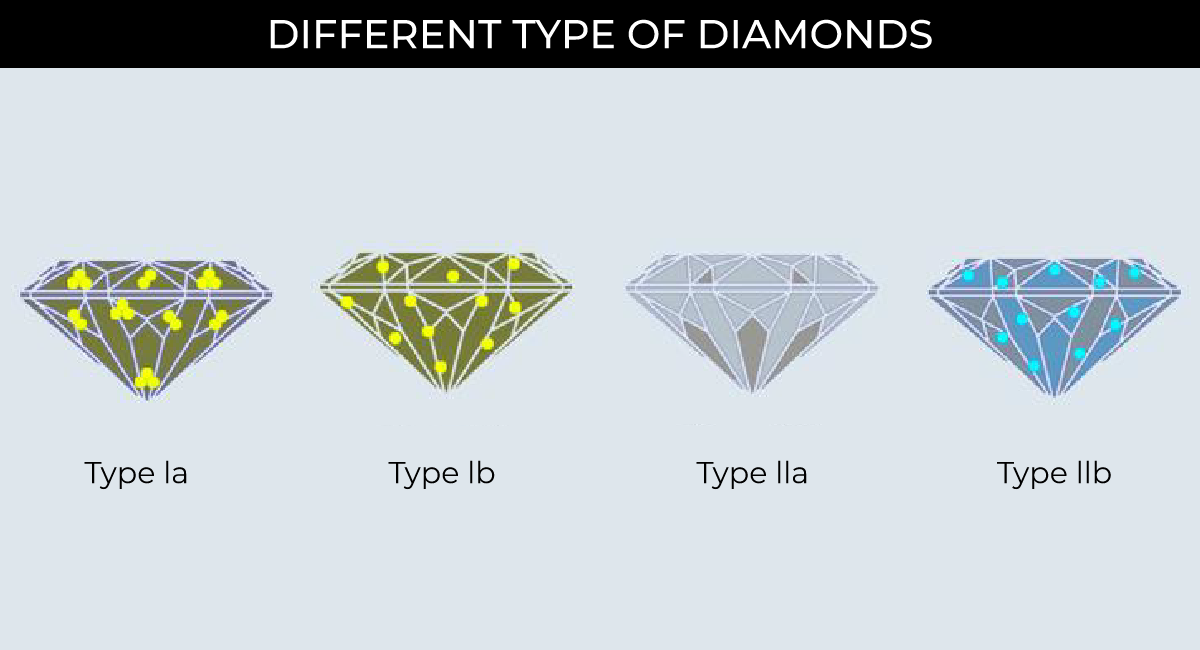
Diamond types do not refer to the shape or size of the diamond, rather it is concerned with the scientific classification of diamonds based on the number and type of impurities they carry. A diamond usually consists of 99.95% of carbon and the rest of 0.05% of trace elements, for instance, nitrogen. 

Different Types of Lab Diamonds

In summary, there are different types of diamonds:

Type I Diamonds: These are the most common, making up 98% of all diamonds. They show traces of Nitrogen. Type Ia diamonds have clusters of Nitrogen atoms, giving them a yellowish tone. Type Ib diamonds, which represent 0.1% of all diamonds, have singular Nitrogen atoms, emitting strong yellow, orange, brown, and even green colors.

Type IIa Diamonds: Highly valued and rare, they contain very little or no Nitrogen. White Type IIa diamonds are exceptionally colorless, while fancy colored diamonds may have brown, purple, or pink tones. They make up only 1% – 2% of all diamonds.

Type IIb Diamonds: These diamonds include Boron in their structure, often emitting a blue or gray tone. They represent only 0.1% of diamonds.

Type IIa and Type IIb diamonds are unique and collectible. However, it’s important to evaluate each diamond individually, especially for fancy colored diamonds, as no two stones are exactly alike. Never assume a diamond is perfect based on its class or that it’s worthless because it’s a more common type.

What are Type IIA Diamonds?

Type IIa diamonds, also called “Golconda diamonds”, named after the Indian mines that famously gave the world some of its first Type IIa diamonds in the 16th and 17th centuries, exist without any impurities like nitrogen or boron, and for this reason, they are usually fully or almost colorless. 

Type IIa stones can be light pink, gray, light brown, and light yellow. Since they are mostly colorless, they do not absorb ultraviolet light but allow it to completely pass through, making them the most dazzling diamond of them all. 

They also remain the purest diamonds to be found, and they have high thermal conductivity. Type IIa diamonds constitute a minute 1-2% of the total amount of diamonds mined from Earth. 

Adding value to their rarity, Type IIa diamonds are only found in the extreme depths of the Earth’s mantle, around 360 km to 750 km below the crust as opposed to the range of 150 km to 230 km where other diamonds are usually mined. 

Their beauty has been mystified by our society by some of the most famous diamonds in pop culture, be it Elizabeth-Taylor’s Asscher-cut diamond ring or the Koh-i-Noor. However, most lab grown diamonds are Type IIA, as the man-made process of making diamonds has been pushed to achieve the level of purity that is so rarely provided by nature itself. 

It is for this reason that, especially for the most expensive type of diamond, a switch to lab grown diamonds was endeavored, achieved, and even encouraged in modern times.

The level of impurities carried by Type IIA diamonds, be it mined or lab grown, will remain negligible even to microscopic scrutiny. It is only the atomic impurities that an infrared spectrometer can pick up, which make a difference, although only in terms of composition and not appearance. 

Why Choose Type IIA Diamonds Over the Rest?

It is now clear that Type IIA diamonds are not only different from a purely geological or scientific perspective but also because their impurities as such are invisible to the naked eye and typical magnification. 

Usually, because of their sheer sparseness, every stone of Type IIA also has a story attached to it, something that is also similarly sought after as their quality. To add to this, Type IIA diamonds are usually large, meaning more than 10 carats. 

To bring the discussion back home, the obvious superiority of Type IIA diamonds, paired with the safer composition of lab grown diamonds and its cheap prices, will be a better purchase than any other type of diamond in the market. 

While making a purchase, it is important to focus on the grading report for the diamond by the International Gemological Institute (IGI) which will guarantee and outline the diamond’s measurements, clarity, composition, etc.

  • Type IIa Diamonds: The Rare Gem
    • Diamonds are often categorized by type, affecting their rarity.
    • Most diamonds are Type Ia, containing nitrogen that imparts a yellow color.
    • Type IIa diamonds, however, have minimal impurities, making up only about 1.8% of all gem diamonds.
    • These diamonds, known for their purity, exhibit high transparency and thermal conductivity.
  • Type IIa Pricing
    • Type IIa diamonds with ultimate cut, color, and clarity are exceptionally rare.
    • Pricing is mainly based on carat, color, and clarity, with diamond type not factored into the base price.
    • While demand for precision cutting creates a premium, the rarity of Type IIa diamonds isn’t as recognized as a pricing factor.
    • Shoppers seeking D IF diamonds are willing to pay a premium for the purity and rarity of Type IIa.
  • Rarity and Rationality
    • The practical benefit of diamonds at the highest clarity levels, including their type, is limited.
    • Despite the lack of practical value, people worldwide desire diamonds for their beauty and rarity.
    • Cultural and personal reasons drive individuals to seek diamonds of the highest clarity.
    • The ultimate rarity in diamonds, especially in the normal range, is a D IF Super Ideal Type IIa.

Also Read: IGI vs GIA: Comparison On The Basis Of Color Grading, Pricing, and Diamond Reports

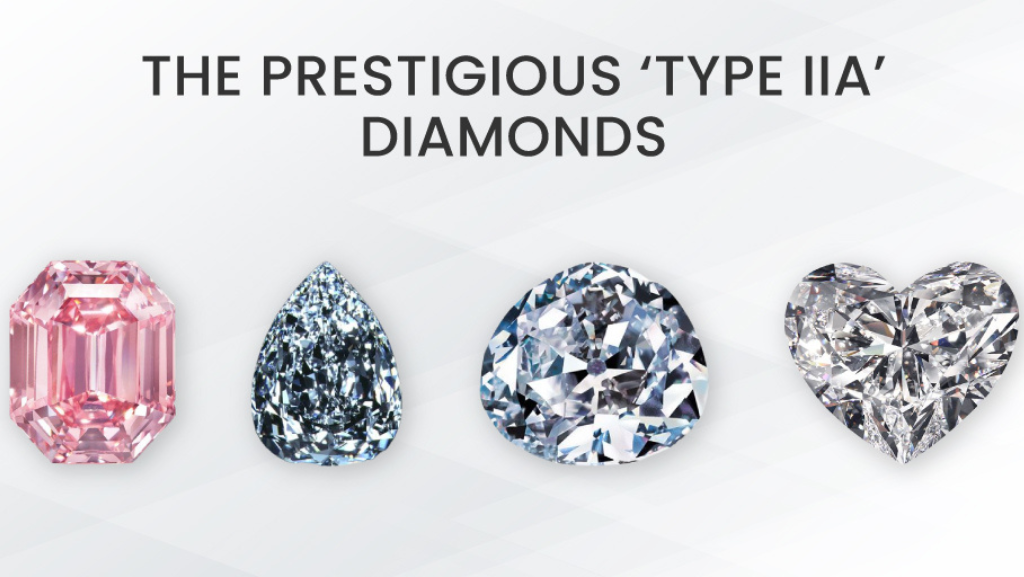
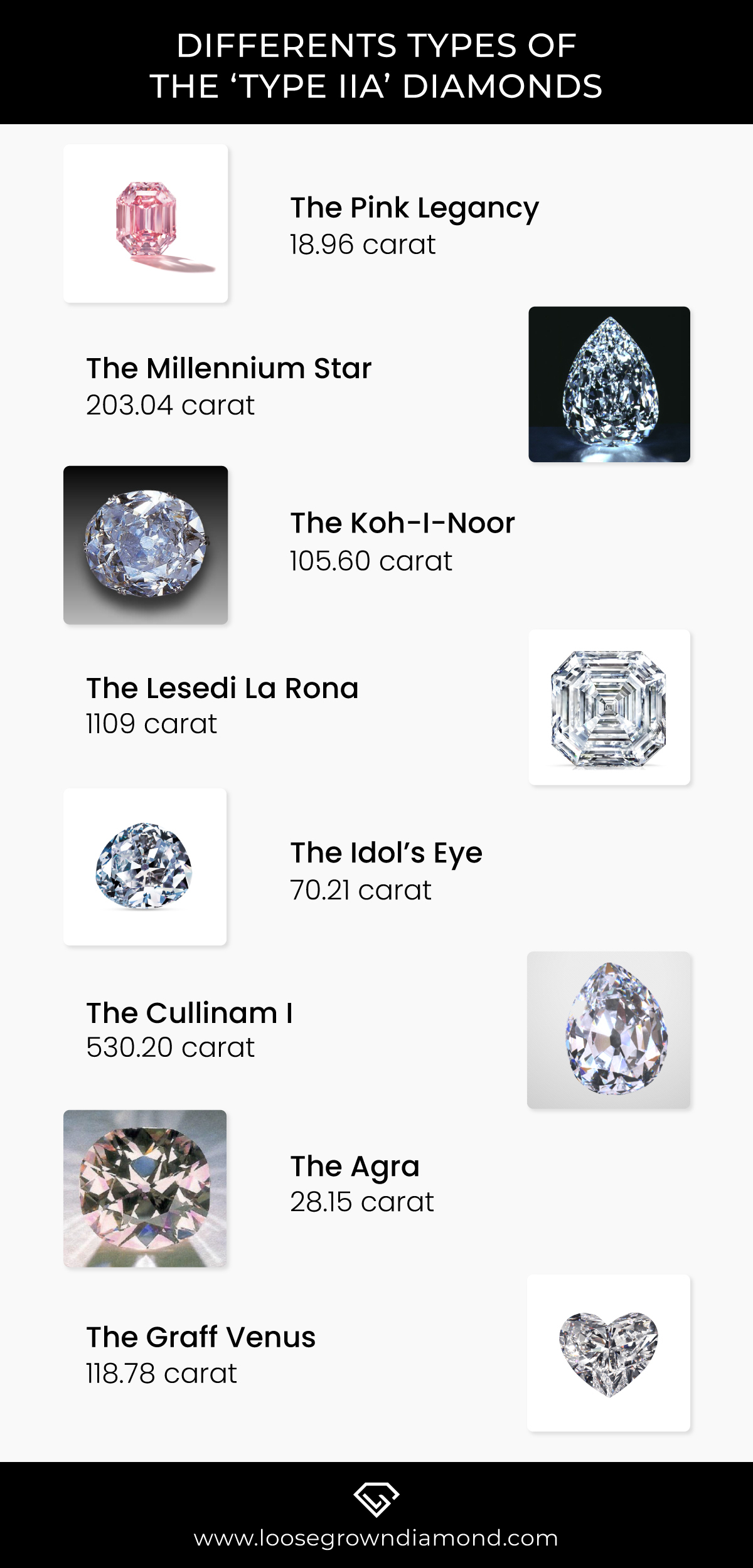
Famous Type IIA Diamonds

different types of "type IIA" diamonds

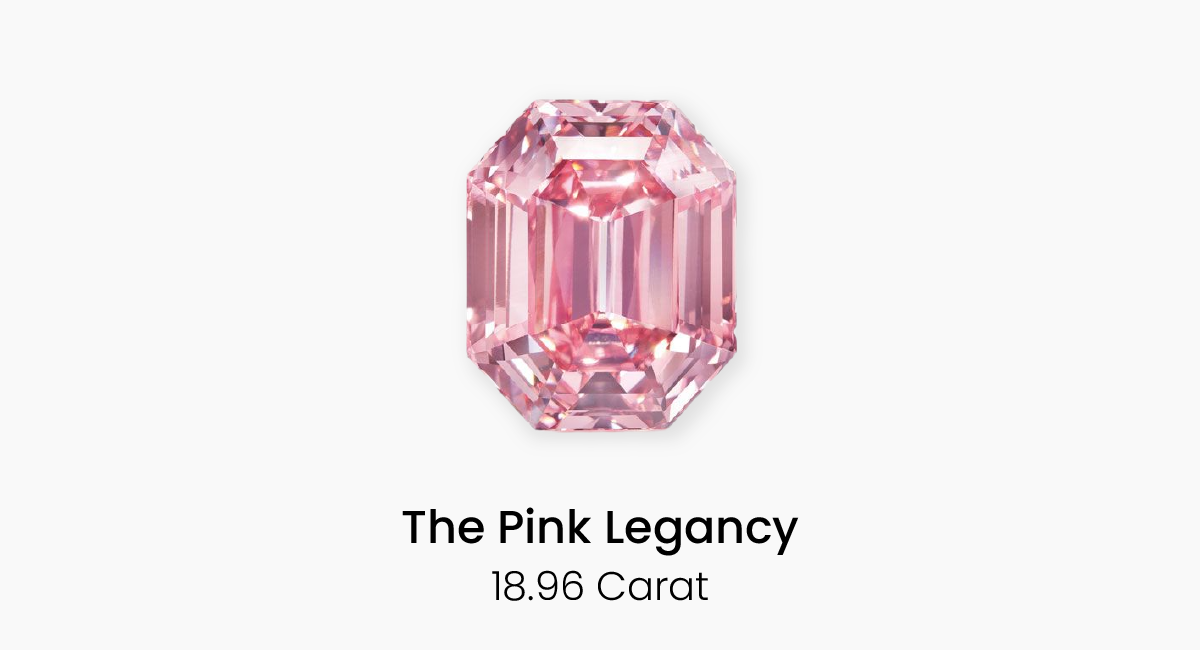
The Pink Legacy

pink legacy diamond
This 18.6-carat pink fancy diamond-type IIA was mined in South Africa in 1918. The mine was owned by the same family that Ran De Beers. The Pink Legacy was later purchased by Harry Winston for $50 million in 2018, at Christie’s auction house in Geneva.

This auction made The Pink Legacy the world record holder for the most expensive pink diamond ever auctioned ($ 2.6 million/carat). It is a cut-cornered rectangular cut diamond that is mounted on top of a platinum ring.

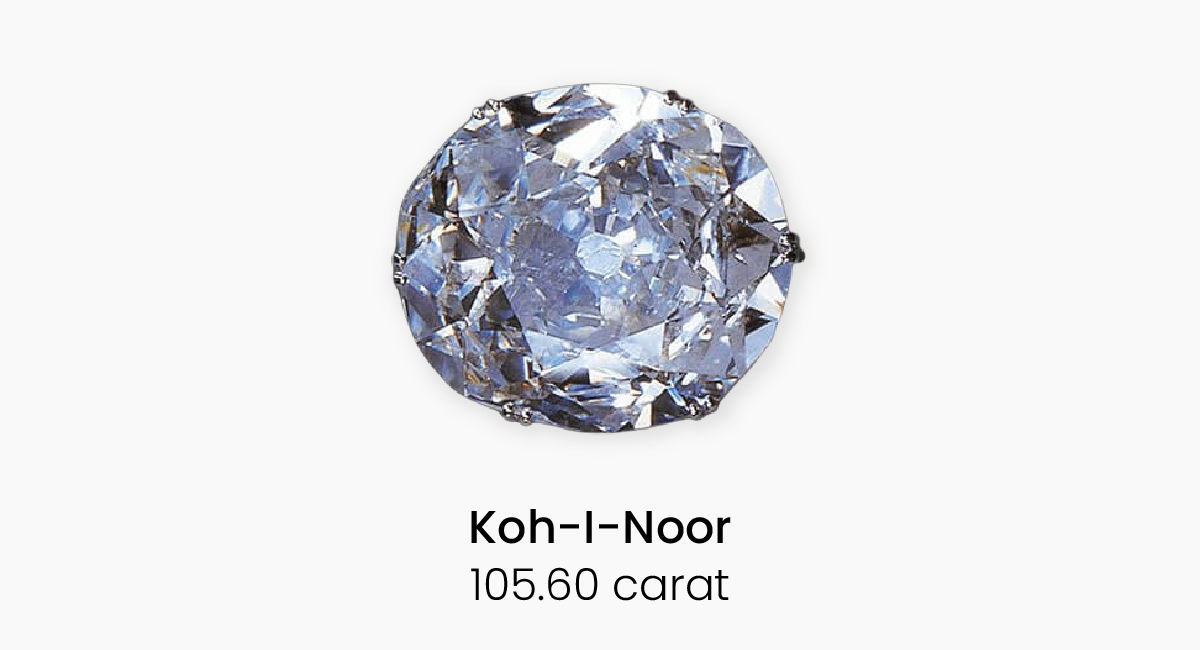
Koh-I-Noor

koh-i-noor diamond
The Kohinoor is a 106 (105.6)carat diamond which is one of the largest diamonds in the world. It was mined in Kollur (India) and referred to as the ‘Persian Mountain of Light’. The diamond was originally 793 carats, but over the years it lost its weight due to being cut and polished again and again over time. It had been passed on from India to Britain during their Colonial Rule.

The Kohinoor is a diamond Type IIA with such purity and clarity that it can make anyone fall in love with its beauty. At present, it is located in Britain and is part of the crown jewels, held by Queen Elizabeth.

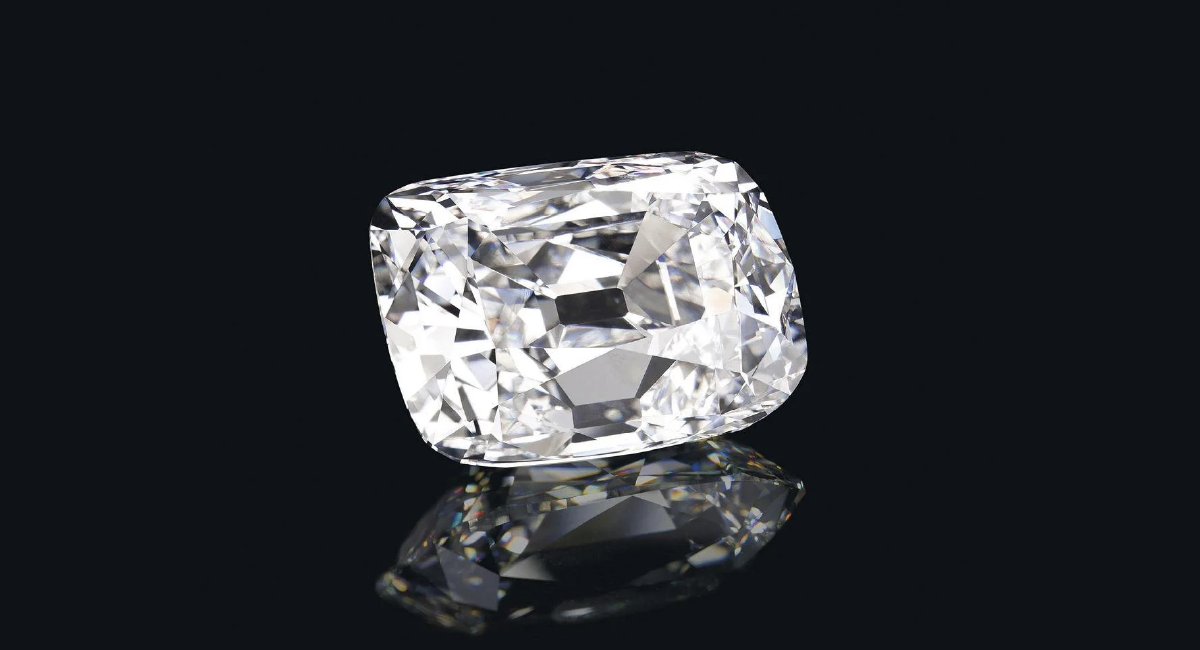
Archduke Joseph Diamond

Archduke Joseph Diamond
This 78.54-carat diamond got its name from its original owner, Archduke Joseph August of Austria (who died in 1916). The diamond was found in India’s Golconda mines. It was claimed for the first time by Austria’s Archduke Joseph August, after which he deposited it in a Hungarian bank vault in 1933.

This type of IIA diamond was purchased by Molina Jewellers in Arizona and re-cut to 76.45 carats. The re-cut and re-polish were done in order to improve the clarity and symmetry of the fancy diamond.

Similarly, there are many type IIA diamonds out there, including The Oppenheimer Blue, The Dresden Green Diamond, The Agra, Darya-I- Noor, Beau Sancyand many more. Type IIA diamonds are going extinct and are getting difficult to find. This has also contributed to a decline in the production of natural diamonds, which is why it is recommended for you to switch to man-made diamonds like CVD diamonds and HPHT synthetic diamonds.

[blog_page_inventory shape=”Oval,Emerald,Princess,Radiant,round,pear,cushion,kite,rose cut,old mine,marquis,” carat=”2.60,3.10″ cut=”0,4″ color=”0,10″ clarity=”0,11″]
[blog_page_btn title=”Buy Lab Grown Diamonds” url=”https://www.loosegrowndiamond.com/inventory/”]

Conclusion

You will be prudent to select a diamond only when the price of the stone matches its IGI/GIA/GCAL grading report. Since the DNA makeup of lab diamonds is already at par with the naturally found Type IIA, the ethical and economical decision will then be to buy the former. 

Without being created under the earth’s surface, none of the impurities like nitrogen, boron, debris, and sediment can enter the chemical production of a diamond, all the while you get to reduce your carbon footprint and the environmental damage as well as labor exploitation so infamously effectuated by mining.

Answering the question of rarity, Type IIA will still remain a fraction of the diamonds in circulation around the globe, as most of the stones we encounter in shops are Type La, with an aggregate percentage of around 98% market share. 

Hence, for green customers looking for ethical, eco-friendly, and conflict-free diamonds, with the added advantage of multiple choices, lab grown diamonds are the way to go. After all, these are diamonds that did well under pressure too. 

FAQs

Are Type IIa diamonds more expensive?
Type IIA diamonds are considered more valuable because of their rarity and the exceptional optical properties they often exhibit. However, other factors like carat weight, cut, and clarity also contribute to a diamond’s overall value.

Can Type IIA diamonds have other impurities?
While Type IIA diamonds are known for their lack of nitrogen impurities, they can still contain other trace elements like boron. The absence of nitrogen is the primary characteristic that defines them.

How can one identify a Type IIA diamond?
Gem laboratories use advanced testing methods, such as infrared spectroscopy, to determine the type of a diamond. A diamond grading report from a reputable laboratory can provide information about a diamond’s type.

Why are Type IIA diamonds considered rare?
The majority of diamonds contain nitrogen atoms as impurities. Type IIA diamonds are rare because they lack these nitrogen impurities, making up only a small percentage of all diamonds.

Rose Cut Diamonds: A Guide That Contains Everything You Want to Know

When conveying love or affection for someone red roses and big diamonds have always been a go-to ‘gift’ for centuries. You put these two together and you will get the ultimate gift one can offer to their beloved, a rose cut diamond’.

Diamonds are an everlasting and ever-growing gem that will always manage to mark a place in the fashion world. Often you’d have heard your mothers and grandmothers fawn over that one ring or pendant fitted with a beautiful shiny rock. 

It is only fair for a woman to go gaga or crave a diamond her entire life. Trends come and go, however, when investing in jewelry choosing classic, antique pieces is the best.

Most of Y2K and 80s-90s fashion has hit the markets with a great impact. Hence, it is no surprise that antique cut diamonds are dominating the modern jewelry scenario. 

It is because antique diamonds provide a distinguishable visual treat with impressive hand-cut facets playing with light. This is enough to attract lovers and collectors of vintage jewelry and pieces.

What are Rose Cut Diamonds?

What are Rose Cut Diamond

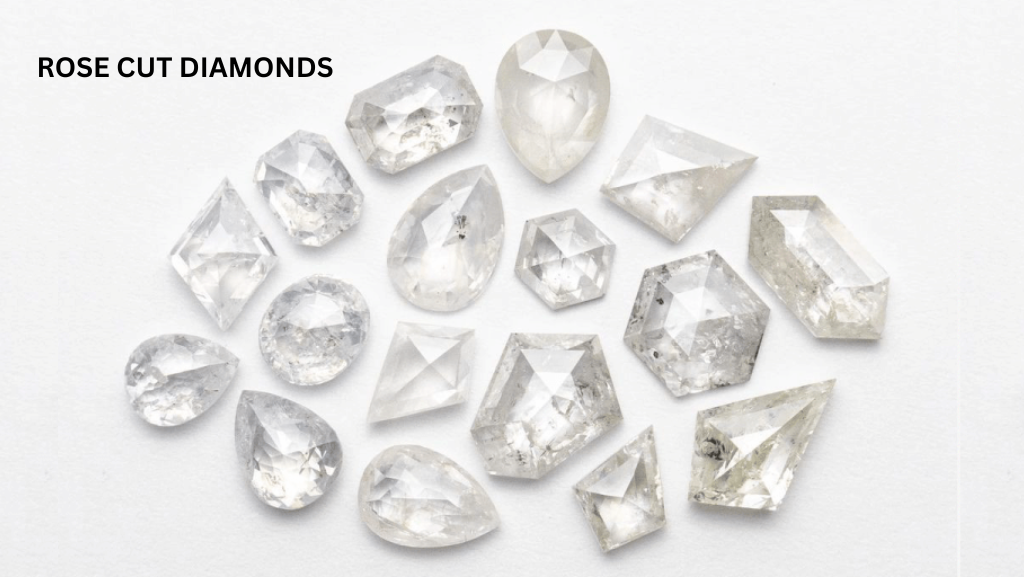
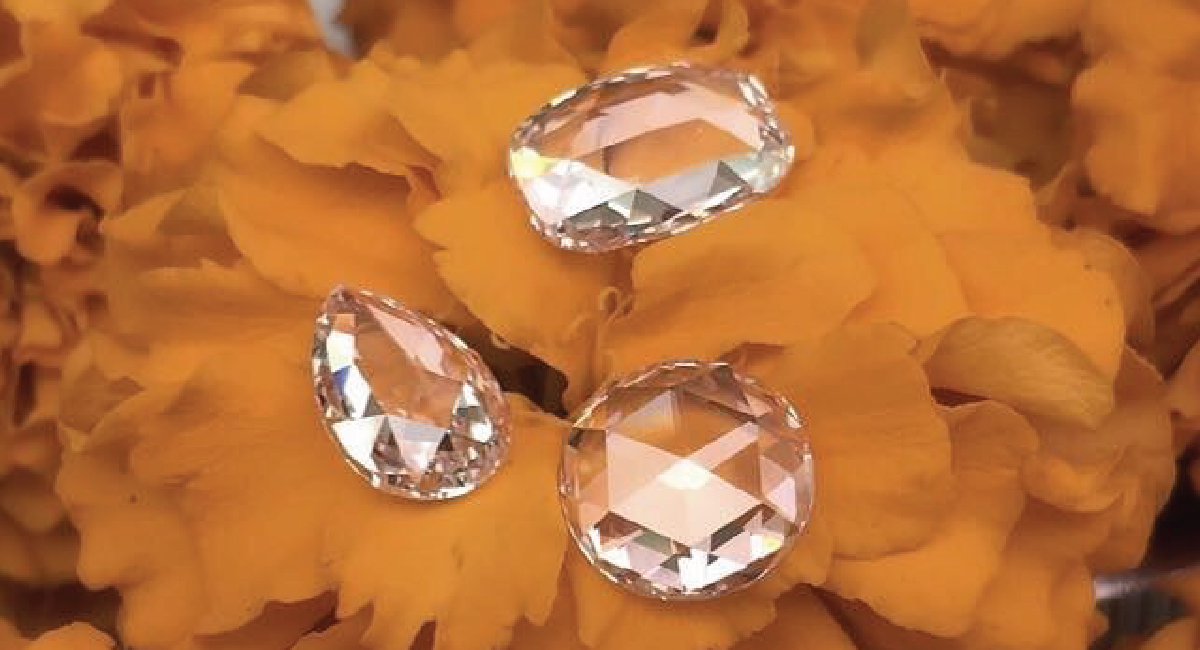
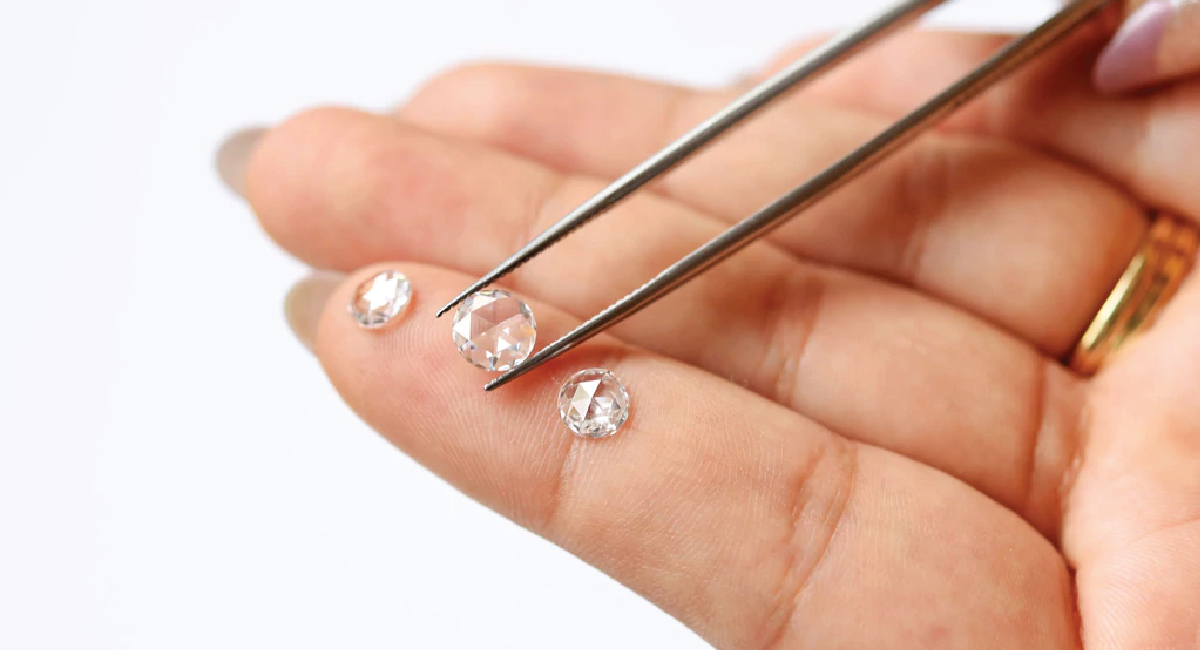
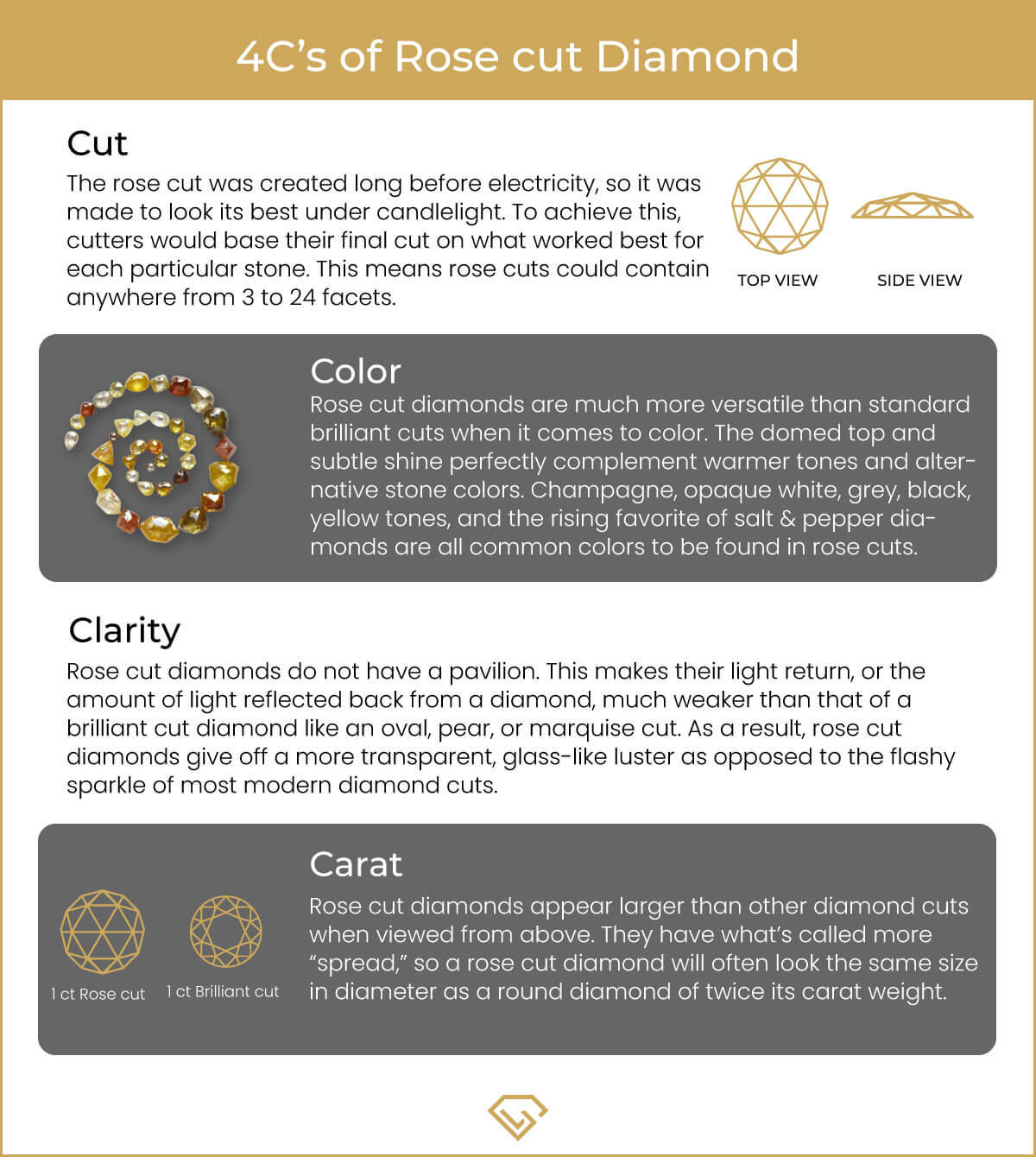
These diamonds are known for their triangular facets, impressive flat back, and domed top-covered style. The number of facets is not rigid and can go from three to more than twenty, either way, ending at the top in a singular peak.

The name ‘rose cut diamond’ is derived from the sense that the facets resemble the petals of a rose unfolding at the bud. This cut stands out because the gem is pretty much transparent due to no facets being present at the downside of the diamond which reflects light. 

Secondly, the rose cut diamond has an elegant, calm, and exquisite look as compared to a full-cut diamond in all its sparkle. Another feature is that rose cut diamonds carry the weight of the carat to the top. It will be viewed as bigger than a full-cut diamond with the same carat from the top since it has a larger surface area with none of the carat weight stored below the girdle. 

Origin of Rose Cut Diamond

The Victorian Era and Georgian Era marked the first instances of rose cut diamonds in the 1500s. They were cut by hand like other antique diamonds and meant to work exquisitely under low light conditions with their wide and large facets. 

origin of rosecut diamond

Love came to be symbolized with the rose cut diamond ring. As legend and tradition say, The third finger of the left hand contains a vein that runs directly to the heart. It truly makes for a beautiful diamond engagement ring on a wedding day for a partner symbolizing togetherness.

The rough diamond shape is a major determining factor for the final shape in which the diamond will be cut. However, the cutters try to retain as much original carat weight as possible. You might notice the perimeter following the diamond crystal instead of a perfectly round shape on an antique rose cut diamond. 

The narrow crystals are of great use as they are not extensive for other shapes due to their shallow height. With its rich history, it is only fair to bring in such an ethereal piece for a major event. Rose in itself translates to a symbol of love and romance. 

Hence, pop that question with this beautiful piece to make your moment even more special. Rose cut diamonds and their jewelry are now available as lab grown diamonds and look/feel just the same. 

Lab Grown Rose Cut Diamond

In the early 1950s after many trials and errors diamonds in their raw form were created by scientists, however, their commercial sale came to be known in the 1980s when man was actually able to produce high-quality, refined raw diamonds. 

It was during that time that all diamond shapes and styles were replicated by chiseling and cutting lab grown diamonds. Though they were considered to be man-made their properties possessed by them were identical to that of natural diamonds.

Lab created Rose Cut Diamonds

This marked the beginning of an era of ‘affordable diamonds’, however, it wasn’t until the recent decade that these man-made diamonds were openly accepted by the public.

Coming to the technicalities a lab-grown diamond is created by two processes. The only difference is that these methods didn’t follow the natural geological process but rather a man-made process to create a nice alluring Diamond ring.

Now, why should you buy a lab grown rose cut diamond? Or, why should you buy any lab grown diamonds in general? Well, for starters it is affordable. To put it in perspective a man-made diamond will be 25-30% cheaper than a naturally mined diamond. But, a man-made diamond will be so identical to a natural diamond that you won’t be able to tell them apart. 

Try thinking of it this way you can get around 1/3rd more of a diamond if you are buying a lab grown diamond (figuratively speaking and in comparison to naturally mined diamonds).

4C’s of Rose Cut Diamond

Let’s talk about the color and clarity of rose cut diamonds! How colorless or the degree to which it is white are they? What is referred to by the color? 

The color of a diamond or a rose cut lab diamond, in this case, is graded from D (least or almost colorless) to Z (yellow or brownish tint) on the color grading scale

Amongst the 4C’s of the diamonds: color, clarity, cut, and carat, color is where the rose cut diamonds compromise a bit. Flexibility with color is present with these types of diamonds. 

rose cut diamond 4c infographic

Since it has a domed top with a subtle shine, warm tones, and other colors this palette compliment it the best. Different colored diamonds like blue, pink, yellow, green, etc. also go great with rose cut diamonds. 

Such a cut brings out the diamond’s color prominently without the distraction of an intense light that comes with other diamond cuts. 

Another imperative part is the clarity of rose cut diamonds. The case with rose cut diamonds is such that blemishes and inclusions are quite visible because of the transparency, high dome, and larger and flatter facets of the stone which can be seen thoroughly. 

Hence, if you are looking for something extremely flawless, look for a higher-grade diamond. However, the imperfections of the stone add to the vintage feel of the diamond. If that is your style, you can lose clarity.

The rose cut diamonds appear larger in size when viewed from above. It has more ‘spread’ which means a rose cut diamond will mostly look the same in diameter as a brilliant round diamond of twice its carat size. 

Why Buy a Rose Cut Diamond?

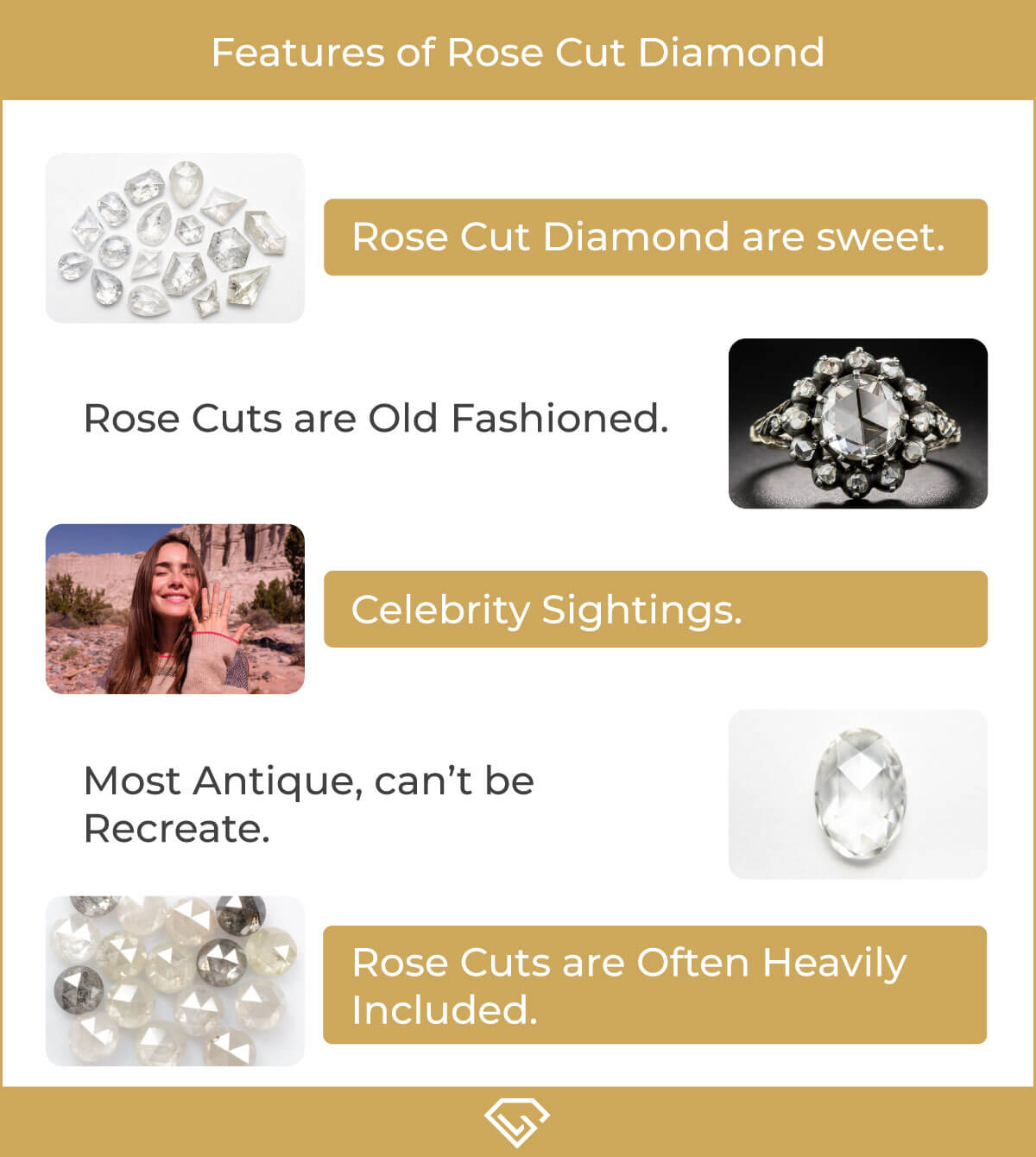
There are multiple reasons to invest in a rose cut diamond. They are modest in size and price, definitely considered a big gesture of love and romance. Are quite more transparent than most of the other diamond cuts. 

advantages of rose cut diamond

One major reason is that a rose cut diamond has a larger perceived size. They are more shallow in-depth, as in, the weight of the diamond shows on top. Hence, they appear bigger than the other cuts of the same carat. 

Secondly, the price is worth the diamond rather, than more diamonds than your money. It does not have a pointed bottom not and the carat weight is distributed making the diamond appear bigger without incurring any extra costs.

Another thing is that they are still popular however, they are relatively a rare find in modern diamond collections. This makes it a much anticipated find for a buyer or collector.

These rose cut diamonds represent a unique interaction between the light source and the diamond surface. The luster provided by the rose cut diamonds is more subtle than other cuts. It is romantic and elegant. It is not a rigid cut and can be customized into different shapes like oval shape, pears shape, round shape, hexagon shape, pear shape, kite shape, etc. 

[su_youtube_advanced url=”https://www.youtube.com/watch?v=ocEZv7JYbAc” width=”1600″ controls=”alt” autohide=”yes” autoplay=”yes” mute=”yes” loop=”yes” rel=”no” modestbranding=”yes” theme=”light” playsinline=”yes” title=”rose cut diamond engagement ring”]

However, one drawback can be that they do not make for the most dramatic engagement ring. It translates for a sweet, elegant cut rather than a bold dramatic statement. 

Another point is that these rose cut diamonds fall flat. If you were to observe this diamond cut from the site it would look as if a diamond cutter had sliced a round brilliant diamond from its axis. Lastly, a rose cut diamond shape cannot be recut into anything else. 

While you can ensure flexibility with the shape of the diamond, not so much with re-cutting. The cut is such that it only stays true to the rose cut. 

Pros & Cons of Rose Cut Diamonds: 

Pros:

  • The most important point that stays is that rose cut diamonds appear bigger in size than diamonds of the same carat. 
  • It is flexible in picking the shape of the diamond
  • You can easily customize it into a shape that you like without much thought. 
  • This cut is a rare find. Hence, it is truly eye-catching and sits well with the wearer. 
  • Since the diamond has a flat base, it sits close to the finger. People who live a life of hustle and vigor can opt for a diamond-like such. 
  • It is a versatile piece and will go with almost every outfit because of its elegance and simplicity. It stands out regardless. 

Cons:

  • A rose cut diamond sparkles less in comparison to a brilliant-cut diamond. This is a personal choice hence, if you are someone who likes to go off with their jewelry items then you should opt for something other than a rose cut diamond. 
  • While being a rare find is a pro but it at the same time acts as a con too. The rarity of the diamond makes it difficult to find in the markets. 
  • Since it is an antique hand-cut diamond, imperfections, bruises and asymmetries are visible along with the facets of the diamond. 
  • Although it is said that the pricing of the rose cut diamond is flexible, there is a wide disparity when it comes to the pricing all over to draw comparisons between different diamonds. 

Differences Between Brilliant Cut Diamonds & Rose Cut Diamond

rose cut vs brilliant cut diamond

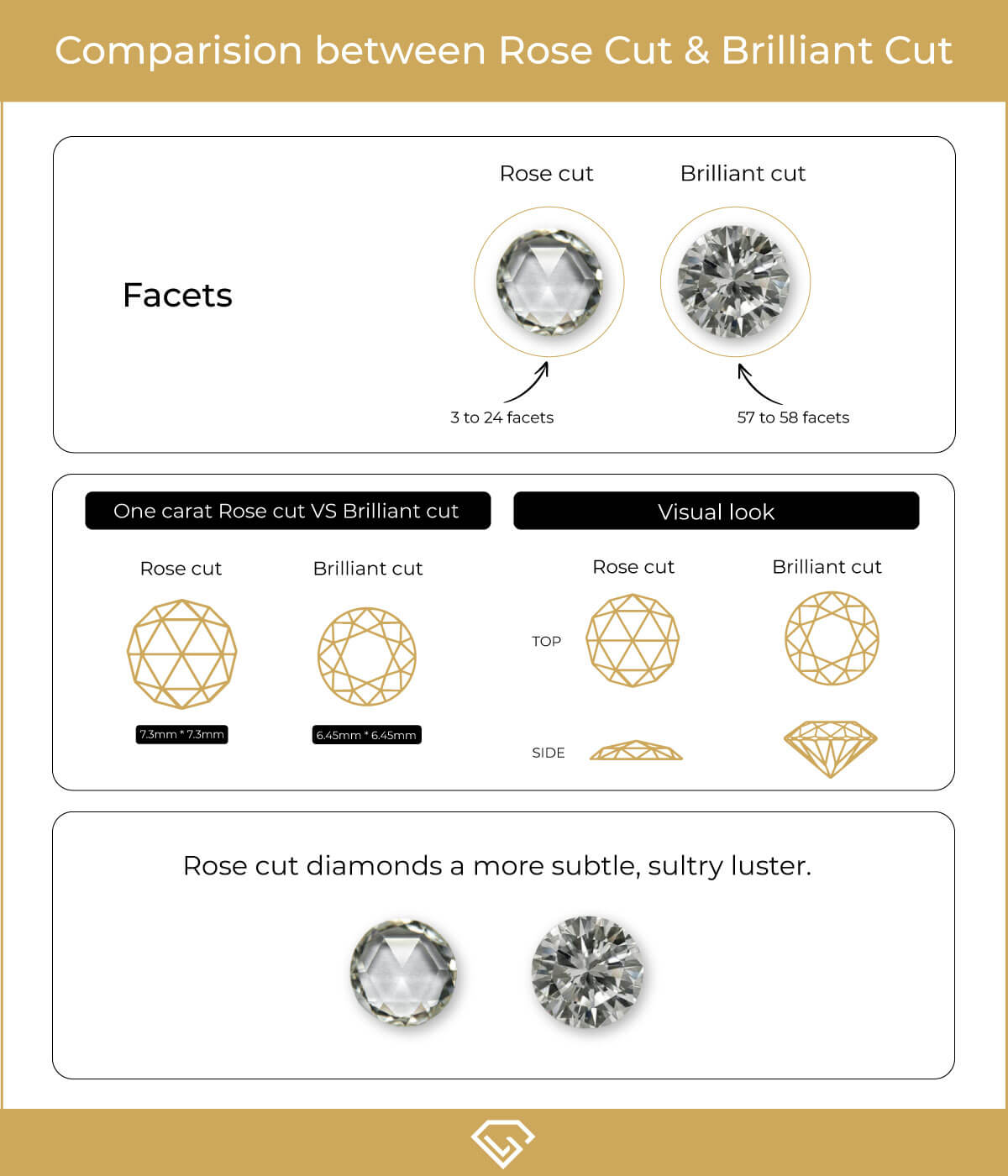
The flat individual surfaces of a diamond are called facets which are used to control the light reflecting the diamond. The fewer facets of a rose-cut diamond give off a subtle and elegant look resulting in a soft diffused lift (24 facets). 

The brilliant-cut diamond has around fifty-eight facets which give off a bold, bright and flashier sparkle. 

The brilliant-cut diamonds are weighty at the bottom owing to their pointed bottoms and tables. The diamond’s brilliance is accentuated with depth. 

On the other hand, as mentioned previously, rose cut diamonds have flat backs and dome-style crests. When viewed from the top, the rose cut diamonds present a larger-than-life view in comparison to brilliant-cut diamonds with the same carat weight.

Rose cuts are set low on the finger due to the flat bottoms while the brilliant cut is the opposite. It sits higher on the finger. 

The rose cut diamonds date back in time and have a glorious history with the Georgian and Victorian eras while the brilliant cuts were first visible in the 1919s using specifics of geometry and proportions. The brilliant cut is a mark of modernity in terms of diamond cutting and evolution over time in terms of this sector.

Where To Buy a Rose Cut Diamond?

You can buy lab-created rose cut diamonds on sale at Loose Grown Diamonds, one of the largest wholesale lab-grown diamond shops all over the world. Additionally, You can get a discount by using a promo code while shopping.

Combined with the wholesale prices, you really cannot get the best value for lab grown rose cut diamonds anywhere else other than Loose Grown Diamonds.
[blog_page_btn title=”Buy Lab Grown Diamonds” url=”https://www.loosegrowndiamond.com/inventory/”]

Conclusion

Rose cut diamonds make up for a brilliant anniversary or wedding present. This diamond is a special way of making your partner elated with joy. The rarity factor makes the rose cut diamonds even more special adding the hint of mystery and topping with elegance.

Jewelry should be such that it tells a story. This diamond holds a rich heritage and history which endows a certain sense of beauty in this piece. Ask the question with this rose cut diamond and a rose, literally!

Also, you can check out the stunning infographic of rose cut diamond, Follow the given link below:

  1. Check out the infographic of Rose cut diamond here in PDF format.
  2. Check out the infographic of Rose cut diamond here in PNG format.

FAQs

What does a rose cut diamond look like?
A rose cut diamond features a flat base with a domed top, resembling an unfolding rosebud. Triangular facets enhance transparency, offering a distinctive, elegant appearance.

Are rose cut diamonds more expensive?
The value of a rose cut diamond varies based on factors such as carat weight, color, clarity, and cut quality. Rose cut diamond prices can range from $1,200 to several thousand dollars per carat.

What is the difference between rose cut diamond price calculator?
The difference lies in the specific parameters considered for rose cut diamonds, accounting for their unique characteristics, rarity, and individuality in comparison to other diamond cuts in a price calculator.

What is special about rose cut diamonds?
Rose cut diamond shapes appear larger for the same carat size, making them a cost-effective choice.

Is lab grown rose cut diamond cheaper?
Yes, rose cut diamonds can be relatively cheaper due to their unique cut, which emphasizes perceived size over depth.

Square Emerald Cut Diamond: Everything You Need to Know

Diamonds have always been many people’s favorite choice of gemstones. While many tend to settle for the flashy and brilliant variations in diamonds like the ones with round cut gems, many others prefer a subtle and sophisticated design like the one that can be observed through the emerald cut or asscher cut diamonds.

Two nearly identical cuts like the Emerald and Asscher diamonds, hence, make for a great choice for customers who are not attracted by gems that are too flamboyant but would still like to enjoy the radiance and beauty that diamonds exude. The only major difference between the cuts is the variation in the L: W ratio of the diamonds, wherein the length and width vary in such a way that the emerald cut diamond has a rectangular shape whereas the Asscher cut has a square one.

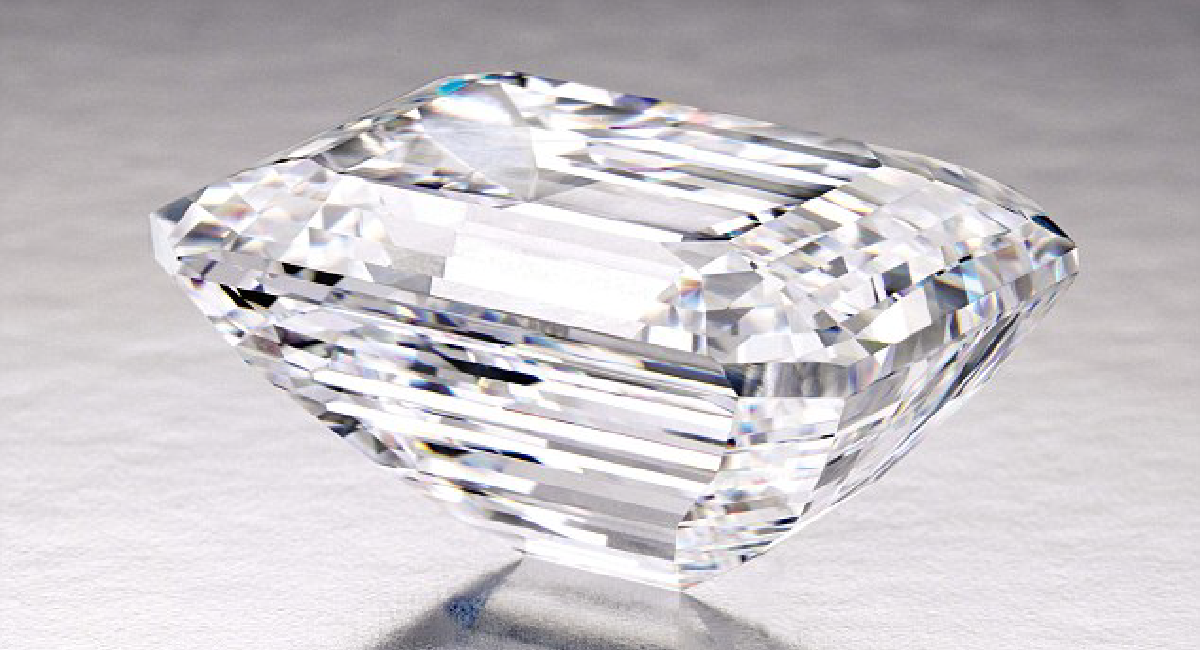
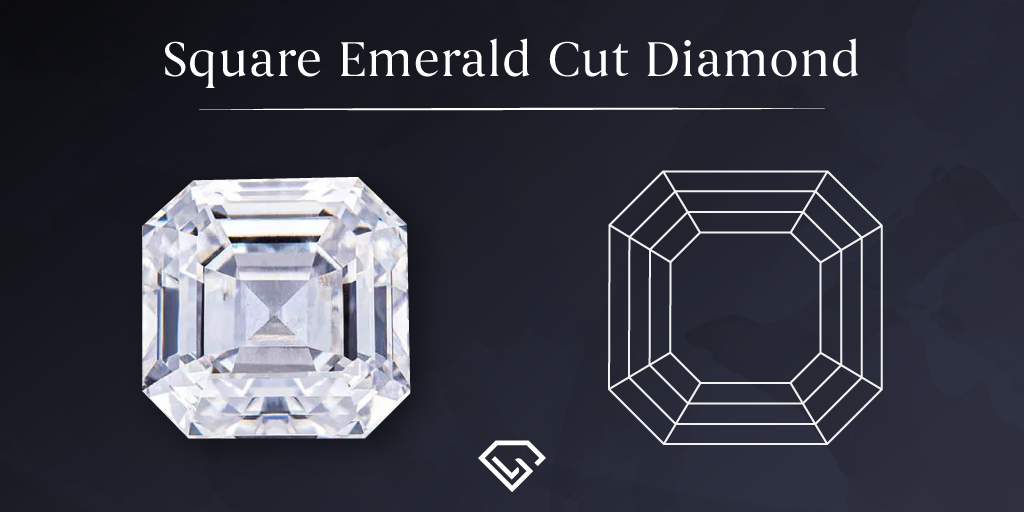
what is square emerald cut diamond

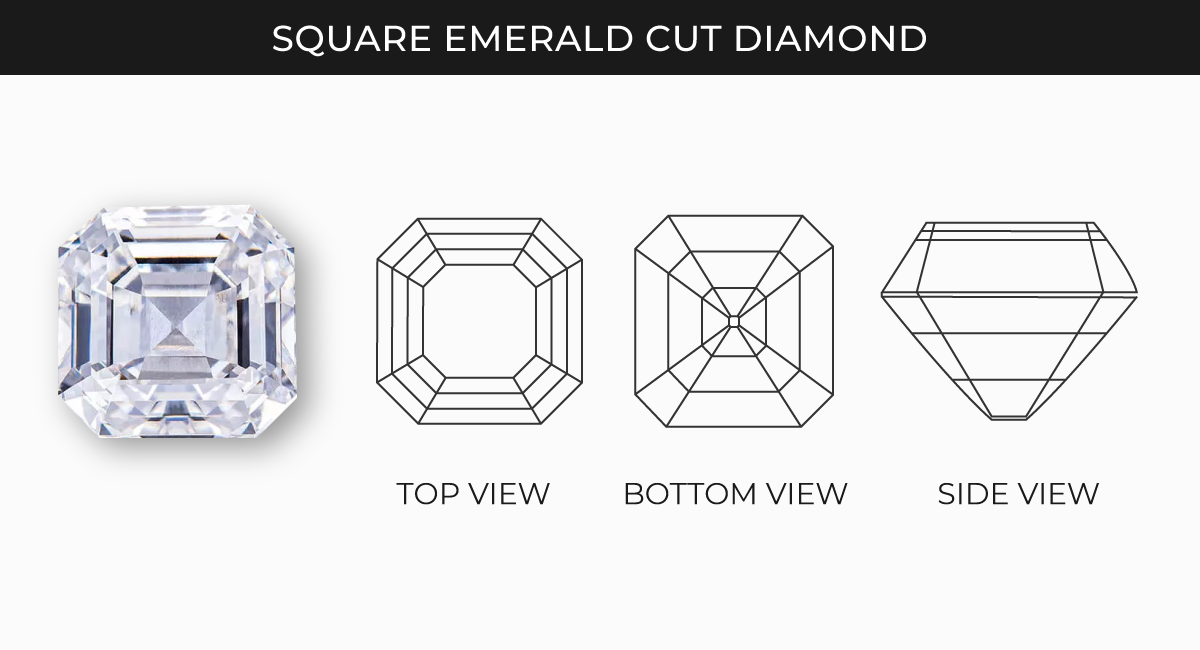
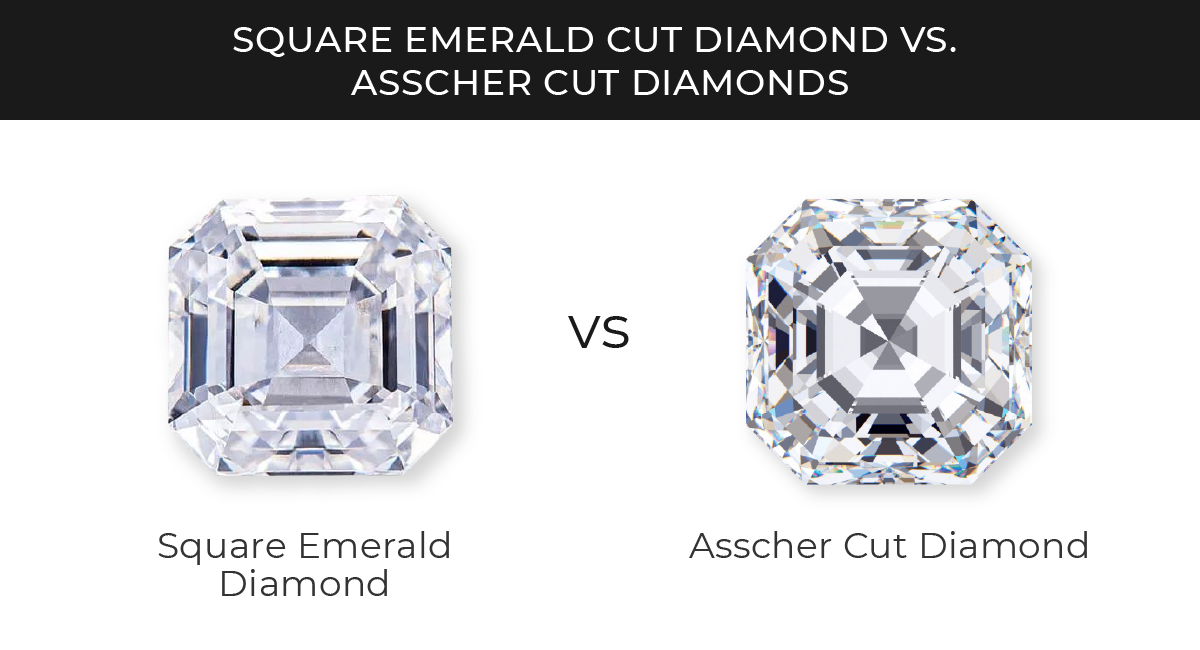
However, the square shaped emerald cut diamonds sometimes manage to create a lot of confusion amongst customers since they resemble both types and are difficult to place within either of the categories. The square emerald cut diamonds can still be included under the umbrella of emerald cuts because of their less truncated corners which are more pronounced in a true asscher cut diamond.

Hence, square emerald cut diamonds can easily be said to be the perfect combination of both worlds and prove to be an apt choice for customers whose personal preferences and styles complement the design exhibited by these diamonds.

However, before making a decision on which cut to choose for one’s jewelry, it is always advised to customers to first look into the general guidelines that must be referred to for the process of evaluating diamonds.

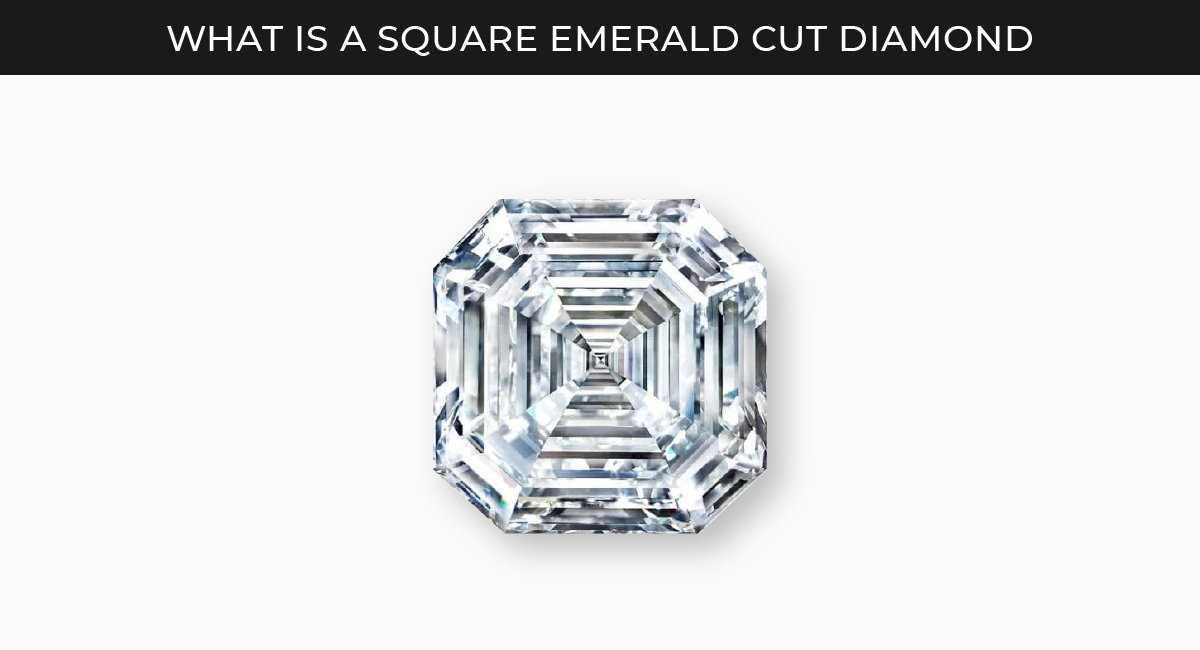
What is a Square Emerald Cut Diamond?

A diamond with an elongated shape molded into the appearance of a square, the square emerald cut gemstone has linear facets that feature chiseled step cuts that are arranged in a parallel manner down the stone. Additional cuts are provided to the corners of the stone to provide the gem with extra security and stability so that it retains its shape and position in a ring and does not get easily fractured. 

What is a Square Emerald Cut Diamond

With a huge surface table, the square emerald cut diamond is one of the largest diamond cuts out there and also provides its wearers with exceptional clarity. It is well known for appearing larger than the actual size and carat weight of other shaped diamonds and hence, makes for a popular option for customers who want to spend their bucks in a budgeted manner but on a large stone. Another effect created by the cut includes its ability to abundantly reflect white and colored light due to the presence of long step cuts.

Although emerald cuts are generally found in rectangular shapes due to better prominence, they are also available in squares for customers who are attracted to the particular shape.

[blog_page_inventory shape=”Emerald” carat=”1.40,2.20″ cut=”1,4″ color=”0,10″ clarity=”0,11″]
[blog_page_btn title”Buy Now” url=”https://www.loosegrowndiamond.com/inventory/?”]

History of Square Emerald Cut Diamond

One of the oldest diamond shapes to exist, the emerald cut can be traced back to the table cut of the 1500s from which the emerald cut was further developed. Originally termed as the multi-faceted table cut, the cut was first and foremost used on emeralds as the name suggests and was only a lot later on brought as another variety into the world of diamonds. 

With the term ‘emerald cut’ emerged in the 1920s, it has often been associated with the era of Art Deco wherein clean lines and symmetry were in trend amongst the people and enjoyed their own class of popularity. Then in the 1940s, the cut was further more refined and standardized which could be done with the invention of much more advanced and systematic diamond-cutting tools.History of Square Emerald Diamond

Once emerald cuts were refined as much as they could be, they began being designed in shapes other than rectangles by many jewelers and designers and hence, the square emerald cut diamond was conceived. 

Facets of Square Emerald Cut Diamond

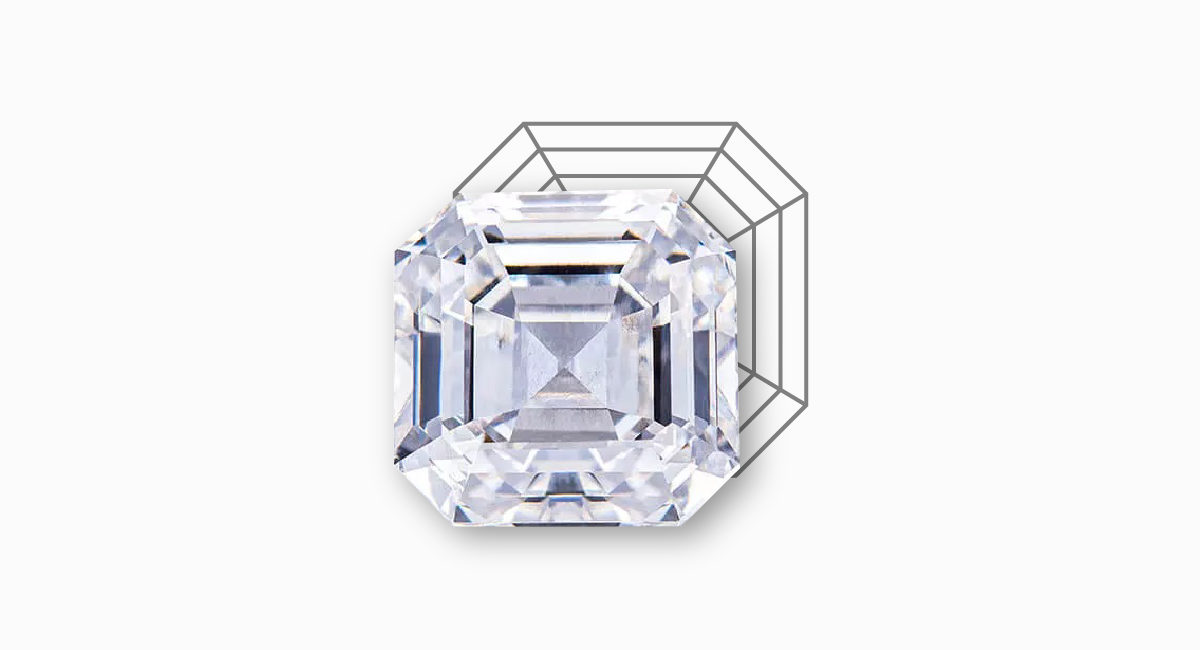
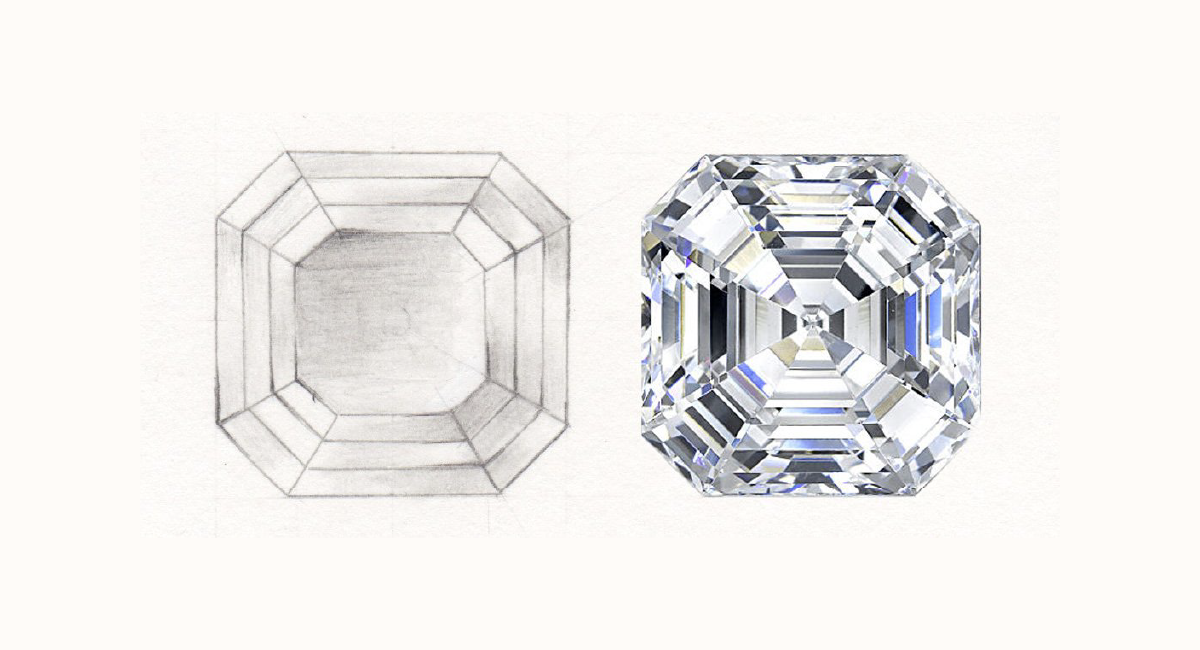
The square emerald cut diamonds have a square outline and the corners are cut in a particular manner. Depending on the dimensions of the gem, the emerald-cut diamonds can be home to 50 to 58 step-cut facets.

Square emerald cut diamond
The step cuts are arranged parallelly and this leads to the creation of stunning flashes of light which in turn causes a “hall of mirrors” effect. This cut is known to be slightly more elegant than radiant cut diamonds and also exhibits a more sophisticated sparkle.

Difference Between Square Emerald Cut Diamonds & Asscher Cut Diamonds:

Many times people tend to propose the question “What is the difference between an emerald cut diamond and an asscher cut diamond?”. The reason both of these types of diamonds are put up for comparison is that they both belong to the step-cut family. In this family of diamonds, each diamond has some or the other sort of step-like cutting the ones you see on staircases. 

Square Emerald cut vs Asscher cut diamond

This family consists of emerald cut diamonds, asscher cut diamonds, baguette cut diamonds, and carré cut diamonds. Each of these diamonds has its own specialty and reason to buy. But coming to the emerald and asscher cut diamond.

Firstly, the emerald cut lab diamond is rectangular as it is elongated. The asscher diamond has equal sides and appears as a square and at times when the corners of an asscher diamond are cut thoroughly, the gem appears to take an octagonal shape. 

Coming to the length of these diamonds; the length of the sides of both the diamonds vary. The ratio of length for the lab created emerald diamond can be 3:1:1 (length: width: thickness), 6:1:1, and even 4:1:1. This is why when one wears an emerald cut diamond their fingers appear to be elongated, a phenomenon which is seen when wearing marquise, ovals, and pear diamonds. 

These are not fixed but rather ratios that will give the diamond an elegant look. The sides of an asscher lab diamond will however be at 1:1. Making this diamond a bulky look and appear to be bigger in general.

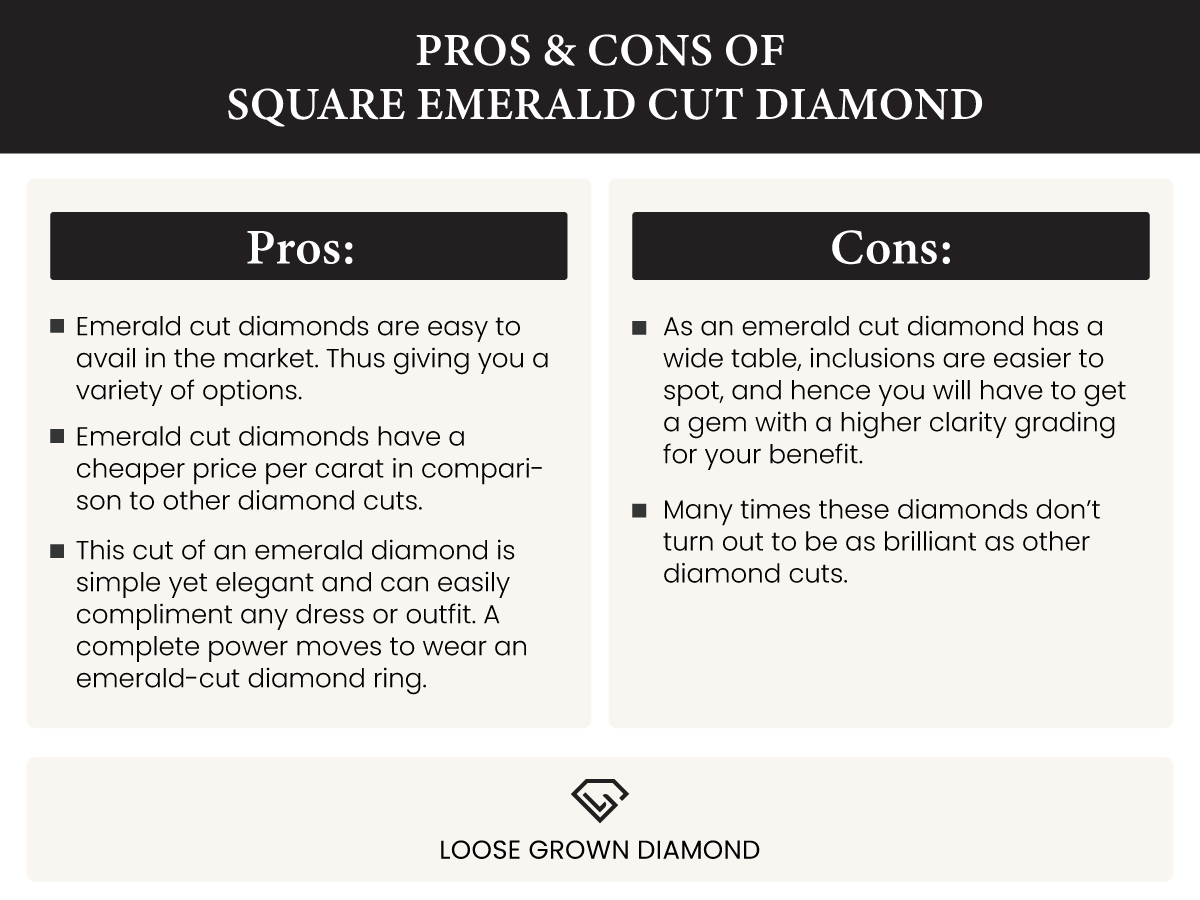
Pros & Cons of Square Emerald Cut diamond

Now that you have got a broad idea about emerald cut diamonds let us mention reasons why you should buy this gem (pros) and reasons why you might back out in buying an emerald cut diamond (cons).

pros and cons of square emerald diamond

Things to Consider Before Buying a Square Emerald Cut Diamond Ring:

The square cut diamonds are being prominently used in engagement rings by customers who are intrigued by the uniqueness and subtlety expressed by this variation. Even though the guidelines to judge square emerald cut diamonds are pretty much the same as the rules applied to the other diamonds that were mentioned before, it is still essential to keep in mind the few specifications that are characteristic features of the emerald cut gems.

Cut: Since reputed organizations like the GIA do not grade cuts in fancy shapes and only evaluate the polish and symmetry of the surface, customers can only utilize certain ranges in aspects of the cut of an emerald cut diamond to achieve maximum luster. The ranges are given in the following table.

Things to Consider Before Buying a Square Emerald Cut Diamond Ring

Clarity: Customers are often advised to select a square emerald cut diamond that does not have any inclusions present in the middle of the stone since the clear window on the table surface of the diamond allows observers to directly view the diamond. The most minimal flaw would be clearly visible in a square emerald cut diamond also because of its comparatively shallow pavilion and crown. Hence, it is safe to say that blemishes and imperfections in an emerald cut diamond would be a lot more noticeable and visible than the ones found in a round cut or cushion cut diamond.

Customers are, therefore, advised to select a stone with VS2 clarity grade to invest their money into the most worthy emerald cut diamond ring.

Color: Like the other aspects, even color in a square emerald cut diamond is a noticeable factor that customers need to take care of while making the purchase. A diamond with a grade of I or lower is the best option when it comes to square emerald cut diamonds. 

The color of the diamond must also complement the setting it will be based within. Hence, customers should also let the setting be an influential factor in the decision-making process regarding the color of the lab grown diamond.

Carat: Described simply as the weight of the diamond, it is an aspect related to the size and physical appearance of a precious stone. A carat that best fits the frame of the customer’s face and also falls within the budget must be kept in mind while making the purchase.

Although a bigger size is sometimes preferred, people should consider the diamond’s cut above the carat weight as most times larger diamonds lack the luster and sparkle because it has been poorly cut. 0.50-carat stones are a preference for many.

If you’re uncertain about which diamond carat size to choose, refer to our diamond size chart for a comprehensive guide to determining the most suitable size for you.

Best Settings for Square Emerald Cut Diamond:

An emerald cut diamond though gives a benevolent and class vibe it tends to have a more gracious appeal when the gem is mounted on a particular setting. Now out of the many settings which are the best? Let us answer this question for you.

[su_youtube_advanced url=”https://www.youtube.com/watch?v=DFUal8QQDFY” width=”1600″ controls=”alt” autohide=”yes” autoplay=”yes” mute=”yes” loop=”yes” rel=”no” modestbranding=”yes” theme=”light” playsinline=”yes” title=”Square Emerald Cut Diamond ring”]

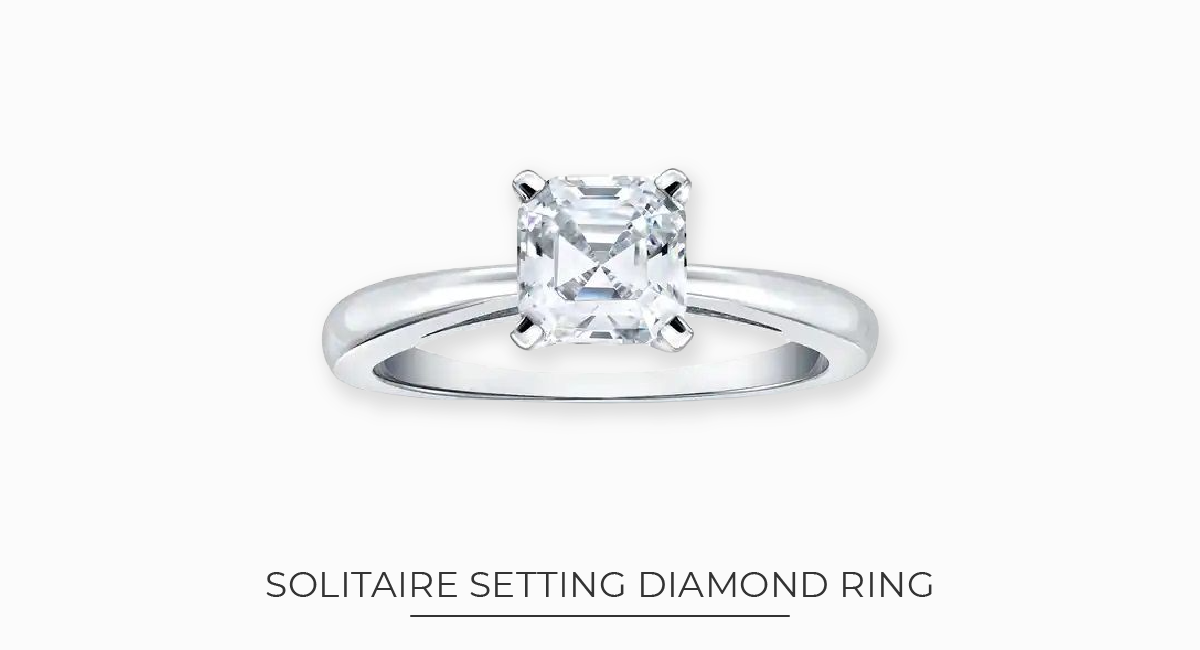
Square Emerald Diamond Solitaire Setting:
A setting in which the dazzling emerald cut diamond will be placed as a center stone without any adjacent stones is termed a solitaire setting.

Square Emerald Diamond Solitaire Setting

This setting is recommended for when you are willing to place a diamond that has an appreciable size. As the stone alone will carry the engagement ring, keeping the carat size too small might be the best fit. The solitaire setting is considered to portray how an individual considers themselves powerful enough to stand alone.

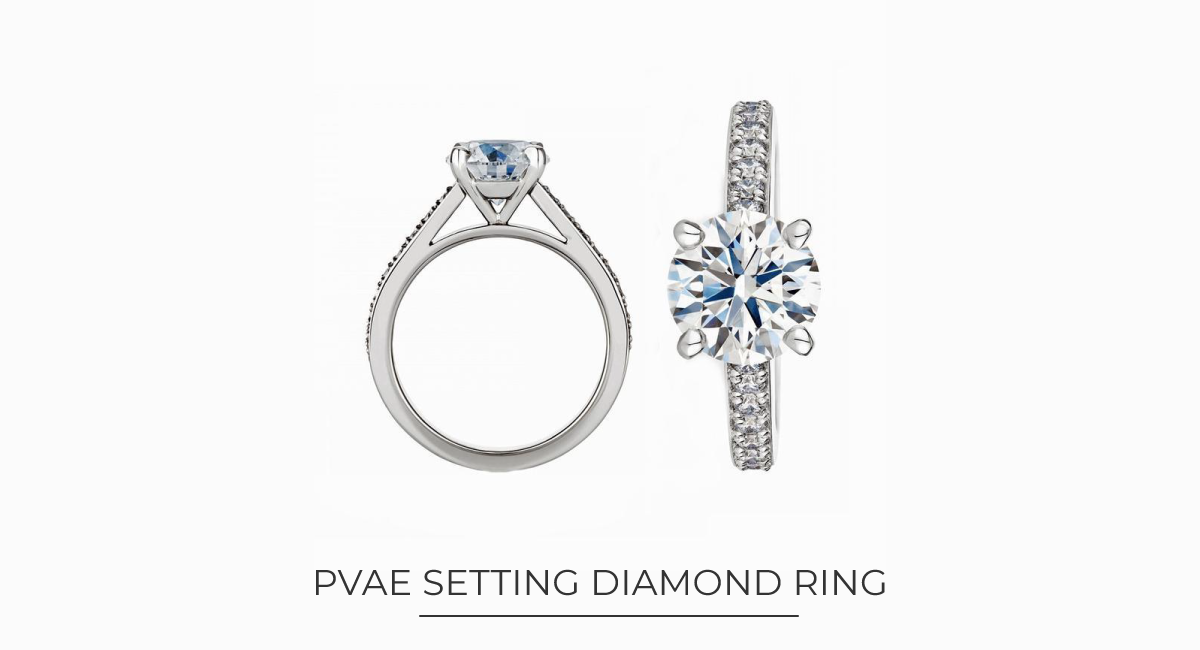
Square Emerald Diamond Pave Setting:
If you are one to flaunt your jewelry as you consider it to be absolutely lovely then this emerald-cut diamond setting will be a treat for your eyes.

Consider a solitaire ring with a metal band consisting of small diamonds lined up adjacent to each other to give the whole ring a more wealthy look. The pave setting may be a bit heavy on your pocket but the happiness it will provide will be so worth it.

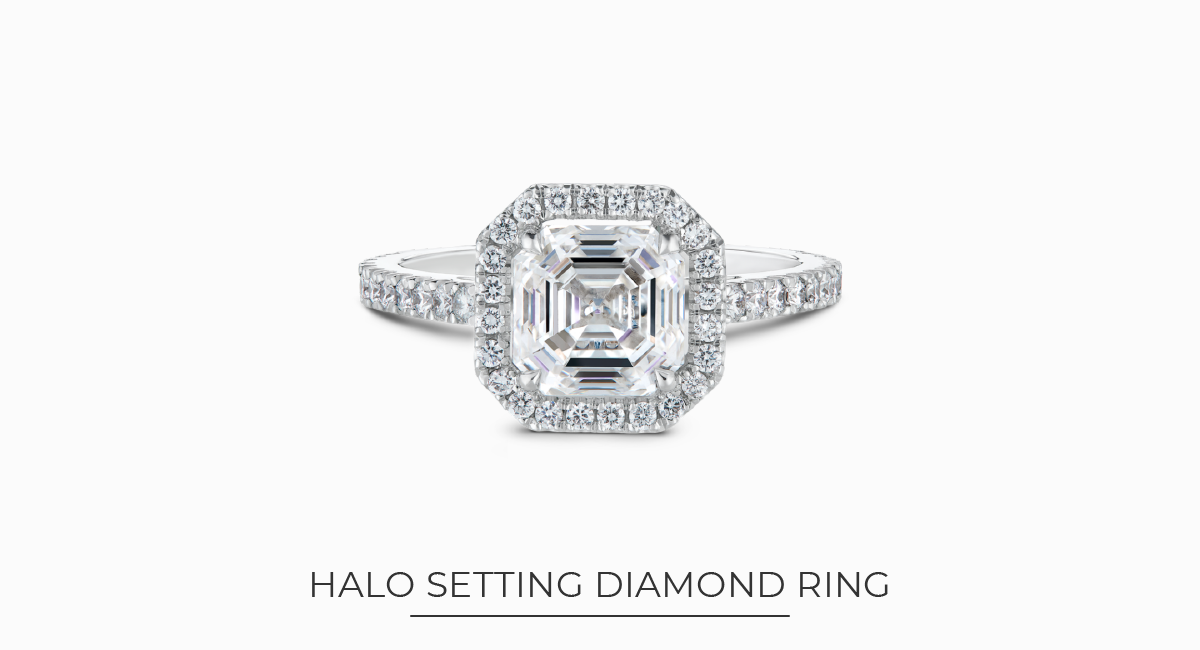
Square Emerald Diamond Halo Setting:
An amazing setting that screams richness and prosperity. The halo setting is one of a kind setting that can be increased, you can have one halo or two.

Square Emerald Diamond Halo Setting Ring

You can even take it up a notch and have 3 halos, but be sure to note that as soon as you add a halo the price of a ring is bound to skyrocket. An emerald-cut diamond when placed in a halo setting is likely to be good with one or two halos. These halos are metal circular bands placed around the centerpiece (the emerald cut diamond in this case) and they have diamonds studded on them. Thus making the whole ring appear slightly bigger than it actually is.

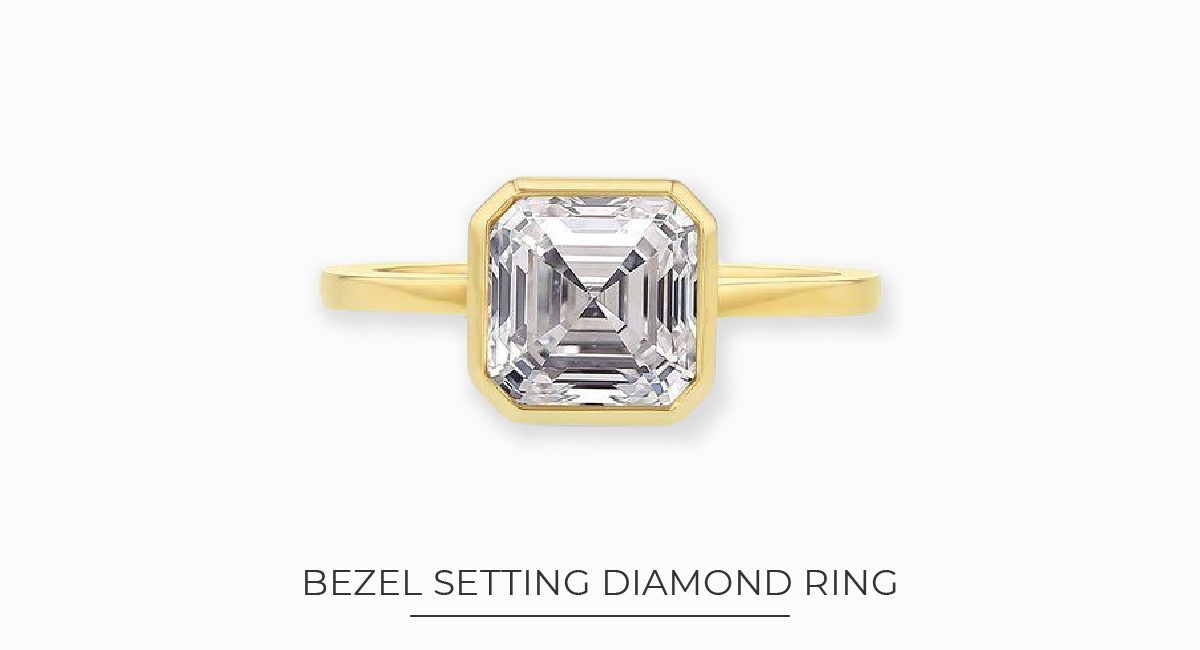
Square Emerald Diamond Bezel Setting:
The bezel setting for an emerald cut diamond is one of the most secure settings there is. In this setting, the centerpiece diamond is covered from all sides by the metal.

Square Emerald Diamond Bezel Ring

It is basically like a solitaire ring (as there is mostly one diamond) wherein the metal is extended to the side of the diamond. This setting is good for people who want higher durability of their diamond and are planning to keep it in the long run.

Square Emerald Diamond Three Stone Setting:
This type of emerald cut diamond ring is for those people who just love emerald diamonds and want to have more than just one stone.

Square Emerald Diamond Three Stone Diamond Ring

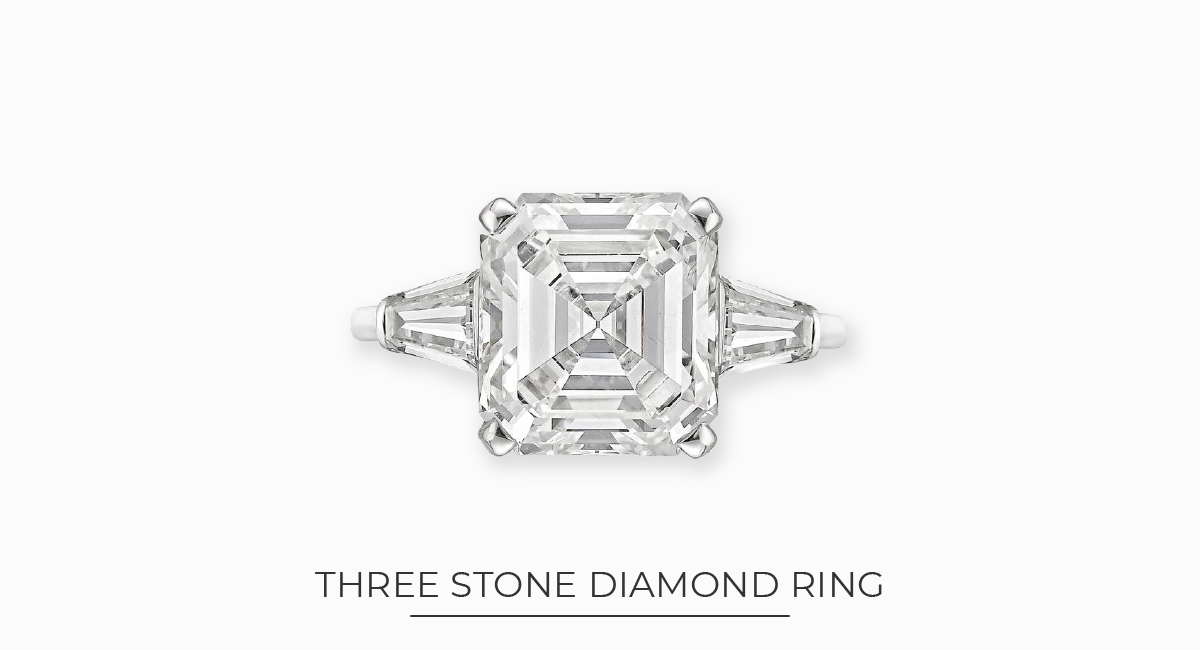
Three stone setting there are a total of three diamonds in which the centerpiece is bigger than its adjacent side pieces. The square emerald cut engagement ring setting makes the ring look expensive and is, in general, more expensive than the rest due to the use of more than 1 diamond.

Who Should Buy Square Emerald Cut Diamonds?

The square emerald cut diamonds must always be considered by customers who are seeking gemstones that exhibit a perfect combination of two varying cuts in a beautifully subtle manner. When looking to purchase a square emerald cut diamond, you can explore several reputable options both online and in physical stores.

Loose Grown Diamonds” is known for its vast selection of lab created diamonds. The bonus here is the fact that jewelry made with this diamond is available at affordable prices and hence customers can get their hands on one of the best cuts in diamonds for comparatively lower prices. In more, discover special savings by using our exclusive promo code to enhance your diamond shopping experience. Hence, it is safe to say that the square emerald cut diamond is a real catch for many.


FAQs

How does a square emerald cut differ from a regular emerald cut?
The primary distinction lies in the shape. While both have step-cut facets, a square emerald cut is specifically designed to have a square outline, offering a unique and modern twist to the classic emerald cut.

What is the square cut emerald diamond price?
An emerald cut diamond weighing 1 carat can be obtained within a price range of $1000 – $1500, with the specific cost influenced by factors such as color, cut, and clarity that you choose.

Are square emerald cut diamonds suitable for engagement rings?
Yes, square emerald cut diamonds are a popular choice for engagement rings. Their clean lines make them an elegant and eye-catching option, blending modern aesthetics with a touch of vintage charm.

Can I customize a square emerald cut ring?
Yes, “Loose Grown Diamond” offers customization options for square emerald cut diamond rings. You can choose the metal, setting style, size and even incorporate additional accent stones to create a unique and personalized piece.

Are square cut diamonds more expensive?
Square diamonds, such as princess or cushion cuts, are generally more affordable than round brilliant cuts. This is because the cutting process retains more of the original diamond rough, minimizing wastage and reducing overall costs.