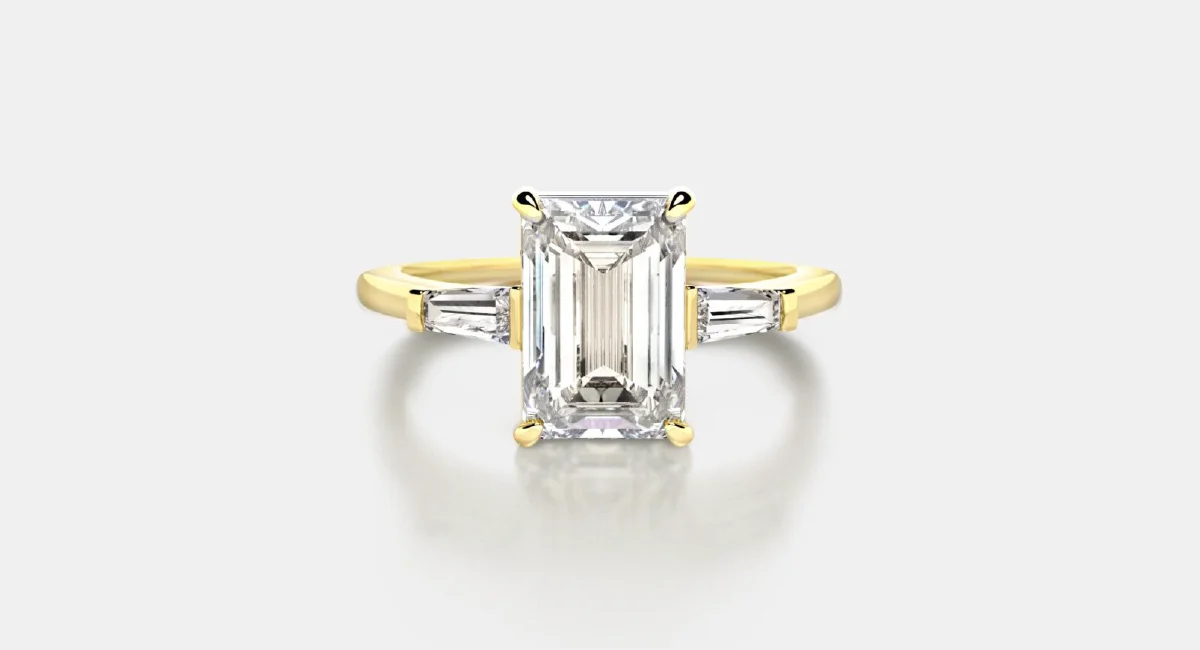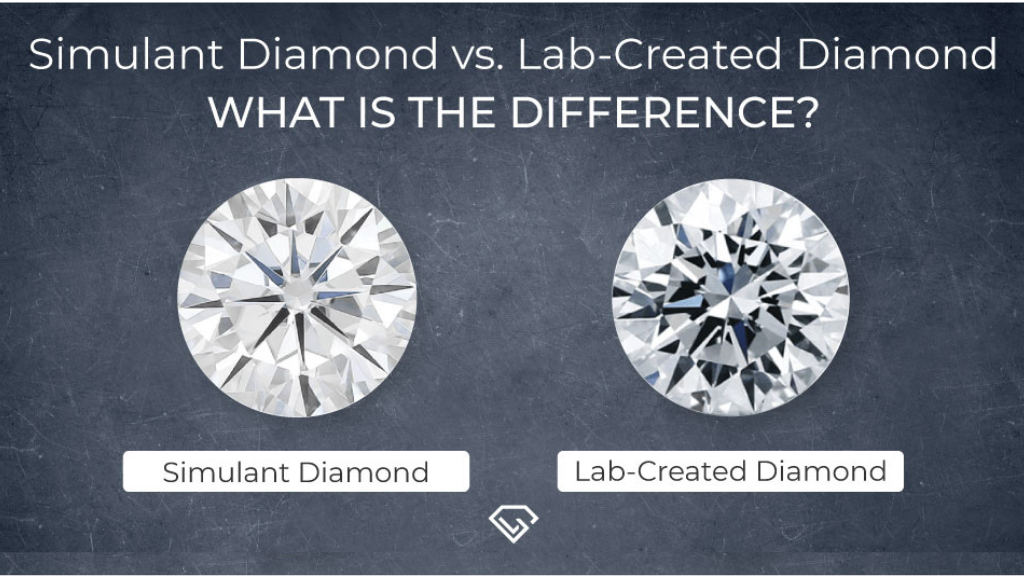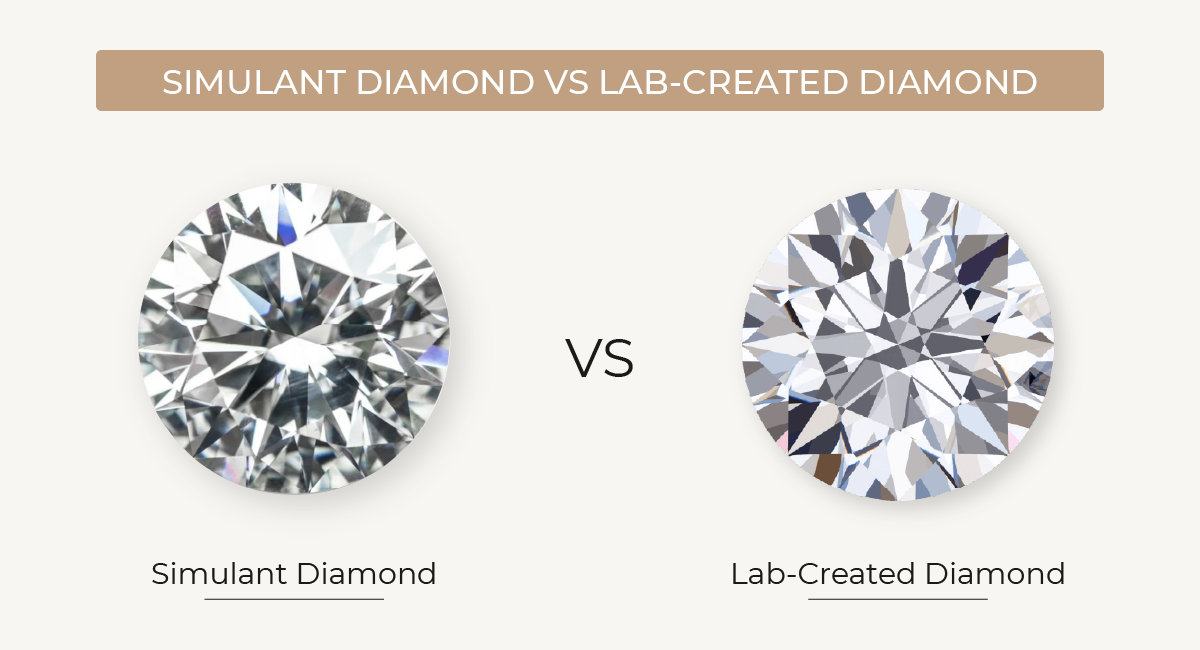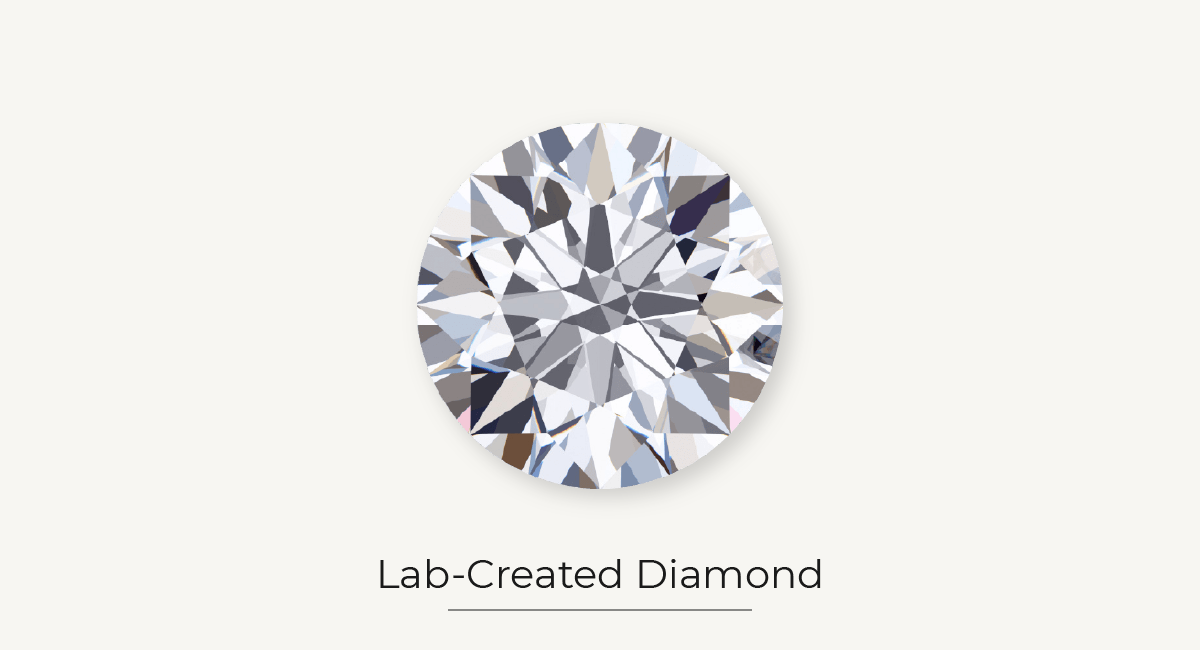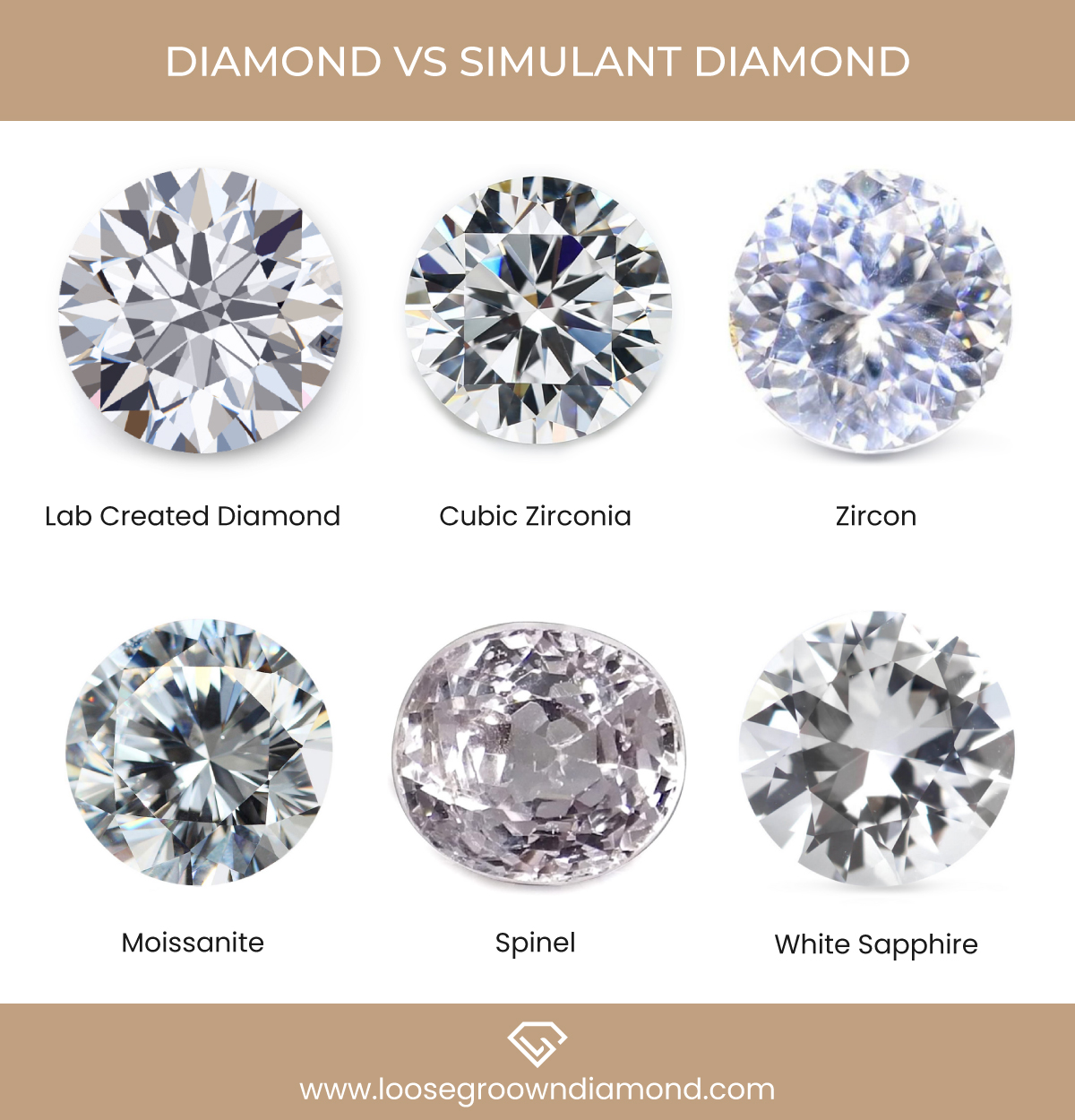
Why Lab Created G Color Diamonds are the Trend in Jewelry!

When it comes to the world of diamonds, the color grade plays a significant role in determining their value and overall beauty. Among the various color grades, G color diamonds hold a special place.

But what exactly is a G color diamond, and what does this color grade signify? In this blog post, we will delve into the fascinating world of G color diamonds, exploring their characteristics, significance, and how they contribute to the allure of these precious gemstones.

The question arises – is a G color diamond good or bad? The answer lies in personal preferences and individual considerations. While some may prioritize absolute colorlessness, others appreciate the slight warmth and character that G color diamonds offer.

G color diamonds are often an excellent choice for those seeking a balance between quality and budget, as they tend to be more affordable compared to higher color grades while still delivering exceptional beauty.

Enhancing the Brilliance of G Color Diamonds: Tips to Make Them Look Whiter
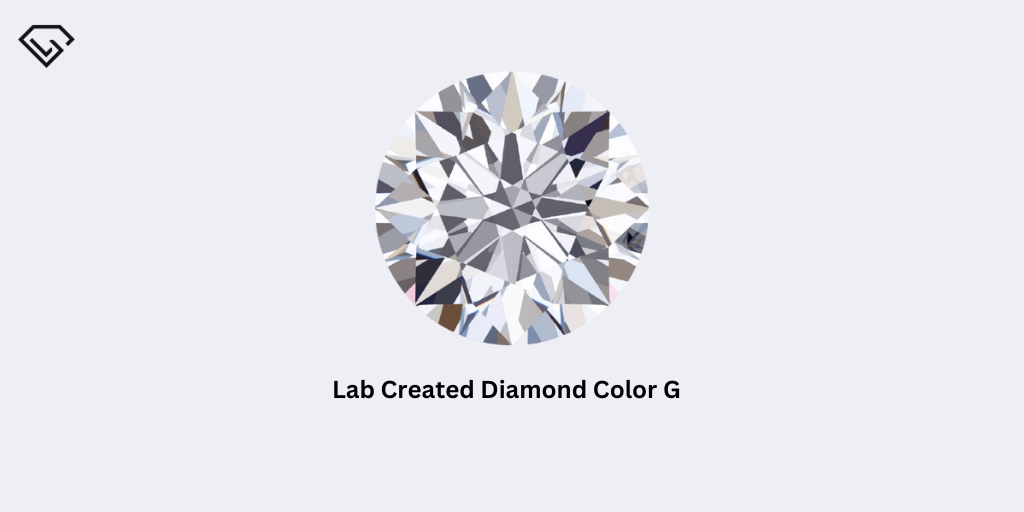
Why Lab Created G Color Diamonds are the Trend in Jewelry!

When it comes to making a G color diamond appear whiter, understanding the interplay between diamond colors and clarity can be invaluable. The diamond color scale provides a framework for assessing a diamond’s hue, while clarity characteristics influence its overall visual appearance. By leveraging these concepts, you can maximize the whiteness of your lab created diamond G color.

One effective strategy is to prioritize diamonds with excellent clarity grades. Diamonds with minimal inclusions or blemishes allow more light to pass through, reducing any distractions that might affect the diamond’s perceived color. This clarity-focused approach enhances the diamond’s brilliance and highlights its whiteness, creating a visually striking effect.

Additionally, selecting lab diamonds with well-cut proportions can optimize their light performance and minimize color dispersion. A well-cut G color diamond reflects light more efficiently, making it appear brighter and more vibrant.

This emphasis on precision and symmetry diverts attention from any faint warmth in the stone, resulting in a whiter-looking diamond. Understanding lab diamond colors and the diamond color scale, alongside clarity, empowers you to make informed choices when aiming to enhance the whiteness of your diamond color G.

By selecting diamonds with excellent clarity and superior cut quality, you can elevate the brilliance and whiteness of your G color diamond, ensuring that it captivates with its luminosity and near-colorless allure.

How Much is a Diamond G?

Generally, G color diamonds are considered near colorless and are priced at a premium compared to lower color grades. Lab grown diamonds are often more affordable than natural diamonds.

Medium Size 0.25 to 0.5 carat Starting from around $150 and can go up to $5000 or more. Larger sizes start from $5000 and can go up to $50,000 or more.

You can check out Loose Grown Diamond’s specialized “Diamond Size Chart” guide for measuring diamond sizes. This diamond size chart will give you a thorough approach to identifying your size.

Furthermore, if you find yourself uncertain about assessing the price of your selected diamond, you can take advantage of our diamond price calculator.

[blog_page_inventory shape=”Cushion,round,heart,pear,oval,cushion,princess,emerald,” carat=”1.30,2.60″ cut=”1,4″ color=”2,9″ clarity=”1,6″]
[blog_page_btn title”Buy Now” url=”https://www.loosegrowndiamond.com/inventory/?”]

Pros & Cons of G Color Diamond
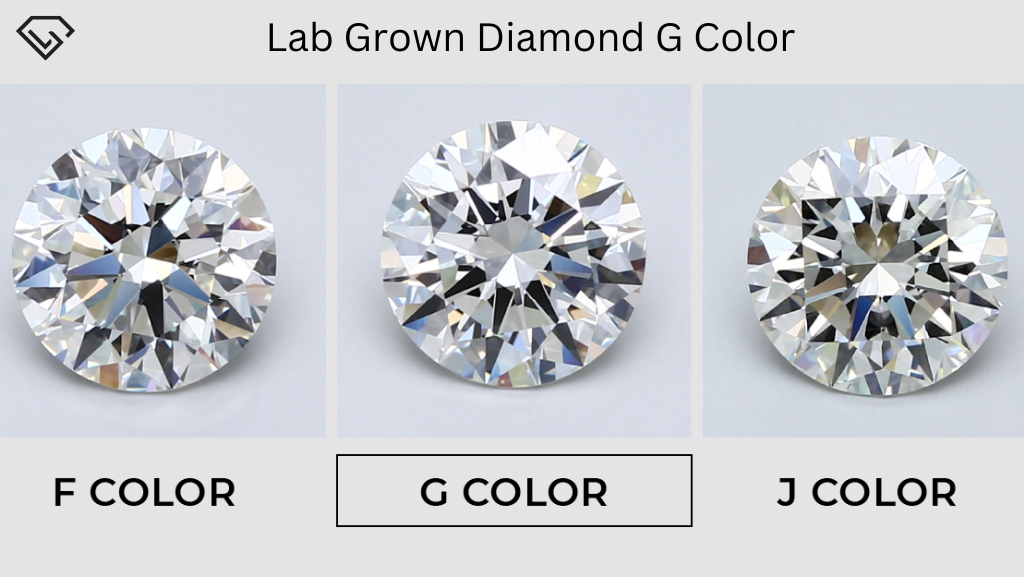
Why Lab Created G Color Diamonds are the Trend in Jewelry!

G color diamonds, with their near-colorless appearance, have become a popular choice in the diamond market. They offer a range of advantages and considerations that potential buyers should be aware of. In this article, we will explore the pros and cons of G color diamonds in detail.

Pros:
Near-Colorless Appearance: G color diamonds exhibit a nearly colorless appearance, making them visually appealing. They are considered one of the best value options in terms of achieving a balance between quality and price. While they may have a subtle hint of warmth or yellowish undertones, these characteristics are often not easily discernible to the naked eye, offering a beautiful diamond that appears bright and sparkling.

Versatility: G color diamonds are versatile and can complement a variety of metal settings and jewelry designs. They pair well with both white and yellow metals, allowing for more flexibility in creating unique and personalized pieces. Whether you prefer a traditional or contemporary setting, G color diamonds can enhance the beauty and elegance of any jewelry design.

Value for Money: Compared to higher color grades like D or E, G color diamonds are more affordable while still offering an impressive visual appearance. They provide excellent value for those seeking a high-quality diamond within a specific budget. Choosing a color G diamond allows you to allocate more of your budget towards other important factors such as cut, clarity, and carat weight.

Cons:
Subtle Warmth: One of the main considerations with G color diamonds is the presence of a slight warmth or yellowish undertones. Although these characteristics are typically not prominent, they may become more noticeable in larger diamond sizes or when compared side by side with higher color grades. Individuals with a highly discerning eye for color may prefer a higher color grade to achieve a truly colorless appearance.

Clarity Sensitivity: The color of a diamond can influence its perceived clarity. In the case of G color lab diamonds, the presence of slight warmth may make inclusions or blemishes more noticeable to some individuals. It’s important to consider the clarity grade of a diamond color G and ensure that any inclusions are not too visible to the naked eye. Opting for a higher clarity grade, such as VS or VVS, can help mitigate this concern.

Lighting Conditions: Like all diamonds, color G diamonds can exhibit different appearances under varying lighting conditions. They may appear slightly warmer in certain lighting settings, such as warm or yellow-toned lighting. However, it’s worth noting that under everyday lighting, G color diamonds appear bright and white.

Personal Preference: The choice of diamond color is highly subjective and depends on individual preferences. While G color diamonds offer a near-colorless appearance, some individuals may prefer a completely colorless diamond and opt for higher color grades. It’s crucial to consider your personal style and preferences when selecting a color G diamond.

G color diamonds provide several advantages, including their near-colorless appearance, versatility, and value for money. They offer a visually appealing option that strikes a balance between quality and affordability. However, it’s important to consider the slight warmth, sensitivity to clarity, and personal preferences when choosing a G color diamond.

G Color Diamond is Best for an Engagement Ring?

[su_youtube_advanced url=”https://www.youtube.com/watch?v=akEiRePhdOo” width=”1600″ controls=”alt” autohide=”yes” autoplay=”yes” mute=”yes” loop=”yes” rel=”no” modestbranding=”yes” theme=”light” playsinline=”yes” title=”G color lab diamond ring”]

The price of a G color diamond can vary depending on various factors, including the diamond’s clarity grade and carat weight. Generally, a G color diamond will have a lower price compared to higher color grades like D or E. However, it’s important to consider the impact of clarity grades on the price as well.

For example, a VS2 G color diamond, which has a higher clarity grade compared to lower clarity grades like SI1 or SI2, may command a higher price due to its superior clarity characteristics. The VS2 clarity grade indicates that the diamond has minor inclusions that are not easily visible to the naked eye, adding to its value and overall appeal.

Similarly, a VS1 G color diamond, with even fewer inclusions and potentially higher clarity, may be priced higher compared to a VS2 or lower clarity grade. The higher the clarity grade, the rarer and more valuable the diamond becomes.

When it comes to a carat weight, a 2-carat G color diamond will generally be more expensive compared to a smaller carat weight color G diamond. Larger carat weights command higher prices due to their rarity and increased demand.

Overall, the price of a G color diamond can vary depending on factors such as clarity grade and carat weight. It’s recommended to consult with reputable jewelers or online diamond retailers to get specific pricing information and to compare options based on your desired specifications and budget.

[perfect_ring_box title=”Ready to create your perfect ring?” btn1ttl=”Start with a Setting” btn1url=”https://www.loosegrowndiamond.com/build-a-ring”]

Where Can I Buy G Color Lab Diamonds?

If you choose to buy diamonds online, it can be profitable for you. You can save up to 20% by buying diamonds online. You can purchase G color lab diamonds from various reputable sources specializing in Lab Grown Diamonds. Consider purchasing directly from lab grown diamond producers.

Ensure that the diamonds come with proper certification, like IGI or GIA. It’s essential to buy from trusted sources to ensure quality and authenticity. You can apply the promo code during checkout for a discount.

Conclusion

In conclusion, the price of a color G diamond is influenced by various factors, including clarity grade and carat weight. While G color diamonds generally offer a more affordable option compared to higher color grades, factors such as clarity and carat weight can impact the overall price.

By understanding the pros and cons, you can make an informed decision and select a diamond that aligns with your desired aesthetics and budget. It’s essential to consider these factors when making a purchasing decision.

FAQs

What is the diamond color scale?
The diamond color scale categorizes diamonds based on their color, with G color falling within the near-colorless range.

What is the best color for a diamond?
The best color for a diamond is subjective and depends on personal preferences, with options ranging from colorless (D-F) to near-colorless (G-J).

What diamond color grade has the best value?
The diamond color grade that offers the best value may vary, but diamond color G are often sought-after for their balance of quality and price.

Are G color diamonds good?
G grade diamonds are considered good, offering a near-colorless appearance and a balance between quality and affordability.

How much does a 1-carat G diamond cost?
A 1-carat color G diamond deemed of excellent cut and clarity will likely cost a purchase anywhere from $350 – $16,000.

Are G-color lab diamonds expensive?
G-color diamonds are generally less expensive than higher color grades, offering a more affordable option without compromising on beauty.

How much does a G-color diamond cost?
The cost of G-color diamonds varies based on factors such as carat weight and clarity; it’s best to consult jewelers for specific pricing information.

Should I buy a G-color diamond?
Whether to buy a G-diamond depends on personal preferences and budget considerations; they offer a balance between quality and affordability.

Do diamonds G-color look yellow?
G-color diamonds are near-colorless, and while they may have a subtle warmth, they generally do not appear yellow to the naked eye.
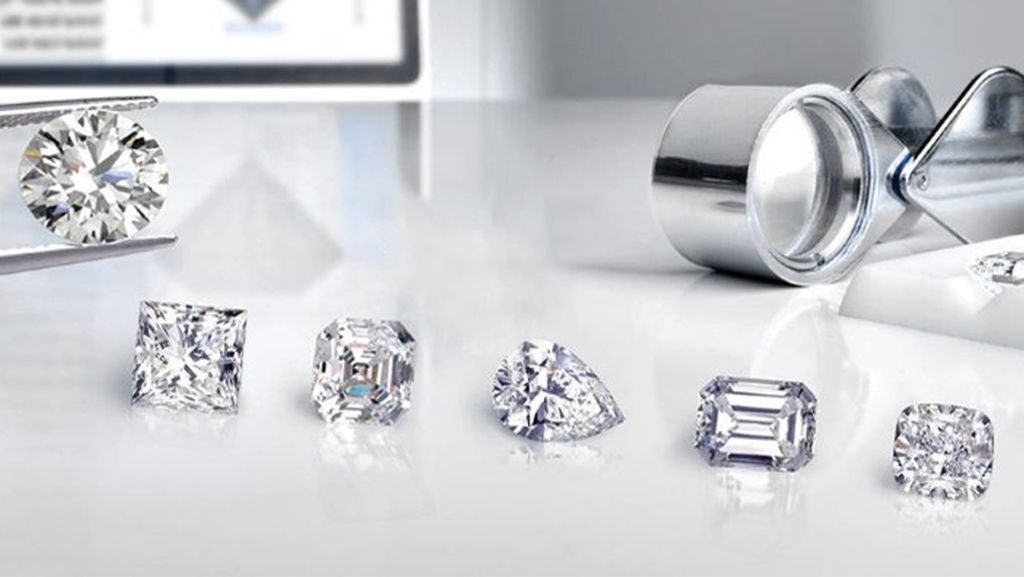
A Guide to Diamond Measurement and Calculating Diamond Ratios

In the realm of exquisite gemstones, diamonds stand unrivaled, captivating us with their unparalleled elegance. However, unlocking the secrets behind their brilliance requires a deep understanding of diamond measurement and the art of calculating diamond ratios.

We at Loose Grown Diamond are going to teach you how to calculate diamond ratios in the best way possible. In this article, we embark on an enlightening journey to explore the complexity of diamond measurement, where we will get to know the significance of the 4Cs (carat weight, color, clarity, and cut) and look into the lesser-known yet crucial aspect of lab grown diamond ratios.

By looking into the world of gemology and creative techniques employed by experts, we will train and equip you with the knowledge of lab diamond assessment. Thus, enabling you to make informed decisions when it comes to selecting the perfect diamond for you.

What is the L/W Ratio of a Diamond?

The LW ratio of a diamond refers to the length-to-width ratio of the stone. It is a numerical value that shows the certified lab diamond’s proportion and shape.

The ratio is derived by dividing the diamond’s length by its width. The LW ratio provides insights into the diamond’s overall shape and appearance. Diamonds with higher LW ratios, closer to 2.0 or greater, are considered elongated or rectangular, such as emerald or radiant cuts. On the other hand, diamonds with lower LW ratios, closer to 1.0 or less, are considered more square or round, like princess or cushion cuts.

The LW ratio is an important factor to consider when selecting a diamond, as it influences the stone’s visual appeal and how it will appear when set in jewelry. Different individuals may have preferences for certain ratios based on personal aesthetics and style preferences.

Ultimately, the L-W ratio, along with other factors like the cut quality and personal preferences, should be taken into account to find a diamond that best suits your taste and desired appearance. In any case, let’s get right into the query: how to calculate diamond ratio?

How To Calculate Diamond Ratio?

To calculate the diamond ratio, follow these steps:
Measure the Length of the Diamond: Measure the longest dimension of the diamond from one end to the other with a millimeter ruler or digital caliper. Make sure to take your measurements along the diamond’s longest axis, which is usually the diagonal across the stone’s face.

Measure the Width of the Diamond: Again, using a millimeter ruler or digital caliper, measure the width of the diamond perpendicular to the length measurement. This measurement should be taken at the diamond’s widest point.

Divide the Length by the Width: Take the length measurement and divide it by the width measurement. The diamond ratio will be obtained from this computation.

The resulting calculated diamond ratio value will provide insights into the shape of the diamond. It’s important to note that personal preferences and desired aesthetics can vary, so consider the ratio along with other factors such as cut quality to find a lab diamond shape that suits your preferences.

[blog_page_inventory shape=”pear,round,heart,oval,cushion,princess,marquise,emerald,asscher,radiant” carat=”1.90,2.10″ cut=”0,4″ color=”5,10″ clarity=”0,11″] [blog_page_btn title=”buy lab diamond” url=”https://www.loosegrowndiamond.com/inventory/”]

Pointers for Length to Width Diamond Ratio

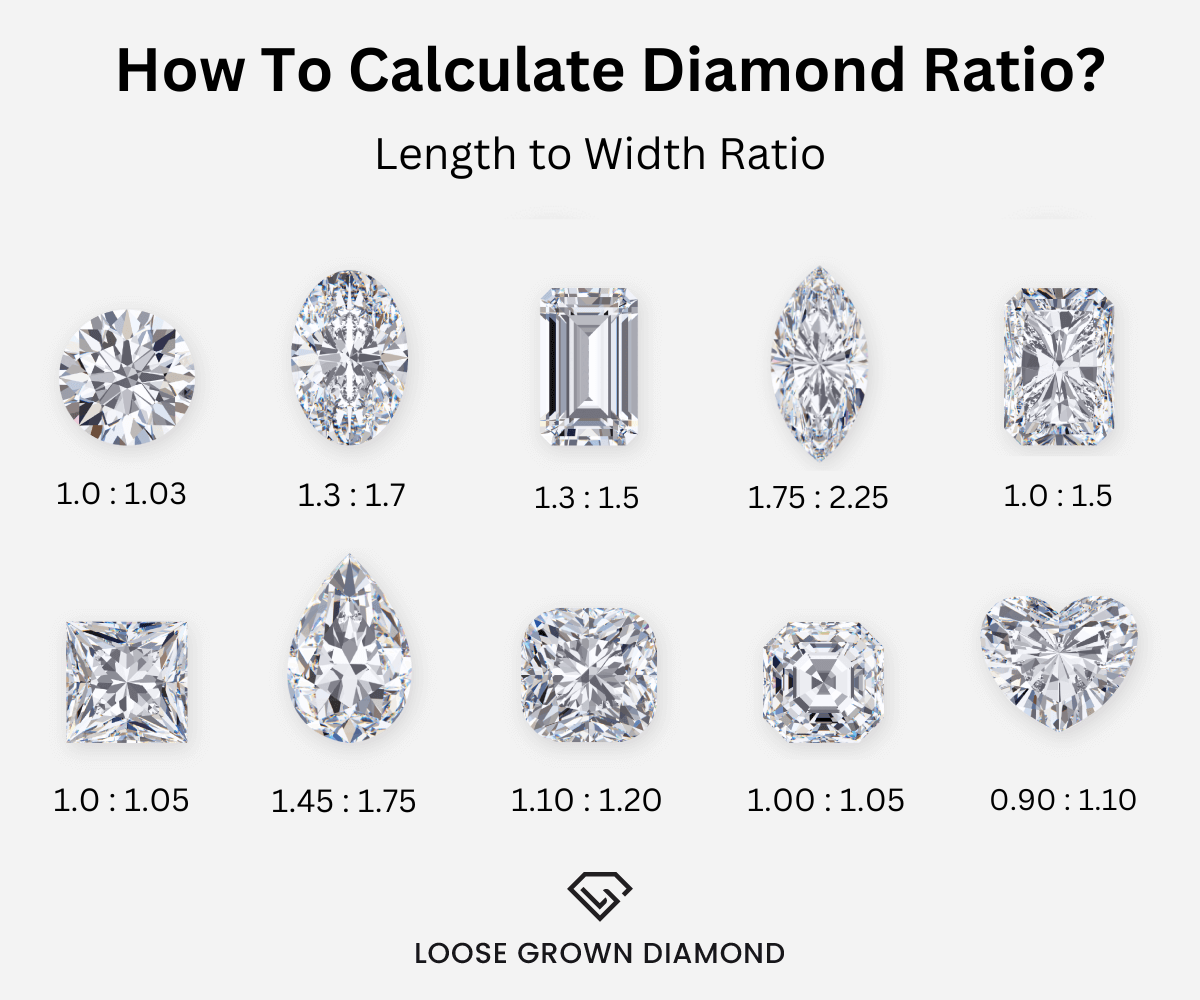
Different diamond shapes have varying length-to-width ratios, which contribute to their unique appearances. Here are some commonly recognized diamond shapes and their typical length-to-width ratios:

How to Calculate Diamond Ratio?

Round Brilliant Cut: The most popular and classic diamond shape, the round brilliant cut, is known for its exceptional sparkle. Round diamonds typically have a length-to-width ratio close to 1.0, as they are designed to maximize light reflection and brilliance.

Princess Cut: Princess cut diamonds are square or rectangular with pointed corners. They have a length-to-width ratio of 1.0 to 1.05, giving them an almost square look.

Emerald Cut: Emerald cut diamonds are rectangular with cropped corners and step-cut facets. The emerald cut diamond ratio is between 1.3 and 1.5, resulting in an elongated shape that showcases the diamond’s clarity and unique faceting.

Oval Cut: Oval-cut diamonds are elongated with rounded edges, offering a blend of brilliance and the illusion of length. The oval diamond ratio is typically around 1.3 to 1.7, depending on personal preference.

Marquise Cut: Marquise cut diamonds have a distinctive boat-shaped appearance with pointed ends. The marquise diamond ratio generally ranges from 1.75 to 2.25, emphasizing their elongated shape.

Pear Cut: Pear cut diamonds are a combination of round and marquise shapes, featuring a tapered point and rounded end. Pear diamond ratio usually ranges from 1.45 to 1.75, resulting in a teardrop-like shape.

Radiant Cut: Radiant cut diamonds are rectangular or square with trimmed corners and brilliant-cut facets. Radiant diamond ratio is between 1.0 to 1.5, providing a balance between square and rectangular designs.

Cushion Cut: Generally, cushion cut diamonds have L/W ratios ranging from 1.00 to 1.20, with some variations. A cushion cut diamond ratio of 1.00 would indicate a perfectly square cushion cut, while higher ratios like 1.10 or 1.20 would result in a rectangular cushion cut with more elongation.

Asscher Cut: Similar to emerald cuts, asscher cut diamonds are also square or rectangular. The ideal length-to-width ratio for asscher cuts falls within the range of 1.00 to 1.05.

Heart Cut: Heart shaped diamonds have a unique shape characterized by a cleft at the top and a rounded bottom. A commonly recommended length-to-width ratio for heart diamonds is around 0.90 to 1.10.

It is crucial to note that these ratios are approximations and may vary slightly depending on personal choice and the particular proportions of a diamond. Consider your aesthetic tastes, style, and desired visual qualities when choosing a diamond shape, and choose a length-to-width ratio that appeals to you.

Understanding how to calculate diamond ratio is a personal observation, and only you can decide what’s suitable for you, but perhaps this has given you a basic framework!


Conclusion

In the fascinating world of diamonds, understanding the art of diamond measurement and calculating diamond ratios provides us with a deeper appreciation for their extraordinary beauty. Through the exploration of the 4Cs and the significance of diamond ratios, we have unveiled the key factors that contribute to a diamond’s allure and visual appeal.

With this knowledge, we can confidently navigate the diamond market, making informed choices that align with our personal preferences and desired aesthetics. Whether we seek a classic round brilliant or a modern emerald cut, the ability to assess and calculate diamond ratios empowers us to find the perfect gemstone that radiates brilliance and captures our hearts for a lifetime.

FAQs

Apart from the question ‘how to calculate diamond ratio’, here are some other questions that customers usually tend to ask regarding the same topic.

What is length-to-width ratio?
The diamond length-to-width ratio is a measurement that defines the relationship between the length and width of the stone, providing insights into its shape and overall visual appearance and is expressed as a numerical value.

How do you find the length-to-width ratio?
To determine a diamond’s length-to-width ratio, measure the longest measurement as the length and the widest dimension as the width. The length measurement is then divided by the width measurement. The resulting numerical number represents the length-to-width ratio, which offers information on the diamond’s shape.

Why is the diamond ratio important?
The diamond ratio is significant because it determines a diamond’s optical appearance and aesthetic appeal. The ratio dictates the stone’s shape and proportions, whether square, rectangular, or elongated. It is essential for achieving visual balance and ensuring that the diamond has nice dimensions and symmetry. The diamond ratio helps people pick a diamond that reflects their preferred aesthetic while maximizing the stone’s beauty.

How do I measure the length and width ratio of a diamond?
To determine a diamond’s length and width ratio, use a millimeter ruler or digital calipers to measure the longest measurement as the length and the broadest dimension as the width. Make sure to measure the length along the diamond’s longest axis and the breadth perpendicular to the length measurement. Divide the length by the width to calculate a diamond ratio.

Pink Diamonds: The Enchanting Gems That Mesmerize the World

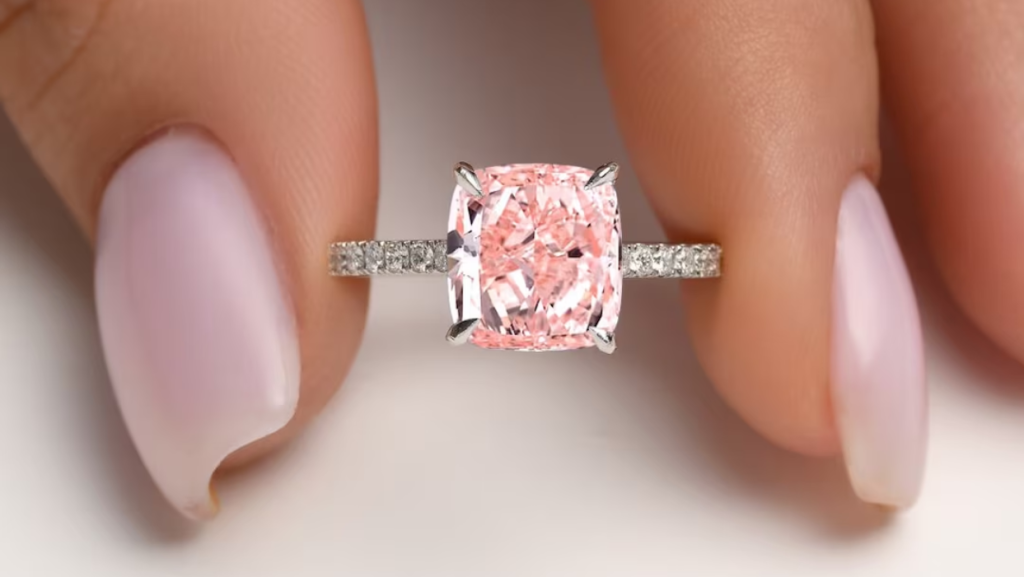
Throughout history, diamonds have captivated the human imagination with their unparalleled beauty and timeless allure. Amongst the vast spectrum of diamond colors, one shade stands out in a league of its own—the breathtaking pink diamond.

Known for its rarity, elegance, and extraordinary value, the pink color diamond has become a symbol of prestige and sophistication. However, the traditional realm of natural pink is now being challenged by an innovative alternative: lab grown pink diamonds.

These lab created gems, meticulously crafted in controlled environments, offer a fascinating alternative to their natural counterparts. As technology advances and the global demand for ethically sourced and sustainable gems grows, the emergence of lab grown pink color diamonds has sparked a profound shift in the jewelry industry.

We at Loose Grown Diamonds will shed light on their origin, characteristics, and the intriguing distinctions between natural and lab grown varieties, their extraordinary rarity in nature, and how cultivating their synthetic counterparts within laboratories is done.

Whether you are a gem lover, a jewelry connoisseur, or simply fascinated by the relationship of science and beauty, this article will provide an in-depth overview of pink diamonds and the intriguing debate between natural and lab grown variants.

What are Lab Created Pink Diamonds?

What are Lab Created Pink Diamonds?

Lab created pink diamonds, also known as synthetic or man-made pink diamonds, are created in a laboratory using advanced technological processes that mimic the natural conditions required for diamond formation. Unlike natural pink diamonds, which take millions of years to develop deep within the Earth, lab grown diamonds pink color are grown under controlled environments in a fraction of the time.

The process involves using a seed diamond and subjecting it to high pressure and high temperature or chemical vapor deposition techniques, allowing carbon atoms to accumulate and crystalize around the seed.

Lab technicians can manipulate the diamond’s color, clarity, and size by controlling the growth parameters. Pink lab diamonds are genuine diamonds with the same chemical composition and physical properties as natural ones.

They offer advantages such as affordability, ethical production methods, and reduced environmental impact. While natural pink color diamonds remain highly valued, pink lab diamonds are gaining popularity as a captivating alternative that combines beauty, ethics, and affordability.

Pink Diamond 4Cs
The 4Cs—Color, Clarity, Cut, and Carat Weight serve as universal criteria to assess the quality and value of diamonds, including pink color diamonds.

Color: One of the most distinguishing features of a pink diamond is its color. Pink color diamonds are available in a variety of colors, ranging from light pastels to bright, brilliant pinks. Pink diamond color is graded by the Gemological Institute of America (GIA) on a scale of “Faint” to “Fancy Vivid.” The brighter and more vivid the pink hue, the more expensive and rare the diamond.

Clarity: The existence of internal or exterior defects, known as inclusions and blemishes, is referred to as clarity. Diamonds pink, like other diamonds, can have variable degrees of clarity. The GIA grades diamond clarity on a scale ranging from “Flawless” (no visible inclusions or blemishes under 10x magnification) to “Included” (visible inclusions to the naked eye). Pink diamonds with higher clarity grades are generally more valuable.

Cut: The cut of a diamond refers to its proportions, symmetry, and overall craftsmanship. The cut has a significant impact on a diamond’s brilliance, sparkle, and overall beauty. While the 4Cs were initially developed for colorless diamonds, the same principles apply to diamonds. Well-cut pink diamonds are skillfully faceted to maximize their color intensity and brilliance.

Carat Weight: Carat weight measures the size of a diamond and is one of the most apparent factors influencing a diamond’s value. Pink diamonds, like all diamonds, are weighed in carats. Larger pink diamonds are typically rarer and more valuable, assuming all other factors, such as color and clarity, are equal.

Pink Diamond Color Grading

Pink diamond color grading involves assessing the color intensity and saturation of pink diamonds, which are graded on a scale developed by the Gemological Institute of America (GIA). The GIA color grading scale for pink diamonds ranges from “Faint” to “Fancy Vivid,” with several intermediate grades in between. Here is a breakdown of the GIA pink diamond color grading scale:

[su_table responsive=”yes”]

Faint
Pink diamonds in this grade display a very light, pale pink color. The pink hue may be subtle and barely noticeable.
Very Light
Pink diamonds in this grade exhibit a slightly stronger pink color compared to faint diamonds but are still considered very light in intensity.
Light
Pink color diamonds in this grade have a noticeably stronger pink color than the previous categories but are still relatively light in intensity.
Fancy Light
Pink color diamonds in this grade exhibit a light to moderate pink color intensity. The pink hue becomes more prominent and noticeable.
Fancy
Pink lab diamonds in this grade display a medium to strong pink color saturation. The pink color is more vivid and distinct.
Fancy Intense
Pink diamonds in this grade exhibit a significantly stronger and more intense pink color. The pink hue is bold and captivating.
Fancy Vivid
Pink lab diamonds in this grade represent the highest color saturation and intensity on the GIA scale. They exhibit a vibrant and vivid pink color that is exceptionally rare, highly sought after.

[/su_table]

The GIA color grading scale for pink diamonds primarily focuses on the intensity and saturation of the pink color, without considering secondary hues. Higher color grades like Fancy Intense and Fancy Vivid are rarer and more valuable due to their vibrant and intense pink color. However, personal preference plays a significant role in selecting a diamond pink, as individuals may have different preferences for the specific shade and intensity of pink they find most appealing.

How Much Does a Pink Diamond Cost?

How Much Does a Pink Diamond Cost

Pink diamond prices can vary based on factors like color intensity, carat weight, clarity, cut quality, and rarity. Pink color diamonds are highly sought after and can reach extraordinary prices which are often also dependent on the pink color diamond uses. Here’s a general price range based on color intensity grades:

Faint to Light Pink: These diamonds are generally more affordable, ranging from several thousand dollars per carat to tens of thousands of dollars per carat, depending on quality.

Fancy Light to Fancy: Pink lab diamond prices in this range can be significantly higher due to increased color saturation. Prices range from tens of thousands to hundreds of thousands of dollars per carat.

Fancy Intense to Fancy Vivid: These are the most valuable diamonds pink color, with vivid and intense color. Prices start from hundreds of thousands of dollars per carat, reaching into the millions for larger, high-quality stones.

These price ranges are approximate and can be influenced by market conditions, diamond characteristics, pink color diamond use and buyer demand. Natural pink diamonds are subject to significant price fluctuations and increases over time.

Lab grown diamonds are generally more affordable, offering a lower-priced option for those seeking the beauty of fancy pink color diamonds. Pink diamond prices typically begin at $500 and can escalate to thousands of dollars. It’s recommended to consult reputable jewelers or diamond experts for accurate pricing information based on specific diamond characteristics.

Which Jewelry Can Pink Color Diamonds Be Used In?

Which Jewelry Can Pink Color Diamonds be Used In?

Pink diamonds are highly desirable for their unique color and are incorporated into various jewelry pieces, including rings, earrings, necklaces, bracelets, pendants, brooches and more. Women’s pink diamond rings, particularly for engagements and cocktails, create striking and romantic pieces. Pink diamond earrings add elegance and femininity, often paired with white diamonds or other gemstones.

Pink diamond necklaces make a statement, whether with a single pendant or cascading diamonds. Diamond color pink bracelets offer captivating adornment, while pink color diamond pendants showcase their beauty. Pink lab diamond brooches add elegance to attire. Pink color diamonds are often combined with white diamonds or colored gemstones for a stunning contrast.

The choice of jewelry depends on personal style and occasion, but regardless, pink diamonds add enchantment and exclusivity to any piece.

Where to Buy Pink Lab Grown Diamonds?

You can purchase pink lab grown diamonds from reputable sources such as online retailers. LGD platforms offer a wide range of pink lab diamonds in various shapes and settings. You can enjoy a special discount when buying the diamond by using a promo code. Additionally, brick-and-mortar jewelry stores may carry lab grown diamonds, including pink color diamonds, alongside natural diamonds.

This is the most feasible option a buyer can opt for which makes the process and purchase more accessible. However, one could also consider visiting reputable jewelers in your area or contacting diamond suppliers and manufacturers specializing in lab grown diamonds for a wider selection and customization options.

Auctions and estate sales occasionally feature lab grown pink diamonds, although availability may be limited compared to natural diamonds. When one wishes to buy pink diamonds, one must ensure that they deal with reputable sellers who provide reliable certification from respected gemological laboratories such as IGI or GIA.


Conclusion

Pink color diamonds hold a unique allure and charm, captivating jewelry enthusiasts. The emergence of lab grown diamonds offers an exciting alternative to natural ones. Lab created pink color diamonds possess the same properties and brilliance as natural diamonds, with a range of stunning hues and affordable prices.

They also provide ethical and environmental benefits, aligning with sustainability. While natural pink diamonds remain exclusive, lab grown diamonds have gained acceptance and popularity for their beauty and conscious appeal.

Whether choosing natural or lab grown pink diamonds, both options offer remarkable and enchanting gemstones. The decision depends on personal preference, budget, and values, celebrating the splendor of nature or human innovation and leaving a lasting treasure of beauty and elegance.

FAQ

How are lab grown pink diamonds made?
Pink lab diamonds are created using one of two primary methods: chemical vapor deposition (CVD) or high-pressure, high-temperature (HPHT) synthesis. In the CVD method, a diamond seed is exposed to a carbon-rich gas, and as the carbon atoms deposit onto the seed, it grows into a diamond. HPHT synthesis involves subjecting a diamond seed to high pressure and temperature, which encourages the growth of a larger diamond.

Can pink color diamonds be certified?
Yes, pink lab grown diamonds can be certified by reputable gemological laboratories, just like natural diamonds. Certifications provide information about the diamond’s quality, including its color, clarity, cut, and carat weight. The most well-known diamond certification organizations are the Gemological Institute of America (GIA) and the International Gemological Institute (IGI).

How much is a pink diamond worth?
The price of a pink lab diamond varies greatly based on criteria such as color intensity, size, clarity, and general rarity. They usually start from $500 and go up to thousands of dollars. Diamond pink are among the most costly and rare gemstones, and their values can be extremely high.

How much would a pink diamond ring cost?
Pink diamond prices and ring prices vary substantially based on various aspects, including size, color intensity, clarity, cut quality, and the kind and quality of metal used in the setting. A pink diamond engagement ring can cost as little as a few thousand dollars for lesser, lower-quality stones and as much as several hundred thousand dollars or more for larger, higher-quality pink color diamonds that have superior color saturation.

How rare are pink diamonds?
Pink lab diamonds are among the rarest and most valuable colored diamonds account for only a small percentage of all diamonds mined, with some estimates claiming that pink diamonds account for less than 0.1% of all diamonds discovered.

Pink color diamonds are much rare because they are mostly derived from a few select mines, such as Australia’s Argyle mine, which has discontinued operations. Pink color diamonds market worth and appeal are increased by their scarcity in nature, combined with their compelling beauty.

Should I buy a lab grown diamond for an engagement ring?
The decision to purchase a lab grown diamond for a pink diamond engagement ring is a personal one that is influenced by your priorities and values. When compared to natural diamonds, lab grown diamonds have various advantages, including ethical considerations, sustainability, and typically a lower price. Ultimately, it is important to consider your budget, environmental concerns, and personal preferences when deciding on a lab grown diamond for a pink engagement ring.

Toi Et Moi Ring a Symbol of Your Entwined Love

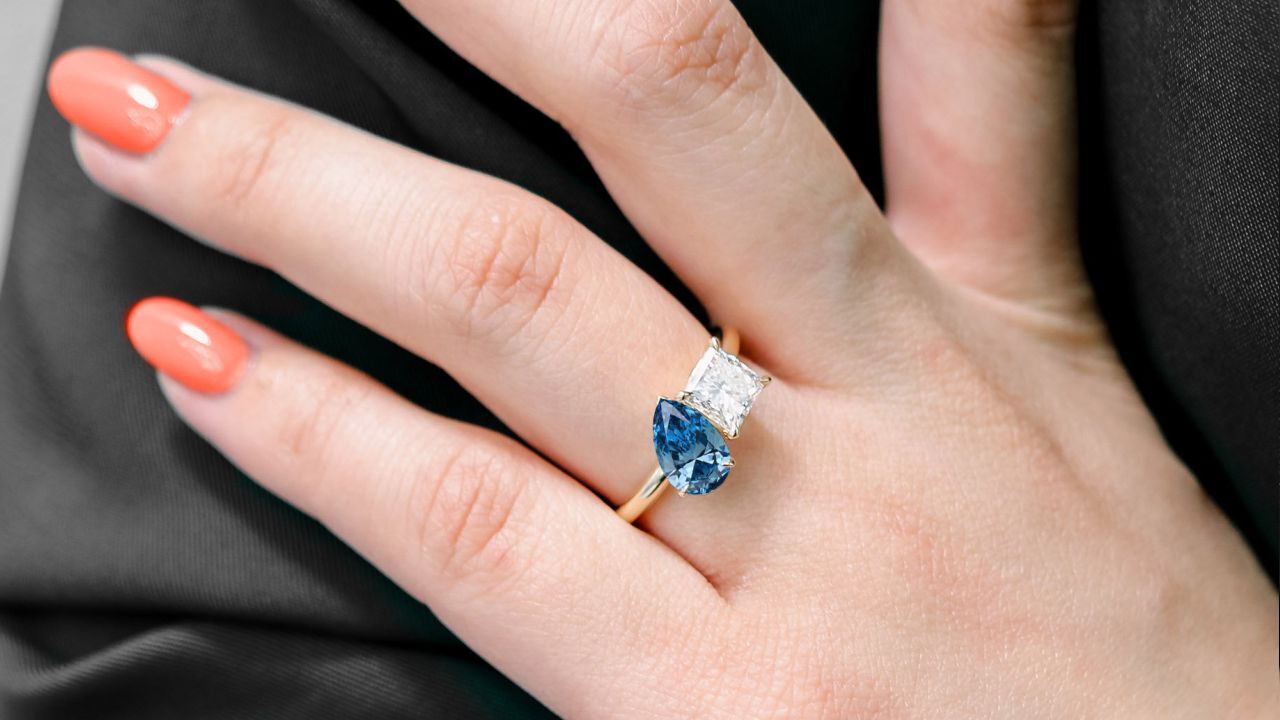
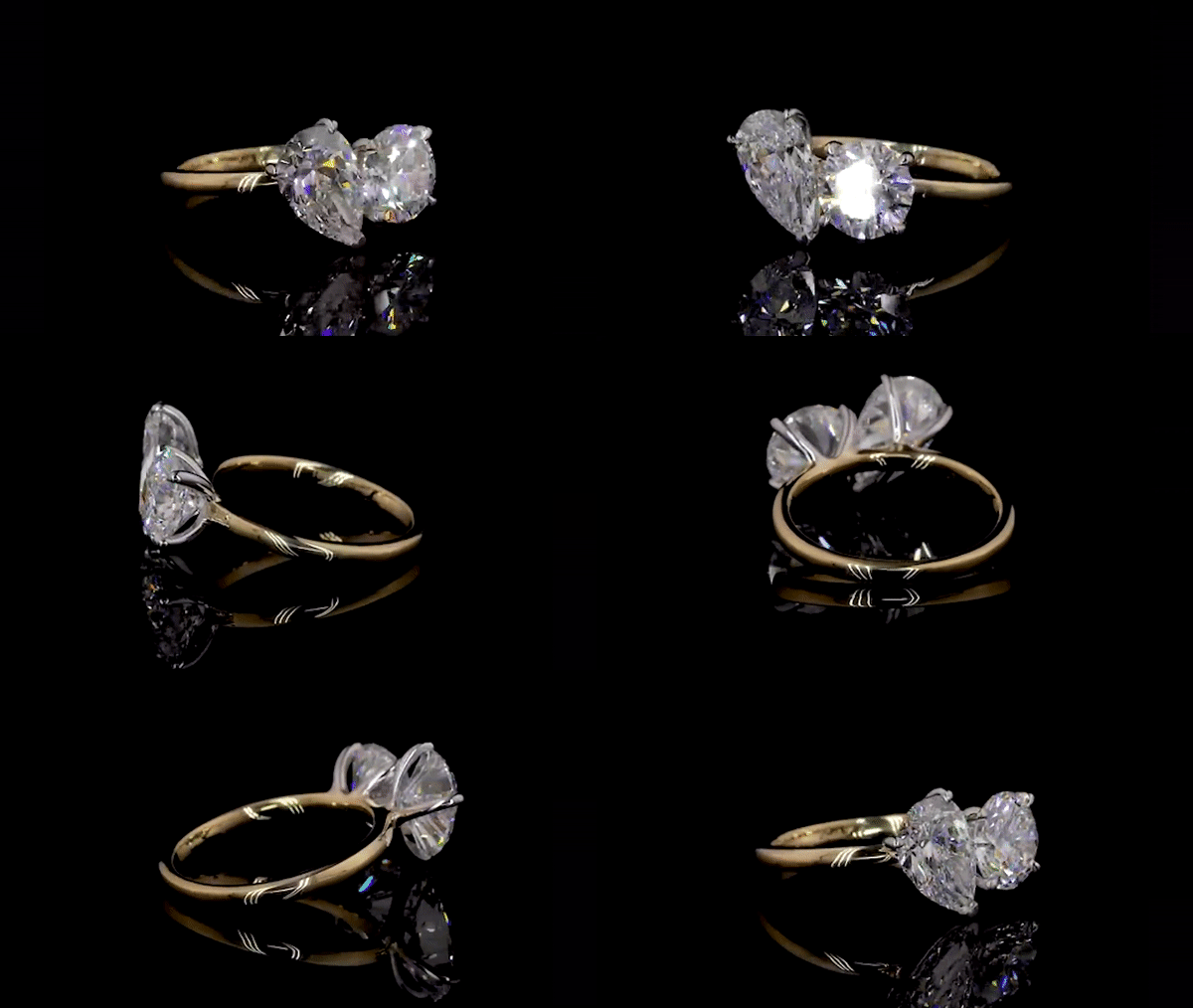
The toi et moi ring is an excellent choice if you fancy a unique engagement ring. One focus element is sometimes not enough, so toi et moi comes with two of them.

The entanglement of two souls brings a unique design that represents balance. The symbol of eternal love between two souls comes together in the toi et moi engagement ring.

The toi et moi ring came about in the 1790s when Napoleon Bonaparte proposed to Joséphine with a sapphire and diamond. After that, the design was not too prominent in fashion until quite recently when celebrities started the trend again.

What is a Toi Et Moi Ring?

You must wonder what does toi et moi mean, and that too when speaking in the context of rings. Toi et moi translates from French, which means you and me. The representation depicts the union of two souls into one when the two stones sit beside each other in one pattern.

The history of this two stone engagement ring makes it a symbol of love in a distinctive way. This ring derives its identity from the symbolism of not just one person but a depiction of two people together.

two stone engagement rings

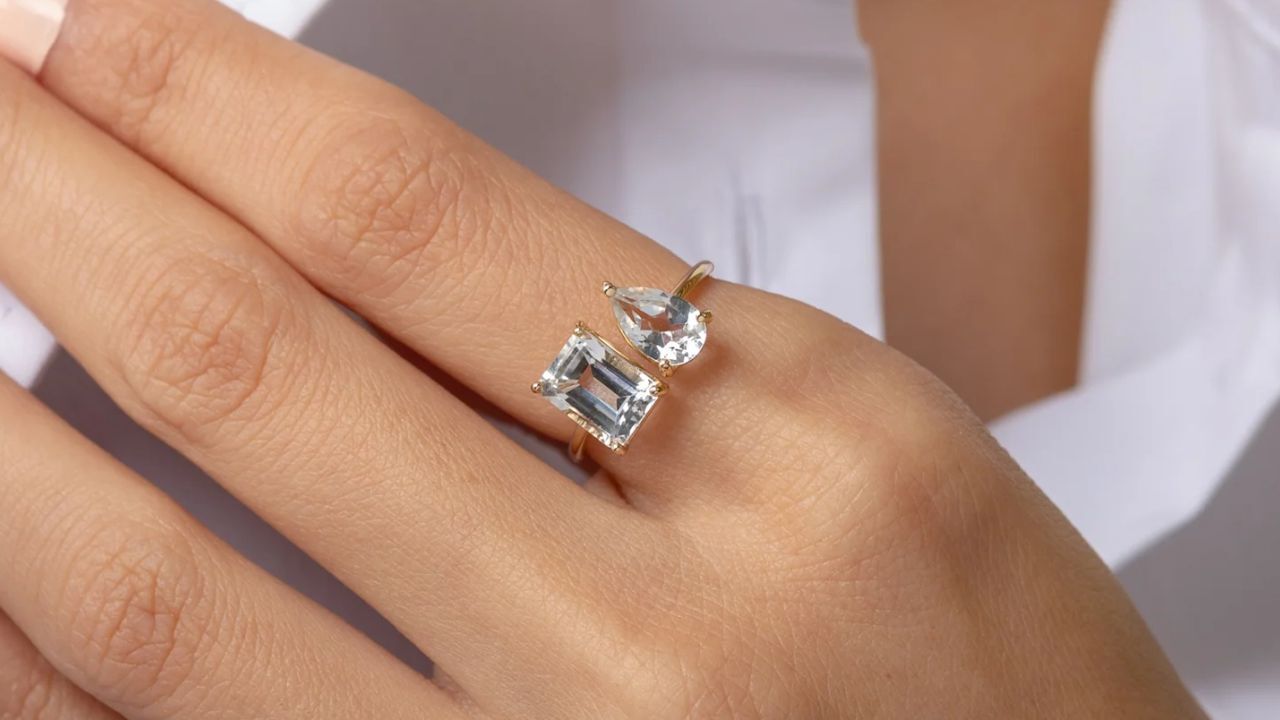
A toi et moi ring meaning usually unites two souls, but it can also be customized to add a personalized sense to the ring. Using different stones, colors, and shapes, you can create a pattern that brings together an identity for each stone. People also use birthstones to represent their personalities when assembling the iconic toi et moi ring.

Initially, the toi et moi diamond engagement ring would have two stones of similar color, cut, and carat placed beside each other. However, at this point, custom toi et moi ring designs have evolved to fit into various patterns like diamonds and pearls or diamonds with different cuts/shapes. It is how the diamond is cut that determines the precise size this diamond size chart can be a helpful reference when choosing the stones for your ring.

Many designs have reached great heights. When experimenting with permutations and combinations of the type of stone you want, you can achieve designs beyond imagination, beauty, and expression. Fill in the form below if you want to customize your toi et moi engagement ring.

[blog_page_custom_request_pup_btn]

What Should You Consider Before Creating a Toi Et Moi Engagement Ring?

You can create your own toi et moi engagement ring, in any stone and metal you. The toi et moi rings can be made using platinum, gold, or silver.

Toi et moi ring gold variety offers yellow gold, rose gold, and white gold. Two different metals can also be combined to give a two tone contrast to the metal band and enhance the look of the jewelry even more. Out of all these, you can choose the metal that fits your budget and sits well with the color of the stones you have selected. Both elements should complement each other and not look like an awkward combination.

You can use lab grown diamonds in the toi et moi ring since they impart a glorifying beauty to their individualistic pattern. Lab grown diamonds are available in diverse varieties, similar to natural diamonds. Many factors concerning the stones chosen come into the picture when you curate the final budget and design. It would help if you also considered the proportions of the gemstones you have shortlisted and how they would look when placed next to one another.

Unsure of the ring size? Refer to the ring size chart to find the perfect fit for a stunning and meaningful Toi et Moi ring for women.

toi et moi engagement rings

The color and cut of the gemstone play a huge role when placed in a toi et moi ring. If the stones are different, you must consider the tone of the metal which suits both diamonds.

The metal that holds these lab diamonds together also adds an individual tint of its own. You can choose a classic pattern of just diamonds, diamonds and pearls or different colored diamonds.

You can experiment with the different cuts and shapes till you are satisfied with the design. Choosing similar clarity stones is recommended since it creates similarity and unity in the design.

How Much Does a Toi et Moi Ring Cost?

The price of the Toi et Moi ring varies, influenced by factors such as diamond cut quality, carat weight, and the choice of metal. For a more luxurious Toi et Moi ring adorned with high-quality diamonds, prices can ascend significantly.

Toi et moi ring prices can start from $2000, offering affordability for those seeking timeless elegance on a budget.

To make these exquisite rings more accessible, LGD provides a discount. Make your Toi et Moi ring purchase even more memorable by using our exclusive promo code for a discount.

Celebrities Who Wear Toi Et Moi Rings

Jackie Kennedy possessed a toi et moi ring which was made of toi et moi ring emerald cut diamonds. The toi et moi ring Jackie Kennedy wore was later known to be redesigned by her. She replaced the emerald cuts with marquise cut diamonds.

The trend of toi et moi rings recently resurfaced, with Emily Ratajowski flaunting her engagement ring. Megan Fox also opted for a vintage toi et moi ring on her engagement with Machine Gun Kelly, which consisted of two pear shaped lab diamonds forming a heart. Ariana Grande and Kylie Jenner are also known to flaunt their iconic and classy toi et moi rings.

Buy a Toi Et Moi Ring For You!

toi et moi rings

The toi et moi ring is a gorgeous ring pattern that ideally represents the union of two souls into one. This symbolism enhances the meaning of an engagement ring when worn during the event of a wedding. There couldn’t be a ring type more perfect than the toi et moi ring, which sits in perfect harmony with one another as a mark of love that stays together forever.

Choose from hundreds of styles on loosegrowndiamonds.com or share a ring design you adore from elsewhere, and we can create it to your preference.


Conclusion

In the world of engagement rings, the Toi et Moi design stands out as a testament to enduring love. Whether you choose a women’s Toi et Moi ring or opt for the captivating combination with a matching wedding band, this symbol of eternal connection is sure to make your proposal an unforgettable moment. For those envisioning a harmonious bridal set, consider pairing your Toi et Moi engagement ring with a matching wedding band.

FAQ

How can I customize a toi et moi ring? 
You can choose which two stones will be put together. Whether or not you want pearls in the ring? What type of metal will you go for? What is your budget? These will determine how you can customize a toi et moi ring.

What does toi et moi mean for rings?
Toi et moi means you and me in French. It is depicted as two stones on a metal band next to one another. They are usually used as engagement rings to represent the love that they stand for.

How can I determine the right Toi et Moi ring size?
If unsure of the size, utilize a ring size chart provided by the LGD.

How do you pair your Toi et Moi engagement ring with a wedding band?
A toi et moi engagement ring can be paired with a wedding band, worn on separate fingers, and stacked, depending on the style that you are looking for.

What is a bypass ring?
A bypass ring is a ring that spirals to the other end of the ring but does not join the other end. It fits the finger like a spiral.

What are two stone engagement rings?
A two-stone engagement ring, also known as a “double stone” or “toi et moi” ring, is a style of engagement ring featuring two center gemstones or diamonds set side by side.

How do you create your own toi et moi ring?
Creating your own toi et moi ring can be easy and tricky, depending on what you have in your mind. Finding the right professional who can help you and bring your design to life is ideal. Using lab grown diamonds adds an easy edge to the pattern when catering to shapes and sizes. For the lab diamonds that best match your preferences and budget click here.

Everything to Know About Lab Created Old Mine Cut Diamond

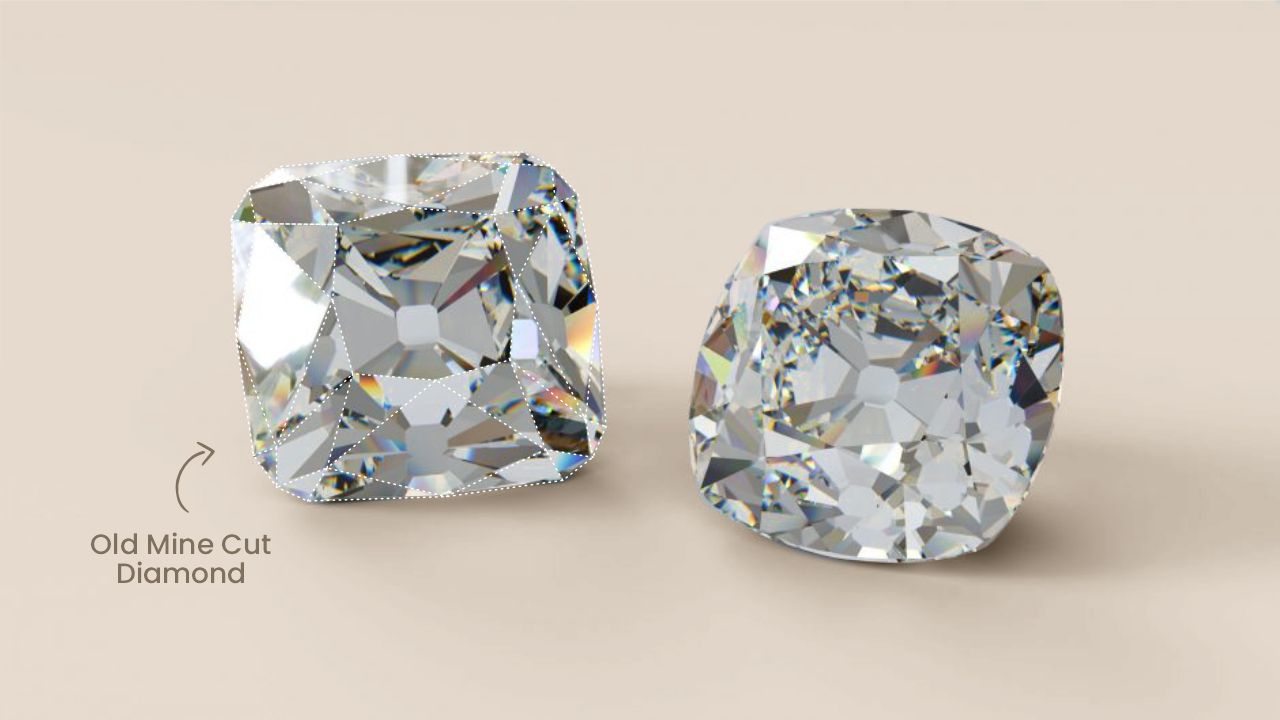
Lately, old mine cut diamonds have gained a newfound popularity due to a shift in interest toward more vintage styles. They have gained the spotlight with their stand out appearance having a squarish shape and curved edges giving that in-demand vintage touch.

But what makes these diamonds so special? Aside from their place in the history of diamond cutting, the fact that these loose grown diamonds are cut and polished by hand makes every cut unique and one of its kind.

With their very distinct and interesting history, and appearance that stand out, old mine cut diamonds open the doors into the world of vintage glamour each with a unique story and a mesmerizing sparkle that transcends time and a definite choice to add to your collection.

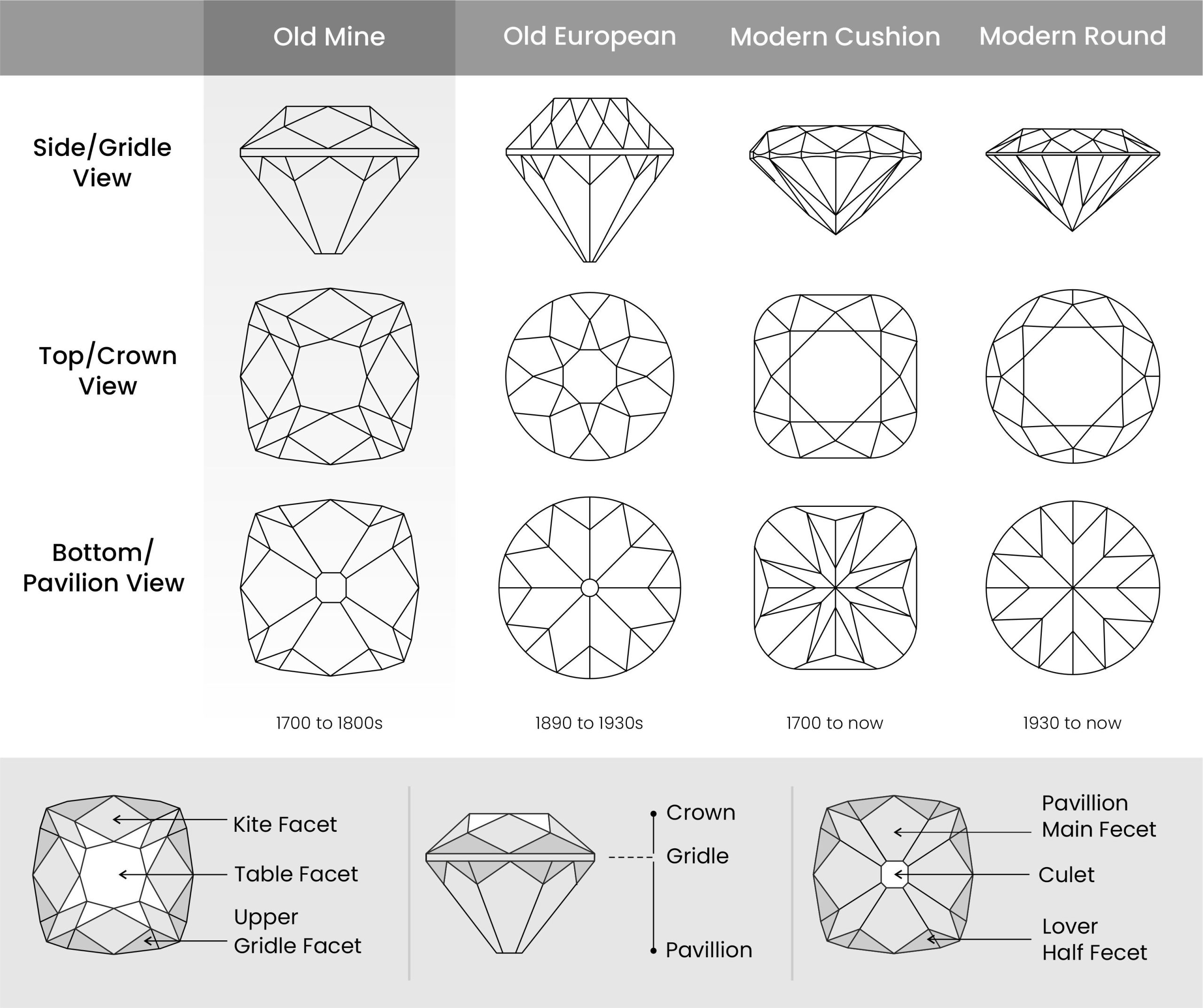
old European vs old mine vs cushion vs modern round

What is an Old Mine Cut Diamond?

Old mine cut diamonds are diamonds that were cut by hand before modern cutting techniques were developed. They were typically cut during the 1800s and early 1900s and were shaped to maximize carat weight rather than brilliance and fieriness. 

They have fewer facets and a more subdued sparkle compared to modern diamonds, but their unique asymmetrical shapes and romantic appeal have made them highly sought after by jewelry collectors and enthusiasts alike.

Old Mine Cut Diamonds: Visual Characteristics

  • Old mine cut diamonds have a distinct appearance that sets them apart from modern diamonds and gives them a unique identity. 
  • They have an irregular shape as they were cut by hand, often resulting in an asymmetrical appearance. 
  • These diamonds also have a smaller table. For those who may not be familiar, the table is the top facet of the diamond. The smaller table of these diamonds can result in less light reflection.
  • These diamonds have a higher crown- the crown is the part between the table and the girdle. This makes them appear larger in size. 
  • They also have a deep pavilion, the lower part of the diamond which often gives a more subdued sparkle. 
  • These diamonds are defined by lesser facets- being 58 or less.
  • Another charming aspect of their appearance is the open cutlet- that is the bottom point of the diamond which gives it a cross-shaped ‘X’ pattern when viewed from the bottom.

Are Old Mine Cut Diamonds More Valuable?

Old mine cut diamonds have their own vintage charm. But whether they are more valuable than modern diamonds depends on various factors, like the 4Cs of loose grown diamond- cut, color, carat, and clarity grades, as well as the diamond’s age, rarity, and demand.

These diamonds have a distinct appeal and aura that makes them an amazing catch for vintage collectors. However, old mine cut lab diamonds often have fewer facets and a less brilliant and fiery appearance compared to modern diamonds, which can affect their value. 

In some cases, the rarity and historical significance of old mine cut diamonds may increase their value, while in other cases, their lower cut grades may decrease their value. Ultimately, the value of a diamond can only be accurately assessed through a professional diamond appraisal.

You can use our old mine cut diamond value calculator to get an idea of what your choice of stone may cost.

Old Mine Cut Diamond Value/Price

The pricing of these vintage collectibles is usually dependent on the carat weight of the piece. 

  • The price can usually range from $1,800 per carat for a 0.5 carat diamond to $5,800 per carat for an approximately 3 carat diamond. 
  • The price range for a 0.5 to 0.69 carat diamond is usually $1,800 to $2,000 per carat. 
  • For a 1-1.4 carat diamond it increases to about $2,700 to $3,300 per carat. 
  • The price increases further for 1.5 to 1.99 carat at $3,300 to $4,100 per carat and then at $4,500 to $5,800 per carat for a 2 to 2.99 carat diamond.

Old Mine Cut diamond vs old European Cut diamond

Old Mine Cut vs Old European Cut

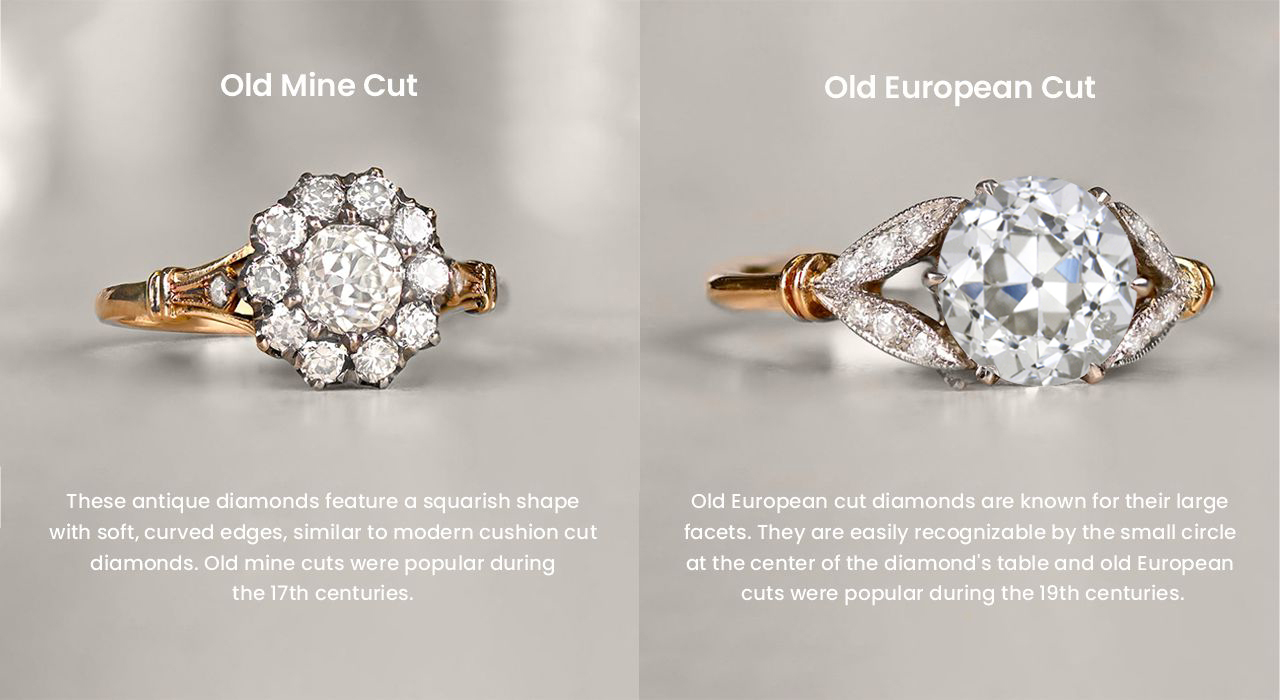
So, here’s the deal with Old Mine Cuts and Old European Cuts. When it comes to old mine and old european diamonds, the main difference is their shape. 

Old mine cuts have that gorgeous cushion-like shape, while old europeans are more of a classic round shape. Old europeans are round, which makes them brighter and sparklier, while old mine cuts have a more distinct shape, faceting, and overall appearance.

A fun fact about both these loose grown diamonds is that they both have cutlets. But the cool thing about antique diamonds is that they have something called an open culet, which means that the point is polished flat, resulting in a visible circle within the stone.

Tips for Buying Old Mine Cut Diamonds

If you’re looking for an old mine cut diamond, you might face a bit of a challenge as they’re pretty rare. Only a handful of diamond dealers still sell them, which means you’ll need to do your research to find one.

Here’s a hot tip for you: focus more on whether you personally find the lab diamond attractive rather than its GIA certificate. After all, what really matters is that you pick a diamond that you truly enjoy looking at. This diamond size chart will give you a thorough approach to identifying your size.

And when it comes to settings for your old mine cut diamond ring, consider pairing it with yellow gold or rose gold. Why is that? Well, it turns out that many of the colorless antique diamonds (graded DH) have been recut over the years into modern diamonds.

So the ones that remain are the ones that have a bit more character and history. These metals can complement the warm color of the old mine diamond cut, making it look even more beautiful. Luckily, you can find this setting with most antique engagement rings.

The key is to choose a lab grown diamond that looks attractive to your eye. The warm color of an old mine cut diamond is actually part of its charm, so it’s not fair to judge these diamonds by modern standards. Additionally, you can use our promo code for your diamond. So go ahead and embrace the unique beauty of these antique diamonds!


Conclusion

Old mine cut diamonds are an enchanting reminder of a forgotten era. With their distinctive shape, unique faceting, and warm color, they offer a glimpse into the past while still dazzling in the present. While they may not meet modern standards, their character and history make them highly prized by collectors and those who appreciate the beauty of antique diamonds.

Whether you’re seeking a unique engagement ring or a rare addition to your collection, old mine cut diamonds are sure to captivate any individual.

FAQs

What is an old mine cut diamond?
An old mine cut diamond is a vintage style diamond that is cut by hand and was typically done in the 1800s and 1900s.

Where to buy an old mine cut diamond?
You can buy old mine cut diamonds from antique jewelry stores, specialized dealers, or online retailers/auction sites. Be cautious when buying online and only purchase from reputable sellers with detailed information and certification. Consider consulting with a diamond appraiser or expert to ensure a fair price and quality diamond.

Are old mine cut diamonds more valuable?
Old mine cut diamonds can be more valuable than modern diamonds, depending on their rarity, size, quality, and historical significance. However, their cut grades may be poorer than modern diamonds, which can decrease their value. A diamond expert can provide a better understanding of the diamond’s value through an appraisal.

Are old mine cut diamonds sparkly?
Old mine cut diamonds have fewer facets and different cutting techniques compared to modern diamonds, resulting in less sparkle. However, they have a warm glow and a romantic vintage feel that many find attractive.

What do old mine diamonds look like?
These diamonds have a unique appearance with a slightly rounded square or rectangular shape, fewer facets than modern diamonds, a larger culet that creates an “X” pattern in the center, and larger and more irregularly shaped facets that give them a more subtle sparkle and a soft, romantic glow. Overall, they have an alluring vintage charm and character adding to their value.

What does old mine cut diamond mean?
Old mine cut diamonds are diamonds with a vintage look that were traditionally hand-cut in the 1800s and 1900s. The phrase “Old Mine” describes the fact that these diamonds were typically mined by hand utilizing old techniques that are now seen as antiquated. As a result, they frequently have distinctive shapes, with each lab grown diamond being unique in its own manner.

Are old mine diamonds rare?
Old mine cut diamonds are considered rare and highly valuable due to their historical significance and unique appearance. They gained popularity during a particular era in history, and many have since been lost or damaged, making them more difficult to acquire.

Besides that, old mine cut diamonds were frequently hand-cut utilizing vintage cutting methods that are no longer common, making each diamond special. The irregularities in shape and cut also mean that it is difficult to find a matching pair or set of old mine cut diamonds, which adds to their rarity.

Trillion Cut Diamond: Its Value, History, Benefit, and Buying Overview

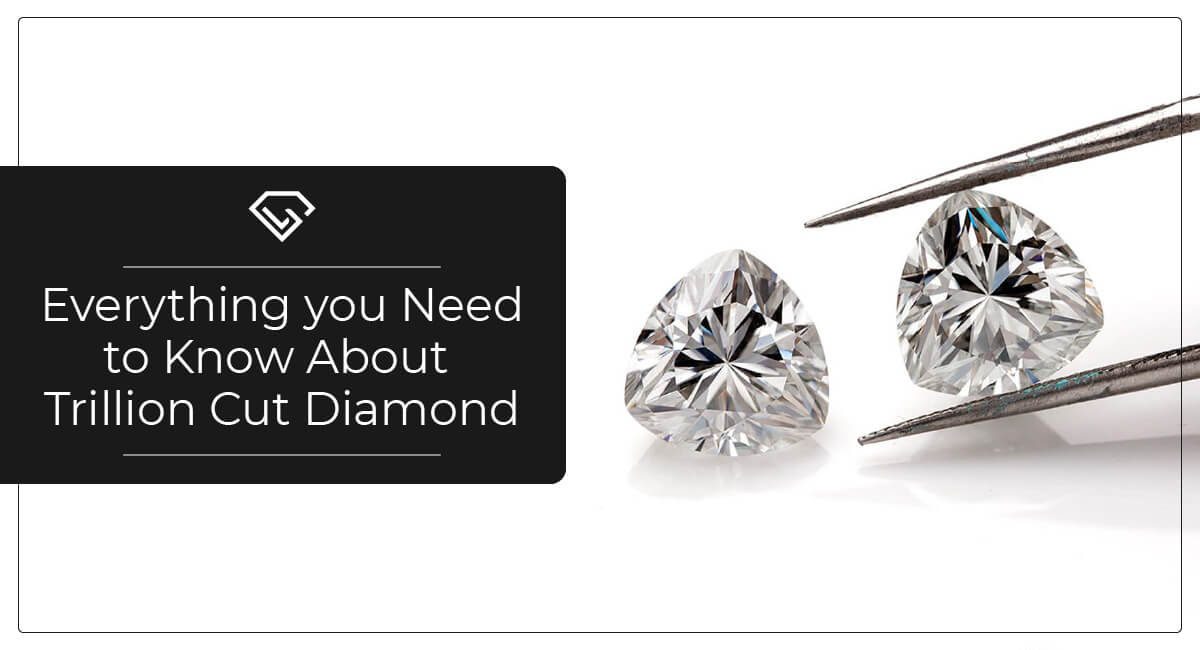
Are you looking for a trillion cut diamond (Triangular diamond) but don’t know where to start? We at Loose Grown Diamonds have your back.

The odd trillion cut diamond stands out so beautifully in any setting as its most distinctive feature is how it’s cut. These gems have a lovely brilliance that makes it easy to cover imperfections and blemishes.

One of the most well-known and stunning varieties of these gems that customers should definitely consider is the triangular diamond. Not only does this cut exhibit brilliance and shimmer but it also does an excellent job of standing out from the normal crowd of diamonds.

trillion cut lab grown diamond For the above reasons, if you want to gift your significant other something truly special, a straightforward trillion cut is a great way to go.

These gems appear to be particularly great in a position supporting the center diamond, where they may draw far more interest. The composition and size of the unpolished rough diamond will ultimately determine whether it is carved with equal angles or with somewhat outward-bowed edges.

The cryptic nature of triangle-cut diamonds further contributes to their air of mystery. Despite being incredibly gorgeous, they may also be very frugal.

The unique selling point of these diamonds is their huge face-up size and affordable prices which tend to attract many customers. The only challenge here is the difficulty with which a trillion shape diamond with acceptable quality is accessible to diamond shoppers. Hence, to help the customers discover the best trillion cut diamonds for their jewelry.

Let us have a detailed review of the trillion-cut diamond and also understand all the important information related to this cut.

What is Trillion Cut Diamond?

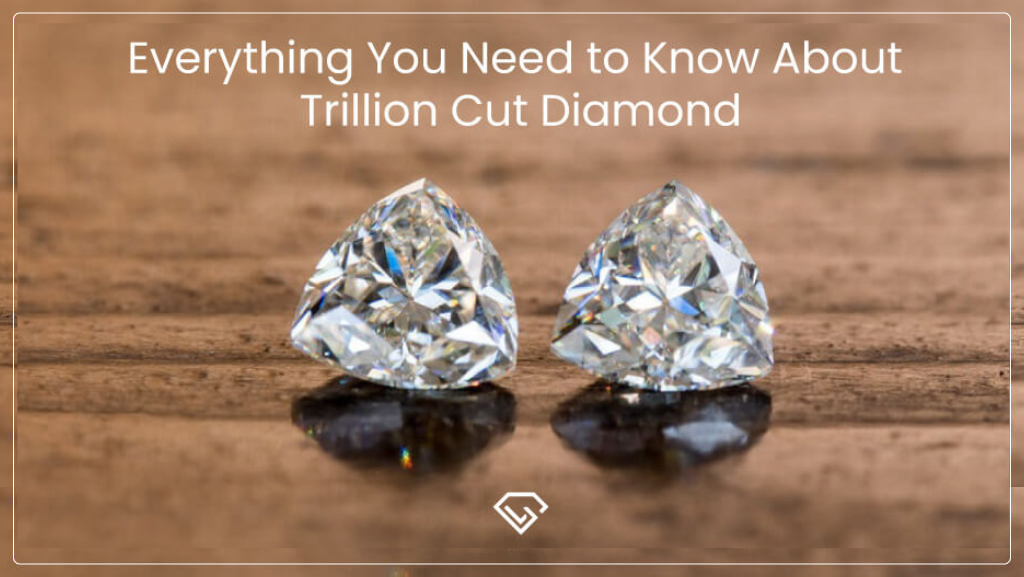
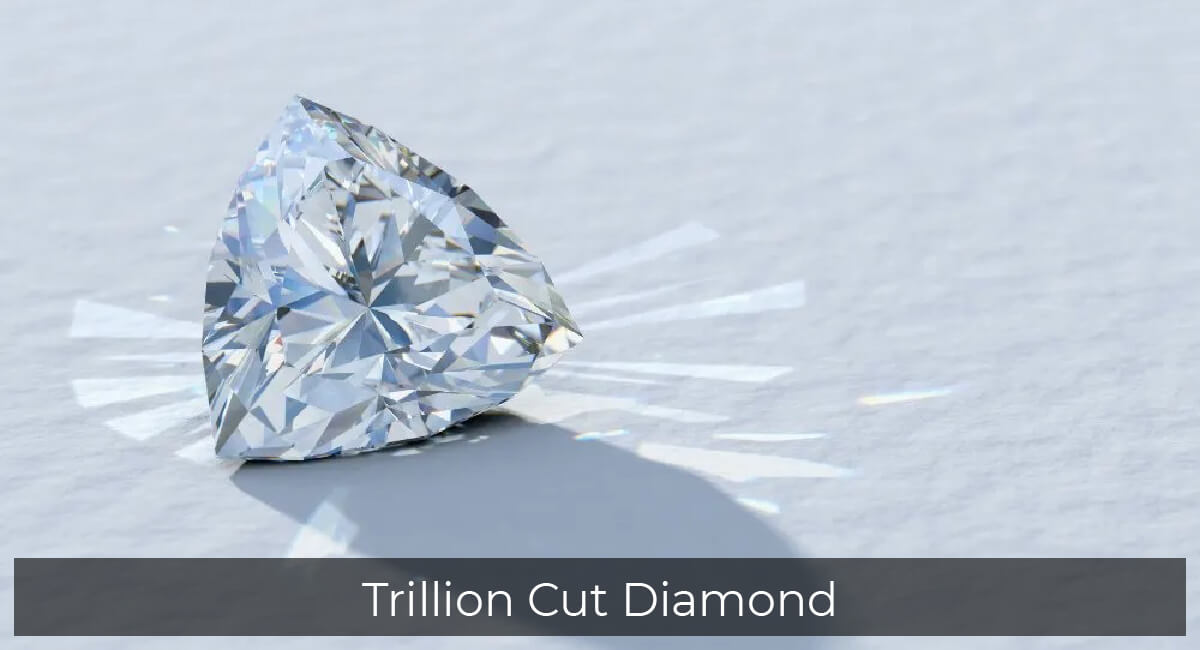
Typically, the trillion cut diamond is also known as a triangular shape diamond. Trill cut, Trilliant cut, and Triangular Brilliant cut are a few variations of this name.

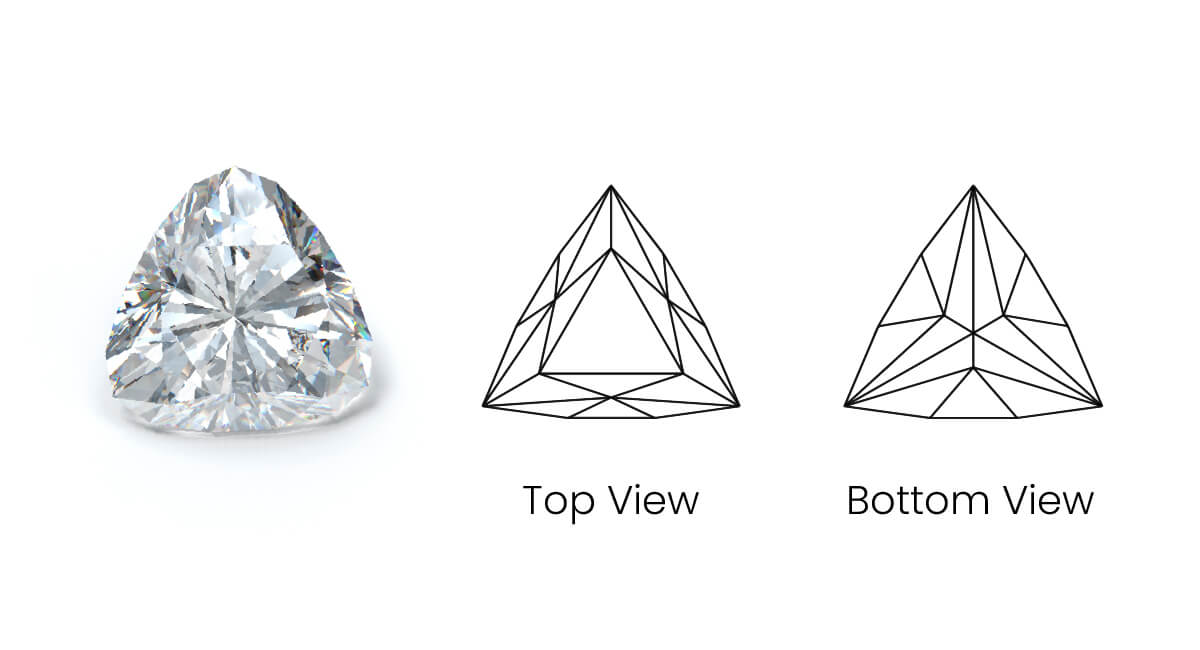
Commonly used as diamond accents, the trillion cut diamonds are shaped triangularly and generally have three sides that are equal in length along with a surface that resembles a flat table. 

What is Trillion Cut Lab Grown Diamond

These triangular gems are frequently used as side stones within rings. The most famous setting is a three-stone setting. The trillion-cut diamond is on both sides of the main gem, which may be a round brilliant, emerald cut, oval cut, or even a princess cut diamond.

Although the trillion-cut diamonds are generally used as a side stone in designs that feature other types of diamonds in the spotlight, many customers have begun preferring the diamond as the center gem in their rings since the diamond’s appeal has grown exponentially since its relatively recent inception in the 1960s.

Trillion-cut diamonds also make an excellent addition to pendants and bracelets, ensuring a wonderful fit. The use of a triangular cut diamond in a necklace would be ideal in a solitary pendant piece.

Diamonds with a trillion form are renowned for their excellent sparkle and brilliant brightness. They may have a maximum of 31 to 50 facets. Thus, with such high brilliance similar to that of a round brilliant diamond, the name “trilliant” came to light. which means a trilliant brilliant diamond.

History of Trillion Cut Diamond

Unique cuts that are triangles in shape are termed and described as trilliant. These shapes are made up of 50 facets.

Misunderstanding between the phonologically similar phrases “Trillion” and “Trilliant,” each of these words lost their copyright rights in the 1980s, and Leon Finker’s business empire relaunched the Trillion cut as “Treille”.

History of Trillion Cut Lab Diamond
Now, brilliant cut is used to refer to a triangular cut for the stone. Trillion-cut gems are triangle-shaped gems with sharp edges 25 crowned angles and 19 wing facets. Triangle-cut diamonds were invented in Amsterdam and are commonly used as accent gems to bigger solitaires in engagement rings.

It also is evident that researchers and scientists have found proof of many other brilliant stones far well before the asscher siblings. Despite this, Amsterdam is regarded as being the birthplace of the trillion cuts in the eighteenth century.

Irrespective of its true origins, it is undeniable that the contemporary trillion cut, as it is now known, started its voyage in NYC in 1962. These diamonds may not be well known but do stand out and amplify other diamonds when placed in a setting.

Pros and Cons of  Trillion Cut Diamond

There is a list of pros and cons that follows every diamond which is true even for the trillion-cut diamond. Customers must be aware of these pros and cons to make an informed decision and rule out whether the drawbacks exhibited by the diamonds are less significant with regard to the personal preference and style of the customer.

Pros

  • A trillion-cut diamond will always appear larger than a round cut diamond of the same carat weight since the surface is 12% bigger in the former. 
  • Amongst all the diamond shapes except for a marquise cut, the trillion-cut diamonds are home to the largest face-up area.
  • These diamonds are also a lot less costly than their counterparts in round cuts since the latter has a higher demand which tends to increase the price of it by a lot. 
  • Because of the presence of sharp points and steep angles, the trillion-cut diamond offers the jewelry it is set in with a highly modern and trendy look. It hence is desirable by the youth who are looking for something to complement their generation. 
  • Trillion-cut diamonds are generally used as diamond accents and hence, are rarely seen as center stones. They would definitely make eye-catching jewelry for customers who have eclectic tastes. 

Cons

  • The most significant cons that exist within the trillion cut diamonds are the physical weaknesses it carries due to the sharp corners.
  • These corners make it easier for the diamond to be chipped and broken.
  • The only way to protect the trillion cut diamonds is by placing them in an appropriate setting like the V-shaped prong or bezel and customers who are not attracted to these settings might have to settle for it as a compromise.
  • The next most significant disadvantage surrounding the trillion-cut diamond is their limited availability which could make it difficult for customers to find good quality trillion-cut diamond jewelry. There are also high chances of customers being fooled or falling prey to jewelers who are not honest about the quality of the diamonds they sell in the case of trillion cut diamonds.

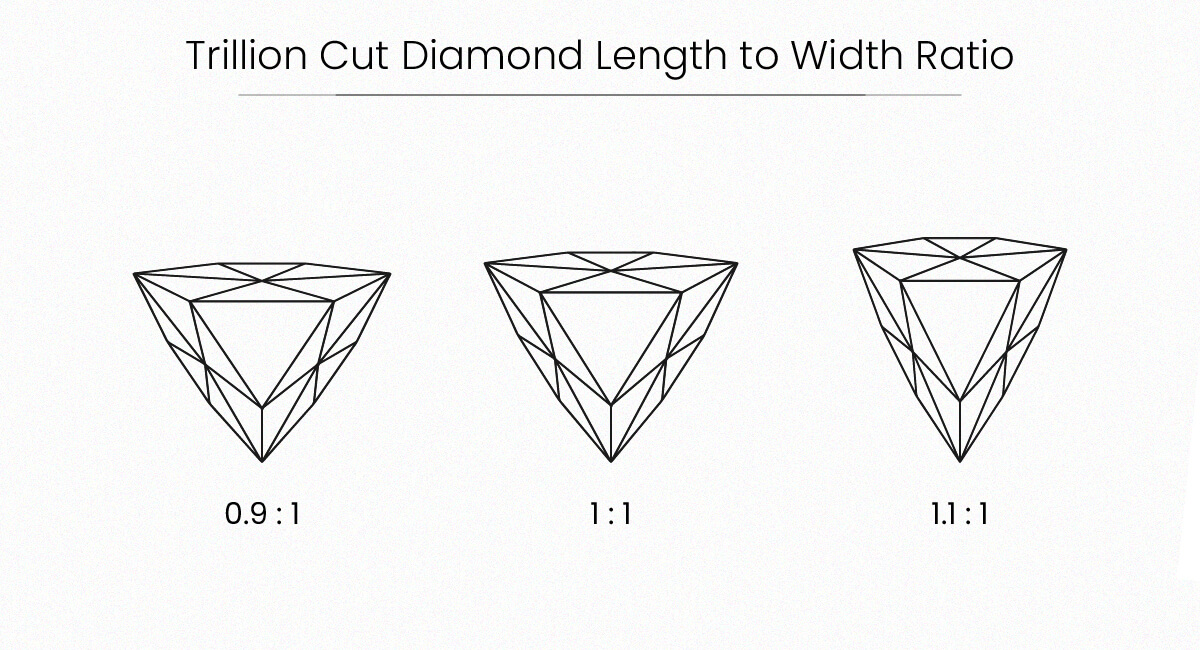
Trillion Cut Diamonds “Length-to-Width Ratios”

When looking for a trilliant gem, always opt for something like an equilateral triangle. In an ideal situation, all sides of the gem should have a 1:1:1 ratio.

Trillion Cut Diamonds “Length-to-Width Ratios”
A diamond with an uneven or out-of-symmetry balance will stand out to the naked eye and is easily noticeable. Therefore, must be disregarded.

Trillion Cut Diamonds Quality

Brilliant cut diamonds, unlike some other cut diamonds, do not have any set requirements for a great cut grade. The metrics listed below can be used as a standard guide for assessing cut excellence.

  • 32-48 percent depth
  • Table of contents: 50-70 percent
  • 1.00-1.10 length-to-width proportion

The uniformity and polishing ratings indicated on the certification should be considered while selecting the ideal stone. It is strongly advised that the symmetry and polish be “excellent or very good”’. Make sure the diamond isn’t too deep, since a superficial cut will detract from the rock’s attractiveness.

What Is the Price of a Trillion Cut Diamond?

Speaking about the price bracket of trillion cut diamonds, its range is considerably less than that of diamonds with conventional shapes. A one-carat trillion diamond (triangular diamond) with good clarity and color grade can cost between $800 and $2000.This, however, is variable for the 4Cs.

Trillion-cut diamonds sometimes appear larger at specific carat values due to their depth below the girdle. Many trillion cut diamonds have 25% of their weight above the girdle and the rest 75% below it. Such diamonds tend to look bigger. Others will have a 50-50 weight distribution and rounded edges, thus making the diamond look larger than usual.

Selecting a design that seems larger will complement any ring you choose. Triangle-cut diamonds may be purchased for as little as $150, which is reasonable and useful. It all depends on the grades.

[blog_page_inventory shape=”Triangular” carat=”1.20,4.50″ cut=”0,4″ color=”0,10″ clarity=”3,10″]
[blog_page_btn title”Buy Now” url=”https://www.loosegrowndiamond.com/inventory/?”]

What Is an Ideal Trillion Diamond?

The Trillion diamond category is made up of many different styles of diamonds. Speaking about the trilliant cut, which is meant to be an ideal trillion diamond, is distinctive and well-known for its aesthetic appeal. The term “Trilliant diamond,” which is used by wholesale diamond merchants, is created by fusing the words “triangle” and “brilliant.”

Triangle is a geometry reference. “Brilliant” is referred to as a stone and its brilliance or shine. A trilliant should have a cut that leaves one-third of the diamond’s mass above the bezel. The load must also be distributed so that two-thirds of it is located below the girdle. Typically, trilliant-cut diamonds have 44 facets. However, some trillion cut diamonds have 50 facets, giving the stone greater fire and radiance.

A trillion-cut diamond’s sides can be rigid or flexible, which changes how the diamond looks. With 50% of the mass below the belt and 50% overhead, larger girdles are a common characteristic of trilliant-cut diamonds.

Decreased brightness is the consequence of the resultant ratios. Contrary to common diamond cuts like the round brilliant, trilliants have a wide range in terms of thickness and dispersion.

Because of this, we evaluate each diamond based on its size, shape, and carat weight. Strong visual impact examples may weigh less carat than larger diamonds. This is why you should never buy an uncut diamond before carefully inspecting it or getting a good look at an HD picture.

When fashioned in twins, trilliant-cut diamonds are occasionally used as side stones and work well on each end of another brilliant cut.

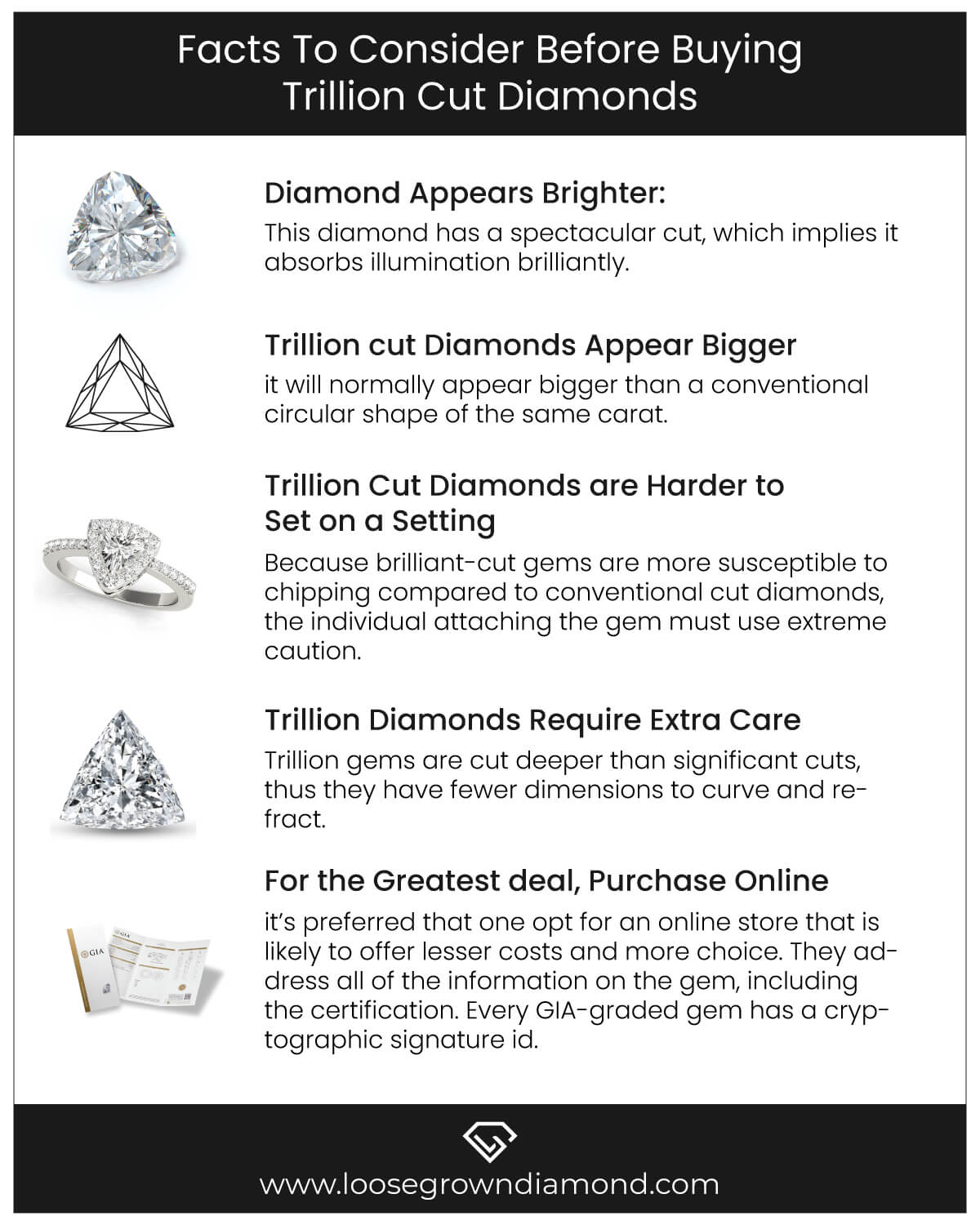
Facts To Consider Before Buying Trillion Cut Diamonds

Although it may appear challenging, purchasing a trillion shaped diamond is not always complicated. The problem with triangular diamonds is mostly your lack of comprehension of them, the exorbitant cost, and most importantly, the symbolism of what a diamond purchase signifies.

The challenging part is gone since you’ve already resolved to buy a diamond. A little homework and consideration will be needed to make a final decision.

To ensure that the next time you buy a trillion diamonds, you do so with complete knowledge, here are a few pointers to keep in mind:

Facts To Consider Before Buying Trillion Cut Diamonds infographics

Diamond Appear Brighter.
This diamond has a spectacular cut, which implies it absorbs illumination brilliantly.

Trillion Cut Diamonds Appear Bigger.
Trillion gems have deep incisions and are broad in size. Due to this, it will normally appear bigger than a conventional circular shape of the same carat.

Trillion Cut Diamonds are Harder to Set on a Ring Setting.
Because brilliant-cut gems are more susceptible to chipping than conventional cut diamonds, the individual attaching the gem must use extreme caution. Brilliant cut gems must also be placed in special sets made expressly for these due to their rough edges.

Trillion Diamonds Require Extra Care.
Trillion gems are cut deeper than significant cuts, thus they have fewer dimensions to curve and refract. As a consequence, even a small amount of debris will rapidly dull their radiance. Cleaning your diamond periodically to ensure its luster and appreciate its shine.

For the Greatest Deal, Purchase Online.
This technique can be difficult to acquire in your regional jewelry store, and modification for the unique setting typically comes at an additional cost. So it’s preferred that one opt for an online store that is likely to offer lesser costs and more choice. They address all of the information on the gem, including the certification. Every GIA graded gem has a cryptographic signature id, which is laser etched on the crown in many cases. Making, and purchasing gems online completely risk-free.

Other considerations when purchasing a trillion cut diamond:

  • Budget: You must decide on your spending limit before the purchase. A limit will eventually assist you in selecting what you desire because trillion diamonds come in a large range and are priced differently. These gems are reasonably priced, but you may not realize how costly they are. However, keep in mind that if you look hard enough, you might find a great stone at a reasonable price.
  • Lab-Grown or Natural Diamond?: Verify whether the diamond you want to purchase is natural or whether it was manufactured in a lab. Lab-grown diamonds are 30–40% cheaper than natural diamonds. Lab-grown diamonds are also eco-friendly and have gained massive popularity among the younger generations.
  • Color and Clarity: Look for clarity and color levels that will offer you the best pricing. The finest grades and highest prices go to colorless and perfect diamonds. Instead of an off-color diamond, you’ll generally prefer one that appears colorless or white in a ring setting.
    Additionally, when viewed normally, you want a diamond that seems perfect to the eye. The diamond’s look will also depend greatly on your clarity grade.
  • 4C’s and Certification: You’ll need to educate yourself on the 4C’s and diamond certification. The weight, shape, brilliance, and purity of a stone—all of these things should be known to you. The 4Cs determine the diamond’s price, but other factors also play a major role. If a diamond is graded by a reputed institution like GIA, GCAL, or IGI, then it will hold a lot of value.

After all these points are covered, it’s time to get browsing! You can find a diamond that sparkles even more by focusing on a few cut-related factors. Then, within your price range, you simply choose the largest, sparkliest diamond.

Sounds easy, doesn’t it? If you feel like you still need help, You can contact Loose Grown Diamond’s expert gemologists, who will gladly help you choose the perfect stone for your engagement ring.

Trillion Diamond Ring Settings

When making rings, there are two primary ways to use trillion diamonds.

[su_youtube url=”https://www.youtube.com/watch?v=3lbQ-XGKInw” autoplay=”yes” mute=”yes” title=”Triangular Diamond Engagement Ring”]

Three Stone Setting: In this setting, trillion-cut diamonds are typically utilized as accent stones rather than as a small shards, as is customary with solitaire settings. Trilliant diamonds are best suited to each side of another brilliant cut, such as a round or princess cut.

The center stone and the two trilliant diamonds are held in place with the help of prongs. Four prongs will hold all four corners of the center stone and two corners of the trillion cut diamond. Then one prong will hold the tip of the trillion diamond on each side. thus making the six-prong setting a safe and popular choice regarding three stone trillion shape diamond designs.

Trilliants have a single line of symmetry; thus, it is preferable to set the diamond so that one of its sides is parallel to the user’s finger. One setting that follows this rule best is a solitaire setting.

Solitaire Setting: One of the most common ways to arrange a trilliant cut is to bring the peak nearer to the fingernail and the parallel side nearer to the wearer’s hand. In this position, the stone enhances the finger’s length and gives the wearer’s hand a more feminine appearance.

The diamond will seem more substantial when it is fitted the opposite way around, with the perpendicular side of the triangle closer to the wearer’s nail. This makes the arrangement a more comfortable option for rings, particularly those made for men. This setting is mostly kept in place with the help of three prongs or a bezel.


Conclusion

Giving a diamond will show somebody that you care for them. Mentioning trillion-shaped diamonds will even draw interest.

Gems of identical carat and brilliance are uncommon. That kind of gemstone is unusual and unlikely to be discovered by many individuals. The carat weight of a gemstone becomes something to think about, but it isn’t the only thing. Hence, be sure your diamonds match the grading shown in the certificate and double-check their cut, clarity, and color.

A giant diamond ring could have several flaws, which, if not looked for properly, would go unnoticed and trillion-shaped diamonds with multiple flaws are not worth the money. Shop carefully, yet freely!

FAQs

How is the trillion cut diamond different from other diamond cuts?
The trillion cut is distinct for its triangular shape, setting it apart from traditional round or square cuts.

Is the trillion cut suitable for engagement rings?
Yes, the trillion cut can make a stunning choice for an engagement ring. Its unconventional shape adds a modern and eye-catching element to the ring.

What metal options are suitable for a trillion cut diamond setting?
Trillion cut diamonds pair well with various metals, including white gold, yellow gold, rose gold, and platinum. The choice of metal depends on personal preference and style.

Can you engrave my engagement ring for free?
LGD provide free customization services and would be more than happy to engrave a ring for you. At the time of placing an order there is a “order notes” section on the checkout page. Please write down the instruction over there.

Can I custom design an trillion cut engagement ring?
Yes absolutely, your desired design can be customized and get in touch with us through our website. We will be more than happy to design a customized engagement ring for you.

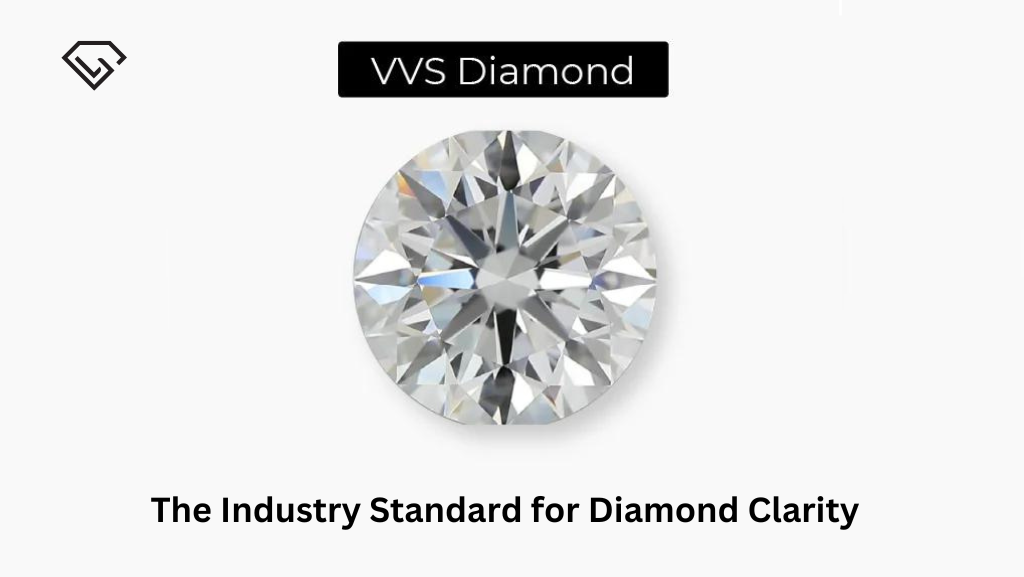
VVS Diamonds: The Industry Standard for Diamond Clarity

You might be wondering if the VVS diamonds are not top-grade diamonds, so why have we named them the dream diamonds? Well, the answer is simple, VVS diamonds or very very slightly included diamonds are as close as you get to flawless diamonds but without the exorbitant cost attached to them.

If you are someone who either is not able to buy a flawless diamond or does not have the time to look for it, a VVS diamond clarity can be a lifesaver. We are here to sing their praises and tell you why we are doing so. Here are all the reasons why you should love VVS diamonds as much as we love them! 

What Are VVS Diamonds?

Very very slightly included diamonds are a diamond rating given to those diamonds with slight inclusions. Inclusions are slight imperfections inside the diamond. Inclusions formed in a diamond are a natural part of the diamond-forming process, and they appear while the diamond is undergoing extreme heat and pressure.

Inclusions are an essential part when grading the clarity of the diamonds: the higher the inclusions, the lower the clarity grade. Very Very slightly included diamonds are the third level on the clarity scale. There are two subclasses in the category of VVS diamonds. VVS1 and VVS2 diamonds are divided based on the number of inclusions and their visibility in the diamond.

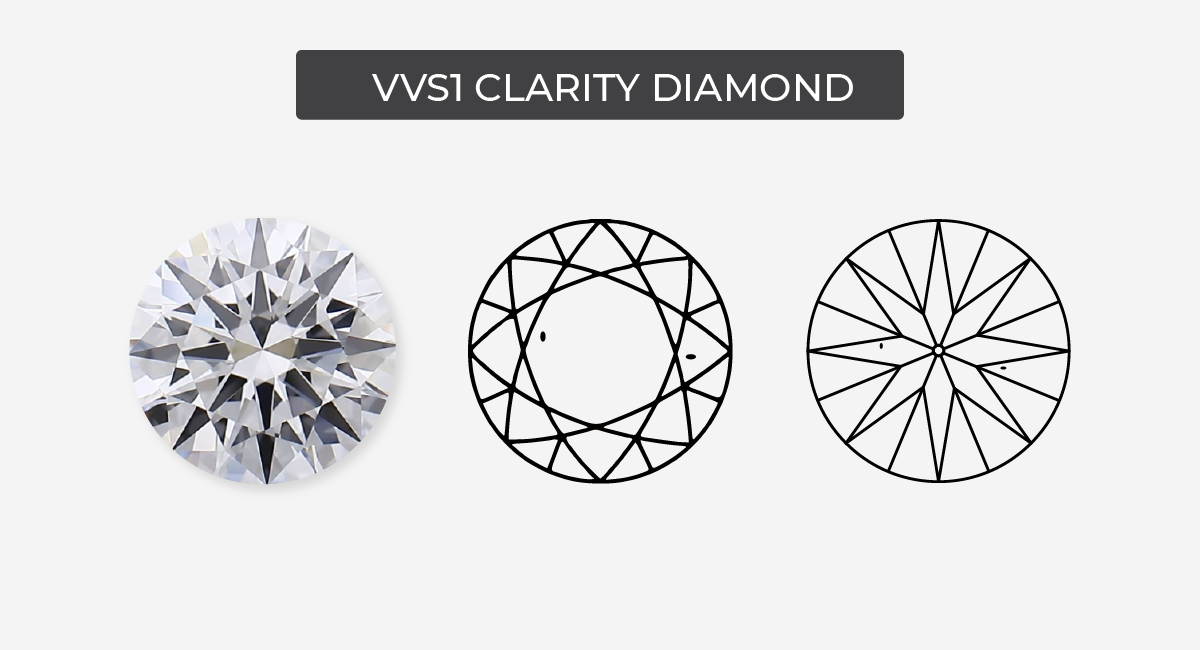
What Are VVS1 Diamonds?

The VVS1 diamond grading comes just after the grading of internally flawless diamonds. The straightforward thing about VVS1 diamonds is that the inclusions in these diamonds are not visible even after maximum magnification. 

Only a trained gemologist with a suitable microscope or magnifying glass can spot any inclusion in the VVS1 diamond. VVS1 grade is obtained by inspecting the size and location of the inclusions present in the gem. 

A trained professional ensures that all inclusions are not visible even after 10x of magnification, and only then can the diamond be graded as a VVS1 diamond. 

vvs1 clarity diamond

Other than the size of the inclusion, even the location of the inclusions is taken into account when grading the diamond’s clarity. Gemologists work along with diamond graders to analyze the number of inclusions the location of inclusions in the size of inclusions to put them in the proper category that will define their grading.

The inclusion location significantly affects whether the inclusion will be visible to the naked eye or not. 

[blog_page_inventory shape=”Radiant,Emerald,Oval,pear,round,cushion,heart,princess,kite,hexagon,old mine,rose cut,marquise” carat=”1.70,3.10″ cut=”1,4″ color=”0,10″ clarity=”9,9″]
[blog_page_btn title”Buy Now” url=”https://www.loosegrowndiamond.com/inventory/?”]

What Are VVS2 Diamonds?

The second grade of the Very Very Slightly Included is classified on the basis that the inclusions present within the diamond are barely visible to the naked eye upon 10x magnification. Similar to VVS1 the grade VVS2 is given based on the size of inclusion, location of inclusion, and even color. Only a trained professional gemologist will be able to spot these inclusions upon verification.

vvs2 clarity diamond

[blog_page_inventory shape=”Round,Princess,Cushion” carat=”2.00,2.10″ cut=”1,4″ color=”0,10″ clarity=”8,8″]
[blog_page_btn title”Buy Now” url=”https://www.loosegrowndiamond.com/inventory/?”]

How Are VVS Diamonds Graded?

Any diamond is mainly checked for four parameters when it is being graded: the cut, the clarity, the color, and the diamond’s carat. This is more than often called the 4C rule of the diamond industry. The grading signifies the quality and cost of the diamond. 

The process of grading a diamond’s clarity starts with first checking the number of inclusions in the diamond. Once the number of inclusions is recorded, the size and density of the inclusions are analyzed. If the inclusions are small in size and are far apart from each other, then the clarity grade is high, but if the size of the inclusions is big and they are close by, the clarity grading of diamonds goes down. 

Another important factor taken into account when checking clarity is visibility. If the inclusions are visible, then the grading is low. The visibility is heavily affected by the location of the imperfection. 

An excellent example of this would be if inclusions are found beneath the table of the diamond that is far more visible than the encryption that is on the sides of the diameter of the diamond; this is what the gemologist checks for and puts diamonds in different clarity gradings. 

After checking all of these parameters, a diamond is graded. VVS diamonds have minute inclusions that have low visibility. VVS1 diamonds in specific have inclusions that are only visible under 10x magnification, and that too with a diamond-specific magnifying glass called a loupe. VVS2 diamonds possess relatively more inclusions than VVS1. 

Also Check: Lab-Grown VVS Diamond versus VS Diamond: What’s the Difference

VVS Diamond Price

You may have searched this question online: “What is the cost of a 1-carat VVS diamond?”. And might not have gotten an exact number. Well, that is because the cost of such a gem depends on the 4Cs, and as these vary from stone to stone, the prices will also fluctuate.

To give you a broad idea, the cost of a 1-carat VVS diamond will be around $2000 to $6000 per carat. If you go higher in color, like a D-colored, VVS round diamond with an ideal cut, the price can go up to $8,000 per carat.

In the VVS grade, VVS1 diamonds will be more expensive than VVS2 diamonds, which will be more expensive than VS1 diamonds, and so on.

For a more affordable alternative, you can opt for a lab grown VVS diamond, which will be around 40% cheaper. 

How Much Do The VVS Diamonds Cost?

In the better part of the last decade, the value and reputation of VVS diamonds have only seen a positive rise because they are affordable yet of excellent quality. 

Many in the diamond world appreciate the amazing pricing of VVS diamonds simply because you pay considerably less than what you would pay for a Flawless grade diamond or an Internally Flawless grade diamond. Still, at the same time, it is almost impossible to differentiate between a VVS-grade diamond from its higher-rated diamond counterparts.  

However, the actual cost of a VVS diamond is also dependent on other factors, like if you choose a VVS1 or VVS2 grade diamond. The final price is also affected by three other factors: color, carat, and cut. 

What Is The Difference Between VVS1 Diamonds And VVS2 Diamonds?

vvs1 vs vvs2

The difference between Very Very Slightly Included diamonds in the first category and Very Very Slightly Included in the second category depends on the imperfections’ visibility and location. VVS1 diamonds often possess some inclusions that are not visible to the naked eye; this is because of the size of the inclusion and the location of inclusion.

However, in VVS2 diamonds, the location or size of the inclusions are such that they might be visible to the naked eye at times without even a diamond-specified magnifying glass. 

What To Look Or When Buying VVS Diamonds?

Many people have a lot of confusion when they go diamond shopping. The myth about buying diamonds is that only the highest grades are of actual value, but in reality, diamonds that look the same have similar values in the retail market. 

Diamonds are not just pretty stones, they are also a great asset to have, which someone should invest in with utmost care. VVS diamonds have almost the same value as Flawless or Internally Flawless diamonds. VVS diamonds are a great investment as they are priced not too high, and they still remain a great investment. 

You should definitely use online tools available to assess the value of the diamond and cross-check it with various certified retailers.
You can use our diamond price calculator to determine the right price for your diamond. If you have access to gemologists, a good idea is also to get your diamond checked to ensure the quality of the product you are buying. 

Why Choose VVS Diamonds? 

If you’re still wondering why you should buy VVS diamonds, here are all the reasons you should. First is the brilliance of VVS diamonds. They have minimal flaws, and hence they have great sparkle. 

Secondly, the cost of the diamond is quite affordable, and yet they look virtually the same as higher clarity grade diamonds. Lastly, VVS diamonds are a great financial investment, and their value is generally appreciated with time. 

Where To Buy VVS Diamonds? 

VVS diamonds are one of the most popular diamonds in the market for engagement rings. This does not mean that it is super easy to buy them. You need to be very careful when choosing the jeweler or the retailer you’re purchasing diamonds from.

Make sure you only approach retailers who have received certification from verified diamond authorities like the Gemological Institute of America (GIA) or the International Gemological Institute (IGI), or Gem Certification & Assurance Lab (GCAL).

We at Loose Grown Diamond offer a wide range of VVS1 and VVS2 diamonds with proper certification from GIA, GCAL or IGI. Be sure to check out our inventory. Additionally, unlock exclusive savings with our promo code to enhance your diamond shopping experience.


Conclusion

VVS diamonds are a great buy. They offer many advantages like being cost-friendly, having excellent quality, and valuing money. It depends on your personal preference or requirements for a VVS1 diamond or a VVS2 diamond.

Remember to be super careful when choosing who to buy your diamonds from and always check the retailer’s credentials and from which statutory body they have gotten their certification. There are many reasons to buy VVS diamonds, and they make for a beautiful piece of jewelry and investment.  

Frequently Asked Questions (FAQs)

Should I purchase a VVS diamond?
VVS diamonds are a great buy, but they might not be the perfect diamond for everyone, so here is a list of pros and cons for you to understand if it is the dream diamond for you. 

Who should buy a VVS diamond?
If you are someone with a decent budget which is maybe not fitting for  F or IF clarity grade but a little lower than that,
VVS diamonds are perfect. If you do not wish to compromise much on quality, then again, VVS diamonds are a good buy for you. If you are someone who likes to explore different cuts, sizes, and colors, then you should know that VVS diamonds are super flexible with different cuts, colors, sizes and designs as well. 

Who shouldn’t buy VVS diamonds?
If you are running on a tight budget, then
VVS diamonds are not the perfect buy for you because their price can be a bit expensive. If you are someone who absolutely does not wish to compromise on quality, then again, you should look for a higher clarity grade in a diamond.
We would suggest you explore VS diamonds as they can be a great and adjustable alternative that might suit your requirements better than
VVS clarity diamonds

Understanding the SI2 Clarity Diamonds: What is it and Deciding Whether or Not to Buy?

Are you looking for a dazzling diamond? What if we told you there are affordable diamonds available in the market? We are talking about SI2 diamond clarity. What is it? How much does it cost? We’ll be mentioning all of that in this article.

It is important to know how to detect the clarity of any diamond when shopping for one, or else you won’t be able to tell if a diamond is truly worth the price it is being sold for.

All diamonds sold by retailers have a grading report issued by a diamond testing laboratory. The report informs about the diamond’s clarity, color, cut, carat, and all the flaws present in the diamond.

The clarity defines simple transparency and lets you know about the type, number, and size of imperfections the gem has. The larger the flaws or the greater the number, the lower the clarity grade will be.

These grades range from high grade “flawless” (F) to low grade “included” (l). We also have the SI category between this range and the SI category, which has two types (SI1 clarity and SI2 clarity). A very divided topic is whether SI2 clarity diamonds are worth spending money on.

Let us briefly understand SI2 clarity diamonds and the pros and cons of buying an SI2 lab diamond.

What are SI2 Diamonds?

GIA developed the clarity grading scale to make diamond purchases easy and reliable for customers. It has eight upper clarity grades, including SI clarity, and three low clarity grades, which have poor beauty and durability and are also unsuitable for jewelry making.

What are SI2 Diamonds?

The grading of diamonds is a complex task; it needs a diamond expert working in a diamond laboratory to observe the diamond carefully. In case of clarity, note down the size, location, number, and type of inclusion within a gem.

The SI in SI clarity grade stands for “Slightly Included.” On the clarity grade scale, this grade stands above the I diamonds and below the VVS2 diamonds. SI2 diamond clarity inclusions can be seen by the naked eye sometimes, but mostly with 10x magnification, a skilled gemologist can detect the flaws easily.

An SI2 diamond is a lower grade, but that doesn’t mean you should discredit it. With some patience and being on the lookout, one can find a great deal on these gems.

Getting an upstanding deal depends on how well you can browse through diamonds. With some effort, one can find SI2 diamonds, which appear fully eye-clean and have a lower price than other brilliant diamonds.

There are some SI2 diamonds present in the market that have noticeable inclusions and do not require any magnification to see. It is not necessary that these diamonds have cloudiness or milkiness in them. Either way, it is best to avoid such diamonds.

Despite the lower clarity grade, SI2 diamonds have a beautiful shine and spark. The spark of a diamond mainly depends on the cut of a diamond, not on the clarity. If you have a low budget, you have to grind a little to find a low-inclusion SI2 diamond and give it a good cut; by doing this, you can have a stunning diamond at a low price.

SI1 vs SI2 Diamonds

If we look at the clarity grade scale, both SI1 and SI2 lie in the sweet spot of affordable price and adequate quality. If anyone wants a diamond for a romantic purpose, one that looks prestigious, and one that lies within a decent budget, then these two clarity grades are the perfect fit.

SI1 vs SI2 Diamonds

It is already clear by the given name that SI1 diamonds come above and are always considered higher quality than SI2 diamonds. However, not every SI1 diamond needs to always be better than or similar to an SI2 diamond, as the clarity grading system doesn’t work with the positions of inclusions inside the diamond nor the color of the diamond.

These two factors can make SI1 look less or more appreciable compared to SI2 diamond clarity.

The position of flaws and color inclusions is what makes the difference. Sometimes the dark-colored inclusions present on the center table of the SI1 diamond can be visible if we put the diamond on a blank sheet of paper.

Whereas, sometimes, the color inclusions present near the pavilion part of the SI2 diamond cannot be seen by the naked eye.

So, one should buy a diamond that will pass the unaided eye test and not fully depend on the clarity grade system. The main motive for buying a diamond should be that it is eye-clean, which is the most important factor.

SI2 diamond is a little cheaper than SI1 due to its lower grade. But if you can find an SI2 diamond that is eye clean, then it isn’t of any use to look for an SI1 diamond and pay a higher price.

To achieve this, it is important to see the diamond carefully and patiently from all sides. Also, view it under magnification so you can get a flawless one for yourself.

SI2 Clarity Grade

To get a better idea of what to look for in an SI2 diamond clarity, it is essential to know where the SI2 clarity lies on the clarity grading scale. Diamonds that are graded by IGI, GIA and GCAL are preferred, as they are considered to be more authentic.

SI2 Clarity Grade

Below are the GIA clarity grades, from highest to lowest:

  • Flawless (FL)
  • Internally Flawless (IF)
  • Very Very Small Inclusions (VVS1)
  • Very Very Small Inclusions (VVS2)
  • Very Small Inclusions 1 (VS1)
  • Very Small Inclusions 2 (VS2)
  • Small Inclusions 1 (SI1)
  • Small Inclusions 2 (SI2)
  • Inclusions 1 (I1)
  • Inclusions 2 (I2)
  • Inclusions 3 (I3)

As you can see, SI2 diamond clarity is closer to the bottom. not exactly the best choice when it comes to diamonds. However, it will not be cheap.

The imperfections in diamonds are from nature or when they were formed. The clarity of a diamond depends mainly on inclusions. The type, size, and amount of inclusion can make any diamond beautiful or unfit for jewelry. Generally, diamonds with more significant and larger flaws are categorized as having a low clarity grade. Expert gemologists look at diamonds from all angles under high magnification to locate all flaws.

It’s rare to find a diamond without any flaws. Even a high-clarity diamond might have some imperfections. So it would be beneficial if you looking for a diamond that is eye-clean and will look good on your jewelry.

Is SI2 Diamond Clarity Good?

On the SI2 clarity grade, the SI stands for “slightly included.” In this clarity grade, there might be a chance of seeing an internal flaw with the naked eye. However, the internal flaws are mostly invisible to the naked eye but can be seen under high magnification.

Is SI2 Diamond Clarity Good?

It will be no surprise if pure, flawless, and eye-clean diamonds are available at premium prices. As we go down the clarity scale, the diamonds become much more affordable, even for big diamonds of high carat weight.

The clarity grade scale has a range from Flawless (Fl) to included (I) and, more precisely, to included level 3 (I3). Generally, the included diamonds I1, I2, and I3 are not used in jewelry because of their low clarity. Due to low demand, jewelers also don’t keep stocks of these diamonds.

SI2 (Slightly Included 2) diamonds are the lowest and most affordable grade on the market. But you cannot dismiss the idea of buying an SI2 diamond just because of its clarity.

There are numerous reasons why purchasing this can be a good investment. The price can be a primary factor. As for the sparkle, you can choose a good cut; by doing this, no one will be able to tell that this diamond is an SI2 diamond.

Eye-Clean SI2 Diamonds

Everyone wastes lots of time stressing over GIA clarity grades. However, clarity is not everything; the actual appearance of the diamond to the naked eye is what really matters.

It is important to note that not all SI2 diamonds are the same; some can have high blemishes, and some are very beautiful. Instead of focusing on the diamond’s clarity grade scale, you should look for a diamond that is pleasing to the eyes, or, in simple words, an “eye-clean diamond.”

The term “eye clean” is used when we talk about the diamond’s clear appearance and imperfection-free appearance to the naked eye. Expert jewelers can see inclusions inside the diamond with a magnifying glass or a microscope, but the most important thing is what you see under normal conditions.
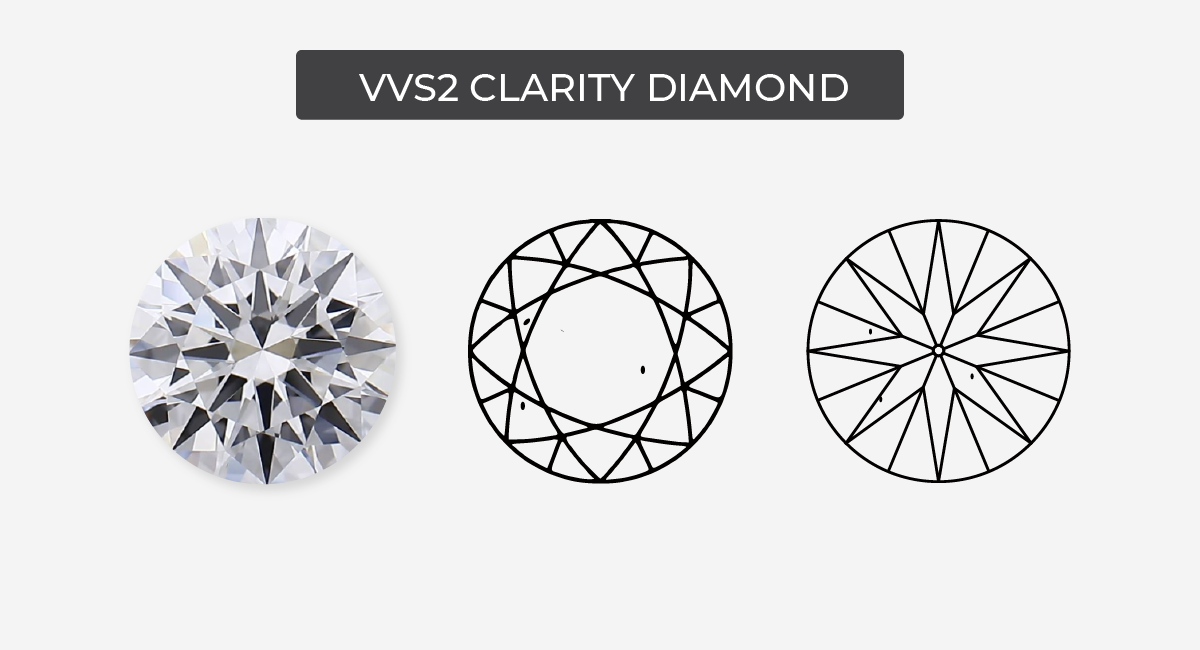
However, it is also possible that the same diamond can appear at different clarity levels to different people. Some people find SI2 clarity diamonds eye clean, whereas others can see flaws without magnification.

This all depends on the person’s eyesight or ability to find the flawed characteristics inside the diamonds. You should also know how the industry determines whether the diamond is eye-clean or not. The expert grading team observes the diamond from a distance of about 9 to 12 inches. If they cannot see any flaws at that distance, the diamond is considered eye-clean.

Generally, people who go to buy diamonds for engagement rings do not use this technique. We recommend you ask the diamond vendors about the inclusions in a little more depth to avoid confusion while observing. You can ask for the percentage of visible inclusions. These methods can lead you to the perfect eye-clean diamond.

How Much Does a SI2 Diamond Cost?

The SI2 diamond can offer a great deal if we discuss the price. However, depending on the shape and size of the diamond, the transaction could go wrong.

How Much Does a SI2 Diamond Cost?

If we talk about the exclusive SI2 clarity grade diamonds, then the rate for high quality would be around $500 per carat, so a diamond can cost you more than $5,000.

Basically, it is impossible to put a fixed price tag on an SI2 diamond. Two diamonds of the same carat and cut and color grade can cost hundreds or thousands of dollars apart simply because one is an SI2 diamond and the other is a higher clarity grade diamond.

On the other hand, an SI diamond of almost the same appeal can cost less than a diamond with a VS or VVS clarity grade; this can be a great deal for you.

Finding an SI2 eye-clean diamond can be hard work, but they exist. Also, remember that most of them have high inclusion. Eye cleanliness is a thing that we can’t define with words; it is something that can be seen only with our naked eye.

A diamond can look perfect in pictures, but you have to be careful and check out all the angles of a diamond. An SI2 diamond is worth the price, but finding a good one is not easy. These diamonds can cost anywhere from $1,000 to $6,000 per carat, depending on the other four Cs.

Only SI2 diamonds that are eye clean and offer a low price are worth buying. For comments on worth, you should judge diamonds’ cleanliness by yourself and should always go for specifics with your jeweler. The best way to observe is to place the diamond six to twelve inches away from your eyes. Price confusion you can use our diamond pricing calculator to determine the right price for your diamond.

How Should You Buy an SI2 Clarity?

Buying any type of diamond can be an excellent investment if done properly. Below are some tips that will help you buy an SI2 diamond:

Buying Tips for SI2 Diamonds

  • Look for inclusions along the edge of the diamond: You don’t have to look at all the inclusions present in the diamond, but inclusions like feathers and clouds will be a problem for you. However, you can go for an SI2 diamond with inclusions along the edges, as it is possible that afterward, they can be hidden with a setting.
    It is also possible that sometimes when the jeweler crafts the prong setting, the feather inclusion can increase.
  • Look for inclusions that are lighter in color: Light-colored inclusions are harder to detect than dark inclusions. Due to this, if you can see dark or black inclusions within a diamond, it would be wise not to buy that stone.
    Even if these inclusions are on the edge, there is an excellent chance that they will be visible from a different angle due to their dark color.
  • Look for GIA or GCAL-graded diamonds: most people don’t know that there are many different grading laboratories. GIA is the world’s most widely known, reliable, and accepted laboratory.
    It should also be your topic choice. The GCAL laboratory has a system with the Angular Spectrum Evaluation Tool that gives the most accurate insight, so this has a big advantage in grading.
  • Sparkle factor and performance are important: everyone likes an engagement ring with a great shine or sparkle. If you also want that, you should pay attention to both clarity and cut quality. The sparkly diamonds have the power to attract every eye present in the room.
    If you want an eye-clean face-up for a sparkle, a VS2 diamond is generally recommended. However, this doesn’t mean that SI2 can’t give your ring a good spark.
  • Choose a diamond shape that hides inclusions: To hide inclusions, shapes can be of great use. A good shape chiseled into a rough stone can make inclusions harder to detect. The round brilliant cut is the most common and best cut for hiding inclusions.
    The brilliant facet pattern of the round cut produces a huge spark, which challenges the inclusion’s presence. On the other hand, a diamond with a step cut like an Emerald or Asscher cut will highlight the inclusions due to its large table, which can be a big disaster.

If you’re ready to start your search, choose diamonds from hundreds of styles on loosegrowndiamonds.com and elevate your diamond shopping experience with a generous discount using a promo code.


Conclusion

SI2 diamonds have a high probability of having visible inclusions. Still, most of them can only be seen under high magnification, which leads to a lower value and grade for the SI2 diamond. But you can find a pretty good deal with these diamonds if you can get a hold of the right one.

One can find a diamond that appears eye clean and is an SI2 diamond at a lower price than high-clarity ones, which almost look the same. An SI2 diamond can be 70% cheaper than FL or VVS diamonds. You can give the diamond a round brilliant cut to make it look more sparkly and avoid having a step cut.

You just have to know what to look for in SI2 diamonds while buying, and you just have to find a diamond with an eye-clean look.

FAQs

Do SI2 clarity diamonds sparkle?
SI2 diamonds can sparkle beautifully when well-cut and have good light performance.

What does SI2 diamond clarity mean?
SI2 diamond clarity means the diamond has slight inclusions that are visible under 10x magnification, but generally not visible to the naked eye.
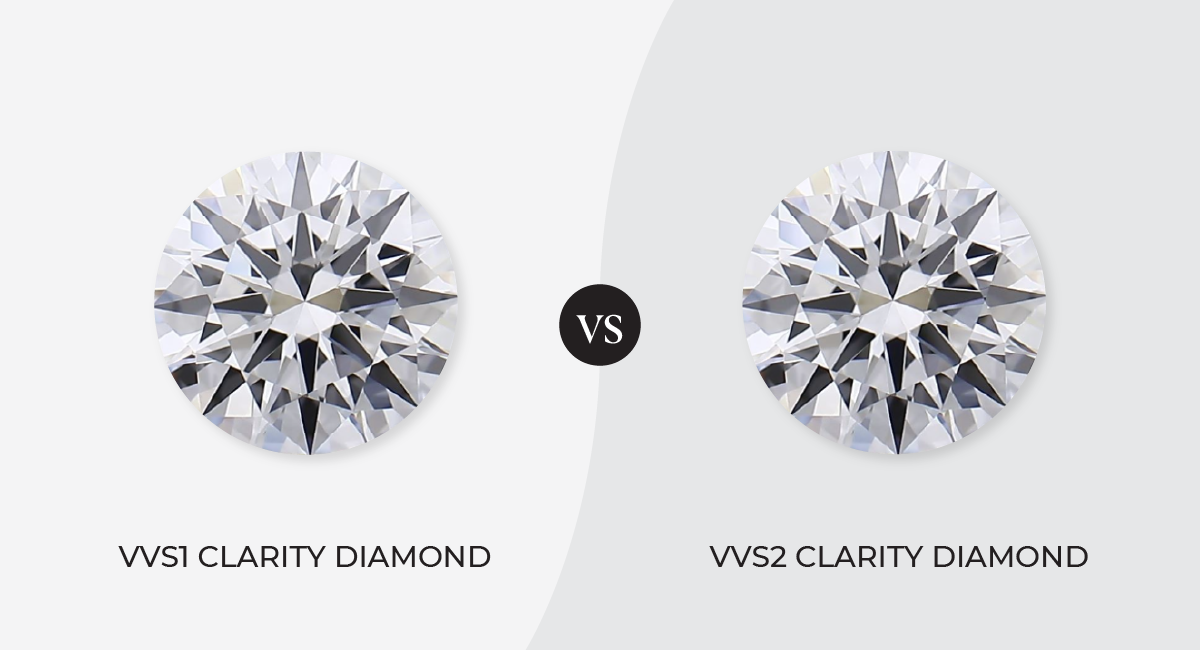
Are SI2 diamonds a good choice for engagement rings?
SI2 diamonds can be a good choice for engagement rings, especially if you are looking for a balance between diamond quality and price.

How does SI2 clarity affect the price of a diamond?
SI2 diamonds are typically more affordable than higher clarity grades, making them a budget-friendly option.

Simulant Diamonds vs Lab Created Diamonds: How To Differentiate the Both of Them?

What are Simulant Diamonds vs Lab Created Diamonds? It is a typical query that lots of folks pose. Depending on the qualities you are seeking in a diamond, the answer to this question will vary. The finest choice, if you’re seeking for a high-quality, flawless diamond, is a lab grown diamond. However, simulated stones may be your best option if you’re looking for something more cost-effective and less pricey than a lab grown stone.

Simulant Diamonds vs Lab Created Diamonds: How To Differentiate the Both of Them?

What Is a Simulated Diamond?

Simulated diamonds are those which are made to look like natural diamonds, however, are different to it in composition and structure. These are made of different chemical compositions hence, are poles apart from naturally mined diamonds. You can say simulated diamond is a replacement or substitute for an actual diamond.

Simulant Diamonds are either naturally occurring or lab-grown. Another point to note is, that naturally occurring gemstones that may look like diamonds cannot be categorized as ‘diamond simulants’ as these are not alternatives because they are not trying to imitate actual diamonds.

Simulated Diamonds

Cubic zirconia falls under this category. It consists of zirconium dioxide and is synthetic in nature. These are rare and exclusively created in labs. These cubic zirconia stones are obviously cheap monetarily as they are distinctive from naturally occurring diamonds.

Nexus Diamond is another type of ‘simulated diamond’. These are the closest replications of an actual diamond. They are created in labs, patented, and formulated in the exact same way to replicate a diamond. 

However, unlike man-made diamonds, these do not contain carbon. The GIA system of grading (4C’s) is used to inspect the quality of the nexus diamond. As mentioned, they are lab-grown hence, are environmentally viable and eliminate the risk of manual labor. Unlike cubic zirconia, these Nexus Diamonds are durable and will last till the end of time. 

Moissanite is a newer diamond simulant. It is spun to give the illusion of a diamond however, they are different in properties and structure. The point of commonality between diamonds and moissanite is thermal conductors. They have a brighter and different brilliance than regular diamonds. This is because the system of faceting stands apart from actual diamonds. 

Pros and Cons of The Simulant Diamond

Pros of Simulant Diamond:

  • Simulated diamond is budget-friendly for those who do not necessarily want to spend a hefty sum
  • It is sustainable. It does not require mining as they are lab-grown.
  • A hit for those who love sparkle. These diamonds bling differently hence, making it a treat for those who love the sparkle.

Cons of Simulant Diamond:

  • These tend to break and crack. One has to be cautious while wearing these diamonds.
  • They illuminate a rainbow sparkle which is a major factor that distinguishes them from regular diamonds. It is more likely to look like a ‘copy’.

What Are Lab Created Diamonds?

Lab-created diamonds also have different names in the jewelry world that are, lab grown diamonds, synthetic diamonds, artificial diamonds etcetera. These lab grown diamonds are obviously man-made and replicate naturally mined diamonds. 

They have carbon elements and look the same in physical properties as well as in composition as naturally mined diamonds. Lab grown diamonds are less expensive in terms of naturally mined diamonds. 

Also Read: Real Facts About Lab-Grown Diamonds

about lab created diamonds

Natural diamonds grow under intense heat with heavy pressure. It is a time-taking process as it takes a hundred and further years to turn into a diamond. On the other hand, lab-grown diamonds are created in the same manner. The diamond-creating process starts when a ‘diamond seed’ is placed in a glass chamber or a special chamber where earth-like properties are re-created.

These properties are similar to the temperature and pressure in which naturally mined diamonds are created. It is covered in carbon and thereafter grows into a synthetic diamond that is as close as a naturally occurring diamond.

The two major types of lab grown diamonds are used for creating diamonds in the lab High Pressure-High Temperature (HPHT) and Chemical Vapor Deposition (CVD). As the name suggests, the High-Pressure High-Temperature method uses temperatures and pressures as high as 2700 Fahrenheit and 1.5 million pounds per square inch, respectively. 

The diamond seed goes through intense processes and in turn, a synthetic diamond is created. The Chemical Vapor Deposition (CVD) method uses less temperature and less pressure, unlike the HPHT. It actually uses a combination of chemical compositions to break down the diamond seed.

It uses a variety of gasses to crystallize and harden the seed. The best part about these methods is that they are completed in a matter of weeks without any ecological and environmental wastage, and save manual labor. These are mass-produced and are much cheaper than naturally mined diamonds. It is a great option if you have a fixed budget.

To spot differences between naturally mined diamonds and lab grown diamonds, special instruments are needed even by professionals. The other way to spot the differences is in the IGI/GCAL/GIA/AGS report of each diamond.

Pros and Cons Lab Created Diamond

Pros of Lab Created Diamond:

  • They are literally the same as naturally mined diamonds. Their physical and chemical compositions are alike.
  • They are cost-effective and charge less than natural diamonds.
  • Environment Friendly. They do need any mining that causes harm to the environment.

Cons of Lab Created Diamond:

  • Lab grown diamonds do not have the same legacy as naturally-grown diamonds. The former is not assumed to be ‘rare or one of a kind.
  • They are mass-produced hence, making it feel less of a luxury.
  • The value wears off with time. And does not have a good resale value.

[blog_page_inventory shape=”Round,Oval,Emerald,Cushion,pear,radiant,princess” carat=”4.00,4.10″ cut=”0,4″ color=”0,10″ clarity=”0,11″]
[blog_page_btn title”Buy Now” url=”https://www.loosegrowndiamond.com/inventory/?”]

Simulant Diamonds vs Lab Created Diamonds?

Simulant Diamonds vs Lab grown Diamonds

Lab grown diamonds are literally the same as naturally occurring diamonds in appearance. Both these categories have the same physical and chemical compositions making both indistinguishable. 

Both are graded on the same scale which is used for all diamonds. You need to look at their respective GIA reports spotting the differences. However, simulant diamonds can be easily differentiated as they have different properties and elements. They sparkle differently and look a certain way than regular diamonds. These diamonds are the impersonation of regular diamonds.

There are 4 points appearance, about, cost, and ethics to differentiate both the simulated diamond vs lab grown diamond.

Infographics

Simulated Diamond vs Lab Created Diamond: About

Today, diamond simulants such as cubic zirconia and moissanite are synthetic stones manufactured in laboratories. They are made to simulate diamonds but are compositionally and optically different from diamonds and can be made from several different materials and gemstones.

Simulated Diamond vs Lab Created Diamond: Appearance

Diamond simulants can be differentiated from diamonds due to their optical properties. Moissanite, for example, is double refractive
while a diamond is singly refractive. This causes the moissanite to emit a fiery rainbow sparkle that is easily differentiated from a diamond with the naked eye.
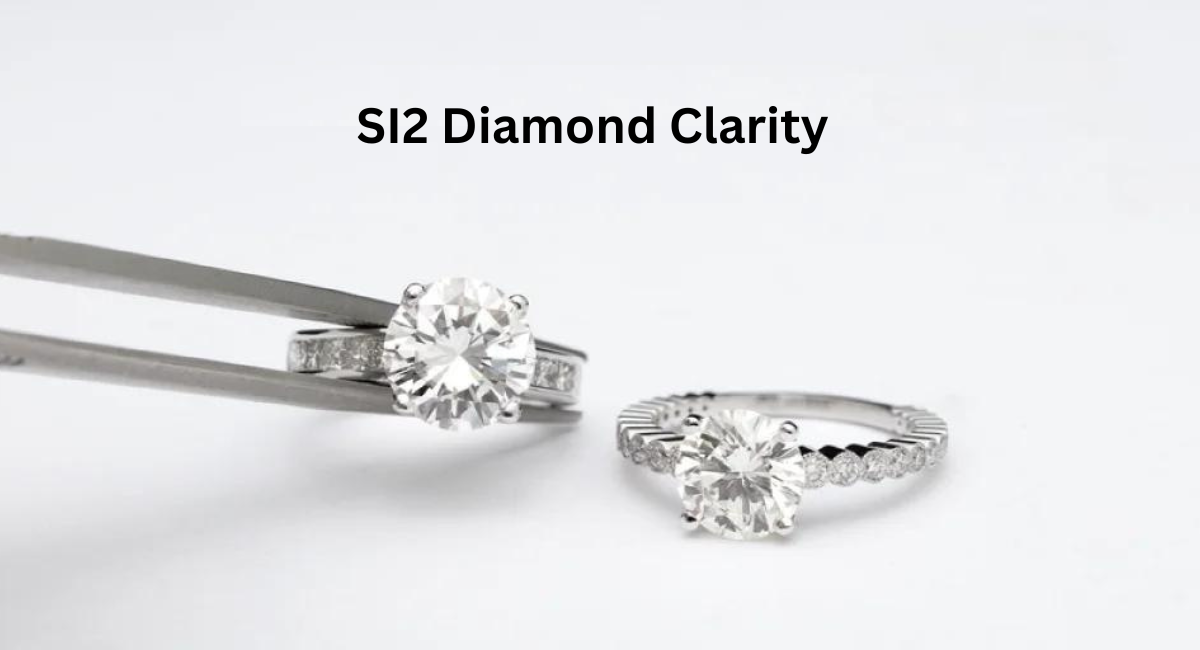
Simulated Diamond vs Lab Created Diamond: Cost

The cost of many popular diamond simulants is often much lower than both natural and lab diamonds. Simulants are attractive
cost-friendly option for many couples as you can create your dream engagement ring without veering outside your budget or
compromising center gemstone size.

Simulated Diamond vs Lab Created Diamond: Ethics

As most popular diamond simulants are lab-grown using advanced technology, they require no new mining to produce and are a
sustainable option.

Are Simulants Diamonds and Lab Created Diamonds Real Diamonds?

Buyers of such luxurious goods want the best item for their money. They are not only paying for the money but for the experience. Hence, it is imperative to purchase a diamond that supports a lifestyle and can be one of those pieces which are remembered for ages. 

Jewelry, in general, has been an heirloom in families, which is why when purchasing such goods the quality has to be top-notch. People often raise the question of whether diamond simulants and lab created diamonds are even real diamonds. This question is valid because diamonds are an age-old creation and something that is conventionally traditional in nature. 

Hence, people are tensed to venture into newer methods of purchasing new-age diamonds such as diamond simulants and lab created diamonds.

Lab grown diamonds recreate an earth-like setting using high pressures and high temperatures with the help of an existing diamond seed which turns out to be a diamond. Both diamonds have the same properties. This is very much a real diamond and one must not think otherwise. 

On the other hand, diamond simulants are literally ‘resemblances of a diamond’. They look like diamonds in appearance however, their chemical and optical compositions are nowhere near an actual diamond. 

Some diamond simulants are easy to spot as they sparkle and shine in a manner that is different from an actual diamond. 

The confusion arises as both the terms that are, synthetic diamonds (lab grown diamonds) and diamond simulants are used synonymously.  

What Are the Benefits of Buying Lab Created Diamonds?

You may wonder why a lab-grown diamond should even be an option when naturally mined diamonds are still in existence. The latter is something that you can blindly trust and it comes with a certain sense of pride and luxury. 

When people decide to buy something as expensive as a diamond, they expect the best. It is not something that is bought on a whim but a lot of thought and emotions are put into it when making such a purchase.

While naturally mined diamonds are a trusted category, they also cause a lot of ecological damage and endanger the lives of miners who put in hours and hours of labor to score a single diamond. In many cases, these miners work in hazardous conditions without proper protective gear and receive meager wages.

Apart from this, it is a time-consuming process. It takes millions of years. Naturally mined diamonds are an expensive commodity and not everyone can afford to make such a purchase.

So what is the alternative? Lab grown diamonds have proven to be a great alternative to the problems posed by naturally-grown diamonds. As confirmed earlier, these are real diamonds despite the fact that they are not processed by nature. Lab grown diamonds are environmentally viable.

For a generation that is conscious of its consumption, it has a responsibility to preserve the environment. Especially in this day and age, one has to be aware of their surroundings.

We live in an already deteriorated environment and to pollute it further is a risk we will take unnecessarily. A single carat of a natural diamond can displace thousands of tons of the earth’s surface.

Hence, this is a perfect choice in this aspect. Another thing, lab grown diamonds are cost-effective and mass-produced. This makes diamonds accessible to everyday consumers while remaining a luxury.

You can buy a diamond without shaking up your bank balance. The quality of the diamonds is top-notch, clear, and sparkly as a naturally mined diamond. They are pure in clarity and most have almost zero imperfections or dents making them better than naturally-mined diamonds as they do have blemishes in most cases.

Time is another factor making lab grown diamonds ahead in the race. It takes a few weeks to process a lab grown diamond whereas years and years for a naturally-mined diamond to occur.

Conclusion

Simulant diamonds vs lab grown diamonds have their set of pros and cons. You must understand that simulant diamonds are simply a substitute for diamonds whereas, lab grown diamonds are actual diamonds. The latter is the same as naturally mined diamonds. These two terms are poles apart with clear distinctions.

When buying diamonds, be sure of their durability and quality else the money spent is simply wasted. You want to preserve these items for a lifetime as they carry different emotions.

People hand down jewelry from one generation to another and these moments are remembered. Hence, buy lab grown diamonds that fill you with joy and pride. You should not have to be overly cautious about it while wearing them.

The simulant diamonds can get cracked or broken over time which is not really the case with lab-grown or natural diamonds. A piece of the diamond must be enjoyed and not stressed.

FAQs

Do simulant diamonds have any advantages over lab created diamonds?
Simulated diamonds are more affordable, making them an attractive option for those on a budget. However, they lack the durability, brilliance, and overall quality of lab created diamonds.

What is a VVS simulated diamond?
In the context of simulated diamonds, VVS typically implies a high level of clarity and brilliance in a lab-created or synthetic stone, aiming to replicate the visual characteristics of a natural VVS diamond without the associated cost.

How to clean a simulated diamond?
To clean a simulated diamond, use mild soapy water and a soft brush. Gently scrub the stone and pat dry with a soft cloth. Avoid harsh chemicals or abrasive materials.