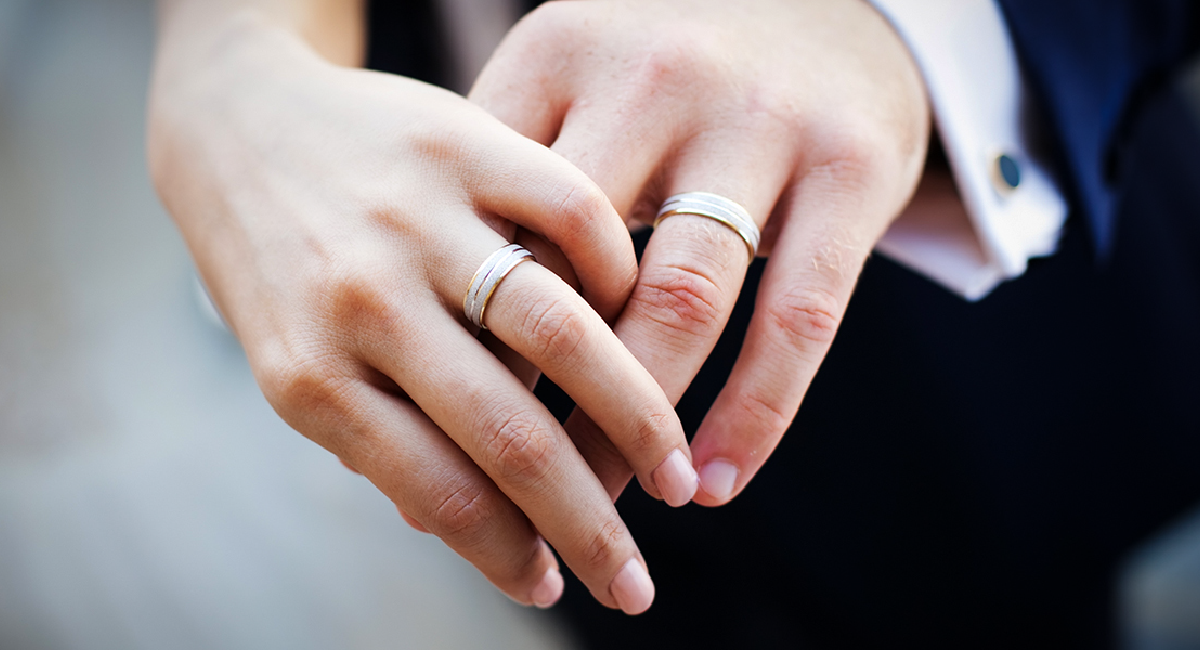
What Hand Does A Wedding Ring Go On? – A Guide To Wearing Wedding and Engagement Ring

In this article, you will learn “What Hand Does A Wedding Ring Go On?” Traditions have always been changing and transforming their way of being pursued and that especially applies to the cultural norms being followed around the world.

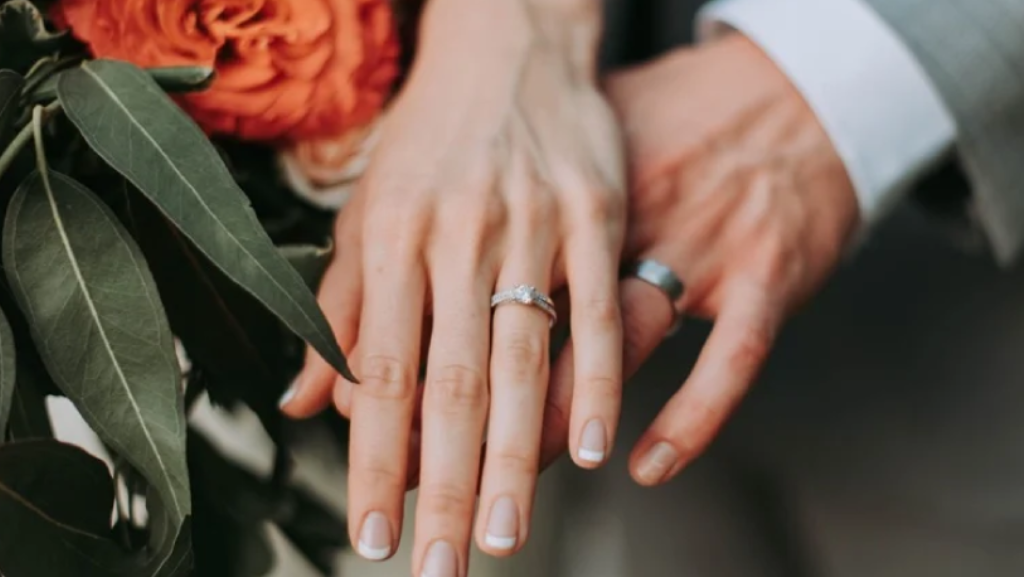
A wedding has been such a tradition which has always found new ways of celebration and enjoyment. Just the way unconventional means of norms are being followed, similarly, it can be contemplated that wearing a wedding ring in any of the hands, be it right-hand ring finger or left-hand ring finger, doesn’t make a vast difference and neither impacts the old cultural traditions.

What Hand Does A Wedding Ring Go On? - A Guide To Wearing Wedding and Engagement Ring

Factually, it’s been widely accepted that the left hand’s fourth finger is known as the “Ring Finger” which is actually under the belief that this finger has a vein running directly to the heart and back and forth that sparks the delight of love in humans, as it builds a quick connection. But then again, various countries and cultures have different beliefs. Of course, this juggling of facts and beliefs is quite confusing as well.

Let us have a more detailed look at the juggling and confusing matter of diamond wedding rings and their possession, and get to know it better.

Which Hand Does A Wedding Ring Go On?

As history has always been the significance of today’s lifestyle, here also it plays a vital role in deciding the purpose and belief of adorning the wedding rings or engagement rings on different hand’s ring fingers.

which hand does a wedding ring go on

Vena Amoris” or “Vein of Love” is the conceptual argument that has been given for ages about the wedding ring finger on the left-hand ring finger and time has still not lost the essence of love and relationship as a sign of this fact.

In the later years, this old fascinating tale has been debunked but as we all know “once said, heard forever”, it still remains in the minds of people whereas the tradition goes on till eternity. People who want to go their own way and replicate a different way of celebrating themselves and the world have always broken the myths about it and conjoined their sentiments in various aesthetic ways.

After many years, there’s no such “perfect” engagement ring finger but most people are still following their old traditions whereas some tend to break the myths and celebrate in their own way. All the reasons behind wearing a ring on any of the hands don’t generate from anywhere but from their belief and cultural symbolism behind them, which affects the adornment.

[su_youtube_advanced url=”https://www.youtube.com/watch?v=yN5lpuMCaGI” width=”1600″ controls=”alt” autohide=”yes” autoplay=”yes” mute=”yes” rel=”no” modestbranding=”yes” theme=”light” playsinline=”yes” title=”wedding ring”]

In a contradictory statement, it is considered that according to most countries and their following traditions, the right hand is the most suitable hand for the wedding ring or engagement ring.

For this norm of the right-hand ring finger, people consider doing any work with the right-hand ring finger to stand for purity and goodwill but on the other hand, works done with the left-hand ring finger are considered evil or improper. Similarly, different beliefs are held and followed by different countries and cultural groups in the world.

What Is The Meaning Of The Wedding Ring On The Left Hand Ring Finger?

According to the Romanians who believe in eternal love and have always been aspiring to live in the form of amour, believed and considered the left hand’s fourth ring finger is one whose vein directly runs towards the heart. It was a pure misconception but once beliefs got tied with it, existence became eternal.

Whereas the modern world has debunked the tale of myth, still love and attachment have always been there surpassing time and ages. The designation of love and symbolism of consistency lies within the couples who still desire to follow the various traditions.

What Is The On The Right Hand Ring Finger?

wedding ring on right hand meaning

It varies for various countries and cultures, how they admire their traditions in plenty of ways. For example, India has a belief in purity, that is, all the goodwill is always done with the right hand, so the wedding ring finger that symbolizes the purest way of love is also found in the right-hand ring finger.

At times, people wear the rings according to their preference of comfortability as well. It is considered that if the ring is passed through the family for ages, women tend to wear it in the right hand only, moreover, it signifies empowerment amongst them. 

So the main argument is more about the influence of various cultures and traditions just instead of the norms or beliefs that are being followed for ages now.

When Proposing What Hand Does A Wedding Ring Go On?

As for the proposal ring, it is more sort of a promising ring before the wedding and the life ahead that a couple in marriage plans together. Just like the wedding ring or engagement ring, it is also worn on the left hand’s fourth finger, and it is believed that later during the wedding, the proposal ring is removed and adorned in the right hand so as to give space for the wedding ring which is highly significant of love and confession. 

How to Buy a Wedding Ring?

Buying lab diamond wedding rings is a significant and memorable aspect of wedding preparations. Wedding rings come in various styles, from classic bands to more intricate designs.

Some couples prefer identical rings, while others prefer unique styles that reflect individual tastes.

Understand your metal preferences. Common choices include yellow gold, white gold, rose gold, and platinum. Consider factors like durability and personal style. Accurately determine the ring sizes. Determine a budget for the wedding rings.

Explore different styles to find one that resonates with your taste and complements your lifestyle on LGD. There is a wide variety of the best diamond wedding ring for women. Take the time to make thoughtful decisions, and enjoy the process of finding the perfect lab diamond rings for your special day.

[ls_products_byid id=’1963522,1963450,1963348,1954898′ btn=’true’ btn_text=”See More” btn_link=”https://www.loosegrowndiamond.com/product-category/wedding-ring/”]

Conclusion

However, it is the Wedding ring or Engagement ring can be worn on any finger of any hand, but it remains a sign of promised love and confession that is committed by two people for eternity, and it conjoins two worlds together. 

Just the differences that part the ways and create a variation in the symbolism of wearing rings on different hands is the influential power of traditional and cultural beliefs set in the minds and hearts of people from ages.

FAQs

What finger does the wedding ring go on?
Traditionally, the wedding ring is worn on the fourth finger of the left hand for females and men’s fourth finger of the right hand.

How to wear engagement ring and wedding band?
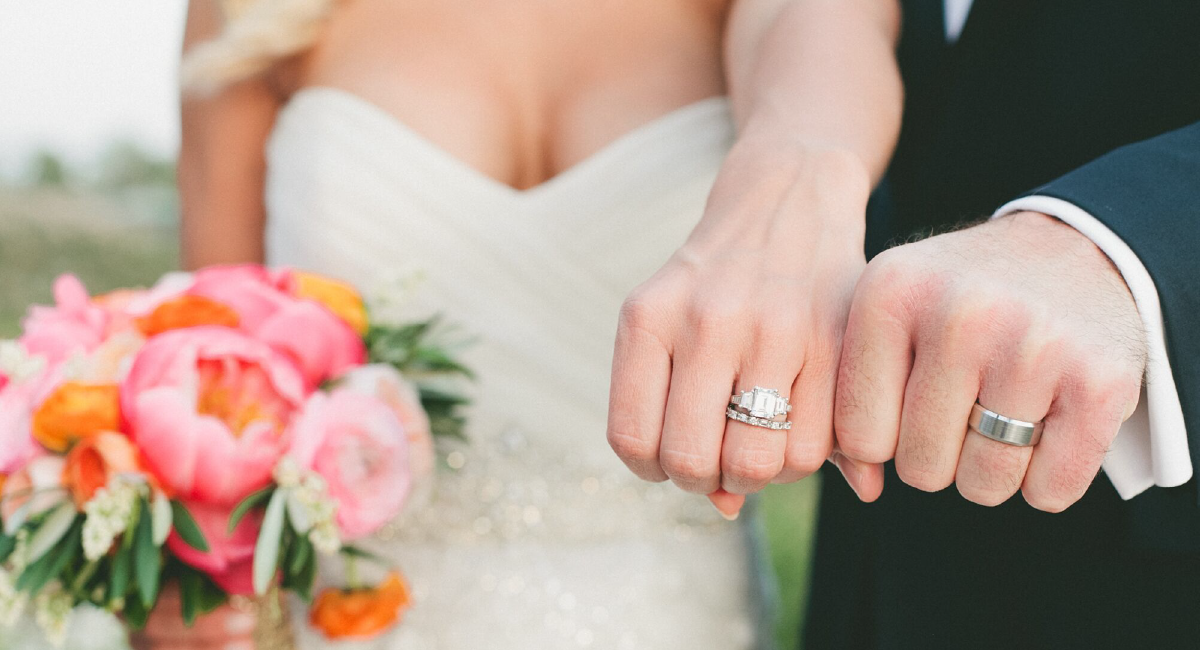
Wear the engagement ring on the bottom, closest to the base of the finger, and the wedding band on top.

How to clean a wedding ring at home?
To clean a wedding ring at home, soak it in a mixture of warm water and mild dish soap. Gently scrub with a soft toothbrush, paying attention to crevices.

High Set vs Low Set Engagement Ring- Which One You Choose?

Everything matters equally in the construction of something unique and comfortable for adorning. Rings are one of such elements where “settings” play a crucial role in the overall structure and composition of the ring. This article is all about ” High and Low Setting Engagement Rings”.

The setting of a ring creates the whole identity of the ring. The way a Precious metal is placed around the diamond adds an extra dimension to the beauty of the ring.

Hence, in the process of choosing unique engagement rings, the setting of the diamond in the metal also plays a major in creating the look that one is going for. Both the high and low-setting engagement rings have unique characteristics that will be discussed in this article.

High Setting vs Low Setting Engagement Rings

High Setting vs Low Setting Engagement Ring:

What are They?

Low Profile Engagement Rings Settings

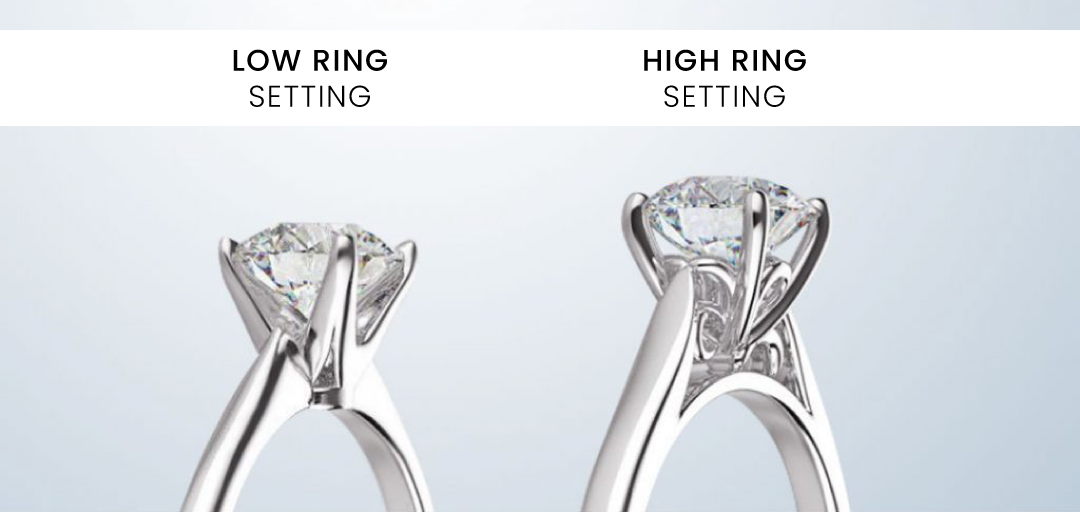
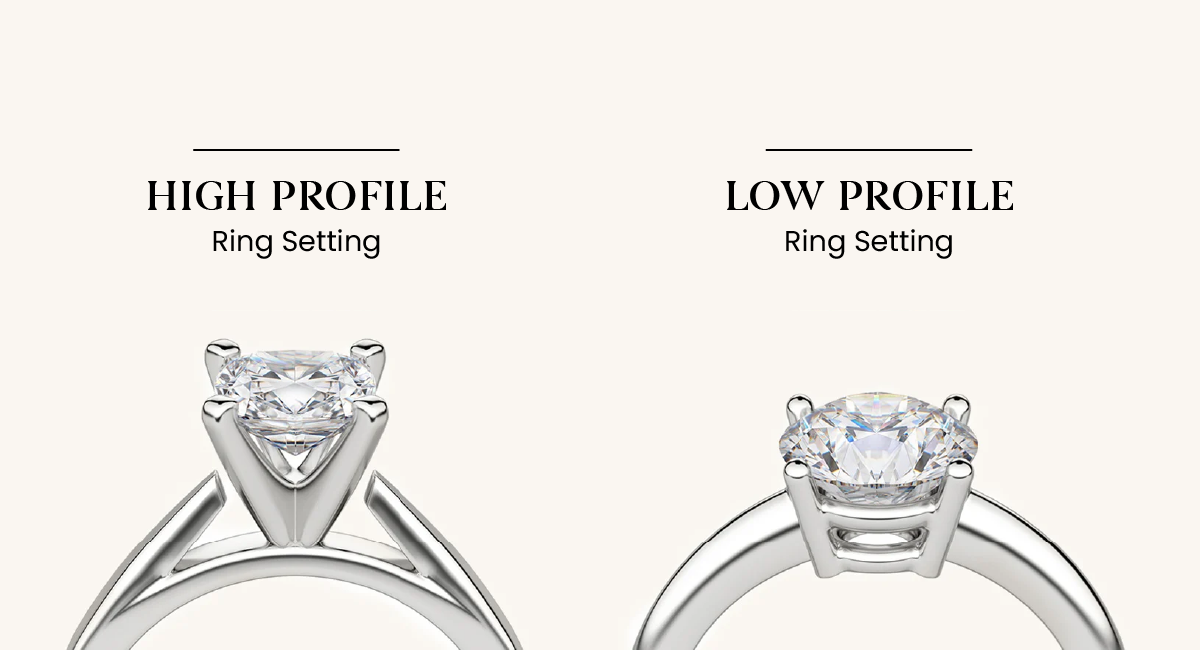
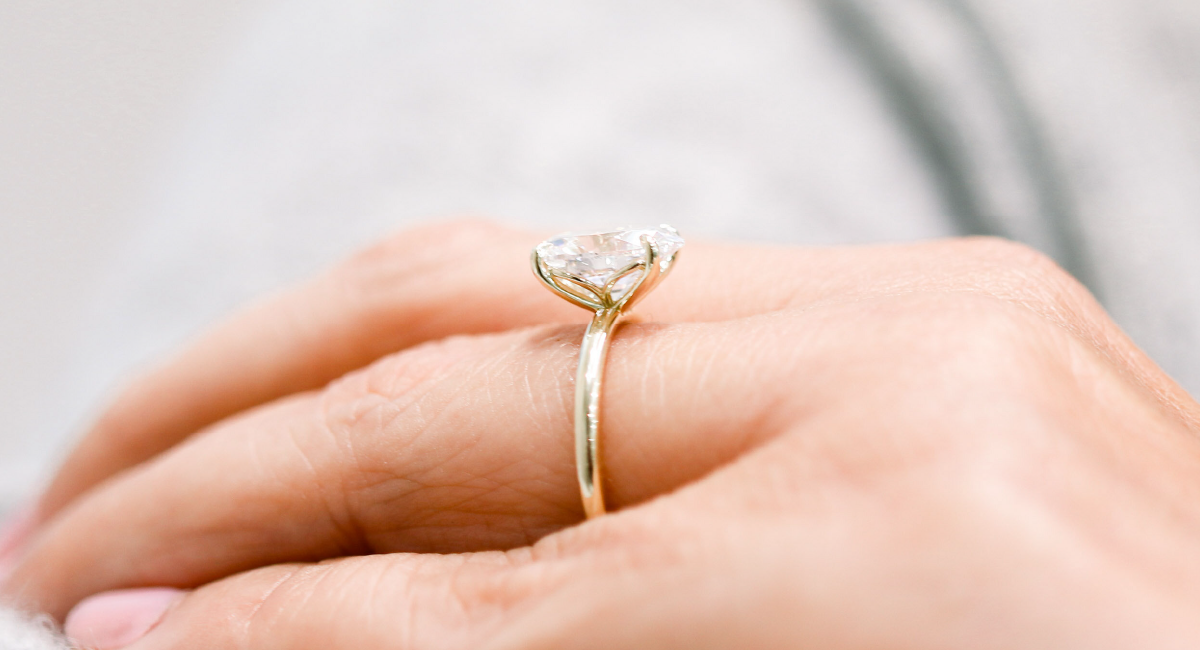
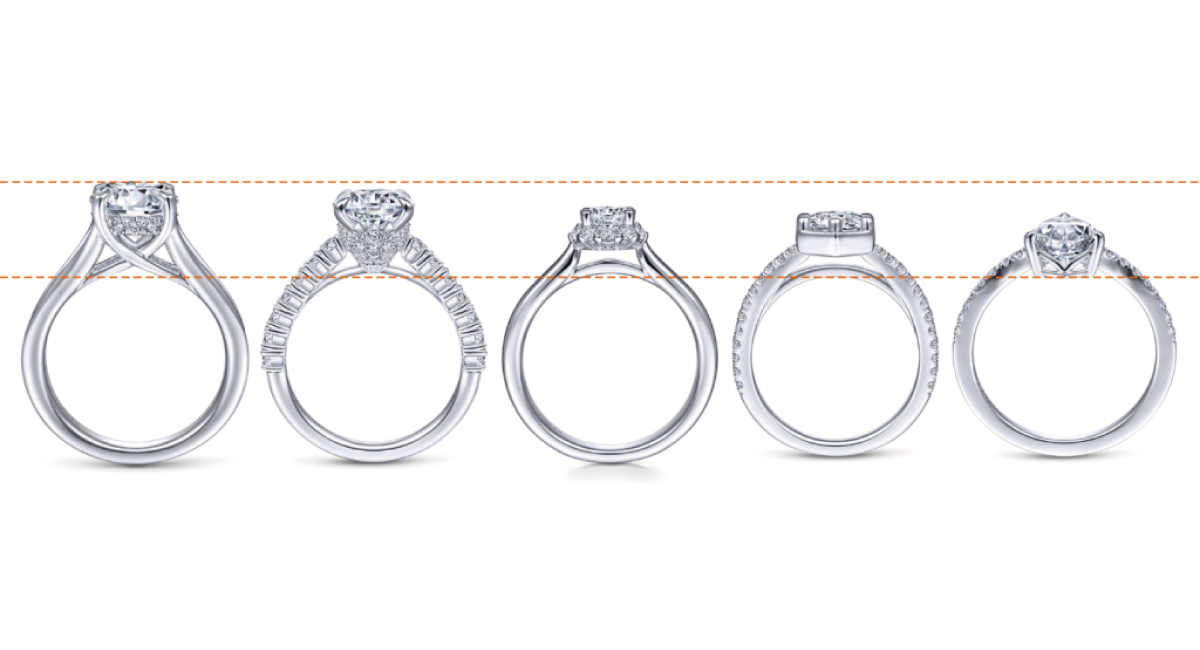
The main question that strikes our mind is how do we even guess the setting of the rings as they seem very similar to each other? The easiest way to do so is by analyzing the side profile of the ring which helps in identifying the setting of the ring.

Low setting engagement ring is one where the gemstone or the diamond is placed near or closer to the band and seems more attached to it. The center stone is also well protected in the low setting engagement ring whereas it is comfortable to be worn while working as well.

The low profile setting is comfortable and allows the band design to be visible too. In the low-setting engagement ring, one can see that they are stronger and hence can be worn in various environments without the risk of harming the ring or the ring pattern.

Low Setting Engagement Rings

Moreover, this second high depends on the person for whom the ring is being purchased as it must suit their personality and work ethic.

High Profile Setting Engagement Rings

High Profile Engagement Ring Settings

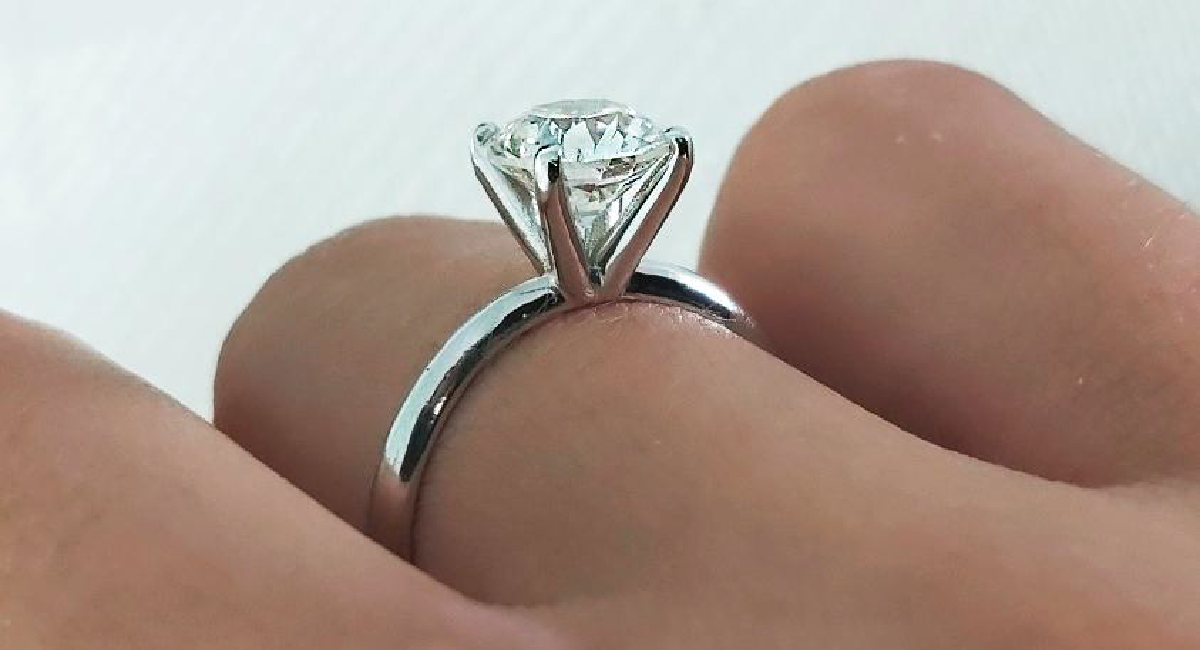
A high-profile setting ring is evident when perceived in the side profile. We see that a high-setting engagement ring is an option when the diamond is of the highest brilliance and needs to be presented in the same way. Using the prong settings ensures maximum light interaction and hence the brilliance of the diamond is visible.

It simply allows the diamond to sit a little higher and it overall transforms the look which is the eternal identification of simplicity as well. To know the setting, the view from the side profile of the ring is enough to justify it. Here, the diamond is more flattered instead of other parts of the ring as it remains the center of attraction. 

Pros & Cons

Pros & Cons of Low-Setting Engagement Rings 

Pros:

  1. Wearability – The low-setting engagement rings are more durable as well as more comfortable to wear. 
  2. It is a good choice for people who like to keep wearing their diamond engagement rings all the time yet have a hefty working lifestyle. 
  3. Low chances of getting torn or snagged due to any external outbreak near or around it. 

Cons:

  1. The part where it disadvantages anyone the most is the physical appearance, as it wouldn’t allow much light to pass through, which means low sparkling chances and less focus on the gemstone. 
  2. A smaller gemstone must be chosen as large diamonds need more central space for themselves. 
  3. It can look less attractive when viewed sideways due to smaller prongs attached to it, not implying any great look than just holding the gemstone in its place. 

Pros & Cons of High-Setting Engagement Rings 

Pros:

  1. The high setting allows the diamond’s brilliance to outshine better and show its illusion. 
  2. It is easier to pair with wedding bands and choosing large diamonds becomes preferable as the setting is open to any size as per the demand. 
  3. It tends to look more stylish and this setting works with most of the design structures without any such restrictions. 

Cons:

  1. The most annoying disadvantage of the high-setting engagement rings could be their constant snagging on clothes and hair, which can not only cause damage to the ring but also to the clothes or hair. 
  2. It is not preferable for people who are into a very active lifestyle and have a lot of work that needs to be done by hand. 
  3. For some works like gardening or cleaning, one needs to remove their ring to ensure its safety, which becomes irritating after a while.

Does a High Setting Make a Diamond Look Bigger?

high-vs-low-setting
Yes, absolutely a high setting can make a diamond look bigger and that’s nothing about shock, it’s just the normal and natural appearance of the settings. It differs in many cases, if the band is very thin in width then the diamond would look extra big over the ring than its actual size and structure.

When choosing a setting, one should always consider the metal in which it has been placed. The setting of the ring will also be considerably impacted by the metal in which it has been placed. May it be white metal, yellow metal, or even rose gold, the beauty can always be gracefully put together.

High Set vs Low Set: Price

Low-set engagement ring: Typically, low-setting rings are more affordable. The setting doesn’t use as much material, making it a budget-friendly option.

High-set engagement ring: High-setting rings tend to be pricier. The elaborate design and more material used for the setting contribute to a higher overall cost.

High Set vs Low Set: Best Engagement Ring Setting

The best setting is always something that fits your ring style, and identity and also something that you would be wearing daily. High and low-setting engagement rings are something that will govern a lot of factors before one goes ahead with the choice.

The prong setting is a conventional setting for high-setting engagement rings. The prong ensures maximum light interaction and hence maximum brilliance of the diamond. The 4-prong setting and 6-prong setting are some options, but the latter one is safer.

The cathedral and trellis settings are other unconventional settings that appear classy as well as impart a very rich look to the diamond setting.

For low-setting engagement rings, various options enhance the diamond and can be chosen based on personal preferences. The prong again is a beautiful option for a diamond setting for maximum brilliance.

The bezel setting is a very safe and simple setting, which does impart a shine as brilliant as the prong. The halo is another setting that is also simple, and yet very classy.

Popular Engagement Ring Setting Types 

Let’s have a look into some most popular yet common engagement ring setting types to know more about the choices we have and could be opted out of while purchasing them.

  • Prong setting” is considered to be a sort of versatile setting that is usually compatible with everyone’s choices and comfortability. It is one where the diamond is held in the center of the ring with other stones on the sides (if required or attached). 
  • Another setting that seems to be more vintage in look but similar to that of the Prong Setting is the “Trell Setting” where 4 prongs in a cross manner hold the diamond perfectly in the center and increment its elegance. 
  • “Solitaire Ring Setting” is one where a single gemstone is held with tiny,  almost invisible prongs that offer maximum brilliance in comparison with other settings, it is much more comfortable, and easy maintenance is also available. 
  • The beautiful “Bezel setting” is also preferred a lot by people due to its comfort and the safety assurance that is provided by the structure of the ring. 

Where to Buy Engagement Rings?

If you want to buy the perfect engagement ring for yourself, we at LGD are here to help you create and select your ideal engagement ring. From the beginning of the process until the finalization of the design, we will assist you through every step.

Alongside personal recommendations, we at Loose Grown Diamonds offer engraving services too, which can be done on your selected jewelry.


Conclusion 

The process of choosing an ideal engagement ring is as personal as the final ring itself. Every step of the decision and every part of the design matters so much as to form a close bond with the user. The user is going to build the engagement ring as per their dream and see it transform into reality. High and low-setting engagement rings are their own identities, but yet stand the test of time.

These criteria about the different settings must be taken under consideration for a better understanding and choice of the rings. High-setting engagement rings have their benefits and losses, the same goes for the low-setting engagement rings but their detailed explanation gives us a brief insight into their structure and composition as well as their durability, which allows helping in having a beneficial approach. 

FAQs

What is the difference between a high and low-setting ring?
A high-setting ring is placed outside the band, whereas a low-setting ring has the center diamond placed in alignment with the band.

Is a high-set or low-set engagement ring better?
As per aesthetics, the high-set engagement ring is better, but as far as functionality and regular usage are concerned, the low-set ring is an apt choice.

Can I design my engagement ring?
Yes, certainly, every part of your engagement ring can be designed and carefully crafted. You can contact us at Loose Grown Diamonds and we can get a design ready for you in no time.

How to choose the best engagement rings on a low budget?
The best engagement ring can be customized by keeping a balance between the 4Cs (Cut, Color, Clarity, Carat) as well as the right metal. One can consider all the factors and end up with a ring that fits your budget.

How do I find the right ring size?
To find the right ring size you can either go to a jeweler or you can check our ring size chart for the same.

How can I make a diamond ring more affordable?
Depending on the regular usage of the user, one can compromise any of the 4Cs of the diamond and focus on only one part of the diamond. This again also depends on long-term plans for the diamond as well.

What metals are used in engagement rings?
Usually, the metals used in engagement rings are yellow gold, rose gold, and white metals namely, white gold and platinum.

What is CTTW? Difference Betweeen CTTW and CT

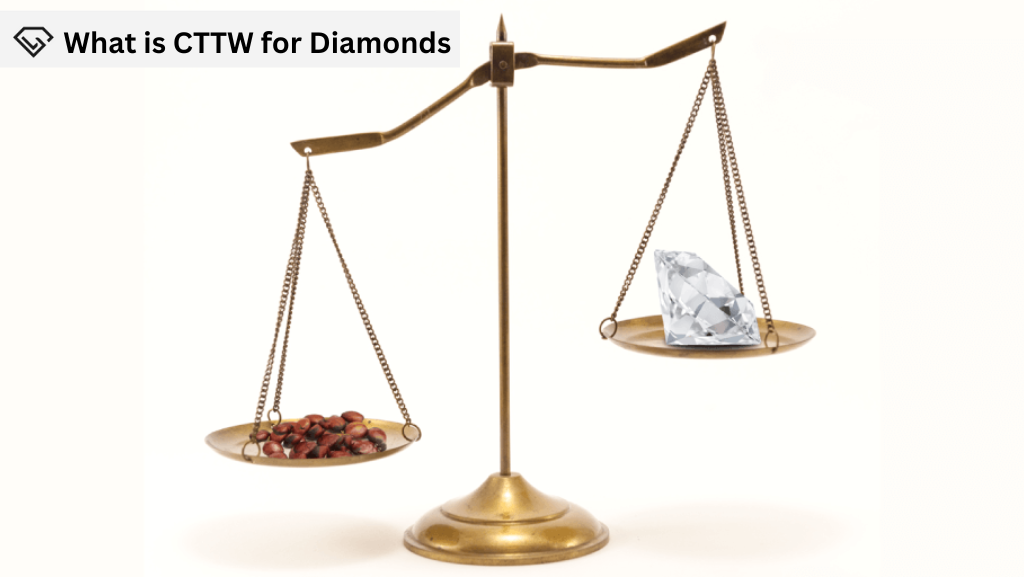
We shall explain what CTTW is, its significance in the diamond market, and so on through this article. We believe that explaining the same is truly important given CTTW stands for “carat total weight,” and it is an integral part of diamond weighing and price determination.

What is CTTW? Difference Betweeen CTTW and CTW (Carat)

What is CTTW?

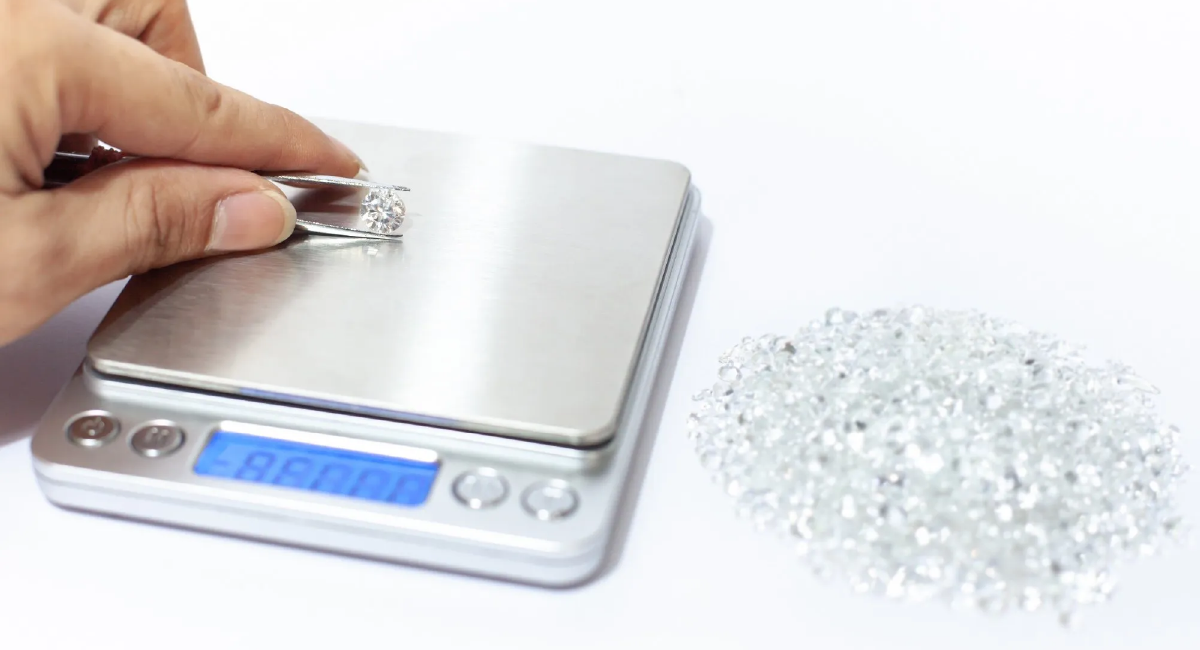
CTTW is carat total weight, and CTTW is the abbreviation used for it. It is the unit used to measure diamonds in a particular piece of jewelry you purchased.

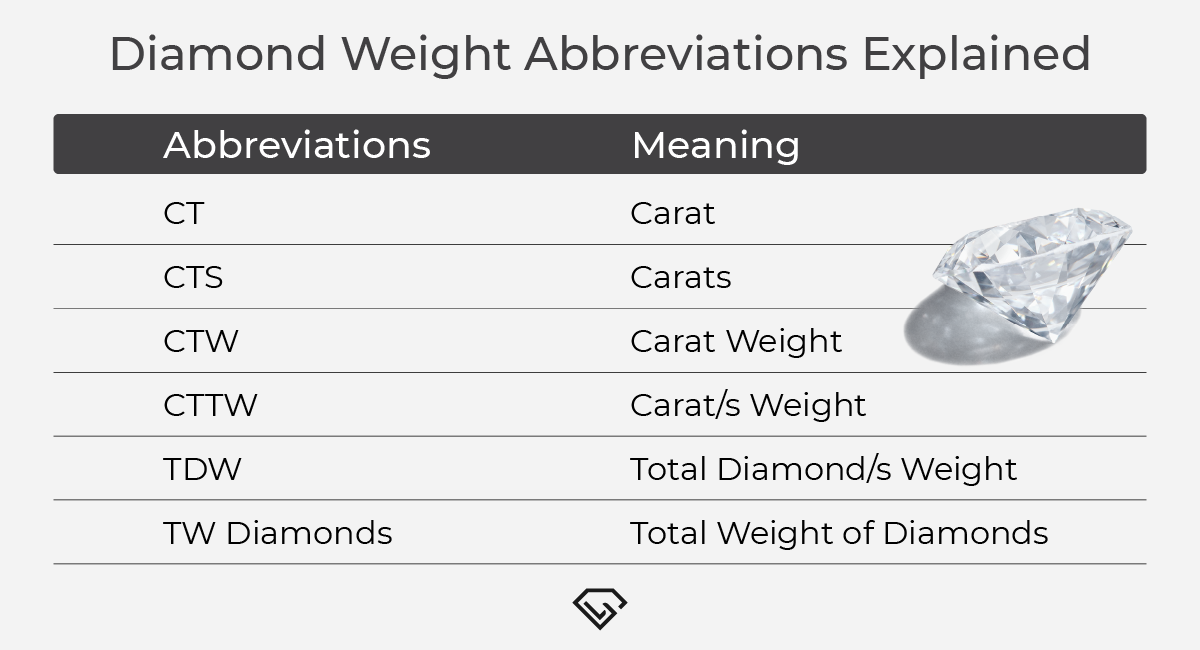
There are multiple ways the CTTW acronym is inscribed in a piece of jewelry so that it can be either written as CT TW or CTTW here, CT means carat, which is the unit used to measure the diamond’s weight.

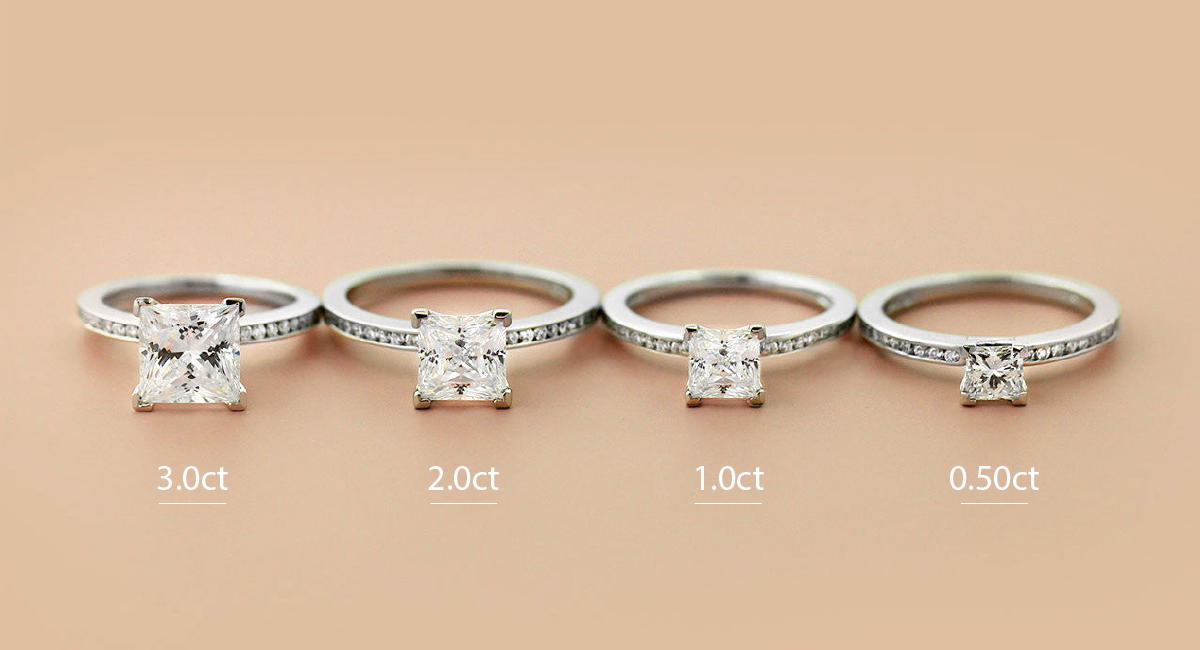
What Does CTTW Mean in a Diamond Ring -this image has different carats to understand the carat properly

On the other hand, “TW’ is the total weight that is used to measure the weight of all the diamonds used in the piece of jewelry and not just the solitaire or the centerpiece.

Please note that both carat weight and total weight are different terms; yes, it seems to be the same thing through the description, but it isn’t. Carat weight is usually used for one piece of diamond, whereas total weight is for the entire jewelry. This confusion can be avoided by visiting a trusted jeweler.

Let’s take a Example

For instance, if the jeweler points out these are 1.44cttw diamonds for your wedding ring, which means the diamonds in the ring are for 1.44 carats combined. Here is a video, it may you help understand properly.

[su_youtube url=”https://www.youtube.com/watch?v=TMsvmsF8opo” autoplay=”yes” mute=”yes” title=”1.44 Ct diamond Ring”]
Carat is the universally accepted unit for measuring diamonds and a pretty sensitive unit as minor increases can cause significant price differences.

CTTW vs CT (Carat): The Difference?

The difference between total weight and carat weight is consequential, and we shall let you know how.

Let’s follow the carat weight of a diamond, when pointed out, it points out the amount that the diamond weighs and doesn’t measure its size. When measured with the carat unit, a diamond weighs around 200 mg, a diameter from 5.60mm to 6.50mm the range in which the diamond’s diameter falls depends upon the cut of the diamond.

[blog_page_inventory shape=”Round,oval,pear,heart,cushion,princess,emerald,” carat=”2.50,3.50″ cut=”0,4″ color=”0,10″ clarity=”0,11″]
[blog_page_btn title”Buy Now” url=”https://www.loosegrowndiamond.com/inventory/”]

When you view loose diamonds online or go to a jeweler in general, the carat weight is depicted through “CT” which is the acronym used for the same. Online you’ll see the “CT” being listed along with the color and cut and clarity of the same being listed.

Now, let’s explain what the “TW” diamond means. It is the total weight of diamonds in the piece of jewelry you’re buying. It isn’t like the carat, which measures the weight of only the jewelry’s center stone, but it is the weight of the entire stone.

The acronym of “CTTW” or “CTW” carat total weight is primarily used across the world and almost interchangeably, and both of them have the same meaning.

Diamond Wight Abbreviation - where CTTW and CTW falls

Now, there can be questions what if there is only one diamond in the ring or earring we purchase? What would be the difference between “CT” and “CTTW” then? The answer is that then both of them are the same. For example, if you’re buying a center stone cut diamond ring, then the “CT” and “CTTW” will be the same.

Other rings have a center stone and then smaller stones around them. Here the total carat weight rounds up to the weight of smaller stones added with the weight of the center stone.

Now, either can significantly weigh the center stone or the stones surrounding them and accordingly, the price is decided.

Where to Buy CTTW Diamonds From?

Selecting the perfect lab-grown diamond has never been more accessible, and we at Loose Grown Diamonds take pride in providing the best prices without compromising on quality. For a limited time, enjoy an exclusive discount by using our promo code during checkout. At LGD, we prioritize customer satisfaction, offering a unique blend of affordability, ethical sourcing, and top-notch craftsmanship in every lab-grown diamond.

Elevate your jewelry collection with a CTTW diamond that not only radiates brilliance but also aligns with your values. Choose Loose Grown Diamonds for an unparalleled combination of beauty, transparency, and unbeatable prices.


FAQs

What Does Cttw Mean?
CTTW stands for “Carat Total Weight,” and it specifically refers to the combined weight of all the diamonds in a piece of jewelry.

Is Cttw only For Diamonds?
Yes, CTTW is exclusively for diamonds. If you’re considering a ring with both sapphires and diamonds, CTTW only takes into account the weight of the diamonds, not the sapphires.

Does Cttw Indicate the Price of The Jewelry?
No, CTTW doesn’t provide much information about the price. Two rings with the same CTTW can have significantly different prices. This is because the distribution of the total carat weight matters – whether it comes from the center stone or the smaller accent stones. It’s crucial to understand that the pricing of diamonds isn’t linear; larger stones are much rarer and, therefore, cost more exponentially.

Does a Diamond’s Shape Impact Cttw?
The distribution of CTTW in a piece can be affected by the shape of the diamonds, which can change its overall design.

Can Cttw Be Customized in Jewelry?
Yes, lgd provides customization options in order to meet customer preferences and attain the intended cttw. Our team includes experienced gemologists who ensure that every diamond meets the highest standards.

Can Cttw Be Applied to Earrings?
Yes, CTTW is also applicable to earrings. If you’re purchasing a pair of earrings, you need to divide the CTTW by two. This calculation helps you determine the size of the stones on each individual earring.

Why Is the Distribution of Carat Weight Important in Pricing?
The distribution of carat weight matters because the price of diamonds increases exponentially with size. For instance, a ring with six small stones and a 1-carat center stone might cost less than a ring with a 1-carat diamond in the center and two larger accent stones, even though they have the same total carat weight. This is because larger stones are rarer and, therefore, more valuable.

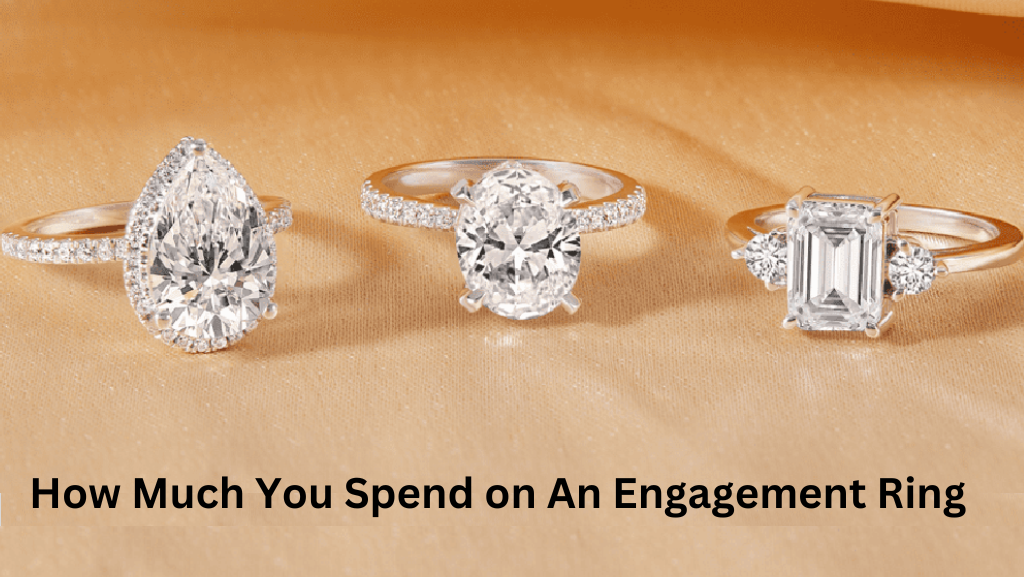
How Much Should You Spend on An Engagement Ring?

The myth that you need to spend three months’ salary on your engagement ring has persisted for about a hundred years now. It started with the Debeers campaign that “two months’ salary equals a diamond forever; however, now that has increased to a three-month salary.

The marketing campaign that got this spending a month’s or two months’ salary so famous was established by Debeers during the great depression only to increase their sales and then take them to a height in the diamond market.

How Much Should An Engagement Ring Cost?

However, if we look at today’s diamond market and today’s trend of spending three months’ salary, it is not entirely true. According to a study done in 2021, the national average spending on engagement rings in the US stands at $5,900, and on the other hand, the average salary drawn by men between 25-45 in the US is $46,436.

So if they adhere to the 3-month salary rule, they should be spending somewhere around $11,000, which isn’t the case, they are spending half of it. That is because we have changed how we view investments and absolutely nothing to do with how much we value an engagement ring.

Shopping Together for an Engagement Ring

The importance isn’t just how much money to spend on an engagement ring but the activities you do around buying them like buying it together, respecting each other’s choices, and making decisions that help each other out. Altogether the process of choosing your engagement ring with your partner is a very fulfilling experience.

Shopping together for an engagement ring

Shortlisting the wedding ring together is a great bonding exercise, more intimate because you understand so much more about your partner. As you step into this beautiful journey, this helps you come to better conclusions together; it is so much you learn about your partner’s decision-making skills.

How to Cut Engagement Ring Costs?

Now, further, in this process of deciding how much to spend on an engagement ring for women, there are a few tips that you can follow, and we are listing a few important ones for you. If you make sure to adhere to them, there is a great chance you’ll have a great buy.

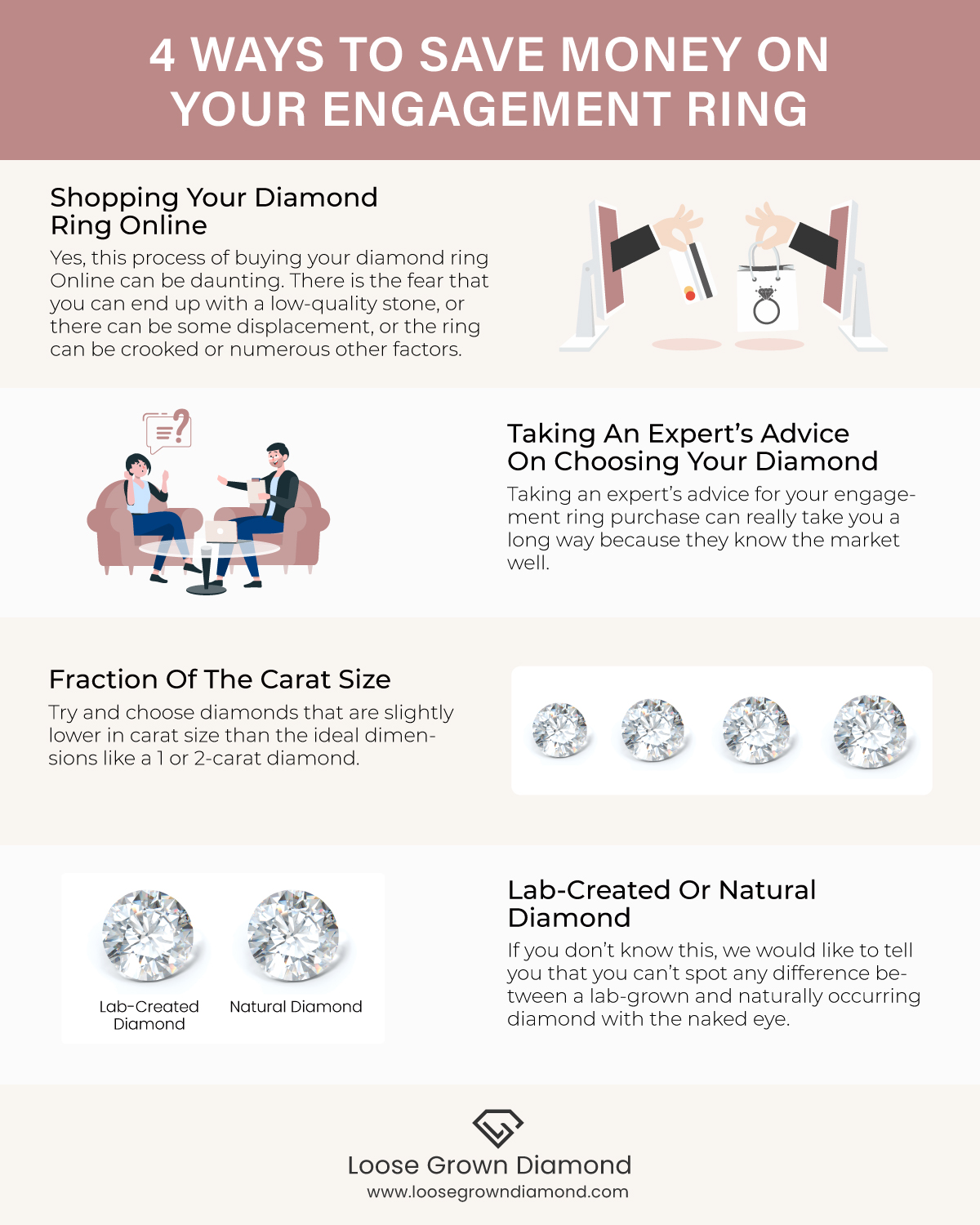
1. Shopping for your diamond ring online: Yes, this process of buying your diamond engagement ring online can be daunting. There is the fear that you can end up with a low-quality stone, or there can be some displacement, or the ring can be crooked, or numerous other factors. These are genuine problems, and hence we suggest first looking for a trusted store online. And then make your purchase.

We suggest an online buy because the overhead price of diamonds in-store can be pretty high, which tilts your entire budget plan. Hence, an online buy is great for your pocket. We at Loose Grown Diamond offer the best quality lab grown diamonds certified by GIA , GCAL, and IGI. We offer multiple ways to customize and deliver your stone on time. 

2. Taking an expert’s advice on choosing your diamond: Taking an expert’s advice for your lab grown engagement ring purchase can take you a long way because they know the market well and hence help answer the question “How much to spend on engagement rings?”.Now, this expert can be an expert blogger who possesses immense knowledge regarding diamonds on the internet. Or you can even go for another option wherein you will be required to contact a gemologist available on online platforms to guide you through your diamond-buying journey.

We at Loose Grown Diamonds offer this option to our customers. Anyone interested in buying diamonds or gaining knowledge regarding the same can contact our GIA-certified gemologist and clear their doubts. All we suggest is that you have someone who helps you narrow it down. From cut to color to size, there are multiple things that you can need help for, and that can be acquired from these individuals/places.

[ls_products_byid id=’127344,161688,1457639,591278′ btn=’true’ btn_text=”See More” btn_link=”https://www.loosegrowndiamond.com/build-a-ring”]

3. Fraction of the carat size: Try and choose diamonds that are slightly lower in carat size than the ideal dimensions, like a 1-carat or 2-carat diamond. As they tend to cost way more than 0.92 carats or 1.98 carats, respectively. However, when you look at both sizes, they occur very similarly to the naked eye.

Hence using this hack will get you the best diamond for your money you can check out Loose Grown Diamond’s specialized “Diamond Size Chart” guide for measuring diamond sizes.

4. Lab or Natural diamond: If you don’t know this, we would like to tell you that you can’t spot any difference between a lab-grown and naturally occurring diamond with the naked eye. They both look elegant, however, the price range differs a lot.

The lab-grown diamond is cheaper than the naturally occurring one (30-40% cheaper). Hence, if you choose a lab-grown diamond, it wouldn’t make that much of a difference to the look and feel of your engagement ring.

save money while shopping engagement ring

Conclusion

We at Loose Grown Diamond hope we have helped you resolve your query about how much to spend on an engagement ring. If not, you can choose this article as a head start in your research. As we mentioned, throw away the “spend three months’ salary” ideology because it is redundant in today’s day and age.

Next, and most importantly, make sure to follow the tips and tricks we suggested to set the budget for your wedding ring. They for sure will help you make a budget-friendly decision. 

Make the process of buying the ring smooth, and try to do it with your partner. You’d be surprised how much you’d get to know about the person, from choices to financial decision-making bandwidth. All of this will only help you further in life.
[blog_page_btn title=”Buy Lab Grown Diamond Engagement Ring” url=”https://www.loosegrowndiamond.com/lab-grown-engagement-rings/”]

FAQs

We have tried to help you with several tips, and we hope they help you measure how much to spend on engagement rings.

However, as a buyer, you also might have quite a few questions, so we shall answer them too. So here we answer some Frequently Asked Questions for you:

How much should an engagement ring cost?
Deciding how much to spend on an engagement ring depends entirely on your wedding budget. Please throw away the hundred-year followed tradition into a jiffy and make decisions that fit your pocket, style, and choice. Give preference to quality and cut and let that decide the engagement ring budget.

Who usually pays for the engagement ring?
If we look at what has been followed traditionally, the partner proposes. But, in today’s day and age, where almost everything is split between partners, the receiving partner not only lets you know of their choices but also contributes to the budget. This again may vary from couple-couple and person-person.

How much of your salary should be spent on the engagement ring?
Honestly, that is something ultimately you should decide. The deciding factor here is your monthly or daily expense and how much you can save from that and finally make that purchase. Other deciding factors here are also made by making smart moves, like the ones we suggested in terms of lab diamonds and carats.

How much does it cost to insure an engagement ring?
It is usually one or two percent of the value of the expensive ring. However, there are factors to consider while you think about insuring your wedding ring. Firstly, insurance needs to be included in the entire wedding ring budget. This is necessary because of how insurance policies tend to work.

As it would involve one or maybe even two percent of the ring’s value, this means that much money needs to be paid to the insurance company. So if you’re planning to spend a hefty sum on your engagement ring, be sure to incorporate the insurance plan value in your budget.

Old Mine Cut Diamonds: Everything You Need to Know

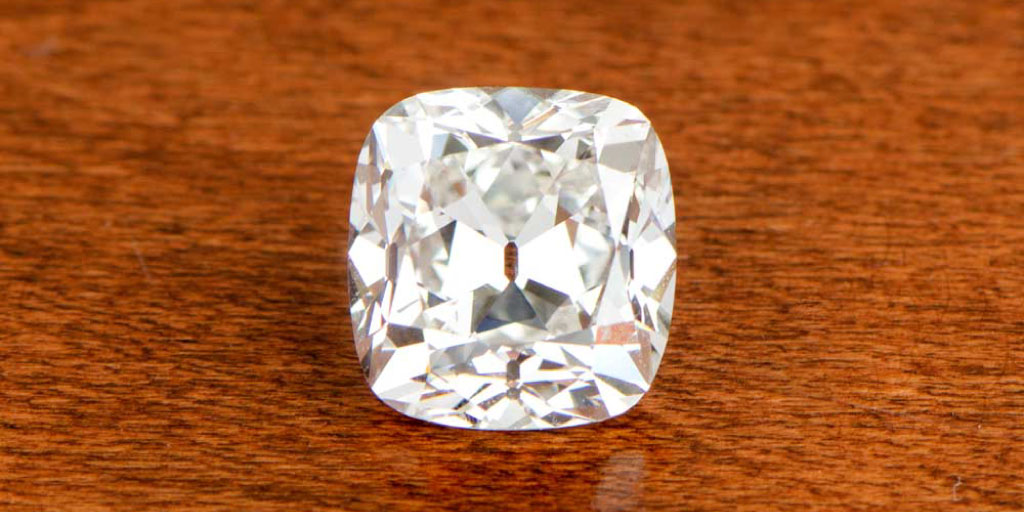
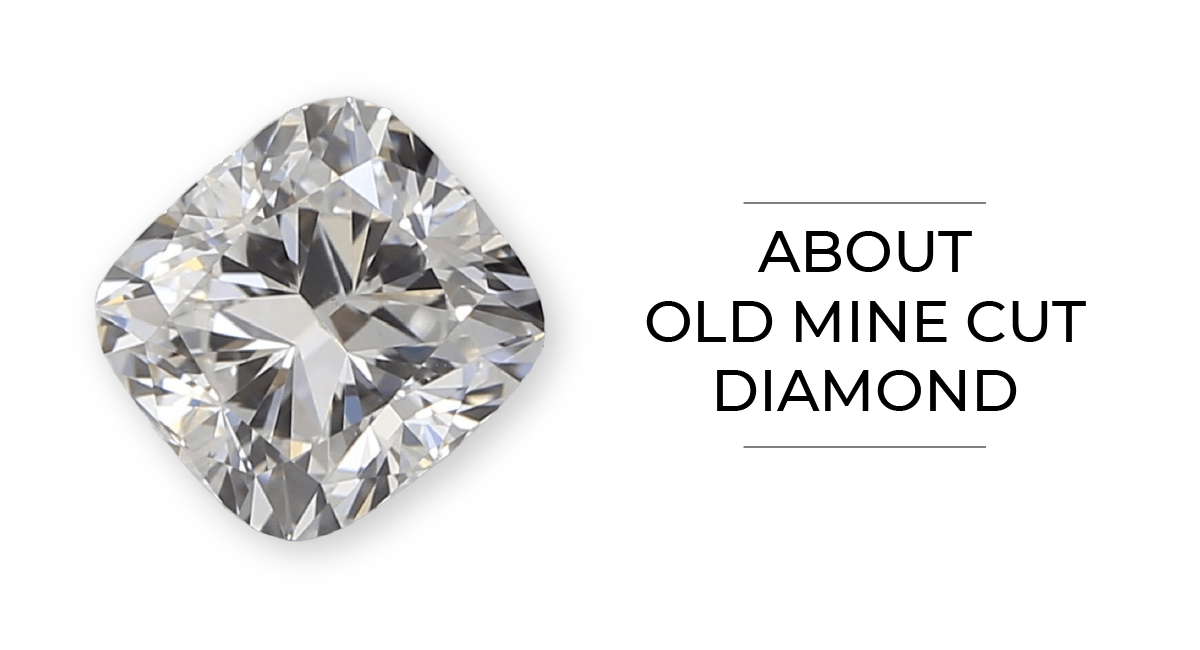
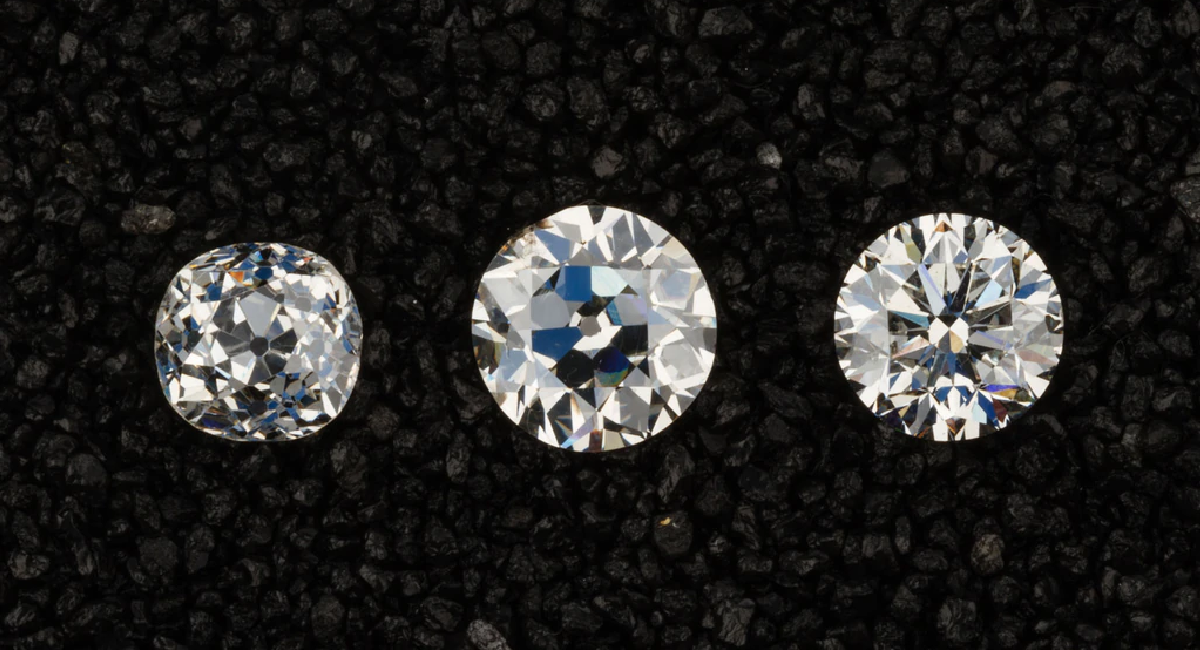
Diamonds with an old mine cut are recognized as antique diamonds. The old mine cut diamond has distinct proportions and a unique fire about them due to which they are having somewhat of a renaissance.  This cut was prominent in the 18th and 19th centuries among nobles and voracious diamond collectors throughout the Georgian, Victorian, and Edwardian eras. 

about old mine cut lab grown diamond

Their distinctness can also be attributed to the fact that, unlike modern cut diamonds, these were cut only by hand, giving the diamond the warm appearance that people love about antique engagement rings.

Sometimes today the old mine cut is also referred to as the ‘miners cut. Even though they are cut by hand and modern cut diamonds utilize modern technology and brilliant machinery, the aesthetics of these diamonds are quite similar with certain key differences that make each one unique. 

What is an Old Mine Cut Diamond?

The ‘Cut’ of a diamond means the design in which it has been shaped. The cut is not the same shape as a pear, princess, cushion, round, oval etcetera; like the name suggests. This way of naming diamonds dates back centuries and is still very much popular. It belongs to the mid-18th century and remains a timeless piece. It is one of the oldest cut types that the diamond industry knows of. 

For any antique or vintage lover, this type of cut is a jackpot. It has the hints of 18th-century Europe, making its appearance a historic piece attached with value. ‘Old mine cut’ was first used to refer to diamonds from India and Brazil and they used to be square in shape with sparkle. However, later on, diamonds were sourced from Africa because of their better quality in terms of color, hence were recognized as ‘old mine cut diamonds. These are all hand-cut diamonds. 

old mine cut lab created diamonds

As compared to other diamonds, the old mine cut diamond has a higher crown with a table smaller in size and a larger cutlet. The cutlet is placed below the pavilion and this does allow light to escape. This in return makes deep circles that reflect. Modern cut diamonds do not usually have a cutlet. If they do, the size is quite small. The appearance of this diamond is cushion-like and square-ish.

The similarity between old mine cut diamonds and modern cut diamonds is the number of facets on each. Although they remain popular, they do not beam like a modern cut diamond. Old mine cut diamond also have facets that are rough and unruly in shape. The old mine cut diamond were made with a grandeur so they would shine in candlelight, which was a major source of light at the time, hence the large proportions. These diamonds are ethical as they are available in plenty and can be reused. 

Trends come and go, but when making an investment, especially in jewelry your interests have to be in timeless and classic pieces. They are here to stay and will be embraced by the younger generations in new and different ways. There will surely be variations to this old mine cut diamond. Most people prefer timeless stones for their collection because wearing them is never a risk but a statement!

History of Old Mine Cut Diamonds

Their origin can be dated back to the 18th century. In this period the dimensions of diamonds were measured and cut by hand, as technology and machinery were not as advanced as it is today. The skill of a diamond cutter was unmatched, while the lack of science in the field gave great importance to the aesthetic perceptions of a diamond cutter. 

This cut was quite popular amongst the people up until the end of the 19th century, where we saw a shift from the old mine cut to the modern brilliant-cut and the European cut diamond which was a hybrid of the previous two cuts. These became the popular choice then, however, regardless, it is commendable that the old mine cut managed to stay in trend for more than a century. 

An old mine cut diamond is sure to pop up when you’re looking for an original vintage engagement ring. They have a squarish form with soft, curving edges, like contemporary cushion-cut diamonds. During the 18th and 19th centuries, old mine cuttings were fashionable.

India was the world’s initial, largest supplier of diamonds. Most of these diamonds were mined from mining-centered cities such as Golconda. Whereas that changed when diamonds were first discovered in the city of Belo Horizonte in Brazil, in the year 1724. Hence throughout the entire period of the 18th century, India and Brazil enjoyed the glory of being the only countries to supply high-quality rare diamonds. 

However, in the 1860s with the discovery of diamonds in South Africa, a massive shift of attention in the trade of diamonds took place. 

Hence initially even if the term “old mine” was used for diamonds mined from India and Brazil, over time it was used for any diamond that had this style of cut. Once we reached the 20th century, all kinds of antique diamonds cut were left for more modern diamond shapes such as the round brilliant and other such unique cuts. The advancement in diamond technology surely aided the process.

[blog_page_inventory shape=”old mine” carat=”1.00,10.90″ cut=”1,4″ color=”0,10″ clarity=”0,11″]
[blog_page_btn title”Buy Now” url=”https://www.loosegrowndiamond.com/inventory/?”]

How Many Old Mines Cuts Still Exist?

As mentioned earlier, the old mine cut diamonds are hand-cut. Surely, the process would have been tedious, energy, and time-consuming. This gives the customer the assurance that their piece is special, irrespective of any of the factors. Surely, an issue arises that diamonds that are this old still exist? And if yes, then are they scarce? Since these are old pieces, they have been obvious victims of loss, theft, wars, and change in the political and social structure of the world. 

Many diamonds have been lost at the advent of various revolutions and the era of modernization and later globalization. Most diamonds that are in the market for the last two decades are mostly cut by machine. As they are produced with the help of a machine, their number goes up and so does the circulation. 

The Visual Characteristics of Old Mine Cut Diamond:

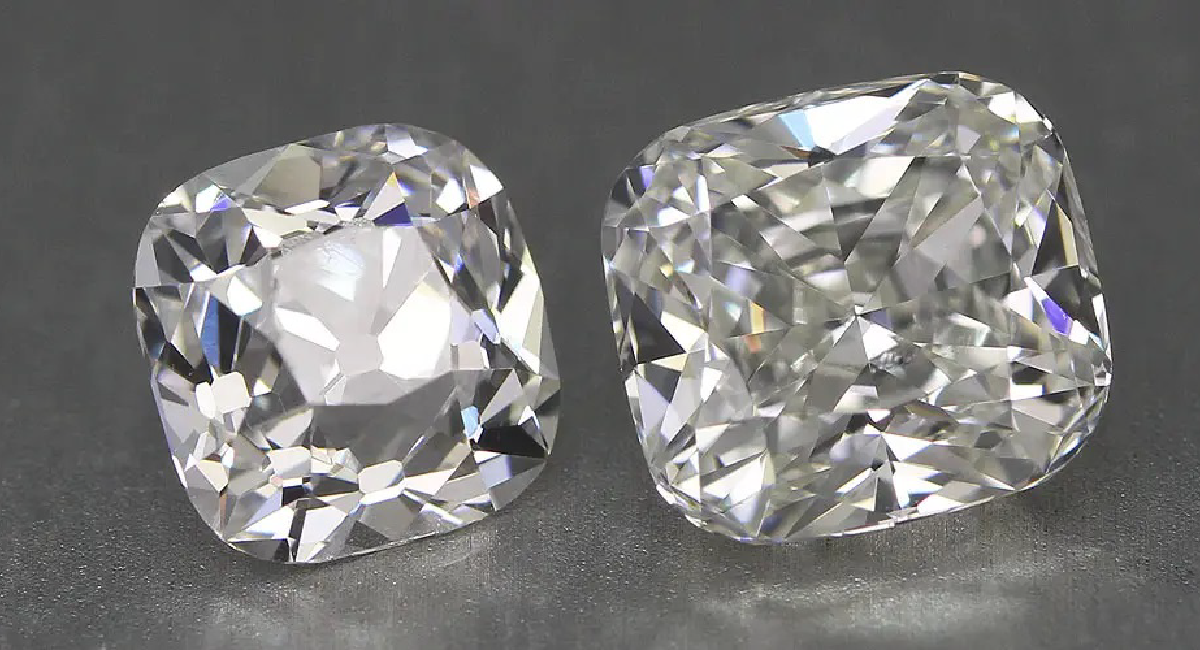
Old mine cut diamonds are very similar to today’s Modern cushion cut diamond with a square shape and soft slightly rounded corners. However, they still tend to differ majorly from modern cut diamonds in terms of their cut and symmetry.

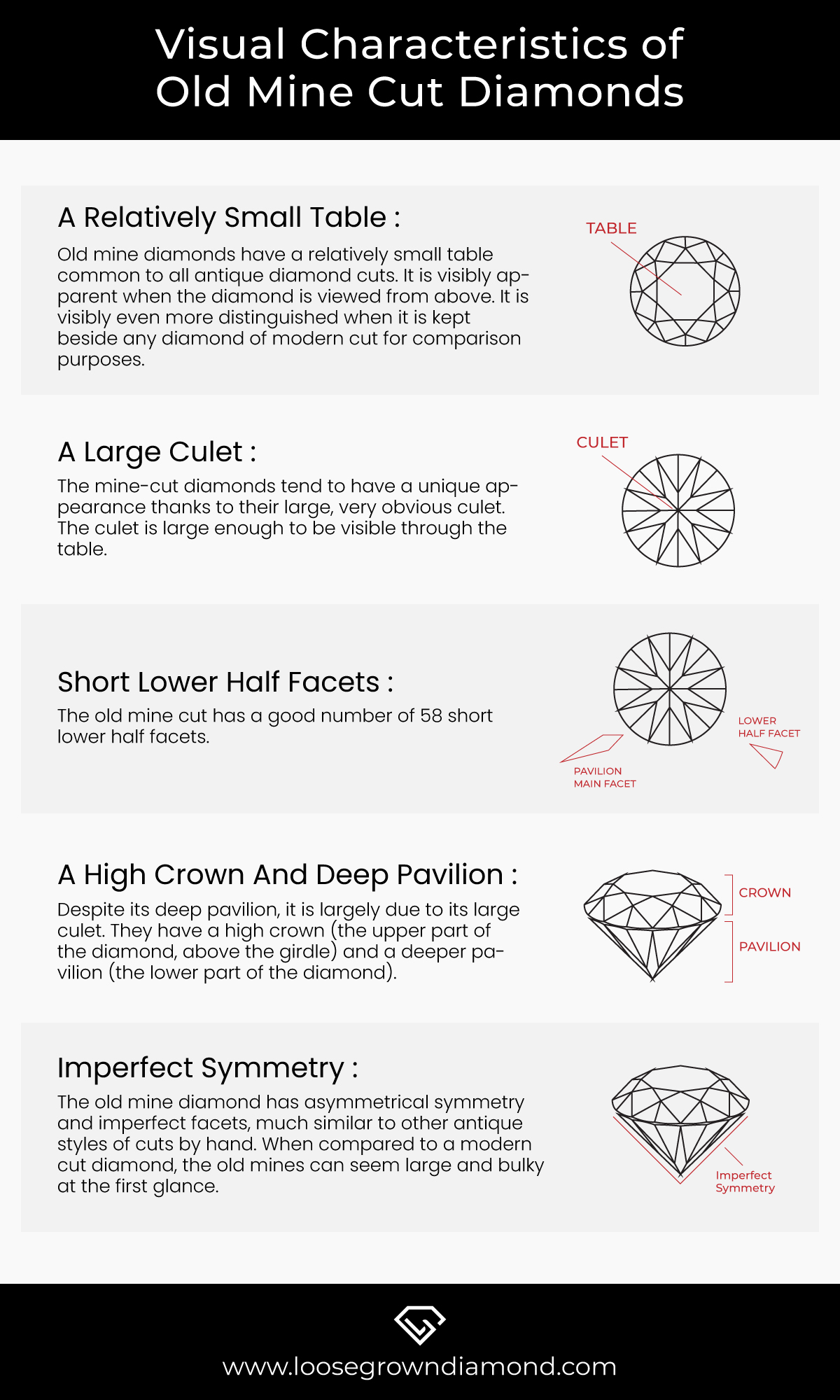
The Visual Characteristics of Old Mine Cut Diamonds

Relatively small table. Old mine diamonds have a relatively small table common to all antique diamonds. It is visibly apparent when the diamond is viewed from above. It is visibly even more distinguished when it is kept beside any diamond of modern cut for comparison purposes.

A large Culet. The mine-cut diamonds tend to have a unique appearance thanks to their large, very obvious culet. The culet is large enough to be visible through the table.

Short lower half facets. The old mine cut has a good number of 58 short lower half facets.                               

A high crown and deep pavilion. Despite its deep pavilion, it is largely due to its large culet. They have a high crown (the upper part of the diamond, above the girdle) and a deeper pavilion (the lower part of the diamond).

Imperfect symmetry. The old mine diamond has asymmetrical symmetry and imperfect facets, much similar to other antique styles of cuts by hand. When compared to a modern cut diamond, the old mines can seem large and bulky at the first glance. 

However, it was once considered a deliberate part of the design because unlike the sleek cut of the modern diamonds, old mine cut diamonds were cut to be seen under candlelight, a definite stark contrast to today’s bright LED.

Are Old Mine Cut Diamonds More Valuable?

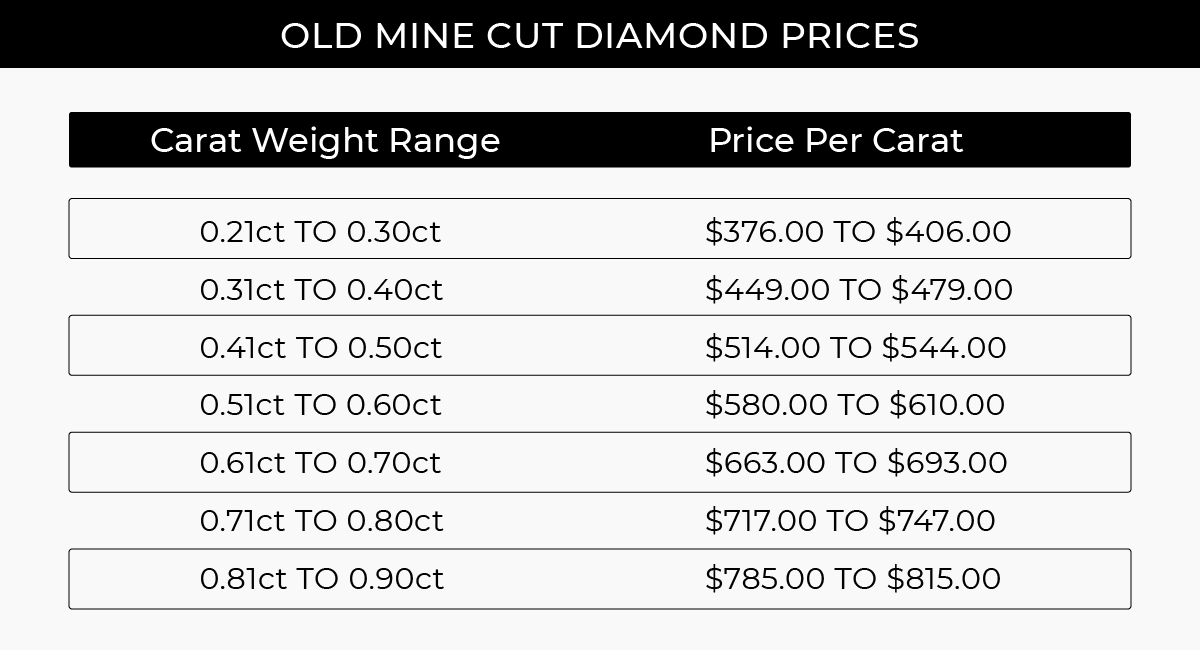
The value remains in terms of the legacy the old mine cut diamonds carry. They belong to a golden era of history. Patrons and lovers of art and jewelry as well as others who feel passionate about these items, do believe in collecting and cumulating their personal collection. You will find many such items belonging to the same era being auctioned amongst the people who can and want to afford them. Going into the technicalities, the value of an old mine cut diamond is measured in terms of the four C’s: cut, color, clarity, and carat weight, like any other diamond.

old mine cut lab diamond pricing

They are also graded by the GIA. Many of the old mine cut diamonds do have rough cuts and less clarity making them less valuable. Old mine cut diamonds have also been sold for a lesser price because there was modification leading to the original diamond being lost in the process. Another point that affects their value is that old mine cut diamonds are larger than most diamonds and when fitted for an engagement ring then it fulfills the purpose. People who are interested in the extra-bling, opt for such a piece. 

How Different is an Old Mine Cut from a Round Brilliant cut?

old mine cut vs round cut lab diamond

  • Table size: Old Mine cut diamonds account for 38 – 45% of the diamond’s total diameter which is a relatively smaller table size than a round cut more than average 52 – 60%. However, the ideal table size of a diamond according to most gemologists should rest from somewhere between 54-59%.
  • The Culet size: The old mine diamonds have a large easily visible culet attributed to their deep pavilion. Their culet size is only so much larger than the modern cut diamonds because it was merely impossible to cut smaller cutlets without cutting technology. Round cut diamonds do have a culet, that can only be observed under a microscope.
  • When it comes to the girdle finishing, antique cut diamonds have a frosted girdle in contrast to the round cuts faceted girdle.
  • Since the lab grown old mine diamonds were cut by hand, it was almost impossible to attain impeccable precision and symmetry. Their asymmetrical facets and unequal symmetry appeal to the taste of many who seek to purchase antique diamonds. Since modern cut diamonds do not hold such imperfections in high regard.
  • As far as brilliance and color are concerned the brilliant round cut diamond as the name indicates is quite renowned for its brilliance. The facets and dimensions of a round-cut diamond are designed to take in all light giving it a sparkly appearance. In contrast to the old cut diamond, which was designed to produce a warm glow under candlelight, a far more subtle appearance that many prefer.

Choosing the Perfect Old Mine Cut Diamond

The struggle with buying old mine diamonds begins with the simple fact that this style of cut is antique and vintage, and hence no longer manufactured, it has a limited supply with only a couple of diamond vendors selling them. Certain things you can keep in mind while buying a diamond of this cut are:

  • The diamond’s GIA certificate no matter how important should not deviate you from keeping your preference a priority. When it comes to modern diamonds, it is certainly recommended that you at the very least go through it with an AGS or GIA certification as those are pretty dependent on the 4c’s – cut, color, clarity, and carat. The color and clarity are still considered paramount features when purchasing a diamond of an old mine cut, however, it is cut quality grade can be neglected. 
  • Old mine cut diamonds are a spectacle of what we in today’s terms call imperfections, however, unlike modern cut diamonds these imperfections only add allure to the antique stone. How much ever recommended a diamond certification maybe, the best advice with these cuts is to always go for what appeals to your eye. 
  • Unlike modern diamonds, the color may not pose such a problem, as the old mine cuts are meant to have a warm color suitable for the era, they were popular. Most of the stones with this cut have a visible color grade of K or below.  This is mainly because most of the higher color grade diamonds have been recut and redesigned over the years into brilliant modern diamonds.
  • Hence it should be obvious to you by now that a diamond of an antique cut cannot be judged according to modern parameters, as they were never initially designed for this decade.
  • It is always advised that because of the warm glow of antique cut diamonds, a yellow or rose gold setting is bound to beautify an old mine cut diamond ring. However, there is no such compulsion, and you can always go for whichever metal appeals to your tastes and looks attractive to the eye. 
  • The last and most important detail is that you buy it from the right vendor, modern-day retailers, and companies that fashion in antique cut diamonds; hence it is best if you buy an antique cut diamond from an antique jeweler. 

Where to Buy Old Mine Cut Diamond?

Explore online platforms that specialize in antique and vintage jewelry such as loosegrowndiamond.com carries a selection of old mine cut diamonds in various carats. They may be able to source or create a custom setting for an old mine cut diamond.

Ensure that the diamond comes with a proper certificate. Our experts will help you find the perfect certified diamond for your budget. Choose from hundreds of styles on loosegrowndiamonds.com.

[blog_page_btn title=”Buy Lab Grown Diamonds” url=”https://www.loosegrowndiamond.com/inventory/?shape=OldMine”]

Conclusion Thoughts

Old Mine cut diamonds belong to the 18th and 19th centuries, these diamonds tend to have a warm glow to them which makes them perfect for a candlelight setting. These lab diamonds are dated for an era where they are crafted by hands, they cannot be graded by the same scales used for modern cut diamonds.

Their rugged appearance has all the more beauty compared to laser-cut modern diamonds. You can always keep them side by side and compare them. Old mine cut diamonds have large facets which produce great fire in the diamond and that is hence why it is still preferred by some people in the 21st century. 

However, dating its origin back to a couple of centuries it is always recommended that you buy an old mine cut diamond from an antique diamond jeweler to get the most out of your buck.

FAQs

What are the characteristics of an old mine cut diamond?
Old mine cut diamonds typically have a cushion shape, a small table, a high crown, and a deep pavilion. They may also exhibit a small open culet, and the facets are often larger and more rounded than those in modern cuts.

What settings complement old mine cut diamonds?
Antique-style settings, such as halo designs or vintage-inspired settings, often complement old mine cut diamonds well. These settings can enhance the overall vintage aesthetic of the diamond.

How is it different from other diamond cuts?
The old mine cut is distinct from modern cuts like the round brilliant cut. It has a different faceting pattern, with larger facets that give it a unique appearance. It is known for its romantic and vintage charm.

Diamond Inspection: How To Do It the Correct Way

Diamonds, while originally curated from nature, can be also produced in the lab. People often consider lab-grown diamonds to be “fake” or “counterfeit” because it is considerably cheap but this isn’t true as they have the same properties and characteristics as natural mined diamonds. This is due to the fact that they are made using the same technique. 

The characteristics and properties of a diamond decide the value of a diamond. There are a few ways to check the quality of a diamond. 

What is a Diamond Inspection?

Buying a diamond is an elaborate process and if you do not do your homework the right way, chances are you are going to end up with not the best diamonds according to your requirement. Diamonds are handcrafted and manufactured through an elaborate process and there are a lot of things to keep in mind when buying lab-grown diamonds. 

What is a Diamond Inspection
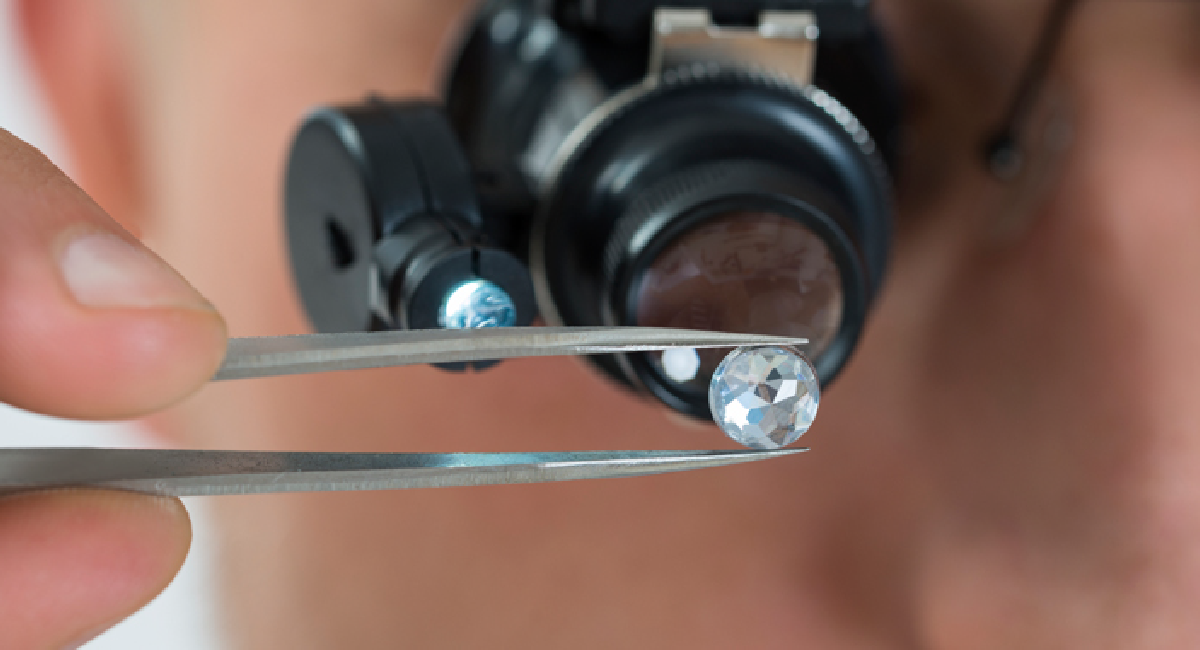
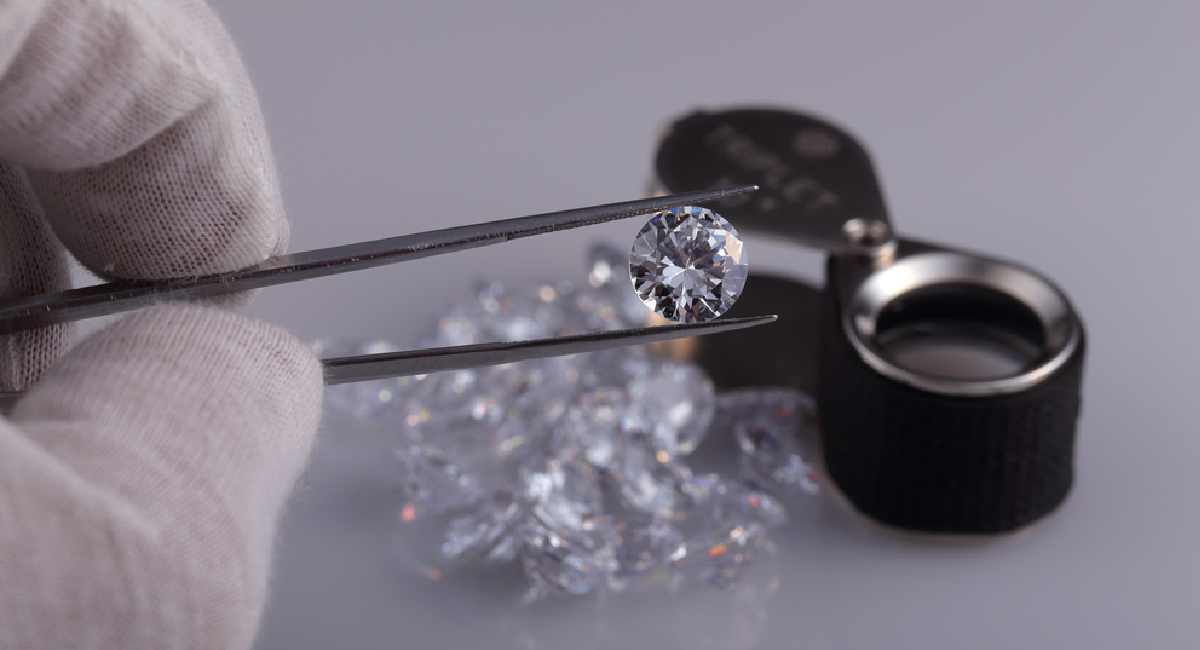
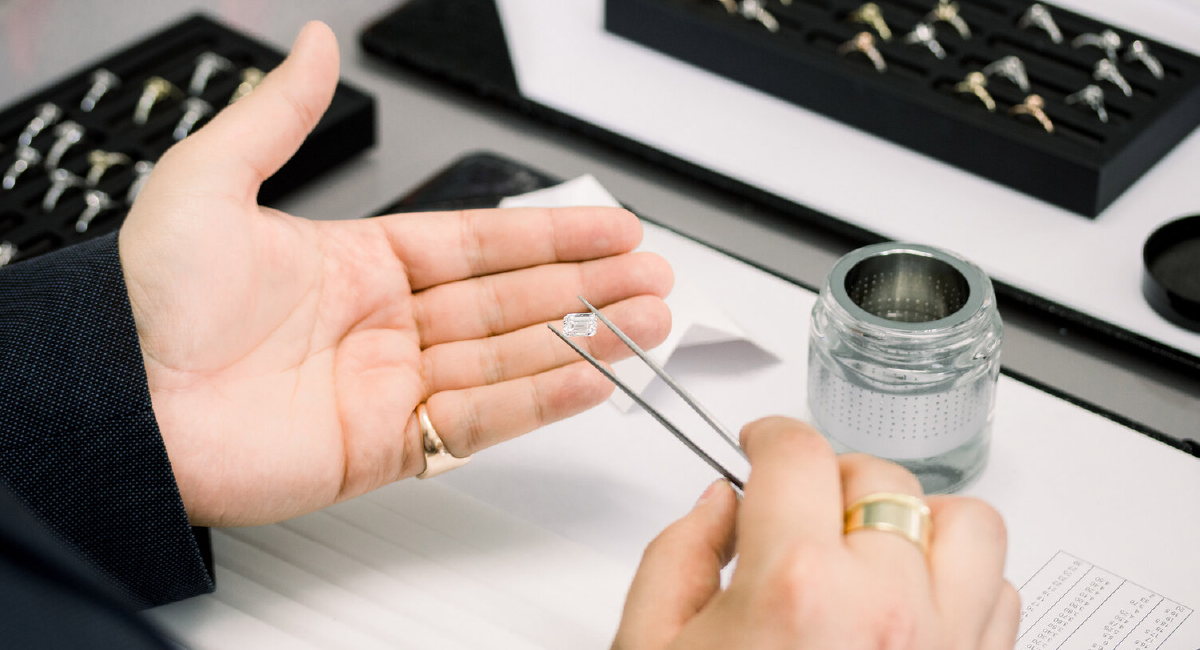
Diamond inspection is essentially a process of making sure that all the properties, statistics, and aspects of the diamond are up to the mark and meet your requirement. We have curated the perfect guide for you to refer to before venturing out to buy a diamond. The guide includes everything you will want to get checked and keep in mind when buying the diamond. After all, we aim to be as helpful as we can to bring you closer to your dream diamond.

How to Tell if A Diamond Is Natural or Lab-Grown?

Diamond Companies that grow diamonds in the lab are mostly honest about the origin of the diamond. Few companies even engrave the data about the stone on the diamond’s girdle itself. While most companies come out clean about their diamonds and their origin, there are diamonds that are disguised as naturally occurring diamonds in the market. So let us look at a few ways to distinguish between a diamond that is natural and a diamond that is grown in a facility

Diamond inspection

  • The Type IIa Test

This is one of the finest markers in the market regardless of the origin of the stone. IIa indicates the clarity of the graphite in the stone and is an accredited variety. As a result, if a diamond is Type IIa, one may be certain it was made in a lab.

  • Photoluminescence Spectros­copy and UV Radiation

If one wants to get their diamond inspected, they can send it to a lab to get it tested. Companies like GIA(trusted and well-known) have built devices that help determine the origin. In a nutshell, the system works by hitting a diamond with different forms of radiation and analyzing the results. During the spectrum examination, several markers of the various techniques employed to generate lab-grown diamonds appear as spikes and fall at specific wavelengths.

Factors Should Keep in Mind for the Diamond Inspection

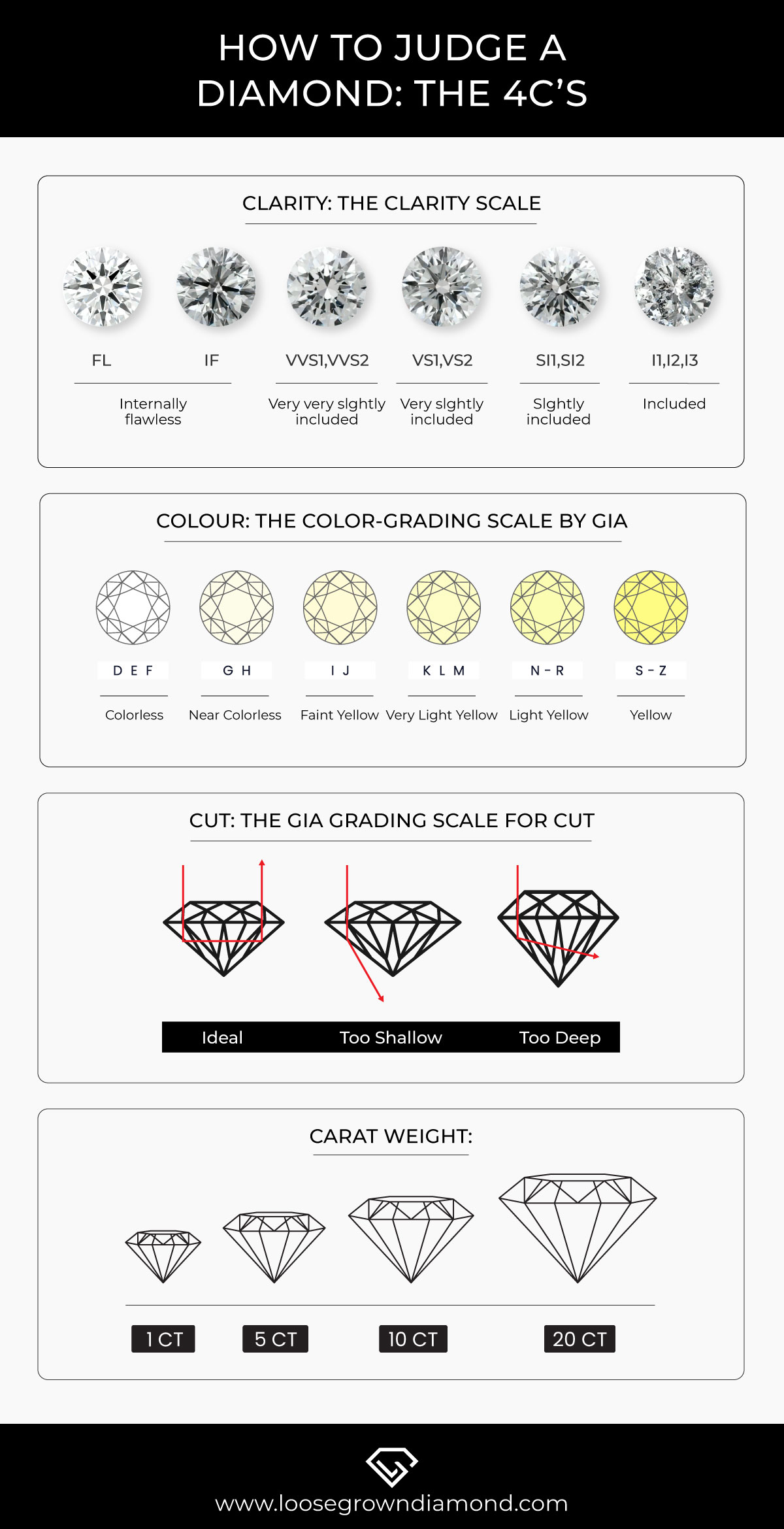
The 4c’s of The Diamond

The value of a diamond depends on mainly four aspects. You absolutely need to know about all four “C’S” of them to judge a diamond accurately so that you do not end up buying something not worth your emotion or money. They are Clarity, Color, Carat Weight, and Cut. 

4c's of the diamond infographics

Clarity of the Diamond
The diamond clarity scale has six categories on the scale given by the Gemological Institute of America (GIA) and five levels on the scale given by the American Gem Society (AGS). The clarity scale is made to inform you about how many flaws or inclusions the diamond has and what is the severity of these inclusions. We have mentioned the grading followed by GIA because it’s one of the highest regarded, respected, and followed authorities in the diamond world/market. For your reference. Here are the levels of the clarity scale by GIA. 

  1. Flawless or FL grease means that the diamond is free of blemishes and inclusions and they are not even visible under magnification. 
  2. Internally Flawless or an IF grade means that there is no inclusion but slight blemishes may be visible under magnification. 
  3. Very, Very Slightly Included or a VVS1, VVS2 grade means the diamond has inclusions but they are not easily visible, not even to an expert. 
  4. Very Slightly Included or a VS1, VS2 grade means that there are certain minor inclusions only visible to the naked eye.
  5. Slightly Included Or  SI1, SI2 grade means that there are inclusions that are visible to the naked eye but only when carefully inspecting the diamond. 
  6. Included or I1, I2, I3 grade means that the diamond has visible inclusions. 

Color of the Diamond

  1. Colorless or D, E, F grade means that the diamond is absolutely colorless. 
  2. Near Colorless or G, H, I, J grade means that there is some color but not visible to the eyes.
  3. Faint Color or K, L, M grade means that the color may be visible to the naked eyes. 
  4. Very Light Color or N, O, P, Q, R grade means that the color is easily seen. 
  5. Light Color or S, T, U, V, W, X, Y, Z grade means that the diamond has a significant amount of color which is clearly visible. 

Cut of the Diamond

  1. Excellent: Means maximum shine and reflection
  2. Very Good: Has good reflection and gives back most of the light
  3. Good: Brilliance is good but not the same as higher cuts. 
  4. Fair: They do have brilliance, but only reflect a limited amount of light. 
  5. Poor: Diamonds may appear dull

Carat Weight of the Diamond

Carat weight is exactly what it sounds like, how much the diamond weighs has a direct impact on the value of the diamond. The more the weight, the chances are, the higher will be the value, however carat weight is not the only determinant of the value of the diamond, clarity, cut and color along with carat weight determine the value of the diamond. 

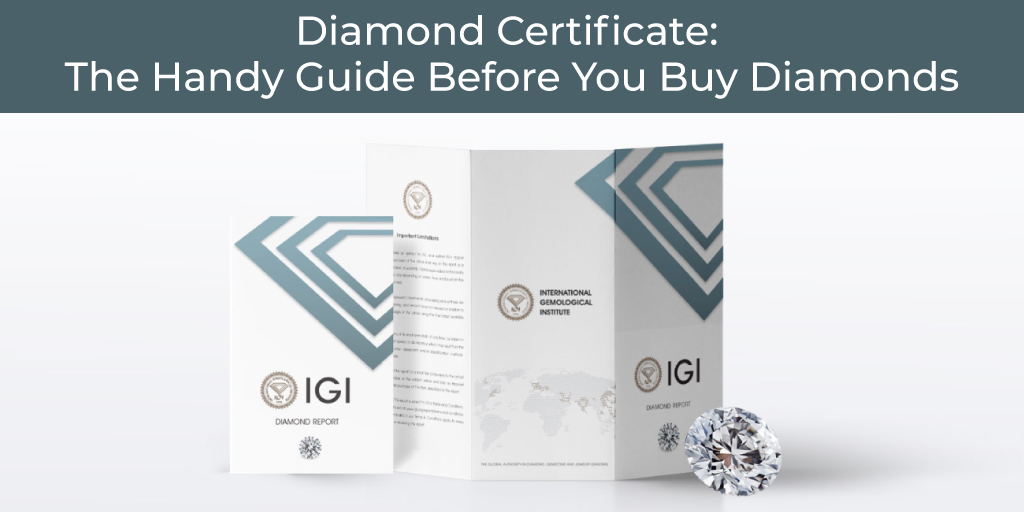
A diamond certification is essential because it helps certify diamonds through a third-party institution (an external party that is not involved in the diamond market in any shape or form). Due to many fraudulent practices happening in the diamond market it is essential to check for certificates that are free from any sort of hamper. Few such trustworthy certification agencies are mentioned in the article below.
diamond certificate

GIA: Gemological Institute of America

The GIA is by far the most widely popular and respected gem certifying organization. The GIA accreditation is extremely useful because sellers and buyers believe the organization provides rigor-free and correct data on the diamonds in their provided certificates. Every GIA-certified stone is subjected to a variety of tests and is evaluated by at least 4 gemologists. Furthermore, among all the organizations listed, it is one of the most dependable and stringent gem grading systems.

Also Read: Igi vs Gia: Comparison on The Basis of Color Grading, Pricing, and Diamond Reports 2022

AGS: American Gem Society

AGS is another well-known stone rating organization that validates precious gems and has established a reputation besides GIA. AGS is most known for its scientific method of gem classification, which employs numerical ratings instead of alphanumeric characters to authenticate gems. The numerical range rates gemstones from 0 to 10, with 0 being the finest and 10 being one of the worst.

AGS is second only to GIA in terms of market share in the United States. AGS uses a sophisticated ray-tracing method to assess a diamond’s image quality, which is greater than that of other organizations.

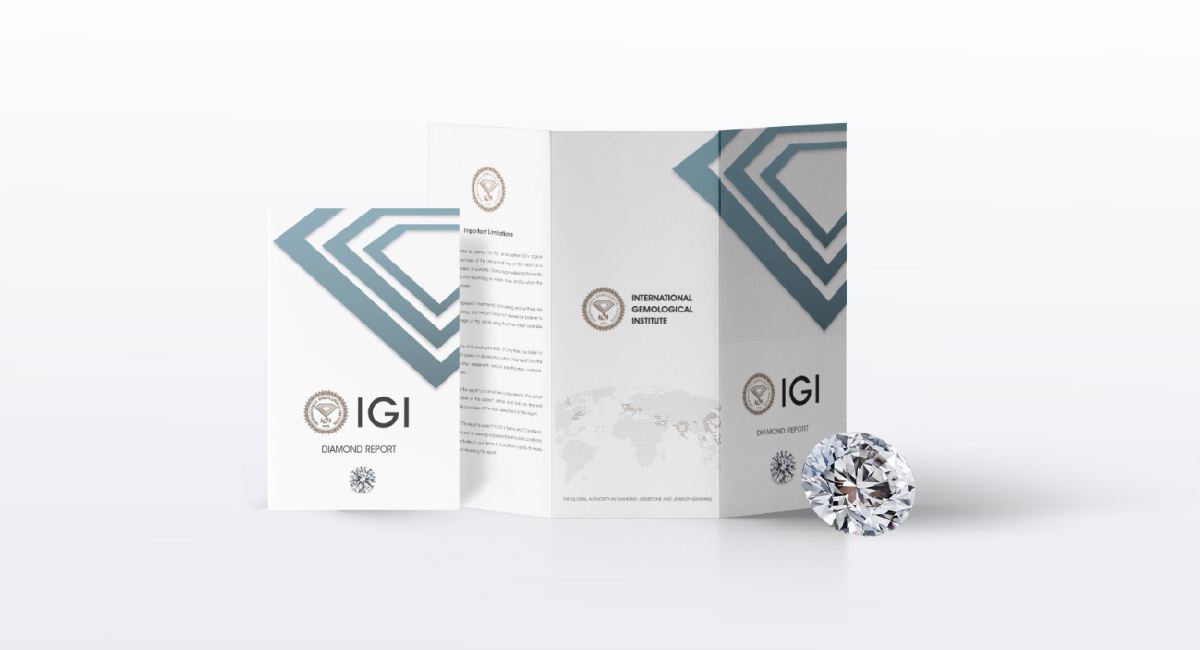
IGI: International Gemological Institute.

It is a non-profit stone assessment company with a strong reputation in Europe. IGI has a presence in US territories as well, however it ranks last among all American organizations. IGI is the second most trustworthy and well-known brand in gemstone certification behind GIA. IGI is known for accrediting lab-created precious stones in addition to evaluating real diamonds. Furthermore, there is a small potential that the gem will be rated incorrectly by two or three grades, but this is uncommon. In India, one can trust IGI gems because they’re well-known among both retailers and customers.

Also Read: Egl vs Gia Diamond Certification Comparisons: A Comprehensive Valuable Guide 2022

EGL: European Gemological Laboratory.

EGL is among Europe’s finest known and oldest gemstone certifying agencies. Evaluating and certifying diamond crystals is a rigorous and extensive procedure at EGL. It is well-known for authenticating gems weighing less than a carat. However, there are several EGL qualifications around the globe in various titles, including EGL Israel and EGL International, which may or may not be applicable in Europe.

EGL USA, which was once a part of a bigger European network of organizations, has now evolved into a stand-alone organization that focuses solely on the North American continent. This North American organization first opened for business in 1977 in New York, and it became self-owned in 1986. The EGL USA is very famous in the United States.

Check the Insurance of the Diamond

Yes, diamonds are the hardest substance on the planet, but that does not mean they are immune to wear and tear. Diamonds like any other substance can be damaged and it is vital to have them insured or even better buy them from a seller which has pre-insured diamonds. Insurance makes sure that if you buy a flawed diamond you can be compensated accordingly or if your diamond starts chipping off you can claim insurance. 

Research your Seller and Manufacturer Before Buying

This is one of the most important steps in inspecting the diamond. Remember to search who made your lab-grown diamond and who is your seller. Go through their website, reviews, and the feedback of customers. Check what method they use and who certified them. Check for any discrepancies if they have any.

[blog_page_inventory shape=”Round,Emerald,Oval” carat=”2.50,2.60″ cut=”0,4″ color=”0,10″ clarity=”0,11″]
[blog_page_btn title”Buy Now” url=”https://www.loosegrowndiamond.com/inventory/?shape=Round,Emerald,Oval&carat=2.50,2.60&color=0,10&clarity=0,11″]

Conclusion Thoughts

Diamond inspection is very important because it ensures you are buying the right diamond which is worthy and deserving of all your investment. The guide given above is handcrafted so that when you go diamond shopping, this checklist comes in handy. We hope all our research and references help in buying the right diamond and make the process more efficient and easier for you. 

Diamond Carat Comparison: A Visual Guide To Different Carats

Choosing the perfect engagement ring from a wide variety of options can be hard at first. Each aspect of a diamond holds a crucial role in the selection process of your perfect diamond. Each aspect of the diamond can be chosen once your purpose for the diamond is decided, and hence you can safely make your investment.
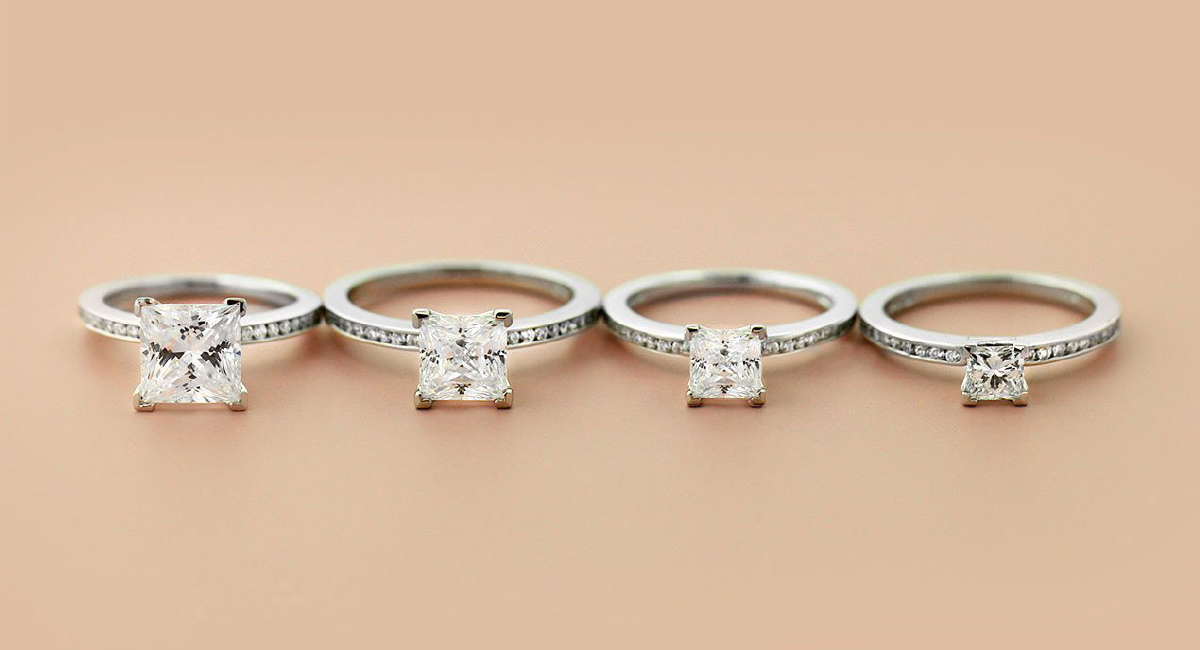
diamond carat size comparison

Such factors include budget, preferences regarding style, and the most important factor of all: the 4Cs of grading diamonds which are cut, clarity, color, and carat weight.

The carat weight is an important factor in making this decision. The other C’s also hold equal importance, but the carat weight is something that makes up an obvious statement when chosen.

Definition of a Carat
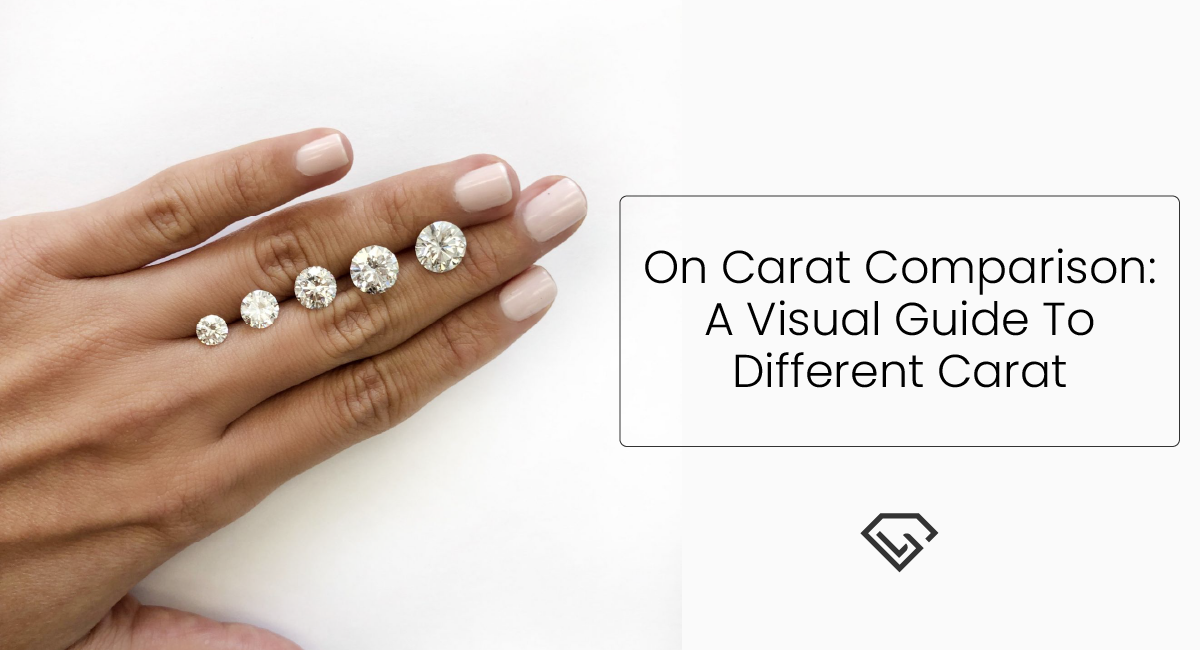
diamond carat size chart

The standard unit of weighing a diamond is termed carat which was introduced in 1907. A carat is not the outer appearance of a diamond, but the weight of it. The weight of a diamond is determined by various factors like the cut, density, formulation, composition, etc. 

Technically when seen, a carat of a diamond is known as 0.2 grams. This standard for the definition of a carat is exclusively used for gems, semi-precious stones and diamonds as a unit of weight measurement.

It’s also linked to dimension, but carat mass isn’t the same thing: 2 stones of the same form and diamond weight might seem drastically deviating significantly on the cut.

The Importance of Carats in Diamonds

The carat determines and influences the price of the diamond.While the carat of the diamond is very subjective, some people might prioritize it over other factors such as color, clarity, brilliance, etc.

Carat also doesn’t justify the weight or the appearance the diamond might have. Many people assume that a heavily weighted carat diamond might appear bigger and better. It isn’t true in most cases. The appearance depends on many factors of the diamond for saying the cut and arrangement.

Typically a diamond is weighed using a simple technique called the carat point system and most likely not heard by the general public. The weight of the diamond is referred to as having y-numbers of point or y point. For example, if a diamond is 90 pointer, it is just another way to refer to a .90 carat diamond.

What is the Carat Weight of a Diamond?

The carat weight of a diamond is not the visual appearance size of a diamond. It is a technical scale that determines the physical weight of the diamond.

A carat weight of a diamond is equal to 200 milligrams. When one states the weight of a diamond as 1 carat, the weight that should be considered is 0.2 grams. To extract one carat of diamond, the amount of rock that needs to be mined is way more than 1000 times of the diamond weight,

Some diamond cuts may make one diamond appear larger than another, even though both the diamond carats are the same. Hence, choosing the right cut for your carat size is also something you would like to consider.

How each carat weight appears on the outside will vary on multiple factors such as the shape and type of precious stone as can be observed through the example of a 1.00 ct round diamond which will measure up to 6.5mm whereas a round sapphire of the same carat weight will measure around 6.5mm.

This difference in size even though the carat weight is the same is due to the varying density of the gemstones.
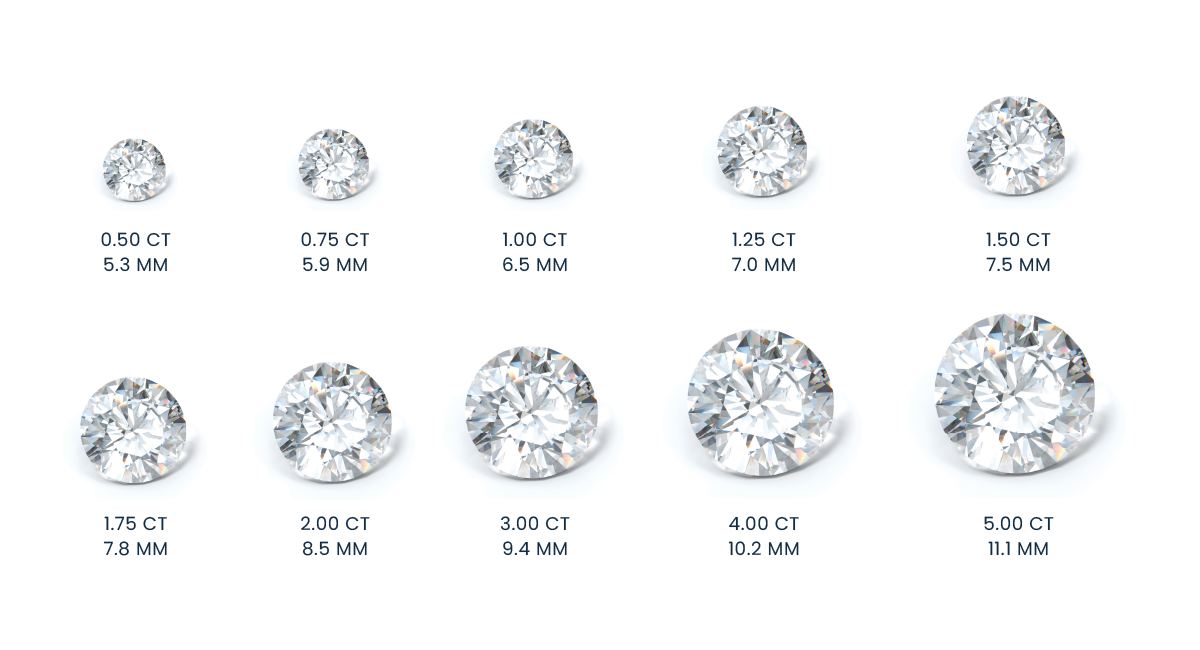
lab diamond mm to carat weight

Another extension of the carat weight is the total carat weight (t.c.w) which is a unit used to represent the total weight of all the precious gemstones that are embedded in a piece of jewelry in cases wherein more than one gemstone has been used. Earring of the diamond solitaire kind generally uses this form of measurement which indicates the total weight of all the diamonds in both earrings.

Hence, although carat weight is an important aspect of every diamond’s identity, it must never be confused with the diamond’s visual size because a diamond of heavier carat weight does not translate to it having a bigger size. The other physical dimensions of a diamond such as the size are actually dependent on how the stone has been proportioned. 

How Does the Carat Weight Impact Budget?

Customers with a fixed budget who cannot afford many variations generally have to sacrifice an aspect of the diamond if they wish to improve on another.

Amongst the 4Cs of the diamond, many people feel that carat weight matters more than the cut of a diamond. And they keep concentrating on getting their hands on the biggest-looking diamond that falls within their budget. However, most jewelers hold the opinion that the cut of a diamond should never be sacrificed for its size or carat weight.

It is observed that prices generally jump at every tenth decimal mark such as 0.40, 0.50, 0.60, etc, and a lot more significantly at the quarter marks such as 0.50, 0.75, 1.00, etc. Hence these are the sets of carat weights that customers with a tight budget should wander around to get the best buy at the lowest cost.

To help readers with this concept, customers can consider the case wherein a 0.90 ct diamond will have measurements of 6.20 mm x 6.20mm while a well-cut 1.00 ct stone will measure up at 6.50mm x 6.50mm. The customer can save up to 30% in price if they decide to select the former option because both the stones of the above-mentioned carat sizes are hardly distinguishable unless compared nearby.

However, customers who have their mindset on larger carat weight diamonds can always compromise a little on the clarity and color since grades of clarity that fall in the range of SI1SI2 and grades of color in the range of G to I will not make much of a difference since these respective grades closely resemble a clear and colorless diamond.

[blog_page_inventory shape=”Radiant,Emerald,” carat=”0.40,1″ cut=”0,4″ color=”4,7″ clarity=”3,5″][blog_page_btn title”Buy Now” url=”https://www.loosegrowndiamond.com/inventory/?shape=Radiant,Emerald&carat=0.40,1&color=4,7&clarity=3,5″]

Comparing Different Diamond Carat Sizes:

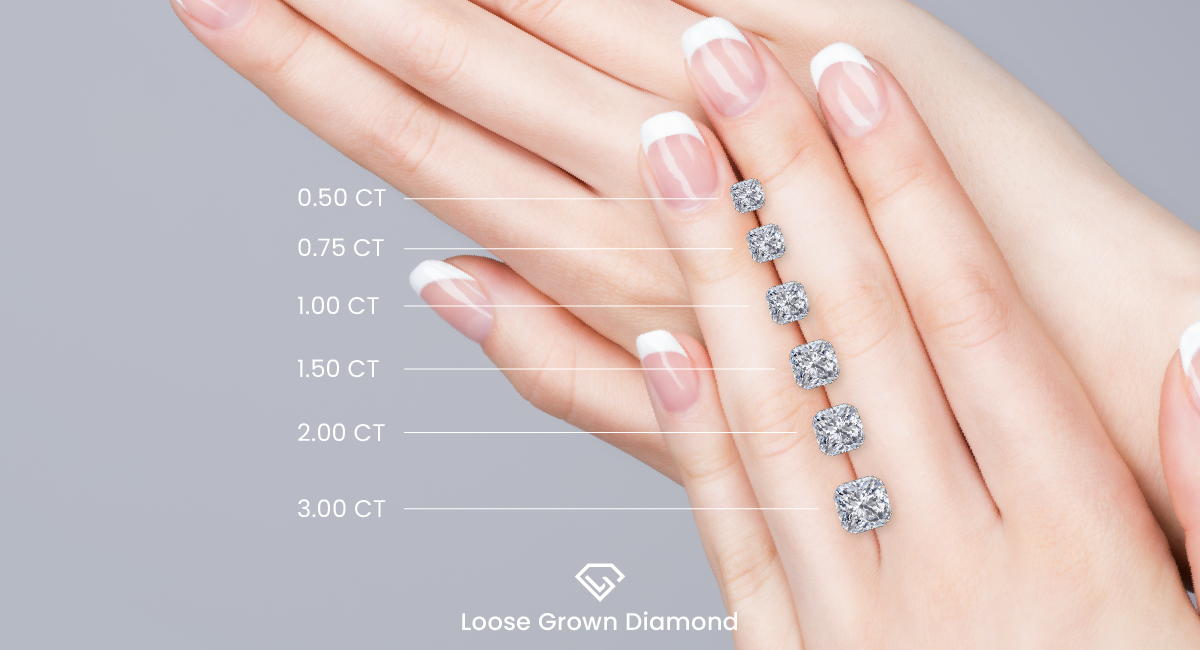
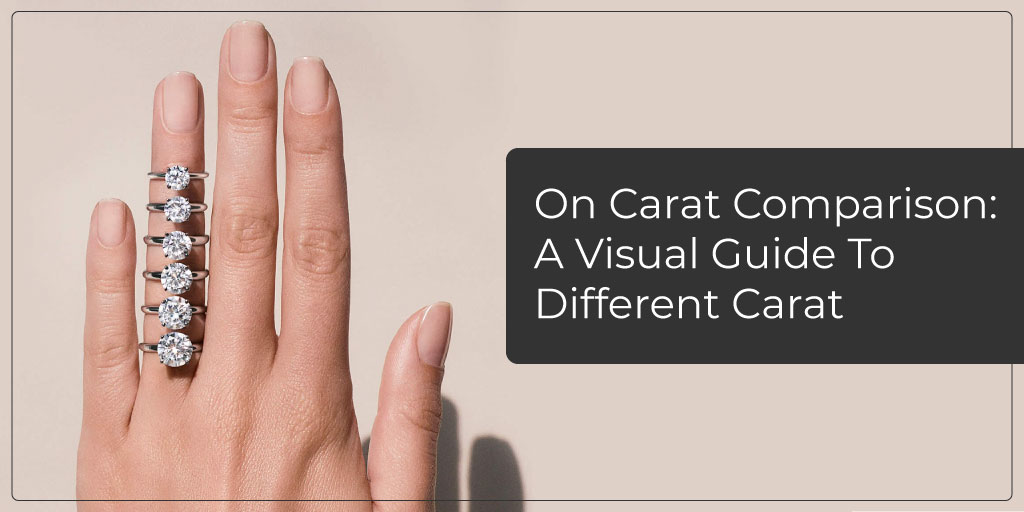
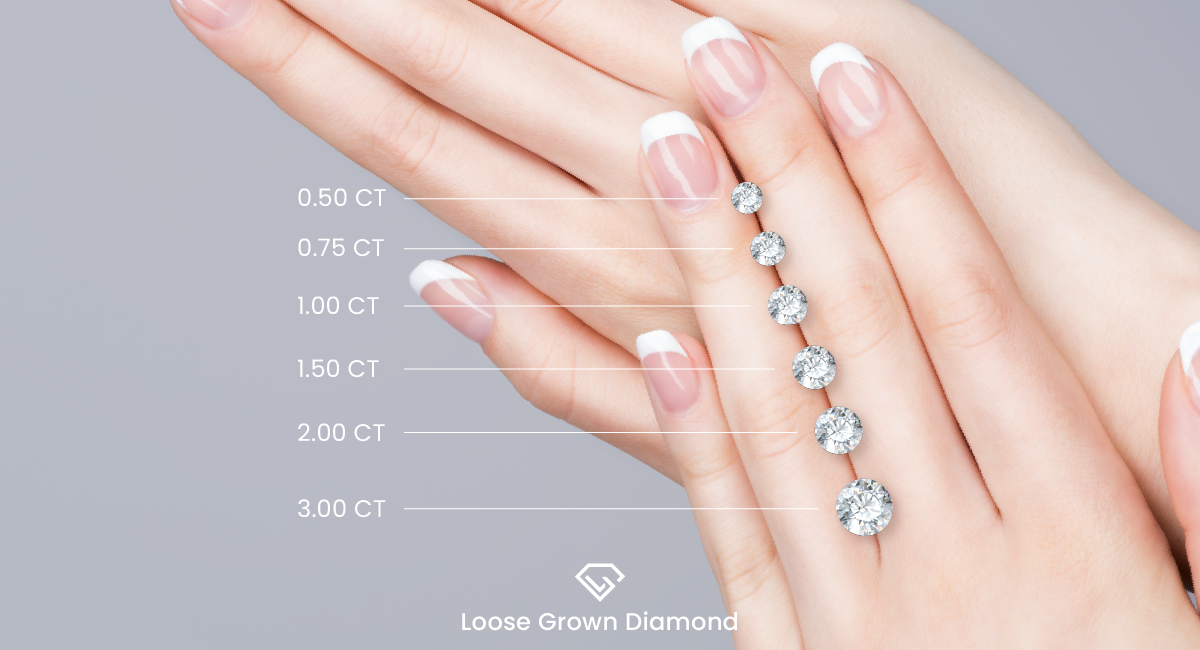
There is no fixed explanation or answer to the question of which diamond carat size is the best since this is a heavily varying factor for different people depending on their personal preferences. Carat weights that are considered too big or small by one may be the ideal size for another. A diamond carat comparison chart will help you understand the sizes smoothly, with dimensions in proportion to the fingers when seen from afar.

However, as an observer, it can be safely said that there is a particular carat size that is suitable for fingers of different sizes. 

Since most finger sizes usually lie between US 4 and US 7, it is advised by jewelers to select a diamond falling in the range of 0.5 ct – 1.5 ct as they would complement these finger sizes the best.
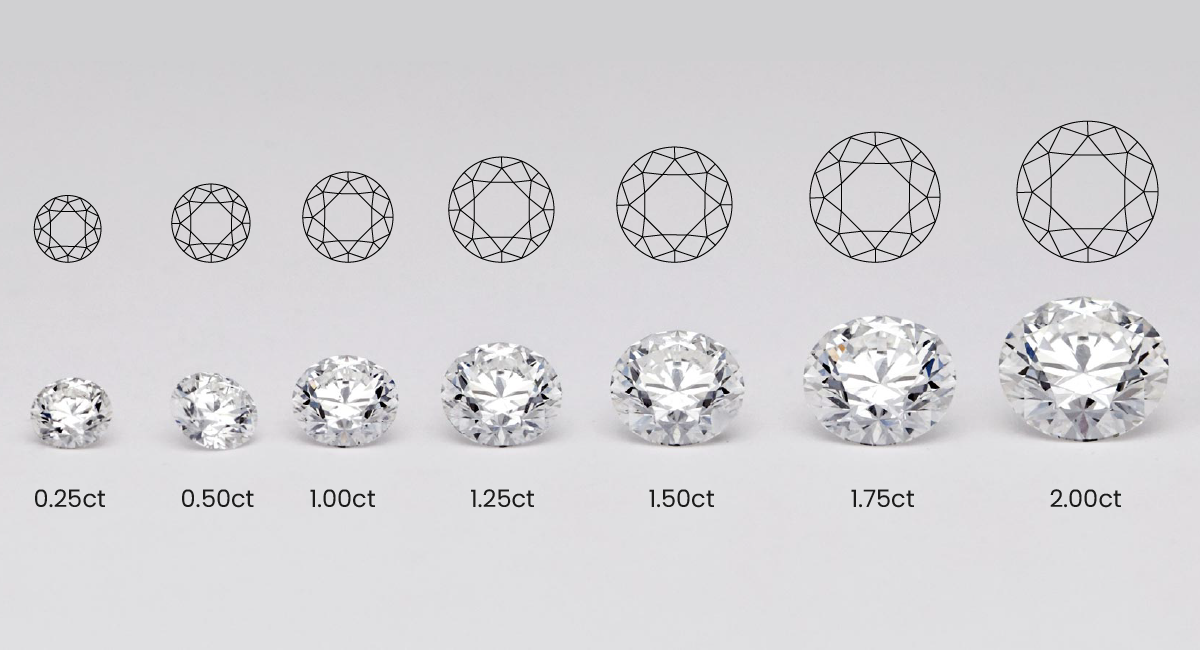
different carat sizes

Generally, diamonds of carat weight below 0.30 ct look small when compared to finger sizes, however, a halo setting is enough to amplify the size and add some additional brilliance to the engagement ring.

Customers who are attracted to larger carat weighted diamonds such as a diamond of 1.5 ct can make use of the solitaire setting for the ring since this setting will prevent an overbearing appearance that could be expressed by the large diamond of the ring on a finger.

If one prefers an overall brilliance, choosing smaller carat diamonds in a metal band and a single carat as the main diamond, can definitely do the trick.

A gradual sizing can be chosen, if one prefers a subtle design, wherein the center diamond is of a higher size and the diamonds on either side are slightly smaller or even half the carat of the main ring. Both these options are equally beautiful and trending.

These are only guides that will help you gain a fair idea of the market and its terms, so you can take your decisions mindfully. As a customer, one should be aware that knowledge is something best used at one’s disposal. Hence, it is recommended you take your personal preferences into consideration as that will determine the path of your purchase.

[blog_page_inventory shape=”Round,Emerald,Cushion,Oval” carat=”0.40,1″ cut=”0,4″ color=”4,7″ clarity=”3,5″][blog_page_btn title”Buy Now” url=”https://www.loosegrowndiamond.com/inventory/?shape=Round,Emerald,Cushion,Oval&carat=0.40,1&color=4,7&clarity=3,5″]

Comparing Diamond Carat Sizes in Popular Diamond Shapes

To get the best idea about a diamond’s carat weight and size, customers must compare the point of difference and similarities regarding these aspects in different shapes of diamonds.
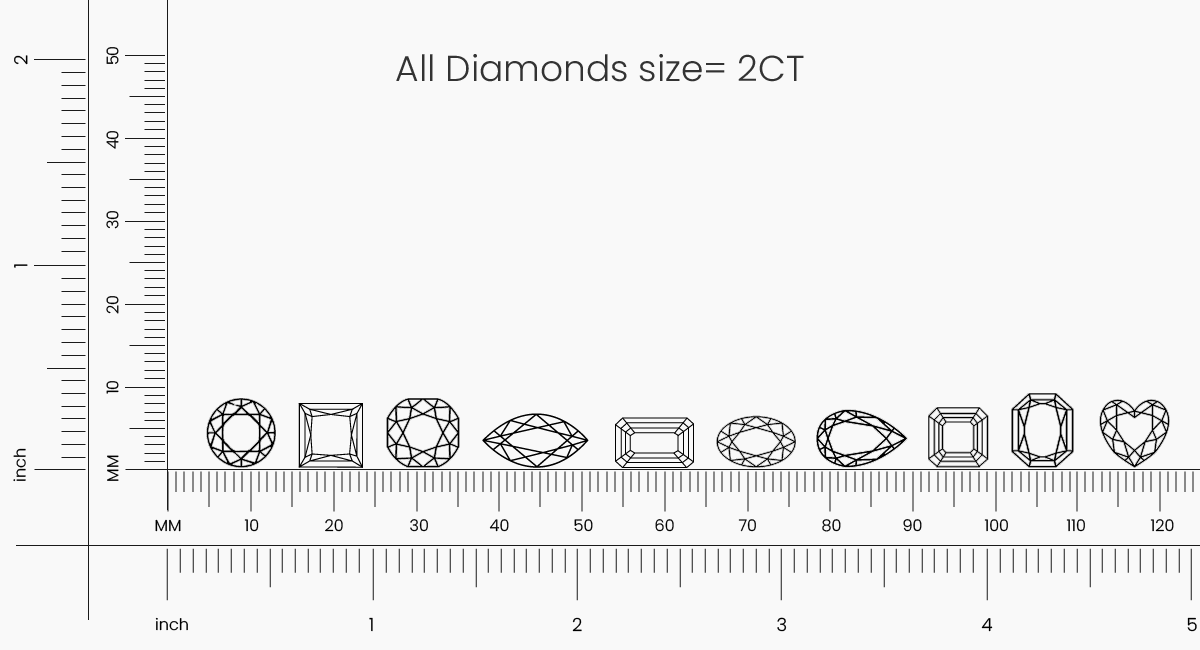
Comparing Diamond Sizes in Popular Diamond Shapes

Cushion Cut Diamond

Cushion lab Diamond chart

Showing similarities with the round brilliant cut, cushion diamonds are a beautiful choice for customers who wish to add a wide sparkle to their fingers. The lightly squared edges, however, tend to increase the carat weight of the diamond resulting in the nexus diamond appearing bigger.

One advantage of this shape is that it can make a smaller center stone look more substantial and beautiful than a round brilliant cut stone of the same size. Bands of either width of thin or thick will complement this shape well. 

Emerald Cut Diamond
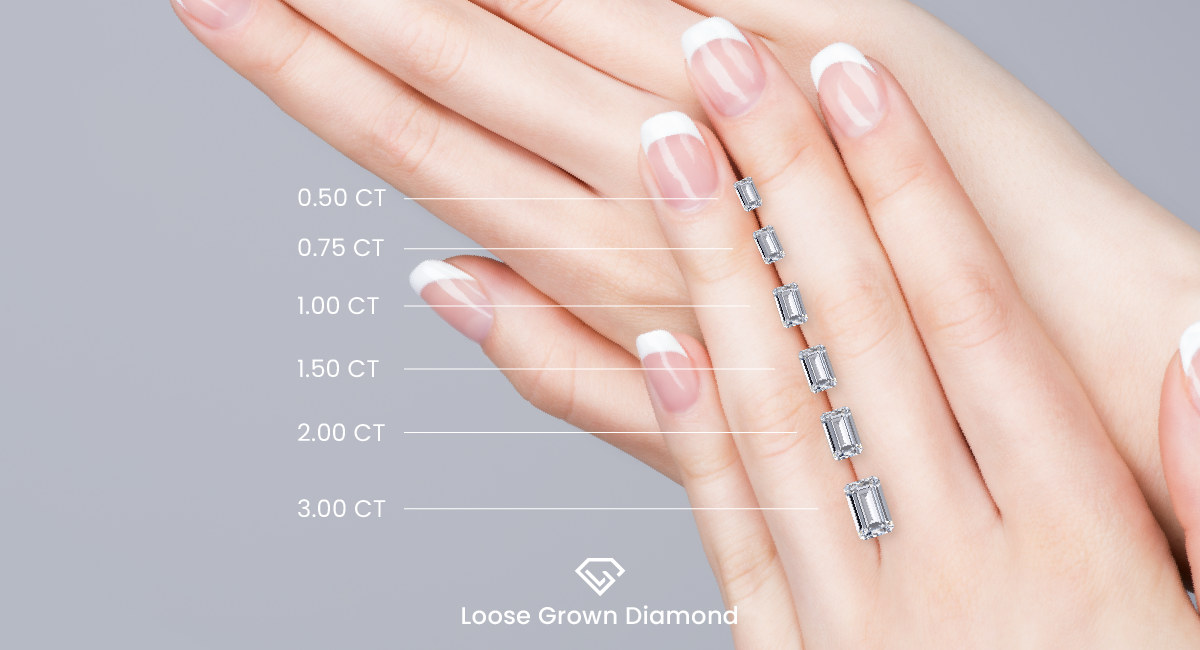
Emerald cut diamond chart

An emerald cut is one of the shapes that appears true to its carat weight. It has been noticed to complement bands of wider measurements along with the split shand bands or baguette diamond accents.

A vintage-style cut, the emerald-shaped diamonds are appealing to many women across the world, including the celebrities of Hollywood like Jennifer Lopez, Jennifer Lawrence, Beyonce, Amal Clooney, etc. who have been seen sporting this design on their fingers.

The rectangular shape of the emerald cut makes the fingers appear elongated. An emerald cut with its unique beauty makes it a favorite choice for vintage engagement designs. Any wearer can comfortably and gracefully adorn such a unique piece of diamond cut in an engagement ring.

The emerald cut sets itself apart from its fancy cut counterparts like the radiant diamonds, by presenting observers with a distinguished kind of beauty and impeccable clarity while providing engagement rings with a peculiar look. 

An emerald cut diamond comparison chart will assist you optimally in choosing a size that might be the perfect size for your fingers and ring pattern.

Round Cut Diamond
round cut lab diamond chart

One of the most classic and famous shapes, the round-shaped diamond is made to be placed on excellent and stunning engagement rings because of the sparkle and fire they exude. Solitaire engagement rings often use round shaped diamonds as the centerpiece because of the glittering brilliance that these diamonds offer.

However, these diamonds come under the category of expensive diamonds since a large amount of rough stone needs to be cut away to make this shape. Although customers who want this particular shaped diamond can save some money by opting for a smaller diamond that is combined with a halo of accent diamonds or a pave diamond band since these combinations will give the illusion of the round diamond being bigger. 

A round diamond carat comparison carat shown above is your ideal friend to help you get the size that is a perfect fit for you. With each size diamond serving a different purpose, you can also carefully choose and compose diamonds to craft a unique pattern.

Oval Cut Diamond

Engagement rings of the oval shape are a highly popular choice for people since it appears to be inspired by the best qualities of a round brilliant cut diamond which are its sparkle and the elongated effect that other fancy-shaped diamonds provide. While selecting suitable oval diamond customers must focus on the stone’s length to width ratio along with the carat size. 

Shopping Advice and Money Saving Tips before you buy a Diamond:

1. Select a Halo Configuration: Did you know that halo wedding rings give the appearance of a bigger center rock? A halo ring setting is a beautiful setting that will help you get a more brilliant shine at an affordable cost. Using the main diamond in the center and the smaller diamonds in the halo will only enhance the shine of the ring. Even with a small carat diamond at the center, the halo will make it appear larger than it is.

2. Select a Gemstone Created in a Laboratory: Lab-created diamonds are 40% cheaper than mined ones. While earth-mined gems have long been the preferred gemstone for wedding rings, lab-made diamonds have gained considerable attention and desire.

3. Remove the colorless parts: Would you like to acquire a colorless stone but don’t have a lot of money? Try a relatively close stone in the H to J range instead, which will save you a lot of money! When viewing a gem with your unaided eye, you won’t notice much of a change in color until you compare two separate colored diamonds beside each other.

4. Reduce your size: One can save hundreds or even thousands of bucks by choosing a stone that is somewhat less than your intended weighting factor. Furthermore, there is no discernible visual change. If you want a 2.0ct stone, for instance, a 1.91ct gemstone with identical specifications will probably cost cheaper.

If you wish to get an overall idea of your ideal diamond, head over to the diamond price calculator for a fair budget outline.

If you choose to buy lab diamonds, LGD provides the best set of diamonds in your chosen criteria and budget. We will help you carefully through this process of buying lab created diamonds so you can pick out your dream stone with ease. We will help to stick to your budget, but if you want to avail of a discount on the same you can use our promocode.

[blog_page_inventory shape=”Round,Emerald,Cushion,Oval” carat=”1.50,2″ cut=”0,4″ color=”3,6″ clarity=”0,11″][blog_page_btn title”Buy Now” url=”https://www.loosegrowndiamond.com/inventory/?shape=Round,Emerald,Cushion,Oval&carat=1.50,2&color=3,6&clarity=0,11″]

Conclusion

With all the distinct parameters that give a diamond its appearance, one must carefully choose the parameters that cater to their individual goal. Carat weight definitely turns out to be one of the most important and crucial factors that not only determines the beauty but also the cost of the diamond.

Despite all this, one can always craft their diamond in a way that makes it enhance the strengths of the diamond and also makes it appear more brilliant. A perfect stone is achieved when the setting is also thought through, and hence the journey of diamond jewelry and especially diamond engagement rings is considered precious. The effort is always worth it, as in the end the love stands strong and so does the diamond.

FAQs

1. What is a diamond carat?
A diamond carat is a technical scale that determines the weight of a diamond. 1 carat equals to 0.2 grams in weight.

2. What diamond carat is the best?
The best diamond carat is the carat that fits into your budget as you choose the diamond parameters that suit you best. But the most sought after diamonds are 1 carat diamonds.

3. What’s the difference between “carat weight” and “total carat weight”?
Carat weight refers to the individual carat weight of a diamond, whereas total carat weight refers to the carat weight of all the diamonds in the ring combined.

4. How does diamond size affect price?
The price of a diamond increases as the diamond size increases. The price is directly proportional to the diamond carat price.

5. Is it better to get a slightly smaller diamond with higher quality or a bigger diamond with lower quality?
Yes, most certainly. When one chooses a smaller diamond in higher quality, the brilliance of it will definitely outshine the latter diamond size.

6. How is diamond size measured?
The size of a diamond is measured in terms of carat weight. A diamond carat is the unit to determine a diamond’s size.

7. What is the size difference between 1 carat and 2 carat diamond?
As the size suggests, the size of the 2-carat diamond is larger than a one-carat diamond, but might not be directly visible as twice the size, since the whole volume is considered.

8. How much is a 0.5 carat diamond worth?
A 0.5 diamond carat can cost anywhere around $550 to $2000, depending on the 4Cs

9. Is 1 carat diamond too small?
1 carat diamond is a good size and not small at all. It is the most preferred choice of diamond carat.
Diamond Certification: The Handy Guide Before You Buy Diamonds

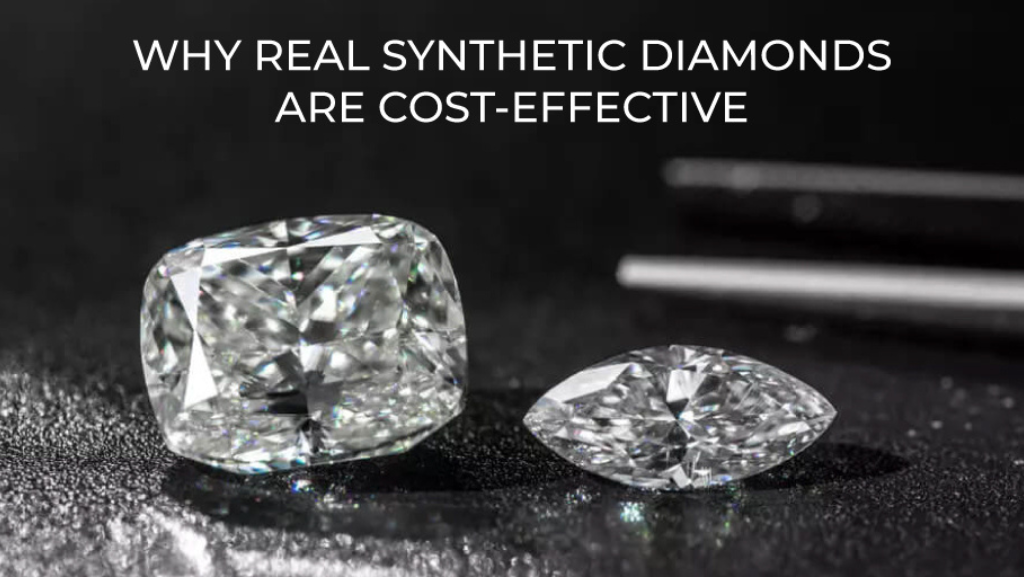
These days the demand for man-made diamonds is increasing rapidly due to their similar properties as that of natural diamonds but low cost. They are usually created by the process known as cutting-edge technology, which is similar to that of the process of naturally growing diamonds.

It chemically, physically, and optically resembles that of natural diamonds to an extent. They are not fake diamonds as the misconception of certain people leads them to call them fake. They are as real as natural diamonds.

The properties of these diamonds mainly depend on the process which is used for their manufacturing. In Fact, certain diamonds are even harder and their conductivity is also high as compared to natural diamonds.

Diamond Certification: The Handy Guide Before You Buy Diamonds

Diamond certification is a system that aims to rate diamonds based on the 4Cs which are of utmost importance to the quality of a diamond. The 4Cs are cut, carat, color, and clarity. Each of these Cs is vital in its own unique way and when measured correctly impart a different feel to any diamond which exists.

With a lot of new companies providing certification, we bring to you a guide that allows you to know your diamonds better and interpret them accurately. You may have questions such as what are some advantages of having your lab grown diamond evaluated for certifications? Well, you will have all your questions answered with the progression of the article written below.

What is a Diamond Certification?

what is diamond certificate

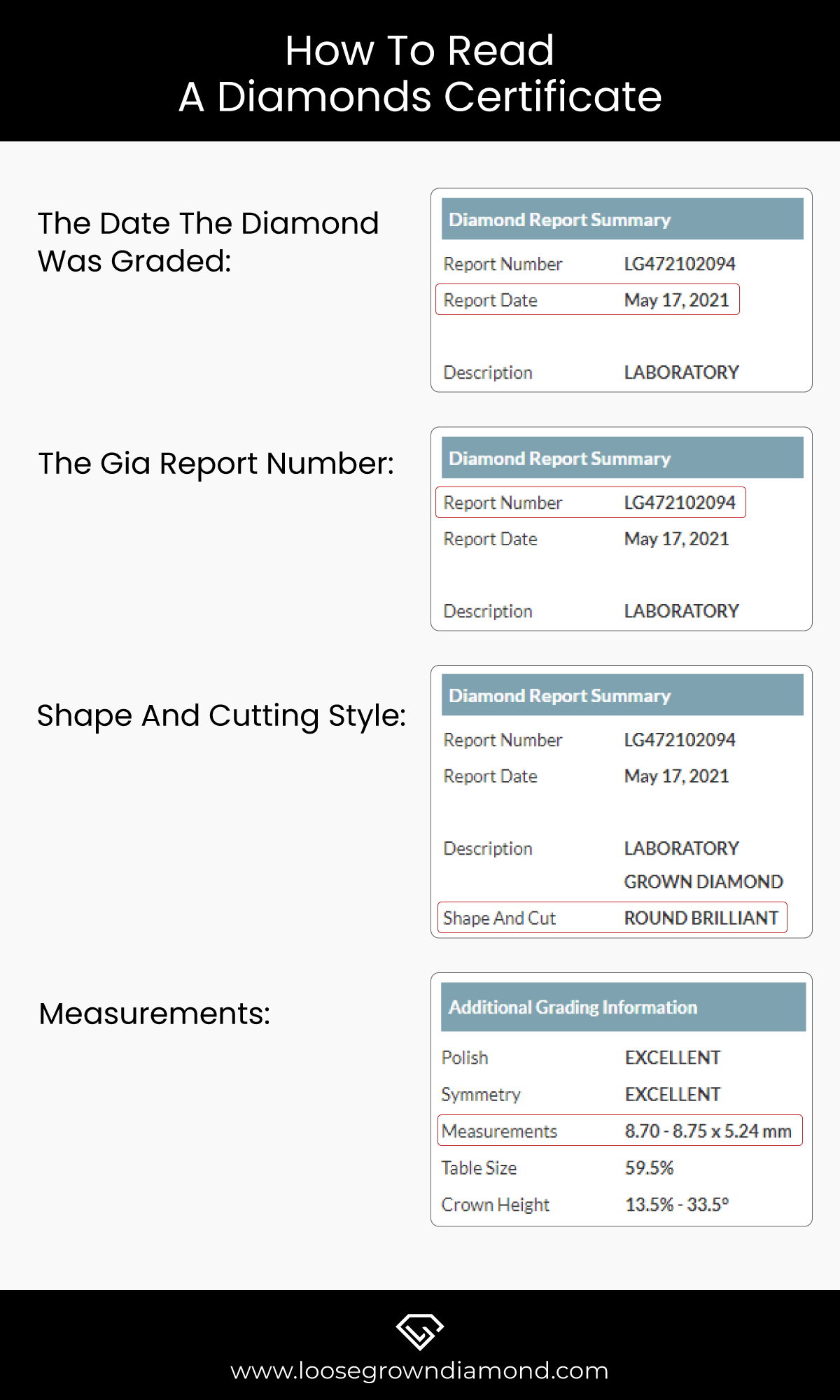
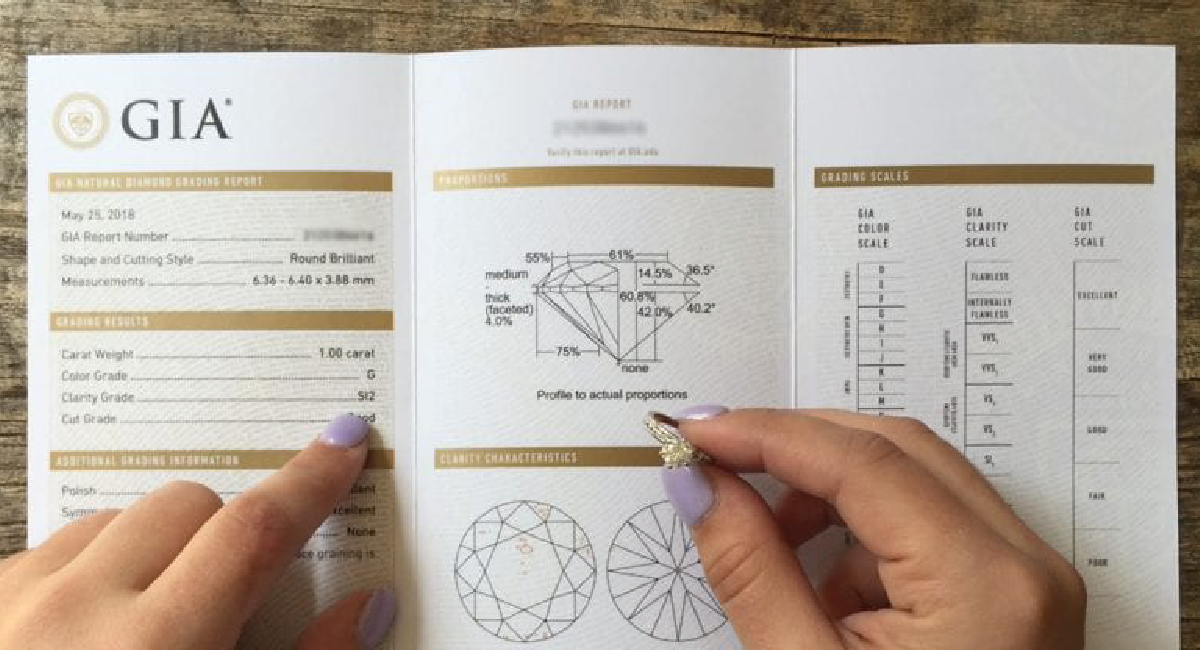
Each diamond has its own unique certification which allows the diamond to be identified based on its clarity, color, cut, and carat. These certificates give a unique identity to diamonds.
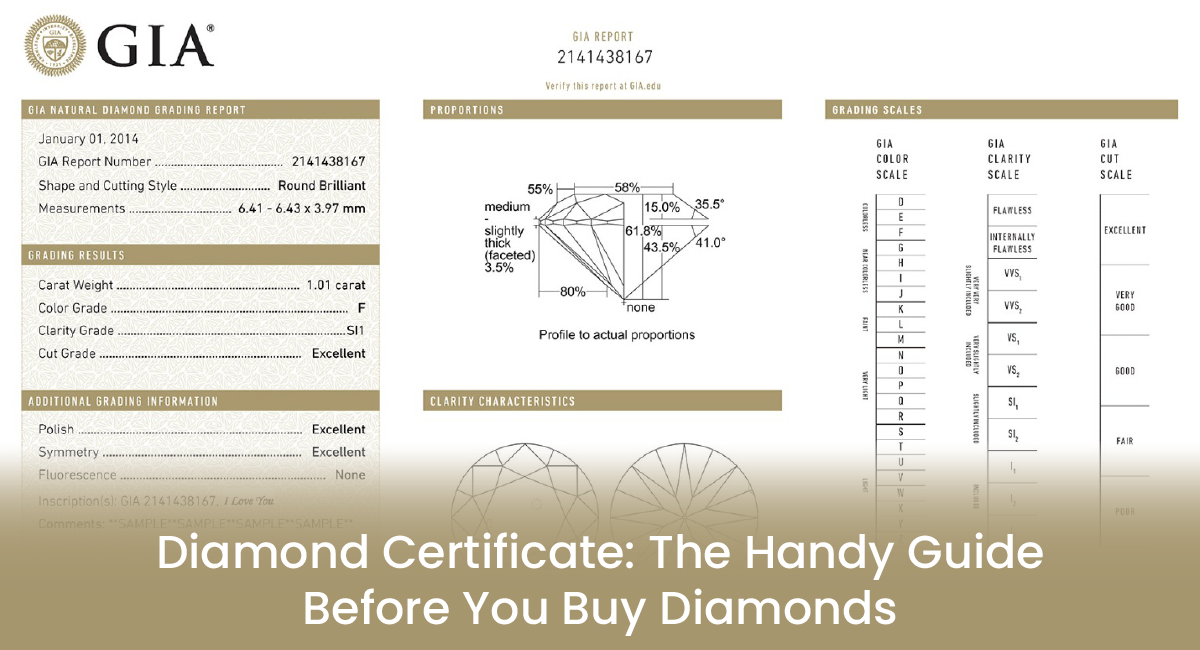
These important documents are issued by labs thus a diamond certificate is a lab certification that gives an identity to the diamonds and verifies themTrained professionals and expensive equipment come into play to identify diamonds and certify them based on the quality and grading of the 4Cs. There are additions that have been added to the certificate like polish, fluorescence, and symmetry apart from the 4Cs. 

Most lab grown diamond certificates even map out the inclusions which might be a part of the diamond, in a way that is understandable. This gives a greater idea about the diamond and its nature, like the cuts, inclusions, forms, and color as well.

Types of Diamond Grading Systems:

There are various kinds of grading systems that grade the diamonds and certify them. There are certifications like- GIA, AGS, IGI, EGL, HRD, GSI and GCAL certification.

  • GIA

Gemological Institute of America is one of the best and most renowned certification-offering institutions there is. The evaluation of diamonds is based on the basic criteria, while also certain other features like Girdle thickness, proportion diagram, table %, depth %, and culet size. There are certain specific brands of diamonds that provide only GIA certification.

  • AGS

AGS stands for American Gem Society. This identification has been there before the GIA has been introduced. They have a gradation scale from 0-9, out of which 0 stands for the most ideal diamond. This identification system has been way more refined than GIA and tries to be better than them. The AGS is a system that is generally preferred by round brilliant diamond sellers. GIA is preferable for other different kinds of cuts.

  • IGI

The speed certification of the International Gemological Institute (IGI) is very effective and is generally preferred as it offers lesser prices than GIA.

  • EGL

There are certain conceptions about the European Gemological Laboratory that state the quality of the diamonds might be inferior to the information stated otherwise on the certificate. The price may be cheaper when compared to GIA, but the quality of the diamond is definitely compromised.

  • HRD

Hoge Raad voor Diamant is the full form. HRD is a Europe-based certification organization. This organization also has an irregular identification process. The quality of the diamonds will be compromised when they are judged on the basis of HRD. They have lesser diamond quality than the GIA certification.

  • GSI

Gemological Science International is an organization that has been known more in recent times itself. It is the last certification one should rely on because when this certification has been compared with GIA, there are quite some untrustworthy results.

  • GCAL

This diamond certificate, issued by the esteemed Gem Certification and Assurance Lab (GCAL), is a testament to the exceptional quality and authenticity of a diamond. GCAL certificate provides you with the confidence and assurance that you are investing in a genuine and high-quality gemstone.

Each certificate is a comprehensive document, serving as a reliable guide for individuals seeking transparency and assurance in their diamond purchase.

How Do You Read a Diamond Certificate?

There are very minor details listed in a lab diamond certificate. Right from the dimensions of the gem, to date, to all the things that make the diamond identifiable. 

How do you Read a Diamond Certificate infographics

  • The diamond starts to get justified right from the date of evaluation. After which the certificate gets a report number. 
  • Then the basic information is let out in the form of the 4Cs- which are carat, color, clarity, and cut
  • The dimensions are also given for a clear idea about the size of the diamond. 
  • Other information about the diamond which is contained in the certificate happens to be table %, depth %, and culet size.
  • The symmetry of the diamond is also evaluated and written down for information. 
  • Then there is a proportion diagram, polish grade, and girdle thickness about the diamond which gives a deeper insight into the quality of the diamond. 
  • There is a diamond plot included as well, this gives information about blemishes and inclusions of the particular diamond. 
  • Fluorescence grade is also added in the information along with laser inscription if it is applicable. 
  • The other content includes basic comments and general information about the diamond, which will need to be conveyed to the buyer.

Why is a Diamond Certificate Important?

Diamond certification is very vital in accurately identifying the quality of the diamonds an individual is buying. It gives you a written identification/documentation of the diamond you purchased, which can come in handy in certain situations later, like verification or even reselling. It also verifies the owner or the buyer who has bought the diamond.

Properties that affect the Grading Process:

In the case of natural diamonds, there are various blemishes and flaws in the crystals, which are not there in the case of lab grown diamonds. They are very pure and highly crystalline and thus as a result are transparent.
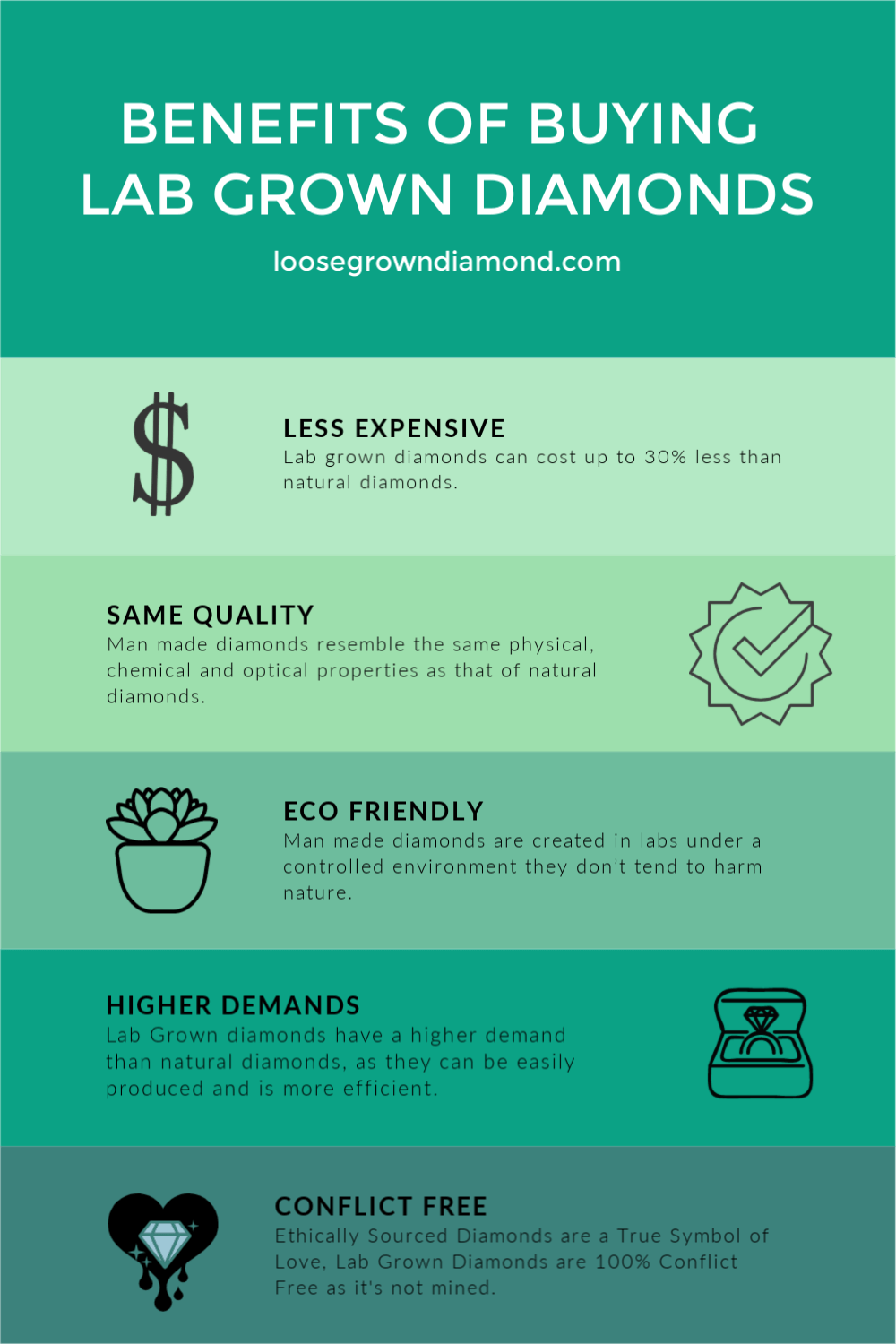
Crystallinity: The crystals which are large and clear are mostly used in making gemstones. These diamonds are very pure highly crystalline and transparent. Thus very much desired.

Hardness: Synthetic diamonds are even harder than natural diamonds. Their hardness depends on their levels of purity, orientation, and crystallization.

Inclusions: Certain levels of blemishes and inclusions are present in all the lab grown diamonds. But in the case of synthetic diamonds, they are very less in number.

Grading Criteria of the GIA for Diamonds:

This criterion is based on the  4 C’s which re-described under

Carat

The measurement of the diamonds in terms of weight is called carat weight. It plays quite an important role in the grading process. Even though lab-created diamonds are made with different methods than natural ones but still the major determining factor for size remains the carat weight in general. 

Color

We generally measure the color of the diamond ranging from the scale of D to Z. Where D signifies a color-free diamond and Z implies the diamond has a yellow hue. The fluorescence is also checked and kept a note of by the experts.

Fluorescence is referred to as the ability of the diamond under a UV lamp to emit light. The range of this scale is from none to strong. The lab-made diamonds have forebet features and are generally affected by the methods and the environment in which they are made. 

Clarity

An x10 magnification is used by the experts to take a clear look at the clarity of the lab grown diamond. The range of the scale is from I (included) indicating visible flaws to flawless (FL) thus depicting that no such flaws and inclusions can be seen even under a high magnification lens.

Cut

The cut is determined by various factors such as how perfectly and accurately is the polish of the diamond, and its symmetry, and the proportions (which include the measurements such as the crown height, table, etc). Grade wise we rate it in the range of poor and excellent.

It is a factor that determines how well and precisely are the diamonds cut into various shapes and sizes from their raw form. It is one of the most important aspects among the 4 C’s of diamonds and should never be ignored or taken lightly.

As it determines how much light will enter the diamond and it will reflect it accordingly, thus directly impacting the shine and brilliance of the diamond which is the major eye-catching factor in the case of diamonds.

[blog_page_inventory shape=”Oval,Emerald,Princess,Radiant,round,pear,cushion,kite,rose cut,old mine,marquis,hexagon” carat=”1.60,3.10″ cut=”0,4″ color=”0,10″ clarity=”0,11″]
[blog_page_btn title”Buy Now” url=”https://www.loosegrowndiamond.com/inventory/?”]

What are the Advantages of Buying Certified Diamonds?

There are plenty of advantages to having purchased certified lab diamonds. It gives the diamonds an authentic identity and certification, which can be used to verify them in case they need to resell a lab diamond.

Certified diamonds needed a common identification and thus a lot of organizations came up with plans to verify and certify these precious gemstones. These organizations gave a uniform source of identity to diamonds based on some common terms and qualities; 4Cs. These basic qualities give information about the diamond which might come in handy when observing the diamond or even using it later on.

Having gained insight into the essential factors for selecting a diamond, it’s now your exciting journey to find the perfect gem! Choose from hundreds of styles on loosegrowndiamonds.com. Our experts will help you find the perfect diamond for your budget full of meaning.

We are dedicated to ensuring your diamond selection is not just a purchase but a memorable and cherished choice. Begin your exploration now to discover the diamond that fulfills your dreams!


Conclusion

There are a lot of certificate issuing organizations for diamonds and these all identify diamonds on separate scales. The scales which happen to identify diamonds are unique for each of these lab grown diamond certification organizations.

One has to consider the individual aspect and find out which is better for them, and which certification would they prefer. There are various advantages as well when one purchases a certified diamond. There is a certain level of security that comes up when a certified diamond is bought or even resold in the market.

Frequently Asked Questions

What is the best diamond certification?
There are various kinds of certifications that give grades to diamonds. These certifications give the diamond an identity and allow the buyer to understand what are the characteristics of the diamond they are buying. So Far,
The best diamond certification is GIA.

What’s the most important aspect of grading diamonds?
The most important aspect which is considered while grading diamonds by organizations is consistency and strictness in following procedures to evaluate the diamond. Every organization has a different scale of strictness to judge the diamonds and then grade them.

Do I really need a diamond certificate?
Buying a certified diamond allows one to be sure of their money investment and assures the quality of the diamond in which one has invested their money.

If the diamond certificate hasn’t been issued, there will be no surety of the money being invested and thus people will never know the genuine nature and originality of the origin of the diamond.

Why Real Synthetic Diamonds Are Cost Effective

Diamonds are those precious gems that are pure, redefine elegance, and are wanted by many. Whether it be natural mined diamonds or lab grown loose diamonds, people tend to adore them. The market rate of synthetic diamonds is 20%-30% less than natural diamonds, does this mean man made diamonds aren’t real or are of poor quality?

Absolutely not! Man made diamonds have the same intrinsic properties as natural diamonds. They hold the same emotional value and elegance that a natural diamond does. Diamonds were never considered valuable before, it was only after excessive marketing and advertising that they gain this high stature of being a ‘Precious Gem’.

Real synthetic diamond cost effective

Many suggest that investing in a diamond is a myth, as mined diamonds do not have a high resale value. It was only after these diamond companies hyped the idea of diamonds’ involvement in traditions and different functions that everyone fell madly in love with these fancy diamonds.

Whatever may be the history, at present diamonds are considered a symbol of love, peace, elegance, gratitude, and much more. Natural diamonds ruled the market in the beginning, up till the 1950s when man-made diamonds made an entry. As these diamonds had the same physical, chemical, and optical properties as natural diamonds, they gave tough competition. The only difference between synthetic diamond vs natural diamonds is that the latter has a lower price.

What Are Synthetic Diamonds?

Synthetic Diamonds are those diamonds that are simply manufactured and grown in a laboratory instead of being mined naturally. These diamonds are grown with the help of a seed implant from the naturally mined diamonds which also signifies that these diamonds have the same physical as well as chemical properties as naturally occurring diamonds.

The procedure of creating lab grown diamonds has been in the process since the 1950s and in the past few years has started to gain some adaptation in the marketplace as well.

what is a synthetic diamond

Usually, when you try to differentiate between a lab-grown diamond and a natural diamond with unaided eyes, it might seem impossible to reach a conclusion. In such cases, only trained gemologists can differentiate between the following, that too by utilizing specialized diamond verifying instruments.

Steadily, lab-grown diamonds are also becoming the scintillation in the market as a new alternative to natural diamonds. These gems are basically an economical alternative to naturally mined diamonds.

Factors that Affect Synthetic Diamond Cost

1. Technologically Advanced Process

Synthetic diamonds are produced in labs under a controlled environment. Two methods are used to produce lab grown loose diamonds: the CVD diamond method and HPHT synthetic diamond method. These methods can produce a large number of loose diamonds, fancy diamonds, white diamonds, and even color diamonds repeatedly. Unlike natural diamonds, which need to be mined and then processed further. It is because of this reason man made diamonds are cheaper.

Along with this, new technology is being introduced frequently by experts. These new and advanced machineries make the job easy and the whole process efficient. There is new sophisticated diamond cutting machinery that uses computer applications to cut diamonds with precision. There is even laser-based cutting machinery that is used to cut and polish diamonds efficiently.

2. Synthetic Diamonds Can Supply the Demand

Synthetic diamonds are made in labs (by HPHT synthetic diamond and CVD diamond method), inside chambers under controlled environments. These man-made diamonds take about 2-3 months to form completely. Natural diamonds, on the other hand, form after millions of years of being inside the earth’s crust. This means that mined diamonds alone cannot supply the demand of the market.

Man made diamonds, on the other hand, can be produced in large amounts in less time, due to the advanced technology and machinery. Experts say that soon-mined diamonds won’t be able to meet the supply, as it is a slower production process. This issue will not arise with lab grown loose diamonds or fancy diamonds, making them cost-effective and a better choice.

The production of lab grown diamonds is increasing 15% every year. If you are looking for the best lab-created diamonds then Loose Grown Diamond is the world’s leading lab created diamond manufacturer that ships globally.

3. Stats: Synthetic Diamonds will Outgrow Natural Diamonds

A Forbes article stated that the rapid rise in production of man made diamonds, will soon disrupt the $80 billion mined diamond industry. The article further stated, that with man made diamonds being cheaper, it was preferred more by consumers, as the price was one of the top three priorities.

The article was backed by stats and surveys produced by Stax Inc. In which the consultancy firm surveyed 40,000 consumers and concluded with, “At $150 million in sales, the lab created diamond industry’s sales are estimated to hit $1 billion by 2020”.

4. Growing and Conscious Consumers

With the growing population of middle-class people, millennials, and conscious consumers sales of synthetic diamonds are ever-increasing. Middle-class people prefer cheaper rates and good quality, which is promised by man made diamonds with 20%-30% fewer prices. Only a fraction of the population would willingly pay 20%-30% more, for a mined diamond. Millennials and conscious consumers are worried about the environment, child labor, and other human factors. Due to this, they do not support the production of blood diamonds or natural diamonds; as the mining process causes environmental degradation.

While companies and producers are encouraging customers to buy mined diamonds by stating ‘Real is Rare’, man made diamonds have already gained popularity. Man made diamonds are also real diamonds, but available at a cheaper price. So, choose wisely: natural mined diamonds or cost-effective synthetic diamonds?

[blog_page_inventory shape=”Round,oval,pear,cushion,heart,princess,emerald,radiant,kite,marquis,half moon,old mine” carat=”2.30,3.90″ cut=”0,4″ color=”0,10″ clarity=”0,11″]
[blog_page_btn title=”Buy Lab Grown Diamonds” url=”https://www.loosegrowndiamond.com/inventory/”]

Benefits of Buying Synthetic Diamonds

Lab grown diamonds and Natural diamonds are truly identical in their physical, optical as well as chemical essence. With the great qualifications and integration, lab grown diamonds have proven to be more crystallized and clear which has mostly developed a good sensation amongst the youth who are aspiring to get married or wish to propose anytime soon.

A question might strike in your heads are lab-grown diamonds worthy of buying and storing for a longer period or should one invest in natural diamonds only for better redressal? It is of course a reliable deal if we start looking into the costs of both the diamonds.

benefits of buying lab grown diamond

  • Less-Expensive: Usually, lab-grown diamonds cost 30-40% less in comparison with natural diamonds of the same color, cut, quality, and size.
  • Quality: Customers can easily demand various forms and structures of diamonds, which profoundly are available in general for them. Generally, natural diamonds can only be found in rare variations but synthetic diamonds can be found in various colors as well as formations.
  • Eco-Friendly: The first and foremost benefit of buying synthetic diamonds is related to nature. If we don’t mine the diamonds, the earth won’t spoil and that’s a major point when we look out for the protection of Earth. Trying to maintain a sustainable earthly life would only be granted if we stop exfoliating the earth. Lab-grown diamonds have made it possible for us to synthetically grow them into the best diamonds.
  • Higher Demand: As lab-grown diamonds are no different from natural diamonds simply other than the slight implications, their worth has been recently increasing over the past few years which ultimately transforms the value of Synthetic diamonds. And, as we know, lab-grown diamonds are manufactured in the labs themselves, which brings out a more purified form of these diamonds.
  • Conflict-Free: At times, people prefer to know the origins of their diamonds, prominently jewelry, but in the case of natural diamonds, it seems a little vague to determine the mining location of the diamonds. Whereas Synthetic diamonds are naturally grown in some specialized labs, which makes it easier to identify their origination. These diamonds are conflict-free and have not been fought over to reach the markets.

Where Can I Buy Synthetic Diamond Jewelry?

Synthetic diamond jewelry is available from a variety of sources, including jewelry stores, online retailers, and specialized manufacturers.

It’s essential to purchase from reputable online sellers who provide certifications and guarantee the quality of their synthetic diamond products. LGD offer a wide selection of designs, competitive prices, and guarantees.

It’s one of the advantages is that it can be customized according to specific preferences. Manufacturers can control the growth conditions to produce diamonds in various colors, including fancy colors like pink, blue, red, brown, green, orange, purple, gray, black or yellow. Additionally, synthetic diamonds can be cut into different shapes and sizes to suit individual preferences.


Conclusion

Lab-grown Diamonds have authentically managed to mark their valuable place in the market in the following years since the 70s era. The mining process got pause and the world looked up to new implant techniques of diamonds which not only grant us with the ways of fabricated creation but also take us towards a whole new set of variations in diamonds. Our reach was limited until a point, but now we can discover and explore various diamonds and their styles.

With these man-made techniques, we got a new way of looking towards the creation of diamonds and accepting the sustainability of the earth. This advancement has brought an incrementing factor to our lives where we were able to protect the land from any harm and could benefit us to the best. 

FAQs

Are synthetic diamond rings as durable as natural diamond rings?
Yes, synthetic diamond rings are just as durable as natural diamond rings. Since they have the same physical properties as natural diamonds, including hardness and toughness, they exhibit similar durability and resistance to scratching or chipping.

How much does a synthetic diamond cost?
The cost of a synthetic diamond can range from as low as $600 to around $100,000 per carat or more, depending on factors such as size, quality, and retailer.

What are the main differences between synthetic diamonds and natural diamonds?
Natural diamonds form deep within the Earth’s mantle over millions of years, while synthetic diamonds are created in laboratories over a much shorter period. However, chemically and physically, they are nearly identical.

Are synthetic diamonds considered “real” diamonds?
Yes, synthetic diamonds are considered real diamonds because they have the same chemical composition and crystal structure as natural diamonds. They are recognized and graded by gemological institutions just like natural diamonds.

Do synthetic diamonds come with certifications?
Yes, synthetic diamonds are graded and certified by reputable gemological laboratories, similar to natural diamonds. These certifications provide detailed information about the diamond’s characteristics, including its carat weight, color, clarity, and cut quality, helping you make informed purchasing decisions.

Are synthetic diamonds considered sustainable alternatives to natural diamonds?
Synthetic diamonds are often considered more sustainable than natural diamonds due to their controlled production process, which reduces the environmental impact associated with mining.