Engagement Ring Engraving Ideas For Personal Touch

Personalizing your engagement rings with engravings is a new set trend in the fashion industry. However, this trend has made a comeback from the traditional designs and ideas making it a timeless way to show off your love to your partner. Getting your rings engraved with some quotes, partner’s name, special dates or partner’s initials, makes your rings special for lifetime. In this blog, you will know the details and factors to consider and Engagement Ring Engraving ideas. 


What are The Different Types Of Engraving Your Ring? 

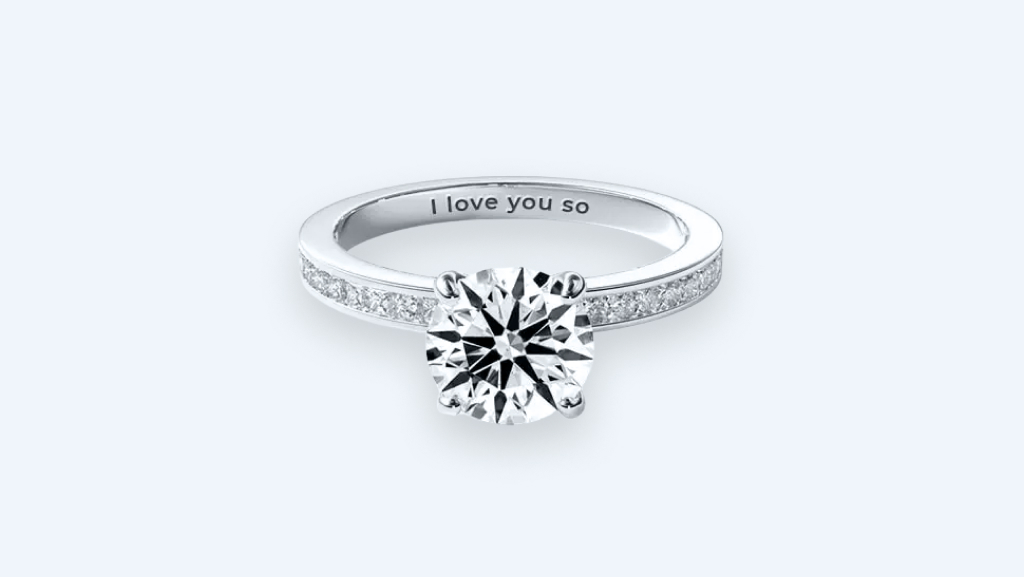
Choosing the right Engagement Ring Engraving pattern can add a touch of personalization to your engagement ring making them feel closer to the wearer. Various engravings with intricate designs transform the ring from a mere jewelry to an emotion and symbol of love. With various choices, here are some of the Engagement ring engraving ideas. You can opt for special words or phrases that might relate with your love journey or represent your love life. These phrases add a meaningful touch that signifies your bond and relationship. For example you can get engraved rings for women with phrases like “Forever and ever”, “Love you to Moon and Back”. 
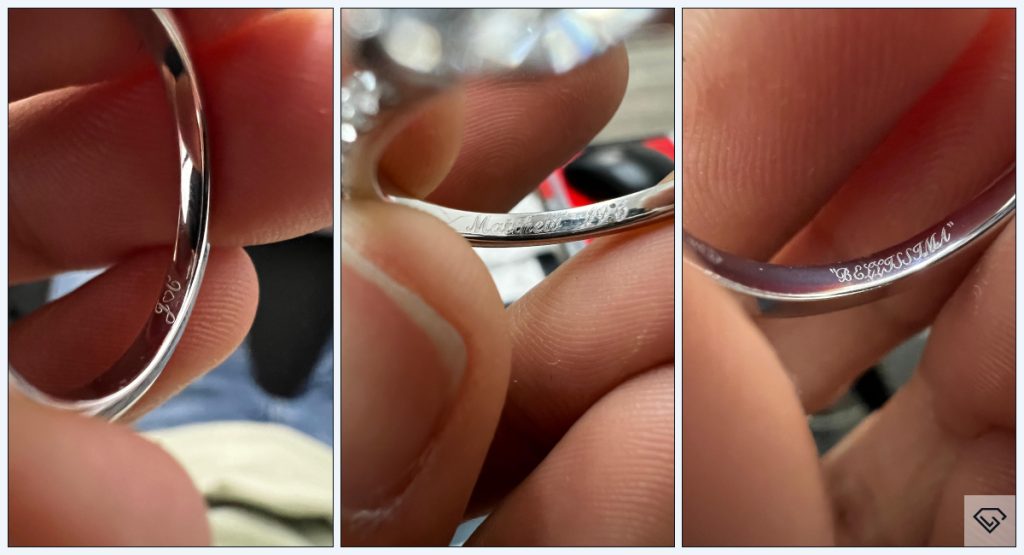
A traditional style of engraving is getting your partner’s names or initials on rings. Initials of your and partner’s name like “A & S” adds an intimate and personal touch to your ring.  Try engraving special dates like your anniversary, birthdays or even your wedding date gives a complimentary look to your wedding bands or rings. Certain symbols or icons that represent your relationship can make a ring even more special. If you want to follow a trendy look go for a fingerprint engraving that carries a piece of your partner’s presence with you giving a charming look. 

How to Engrave on Your Engagement Rings?

With a proper planning and consultancy with professional jewelry can help you get perfect engraved rings for men or women. Follow the mentioned steps to achieve better results:

  • Choose the Engraving Style

Before getting engraved understand the engraving style and methods. Most jewelers use two engraving methods: hand engraving and laser engraving and to give a unique touch to the rings. Laser engravings are highly specialized techniques that include lasers to create clean and detailed designs. The modern techniques makes the task easier and faster ensuring accuracy for fonts, writings and delicate patterns. Whereas hand engravings are the classical techniques performed by highly experienced individuals that use hand tools to carve the designs and singles on the rings giving it a unique and artistic touch. 

  • Select the Right Jeweler

It is important to choose reputable jewelers that have great expertise in engraving like Loose Grown Diamond. With highly experienced professionals, they ensure to offer well-carved and flawless designs keeping the details in consideration. A reputable jeweler can assure you with accurate and clean execution. 

  • Choose Ring’s Metal

The type of ring metals also influences the durability and execution of the engravings. Letters like gold platinum and silver are ideas to perform engraving methods offering durability. Engravings on gold metals are easy as they are soft but they might fade over time. However, Engagement Ring Engraving on metals like platinum are easier, highly durable and ideal for intricate designs giving a classy and sophisticated look. 

  • Confirm the Details

Before finalizing the engraving process make sure you confirm the details with the maker. Double check every detail like spelling and grammar of the phrases, The font styles and sizes should be decent that makes them clearly visible, and lastly look for the alignment or the placement of the engravings.  Conforming the details will help you avoid any future problems and extra charges for corrections.

  • Future Resizing

If you’re planning for the future resizing of your rings you should consult this with your jeweler.  They will help you with the correct placements and spacing that can avoid any future issues while opting for the resizing process.

  • Care and Maintenance

Ensure proper care and maintenance to keep your engraving as it is. Usage of harsh chemicals or lotions while cleaning can impact your engravings. Try regular cleaning with warm water and soft cloth to remove dirt and make it clear. Remove the rings or bands while getting involved in heavy activities or sports. 

Tips For Engraving Your Engagement Ring 

When getting your wedding bands or Engagement ring engraving, paying attention to small details can make them unique and memorable. Follow these tips to achieve the perfect Engagement Ring Engraving:

  • Placement Matters: Choose the desired location for the engraving. Inner band engravings offer a subtle and private look, while outer band engravings create a bold and noticeable appeal.
  • Consider Band Width: Wider bands are better for personalization, as slim or thin bands have space limitations. Traditional or vintage designs often feature slim bands, so consider opting for modern designs if personalization is important.
  • Keep Text Short and Well-Spaced: Use concise texts with appropriate spacing between words for better visibility and readability. Avoid spacing that is too tight or excessive.
  • Choose the Right Font: Select a clean, subtle, and elegant font style for a classy look. Avoid overly intricate fonts, as they can hinder the visibility of the text.
  • Select the Right Metal: Some metals are easier to engrave than others. Consult a professional jeweler to ensure the material is suitable for engraving and achieves the desired look.
  • Proofread Before Finalizing: Double-check the engraving text to ensure there are no errors and that it is properly visible. This helps avoid extra charges for corrections.
  • Text Size Matters: Avoid very small text, as it can be difficult to read. Ensure the text size is appropriate for clear visibility.

By considering these tips, you can create a beautifully Engagement ring engraving that is both meaningful and aesthetically pleasing.

How Much Does Engraving an Engagement Ring Cost?

The cost of Engagement ring engraving depends on your choices for what you want to engrave on your engagement ring. Prices typically range from $50 to $100, depending on the style and complexity of the design. Subtle engravings with fewer characters are usually less expensive, but costs can increase for specific and detailed designs, engraving on expensive metals like platinum, or the use of specialized engraving methods.

Conclusion

Engraved wedding bands or rings provide a unique and personalized touch to the special piece of jewelry. These engravings represent special moments, memories and your journey of love giving it a meaningful significance. With the right selection and planning of what you want to be engraved on your rings can make it a lifetime cherishing symbol of commitment.

FAQs

How long does ring engraving last?
The engravings on the ring can last up to the lifetime of the ring depending on quality and types of metals and where the engraving was done. 

Can I remove or change an engraving later?
Indeed, you can alter or remove a laser engraving at one point since it is a prominent feature of engraving. However, it should also be noted that the removal of this type of engraving may not always provide for a correct, much less polished, surface. 

Does engraving affect the ring’s durability?
A very well done engravings does not have an effect on the ring’s durability. This is true depending on the specific metal that has been engraved and the location that it has been done on. 

Can I engrave any type of engagement ring?
Engagement ring engraving with thinner bands has space restrictions while other bands styles of engagement rings are suitable for engravings. 

Can I add symbols or emojis to the engagement ring engraving?
Yes, many jewelers can incorporate symbols like hearts, infinity signs, or even custom icons into engagement ring engraving.

What metals are best suited for engagement ring engraving?
Metals like gold, platinum, and silver are ideal for engagement ring engraving, while tougher metals like tungsten may be more challenging.

Can I get a ring engraved later?
Absolutely! You can get your Engagement ring engraving later while considering seeking professional advice. 
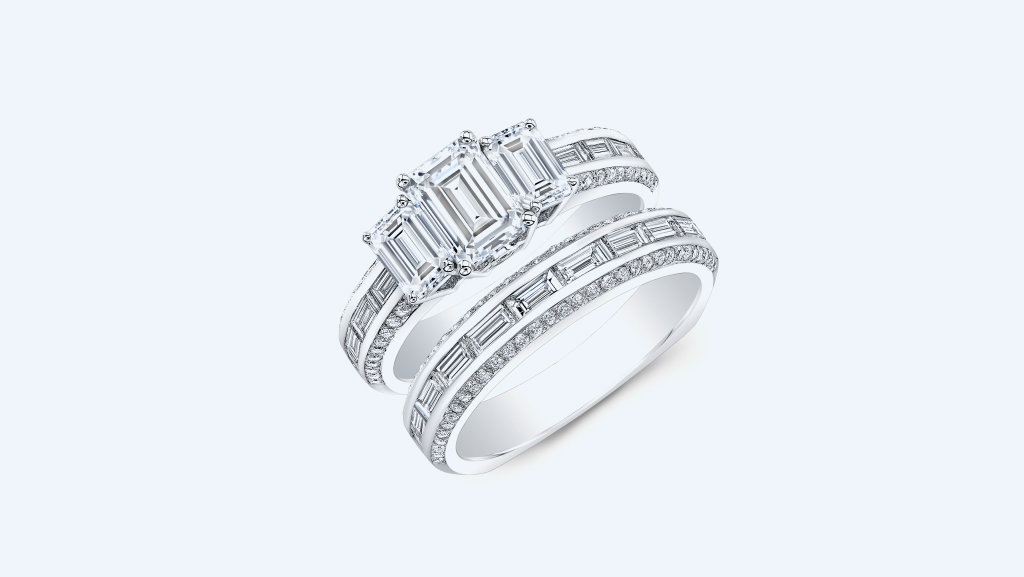
How To Choose a Wedding Band For Emerald Cut Engagement Ring?

A wedding band completes the love story when paired with an engagement ring, serving as a symbol of love and commitment. Among the many popular shapes, an emerald cut engagement rings stands out for its luxury and class. If you and your partner have chosen an emerald cut ring, pairing it with the perfect wedding band can enhance its elegance and complement its natural beauty.

However, selecting the ideal wedding band requires careful consideration of several factors. Read this blog to the end to discover the key aspects to consider when finding the best match for your emerald-cut diamond engagement ring.

What to Consider While Choosing a Wedding Band For an Engagement Ring

Choosing a wedding band for your emerald cut diamond ring? Consider these factors to find the perfect piece.

Style and Design

Selecting a wedding band style that complements your engagement ring is crucial. A minimalist design or subtle band pairs well with a classic emerald-cut engagement ring, while detailed, intricate rings suit decorative bands. The style and design of both pieces should be compatible to create the appearance of a single, seamless piece of jewelry.

Metal Options

Choosing the right metal for your ring and band ensures a cohesive look. Match the wedding band metal with your engagement ring—for example, pair a platinum band with a platinum ring for seamless appeal. Similarly, gold bands in matching hues can achieve a timeless, vintage look.

Diamond

Diamond options significantly affect the cost of a wedding band. Naturally mined diamonds offer brilliance, luxury, and shine but are more expensive. Alternatively, lab-grown diamonds, identical in chemical properties, provide a similar appearance at a lower cost. Lab-grown diamonds are affordable, sustainable, and eco-friendly compared to mined ones.

Comfort

Comfort is essential. Choose a wedding band with the right fit, ensuring it feels secure without being too tight or too loose.

Popular Wedding Band Pairings for Emerald Cut Rings

Here are some popular wedding band pairings for your emerald cut diamond engagement ring. These bands create a unique appearance to your ring. Let’s explore the list.

Wedding Band For Emerald Cut Engagement Ring
  • Straight Bands: Straight bands exude a complimentary timeless and versatile look with its simple design. This band sits perfectly and neatly with the ring offering a clean and seamless look. If you are looking for a subtle and classic style, then straight bands are an ideal option for you. 
  • Eternity Bands: Eternity bands are a modern trendy design that features diamonds encircling the entire band of the ring. This band signifies a bond for eternity with extra sparkle to the ring. They create a contrasting effect when paired with classic ring settings offering a warm, elegant and vintage appeal. 
  • Anniversary Bands: Anniversary bands are similar to the eternity band that features the diamonds studded only halfway of the ring offering a unique style. These bands are a beautiful blend of style and comfort with not so heavy design. The design and style of these bands helps in highlighting the patterns and symmetry of the emerald cut engagement ring. 
  • Bezel or Channel-Set Bands: Bezel or channel-set bands are the most popular and preferred style for a stylish and secured look. This band features diamonds securely studded in the metal keeping the gemstones safely in its place. This band offers a sleek, secured and harmonious look when paired beautifully with an emerald cut ring. 
  • Stackable Band: To get a modern and trendy aesthetic look, you can go for a stackable band style. Mixing bands and rings with various metals, designs or texture can create a stunning contrasting effect offering a unique appearance.

What is The Best Setting For The Diamond On a Wedding Band?

The diamond setting has a great impact on the overall look of the wedding band and engagement ring. Getting the right diamond setting can complement engagement rings for women. Here are some of the best settings, each offering an exclusive appearance. 

  • Pavè Setting:  This setting features tiny diamond stones set closely on the band creating a continuous chain of diamonds infinitely. They offer a classy sparkle to the wedding band making them shine more. 
  • Channel Setting: Channel settings are also known as Bezel settings that characterize the diamonds set within the band offering a sense of security avoiding the risk of falling. This setting helps in achieving a sleek and bold look to the ring and band.
  • Prong Setting: A classic diamond setting is a Prong setting featuring each diamond held in place in the band with utmost security. They offer the low maintenance advantage with a prevention of the falling off the diamonds. This setting allows the diamond to show off their exceptional sparkle with a secured hold. 

How Do I Choose The Width Of a Wedding Band For an Emerald Cut Ring?

Selecting the right width of a wedding band is essential for a perfect and comfortable fit. However, ring size and bandwidth are often confused to be the same thing. Ring size refers to the diameter of the ring and band width is the thickness of the band. Engagement rings for women and men have different ranges of width size. 

The selection of width of a wedding band depends on individual preference and comfort. But there are some common sizes for band width for both men and women rings. Women’s rings range between 1.6 mm to 4 mm in the bandwidth. Whereas men’s rings range between 4 mm to 7 mm. 

There are some measurements of the bandwidth that suit various looks. Narrow band of 1 to 2 mm is ideal for a minimal and subtle look, allowing the ring to stand out. Medium band sizes ranging between 2 mm to 4 mm is perfect for a balancing appearance. And wide bands of sizes 5 mm and above are suitable for a bold fashion statement. 

Can a Wedding Band Sit Flush with an Emerald Cut Engagement Ring?

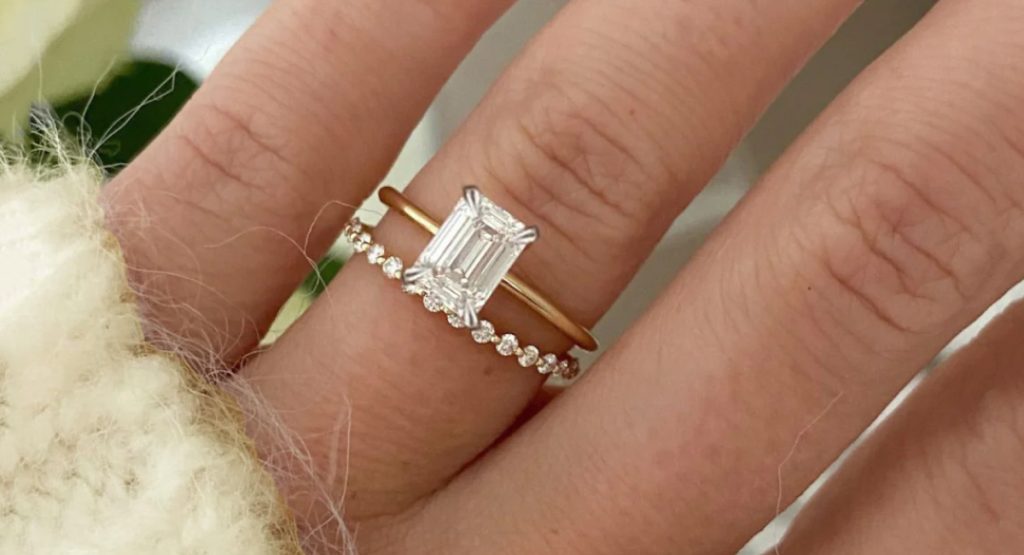
Emerald cut diamond engagement rings are often set with a prong or halo setting that might create a slight gap between the ring and the wedding band. However, to avoid the gap, one can opt for a curved wedding band as they are specifically designed to sit flush with the ring. These bands feature a design following the shape of the emerald cut ring creating a stylish fit. Customization option also helps you get a band that ensures a snug fit with the engagement ring. Spacer bands are also an option that sit between the ring and the wedding band, improving the fit of the rings and avoiding any scratches due to friction. 

Can You Customize a Wedding Band for an Emerald Cut Ring?

Yes, with the customization option you can get an endless option for the flush fit wedding band for an emerald cut engagement ring. This option can help in getting a matching band metal for a seamless look. You can add some engravings that resonate with your love story casting a unique appearance and your sentimental values. 

Conclusion

Selecting a perfect wedding band for your emerald cut diamond engagement ring is an exciting and overwhelming journey. However, with proper knowledge and consideration of factors like style compatibility, diamond type, metal, and customization options, you can get an ideal deal. 


How to Choose the Best Necklace for Your Neckline and Outfit?

Diamonds have always been a charming piece that offers versatility, and luxury and elevates any outfit with any jewelry style. Among all the other jewelry styles, the diamond necklace offers a unique appearance to the neckline and overall attire. Whether you are looking for a lab grown diamond necklace or a classic diamond tennis necklace, choosing an ideal piece can be a little hectic task. This detailed guide will help you through the selection process getting a perfect match for every outfit and occasion. 

Understanding Neckline and Necklace Pairing

[su_youtube_advanced url=”https://www.youtube.com/watch?v=hBsi12EbpTY” width=”1600″ controls=”alt” autohide=”yes” autoplay=”yes” mute=”yes” loop=”yes” rel=”no” modestbranding=”yes” theme=”light” playsinline=”yes” title=”Best Necklace for Your Neckline and Outfit”]

When it comes to styling your attire with accessories, the right necklace can make a huge difference. A well-chosen neck lace that complements your neckline can significantly enhance your overall look. Your neckline acts as a canvas for your necklace, allowing it to create a striking appearance when paired thoughtfully.

A harmonious necklace enhances your look, while the wrong choice can disrupt the balance. Therefore, it is essential to have a clear understanding of necklines and how to pair them with the right necklace.

Best Necklace for Your Neckline and Outfit

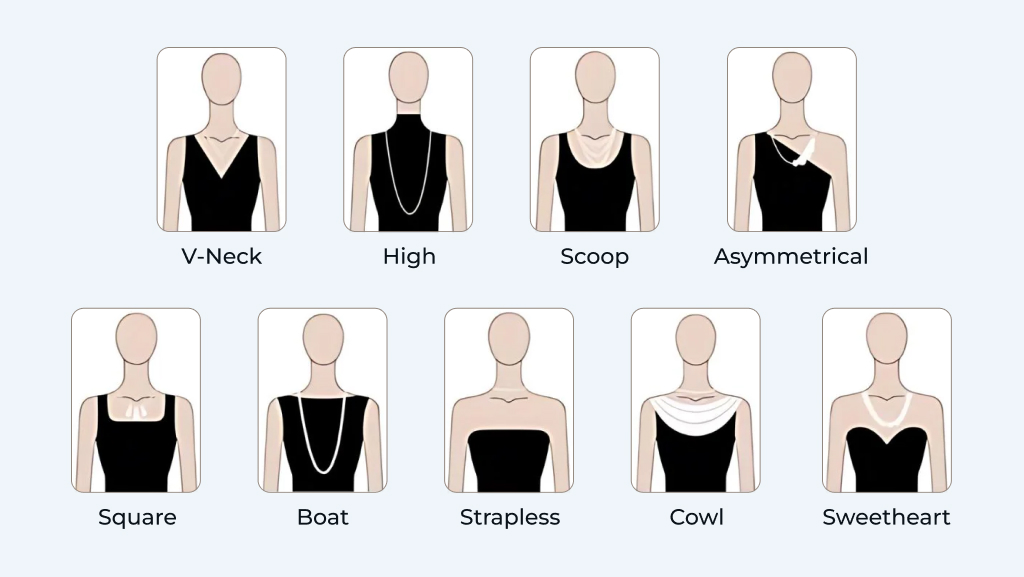
Here is a list of various necklines and their preferable necklaces that elevates your outfit. 

  • V-Neckline – A pendant necklace is an ideal piece for a V-neckline that follows the V shape. One can also opt for an intricate small diamond necklace or a lab grown diamond necklace for an elegant appeal. The range of pendant necklaces paired depends on the type of V-line (shallow or deep). To ensure the right pendant piece look for the type that perfectly forms V- a shape aligning with the neckline. 
  • High Neckline – High neckline can be beautifully paired with a long pendant creating an elongating effect to your silhouette. One can also go with no necklaces and only with statement wearings for a simple and clean look. The other preferable option is stacking multiple chains to achieve a bold look.
  • Scoop Neckline- Scoop necklines go well with chokers or bib necklaces offering an elegant and subtle appearance. The style of the necklace depends on the depth of the neckline. A deep scoop neckline goes well with a multi-stone necklace, whereas a diamond tennis necklaces can pair well with a shallow scoop. 
  • Asymmetrical Neckline –Balance is an important  aspect with asymmetrical necklines. Off center necklaces are a good choice that offers a modern look without touching the outlines of the outfit giving  a clean appeal. 
  • Square Neckline – Square neckline is a versatile neckline that pairs nicely with almost every necklace styles. Pairing an angular necklace or choker can be a perfect choice to achieve a classy look. A lab diamond necklace for women that features some geometric shapes add wonders to the overall attire. 
  • Boat Neckline – Boat neckline, also known as Sabrina, is a unique style of neckline that precisely matches longer necklaces. To get a stunning look set the necklace just below the collarbone complimenting your neck and neckline. A single Lab diamond tennis necklace or layered chains also complete the area around the neckline.
  • Strapless Neckline – Strapless necklines have been a trendy neckline pattern for chic or casual wear. They provide an ample space for the chunky or bold necklaces to offer an attractive appearance. Layered diamond necklaces add a touch of drama and unique fashion statement. 
  • Cowl Neckline – Cowl neckline is a tricky style that can be paired well with delicate lariat-style necklaces. This type of necklace offers a unique subtle look, giving a smooth flow and non-bulky appeal. 
  • SweetHeart Neckline – Sweetheart neckline resembles a romantic appearance that can be enhanced with delicate chokers or heart-shaped pendants. Another option of small diamond necklace can also elevate your attire naturally with a touch of simplicity. 

Tips For Wearing a Necklace According to Your Face Shape

Your face shape plays a significant role in the selection of the right necklace. Each face shape affects the varied looks with different necklaces. Here are some tips to wear necklaces according to face shapes. 

  • An oval face shape can work with almost all styles of necklaces ranging from chokers, long necklaces to chains. Opt for round shape diamond or pear shaped diamonds for an elevated look. 
  • Longer diamond necklaces pair well with round face shape making them appear elongating. Getting an emerald cut diamond can compliment the appearance with a slimming effect.
  • For heart shaped faces go for short necklaces or pendants that include chokers. These types give a balanced look with a round cut or heart shaped diamonds
  • Choosing necklaces with smooth curves and pendants with delicate designs can elevate the look with a square shaped face. Long necklaces are also an ideal option for an eye-catching appearance. 
  • If you have a long face then options for layered necklaces or stacking pendants are a perfect choice. They provide a balanced look with cushion cut diamonds offering a subtle and elegant appeal.

Read More: The Beauty of Lab Grown Diamond Necklace and Tips to Buy Them

Conclusion

The selection of the right necklace choice involves a set of important aspects. It focuses on balancing the neckline with the right pair of diamond necklaces, outfits, and face shapes. One should have proper knowledge of How to wear a necklace with a balanced look considering other factors. According to the trendy diamond necklace for women, people are also choosing lab-grown diamonds for a complimenting look that also resonates with their personality.

FAQs

How to wear a necklace with a collared shirt?
To wear a necklace with a collared shirt, look for pieces that sit just below the collar. A pendant necklace can also be an ideal choice for a sleek and elongated look.

What is the most attractive necklace length?
The ideal necklace length depends on the neckline and attire. However, the most popular length for women ranges between 16–18 inches, offering a versatile and flattering appeal.

What metals are generally used for diamond necklaces?
Diamond are typically set in metals such as platinum, various tones of gold (yellow, white, or rose), palladium, or sterling silver. These metals ensure both durability and elegance with anti allergenic properties. 


Which Diamond Cut Sparkles the Most, And Why?

Diamonds have always been captivating pieces of jewelry, celebrated for their versatile beauty, brilliance, and timeless charm. A diamond’s quality is determined by the 4Cs: Cut, Color, Clarity, and Carat. Among these factors, the diamond cut significantly defines its quality by enhancing its sparkle and brilliance. Choosing a well-cut diamond is essential for acquiring a dazzling piece, especially for an engagement ring. In this article, we’ll explore which diamond cut sparkles the most and why. Read on to learn more!

What Are Diamond Cuts?

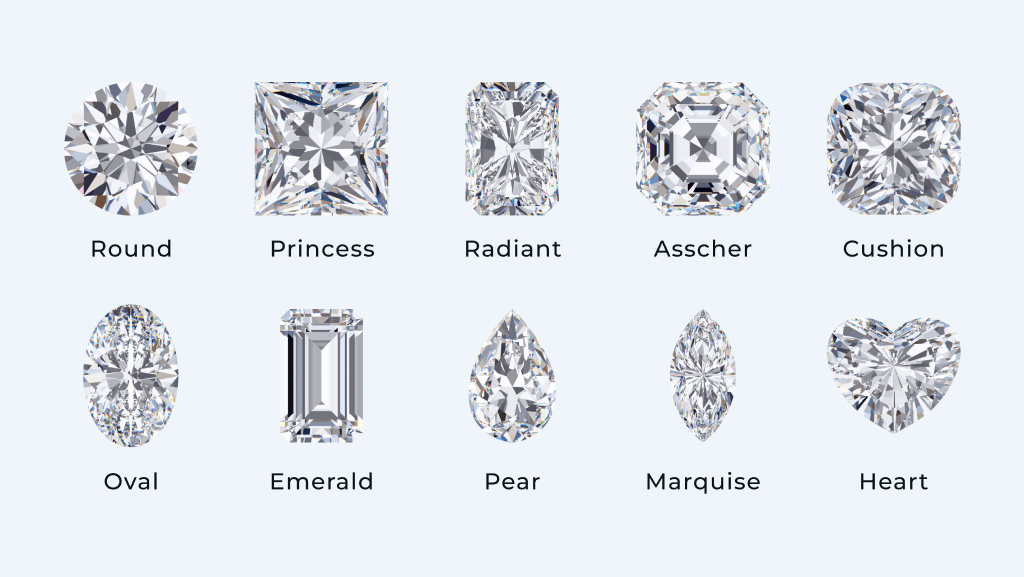
A diamond cut refers to the grading standard that determines its shape and the precision of its facets. It involves the meticulous arrangement and polishing of facets to ensure maximum brilliance and fire. As one of the 4Cs, a diamond’s cut directly impacts how light reflects within its facets, significantly influencing its overall beauty. Common well-cut diamonds include the round brilliant cut, oval, princess, marquise, emerald, cushion, and more.

Which Diamond Cut Sparkles?

Not all the diamond cuts are of higher quality when it comes to consider cut grades. There are some specific cut diamonds with high standards depending on how well they reflect the light entering. Among the list of different diamond cuts, here are some best diamond cuts for sparkle. 

Round Cut Diamond

The round cut diamond is a timeless and popular choice, renowned for its unmatched sparkle. Typically featuring 58 facets, this cut boasts a uniform and symmetrical shape that enhances its brilliance. Its expertly designed facets allow maximum light to enter and reflect, creating unparalleled sparkle and fire. The round cut is widely regarded as the best diamond cut for engagement rings, offering a versatile and dazzling appeal.

Cushion Cut Diamond 

Also known as the “old mine cut,” the cushion cut diamond features a square shape with rounded corners resembling a pillow. While not as sparkling as the round cut, it offers exceptional fire. This cut combines brilliance with vintage charm, casting a romantic and visually stunning appeal. Its larger facets create a “chunky” sparkle, making it a favorite for engagement rings with a touch of nostalgia.

Princess Cut Diamond

The princess cut diamond has a square shape with sharp, pointed corners, offering a modern and elegant appeal. Known for its high cut grade, this diamond boasts maximum sparkle due to the precise arrangement and polishing of its facets. The princess cut is an excellent choice for those seeking a dazzling, contemporary style in their engagement ring.

Oval Cut Diamond 

The oval cut diamond combines the traditional brilliance of the round cut with an elongated, modern shape. This cut provides a similar level of brilliance to the round cut while creating the illusion of a larger stone. Its unique shape also makes the wearer’s fingers appear slimmer and longer, making it a practical and stylish choice for engagement rings.

Why Do Diamonds Sparkle Most?

A diamond’s sparkle is influenced by many factors and its ability to interact with the light. The brilliance and sparkle of the light are influenced by the following factors: 


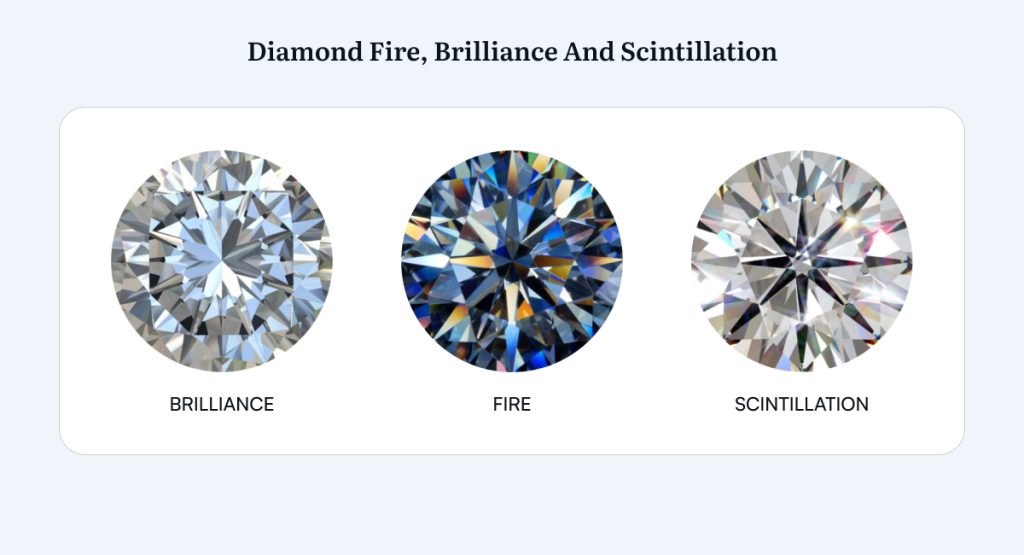
Brilliance

Brilliance refers to the amount of white light reflected from a diamond’s surface and interior. In a well-cut diamond, light enters and reflects multiple times before exiting through the surface, creating a stunning brilliance. A diamond with precise proportions and symmetry maximizes brilliance, making it appear brighter and more dazzling.

Fire

Fire refers to the colorful flashes of light emitted by the diamond when it comes in contact with light. This emission is also known as light dispersion as it casts a colorful light reflection.The fire of the diamonds are mostly visible during mood lighting than sunlight. The facets of the diamond here acts like a prism allowing the light to reflect and breaking them into beautiful flashes of colors. A diamond with a fine curt elevates the fire with appropriate facets, angles and proportions.

Scintillation

When the light reflects off the diamond facets it causes a sparkle which is called scintillation. This effect is mainly visible when the diamond is moved under a light source creating a contrast between the lightning and the darkened areas of the diamond. A diamond with proportionate angles, symmetry and alignment cast this beautiful scintillation effect. The polishing of the diamond also  Influences the light reflection on each facet.

Role of Cut

Among the other factors, cutting off the diamond is also a crucial aspect that influences the lighter interaction with the diamond. A well-cut diamond allows most reflection of light, amplifying the brilliance. This is the reason cut quality is given more emphasis than other forcing factors while choosing a high quality diamond.

How does a Diamond Cut Affect Brilliance and Sparkle?

A finely cut diamond  Reflects the light internally from each facet and disperses it through the top of the diamond maximizing the brilliance and sparkle. However the maximization of brilliance and sparkle also depends on the following:

  • Symmetry: The diamond facets should have perfectly aligned angles giving a symmetrical appearance allowing the light to reflect more. Another symmetrical cut can affect the light performance and reduce the brilliance of the diamond.
  • Light Performance:  A diamond that is finally cut for an optimal light performance allows more reflection of light casting an exceptional sparkle.
  • Proportions and Angles:  The proposition and angles of the diamond also affect the interaction of the light. The depth table size and other facet angles play a significant role in handling a light reflection.

How to Choose Diamonds with Excellent Sparkle? 

Selection of an ideal diamond includes understanding of its cut quality and other aspects. While looking for diamonds one should always consult an expert gemologist for best advice and understanding of the diamonds. Investing in a well-cut diamond with a high grade is an ideal choice to achieve an excellent sparkle. One should always look for a certified diamond from reputed institutions like GIA or IGI that specialize in providing accurate grading reports of the diamond.

The selection of diamonds also includes an important step that is determining the amount one is willing to spend focusing on the financial condition. Setting a strict budget considering the financial priorities will help to get the best deal and avoid any unnecessary expenditure.

Tips for Making the Right Diamond Choice 

Considering the following tips while choosing diamonds will help to get the best deal.

  • The first and foremost thing is to set a budget that clearly defines your clear focus on getting the best deal under the desired price range.
  • Consulting a gemologist or an expert Can help to get a clear idea about the diamonds cut quality and the authenticity grading of the diamond.
  • Prioritize to get a well-cut diamond over carat, ensuring maximum brilliance and sparkle. 
  • Examine the diamond under different light to get a clear evaluation of the sparkle.
  • Ensure to get a proper proportion and alignment of diamond that affects the light performance.

Difference Between a Well-cut and Poorly Cut Diamond 

Well Cut and Poor Cut Diamond Grade

A well-cut diamond Prioritize in providing precisely aligned facets with a symmetrical look. The proportions of the diamond including depth table size and angles will be balanced ensuring a stunning overall appearance of the diamond. It ensures a maximum light reflection  With the internal and external surfaces of the diamond casting a bright, fiery and sparkling look.

On the other hand, a poorly cut diamond will have a dull appearance with misaligned and uneven surfaces with a bad proportion of facets. It would have shallow or overly deep cut proportions resulting in lack of brilliance and fire of the diamond.

Conclusion

When looking for a good sparkle in a diamond, a round brilliant cut diamond is considered the best diamond cut with brilliant facets, angles, and proportions. It is also considered among the most expensive diamond cuts like princess, cushion, oval, and others. With a good understanding of the diamond cut quality, one can make a good deal of a diamond with maximum sparkle and brilliance.

FAQs

What color diamond sparkles the most?
Diamonds in the D, E, and F color range sparkle the most as they fall under the colorless category. These grades lack noticeable inclusions or blemishes, making them appear clear and enhancing light reflection.

Which diamond cut is best for an engagement ring?
The round brilliant cut is the most popular and preferred choice for an engagement ring due to its exceptional sparkle and timeless appeal.

Are VS1 and VS2 very different?
Yes, VS1 and VS2 differ in clarity, with both having minor inclusions visible only under 10x magnification by a gemologist. VS1 diamonds are slightly clearer than VS2.

Can diamond cuts affect diamond sparkle?
Yes, a diamond cut significantly impacts its sparkle. A well-cut diamond enhances light reflection, creating brilliance, while a poorly cut diamond can appear dull.

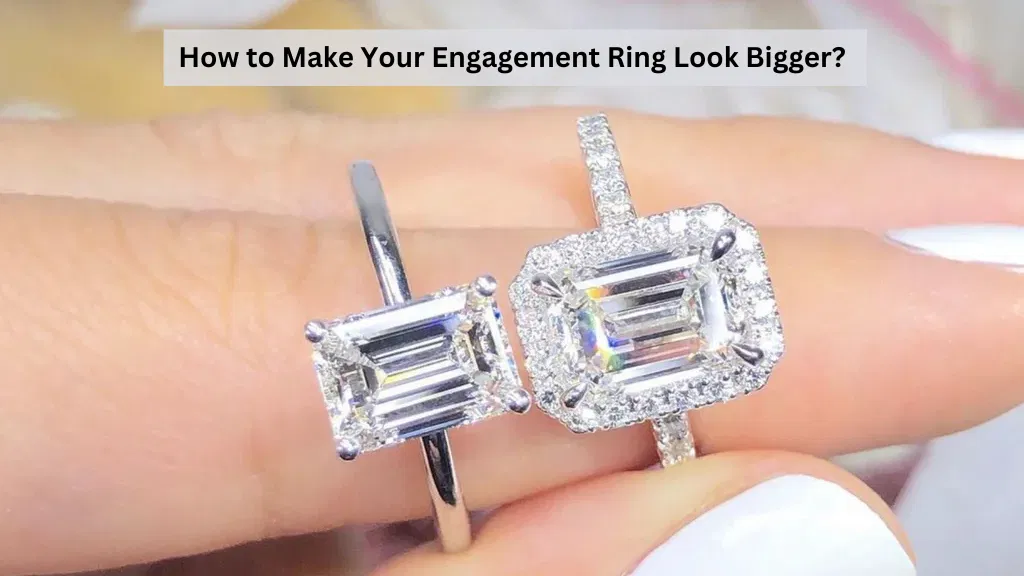
How to Make Your Engagement Ring Look Bigger?

When it comes to engagement rings, many people prefer bigger diamonds. It’s believed that larger diamonds offer a more glamorous look; however, the bigger the diamond, the more expensive it is. But are you aware that you can make your ring look bigger without increasing the carat size? That’s right! With a few simple tricks, you can make your diamond solitaire ring appear larger, more attractive, and shinier. In this article, we’ll explore some details that can add a noticeable difference to your ring, making it appear larger.

Ways to Make Your Engagement Ring Look Bigger

Making your engagement ring look bigger is often an important aspect for the ones who want to give their ring a better visual at the same price. By following some few effective tips and tricks can help you get your desired look for your engagement ring without spending extra dollars.  Take a look at the below mentioned tricks:

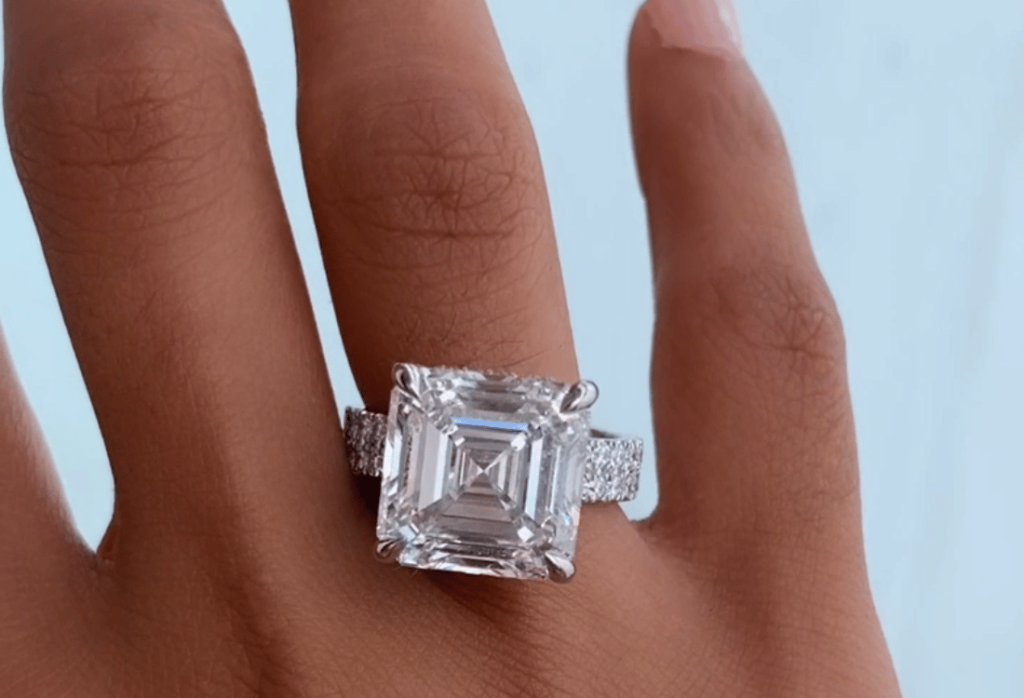
  • Choosing the diamond’s shape carefully:  Looking for an ideal shape for a diamond ring is an important aspect.  Look for the stone shapes like Oval, Pear, Emerald and Marquise diamond rings that naturally appear larger due to their elongated design.  These shapes are capable of covering more of the single area giving a larger stone appearance. With a particular elongated shape, Oval and Emerald tends to draw attention, visually enhancing the size. Similarly, the pointed look of Marquise and Pear sets a bold and unique look. 
  • Use Solitaire & Prong Setting: Using simple settings sometimes can be a better option that gives a stand out to the center stone. Going for a classic diamond solitaire ring can put the center stone spotlight making it appear larger. Moreover, adding a 4 prong setting rather than bezel setting allows more exposure of the center stone and light to reflect more. It also helps the stone to get a lift, improvising the depth of the gemstone. 
  • Look Into Three Stone Rings: To get a visual volume and shine for the center stone opt for a three stone rings setting. In this setting the main stone is surrounded by two smaller stones on either side, acting as a securing frame. This style attracts huge attention enhancing the overall look of the ring. The arrangement of the supporting stones is set in a cohesive manner to emphasize the appearance of the center stone. 
  • Use Halo Ring Style: Halo settings have gained popularity over the years due to its unique look. In this setting the main stone is surrounded by smaller stones on all the sides creating an illusion of bigger stone. Halo gives extra brilliance and shine to the main stone to grab attention, giving a volume to the stone. To get a more dramatic and voluminous look you can opt for a double halo setting.
  • Use a Thin Ring: A thin band engagement ring can make your diamond seem larger as compared to other band styles. Wide bands can disrupt the attention from the main stone. A thin band focuses to showcase the feature of the stone more bringing out the intricate beauty of the stone. The slim band with minimal accents can enhance the brilliance of the diamond making it the center of attraction. 
  • Pair With Wedding Band: A unique, modern and smarter way to make your ring appear larger is to ideally pair it with a wedding band. Select a wedding band that compliments your engagement ring enhancing the size. A slim and ideal choice of wedding band that sits flush with your ring can make it look like a single piece. It not only will sit seamlessly but also makes the ring emerge larger.
  • Get Your Ring Cleaned Regularly: Cleaning and getting your ring polished  frequently can help in maintaining the sparkle and brilliance. The sparkling the diamond, the more eye-catching it will look. The buildup of dirt, oil or dust make the diamond look dull and smaller. Cleaning the ring at home with mild soap and warm water or getting professional assistance at a six month gap can be good practice. 
  • Consider a lab-grown diamond: Lab-Grown Diamonds are a commendable choice for those seeking a pocket-friendly deal, without compromising the quality and size. These diamonds are identical to the natural diamonds in physical and chemical features. However, Lab Grown diamonds are prepared in the lab under controlled HTHP conditions (High-temperature and High-Pressure). These diamonds are customisable and environmentally-friendly. You can choose the size of the diamond at a very ideal price with good quality, durability and sparkle as that of naturally mined diamonds. 

Overall, there are various ways and tricks to make your engagement ring look larger. By considering the important aspects, you can get your desired look for your engagement ring. 

Conclusion

In conclusion, you do not need to buy a larger diamond stone to make your engagement ring look bigger. You can attain a larger visual for your engagement ring with just some simple tricks and strategic choices. Selection of an elongated diamond can give a larger visual to your ring, while complementing it with the perfect wedding band. The regular maintenance and cleaning of the diamond will help to keep it shiny and dazzling. Moreover, going for a lab grown diamond can help you with budget and a unique approach. 

FAQs

Does the shape of the diamond affect its size and appearance?
Of course, some diamond shapes have an effect on the size and how the diamond looks. The type of shape can make the diamond look either smaller or larger, while affecting the reflection of light. 

Can the type of metal make my engagement ring stone look bigger?
Metal like white gold or platinum can make the diamond appear larger by reflecting its colorlessness. Moreover, the halo setting makes it look larger by surrounding the center stone with smaller ones. 

Which diamond cut looks the largest for its carat weight?
The elongated shapes like oval, marquise and pearl appear to be larger than the traditional round or square shaped stones. 

Do smaller side stones make the center diamond look bigger?
Yes, smaller stones when set in a Halo setting surrounding the center stone, can make it look large and stand out more. 

Does the depth of the diamond affect its size and appearance?
The ideal depth allows the light to reflect more giving a profound brilliance and shine to the diamond, affecting its size and appearance. 

What color grade is best for making a diamond look bigger?
Diamonds look larger when they are colorless or nearly colorless. It allows more light to pass making them brother and shiner. 

How to make your engagement ring look bigger with a wedding band?
Look for a wedding band that perfectly fits or sits flush with your engagement ring making them look one single piece. 

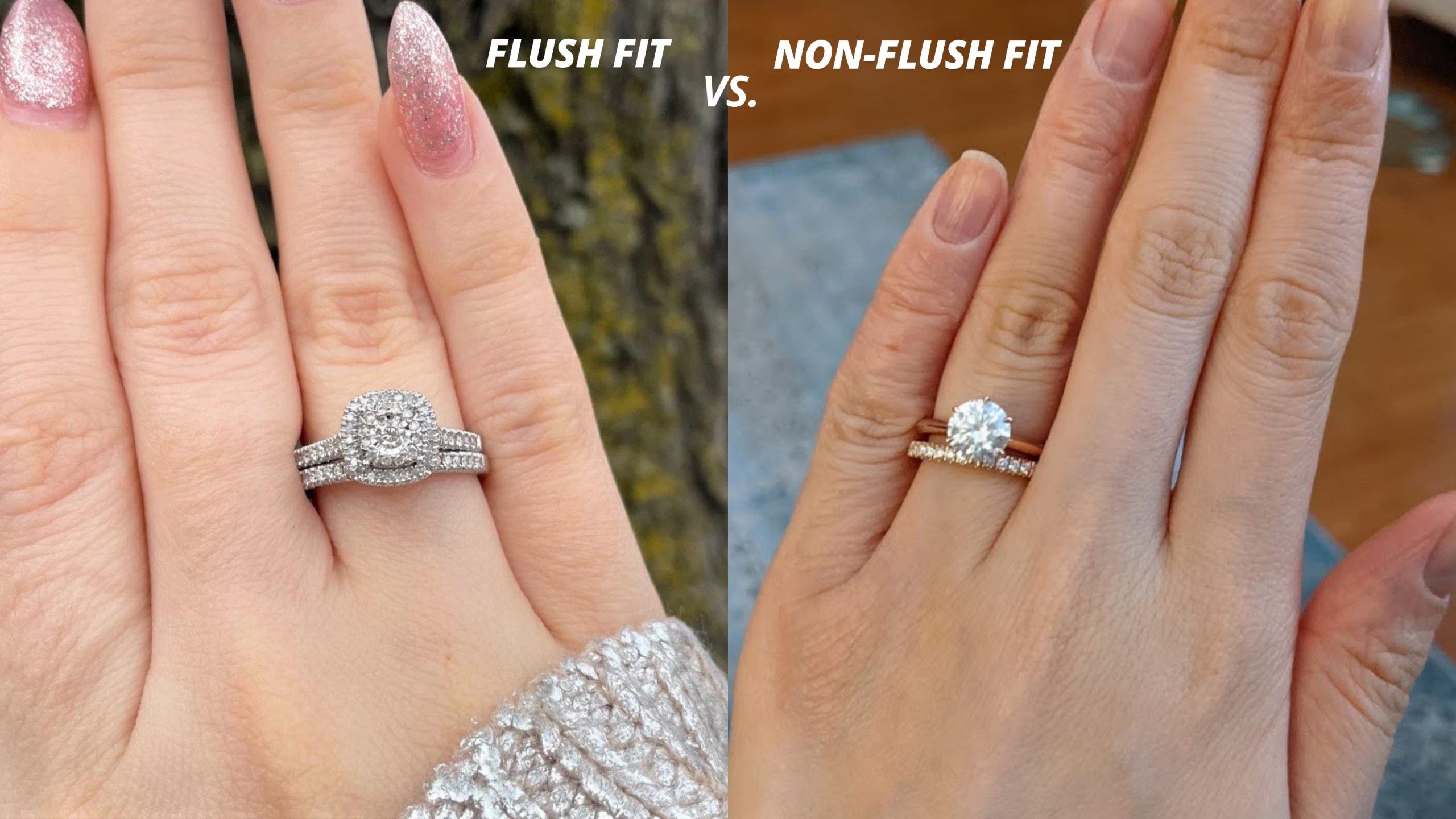
Flush Fit vs. Non-Flush Fit Engagement Rings

One important choice when purchasing an engagement ring is whether to go with a flush fit or non-flush fit style. Choosing between these two styles depends on how you want the engagement ring to sit near the wedding band. Each style is designed to showcase the center stone in a unique way. A flush fit engagement ring is designed to sit comfortably against the skin and align closely with the wedding band, making it suitable for everyday wear.

In contrast, a non-flush fit engagement ring has a higher profile, creating a slight gap that makes the center stone more prominent. Both styles offer unique aesthetics and have distinct visual appeal. In this article, we’ll explore the pros and cons of these two styles and other important details.

What is a Flush Fit Engagement Ring?

A ring that sits smoothly and closely against the skin, aligning evenly with the wedding band and avoiding any gaps, is known as a flush fit engagement ring. These engagement rings have a low profile, meaning the center stone is set lower. The main stone is securely placed without protruding much, making it comfortable for everyday wear. This style provides a sleek, smooth, and comfortable look with a well-protected stone.

What is a Non Flush Fit Engagement Ring?

An engagement ring designed not to sit close to the wedding band or flat against the skin is called a non-flush fit ring. In this design, the center or main stone has a high setting profile, creating a gap between the engagement ring and the wedding band. The size of this gap can vary depending on the ring style. This style is ideal for those who want their main stone to stand out, as it provides an elevated look that draws attention to the center stone and gives the ring a larger, more striking appearance.

Pros and Cons Of Flush Fit vs. Non-Flush 

Both types of engagement ring fits have their own pros and cons, which set them apart. Below is a table comparing the two, highlighting the advantages and disadvantages to help in your decision-making process.

Which to Choose: Flush-fit or Non-flush-fit Engagement Ring

The choice between a flush fit and non-flush fit engagement ring depends on your personal preferences, style, and desired look. A flush fit engagement ring offers a smooth, exquisite, and refined appearance by sitting closely against the wedding band. This style enhances gemstone security and provides comfort for everyday wear. Its design minimizes the risk of snagging on clothing, making it ideal for those seeking a subtle look.

Features Flush Fit Engagement ring Non-Flush Fit Engagement ring


Pros
Offers a sleek, elegant and simple appearance Provides a traditional, elaborate, and versatile look
Sits smoothly against the skin and close to the wedding band, avoiding any gap Allows for intricate and versatile design
With the low profile it avoids the snagging on clothes Creates a bolder, eye-catching look 
Can be worn comfortably daily Attracts attention on center stone by making it appear larger
Flush Fit engagement ring is easy and convenient to maintain May require more frequent cleaning due to detailed settings
It enhances the security of the stone  Can be set with various setting style like bezel, prong and halo


Cons
Limit designs are available compared to non-flush fit Slightly higher risk of snagging on clothes due to the protruding center stone
Is not preferable to the ones looking for elaborative design Some designs are not suitable for the specific shapes and sizes
The center stone looks less noticeable Not much comfortable to wear every day

In contrast, a non-flush fit engagement ring is designed to showcase the center stone, giving it an elevated look. This style often includes delicate patterns and creates a sophisticated visual for the central gemstone, perfect for those who want a more striking appearance. However, this style may require a bit more maintenance and may not be as comfortable for daily wear. If you prioritize comfort, a non-flush fit might not be the best choice.

Ultimately, the decision comes down to your personal style. Choose a flush fit for subtle elegance or a non-flush fit for a bold and eye-catching look.

What types of settings cause a flush-fit issue with wedding bands?

It is important to choose the ideal settings when purchasing a flush-fit engagement ring, as certain settings can create a gap between the engagement ring and wedding band. Here are some settings that can cause flush-fit issues with wedding bands:

High-Profile Settings: This setting elevates the placement of the center stone, creating a slight space between the wedding band and engagement ring. The raised height of the diamond can prevent the rings from sitting smoothly together.

Long Prong Setting: While prong settings hold the stone securely, large or outward-extending prongs may cause the wedding band to sit slightly away, creating a small gap between the band and engagement ring.

Halo Setting: A halo setting surrounds the center stone, adding height and a bulkier appearance, which can make it difficult for the engagement ring to sit closely against the wedding band.

Bezel Setting: Bezel settings provide extra security by surrounding the stone with metal. However, this metal can prevent the wedding band from aligning perfectly with the engagement ring.

Understanding how different settings affect the placement of the engagement ring and wedding band can help you choose the ideal flush-fit ring that aligns perfectly with your wedding band.

How important is your wedding band sitting flush to you?

The choice of a flush-fit engagement ring setting depends on personal preference and lifestyle. This style creates a seamless and uniform look by allowing the wedding band to sit flush with the engagement ring, making them appear as a single piece. It also makes the ring comfortable for everyday wear, reducing the risk of snagging on clothing. An engagement ring with a low setting allows the wedding band to sit closer and smoothly against the skin without leaving any gap.

If you don’t mind a slight gap, a similar non-flush fit style can also offer a unique fashion statement. Ultimately, the choice comes down to what best resonates with your personality.

Will a flush-fit engagement ring impact my choice of wedding band?

Yes, a flush-fit engagement ring impacts the choice of your wedding band, as it sits closely against it. The engagement ring pairs best with low-profile bands to achieve a flush, gap-free look. However, certain bands complement the engagement ring even more, giving it a seamless appearance.

  • Slim or low-profile bands, like classic styles, work well with a flush-fit engagement ring for a cohesive and clean look. 
  • Engagement rings with intricate details may pair nicely with contoured or curved bands, which align smoothly with the ring’s design to create a precise flush fit.
  • To achieve a unique and enhanced look, consider mixing metals in different materials and colors to match the engagement ring. This blend of metal bands creates a distinctive appearance, making the set look like a single, cohesive piece of art.

Customizing your engagement ring can also help you achieve a unique, personalized design. Jewelers like Loose Grown Diamond offer CAD (Computer-Aided Design) options that provide a 3D visualization of your engagement ring. This helps jewelers design the piece accurately, reducing the risk of mistakes and offering a preview of the final product. This approach is particularly helpful for gap casting and finishing, ensuring a perfect flush fit in the final product.

Conclusion

A flush-fit engagement ring is an ideal choice for those who want to achieve a seamless, elegant, and subtle look, whereas non-flush-fit rings provide a bolder appearance and make the center stone more prominent. Both ring styles have their advantages, so it is important to consider some key factors before choosing the one that best suits you.

FAQs

Is a flush fit comfortable for everyday wear?
Yes, a flush fit is comfortable for everyday wear, as it sits smoothly against the skin. However, comfort can also depend on the design and personal style.

Which style makes the center stone stand out more?
A non-flush fit style makes the center stone stand out more, as it creates a gap between the band and the ring, making the stone more prominent.

Can you stack a flush-fit ring with multiple bands?
Yes, you can stack flush-fit rings with multiple bands and styles. They sit close to the skin and the ring without creating a gap.

Do flush-fit rings limit design choices?
Due to the focus on a low profile and close alignment with the wedding band, flush-fit engagement rings come in limited design options.

Is it more expensive to get a custom flush-fit wedding band?
Customized flush-fit rings are generally more expensive than standard wedding bands and rings.

Which is more popular, flush-fit or non-flush-fit rings?
Flush-fit rings are more popular due to their seamless look and classy fit.

Can I resize a flush-fit engagement ring without causing a flush issue?
Yes, it can be resized under professional supervision, and customization is possible with the help of CAD (Computer-Aided Design) technology.

What if my engagement ring and wedding band don’t sit flush?
This may mean there is a slight gap between the two, which could be due to factors like the size of the engagement ring or the gemstone setting style.

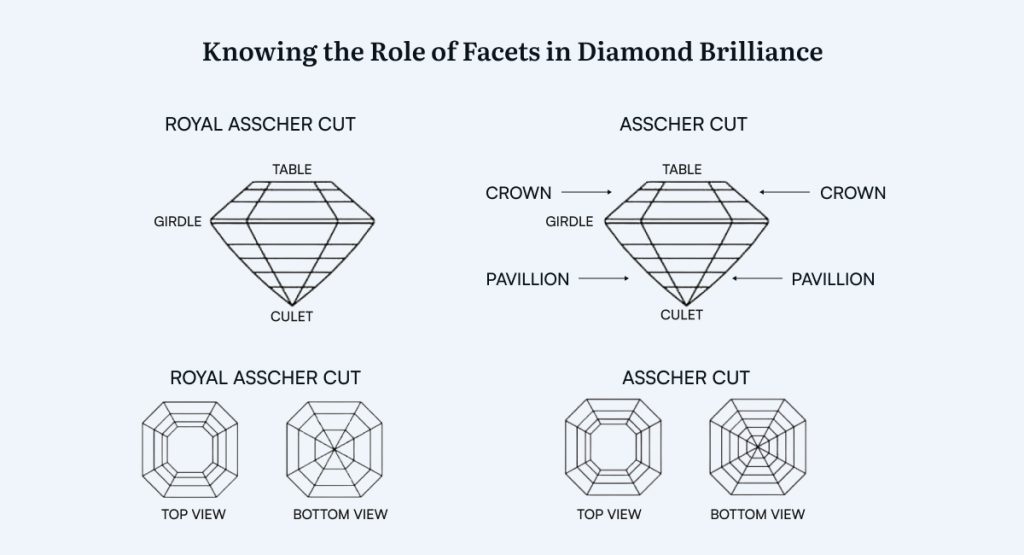
Knowing the Role of Facets in Diamond Brilliance

What are Diamond Facets?

Diamond facets mean a well-cut flat surface on the diamond arranged in a symmetrical manner that acts as a mirror for the entering light in the gemstone. The facets of a diamond can be divided into 3 parts that comprise a crown, a pavilion with a culet and a girdle in the center. The diamond facets are one of the factors that allow the light to reflect more, casting a beautiful shine on the diamond. Pavilion and crown facets have a great impact on the dispersion of light. 

What are the Different Types of Diamond Facets?

Variety in facets is due to their different purposes based on the cut style, shape and location of the facets on the diamond. For an optimized shine and sparkle, each facet is arranged in a calculated geometrical pattern to get an impacted light reflection.  Let’s read further about the types of diamond facets that are a part of the Anatomy of a diamond. 

Lab Diamond

  • Table Facet: A horizontally placed and biggest facet on the surface of the diamond is a table facet. This facet allows a good view of the diamond’s inner description, letting more light enter the diamond for an amazing shine. 
  • Crown Facet: The most visible and top portion of a diamond is the crown facet. This facet is considered as the diamond window, permitting more light to enter. The crown facet consists of frames that separate the elements impacting the dispersion of light for more sparkle. 
  • Girdle Facet: The narrow outer cover of a diamond that divides the crown and pavilion is the Girdle facet. This part of the diamond can be rough, polished or faceted in appearance. The diamond’s look, durability and value are affected by this type of facet. 
  • Pavilion Facet: The bottom part of the diamond, located just below the girdle is the pavilion facet. The crown facet allows the light to enter and this pavilion facet reflects the entering light through the crown. This facet reflects light to provide more shine and sparkle to the diamond. 
  • Culet Facet: Similar to the table facet culet is a single facet located opposite the table and at the foot of the pavilion. A diamond might have a culet so sharp and meeting to a point or have a cut as a flat surface affecting the light. If the flat surface is more wide it is called a kneel like in emerald cut diamonds. 

Understanding The Diamond Polish, Symmetry, and Light Performance

Understanding the diamond polish, light performance and symmetry of the diamond’s facets are crucial aspects to interpret the overall beauty and shine of a diamond. Let’s see a brief explanation of these terms. 

Diamond Polish produces the smoothness on the surface of a diamond with its seamless cuts. If a diamond has a well-polished surface it might have fewer blemishes, which permits the light to enter and reflect effectively heightening the brilliance level of the diamond. 

The accurate degree of alignment and placement of the diamond facets is known as diamond symmetry. The flawless symmetry of the diamond’s facets brings an enhancement in the brightness and its capacity to reflect light. 

Performance of light showcases the management of reflection of white light for brightness, color dispersion for fire and the sparkle of a diamond. Diamond’s polish and symmetrical arrangement of its facets are responsible for an effective light performance casting a unique shine. 

How Many Facets Does a Diamond Have? 

The number of facets in a diamond varies depending on the shape and cut style. Below table shows a brief idea of the number of facets in different diamond cuts and how they affect the brilliance of diamond. 

[su_table responsive=”yes” fixed=”yes”]

Shape of Diamond No. of facets

Type of Cut

  Description        
Round Brilliant 58 Brilliant cut The most popular Round Brilliant cut diamond is equipped with 58 facets that enhance the brilliance and fire of the diamond
Princess 50-58 Brilliant cut Princess cut diamonds have sharp pointed corner facets giving a shiny appearance
Radiant 70 Brilliant cut Radiant cut diamonds have an elongated look with smooth curved edges with brilliant facets for a versatile look.
Asscher 57-58 Step cut This vintage shape has 58 step cut facets in its design. These step cuts resembles a staircase pattern excluding elegance and sophistication
Cushion 58 Brilliant cut Square-shaped diamond with smooth curved corner large facets giving a unique charm to the diamond
Oval 57-58 Brilliant cut Equipped with 58 facets this diamond have elongated look to enhance the brilliance and give a larger diamond visual
Emerald 50-58 Step cut Emerald shaped diamonds are rectangular elongated stone with step-cut facets and cropped edges. The stepped facets shows a mirror effect making it more sparkling
Pear 58-71 Brilliant cut It is a mixture of round and marquise shapes with one side rounded and the other pointed. The facets of this diamond give a longer look
Marquise 56-58 Brilliant cut This shape resembles an eye with two pointed ends and long narrow body. The triangular facets of this shape maximizes the carat weight with a longer look
Heart 56-58 Brilliant cut It has a rounded top with a cleft acting as a symbol of love and romance with it excellent brilliance

[/su_table]

The above table is an overview of the diamonds and the number of facets depending on the cut and shape. Each type of facet shows a distinctive look for different shapes of diamond maximizing the shine and brilliance. 

How Do Diamond Facets Impact the 4Cs?  

Diamond facets play a significant role in how the 4Cs: Cut, Clarity, Color and Carat will affect the overall aspect of the diamond. 

How Do Diamond Facets Impact the 4Cs 

Cut: The cut aspect has a direct impact on the look and quality of a diamond. If a diamond has well-structured facets then it will allow more light to reflect and refract making it shine more. A poorly cut facet reduces the brightness and the diamond looks dull.  

Clarity: Facets are also the reason for the visibility or conceal the blemishes and other internal inclusions in the diamond. If a diamond has a symmetrical facet it will work well in hiding the flaws, improving the clarity of the diamond. 

Color: Facets are accountable for hiding or revealing the color of the diamond. The diamond with finely cut facets can effectively hide the yellow hue of the diamond making it brighter.  

Carat: Facets do not have a direct impact on the carat weight though it makes the diamond appear bigger. Having an effect on the light dispersion can make a low-carat diamond look bigger.  

Can Diamond Cut Affect Its Price?

Yes, diamond cuts do affect the price of the diamond. A finely cut diamond exudes more light making it brighter and enhancing its overall appearance which significantly has a high value price. While choosing a diamond look for Ideal to excellent cut, ensure that the diamond has a high cut grade with the right facet structure.  

Conclusion 

Facets play a crucial role in the overall diamond aspect. Loose Grown Diamond ensures well-cut facets in their diamond that make them shiny and brilliant. Understanding the facets and their properties helps you to get the best deal within your budget. 

FAQs 

Are diamonds with more facets considered more valuable?
No, diamonds with more facets are not always considered as more valuable rather it depends on the quality of the cut and proportions. 

What Is the most affordable diamond cut?
The typical diamond cuts that are affordable are oval, cushion, emerald and princess cuts.  

Is a round brilliant cut more sparkly than other shapes?
Yes, you heard that right, round brilliant cut is more sparkly compared to other shapes. The round cut of this diamond shape gives it more facets that create more sparkle enhancing the brilliance. 

What Is the most expensive diamond cut?
The most expensive diamond cut is a round brilliant cut as it has numerous facets, which is due to its precision in cuts. This shape is popular in the market making them the most sold shape. This cut has more demand due to its ability to shine exceptionally, making it more expensive. 

How can I tell if a diamond’s facets are wellcut?
A diamond with well-cut facets tends to shine more and has excellent brilliance. When the facets are cut in proper symmetry, more light is reflected, increasing the shine and fire. 

How many facets does a diamond have?
The number of facets in a diamond depends on its shape and cut. A well-cut diamond with proper facets will sparkle more. On average a diamond has 58 facets allowing the light to reflect. However, it can also range from 36 facets to 68 in number.

How Many Carats Should an Engagement Ring Be?

Are you prepared to be engaged with your better half? Have you decided on the engagement ring? Searching for a correct size and weighted engagement ring. Then you are at the right site. 

Carat weight is an important factor to consider while selecting an engagement ring. Loose Grown Diamond is ready with a comprehensive guide to help you better understand carats and how many carats your engagement ring should be. Read further to learn about the appropriate carat weight of an engagement ring

Understanding Diamond Carat 

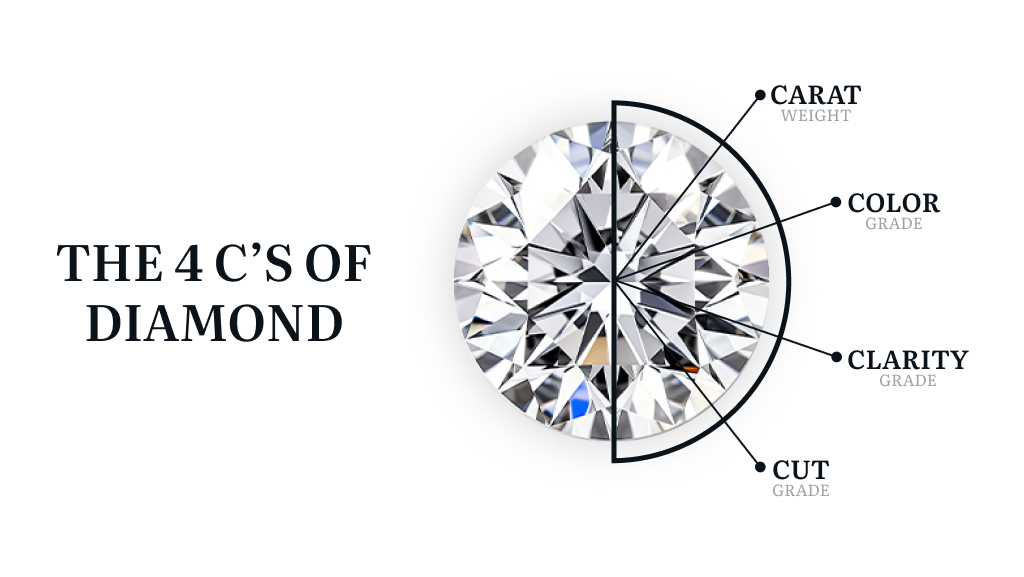
The four aspects of a diamond must be understood in order to get in-depth knowledge of diamonds. These four factors include the 4Cs: Cut, Carat, Clarity and Color. A simple engagement ring gets an exceptional shine and stunning appearance under the influence of the 4Cs. Let’s know about these 4Cs. 

The 4Cs: Cut, Carat, Clarity and Color

Cut: A cut of a diamond is responsible for determining the facets and depth of the diamond affecting the light. A well-defined cut diamond has more facets that allow the light to refract, enhancing the brilliance and shine. The diamond’s cut grade ranges from Excellent to Poor. 

Carat: Carat is the unit that measures the weight of the diamond. 1 Carat is equivalent to 200 milligrams. The diamond’s size and overall appearance are directly influenced by its carat weight.  A larger diamond is rare and produced by a full-carat diamond.

Clarity: Clarity establishes the presence of any blemishes and other internal inclusions in the diamond. Clarity shows the purity of the diamond and the grade ranges from Flawless (FL) to included (I).

Color: Color indicates if a diamond has any color or not. Compared to other categories, colorless diamonds are expensive and rare to find. This grade ranges from D (colorless) to Z (Light yellow or brown). 

How are Diamond Carats Measured? 

The overall weight of the diamond is included to measure the carats and not the size. However, the size of a diamond is influenced by its carat also. One carat includes 200 milligrams. The appearance or size of the diamond increases with the increase in its carat weight, but differs in size based on cut and style. One of the elements that determines the diamond’s overall worth and aspect is its carat. 

Factors to Consider When Choosing Carat Size

Diamond Carat Size Chart

As said earlier, there are a few things needed to be considered while selecting the perfect carat size. These factors are mentioned below: 

  • Budget: The first step while choosing a perfect carat size for an engagement ring is to determine a budget. Choosing a larger carat can come with a higher price range of diamonds, that can cost more than the typical size of an average engagement ring cost. So, to obtain a good deal, set the budget beforehand. 
  • Finger size: The overall look of a diamond is greatly influenced by the size of the hands and fingers. On larger hands, a large diamond might give a bold look but on smaller hands, might seem too huge. Therefore, choosing a carat size that fits your hands is crucial. 
  • Personal style: Determining the engagement ring style is another crucial aspect to consider. You need to know what sort of ring you like and don’t get influenced by others. You may also take help of the internet to browse through various ring styles and determine which one you like. Searching for rings that reflect your personal style showcases your individuality.
  • Cut and setting: The diamond’s look and size is greatly influenced by the cut and setting technique. A pear-shaped, oval, or radiant cut, for example, makes the diamond appear bigger and longer, while a round or princess cut makes it appear smaller.

How Many Carats Should an Engagement Ring Be?

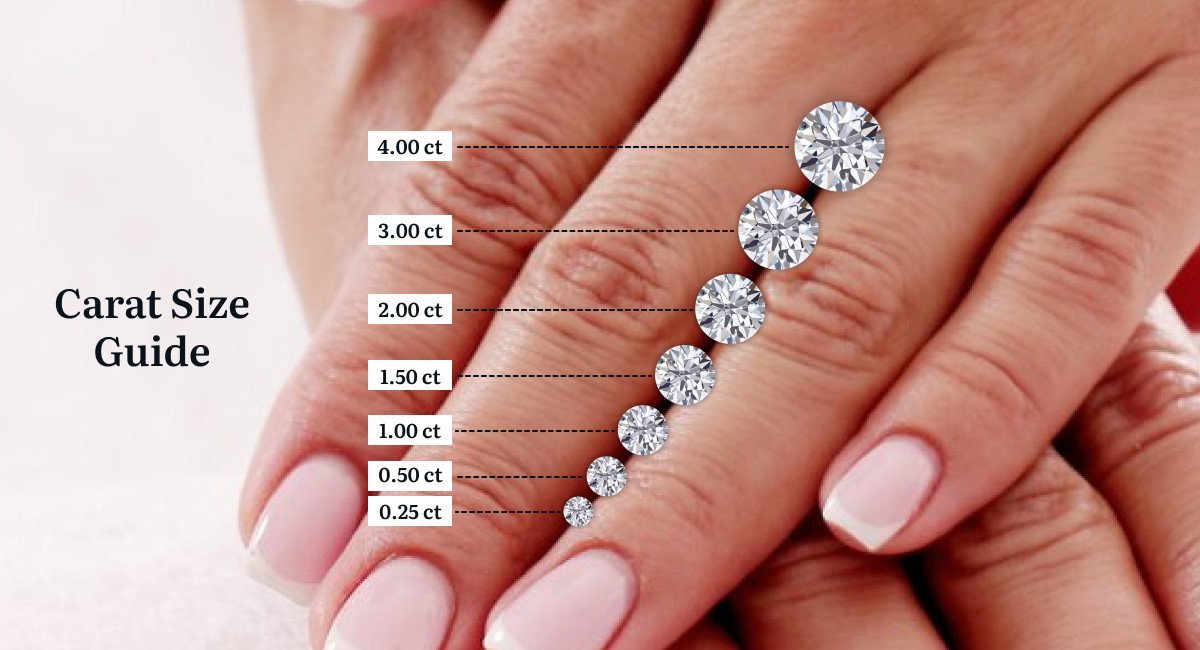
Location, budget and personal preferences influence the ideal carat of a simple engagement ring for women. The average carat sizes vary from country to country. The typical engagement ring in the US weighs between 1 to 1.2 carats, depending on the cut and form. The diamond carat size chart below provides a better overview of the carat sizes. 

Carat Size Diameter (in mm)Size Description Appearance 
0.25-0.50 Carats3.50-4.50 mmSmallSmall and simple, gives a delicate appearance
0.50-1 Carats 4.50-5.50 mmMediumThis size gives an ideal balance between look and affordability
1-1.5 Carats5.50-6.40 mmMedium-largeThis size diamonds are noticeable and elegant excluding an excellent sparkle
1.5-2 Carats6.40-8.10 mmLargeThis size is considered as bold and attractive setting a strong fashion statement
2 and above 8.10 mm and aboveLargerLarger size offers a luxurious look 

Loose grown diamond offer a variety of diamond sizes and carat weights with different appearances. For a better understanding of the carat weights and size appearance visit the official website and go through the chart present. 

Carat Size Vs Carat Weight 

The idea of the carat sizes and carat weight being similar is quite a misinterpretation. The total dimension measured in millimetres is the carat size. It may differ depending on the shape and cuts. On the other hand, carat weight is the actual weight of a diamond measured in milligrams (1 Carat = 200 milligrams). The higher carat weight represents a larger diamond. 

How Does Carat Size Affect Engagement Ring Prices?

Carat counts as an essential part of the 4Cs determining the price value of a diamond. In comparison to other diamond sizes, larger diamonds are expensive as it’s rarely available in the market. With the increasing value of the diamond, its exponentiality also increases. Hence it proves the fact how 1.5 carat diamonds are more pricey than 0.5 carat diamonds. Although the quality doesn’t have much difference, the former one is costlier. As per the market price, the standard price of a 1-carat diamond is approximately starting $3000.

Conclusion

This piece highlights how the weight of a carat plays a crucial part in the overall visual of a diamond. It’s essential to oversee a few aspects while wanting to purchase an ideal carat diamond so that you get the best deal. What are you waiting for? Make your special day memorable by selecting a suitable carat weight loose grown diamond. 

FAQs

What is a good carat size for an engagement ring?
The ideal size of an engagement ring is dependent on the customer’s personal choice. The standard size ranges from 1 to 1.50 carat. It offers both elegant looks at an affordable rate.

Is a bigger carat better?
It’s a common norm among customers. Although customers might get carried away by a bigger carat as it caters to a larger diamond look, customers often forget how cut, clarity, and color compromise the appearance of diamonds. The buyers charge full-swing prices for these diamonds.

Should I prioritize carat size or diamond quality?
It’s recommended to prioritize the diamond’s quality rather than carat size. Since the quality diamond consists of a magnanimous shine with a perfect cut & clarity. High-carat diamonds are costlier than high-quality diamonds.e

Does a bigger carat size mean a better diamond?
No, it’s a myth. A bigger carat just defines the diamond’s size and other factors like cut, clarity and color enhance its overall look. Although a smaller carat may have a shiny appearance.

Is a 2 2-carat diamond Considered to be big?
A two-carat diamond is bigger than other diamond sizes for an engagement ring. It provides an antique look as the size of the ring is very definite in this look.

Are lab-grown diamond a good option for larger carat sizes?
Lab grown diamond are best for larger carat sizes. Similar to natural diamonds they are more good in appearance and quality. Customers can easily afford them within their budget.

10 Reasons to Buy Lab-Grown Diamonds

Lab-grown diamonds are setting a different fashion statement in the jewelry world. These are the best alternatives to the mined diamonds that are also an affordable and sustainable deal. Understand the top 10 benefits of buying lab grown diamond for your jewelry in this guide. But, first, let’s get to know what lab grown diamonds are. 

What are Lab-Grown Diamonds?

With the name, we can understand that these diamonds are made in a lab. Lab-grown diamonds are created with the use of cutting-edge technology performed by experts. The production of these diamonds includes favorable conditions and processes that are similar to the making of a natural diamond. But the difference is that lab created diamonds are created under controlled environmental conditions compared to natural ones. This controlled condition makes them ethical, eco-friendly and sustainable. 

Why You Should Buy Lab-Grown Diamond?

Lab-grown diamonds are the best alternative to natural diamonds that provide a list of benefits to not only buyers but also to the environment. Learn about the top 10 benefits offered by these diamonds.

Why You Should Buy Lab-Grown Diamond

  • Ethical Sourcing:  The mining of natural diamonds includes unethical processes like forced labor and unsafe working practices. Whereas, the lab-grown diamonds are created in controlled lab conditions ensuring ethical production. Thus the creation of these diamonds does not have a bad impact on humankind. 
  • Environmentally Friendly: The mining of natural diamonds has a great impact on the environment including the destruction of natural habitats, water pollution and excessive carbon emission. In comparison, lab-grown diamonds do not affect the environment as they are created in the labs under controlled conditions. 
  • Customization and Variety: As these diamonds are produced in labs they can be customized to a specific shape, size and design giving it a personal touch. The customization of these diamonds leads them to include many cuts that do not exist in natural diamonds. 
  • Exceptional Quality and Purity: The lab-grown diamonds are created using top-notch technology that sets quality standards and consistency in the 4Cs factor. The lab-grown diamonds are available in various carat, color, cut and clarity.
  • Transparency and Certification: Lab-grown diamonds are graded and certified on the standards same as those of natural diamonds. These diamonds are certified by reputable and renowned institutions like the Gemological Institute of America (GIA). The certifications ensure transparency during the purchase and provide customer satisfaction. 
  • Quality and Purity: Natural diamonds are indeed of high quality but it also costs a lot of dollars. But, advanced technologies have made it possible to get a high-quality diamond similar to natural ones but at an affordable price. These lab-grown diamonds are created at such high quality with exceptional clarity and fewer flaws which make them pure. 
  • Guaranteed Conflict-Free: The money received by the sale of diamonds is used to fund violent conflicts in countries like Sierra Leone and Angola. The Kimberley Process Certification Scheme took the initiative to make these diamonds conflict-free. To resolve this issue Lab-grown diamonds are the best substitute as they are conflict-free and do not contribute to any conflict. 
  • Same Durability and Sparkle: Although these diamonds are lab-grown they have the same durability as natural diamonds. The lab-grown diamonds rank 10/10 on the Mohs scale of hardness just like natural ones. They also have excellent sparkle due to various cut designs. 
  • Less Expensive than Natural Diamonds: As we all know natural diamonds are expensive as they are rare. In contrast, lab-grown diamonds are less expensive than natural diamonds making them the best affordable alternative. 
  • Increasing Popularity and Acceptance: Lab-grown diamonds have gained so much popularity in the market due to their similar features to natural diamonds. People have started accepting this type of diamond over natural ones as they are sustainable and affordable. 
  • Identical appearance: One of the important reasons to go for Lab-grown diamonds is that they are identical to the natural ones. Which means that these diamonds are similar to the brilliance, appearance, cuts, sparkle and clarity of the natural diamond. They look similar as the carbon crystals of the lab-grown diamonds are arranged as that of natural ones. 

How are lab diamonds made?

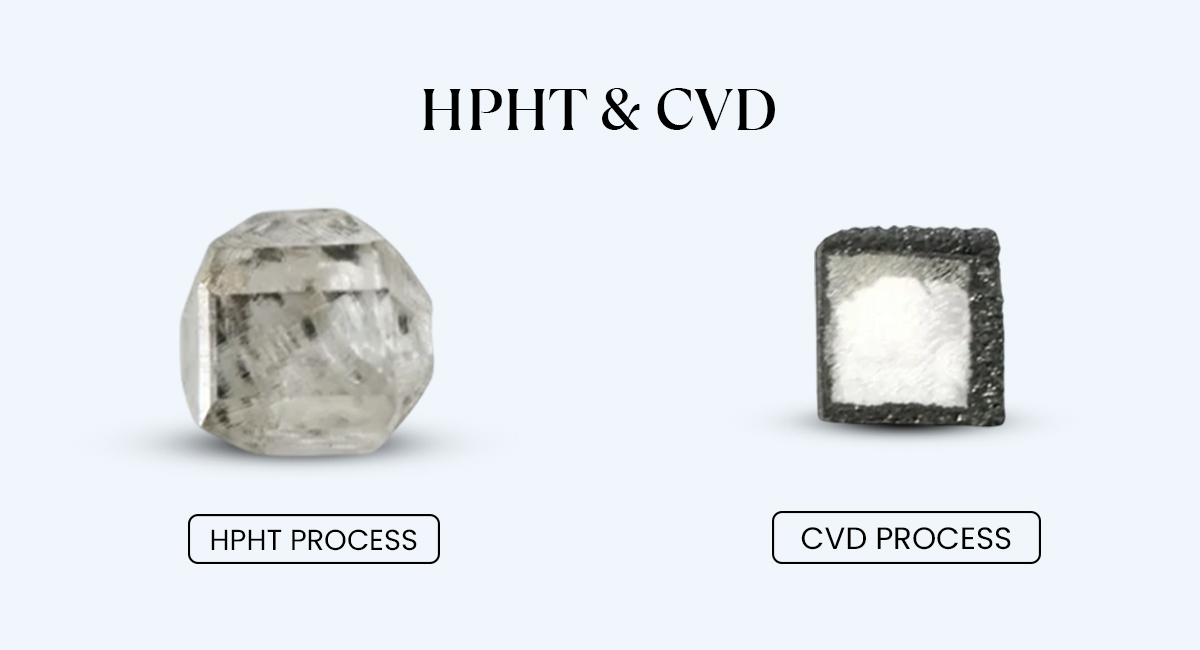
Lab-grown diamonds are created with high-quality advanced technology under controlled processes in a lab. The production process of lab-grown diamonds includes two main methods: High-Pressure High Temperature (HPHT) and chemical vapor deposition (CVD). Let’s understand the methods used to create these diamonds. 

HPHT or High-Pressure High-Temperature method:

This method includes the recreation of the conditions required to form a natural diamond in a controlled manner. The process further continues by placing a diamond seed with carbon-rich gas in a chamber. After placing the seed in the chamber it is given high pressure and temperature to the chamber. With the effect of pressure and temperature the carbon gas bonds with the seed and gradually grows into a complete diamond. 

HPHT & CVD

Chemical vapor Deposition (CVD):

This method involves an underlying substance like a small seed of diamond or a silicon sheet. This substrate or a layer is exposed to the plasma of gas rich in carbon. This plasma helps to deposit thin layers of carbon atoms on the substrate that grows up into a crystal of diamond.  

The grading and certification of the Lab-Grown diamonds are done similarly to that of natural diamonds. They are of high quality just like natural diamonds. 

Customized Jewelry with Loose Grown Diamond

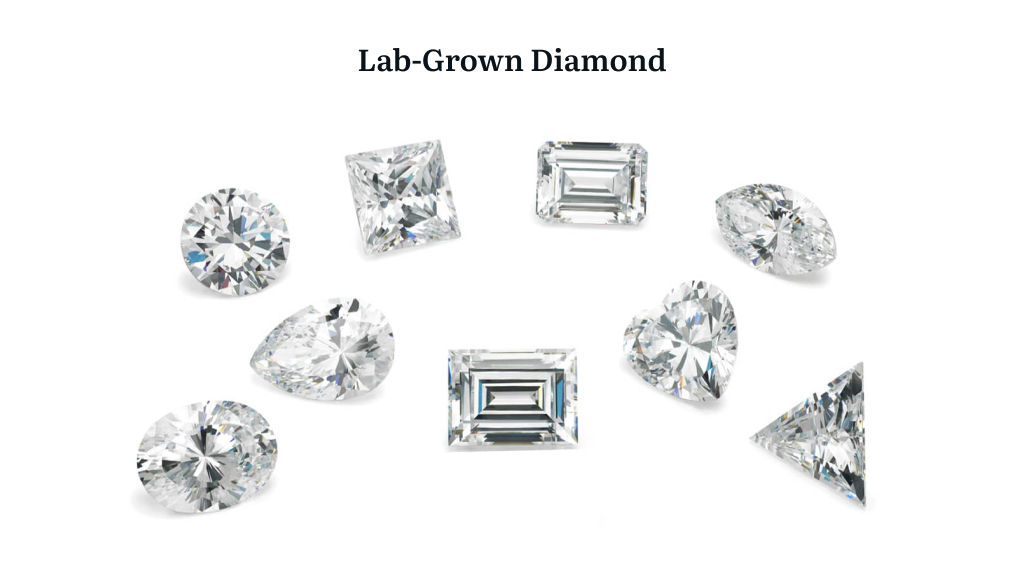
One of the amazing features of lab-grown diamonds is that they are available for the customization that allows the buyers to add their personal touch. Loose grown Diamond with a team of professional and long-term experience creates these diamonds in a lab under controlled environment. This controlled environment allows them to change the size, cut and shape giving it the look as desired by the buyers. The diamonds are available in a varied shape like versatile round, oval, radiant cut, square and others. 

Loose-Grown diamond allow the customers to get their preferable jewelry with their excellent customization services. Buyers are allowed to add their personal touch in the form of intricate designs, combinations of shapes or some engraving details to give a meaningful design. 

Conclusion

Lab grown diamond have created a huge place in the diamond market. Features like affordability, ethical production, sustainability and environmental friendly make the ideal alternative to natural diamonds. They not only benefit the buyers but also the environment. Get yourself lab-grown diamond jewelry with Loose Grown Diamond at the best deal. 

FAQs

Are lab-grown diamonds real diamonds?

Yes, Lab-grown diamonds have similar features to earth-mined diamonds, but the only difference is that they are lab-generated. 

How do you identify lab-grown diamonds?

To identify a lab-grown diamond, one can look for the certificate, the laser inscriptions showing the serial number, and ”LG” written. One signifier that gemologists use is that Lab-grown diamonds do not have nitrogen.

Do lab-grown diamonds have resale value?

Lab grown diamonds do have resale value but not that much as compared to earth-mined diamonds.