Rose Cut Diamonds: A Guide That Contains Everything You Want to Know

When conveying love or affection for someone red roses and big diamonds have always been a go-to ‘gift’ for centuries. You put these two together and you will get the ultimate gift one can offer to their beloved, a rose cut diamond’.

Diamonds are an everlasting and ever-growing gem that will always manage to mark a place in the fashion world. Often you’d have heard your mothers and grandmothers fawn over that one ring or pendant fitted with a beautiful shiny rock. 

It is only fair for a woman to go gaga or crave a diamond her entire life. Trends come and go, however, when investing in jewelry choosing classic, antique pieces is the best.

Most of Y2K and 80s-90s fashion has hit the markets with a great impact. Hence, it is no surprise that antique cut diamonds are dominating the modern jewelry scenario. 

It is because antique diamonds provide a distinguishable visual treat with impressive hand-cut facets playing with light. This is enough to attract lovers and collectors of vintage jewelry and pieces.

What are Rose Cut Diamonds?
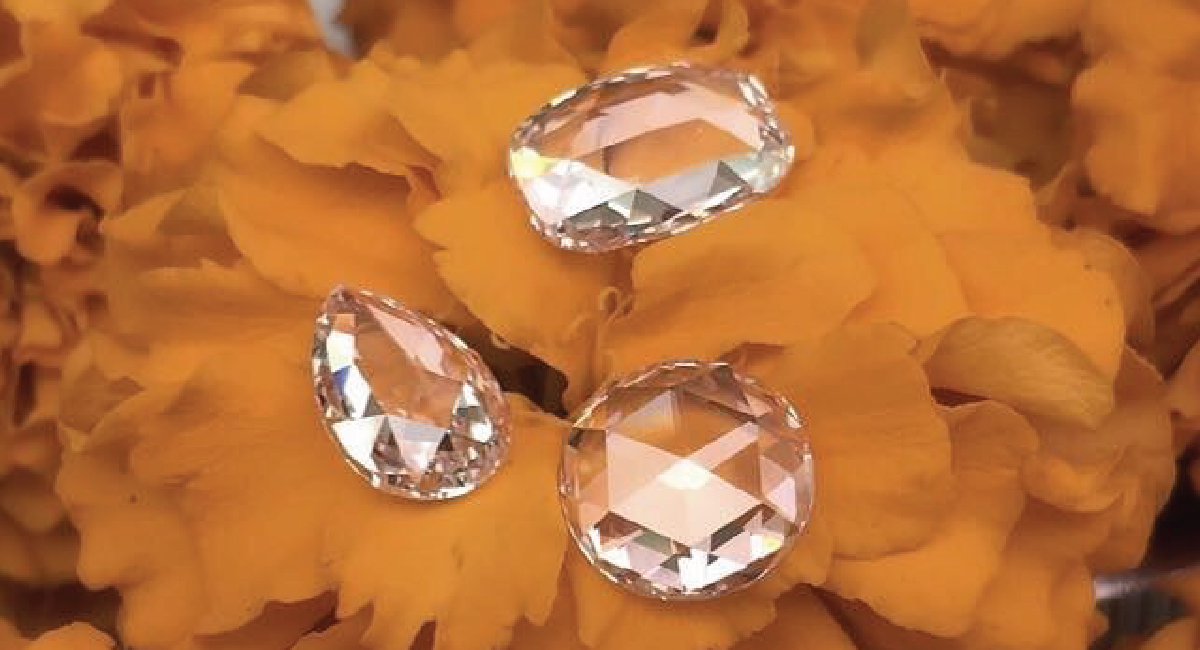
What are Rose Cut Diamond

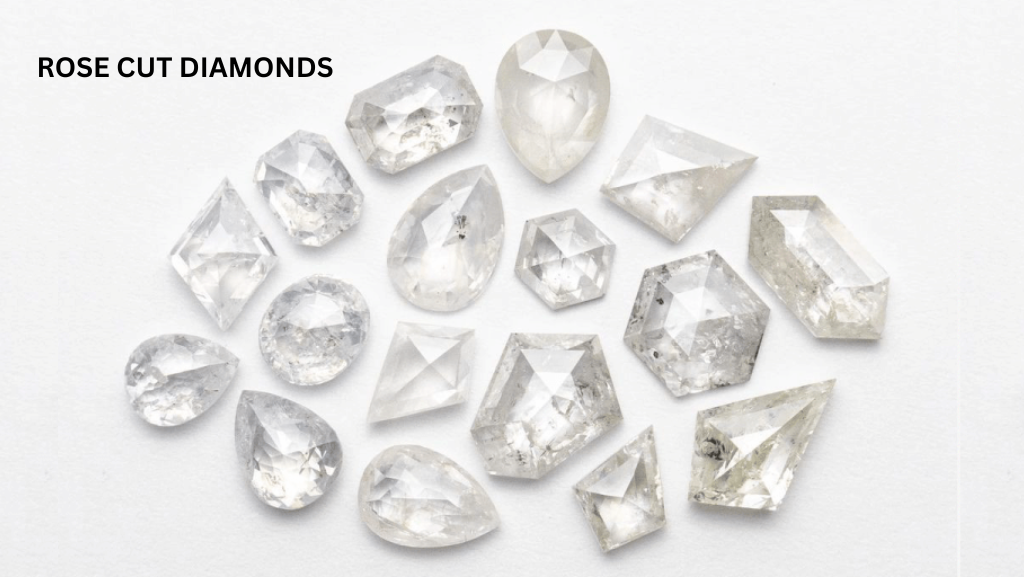
These diamonds are known for their triangular facets, impressive flat back, and domed top-covered style. The number of facets is not rigid and can go from three to more than twenty, either way, ending at the top in a singular peak.

The name ‘rose cut diamond’ is derived from the sense that the facets resemble the petals of a rose unfolding at the bud. This cut stands out because the gem is pretty much transparent due to no facets being present at the downside of the diamond which reflects light. 

Secondly, the rose cut diamond has an elegant, calm, and exquisite look as compared to a full-cut diamond in all its sparkle. Another feature is that rose cut diamonds carry the weight of the carat to the top. It will be viewed as bigger than a full-cut diamond with the same carat from the top since it has a larger surface area with none of the carat weight stored below the girdle. 

Origin of Rose Cut Diamond

The Victorian Era and Georgian Era marked the first instances of rose cut diamonds in the 1500s. They were cut by hand like other antique diamonds and meant to work exquisitely under low light conditions with their wide and large facets. 

origin of rosecut diamond

Love came to be symbolized with the rose cut diamond ring. As legend and tradition say, The third finger of the left hand contains a vein that runs directly to the heart. It truly makes for a beautiful diamond engagement ring on a wedding day for a partner symbolizing togetherness.

The rough diamond shape is a major determining factor for the final shape in which the diamond will be cut. However, the cutters try to retain as much original carat weight as possible. You might notice the perimeter following the diamond crystal instead of a perfectly round shape on an antique rose cut diamond. 

The narrow crystals are of great use as they are not extensive for other shapes due to their shallow height. With its rich history, it is only fair to bring in such an ethereal piece for a major event. Rose in itself translates to a symbol of love and romance. 

Hence, pop that question with this beautiful piece to make your moment even more special. Rose cut diamonds and their jewelry are now available as lab grown diamonds and look/feel just the same. 

Lab Grown Rose Cut Diamond

In the early 1950s after many trials and errors diamonds in their raw form were created by scientists, however, their commercial sale came to be known in the 1980s when man was actually able to produce high-quality, refined raw diamonds. 

It was during that time that all diamond shapes and styles were replicated by chiseling and cutting lab grown diamonds. Though they were considered to be man-made their properties possessed by them were identical to that of natural diamonds.
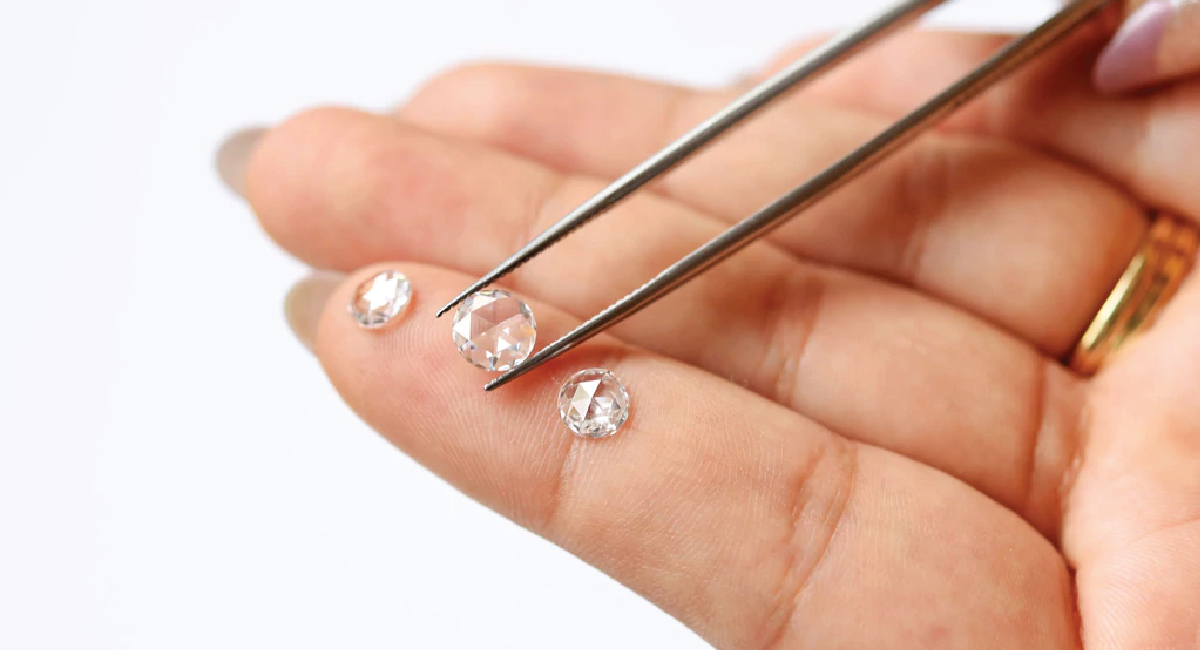
Lab created Rose Cut Diamonds

This marked the beginning of an era of ‘affordable diamonds’, however, it wasn’t until the recent decade that these man-made diamonds were openly accepted by the public.

Coming to the technicalities a lab-grown diamond is created by two processes. The only difference is that these methods didn’t follow the natural geological process but rather a man-made process to create a nice alluring Diamond ring.

Now, why should you buy a lab grown rose cut diamond? Or, why should you buy any lab grown diamonds in general? Well, for starters it is affordable. To put it in perspective a man-made diamond will be 25-30% cheaper than a naturally mined diamond. But, a man-made diamond will be so identical to a natural diamond that you won’t be able to tell them apart. 

Try thinking of it this way you can get around 1/3rd more of a diamond if you are buying a lab grown diamond (figuratively speaking and in comparison to naturally mined diamonds).

4C’s of Rose Cut Diamond

Let’s talk about the color and clarity of rose cut diamonds! How colorless or the degree to which it is white are they? What is referred to by the color? 

The color of a diamond or a rose cut lab diamond, in this case, is graded from D (least or almost colorless) to Z (yellow or brownish tint) on the color grading scale

Amongst the 4C’s of the diamonds: color, clarity, cut, and carat, color is where the rose cut diamonds compromise a bit. Flexibility with color is present with these types of diamonds. 
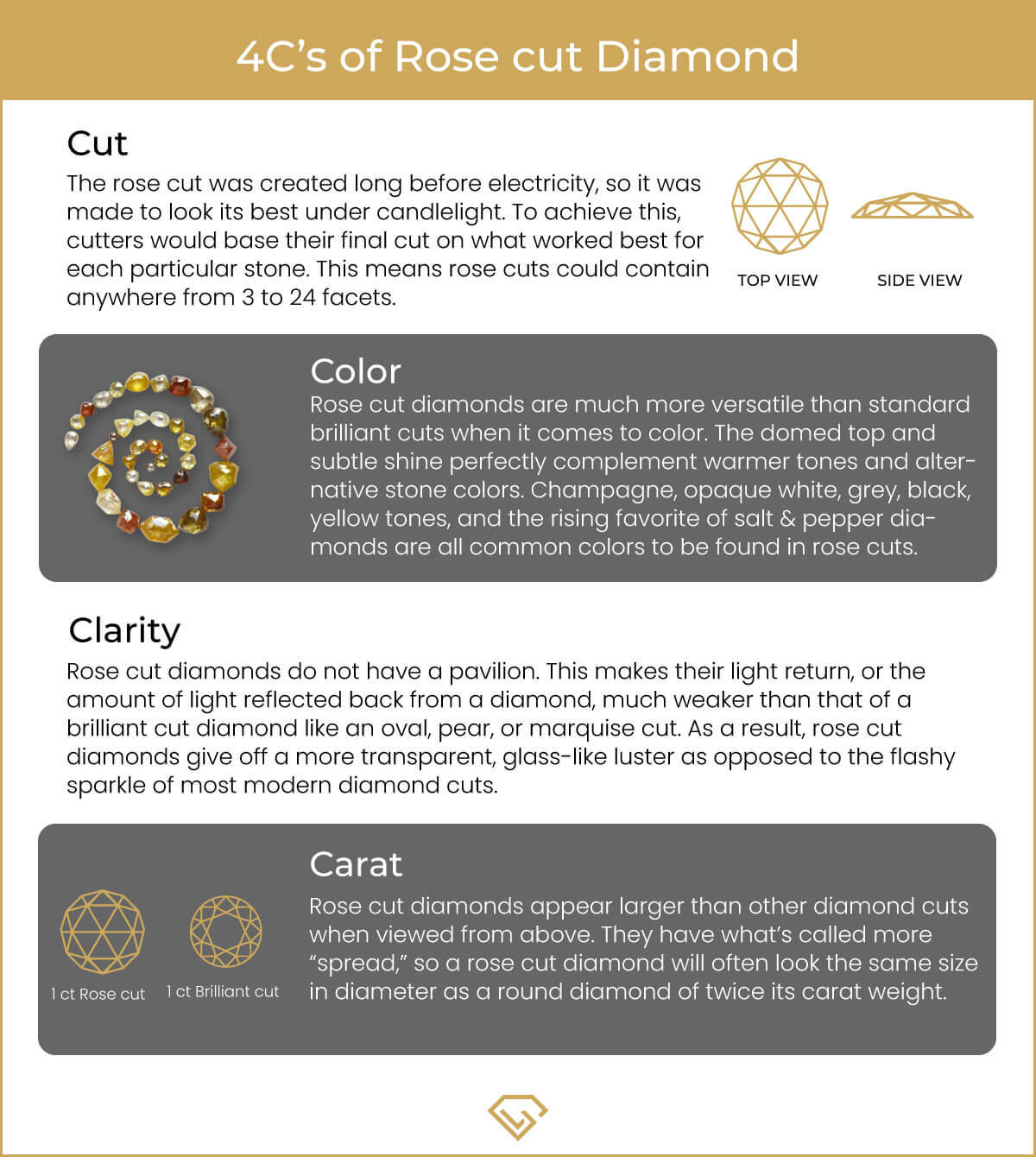
rose cut diamond 4c infographic

Since it has a domed top with a subtle shine, warm tones, and other colors this palette compliment it the best. Different colored diamonds like blue, pink, yellow, green, etc. also go great with rose cut diamonds. 

Such a cut brings out the diamond’s color prominently without the distraction of an intense light that comes with other diamond cuts. 

Another imperative part is the clarity of rose cut diamonds. The case with rose cut diamonds is such that blemishes and inclusions are quite visible because of the transparency, high dome, and larger and flatter facets of the stone which can be seen thoroughly. 

Hence, if you are looking for something extremely flawless, look for a higher-grade diamond. However, the imperfections of the stone add to the vintage feel of the diamond. If that is your style, you can lose clarity.

The rose cut diamonds appear larger in size when viewed from above. It has more ‘spread’ which means a rose cut diamond will mostly look the same in diameter as a brilliant round diamond of twice its carat size. 

Why Buy a Rose Cut Diamond?

There are multiple reasons to invest in a rose cut diamond. They are modest in size and price, definitely considered a big gesture of love and romance. Are quite more transparent than most of the other diamond cuts. 
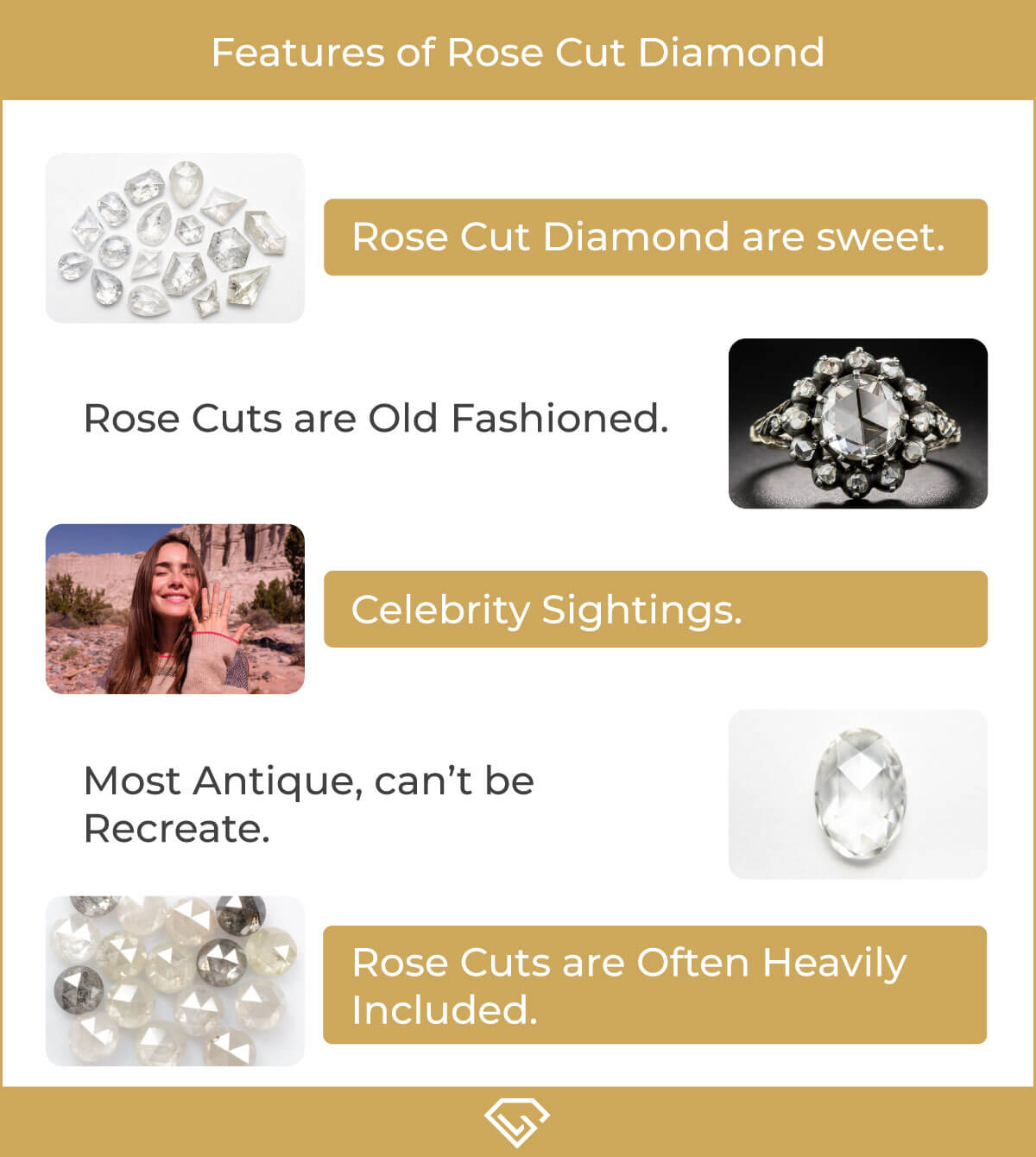
advantages of rose cut diamond

One major reason is that a rose cut diamond has a larger perceived size. They are more shallow in-depth, as in, the weight of the diamond shows on top. Hence, they appear bigger than the other cuts of the same carat. 

Secondly, the price is worth the diamond rather, than more diamonds than your money. It does not have a pointed bottom not and the carat weight is distributed making the diamond appear bigger without incurring any extra costs.

Another thing is that they are still popular however, they are relatively a rare find in modern diamond collections. This makes it a much anticipated find for a buyer or collector.

These rose cut diamonds represent a unique interaction between the light source and the diamond surface. The luster provided by the rose cut diamonds is more subtle than other cuts. It is romantic and elegant. It is not a rigid cut and can be customized into different shapes like oval shape, pears shape, round shape, hexagon shape, pear shape, kite shape, etc. 

[su_youtube_advanced url=”https://www.youtube.com/watch?v=ocEZv7JYbAc” width=”1600″ controls=”alt” autohide=”yes” autoplay=”yes” mute=”yes” loop=”yes” rel=”no” modestbranding=”yes” theme=”light” playsinline=”yes” title=”rose cut diamond engagement ring”]

However, one drawback can be that they do not make for the most dramatic engagement ring. It translates for a sweet, elegant cut rather than a bold dramatic statement. 

Another point is that these rose cut diamonds fall flat. If you were to observe this diamond cut from the site it would look as if a diamond cutter had sliced a round brilliant diamond from its axis. Lastly, a rose cut diamond shape cannot be recut into anything else. 

While you can ensure flexibility with the shape of the diamond, not so much with re-cutting. The cut is such that it only stays true to the rose cut. 

Pros & Cons of Rose Cut Diamonds: 

Pros:

  • The most important point that stays is that rose cut diamonds appear bigger in size than diamonds of the same carat. 
  • It is flexible in picking the shape of the diamond
  • You can easily customize it into a shape that you like without much thought. 
  • This cut is a rare find. Hence, it is truly eye-catching and sits well with the wearer. 
  • Since the diamond has a flat base, it sits close to the finger. People who live a life of hustle and vigor can opt for a diamond-like such. 
  • It is a versatile piece and will go with almost every outfit because of its elegance and simplicity. It stands out regardless. 

Cons:

  • A rose cut diamond sparkles less in comparison to a brilliant-cut diamond. This is a personal choice hence, if you are someone who likes to go off with their jewelry items then you should opt for something other than a rose cut diamond. 
  • While being a rare find is a pro but it at the same time acts as a con too. The rarity of the diamond makes it difficult to find in the markets. 
  • Since it is an antique hand-cut diamond, imperfections, bruises and asymmetries are visible along with the facets of the diamond. 
  • Although it is said that the pricing of the rose cut diamond is flexible, there is a wide disparity when it comes to the pricing all over to draw comparisons between different diamonds. 

Differences Between Brilliant Cut Diamonds & Rose Cut Diamond
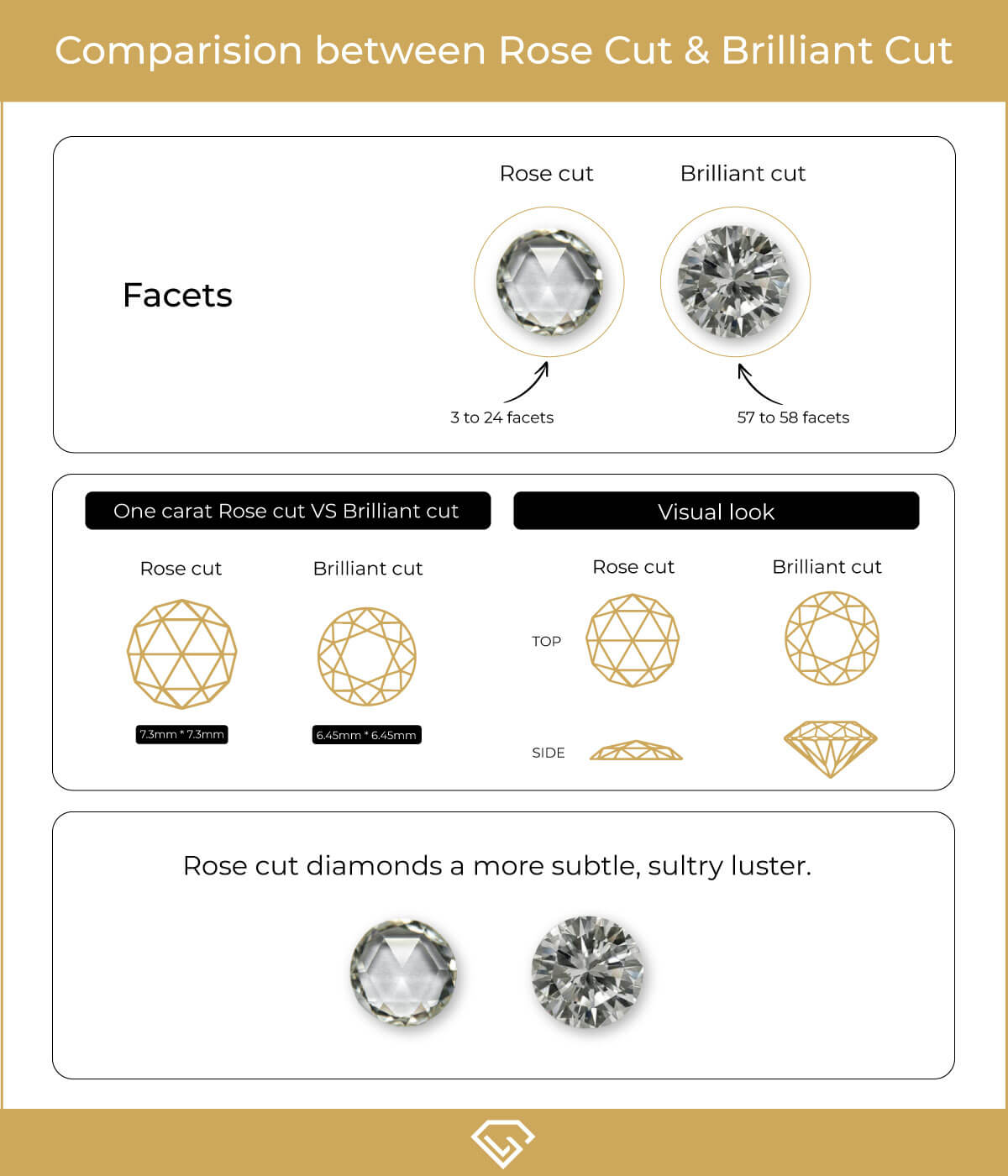
rose cut vs brilliant cut diamond

The flat individual surfaces of a diamond are called facets which are used to control the light reflecting the diamond. The fewer facets of a rose-cut diamond give off a subtle and elegant look resulting in a soft diffused lift (24 facets). 

The brilliant-cut diamond has around fifty-eight facets which give off a bold, bright and flashier sparkle. 

The brilliant-cut diamonds are weighty at the bottom owing to their pointed bottoms and tables. The diamond’s brilliance is accentuated with depth. 

On the other hand, as mentioned previously, rose cut diamonds have flat backs and dome-style crests. When viewed from the top, the rose cut diamonds present a larger-than-life view in comparison to brilliant-cut diamonds with the same carat weight.

Rose cuts are set low on the finger due to the flat bottoms while the brilliant cut is the opposite. It sits higher on the finger. 

The rose cut diamonds date back in time and have a glorious history with the Georgian and Victorian eras while the brilliant cuts were first visible in the 1919s using specifics of geometry and proportions. The brilliant cut is a mark of modernity in terms of diamond cutting and evolution over time in terms of this sector.

Where To Buy a Rose Cut Diamond?

You can buy lab-created rose cut diamonds on sale at Loose Grown Diamonds, one of the largest wholesale lab-grown diamond shops all over the world. Additionally, You can get a discount by using a promo code while shopping.

Combined with the wholesale prices, you really cannot get the best value for lab grown rose cut diamonds anywhere else other than Loose Grown Diamonds.
[blog_page_btn title=”Buy Lab Grown Diamonds” url=”https://www.loosegrowndiamond.com/inventory/”]

Conclusion

Rose cut diamonds make up for a brilliant anniversary or wedding present. This diamond is a special way of making your partner elated with joy. The rarity factor makes the rose cut diamonds even more special adding the hint of mystery and topping with elegance.

Jewelry should be such that it tells a story. This diamond holds a rich heritage and history which endows a certain sense of beauty in this piece. Ask the question with this rose cut diamond and a rose, literally!

Also, you can check out the stunning infographic of rose cut diamond, Follow the given link below:

  1. Check out the infographic of Rose cut diamond here in PDF format.
  2. Check out the infographic of Rose cut diamond here in PNG format.

FAQs

What does a rose cut diamond look like?
A rose cut diamond features a flat base with a domed top, resembling an unfolding rosebud. Triangular facets enhance transparency, offering a distinctive, elegant appearance.

Are rose cut diamonds more expensive?
The value of a rose cut diamond varies based on factors such as carat weight, color, clarity, and cut quality. Rose cut diamond prices can range from $1,200 to several thousand dollars per carat.

What is the difference between rose cut diamond price calculator?
The difference lies in the specific parameters considered for rose cut diamonds, accounting for their unique characteristics, rarity, and individuality in comparison to other diamond cuts in a price calculator.

What is special about rose cut diamonds?
Rose cut diamond shapes appear larger for the same carat size, making them a cost-effective choice.

Is lab grown rose cut diamond cheaper?
Yes, rose cut diamonds can be relatively cheaper due to their unique cut, which emphasizes perceived size over depth.
Square Emerald Cut Diamond: Everything You Need to Know

Diamonds have always been many people’s favorite choice of gemstones. While many tend to settle for the flashy and brilliant variations in diamonds like the ones with round cut gems, many others prefer a subtle and sophisticated design like the one that can be observed through the emerald cut or asscher cut diamonds.

Two nearly identical cuts like the Emerald and Asscher diamonds, hence, make for a great choice for customers who are not attracted by gems that are too flamboyant but would still like to enjoy the radiance and beauty that diamonds exude. The only major difference between the cuts is the variation in the L: W ratio of the diamonds, wherein the length and width vary in such a way that the emerald cut diamond has a rectangular shape whereas the Asscher cut has a square one.

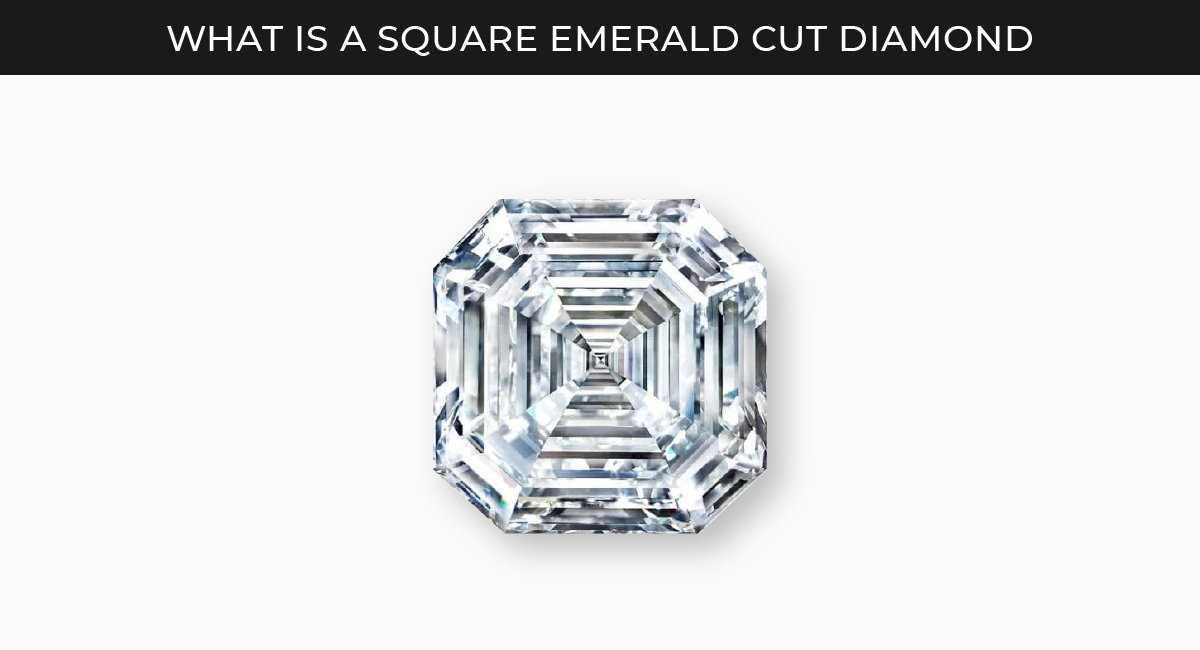
what is square emerald cut diamond

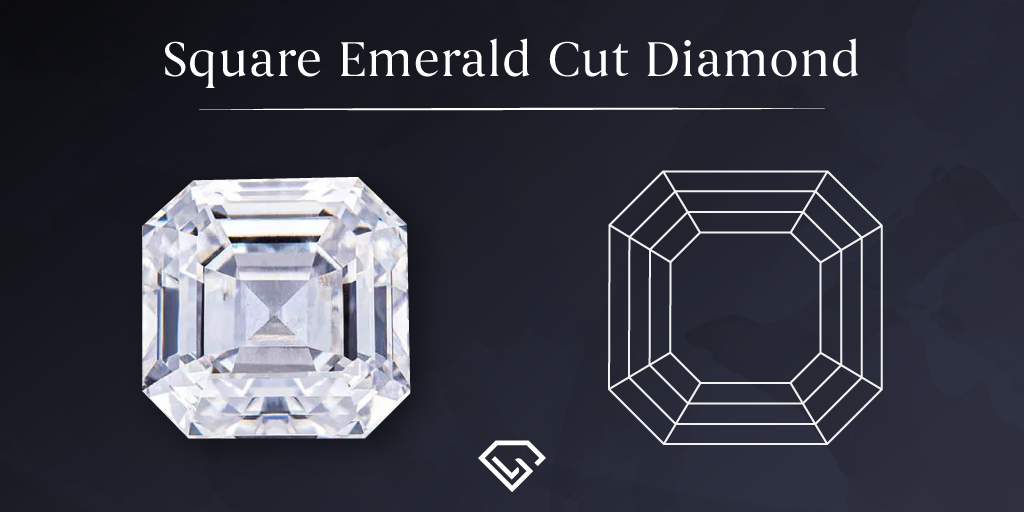
However, the square shaped emerald cut diamonds sometimes manage to create a lot of confusion amongst customers since they resemble both types and are difficult to place within either of the categories. The square emerald cut diamonds can still be included under the umbrella of emerald cuts because of their less truncated corners which are more pronounced in a true asscher cut diamond.

Hence, square emerald cut diamonds can easily be said to be the perfect combination of both worlds and prove to be an apt choice for customers whose personal preferences and styles complement the design exhibited by these diamonds.

However, before making a decision on which cut to choose for one’s jewelry, it is always advised to customers to first look into the general guidelines that must be referred to for the process of evaluating diamonds.

What is a Square Emerald Cut Diamond?

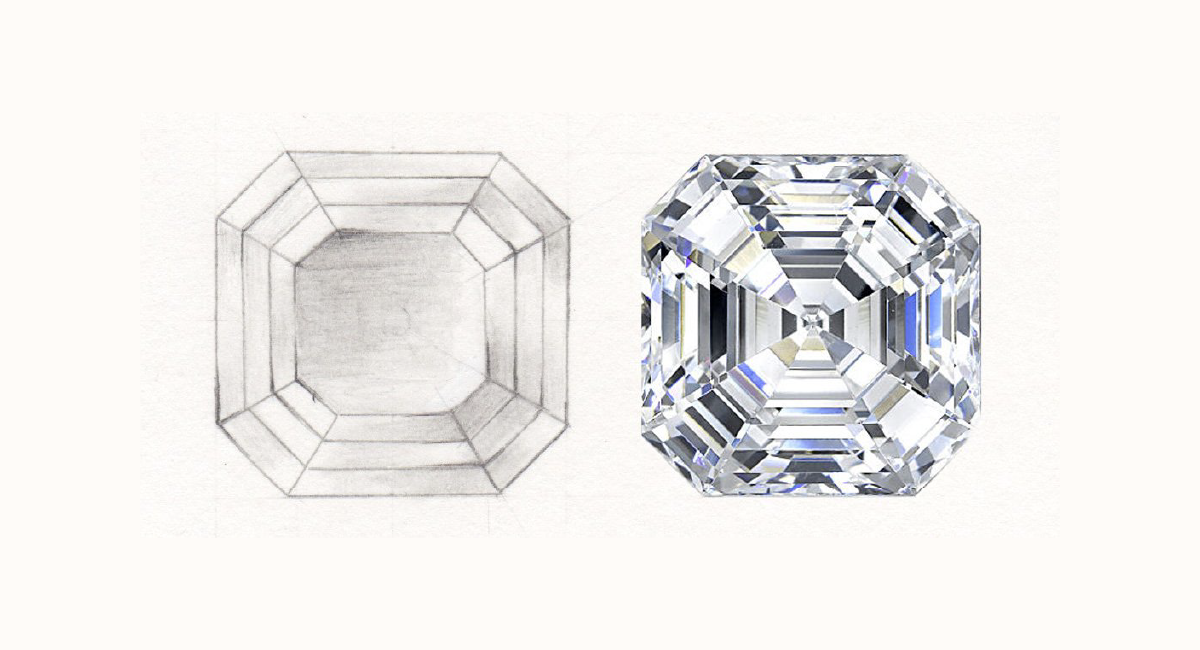
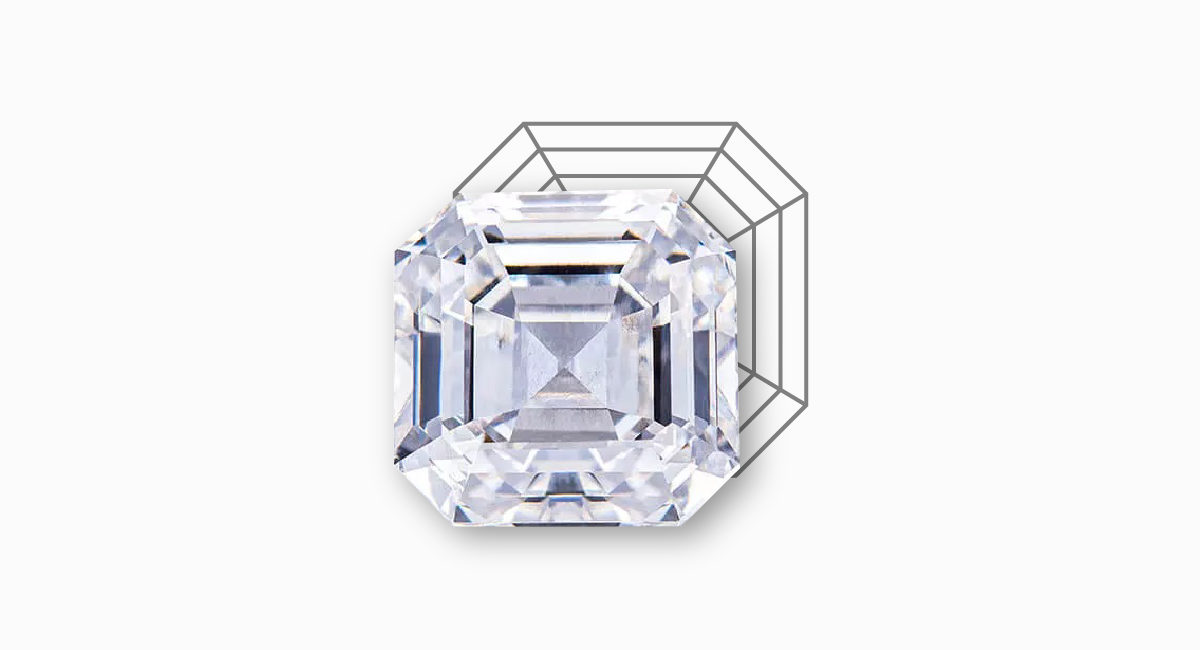
A diamond with an elongated shape molded into the appearance of a square, the square emerald cut gemstone has linear facets that feature chiseled step cuts that are arranged in a parallel manner down the stone. Additional cuts are provided to the corners of the stone to provide the gem with extra security and stability so that it retains its shape and position in a ring and does not get easily fractured. 

What is a Square Emerald Cut Diamond

With a huge surface table, the square emerald cut diamond is one of the largest diamond cuts out there and also provides its wearers with exceptional clarity. It is well known for appearing larger than the actual size and carat weight of other shaped diamonds and hence, makes for a popular option for customers who want to spend their bucks in a budgeted manner but on a large stone. Another effect created by the cut includes its ability to abundantly reflect white and colored light due to the presence of long step cuts.

Although emerald cuts are generally found in rectangular shapes due to better prominence, they are also available in squares for customers who are attracted to the particular shape.

[blog_page_inventory shape=”Emerald” carat=”1.40,2.20″ cut=”1,4″ color=”0,10″ clarity=”0,11″]
[blog_page_btn title”Buy Now” url=”https://www.loosegrowndiamond.com/inventory/?”]

History of Square Emerald Cut Diamond

One of the oldest diamond shapes to exist, the emerald cut can be traced back to the table cut of the 1500s from which the emerald cut was further developed. Originally termed as the multi-faceted table cut, the cut was first and foremost used on emeralds as the name suggests and was only a lot later on brought as another variety into the world of diamonds. 

With the term ‘emerald cut’ emerged in the 1920s, it has often been associated with the era of Art Deco wherein clean lines and symmetry were in trend amongst the people and enjoyed their own class of popularity. Then in the 1940s, the cut was further more refined and standardized which could be done with the invention of much more advanced and systematic diamond-cutting tools.History of Square Emerald Diamond

Once emerald cuts were refined as much as they could be, they began being designed in shapes other than rectangles by many jewelers and designers and hence, the square emerald cut diamond was conceived. 

Facets of Square Emerald Cut Diamond

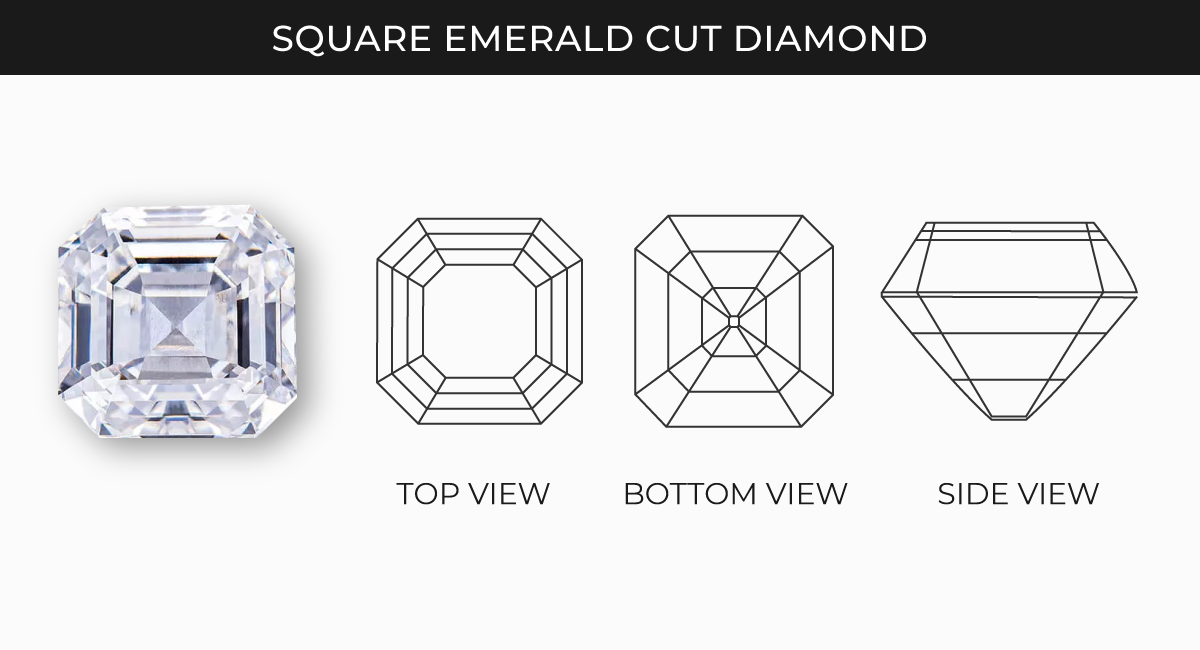
The square emerald cut diamonds have a square outline and the corners are cut in a particular manner. Depending on the dimensions of the gem, the emerald-cut diamonds can be home to 50 to 58 step-cut facets.

Square emerald cut diamond
The step cuts are arranged parallelly and this leads to the creation of stunning flashes of light which in turn causes a “hall of mirrors” effect. This cut is known to be slightly more elegant than radiant cut diamonds and also exhibits a more sophisticated sparkle.

Difference Between Square Emerald Cut Diamonds & Asscher Cut Diamonds:

Many times people tend to propose the question “What is the difference between an emerald cut diamond and an asscher cut diamond?”. The reason both of these types of diamonds are put up for comparison is that they both belong to the step-cut family. In this family of diamonds, each diamond has some or the other sort of step-like cutting the ones you see on staircases. 

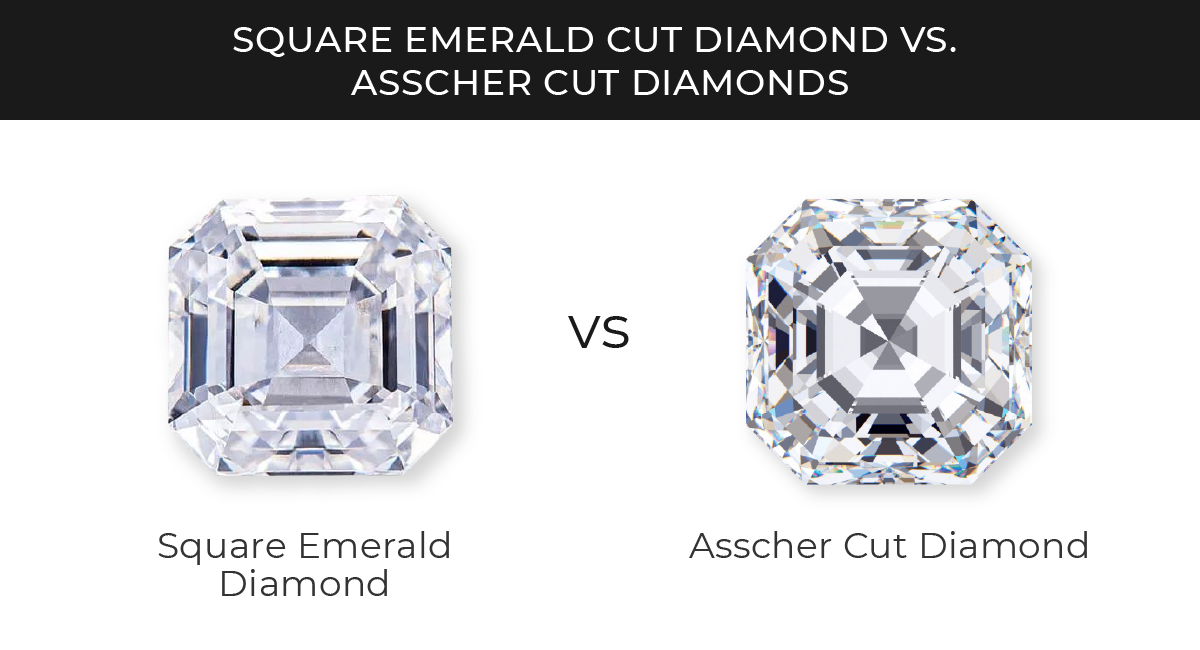
Square Emerald cut vs Asscher cut diamond

This family consists of emerald cut diamonds, asscher cut diamonds, baguette cut diamonds, and carré cut diamonds. Each of these diamonds has its own specialty and reason to buy. But coming to the emerald and asscher cut diamond.

Firstly, the emerald cut lab diamond is rectangular as it is elongated. The asscher diamond has equal sides and appears as a square and at times when the corners of an asscher diamond are cut thoroughly, the gem appears to take an octagonal shape. 

Coming to the length of these diamonds; the length of the sides of both the diamonds vary. The ratio of length for the lab created emerald diamond can be 3:1:1 (length: width: thickness), 6:1:1, and even 4:1:1. This is why when one wears an emerald cut diamond their fingers appear to be elongated, a phenomenon which is seen when wearing marquise, ovals, and pear diamonds. 

These are not fixed but rather ratios that will give the diamond an elegant look. The sides of an asscher lab diamond will however be at 1:1. Making this diamond a bulky look and appear to be bigger in general.

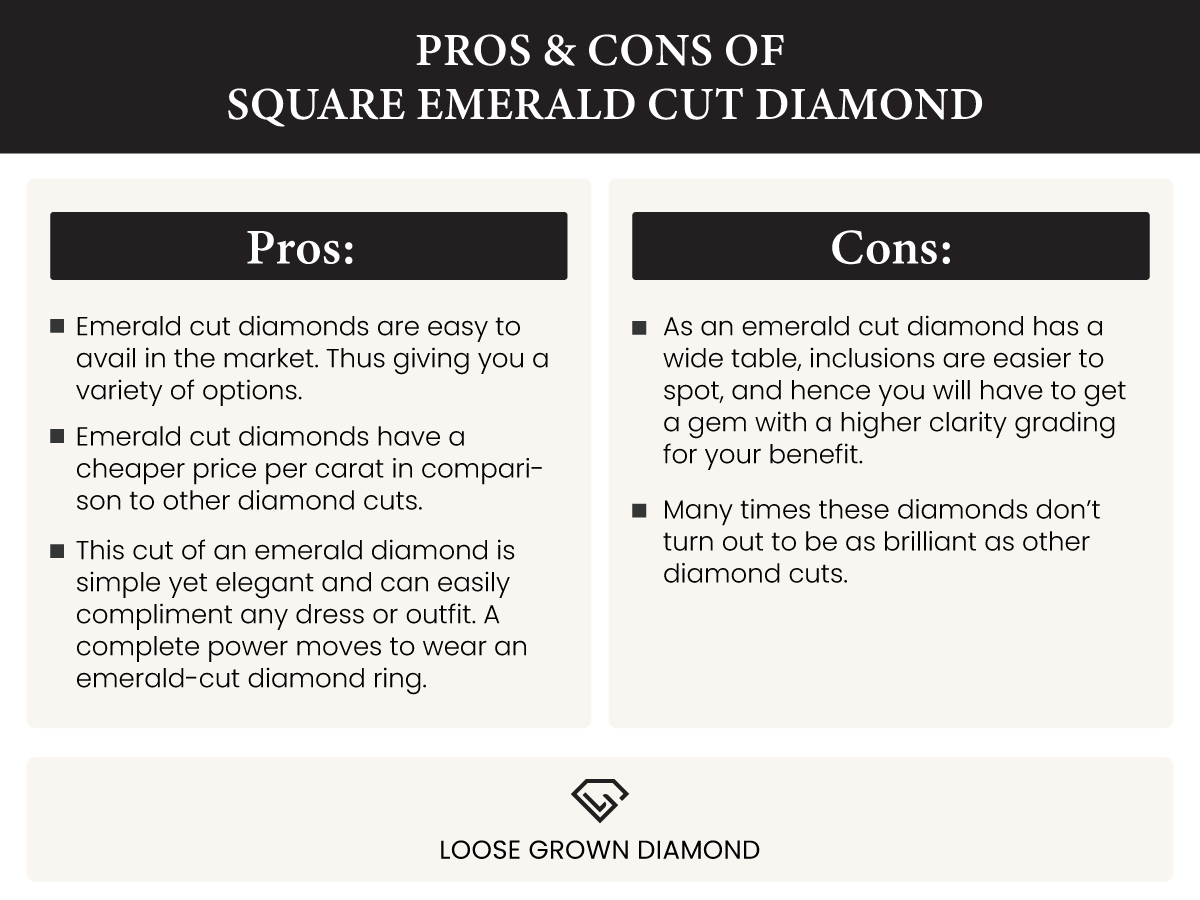
Pros & Cons of Square Emerald Cut diamond

Now that you have got a broad idea about emerald cut diamonds let us mention reasons why you should buy this gem (pros) and reasons why you might back out in buying an emerald cut diamond (cons).

pros and cons of square emerald diamond

Things to Consider Before Buying a Square Emerald Cut Diamond Ring:

The square cut diamonds are being prominently used in engagement rings by customers who are intrigued by the uniqueness and subtlety expressed by this variation. Even though the guidelines to judge square emerald cut diamonds are pretty much the same as the rules applied to the other diamonds that were mentioned before, it is still essential to keep in mind the few specifications that are characteristic features of the emerald cut gems.

Cut: Since reputed organizations like the GIA do not grade cuts in fancy shapes and only evaluate the polish and symmetry of the surface, customers can only utilize certain ranges in aspects of the cut of an emerald cut diamond to achieve maximum luster. The ranges are given in the following table.

Things to Consider Before Buying a Square Emerald Cut Diamond Ring

Clarity: Customers are often advised to select a square emerald cut diamond that does not have any inclusions present in the middle of the stone since the clear window on the table surface of the diamond allows observers to directly view the diamond. The most minimal flaw would be clearly visible in a square emerald cut diamond also because of its comparatively shallow pavilion and crown. Hence, it is safe to say that blemishes and imperfections in an emerald cut diamond would be a lot more noticeable and visible than the ones found in a round cut or cushion cut diamond.

Customers are, therefore, advised to select a stone with VS2 clarity grade to invest their money into the most worthy emerald cut diamond ring.

Color: Like the other aspects, even color in a square emerald cut diamond is a noticeable factor that customers need to take care of while making the purchase. A diamond with a grade of I or lower is the best option when it comes to square emerald cut diamonds. 

The color of the diamond must also complement the setting it will be based within. Hence, customers should also let the setting be an influential factor in the decision-making process regarding the color of the lab grown diamond.

Carat: Described simply as the weight of the diamond, it is an aspect related to the size and physical appearance of a precious stone. A carat that best fits the frame of the customer’s face and also falls within the budget must be kept in mind while making the purchase.

Although a bigger size is sometimes preferred, people should consider the diamond’s cut above the carat weight as most times larger diamonds lack the luster and sparkle because it has been poorly cut. 0.50-carat stones are a preference for many.

If you’re uncertain about which diamond carat size to choose, refer to our diamond size chart for a comprehensive guide to determining the most suitable size for you.

Best Settings for Square Emerald Cut Diamond:

An emerald cut diamond though gives a benevolent and class vibe it tends to have a more gracious appeal when the gem is mounted on a particular setting. Now out of the many settings which are the best? Let us answer this question for you.

[su_youtube_advanced url=”https://www.youtube.com/watch?v=DFUal8QQDFY” width=”1600″ controls=”alt” autohide=”yes” autoplay=”yes” mute=”yes” loop=”yes” rel=”no” modestbranding=”yes” theme=”light” playsinline=”yes” title=”Square Emerald Cut Diamond ring”]

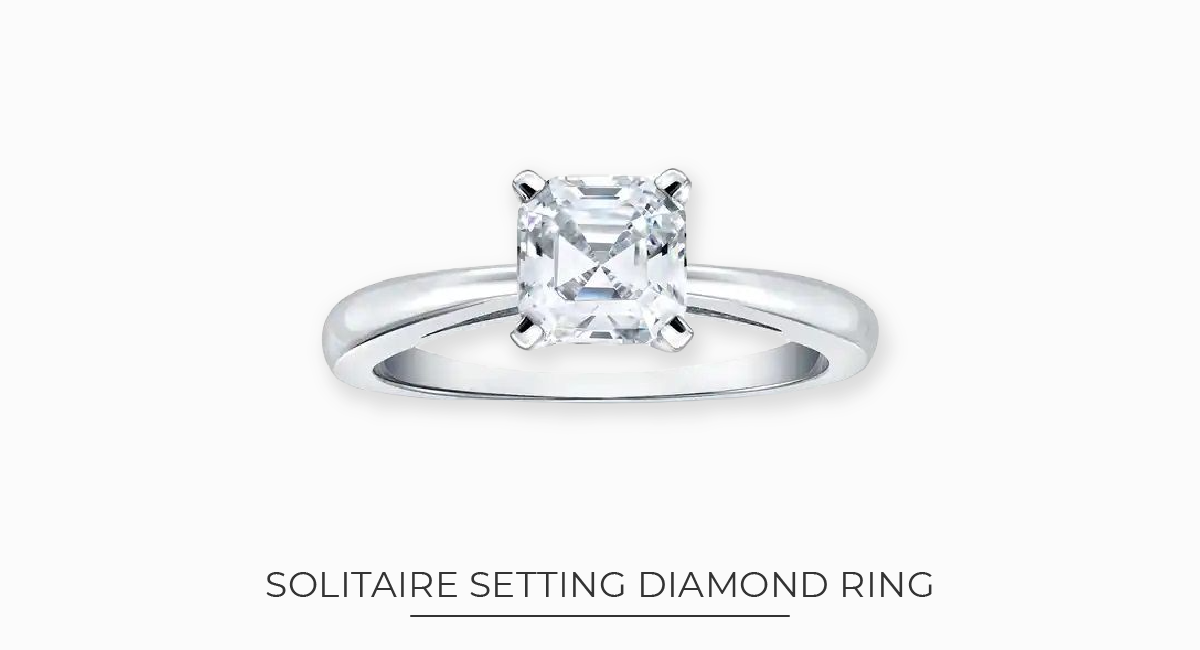
Square Emerald Diamond Solitaire Setting:
A setting in which the dazzling emerald cut diamond will be placed as a center stone without any adjacent stones is termed a solitaire setting.

Square Emerald Diamond Solitaire Setting

This setting is recommended for when you are willing to place a diamond that has an appreciable size. As the stone alone will carry the engagement ring, keeping the carat size too small might be the best fit. The solitaire setting is considered to portray how an individual considers themselves powerful enough to stand alone.

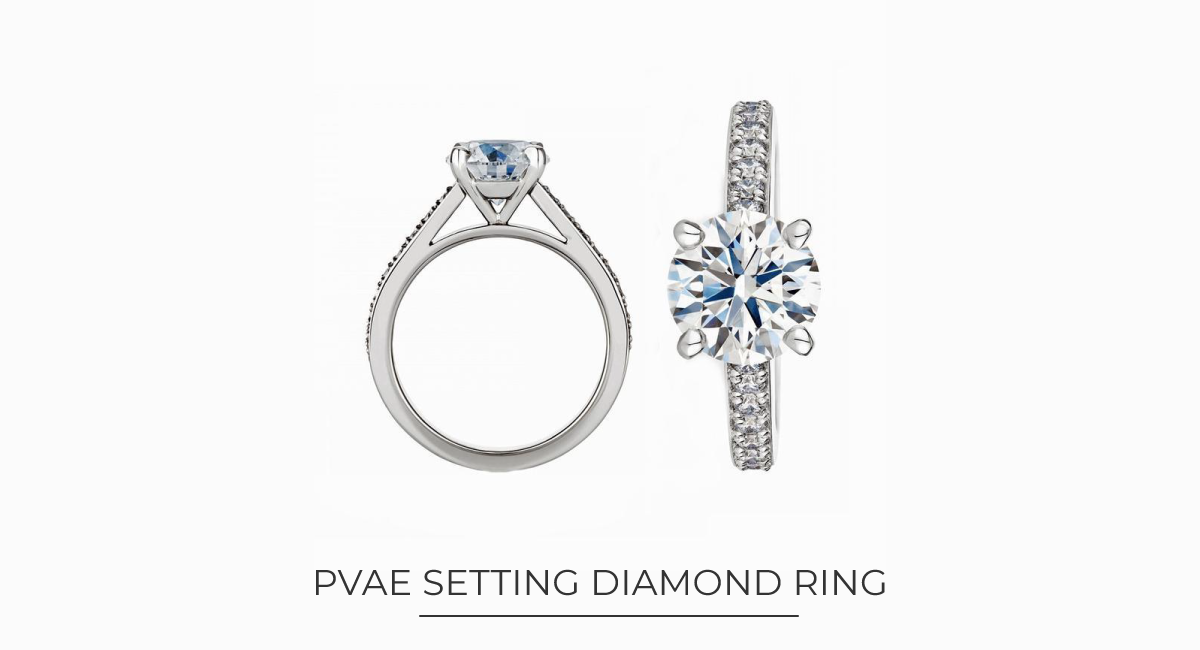
Square Emerald Diamond Pave Setting:
If you are one to flaunt your jewelry as you consider it to be absolutely lovely then this emerald-cut diamond setting will be a treat for your eyes.

Consider a solitaire ring with a metal band consisting of small diamonds lined up adjacent to each other to give the whole ring a more wealthy look. The pave setting may be a bit heavy on your pocket but the happiness it will provide will be so worth it.

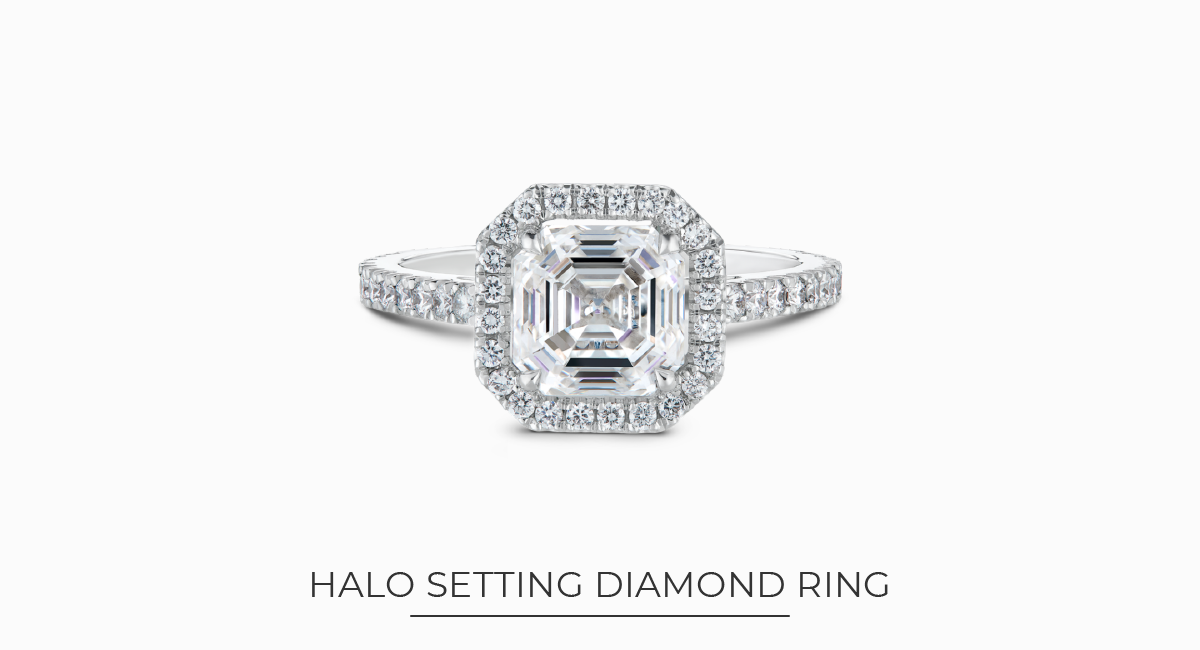
Square Emerald Diamond Halo Setting:
An amazing setting that screams richness and prosperity. The halo setting is one of a kind setting that can be increased, you can have one halo or two.

Square Emerald Diamond Halo Setting Ring

You can even take it up a notch and have 3 halos, but be sure to note that as soon as you add a halo the price of a ring is bound to skyrocket. An emerald-cut diamond when placed in a halo setting is likely to be good with one or two halos. These halos are metal circular bands placed around the centerpiece (the emerald cut diamond in this case) and they have diamonds studded on them. Thus making the whole ring appear slightly bigger than it actually is.

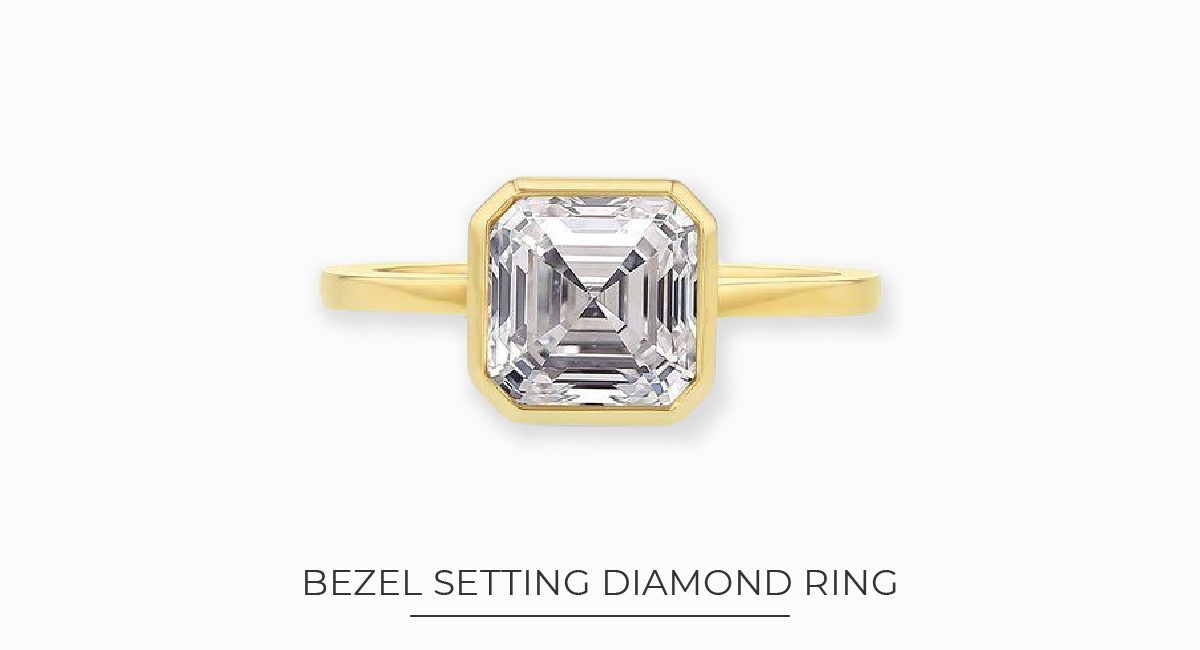
Square Emerald Diamond Bezel Setting:
The bezel setting for an emerald cut diamond is one of the most secure settings there is. In this setting, the centerpiece diamond is covered from all sides by the metal.

Square Emerald Diamond Bezel Ring

It is basically like a solitaire ring (as there is mostly one diamond) wherein the metal is extended to the side of the diamond. This setting is good for people who want higher durability of their diamond and are planning to keep it in the long run.

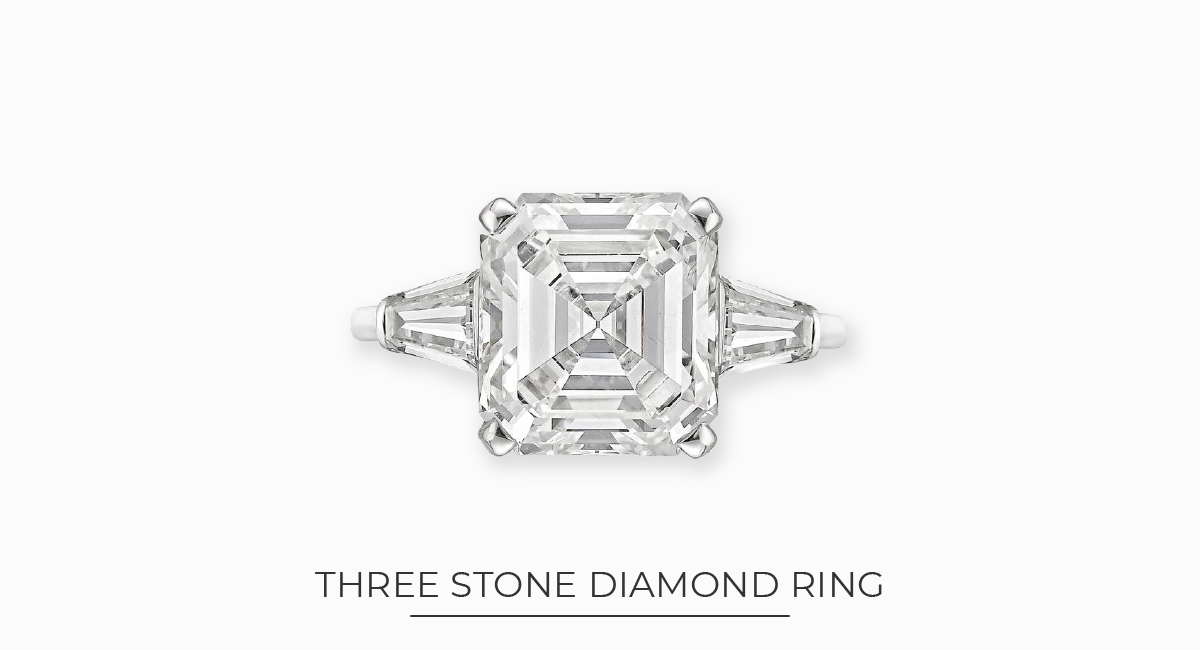
Square Emerald Diamond Three Stone Setting:
This type of emerald cut diamond ring is for those people who just love emerald diamonds and want to have more than just one stone.

Square Emerald Diamond Three Stone Diamond Ring

Three stone setting there are a total of three diamonds in which the centerpiece is bigger than its adjacent side pieces. The square emerald cut engagement ring setting makes the ring look expensive and is, in general, more expensive than the rest due to the use of more than 1 diamond.

Who Should Buy Square Emerald Cut Diamonds?

The square emerald cut diamonds must always be considered by customers who are seeking gemstones that exhibit a perfect combination of two varying cuts in a beautifully subtle manner. When looking to purchase a square emerald cut diamond, you can explore several reputable options both online and in physical stores.

Loose Grown Diamonds” is known for its vast selection of lab created diamonds. The bonus here is the fact that jewelry made with this diamond is available at affordable prices and hence customers can get their hands on one of the best cuts in diamonds for comparatively lower prices. In more, discover special savings by using our exclusive promo code to enhance your diamond shopping experience. Hence, it is safe to say that the square emerald cut diamond is a real catch for many.


FAQs

How does a square emerald cut differ from a regular emerald cut?
The primary distinction lies in the shape. While both have step-cut facets, a square emerald cut is specifically designed to have a square outline, offering a unique and modern twist to the classic emerald cut.

What is the square cut emerald diamond price?
An emerald cut diamond weighing 1 carat can be obtained within a price range of $1000 – $1500, with the specific cost influenced by factors such as color, cut, and clarity that you choose.

Are square emerald cut diamonds suitable for engagement rings?
Yes, square emerald cut diamonds are a popular choice for engagement rings. Their clean lines make them an elegant and eye-catching option, blending modern aesthetics with a touch of vintage charm.

Can I customize a square emerald cut ring?
Yes, “Loose Grown Diamond” offers customization options for square emerald cut diamond rings. You can choose the metal, setting style, size and even incorporate additional accent stones to create a unique and personalized piece.

Are square cut diamonds more expensive?
Square diamonds, such as princess or cushion cuts, are generally more affordable than round brilliant cuts. This is because the cutting process retains more of the original diamond rough, minimizing wastage and reducing overall costs.

Cushion Cut vs Emerald Cut Diamonds: Which one is right for you?

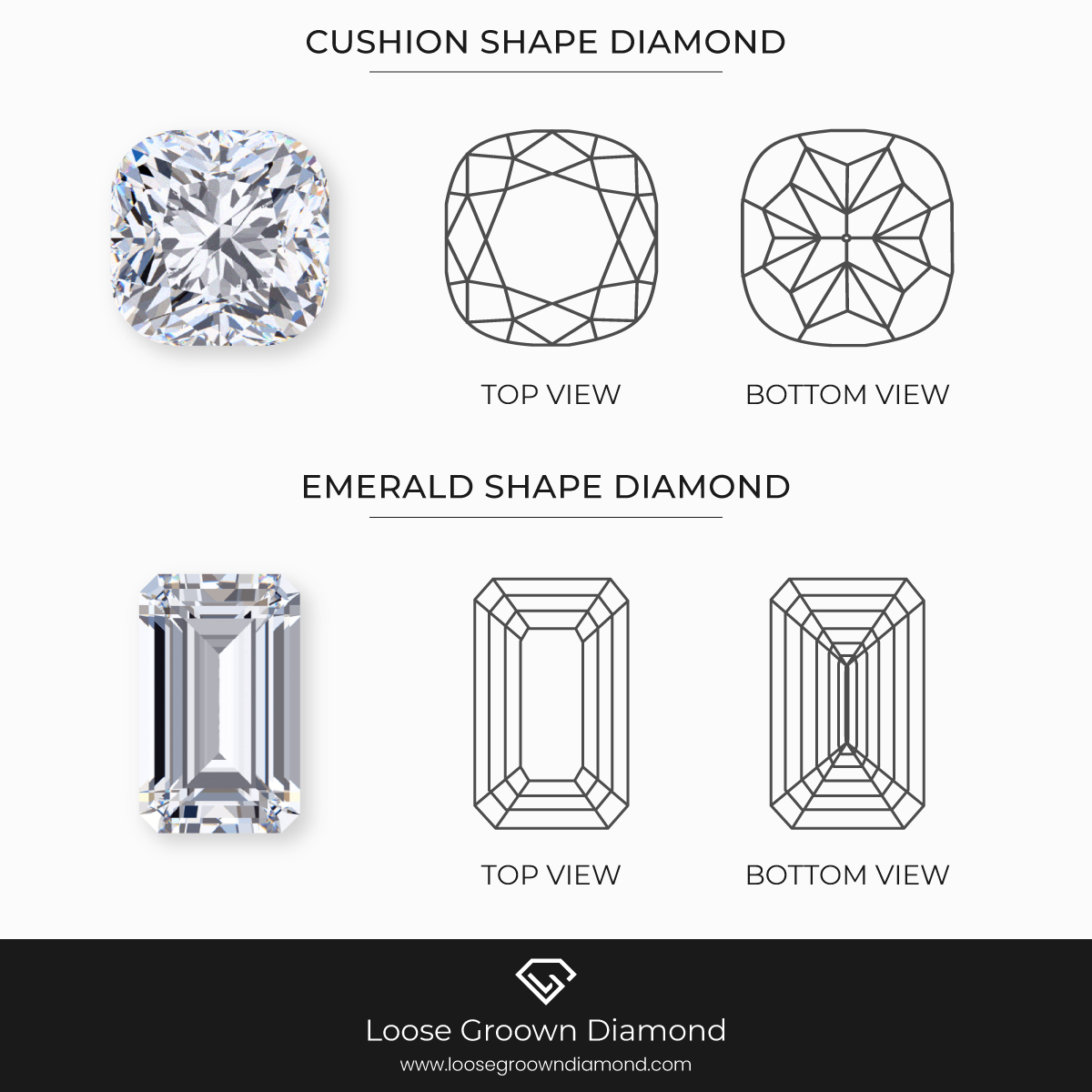
Cushion cut and Emerald cut diamonds are one of the highest-selling diamonds in the jewelry domain. There are so many varieties jewelers can create with beautiful gem-like diamonds, out of which the cushion and emerald cut are the most appreciated in the market. We can alter the design and appearance of any lab diamond in numerous ways. A diamond can change the complete look of any accessory. Diamonds are of such a diversified nature, that they can be worn on any occasion and will fit perfectly.

The appearance of a diamond is influenced by certain natural factors and manual factors like cuts. Cuts are the most crucial element since they provide maximum brilliance to even a slightly dull color of the diamond. The cuts are proof of flawless craftsmanship and can enhance even a dull diamond. 

The cut determines the brilliance of a gem and also its shape, and there are various types of cuts based on the form and desired appearance of the diamond. These are round brilliant (the most common type of cut), pear cut, marquise cut, oval cut, princess cut,  radiant cut, Asscher cut, cushion cut and emerald cut diamond.

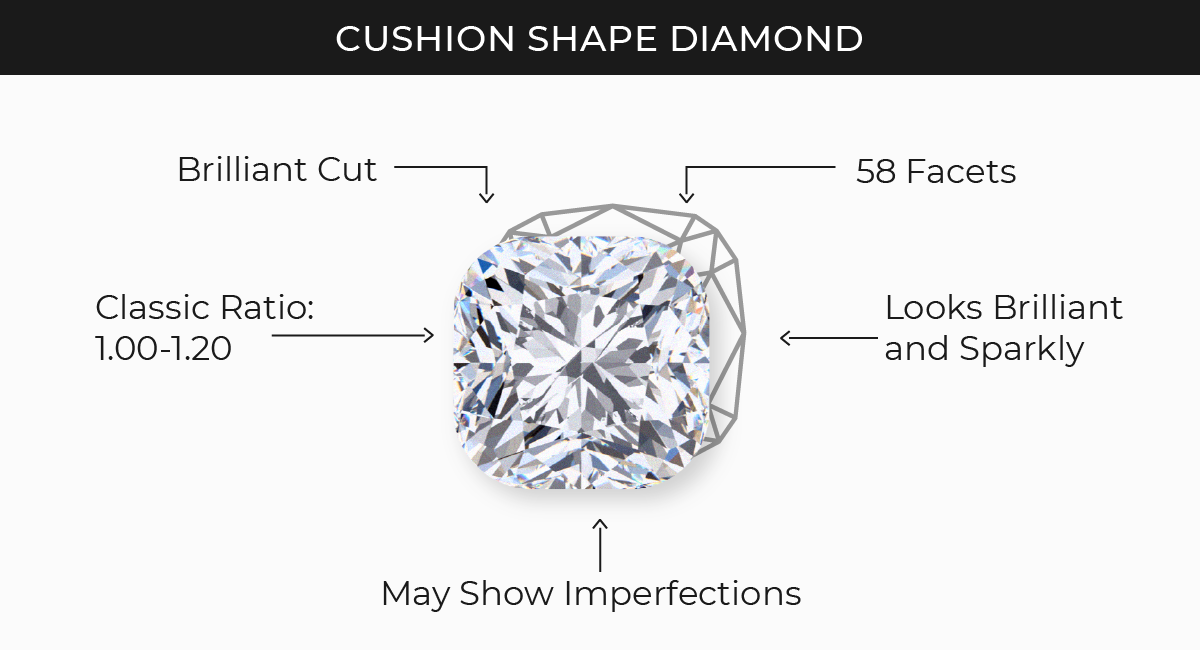
What is a Cushion Cut Diamond?

What is a Cushion shape Diamond
The cushion cut is an elegant cut of diamond, which has been derived (as the name suggests) from the shape of a pillow. It is also known as a mine cut or an old mine cut diamond. The shape of these cushion lab diamonds is either square or rectangular, with the corners of the shape rounded to represent a pillow.

This graceful cut has been in fashion for around 200 years and has evolved itself from an old classical design to a more modern choice. It is much preferred these days due to its affordability as compared to round brilliant. Its appearance is as elegant as its round counterpart but gives a little edge to the basic classic round brilliant cut diamond.

It is said to have been discovered in the mines of Brazil and then in the mines of South Africa. Hence, the name it got justified its origin, the mine cut, and the old mine cut. Initially, the cushion cut diamond had 58 facets, and as it molded itself into modern design, it had 64 facets. The modern cushion diamond shape is much more brilliant than the older designs, due to an increase in the number of facets, hence increasing the brilliance.

The modern cushion cut diamond design represents a cross between the oval cut and the old mine cut. The old mine cut had almost pointed edges, which have been replaced by curves similar to and hence inspired from the oval cut diamond design. The fire of the diamond cut is unmatchable and it is an important aspect of the cushion cut.

There are two types of cushion cuts, one is a chunky one and the other one is ice crushed. These two names are dependent on the cuts. The chunky one has bigger cuts and the ice crushed ones have smaller cuts. The ice crushed is commonly referred to as the modified cushion cut.

[blog_page_inventory shape=”Cushion” carat=”1.00,2.10″ cut=”1,4″ color=”0,10″ clarity=”0,11″]
[blog_page_btn title”Buy Now” url=”https://www.loosegrowndiamond.com/inventory/?”]

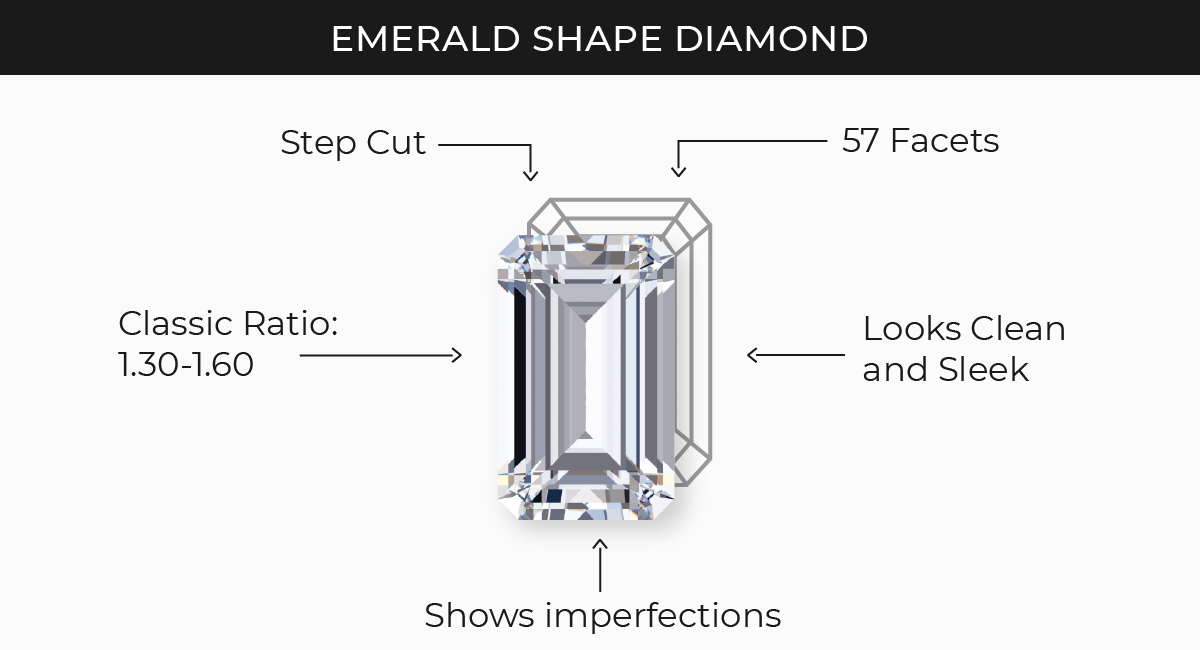
What is an Emerald Cut Diamond?

What is a Emerald Shape Diamond

The emerald cut is a newer alternative to the variety of cuts available in diamonds. This is an exceptional and extremely rich-looking cut, which is classy, to say the least. It is the most versatile cut and form available in diamond varieties. The other cut shave facets which bring out the best in the lab grown diamond, while the emerald cut is a stepped form of cut, which allows us to see the shape of the diamond as we see below.

Their rectangular facets are the thing that separates the emerald cut from the other traditional cuts. These parallel facets are separated and the corners of the shape are chiseled, in order to prevent any damage or chips in the diamond. These chisels are also further carried on as linear parallel facets to the main face of the gem.

It was discovered in the 1500s as a table cut which it was commonly known as. It became well known due to its less craftsmanship pressure. Back in the day, it prevented the chipping of the diamond. It got even more attention during the Art Deco movement, with its clean sharp lines and parallel faces in the craftsmanship of the emerald diamond.

[blog_page_inventory shape=”Emerald” carat=”1.00,2.10″ cut=”1,4″ color=”0,10″ clarity=”0,11″]
[blog_page_btn title”Buy Now” url=”https://www.loosegrowndiamond.com/inventory/?”]

Difference Between Cushion Cut and Emerald Cut Diamond

Detailed View cushion cut and emerald cut diamond

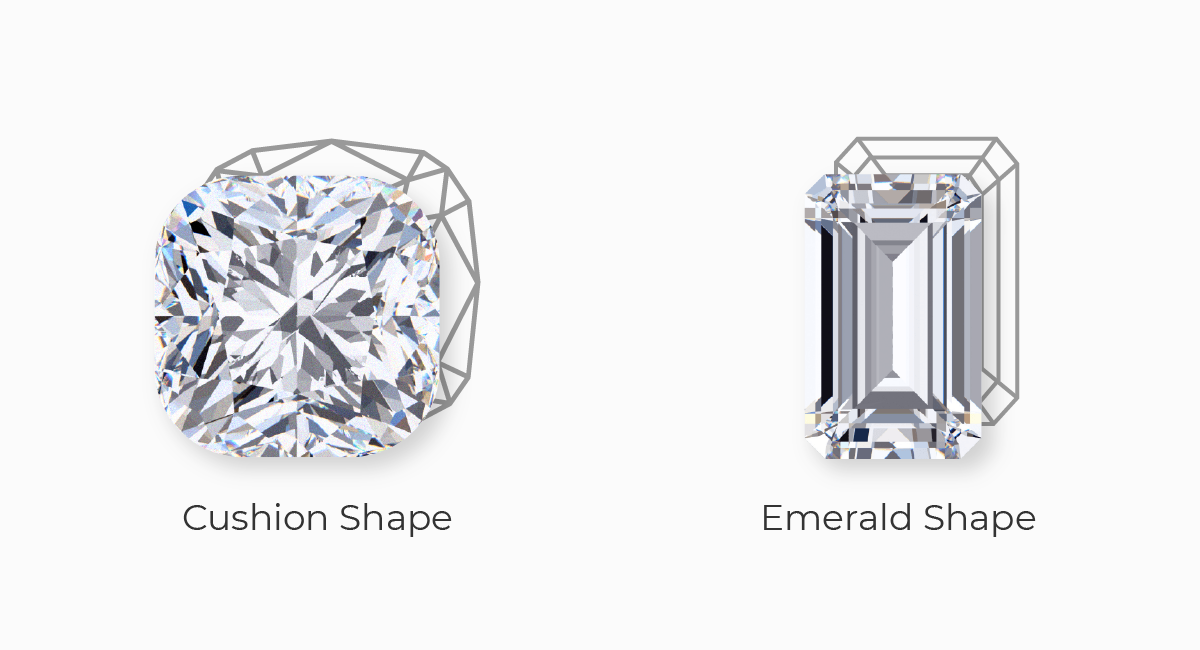
Selecting between a cushion cut and an emerald cut can get confusing. To help you select the more suitable one for you, we have made a detailed comparison of both these exquisite cuts.

We have highlighted their differences and similarities. We have also compared them on different parameters like size, appearance, and styling options.

Size & Appearance: Cushion Cut vs Emerald Cut Diamond

Cushion vs emerald lab diamond

The shape of a cushion cut diamond is generally square, hence the length to width ratio being 1.0. Sometimes the cushion cut is available in a rectangular form, which allows for the common ratio to be anywhere from 1.1 to 1.2.

Due to its rounded shape, it is very safe to use in adverse conditions, without the fear of it chipping or breaking. The cut is specifically known for its fire (dispersion), which is the light of other colors that it reflects. This feature adds a highly elegant look to the already vintage cushion cut.

The shape of the emerald cut is generally a rectangle, but sometimes a square can also be used. Emerald cut refracts white as well as colored light as efficiently. It has a large surface table, hence it is possible.

The shape is generally a rectangle, hence the preferred ratio is 1.3 to 1.6. The most commonly used ratio for the emerald cut gem is 1.5. There are cases where the emerald cut is a square, in this case, the ratio would be 1.1. The long and glassy body of the emerald exudes royalty from the wearer.

The glassy and elegant appearance of emerald cut makes it a modern choice among the edgy classic wearers. It is a little more unsafe than the cushion, due to corners, even though chiseled.

Which Metals to use with Cushion Cut vs Emerald Cut Diamonds?

rings setting for cushion cut diamond and emerald cut diamond

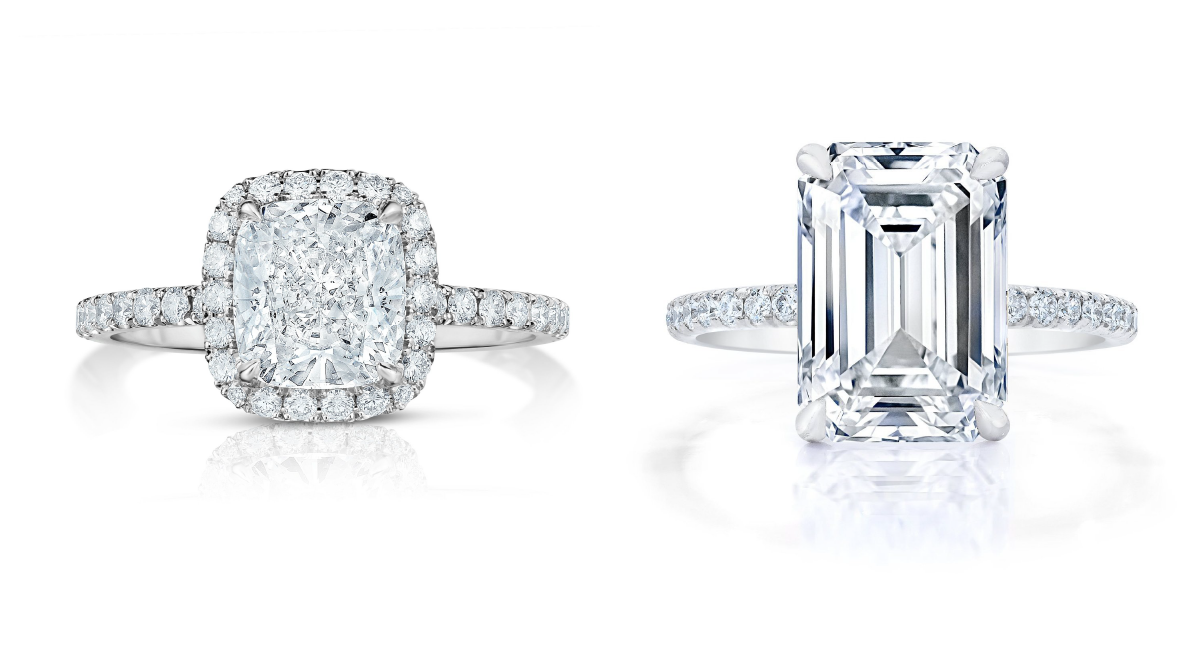
Cushion cut diamonds are preferred in engagement rings because they are vintage and elegant options. Every metal which is used to hold the gem can be used to bring out a different look of the diamond.

A white metal like silver, white gold, or platinum is preferred to be a host to this diamond cut. Generally, for wedding rings, white gold and platinum are preferred, sometimes even palladium can be used by certain people. 

These white metals let the diamond be on its own, while just providing a basic hold to the diamond. Yellow gold gives a vintage highlight to the gem and hence complements the vintage look of the cushion cut. The rose gold metal allows for a romantic tone.

The emerald diamond is seen as a unique option for wedding and engagement rings. The metals that are chosen for the design are picked very carefully but according to the demands of the customer. Generally, white metal is preferred for the base metal because the white color of the metal enhances the diamond’s brilliance but at the same time balances it without taking away too much attention from the main diamond itself.

These metals are silver, white gold, or even platinum. For engagement rings, white gold or platinum is preferred.

Which One for the Engagement and Which One for the Wedding?

This question is often asked by our customers who trying to purchase a ring for the first time. Well, The cushion cut is majorly visible in engagement ring designs in contrast to other accessory designs.

The emerald cut is also a very unique and versatile option as an engagement ring. It too is majorly preferred in wedding rings rather than any other Jewelry options.

Which One Looks Better on Hands?

Due to the high brilliance of the cushion cut, we observe that a ring of this cut allows a fuller look at the wearer’s fingers. The form of the cushion is a curved form that allows the fingers to appear fuller than they actually are. Hence, these are sometimes referred to make the wearer look healthier.

The long form of the emerald cut allows for a slander look on the wearer. Since the gem is elongated, the wearer’s fingers look more slender when wearing the emerald cut diamond ring.

Cut Defects in Cushion Cut vs Emerald Cut Diamond:

Cushion cut:
The side elevation of the gem is pretty shallow and hence less light travels inside the gem. Due to fewer cuts and parallel cuts, this allows for an easy view into any defect which would be there in the gem.

Emerald cut:
Although the diamond has a lot of facets and symmetry it also makes it less viable for some of the classical settings. The diamond also can be a little more expensive than many settings and cuts.

Similarities Between Cushion cut & Emerald cut:

Both these diamonds are extremely different and do not have many similarities but here are some of the similar things they have. 

  • Both diamonds have an extremely symmetrical cut. 
  • Both diamonds have a wide table. 
  • They are both also considered suitable diamonds for engagement rings. 
  • Cushion cut and emerald cut diamonds are a part of the vintage diamonds collection.

Best Settings for Cushion Cut Diamond & Emerald Cut Diamond:

Halo Setting:

Halo setting for cushion cut diamond vs emerald cut diamond

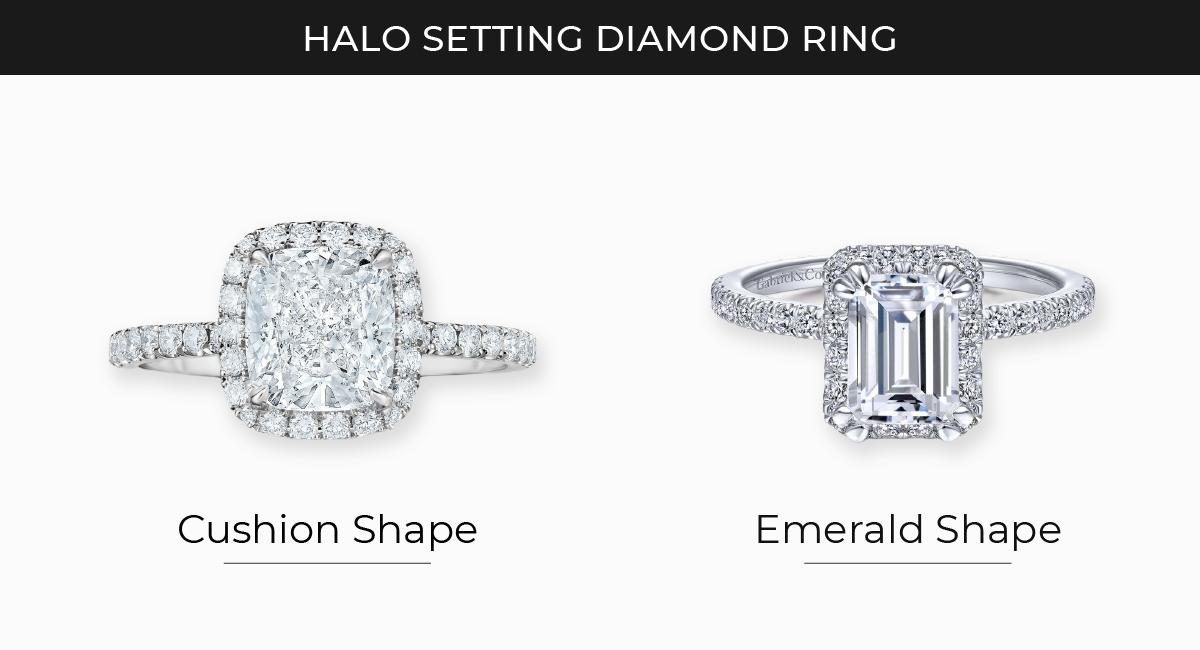
The cushion cut is such an elegant piece of vintage gem that is a timeless classic. It is such a vintage elegance and is a perfect combination along with the halo setting. Even with the modern outlook of the cushion cut, the halo setting looks no less than graceful along with it.

Halo is a popular setting that allows for the halo to highlight the central emerald cut stone. The setting brings out the main shape and form of the cut and thus adds detailing to the basic design and not-so-basic form of the cut.

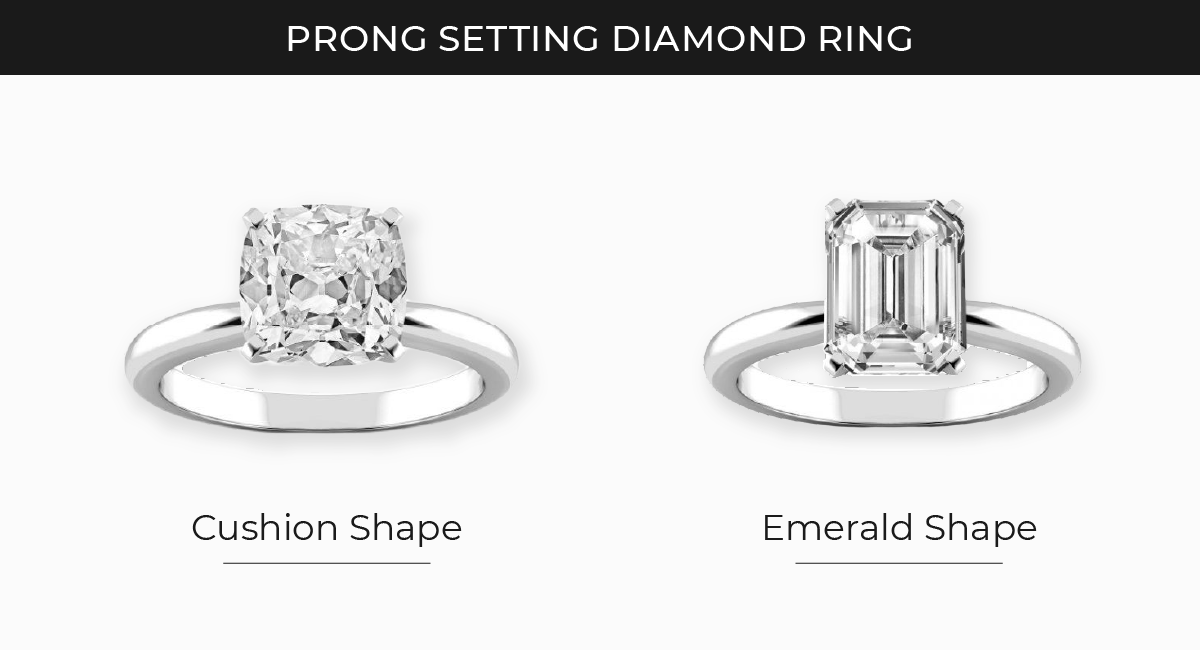
Prong Setting:

Prong Setting for cushion vs emerald diamond

The prong setting is an advisable setting for the cushion cut since it ensures maximum brilliance along with optimum safety. There is a rift between either the 4 prong setting or the 6 prong setting. Either of them has their advantages to the point.

The 4 prong setting is a setting that allows for maximum brilliance as compared to the 6 prong setting, due to fewer metal arms blocking the light entering the diamond. Although, there isn’t much impact of this phenomenon on the cushion cut, due to its light reflection from the table of the facets of the diamond.

For a larger or rectangular cushion cut diamond, it is preferred to select a 6 prong setting, to ensure the utmost safety of the diamond.

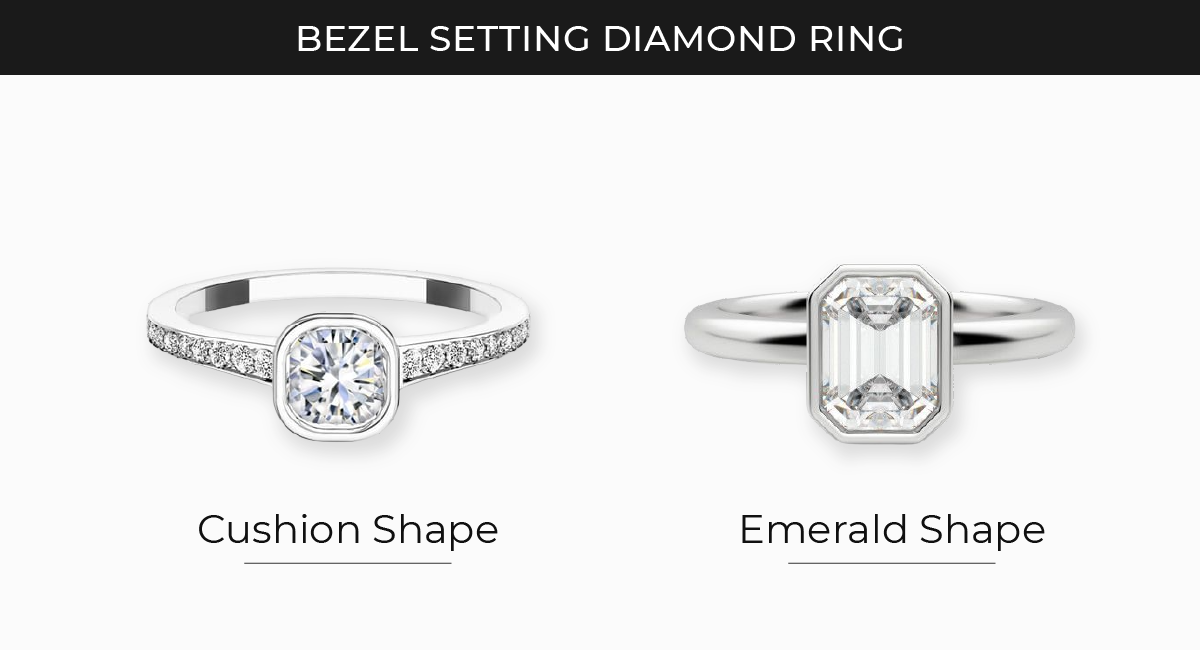
Bezel Setting:

Bezel setting for cushion cut diamond vs emerald cut diamond

The bezel is a stylish setting and can be worn with anything to give it a good look. The bezel is definitely a setting that provides utmost safety to the diamond and in turn highlights the form of the cut.

Due to the diamond being covered from all sides, we observe that the diamond shines less brilliantly. Despite this drawback of the bezel setting, this setting is a favorite for its form and elegance and is worn on all occasions equally elegantly.

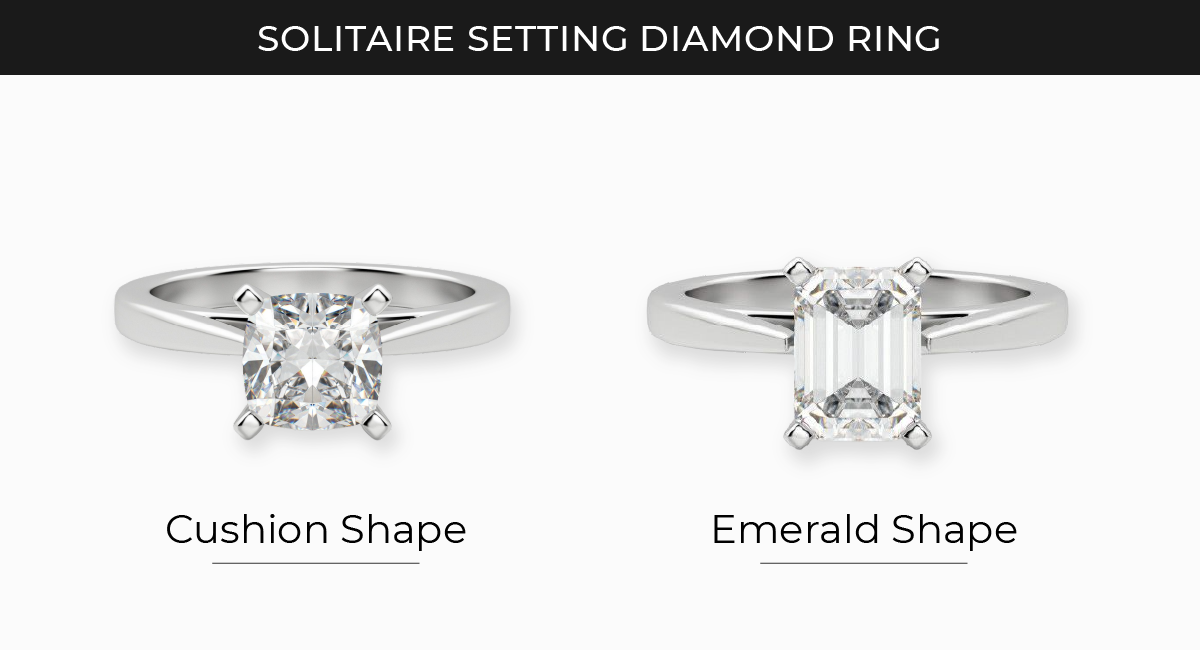
Solitaire Setting:

solitaire setting for cushion cut diamond vs emerald cut diamond

The most famous and preferred setting for the emerald cut gem is the solitaire setting. This setting is perfect since it allows for the unique geometry of the emerald cut to take the central stage and not allow any other pattern to overshadow the main design of the cut. It is a very minimalistic design but sophisticated for anyone who prefers simple and yet classy engagement rings.

Cushion Cut vs Emerald Cut Diamonds: A Price Comparison

When it comes to purchasing a diamond, understanding the pricing differences between different cuts is crucial. The price of a diamond can be influenced by factors such as cut quality.

Cushion lab diamonds are more popular and have more facets than emerald cut diamonds, so emerald diamonds are a little more expensive than cushion cut diamonds, starting at $650 to up. Generally, emerald diamond prices can from $500 to $55,000.

However, Loose Grown Diamond Good or Very Good cut grades offer a more budget-friendly option. And if you’re confused about the price, you can use our Diamond Price Calculator for best-priced diamonds.

Unlock exclusive savings for a great deal on lab grown diamond by receiving a valuable promo code at LGD.


Conclusion

Both these lab grown diamonds are available in many designs and varieties.  Both of these are mostly used in engagement rings with a whole range of settings. Each of them provides a separate set of advantages. The cushion makes a wearer’s fingers look fuller whereas an emerald one makes the fingers look slender.

Both represent elegance and a vintage feel along with their own unique beauty as the wearer adorns them. The cushion cut and emerald cut are both versatile and unique cuts that ooze beauty and elegance in their own unique ways. They are perfectly beautiful in their own ways.

FAQs

Which cut tends to have more facets, cushion and emerald?
Generally, cushion cuts have more facets, contributing to a more brilliant appearance.

Are cushion cut vs emerald cuts more popular for engagement rings?
Both are popular, but cushion cuts have gained popularity in recent years for their classic yet distinctive look.

Do cushion and emerald cuts typically cost more?
It depends on various factors, but in general, cushion cuts may be priced slightly higher than emerald cuts due to their popularity and the higher number of facets.

Are cushion and emerald cuts better for a halo setting?
Cushion cuts are popular for halo settings, as their rounded corners complement the surrounding diamonds, while emerald cuts are often set with simpler, classic designs.