Marquise Cut Diamond: Everything You Need to Know

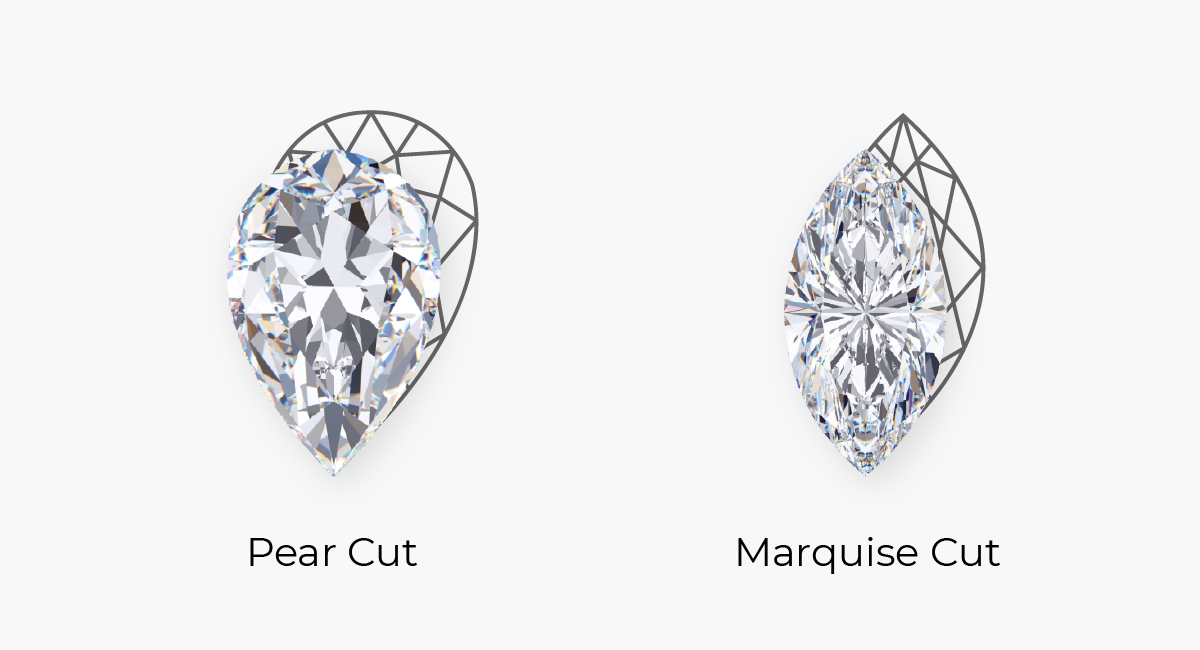
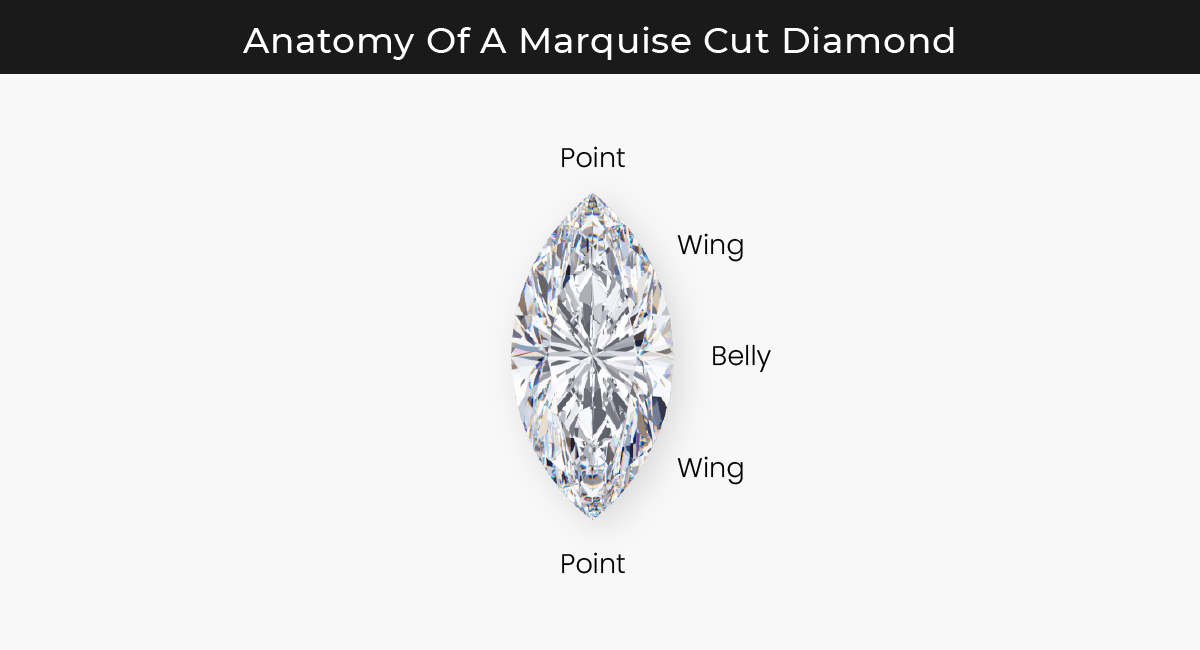
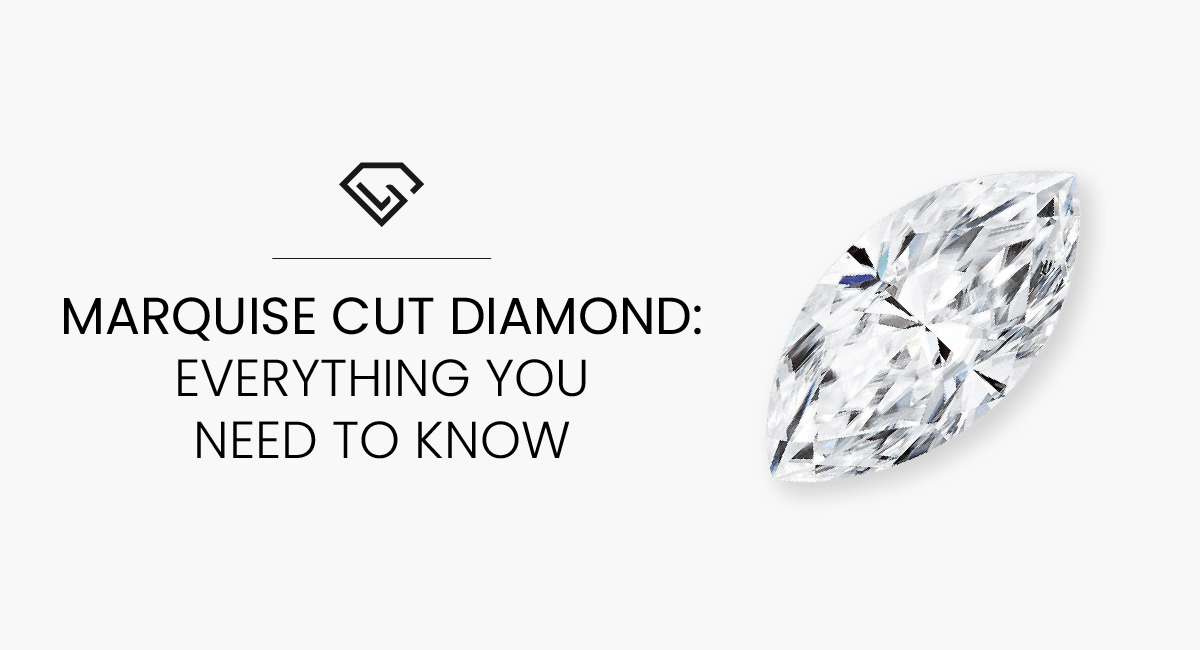
Also popularly known as boat-shaped, eye-shaped, football-shaped, and navette the marquise diamond shape is renowned and vintage in nature which catches one’s heart all praises and credit to its quirky shape which reminds us of a smile and smile is a factor though. 

Navette is a French word which on translating from the same to little ship is mostly taken into account as quite similar in shape to all the upper stated names. 
Marquise Cut Diamond: Everything You Need to Know

What is a Marquise Diamond?

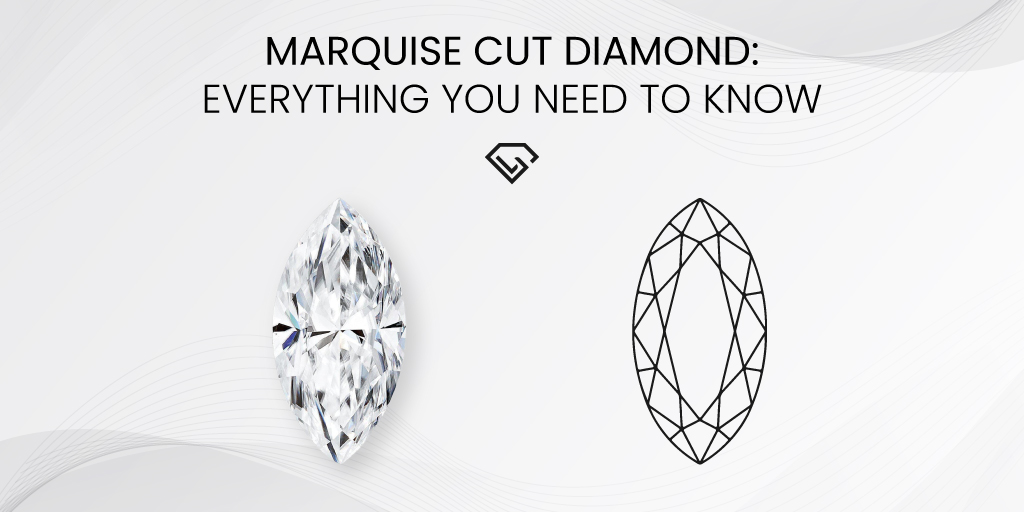
The marquise cut is designed to maximize the carat weight of the diamond, creating an illusion of greater size. It typically features 56 or 58 facets, with the pavilion (bottom part) having two pointed ends. The elongated shape of the marquise diamond can create an illusion of longer, slender fingers when worn as a ring.

Even though it is quite dramatic look-wise but still the marquise cut diamond is not that prevalent for engagement rings. But over the years some nontraditional brides are going for this one which as such escalates the appeal of these loose diamonds. A loose diamond is the end product that started with a rough diamond that came out from the mine.

A loose diamond is a diamond that is ready for sale and ready to be mounted on a ring, a pendant, an earring, a bracelet, a necklace, or any piece of jewelry. There are also customers who like to hold loose diamonds in a safe for investment purposes.

History of Marquise Diamonds

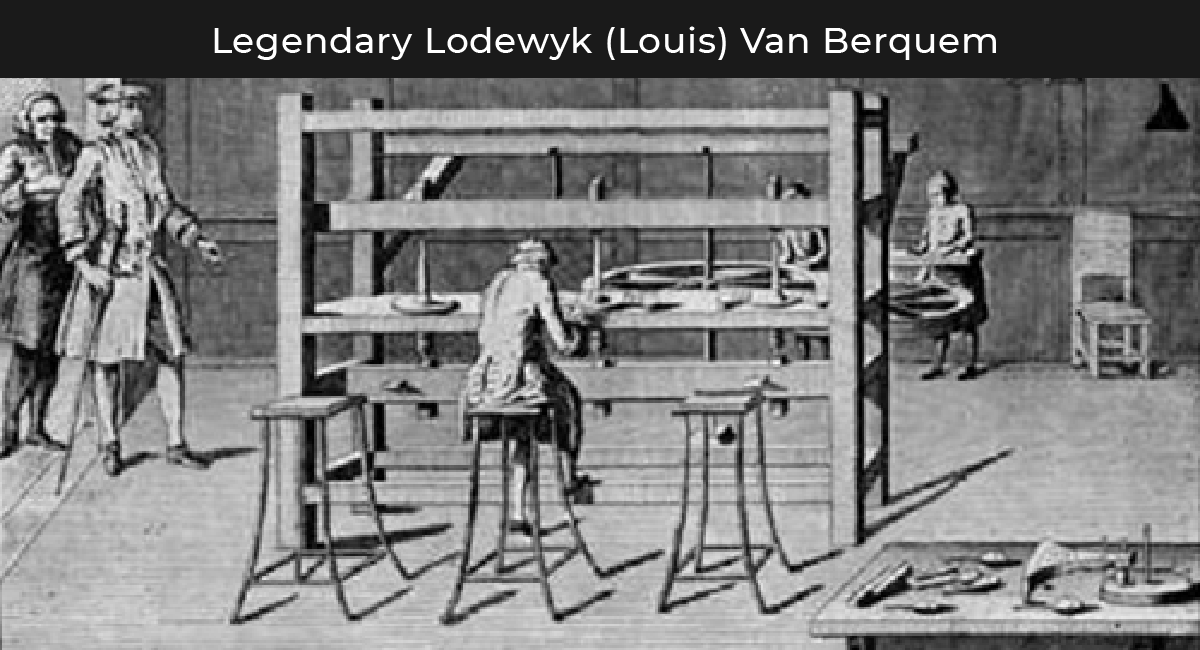
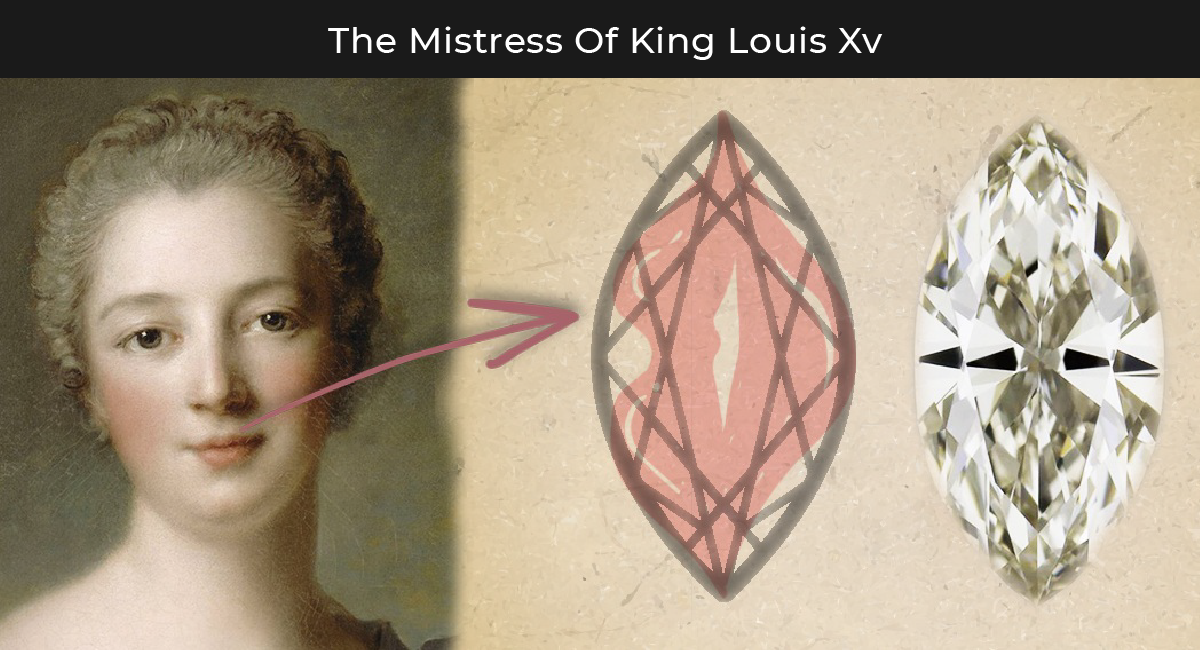
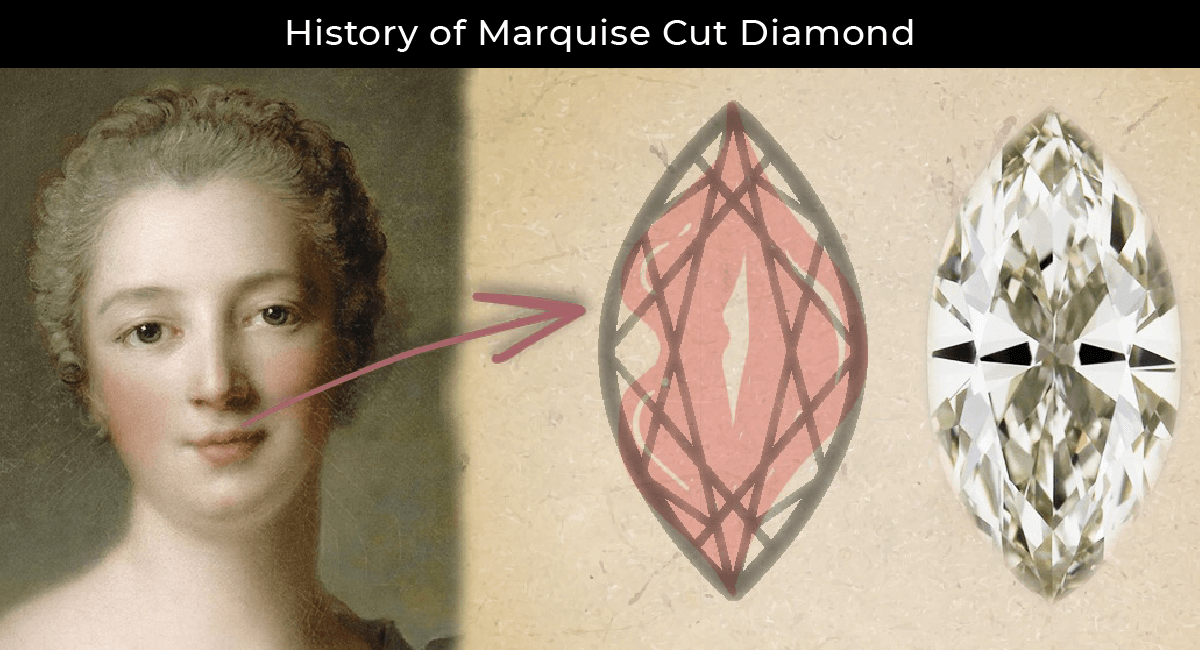
The Marquise cut originated back in the 18th Century when King of France, Louis XV, (1710-1774) asked a jeweler to cut a diamond into a shape that resembled the lips of his mistress, Jean Antoinette Poisson, the Marchioness Madame de Pompadour

Back then, it came to be the ultimate symbol of love and adoration as the King had declared openly that the lips of Madame must be commemorated with a diamond cut since those were the best lips he had ever seen.

There have been significant modifications in the marquise lab diamonds that we know today, however, it still bear a lot of resemblance to the original cut. 
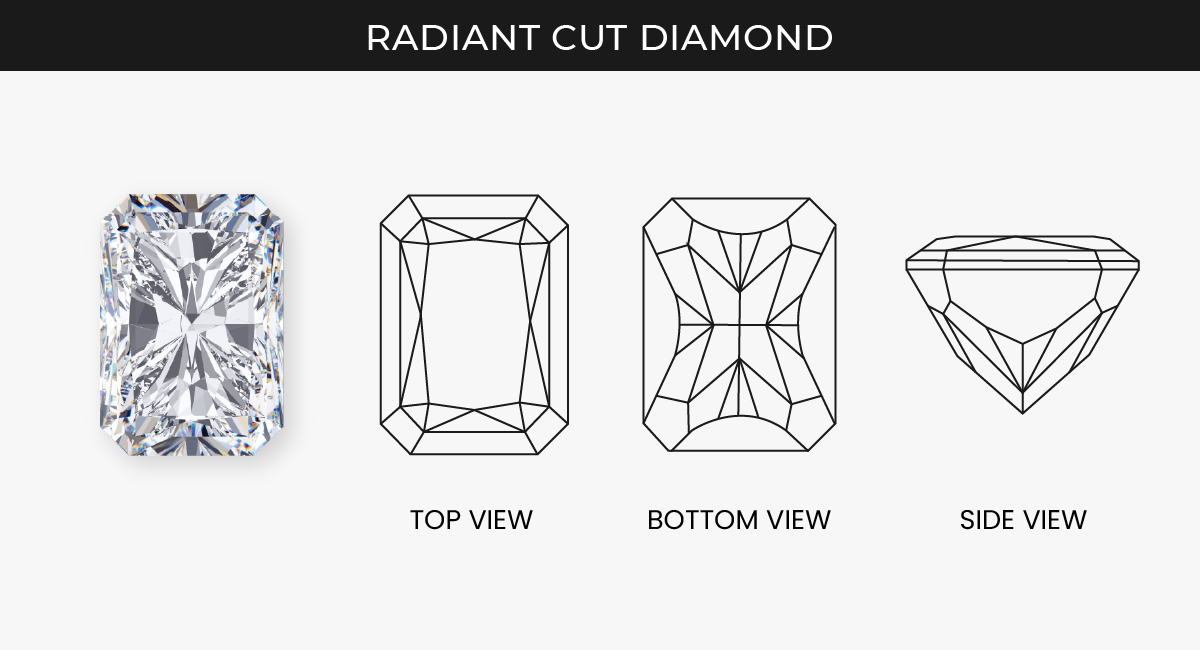
history of marquise cut diamond
The term Marquise means the inherited rank that falls above a Count and below that of a Duke. Courtiers used to wear it to show off their status and rank. The cut has come a far way, from being donned by the regal circles to becoming mainstream consumer diamonds in the 60s.

The cut became so famous as a piece of bridal jewelry that it was eventually referred to as my mother’s diamond, making young shoppers shy away from it. 

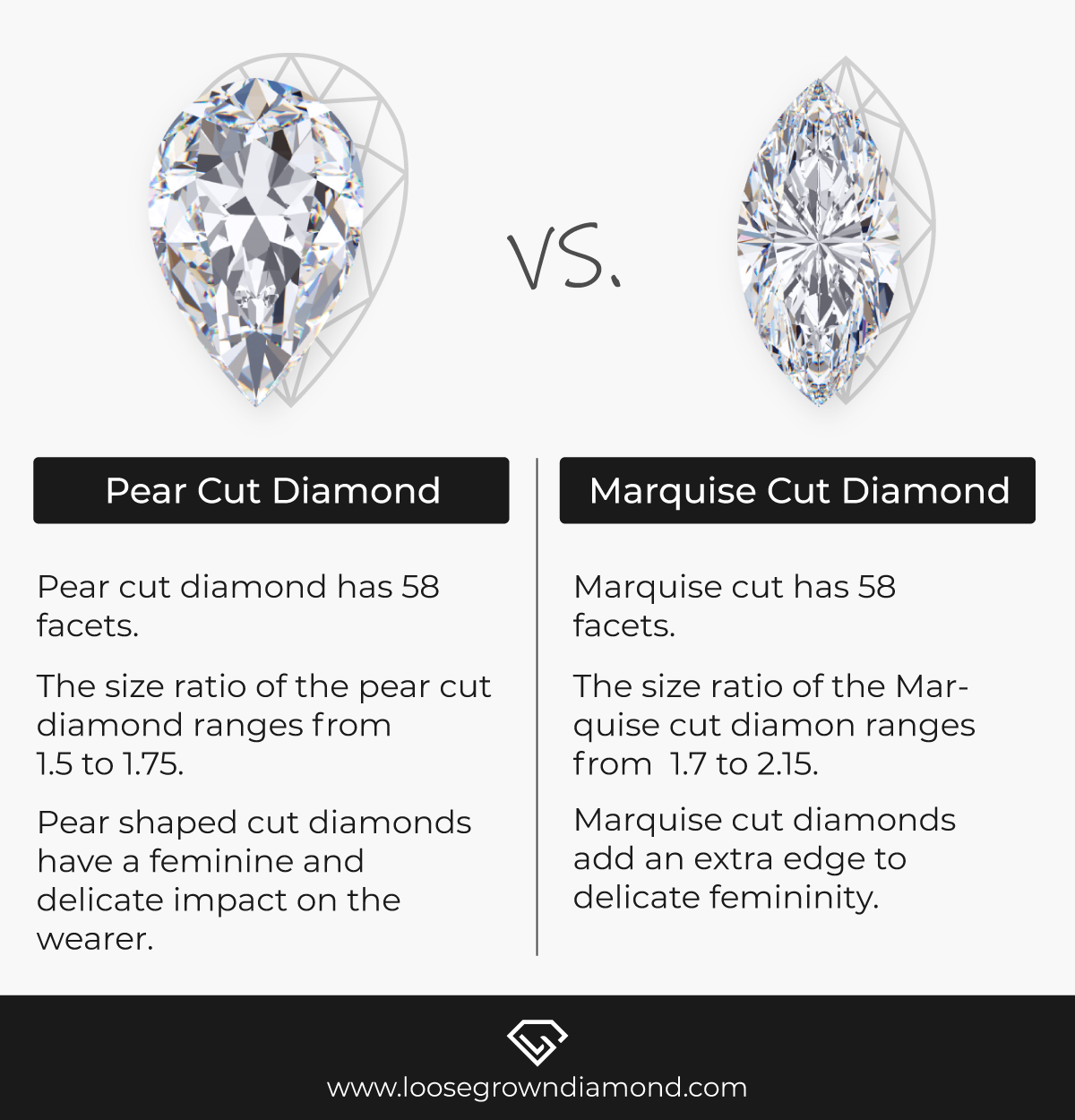
However, the modern millennia have diversified the image of this product now. Marquise diamonds are also called navette which means little boat in French as it is shaped like a small boat. The marquise diamond has 58 facets with a pointed elliptical shape. 

Before selecting a lab grown marquise cut diamond, it must be balanced with the other factors of the famous 4Cs criterion of diamond purchase. 

4Cs of a Diamond, and Why Do They Matter?

The 4Cs of measuring diamond quality have not only become a universally accepted language among jewelers but also a useful set of checklists for any consumer missing a bit of in-depth knowledge on how to choose a perfect diamond for their needs.
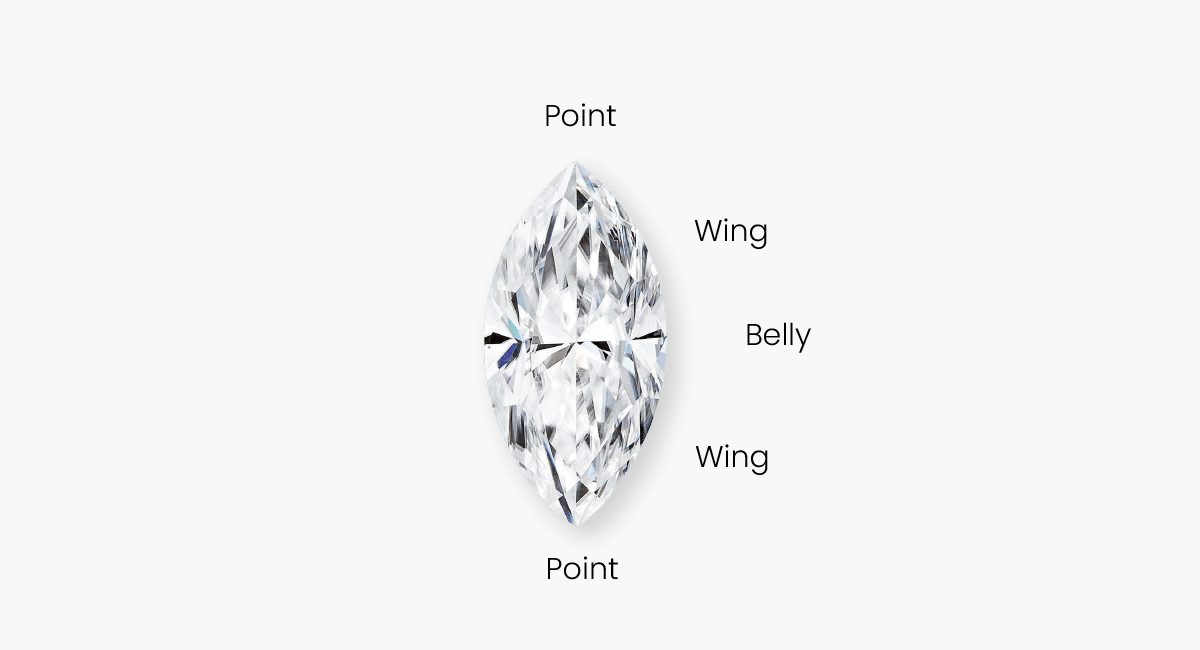
Marquise Lab Diamond

The Cs were established by the Gemological Institute of America (GIA) as an official grading system in 1953, and these Cs are Color, Clarity, Cut, and Carat Weight, for making an impartial, efficient, and consistent judgment of diamond quality and worth. 

In a diamond, these elements interplay with each other and may even be codependent, necessitating an integrated and balanced assessment rather than a focused investigation into a single component. 

Each component becomes so crucial and must complement the other aspects; only then can a diamond be considered truly valuable. The key to getting a well-rounded diamond is to spend intelligently on each attribute. Here’s a quick rundown of each component to offer you a basic grasp of diamond grading.

Color

Diamonds are typically graded according to how transparent or bright they are. Colored ones (pink, blue, yellow, green) are frequently referred to as “fancy” and fall outside of the standard grading system used everywhere. 

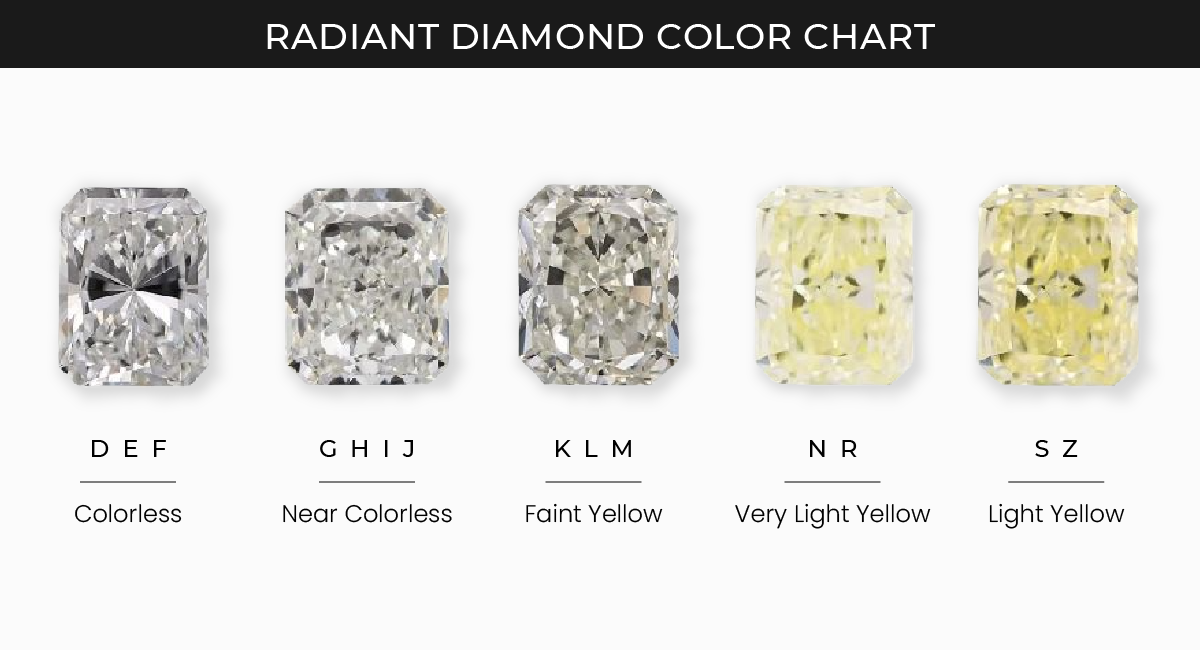
The GIA grades diamonds from D (the most colorless) to Z (the most colorful) (light yellow or brown). Although there are examples of color differences in diamonds of each grade, the cut, clarity, and carat weight may all have a significant influence on the visibility of a polished stone’s color. 
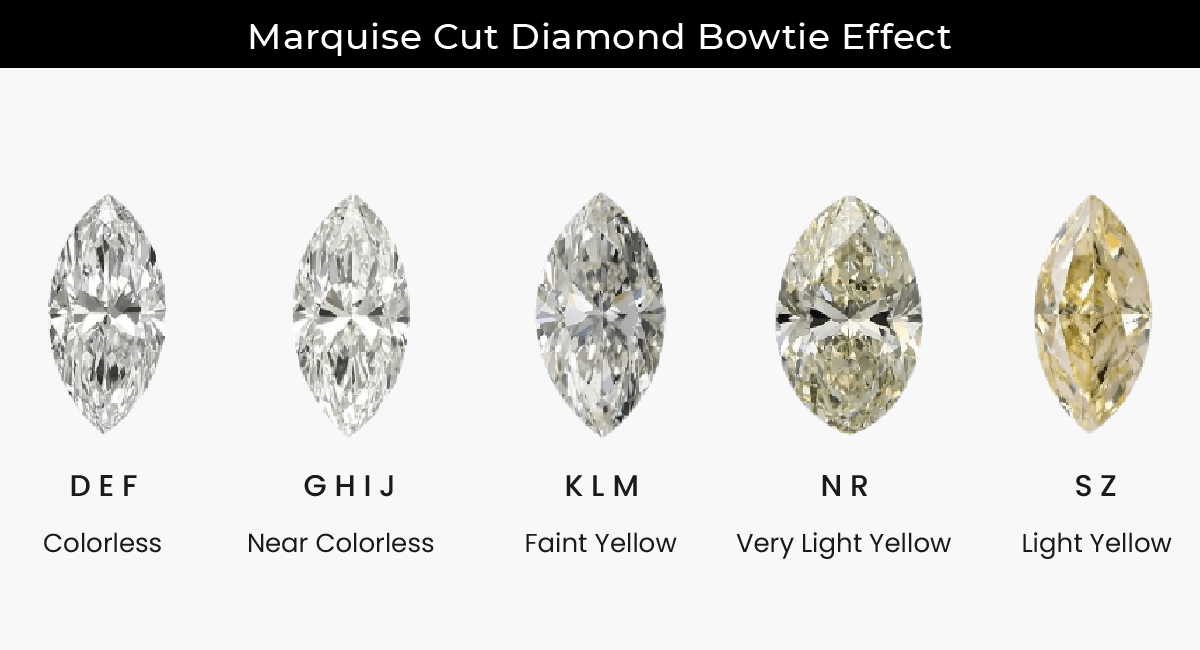
marquise cut diamond color 
For example, the diamond’s shine or dazzle is entirely determined by the cut, rendering the grade basically meaningless in contrast. A diamond’s price is directly proportional to its color grade; yet, two consecutive classes are difficult to distinguish with the human eye.

Colored diamonds, sometimes known as “fancy” diamonds, cannot be found on this grading system designed for white diamonds and must be graded independently owing to their obvious individuality.

Usually, grades G and H are at par with F and E and look almost colorless when it comes to the marquise cut. One can also move as low as I, J, and K if the jewelry is chosen, which is gold. This will make the Marquise seem comparatively colorless only reflective of the jewelry around it to the naked eye. It all depends on your budgetary priorities at the end. 

Clarity

Mined and lab grown diamonds are equally susceptible to structural flaws known as ‘inclusions’ or ‘blemishes,’ with the former being microscopic crystals or chemical defects locked within the diamond that may bubble up and damage the look, and the latter appearing on the diamond’s exterior. 

Inclusions and imperfections have a direct influence on a diamond’s clarity and light reflection qualities and are used to calculate diamond clarity. The GIA categorizes clarity into six major categories, which are listed herein according to their descending ranks:
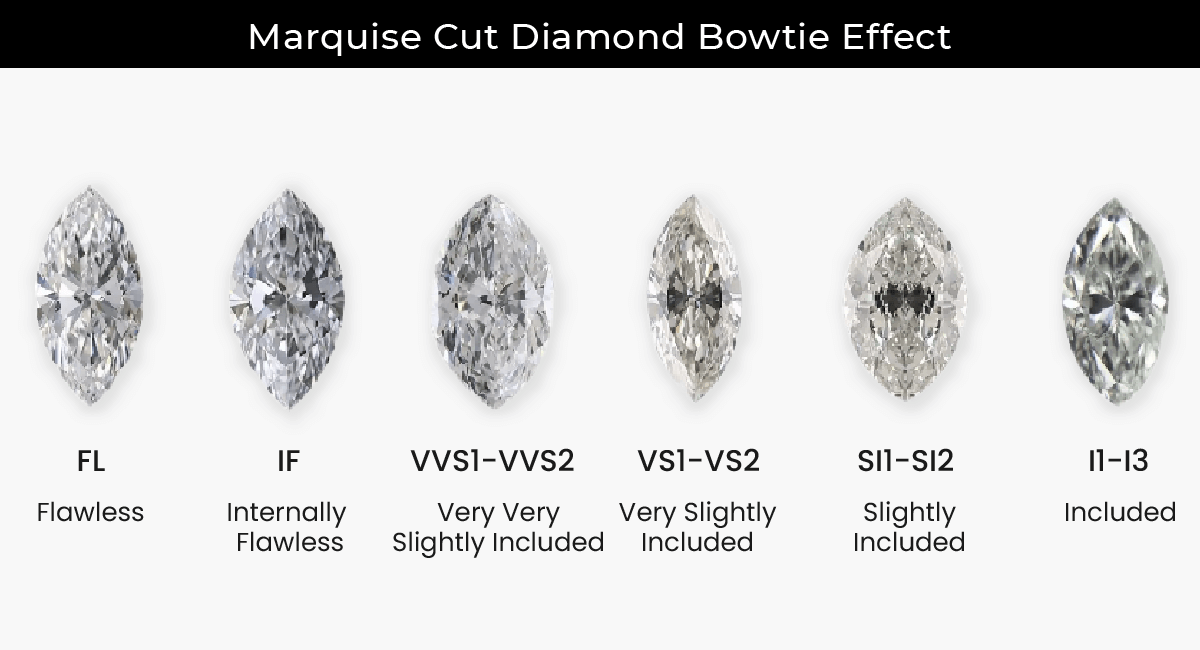
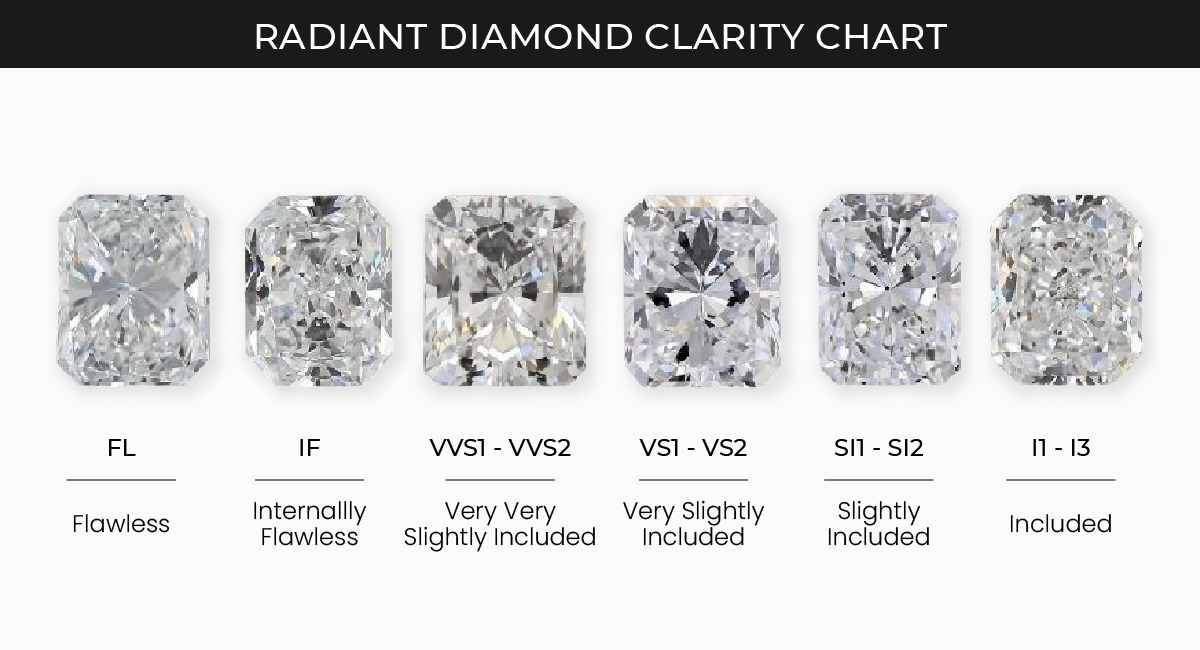
marquise diamond clarity grade

  • Flawless (FL)- No visible blemishes or inclusions upon evaluation of 10x magnification. 
  • Internally Flawless (IF)- No inclusions are discoverable upon 10x magnification.
  • Very Very Slightly Included (VVS1 and VVS2)- Inclusions that are either extremely difficult (VVS1) or fairly difficult (VVS2) to detect even after being examined after 10s magnification by a skilled grader.
  • Very Slightly Included (VS1 and VS2)Inclusions that are slightly visible (VS1) and easily spottable (VS2) under 10x magnification. However, they are minute and still elusive to the naked eye. 
  • Slightly Included (SI1 and SI2)­- Under 10x magnification, inclusions that are easily discoverable (SI1) or very apparent (SI2)­.
  • Included (I1, I2, and I3)- Apparent inclusions that make the appearance considerably unclear and are not only visible under 10x magnification but also affect the brilliance and transparency.

These standards serve as a universally used yardstick for all jewelers, regardless of nationality. Because the difference on this scale is so small, it is best to see for yourself if the inclusions or defects are apparent or noticeable. 

With a marquise diamond, an SI cut is always advisable for the best clarity. However, be wary of the bowtie effect that might cause dark areas to appear smack in the middle of the stone due to the oval shape of the marquise. 

That’s why a grade can never be fully trusted in a marquise and one has to see the stone and decide for themselves. When it comes to inclusions, they are easily fixable with prongs on the corners of a marquise and incredibly difficult to find in the center, which is an added advantage.

Cut

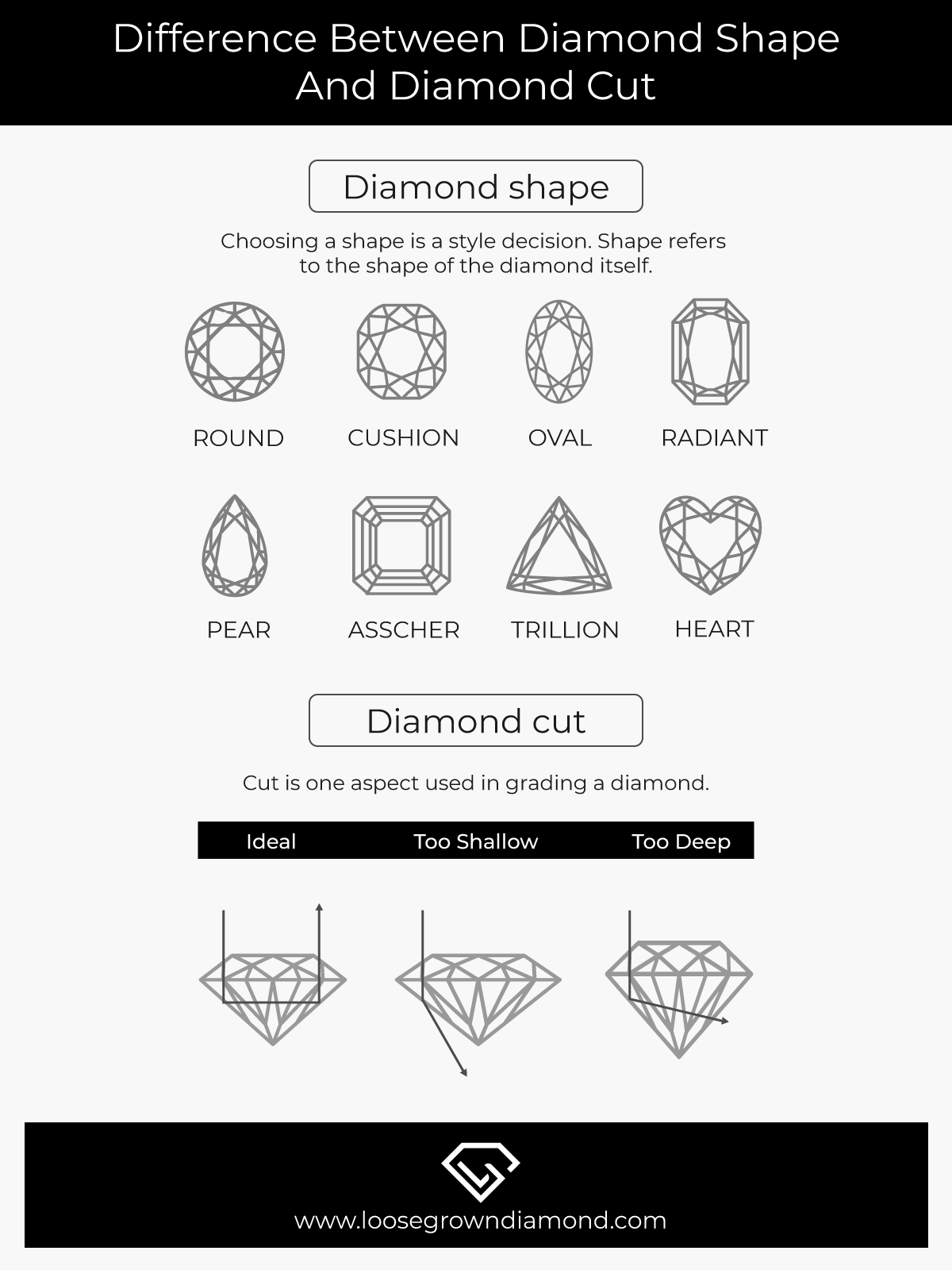
The way a diamond is cut is possibly the most vital characteristic since it has a direct impact on the whole aesthetic of the final gemstone and may help or hurt the allure of the other components. Diamond cut is concerned with- 

  • The angle of each cut 
  • Geometrical dimensions 
  • Ratios 
  • Brilliance or the reflection of white light in the interiors and exteriors of a diamond 
  • Scintillation or the contrasting areas produced by reflections in a diamond and sparkle it exudes 
  • Fire, meaning the dispersion of white light into the colors of a rainbow 
  • And finishing touches 

It determines the most significant factor for a customer i.e. the sparkle factor. The GIA grading scale for diamond cutting includes Ideal, Excellent, Very Good, Good, Fair, and Poor grades. The highest two ratings indicate cuts with slopes and ratios that provide the greatest amount of fire and brightness. 
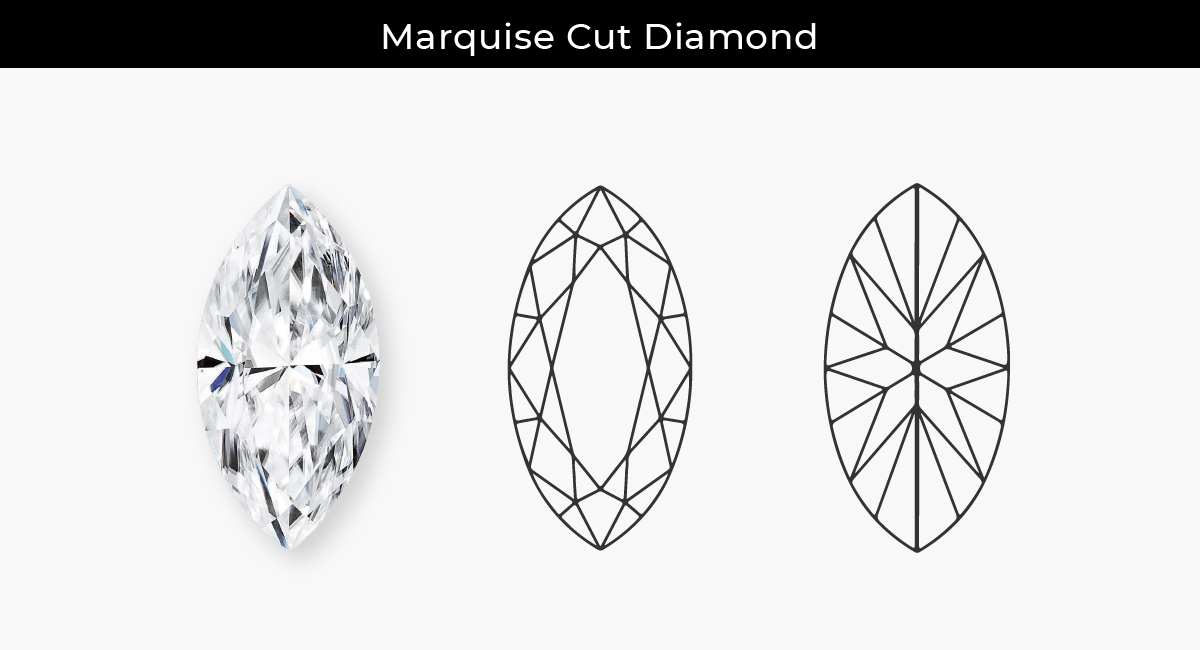
marquise lab grown diamond

When picking a cut, even minor price differences are worthwhile since the variation in cut has a significant impact on the diamond’s visual attractiveness. When it comes to marquise diamonds, the GIA grades them separately and does not allot cut grades as it does to round brilliant.

Hence, it is almost impossible to know the brilliance and clarity of the marquise cut unless one inspects it physically. 

In addition to this, the marquise shape is vulnerable to the bowtie effect, which will be talked about later, due to its shape and might lack overall fire as other cuts do. That is also something that can be told only when the diamond is looked at personally. 

Carat Weight

It is a mistake to think that a diamond’s carat weight implies its size. In fact, its relevance is restricted to the stone’s weight. A 1 carat diamond weighs 200 milligrams, or around one-fourth of a raisin. 

Two 1 carat diamonds may be of varied sizes depending on the cut. However, regardless of size, a 1-carat diamond is always preferable to a 1.5-carat diamond, which may be less spectacular.

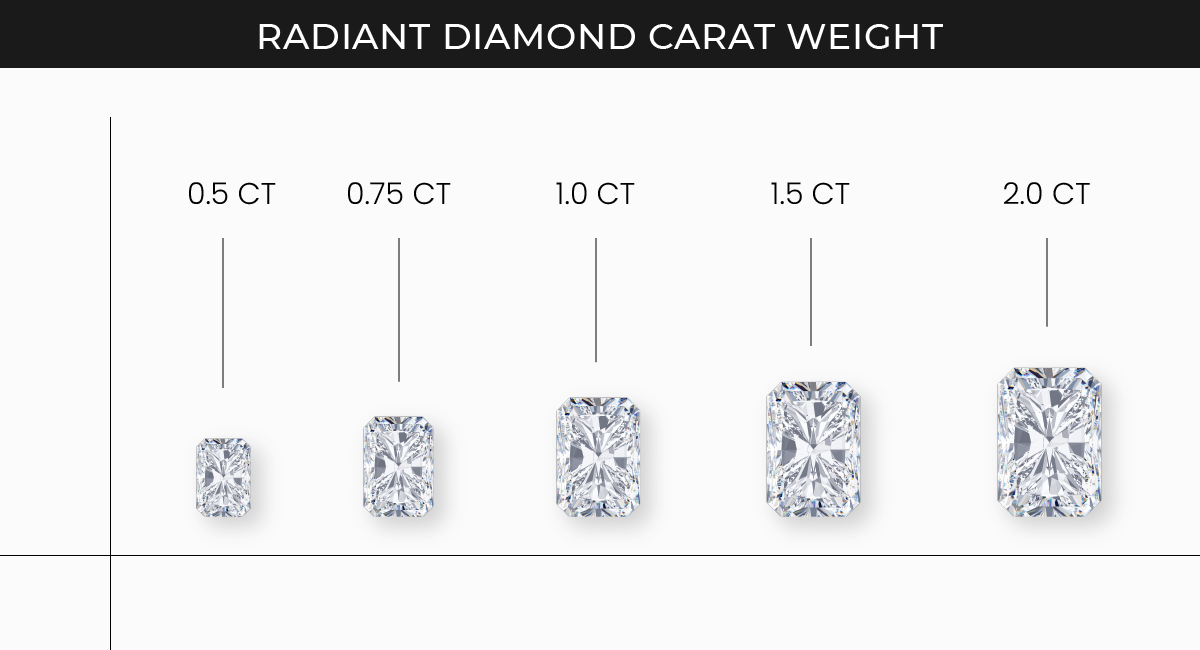
Because larger diamonds are clearly in more demand, the price of a diamond is directly proportional to its carat weightThis diamond carat size chart will give you a thorough approach to identifying your size. 
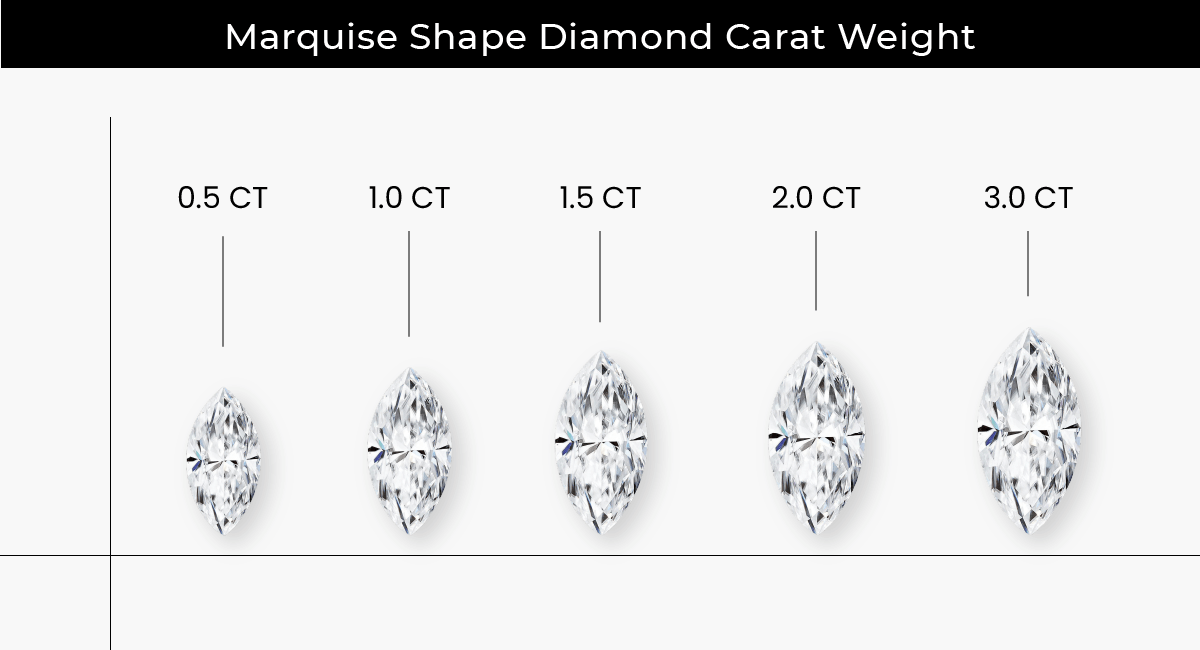
marquise diamond carat weight
Finally, a diamond’s overall beauty has significantly more influence than its carat weight.

The order of the four Cs is quite simple, with the cut being the most important, followed by color, clarity, and, last, carat. This level of significance exists solely to facilitate the selection of the diamond with the finest visual appeal of all. 

It is vital to remember that, at the end of the day, a diamond is an organic whole that must be viewed as a whole since all of these components are always in motion. When carat weight is the priority, marquise is the perfect cut. Due to its oval-like and elongated shape, it will always make it seem as if the stone holds more carat weight than in actuality. 

Pros and cons of Marquise diamond

Pros of Marquise Diamond

Due to its elongated body, it sits well on fingers when put on engagement rings and makes them look thinner and slender. However, it is not always flattering on all hands, which is why it has become a recent trend to wear it in the halo setting, like the one worn by Catherine Zeta-Jones. The marquise cut has the extra benefit of appearing to have more carats because of its extended body.

Cons of Marquise Diamond

Due to the marquise’s pointed ends, it is very vulnerable to chipping and cuts due to daily wear and tear. Moreover, the cut is so tough to master that it is very common to find even the slightest bowtie effect in the diamond. A comparatively deeper pavilion might help avoid the problem. 

Common Problems with the Marquise Diamond 

While choosing the Marquise cut, there are some problems that may make the selection a sub-par one. The Marquise cut requires finesse and skill, and the same has to be prioritized by the consumer by mentally striking off all the possible mistakes in making a lab grown marquise diamond. 

  • The Bowtie Effect

A common problem that might affect the marquise cut if it is made to be too narrow by the width, is a dark area appearing right in the middle of the diamond, like a man’s bow tie. This is a direct result of there not being enough light refraction allowed within the stone due to its measurements. 

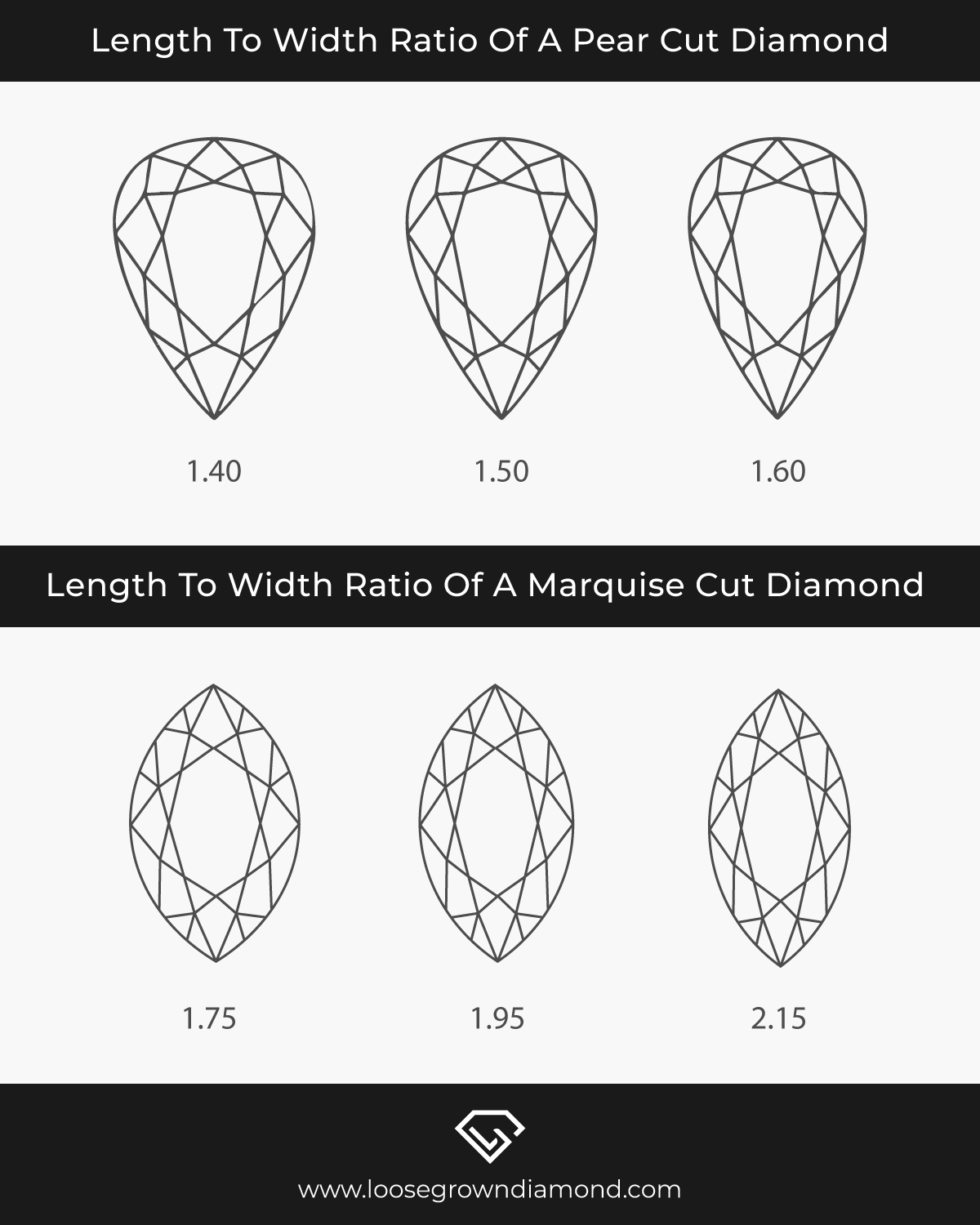
It can severely impact the beauty of the diamond and is almost always noticeable to the naked eye. The ideal ratio is 1.80 to 2.00 to ensure that the light is not divided within the diamond and the stone has unitary light performance. 
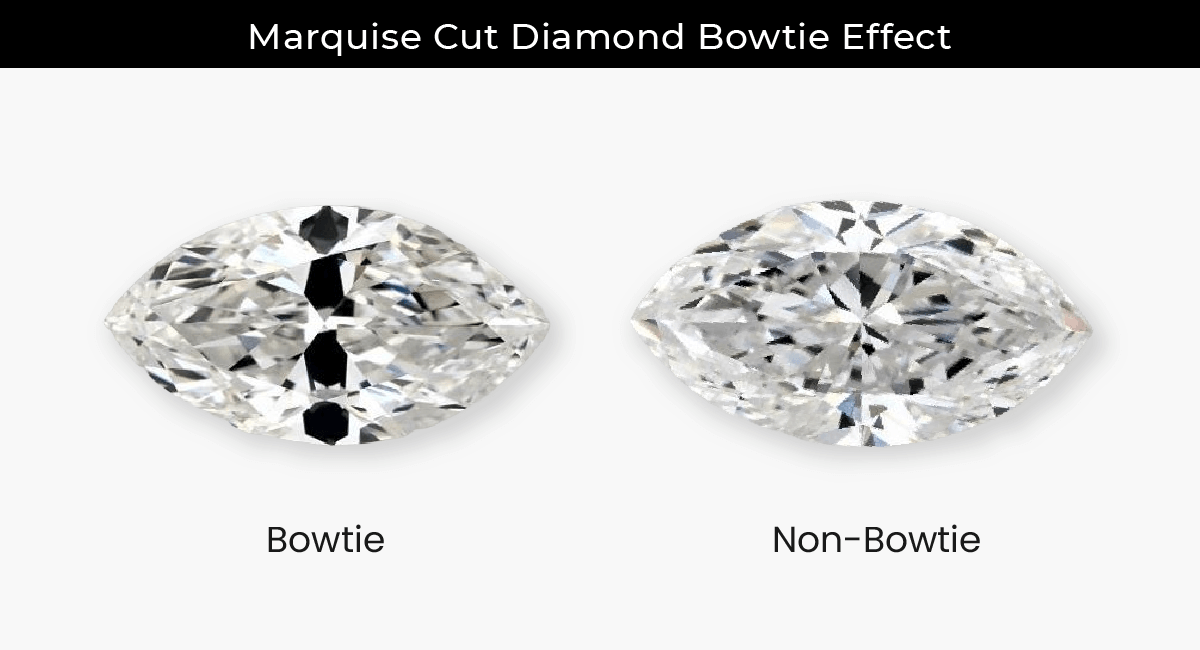
Marquise Diamond Bowtie Effect 
It is commonly misunderstood that the bowtie effect is a product of chemical inclusions or coloring defects when it only has to do with the commonly found “light leakages” through the sides of the diamond.

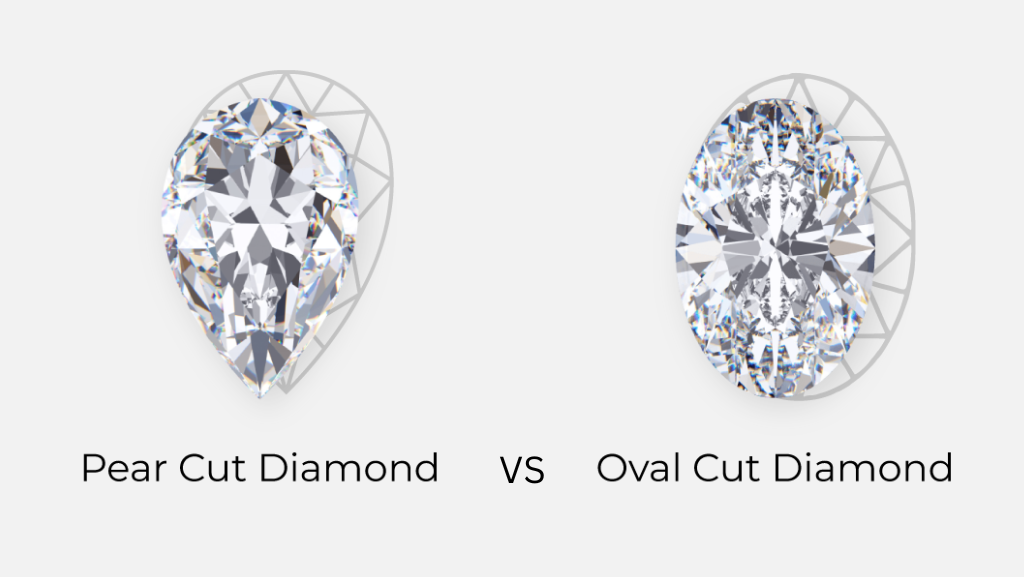
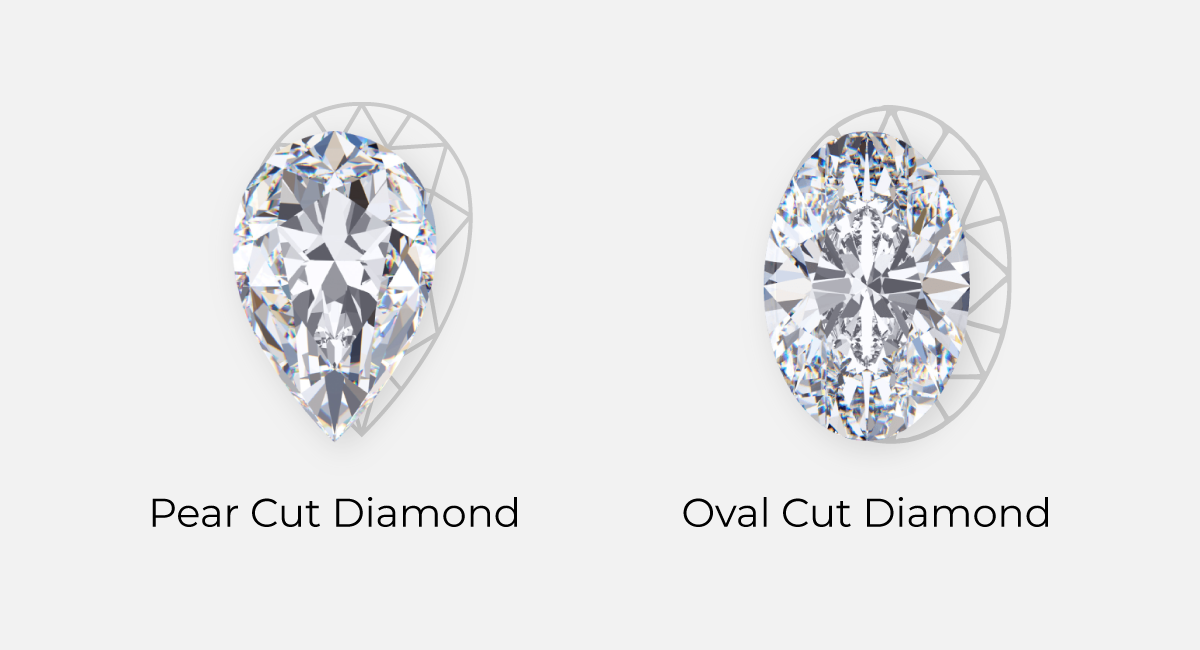
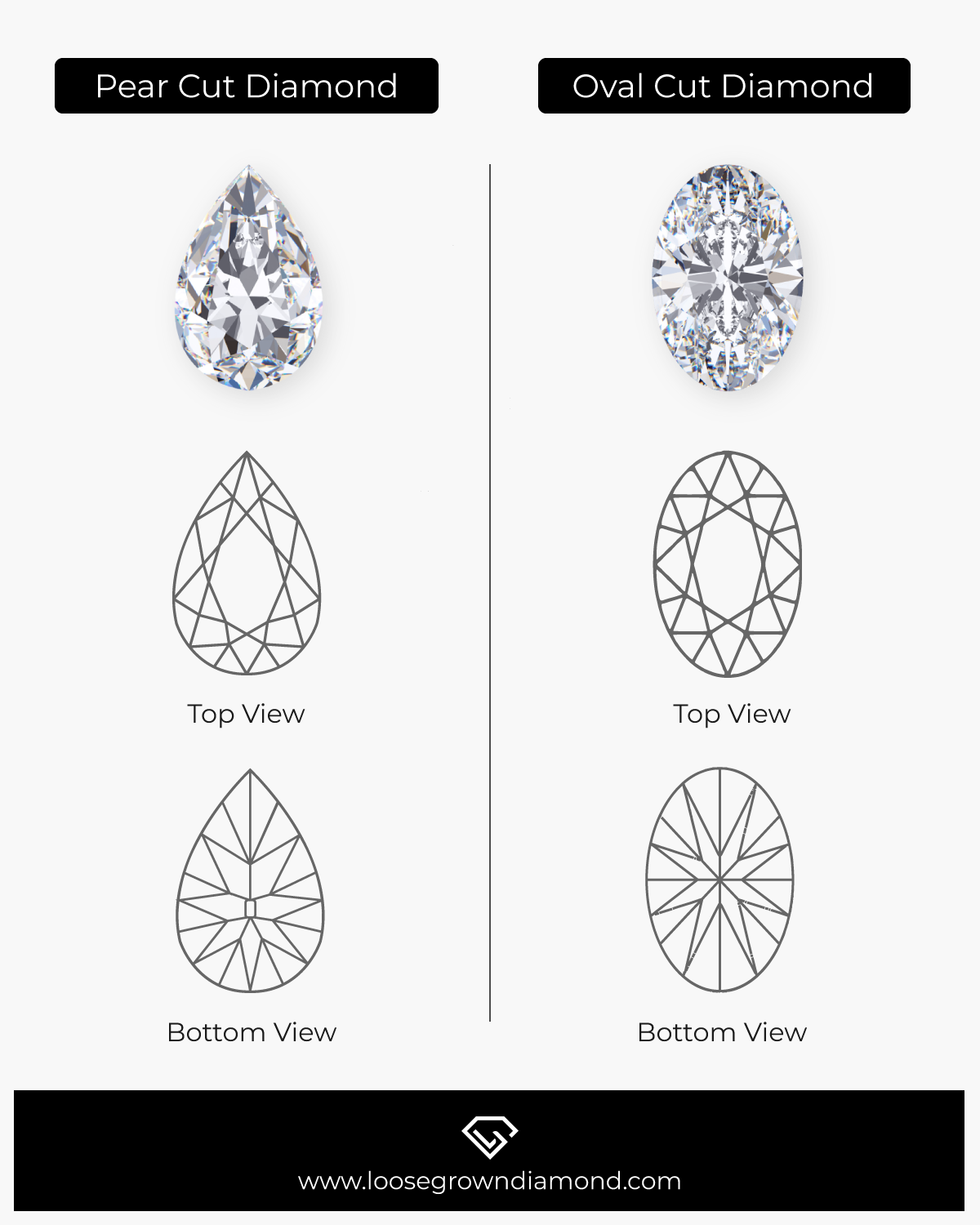
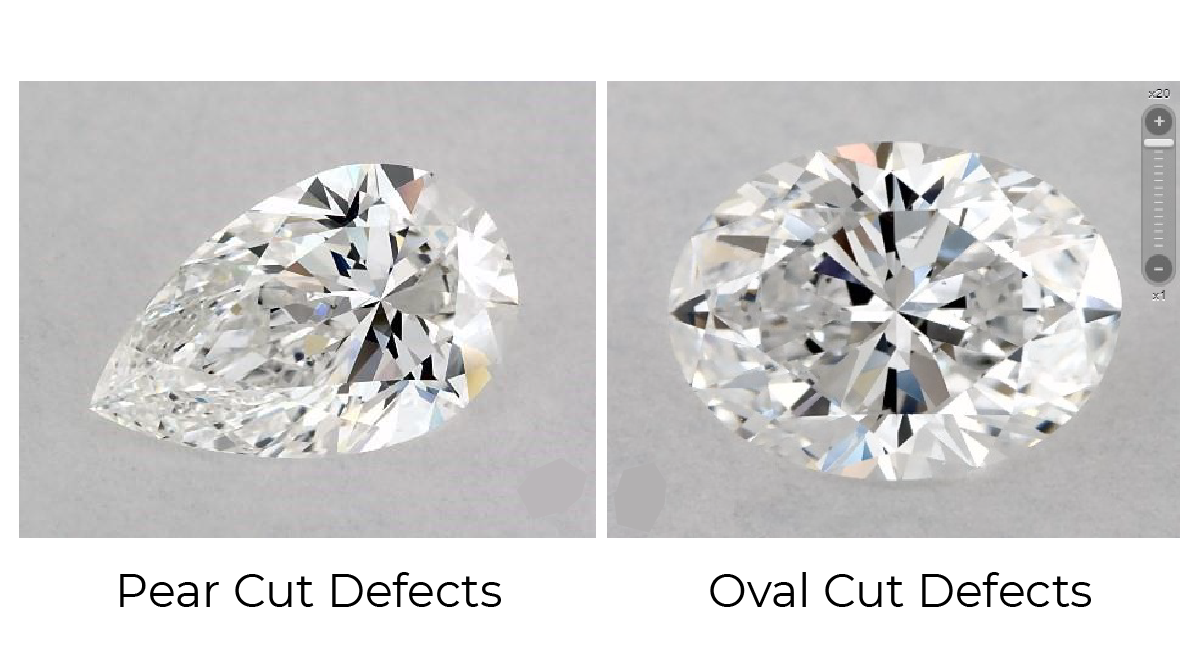
This happens due to the difficulty in avoiding bowties during the process of cutting elongated shapes of diamond, like oval and pear, wherein their central regions are excessively lengthy, making it impossible to cut the facets there to reflect light effectively. 

However, not all bowties are necessarily devastating to the diamond’s fire. In fact, certain bowties are seen positively – if the bowtie effect is not too stark and the cutter has cut the stone carefully around the effect to minimize it or distract from it, the bowtie can even lend a degree of fire in the stone and even increase its brilliance, as in this example. Diamond shape like pear, oval, and marquise with no bowtie(s) might even appear drab and monotonous.

  • Slender Football

The diamond is curved like a slender football and is unappealing visually. Its table is too thin, and its crown (the area above the diamond’s girdle) is too tall. These elements decrease the diamond’s capacity to reflect both white and colored light, resulting in a drab appearance.

Certification and the Marquise Cut

A variety of lab grading bodies produce reports for diamonds of different shapes and sizes. However, these bodies are not at parity right from the beginning. Several laboratories, in particular, grade diamonds inconsistently and erroneously.

Choose AGS , IGI, GCAL or GIA to ensure you get a lab grown diamond that matches the description in the report. We highly advise only acquiring a diamond that comes with a report from one of these organizations. 

It should be noted, however, that a choice should never be taken only on the basis of analyzing or comparing reports. A certificate does not specify how the diamond will appear in person. Marquise diamonds should be extensively examined and scrutinized.

How to Choose Marquise Cut Diamonds?

When one is choosing and deciding for their engagement ring it is solely and purely their personal choice along with their choice and budget because nonetheless, every diamond has its shine and spark.

But the marquise cut diamonds have been devised with drama and charm with their pointed ends complimenting the shape and adding a dramatic and unique touch to it.

[su_youtube_advanced url=”https://www.youtube.com/watch?v=vs7bavkeeck” width=”1600″ controls=”alt” autohide=”yes” autoplay=”yes” mute=”yes” loop=”yes” rel=”no” modestbranding=”yes” theme=”light” playsinline=”yes” title=”marquise cut lab grown diamond ring”]

Due to all this diamond looks extremely elegant and sophisticated in classic, halo, and solitaire setups. Nonetheless, nobody wants to set off their eyes from such a charming and distinctive diamond. You are not only limited to the engagement rings if you decide to choose this option as it is available in quite other factors also.

It is quite common and usual practice to pair up marquise-shaped with the other gemstones which as a result make out for a rare, quirky, and eccentric style of rings. There is another way in which we can personalize our engagement rings with the marquise cut is by adjusting the ratio of the stone at the center.

The approximate usual L/W ratio ranges between 1.75 to 2.25. But if one wants to go for an enlarged or small marquise diamond they can select accordingly the one which pleases and suits them. 

As it appears that the carat weight is spread over a larger area than usual and a long and enlarged marquise diamond can create a mirage in the minds of people seeing it thus benefiting us with less price and more carat weight appearance. 

Even if one opts out for a short diamond cut that does not make a large difference and it looks good too, that’s the specialty of this cut.

[blog_page_inventory shape=”Marquise” carat=”1.00,3.10″ cut=”1,4″ color=”0,10″ clarity=”0,11″]
[blog_page_btn title”Buy Now” url=”https://www.loosegrowndiamond.com/inventory/?”]

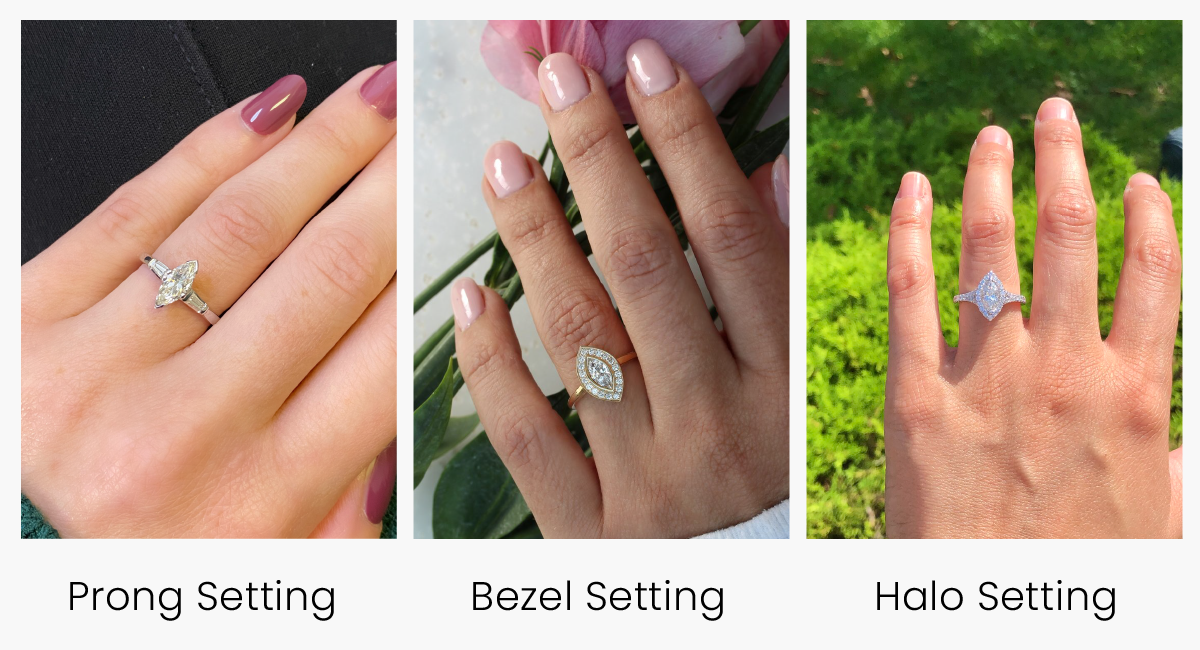
What is the Best Setting for a Marquise Cut Diamond?

Marquise Bezel Ring 
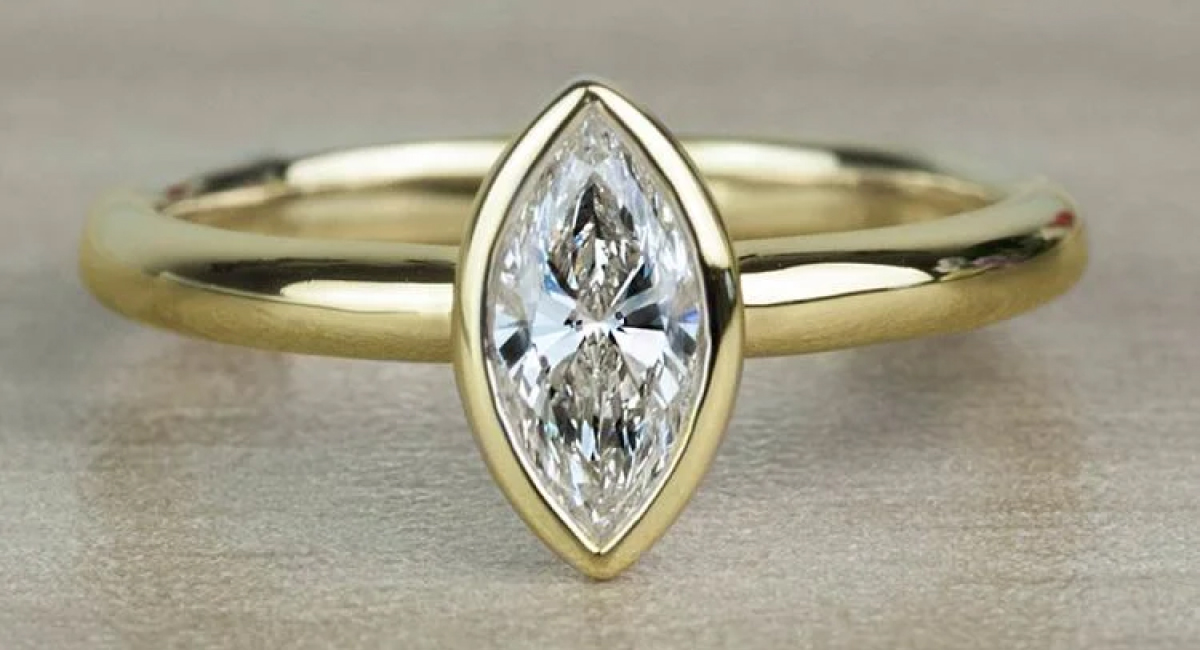
marquise bezel-ring

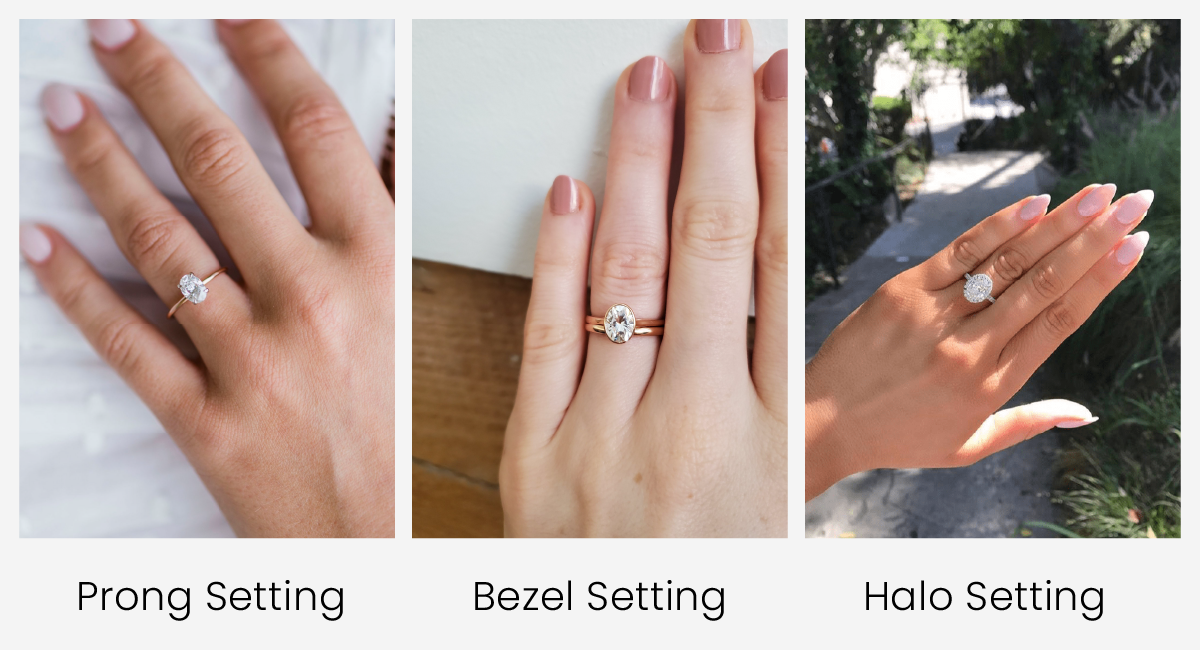
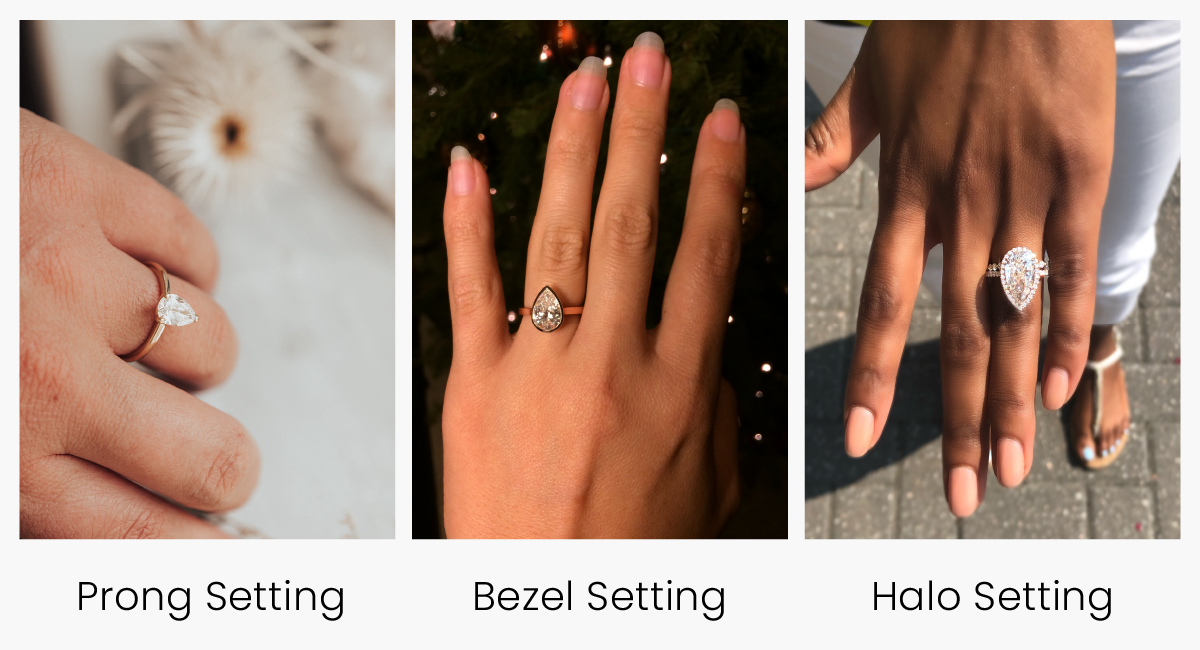
Marquise is a lip-shaped diamond that takes us back to the royal era and gives a sense of an aristocratic lifestyle. Bezel setting, a metal around the diamond is structured to keep it safe and stable where a diamond is the only center of attraction.

Marquise Halo Ring 
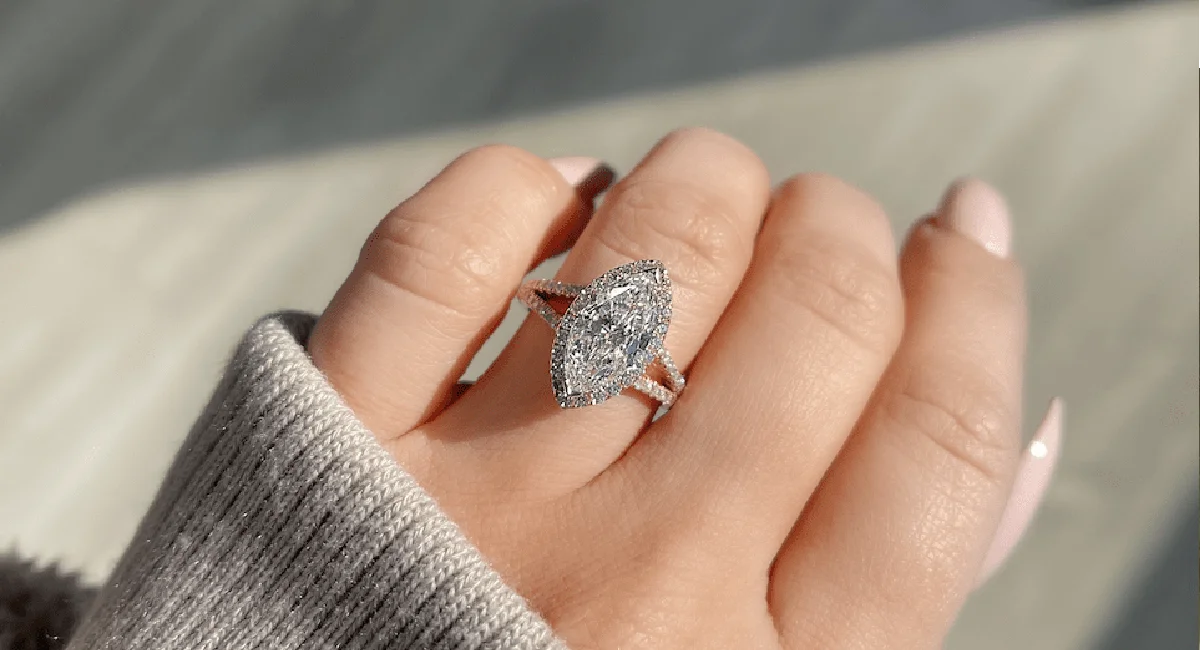
Marquise Halo Ring 

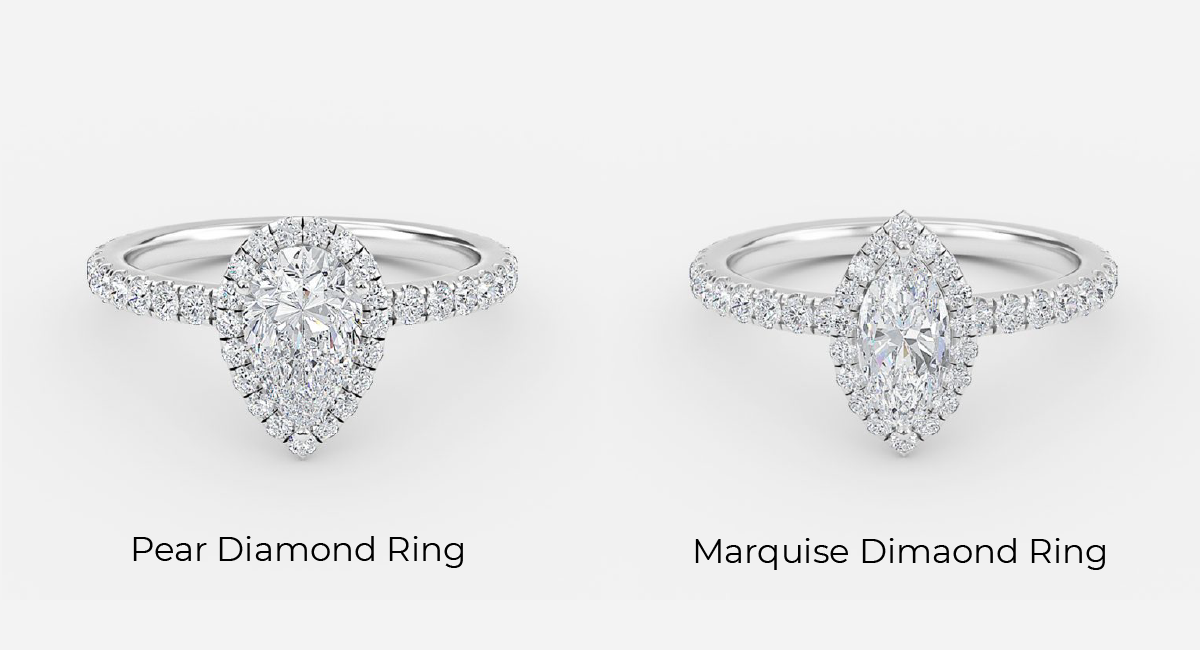
The marquise halo ring has a very unique and elegant setting where a diamond is placed in the center of the band with the gemstones attached on both sides. 

Marquise Solitaire Ring  
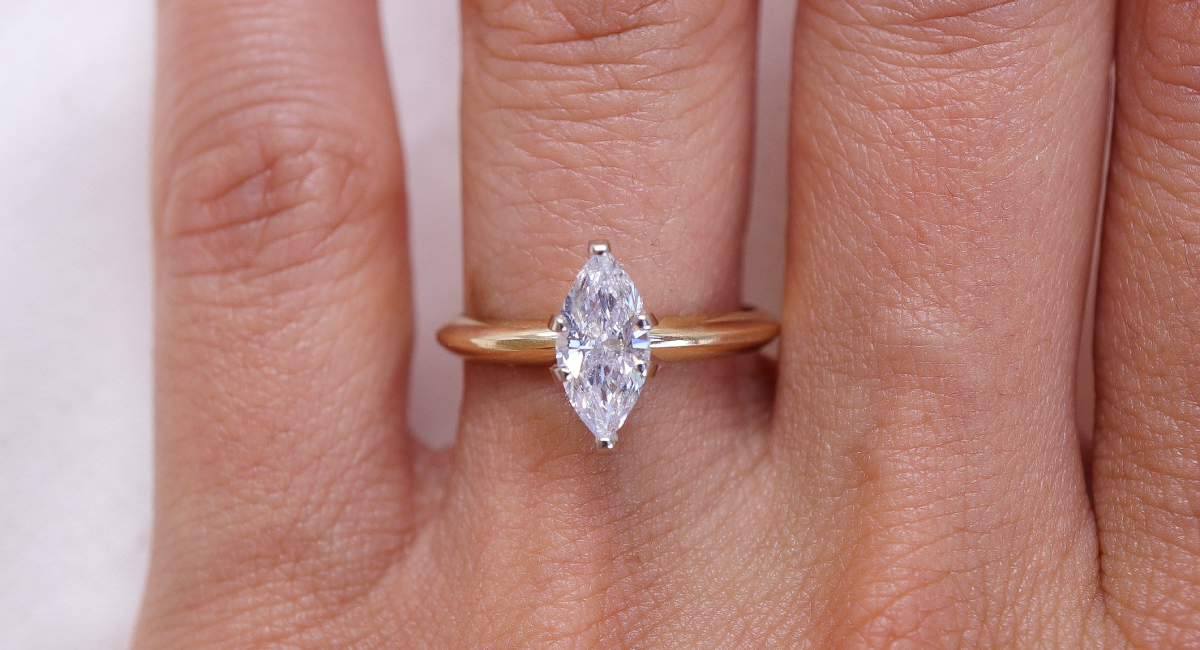
Marquise solitaire-ring

A marquise solitaire ring simply means the diamond is in the center of the band in any profound setting that makes the finger look elongated and flattery.

Marquise Three-Stone Ring 
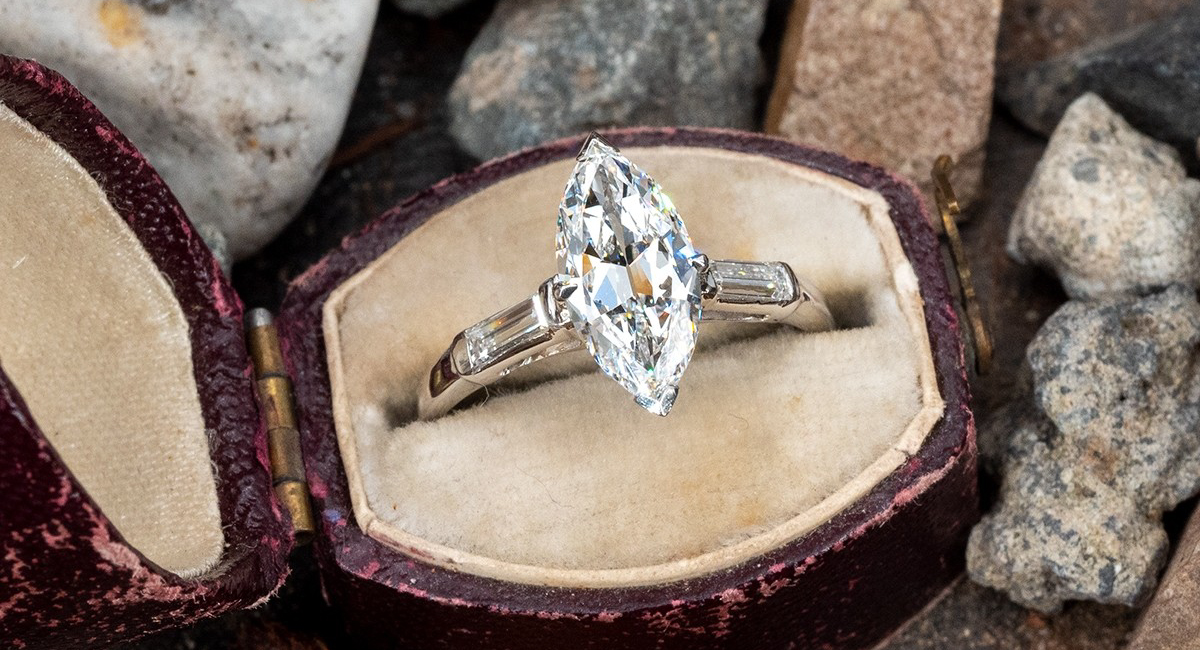
Marquise three-stone ring

The three-stone ring setting is an elegant way of expressing various emotions with the diamonds attached in the center of the band delivering unique and innovative gestures. 

Marquise Split Band Ring 

Marquise Halo Ring 

This is a very unique setting where the diamond is placed in the center of the band that splits from both sides while coming toward the center. It enhances the look of the diamond and the whole ring.

We at Loose Grown Diamonds manufacture and sell lab grown marquise diamonds to customers directly without any involvement of a middleman. This makes our diamonds one of the most affordable high-quality diamonds available in the market.

At Loose Grown Diamonds are available at the most competitive prices marquise diamonds start from $400 to $500. You can use our diamond price calculator to determine the right price for your diamond. Additionally, explore exclusive savings with our promo code when elevating your diamond shopping experience.


Conclusion

It will take a lot of hunting for a consumer to find the perfect marquise. It does not stop at the purchase too, as the stone requires extra care to make sure the stone is not damaged while wearing it. It is also important to remember that the optimal length-width ratio for any marquise cut is 2:1. 

Of course, old marquise cuts may not be perfectly proportioned. As a result, those with the correct ratio, or near to it, might be pricey. This is especially true if the stone’s four Cs are prominent.

As a result, ask your jeweler for the exact ratio as well as any other information you want. Some stones will be less than flawless. When viewed in isolation, the difference between a perfect ratio stone and a non-perfect ratio stone is remarkable.

Wearing a diamond requires a certain amount of elegance. Marquise cuts offer an elegance that few other styles can rival. Good marquise cut diamonds are absolutely one-of-a-kind.

The brilliance of the marquise cut cannot be overstated by us. We do believe that it is simply one of the greatest, whether as a solitaire or with additional supporting diamonds. 

FAQs

What makes marquise cut unique?
Its distinctive shape maximizes carat weight, creating the illusion of a larger diamond.

Are there ideal length-to-width ratios for marquise diamonds?
Typically, a ratio of 1.75 to 2.25 enhances the diamond’s appearance.

Are marquise diamonds suitable for engagement rings?
Yes, marquise diamonds are suitable for engagement rings. Their unique elongated shape adds a touch of elegance, and they often appear larger than other cuts of the same carat weight, complementing various ring settings and styles.

Can I customize a setting for my marquise diamond?
Yes, LGD offers customization options for a personalized touch.

How does the marquise cut affect brilliance?
It offers excellent brilliance with a larger surface area for light reflection.

Is color or clarity more important in marquise diamonds?
When selecting a diamond, consider the dynamic relationship between color and clarity. Focus on the flaw more noticeable to the naked eye—whether it’s color or clarity. Instead of prioritizing one over the other, set minimum requirements for each.

A LooseGrownDiamond.com can guide you through this process, potentially resulting in cost savings without compromising quality.
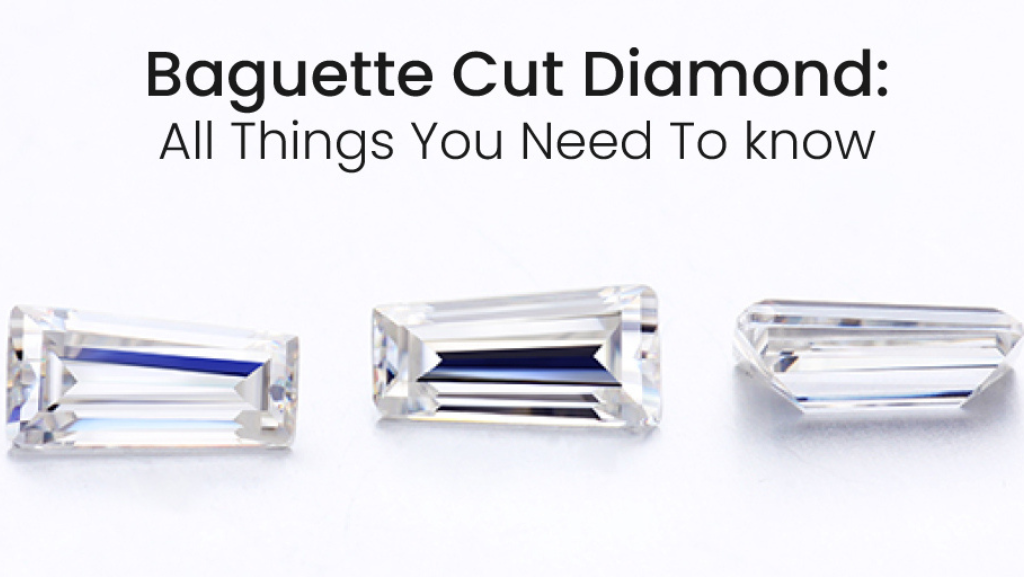
Baguette Cut Diamond: In-Depth Analysis of a Fragile Cut

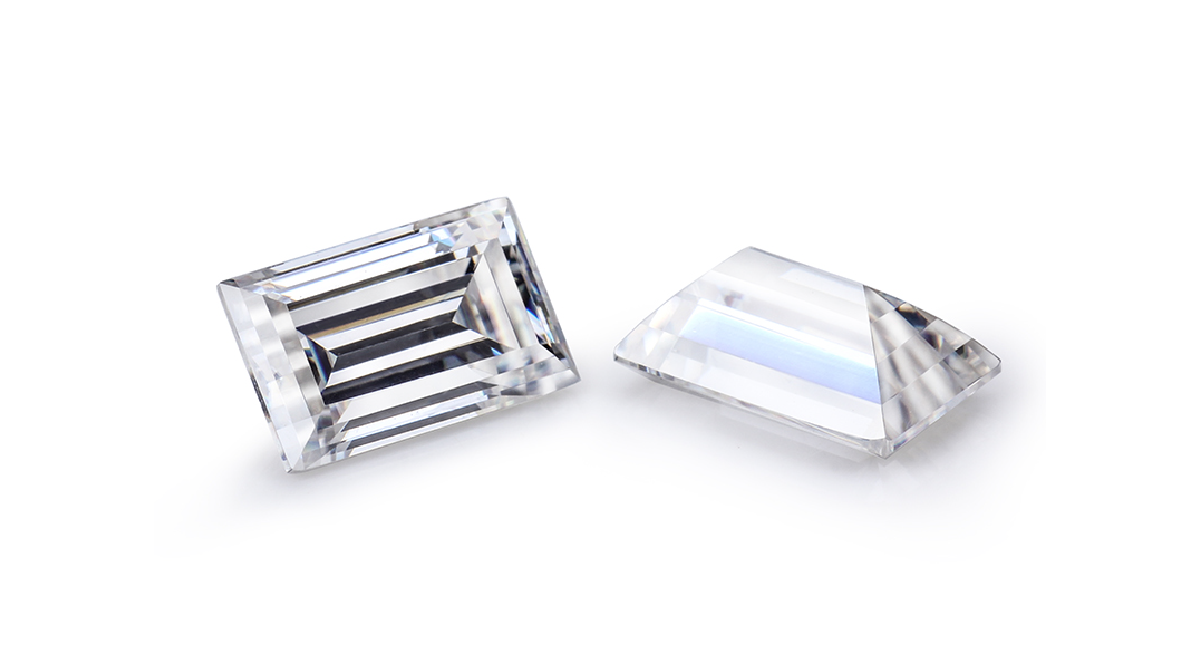
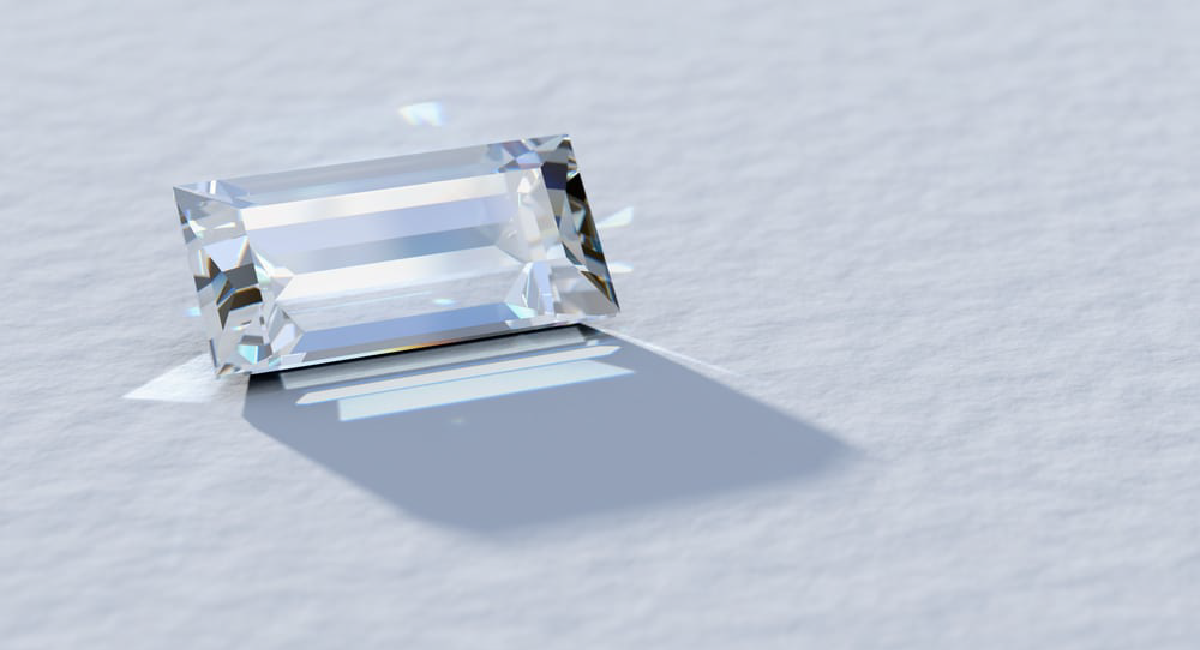
The baguette cut diamond is an oblong and slender diamond with particularly 14 iterative columns. This gem has its roots placed in the ‘step-cut’ lineage which tends to have a unique square-shaped parallel facet arrangement. Unlike the other members of this hierarchy such as the asscher cuts that have X-shaped facets, baguettes have straight or tapered edges.

Baguette Cut Diamond: In-Depth Analysis of a Fragile Cut

The baguette is a type of accent diamond that when paired with relatively larger diamonds helps in enhancing their magnificence. A somewhat similar effect as that of melee diamonds is the beautification of the main stone by the presence of the side stones. On account of their length, they can easily fit into even the tiniest of bands. These stones have a peculiar yet important function in wedding rings as they can be put together with round brilliant cuts and enhance their radiant shimmer.

To give you a perspective of these rectangular shaped elongated diamonds. Thus they are super slim yet equally long and look quite nice when available in abundance.

What is a Baguette Diamond?

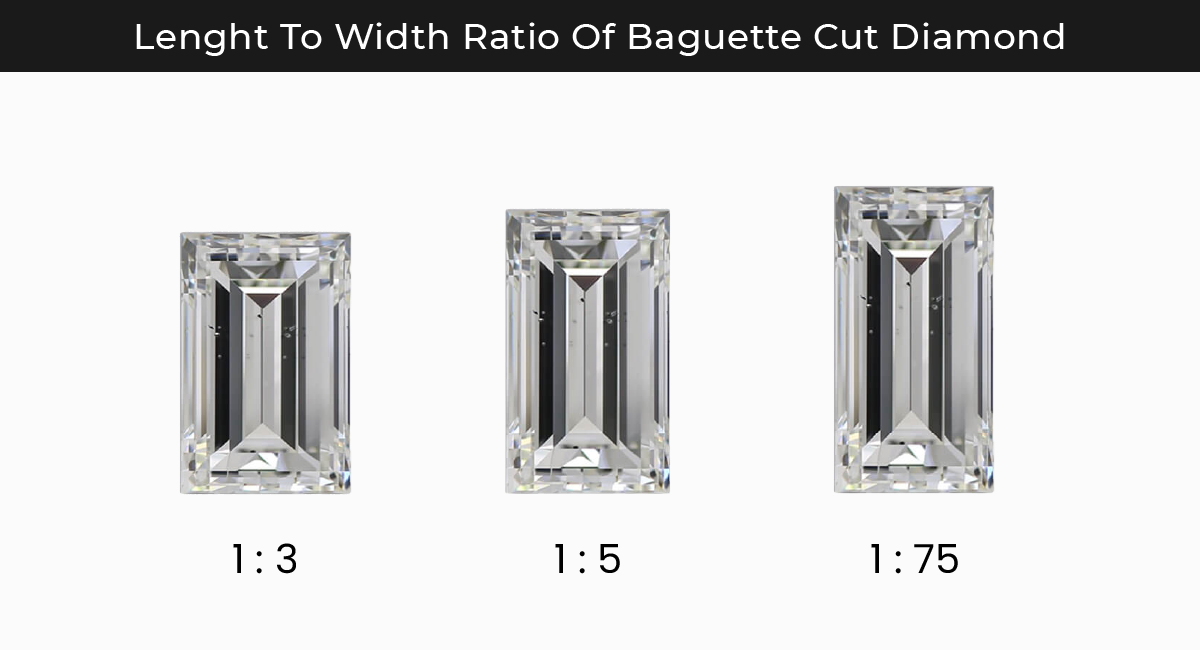
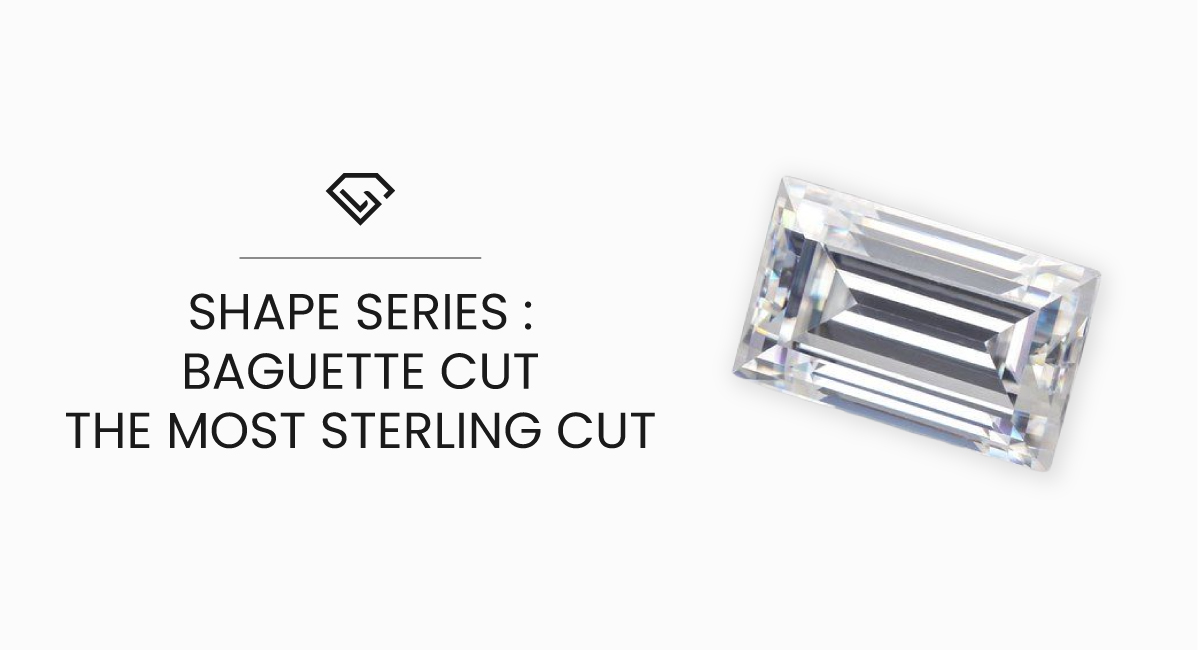
A baguette diamond refers to both the cut and shape of the diamond. For a diamond to be considered a baguette, it must be thin and elongated in a rectangular shape, usually with a length-to-width ratio of around 3:1.

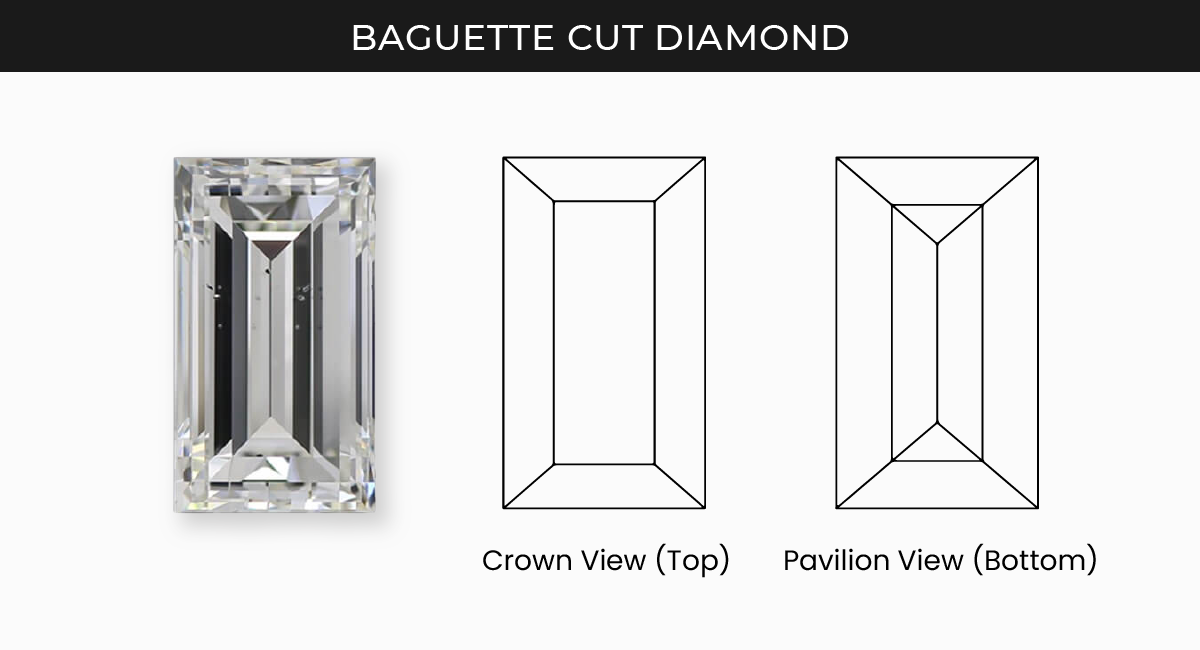
Belonging to the step-cut family, which includes emerald and asscher cuts, baguette diamonds stand out with perfectly square corners. They typically have 14 straight-line cuts, offering exceptional clarity with a subtle sparkle, making them an ideal choice for accentuating other stones in a ring.

What is a Baguette Diamond?

Pros

  1. Baguette diamonds are more inexpensive and affordable than brilliant cuts.
  2. Baguettes act as great side stones when put together with brilliant cuts and allow for the center stone to shine.
  3. Baguettes can be placed in various alignments and therefore make very versatile components of jewelry.

Cons

  1. They are not suitable for solitaires or jewelry where they have to be mounted alone. 
  2. Due to their special arrangement inclusions are highly visible.
  3. They sparkle less than brilliant cut diamonds and thus might not be the optimal choice.

History of the Baguette Diamond

The term ‘baguette’ means a loaf of bread in French to which the diamond’s name can be attributed to its length. The discovery of this cut dates back over a hundred years during the Art Deco and Art Nouveau era. The Art Deco jewelry marks contrasting structural variations using baguette diamonds in various colors.

History of the Baguette Diamond

Art Nouveau jewelry has aesthetics with varied shapes and designs encompassing the baguette rings symbolizing femininity, grace, and culture. The uprising of baguette cuts signaled modernity and vogue in the contemporary world.

Originally baguette diamonds were used in crests and beautiful rings with the owner’s initials but over time, their use has evolved. Now they are used as insignias and brooches as well. The baguette diamond cut is a relic in the fashion world but it won’t be going out of fashion anytime soon.

What to Look for in Baguette Cut Diamond

Cut

The lab baguette cut diamond in general is made with fewer cuts in comparison to other lab grown diamond cuts. When you measure the facets in a baguette cut stone, that is the flat space in the diamond stone, there are only 14 facets. All of this naturally points down to the fact that any work done on the stone needs precision.

What to Look for in Baguette Diamond

Why does this precision mean so much? It is because other stones that have more facets cover up the unevenness or lack of clarity but that doesn’t happen in the case of a baguette diamond due to the lower number of facets. 

There are two main cuts of baguette diamond that you’d find, one is ‘tapered cut’ and another is ‘straight cut’. The straight-cut diamonds are complete rectangles with the sides opposite each other being perfectly parallel. The tapered ones, on the other hand, inherently look like trapezoidal stones with an angle leaning inwards.

You can choose between the two cuts which one suits you the best.

Clarity

Looking for absolute clarity in your baguette stone? The key is to look for detailed cuts and then you’ll attain a level of crystal clear clarity. That is fairly important as the facets and the cut of the stone will make sure whether or not the diamond will have the perfect clarity and shine you have been looking for.

What will affect the crystal clarity of your baguette stone? That would be a lack of brilliance in your diamond, which would also be visible to the world. This is due to the fact that any kind of incorporation or flaws present in the diamond are readily visible in the baguette stone because of its cut.

Hence a purchase of a high-quality grade baguette diamond that could be a VS2 clarity would make more sense in terms of an investment. 

Carat

The carat size in your baguette shaped diamond is something important but can be looked out for at the end of the deal, focusing on clarity and color is very important. Hence, 0.5 to 1 carat baguette diamond should be your ideal choice range. You can check out Loose Grown Diamond’s specialized diamond size chart guide for measuring diamond sizes.

Color

How you choose the lab created baguette shaped diamond depends a lot on its color. Due to the shape and big facets they possess, they tend to show the true color of a diamond much better than diamonds that go through similar precise cutting. From the gradient scale, a G or H color rating is perfect in terms of baguette diamonds. This is so that the top side of the diamonds looks colorless and has a higher brilliance. 

The baguette lab diamonds are usually bought for their elegance and not spark or shine. They are mostly bought as side stones surrounding the main stone. However, if you’re using it as the main stone make sure to use side stones at the same level of the color as the baguette stone, and to match their colorless shade G or H is completely a safe choice.

[blog_page_inventory shape=”baguette” carat=”0.50,4.90″ cut=”0,4″ color=”0,10″ clarity=”3,5″]
[blog_page_btn title”Buy Now” url=”https://www.loosegrowndiamond.com/inventory/?”]

Length To Width Ratio of Baguette Shape Diamond

Length To Width Ratio Of Baguette Cut Diamond

The length-to-width ratio of a baguette diamond can vary, but typically it falls within a range of 1.5 to 2.5. This means that the length of the diamond is 1.5 to 2.5 times its width. The specific ratio often depends on personal preference and the design of the jewelry in which the diamond will be set.

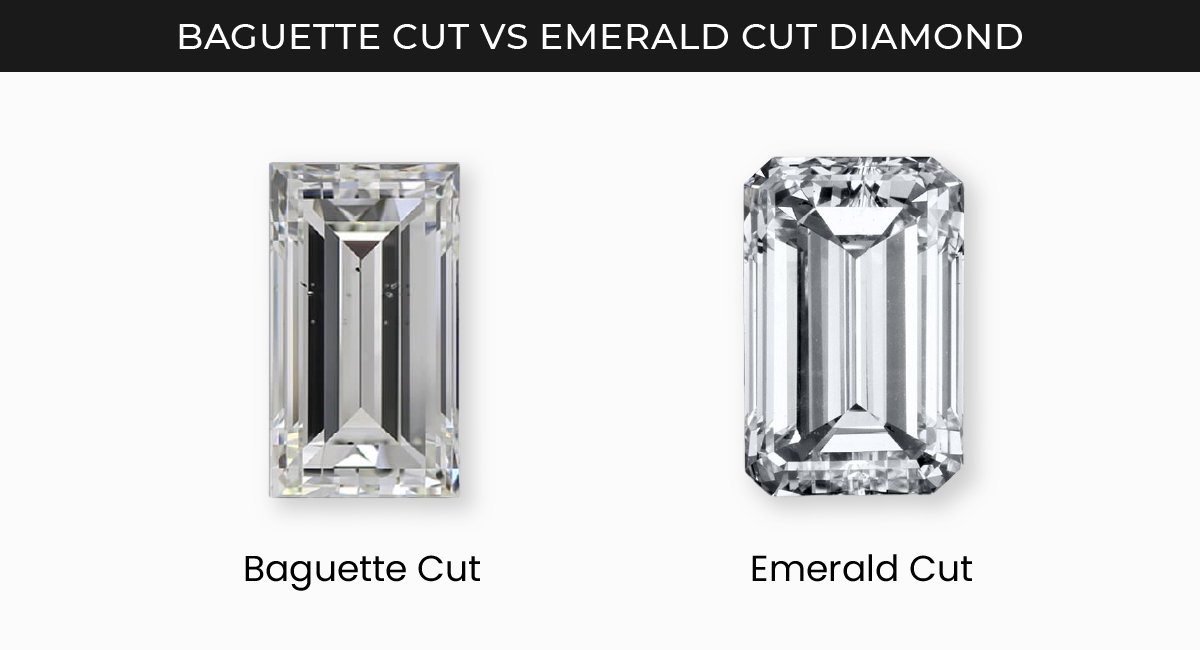
Baguette Diamond vs Emerald Diamond Guide

Baguette Diamond vs Emerald Diamond Guide

Choosing Between Baguette and Emerald Cut:

  1. Consider proportions: Aim for a length 1.5–1.75 times the width.
  2. Baguettes have around 25 facets; clarity matters—choose VS1 or above.
  3. Emerald cuts are more available in larger sizes; baguettes are ideal for smaller diamonds.

What They Are?

[su_table responsive=”yes” fixed=”yes”]

Baguette Diamond Emerald Diamond
Slim, rectangular shape with pointed corners.
Rectangular shape with polished corners.
Simple step-cut facets.
Terraced arrangement of step-cut facets.
Pointed corners and smaller sizes.
More complex than brilliant-style faceting.
French origin, meaning “rod” or “stick.”
Typically larger sizes.

[/su_table]

Appearance:

  • Both offer subtle elegance compared to brilliant cuts.
  • Baguettes have pointed corners, while Emerald cuts have wedge-shaped polished corners.
  • Baguettes suit smaller carat weights, while Emerald cuts are popular in larger sizes.

Popularity:

  • Emerald cuts are more popular than Baguettes.
  • Worldwide availability: 8223 x 1-carat emerald cuts vs 137 x 1-carat baguette cuts.

Sparkle:

  • Both provide flashes of light and fire, not intense brilliance.
  • Baguettes don’t sparkle like brilliant cuts; they offer subtle flashes of light.

Tapered Baguette Diamonds:

  • Narrowing or tapering towards one end.
  • Perfect for side stones in trilogy engagement rings.
  • Rarely found in large sizes; popular in pairs with specified total weight.

Total Weight Comparison:

  • 4 x 2mm baguettes: ~0.25cts total weight.
  • 4 x 2 x 1.5mm tapered baguettes: ~0.18cts total weight.

Diamond Jewelry Types:

  • Baguettes: Suited for smaller diamonds in eternity rings and diamond shoulders.
  • Emeralds: Used in solitaire, trilogy, bezel, and halo engagement rings.
  • Both enhance the look of diamond pendants.

Baguette Cut Diamonds Rings Setting

Select the perfect setting for the baguette cut diamond may seem a bit tricky, so here are a few settings we would like to suggest:

[su_youtube_advanced url=”https://www.youtube.com/watch?v=UfbgZXuBGkI” width=”1600″ controls=”alt” autohide=”yes” autoplay=”yes” mute=”yes” loop=”yes” rel=”no” modestbranding=”yes” theme=”light” playsinline=”yes” title=”baguette diamond ring”]

Three Stone Baguette Diamond Ring
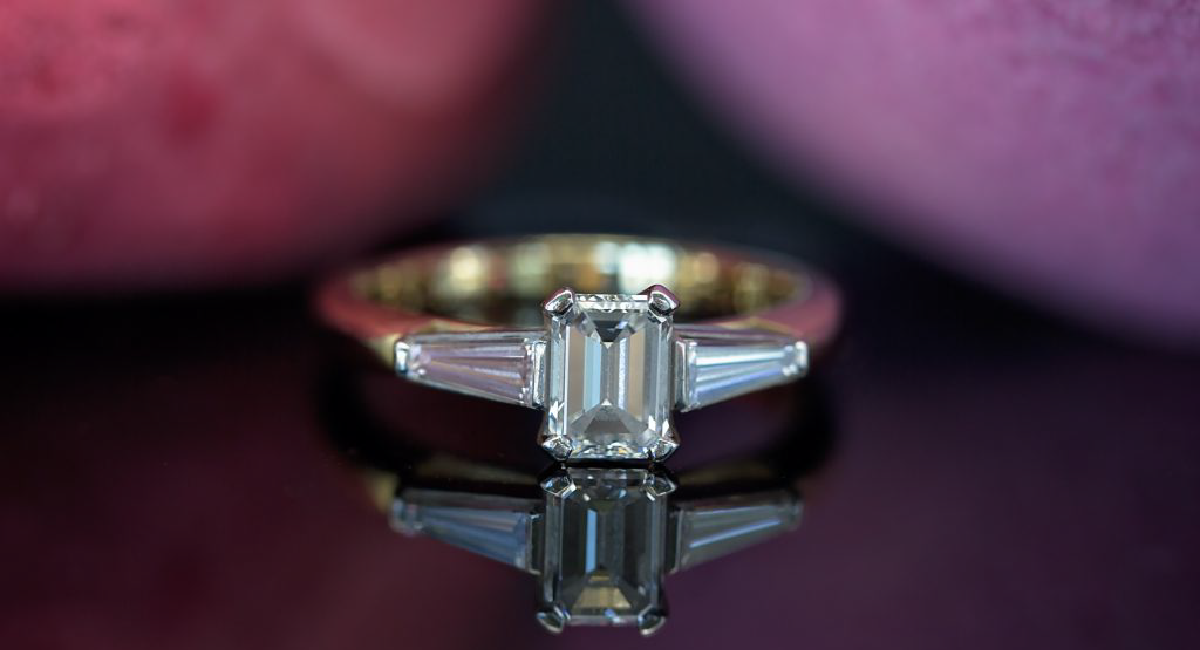
The three stone setting is usually set with tapered baguette stones where the baguette is the side stone or the accents, and this setting is used to add an extra touch to the center stone.

baguette cut diamond three stone engagement ring

The three stone setting that is most followed is placing a three-stone tapered baguette next to an emerald cut diamond. This is done mostly to hide or outshine the step cut that both the baguette and emerald cut diamond stone have inherently as their cut style. Also, 3 stone baguette diamond ring makes a beautiful setting because the stones alongside each other give out a very royal look.

Channel Set Baguette Diamond Ring
Baguette diamonds as already established make very beautiful accent stones, they look even better as accent stones when put in the channel set baguette diamond ring setting.

Channel Set Baguette Diamond Ring

This setting is perfect because small baguette stones in the metal band adjacent to the center stone have a very neat and sophisticated look, and they can be a perfect fit for your loved one.

Vintage Baguette Diamond Ring
If you’re someone who is obsessed with a lot of round diamonds in your rings, then baguette stones are here to add glory to your super classic vintage look. They are a brilliant addition to any vintage ring you may possess.

Vintage Baguette Diamond Ring

We say so of baguettes because of how unique they are and add a lot of variety and texture to your ring by taking it to another level.

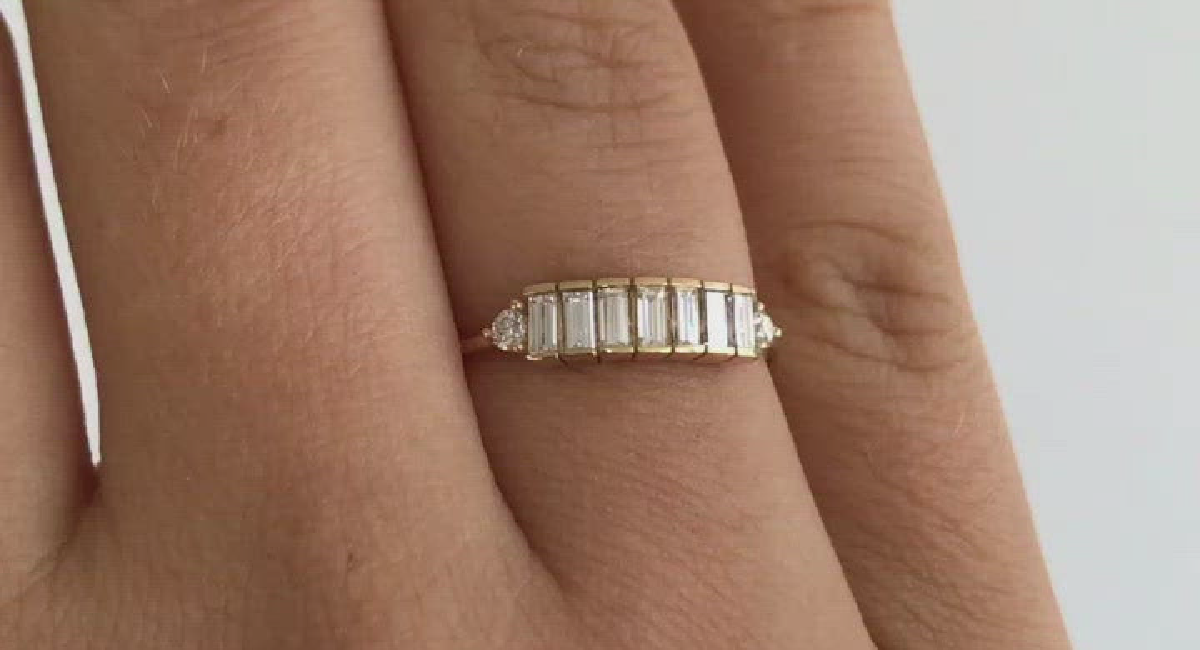
Baguette Eternity Ring
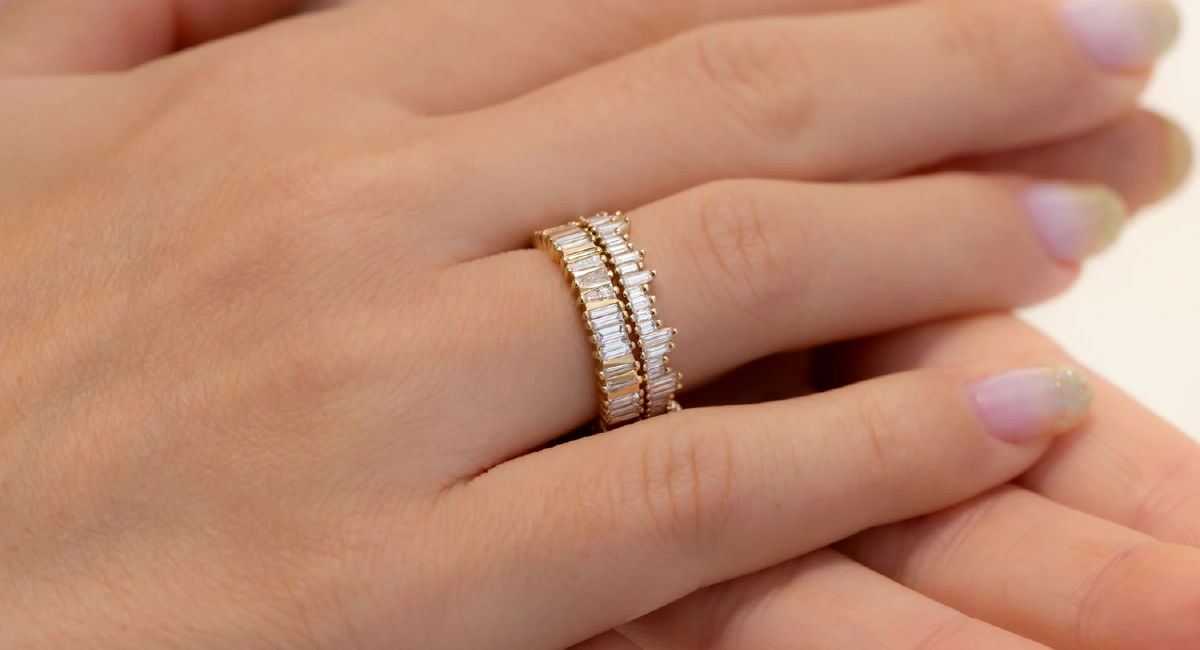
Baguette eternity bands or rings are beautiful choices. In this setting, a row of baguette diamonds is placed end-to-end followed by the channel setting of the main ring to give it a sophisticated and bulky yet elegant look.

Baguette Diamond Eternity Ring

The plus point for this setting is that baguette diamonds are somewhat less priced in comparison to the other diamonds and are a good choice appeal-wise. So, although you’re using a lesser-priced diamond stone, the cuts are still top-class. 

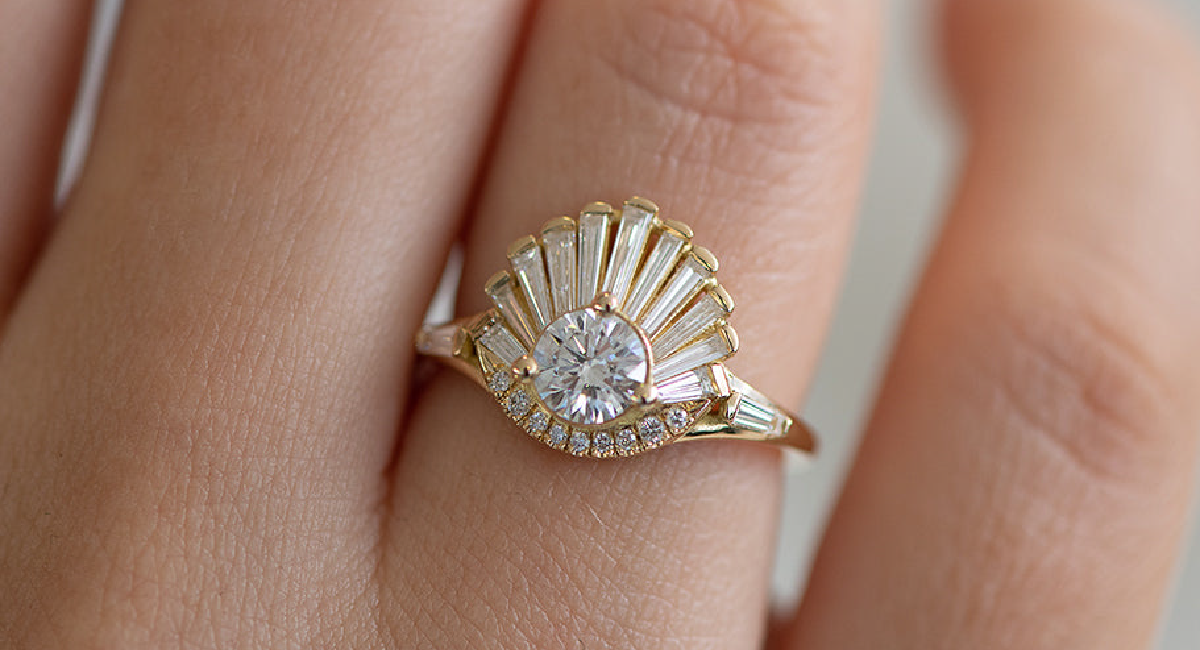
Ballerina Diamond Ring
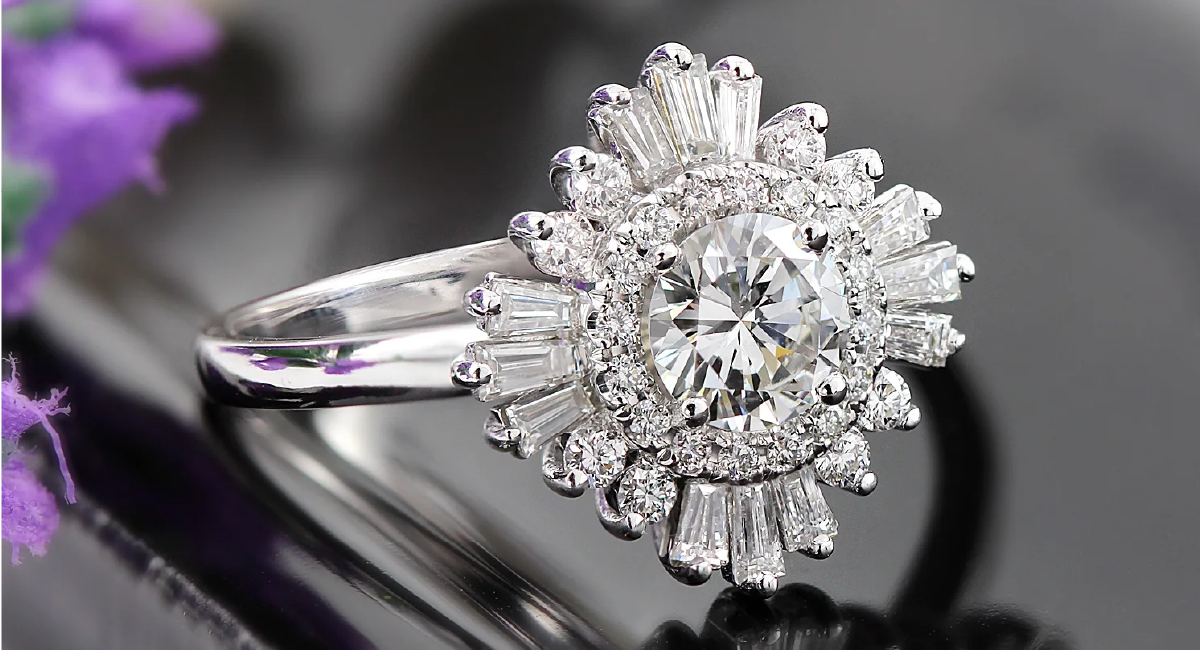
If you want a ring that stands apart from the crowd then a ballerina diamond ring is a great choice. The baguette diamonds are featured in a way that they point outwards showing their beautiful shape around a primary stone.

Ballerina Diamond Ring

They radiate a very unique and attention-grabbing look. Due to the use of multiple baguette diamonds, this ring setting may tend to cost a lot in comparison to other rings.

Conclusion

Needless to say, over time vintage classic diamonds have overshadowed contemporary modish jewels and have taken over the fashion industry.

Baguette cut diamonds have exceptionally displayed their worth not only as accent stones but also as indispensable elements of eternity bands and various types of engagement rings. They are extremely affordable and when paired up with brilliant-cut diamonds formulate an unprecedented work of art.

Where to Buy a Baguette Diamond at the Best Price?

In search of a flawless baguette diamond? LGD has the finest deals and a beautiful selection, including ethically sourced lab grown diamonds. The price of a baguette diamond at LGD varies based on factors such as carat weight, cut, and clarity.

You can save money without sacrificing quality. In addition, enter the promotional code at checkout for a special price reduction. Choose from hundreds of styles on loosegrowndiamonds.com.
   

FAQs

1. How much is a baguette diamond?
Expect to pay between $300 and $800 per carat for a baguette diamond. To get an accurate quote, you can use our diamond price calculator on the website.

2. Are baguette diamonds more expensive?
Baguette diamonds are generally more affordable than some other diamond cuts due to their elongated shape. LGD ensures affordable pricing, providing a range of options to suit different budgets.

4. Which diamond cut is the most expensive?
The costliest diamond cuts can vary, but generally, more intricate cuts like the Asscher or Princess cut tend to be pricier. LGD offers a diverse range of cuts, ensuring the best value for your preferences about this diamond shape’s ring.

5. What is the difference between an emerald and a baguette diamond?
While both are rectangular, the key difference lies in the cut. An emerald cut has cut corners and step-cut facets, imparting a classic look, whereas a baguette-shaped diamond features a simpler, elongated shape with step-cut facets, offering a distinct and elegant appearance.

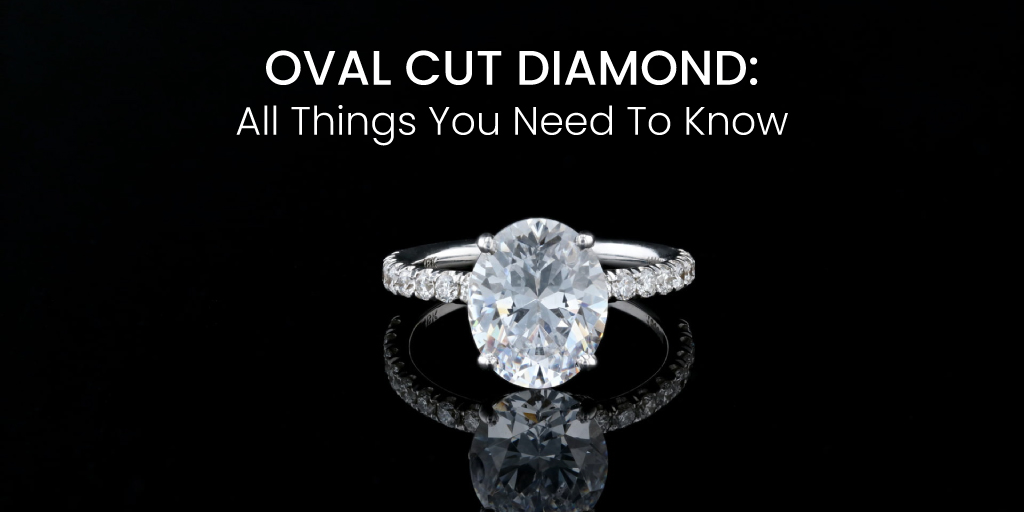
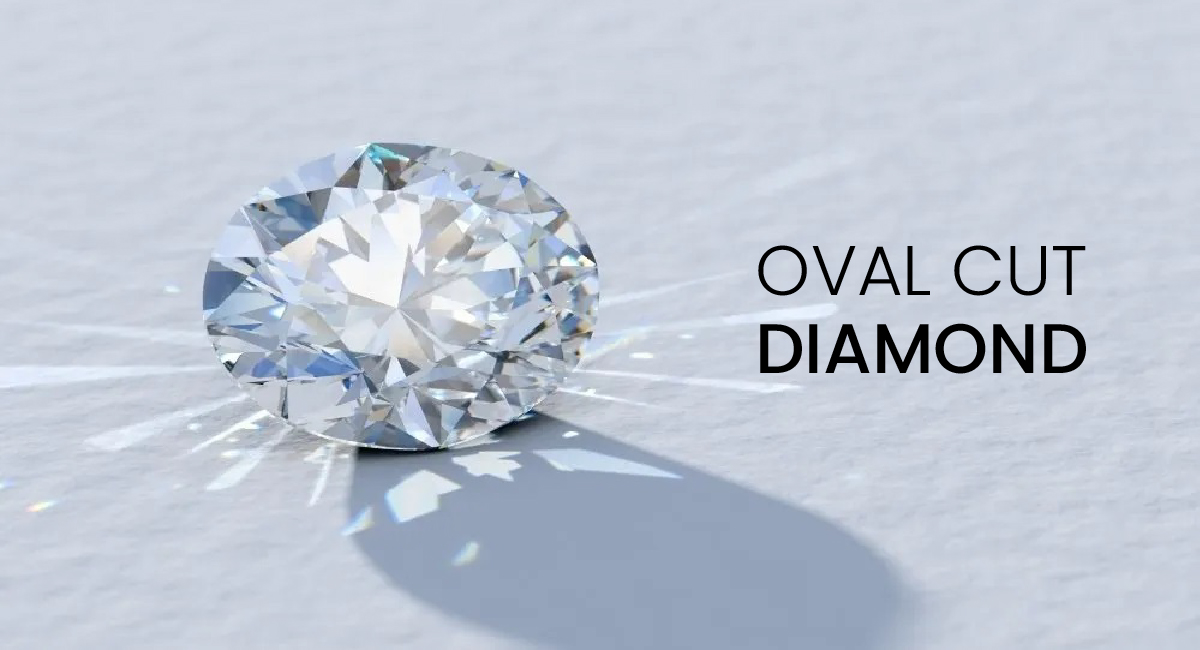
Oval Cut Diamond: All Things You Need to Know

A refashioned form of round brilliant-cut diamonds, oval cut diamonds, although have been present for a long time throughout history, have recently created a thrill amongst diamond fanatics for their radiance and fire. 

The concept was brought to life by Lazare Kaplan in the 1960s while its more historical variety can be traced back to the 1300s wherein the celebrated Koh-I-Noor was a diamond cut in an oval shape.

Falling into the ownership of Queen Victoria who further had it altered to free the diamond of its lifelessness and irregularities in shape, it eventually in the present day sits before the Queen Mother’s Crown in the Tower of London.

History of Oval Cut Diamond

While the old-fashioned oval diamonds were undeveloped and defectively cut, their modern successors are excellently designed with a unique appearance, hence creating a name for themselves amongst the newer hands who had begun preferring the lengthening effect that these diamonds created. 

Mr. Kaplan, the creator of this modern design, was a famous Russian-born American maestro in diamond cutting who belonged to a family of renowned diamond cutters. Wherein his cousin Marcel Tolkowsky conceived the world’s first-round brilliant “ideal” cut, Tolkowsky Ideal Cut. 

The Oval Elegance was birthed out of this cut which Kaplan modified and thus, the modern oval cut diamond was created. This brilliant invention awarded Mr. Kaplan a position in the Jewelers International Hall of Fame.

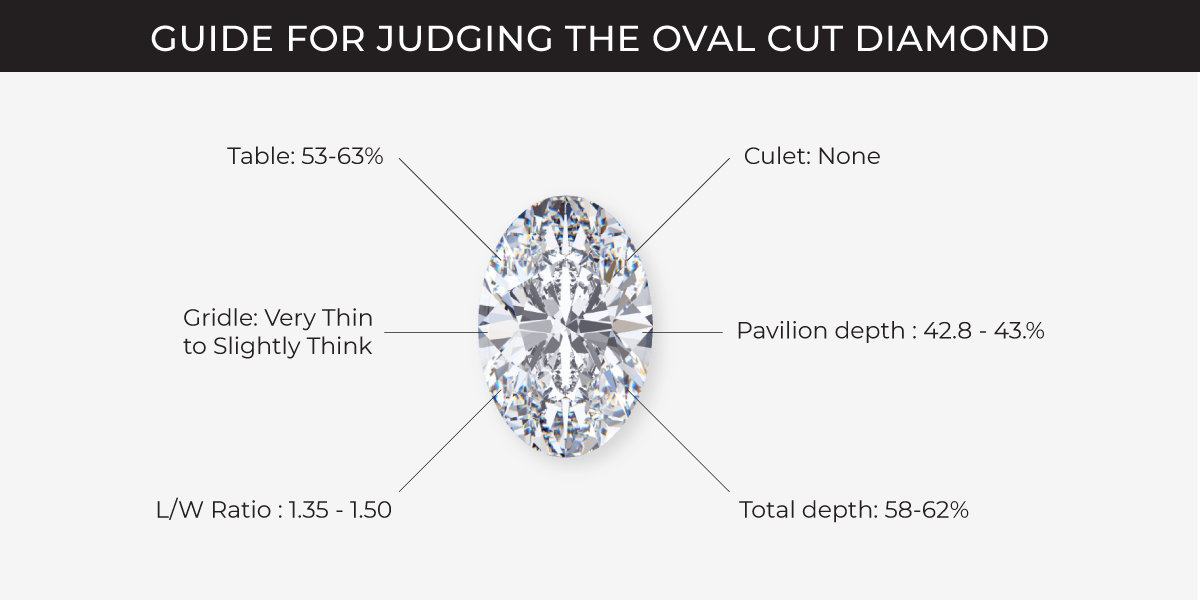
Guide for Judging the Oval Cut

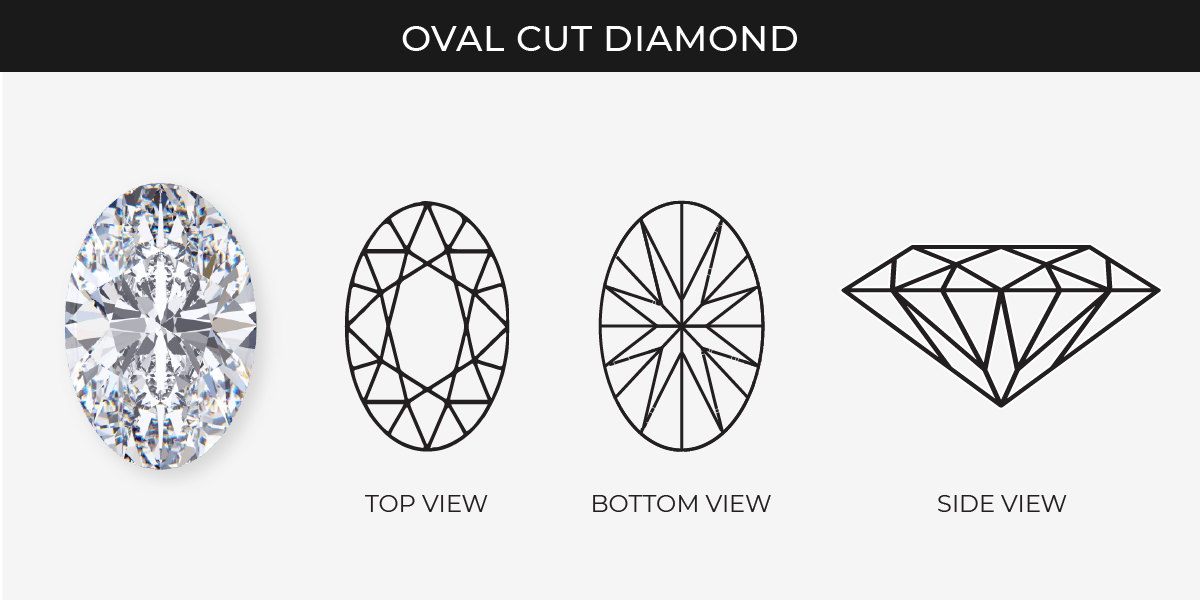
Oval Cut diamond proportion

Since the provision for a lab grade for the cut is unavailable at the moment, it can prove to be harder for an enthusiast to differentiate between the well-cut and poorly-cut oval diamonds.

Here is a list of some pointers that the seeker can keep in mind while looking for the perfect fit for them.

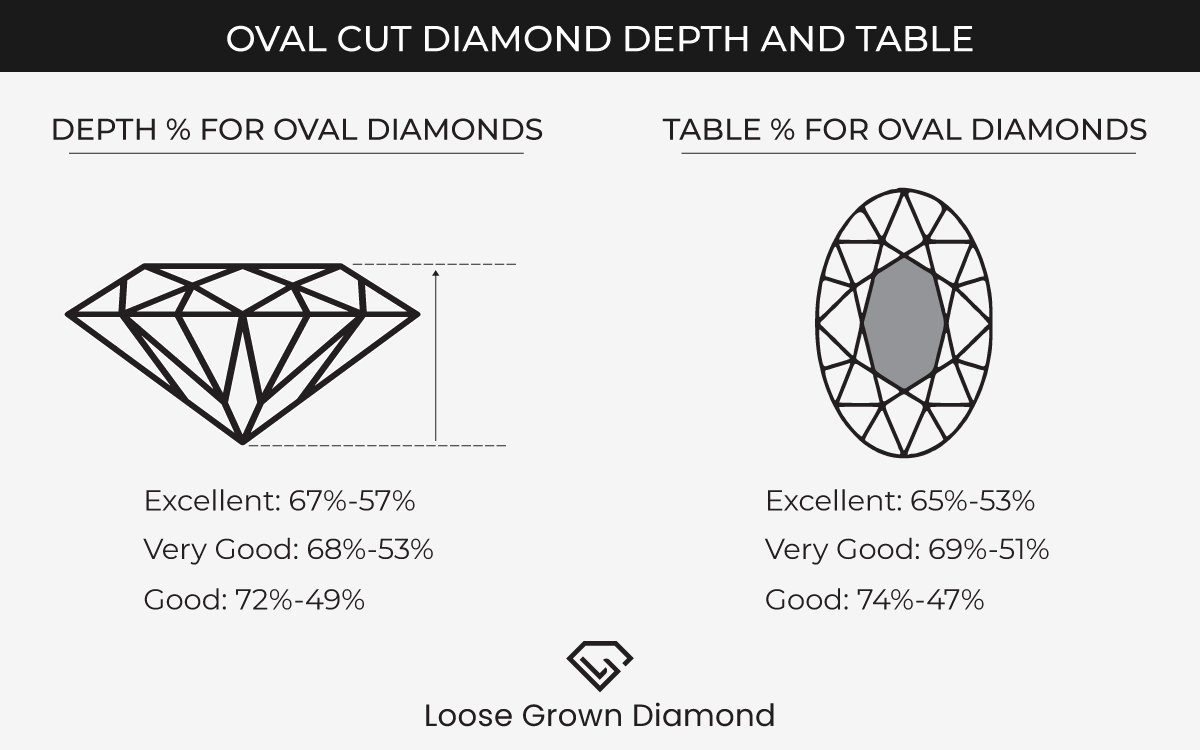
Depth for Oval Cut Diamond

Depth % for oval diamonds is in the following range: 

  • Excellent: 67%-57%
  • Very good: 68%-53%
  • Good: 72%-49%

Oval Cut Diamond Table

Table % of oval diamonds is in the following range: 

  • Excellent: 65%-53%
  • Very good: 69%-51%
  • Good: 74%-49%

Oval Diamond Cut

Although ovals vary across many shapes, one should always avoid off-shaped ovals that have pointed or squared ends which increase the chances of chipping.

Observing the symmetry is necessary too as an egg-shaped diamond is generally undesirable. 

Oval Cut Diamond Color

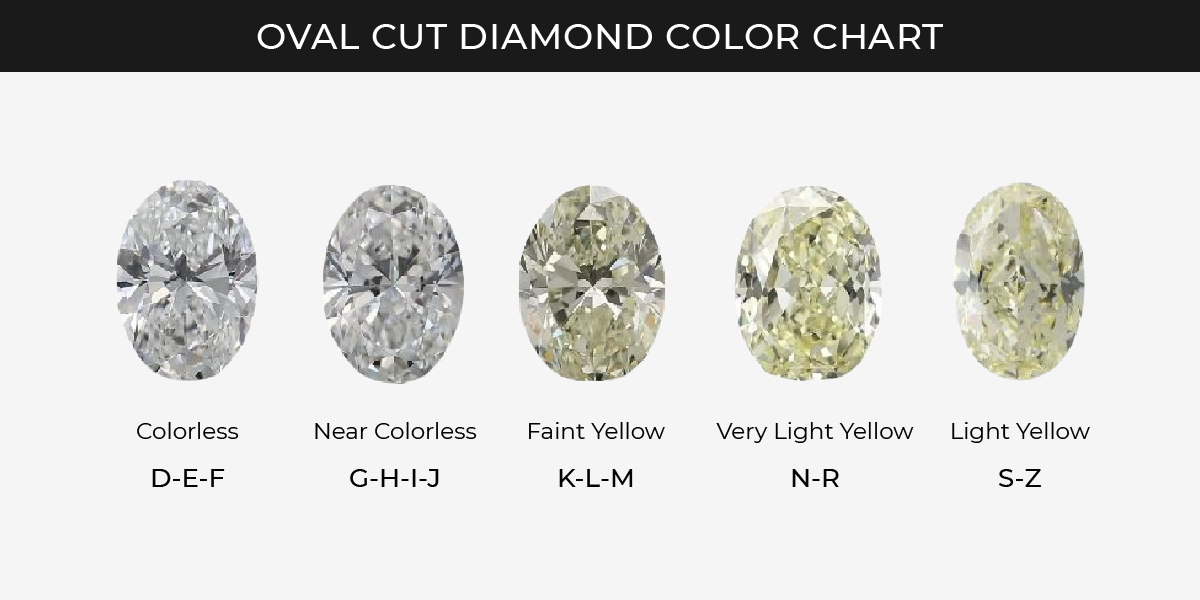
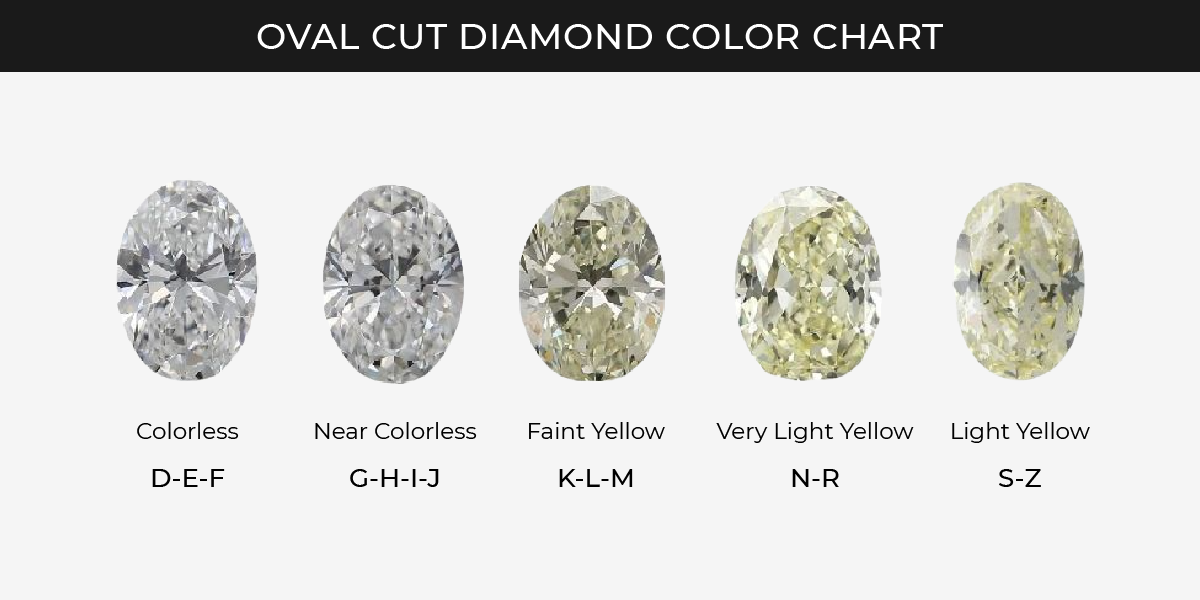
Oval color chart

The range of color seen in oval cut is designated by the letters of D to H wherein D-F diamonds have a cool colorlessness and G-H diamonds display warmer colors. I and even J color are sometimes available that appear pure white.

Although choosing between this range is mostly subjective, the oval diamonds at the higher spectrum have a more premium price hence, indicating that it is the more elegant selection. 

These premium prices would have otherwise been absent if diamond color grading was not done professionally as the deviation in appearance in regard to the color is barely noticeable by the naked eye. Alternatively, the off-color ovals have been observed to be competent with the vintage styles in yellow or rose gold.  

Oval Diamond Clarity

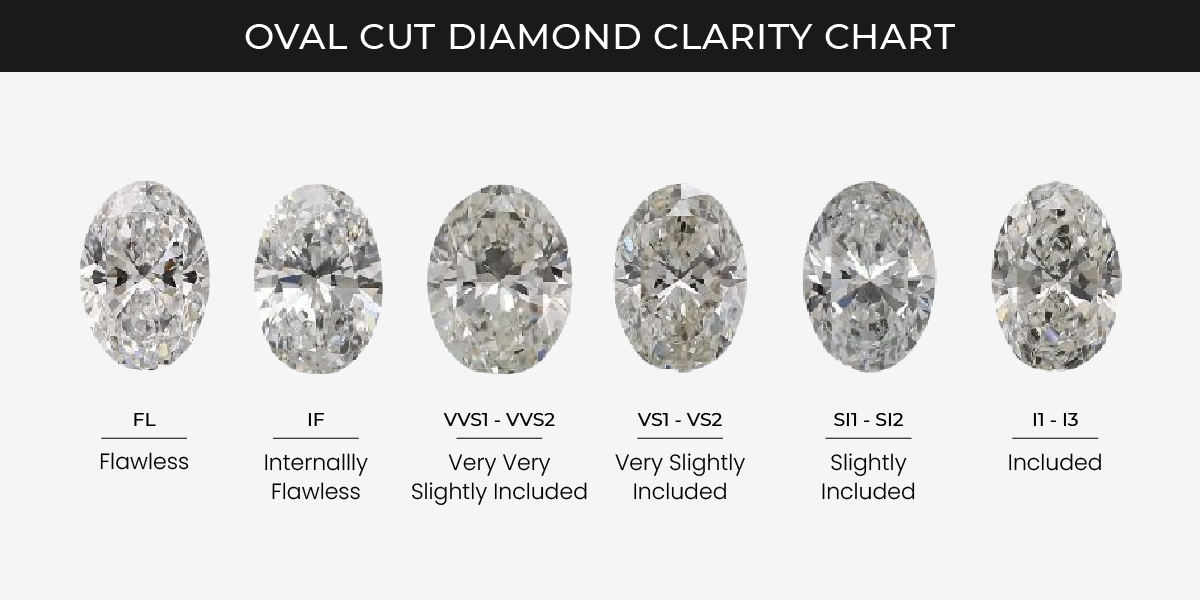
Assessment of clarity, like color, is generally subjective wherein every customer has a personal and unique standard for it. Some do not object to inclusion as long it is not visible to the naked eye whereas others pay attention to the technicalities and hence want to avoid all impurities. 

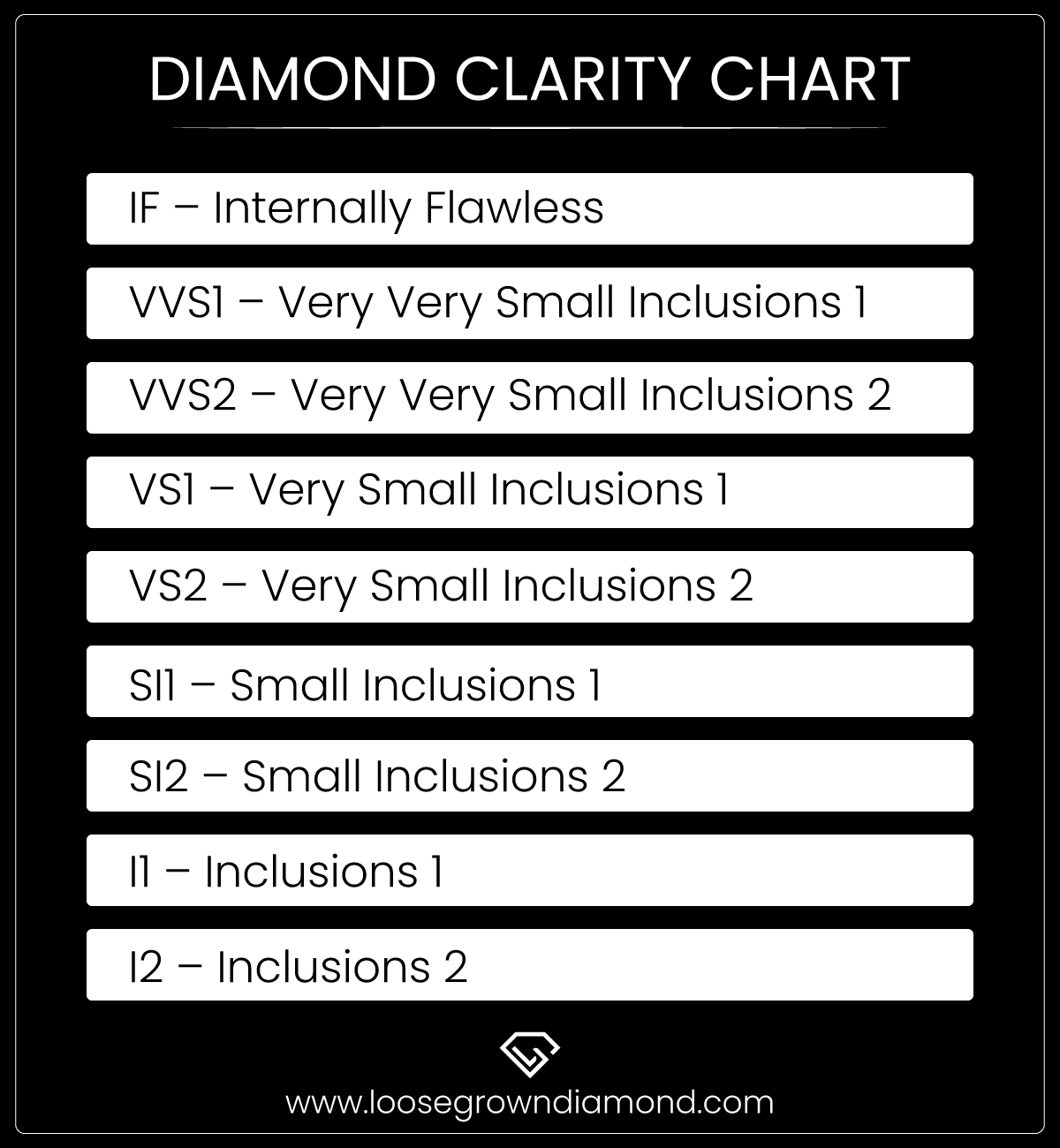
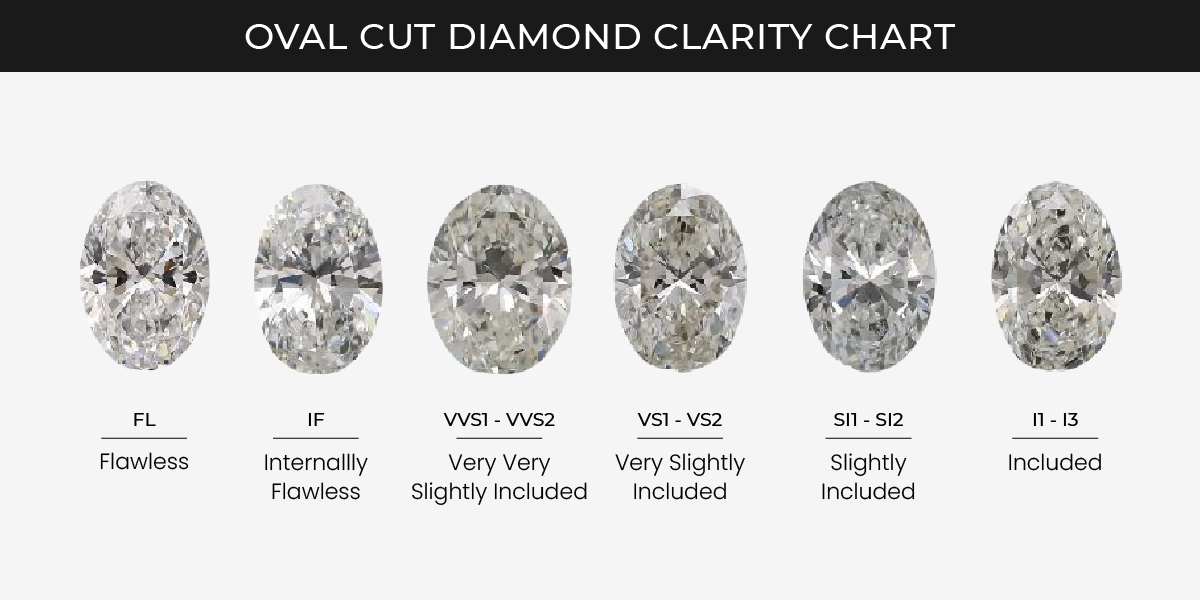
Diamond Clarity Chart

GIA proves to be a great help to customers with their clarity grades where they designate a diamond deficient of any visible impurities, a status of VS2 or SI1 while they also mention how SI2 stones too may appear eye-clean.

Inclusions near the center of the diamond must be avoided as they are noticeable to the naked eye. Then again these inclusions also cause the diamond to be worthless, hence choose wisely!

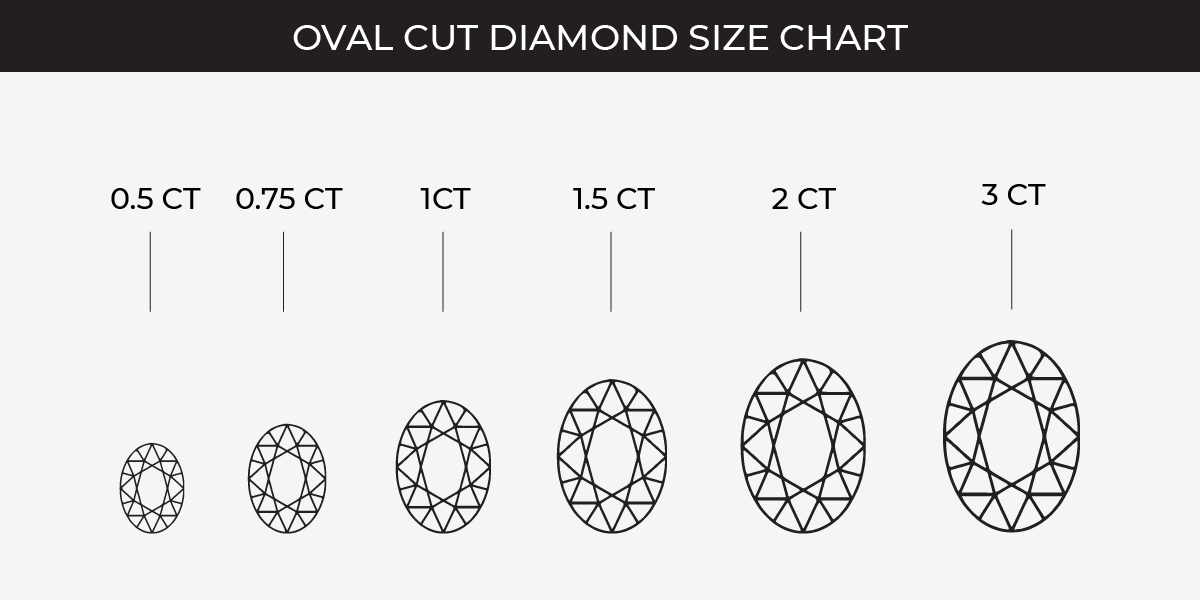
Oval Cut Diamond Carat Size Chart

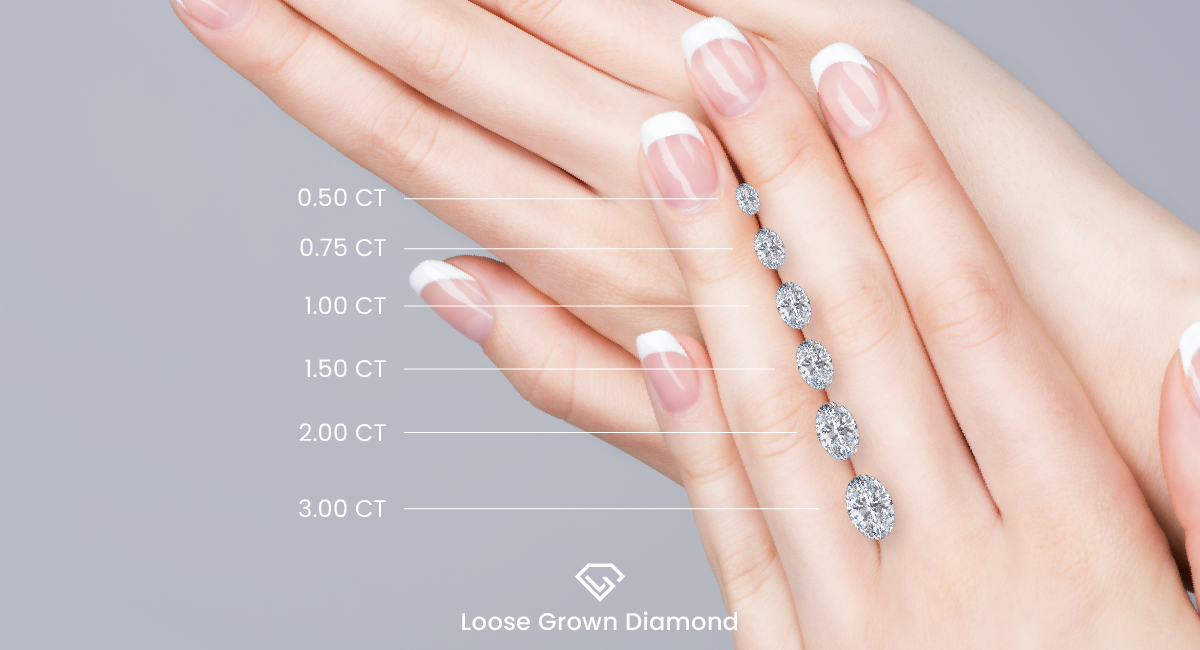
Oval diamond carat size

The maintenance of the perfect carat in an oval cut is crucial given its size and resemblance to a circle so much, any change in carat can hamper how the diamond may look. Also, let’s keep in mind diamonds are always bought and sold in terms of a carat and not size.

The carat of the oval cut diamond affects the length and the width of the diamond too. Hence picking up a carat that balances the length and the width of the oval stone will help you choose the perfect diamond. This diamond carat size chart will give you a thorough approach to identifying your size.

In terms of pricing in comparison to a perfect round cut, oval cut diamonds are 28% less expensive per carat in relation. This largely is because of how much rough diamond is being used, in an oval cut more of it is used. Hence, fewer rough diamonds are being discarded which in a way is a better value for money. 

However, just like any other diamond cut, oval cut diamond price also increases largely per carat when the stone’s carat weight increases. There are a few popular carat sizes for every cut, the ones for lab grown oval cut diamonds are 1, 1.5, 2, 2.5, 3, 4, and 5 carat. All these carat sizes are largely looked out for in the market.

[blog_page_inventory shape=”Oval” carat=”2.00,2.10″ cut=”1,4″ color=”0,10″ clarity=”0,11″]
[blog_page_btn title”Buy Now” url=”https://www.loosegrowndiamond.com/inventory/?”]

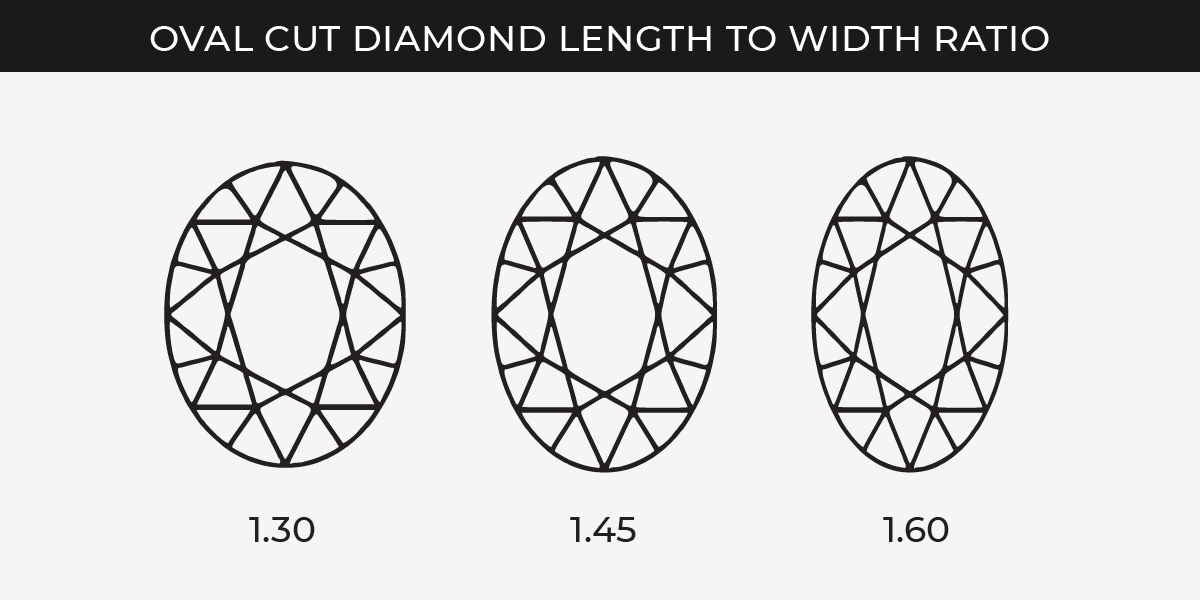
Length to Width Oval Diamond Ratio

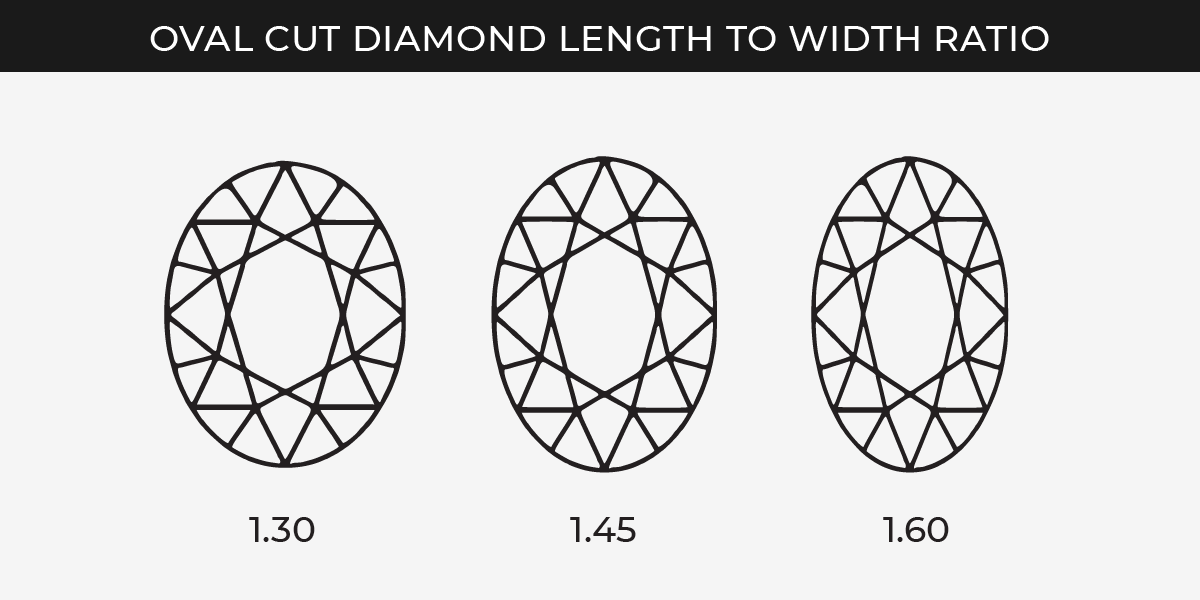
The optimal length to width ratio has been assigned to a range of 1.25 to 1.50.

A value lower than this will result in the cut appearing too round and a measure above the range will result in the cut looking too narrow, somewhat like a marquise cut.

Although the optimal ratio has been mentioned, it really is a matter of preference whether the customer wants a long or round oval cut. Certain people prefer very long ovals too and while higher ratios make the diamond appear relatively large, its depth becomes shallow. Meanwhile, a thinner cut will look appealing if it is combined with side stones.

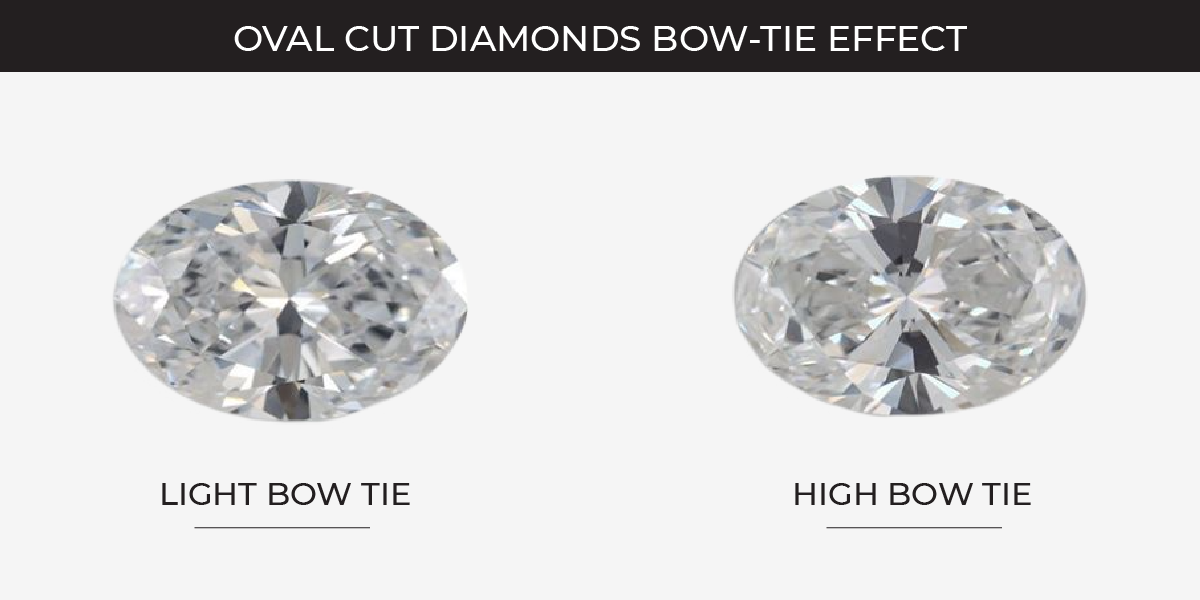
Bow Tie Effect Oval Diamond

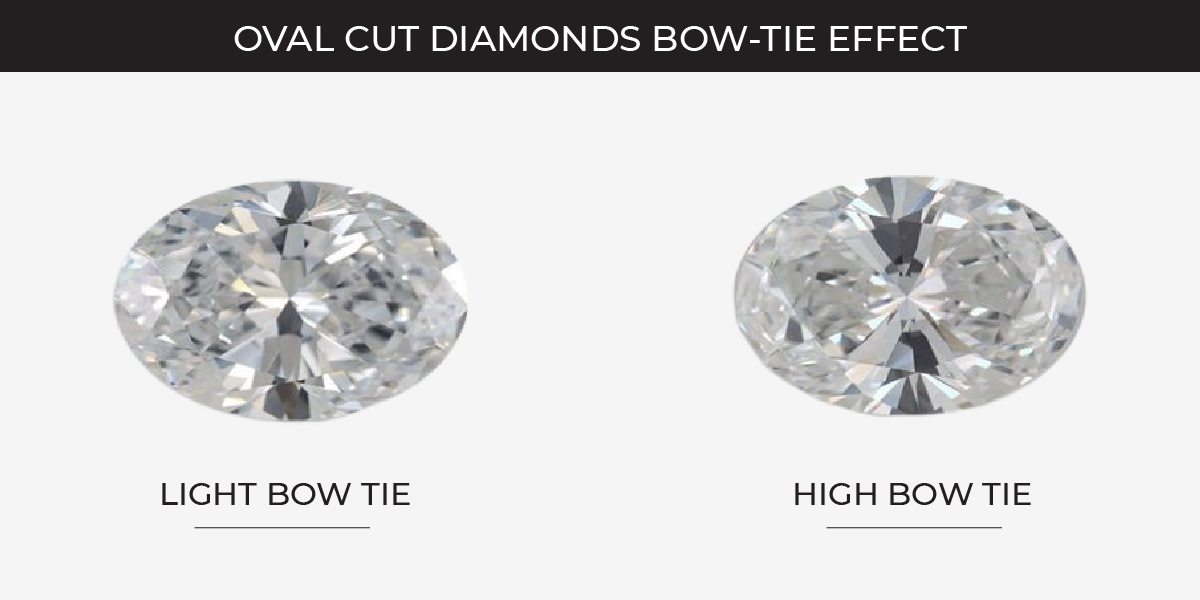
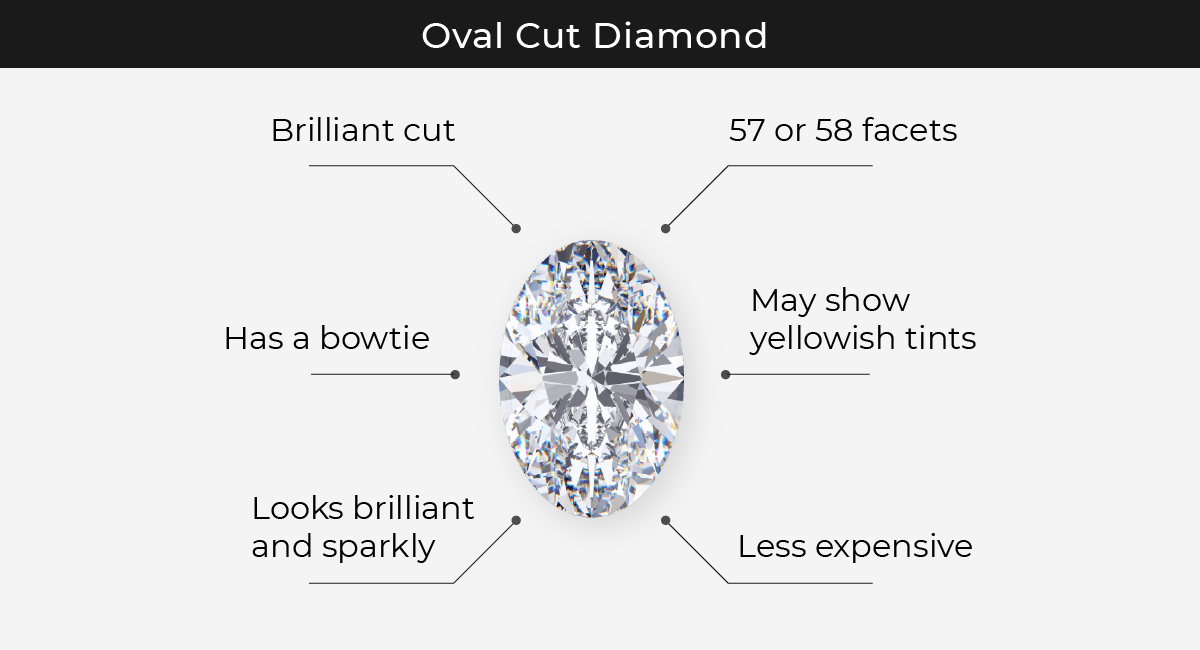
The bowtie effect, as the name suggests, is a triangular-shaped flaw found in the middle of every oval cut which meets in the middle resulting in a visually dark appearance in the center. The reason behind this formation is leakage of light due to the absence of reflection in this region, hence the dull appearance. 

Many customers embrace this flaw while others consider it fatal and so the selection of the diamond based on the intensity of the bow tie that is visible has become a personal preference. 

oval cut bow-tie effect

While a depth of 60% or less in the diamond will lead to a prominent bow-tie effect and a depth of 68% or greater, this bow time becomes minimally visible, although at this depth the oval cut will begin to lose its splendor and appear dark and dull as compared to other stones.

Hence, the oval diamond bow tie is an important factor in measuring the brilliance of the lab diamond and the presence of it also weakens the price of the stone. 

Advantages of Oval Cut Diamonds

Advantage of Oval Diamond

  • It does magic on all short fingers by giving it the illusion of length while accentuating the long ones. 
  • Expense is reduced by 10-25% while purchasing this design. An oval cut and a round cut of the same carat weight show this percentage of difference in their prices due to lessened wastage of precious rough material. 
  • A larger and fuller appearance is also part of the advantages as the elongated shape entails less depth giving it a loftier look than a round diamond of the same carat weight. 

This can be explained through the example evident in the diameter of a fairly cut 1ct round diamond which will measure up to 6.4 x 6.4 mm whereas the oval cut will amount to a value close to 7.75 x 5.50 mm. 

Best Engagement Ring Settings for Oval Cut Diamond

Oval Cluster Ring

Oval cluster thing

An oval cut diamond is in the center of the band with small gemstones clustered around it representing the ideal form of liberty, family, and rebirth of a new relationship and life.

Oval Diamond Band

oval diamond band

The elegant band is wholly covered with oval shape diamonds and around it, the band is decorated with small diamonds. Oval cut diamond ring band for women is a unique and precious design that enables the beauty of the finger and represents eternity.

Oval Solitaire Ring

Oval solitaire ring

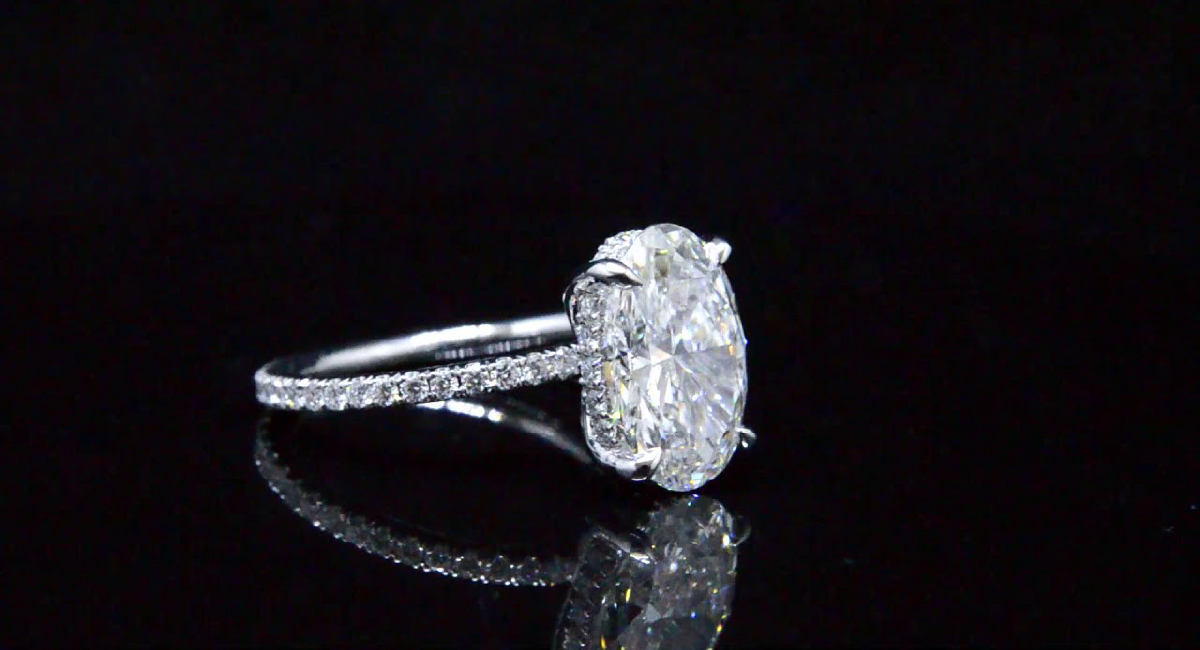
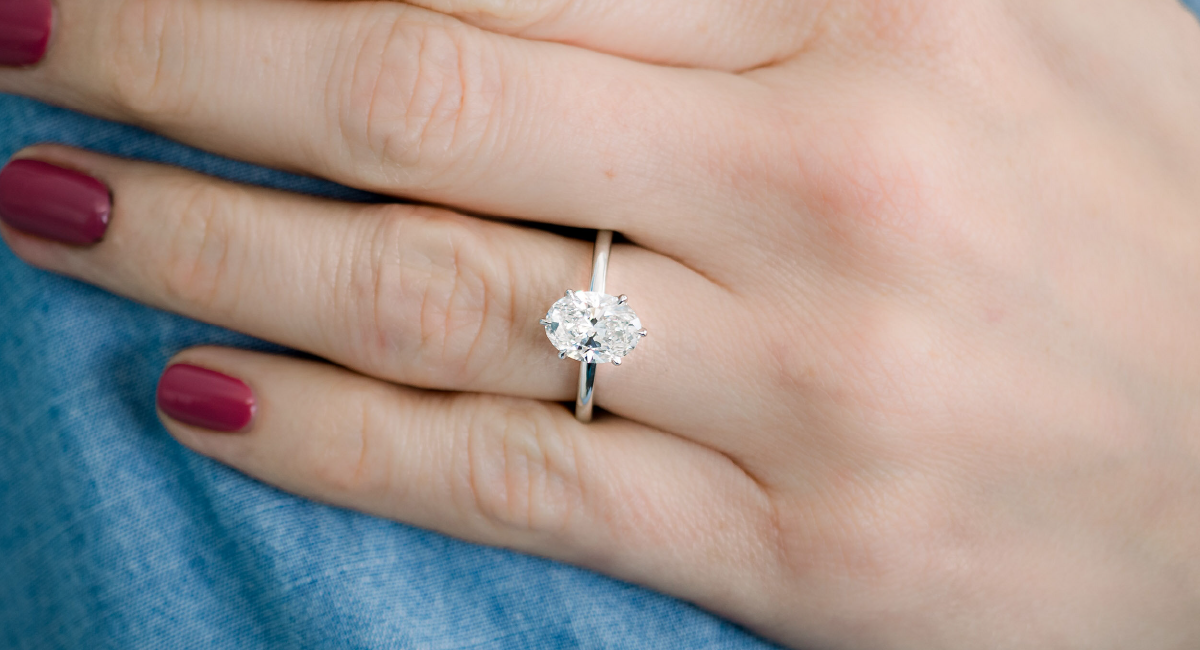
An oval shape diamond is in the center of the band, claiming to grasp all the attention and attraction of the people. It is an elegantly designed ring that never limits your styling. Only one gem to attract all attention. 

Oval Halo Ring

Oval halo ring

An oval halo ring setting is uniquely designed where the center stone is surrounded by the other oval shaped smaller gemstones that flash all the light and distinctively focus on the center stone.

Oval Hidden Halo Ring

oval hidden halo

This is a unique and different design where the halo setting is hidden within the ring and this particular way of design makes the center stone look bigger and much more appealing. 

Oval Vintage Ring

oval vintage ring

The representation of timeless design and modern approaches, the oval vintage ring is a very distinct design that has been in the families since the royal eras. 

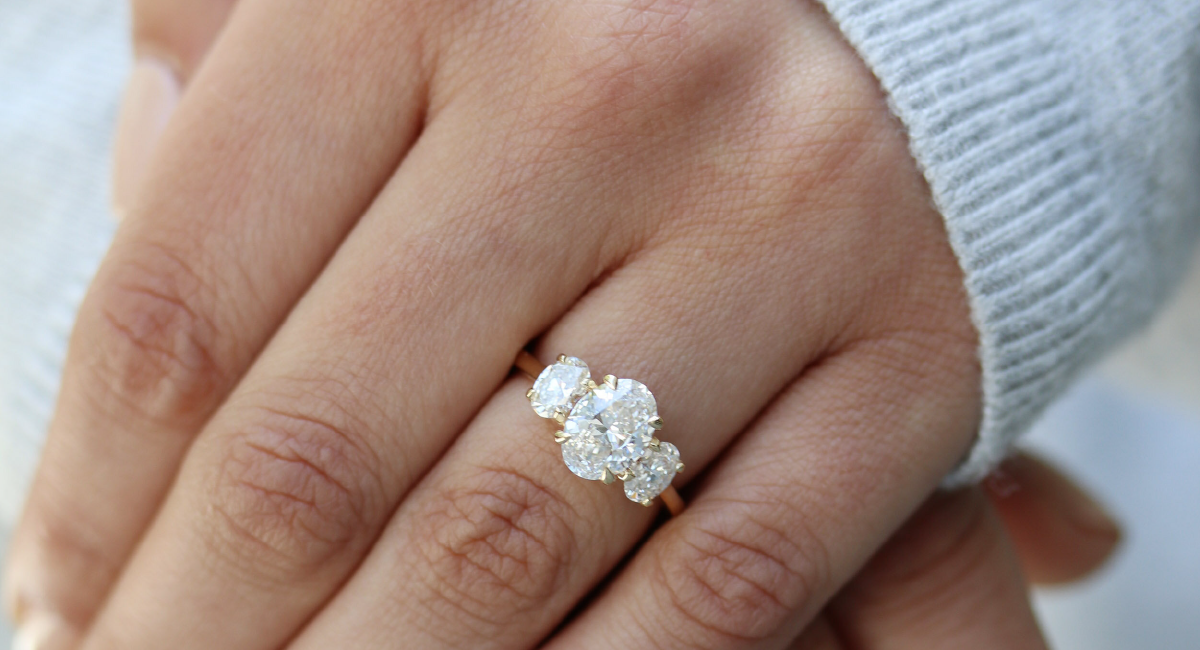
Oval Three Stone Ring

oval three stone ring

The special honor towards traditions is the symbolism of three-stone oval rings, where two side stones are a little smaller than the central stone, embarking the ring’s shine and elegance. 

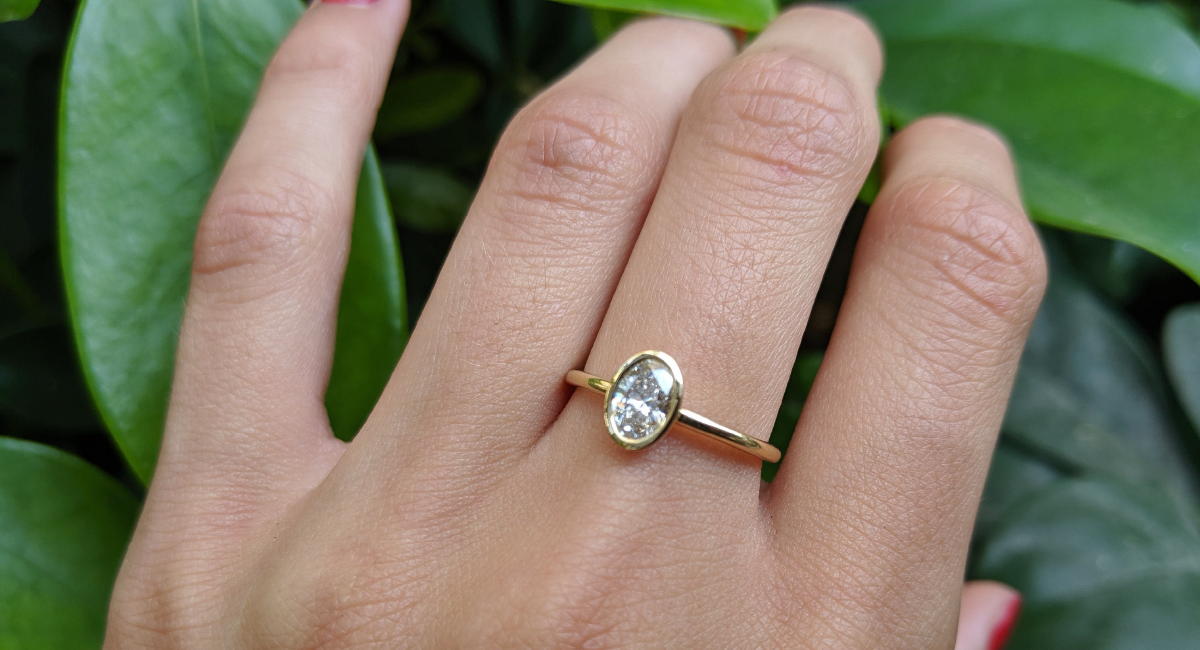
Oval Bezel Setting

oval bezel ring

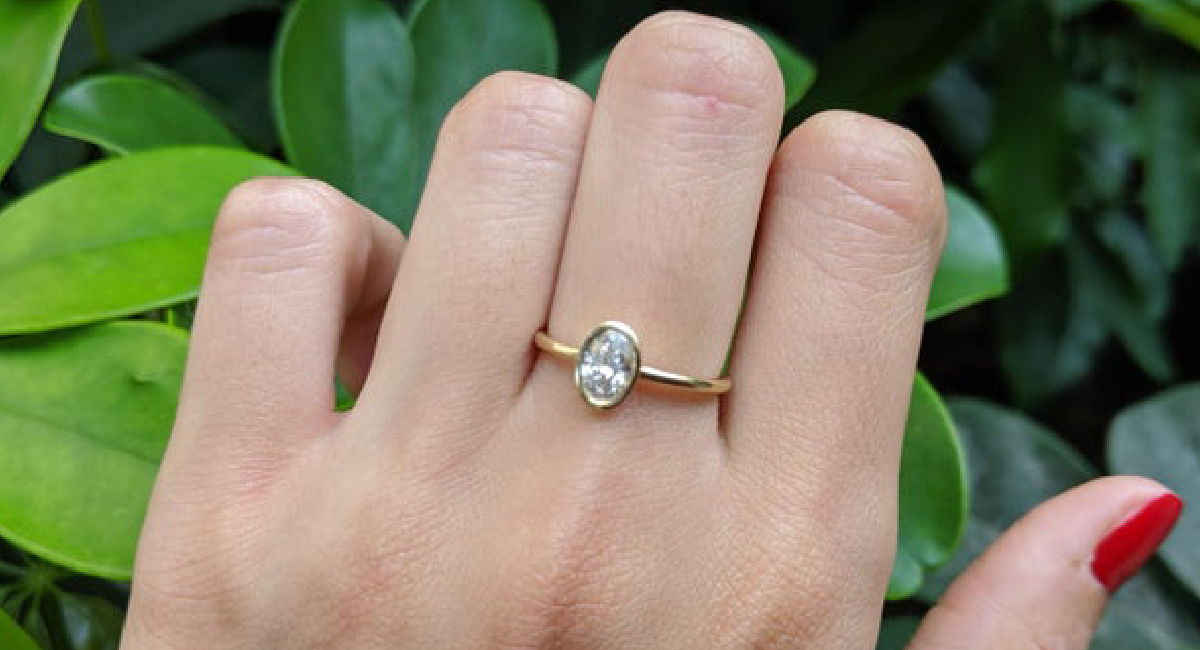
The oval bezel setting ring is simply designed where the center stone is surrounded by a thin metal that helps in holding the stone at the right position, whereas, with this simple look, a very intricate yet prosperous look is given.

Choosing the Best 

Since The Gemological Institute of America (GIA) does not grade fancy cut diamonds like it does round diamonds, customers cannot make the GIA diamond grading report for oval lab diamonds as the basis for their selection process since the certificate only ensures that the diamond is of high quality and no information regarding which is the best is imparted. 

Grades such as Excellent, Very Good, Good, Fair, or Poor Cut, that GIA assigns the round brilliant diamond is an indication of how well the diamond has been cut. 

Choosing the best: Oval cut diamond ring

On a report for the oval cut, there will be remarks for the diamond’s polish and symmetry along with color, clarity, and dimensions however, if a customer wishes for their lab grown diamond to have maximum brilliance, scintillation, and sparkle then the diamond needs to be cut very well. 

Some more aspects to keep in mind other than the ones mentioned above are crown height, girdle thickness, and cutlet. Optimum values for these attributes are: 

  • Crown height: 12%-15%
  • Girdle thickness: 0.4%-4.5%
  • Cutlet: Very thin – slightly thick 

After a visual inspection of the diamond, they will be able to tell the customer whether the selection demonstrates maximum brilliance for its proportions. This is the reason that a look at the grading report is insufficient in deciding whether the selected choice is the best or not and a personal up-close review is a necessity. 


FAQs

How much is a lab-created oval diamond ring?
The price of an oval diamond ring can vary widely, but it is typically in the range of $5,000 to several thousand dollars.

What are the advantages of choosing an oval diamond for an engagement ring?
Oval cut diamonds are known for their brilliance and sparkle, similar to round diamonds. They also have the advantage of appearing larger than other shapes of the same carat weight due to their elongated shape, making them an excellent choice for those seeking a larger-looking diamond.

Are oval shape diamonds more expensive?
The cost of oval cut diamonds is influenced by their shape, affecting both the price and the apparent size when viewed from the top. Consequently, an oval shape diamond may be priced at a minimum of 25% less than a round cut diamond of equivalent weight.

What metals are best for oval diamond rings?
The elegant oval diamond complements various metal options. Select from yellow, white, rose gold, and platinum for your oval engagement ring.

How To Choose Outstanding Oval Shape Diamond?

There’s been a lot of buzz around the oval cut, and it’s quickly becoming one of the mainstream diamond shapes for engagement rings. Oval diamonds look extremely modern and tasteful in engagement rings, yet besides drop earrings and pendants.

oval shape diamond ring
It’s perhaps the most splendid of all the fancy diamond cuts, and whether used as complement stones or picked as a middle stone, the oval cut is an extraordinary decision. The oval diamond cut has been around for a long while. However, the cut that we realize today was made during the 1960s.

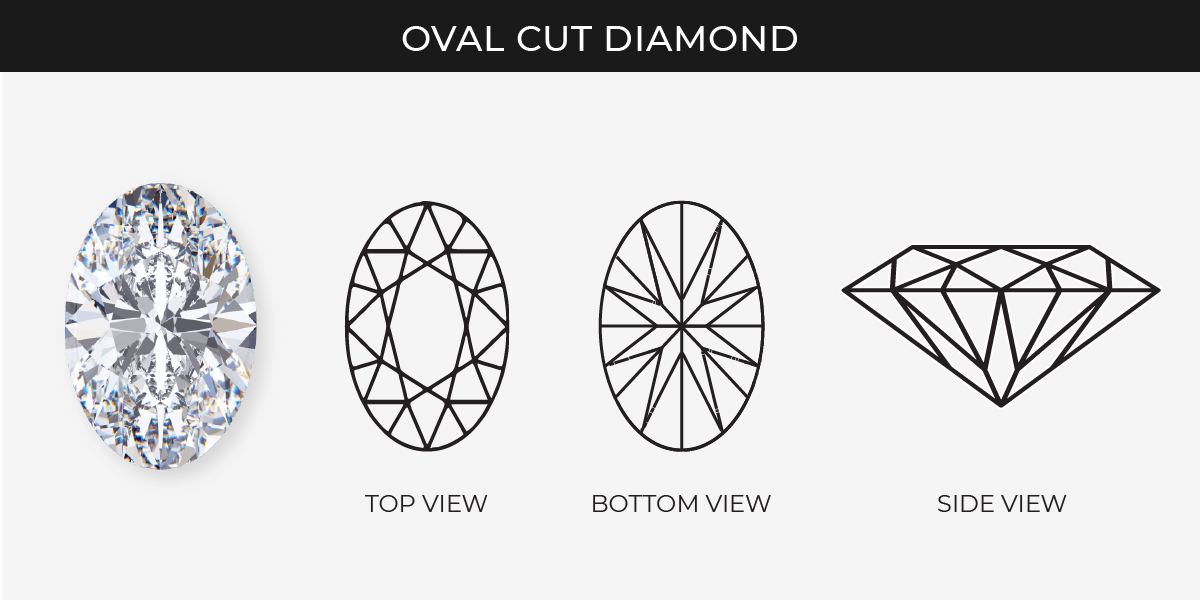
It’s a cross between the round brilliant and the pear-shaped diamond, except that it has no sharp corners. Known as a converted round brilliant, the oval cut contains many facets as a round cut (58 features). It gives it a great shimmer and radiance.

History/Origin of Oval Cut Diamond

history of oval diamond shape

It can almost seem surprising that one of the most popular choices in diamond shapes, the oval cut, was created accidentally and was not something that jewelers and crafters specifically strived to create.

Even though their existence can be traced back to as early as the 14th century, oval cut diamonds only began appearing in literature after the 1800s. The popularity of this shape surged after the celebrated Russian diamond cutter, Lazare Kaplan developed methods to carve flawless oval cuts out of flawed and rough gemstones which eventually led to the existence of brilliant and beautiful oval cut diamond jewelry.

Bringing the phrase “diamond in the rough” to life, Kaplan was capable of eliminating the defects and blemishes in raw diamonds which were generally perceived as useless by other crafters.

With the imperfections removed, the diamonds now appeared smaller yet workable and much more appealing. Hence a path was created for a future filled with an extraordinarily charming diamond shape that would be loved and wanted by many, including some known names like Katie Holmes, Princess Kate, Selma Hayek, and many more.

What is an Oval Cut Diamond Called?

A combination of brilliant and round cuts, the oval-shaped diamond is categorized under the umbrella of “fancy” shapes in diamonds, particularly because of its modified round shape that possesses extra ounces of fire and brilliance and is a perfect fit for customers who wish to own a gem that follows the classic trend of round cuts but also has something unique to show.

[blog_page_inventory shape=”Oval” carat=”2.00,2.10″ cut=”1,4″ color=”0,10″ clarity=”0,11″]
[blog_page_btn title”Buy Now” url=”https://www.loosegrowndiamond.com/inventory/?shape=Oval”]

4C’s of Oval Shape Diamond

The 4 Cs of a diamond are the various aspects that are employed for the process of judging the authenticity, brilliance, and worth of the diamond. These aspects stand for and include the following: 

  1. Diamond cut 
  2. Diamond color 
  3. Diamond clarity 
  4. Diamond size/carat

Like for any other shape, these 4 Cs are extremely important for the evaluation of oval shape diamonds and every customer must keep these in mind while purchasing items of diamond jewelry. 

Diamond-Cut

A diamond’s cut is the most essential aspect of its creation that requires crucial attention both while crafting the diamond and purchasing it. The reason behind this importance lies in the fact that the cut determines the amount of brilliance along with the most basic allure and appeal that would be offered by the final product. 

oval cut diamond table and depth
A diamond’s cut is generally evaluated by awarding it with certain grades that have been standardized by the Gemological Institute of America and although this system is applicable for most cuts, it falls short of being relatable with the oval lab diamond jewelry due to the cut’s complexity and uniqueness. And so, there is no clear-cut or well-defined combination of dimensions that can be used to describe the perfect oval cuts. Hence, customers must be aware of the subjectivity and generalized nature of all the cut recommendations they are offered with.

At the end of the day, it depends on the perception of the wearer with regard to the shape and appearance of the diamond. If you are out in the market looking for an oval shape diamond, remember to thoroughly go through all your options and accept help from a diamond expert for the process. 

Diamond Color

A scale of D to Z has been designed by the GIA for the purpose of color grading diamonds, with Z being the most noticeable shade of brown or yellow a diamond can exhibit and D being the highest level of colorlessness a diamond can boast. 

oval shape diamond colors
Although it is generally difficult to differentiate between two color grades under the naked eye, a significant shift in prices is created when going through various options in the color of diamonds.

As a customer, however, it is important to remember that you settle with a diamond color that appears attractive to you, fits your budget, and compliments the band or chain your diamond would be fitted in. 

It is generally recommended for customers to purchase a diamond with a color grade of H or above in the case of oval cut diamonds since colors in this range would beautifully accessorize a white gold or platinum setting and the brilliance of the overall jewelry item would be highly enhanced. 

One good example that customers can refer to is an H-graded oval cut diamond fit into a white gold halo setting which results in making the gem appear magnificently white and elegant. 

If you have decided to opt for a yellow gold or rose gold setting, then a J or K graded diamond would also go with the setting perfectly and you would have the added advantage of the diamond being priced lower, hence having the opportunity of investing in a larger carat or size. 

Diamond Clarity 

A diamond’s clarity depends on the number of impurities and imperfections it contains, with the best of diamonds having minimal to no inclusions and the most flawed gems being home to a large concentration of impurities. 

oval shape diamond clarity
The GIA has designed the following grades of clarity which are assigned to diamonds based on the extent of flawlessness they offer:

  • Flawless (FL)
  • Internally Flawless (IF)
  • Very Very Small Inclusions (VVS1)
  • Very Very Small Inclusions (VVS2)
  • Very Small Inclusions 1 (VS1)
  • Very Small Inclusions 2 (VS2)
  • Small Inclusions 1 (SI1)
  • Small Inclusions 2 (SI2)
  • Inclusions 1 (I1)
  • Inclusions 2 (I2)
  • Inclusions 3 (I3)

Impurities and blemishes are generally not too visible in oval shape diamonds because of their uniquely elongated shape that does a good job at hiding the imperfections, especially the area that falls close to the rounded boundaries into which the jewelry set is placed.

Hence, a customer can opt for an oval cut diamond with a grade of SI1 or SI2 in order to purchase a gemstone that is not only worth its bucks but also appears excellently beautiful and appealing.

Although, customers can still aim for higher grades which will inevitably cost more the difference would be very minute and hence, mostly unnoticeable. So it is always advised to invest your money into other more noticeable aspects of the diamond-like its cut or carat.

Diamond Size/Carat

carat size of oval shape diamond
A diamond’s size and carat weight are generally aspects that are desired on the basis of personal preferences and budget.

If you wish to buy a diamond that appears royally massive and brilliant then opting for the larger carats seems like a good option.

Select a diamond carat size based on what you think will suit your ring design in the most optimal way.

Although larger carats could mean that the diamond jewelry would be priced higher, this is not always the case since smaller carat diamonds could be just as expensive because of the other factors of the 4C’s that contribute towards the appearance of the diamond.

Oval Lab Diamond-carat-weight
The general scale of measurement used to determine the size of diamonds is its length to width ratio which differs for diamonds according to the various shapes and cuts. In order to calculate this, the length of the gem is divided by its width.

Although there is no perfect ratio in oval shaped diamonds and this aspect too largely depends on personal preferences, an ideal value would lie between 1.30-1.50. 

Pros & Cons of Oval Cut Diamond

Like any other diamond shape, an oval cut has its own list of pros and cons that you as a customer must keep in mind while making the purchase so that you do not end up investing your money into something that you do not seem fit to your taste and convenience. 

Pros

  • Oval cut diamonds can appear stylish to a large audience mainly because of their class and fanciness that is exhibited through the elongated and enlarged shape. 
  • Oval shape diamonds have become a major part of the modern trends that exist in the world of diamonds and hence, are appealing to customers who prefer to stay in touch with the latest trends and styles. 
  • The diamond has a lengthening effect on fingers it is worn on because of the elongated shape and hence is preferred by those who wish to highlight their sleek and long fingers. 
  • In terms of monetary value, there are better chances of purchasing a diamond worth its bucks if you choose to settle with an oval cut diamond. This can be because of the fact that oval cut diamond jewelry tends to cost approximately 25% less than an average round cut stone of the same size and weight. 
  • Oval cuts also tend to appear larger than they are because of their sizable surface area. 
  • Oval lab diamonds are also known to be one of the most brilliant and sparkliest diamonds in the market and hence can be the perfect choice for those who wish to own a diamond that stays true to its reputation. 

Cons

  • Even though oval shaped diamonds are trendy at the moment, round-cut diamonds are forever the more classic and timeless choice when it comes to engagement rings. 
  • One of the most prominent disadvantages of purchasing an oval shaped diamond is that the oval shape is not capable of reflecting all the light that enters through its surface, unlike round cut diamonds which reflect all the light and appear a lot more brilliant and radiant than the former. 
  • Bowtie effects are also a characteristic feature that exists only in fancy shapes such as oval shape diamonds and even though they might be subtle, they reduce the diamond’s brilliance. 
  •  Another major disadvantage is the absence of a grading system for oval diamonds which usually exist for the other more common and simpler shapes such as a round or brilliant cut. Since gemological laboratories are unable to systematically grade an oval cut, judging the diamond’s quality and worth can be a lot more difficult which in turn just makes a customer’s search for the perfect choice a lot more tedious. 

Prices of Oval Shaped Diamond

Oval shape diamonds are known for their reasonable prices which is a factor that contributes to their popularity and fame. 

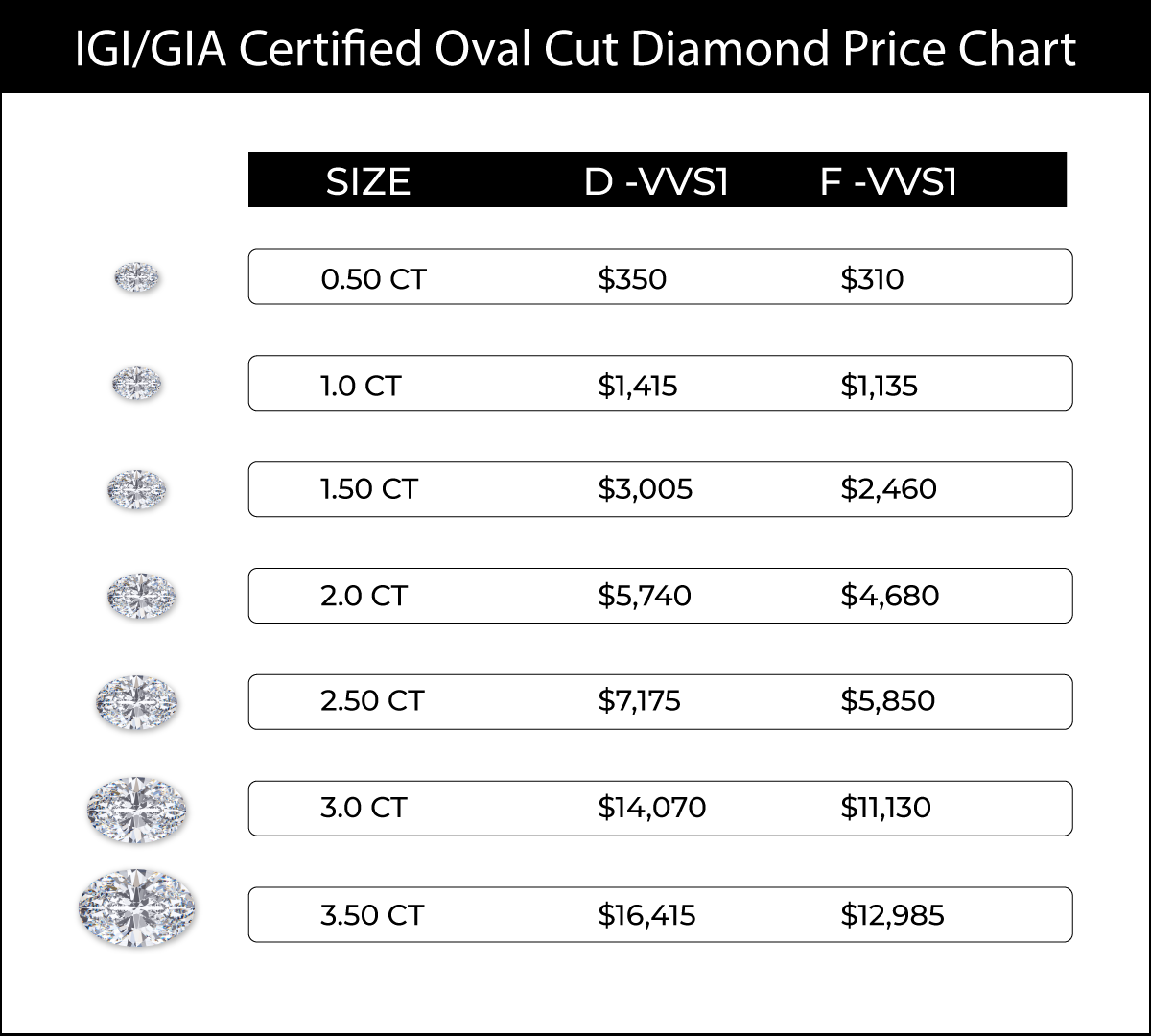
oval shape diamond price chart

A significant difference in prices exists between oval cut and round-cut diamonds of the same color, cut, clarity, and carat weight wherein the difference can reach up to 28%. 

The reason behind this discrepancy exists in the fact that oval cuts are carved out of a larger amount of rough diamonds and hence the amount that gets discarded is reduced. 

Prices are then reduced since not much of the rough diamond is scraped away in the process of cutting or polishing. A better value for your bucks is hence obtained while purchasing oval cut diamond jewelry instead of any other shape. 

However, an exponential rise in prices is proportionate with the increase in the carat weight of oval cut diamonds. A one-carat oval cut diamond is a lot less costly than a two-carat or three-carat diamond and so customers are always advised to wisely spend when it comes to the various aspects of diamond jewelry. 

The 1-carat H color oval diamond, priced at $900, strikes a compromise between size and cost. The $2000 2-carat D color oval diamond is sophisticated and brilliant.

For those who value rarity and perfection, the $6000 3-carat oval diamond with an outstanding cut and Internally Flawless clarity is the summit of beauty. Check out the diamond price calculator page to get a better idea of your investment in timeless elegance as you travel this enticing spectrum.

How to Choose an Ideal Oval Cut Diamond:

For a stunning light show, choose an oval cut diamond with subtle contrasts and avoid dark or watery bowties and tips. Choose the crushed ice oval for a unique look or the lively oval for vibrant brilliance, avoiding fisheyes and strange reflections.

Oval Diamond Bow-tie Effect:

bow-tie effect on oval diamond
The bowtie effect is the greatest disadvantage that oval cut diamonds display and so it is also the most looked out for aspect when making a purchase of oval cut diamond jewelry.

Although bowties are usually a result of imperfect cutting and misaligned facets, it is usually impossible to avoid some degree of bowties in an oval cut diamond. Customers should always closely inspect their options in oval cuts in order to catch a noticeable bowtie if it exists and hence, avoid purchasing such diamonds.

This process is generally made harder because grading reports do not contain any information regarding existing bowties in diamonds and this is why it is usually important to refer to a certified diamond expert or vendor when buying oval cut diamond jewelry.

What is the Length-to-Width Ratio for an Oval Diamond?

Oval diamond length to width ratio

Since a standard oval shape does not exist and an oval shape diamond’s appearance largely depends on its length to width ratio, it is important to keep this ratio in mind while making a purchase.
The desirable range of length to width ratio falls within 1.40 to 1.50. Diamonds that fall below this range will begin to appear wider and can even take on a squat shape that is neither round nor oval whereas ratios above the value of 1.50 will appear elongated and narrow. 

Although an ideal length to width ratio is largely dependent on personal preferences, it is generally observed that narrower cuts complement drop earrings and pendants whereas the oval cuts falling within the ideal range look as good as engagement rings. However, if your ring boasts some side stones then even a wider oval cut would look stunning in the ensemble. 

Symmetry is Critical:

Symmetry in an oval cut diamond is extremely important since mis-proportions in shape are easily noticeable in cases of oval cuts. 

Oval-cut-diamond-Depth-And-Table 
An identical structure with equal sides and gracefully rounded edges should exist in a perfectly symmetrical oval cut diamond which can only be achieved through skilled craftsmanship.

Celebrity Rings- Oval Diamonds

Lab grown oval diamonds have been a huge hit amongst the diamond-loving population, especially the ones that exist within Hollywood. 

[su_youtube_advanced url=”https://www.youtube.com/watch?v=jGyyTiNFKGE” width=”1600″ controls=”alt” autohide=”yes” autoplay=”yes” mute=”yes” loop=”yes” rel=”no” modestbranding=”yes” theme=”light” playsinline=”yes” title=”oval cut diamond engagement ring”]
Some of the most famous celebrities who are known to proudly don oval cut diamond jewelry are as follows:

  • Blake Lively is known to have been proposed by actor husband, Ryan Reynolds with an oval cut rose gold engagement ring which also features beautiful micro pave bands. 
  • Whitney Port flaunts another variant in oval cut diamonds with her engagement ring featuring a rose gold band and a beautiful center stone. 
  • Kate Middleton is part of the list since she too was proposed with an oval cut sapphire and diamond engagement ring by Prince William, a ring whose previous owner was none other than Princess Diana
  • Serena Williams, the professional top tennis player, was also proposed with a three-stone oval diamond ring from beau Alexis Ohanian which is known to contain a sizable center stone.

Where to Buy Oval Shape Diamond?

Find the pinnacle of oval shape diamond quality at Loose Grown Diamonds, the only place to get these brilliant stones. If there’s an lab grown oval diamond ring or piece of jewelry that you think we should see, just share an image or link with us.

Here at LGD, our specialty is turning your ideas into one-of-a-kind works of art. With the coupon code, you may enhance your shopping experience and embrace exclusivity while gaining access to a special deal that is made especially for you.


Conclusion

Oval cut diamonds are the perfect choice for you if you are looking for something worthwhile to spend your money on. It is not just an extremely beautiful and stunning shape in diamonds but also falls out of the box when it comes to classic cuts and hence would be highly appealing to you if you wish to possess something rare, unique, and special.

The oval cut also has a long list of advantages, some of which include its reasonable pricing, lengthening effect on fingers, the appearance of larger than actual surface area, and many more. A perfect choice for a large number of jewelry items, ranging from engagement rings to earrings and necklaces, the oval cut diamond is the purchase of a lifetime!

FAQs

What is the price range for a 2-carat oval diamond?
Prices typically range from $1000 to $65000.

Are oval shaped diamonds generally more expensive than other shapes?
Since oval cut diamonds are less expensive than round brilliant cuts, it is evident that ovals’ special form can provide an attractive and distinctive appearance at a generally more accessible price range.

Is a 2-carat oval diamond considered too large for most preferences?
A 2-carat oval diamond is deemed quite substantial and falls into the category of a relatively sizable gem.

How much does a 4-carat oval cut diamond cost?
Prices generally start at $4500 and vary based on factors like cut, color, and clarity.

What is the ideal size for an oval diamond?
The recommended ratio falls between 1.30 and 1.50.

Explain the bow-tie effect in an oval shape diamond.
The bow-tie effect, observed as a dark shadow in the center of a diamond, results from elongated facets hindering the dispersion of light. This phenomenon is not exclusive to a particular diamond shape and can occur across various cuts.

Emerald Cut Diamond: Everything You Need to Know

Deciding which accessory would best suit your beloved someone is a task involving creativity and confusion. But when the options are irresistibly beautiful, it gets a bit difficult to choose the best jewel from the lot.

An emerald cut diamond brings outclass strength and the latest trends. Modern boss ladies like Beyoncé adore the shape, with many ladies respecting its capacity to show quality more than other fancy shaped diamonds.

Just like you want the best for your special one. With this objective in mind, we have compiled this article on everything related to emerald cut diamonds so that you can get closer to understanding the 4Cs of an emerald lab diamond, and what type of ring setting would suit you or your partner’s hands the best. 

What is an Emerald Cut Diamond?

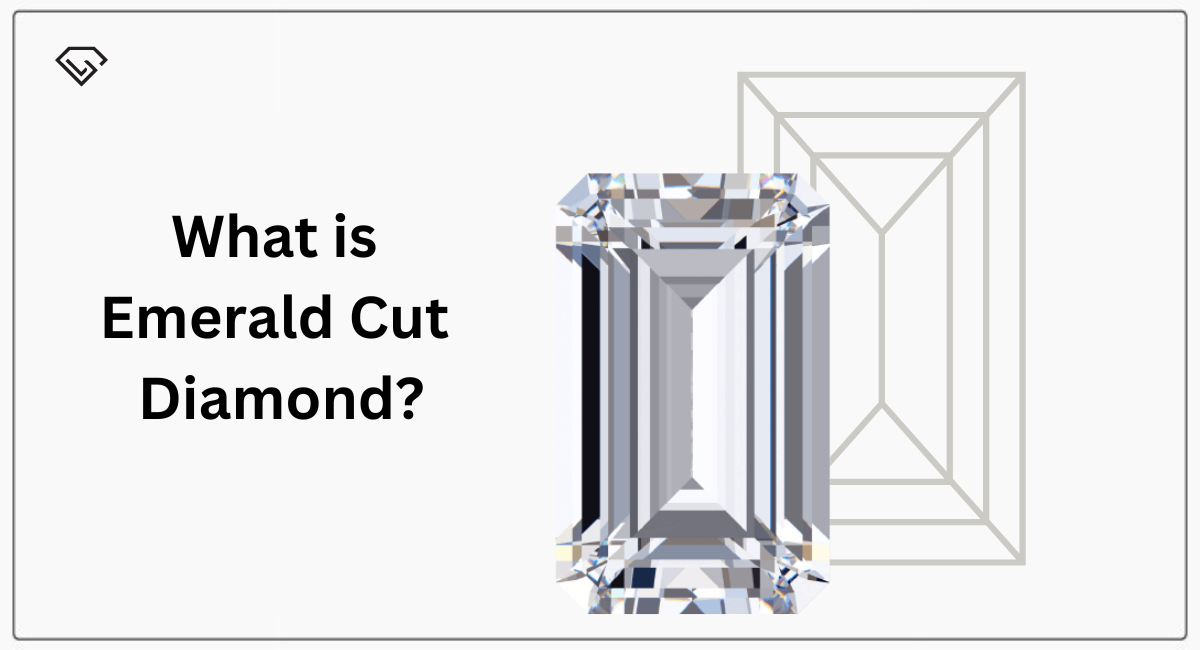
What is Emerald Cut Diamond

A human being’s personality has many layers defining them variedly, just like the step-cut layering style of emerald cut diamonds possessing perfection in each layer.

The emerald cut diamond is a rectangular-shaped diamond formed in a long structure prevailing a curvy cornered look with several facets and layering, allowing the quick as well as an easy reflection of light that delivers a shiny and fancy look.

According to the GIA, emerald lab diamond is not assigned under the cut grade category due to its fancy and several faceting looks but it’s considered only for polish and symmetry grading.

Under the depth category, 72%-58% is the enormous variation for excellence which reflects the light falling on it as well as signifies the openness inside the core.

Under the table category, the calculation of the top surface of the emerald which is plain like a slate is excellent with the variety of choices from 72%-62% in the table. It is abided by the inclusion of the step-cut layering that leaves a bow-tie effect over the top but, commonly, some people consider it as an advantageous factor of emerald diamonds. There is no room for imperfection as it might be visible in the stone, which makes it a symbolism of perfection.

[blog_page_inventory shape=”Emerald” carat=”1.00,2.10″ cut=”1,4″ color=”0,10″ clarity=”0,11″]
[blog_page_btn title”Buy Now” url=”https://www.loosegrowndiamond.com/inventory/?”]

History of Emerald Cut Diamond

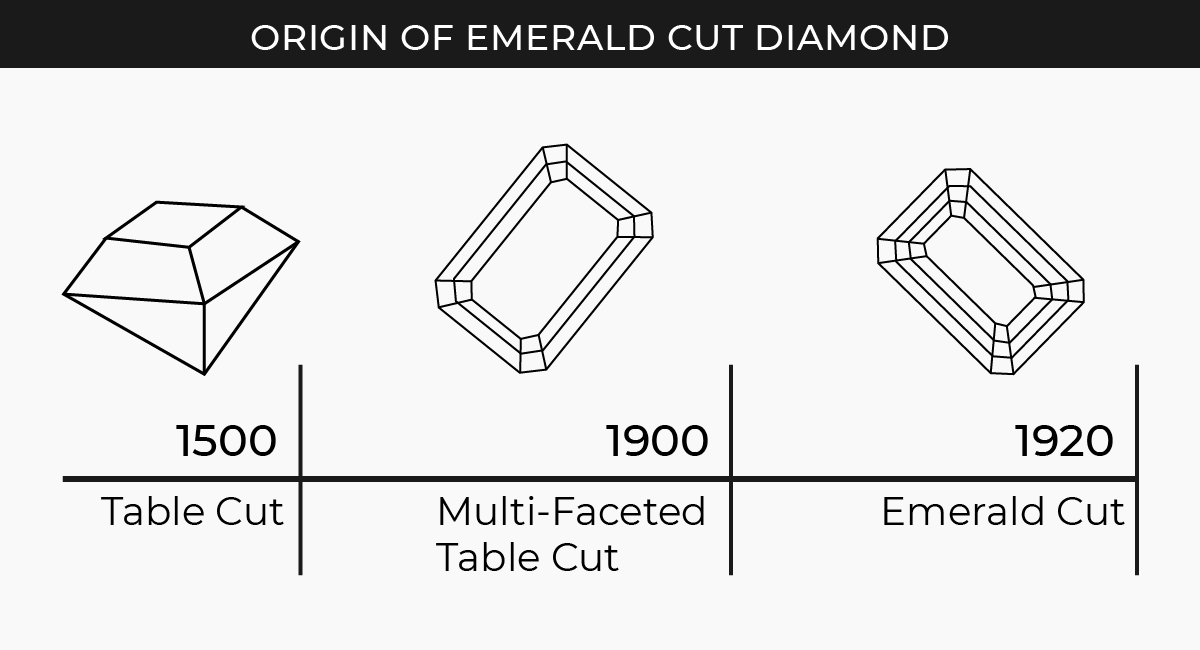
Between the years 1920 and 1939, the emerald cut was immensely popular; they had just started to include a greater number of facets. The new emerald cut (which is sold in markets today) took on its current shape around the year 1940.

History of Emerald Diamond
The emerald diamond is thought to be one of the first diamond and gemstone cuts that were explored and worn as jewelry. The emerald gemstone inspired the name the ‘Emerald Cut Diamond’. They cut the stone in a rectangular form to preserve as much of the diamond as possible. This shape has a history dating back over half a century, when the diamond was cut in the shape of a rectangle, earning the name emerald cut diamond to itself.

Over the years, emeralds have grown extremely fragile, making severing them extremely tough. People began looking for a means to clean the diamond without harming it as a result. They lacked the awareness and resources that we have today.

The history of the emerald cut dates back to the 1500s when stonecutters first developed the rectangular shape of the emerald diamond cut and worked on the cutting procedure for emerald stones. This new cutting approach was successful because it lowered the pressure given to the stone during the cutting process, preventing chipping in emerald gemstones that are simply more fragile due to their natural and numerous inclusions. 

During the era of art deco, once again, emerald shape diamonds were glorified and nurtured. The official term “emerald cut” was used in the 1920s for the first time. It was the emergence of newness and styling.

The design was adored by people who loved wearing or buying jewels, this included the women population in a great number.  Since this progression in the jewel design industry, emerald cut diamonds have remained a popular centerpiece stone for wedding rings or engagement rings. It is still a sought-after diamond cut that has stood the test of time in terms of both durability and style.

About 4Cs: Emerald Cut Diamond

The attractiveness of emerald-cut diamonds is quite clear. Elegant long lines lend them a discreet look, while curved corners provide a touch of timeless glamor. But the following can also be defined by the 4C parameters i.e. cut, clarity, color, and carat.

As mentioned earlier the new emerald cut took on its current shape around 1940, which included more facets compared to the emerald cut diamond of the preceding years. In today’s world, however, this diamond cut is usually used to show how clean the stone is and what a beautiful tint it has. There’s no room for flaws in this cut. In addition, defects are easily seen in the stone’s reflection, if any.

Emerald Diamond: Clarity

Diamonds gain clarity characteristics–slight imperfections noticeable under 10x magnification–when they are formed deep in the soil. These clear features might not be visible to our eyes, but they do very much exist.

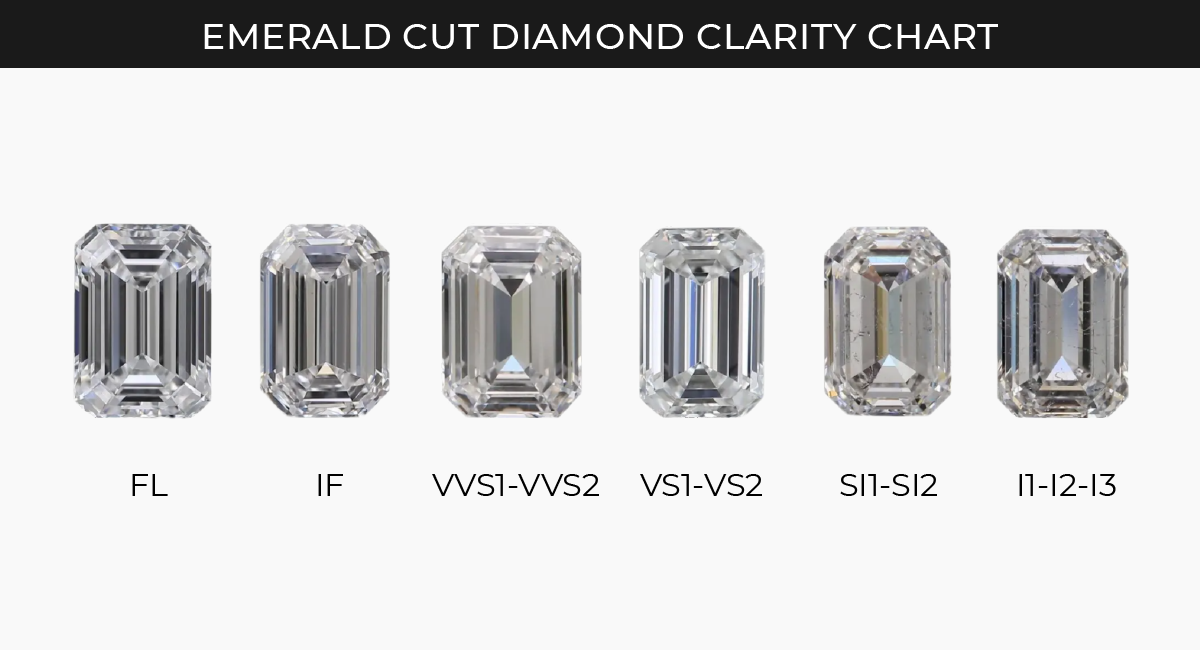
emerald diamond clarity chart
The GIA Transparency scale ranges from the best (no inclusions) to the worst (inclusions). Their titles will be as follows:

  • Flawless (FL)
  • Internally Flawless (IF)
  • Very Very Small Inclusions (VVS1)
  • Very Very Small Inclusions (VVS2)
  • Very Small Inclusions 1 (VS1)
  • Very Small Inclusions 2 (VS2)
  • Small Inclusions 1 (SI1)
  • Small Inclusions 2 (SI2)
  • Inclusions 1 (I1)
  • Inclusions 2 (I2)
  • Inclusions 3 (I3)

When looking at a lab grown emerald cut diamond it is vital to pay attention to what level of clarity is sitting at. The lower the clarity the lower the price and vice-versa.

Emerald Diamond: Cut

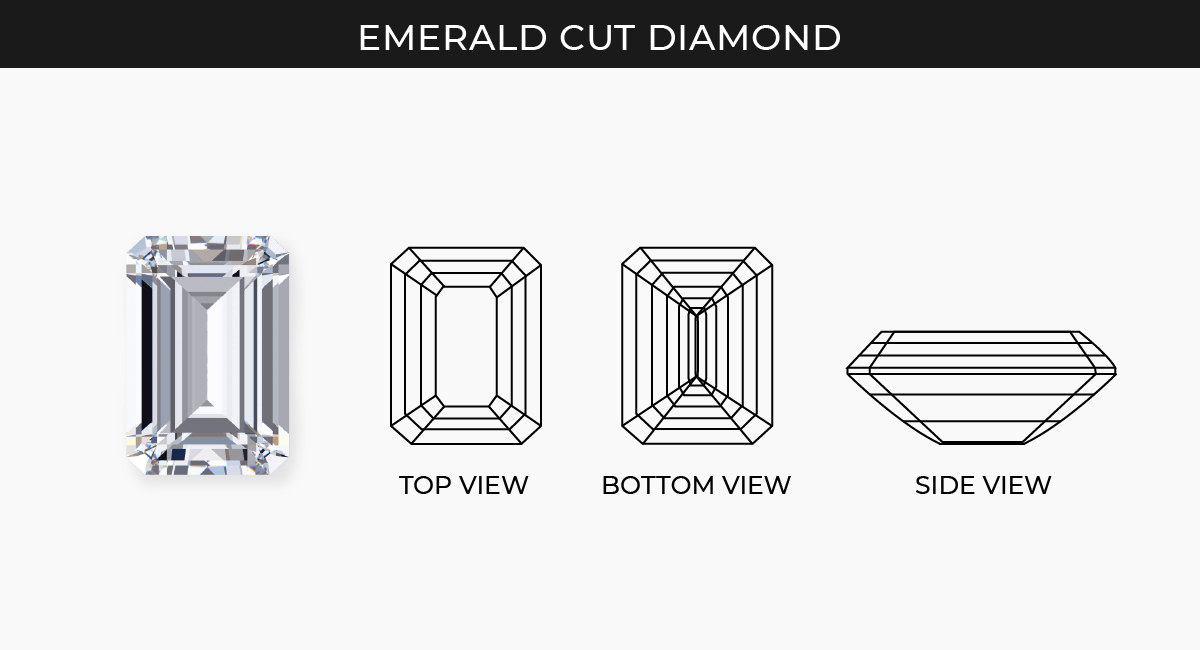
The emerald-cut diamond is distinguished by its elongated, rectangular shape and carved step cut, which features straight linear facets aligned parallel down the stone. The emerald cut diamond’s corners are usually trimmed to promote cohesiveness and avoid fissures. 

emerald diamond cut
Stack terraces and parallel facets are used in the cutting process to create a sophisticated jewelry pattern that varies from the cutting techniques observed on round and cushion diamonds.

Emerald Diamond: Color

Color will be more obvious in an emerald cut, just like clarity. Color is more simply more visible in the large table and step cuts than in other sophisticated designs. 

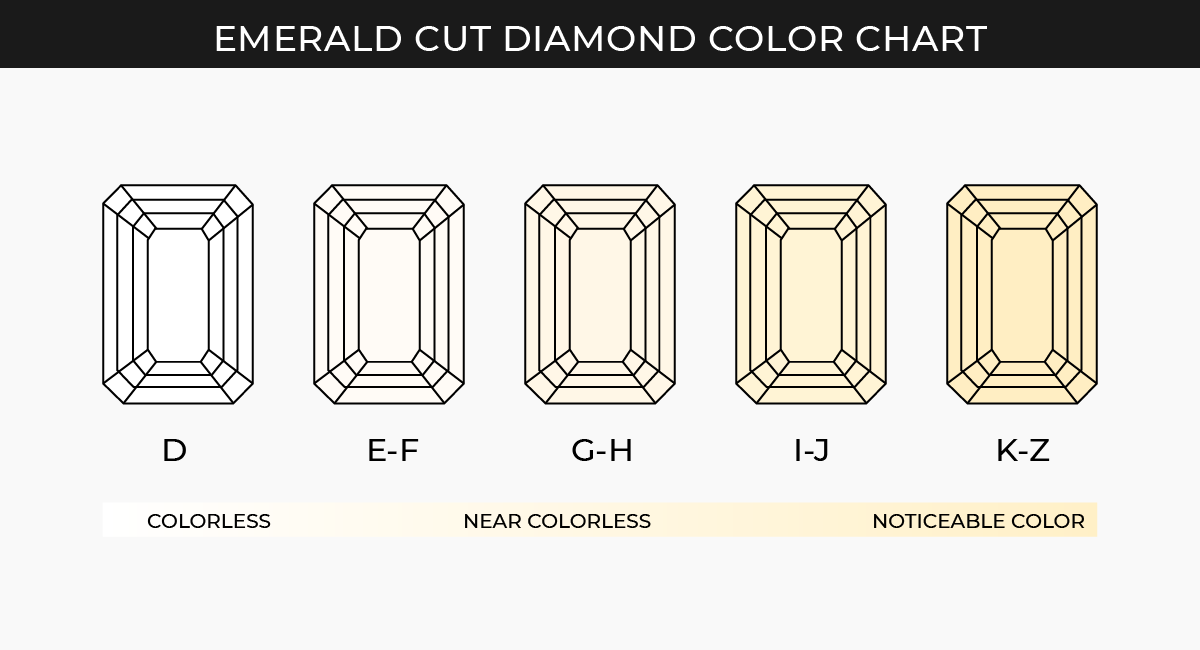
emerald diamond color
A yellowish tint will be visible in an emerald cut diamond of color grade I or lower. A tint of color grade G or higher is less likely to be noticed by the human eyes. In an emerald cut, it’s ideal to keep at or above a G color for the finest quality and value.

Finally, think about the metal in your surroundings when it comes to color. A G color grade or better will radiate with a white hue if you choose a more cold tone of platinum or white gold.

Emerald Diamond: Carat

Emerald cut diamonds also have better cutting productivity, which means that when a raw diamond is cut into a polished emerald cut, the least amount of weight is lost. As a result, cutting an emerald cut is less expensive than cutting a round brilliant diamond. 

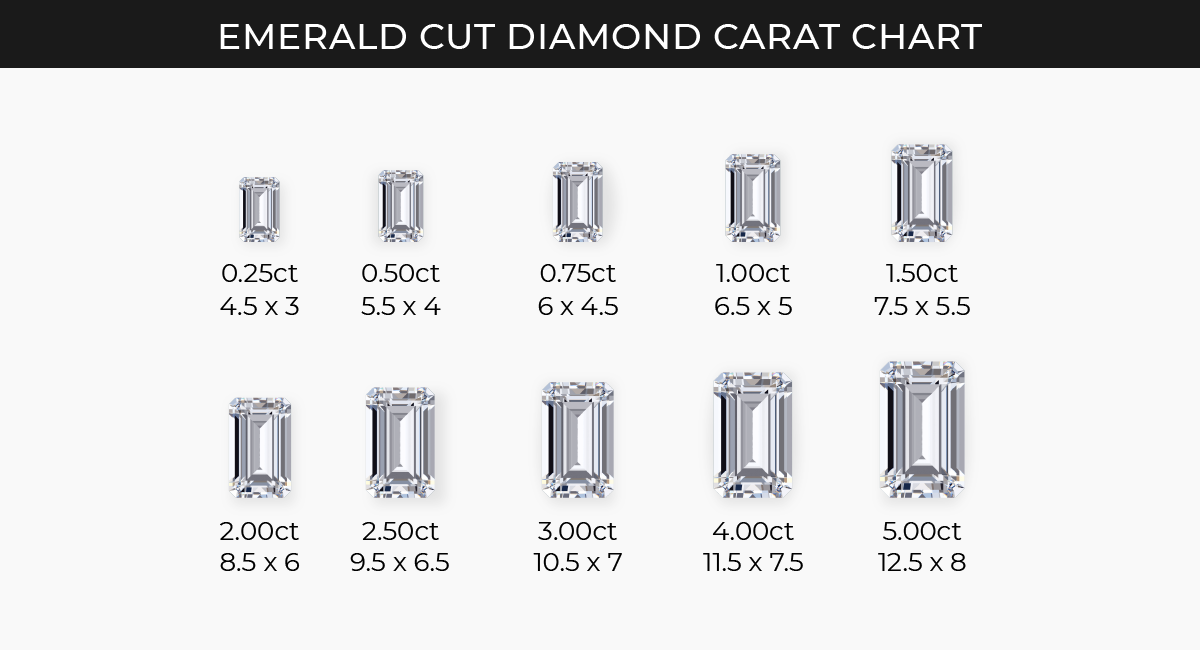
Emerald cuts are frequently accessible, despite their lower demand than the most popular round diamond. It should also be rather easy to find emerald cuts in a number of carat sizes, including larger ones. If you are unsure about diamond carat size, refer to this diamond size chart for a comprehensive guide to help you identify the size accurately.

Large carats are available, and while the quality will vary, you can expect the price to rise substantially with each full carat climb.

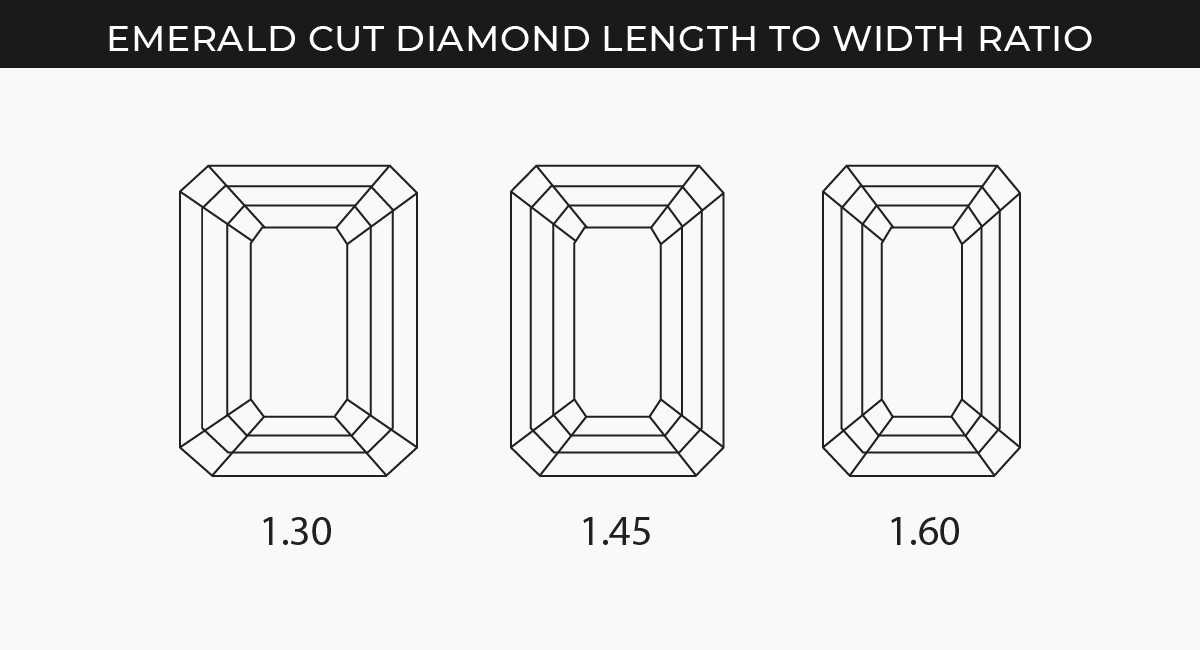
Emerald Shape Diamond Length to Width Ratio

The length to width ratio of a diamond actually tells about how squared or long its shape is. The ratio can be calculated by the division of the length and breadth of the diamond. 

emerald cut length to width ratio
The most well-known emerald shape ratio is 1:5, which is the absolute perfect ratio in order to make the stone rectangular in shape, which also embraces the jewelry when it is worn. In green emerald stone finger bands, this ratio is fairly common and most customers demand this ratio for their special jewel.

In this style, women’s fingers appear longer and more graceful. The cut’s form is identical to the diamond’s natural shape. Also, there is a minor reduction in stone. This also makes the emerald very well-known in terms of pricing.

Pros & Cons of Emerald Cut Diamond

Factors that are advantageous or committing towards loss, both play a vital role in the decision-making process for each element in the universe.
emerald diamond pros and cons

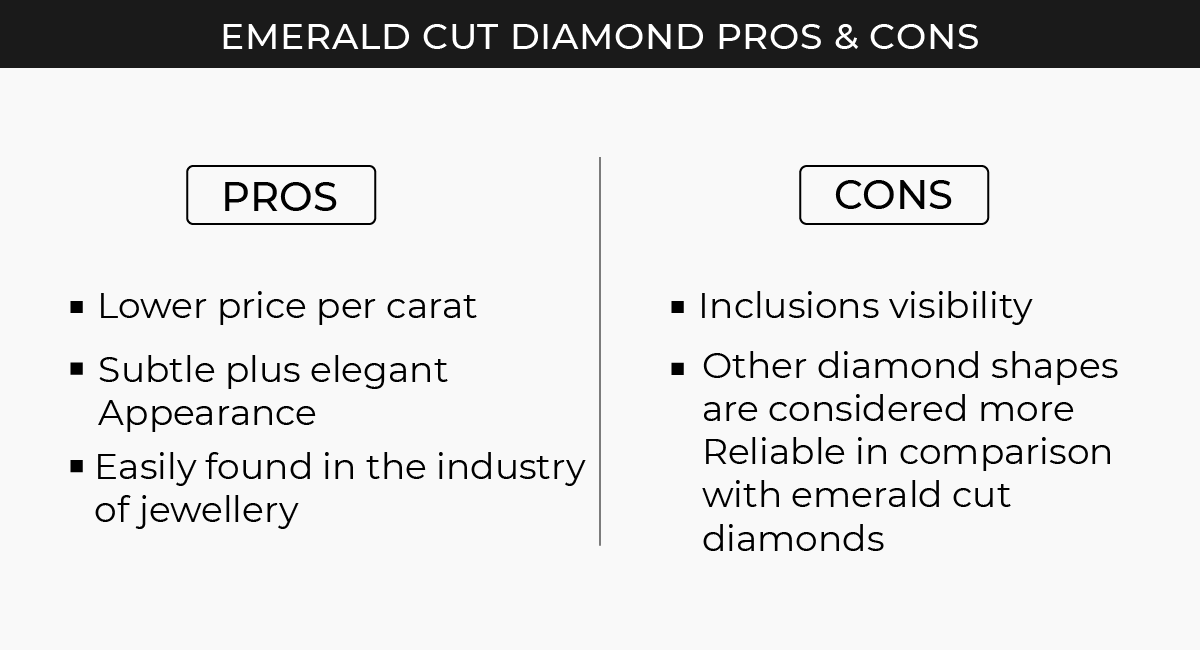
PROS

  • Lower Price Per Carat: In comparison with other diamond shapes, emerald lab diamond is preferably lower in cost whereas its size is quite compelling. It’s cheaper due to its less demand in the industry and high yield of cutting which reduces its weight. These two factors make this diamond cheaper than others.
  • Subtle Plus Elegant Appearance: The cuts, proportion, layering, color, clarity, and glassy look, all together make it the most subtle and suitable diamond, prevailing an elegant as well as a classy glance.
  • Easy to Find: Emerald cut diamond is a popular diamond that can be easily found in the industry of jewelry. It is considered one of the topmost choices of people which assures its availability in the market.

CONS

  • Inclusions Visibility: As we know, emerald cut diamonds are glassy which gives it a shiny effect but that comes at a disadvantage as well, that is, inclusions in the diamonds are quite noticeable at 10x if it is not of a higher clarity grading.
  • Comparison: Other diamond shapes are considered more reliable and commendable in comparison with emerald-cut diamonds, due to their long existence and vintage look.
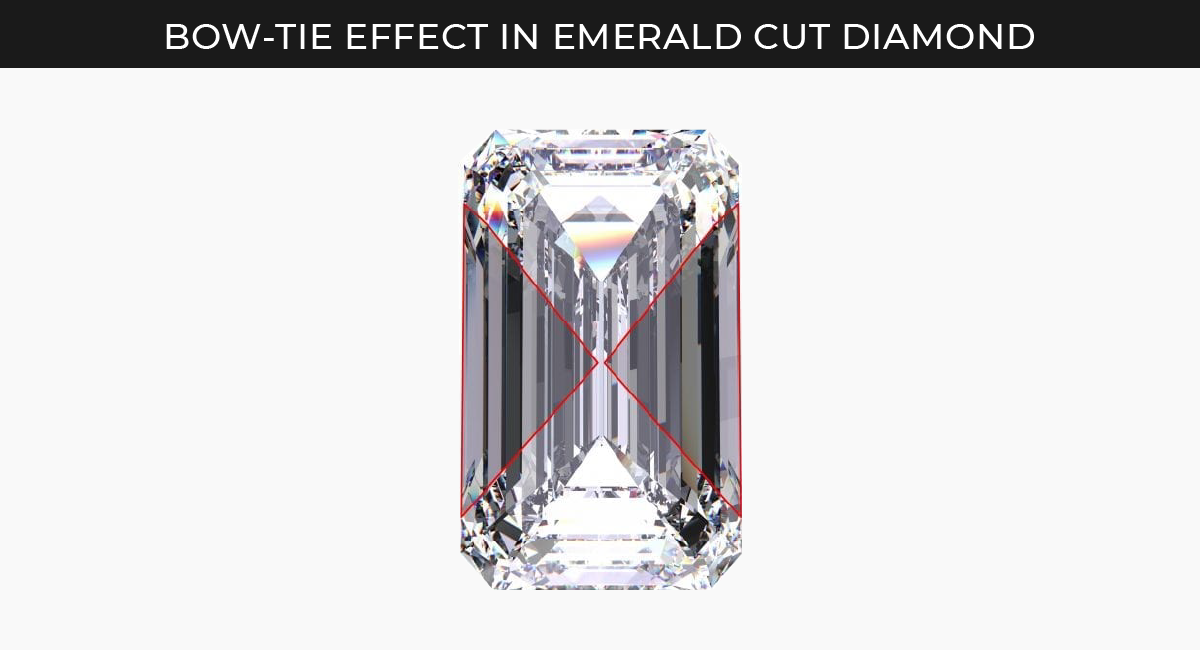
  • Emerald Cut Bow Tie Effect: As many diamonds cut the “Bow Tie” effect happens in emerald cuts. If a polisher places the facets incorrectly, the light doesn’t reflect in the proper way.

Emerald cut bow-tie effect

How to Choose an Ideal Emerald Cut Diamond

How to Choose an Ideal Emerald Cut Diamond
Emerald-cut diamonds can be judged on a few definite factors for considering them as an ideal diamond for purchase and utilization.

Due to its inclusions and layering, lab-grown emerald cut diamond prevails a bow-tie effect in the middle of the diamond which increases its darkness in the color and the quality seems to deteriorate due to less light reflection through the diamond.

For an ideal shape and size of the diamond, approx. A 1.30 – 1.50 ratio must be chosen or a ratio of 1.40 is considered best which also provides a good square shape likewise. For a rectangular and elongated shape, the ratio can be increased accordingly, which will meet the requirements as necessary.

Emerald cut diamond is an open table with a layering style whereas cushion cut diamond is larger in size and shape as compared with emerald cut, and has a dense structure with confusing incisions in it. Emerald-cut diamonds are less expensive as well as better for the hand due to their usual size and better quality. Cushion cut diamonds are slowly getting the pace of popularity but still need to be reviewed before purchase due to their mystifying structuring.
Similarly, asscher cut diamond is laborious to find due to its aesthetic nature from the Art Deco era, which made it more of a vintage diamond and has less popularity as well. Showing off inclusions under the open table is one of the most similar characteristics adored by both diamonds in their unique ways. Both of them have their personality which makes them a little different from each other and increases their value variously.

These few factors must be considered as the biggest factors for considering the best and ideal emerald shaped diamond.

Also Read: Cushion Cut vs Emerald Cut Diamonds: Which one is right for you?

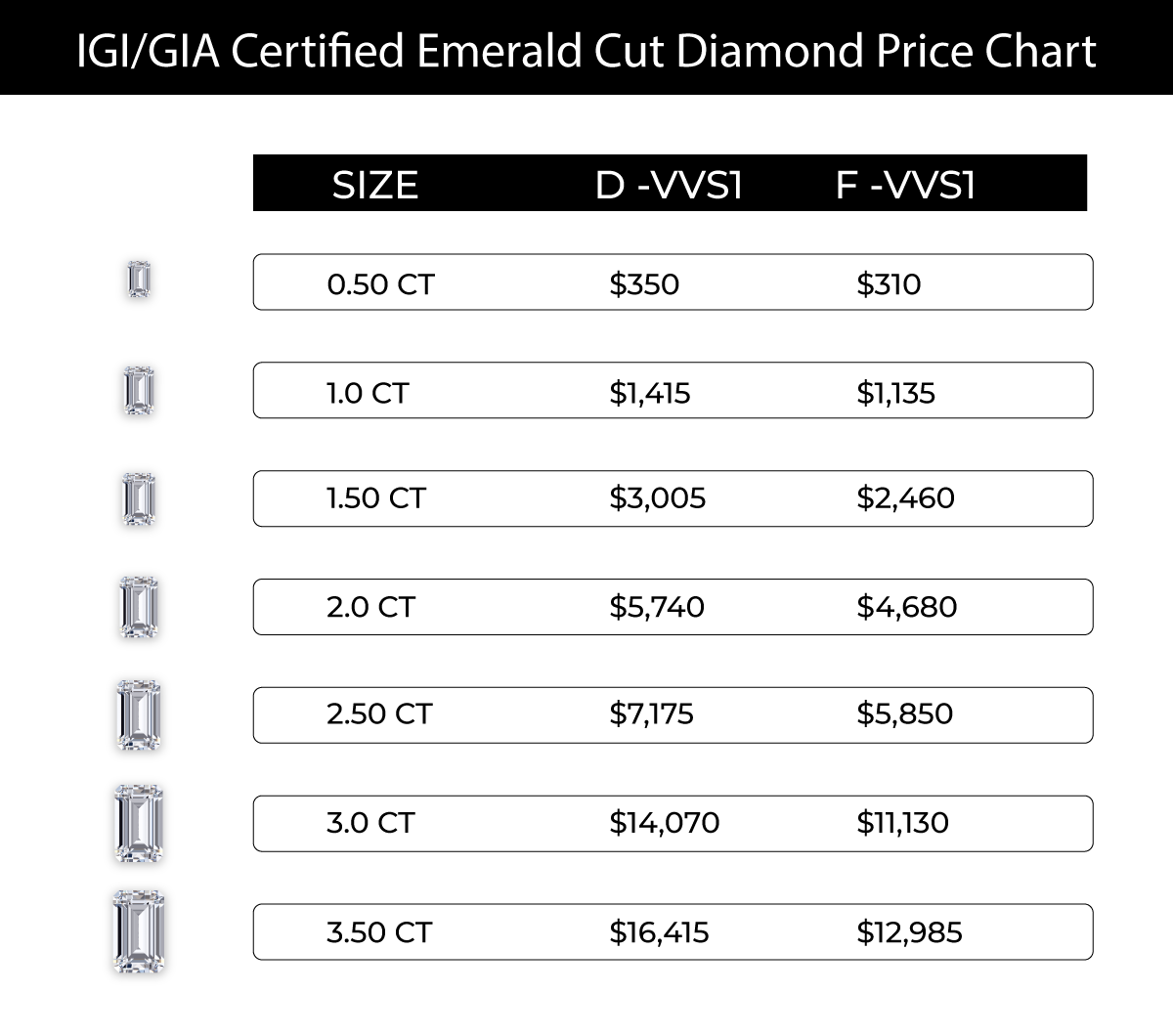
Prices of Emerald Cut Diamonds

emerald cut diamond price chart

Emerald cut diamond rings are cheaper than other diamonds even when they are quite valuable. It’s due to two factors: decreasing demand in the market and a higher yield on cutting. The lab grown emerald cut diamonds are not so popular in the market these days due to their vintage look and origination era.

Over that, during the cutting or shaping of a diamond, most of its particles are converted into fine dust which gives the diamond a particular shape and lighter weight which makes it flimsy and reduces the cost value.

While buying an emerald cut, one must be a little careful due to its glassy nature which doesn’t allow it to hide most of its inclusions and makes it appear darker in color, and reduces the effect of light reflection.

These small characteristics of diamonds must not be neglected and should get more attention for better and efficient purchases. Emerald cuts are not a bad choice due to their inclusions but their clarity makes it valuable which also reduces the money value in the market by per carat. It is anyhow a good deal for engagement or casual rings.

What Is the Best Setting for an Emerald Diamond?

Emerald cuts work well in a variety of styles, but they’re particularly well-suited to more subdued settings. Emerald cuts are ideal for three stone settings and suit nicely with solitaire and simple pave settings.

Not every emerald cut diamond is well suited for each design so it is essential to know which design emerald diamond engagement rings is best for your hands.

Emerald Cut Diamond Eternity Band

[su_youtube_advanced url=”https://www.youtube.com/watch?v=IlC1sMlgJFw” width=”1600″ controls=”alt” autohide=”yes” autoplay=”yes” mute=”yes” loop=”yes” rel=”no” modestbranding=”yes” theme=”light” playsinline=”yes” title=”emerald cut diamond eternity band”]

An emerald-cut diamond wedding band features a continuous row of emerald diamonds set all around the band, creating a unique and elegant design. The choice of metal for the band, such as white gold, yellow gold, rose gold, or platinum, can further enhance the aesthetic appeal of the ring.

Solitaire Setting for Emerald Cut Diamond

Solitaire Setting for Emerald Cut Diamond

Solitaire is one of the most beautiful settings or representations of showcasing a worthy emerald diamond ring. The elegant appearance of an emerald shape diamond is amplified by a solitaire design in a perfect 1:5 ratio proportion.

The reason behind this statement is that the design allows light to get inside the diamond and showcase a beautiful and rich look. It not only showcases a lovely diamond shape but amplifies its beauty by adding a sober touch to the jewel in your fingers.

Pave Setting for Emerald Cut Diamond

Pave Setting for Emerald Cut Diamond

Another beautiful setting or jewel design for an emerald cut diamond ring is a paved design. This setting will enhance the appearance of the emerald lab diamond to a great extent. Unlike solitaire, it focuses on the center of the diamond to add a sober and attractive look.

It’s not the diamond itself, but the setting of the ring is called pavé. Each of the small diamonds in a pavé setting is held in place by metal droplets, sometimes called tiny prongs/ beads. A pavé diamond band is essentially a design in which several little diamonds are put closely together with little space between them.

Small amounts of precious metal beads (also called prongs) are used to hold these tiny diamonds in place.

Bezel Set Emerald Cut Diamond Ring

[su_youtube_advanced url=”https://www.youtube.com/watch?v=kAqpeMpbUvU” width=”1600″ controls=”alt” autohide=”yes” autoplay=”yes” mute=”yes” loop=”yes” rel=”no” modestbranding=”yes” theme=”light” playsinline=”yes” title=”bezel set emerald cut diamond ring”]

In this style, the metal forms a complete encircle around the diamond, ensuring a secure hold. The bezel setting not only imparts a modern and streamlined appearance but also serves to safeguard the edges of the diamond.

When combined, the bezel setting and emerald shape create a beautiful and harmonious ring design. The bezel adds a touch of contemporary flair, while the emerald cut enhances the diamond’s natural brilliance.

Three Stone Setting for Emerald Cut Diamond

Three stone setting to emerald cut diamond

Emerald diamonds look great in a three stone setting as well. The emerald in the center is flanked by two lesser stones that assist bring attention to it and enhancing its beauty.

The 3 stone emerald cut diamond ring is commonly made up of equal-sized stones, but they can also be made up of a larger stone in the middle, bordered by two smaller ones. Three stone rings, also known as trinity or trilogy rings, are a new take on the classic solitaire diamond design.

The side stones may not be the same size as the primary ones, but usually, the stones are relatively smaller in size to bring attention to the larger emerald diamond in the center. 

How To Buy An Emerald Cut Diamond?

Know the 4 Cs understand carat weight, cut quality, color grade, and clarity. Determine the size of the diamond based on your preferences and budget. Insist on a diamond certification from a reputable gemological laboratory, such as GIA (Gemological Institute of America) or IGI (International Gemological Institute).

Consider the setting that complements the emerald cut, and don’t hesitate to negotiate the price, whether you’re purchasing in-store or online. We at Loose Grown Diamond want this experience to be special for you. Additionally, if you are confused about determining the price of your selected diamond, you can use our diamond price calculator.

Once satisfied with the diamond, the price, and the terms, proceed to complete the purchase, including the promo code.


Conclusion

The emerald lab diamonds have an exquisite form and distinctive stage cuts. Emerald cuts are a phenomenal option for those searching for a bigger diamond without it being heavy on their pockets. Since emerald-cut diamonds need close attention to the consistency of cut diamonds, we recommend that you have an expert analysis of your diamond prior to buying. 

The main symbolism of strength conjoined with its name defines its empowerment and standards in the fashion industry. People buy it less frequently due to the differentiation in the choices, but overall it is a wise selection for experiencing newness in the jewelry inspired by the vintage collection.

FAQs

How much is a 2 carat emerald cut diamond
Generally, you can expect to pay anywhere from $2,000 to $50,000 or more for a 2-carat emerald-cut diamond, depending on market conditions.

How much does an emerald diamond cost?
Generally, expect a range of $800 to $50,000 or more for an emerald cut diamond.

Are emerald diamonds suitable for engagement rings?
Yes, emerald diamonds are a popular choice for engagement rings, offering a classic, unique, and sophisticated look.

Are emerald diamonds suitable for everyday wear?
Yes, emerald diamond rings are suitable for everyday wear, but it’s advisable to choose a durable setting.

Does emerald cut diamonds look bigger?
Yes, emerald diamonds can appear larger than other diamonds of the same carat weight due to their elongated shape and the way they distribute their weight.

Can I customize an 2 carat emerald-cut diamond ring?
Yes, LGD offers customization options, allowing you to create a unique emerald cut diamond ring using lab grown diamonds to suit your preferences and style.

Pear vs Oval Cut Diamond: Which One to Choose?

Diamonds, unequivocally, stand as one of the Earth’s most cherished treasures. Their rich history, the intricate process of their formation, and their timeless elegance altogether elevate the allure of those who adorn them.

In this blog article, join us as we unravel the charm embedded in the choice between pear vs oval diamonds. We focus on the distinctive features of these two cuts and how they contribute to the elegance and personality of anyone who adorns them.

The nature of diamonds is such that they effortlessly blend into any kind of jewelry one desires. Any kind of jewelry like earrings, bracelets, necklaces, pendants, wedding bands, or rings, can adorn this beautiful gem without reducing its beauty in the slightest.

The versatility of lab diamonds is one such thing that further enhances their beauty. They seamlessly blend into any kind of metal, jewelry, and outfit. They go with every kind of occasion- classic, fancy, modern, casual, or even traditional.

One factor which is the reason for the beauty of a diamond is its cut. The cut of a diamond depends on craftsmanship and is one of the most important factors determining the brilliance of a diamond.

There are particularly four factors that affect the brilliance of a gem, also known as the 4C’s of a lab diamond, which are- Cut, Color, Clarity, and Carat. The brilliance of the diamond is affected by the cut as it directly impacts the amount of light reflected internally from the facets of the diamond.

A diamond cut is what corresponds to its shape and based on these facets and the shapes, there are various types of cuts, in which diamonds can be available. Some of the famous diamond cuts include:

round brilliant (the most common type of cut), pear cut, marquise cut, oval cut, princess cut, cushion cut, emerald cut, radiant cut, asscher cut, kite cut, baguette cut, heart shape, and trillion cut diamond. 

We shall explain some of these shapes vis-à-vis pear cut and oval cut diamonds further in this article.

Pear Cut Diamond vs Oval Cut Diamond

Pear vs Oval Cut Diamond: Which One to Choose

Now coming to the topic at hand. Which type of diamond cut is better: pear or oval? From an individual’s perspective, it completely depends on what you think looks better. But from a jewelers perspective, the technicalities of the diamonds may state otherwise. So, let us dig deep and get to know the specific characteristics of the pear cut diamond vs oval cut diamond.

What are Oval Cut Diamonds?

what is oval cut diamond

The oval cut diamond is a gem of unparalleled brilliance and unique charm. Classified as a “fancy” shape, its elongated design not only imparts a larger appearance than other shapes of equivalent carat weight but also contributes to a slender and elongated aesthetic. Creating the illusion of more slender hands and fingers.

Technically labeled as an oval modified brilliant, this cut shares the 57 facets of the round brilliant, featuring 33 on the crown and 24 on the pavilion, with the option of 4, 6, or 8 main pavilion facets for added uniqueness.

Beyond technicalities, the oval diamond emerges as a symbol of brilliance, durability, and style. Priced more affordably than round diamonds, it strikes an elegant balance between the timeless round cuts and the height of marquise cuts, making it a preferred choice for those seeking a rounded design with character.

Celebrities such as Blake Lively and Hailey Bieber have propelled the popularity of oval cut diamonds since beyond the visual aesthetics, these gems embody a modern twist on traditional diamond cuts.

Oval cut diamonds are a classy way to chisel a diamond, while also being unique due to their symmetrical design. The elongated length makes the diamond appear larger than it is.

The modern literature of the 19th century made it fashionable, but it was not that influential back then. The modern oval cut with more facets was brought about as a design for lab diamonds with larger inclusions.

Oval diamonds have enjoyed popularity for centuries, with their origins traced back to the 1300s, though literature began describing them in the 1800s.

In the early 1960s, Russian diamond cutter Lazare Kaplan perfected the oval cut, transforming rough stones into stunning gems and significantly enhancing their brilliance.

His technique, still used today, solidified the oval diamond as an everlasting favorite. Recommended for this shape are H color or better and SI1 or SI2 for clarity, but it’s essential to be cautious of the ‘bowtie effect,’ a potential dark area in the diamond’s center. Oval cuts are also preferred due to their shape, owing to less chipping or damage, due to no presence of corners or edges in the shape.

For those intrigued by the elegance of oval diamonds, rose gold oval engagement rings and oval diamond rings with diamond bands offer enchanting options. Consider exploring our blogs on “2 carat oval diamond ring” or “2.5 carat oval diamond ring,” where you can delve deeper into the world of exquisite oval diamond ring jewelry.

[blog_page_inventory shape=”oval” carat=”1.5,2.10″ cut=”1,4″ color=”0,10″ clarity=”0,11″]
[blog_page_btn title”Buy Now” url=”https://www.loosegrowndiamond.com/inventory/?”]

What are Pear Cut Diamonds?

The pear cut diamond was first introduced by Lodewyk van Bercken, who was from Belgium. He is known to have introduced the lab diamond cut in the 1400s. A vintage and romantic piece of jewelry, overcoming time and impacting its ageless beauty. This is the pear cut that stays a true classic for a length of time. A true pear cut diamond is a combination of a round brilliant cut and a marquise cut diamond.

The pear cut, so named for its teardrop profile, subtly elongates the finger. The pear cut allows for more customization of the diamond’s dimensions than the typical round cut. This unusual lab diamond has a circular base and tapers to a pointed apex, earning it the name “teardrop diamond.”

The pear cut is popular for engagement rings since it is considered to be a pleasing shape for just about anybody. It has 58 facets spread across its body with a large table similar to that of a round brilliant cut diamond.

Although it has been around for centuries, many people today still consider it to be a trendy, classy style statement. This lab diamond cut is both unconventional and lovely at the same time.

[blog_page_inventory shape=”Pear” carat=”1.5,2.10″ cut=”1,4″ color=”0,10″ clarity=”0,11″]
[blog_page_btn title”Buy Now” url=”https://www.loosegrowndiamond.com/inventory/?”]

Physical Appearance of Pear vs Oval Diamonds

Appearance of oval and pear diamond

Pear shaped diamonds are worn when the wearer desires a feminine and delicate appearance. The highlighted base of the pear cut diamond tends to make fingers appear much more delicate and slimmer.

The L/W (Length/Width Ratio) proportion of the pear cut diamond ranges from 1.5 to 2.0. The classic symbolism of the pear shaped diamond as a teardrop is the reason for it being more preferred in engagement rings.

Pear is a much more classic and antique kind of cut. Pear diamonds are a unique cut and are keenly preferred for the classic vintage elegance that pear cut jewelry offers.

An excellent pear diamond, like the one depicted above, is a thing of beauty thanks to its tapered tip at the top and smoothly rounded bottom. They might be long and lean or short and round. The pear diamond cut is one of the only two asymmetrical diamond shapes (the other being the heart cut) that are attractive, graceful, and relatively rare, notwithstanding its asymmetry.

When you look at an oval cut diamond from above, you can see that it has a long, symmetrical shape with rounded ends. It has a classic and beautiful look. The pavilion facets meet at the bottom, showing the skilled handiwork that makes this classic yet modern diamond cut shine and sparkle the most. Overall, the oval shape is a great mix of round brightness and a unique long silhouette that looks good from any angle.

The oval cut is an elongated circle sort of shape. This elongated appearance makes the bearer’s fingers look longer than they are. The thin form of the oval tends to apply its characteristics to the wearer.

The size ratio (L/W) of an oval cut diamond is from 1.5 to 1.7. This ratio is the ideal size and helps bring out the most of the diamond cut. This cut is an ideal look for outdoor wear since it has minimal chances of damage during any kind of vigorous activity.

An oval cut diamond is very unique and charming, with a bit of a modern edge. Oval is a classic piece recommended for regular wear as it can cope with rough activities as well as go around as a nice piece of gem that can be paired with any metal.

Due to the strikingly symmetrical design of the oval cut, it is preferred over the pear cut.

What are the Cut Defects Found in Pear vs Oval Diamonds?pear cut defects and oval cut defects

Pear Cut Defects:

  • One common issue is the bowtie effect, a dark area in the center caused by light leakage, which careful craftsmanship can help avoid.
  • Uneven shoulders may affect the overall symmetry, and the alignment of the pointed end with the center of the rounded end is crucial for aesthetic appeal.
  • Buyers should also consider size and length ratios based on personal preferences. Additionally, the tip of the pear cut is one of the most important parts that needs to be looked after. The delicate nature of it can lead to the chipping of the sharp edges of the stone.
  • Furthermore, due to irregular and uneven craftsmanship, asymmetry can impact brilliance and cut. Delicate mishaps in craftsmanship can result from the intricate skill required, and the need to know the exact dimensions for the crown and pavilion may pose an issue for certain craftsmen.

Oval Cut Defects:

  • The most prominent defect in the oval cut is the bow-tie effect. This effect has a bowtie-shaped black band in the center of the gem. It can occur due to the elongated shape of the gem and also uneven or irregular craftsmanship in the cut of the gem.
  • It must be noted that the visibility of these defects is highly contingent upon craftsmanship and the individual characteristics of each diamond.
  • These intricacies underline the importance of thorough assessment and consultation with a reputable seller like Loose Grown Diamonds when choosing an oval cut diamond to ensure a well-balanced and visually appealing gem.

Diamond Shape vs Diamond Cut

The shape of a diamond and the cut of a diamond are two separate things, which are often confused with one another. The shape or form is the outline of an object, specifically the diamond outline. Given below is a table that explains the difference in detail.

[su_table responsive=”yes” fixed=”yes”]

Aspect Diamond Shape Diamond Cut
Definition
Refers to the overall form (e.g., round, heart) and visual appearance of a diamond, influencing the jewelry’s design and symbolism
Encompasses the precision of symmetry, proportions, and polish, defining the diamond’s reflective qualities and play of light
Examples
Round (classic and versatile), Princess (square), Emerald (rectangular), Cushion (square with rounded corners), Oval (elongated and flattering), Heart (symbol of love), Pear (teardrop), Marquise (elliptical)
Brilliant (triangular or kite-shaped facets), Step (parallel facets)
Impact on Beauty
Influences the jewelry’s overall appearance, aesthetic, and style, contributing to its uniqueness
Directly affects brilliance, sparkle, and the visual allure of the diamond, shaping its inherent beauty
Reflectivity
Reflects light and maximizes brightness, especially in round and brilliant-cut diamonds
Can result in exceptional brilliance (Brilliant cut) or parallel facets (Step cut), influencing the diamond’s interaction with light and external radiance
Symbolism
Carries varied symbolism based on shape and design, with each shape holding unique significance
Reflects the artisan’s craftsmanship and skill in shaping the diamond, contributing to the stone’s overall character and the emotional essence it conveys
Light Interaction
Influences how light interacts with the diamond surface, showcasing the play of light and enhancing its visual appeal
Enhances or diminishes brilliance based on cut quality, playing a pivotal role in determining the diamond’s overall luminosity

[/su_table]

The cut of the diamond affects the brilliance of the gem and is of very high-quality importance. This is affected by the quality of several things- namely the number of facets, the symmetry carved by the craftsman, the dimensions of the gem, and the reflective quality of the diamond.

Intricacy and cut of the gem, directly impact the refracting light and fire of the diamond. It is how the diamond is cut that determines the precise size. This diamond size chart will give you a thorough approach to identifying your size.

Pear vs Oval Diamonds in Jewelry: Which One Looks Better?

Pear vs Oval in Jewelry Which One Looks Better

Pear Cut Diamond

Pear cut diamonds look beautiful paired with all kinds of metals. Using white metal lays back the metal and gives a central position to the diamond while letting it enhance itself. White metals let the diamonds cut and set be of utmost importance. Some white metals which are used are silver, platinum, and white gold.

This antique cut looks fashionable and vintage with gold, as the yellow hue adds a touch of antiquity to the jewelry. Sometimes the quality of the lab diamond is not pure and can lead to a yellowish tint in the shade of the diamond, thus using a yellow metal can help cover up the quality of the lab diamond.

Rose gold is another unconventional metal, which is romantic and classic. The symbolism of a romantic with a romantic cut is suitable for a wedding engagement ring. The symbolism enhances one another, thus making it apt for the occasion.

Oval Cut Diamond

This stunning cut is a timeless piece that looks utterly beautiful in any kind of metal as well as any jewelry.

It is ideal to use the best kind of cut in white metal, because white metals like silver, white gold or platinum, tend to highlight the gem very powerfully.

If one chooses to go for lesser brilliant shades of the oval cut diamond, one can opt for yellow gold or even rose gold. Since these metal hues tend to subdue the flaws in the brilliance of the gem, they are very apt to be used for lesser brilliant diamonds.

Best Oval Cut Diamond Settings

best oval cut diamond rings

The oval is a cut that is an immediate choice after the round, as it is as versatile and accommodating as the round itself.

Oval Prong Setting

Oval diamond prong setting ring

The oval cut is a cut highlighted in most of the settings. Particularly the prong setting is of much relevance since it tends to highlight the form of the oval while retaining the brilliance of the cut. The prong setting can have either 4 or 6 prongs to hold the diamond in position. The more the number of prongs, the safer the diamond is.

Oval Bezel Setting

oval diamond bezel setting ring

The bezel setting is also one that highlights the form and shape of the oval cut diamond, while safely securing the diamond in position.

Oval Halo Setting

oval diamond halo setting ring

The halo setting is one that can make any diamond look more beautiful than it already is. The smaller diamonds add a classic essence to the oval cut.

Best Pear Cut Diamond Settings

pear cut diamond ring rings

The pear cut is generally worn in rings by women, to provide a slender and delicate edge to the fingers

Pear Bezel Setting

pear diamond bezel setting ring

The delicate nature of the diamond prompts a safer fitting like a bezel. In the bezel, the ring of metal around the diamond safeguards the gem.

Pear Halo Setting

pear diamond halo setting ring

In halo, a line or two of smaller diamonds guard the main diamond. The point of the stone will not project out due to the settings and hence provide more safety to the gem.

Pear Prong Setting

pear diamond prong setting ring

Prong is another option that is a beautiful setting for the pear. The maximum number of prongs is 6, where 3 take care of the bulge and the rest three focus on the tip. The tip is protected by a v prong, which prevents the gem from chipping. The v prong protects the gem as well as fabrics from being hung onto the sharp point.

Another setting, which is a 5 prong setting, is very similar to the 6 prong setting. In this setting, the lowest prong on the bulge is removed and the 5 others remain intact.

Prong is not a particularly safe setting for a pointed gem cut like the pear cut and can lead to chipping of the stone, or any other damage due to the pointed tip. Thus, it is advisable to take care while choosing the setting.

What are Certified Oval or Pear Diamonds?

If you want a beautiful and reliable diamond, choose an oval or pear shape that has been certified. These lab grown diamonds have passed stringent quality and authenticity tests at independent gem labs (Such as IGI, GIA, and GCAL).

Certified pear diamonds come with paperwork that specifies the lab diamond’s cut, color, clarity, and carat weight, giving customers peace of mind. The certification process for oval diamonds is exhaustive, addressing topics like dimensions and symmetry.

These certifications, issued by trusted gemological institutions, serve as references that reassure customers that their oval or pear diamonds are of the highest quality and conform to all industry standards.

Where to Buy Oval or Pear Diamonds From?

Loose Grown Diamonds is the go-to place to find high-quality, beautifully cut oval or pear diamonds. Specializing in lab grown diamonds, we provide products focused on ethical and transparent sourcing.

We offer a reasonably priced yet brilliant solution with our oval lab grown diamonds, which start at just $180. In a similar vein, pear diamonds can be had for as little as $160, giving customers with varying tastes and budgets plenty of options.

Moreover, if you find yourself confused about determining the cost of your chosen diamond, you can make use of our diamond price calculator.

There is no difference in the quality of the diamonds. The reason for the price difference is that the price of rough diamonds fluctuates throughout the year. Our production, however, is active throughout the year. Hence two identical diamonds can have different prices based on when they were made/crafted.

We are proud to say that we excel in this industry because of our dedication to quality and the satisfaction of our loyal customers. Take advantage of our exclusive discount code and save an extra price by entering the promo code at checkout. If you’re looking for an oval or pear diamond, look no further than LGD.


Conclusion

The pear and oval diamond cuts are equally elegant and classy in their unconventional way. Both of these cuts are different and thus are uniquely beautiful in all kinds of settings and jewelry.

There is some difference in designs and settings due to the symmetry, which impacts the wearer and the viewer. But, both of them have a classic edge to them based on the symbolism of engagement rings.

The beauty of these diamond cuts is ravishing and can be a very important characteristic to complement the outfit or even something as the lifelong promise of an engagement ring. Both these cuts make for a gorgeous diamond that is unique and versatile to fit in any style of jewelry.

FAQs

Which shape is more popular, pear vs oval diamonds?
Oval Diamonds are more popular than pear diamonds.

Are there price differences between pear and oval diamonds?
Prices can vary, but generally, pear diamonds tend to be less expensive than oval diamonds.

Do pear and oval diamonds have different facets and cuts?
Yes, pear and oval diamonds have distinct facet arrangements and cuts, contributing to their shapes.

How to wear a pear engagement ring on hand?
Wear a pear engagement ring with the pointed end facing toward your fingertips for an elongating effect on the hand.

Which diamond is better when comparing pear vs oval diamond?
It depends on personal preference; pear diamonds offer a unique teardrop shape, while oval diamonds provide a classic and elongated appearance.

Which diamond looks bigger while comparing pear vs oval diamond?
Oval diamonds often appear larger than pear diamonds of the same carat weight due to their elongated shape.

Which diamond is more expensive when comparing pear vs oval diamond?
Prices for lab grown diamonds may vary, but generally, pear diamonds are often more budget-friendly than oval cut diamonds. Consider purchasing from reputable sources for the best prices in lab grown diamonds.

Are pear diamonds more suitable for certain styles of jewelry?
Yes, pear diamonds are often preferred for pendants and earrings due to their distinctive teardrop shape that complements these jewelry styles.

Do oval or pear diamonds have a more timeless appeal?
Oval diamonds are considered more timeless, offering a classic and versatile look that has endured throughout various fashion trends.

Are there specific settings that enhance the beauty of oval and pear diamonds?
Both oval or pear diamonds shine in solitaire settings, but halo settings can add extra brilliance, especially for pear diamonds, while three stone settings complement oval diamonds beautifully.

Buying a Radiant Cut Diamond? Consider This Vital Advice

The path of life is paved with times of fresh starts, where relationships are made and hope blossoms. Celebrate these occasions with magnificent engagement rings that will turn heads with their classic glitter.

But there are a number of considerations when selecting an engagement ring for this kind of event. Understanding the four fundamental factors known as the 4Cs—cut, color, clarity, and carat weight—is necessary to successfully navigate the world of diamond selection.

A lot of people focus on the carat of a diamond but are dismissive when it comes to selecting a particular cut. Keep in mind that the cut of a diamond is the only factor affecting the fire, brilliance, and scintillation of the diamond.

After all, who doesn’t want a ring that has everyone’s envious eyes on it because of its unparalleled splendor? Even the slightest bit of carelessness while cutting and polishing a diamond could render appalling results.

Buying a Radiant Cut Diamond? Consider This Vital Advice

Having been cut in ideal proportions, the fire, brilliance, and scintillation of a diamond are maximized, making it one of the most mesmerizing things in the world.

The diamond’s brilliance and light-reflecting ability are determined by its cut. Color grades affect how the stone looks overall, ranging from colorless to pale yellow. The presence of flaws or defects that detract from a diamond’s purity is evaluated by clarity.

The unit of measurement for diamond size is carat weight. Finding the ideal radiant cut diamond for your regal engagement ring requires balancing these variables in order to create a stunning and unique representation of unwavering love.

Radiant cut diamond engagement rings are the ultimate in elegance; Hilary Duff and Megan Fox are the few celebrities who wear them. These stones endure over time and create a statement. The radiant diamond is perfect for you, as your love is like a radiant cut diamond, pure and clear.

Hence, come and explore the world of radiant cut diamonds in this article to learn everything you need to know to make the ideal regal engagement ring—a study in beauty and meaning.

What is a Radiant Cut Diamond?

This gemstone is one of the best diamond cuts to go for. We are talking about the radiant cut diamond. A radiant cut diamond is similar to an inverse pyramid in appearance. The hypnotizing fire and scintillation it possesses is the result of 70 finely crafted facets.

The more precise the facet, the fierier the diamond portrays itself. The stone of a radiant cut diamond acts as a prism and disperses the light passing through it. You just can’t take a look at it, and not be bewitched by how it disperses light and emanates rainbow colors.

Although technically it is a square or rectangular-shaped diamond, its facets are cut similarly to that of a round cut diamond, which makes it the magnificent diamond it is!  A radiant cut diamond spectacularly combines the fire and brilliance of a round cut diamond with the elongated elegance of an emerald cut, creating a breathtakingly dazzling and radiant diamond.

This makes it one of the most promising choices for an engagement ring or a wedding band. On top of that, it is surprisingly durable against breakage because of its beveled edges, which are a further adornment to this masterpiece. This makes it perfect for people who prefer to wear their rings and jewelry on a daily basis. 

[blog_page_inventory shape=”Radiant” carat=”1.00,2.60″ cut=”1,4″ color=”0,10″ clarity=”0,11″]
[blog_page_btn title”Buy Now” url=”https://www.loosegrowndiamond.com/inventory/?”]

The radiant cut diamond, notably the 2 carat and 3 carat variants, presents a bold and sophisticated choice for engagement rings. A 2 carat radiant cut diamond on finger, with its brilliant facets and big size, elegantly commands attention on the finger, seamlessly blending modern style with a timeless past.

Stepping up to a 3 carat radiant cut diamond on hand elevates luxury, creating a dazzling spectacle on the hand. These diamonds, with their distinctive play of light, become not just jewelry but a symbol of refined elegance and a celebration of enduring love.

Types of Radiant Cut Diamonds:

Types of Radiant Cut Lab Diamond

This cut can be considered a hybrid of three cuts because it combines the benefits of the three most important shapes of a diamond. There’s the exposure of an emerald cut, the blaze and sparkle of a round brilliant cut, and the truncated corners of a beautiful Asscher cut. If anyone is looking for a modern fusion and a gem that will make heads turn, then the radiant cut is the way to go.

Traditionally, radiant diamonds are cut to a rectangular outline, but there are also other cuts that produce a square-looking border. Very often, people confuse cushion cut diamonds with radiant lab diamonds because of their square outlines. But you differentiate them by looking at the angle. Radiant cut diamonds have straight edges, and cushion cut diamonds have curved edges, which give them a more modern look.

This is also why radiant cut diamonds are technically classified by the GIA as two types: “cut corner rectangle modified brilliants” and “cut-cornered square modified brilliants”. A radiant cut diamond can also be thought of as a princess-cut diamond with four corners cut.

The wide, flat design of the radiant cut allows more of the diamond to be seen when set in a ring, making it appear larger. The radiant cut is a perfect gem for engagement rings that radiate sparkle and fire due to the presence of 70 facets.

History of Radiant Cut Diamond

Radiant cut diamonds were first introduced in the 1970s and come in square or rectangular shapes, appealing to people who value princess and cushion-cut diamonds’ beauty.

The eight-sided shape, square or rectangular construction, and cut corners define the first patented radiant diamond shape. It may seem square at first, but upon closer inspection, you can see that it has a distinct rectangular outline with neatly trimmed corners, giving it a distinctive elegance.

It was first designed in the 1977s by Henry Grossbard, a master diamond cutter, who had spent nearly thirty years in the diamond cutting industry. 

He then decided to create the most brilliant diamond ever, by fusing the fiery brilliance of a round cut diamond with the long, silhouette shape of a long cut diamond, like an emerald cut. 

Without a doubt, it turned out to be a roaring success and Mr.Grossbard became a true explorer of the diamond industry. The brilliant, radiant-cut diamond brought an irrevocable change to the diamond industry. 

More and more people wanted the cut and its demand rose exponentially. Despite being relatively new, as compared to other diamond cuts such as princess, emerald, round, etc, which have been in the market and the diamond industry for over hundreds of years, the radiant cut diamond surpasses every other cut. 

You don’t need to mull it over to figure it out, though. This cut is so popular because it encompasses the characteristics of square/rectangle cut diamonds (emerald, princess) as well as round cut diamonds.

How to Choose the Best Radiant Cut Diamond?

The 4C’s of any diamond are the reasons for the diamond to be expensive or cheap. It can’t be just the size, color, or clarity cut that single-handedly decides the price of a diamond. All the 4Cs matter and thus let us explain them to you in detail.

Cut

The cut of a diamond stipulates how well the gemstone is cut and polished, while also deciding the positioning of the stone. The cut quality determines the fire and brilliance of a diamond. 

The radiant cut diamond, renowned for its faceted pattern, needs to be cut with impeccable precision at the crown as well as the pavilion. An improperly cut diamond is lackluster, more so a radiant cut diamond, and nobody wants that. 

radiant cut cvd diamond view

Therefore, anyone willing to buy a radiant diamond shape must carefully examine its cut. The cut quality of only round cut diamonds is graded by GIA. As in, GIA has taken out its own grading scale for round diamond cuts.

Therefore, a GIA certificate for a radiant cut diamond might be irrelevant. But if you wish you can take an expert’s opinion if you decide to purchase a loose radiant diamond.

Clarity

Since diamonds are formed deep under the Earth, each diamond has its own distinct imperfections. These imperfections can either be inclusions or blemishes. If these imperfections are not-present it is then referred to as diamond clarity

Mined from deep within the earth, natural diamonds often bear imperfections due to their organic origin. The absence of imperfections in diamonds is referred to as clarity, and it increases their brilliance.

radiant cut lab grown diamond clarity

These distinct features, which are divided into inclusions (found inside the diamond) and blemishes (found on the surface), can alter how light passes through the diamond, potentially reducing its overall attractiveness.

Diamonds without these imperfections are scarce, which drastically affects their value making them immensely expensive. According to the GIA, there are eleven levels of diamond clarity. These are:

  • Flawless Grade (FL)
  • Internally Flawless (IF)
  • Very, Very Slightly Included (VVS1, VVS2)
  • Very Slightly Included (VS1VS2)
  • Slightly Included (SI1SI2)
  • Included (I1I2I3)

Renowned among jewelers for its brilliance, the lab grown radiant diamond shape boasts 70 intricate facets, creating exceptional light reflection.

With a square shape reminiscent of the classic emerald cut but with a touch of modern flair, this stone is a captivating showstopper.

The brilliant-cut facet pattern, both on the crown and pavilion, enhances sparkle and shine, making flawless radiant cut diamonds particularly valuable.

Color

Color is another one of the characteristics which tend to deeply affect the worth and quality determination of a diamond.

radiant cut lab diamond color

The GIA grades diamonds on the basis of color, from D to Z. D is the grade for clear, colorless diamonds. On the other hand, diamonds having a yellowish/brownish tint are graded Z. The other grades determine the spectrum between colorless and yellowish/brownish tint.

Carat

While buying any stuff, we are told to be woken about the prices. A similar case happens with diamonds too. But the terminology used here is called carat(s).

Radiant Lab Diamond Carat Weight Chart

Choosing a 3 carat radiant cut diamond makes your engagement ring more impressive and makes it stand out, especially for people who want a unique design with classic shine.

Today, the 3 carat radiant cut diamond ring is a trendy option considered by many. 1 carat radiant cut diamonds are still a popular option for a well-rounded selection since they provide a good trade-off between price and size.

The “diamond carat size” provided offers a comprehensive approach to help you identify the dimensions based on the carat.

It is simply a unit measuring the diamond’s weight. 200 milligrams of the diamond is the same as a 1-carat diamond.

Radiant Cut Diamond vs Emerald Cut Diamond

The radiant diamond, resembling an emerald in shape, surpasses it in brilliance due to its modern, near-square appearance with cropped corners.

The table of ideal radiant-cut diamonds fills more than 61% of the apparent width. Both cuts are rectangular in shape and have cut corners, but they differ in that they are facetted.

Emerald cut diamonds have long, linear step-cut facets that convey refinement through a mirror appearance, whereas radiant diamonds have a brilliant cut that produces vivid bursts of light. Which one to choose depends on personal tastes in light reflection.

Pros and Cons of a Radiant Cut

Pros:

The embodiment of brilliance

All of us love sparkly diamond rings, radiant cut diamond rings take this sparkle to another level with their exceptional fire, brilliance, and scintillation. As you’ve read before, this diamond is a dazzling combination of round-cut and emerald-cut diamonds. This brings out the best characteristics of both diamonds.

It doesn’t cling to clothing

Square and rectangular diamonds are likely to get stuck to clothing or hair because of their sharp edge. A radiant cut diamond, on the other hand, has beveled edges, which prevents it from getting entangled with hair strands and clinging to clothes and other things.

Made of mettle

Diamonds are very hard to break and we all know that, but the square-shaped and rectangular-shaped have a tendency to cling to things because of which their edges might become uneven. As opposed to this, a radiant cut has trimmed corners, which essentially make the diamond break-resistant. The diamond is able to be positioned in the prongs more efficiently so that the ring doesn’t fall off.

Can be a square or a rectangle

By now, it is clear that the defining characteristics of a radiant cut diamond are straight-edged, with beveled corners and multiple facets. With this being said, a radiant cut is available in a square and a rectangular cut.

Comparatively cheaper per carat

After reading about such a marvelous creation, you might have felt like a ring like this would definitely cost a lot, right? While cutting and polishing a radiant diamond is a mammoth task, it is astoundingly cheaper than the other cuts.

That is because the cutting process of a radiant diamond requires a substantial portion of the diamond to be rough, so not a lot of diamond is wasted. Moreover, because of its excellent scintillation and brilliance, the blemishes of the original diamonds get concealed, which allows people to go for not-so-clear diamonds.

Can be aptly positioned in different kinds of settings

You would be pleasantly surprised to know that this cut perfectly fits in a variety of settings like a four-prong setting, rounded prongs, double-clad prongs, etc.

Our ethically-sourced diamonds are exclusively GIA certified, representing the top 1% of lab grown radiant cut diamonds by GIA standards. While GIA provides detailed certification for all diamonds, including radiant cuts, it’s essential to note that there are no GIA cut quality grades for radiant cuts.

Personal assessment of unique features and attention to specific measurements are crucial to optimize the radiant cut’s light performance. Please note that we specialize in lab grown radiant cut diamond engagement rings and our company is the one stop destination for you for all such needs.

Cons:

No GIA cut certificate

Well, well this was pretty obvious. A certificate by the GIA is trustworthy and reliable. Getting a good GIA grade indicates the diamond cut, color, clarity, etc. is good, without further suspicion, you can proceed to buy what you want. However, the GIA does not grade the cut quality of a radiant cut diamond, so the only way left to assess the cut of a radiant diamond is by yourself. Don’t forget to take an expert opinion.

This may not be a big concern for some people because the diamond already is utterly beautiful. But as we promised to stay honest, we are listing this con here. The gradings of a radiant cut diamond are not defined by authorized organizations like GIA. Hence, it is difficult to judge its quality.
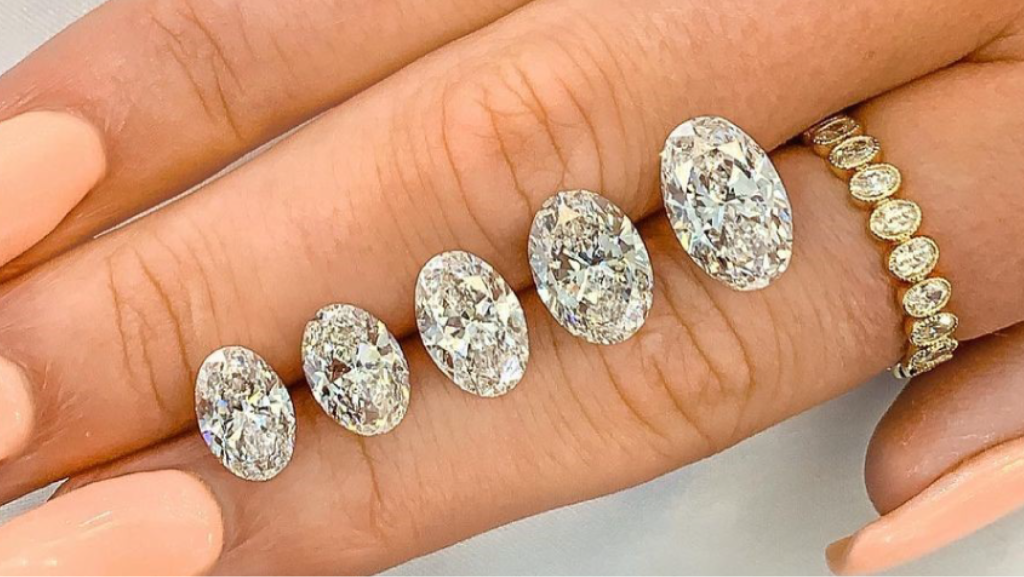
It showcases the true color of the diamond

If you’re planning to pick a radiant cut diamond ring then make sure that it doesn’t have even the slightest bit of yellow or brownish tinge because the radiant cut is notorious for showing the tinge more aptly than other cuts. 

Bow-tie effect

So, for all the newbies to the diamond industry, there is a visual impairment effect in diamonds. It is called a bow-tie effect. It persists in many diamond cuts and the radiant cut is one of them. Due to this effect, a bow tie-shaped black region is developed on the diamond surface. This makes the diamond look a little clumsy.

What is the Length to Width Ratio for a Radiant Diamond?

The radiant cut diamonds are available in two shapes, that is, the rectangular radiant cut and the square radiant cut.

When selecting a radiant cut diamond, the length-to-width ratio is an important factor to take into account. This adaptability fits a range of finger shapes and individual preferences. While square cuts provide angular beauty with greater glitter than asscher or princess cuts, elongated radiant cuts lengthen fingers.

Length to width ratio of Radiant Cut Lab Diamond

The diamond’s appearance is influenced by popular ratios such as 1.0, 1.25, 1.30, and 1.42, with the sweet spot between 1:3 and 1:3.5 favoring the maximum sparkle.

For optimal brilliance, a ratio of 1.5 is advised, though square designs have become more and more popular recently.

Whether a radiant cut diamond is rectangular or square depends on the cut’s length-to-width ratio. Both of them are breathtaking with their otherworldly brilliance, which leaves people spellbound. 

The rectangular radiant cut is more traditional, while the square radiant cut is more unconventional and has a contemporary look to it. However, out of these two splendid cuts, the one you may pick depends on person-to-person. After all, the best cut for you is what you like. 

What are the Best Settings for Radiant Cuts?

Radiant cut diamonds extended silhouettes add refinement and give the appearance of longer, thinner fingers.

1. Radiant Diamond With Halo Setting

The Halo Setting in diamond rings is super popular and rightly so! The setting enhances the beauty of the central diamond. The reflection of the light increases and hence your diamond appears with a much brighter allure. Halo setting means you also have to choose diamond accents that surround the primary diamond. It is a glamorous design indeed one which enhances the bearer’s fingers.

Halo Setting Lab Diamond Ring

A radiant cut diamond with hidden halo is a classic and sophisticated accessory that can only enhance a woman’s natural beauty. This stunning design is sure to attract the attention of people with its classic shine and improve the wearer’s natural beauty.

2. Prong Setting

The Prong setting is the oldest and most classical setting for diamond rings. It is clean, structured, and gives a classy look to the ring. There are two types of prong settings that are commonly used, the 4 prong setting and the 6 prong setting. Mainly used in solitaire rings, it makes for the perfect engagement ring.

Prong Radiant Cut Lab Diamond

3. Radiant Cut Diamond Gold Band

[su_youtube_advanced url=”https://www.youtube.com/watch?v=8MKMQFPm8Nk” width=”1600″ controls=”alt” autohide=”yes” autoplay=”yes” mute=”yes” loop=”yes” rel=”no” modestbranding=”yes” theme=”light” playsinline=”yes” title=”radiant cut diamond engagement ring”]

When seeking the perfect radiant cut diamond eternity bands for a wedding or engagement ring, quality is paramount. Celebrities like Jennifer Aniston and Drew Barrymore have showcased the allure of radiant cut diamonds.

A radiant cut diamond wedding band with a thin gold band, as seen in Jennifer Aniston’s 8-carat stunner, offers a modern take on the classic solitaire.

Custom-made for each diamond, these diamond-encrusted thin band settings, often featuring hidden halos, ensure a flawless fit and extra sparkle, making them ideal for radiant cut diamond eternity and wedding bands.

4. Pave Setting

Pave settings gained popularity in the last decade due to their minimalistic style and clean finishing. The pave setting embellishes the diamond into the metal. Generally used alongside the primary diamond, smaller diamonds are paved into the band of the diamond to give any ring a grand look.

Pave Setting of Radiant Lab Grown Diamond

5. Three Stone Radiant Cut Diamond Ring

When two side stones support your main stone, it is a three-stone engagement ring. Three stone rings signify the couple’s history, present, and future together and are in general deeply meaningful.

Three Stone Radiant Lab Diamond Ring

3 stone radiant cut diamond ring is a timeless design, well looked out for in the market, and looks stunning as an engagement ring. Hence, an optimal choice for lovers.

6. Radiant Cut Diamond Solitaire Ring

The radiant and well-cut diamond is the main emphasis of the solitaire engagement ring, which has a simple band. As they are just metal bands with no diamond decoration or glitter, solitaire engagement rings are usually a budget-friendly and popular option. If you enjoy a simple, timeless, and elegant look, then a solitaire engagement ring is ideal.

Where to Buy Lab Grown Radiant Cut Diamonds?

Loose Grown Diamond stands as the premier destination for exquisite radiant cut diamonds, ensuring high quality through ethical and transparent sourcing practices. Our commitment to customer satisfaction sets us apart in the industry, with a dedication to excellence.

In addition to those mentioned above, we offer a range of products, including radiant diamond rings, earrings, bracelets, and pendants, all in vogue these days. Our comprehensive knowledge guide ensures you make an informed purchase.

Choose from hundreds of styles of loose grown diamonds. Or show us a ring style you like from elsewhere and we can create something very similar. Feel free to share specific preferences by sending an image or URL for a customized product.

Simplify your purchase with our diamond price calculator for the best price. Enjoy added savings by entering the exclusive discount promo code at checkout. Trust LGD as your unparalleled source for radiant cut diamonds.


Conclusion

While each diamond cut is unique and magnificent in its own way, the radiant cut diamond is the perfect blend of fire, brilliance, and scintillation. 

Its multiple faceted patterns give it an edge over the traditional square and rectangular cut diamonds, like a cushion, princess, emerald, etc. 

Similarly, what makes it more preferred over round cut diamonds is its square-like or emerald-like shape. A similar faceted design on a rectangular or square cut diamond makes it the chic-looking sibling of the round diamond and gives it a more contemporary look. 

If you have made the decision to buy one of these mesmerizing stones then don’t hesitate and get yourself a radiant cut diamond today! Keep outshining others with your dazzling ring and attitude! And don’t forget that smile!

FAQs

How much is a 2 carat radiant cut diamond ring?
Prices for 2-carat radiant cut diamonds vary based on the 4Cs (cut, color, clarity, and carat weight). Generally, they can range from $2,500 to $40,000.

What is the best table and depth for a radiant cut diamond?
Although taste is subjective, a radiant cut diamond’s table should be at least 61% of its visible width. Proportions should maximize lightness, and depth should be harmonious.

What is the price for a radiant-cut diamond?
The price of a radiant cut diamond can vary greatly, depending on its size, quality, and other attributes, but it typically starts at $200 and goes into the thousands.

Are radiant diamonds more expensive?
Radiant diamonds are often more affordable per carat compared to some other cuts. The cutting process is efficient, minimizing diamond wastage and cost.

Do radiant diamonds look bigger?
Absolutely! When set in a ring, the radiant cut diamond’s wide, flat shape makes more of the stone visible, giving the impression of a larger stone.

Why choose a radiant cut diamond?
A. Radiant cut diamonds provide an enthralling combination of fire, scintillation, and brilliance, which is why they are the cut of choice for many diamond buyers. They are a great option for individuals looking for an engagement ring that is both modern and classic because of its adaptability in shape, beveled edges, and price.

Is radiant a good diamond cut?
Yes, the radiant cut is highly regarded for its brilliance and versatility. Its unique blend of square or rectangular shape, beveled edges, and intricate facet pattern make it a popular and stunning choice for engagement rings.

What’s the difference between radiant and emerald cut?
Radiant diamonds exhibit greater sparkle due to their higher number of facets compared to emerald cut diamonds. On the other hand, the facet arrangement of emerald cut diamonds makes imperfections more noticeable.

Briolette Cut Diamonds: Should You Consider in 2024

There are many diamond cuts available in the market today, some of which are very popular and common while others are quite uncommon. One such uncommon cut amongst diamonds is the briolette cut. If you have never heard about this lab-created diamond before, then you must read this article to know why you should think about buying a beautiful Briolette.

History of Briolette Cut Diamond

The briolette diamond emerged in the 1600s in India. They are still considered an antique design because they are one of the most ancient diamond cuts. It is said that the diamond was sold to the royalty of that time as an exquisite piece of art. 

History of Briolette Cut: origin of Briolette Diamond
King Louis Van Berquem XIV is said to have bought the diamonds from a tradesman. Many historians and gemologists have concluded that the briolette cut seems to have evolved along the lines of the rose-cut diamond.

Throughout the decades the briolette diamond has been showcased by many brands like Cartier, Van Cleef, David Morris, and Busatti just to name a few. The briolette diamond from its emergence was seen as a sign of luxury jewelry and beauty. It is and always has been a rare cut diamond that has royal origins too.

What is a Briolette Cut Diamond?

The white rough briolette diamond is a drop-shaped stone with triangular or diamond-shaped facets situated on it all the way around. There is no table, crown, or pavilion. The more facets make the diamond even more mesmerizing. All the facets reflect light and make the diamond appear quite shiny when looked at. As the diamond table is absent in the diamond, the flow of light is continuous throughout the diamond.

The facets on a briolette are all triangular, entirely covering the circular cross-section of the stone. It is one of the antique diamond cuts, which was discovered long back before the 19th century. The Briolette diamond is a somewhat teardrop-shaped stone with elongated triangular facets.

The briolette lab diamond may either have a rounded or angular form; it is pear or oval-shaped. In which the upper “hemisphere” is typically much taller than the lower. 

Briolette Cut Diamonds: Why Should You Consider in 2023The briolette cut diamond has no girdle, thus it is not used very aptly in jewelry. We sometimes see a briolette with a small hole drilled close to the tip. This hole enables the diamond to be used as a pendant. 

Whereas some diamond cuts, especially modern cuts, have a strict number of facets. There appears to be no specific rule for how many facets a briolette should have – and in old times when the briolette was popular, the number of facets was determined by the size of the Briolette stone.

An advantage of the briolette cut diamond is that the entire stone is visible in one view. This precious stone cut does cost more because of how rare the cut is. Diamond manufacturers report that the maintenance cost of making a briolette cut diamond is much higher, In contrast to traditional diamond cuts. 

Pros and Cons:  Consider These Points Before Buying Briolette Diamond

Pros:

  • We can view the entire stone from any angle, as opposed to the brilliant cut diamond, which is viewed from above and is often set in such a manner that much of the stone is invisible. However, this also means that anyone can see any flaw in the Briolette cut diamond more readily.
  • Briolette diamonds styled as pear shaped diamonds look extraordinary. Women love to adore jewelry in the briolette cut especially women looking for premium pieces for a special event.
  • The brilliance of a Briolette cut diamond is much higher than many other cuts because it does not have a table and possesses many facets. This increases the flow of light and the reflections of light as well.
  • If you are someone who loves luxury fashion and trends, then this is the diamond for you. It is a fashion and status icon that reflects great style.

Cons:

  • If you have a tight budget, we would not suggest you buy a briolette cut diamond. The cut is extremely expensive and will cost you some serious money. You can choose a different and cheaper alternative like a pear-shaped diamond or a marquise-cut diamond
  • A briolette cut is best suitable for earrings and pendants. The cut of the diamond is such that it cannot be set into engagement rings, so if you are looking for an engagement ring diamond, briolette is not for you. 
  • Briolette Diamonds are more fragile than other diamond cuts. They are an extremely complicated cut which means they can’t be worn daily. They are strictly for special occasions otherwise they might be subjected to harsh conditions for which they are not made. 

Why Briolette Cut Diamonds are So Unique?

Briolette Cut Diamonds: Should You Consider in 2024

Briolette Cut Diamond is mostly highlighted in Antique and vintage diamond plans. They are particularly fit for Tiaras. Moving openly, their intelligent development adds show to jewelry.

The most celebrated model is likely the ‘Briolette of India,’ tipping the scales at 90.38 carats. Since this diamond shape is suspended from a wire string, there is a similarity to chandelier diamonds.

The alluring 360-degree sparkle effect: One major feature that stands out in the Briolette diamond is the continued faceting all over the diamond to give it a 360-degree facet intact look. Interestingly, Briolette jewels show features all around their breathtaking tear-drop shape. They are a phenomenal diamond for drop stud styles, as we have effectively examined.

What to look for in a Briolette Cut Diamond?

You must be eager to buy one for yourself! But before you jump into buying a lab-grown briolette diamond there is something you should keep in mind. Not to worry, we have prepared a list of things that any consumer should keep in mind before buying a Briolette diamond.

What to look for in a Briolette Cut Diamond

1. The 4C Rule

The most basic thing to consider and check is the 4Cs of a briolette diamond.  The cut should be perfectly symmetrical. The clarity should be of a good/higher grade. The color of the diamond should be as close to white and the carat should be the best you can get in your price range. 

2. 2nd Opinion

Briolette diamonds are super rare and you want to make sure that you buy the right one. Before making such an expensive purchase, get it checked by an external gemologist. Take their opinion on the authenticity and price of the diamond.  Make sure you get the right diamond for the right price. Choose an independent gemologist and preferably someone who is either a personal contact or a reference from someone trusted. 

3. Credentials

Make sure you run a thorough check on your retailer. Your buyer should be approved by a national-level authority or an international-level authority. Cross-check for all of their certifications. The diamonds need to be hallmarked and ensure to keep a copy of the seller’s certification 

4. Tiny Hole

You must’ve heard that a princess-cut diamond or a brilliant cut diamond should never have a hole present in their cut, which is true, this might make them a low-quality diamond. However the same is not true for a briolette cut diamond, they sometimes need to have a tiny hole at the top so that they can be used in larger pieces. This does not in any way affect their quality of cut.

List of Famous Briolette Diamonds

List of Famous Briolette Diamonds

Where can I find Briolette Cut Diamonds for Purchase?

We at Loose Grown Diamond make all our commissions through inside and out bespoke plan administration. As a component of this service, we give our customers point-by-point statements, representations, or CAD plans about their diamond, its design, and its progress report.

We have labs all around the world and we are extremely proud of the fact that we even have our showrooms in all the prominent trading hubs of diamonds.
[blog_page_btn title=”Buy Lab Grown Diamonds” url=”https://www.loosegrowndiamond.com/inventory/”]

Conclusion

A Briolette cut diamond is bound to easily get the attention of anyone with its immense sparkle and elegant look. It has been around for centuries and has recently regained a place on the world stage due to it being considered an antique diamond. When selecting a Briolette cut diamond, be attentive enough to check all the 4C’s vividly and make sure a diamond certificate from either GIA, GCAL or IGI is provided to guarantee its authenticity.

FAQs

How is a briolette diamond different from other diamond cuts?
The Briolette cut is distinct in its shape and faceting. Unlike traditional cuts with a flat table and pointed pavilion, the Briolette has triangular facets all around, giving it a brilliant sparkle from every angle.

Are briolette diamonds more expensive than other cuts?
The price of a briolette diamond can vary based on factors such as carat weight, color, and clarity, just like any other diamond. However, due to their unique cut and less common use, they may be considered rarer and have a distinct price point.

Can a briolette cut diamond be customized?
Yes, like other diamond cuts, briolette cut diamonds can be customized to suit individual preferences. LGD can work with clients to create unique settings and designs for briolette diamonds.

Pear Cut Diamonds vs Marquise Cut Diamonds – Which One Will Make Your Fingers Look Pretty?

The charm and attraction that diamonds have make it one of the most precious stones. Additionally, diamonds’ brightness and durability make them symbols of sophistication and are valued for their adaptability in numerous types and settings. Lab created diamonds are ideal for engagement rings and other meaningful jewelry because they symbolize love and devotion.

The beauty of it is so versatile that it can blend into any outfit and occasion so blissfully that it would appear like a match made in heaven. Diamonds do not subdue their beauty but enhance themselves while complimenting others perfectly. This strongest object on the earth is known for its stunning ability to transmit light and radiate in its full glory. 


This ability of the diamond to transmit light efficiently is based on the intricate craftsmanship which is indicated by the cuts provided to the diamond. The most important factors for selecting a diamond are based on the 4 C’s- cut, color, clarity, and carat. Out of these diverse factors, the cut is the most important factor as this helps to enhance the brilliance of the diamond.

Pear Cut diamonds Vs Marquise Cut Diamonds

Pear Cut diamonds Vs Marquise Cut Diamonds

With 58 facets apiece, the pear and marquise cuts exhibit a unique grace. The pear exudes femininity with its lovely curves and delicate tapering; its ideal length-to-width ratio is 1.50 to 1.75.

On the other hand, the marquise cut, which has an optimal ratio of 1.75 to 2.25, exudes a regal femininity due to its elongated shape and pointy tips.
With their brilliant cuts, one can choose between the strong, eye-catching attractiveness of the marquise and the delicate refinement of the pear.

Their shapes—the marquise’s stretched majesty and the pear’s teardrop grace—offer a distinctive aesthetic for customized beauty.

The cuts which are provided to the lab diamond are generally the facets that are cut, to give the diamond a form, and through which the light will be reflected in an apt manner. The cut states dimensions and symmetry as well. 

The intricacy with which the lab created diamond is cut marks exactly how brilliantly it sparkles. The more precise and intricate cut provided, the more efficiently it transmits light, thus appearing more bright and more magnificent.

We can distinguish the better cut, by comparing which diamond reflects more white and colorful light, in contrast to a lesser intense light and color.

There are three factors that determine the brilliance of a perfectly cut lab diamond. Brightness, fire, and scintillation. 

  • Brightness within a diamond is termed as the internal reflection of light to such an extent that when viewing the diamond from the outside, a sparkle can be seen. The sparkle is directly proportional to the brightness of a diamond.
  • Fire is the characteristic of a diamond when a single beam of light scatters into its constituent colors. 
  • Scintillation is the amount of sparkle in the diamond characterized by the presence of light and dark spots in the diamond that occurs due to the internal reflections of light.

The most important factor in the beauty of a diamond depends on the intricacy of the cut of the diamond.

There are various types of cuts in lab created diamonds like- Round Brilliant (the most common), Pear cut, Marquise cut, Oval cut, Princess-cut, Cushion cut, Emerald cut, Radiant cut, and Asscher-cut diamond.

Pear Cut Diamond History

Pear cut was invented by a diamond cutter, who had coincidentally also inverted the diamond polishing wheel.

This invention of the wheel was definitely a turning point in the history of diamonds, as it enabled the user to make complex diamond cuts and designs with more ease than before. After that, he moved on to introduce pear cut diamonds.

What are Pear Cut Diamonds?

pear cut diamond

In 1475, Flemish diamond cutter Lodewyk van Bercken revolutionized diamond cutting with the invention of the polishing wheel. This led to the creation of the world’s first pear shape diamond, boasting 58 facets for optimal sparkle. 

Over 500 years later, the pear cut remains unchanged, a testament to its enduring brilliance and Van Bercken’s pioneering craftsmanship.

Thinking of a timeless classic piece of jewelry, this ageless cut is the one that crosses the mind. The beauty of this cut really does transcend time and takes us back to the romantic vintage ages. It is shaped in a combination of the round brilliant cut and the marquise cut.

The bottom is curved and enlarged, while the top is pointed into a tip, representing a teardrop. The teardrop shape symbolizes sensitivity. This sensitivity is the gist of the connection of emotions. Hence, the characterization of a romantic symbol.

[blog_page_inventory shape=”Pear” carat=”1.00,2.30″ cut=”1,4″ color=”0,10″ clarity=”0,11″]
[blog_page_btn title”Buy Now” url=”https://www.loosegrowndiamond.com/inventory/?”]

Marquise Cut Diamond History

marquise diamond history
The Marquise cut diamond has a long royal history that dates back to the 18th century in France. It was created from a design that was inspired by King Louis XV’s adoration for the Marquise de Pompadour’s flawless lips.

Over time as we see, the shape of the marquise cut evolved into the design it currently is. Over the span of time, we observe that it began to be called marquise after the rank below the duke.

What are Marquise Cut Diamonds?

What are Marquise Cut Diamonds

Marquise diamonds are another dramatic cut that exudes elegance in their rarity. The shape of this cut represents a boat some may say, while for others it represents an eye. This cut has 58 facets, defining the shape. Although it is not such an obvious selection for any individual, a quirky visioned person may love it to absoluteness.

Typically this elongated stone has 56 facets defining its shape, and either side results in the characteristic pointed tip of the gem. This feature of the stone also makes it appear larger than the conventional size of similar carat weight diamonds.

Its classic elegance is still valued by contemporary consumers, hence making marquise diamond engagement rings a very popular option today.

[blog_page_inventory shape=”Marquise” carat=”1.00,2.60″ cut=”1,4″ color=”0,10″ clarity=”0,11″]
[blog_page_btn title”Buy Now” url=”https://www.loosegrowndiamond.com/inventory/?”]

What is the Difference Between a Diamond Cut and a Diamond Shape?

What is the difference between a diamond cut and a diamond shape?A diamond shape and a diamond cut are two various things, which are often confused. The shape or form is anything that depicts the outline of an object, here is the diamond. The shapes range from round brilliant, pear, cushion shapes, etc.

The cut of the diamond is anything that would affect the brilliance of the gem. The exact size of the diamond is determined by its cut. Utilize this diamond size chart for a comprehensive guide to determining your size. This is affected by the number of facets, the symmetry achieved by the craftsman, the dimensions of the gem, and finally the reflective quality.
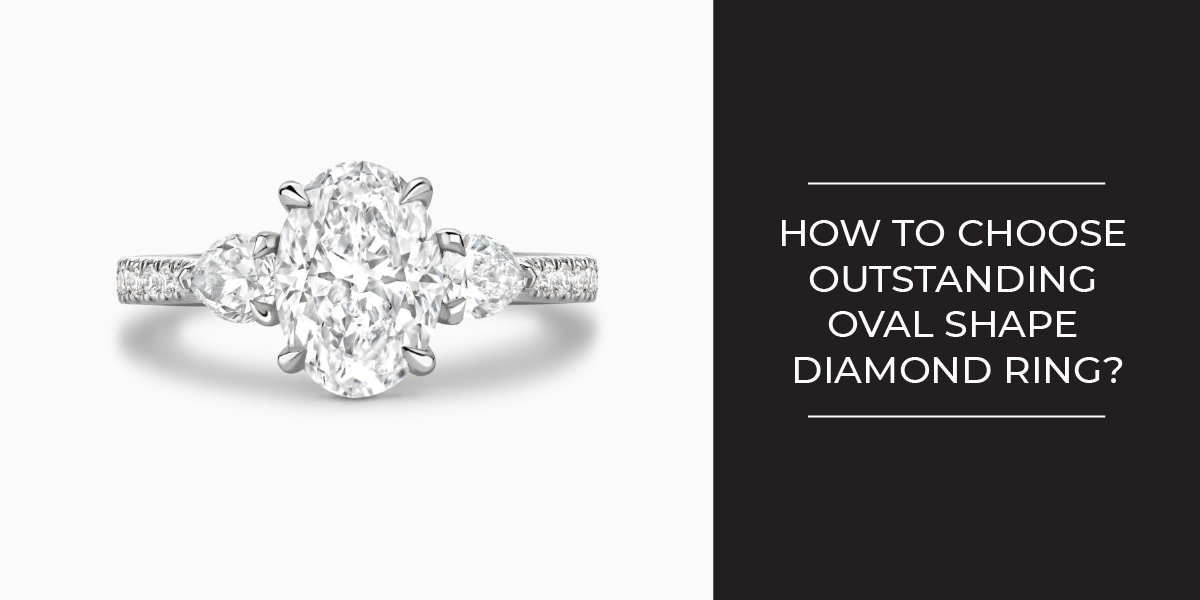
In essence, the difference can be summarized as follows:

  • Diamond shape denotes the outer form (e.g., round, heart), influencing aesthetics and symbolism. In contrast, diamond cut involves precision, affecting brilliance through facets, symmetry, and polish.
  • Reflectivity, symbolism, and light interaction vary, with shape emphasizing uniqueness, and cut determining luminosity.
  • Examples like round and brilliant cuts showcase their specific roles, underlining how the interplay of shape and cut defines the captivating allure of diamonds.

What are the Cut Defects for Pear and Marquise Diamonds?

Pear Cut Defects

In pear cuts, the most prominent problem which persists is the delicacy of the tip. The tip of the diamond is delicate and can lead to chipping over time. Many times it is seen that while creating jewelry out of a pear-cut diamond, the tip gets damaged or becomes blunt which completely ruins the look of the diamond piece.

Another defect that can occur in pear cut diamonds is the asymmetry of the form. Sometimes we can observe that uneven craftsmanship can lead to a form that is asymmetrical and defies the brilliance of the beautiful cut in the diamond. A reason why such hindrances in craftsmanship appear is due to the fact that it is very difficult to achieve the apt level of brilliancy in the cut. The exact dimensions of the crown and pavilion are not known, hence the exact perfect diamond is quite difficult to find.

Marquise Cut Defects

Bowtie- this defect is caused by the elongated shape of the marquise. The bowtie defect refers to a black bowtie-shaped band across the center of the gem. It is always there in the marquise cut, but it can range from very slightly visible to very evident to the naked eye.

Slender football- this defect is, as the name suggests, a thinner version of the actual required size of the diamond. The diamond is slender and the other proportions of the cut too, are not very apt, hence there is a visible reduction in the brilliance of the gem.

Size Ratio of Pear Cut Diamonds vs Marquise Cut Diamonds (Length/Width)

length to Wight ratio of pear cut and marquise diamond
The size ratio of the pear cut diamond ranges from 1.5 to 1.75, of which 1.75 (L/W) comprises the most elegant ones. The classic symbolism of the pear shaped diamond as a teardrop is the reason for it being more preferred in pear shaped diamond engagement rings.

The ideal size ratio of a marquise cut diamond is 1.7 to 2.15, but the ideal ratio is 1.9. Although marquise cut is also an unconventional cut, it is preferred less as compared to a pear shaped diamond.

Pear vs Marquise in Jewelry: Which One Looks Better?

Pear vs Marquise in jewelry: Which One Looks Better?

Although the pear and marquise cut can look beautiful in any jewelry, they are preferred more as wedding rings. Hence, engagement rings, anniversary rings, and promise rings are all types of jewelry when paired with a pear shape or marquise shaped diamond that will give an exuberant look.

What Type of Metal Should be Paired with Pear Cut Diamonds?

In the choice of metal, there is a variety, since they look beautiful regardless. A white metal will enhance the diamond, its cut, and the setting. So a white metal like silver, platinum, or white gold, will let the diamond take center stage while supporting its elegance.

A yellow metal like gold will give an antique look to the already antique cut of pear. The yellow of the metal helps subdue any mishap in the quality of the stone.

Rose gold is another unconventional metal, but absolutely romantic and classic. The combination of one romantic aspect of the pink metal with another aspect of the pear cut diamonds just enhances the symbolic aspect of the wedding ring.

What Type of Metal Should be Paired with Marquise Cut Diamonds?

The marquise cut looks absolutely white regardless of the metal it is fixated on. So placing it in yellow or rose-pink metal, will not in any way alter the hue of the diamond. Hence, the marquise looks stunning in all the metals regardless.

Best Pear Cut Diamond Settings

best pear diamond ring setting
In jewelry, the pear is generally adorned in rings, especially to give an antique feminine edge to the wearer. The diamond can be worn with the tip facing either the hand or the fingers, but it is an absolutely subjective choice. The diamond is delicate and is generally preferred to be fitted in a bezel setting or a halo setting since it provides an extra sense of security.

In a bezel, a metal border contains the gem in place, whereas in a halo, there are one or two lines of smaller diamonds outlining the main diamond. In either of these cases, the tip of the stone will not be projected out as a point and will hence be safe.

A prong is also an option, in which 6 prongs hold the diamond in shape. Three prongs protect the bulge of the pear cut and the tip is taken care of by the remaining 3 prongs. The tip is specially sealed with a v prong so as to protect it from chipping. There are also chances of the tip being hooked onto clothes and fabric, hence the v prong protects against such mishaps.

There is also a 5-prong setting, in which one lower prong has been removed, but the other 5 remain intact in their previous positions. Prong is not the most preferred setting, because the tip can be pointed out, which results in chipping or damage in the long run. The diamond is better when it is absolutely safe in the setting.

Best Marquise Cut Diamond Settings

best Marquise diamond ring
For marquise rings, the main impact is contrary to the regular. Hence for a marquise cut diamond ring, the most preferred setting is the halo, as the outline is highlighted with smaller diamonds, which enhances the shape and style of the marquise diamond. It tends to enhance the size and brilliance of the central marquise cut diamond. It is also an essential factor in the safety of the center diamond.

There is the prong setting, which ensures the absolute safety of the pointed ends of the marquise cut. In this setting, the body is held together by 6 prongs, and the points are either covered by prongs or v-shaped prongs, to keep the point from being harmed. This ensures the safety of the tip of the marquise cut diamond.

The prong setting is absolutely preferable if the wearer is looking for maximum brilliance. Since the prong setting allows for light to enter the stone from all directions, the brilliance that this setting provides is unmatched.

Can I Customize Rings When Purchasing From LGD?

LGD recognizes the value of tailoring our services according to each customer. We offer a seamless customization experience, allowing you to design your rings to perfection.

You can choose the metal type, diamond shape, carat weight, ring size, and other details to create a customized ring that suits your preferences and budget. Check out the “Printable Ring Size Chart” guide for measuring ring sizes.

Our experts will walk you through every step of the process, from picking the perfect diamond cut to selecting the metal for your piece of jewelry, so that it perfectly captures your personal taste and style.

Where Should I Buy Pear and Marquise Cut Diamonds From?

Look no further as we at Loose Grown Diamonds have in stock top-tier marquise and pear cut diamonds. As specialists in lab diamonds, we prioritize ethical sourcing and transparency.

Our marquise lab grown diamonds start at an affordable $650, while pear diamonds are available from just $450, offering diverse options for various preferences and your budgets, providing GIA/ GCAL and IGI certification for authenticity.

Utilize our exclusive discount promo code at checkout to enjoy an extra off. Trust LGD for superior marquise and pear cut diamonds. Adorning these magnificent vintage cuts is beautiful in every way. For the diamond cut as well as the wearer. Find your perfect lab grown diamond and its cut. Find the sweet spot between polished minimalism and bold individuality to take your look to the next level.


Conclusion

The pear and marquise cuts are both elegant and beautiful pieces of diamond. The settings in which they are held play an important role in their safety and beauty. The right kind of setting, metal, and also the perfect cut, can enhance the beauty of the diamond drastically. The brilliance of both cuts is stunning.

Since the diamonds are natural, they do possess certain mishaps and discolorations, while doing the cut. But these are minimized in lab-grown diamonds. Although not a real diamond, they do possess similar qualities as the natural diamond itself.

FAQs

What does a pear diamond look like?
A pear cut diamond exhibits a teardrop shape, symbolizing sensitivity and romance.

What is the most flattering diamond cut?
The most flattering diamond cut depends on personal preference; however, pear and marquise cuts are renowned for their elongating effect.

Why not buy a pear shaped diamond?
Careful handling is essential due to the delicate tip of pear cut diamonds.

Is a pear cut diamond more expensive?
The price of a pear-cut diamond varies based on factors like carat weight and quality.
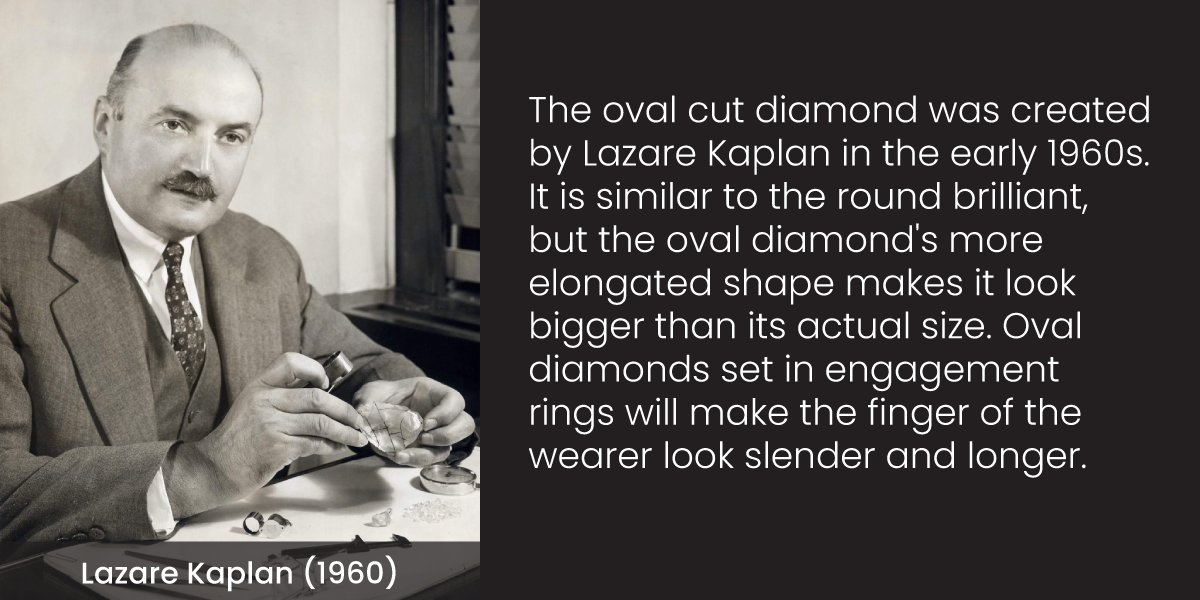
Why do people like pear cut diamonds?
People are drawn to pear cut diamonds for their unique combination of round brilliant and marquise cuts, symbolizing romance.
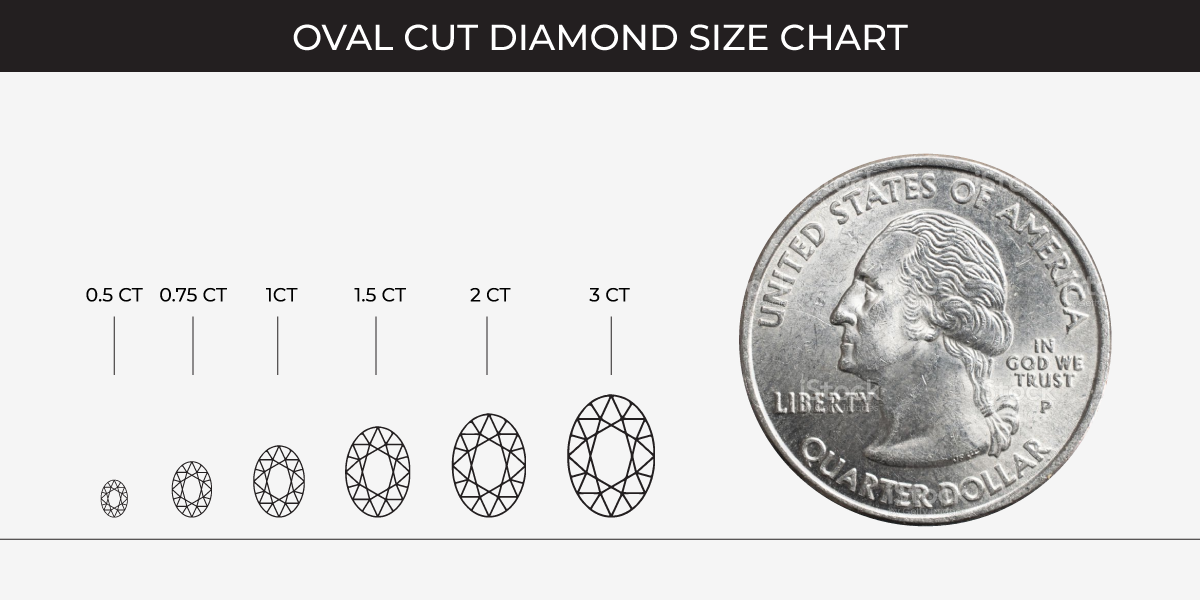
Which diamond shape is most affordable?
Prices fluctuate, but pear shaped diamonds often come at a more affordable price than round brilliants.