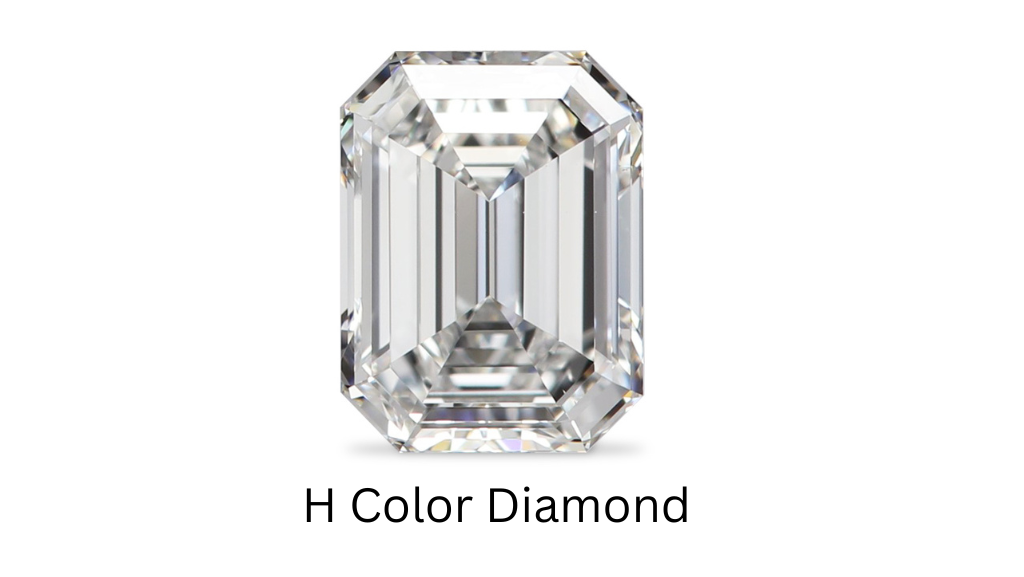
Following our previous blog on diamond color grades for lab grown diamonds, this article delves deep into the characteristics and allure of the ‘H color diamond.’
These diamonds can offer a good balance between quality and value, as they appear relatively colorless while being less expensive than higher color grades.
What is an H Color Diamond?
H color diamonds are a rating of color diamonds on a scale of D to Z, and they are valued for the way they strike a balance between color quality and cost. They are a more affordable option than their colorless equivalents, such as D, F, or G diamonds, and especially for bigger carat sizes.
A keen eye is needed to see even the slightest color variations in H color lab diamonds, which increases their value. H colored diamonds are aesthetically pleasing since they also retain their white tint, especially when set in platinum or white gold.
In the realm of gem-grade diamonds, they provide an alluring blend of quality and affordability.
How Much Do Color H Diamonds Cost?
The best option is the H-color diamond, which strikes the ideal mix between cost and quality. Approximately starting from $200 and going up to at least $5,500 for a 1 carat stone puts it in the affordable range when compared to more expensive D, E, or F color diamonds by up to 20%.
When taking into account parameters like cut, clarity, and carat weight, the H color diamond maintains its high value due to its nearly colorless appearance. Selecting a good or optimal cut might result in H colored diamonds that offer remarkable value.
If you opt for a lab grown H colored diamond it will cost you 20% less than a natural diamond. Whilst, giving your jewelry the same level of shine and elegance.
The International Gemological Institute (IGI) uses cutting edge technology to differentiate between lab grown, synthetic, and naturally occurring diamonds. Professional gemologists evaluate stones under controlled circumstances and record permanent treatments in accordance with stringent international standards.
Within the gemological world, their genuine IGI laboratory reports are a reliable mark of quality. The certification helps determine the color grade H diamond.
Based on exact comparisons with known color stones, the Gemological Institute of America (GIA) sets industry standards with its diamond color grading scale, which goes from D (colorless) to Z (light yellow or brown). VS1 color H diamond stands for the best possible quality level.
The independent Gem Certification and Assurance Lab (GCAL) puts the needs of the customer first through a careful procedure that involves three professionals and cutting edge facilities. They carefully examine thousands of diamonds to produce a single Precision Master color set, only choosing Precision Master color stones for grading comparisons.
About Color H Diamond Ring
[su_youtube_advanced url=”https://www.youtube.com/watch?v=9R-CFJh-VZM” width=”1600″ autoplay=”yes” mute=”yes” loop=”yes” modestbranding=”yes” theme=”light” playsinline=”yes” title=”H color diamond ring “]
An H color diamond falls in the near-colorless range of the scale. It means that the diamond has a slight hint of color, typically a faint yellow or brown tint. However, this coloration is subtle and often not easily visible to the naked eye, especially when the diamond is set in a ring.
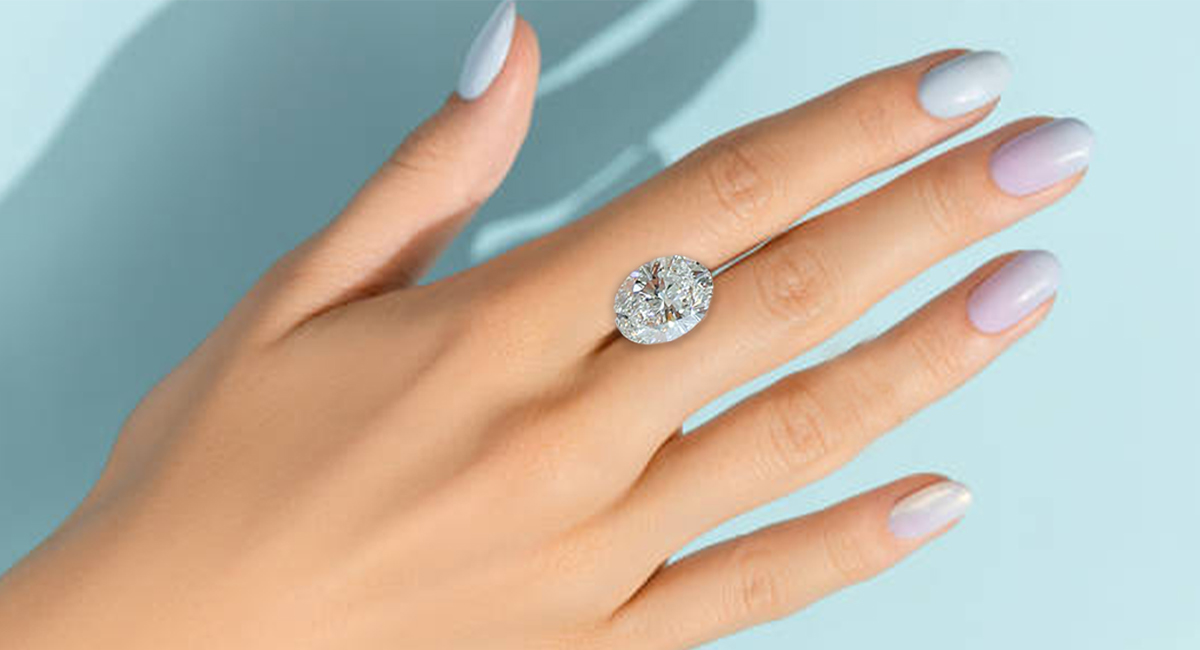
An H color diamond ring offers timeless elegance, balancing quality and affordability. Its near colorless beauty adds character and versatility, making it a popular choice for engagement and fine jewelry.
Where to Buy H Color Diamonds?
Due to their balanced aesthetics and affordability—they look almost colorless and cost less than D, E, or F diamonds—our guide suggests H-color diamonds. H colored round diamonds, which have significant light reflection, look best set in white metal; lower grades look better set in yellow or rose gold.
H color works well with a variety of forms and metals, but circumstances and personal tastes may call for modifications. We will guide you on the way to help you purchase the best quality H color lab grown diamond within your budget. You can use our diamond price calculator to determine the right price for your diamond.
You can go to our inventory page and filter it based on your preferences. Our professional gemologists are at your service to answer any questions you may have while browsing our inventory. Explore exclusive savings with our promo code when elevating your diamond shopping experience.
[perfect_ring_box title=”Ready to find your perfect diamond and ring?” btn1ttl=”H color diamond” btn1url=”https://www.loosegrowndiamond.com/inventory?color=5.00,6.00″ btn2ttl=”H color diamond ring” btn2url=”https://www.loosegrowndiamond.com/build-a-ring”]
Conclusion
H color diamonds are a wise option for individuals looking for value in gem-grade diamonds since they provide a superb mix between quality and price.
H color lab grown diamonds are a flexible and affordable choice in the world of fine jewelry because of their nearly colorless beauty and timeless elegance that appeals to a wide variety of consumers.
FAQ
Is color H good for a diamond?
Yes, H color is considered good, offering quality and affordability.
Should I buy an H color diamond?
Buying an H color diamond can be a wise cost-effective choice.
Will an H color diamond sparkle?
Yes, an H color diamond can sparkle beautifully, especially in well-cut stones.
How much is an H diamond worth?
1 carat H color diamond prices range from $245 to $14,000 and 2 carat diamond prices range from $353 to $4900.
What color are most engagement ring diamonds?
Most engagement rings feature G or H color diamonds, which appear nearly colorless.
What is the diamond color scale?
A quality chart called the diamond color scale is used to quantify how colorless a diamond is.
Do H color diamonds look yellow?
No, H color diamonds typically do not look yellow.
Will an H color diamond look too yellow if it’s set in yellow gold?
An H color diamond set in yellow gold may show a slight warm tint, but it’s a matter of personal preference.
Welcome to our sparkling world of F color diamonds! In this blog, we delve into the mesmerizing beauty and allure of these exquisite gems in continuation of our previous blog about diamond color grade.
Join us as we explore the unique characteristics, craftsmanship, and fascinating stories behind these diamonds, making every moment truly unforgettable. Get ready to be dazzled!
What are F Color Diamonds?
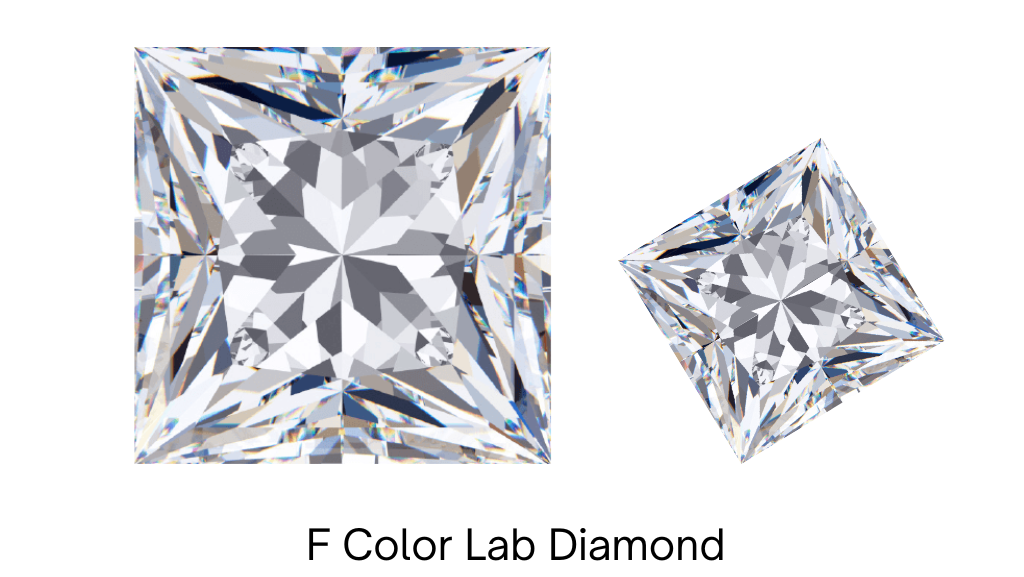
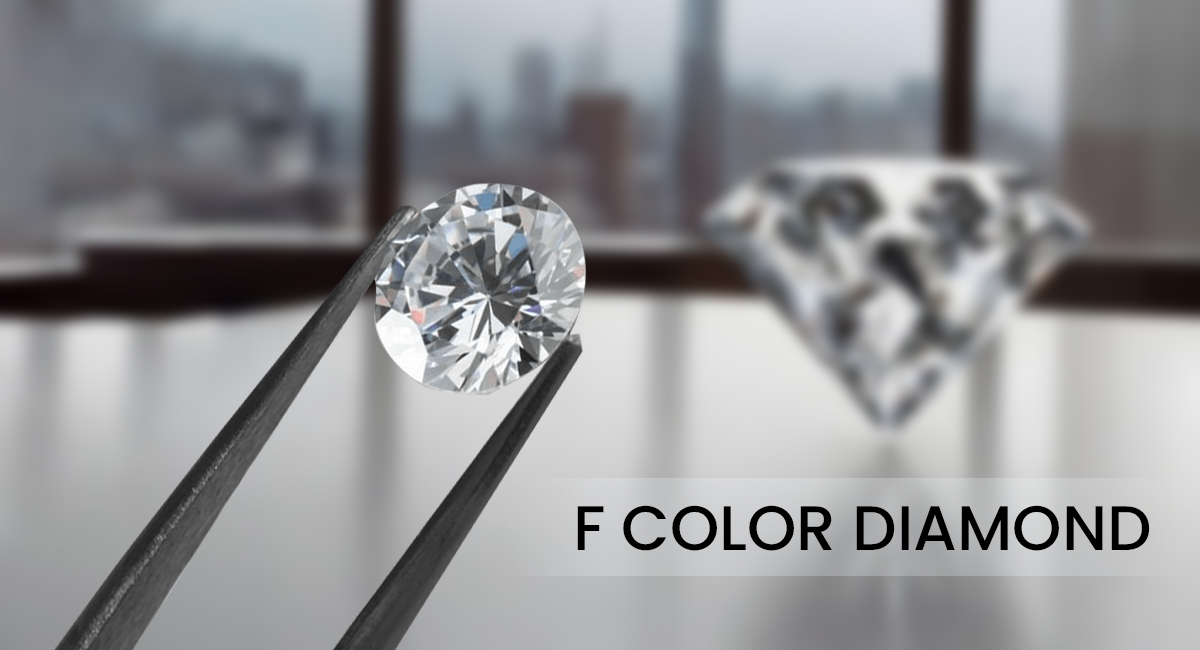
When it comes to diamond color, F color diamonds stand out as a true testament to perfection. With their pristine white hue, these certified diamonds give out unparalleled radiance and sophistication. F color lab diamond reminds the ultimate of a coveted choice.
Are F Color Diamonds Good? Unlocking the Beauty and Value of F Color Diamonds
When it comes to evaluating the quality of a diamond, color plays a crucial role. F color diamonds, with their near colorless appearance, are considered an excellent choice for those seeking exceptional beauty and value.
With a color grade of F, these diamonds exhibit a pristine white hue, showcasing minimal to no presence of yellow or brown tones. This remarkable color grade allows F color lab grown diamonds to radiate a breathtaking brilliance, captivating all who behold them.
Diamonds F color are highly sought after for their rarity and desirability. Graded on a scale from Dto Z, F color falls within the upper range of near colorless diamonds. This means they possess one of the highest color grades achievable, making them an excellent investment for those seeking top-tier quality.
Choosing to buy an F color lab grown diamond offers a range of benefits. From the exquisite near colorless appearance that enhances its brilliance to the rarity and prestige associated with high-quality diamonds, diamond f color truly stand out. With their enduring beauty and value, these diamonds are a testament to exceptional craftsmanship and an investment that can be cherished for a lifetime.
Where to Buy F Color Diamond?
When it comes to acquiring F color lab diamonds, one exceptional option to consider is F color diamonds. These diamonds, created through advanced technology that replicates the natural diamond formation process, offer a sustainable and ethically conscious alternative to mined diamonds.
Among the various companies in the market, Loose Grown Diamond stands out as a leading provider of lab grown F color diamonds. With our commitment to excellence, we offer a wide range of meticulously crafted lab grown diamonds in F color, ensuring the highest quality and exceptional beauty.
These are certified diamonds by reputable gemological laboratories (GIA or IGI), assuring authenticity and providing peace of mind.
Make your diamond purchase even more delightful by acquiring a personalized promo code from the knowledgeable gemologist at Loose Grown Diamonds.
The Elegance of F Color Engagement Rings
[su_youtube_advanced url=”https://www.youtube.com/watch?v=HnC-I_2kw08″ width=”1600″ autoplay=”yes” mute=”yes” loop=”yes” modestbranding=”yes” theme=”light” playsinline=”yes” title=”F color enagagment ring “]
This color grade is highly desirable as it strikes a balance between colorlessness and affordability. F color diamond engagement rings are an excellent choice for those seeking a balance between quality, beauty, and value. The versatility of F color diamonds enables them to complement a wide range of metal choices, including gold, platinum, yellow gold or rose gold.
[perfect_ring_box title=”Ready to create your perfect ring?” btn1ttl=”Build a Ring” btn1url=”https://www.loosegrowndiamond.com/build-a-ring/”]
Conclusion
In conclusion, F color diamonds hold an undeniable allure with their near colorless appearance and exceptional brilliance. Whether you choose a natural F color diamond or a lab grown alternative, these gems radiate timeless elegance and value. From engagement rings to stunning jewelry pieces, F color diamonds make every moment truly unforgettable.
FAQ
What are F color diamonds?
F color diamonds are diamonds that have been graded with the color grade “F” on the GIA scale. They exhibit a near colorless appearance with a pristine white hue, showcasing minimal to no presence of yellow or brown tones.
Do F color diamonds look yellow?
No, F color diamonds do not look yellow. On the GIA color scale, F color diamonds are considered near colorless and display minimal color, making them appear brilliant and white.
What is the price of 1 carat F color VS1 diamond?
The f color diamond price of a 1 carat VS1 diamond can vary depending on various factors like cut and overall quality. Generally, F color VS1 diamonds are considered to be of high quality and can command a premium price of around $800 per carat.
Which is a better diamond color F or G?
Both F and G color diamonds are considered excellent choices, as they both fall within the near colorless range. The difference between them is subtle, with F color being slightly higher on the color scale than G color. The choice ultimately depends on personal preferences and budget.
Are F color diamonds expensive?
Yes, F color lab created diamonds are typically more expensive than diamonds with lower color grades due to their superior color quality and desirability in the market.
Will an F color diamond show any tint?
F color lab created diamonds are graded as near colorless, and they should not show any noticeable tint of yellow or brown. Their near colorless appearance allows them to showcase exceptional brilliance and whiteness.
What causes the color in an F color lab diamond?
The color in an F color lab grown diamond is influenced by the presence of trace elements and structural defects during the diamond’s formation process. In the case of F color diamonds, there are minimal impurities that result in the diamond’s near colorless appearance and its exquisite white hue.
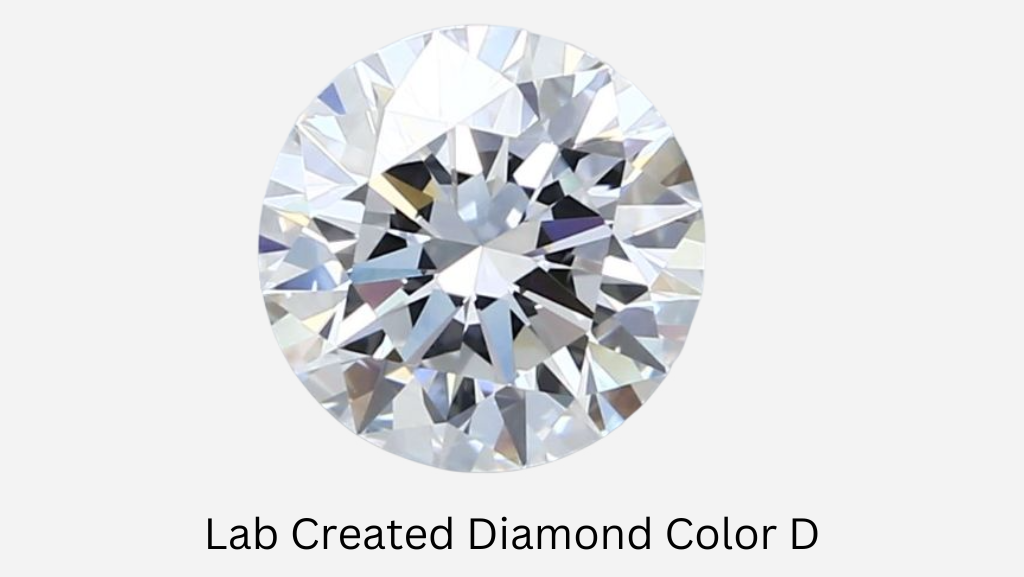
In continuation of our previous blog, diamond color grades are used to assess the presence of color within a diamond. D color diamonds, also known as “colorless” diamonds, are among the highest grades in the diamond color scale. They are extremely rare and highly sought after for their exceptional lack of color.
D color flawless diamonds display a pure, icy-white appearance, allowing them to maximize the reflection and refraction of light. With their remarkable brilliance and rarity, D color diamonds are favored for their unparalleled beauty.
Their pristine color grade signifies a top-tier diamond that exudes timeless elegance and luxury, making them a coveted choice for those seeking the epitome of diamond perfection.
Why Diamond Color Start From D?
In the 1930s, when the Gemological Institute of America (GIA) was developing the comprehensive 4Cs system, existing color grading methods were often ambiguous and inconsistent. While diamonds were traditionally categorized as A, AA, or AAA, this approach was not precise enough for diamonds.
To establish a more precise and objective standard, GIA decided to create its color grading scale, starting with the letter D. The diamond color scale starts at D to avoid confusion with previous grading systems.
Elegance Redefined: Embracing Lab Created D Color Diamonds
Lab created D color diamonds are chemically and optically identical to natural diamonds. Their exceptional color grade, coupled with their ethical and sustainable origins, makes them a desirable choice for conscious consumers.
With certifications available to verify their authenticity, lab created diamond color D offers a range of sizes, cuts, and shapes to suit various jewelry preferences. Whether for an engagement ring or a special occasion piece, these diamonds provide a brilliant and affordable option without compromising on quality or beauty.
Diamond color D is incredibly versatile, complementing any setting or metal choice. Whether set in platinum, white gold, yellow gold, or rose gold, the colorless nature of these diamonds allows them to seamlessly integrate into any design, making them a perfect choice for those who appreciate both tradition and contemporary style.
Whether you opt for a timeless solitaire or a more intricate design, the diamond’s sheer brilliance captures the very essence of your love story, creating a proposal that will be etched in your memories forever.
Embrace the allure of a diamond color D while making an environmentally responsible choice by considering lab created options.
Unveiling Diamond Purity: The Mesmerizing Allure of Flawless D Color Diamonds
Diamond color grades start from D because they represent the highest level of colorlessness. Color D diamonds are exceptionally rare and exhibit no detectable color.
As the first grade on the color scale, D signifies the purest and most coveted diamond color. Diamond color D are highly sought after for their brilliance and ability to reflect light with unmatched radiance. When combined with flawless clarity, D color flawless diamonds or loose diamonds represent the epitome of diamond perfection.
The Amazing Aesthetics and Value of Diamond Color D
D color diamonds exhibit a mesmerizing icy-white appearance, reflecting light with dazzling brilliance. These diamonds are truly colorless, making them highly sought after for their rarity and exceptional beauty.
While they come with a higher price tag due to their scarcity, their unmatched radiance and prestige make them a worthwhile investment for those seeking the pinnacle of diamond perfection.
[blog_page_inventory shape=”Cushion,round,heart,pear,oval,cushion,princess,emerald,radiant” carat=”1.30,2.60″ cut=”1,4″ color=”10,10″ clarity=”1,6″]
[blog_page_btn title=”buy best price D color diamond” url=”https://www.loosegrowndiamond.com/inventory/?”]
A Dazzling Choice: Why Investing in D Color Diamonds Reigns Supreme
Celebrities like Beyoncé, Jennifer Lopez, and Angelina Jolie have embraced the allure of D color diamond rings, solidifying their status as the epitome of luxury.
Their timeless elegance effortlessly enhances any style or occasion, while their high resale potential ensures a future-proof investment. With color D diamonds, you can bask in the beauty of a rare treasure that transcends trends and shines with unmatched radiance.
Understanding the Price of D Color Diamonds
When it comes to answering whether a D color diamond is good, its price reflects its rarity and exquisite beauty. Being the highest grade on the diamond color scale, diamond color D commands a premium due to their exceptional colorlessness.
D color diamond price is influenced by various factors such as carat weight, cut, clarity, and overall quality. While they may come with a higher price tag, diamond color D are valued for their timeless allure, breathtaking brilliance, and the prestige associated with owning a top-tier diamond.
Diamonds with a color grade of D can be priced anywhere from $200 to several thousand dollars, depending on various factors such as carat weight, cut, clarity, and other considerations.
You can get your hands on the diamond color D at the best price at Loose Grown Diamonds. A diamond wholesaler who cuts out the middleman and sells directly to you. You can use our diamond price calculator to determine the right price for your diamond. Explore exclusive savings with our promo code when elevating your diamond shopping experience.
[perfect_ring_box title=”Ready to find your perfect diamond and ring?” btn1ttl=”D color diamond” btn1url=”https://www.loosegrowndiamond.com/inventory?color=10.00,10.00″ btn2ttl=”D color diamond ring” btn2url=”https://www.loosegrowndiamond.com/build-a-ring”]
FAQs
When is a D color diamond a good choice?
A diamond D colors are ideal for individuals who value rarity, prestige, and a timeless aesthetic in their diamond jewelry.
How much does a D diamond cost?
Diamond color D Prices can range from $500 to tens of thousands of dollars.
What is the best diamond color?
The best diamond color depends on personal preference and the desired aesthetic. While diamonds color D are considered the highest grade and prized for their colorlessness, diamonds in the near-colorless range (G to H) can also offer excellent value and beauty.
Why is a D color grade diamond the most expensive?
D color grade diamonds are the most expensive due to their exceptional rarity. They are considered truly colorless, reflecting maximum light and exhibiting unmatched brilliance.
Are D color diamonds rare?
Yes, color d diamonds are incredibly rare. Being absolutely colorless, they are the rarest of all color grades. Their scarcity adds to their desirability and contributes to their higher price in the market.
Is color more important in a diamond?
Yes, color is an important factor in determining the quality and value of a diamond. The importance of diamond color depends on personal preference and individual priorities.
Is it worth buying a lab created diamond color D?
Buying a D color diamond can be a worthwhile choice if you prioritize colorlessness and desire a diamond with maximum brilliance.
How are diamond colors graded?
Diamond colors are typically graded by gemological laboratories, such as the Gemological Institute of America (GIA).
How much does a 1 carat D diamond cost? 1 carat D color diamond deemed of excellent cut and clarity will cost a purchase anywhere from $350 to hundreds of dollars.
Why buy D color diamond?
Buying a lab created diamond D color is a popular choice because D color diamonds are considered the highest grade on the color scale, representing exceptional colorlessness and maximum brilliance.
Throughout history, diamonds have captivated the human imagination with their unparalleled beauty and timeless allure. Amongst the vast spectrum of diamond colors, one shade stands out in a league of its own—the breathtaking pink diamond.
Known for its rarity, elegance, and extraordinary value, the pink color diamond has become a symbol of prestige and sophistication. However, the traditional realm of natural pink is now being challenged by an innovative alternative: lab grown pink diamonds.
These lab created gems, meticulously crafted in controlled environments, offer a fascinating alternative to their natural counterparts. As technology advances and the global demand for ethically sourced and sustainable gems grows, the emergence of lab grown pink color diamonds has sparked a profound shift in the jewelry industry.
We at Loose Grown Diamonds will shed light on their origin, characteristics, and the intriguing distinctions between natural and lab grown varieties, their extraordinary rarity in nature, and how cultivating their synthetic counterparts within laboratories is done.
Whether you are a gem lover, a jewelry connoisseur, or simply fascinated by the relationship of science and beauty, this article will provide an in-depth overview of pink diamonds and the intriguing debate between natural and lab grown variants.
What are Lab Created Pink Diamonds?
Lab created pink diamonds, also known as synthetic or man-made pink diamonds, are created in a laboratory using advanced technological processes that mimic the natural conditions required for diamond formation. Unlike natural pink diamonds, which take millions of years to develop deep within the Earth, lab grown diamonds pink color are grown under controlled environments in a fraction of the time.
The process involves using a seed diamond and subjecting it to high pressure and high temperature or chemical vapor deposition techniques, allowing carbon atoms to accumulate and crystalize around the seed.
Lab technicians can manipulate the diamond’s color, clarity, and size by controlling the growth parameters. Pink lab diamonds are genuine diamonds with the same chemical composition and physical properties as natural ones.
They offer advantages such as affordability, ethical production methods, and reduced environmental impact. While natural pink color diamonds remain highly valued, pink lab diamonds are gaining popularity as a captivating alternative that combines beauty, ethics, and affordability.
Pink Diamond 4Cs
The 4Cs—Color, Clarity, Cut, and Carat Weight serve as universal criteria to assess the quality and value of diamonds, including pink color diamonds.
Color: One of the most distinguishing features of a pink diamond is its color. Pink color diamonds are available in a variety of colors, ranging from light pastels to bright, brilliant pinks. Pink diamond color is graded by the Gemological Institute of America (GIA) on a scale of “Faint” to “Fancy Vivid.” The brighter and more vivid the pink hue, the more expensive and rare the diamond.
Clarity: The existence of internal or exterior defects, known as inclusions and blemishes, is referred to as clarity. Diamonds pink, like other diamonds, can have variable degrees of clarity. The GIA grades diamond clarity on a scale ranging from “Flawless” (no visible inclusions or blemishes under 10x magnification) to “Included” (visible inclusions to the naked eye). Pink diamonds with higher clarity grades are generally more valuable.
Cut: The cut of a diamond refers to its proportions, symmetry, and overall craftsmanship. The cut has a significant impact on a diamond’s brilliance, sparkle, and overall beauty. While the 4Cs were initially developed for colorless diamonds, the same principles apply to diamonds. Well-cut pink diamonds are skillfully faceted to maximize their color intensity and brilliance.
Carat Weight:Carat weight measures the size of a diamond and is one of the most apparent factors influencing a diamond’s value. Pink diamonds, like all diamonds, are weighed in carats. Larger pink diamonds are typically rarer and more valuable, assuming all other factors, such as color and clarity, are equal.
Pink Diamond Color Grading
Pink diamond color grading involves assessing the color intensity and saturation of pink diamonds, which are graded on a scale developed by the Gemological Institute of America (GIA). The GIA color grading scale for pink diamonds ranges from “Faint” to “Fancy Vivid,” with several intermediate grades in between. Here is a breakdown of the GIA pink diamond color grading scale:
[su_table responsive=”yes”]
Faint
Pink diamonds in this grade display a very light, pale pink color. The pink hue may be subtle and barely noticeable.
Very Light
Pink diamonds in this grade exhibit a slightly stronger pink color compared to faint diamonds but are still considered very light in intensity.
Light
Pink color diamonds in this grade have a noticeably stronger pink color than the previous categories but are still relatively light in intensity.
Fancy Light
Pink color diamonds in this grade exhibit a light to moderate pink color intensity. The pink hue becomes more prominent and noticeable.
Fancy
Pink lab diamonds in this grade display a medium to strong pink color saturation. The pink color is more vivid and distinct.
Fancy Intense
Pink diamonds in this grade exhibit a significantly stronger and more intense pink color. The pink hue is bold and captivating.
Fancy Vivid
Pink lab diamonds in this grade represent the highest color saturation and intensity on the GIA scale. They exhibit a vibrant and vivid pink color that is exceptionally rare, highly sought after.
[/su_table]
The GIA color grading scale for pink diamonds primarily focuses on the intensity and saturation of the pink color, without considering secondary hues. Higher color grades like Fancy Intense and Fancy Vivid are rarer and more valuable due to their vibrant and intense pink color. However, personal preference plays a significant role in selecting a diamond pink, as individuals may have different preferences for the specific shade and intensity of pink they find most appealing.
How Much Does a Pink Diamond Cost?
Pink diamond prices can vary based on factors like color intensity, carat weight, clarity, cut quality, and rarity. Pink color diamonds are highly sought after and can reach extraordinary prices which are often also dependent on the pink color diamond uses. Here’s a general price range based on color intensity grades:
Faint to Light Pink: These diamonds are generally more affordable, ranging from several thousand dollars per carat to tens of thousands of dollars per carat, depending on quality.
Fancy Light to Fancy: Pink lab diamond prices in this range can be significantly higher due to increased color saturation. Prices range from tens of thousands to hundreds of thousands of dollars per carat.
Fancy Intense to Fancy Vivid: These are the most valuable diamonds pink color, with vivid and intense color. Prices start from hundreds of thousands of dollars per carat, reaching into the millions for larger, high-quality stones.
These price ranges are approximate and can be influenced by market conditions, diamond characteristics, pink color diamond use and buyer demand. Natural pink diamonds are subject to significant price fluctuations and increases over time.
Lab grown diamonds are generally more affordable, offering a lower-priced option for those seeking the beauty of fancy pink color diamonds. Pink diamond prices typically begin at $500 and can escalate to thousands of dollars. It’s recommended to consult reputable jewelers or diamond experts for accurate pricing information based on specific diamond characteristics.
Which Jewelry Can Pink Color Diamonds Be Used In?
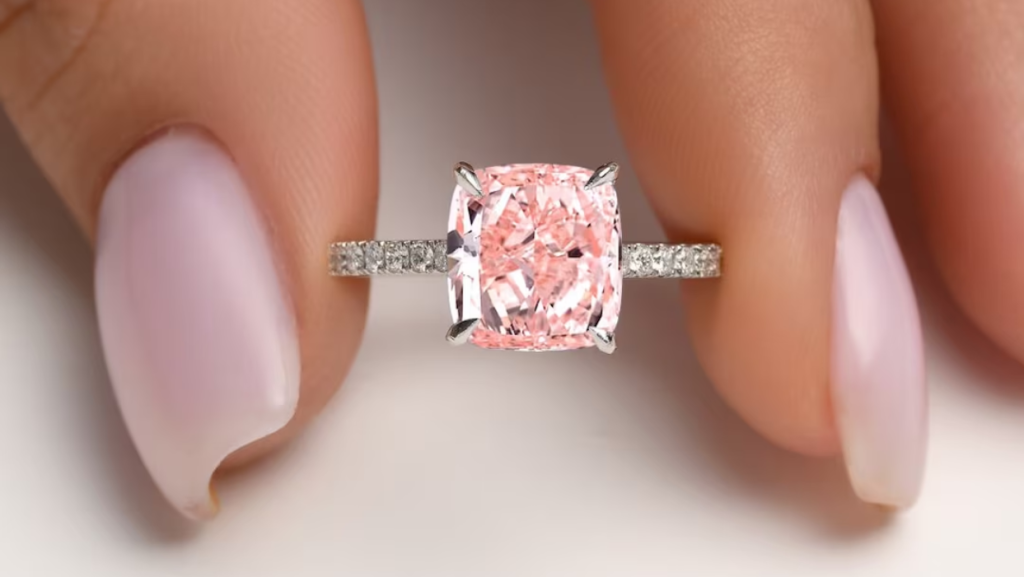
Pink diamonds are highly desirable for their unique color and are incorporated into various jewelry pieces, including rings, earrings, necklaces, bracelets, pendants, brooches and more. Women’s pink diamond rings, particularly for engagements and cocktails, create striking and romantic pieces. Pink diamond earrings add elegance and femininity, often paired with white diamonds or other gemstones.
Pink diamond necklaces make a statement, whether with a single pendant or cascading diamonds. Diamond color pink bracelets offer captivating adornment, while pink color diamond pendants showcase their beauty. Pink lab diamond brooches add elegance to attire. Pink color diamonds are often combined with white diamonds or colored gemstones for a stunning contrast.
The choice of jewelry depends on personal style and occasion, but regardless, pink diamonds add enchantment and exclusivity to any piece.
Where to Buy Pink Lab Grown Diamonds?
You can purchase pink lab grown diamonds from reputable sources such as online retailers. LGD platforms offer a wide range of pink lab diamonds in various shapes and settings. You can enjoy a special discount when buying the diamond by using a promo code. Additionally, brick-and-mortar jewelry stores may carry lab grown diamonds, including pink color diamonds, alongside natural diamonds.
This is the most feasible option a buyer can opt for which makes the process and purchase more accessible. However, one could also consider visiting reputable jewelers in your area or contacting diamond suppliers and manufacturers specializing in lab grown diamonds for a wider selection and customization options.
Auctions and estate sales occasionally feature lab grown pink diamonds, although availability may be limited compared to natural diamonds. When one wishes to buy pink diamonds, one must ensure that they deal with reputable sellers who provide reliable certification from respected gemological laboratories such as IGI or GIA.
Conclusion
Pink color diamonds hold a unique allure and charm, captivating jewelry enthusiasts. The emergence of lab grown diamonds offers an exciting alternative to natural ones. Lab created pink color diamonds possess the same properties and brilliance as natural diamonds, with a range of stunning hues and affordable prices.
They also provide ethical and environmental benefits, aligning with sustainability. While natural pink diamonds remain exclusive, lab grown diamonds have gained acceptance and popularity for their beauty and conscious appeal.
Whether choosing natural or lab grown pink diamonds, both options offer remarkable and enchanting gemstones. The decision depends on personal preference, budget, and values, celebrating the splendor of nature or human innovation and leaving a lasting treasure of beauty and elegance.
FAQ
How are lab grown pink diamonds made? Pink lab diamonds are created using one of two primary methods: chemical vapor deposition (CVD) or high-pressure, high-temperature (HPHT) synthesis. In the CVD method, a diamond seed is exposed to a carbon-rich gas, and as the carbon atoms deposit onto the seed, it grows into a diamond. HPHT synthesis involves subjecting a diamond seed to high pressure and temperature, which encourages the growth of a larger diamond.
Can pink color diamonds be certified?
Yes, pink lab grown diamonds can be certified by reputable gemological laboratories, just like natural diamonds. Certifications provide information about the diamond’s quality, including its color, clarity, cut, and carat weight. The most well-known diamond certification organizations are the Gemological Institute of America (GIA) and the International Gemological Institute (IGI).
How much is a pink diamond worth?
The price of a pink lab diamond varies greatly based on criteria such as color intensity, size, clarity, and general rarity. They usually start from $500 and go up to thousands of dollars. Diamond pink are among the most costly and rare gemstones, and their values can be extremely high.
How much would a pink diamond ring cost?
Pink diamond prices and ring prices vary substantially based on various aspects, including size, color intensity, clarity, cut quality, and the kind and quality of metal used in the setting. A pink diamond engagement ring can cost as little as a few thousand dollars for lesser, lower-quality stones and as much as several hundred thousand dollars or more for larger, higher-quality pink color diamonds that have superior color saturation.
How rare are pink diamonds?
Pink lab diamonds are among the rarest and most valuable colored diamonds account for only a small percentage of all diamonds mined, with some estimates claiming that pink diamonds account for less than 0.1% of all diamonds discovered.
Pink color diamonds are much rare because they are mostly derived from a few select mines, such as Australia’s Argyle mine, which has discontinued operations. Pink color diamonds market worth and appeal are increased by their scarcity in nature, combined with their compelling beauty.
Should I buy a lab grown diamond for an engagement ring?
The decision to purchase a lab grown diamond for a pink diamond engagement ring is a personal one that is influenced by your priorities and values. When compared to natural diamonds, lab grown diamonds have various advantages, including ethical considerations, sustainability, and typically a lower price. Ultimately, it is important to consider your budget, environmental concerns, and personal preferences when deciding on a lab grown diamond for a pink engagement ring.
In the realm of lab created diamond color grade evaluation holds significant importance and should be carefully contemplated before any purchase.
Despite the absence of natural irregularities in lab created diamonds, color grading plays a crucial role in defining the distinctive characteristics of the diamond. Therefore, it is essential to grasp the concept of color grading when considering a lab created diamond purchase.
Diamonds are in demand the entire time of the year, and this has been the trend for years and years now. The major concern of the people buying them is the color and look of the diamond. Everybody wants a unique and rare look for their diamonds and this to an extent depends on the cut and the color along with the other 2 aspects.
The 4 C’s of the diamonds that are very much relevant before making a purchase are the cut, clarity, color, and carat. Out of these all here we will discuss the importance of the color and the lab grown color diamonds and whether should one consider them or not.
The Most desired colors for the diamonds are the colorless and white ones and the yellowish and brown tint diamonds are not preferred by people. As they reflect less color to our eyes and thus the shine and sparkle are less in them which is quite an important factor for the buyers when it comes to diamonds.
So diamond color is a very important aspect that cannot be ignored. The more colorless the diamond looks the more graceful and desirable it is.
In Fact, lab created diamonds have very few inclusions and blemishes as compared to naturally found diamonds. But they aren’t completely flawless and still have a few distinctions when it comes to color, quality, and the other desired traits in diamonds. The diamonds which have a less color grade also cost less but they don’t look that great and are not preferred by many. For a quality buying experience you should also refer to the lab grown diamond color chart and color scale.
Hence, when working within a specified budget, the most advisable choice for a purchase is a lab created diamond with meticulous attention to color grading.
Facts to be considered:
It directly has a huge impact on the price we pay for the diamonds
The grade of the color should always be checked and determined only by professionals
The grading criteria of the fancy colored diamonds are different than the colorless ones
The design and the setting of the ring should also be looked at before deciding on the color grade of the diamond.
Lab Grown Diamond Color Scale
GIA, a leading authority on diamonds, established the 4Cs (color, cut, clarity, carat) as a quality benchmark. GIA certification ensures precise grading. IGI, founded in 1975, provides certificates for various gemstones, offering specific grades for lab created diamonds. GIA focuses on natural diamonds, while IGI is recognized for its expertise in lab grown diamonds and gemology. The diamond color scale by GIA gives comprehensive guidance on the different hues of diamonds that exist. You can seamlessly secure lab-certified diamonds from IGI, GIA, and GCAL at prices below the market value.
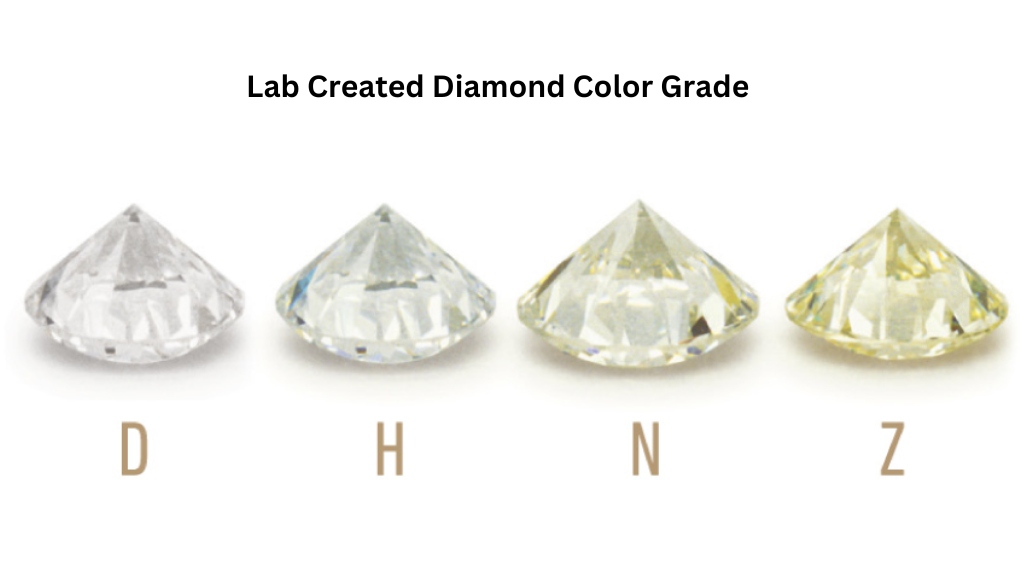
The IGI which is the International Gemological Institute certificate is a must for the verification in the case of the lab grown diamonds as the GIA was there in the case of the natural diamonds. The IGI offers a particular grade for the lab created diamonds and the GIA, on the contrary, gives only a range. The IGI is done on the scale of D to Z, wherein Z is given to the yellowish pale ones.
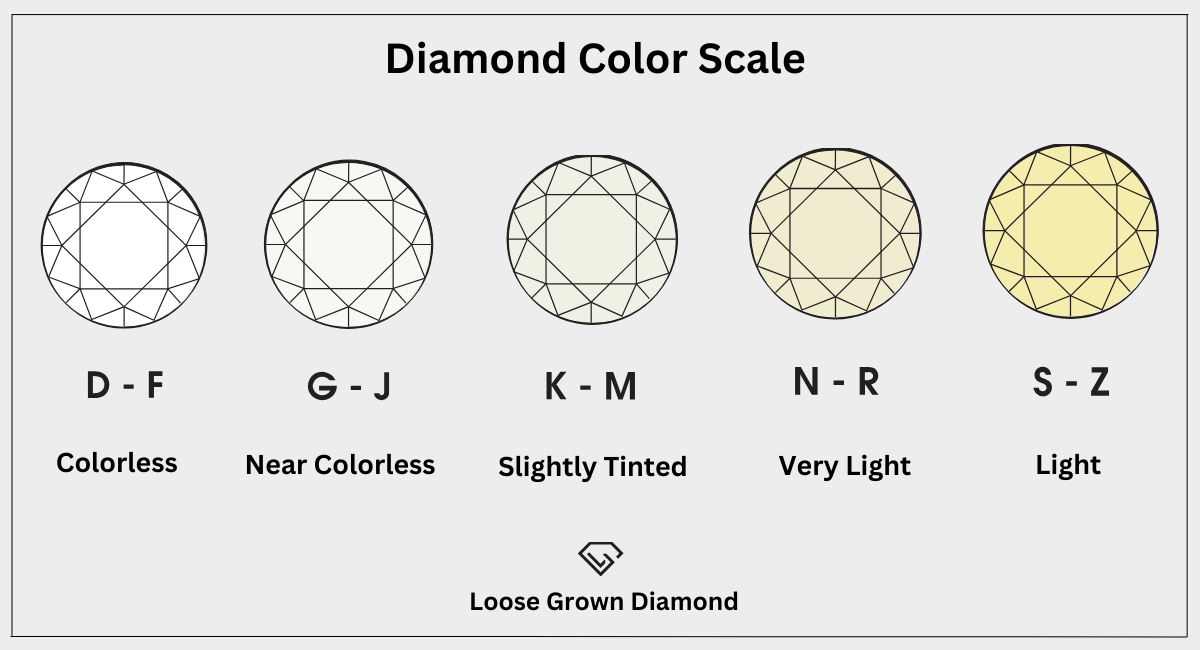
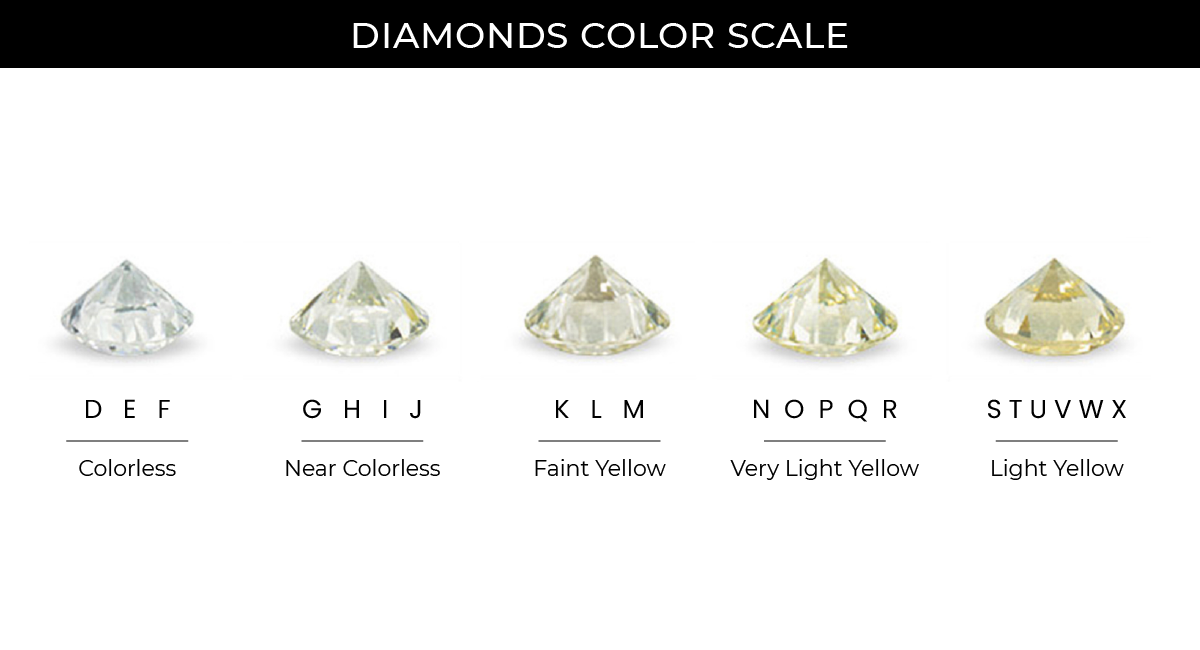
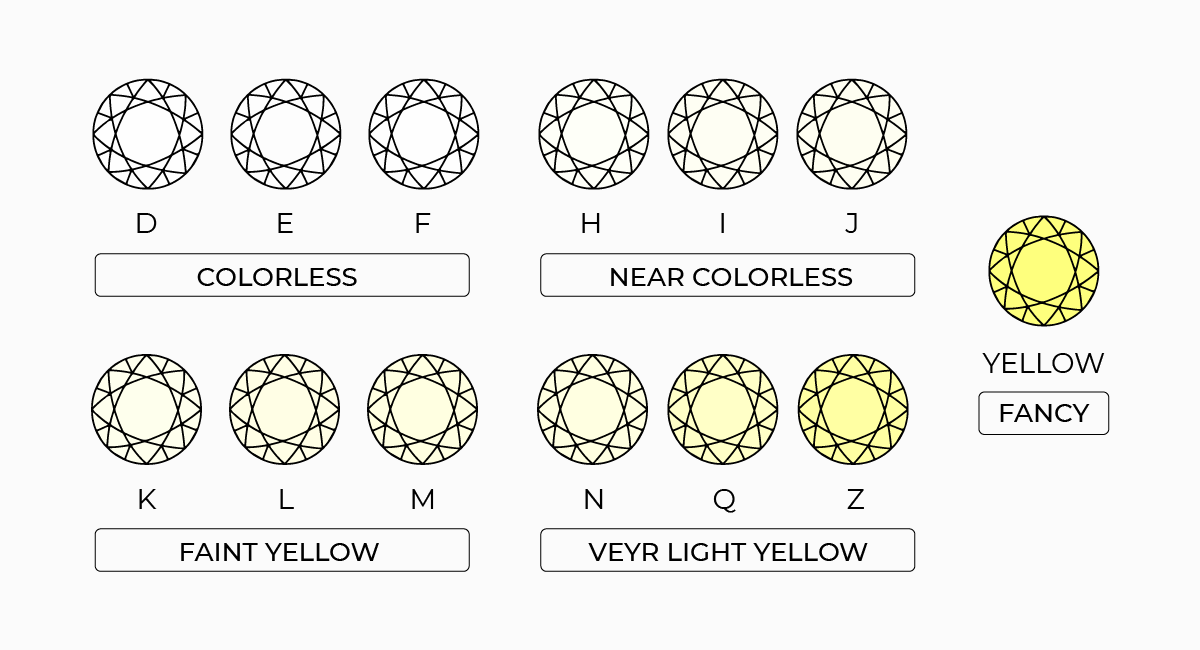
Colorless: Diamond color D is the highest color grade which signifies that the diamond is in its purest form the color is almost colorless And has no color even after the magnification process. There is not much difference in the E and F grades to the naked human eye as they look quite similar. Only the ones who have been in this field for years and our experts will be able to tell the difference in the D, E, and F grades.
Nearly Colorless: The G-J-graded diamonds also have nearly no color, are colorless to a level and look the same as the D to F graded diamonds.
The price difference between diamonds with grades G-J and those with grades D and F is significant, with G-J diamonds being far more affordable than their counterparts. This disparity is a result of the fact that G-J diamonds have just trace amounts of color, which makes them a cost-effective option for individuals who are looking to strike a compromise between quality and affordable price.
Faint Tint: The diamond color range in the K to M have a little yellowish color in them even when seen by the naked human eye. They are also preferred by quite a few people as they tend to give us a yellow-gold look.
Very Light Tint: They are very much lower in price and the brown and yellow tint is very much visible. This range of diamonds is not recommended by professionals.
Light Tint: These diamonds come in the range of S to Z and the yellowish and brownish colors are very much visible even at a distance and are usually avoided by the majority.
Lab Grown Diamonds: Understanding Colors and Production Methods
Yellow Diamonds:
Yellow hue in lab grown diamonds is caused by the presence of single nitrogen atoms (type Ib). With High Pressure High Temperature (HPHT) technology, a widely used method, the color is carefully controlled. Nitrogen is either extracted from the atmosphere or managed through the composition of the catalyst metal alloy. In Chemical Vapor Deposition (CVD) technology, less commonly used, color control is more challenging, as nitrogen is part of the gas mixture.
Green Diamonds:
The green color results from vacancies in the diamond structure. Both HPHT and CVD technologies typically involve irradiating type Ib or IIa diamonds with fast electrons (1-3 MeV) to achieve this color.
Pink and Red Diamonds:
Pink and red hues are due to nitrogen-vacancy (NV) centers. In HPHT technology, the process involves growing low-saturated yellow diamonds (type Ib), irradiating them with fast electrons, and annealing them in furnaces. In CVD technology, NV centers are either formed similarly to HPHT or directly during the growth process.
Blue Diamonds:
The blue color is a result of single boron atoms in the diamond structure (type IIb). HPHT technology effectively controls the color by adding a small fraction of boron to the metal catalyst alloy. In CVD technology, where color control is more challenging, boron is added to the gas mixture in the growth chamber.
Purple Diamonds:
Although scientists are unable to pinpoint the cause of the purple color of diamonds, they believe that boron and hydrogen have a role. Blue is induced by the presence of boron, and purple is induced by the presence of hydrogen. Purple diamonds are created by using synthetic diamonds of the 1b type that have a particular nitrogen content, irradiating them with an electron beam, and then annealing them in a vacuum.
The unusual and characteristic purple color grade of lab created diamonds is controlled by this process, which must be carried out under specific conditions.
Gray Diamonds:
The combination of hydrogen-related defects and structural imperfections in the crystal lattice gives gray diamonds their color. The technologies of Chemical Vapour Deposition (CVD) and High-Pressure High Temperature (HPHT) both have difficulties in achieving the appropriate gray color. While color control in HPHT is achieved by the manipulation of growth conditions, accurate color control in CVD is hindered by the complexity of regulating hydrogen during the development process.
Brown Diamonds:
Brown color may result from deformation disturbances or nickel-nitrogen centers. HPHT technology rarely produces brown diamonds, as it depends on the catalyst metal alloy’s composition. In CVD technology, poor synthesis processes often lead to the formation of dislocations and structural disturbances, resulting in brown diamonds.
Orange Diamonds:
Orange diamonds are created via CVD and HPHT methods, and to get different colors such as mild orange, bright orange, intense orange, and vivid orange, they go through a second LPHT treatment after they are first created. Nitrogen-vacancy (NV) centers frequently give lab grown diamonds their seductive orange color. While color may be carefully controlled with HPHT, perfect circumstances for NV center production in orange diamonds are difficult to achieve with CVD technology.
Colorless diamonds (type IIa) are free from impurities. HPHT technology, a common method, ensures color control by using “getters” (gas absorbers) in the metal-catalyst alloy. In CVD technology, color control is less precise, often resulting in a light brownish tint.
Color Scale of White Diamonds
Many of the sellers of diamond claim that the second most important trait to look for in the diamond is the color and with their selling and marketing skills they also convince people to buy the diamond with the highest color grade of all the available options. White color diamond is the most viable option.
No doubt the color plays a significant role in the overall look and beauty of the lab diamond, but the differences in the grading scales in various scales are quite tiny and are not even visible to the naked human eye. The difference between G to J grades is quite very difficult to distinguish without a proper magnifying glass, but the cost of all these degraded varies a lot.
So it is advised to spend accordingly and wisely. The remaining amount of the money out of the budget can be spent on other aspects such as the cut of the diamond as it also plays an important role in the overall look of the diamond.
Best Lab Created Diamond Color Grades for the White Gold, Platinum, and Rose Gold Engagement Rings
In this section, we have analyzed the best grades for each type of ring.
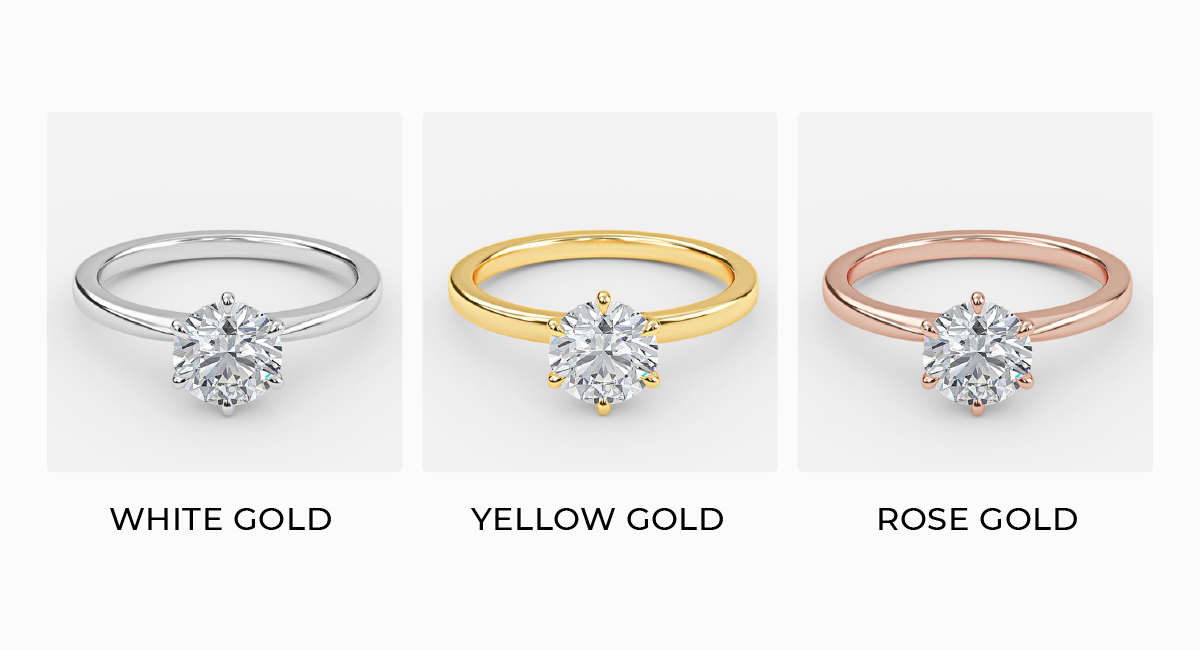
Best Metal: Two popular metal options exist for white gold engagement rings i.e., white gold or platinum. White gold, an alloy prized for its luster and affordability, possesses a brilliant shine compared to other metals. In contrast, platinum, though more naturally appealing, shares similar characteristics. Jewelers favor platinum for its enhanced malleability, setting it apart from other metals in craftsmanship.
White Gold Engagement Rings
Round Cut: Diamond color H-J color grade
Emerald, Princess, and Asscher Cuts: G-I color grade
All other Diamond Shapes: F-H color grade
Platinum Gold Engagement Rings
Round Cut: H-J color grade
Emerald, Princess, and Asscher Cuts: G-I color grade
All other Diamond Shapes: F-H color grades.
Rose Gold Engagement Rings
Round Cut: J-M color grade
Emerald, Princess, and Asscher Cuts: I-K color grade
All other Diamond Shapes: I-J color grades.
Solitaire Engagement Rings
Round Cut: K-M grades.
Emerald, Princess, and Asscher Cuts: J-K grades.
All other Diamond Shapes: I-J grades.
Pave or Side-Stone Rings
Round, Princess, Emerald, and Asscher: G-I grades.
All other Diamond Shapes: F-H grades.
Halo Engagement Rings
All Diamond Shapes: F-H Grades.
The Impact of Different Settings
The setting of the stone in the ring plays a very important role. It enhances the color of the diamond. The color and the setting for the ring should be chosen in such a manner that they complement each other and enhance each other’s look and beauty.
When we place an I-colored diamond next to a high-graded diamond it looks like the I colored only. Many experts and gemologists use the traditional comparison method to grade the colors of the diamonds even to date. They place the diamond on a white folded card next to a master diamond to compare and determine the color.
The Center Diamond Color as Compared to the Side Stones
Many people go for side stoned rings these days as they look quite pretty and are very much in demand and fashion. In this case, make sure that the colors you choose should complement each other and do not overshadow each other’s look and beauty.
The side stones should either be of the same color as that of the center stone or should be a bit darker in color as we want the center diamond to be the main point of focus and attraction in the elegant ring.
How Does Fluorescence Interact with the Color of the Diamond?
Out of all the diamonds which are made in the labs, only a few of them have the original fluorescence. While the others are enhanced using various techniques and equipment. Fluorescence is the ability of a diamond to respond to UV light. As in the UV light makes whites whiter and black posters glow.
If the fluorescence is not proper and is extra strong or medium, the overall look of the diamond will be dull and shabby but makes a lower Color graded diamond appear whiter. So, for the diamonds in the D and G range, strong fluorescence should be avoided.
It’s widely believed in the diamond trade that fluorescence has a big impact on diamond color and, in turn, cost. For example, it is believed that blue fluorescence can improve diamonds with color grades of I to M by neutralizing yellowish tones, potentially improving them by one grade. On the other hand, fluorescence is frequently regarded as a flaw in D-H diamonds.
Start your search for the ideal lab created diamond at LGD, the one-stop shop for a rainbow of breathtaking color grades. Discover the perfect shade that complements your style from our extensive selection.
Use the enchanted promo code to get a special discount on your order. Take your sparkle to the next level with Loose Grown Diamond – the place where budget meets brilliance.
Conclusion
There are a few aspects that need to be taken a look at before purchasing the diamonds such as the Cut, Clarity, Color, and Carat play an important role in the beauty of a diamond. The decision of whether to go for natural diamonds or lab grown diamonds is solely a personal choice. The lab grown is a bit cheap and environment friendly and thus becomes an ethical choice.
The man-made diamonds should be chosen wisely and the ones which resemble the natural shine and brilliance of the diamonds. One can choose a diamond in the G to I range that looks white but costs much less than those in the D to F range.
So with the change in the trends and the choices of the people these diamonds for sure are the future of the diamond industry as in eye are more cheap and ethical than natural ones. get are also blemishes and inclusion-free as in they are made in the labs.
Additionally, it must be noted that beyond delving into color grades for your diamond purchase, it’s crucial to consult tools such as the diamond size chart and the diamond price calculator. These resources offer invaluable insights, empowering you with essential knowledge to make informed decisions when acquiring your precious gem.
FAQs
What is the color of a diamond?
Diamonds come in various colors, but the most prized ones are colorless or near-colorless, allowing maximum light reflection.
What color diamond is the most expensive?
The most expensive diamonds are colorless (D grade), as they exhibit exceptional purity and brilliance.
What is the best color for a diamond?
The best diamond color depends on personal preference, with colorless or near-colorless grades being popular choices. You can also refer to the diamond color guide for the same.
What is the most common fluorescence color in a diamond?
The most common fluorescence color in diamonds is blue, with approximately 35% exhibiting this optical effect.
What color diamond should I get?
Choose a diamond color based on personal preference; colorless (D-F) and near-colorless (G-J) grades are popular options.