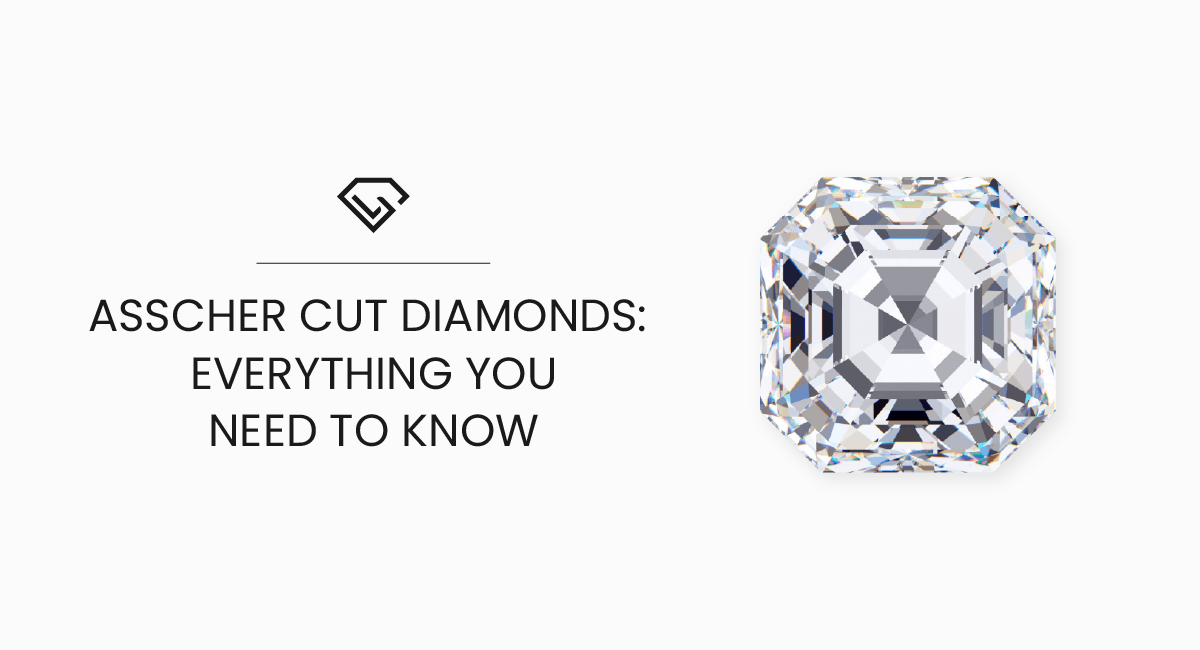
Asscher Cut Diamonds: Everything you Need to Know

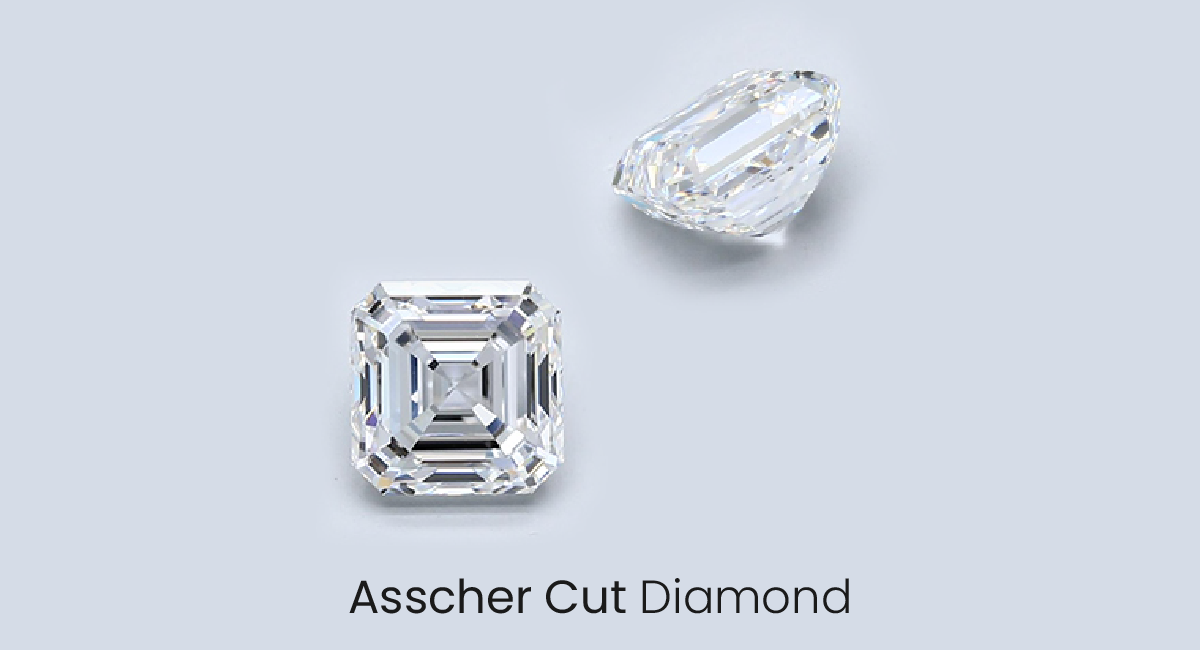
In the diamond world, there are many different cuts to consider before buying. Every different cut signifies different aspects of a diamond and you need to explore every cut in detail before you make a final choice. The Asscher cut diamond is considered to be one of the most symmetrical and eye-pleasing cuts in the world of diamonds. 

Asscher Cut Diamonds: Everything you need to know
If you’re someone who has been exploring cuts for pure diamond engagement rings for a significant diamond pendant then this article is perfect for you to understand what an Asscher cut is and what are the different aspects of the Asscher cut.

What is Asscher Cut Diamond?

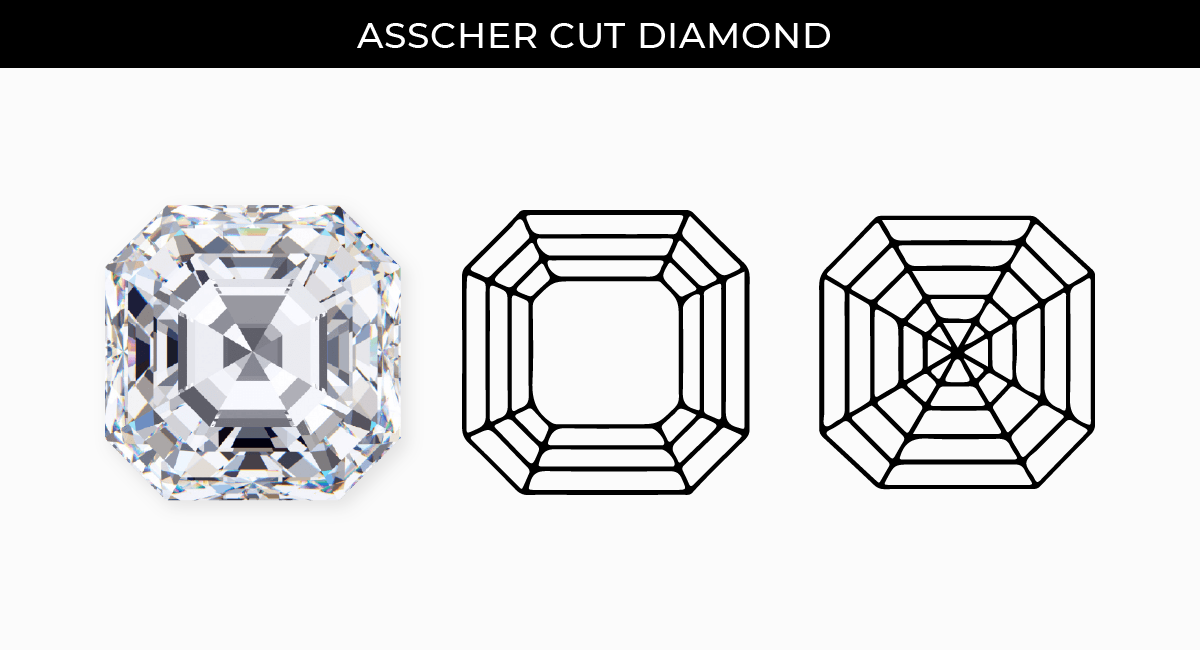
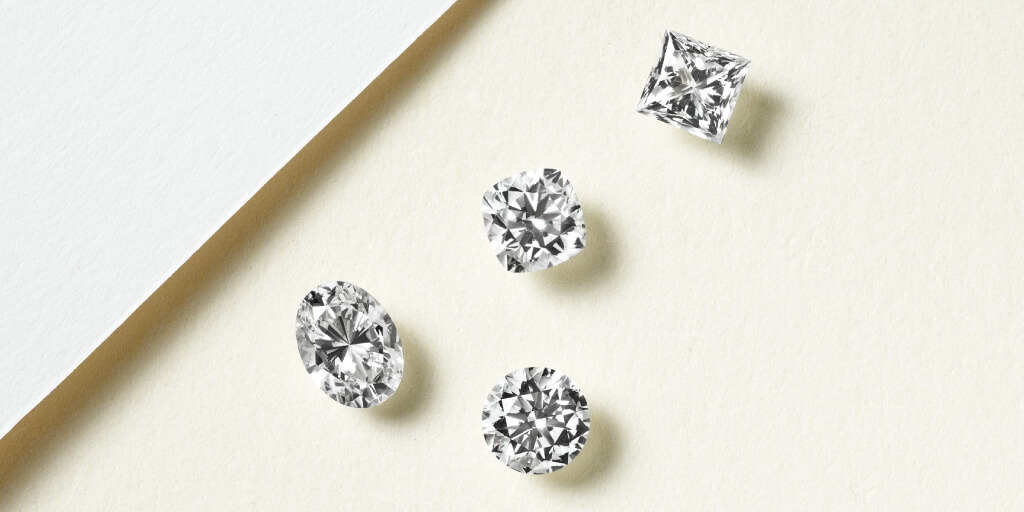
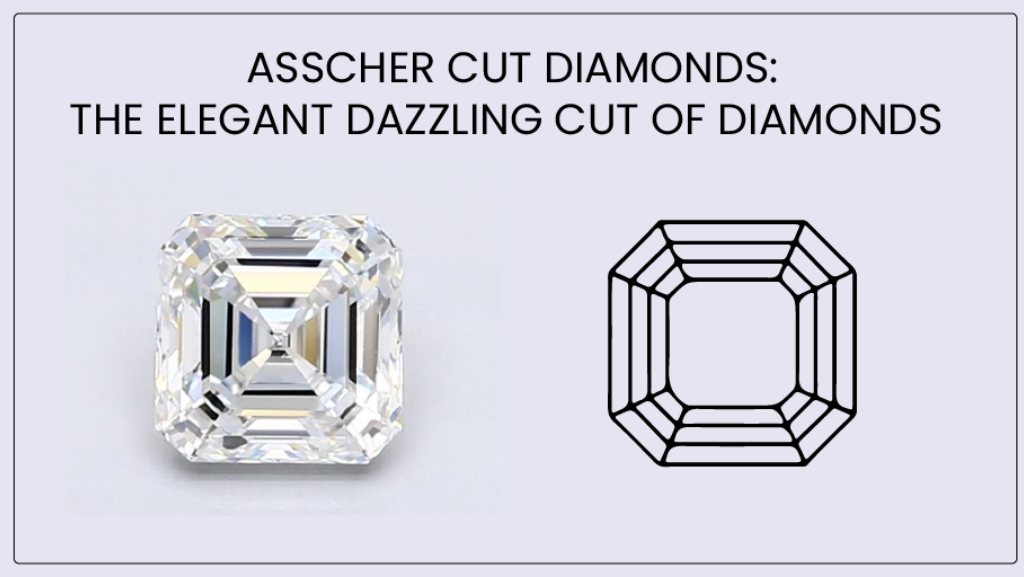
The Asscher cut diamond has 8 edges and hence is often known as the octagonal diamond as well. The main identifying features of an acid cut are it is square in shape and has a significantly small table. All the facets of the diamond are rectangular in shape and this is what gives the effect inside the diamond. 

What is Asscher Cut Lab Diamond
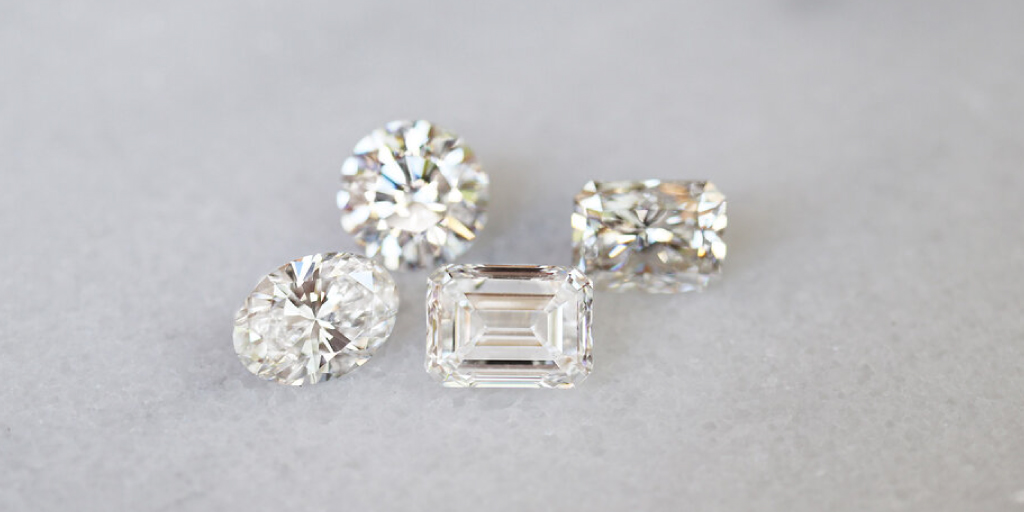
The Asscher cut is also known as a step-cut diamond because the diamond is cut at different levels exactly like a staircase. The diamond is also often compared to the emerald cut and the Princess cut because of its shape and similarity in cutting style.

There are two types of Asscher cut diamond 1 is the classic Asscher cut which has 58 facets and the other one is known as the Royal Asscher cut diamond which has 74 facets. Both these cuts are identified as having a tall crown and a deep pavilion. 

[blog_page_inventory shape=”Asscher” carat=”2.00,2.50″ cut=”1,4″ color=”0,10″ clarity=”0,11″]
[blog_page_btn title”Buy Now” url=”https://www.loosegrowndiamond.com/inventory/?”]

History of  Asscher Cut Diamonds

The Asscher cut diamond is named after its founders which were the Astor brothers and specifically the diamond is named after Joseph Aster who founded the cut. The diamond cut is only 120 years old and was discovered in the early 1900s. 

The Asscher cut diamond became super popular very early after its conception because in 1920 the art deco period started which is an era that was popular for geometrical and symmetrical pieces of art. Many say that the popularity of the Asscher court was heavily influenced by the ongoing industrial revolution.  

Geometry and Modernity were seen as a sign of prosperity and the Asscher cut which is highly symmetrical of course gained popularity in terms of design.

Till today as Asscher cut diamonds are considered an elegant choice because of their unique cut. Throughout history, lab grown Asscher diamonds, which are the favorite of the royal families around the world and are still the highlight of many historical pieces.

Length to Width Ratio of Asscher Cut Diamond

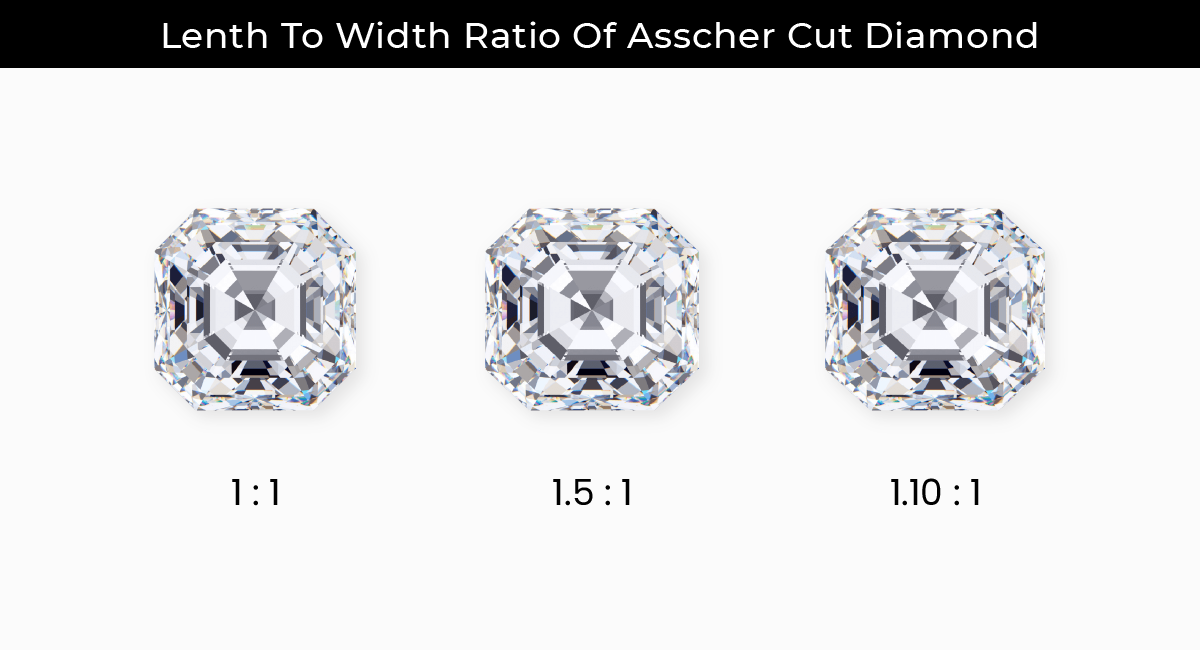
The Asscher cut is known for its symmetry and geometric appearance. The best ratio is 1.00-1.05 when it comes to the Asscher cut.

Length to Width Ratio of Asscher Cut Diamond
A ratio of 1.05-1.10 is considered the second-best side-to-side ratio for an Asscher cut. A 1.10-1.15 ratio is considered poor but if you have no other option, you can consider this as the last resort.

What Makes Asscher Cut Diamonds a Great Choice?

Other than its appearance, lab created Asscher cut diamond offers a lot of other plus points that make them worth their price.

What Makes Asscher Cut Diamonds a Great Choice?
– They are a perfect blend of emerald cut diamond’s elegance and brilliance of a princess cut diamond, which makes these Asscher cut diamonds quite unique and one of a kind.

– In proper settings, Asscher lab diamonds may look bigger for their carat value. This can be further enhanced by adding a halo around the center diamond. Hence you could end up with a much bigger diamond compared to the price range.

– Asscher cut diamonds have a clean, neat, fine, and elegant look. Their perfect blend of vintage and modern makes them quite an excellent choice for any piece of jewelry, especially an engagement ring.

– Due to their large facets and tables, the body color is easily refracted from within the Asscher diamond. This makes the lab grown asscher cut diamond perfect for every skin tone. Coupling the warmer-hued diamonds with yellow gold or rose gold might just enhance its vintage and timeless appeal. By going for white gold or platinum with a colorless diamond, the overall look may appear very elegant and sophisticated to anyone who would look at it.

– Asscher cut diamonds are one of the most affordable diamond cuts. Since the amount of wastage that occurs while the diamond is cut is very low, it also makes the price of the diamond drop. If you’d like to make the diamond even more affordable, you can go for lab-grown diamonds. They are real diamonds that are manufactured synthetically in machines.

Asscher Cut Diamond Ring Settings

[su_youtube_advanced url=”https://www.youtube.com/watch?v=MB3Hn6aHpRU” width=”1600″ controls=”alt” autohide=”yes” autoplay=”yes” mute=”yes” rel=”no” modestbranding=”yes” theme=”light” playsinline=”yes” title=”asscher cut diamond ring “]

Asscher as mentioned before are highly symmetrical and have a lot of texture in themselves already. This is also the reason why simple settings are considered best for Asscher cut diamonds. If you are someone looking for an engagement ring setting for Asscher cut diamonds we suggest you go with pave set bands and a 6-prong or a 4 Prong solitaire setting.

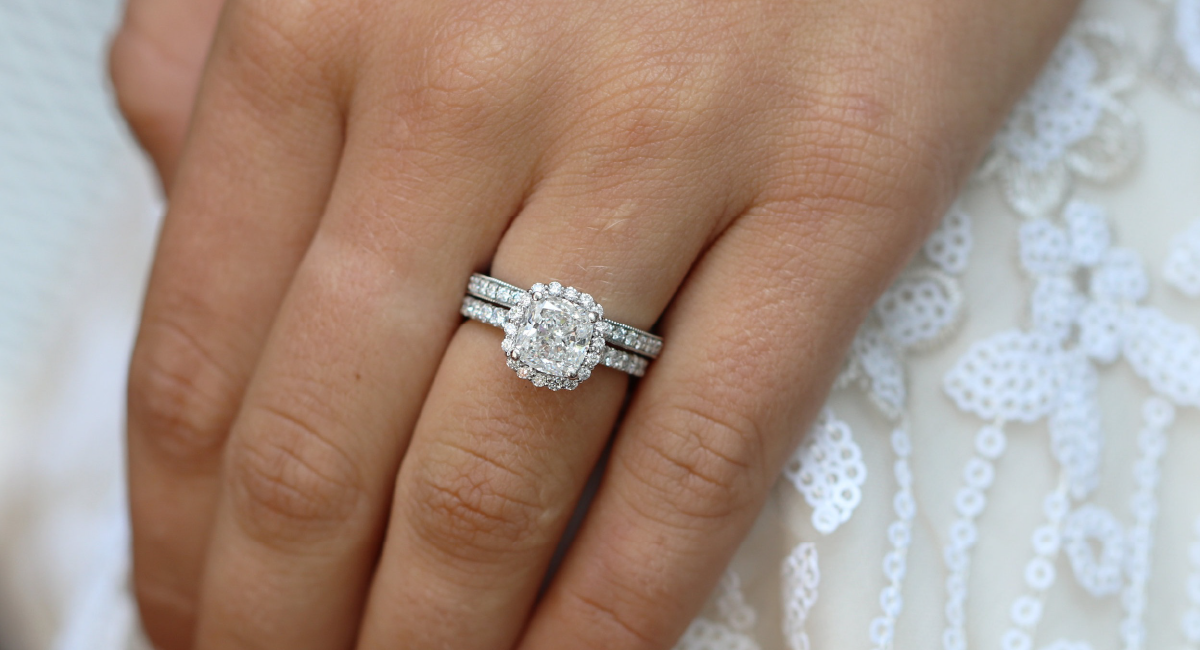
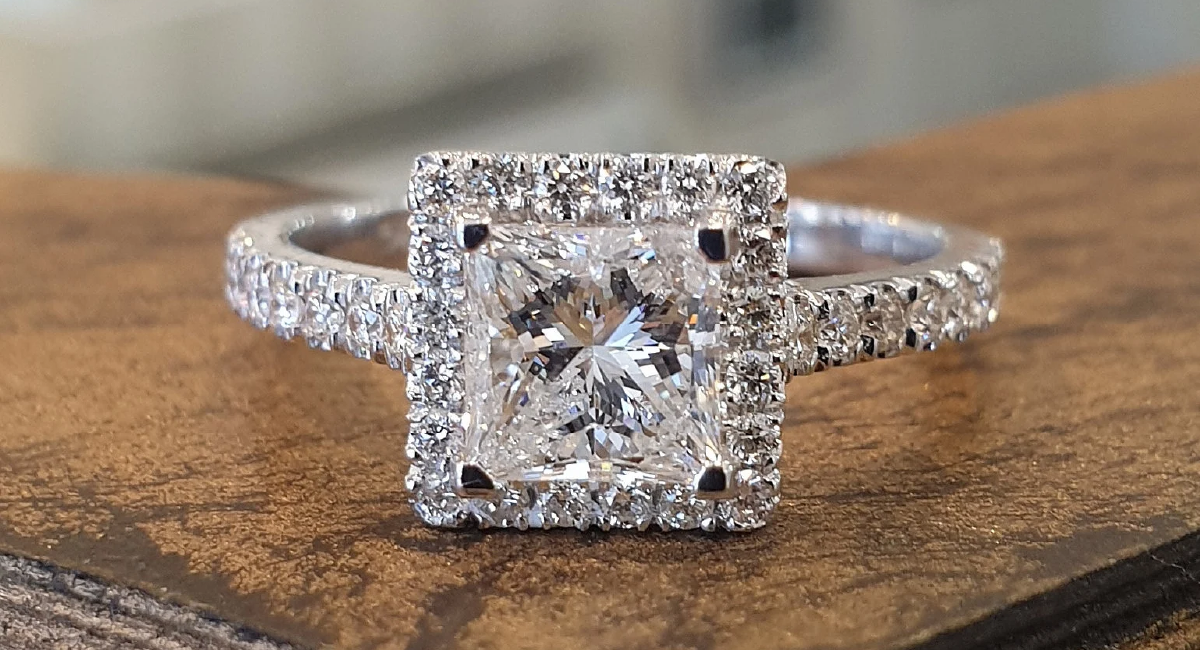
Asscher cut diamonds look best with white gold and platinum bands because they enhance the brilliance of the Asscher cut. Simple small diamond accents in a pave setting or a gypsy set band look great. You can also opt for Asscher cut diamond in a Halo setting where the central diamond is complemented by a fancy colored diamond like a green diamond or maybe another precious stone.

When it comes to fancier setting variations designs in the band itself are our favorite. Small engravings on the band look minimal and do not take the spotlight away from the diamond itself.

Another few setting variations you can go for are old vintage art deco designs. Since the Asscher cut was the highlight of the Art Deco era, these designs complement the cut beautifully. The three diamond ring with trapeze-shaped diamond accents is a great design. 

Another famous design from the Art Deco age would be the Jessyca ring design which features a big Asscher cut Centra diamond, multiple types of diamond accents, and an intricate grain design on a platinum band.

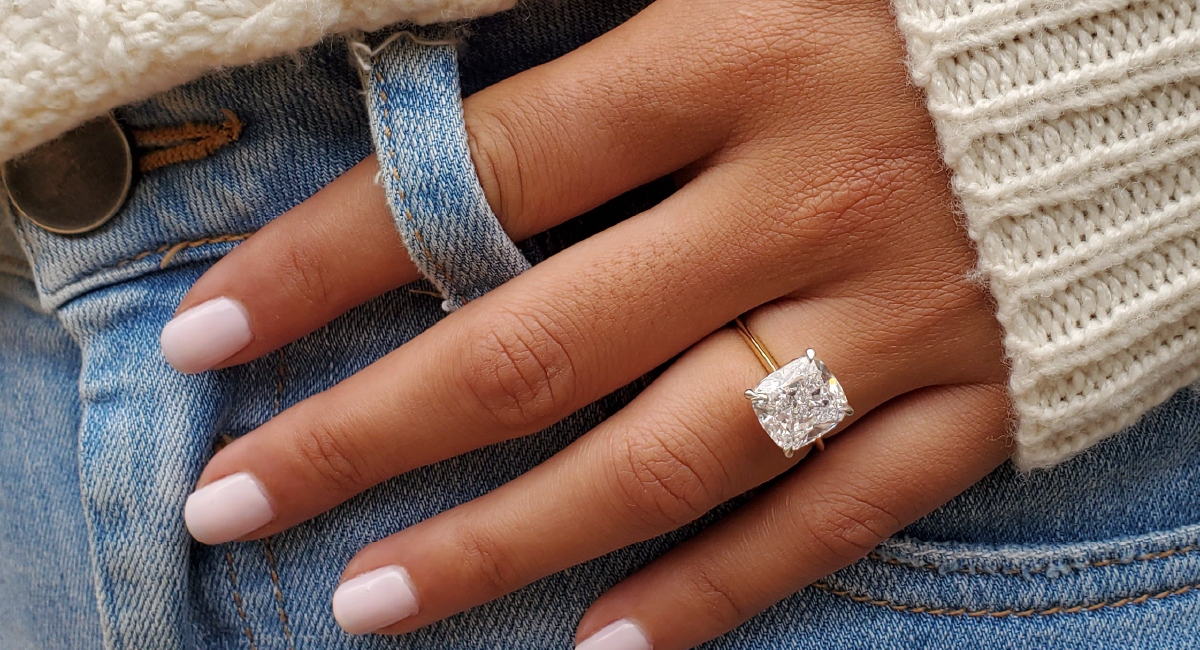
Wearing an Asscher cut diamond ring on finger adds an air of timeless elegance, as the distinct facets of the diamond catch the light and exude a subtle yet captivating sparkle.

We at Loose Grown Diamond sell best-price asscher cut diamonds and provide GIA/GCAL and IGI certification for authenticity. If you’re unsure about the pricing, you can utilize our diamond price calculator for assistance. Explore unparalleled discounts using our exclusive promo code while enhancing your diamond shopping journey.

[ls_products_byid id=’1924846,133146,990723,133116′ btn=’true’ btn_text=”SHOP NOW” btn_link=”https://www.loosegrowndiamond.com/build-a-ring/?yith_wcan=1&filter_shape=asscher-cut&query_type_shape=and”]

Conclusion

Asscher cuts are vintage diamond cuts that are still thriving in the modern world. They are elegant, sophisticated, and antique which has quite a high appeal to the contemporary crowd. Lab grown diamonds sweeten the pot further as they are natural diamonds grown in man-made conditions that yield the same results. It is impossible to tell the difference between earth-mined diamonds and synthetic diamonds without their grading certificate.

They make a great substantial, ethical and amazing substitute to natural diamonds. These budget-friendly diamonds look great in a wide variety of settings. They are less bound to get damaged or chipped which makes them perfect candidates for brides with an active lifestyle.

FAQs

Are Asscher cut diamonds suitable for engagement rings?
Yes, Asscher cut diamond engagement rings are popular choices. Their vintage-inspired look and elegant appearance make them a timeless option for those seeking a classic yet sophisticated ring.

Can Asscher cut diamonds be customized in terms of settings?
Asscher cut diamonds can be set in a variety of settings. Customization allows you to create a unique and personalized engagement ring or jewelry piece.

Does Asscher cut diamonds sparkle?
Yes, Asscher cut diamonds do sparkle, but their sparkle is more subtle and elegant compared to brilliant cuts like round or princess cuts.

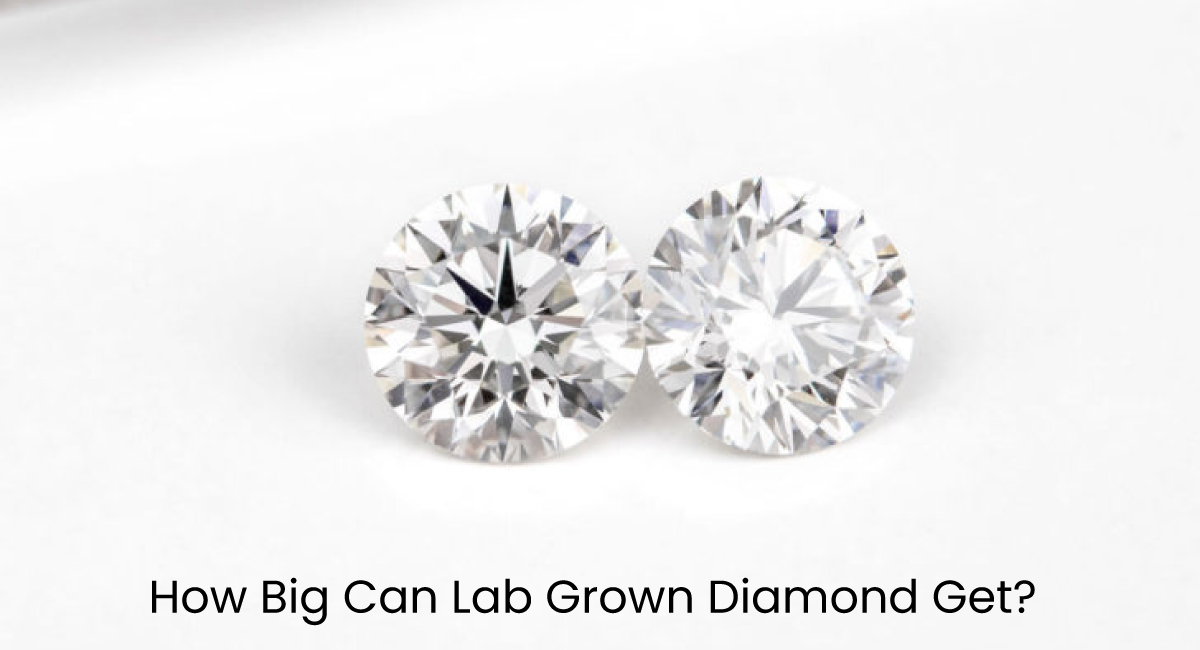
How Big Can Lab Grown Diamond Get?

Diamonds are always going to be a woman’s best friend. From purchasing them for no specific reason to celebrating the most important days of one’s life with the gems, diamonds are going to stay in trend and people’s hearts for as long as we have occasions to celebrate. 

But are people aware of the impact that the mining of diamonds creates on our planet’s internal environment and ecosystem? Most diamond shoppers tend to simply concentrate on the bling and sparkle that diamonds bring along and ignore the harm it causes to our planet since the process of mining diamonds is in reality highly detrimental for our planet.


Digging into the earth for miles to get access to a handful of diamonds creates many disadvantageous side effects to our planet’s natural resources since the soil, water, and air surrounding the site from where diamonds are mined get heavily polluted. A large amount of soil and other natural resources have to be removed from mining sites which leads to a massive depletion in natural land resources.
But as mentioned before, diamonds share a special relationship with most people wherein the attachment between them is hard to maim. And hence, scientists and diamond jewelers have made an excellent effort at battling this issue wherein a new type of diamonds have been invested.

Grown in labs, the lab-grown diamonds, have minimal to no impact on the earth’s environment and are the perfect choice for customers who love our planet and diamonds alike! 

How Lab-Created Diamonds are made

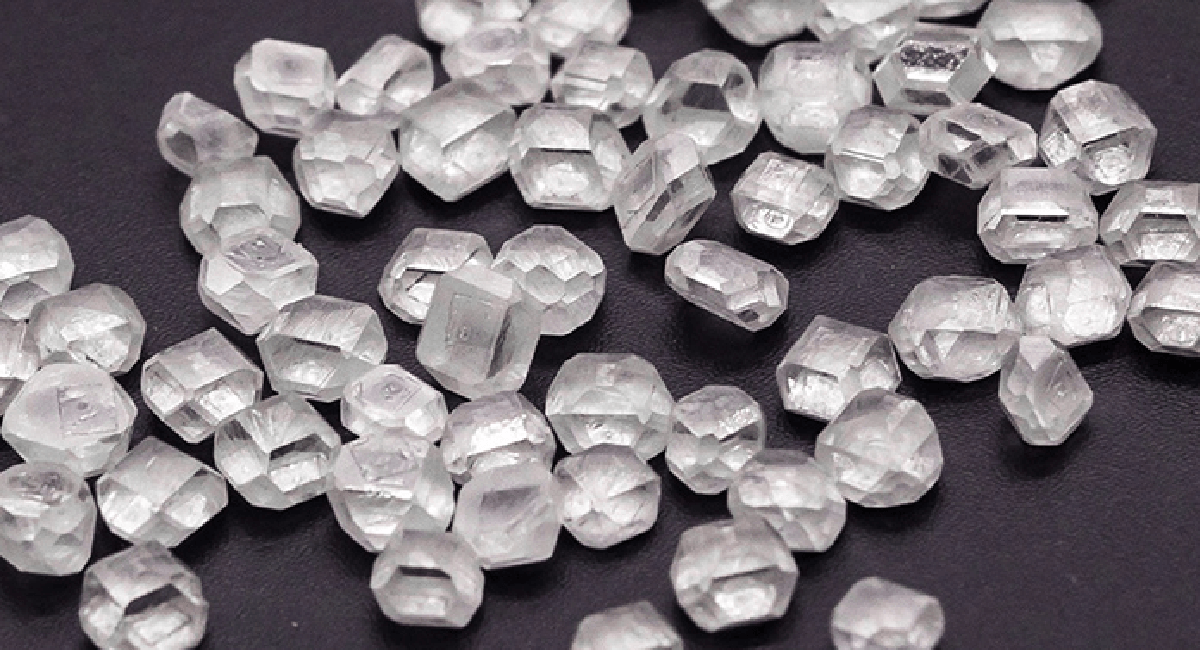
Lab-created diamonds are diamonds that resemble real stones based on most of the aspects such as the optical, physical, and chemical properties. The only major difference between the two is their source of origin. 

Real diamonds are created under extreme conditions inside the earth’s crust and take a time period of around millions of years to form. The stimulus needed for their creation is naturally provided by our planet and we are merely discovering their existence by digging and mining 

Lab-created diamonds however are made by men through the process of replication in a controlled environment of the earth’s natural growth processes. This leads to the formation of pure carbon raw diamonds that are practically identical to the earth mined diamonds.

The grading of such diamonds is also done by the same expert and reputable gemological institutes that provide their services for the grading of natural diamonds.

Methods for Growing Lab-Grown Diamonds

Two methods can be used to create lab-grown diamonds. 

Methods for Growing Lab-Grown Diamonds

Chemical Vapor Deposition (CVD)

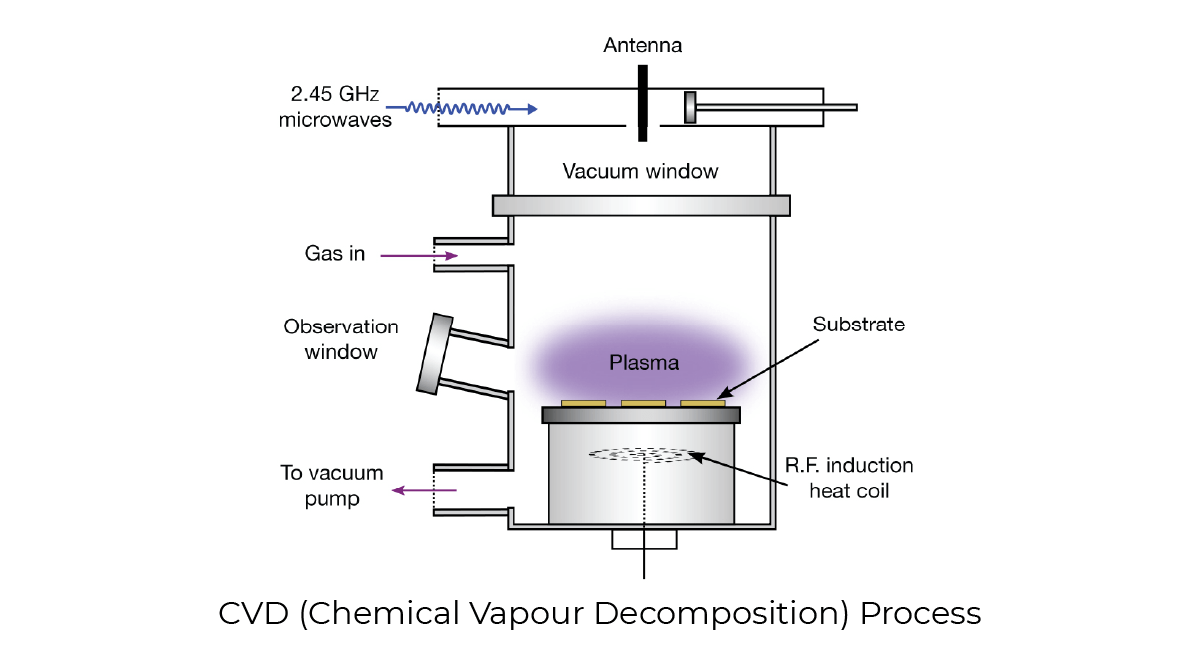
Through this method, natural diamond particles are used to build a diamond wherein the particles are positioned in a CVD machine. The machine is then filled with carbon gas and the temperature is hiked to extreme limits for the particles to get heated. The high temperature and pressure from gas lead to the breaking down of the carbon molecules in the particle. Then the molecules vaporize and bind to the diamond seed forming various layers until a larger diamond of the desired size and carat weight is formed. 

High-Pressure High Temperature (HTPT)

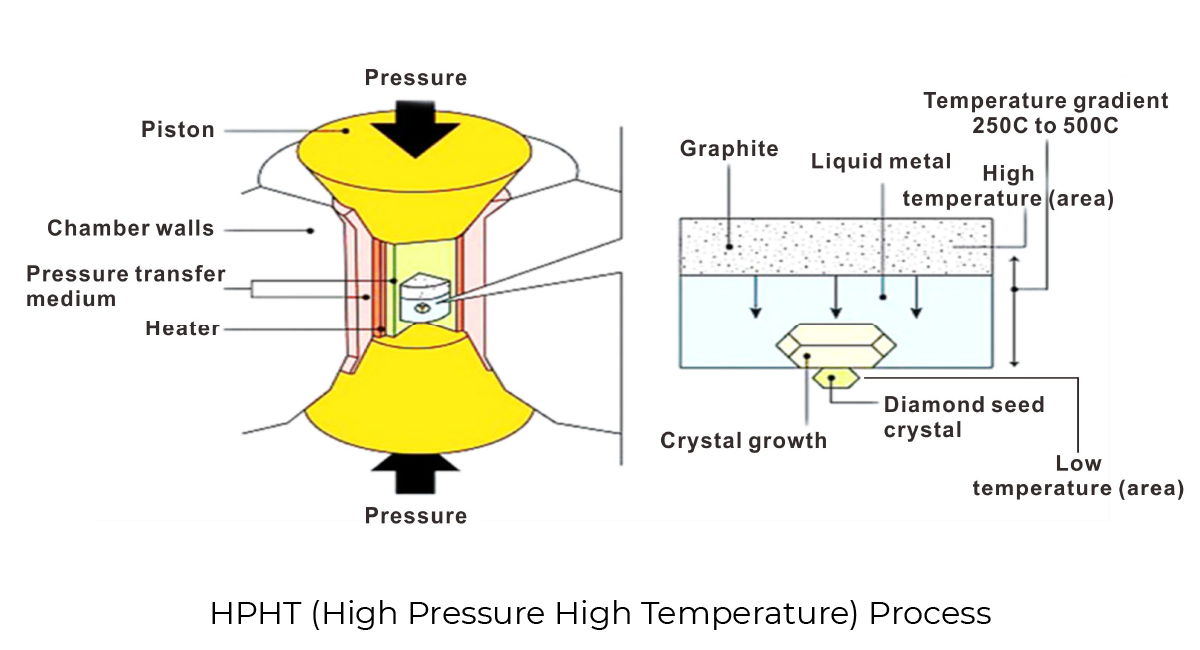
This particular technique uses an HPHT machine and diamond seed to form a lab-grown diamond. The HPHT machine is filled with pure carbon and extreme heat with pressure is applied to melt the carbon. The rough diamond starts forming around the seed and eventually forms enough amount according to the desired size and carat weight. 

Through either method, the diamonds grown are rough diamonds that are cut, polished, and mounted on bands by various cutters and designers to form the different forms of jewelry. 

Do the Methods of Growing a Diamond Affect its Size?

If we talk about the most commonly used process to grow a diamond it is High-Pressure High Temperature (HPHT). It has been around for the longest. However, Chemical Vapor Deposition (CVD) is a method that has been termed to be more effective and has been in the market and demand for quite some time.

At once the most reliable method was considered to be HPHT as it could make your diamond grow exceedingly large, that is up to 10 carats. On the other hand, let us also remind you that the market for lab-grown diamonds with their technology is quite competitive and changing every day.

how big lab grown diamond 

Through the recent years, CVD as a method has grown a great deal of market reputation. It has done this by also increasing its production proportion range, it went from producing 6-carat diamonds to 9-carat diamonds. Even the largest lab-grown diamond has a 155-carat disc which was done through CVD.

In some ways HPHT does have an edge over CVD, that is because of the carat size both the processes make. The size that HPHT produces is a whooping 10 carat, and in front of it, a maximum 9-carat diamond produced by the CVD process is something that makes it fall back a little.

Though if we look at any other factor, both methods are incredibly effective to make a large lab-grown diamond. Keeping in mind the size producing capabilities, let us remind you it only seems to be growing with advancing technology.

Given how technology is growing, there is no margin as to how large a lab-grown diamond can get. This also means that buyers will have a lot of sizes to pick from and that is a plus in itself. Lastly, the size of the lab-grown diamond largely depends on the time invested to grow it. 

Large Diamonds vs Small or Medium Diamonds: What takes Longer to Grow?

The time taken to grow a lab-grown diamond can be a few weeks, on the other hand, natural diamonds take millions of years. The time taken in the lab for a diamond to grow however is influenced by the technique used for its growing.

Large Diamonds vs Small or Medium Diamonds
HPHT is a technique that uses an extreme amount of pressure to grow a diamond. The pressure applied shall be altered as and when the size of the diamond grows. What it looks like visually is like trying to compress a tiny pebble. However, in this process, that pebble grows into a larger and larger rock.

To grow a large diamond is a very systematic process. And the lab in this setting is the perfect environment to include the process of this growth. A medium-size diamond in the lab will relatively take only a few weeks to grow, however, a large diamond needs more time and attention (a few months). 

However, all of this makes one thing clear: there is a huge array of options in terms of size when you go to choose a lab-grown diamond. 

Also Read: why CVD diamonds pass tester and HPHT can’t?

[blog_page_btn title=”Buy Lab Grown Diamonds” url=”https://www.loosegrowndiamond.com/inventory/”]

Conclusion

Hence, lab-created diamonds are the most suitable option for people who want to avoid leaving a carbon footprint on our planet but still want the effect and brilliance of a real diamond. The lab-grown diamonds offer the same amount of durability and genuineness as the real ones do and so can be chosen by customers to decorate their outfits on special occasions including something as special as an engagement or a wedding, with the bonus being the much lower prices at which the lab-grown diamond jewelry is available at. 

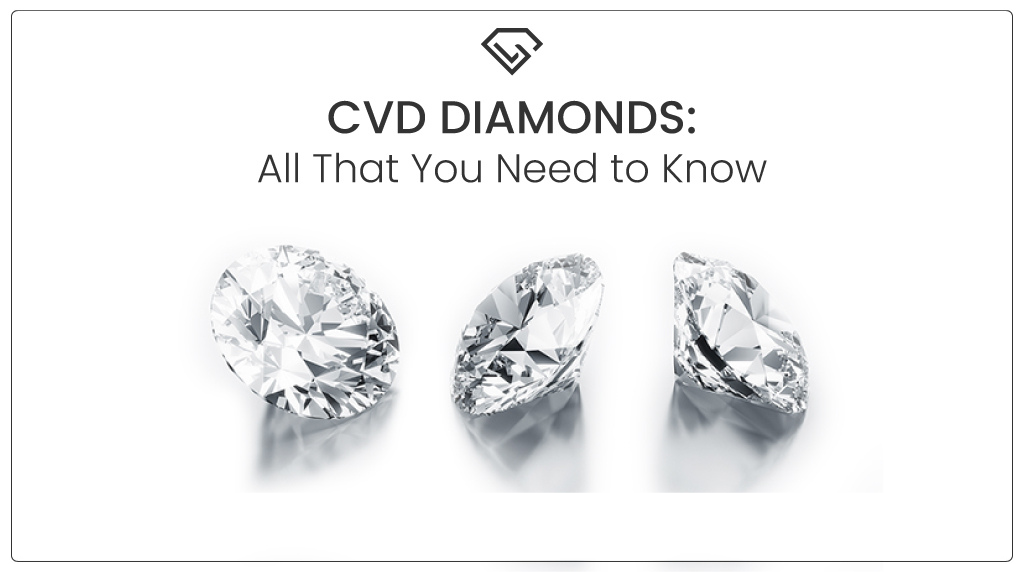
CVD Diamonds: All That You Need to Know

CVD diamonds, This come may be met with a blank if you mention it to someone outside the diamond industry. There are not a lot of people who know what the acronym stands for or what exactly these diamonds look like. This is unfortunate because, for anyone who wants a diamond without the ethical and environmental issues that come with mined diamonds, these stones are perfect. Not to mention the fact that they caused a fraction of what natural diamonds do.

To help you understand the manufacturing process, properties, cost, and a lot more about these diamonds, we have curated this handy guide. Before buying a CVD diamond ring or an engagement ring, it might be worth looking into lab grown CVD diamonds.

CVD is an acronym for chemical vapor deposition. Essentially, it refers to the process in which certain materials are deposited when a gas acts upon a substrate. The process involves some chemical reactions that lead to the deposition of the material.

What is CVD Diamond?

Diamonds can be classified into two types depending on the formation process. They formed under the earth’s surface and took billions of years of heat and pressure to form, they are known as natural mined diamonds.
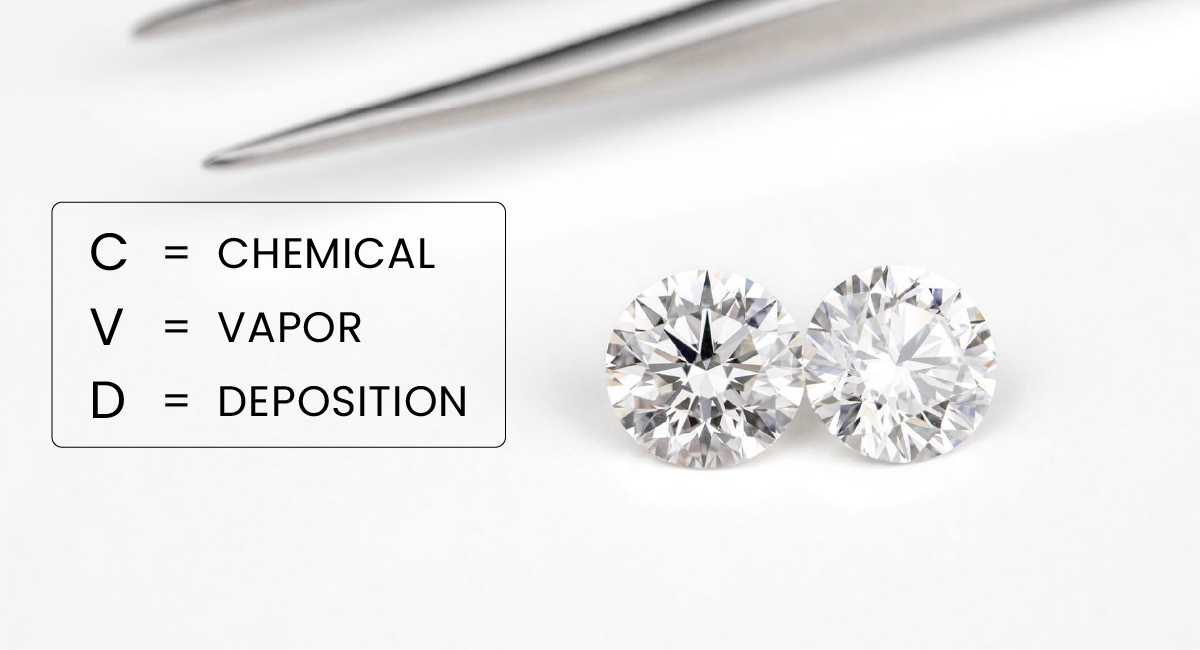
what is cvd diamond

On the other hand, man-made diamonds are formed on the surface of the earth, and as the name indicates, synthetically. One type of man-made or lab-grown diamond is the diamond’s CVD, which is made in labs by using a special process called chemical vapor deposition.

Characteristics of a CVD Diamond

CVD diamonds mirror the precise attributes of natural diamonds, sharing identical internal structure, chemical composition, and captivating luster. Just like their natural counterparts, CVD diamonds boast remarkable durability, scoring a perfect 10 on the Mohs scale of hardness, and exhibit stunning brilliance and sparkle.

Although distinguishing a lab-created CVD diamond from a natural diamond of similar quality is nearly impossible, it’s crucial to be aware that CVD diamonds may sometimes exhibit less desirable traits such as brown tints and internal graining, necessitating post-growth treatment. In comparison, HPHT lab-created diamonds tend to be of higher quality than CVD diamonds.

[blog_page_inventory shape=”Oval,Emerald,Princess,Radiant,round,pear,cushion,kite,rose cut,old mine,marquis,hexagon” carat=”1.80,3.10″ cut=”0,4″ color=”0,10″ clarity=”0,11″ dtype=”CVD”]
[blog_page_btn title=”Buy Lab Grown Diamonds” url=”https://www.loosegrowndiamond.com/inventory/”]

Similar to natural diamonds, CVD diamonds undergo grading based on cut, color, clarity, and carat weight. Despite being engineered by humans, CVD diamonds share vulnerabilities with natural diamonds, potentially acquiring color tints and internal flaws during growth. Finding flawlessly clear CVD diamonds is exceptionally rare – some may be heavily included and poorly colored, while others may be nearly colorless with only minuscule imperfections, much like their natural counterparts. Opt for diamonds graded between SI1 and VS1 for clarity, and D to F for color, ensuring top-notch quality and value for your investment.

Remarkably, even seasoned gemologists struggle to differentiate between CVD diamonds and natural diamonds because CVD diamonds possess identical chemical, physical, and optical properties, including the same flaws. When purchasing a CVD diamond, its origin is specified on the GIA, GCAL, or IGI certification. Beyond this certification, specialized laboratory equipment is necessary to distinguish a CVD diamond as a product of human creation.

Chemical Vapour Deposition (CVD) Diamond Making Process:

  • Diamond Seed Selection:
    • Choose a thin diamond seed, typically a 300-micron thick, 10x10mm slice known as a ‘diamond seed.’
    • Thoroughly clean the diamond seed to prevent crystallization of trace elements or imperfections during growth.
  • Sealed Chamber Setup:
    • Place the cleaned diamond seed into a sealed chamber.
    • Heat the chamber to approximately 800°C.
  • Carbon-Rich Gas Influx:
    • Flood the sealed chamber with carbon-rich gas.
    • Ensure a completely sealed chamber to prevent the entry of other gases, disrupting diamond growth.
  • Ionization and Attachment:
    • Under intense heat, the carbon-rich gas ionizes, breaking down into pure carbon molecules.
    • These pure carbon molecules attach to the original diamond seed.
  • Crystallization Process:
    • Repeat the process, allowing the carbon molecules to bond and build upon the existing diamond seed.
    • Continue until a fully formed, rough diamond is created.
  • Efficient Growth:
    • CVD diamond creation employs a highly specialized scientific process perfected over decades.
    • Adapts the chemical vapor deposition process, commonly used in the semiconductor industry, to efficiently produce jewelry-quality diamonds in two to four weeks.
  • Potential Traits and Post-Growth Treatment:
    • Rapid CVD diamond growth may lead to less desirable traits such as graining, spotty inclusions, and brown tints.
    • Post-growth High-Pressure High-Temperature (HPHT) treatment can remove or improve these traits, enhancing the diamond’s overall appearance but may cause milkiness.
    • Ideal to seek a CVD diamond without post-growth treatment, as indicated on the diamond’s certificate.

CVD vs HPHT Diamonds

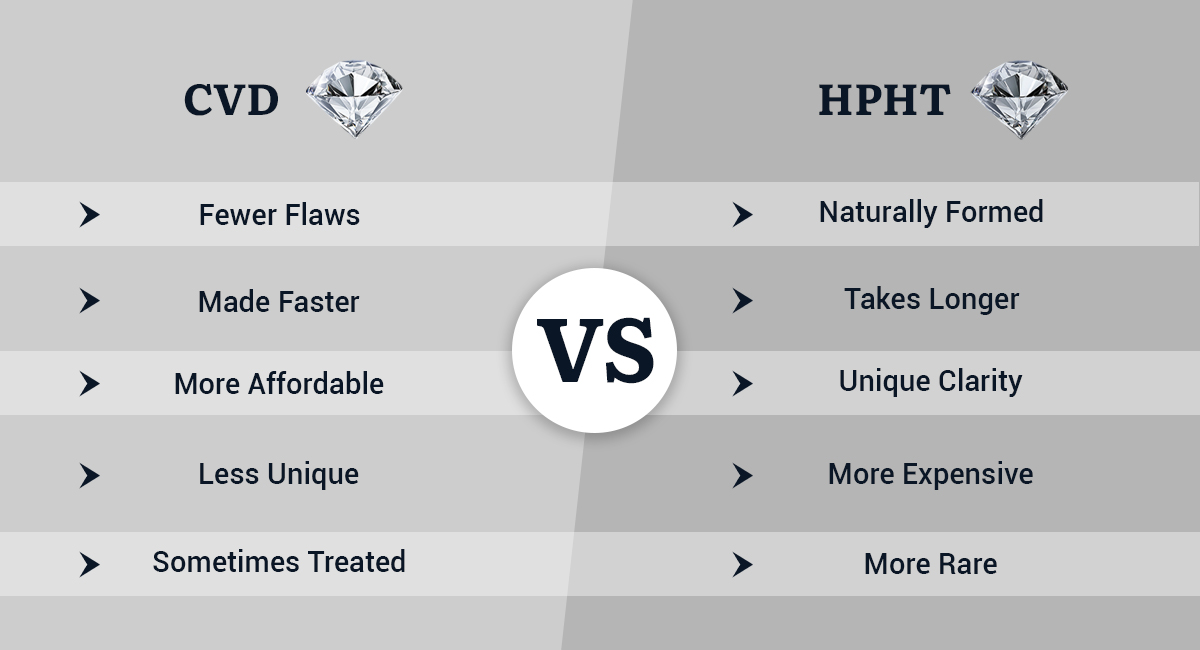
When it comes to creating diamonds, there are two main methods: HPHT (High-Pressure High Temperature) and CVD (Chemical Vapour Deposition).

HPHT diamonds mimic the natural diamond formation process that takes millions of years in the earth’s depths, using high pressure and temperature. This method, unlike CVD, doesn’t involve gas. While both HPHT and CVD diamonds take only a few weeks to form, HPHT requires more energy. Generally, experts note that HPHT diamonds tend to have higher quality and less often need additional treatments after growth.

The key dissimilarity between rough CVD and HPHT diamonds lies in their shapes. CVD diamonds grow in a cubic shape, whereas HPHT diamonds take on a cuboctahedral form. Although distinguishing between the two requires a trained eye, this difference in structure is noteworthy.

Some laboratories adopt a combined approach, starting with the less energy-intensive CVD process and finishing with HPHT. This hybrid method is chosen because HPHT can enhance clarity and color. Importantly, chemically, physically, and optically, both CVD and HPHT diamonds are identical to natural diamonds.

Are CVD Diamonds Affordable?

In the realm of diamonds, affordability is a relative concept. Generally, lab grown CVD diamonds come with a lower price tag compared to mined diamonds—around 20–30% less.

For the amount you’d invest in a 1.5-carat mined diamond, you could opt for an upgraded 2-carat CVD diamond instead. This cost difference can be attributed to three main factors:

  1. The substantial expense is tied to excavating deep holes in the Earth.
  2. The extensive supply chain involved in dealing with mined diamonds.
  3. The historical manipulation of pricing within the industry.

The journey of natural diamonds involves intricate processes: locating and extracting them from the ground or seabed floor, shipping them to cutters, wholesalers, and jewelry fabricators, and distributing them through various channels, including independent retailers and large diamond chains with hefty rents and advertising budgets.

In contrast, CVD diamonds sidestep much of this complexity, resulting in a more budget-friendly price. Despite their lower cost, it’s crucial to recognize that CVD diamonds still hold significant value—they are, after all, diamonds in every sense of the word.

If you’re curious about specific pricing comparisons for CVD and other lab-grown diamonds, you can explore how Clean Origin stacks up against other brands below for a clearer understanding of what to expect in terms of cost.

Frequently Asked Questions (FAQs)

Why is it Difficult to Synthesize Diamonds in the Lab?

Diamonds are made up of carbon, just like coal and graphite. The only difference between these materials is the arrangement of the carbon atoms command which is also known as the crystal lattice. It is difficult to synthesize CVD diamonds because graphite is one of the most stable forms of all types of carbon. That is why diamonds also occur very rarely in nature.
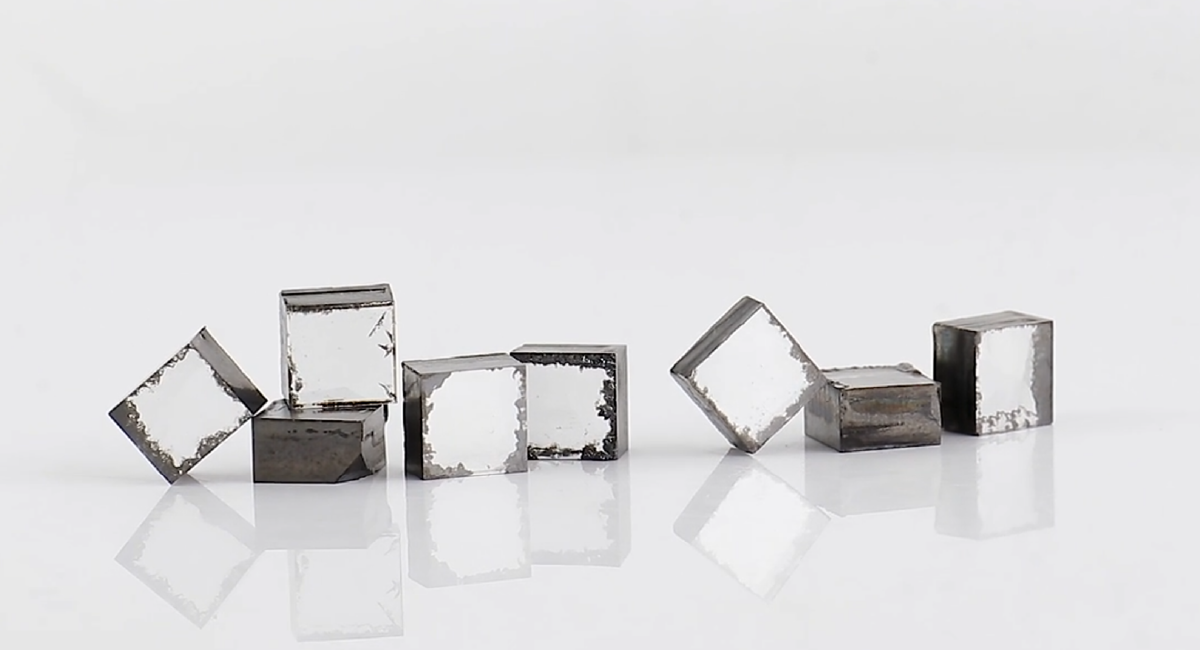
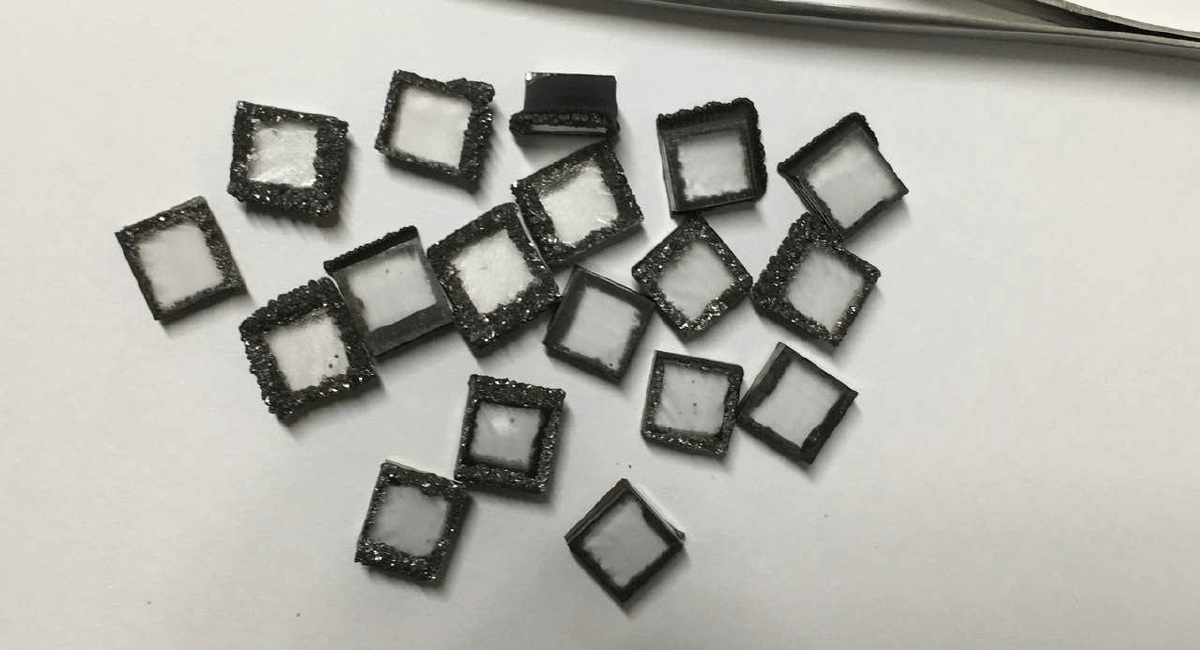
rough cvd diamonds

Earlier, in the 1950s, graphite was converted into diamonds using the high pressure and high temperature technique, also known as HPHT. This was a very difficult way to synthesize diamonds in the lab as the stability of graphite would prevent the formation of diamonds using this technique. However, with the introduction of the CVD technique, it was possible to deposit carbon atoms on a surface using a gas that contained carbon.

If proper techniques are used, it is possible to enhance the growth of diamond crystals and suppress the growth of graphite crystals.

How are CVD Diamonds Made?

This technique involves using atomic hydrogen on graphite to turn it into diamonds.

Hydrogen is usually found in nature as hydrogen molecules, which are formed by combining two atoms of hydrogen together. To make CVD diamonds, we first need to break the molecular hydrogen into atomic hydrogen. This is done by using a gas activating agent, which could be an intense plasma or a hot filament.

After hydrogen gas is dissociated into its atoms, the next step is to slowly apply it to the substrate, that is graphite. Hydrogen selectively etches the surface of graphite and breaks up the double bonds. This converts the graphite bonds into diamond bonds.

This is done by first placing a thin seed diamond in a sealed chamber and subjecting the seed to high temperatures, usually around 800 degrees Celsius.

After that, hydrogen, or a mixture of carbon-rich gases which includes hydrogen and methane, is introduced into the chamber. Using the methods stated above, the gases are ionized and their molecular bonds are broken. This results in the attachment of pure carbon to the diamond seed. As more and more carbon atoms are formed, they develop atomic bonds with the same diamond.
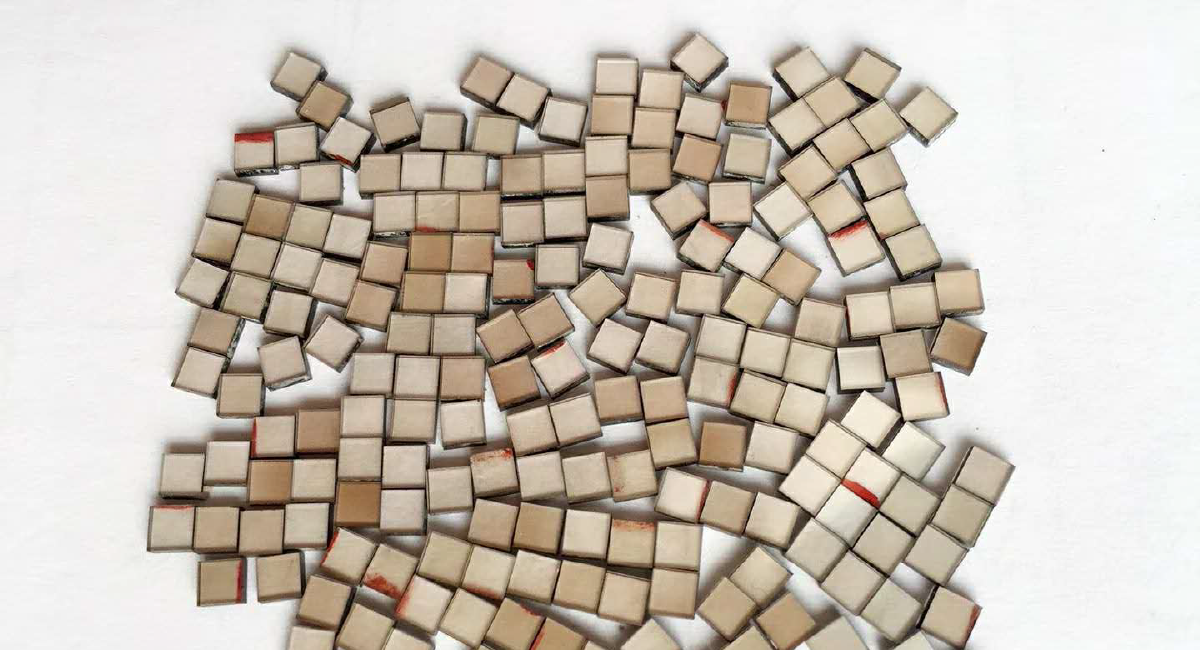
How are CVD Diamonds Made

What are the Substrate Materials that can be Used?

Diamond can be deposited on various types of materials. Most of the time the seed used is a piece of the diamond itself, but other materials like tungsten, silicon, molybdenum, silicon nitride, silicon carbide, quartz glass, cemented carbide, etc. Can also be used. The most important feature that the substrate material must have is that it should be able to withstand high temperatures and when it is attacked by the activated gas, it should not dissolve the deposited carbon.

Why are CVD Diamonds Brown?

The brown color of CVD diamonds can be attributed to carbon inclusions within the stone that may be non-diamond in nature. These inclusions may be formed during the process of treating the substrate with carbon gases.
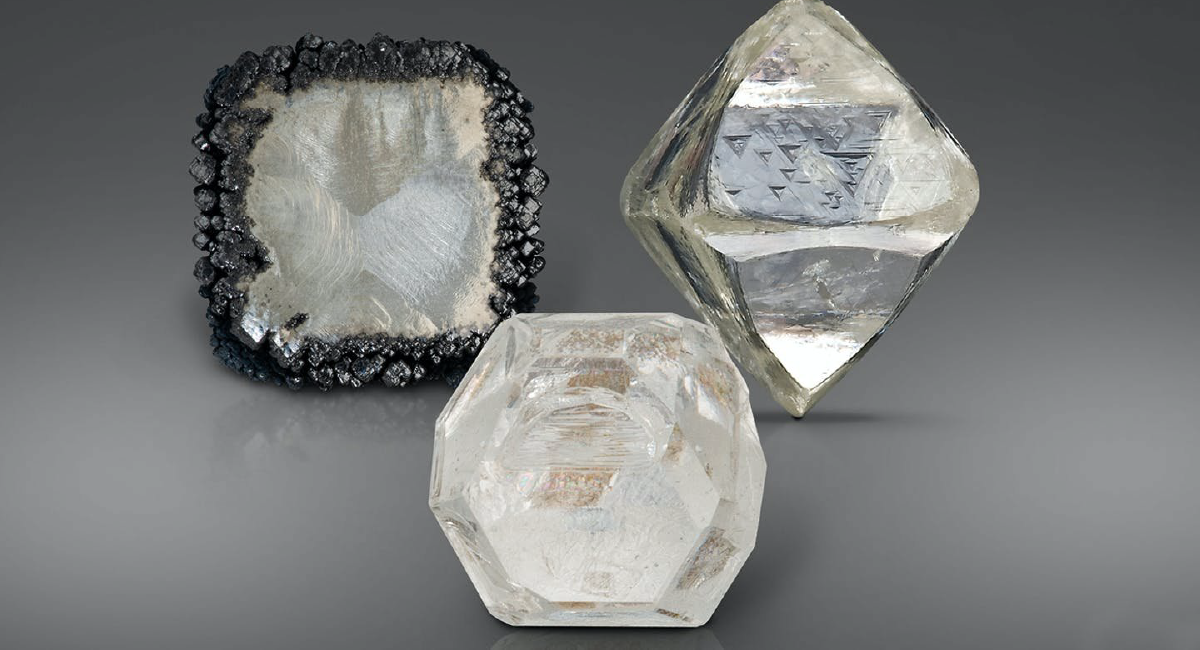
cvd diamonds are brown
Moreover, it is also believed that the brown coloration can also be a result of internal defects such as dislocations within the stone. However, unlike natural diamonds, the brown discoloration in CVD diamonds is not due to plastic deformation, as is the case when it comes to natural diamonds.

According to the CVD diamond review by GIA, it is possible that the brown hue in CVD diamonds is seen in the case of mass-produced CVD diamonds which are manipulated by adding nitrogen or oxygen to the gas mixture. However, this defect is easily correctable by using high pressure and high-temperature treatment after the formation of the diamond.

How to Identify CVD Diamonds?
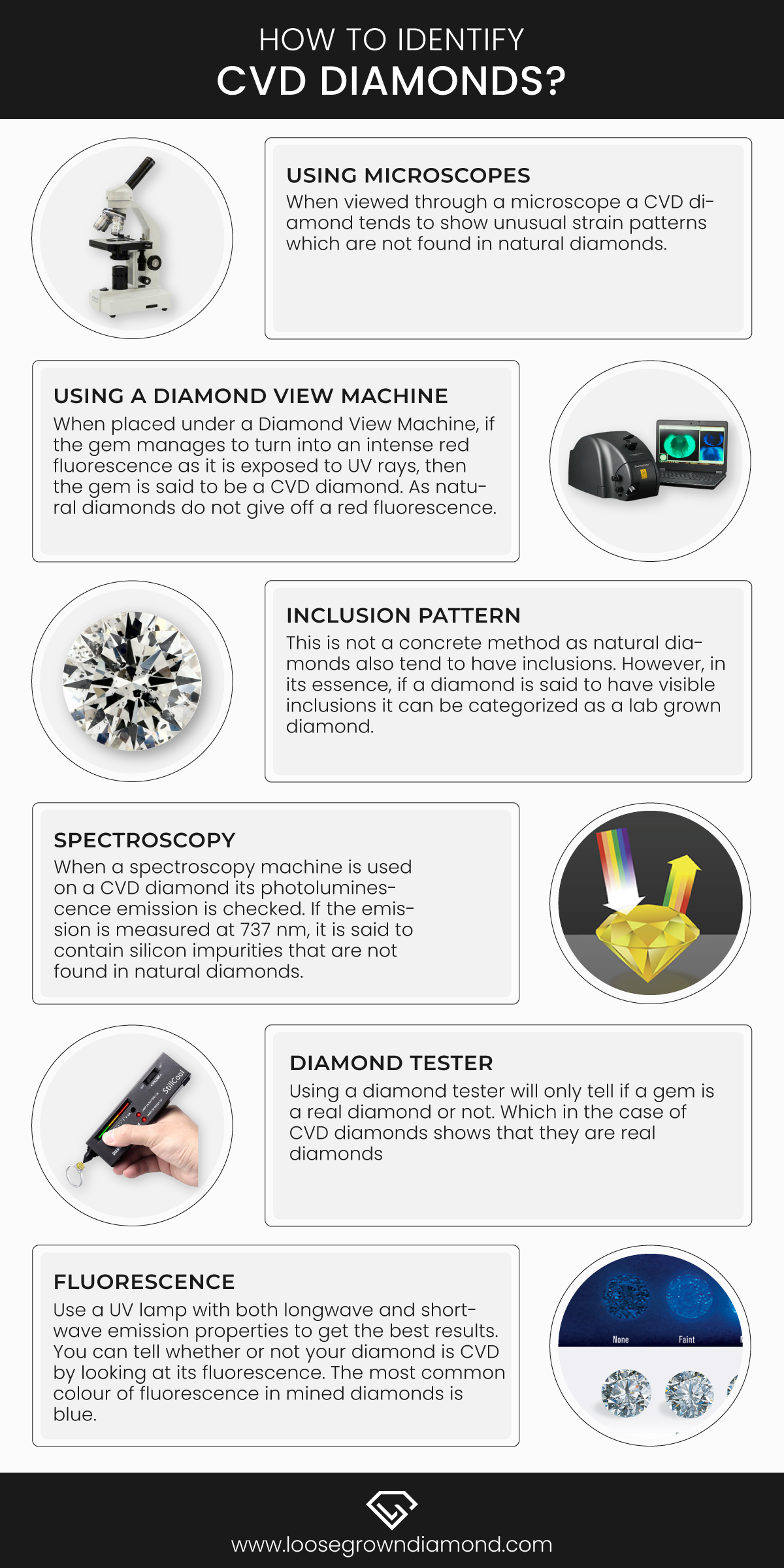
identify CVD diamonds

Here are seven ways to identify CVD diamonds:

  1. Using microscopes – If you place the diamond under the microscope, you will see that CVD diamonds have characteristic strain patterns which are different from the patterns seen in natural or mined diamonds.
  2. Using a Diamond view machine – This machine uses high-energy UV radiation to identify synthetic diamonds from natural diamonds. When placed under this machine, CVD synthetic diamonds show a strong red fluorescence, which is not visible in naturally formed diamonds.
  3. Inclusion pattern – Inclusions, especially when seen under a microscope, are present even in natural diamonds. However, the difference is that in CVD diamonds, these inclusions are less dispersed compared to natural diamonds.
  4. Spectroscopy – This process refers to placing the diamonds under a spectroscope instrument. These instruments usually emit light at 737 nm. When exposed to this light, CVD diamonds show strong photoluminescence emission due to the presence of silicon in them, whereas this is not seen in natural diamonds.
  5. Diamond tester – This instrument is used to check if the stone in your hand is a diamond or not, but it cannot maybe reveal whether it is a natural diamond or a man-made one. The dual electronic diamond tester uses thermal and electrical conductivity to check whether a stone is a diamond or not.
  6. Fluorescence – Use an ultraviolet lamp that has both longwave and shortwave emissions. If the diamond shows a fluorescence of blue, it is confirmed that it is not a CVD diamond. Mined diamonds can show fluorescence in many colors, but the most common is blue.

Also, it should be noted that natural colorless diamonds show fluorescence typically under long-wave ultraviolet light, whereas the fluorescence becomes weaker when seen under short-wave ultraviolet light. On the other hand, synthetic diamonds are reversed, they show the strongest reaction under shortwave light.
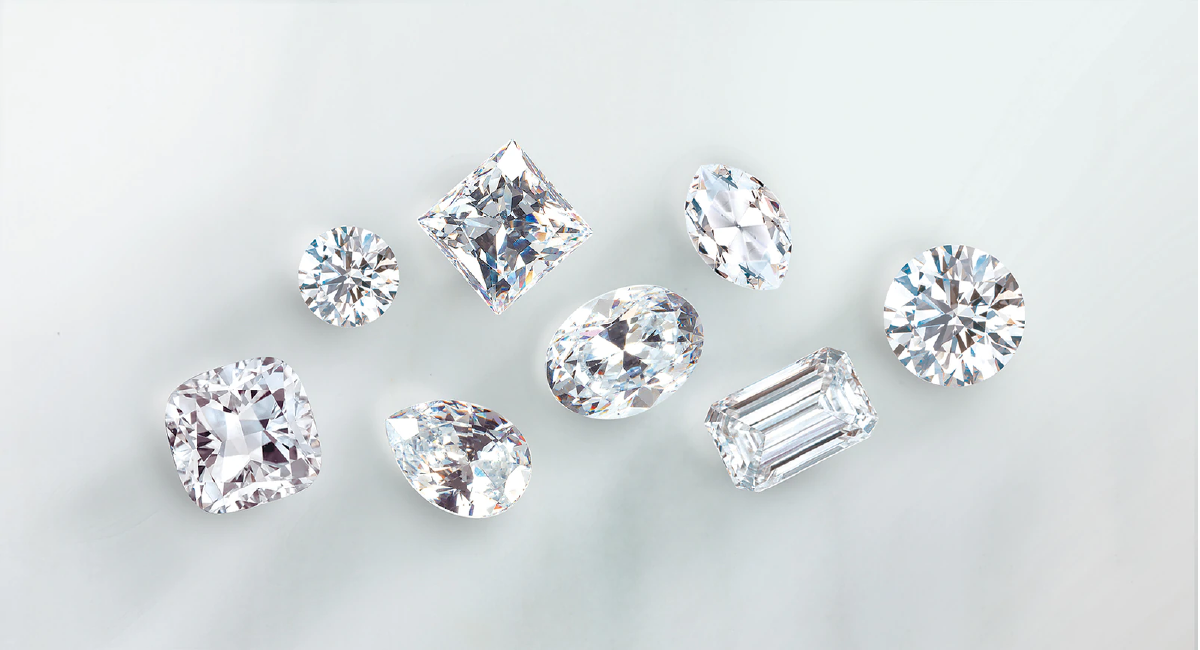
fancy shape cvd diamonds
Moreover, CVD diamonds show dark brown, almost red fluorescence under long-wave UV, which becomes moderately strong and turns yellowish-green in color under shortwave light. This is a positive confirmation of the presence of a synthetic diamond.

Do CVD Diamonds test the same as Real Diamonds?

Really diamonds have the same crystal structure as natural diamonds, and the chemical composition of both types of diamonds is the same. When we use the term synthetic diamonds or manufactured diamonds, these terms do not actually refer to the diamonds themselves, but rather the process of manufacturing them. Chemically speaking, the lab diamonds are indistinguishable from real diamonds.

However, there are some chemical properties that may be a little different. For instance, the testing methods mentioned above, like the inclusion pattern, fluorescence, and spectroscopy may show some difference between the two types of diamonds. However, this does not mean that the stones behave differently entreated two chemical, thermal, electrical, or any other kind of treatment.

What to Look for When Buying CVD Diamonds?

When you’re buying, or for that matter any type of lab ground diamond, it is necessary that you take some precautions to get the best value for your money. There are two things you need to remember before buying a CVD diamond.

The first is to avoid diamonds that have a brown color hue. There are many concede attacks that can cause the appearance of brown color in CVD diamonds. This affects the optical properties of the diamond. Look at the two pictures shown below.
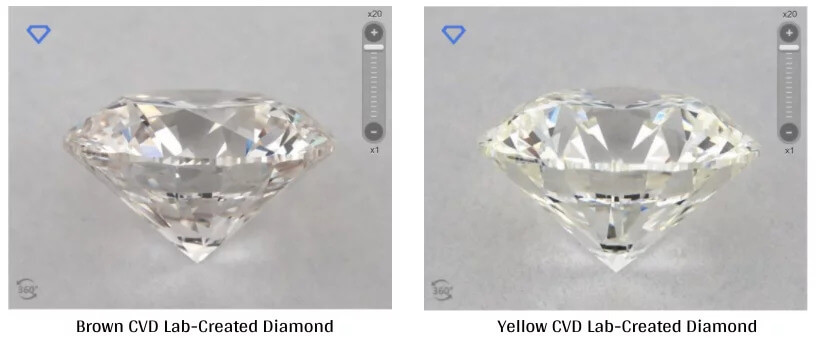
brown vs yellow cvd diamond

The brown hue of the elaborated diamond is usually apparent when you see the diamond in the profile view. When you compare the two diamonds above, you will be able to see the difference quite clearly. The 2.03 H VS1 CVD diamond looks brown, while the 1.24 H VVS1 diamond appears yellow, just like a natural diamond.

It is recommended to avoid buying diamonds that have this hue or to go up in color to D, E, or F to minimize the appearance of the brown hue.

The second thing you need to consider is strain-induced birefringence, which gives the lab-created diamond a fuzzy appearance. This happens when there is a mismatch between the crystal lattices when the diamonds are grown layer by layer.

The result is that the diamond looks fuzzy and has strain lines.
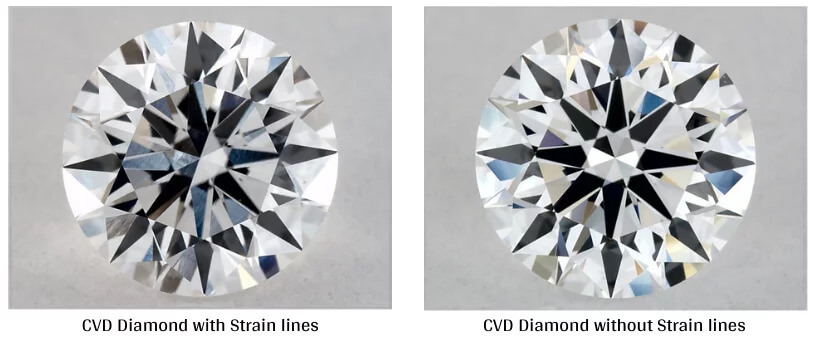
cvd diamond with strain lines

It is recommended to avoid this type of diamond entirely. It should also be noted that train lines are not evaluated when grading the diamond for clarity, which is why sometimes they can still receive a vs1 grading even if the diamond is fuzzy.

What is the Cost of CVD Diamonds?

It is impossible to make a sweeping statement about whether or not CVD diamonds are costly or not, but it is true that they generally cost less than natural diamonds, usually, 20 to 30% less.

The amount of money you will pay for a 1.5-carat natural diamond can easily fetch you a 2 carat CVD diamond. This is because of several reasons. Mined diamonds required more physical labor, a long supply chain, and manipulation of pricing to ensure regular supply and demand. However, for CVD diamonds, this is not true. This is not to say that CVD diamonds are somehow cheap or less valuable, it is just that they are less expensive compared to their mined counterparts.

You can get CVD diamonds at the best price on loosegrowndiamond.com where their prices start from $300-$500.

What is the Temperature at Which CVD Diamonds Grow?

The temperatures at which optimum growth is obtained are between 700 to 900 degrees Celsius. It is also possible to grow diamonds at lower temperatures, but in this case, the growth rate will be extremely slow.

Are all Lab Grown Diamonds CVD Diamonds?

No, all lab-grown diamonds are not CVD diamonds. CVD is a relatively recent process and before it was introduced, lab grown diamonds were created using the HPHT approach. However, in the modern world, CVD is a more effective method for growing diamonds in the lab.

Where to Buy CVD Diamonds?

You can buy CVD diamonds at loose grown diamond worldwide shipping and a guarantee for all of their products. Moreover, we are a CVD diamond manufacturer and sell diamonds at wholesale prices so you are guaranteed to save a lot of money as well.

Whether you should choose a natural diamond or a CVD diamond is a question you should ask yourself before buying any kind of diamond jewelry. After all, of course, way less and does not have any of the complications that natural diamonds do.

[blog_page_btn title=”Buy Lab Grown Diamonds” url=”https://www.loosegrowndiamond.com/inventory/”]

What are the Benefits of Buying CVD Diamonds?

Here are some benefits of buying a CVD diamond over a natural diamond:

Mining Free

“NO MINING” is required for Lab-created diamonds.
Elevate your jewelry with mining-free Lab Grown Diamonds


Quality

Lab-created diamonds have the same quality
and optical properties as natural diamonds.


Valuation

Lab-created diamonds contribute excellent value
and are more affordable than natural diamonds

  1. The cost of manufacturing a CVD diamond is less than that of mining and transporting a natural diamond.
  2. There is no environmental damage when it comes to manufacturing CVD diamonds, whereas mining natural diamonds causes a lasting negative effect on the earth. Moreover, lab-created diamonds do not create any mineral waste either.
  3. There is no ethical issue when it comes to lab-created diamonds. On the other hand, natural diamonds are often called conflict diamonds or blood diamonds because they are known to be used for illegally funding conflict in war-torn countries. Moreover, diamond miners and diamond polishers work in terrible working conditions and are often prone to injuries and human rights violations.
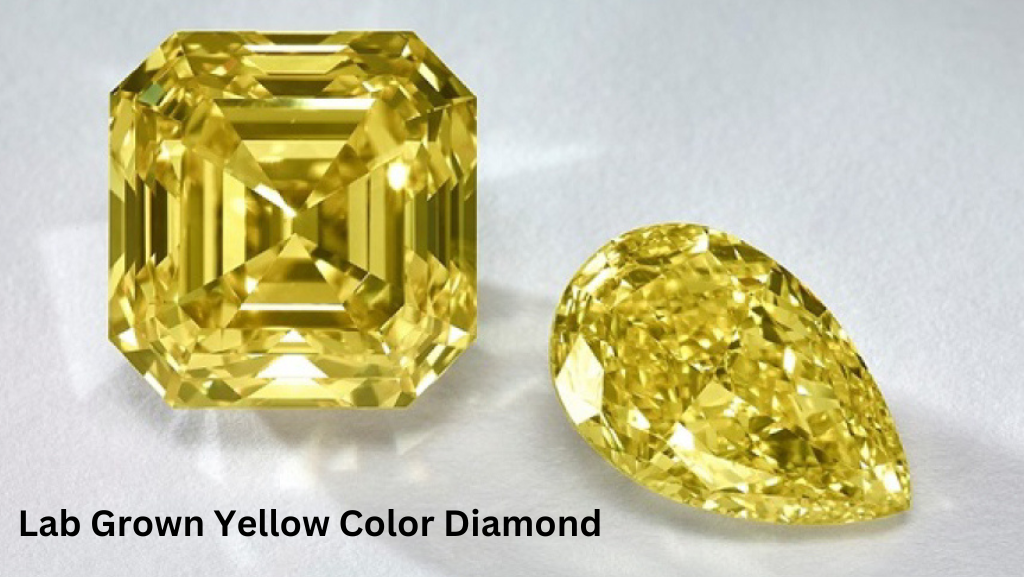
Everything You Need To Know About Lab Created Yellow Diamonds

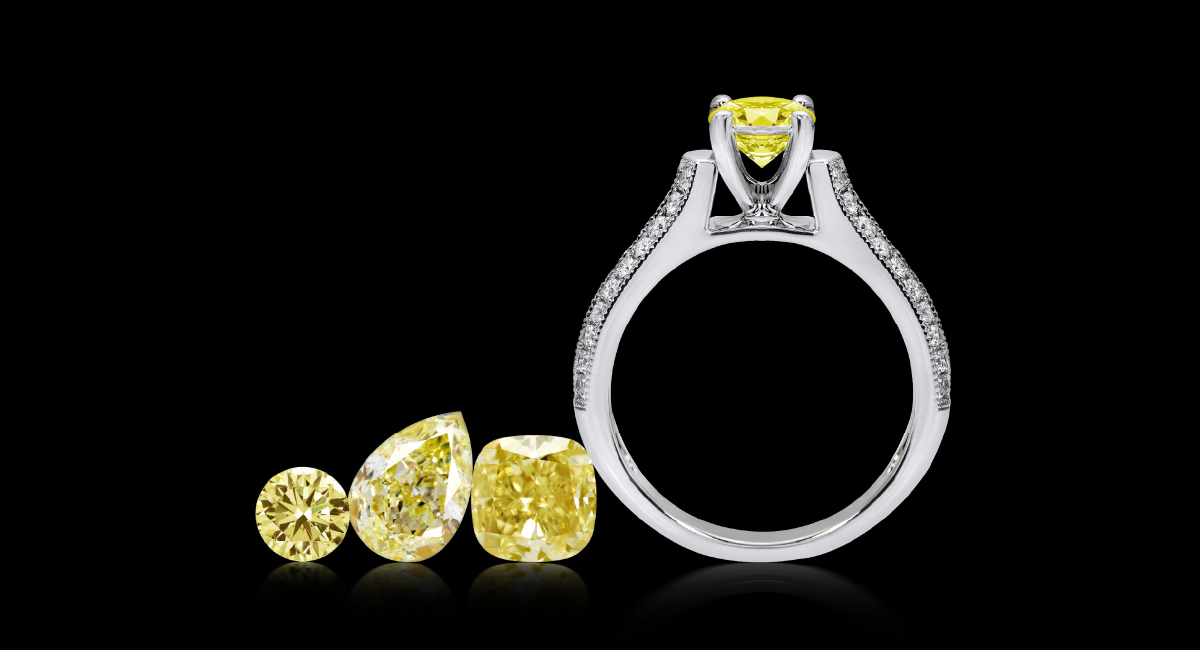
Diamonds have become a statement of style, love, and perfection over the years. The different colored diamonds give us a unique and fashionable look for all the special occasions of our life. The yellow-colored fancy diamonds which are also called the canary yellow diamonds are very trendy, astonishing, and unique, which add a classy touch to your overall look.

Yellow Lab Created Diamond

Yellow Diamonds provide a luster that your regular colorless diamonds cannot seem to compete with. And people have started leaning towards it for the greater good. While buying colorless diamonds can be a tricky purchase, buying yellow diamonds is much trickier.

Yellow Diamonds have grown in demand for the last decade and all for the right reason. In this article, we will help you through everything and make it easy by providing a guide.

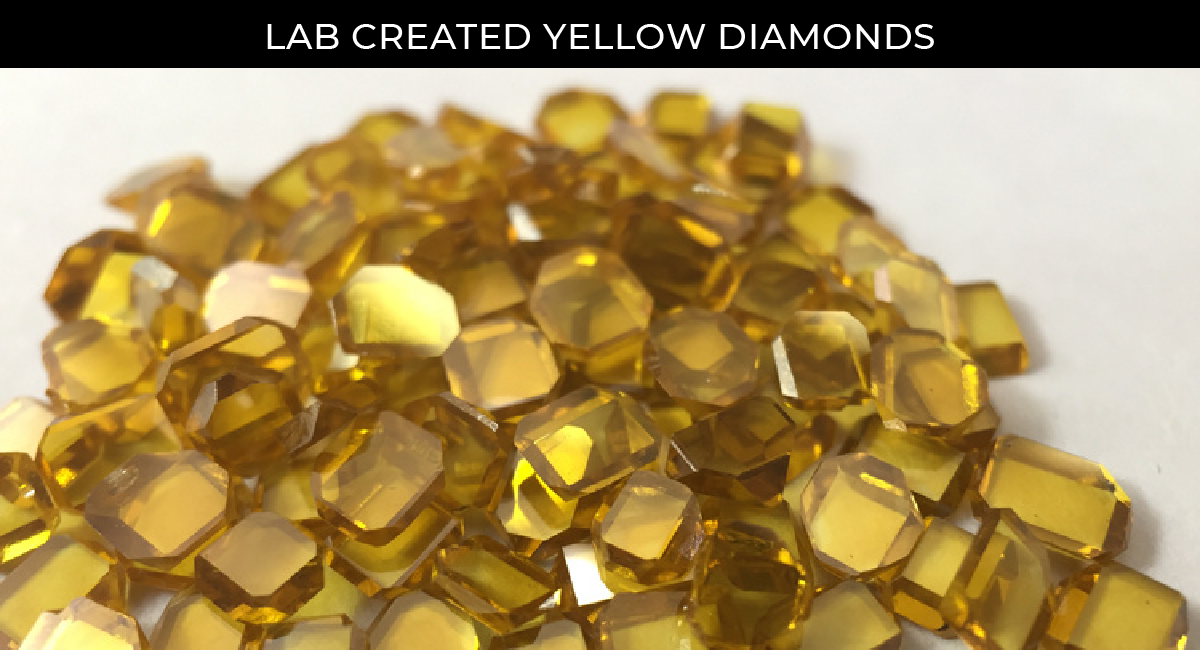
What are Lab Created Yellow Diamonds?

What are Lab-Created Yellow Diamonds

Almost all lab-produced diamonds have the same procedure through which they are formed, crystallization. This results in substances that are similar and almost identical to natural diamonds which take thousands of years to form. The time taken to produce the diamond affects the value of the diamond making it 40% less cheap.

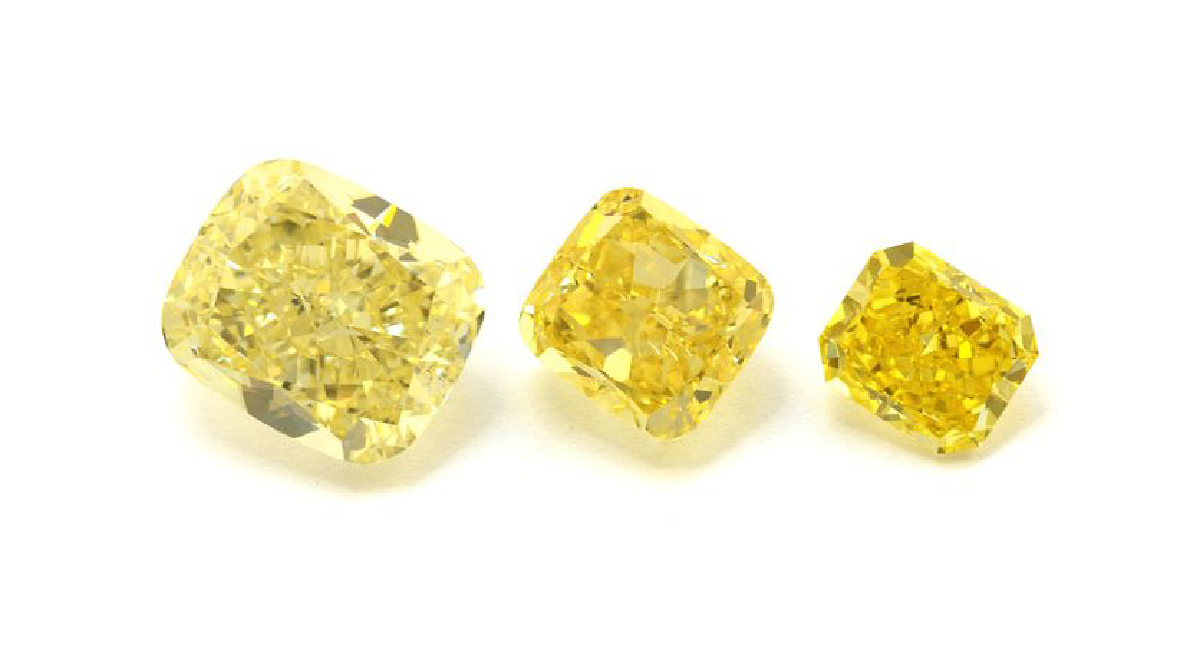
The yellow diamond on the other hand is treated using nitrogen to get its color. The concentration will produce a variety of colors ranging from vivid yellow to dark yellow and even slightly brownish color. The nitrogen actually aids in the diamond’s rapid growth and thus increases the speed due to which it takes approximately a week to go from a rough diamond to a lab-grown yellow diamond.

How are the Lab Grown Yellow Diamonds Made?

The dazzling yellow colored lab-made diamonds get their spectacular color from the presence of certain elements, which are intentionally added to give them this look and color. Nitrogen is responsible for giving a yellowish touch to these diamonds. The more the quantity of nitrogen present in the diamond, the more extreme the yellow color of the diamond.

So now it is quite obvious that the yellow man-made diamond rings are created in the labs by adding nitrogen to the carbon elements during their formation process. The quantity of nitrogen is responsible for the colors ranging from light yellow to intense yellow to vivid yellow.

Properties of Yellow Lab-Made Diamonds

property of yellow lab grown diamond

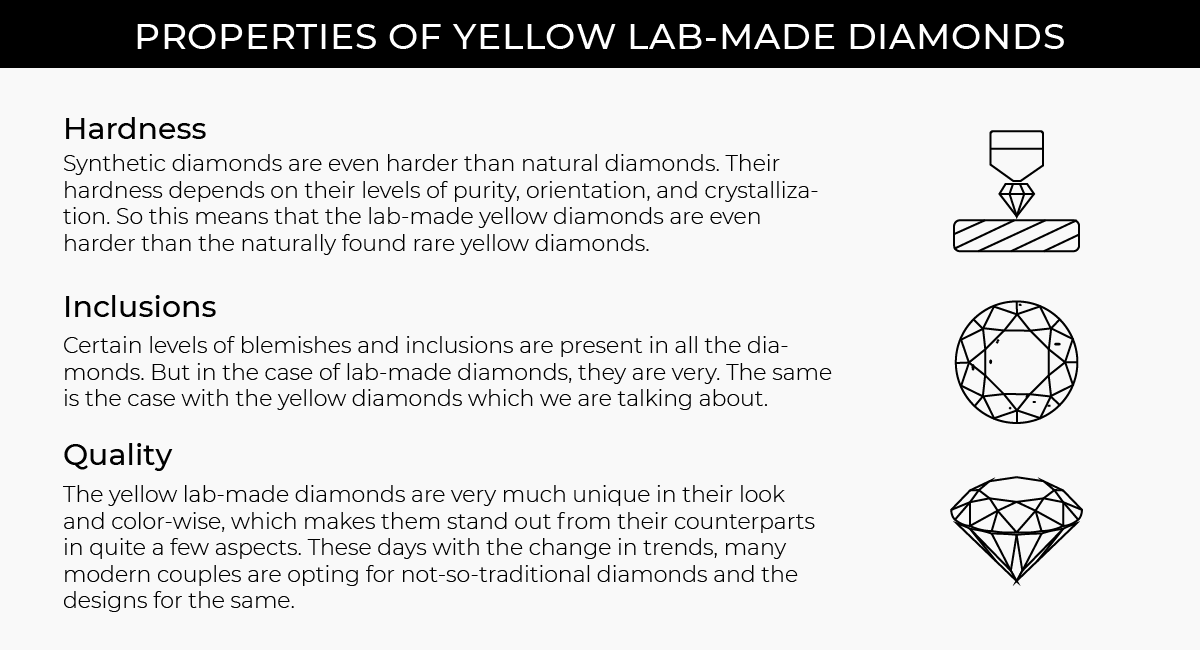
  • Hardness

Synthetic diamonds are even harder than natural diamonds. Their hardness depends on their levels of purity, orientation, and crystallization. So this means that the lab-made yellow diamonds are even harder than the naturally found rare yellow diamonds.

  • Inclusions

Certain levels of blemishes and inclusions are present in all the diamonds. But in the case of lab made diamonds, they are very. The same is the case with the yellow diamonds which we are talking about.

  • Quality

The yellow lab-made diamonds are very much unique in their look and color-wise, which makes them stand out from their counterparts in quite a few aspects. These days with the change in trends, many modern couples are opting for not-so-traditional diamonds and the designs for the same.

The most in-demand and the common ones are the light yellow diamonds and thus their cost is also quite less when compared to the others. But they are the natural ones. In the case of yellow lab diamonds, it is a bit difficult to find light yellow ones as the fancy vivid yellow diamond is more in demand and popular. Also called canary yellow diamonds. They are quite a rare combination and the most trendy and in demand these days.

They are a bit rare to find naturally but they can be quite easily made in the labs thus making them even more desirable as their price also decreases in this case.

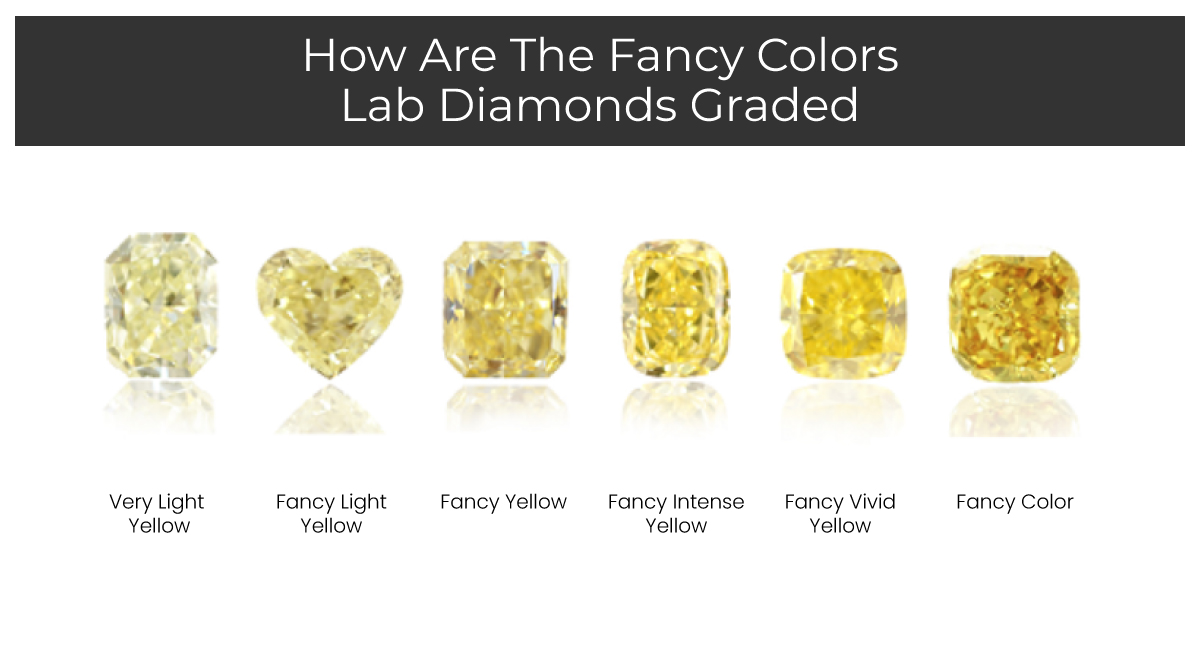
How Fancy Color Lab Grown Diamonds Graded?

The process of certification of lab-made diamonds is similar to that of natural diamonds. Their grading is done after sending them to the experts in their field in the gem labs. The grading is done based on the popular 4C’s cut, clarity, color, and carat.

All the labs use the same methods and processes to grade the diamonds. They are graded individually by the experts and then the compilation of the individual results is done for the best possible optimum results. The grades are given to the diamonds unbiasedly in the case of this process.

How-are-the-fancy-colors-lab-diamonds-graded

In the case of the yellow lab-made diamonds, they are a bit different in terms of grading than the other lab-made ones. As in the case of the regular diamonds they are graded from D to Z, depending on the blemishes and the tint they have. But the yellow diamonds are the ones that pass only near about Z in the scale. Thus the color scale for fancy yellow diamonds gives a grade on the intensity of its color.

The scale ranges as:

  • Faint
  • Very Light
  • Light
  • Fancy Light
  • Fancy
  • Fancy Intense
  • Fancy Vivid, Fancy Deep, or Fancy Dark

The rest of the gradation is the same as that of the other lab-made diamonds, which are mentioned above along with the 4 C’s.

The GIA also grades lab-made diamonds but their grades are not as apt as in the case of natural diamonds.

So the IGI is the best for lab-created diamonds, which makes sure that the diamond you are buying is of the highest quality possible.

Also Read: IGI vs GIA: Comparison on The Basis of Color Grading, Pricing, and Diamond Reports

Should You Buy Treated Yellow Diamonds?

Treated yellow diamonds may not have been formed in nature but the advantages it comes with are enormous:

Yellow diamonds that have been processed are really attractive. They have such beauty that you won’t be able to differentiate between them and a gemstone mined from the earth’s interior.

  • Yellow diamonds that have been processed are really attractive. They have such beauty that you won’t be able to differentiate between them and a gemstone mined from the earth’s interior.
  • One may rest easy knowing that the gem is blood-free. It was created with no crimes against humanity in mind. This goes for all lab-grown diamonds/gemstones.
  • When purchasing a lab-grown yellow diamond, you can save somewhere from 45 percent to 70 percent in expenses.
  • Yellow diamonds are less expensive since they can be grown in a laboratory.
  • When you buy a lab-grown yellow diamond, one can also relax and be confident that they are not harming the environment.
  • A bigger diamond can be purchased without spending a huge fortune.
  • Colorful diamonds are considered rare, in case you pull off a lab-grown yellow diamond well people will assume you are wearing a priceless entity.

Positives of The Lab Grown Yellow Diamonds

Cost

As they are not mined and extracted deep down from the earth’s surface but are instead made with Artificial man-made technologies in the labs thus the cost of these diamonds is less as compared to the naturally found diamonds.

But this does not apply to the fact that the diamonds which are grown in labs are cheap. The supply chain in the case of the natural diamonds as large as they are mined first then distributed, cut, polished, and then sold to the jewelry manufacturers. But in the case of lab-grown diamonds the supply chain is shorter as the process of extraction and mining are skipped thus making its cost a bit less as compared to natural diamonds.

This is where the biggest saving comes in for buying lab created yellow diamonds. As in when you can create a diamond with a deep, canary yellow color on demand the price is naturally going to be lower than the ones extracted naturally. In general, the small-size diamonds or the ones fancy in color along with lighter hue are much more common and cheaper, therefore.

Ethical

Many years ago there was a taboo associated with the mining industry, as many believed that various unethical practices were being carried out in their extraction process. They were even referred to as the blood diamonds as many believed that they are used to fund violence and the miners and their families were overexploited and taken for granted. Also, they promoted child labor in various places.

However, due to the establishment of the Kimberley process, these particles have come to a halt to a level. So lab-grown diamonds are your ideal choice if you are a peace-friendly person and also need reassurance as to how your diamonds were made.

Environment Friendly

As we all are aware of the fact that during the process of mining, there are various bad and negative impacts on the environment and the surroundings. Although various steps have been taken to reduce and avoid them to a level, they still exist.

But in the case of lab-grown diamonds, you will not face such an issue as they are quite environment-friendly and take less energy for their creation. They also are pocket-friendly and can save a few bucks which can be used elsewhere.

How to Choose the Best Yellow Lab Made Diamonds

You can take the help of professionals and gemologists in this case as they are in this field for years and years. In terms of purchasing the diamonds, you can opt for either offline or online mode. Many customers tend to visit the shops in person and buy them as they believe in taking a visual look at the diamonds. Whereas in the case of online purchases, you will get good discounts and offers.

how to choose best yellow diamonds

The variety remains the same in both cases mostly as diamonds are very much in demand throughout the years. So the choice is solely yours, choose wisely and accordingly. But Whatever the mode of purchase, the grade and scale of the diamond should never be ignored.

The yellow lab made diamonds are the more modern, ethnic, and fancy choice and also are trending these days. Many brides tend to opt for them these days rather than the traditional colorless diamonds.

The setting of the ring should never be ignored as it directly impacts the look and charm of the ring. As in the reflection of the light and other factors to depend on them. The more the diamond reflects the light the more it shines and the more appealing and enticing it looks to the inhuman eye.

As lab created yellow diamonds are commonly a darker shade already, you do not need to rely on the setting to produce more vivid colors. But should take note of how the setting will contrast and blend in with the color of the diamond. As in they both should complement each other and enhance each other’s look and beauty. You can also pair a vivid, canary yellow lab diamond along with a white gold ring or clear diamond accents. If in case you want to opt for a more complementary look, you can pair the fancy yellow diamond along with a bar of rose gold or a yellow gold ring, which as a result will give it a warmer and classic look.

[blog_page_btn title=”Shop Fancy Color Diamonds” url=”https://www.loosegrowndiamond.com/lab-created-colored-diamonds/”]

Celebrity Yellow Diamond Engagement Ring

One of the most iconic yellow diamond engagement rings belongs to Beyoncé, gifted to her by her husband Jay-Z. The ring features a stunning 18-carat emerald cut yellow diamond set in platinum. American singer Kelly Clarkson received a breathtaking yellow diamond engagement ring from her husband Brandon Blackstock.

Actress Rebecca Romijn received a gorgeous yellow diamond engagement ring from actor Jerry O’Connell. The ring features a radiant-cut yellow diamond set in a classic platinum band with pave diamonds.

These celebrity yellow diamond engagement rings showcase the beauty and allure of yellow diamonds, making them a popular choice for couples seeking a unique and vibrant symbol of their love and commitment.

How Do I Choose a Yellow Diamond Ring?

A yellow diamond ring is a type of jewelry that features a yellow diamond as its centerpiece stone, typically set in a ring setting made of precious metals like gold or platinum.

When choosing a yellow diamond ring, consider factors such as the intensity and hue of the yellow diamond, its clarity, carat weight, and cut quality. Additionally, consider the style and design of the ring setting to ensure it complements the beauty of the yellow diamond.

[su_youtube_advanced url=”https://www.youtube.com/watch?v=kYztzmhK8nc” width=”1600″ controls=”alt” autohide=”yes” autoplay=”yes” mute=”yes” loop=”yes” rel=”no” modestbranding=”yes” theme=”light” playsinline=”yes” title=”yellow diamond engagement rings”]

Yellow diamonds can be stunning choices for engagement rings. Their warm and vibrant color can symbolize joy, happiness, and optimism, making them a unique and meaningful option for couples seeking something different from traditional colorless diamonds.

Yellow diamond rings can be suitable for various occasions, including engagements, anniversaries, birthdays, or as a special gift to celebrate achievements or milestones.

Moreover, LGD offers customization options for yellow diamond engagement rings, allowing you to select the specific yellow diamond and design elements such as the metal type, setting style, engraving and additional side stones if desired. Customization ensures that your yellow diamond ring is unique and tailored to your preferences.

[perfect_ring_box title=”Find Your Dream Ring?” btn1ttl=”Start with a Setting” btn1url=”https://www.loosegrowndiamond.com/build-a-ring”]

Conclusion

These diamonds are the future and are revolutionary because of their pocket-friendliness, and sustainability and are also conflict-free diamonds in nature. They have the same clarity, color, and composition as compared to the natural ones and are also nearly 50 percent less in cost thus making us save a few bucks which can be saved and invested in something useful for future use.

They are very less time-consuming and one does not have to wait for hundreds and millions of years to give their loved ones a beautiful, shiny, classy, and adorable diamond. In today’s lifetime, it is very precious and thus lab grown diamonds are the best choice. As in, there is no such very big visible difference between the naked human eye to the natural, and the lab grown diamonds.

They shine, shark, and ignite the same as that natural diamonds, mostly. The natural yellow diamonds are very rare and the lab-grown ones can be made in the labs on demand and according to the wishes and demands of the customers. Thus making the lab grown yellow diamonds a popular choice for buyers who too within the budget. If you want to opt for the rare and unique diamonds and make all eyes turn towards you, that too on a limited budget then the yellow lab-made diamonds are for sure for you.

FAQs

How much is a yellow diamond worth?
The value of a yellow diamond can vary widely depending on factors such as color intensity, clarity, carat weight, and cut quality. However, a typical starting price for a yellow diamond can be around $1,000 per carat. However, you can check the diamond price with our Diamond Price Calculator.

Are yellow diamond rings expensive?
Generally, women yellow diamond rings tend to be more affordable than colorless diamond rings of similar quality, but prices can still range from $2,000 to several thousand dollars or more.

How do I care for my yellow diamond jewelry?
Yellow diamonds, like all diamonds, are durable and suitable for everyday wear. To keep them sparkling, clean them regularly using a gentle jewelry cleaner and a soft brush. Avoid exposing them to harsh chemicals.

Do yellow diamonds come with certification?
Yes, reputable yellow color diamonds often come with certifications from gemological laboratories such as the GIA, GCAL or IGI. These certifications provide important information about the quality and authenticity of the yellow diamond.

How Lab Created Diamonds are Made?

Natural diamonds are made by precise and perfectly bonded carbon crystal lattices. Due to this, they gain immense strength. According to scientists natural diamonds are created under extreme pressure and high temperature, they take about 1 billion to 3 billion years to form depending on the conditions.

how lab grown diamonds are made

Man made diamonds, on the other hand, are created within six to eight weeks. These lab grown diamonds are created in a controlled environment, with the help of advanced technology. It is like a chamber in which the material is put which will later be converted into a loose diamond. The chamber replicates the conditions of the earth’s crust, which are needed to create a man made diamond.

But have you ever stopped to wonder how these dazzling gems are made? In this comprehensive guide, we’ll take a deep dive into the intricate process behind lab grown diamond creation, uncovering the science and technology that makes it all possible.

After a man made diamond is created it is cut into different shapes, polished, and graded just like a normal natural diamond. A man made diamond has the same physical, chemical, and optical properties as that of a natural loose diamond. Due to this, it becomes nearly impossible to tell the difference between a lab grown diamond and a natural loose diamond, with the naked eye.

How Lab Created Diamonds are Made

To tell the two apart special types of equipment and a professional is needed to inspect them. Man made diamonds are a revolutionary discovery that reshaped the whole diamond market. These loose diamonds have many benefits and somewhat more benefits than natural diamonds.

There are Mainly Two Main Methods that Opted to Create Man Made Diamonds:

1. CVD Diamond Method
2. HPHT Synthetic Diamond Method

Now let us briefly explain both of these methods, and how they are used to create loose, white, and fancy diamonds.

CVD Diamond Method

CVD stands for Chemical Vapour Decomposition, it is used to create high-quality loose diamonds. In this method, a material is put inside a chamber in the presence of a pure rich carbon plasma. As soon as the process starts, carbon atoms get deposited on the material, and with time it forms a man made diamond.

cvd diamond method
To get colored fancy diamonds, specific trace elements are inserted into the carbon crystal lattice during the growing phase. Depending on the amount of trace element and type of trace element inserted, does the fancy diamond get its color.

CVD Diamond method also has some types, which are:
• Plasma Enhanced Chemical Vapour Decomposition (PECVD)
• Microwave Plasma Chemical Vapour Decomposition (MPCVD)
• Low-pressure Chemical Vapour Decomposition (LPCVD)
• Ultra-High Vacuum Chemical Vapour Decomposition (UHVCVD)

cvd diamond

HPHT Synthetic Diamond Method

HPHT stands for High-Pressure-High-Temperature, which is also the procedure used to create man made diamonds. An HPHT Synthetic Diamond making machine is able to generate 60,000 ATM (atmospheric pressure) and 2500°C temperature. Thus forming an environment similar to that under the earth’s crust, which assists the formation of a man made diamond.

There are Mainly Two Main Methods that Opted to Create Man made Diamonds

The elements and materials used to create lab-grown loose diamonds are:

  1. A tiny diamond seed
  2. Highly refined graphite
  3. A high-quality catalyst mixture containing metals and powders

When the machine is turned on, due to high pressure and high temperature, the catalyst mixture turns into a molten form. Which then causes the refined graphite to dissolve in it, and form various layers over the diamond seed. Then after the cooling is done, an HPHT synthetic diamond has been formed.

To carry out the HPHT Synthetic Diamond making method, and apply the required conditions, two types of machines or press designs are used.

hpht lab diamond

Cubic Press- Creates high temperature and pressure with the help of pistons, which are located throughout the machine and provide pressure from different directions.

Belt Press- In this machine high pressure is formed by two strength pistons. These pistons apply equal pressure in opposite directions.

[blog_page_inventory shape=”Round,Oval,pear,cushion,heart,princess,emerald,radiant,kite,old mine” carat=”2.30,2.60″ cut=”0,4″ color=”0,10″ clarity=”0,11″]
[blog_page_btn title”Buy Now” url=”https://www.loosegrowndiamond.com/inventory/?”]

Should You Buy Lab Created Diamonds?

Whether or not you should buy lab grown diamonds depends on various factors, including your personal preferences, ethical considerations, and budget. Here are some points to consider:

To start, let’s explore the benefits of diamonds produced in laboratories.

Lab grown diamonds are created in controlled environments, eliminating the need for environmentally destructive mining practices and reducing the risk of exploitation associated with traditional diamond mining.

Lab created diamonds often come at a lower price point than natural diamonds, making them accessible to a broader range of consumers.

Like mined diamonds, lab grown diamonds can be certified by reputable gemological laboratories.

Lab grown diamonds are virtually identical to mined diamonds in terms of appearance and chemical composition. They exhibit the same brilliance, sparkle, and durability as natural diamonds. If you’re concerned about quality, rest assured that lab grown diamonds can be just as beautiful and durable.

Ultimately, your choice to purchase lab grown diamonds hinges on your priorities and principles. If you prioritize ethical and environmental considerations while seeking a more budget-friendly option, purchasing certified lab created diamonds from LGD at the best available price might be appealing.

Why Lab Grown Diamonds?


Mining Free

“NO MINING” is required for lab created diamonds.
Elevate your jewelry with mining free Lab Grown Diamonds


Quality

Lab created diamonds have the same
quality and optical properties as natural diamonds.


Valuation

Lab created diamonds contribute excellent value,
and are more affordable than natural diamonds

[blog_page_btn title=”Buy Lab Grown Diamonds” url=”https://www.loosegrowndiamond.com/inventory/”]

Conclusion

Hence to create a man made diamond a controlled environment and specific conditions are needed. Lab grown diamonds are more eco-friendly than natural white diamonds or natural loose diamonds. Lab grown diamonds do not require intense mining, which degrades the environment, soil, and vegetation.

Lab grown diamonds are preferred over natural diamonds. And, with the ability to create any type of loose diamond or fancy diamonds these man made diamonds have gained immense popularity.

FAQs

Are lab created diamonds real diamonds?
Yes, lab created diamonds possess the same chemical composition, physical properties, and optical characteristics as natural diamonds. They are real diamonds in every sense of the word.

Are lab created diamonds less expensive than natural diamonds?
In general, lab created diamonds are more affordable than their natural counterparts, as the production process is more cost-effective and less resource-intensive. However, prices can vary depending on factors such as size, quality, and market demand.

Are lab created diamonds environmentally friendly?
Yes, lab created diamonds are a more sustainable and eco-friendly alternative to traditional diamond mining. By eliminating the need for mining, they help reduce the environmental impact associated with land disruption, water usage, and carbon emissions.

How Lab Grown Diamonds are Certified and Graded

All you need to know about the ifs and how’s of whether lab grown diamonds are acknowledged and certified by international diamond certification bodies. 

Lab grown diamonds have caused quite a stir in the diamond industry over the past decade. These lab diamonds are created in a controlled environment using high heat and pressure to remove carbon, which produces an unpolished gemstone.

certified lab grown diamonds

The stone goes through a manufacturing cycle which lies in accordance with strict diamond processing guidelines to bring forth its inherent brightness, luster, and radiance.

This guarantees that lab grown diamonds fulfill quite the same quality standards as their mined counterparts. To understand in detail what a lab grown diamond is, refer to our previous blog, which covers the same.

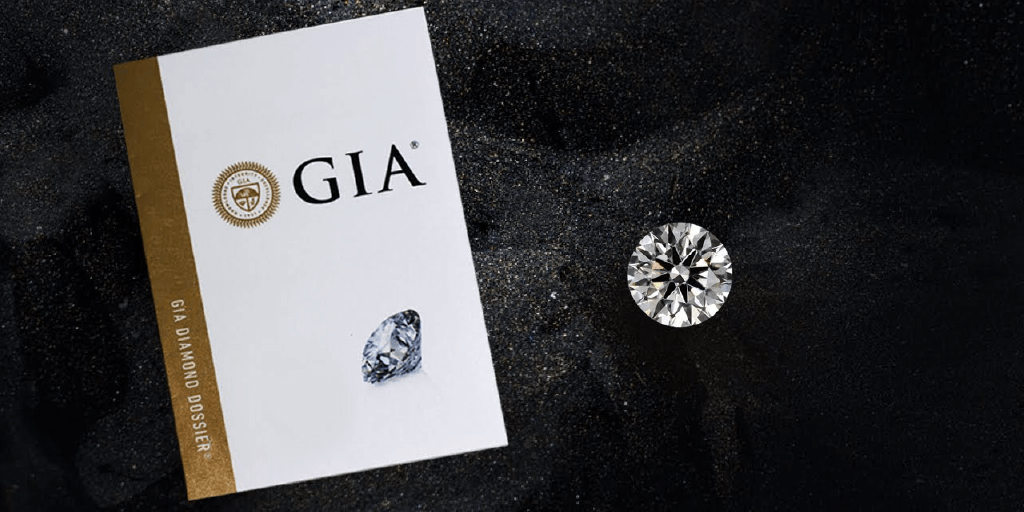
Understanding the certification procedure is essential to appreciating these diamonds’ worth. An independent lab/institute with no stake in the diamond’s sale issues a diamond certificate, which is a vital document. These labs assess every stone according to certain merits and rules.

IGI, GIA, and GCAL are three of the top certification bodies for lab grown diamonds, and they have all certified the diamond present on our website. This blog explores in great detail how lab-grown diamonds are certified and graded.

What are the Quality Parameters that a Diamond is Measured Against?

There are four basic parameters that a diamond must measure up to and it is graded accordingly. It must be noted that these standards are universally recognised by all jeweler’s/companies/retailers and accepted across the globe.  They are Cut, Clarity, Color, Carat, popularly known as the 4Cs.

  • Cut: This parameter grades the refraction of light from the various facets of the diamond’s surface. The stone must be cut such that it reflects light at the maximum possible angles, giving it an infinite sparkle.
  • Clarity: Simply put, this parameter measures the purity of the diamond. The inspection done under a high-precision microscope determines the degree of impurities and damages or visual flaws along with the depth of the stone.
  • Color: As the name suggests, color indicates the degree of “whiteness” of the diamond. The closer it is to purely colorless, the superior its quality is and the more it is priced at. D, E, F are the grades given to stones that are closer to being white.
  • Carat: It indicates the weight of the diamond. 

How are Lab Grown Diamonds Certified?

Lab sourced diamonds are certified by some of the most internationally acclaimed institutes that grade mined diamonds as well. They are the Gemological Institute of America and the International Gemological Institute. 

The IGI entered the foray of certifying lab diamonds very early while GIA followed soon in 2006. Their unbiased and in-depth analysis has come to be trusted around the world.

Another certifying institute is GCAL (Gem Certification & Assurance Lab), which was founded in 2001 in the diamond district of New York City.

GCAL is committed to preventing consumer fraud by offering accurate information on gemstones and diamonds.

To summarize, predominantly there are three types of recognised certification i.e., GIA lab grown diamond certificate, IGI lab grown diamond certificate and GCAL lab grown diamond certificate.

These specialized organizations are able to differentiate lab grown diamonds from their mined counterparts through the use of state-of-the-art laboratories that are equipped to examine minute structural and molecular changes.

The 4Cs—cut, color, clarity, and carat weight—are taken into account by both IGI or GIA in their assessments. They also provide thorough reports that include information about the diamond’s provenance.

For each of these four criteria, lab diamonds are given unique ratings, and a certificate is given to jewelers for each diamond. GCAL presents a new grading system for diamond cuts that takes into account factors including polish, optical accuracy, and proportions.

Although various institutes may assign somewhat different numbers and ratings to each diamond quality, it is important to understand the meaning behind each rating when reading the certificate.

The Rapaport Scale is used to determine lab diamond prices along with data from these institutes. The certificates guarantee correct information about the origin and properties of the diamond, which helps to protect consumers in addition to offering insightful information about the quality of the stone.

How to Read a GIA or IGI Certificate?

How to read a GIA or IGI Certificate

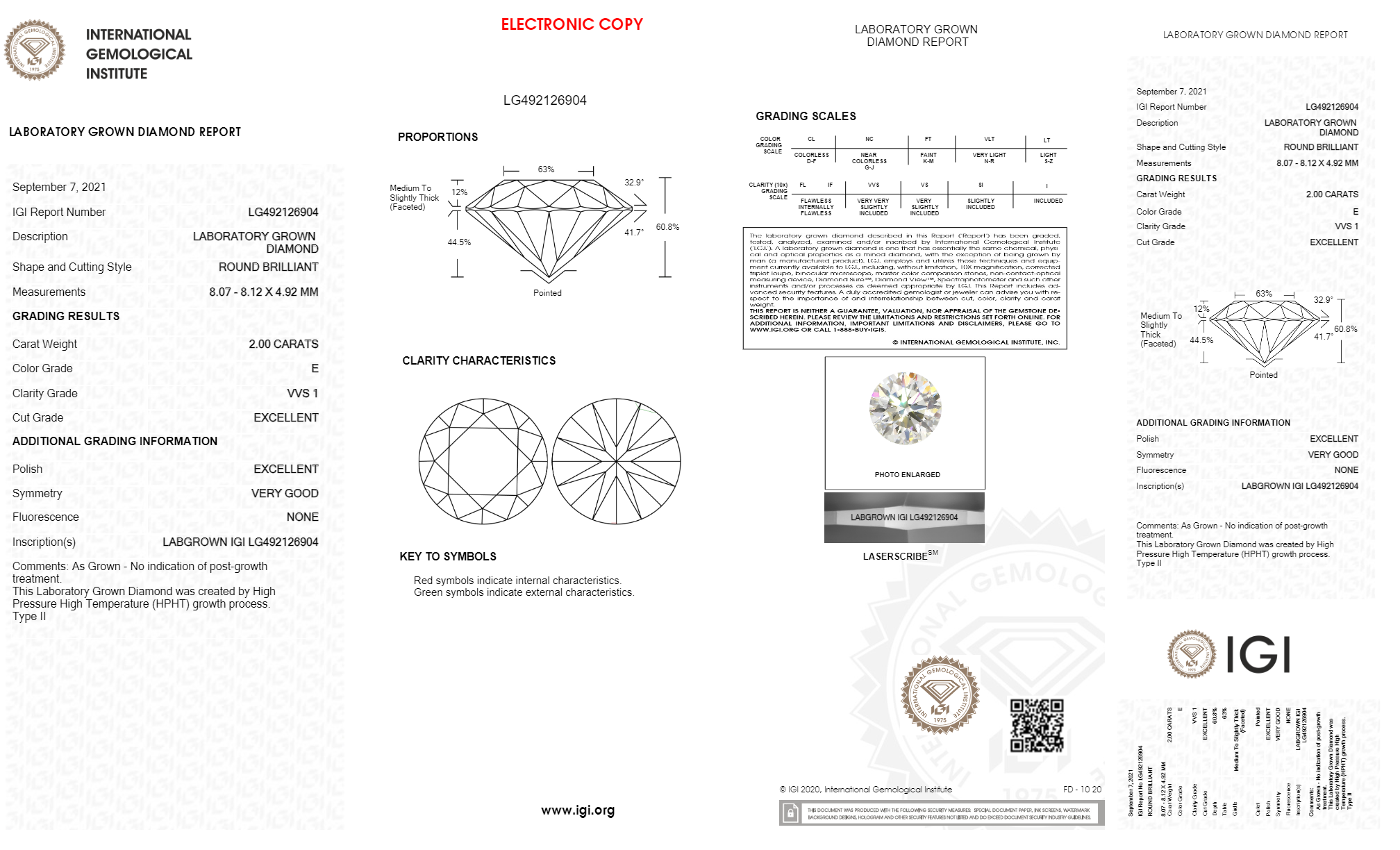
Let’s take an example where a lab diamond weighs 2.00 carats, with a clarity of VVS1, color of E and polish excellent and symmetry of very good. On interpreting the findings, we read that this lab grown diamond achieves remarkable colorlessness, approaching colorless or white (D) on the color scale; as denoted by the color F.

With minimal imperfections denoted by a VVS1 clarity grade, the diamond weighs 2.00 carats and boasts a double excellent grade for its cut, ensuring exceptional shine and symmetry for optimal light refraction.

The comprehensive results cover aspects such as shape, cutting style, the 4Cs, and additional details like polish, symmetry, fluorescence, providing a thorough understanding of this diamond’s characteristics.

While purchasing a lab sourced diamond, have this checklist ready!

There are certain key considerations that need to be kept in mind before making any lab sourced diamond purchases. These are as follows;

  1. Has the diamond been certified by a well-acclaimed certification body?
  2. Has the diamond been priced justly based on the certificate?
  3. Has it been stamped on the girdle indicating that it is lab grown?
  4. Do your research while buying a lab-sourced diamond and reap the benefits of making the ideal purchase decision!

Please note that at Loose Grown Diamonds, we exclusively offer certified lab grown diamonds that have attained the pinnacle of purity, aesthetics, color, and elegance.
[blog_page_btn title=”Buy Lab Grown Certified Diamonds” url=”https://www.loosegrowndiamond.com/inventory/”]

Conclusion

In conclusion, knowing how lab grown diamonds are certified and graded becomes increasingly important as demand for them develops. Organizations such as GIA, IGI, and GCAL guarantee rigorous analyses that are consistent with their evaluations of diamonds that are mined.

The 4Cs—cut, clarity, color, and carat—remain essential, and customers can make more informed decisions by consulting certificates from these respected organizations. These certifications’ accuracy and openness protect consumers in addition to verifying lab grown diamonds.
Keeping important factors in mind when making a purchase guarantees that the choice is well-informed. The purity, beauty, and timeless elegance of certified lab grown diamonds are highlighted by LGD’s dedication to providing them.

FAQs

Are lab grown diamonds certified?
Yes, all our lab grown diamonds are certified and rated high by institutions like GIA, IGI and GCAL. In general, most companies certify their lab grown diamonds.

Why should I buy a certified diamond?
Purchasing a certified diamond ensures authenticity, quality, and adherence to industry standards, providing confidence in your investment.

What is an IGI certificate for lab grown diamonds?
The International Gemological Institute does an unbiased and in-depth analysis of the stones that are submitted to them. They check to see the purity, carat, color, origin and much more.

What is a lab grown diamond certification?
A lab grown diamond certification is an official document from recognized institutes like IGI or GIA, confirming the diamond’s authenticity, quality, and specific characteristics.

Why do lab grown diamonds need certification?
Certification for lab grown diamonds verifies their quality, origin, and attributes, offering transparency and assurance to consumers.

Is IGI or GIA better for lab diamonds?
Both IGI or GIA are reputable for certifying lab diamonds, but GIA is often considered the industry standard for its strict grading and widespread recognition.

Which certification is best for diamonds?
GIA (Gemological Institute of America) is widely regarded as the best certification for diamonds due to its stringent grading standards and global recognition.

How do I check my diamond certificate?
To check your diamond certificate, review the document’s details such as the 4Cs (cut, clarity, color, carat), and ensure it comes from a reputable certification institute like GIA or IGI.

Everything About VS Diamond vs VVS Diamond You Can’t Afford to Miss

In the public eye, diamonds are forever, but this belief often lacks the finicky caution required to tell apart those diamonds that are a cut above the rest. Outwardly, diamonds are just pure carbon turned to a transparent crystalline form, but the quality of these gems can differ widely when the level set by the (Gemological Institute of America) through the 4Cs of clarity, cut, color, and carat weight is taken into consideration.  

Uniting these factors, however subtle, has the power to significantly sway the worth of lab diamonds, particularly when comparing gems of equal size. 

What are VVS Diamond and VS Diamond?

VVS Diamond versus VS Diamond 
At the outset, a little background on how diamonds are created and how that, in turn, affects the clarity of the stone is important. Real or natural diamonds are created deep within the earth when carbon is compressed under immense heat and pressure.

During this process, diamonds inherit certain features that may be internal, known as ‘inclusions’, and external, meaning ‘blemishes’. Inclusions are confined to the interiors of a diamond and develop when small crystals get trapped in a diamond during its formation, affecting the gem’s appearance from within. On the contrary, blemishes turn up on the surface of the diamond through abrasions, polish lines, etc.

Ascertaining the clarity of a diamond, especially with respect to the VVS and VS grades, requires a meticulous approach towards recognizing the size, position, number, relief, and nature of these features as well as the effect it has on the overall appearance of the lab diamond. 

As a thumb rule, it must be remembered that no diamond is absolutely pure, however the higher its clarity, the closer it comes to purity and the more expensive its price. Such consequences make it impertinent to evaluate the clarity of a diamond with the help of a predetermined grading system before deciding to make a purchase. 

What is VVS Diamond?

vvs diamond

The inclusions in a VVS diamond are so tiny that they become difficult to view by the naked eye and can only be detected with the help of a microscope. For this reason, VVS diamonds are known to be eye-clean. Common inclusions, that can either be extremely difficult (VVS1) or fairly difficult (VVS2) to find, can include the following:

  • Cloud pinpoints, needles or internal graining are unnoticeable from the table of the diamond but can be spotted through the pavilion, or the commonly found “V” shape at the base of the diamond. These inclusions are extremely difficult to find face-up, or from the top facet of the diamond, at 10x magnification (VVS1).
  • Clouds pinpoints, needles, or internal graining that are fairly difficult to spot face-up at 10x magnification (VVS2). The difference between these two subcategories remains virtually insignificant.
  • Negligible inclusions that reach the surface from within in the form of a chip, bruise, feather, abrasion, indented nature, bearding, etc. These can show up in both subcategories.

It is important to note that any diamonds with inclusions visible to the naked eye cannot be granted the clarity grade of  VVS1 and VVS2.  You will notice that even though VVS diamonds do not look any different from Flawless or Internally Flawless.

[blog_page_btn title=”buy VVS diamond” url=”https://www.loosegrowndiamond.com/inventory/?clarity=7.00,9.00″]

What is a VS Diamond?

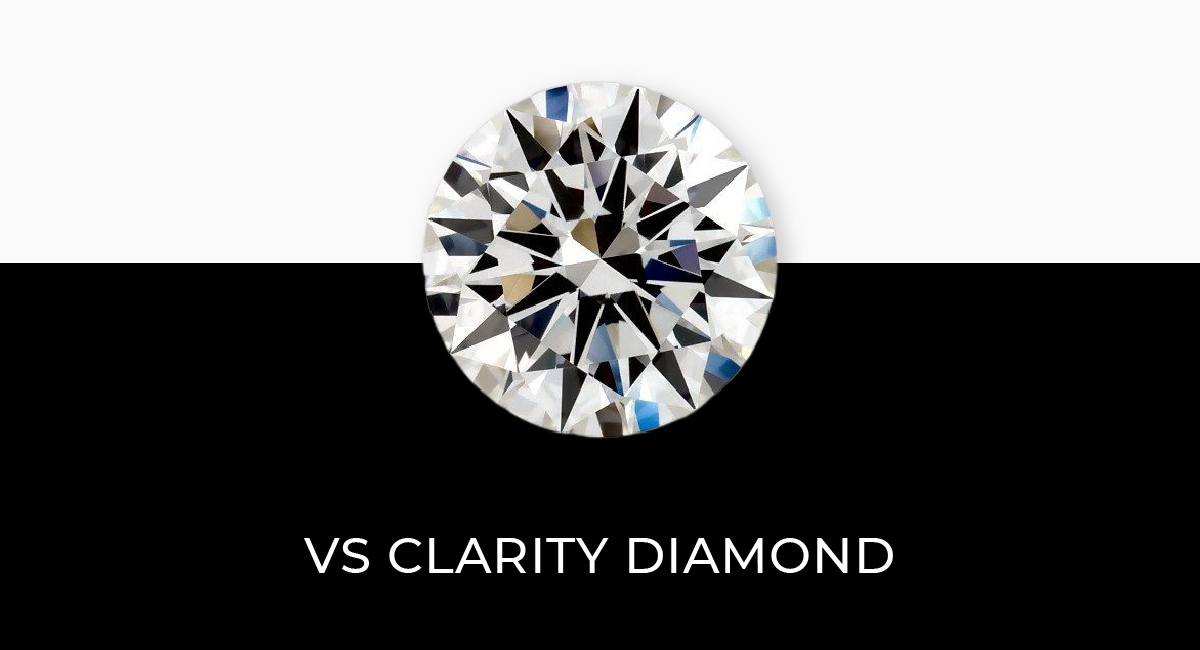
Vs lab diamond

A VS diamond has minute inclusions that vary from very difficult (VS1) and somewhat easy (VS2) to find with 10x magnification. No matter what the features of the inclusions are, their size must be relatively small to that of the lab diamond.

The VS designation refers to Very Small inclusions in a diamond. These inclusions can vary from crystals, clouds, knots, or small abrasions reaching the surface like feathers or cavities. Despite not being Flawless, inclusions are rarely noticeable under bright light or even magnification (VS1). In rare circumstances, a large enough VS stone may have inclusions that were visible to the naked eye in bright light (VS2), but they are usually eye-clean.

We would suggest you explore VS diamonds as they can be a great and adjustable alternative that might suit your budget and requirements better than VVS clarity diamonds.

[blog_page_btn title=”buy VS diamond” url=”https://www.loosegrowndiamond.com/inventory/?clarity=5.00,7.00″]

Also Read: The Different Cuts of Diamonds: A Guide to Choosing the Best One in 2022

GIA and its Diamond Clarity Scale

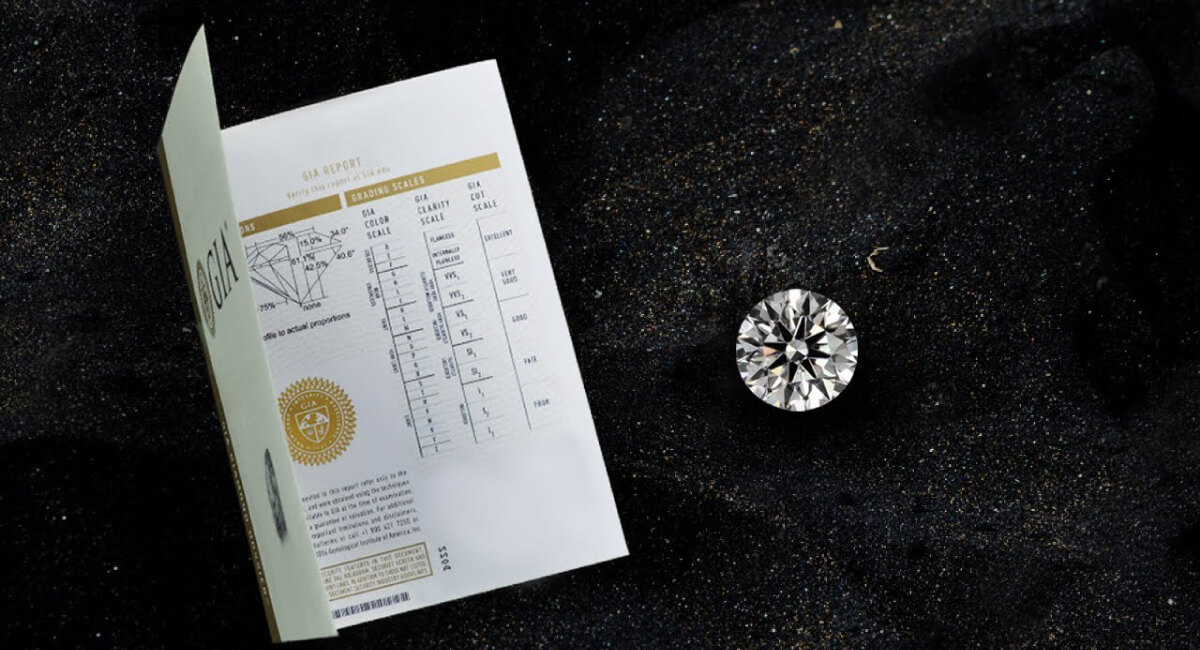
Certificate

In devising its clarity grading scale, the GIA uses 10x magnification as a standard measure for each grade. It takes a jeweler’s skilled eye and microscope with increased magnification of 10x loupe to determine the clarity grade of a diamond. During this process, the grader must keep five factors in mind:

  • Size: With all factors being otherwise equal, the relative size of the inclusion or blemish in comparison to the size of the diamond, meaning if the same is easily visible, the clarity grade allotted will be lower.
  • Number: With all factors being otherwise equal, the number of inclusions or blemishes visible at 10x magnification will have a positive relationship with the clarity grade.
  • Location: The closer the inclusion or blemish is to the table of the diamond or the facet that is visible when the stone is viewed face-up, the lower the clarity grade.
  • Nature: This refers to the overall effect the blemish or inclusion has on the appearance of the diamond, something that only the grader can ascertain.
  • Color: In some cases, the color of the inclusions can affect the overall appearance of the diamond. Dark-colored inclusions, like black carbon spots, maybe more noticeable and potentially impact the clarity grade.

It’s important to note that each factor is evaluated in conjunction with the others, and the overall assessment leads to the assignment of a specific clarity grade on the GIA Diamond Clarity Scale.

[blog_page_inventory shape=”cushion,round,heart,pear,oval,cushion,princess,emerald,radiant,marquise” carat=”1.30,2.60″ cut=”1,4″ color=”1,10″ clarity=”1,6″]
[blog_page_btn title”Buy Now” url=”https://www.loosegrowndiamond.com/inventory/?”]

Diamond Clarity Grading

diamond clarity

Founded on these five clarity characteristics, the GIA grading scale for diamond clarity can be divided into 6 main categories, ranked according to their descending price value, as follows:

[su_table responsive=”yes”]

Flawless (FL)
No inclusions or blemishes upon examination under 10x magnification.
Internally Flawless (IF)
Under 10x magnification, no inclusions are detectable.
Very Very Slightly Included (VVS1 and VVS2)
Such negligible or undetectable inclusions that vary from extremely difficult (VVS1) and very difficult (VVS2) to detect that even a skilled grader will find it difficult to find them under 10x magnification. VVS1 denotes slightly higher clarity than VVS2.
Very Slightly Included (VS1 and VS2)
With considerable effort, the inclusions can be discovered either with considerable effort (VS1 ) or easily (VS2), however, they still remain minor in nature.
Slightly Included (SI1 and SI2)
Inclusions that are easily discoverable (SI1) or apparent in nature (SI2)­ under 10x magnification.
Included (I1 clarity, I2, and I3)
Inclusions are so apparent that they are not only evident under 10x magnification but also affect the brilliance and transparency.

[/su_table]

Each diamond is individually assessed and assigned a clarity grade based on the GIA Diamond Clarity Scale.

The GIA Clarity Scale provided uniformity in diamond evaluation for jewelers across the globe, hence, these grades have become a common measure despite the nationality of the jeweler. Since blemishes only affect the top two categories, it is only about inclusions that we will continue the discussion on VVS and VS diamonds.

Difference between VVS Diamonds and VS Diamonds

While it is obvious that VVS diamonds are rank superior to VS diamonds, outlining the exact point of difference before deciding to purchase either is extremely important. Before all else, let’s understand the typical inclusions that may be found in both the diamonds-

  • Pinpoints– A tiny inclusion in the form of a crystal trapped inside the diamond that is noticeable under 10x magnification.
  • Clouds– Groups of minute inclusions that cannot be spotted individually but can make the appearance of a diamond hazy.
  • Internal Graining– Lines, angles, or curves during the process of crystal growth in the formation of a diamond.
  • Needles– These are elongated crystals that appear as thin, needle-like inclusions.
  • Knots– Knots are external crystal growth that has extended into the diamond.

Here’s a comparison table highlighting the differences between VVS (Very Very Slightly Included) diamonds and VS (Very Slightly Included) diamonds:

It is with reference to these inclusions that we differentiate between VVS and VS diamonds as follows-

[su_table responsive=”yes”]

Parameters

VVS Diamonds

VS Diamonds

Definition
VVS diamonds have very few and very small inclusions
VS diamonds have minor inclusions that are noticeable under 10x magnification
Clarity Grade
VVS1 and VVS2
VS1 and VS2
Brilliance
VVS diamonds tend to have exceptional brilliance and sparkle due to their high clarity
VS diamonds also have good brilliance and sparkle, but it may be slightly lower compared to VVS diamonds
Inclusion Visibility
Inclusions are extremely difficult to see with the naked eye
Inclusions are relatively easy to see under magnification but may be barely visible to the naked eye
Inclusion Size
Inclusions are usually very tiny and microscopic
Inclusions are slightly larger than VVS diamonds but still small and not easily noticeable
Eye-cleanliness
VVS diamonds are considered eye-clean, meaning they appear flawless to the naked eye
VS diamonds are often eye-clean, but some inclusions may be visible to a keen observer without magnification
Price Range
VVS diamonds are more expensive, with prices typically higher compared to VS diamonds
VS diamonds are relatively more affordable compared to VVS diamonds
Setting Options
VVS diamonds offer more flexibility in terms of setting options due to their smaller and less visible inclusions
VS diamonds also provide a wide range of setting options, but certain designs may need to consider the placement of inclusions
Investment potential
VVS diamonds, especially larger sizes with exceptional clarity, have high investment potential
VS diamonds can also hold investment value, particularly if they possess other desirable attributes like exceptional cut or color
Certification
VVS diamonds are certified by gemological laboratories to ensure accuracy and guarantee the quality
VS diamonds also come with certifications, providing assurance of their authenticity and characteristics

[/su_table]

Despite the numerous differences, both these clarity grades will defeat the observation of a naked eye. In addition to this, they also share one characteristic of having flaws that are closer to the periphery of the stone, meaning they will look more or less the same from face-up. The choice between VVS and VS diamonds often depends on personal preferences, budget considerations, and the specific characteristics of the individual diamond being evaluated.

What to Choose: VVS Diamonds or VS Diamonds?

Since buying diamonds is inherently an expensive affair, it is well reasoned to be money-conscious while deciding what to purchase. The key question to ask here is- Will a higher clarity grade prove worth of the expense? There are two ways to go about it, both resting on personal preference. 

On one hand, the flaws of a VS diamond will not be evident to the naked eye and, on the other hand, VVS diamonds represent a more unique, closer to perfect, stone. A choice between convenience and rarity will always dominate the decision to purchase either, where the former may weigh lighter on the pocket but the latter can symbolize the purity of a big romance.

There are also other factors at play here, where a selection may be made solely on the basis of the cut and shape of a diamond. Usually, rectangular cuts, heart shapes, emeralds, round brilliant, asscher cut, princess cut, and marquise suit higher clarity grades the best, making a purchase of VS diamonds in these cuts more desirable.

VS-&-VVS-Ring

It must be kept in mind that clarity cannot be the sole determinant for any selection, and multiple choices have to be made with respect to the cut, carat weight, and color that make diamonds so dynamic.

For instance, it is better to buy a VS diamond for engagement rings, where the size and clarity of the diamond are customarily mutually exclusive since one might get a bigger diamond of better color and cut for a lower price. You can check the diamond size with our diamond size chart.

Where to Buy VS or VVS Diamonds?

You can get your hands on the VVS and VS diamonds at the best price at Loose Grown Diamonds. A diamond wholesaler who cuts out the middleman and sells directly to you. Elevate your lab grown diamond purchase with our exclusive promo code for added savings.

We will guide you all the way to help you purchase the best quality VVS diamond within your budget. Additionally, if you are confused about determining the price of your selected diamond, you can use our Diamond Value Calculator.

[blog_page_btn title=”buy certified lab diamonds” url=”https://www.loosegrowndiamond.com/inventory/”]

Conclusion

The difference between VVS and VS diamonds will always be obvious only to a handful of people with the required expertise. To an average consumer, choosing the “best” diamond has to be a choice made pragmatically as the difference will mostly go unnoticed by the naked eye. 

In such circumstances, it is always better to pay attention to the budgetary restraint every consumer exercises on themselves and focus on buying an eye-clean diamond. Buying a diamond of a higher clarity grade will not always prove to be a smart purchase or a better investment, instead, it is more prudent and profitable to buy diamonds of lower clarity grade that are clean to the naked eye. 

In the end, one must go back to the original saying that all diamonds will last forever no matter what the grade.

FAQ

Which is better VS or VVS diamond? 
VVS diamonds are considered higher in clarity and generally more desirable than VS diamonds.

How much is a vvs diamond? 
The price range of a VVS diamond starts from almost $149 to hundreds of dollars. The price of a VVS diamond can vary significantly based on factors such as carat weight, cut, color, and other quality characteristics.

How do you tell if you have VVS diamonds?
To determine if you have a VVS diamond, a professional gemologist would examine the diamond under magnification to assess the presence of very minute inclusions that are difficult to see even at 10x magnification.

Princess Cut vs Cushion Cut: Which One to Choose?

When it comes to diamonds, each cut has its charm and beauty that make them unique. No two diamond cuts are alike hence it all comes down to the diamond. Finding a diamond that not only suits your tastes but also your budget can be quite a hard task.

Princess Cut vs Cushion Cut: Describing the both diamonds

Princess cut vs cushion cut diamonds are two of the very famous and popular diamond cuts in the market. Princess cut and cushion cut both have a geometrical appearance that pleases a lot of minimalistic and contemporary people with varying differences.

Each has a different fan following for different reasons.

Princess Cut Diamonds

Princess cut diamonds are perfectly square diamond cuts that sparkle with brilliance and fire. The second most popular diamond cut, princess cut diamonds feature straight edges with sharp corners. These square cut diamonds are as brilliant as round brilliant diamonds.

Princess shape diamonds first made an appearance in 1961. They were also called ‘square modified brilliant’ and ‘profile cuts’ based on their cut and similarity to round brilliant diamonds. With up to 76 facets around them, princess cut diamonds are full of brilliance and sparkle that is bound to grab everyone’s attention.

princess cut diamond: what they are and Pros and cons of the cut

Since these diamonds are more about sparkle and brilliance, they make an excellent case for not showing their true colors. Most of their colors are concentrated at the corners, making it hard to tell the difference between two diamonds of consecutively different grades when kept side by side. This also works in the favor of the buyer lower color grades are quite acceptable when it comes to princess cuts. 

Princess cut diamonds refract up to 70% of the light that enters within them. That percentage not only makes them highly refractive and reflective but also gives them an upper hand over cushion cut diamonds.

Pros and Cons of Princess Cut

Pros:

  1. Sleek Appearance: Princess cut diamonds offer a sleek and elegant look, making fingers appear longer.
  2. Versatility: Looks great in various settings, enhancing the overall appeal of your jewelry.

Cons:

  1. Sparkle: Slightly less sparkle compared to cushion cut diamonds.
  2. Price: Can be relatively higher due to high demand.

[blog_page_inventory shape=”Princess” carat=”1.00,2.10″ cut=”1,4″ color=”0,10″ clarity=”0,11″]
[blog_page_btn title”Buy Now” url=”https://www.loosegrowndiamond.com/inventory/?”]

Cushion Cut Diamonds

Cushion cut diamonds or old mine cut diamonds, are soft square or rectangle diamond cuts that sparkle with soft gleam and elegance. One of the most popular diamond cuts, cushion cut diamonds have rounded edges with blunt curved corners. They might be as brilliant as princess cut diamonds but they do have an unparalleled sophistication that is highly unique.

Cushion diamonds first made their appearance in the 1700s. They were also called ‘old mine cuts’ due to them being the way old mined diamonds were cut. They are one of the oldest cuts of diamonds. They were the standard diamond cut until the 19th century when new and modified diamond cuts started making their appearance.

Cushion cut diamonds have 58 facets which gives these diamonds a less sparkly nature compared to princess cut diamonds. 

cushion cut Diamond: Describing the cut and pros and cons
Cushion lab diamonds have subpar color retention, which makes colors within them quite visible. They retain their natural color best. Because of their comparatively less brilliance than princess cuts, it is easier to spot inclusions and blemishes inside a Pillow cut diamond.

Due to their rounded blunt corners, their color doesn’t tend to accumulate at the corners. Hence it is not suggested to go for a lower grade of a diamond, not below H when it comes to color. But these colored influences can be nullified if yellow gold or rose gold is chosen as the metal for the same. 

Due to their variety of sizes, choosing the wrong cushion cut diamond may either end up looking way similar to the round brilliant diamond or radiant cut diamond. The preferable ratio of L-W happens to be 1.00-1.30. Elongated cushion cuts have their unrivaled charisma.

[blog_page_inventory shape=”Cushion” carat=”1.00,2.10″ cut=”1,4″ color=”0,10″ clarity=”0,11″]
[blog_page_btn title”Buy Now” url=”https://www.loosegrowndiamond.com/inventory/?”]

Pros and Cons of Cushion Cut

Pros:

  1. Brilliant Fire: Resembles a round diamond, providing excellent fire and brilliance.
  2. Size: Makes a strong visual impact due to its shape.

Cons:

  1. Bulkier Appearance: Creates a bulky impression on the finger.
  2. Versatility: While still versatile, may not suit all settings as seamlessly as princess cut diamonds.

Princess Cut vs Cushion Cut Diamonds

Cushion cut vs princess cut: shape, history, facets, prince, popularity, color

Difference Between Princess and Cushion Cut

[su_table responsive=”yes” fixed=”yes”]

Aspect Princess Cut Cushion Cut
Shape Geometric, sharp square with four beveled sides Distinctly rounded square, reminiscent of a pillow
History Invented in 1980 by Betazel Ambar and Israel Itzkowitz Dates back to the 1700s, with a resurgence in popularity
Fire and Brilliance High brilliance, comparable to round or cushion cut diamonds Intense sparkle and fire, especially in modified cushion cuts
Facet Patterns Contains 57 or 76 facets, with variations in pavilion and crown facets 58 facets, with classic and modified patterns, creating ‘hearts and arrows’ or ‘crushed ice’ effects
Ratio Variations Slightly rectangular, ratio typically 1.00-1.05 Square or elongated options, ratios vary for different preferences
Price More affordable, up to 30% less than round brilliant cut diamonds Lower demand makes them 15-20% cheaper than round cuts per carat
Size Perception Appears larger face up due to bigger face-up surface area May look smaller per carat due to the smaller table and depth
Versatility Versatile, suitable for various settings and styles Combines antique feeling with modern performance, adaptable to different designs
Vulnerability Sharp corners may be prone to chipping if not protected Generally less vulnerable, but girdle thickness should be considered
Colour Display Tends to display more color due to the large table May have a slight tint, but usually not highly noticeable

[/su_table]

Which Diamond Cut is Best: Princess Cut vs Cushion Cut Diamond?

Neither is truly superior to the other; it is simply a question of taste. If you want a more contemporary style, a princess cut diamond is the way to go. The cushion cut, on the other hand, works nicely in a variety of situations if you prefer a more classic look. 

Cushion cut diamonds are excellent at illuminating color, and the soft, round edges lend a classic touch, particularly when used in a halo arrangement. However, they can make a diamond appear smaller than it is, so if you choose a cushion cut, you may want to go with a greater diamond to compensate.

Princess cuts are more architectural in structure than cushion cuts, providing it with a sleek, sophisticated, regal feel. They have the most vivid brilliance of any cut, following only the round cut, making them a popular option for engagement rings.

Cushion Cut Diamonds Ring Setting

THREE STONE SETTING:

[su_youtube_advanced url=”https://www.youtube.com/watch?v=87yET2796Pc” width=”1600″ controls=”alt” autohide=”yes” autoplay=”yes” mute=”yes” loop=”yes” rel=”no” modestbranding=”yes” theme=”light” playsinline=”yes” title=”cushion diamond engagement ring”]

A cushion three-stone diamond ring typically features a central cushion cut diamond flanked by two smaller diamonds on either side. This style of ring is known for its elegance and versatility.

SOLITAIRE SETTING:

cushion solitaire ring

Due to its soft gleam on top of its symmetrical shape, solitaire settings work amazingly with pillow-cut diamonds. Combining a warmer cushion cut diamond with yellow gold or rose gold gives it a very vintage vibe. Also using a combination of two metals can make it very unique and enhance its antique charm.

HALO SETTING:

cushion diamond halo ring
If the vintage charm of the cushion cut is not enough as it is, adding a halo around it may work for you. Since cushion cut diamonds aren’t the sparkiest diamonds, the halo might just make the center diamond appear more dazzling and bolder.

Princess Cut Diamonds Ring Setting

SOLITAIRE SETTING:

princess diamond solitaire ring
Due to its rectilinearity, solitaire settings work great with diamonds having princess cuts as these diamonds shine bright all by themselves. Placing a square cut diamond with white gold or platinum will provide an utmost chic and sophisticated look that would be unrivaled.

HALO SETTING:

princess diamond halo ring
If you feel like enhancing the beauty of the princess cut diamond, then do get a halo around the center diamond. A halo has small accent diamonds in the periphery of the center stone. They refract and reflect part of their light into the center stone making it sparklier.

Halo settings are also great since they make the center diamond appear bigger by giving an illusion of increased surface area.

THREE STONE SETTING:

Princess three stone ring
Opting for side stones on either side of the center stone can make your diamond look gorgeous. Side stones can be half-moon diamonds, triangles, trillions, baguettes, and even small princess cut diamonds as well. Timeless elegance meets modern allure in this symbol of everlasting love exquisite princess cut three stone engagement ring.

Buy Best Lab Created Princess Cut and Cushion Cut Diamond

Transform your engagement ring ideas into reality with Loosegrowndiamond.com beautiful princess cut vs cushion cut diamonds. Our certified lab grown diamonds are the epitome of sophistication, and they are unrivaled in both price and quality.

We provide a user-friendly Diamond Price Calculator on our website. This tool helps you make informed decisions based on your budget and preferences.

You can check out LGD’s specialized “Diamond Size Chart” guide for measuring diamond sizes and check out the “Printable Ring Size Chart” guide for measuring ring sizes.

Save an extra 2% off already low pricing when you use our promo code at checkout. Pick Loose Grown Diamonds for a classic token of your affection because of superior craftsmanship and moral standards.


Conclusion

When it comes to the argument of what is better: Princess cut or Cushion cut? There is no explicit winner. Neither is superior or finer than the other. It all comes down to personal choices; of what you like. However, if you are going for a charm of modern, then Princess cut diamonds are the best choice. But if it is a vintage and minimalistic look for you, then it is a cushion cut.

Cushion cut diamonds. And if you are still having issues with choosing between them, go for something that has both stones in it. It might be slightly expensive but it will look gorgeous with a perfect combination of modern and vintage.

FAQs

Can I customize rings from LGD?
Absolutely! Loose Grown Diamonds offers a personalized touch, allowing you to create customized rings tailored to your preferences. Our expert craftsmen bring your unique vision to life.

Is a cushion cut diamond better than a princess cut?
Both cuts have unique appeal; a cushion cut offers a softer, romantic look, while a princess cut exudes modern elegance. The choice depends on personal preference and style.

What are the disadvantages of princess cut diamonds?
Princess shape diamonds may be prone to chipping at the corners due to their sharp edges. Choosing protective settings can mitigate this risk, ensuring durability.

Which diamond cut has the most sparkle?
The round brilliant cut is renowned for maximum sparkle, thanks to its numerous facets that enhance light reflection and brilliance. Explore more about this diamond shape’s ring in our carefully advised blog here.

Is a princess cut diamond more expensive?
Generally, princess diamonds are more affordable than round cuts, offering a budget-friendly option without compromising on elegance and beauty.

15 Most Popular Oval Engagement Ring Designs

Do you feel confused amidst the variety of rings? And do not know which one to choose. If yes, then you have come to the right place. This is a guide that will walk you through a series of the most popular oval engagement rings. In the end, there are some additional secret tips also that help you buy the best ring without any hassle.

Oval Engagement Ring

Oval cut diamond engagement rings have gained some distinct popularity as these diamonds look way more unique, compassionate, and slender on the fingers even if the 4Cs of the diamond is near the lower scale. Just the appearance of these diamonds brings a lot of value to them and prospers their charm in various ways.

What are Oval Cut Diamonds?

The brilliance of diamonds is signified through their extraordinary characteristics. Similarly, oval cut diamonds are elongations of round-cut diamonds in shape and structure giving it a glamorous oval-like look that is itself a true charm. 

The most appreciating yet admiring fact about oval cut diamonds is their fancy look that makes these diamonds look slimmer and larger on the wearer’s hands. It has its own power of shimmer that eventually attracts others’ attention towards you!

Usually, oval cut diamonds are not considered the optimal option by today’s generation until and unless it’s an heirloom for them. Due to its elongated style which is not a part of present fashion but as we all know fashion has always been unpredictable, we can’t expect or predict when, what might get the limelight, and that goes for the oval cut diamonds, as well. 

[blog_page_inventory shape=”Oval” carat=”1.50,4.60″ cut=”1,4″ color=”2,9″ clarity=”1,9″]
[blog_page_btn title=”Buy Lab Grown Oval Diamonds” url=”https://www.loosegrowndiamond.com/inventory/”]

Oval Engagement Rings

To help you start with, let us first have a quick introduction to oval diamond engagement rings. Engagement is like a closer step towards a wedding and so does an oval ring. An oval ring is found to have a glamor close to round-shaped rings.

Major celebrities have chosen the oval diamond ring for their D-day. By this, you can get an idea of how popular this category of rings must be. Also, we recommend this ring because it is both trending and affordable. Similar facts, tips, and benefits related to oval cut engagement rings are provided ahead. Make sure to have a look at them. Meanwhile, let us explore the ring styles first.

4 C’s For Buying An Oval Shape Diamond Ring

This is a fundamental rule that applies to all kinds of diamond shopping. Be it a ring or some necklace, the 4C parameters should always be understood by the buyer. This one-word rule stands for the following characteristics:-

  • Carat– For diamonds, we use carat(s) instead of grams and pounds. The carat weight of a diamond decides its price and quality. A 1-carat diamond weighs around 200 milligrams. Other diamond sizes are measured as 0.5, 0.75 carats for representing half and a three-fourths portion of 1-carat respectively.
  • Clarity– A measure of clarity defines the measure of irregularities in a diamond. For a diamond of high clarity, the flaws such as blemishes and inclusions are negligible. It is even measured on a clarity scale that has grades such as FL, VVS, SI, I1, etc. On this scale, FL is the best grade which means a flawless diamond.
  • Color– All kinds of diamonds available in the market are graded on the official GIA color scale. From colorless to colorful diamonds, a D-Z scale is defined. The D grade defines the most transparent and colorless diamond. And, as we proceed ahead towards Z-grade, the color starts appearing. And the last Z-grade has a light yellow or brown color.
  • Cut– The cut in an oval engagement ring defines how a diamond shines. It undertakes numerous important measurements such as star length, pavilion depth, culet, etc. This diamond size chart will give you a thorough approach to identifying your size.

Also Read: 1.5 Carat Oval Lab Grown Diamond Engagement Rings: Adorable Match To Buy

Benefits of Buying Oval Engagement Rings

There is a reason why we paid special attention to this class of rings. And that reasons share its roots with the following benefits:

benefits-of-lab-oval-diamnd

Affordable

Major demand for these diamond rings is due to their affordability. The oval cut diamonds cost less than others thereby making the rings affordable. You can rely on an oval engagement ring if the budget is going slightly off-hand.

Has a Low Risk of Cuts

The oval shape of these rings has a smooth lining. Unlike other shapes, these rings do not have a sharp edge or corner. This minimizes the risk of cuts on your gentle and smooth finger.

Appear Large

Oval engagement rings are experts in creating an illusion of big size. Its special cut captures light from all directions. The shine which gets reflected outwards creates an effect that makes the diamond appear large. You can use this benefit to make your minimalistic rings look big.
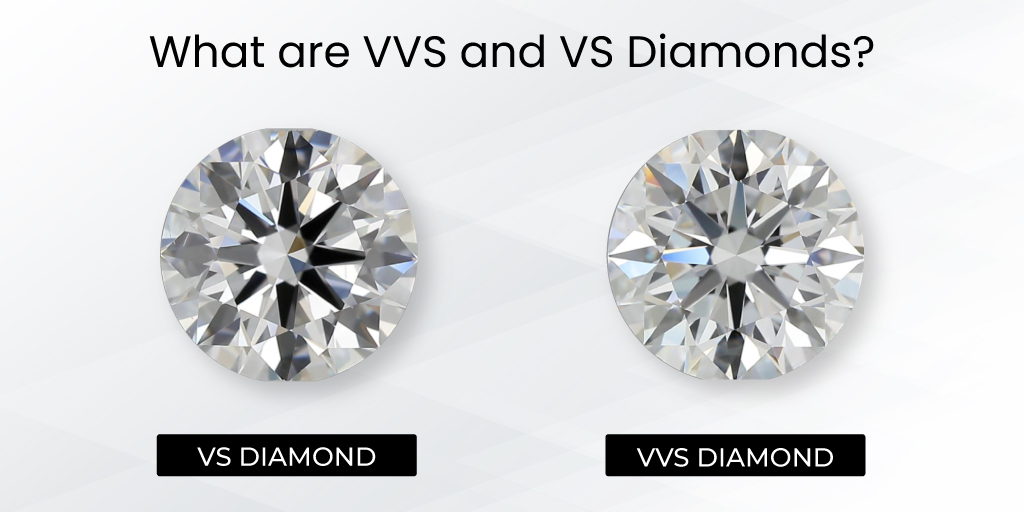
Trendy

The oval shape has been in trend due to the above characteristics. If you are one of those netizens who like to keep up with trends, then it is a must-have ring for you.

15 Best Styles For Oval Shape Diamond Rings

In the diamond market, we usually prefer to say settings over ring styles. Because how the style of a ring looks depends on its setting. So, here are the top 15 styles or settings for an oval diamond ring:

15 Best Styles For Oval Shape Diamond Rings

  1. Embrace Ring– The embrace ring setting has some unique emerald-style diamonds placed near the main oval diamond. These shiny vertical elements act as a shadow for the central diamond that amplifies the shine of the ring. Talking about grip, the embrace ring has the common 4-prong setting for the oval shape diamond.
  2. Sweeping Ivy – The discontinuous curled ivy style rules the heart of ladies when it comes to engagement rings. What could be a better option than a unique sweeping ivy engagement ring? Its unique design will flood your Instagram pictures with beautiful compliments.
  3. Selene Band– The perfect match is the Selene ring style for you. The gloomy rose gold band topped with oval stone and diamond pairs will fill your heart with awe. It is undoubtedly the best option if you are looking forward to a super shiny ring.
  4. Crossover Style– Crossover style rings create an impression of dual rings. The metal band in this case is a combination of two threads fused in an overlapping manner. One of these threads has diamonds embedded in it whereas the other one contains smooth platinum only. To get a fine grip, a 4-prong setting is implemented in a crossover ring.
  5. Secret Garden Ring– As the name suggests, this ring set has both metal band-ends coiled in a fashion of leaf branches. This adorable design has a depiction of nature which makes it look highly fashionable. On top of that, the oval shaped diamond and adjacent threads of diamonds make it no less than a perfect engagement ring.
  6. Prelude Style– So, this ring has a beautiful oval stone resting on its groove. The diamond groove in this setting has tiny pellets of diamonds on its embankment. This simplifies the shine of this ring even more. Various band metal colors are available as choices. However, our favorite combo would be a transparent diamond crowned over a rose gold metal band.
  7. Luna– Unlike other styles, this is not a prong setting as the diamond is completely covered by the band metal only. It could be the best option for those who find wearing diamonds risky. The diamond grip of other rings is also strong. But the luna style gives extra security due to its special diamond packaging.
  8. Lena Style Ring– The band in a Lena setting ring has its end differentiated while adjoining the diamond. It creates a broader base around the diamond but feels thin on the ventral side of the finger. Lena-style rings are highly comfortable due to their medium ring width.
  9. Willow– The willow ring style has a beautiful twirled band with a 4-prong setting. It looks extremely elegant. This ring style is versatile enough to suit all kinds of finger sizes. The best combination of willow styles that we recommend would be an oval stone diamond paired with a platinum band.
  10. Circa– If you like to have some big diamonds on your finger, then Circa ring style would be the best choice for you. Because it has a comparatively bigger oval diamond on its crown. This will surely make your finger shine and glorify the essence of your engagement.
  11. Nouveau– Whenever there is a demand for a royal and traditional ring, we call the nouveau ring setting first. It has an exclusive design in which the band metal ends join together to form a tiny pointed structure. The oval diamond is then stuck in between the gap of this inverted V-shaped groove.
  12. Valencia– A style similar to 4-prong solitaire with a series of diamonds embroidered over its boundary summarises a valencia. The complimentary diamonds glorify the dazzling shine of an oval diamond. Its price usually falls in the mid-range category. But, based on your choice and carat weight, you can decide whether it will be a good match for you or not.
  13. Halo– Halo style is one of those simple and minimalistic ring styles. On top of that, it even provides numerous variations like a fancy halo, luxe Siena halo, cadenza halo, etc. Several band color options are also available. This is why halo is a favorite style for both simplistic and heavy jewelry lovers.
  14. Primrose Ring – We recommend primrose rings to customers who are obsessed with rose gold band color. It has a layer of diamond pins spawned all across the band uniformly. To add a mystic flavor, the metal thread is curved over the diamond layer equidistantly.
  15. Versailles Ring– The word Versailles signifies anything that keeps ‘turning over’. Hence, the band of this style is composed of multiple turns forming spaces in between. These spaces are accompanied by tiny diamond pieces in alternative positions. And, the main oval diamond is clipped to the band via a 4-prong setting.
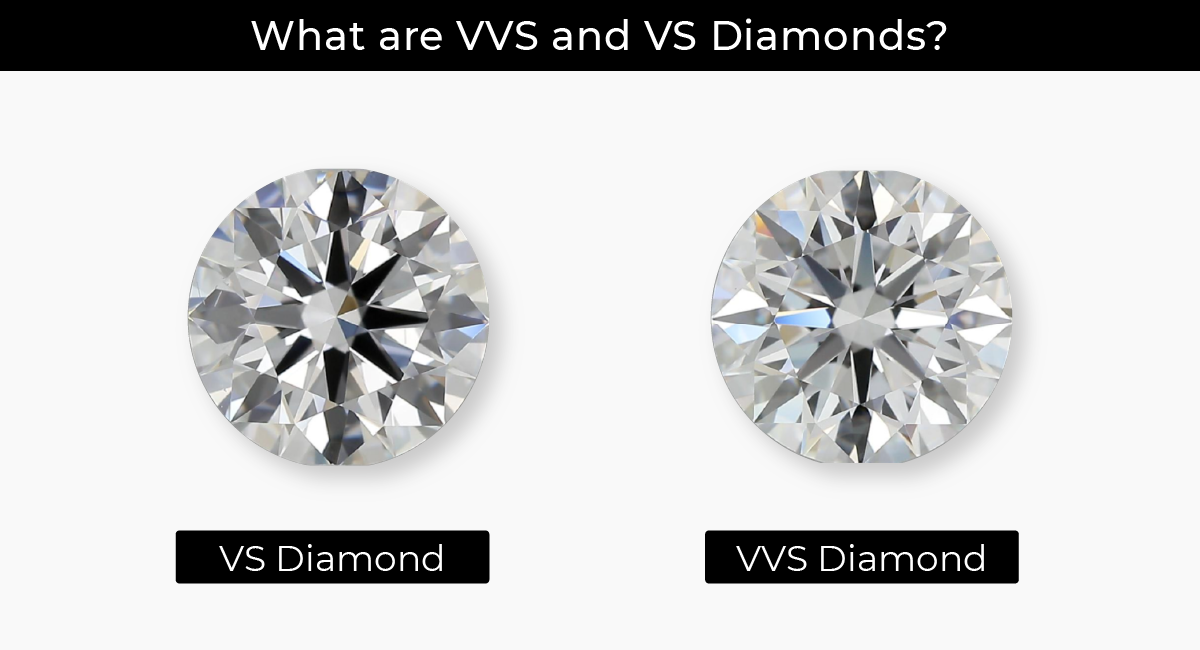
Also Read: Get Her with Excellent Brilliance 2-Carat Oval Diamond Rings

Tips for Buying The Best Oval Diamond Ring

Apart from the variety in styles, many factors need to be taken care of. We suggest you the following tips that ensure a good buying experience:

 tips of buying oval diamond ring

  • Avoid Cheap Diamonds– You should avoid cheap diamonds just for the sake of low prices. Because it could be a case of fake diamonds i.e. fraud. Hence, always remember to ask for certificates whenever buying any diamond jewelry.
  • Count the Carats– Carat count as defined earlier is an important characteristic of a diamond. You should be aware of the price offered to you based on the carat count. Also, the diamond’s shine is affected by its carat count. Hence, for a dazzling diamond, make sure you buy a high-carat diamond.
  • Engrave the Ring– Engraving is the process of writing or designing personalized bands for you. This thing is very popular nowadays as many people like to have their partner’s name, a love quote, or any other thing embedded in their band.
  • Stick to a Definite Price– A mistake that customers often do is falling for luster diamonds. No matter how good or attractive a ring is, you should stick to your budget limit. Going beyond that can affect your overall wedding budget.
  • Use Lab Grown Diamonds– Natural diamonds are extracted by mining and involve other processing also. This makes them highly expensive. But, if you want the same shine and quality of a diamond at a low price, then you should look for lab-grown diamonds.
  • Research and Explore– The less you know, the higher will be the chances that you will fall for a bad deal. Buying a diamond ring requires expertise too. A better knowledge of styles, 4C’s, and prices is the key to a good buy. Thus, explore maximum options followed by good research to buy the best oval ring for you. 

Buy Oval Cut Engagement Ring Online

[su_youtube_advanced url=”https://www.youtube.com/watch?v=7pNI_QkODxM” width=”1600″ controls=”alt” autohide=”yes” autoplay=”yes” mute=”yes” loop=”yes” rel=”no” modestbranding=”yes” theme=”light” playsinline=”yes” title=”oval engagement ring”]

Where you purchase the diamond also determines the final price. If you choose to buy diamonds online, it can be profitable for you. You can save up to 20% by buying diamonds online. You can buy oval diamond engagement rings online via our website loosegrowndiamond.com with a guide as well. Choose from hundreds of styles Or show us a ring style you like from elsewhere and we can create something very similar.

Combined with the wholesale prices, you really cannot get the best value for lab grown oval cut diamonds anywhere else other than Loose Grown Diamonds. Moreover, if you find yourself confused about determining the cost of your chosen diamond, you can make use of our diamond price calculator.

LGD does offer an advantage when shopping for an oval engagement ring, you can use our promo code for a discount and customize option for a personal touch.


Conclusion

With utmost honesty, we have provided the best designs, benefits, and flaws of oval engagement rings. The designs listed above are based on general opinions. Apart from them, you may also find other styles good as per your personal opinion. Ultimately, we hope that this guide helped you untangle all the confusion related to engagement ring shopping.
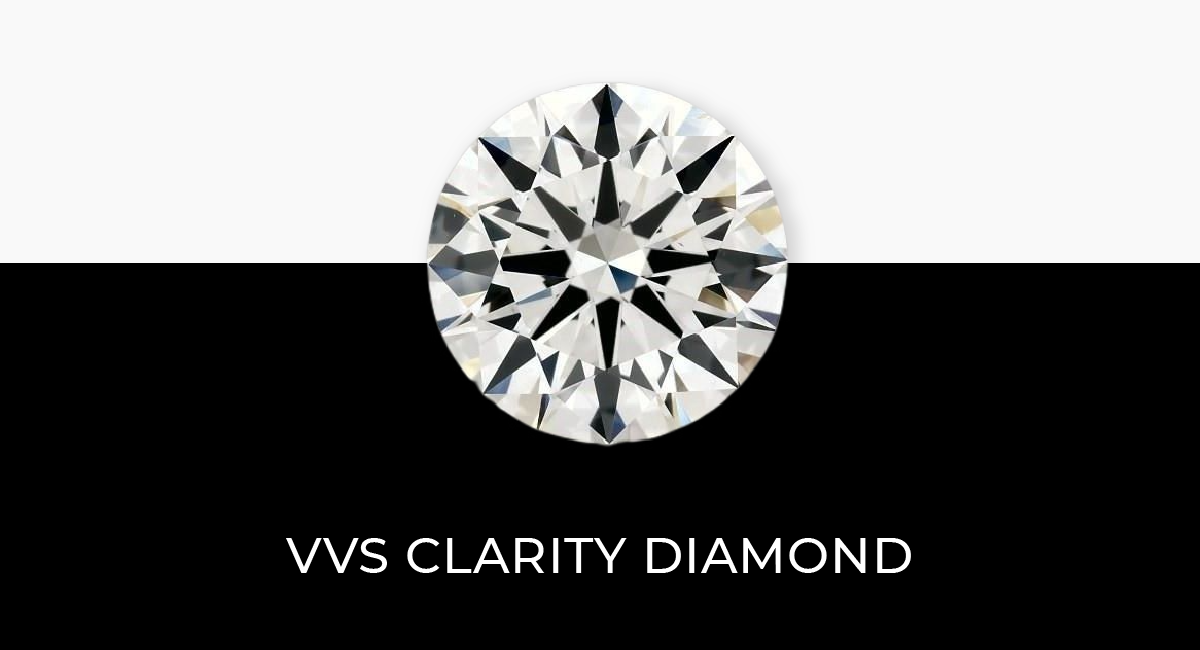
FAQs

How much does an oval engagement ring cost?
The cost of an oval engagement ring can vary significantly depending on the quality of the diamond, its cut, color, clarity, and other factors. Prices can range from several 2000$ to tens of thousands of dollars.
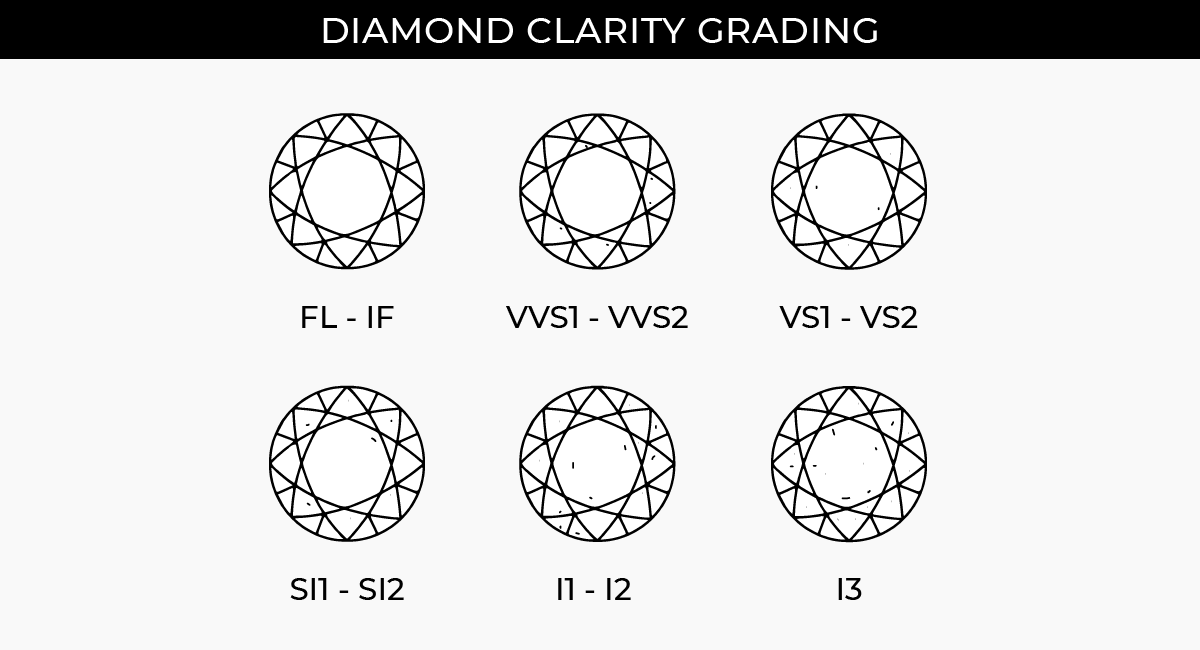
Can you customize an oval engagement ring?
Yes, you can customize an oval engagement ring to suit your preferences. Click here You can choose from various diamond carat, settings, and metal options to create a unique and personalized piece.

What does an oval diamond engagement ring look like?
Oval engagement rings are experts in creating an illusion of big size, providing a stunning and substantial presence on the finger.